Weaponry

For all of its problems, 2025 was a great year for horror films.  And they’re beginning to gain the respect they deserve.  I found an affordable copy of Weapons and discovered that it was as good as the hype.  The haunting image of the children running is, in itself, distinctly creepy.  The film does a great job of obscuring what is happening until the right moment, not making it feel over two hours long.  Weapons never really explains what the monster is, but gives hints that allow viewers to draw their own conclusions.  I’ll try to explain a bit more without spoilers, but the intricate plot may mean that some information might inadvertently be revealed.  The movie begins with a mystery.  One night seventeen children—all but one in Justine Gandy’s third-grade class—disappear simultaneously.  Some doorbell cameras catch them leaving their houses and running into the night.

The people of the fictional Maybrook, Pennsylvania, suspect Justine, their teacher.  Some of the parents, especially Archer Graff, are vocal about their suspicions, going as far as to paint the word “witch” across the doors of her car.  Graff decides to confront her during his own investigations—he thinks the police aren’t pursuing this actively enough.  As he accosts her, the principal of her school, running like the children, attacks and tries to kill her.  This convinces Archer that Justine isn’t responsible, and between them they identify the house of the one remaining student to be at the center of the mysterious disappearance.  The story is told from the point of view of six of the characters’ experience, ending with Alex, the one boy remaining.  His house is the focal point.

We learn that his great aunt came to stay shortly before the children disappeared.  I shouldn’t say any more, I suppose, for fear of giving away the ending.  The story is effectively told with memorable images in the service of the story.  Although it has a kind of justice in the end, the resolution is not a cheerful one.  Like some of the other acclaimed horror of 2025, it makes you think.  Interestingly, while not filmed here, this is another horror film set in Pennsylvania.  Having grown up in this state I’ve always known that odd things tend to happen around here.  Maybe word has gotten out.  In any case, Weapons is a haunting film, well worth seeing.  And while some are reluctant to call it horror, the critics agree that this movie is worthy of note.  Perhaps, someday, horror will be treated with a bit more respect and the critical weapons relaxed a little.


Winter Jogging

Keeping healthy can be hazardous to your health.  We recently had a rainstorm, followed by a snowstorm with several days not getting above freezing.  All of this made my usual jogging route impassible—ice under snow all on top of pea-gravel is a recipe for twisted ankles or broken arms.  I’ve had my fair share of spills while jogging but I’m at an age where my doctor asks me if I’ve had any falls in the past year, so I guessing it’s a bit more serious now.  But getting out to jog is difficult in such conditions.  A treadmill might be a solution.  We used to have one and I pretty much ran it into the ground.  I used it in inclement weather, but it was too much to move from New Jersey and besides, there’s nowhere in our house to put it.  Our basement ceiling is so low you have to stoop, and that doesn’t work for jogging.

After a few days of feeling dumpy, and when the weather got back up into the twenties, I decided to jog on the streets.  That’s one of the advantages to living in a smaller municipality.  There are a few cars out at first light, but not many.  And the streets are (mostly) cleared off.  I wasn’t sure this was the smartest thing to do, but when I greeted another jogger out doing the same thing, I felt validated.  The weather is still in charge.  I’ve been interested in the way the weather affects just about everything.  For example, this past summer I wanted to do a couple outdoors projects.  It rained nearly every weekend and then turned so hot that people my age were warned off of outdoor activity.  So much for mortal plans.

When autumn rolled around it turned cold rather quickly, forestalling any bigger projects beyond a massive amount of weeding.  And this is just on a personal level.  Deliveries are slowed.  Sometimes transportation hubs are shut down.  Bad weather for crops necessitates cooperative trading between nations (ahem).  We are at the mercy of the weather.  Tech giants are planning to go to Mars but they can only launch their rockets if the weather cooperates.  We’ve been messing with it because of global warming, and pretty much anyone who’s non-delusional knows climate change is real.  The sky is, after all, bigger than the earth.  So little problems, such as having to jog in the streets, seem less of an issue.  As long as it keeps us healthy.


Weird Films

I’ve read Gary D. Rhodes before and found him informative and enjoyable.  Although I hope his recent offering Weirdumentary moves beyond its ideal readership, I suspect I’m among that class.  I was alive and somewhat aware of cinema during the period under discussion—the 1970s—and I even saw a few of these films in the theater, as well as watching some of the television offerings.  I think Rhodes is correct in pointing out that this genre was a product of its era.  And what a strange time the seventies were!  I grew up watching the series In Search of…, which is discussed at some length here.  But before I get more into it, I should explain that a “weirdumentary” is a pseudo-documentary that has characteristic features such as dramatic recreations, questionable authenticity of at least part of what it covers, and often a famous personality as a host.

The book is handsomely illustrated with pictures that will offer a nostalgic rerun of the seventies for some of us.  It divides the material into eight sections:  the proto-weird, ancient aliens, UFOs, the Bermuda Triangle, the paranormal, mysterious monsters, speculative histories, and prophecies.  The proto-weird are this kind of documentary from before 1970, and the rest of the categories sometimes bleed into one another.  Not to detract from this excellent book (it’s often quite witty), my mysterious mind thinks a straightforward chronological treatment might’ve worked better.  “Paranormal,” for example, could cover quite a few of these topics.  Still, the organization of a book can be a personal thing and this layout, with “prophecies” at the end, works well.  A number of speculative religious films make the list, including In Search of Noah’s Ark and Late Great Planet Earth, both of which made it to my small-town theater, and drew me in back in the day.

I also admit to having spent some of my summer earnings to see Mysterious Monsters.  And maybe Chariots of the Gods—although I can’t remember for sure.  I certainly read the book.  Rhodes begins by explaining how 2001: A Space Odyssey set up viewer expectations for such films as these.  I definitely saw that one when I was young.  So the ideal readership here would seem to be those born in the sixties who were old enough to see these movies (and television programs) when they were making their initial rounds in the next decade.  Kids suggestible enough to believe the pseudo-science of many of these offerings, who would grow up to look back on them nostalgically.  Written with a light touch, but true appreciation of the subject, this book was a great way to relive one of the strange segments of my early life. 


Keep Remembering

Books used to be, and often still are, works of art.  I can’t imagine my life without them.  I read Charlie Mackesy’s The Boy, the Mole, the Fox and the Horse back in 2023.  A psychiatrist that’s a friend of mine recommended it.  Mackesy’s next book of wisdom, Always Remember: The Boy, the Mole, the Fox, the Horse and the Storm just came out in 2025.  It was a stormy year and I can’t help but think this book was one of the antidotes that the world seems to hide next to the poisons it contains.  The book is a work of art.  Like its predecessor, it builds on the importance of love, friendship, and hope.  These are the kinds of things we need in difficult times.  Indeed, we are in the midst of a four year storm that threatens to tear apart 250 years of progress.  We need this book.

I wanted to save this book to be the first I finished in 2026.  To start the year off in a good way.  I’m not a maker of resolutions since I try to self-correct as soon as I become aware of a problem.  But reading a positive book at the start of the year seems like something that is smart to do.  It’s so easy to get drawn into negativity.  Doomscrolling invites itself to be shared with others.  Pretty soon we’re all mired down.  But the horse is fond of reminding the boy, mole, and fox, “The blue sky above never leaves.”  It is there waiting for us, after our self-inflicted storm ends.  As I’ve noted before, writing books is a hopeful exercise.  Reading them can be too.

Charlie Mackesy is my age.  He seems to have distilled more wisdom from our time on this planet than I have.  Reading his observations is the very definition of nepenthe.  When the headlines foreground hate, we must respond with love.  When everyone tells us the storm will never end, we must beg to disagree.  Humans are problematic creatures.  We create our own ills much of the time.  There are those among us, however, who are wise.  And we can improve our state if we choose to listen to them instead of those who loudly proclaim their own praises.  Wisdom is often in short supply in this world we’ve created for ourselves.  It is not, however, completely absent.  Do yourself a favor and find Always Remember.  No need to save it for a rainy day.


Time for Asherah

Asherah has a way of coming back into my life.  I’d pretty much laid my research on her to rest when a friend convinced Gorgias Press to release my Reassessment in paperback.  A few months later I was asked to discuss the goddess on the Biblical Time Machine podcast.  You can listen here.  My interest, as a young scholar, was to peel back the layers and see what was behind.  I’ve always been interested in origins (that interest shows through in all my work) and when I started my dissertation on Asherah only a few monographs existed.  In those pre-internet days I didn’t know that at least three others were overlapping with mine.  Part of the problem in researching pre-biblical religions is that records are, overall, scarce.  There’s a lot of Mesopotamian sources, but their religion is only known in a fragmentary way.  The fact is, the largest archive of Asherah material comes from Ugarit.  And two Ugaritologists were at Edinburgh in my day there.

I’ve been watching over the years as specialists in Ugarit have begun to disappear.  It was as if it wasn’t a sexy enough field of study.  From the thirties through the nineties of the last century, interest seemed to be growing.  As I’ve argued elsewhere, however, competing with the Dead Sea Scrolls was a fool’s errand.  And as I’ve continued to watch, interest seems to have shifted to the Persian Era.  There’s nothing wrong with that, of course, but what about the origins?  I regret that my grasp of Akkadian wasn’t solid enough, and my appointment at Nashotah House not well situated enough to delve into earlier origins.  Origins are why I’ve always been interested in Darwin and Genesis.

One of the research projects that I never had time to pursue was work on Genesis.  After all, it deals with beginnings.  I did a lot of research for a book that never really had time to take form.  The fate of most of those who pursue advanced study in ancient west Asian religions, if they get a job at all, is teaching biblical studies.  Others in that boat I used to find working on either Psalms, Job, or Genesis.  You see, it all comes back to origins.  Asherah was a goddess recognized in some form in ancient Mesopotamia.  Not much is known about her.  Her role in the Bible and the world of ancient Israel is likewise unclear.  With all our technology we can’t replace ancient records lost to time, but when Mars, named after an ancient god, is in our sights, that we can afford.  If only we had a Time Machine.


Welcome 2026

I put great stock in holidays, but I’ve never felt a deep connection to New Year’s Day.  I’m more of a morning person than the stay up late sort, and the New Year also seems cold after the coziness of Christmas.  But here we are in 2026 nevertheless.  We’re encouraged to look ahead.  I’m not much of a corporate person and I don’t see much wisdom in devising five year plans in an unpredictable world or any such nonsense.  The way things have been going in the news, it’s hard to have a five-day plan that bears any resemblance to reality.  But New Year’s Day does seem an appropriate season for optimism.  Hope stands here, anticipating better days ahead.  I am, despite appearances, an optimist.  I do believe in progress and the calendar keeps on ticking over regardless.  What will 2026 hold?  Who knows.  Best to take it one day at a time.

For me personally, I’ve got a couple books nearly complete and I do hope to find publishers this year.  And I’ve got many others started as well.  Writing is an act of optimism.  I’m always touched when someone lets me know they’ve found my work interesting, or even helpful.  Someone once contacted me to let me know Holy Horror had helped them through a difficult time.  This made me happy; writing books is a form of connection.  When I read books—a major planned activity for 2026—I’m connecting with people I don’t know (usually).  Writing to me feels like giving back.  The funny thing about it is the tension of having little time to do it seems to make it better.  I always look forward to the break at the end of the year but I find myself using the time to recover rather than for the intensive writing I always plan to do.

I have spent the last several days doing a lot of reading.  That too is a coping technique.  I’ve got some good books that I’m looking forward to finishing in 2026.  And the blog bibliography continues to grow.  Looking ahead I see reading and writing.  That to me is a vision of hope.  I didn’t stay up to midnight last night—that only makes me start out the new year grumpy.  No, instead I woke up early to start the year by writing.  And reading.  What does 2026 hold?  I have no idea.  I’d rather not speculate.  I do believe that as time stretches on some improvements will begin to take place.  I do believe holidays are important, both looking back and looking ahead.


2025 in Books

As has become traditional on this blog, the last post of the year recaps my favorite books from the preceding 365 days.  I’ve finished 68 books this year, a little down on my usual pace.  My only excuse is that some of them took me longer to get through than I anticipated they would.  And life doesn’t always afford the time for reading you’d like, even for those of us who are intentional about it.  As for the books, it’s easiest to discuss them by category.  I read quite a few contemplative books this year that I quite needed to read.  They included Katherine May’s Enchantment, Brian Treanor’s excellent Melancholic Joy, Carlos Alberto Sánchez’s Blooming in the Ruins, and Viktor Frankl’s classic Man’s Search for Meaning.  These books underscore that thinking can be its own reward, and experiencing life is an opportunity for thought.  I should also add The Oxherd Boy by Regina Linke.

For general nonfiction, Ursula K. Leguin’s Steering the Craft was a good start.  Although older, I enjoyed Martin Tropp’s Mary Shelley’s Monster.  Although sobering, Peter Fleming’s Dark Academia: How Universities Die was an important read.  The Secret Life of a Cemetery by Benoît Gallot was also informative.  I do think my favorite nonfiction book for the year was J. W. Ocker’s Poe-Land.  Dan Sinykin’s Big Fiction was quite informative, a learning experience in its own right.  

The largest category for the year, overall, was fiction.  I’ve been trying to read more novels and most of them this year fit into dark academia.  My favorite among them was Mona Awad’s Bunny.  I see the sequel is out, but I’m waiting for it to be released in paperback.   Others that I quite enjoyed were Katy Hays’ The Cloisters, M. L. Rio’s If We Were Villains, Kazou Ishiguro’s Never Let Me Go, Goldy Moldavsky’s The Mary Shelley Club, and Brittany Cavallaro’s A Study in Charlotte.  These represent quite a diversity of what dark academia can be.  Among the horror novels, The Bad Seed by William March is another older title, but still scary.  Kiersten White’s Hide and Julia Armfield’s Our Wives Under the Sea were both memorable.  Kanae Minato’s Confessions spanned dark academia and horror.  

None of this is meant to detract from the many other very good books I read this year, some by authors I know.  Looking back is a funny thing; some books seem to stand out for the impression they made.  This is quite individualized for each person, I’m sure.  I’m grateful to have been able to spend another year reading, and to all the authors I’ve read for providing the necessary ingredients.


Dreamscape

I remember them but imperfectly, my dreams.   This can be frustrating when, for example, I dream up a story, complete with an ideal ending, then wake up with only fragments left.  I suppose I’m like most people in that I go through phases when I remember dreams and other periods when I don’t.  Lately my sleep patterns have me recollecting much of the strangeness in my sleeping head, but not enough to get it all written down into the story that was playing out so perfectly upstairs.  Dreams are one reason that we don’t understand consciousness.  We’re not 100% rational creatures.  And we know that other animals dream.  Our minds stay active when we’re asleep and they seem to have no limitations.  The stories we tell ourselves when our eyes are closed!

I have some recurring dreams.  The details always differ, but I regularly dream that I’m teaching once again.  The offending institution apologizes for having dismissed me.  Would I please come back?  Of course, one-off dreams are more common.  Sometimes I have the presence of mind to write them down, but I’m at an age when waking up is often in the service of finding the bathroom and that really breaks the mood and sometimes makes me forget.  From my childhood I’ve been told that you don’t die in your dreams, and indeed, usually you wake up before you hit the ground, or whatever.  I have, like Maggie Evans in Dark Shadows, dreamed of myself as dead.  That’s generally not one of the more pleasant of the species, but the mind ranges widely across the dreamscape.  I have a deep sense that we should pay attention to dreams, but being a 9-2-5 worker, getting the morning routine underway has to take precedence.

Lately my dreams seem to be working out fictional stories deliberately.  It’s as if my subconscious is saying, “You have unpublished stories sitting on your hard disc, why aren’t you doing something about it?”  I sometimes wake up feeling guilty that I’ve been writing nonfiction books when I have several weird stories scrawled out that could use a little more attention.  And some other writers I’ve met on social media have been encouraging me to self-publish those stories.  So far I’ve resisted, but the temptation is growing.  I work in publishing and I can say that the industry is quite difficult to navigate and finding an editor who “gets you” is almost impossible.  Maybe I should be basing more of my stories on dreams.  At least in the dream world, they’d find a publisher.


Sinning

What can I say about Sinners in five hundred words or less?  This movie requires a book.  I’ll try anyway.  First of all, I’m not one to jump on the bandwagon.  But everyone was saying Sinners was one of the best horror movies of 2025 and it racked up enough awards to prove it.  Still I was blown away.  Fronting and centering religion and horror, this film asks viewers to think about good and evil and to think about it closely.  Twin brothers, “Smoke” and “Stack,” served in the army, left Mississippi to make it big as gangsters in Chicago, then return to Mississippi to open a club for the Black community.  They bring their nephew Sammie and hire their supporters to help a grand opening of their blues bar.  Their pasts won’t let them go, however,  and they become entangled with former lovers.  Then the vampires come.

The brothers’ two lovers, Hailee and Wunmi, come to the opening but Hailee falls victim to the vampires.  Wunmi, who’s Smoke’s estranged wife, practices Hoodoo and make him promise that if she is bit he will kill her with a stake.  The vampires can’t come into the club without an invitation, and one of the bartenders, Grace, decides they need to kill the whole crowd of vampires and invites them in.  Only Smoke and Sammie survive.  The vampires die with sunrise, but Smoke stays around to kill the Klan members who planned to murder the brothers after the grand opening was over.  Smoke gets them all but he’s shot and as he dies, he sees Wunmi and their dead child in an earthly heaven and joins them.  Sammie goes on to become a famous blues player and when he’s very aged, Stack and Hailee, still young vampires come in.  They all agree that the day of the grand opening was the best of their lives.

Both Smoke and Stack end up with their loves in an eternal life.  And this is only scratching the surface of the film.  The movie is about freedom and how African Americans never really have it.  Even in Chicago the system is stacked against them.  The vampires try to convince Smoke and Sammie that they will offer them community.  Freedom and belonging.  Both brothers, however, end up in a kind of paradise, one of them as a vampire, the other as a man who earns salvation by killing the Klan.  Wow.  On a more pedestrian note, the movie seemed to blend From Dusk till Dawn with the more serious elements of O Brother, Where Art Thou?.  Including the close attention to music.  But even that sounds facile.  There’s more to say, lots more.  Sammie is the son of a preacher.  The Bible is used and quoted.  Salvation comes, however, by Hoodoo and vampirism.  No, Sinners requires a book to begin to work it all out.


Booking Time

Some time back I mentioned that I was compiling a bibliography of this blog.  (It should eventually appear as a separate page on this website.)  I’m in the thick of it and it makes me think that it’s a good exercise to go back over older writings now and again.  For one thing, I’m reminding myself of books I may have forgotten after reading.  And it may actually give me ideas for new writing projects.  One of the problems, however, with blogging about books is that it creates a reluctance to rereading.  I’m guessing that most blog readers are looking for something new, and discussing something you’ve already talked about may not fit the bill.  Besides, my stack of books to read is already rivaling Babel’s tower for height.  I’ve always been a catch as catch can reader, especially since no longer having university libraries to use.

One of the lessons along the way is just how eclectic my reading tends to be.  (And eccentric, as long as we’re using e-words.)  I’ve read some strange stuff, and I’m still only in the first three years or so of this aging blog.  The real issue is the desire to re-read.  The world is full of interesting books.  I’ve read a few thousand of them, and many of them I’d like to read again.  This bibliography exercise underscores just how precious reading time is.  Those I talk to, apart from the retired, never have enough time to read.  I’ve learned to cram it into small spaces in the day, but even as I’m doing so I’m realizing that I’m shortchanging the experience.  And this is from someone who works in the publishing industry.  

I’ve posted about four books in the past week—on those rare days when I don’t have to work and winter prevents outdoor chores (beyond shoveling snow), I read.  It’s always pleasant to finish up books I’ve been dabbling in for a while.  In a couple more days I’ll be doing my annual review of the year in books.  Again, it’s an opportunity to look back and see what I’ve been up to thinking over the past twelve months.  Since this blog has being going for over a decade and a half, there are many books behind it.  I don’t know how many, at least not yet.  As I say elsewhere on this website, I believe the books we read define us, make us who we are.  Making a bibliography is a way to keep them in order.  And I’m one of those people who actually enjoys making them.  Time thinking about books is time well spent.


Death Trip

My own personal Wisconsin Death Trip resulted in the end of my chosen career.  I’d never heard of Michael Lesy, or his book, while I lived in the state, however.  In fact, I’ve been racking my brain to remember how or where I’d heard of this strange book.  I do know that it was suggested to me, likely by another written source, many years ago.  My impetus to pick it up at this time was watching Return to Oz and learning that the writer/director used this book to find inspiration.  Having gone through it, I suspect the reason was that this most unusual dissertation was addressing the question of rural versus urban living conditions, but in a way out seventies way.  The book is a combination of photographs from about 1890 through the turn of the century from Black River Falls, Wisconsin, and snippets from the local newspaper.  But also some bits from the intake records of the state hospital at Mendota.  And also some bits from novels.  And further, some summaries apparently by Lesy.

What I found frustrating is the lack of clear explanations of what the sources were.  Nowhere in the introduction or conclusion is it spelled out that, for example, italic sections are summaries of sources by the author.  Nor is it clear why the parts of novels are used, other than adding flavor; were they written by people familiar with Black River Falls?  And the “word clouds” that begin the separate years—why are some words capitalized and others not?  Is this table of contents only to give a taste or it to spell out in detail what will be covered?  The lack of any narrative, apart from the introduction and conclusion compounds the confusion.  In other words, this is an impressionistic book for a work of history.

At the same time, it is creative and informative.  The final chapter discusses how certain recurring themes—suicide, insanity, arson, for example—demonstrate the hardships among the poor.  As Lesy puts it, they came to realize the lie of hard work (meritocracy) and had to face children dying of disease and their inability to get ahead when those who are wealthy control all the assets, and they snapped.  To me that’s the real value of this book.  I noticed while reading through it that of the notices of admission to the asylum, all but one were described as poor, often desperately so.  And we continue to allow this to happen, not just in Wisconsin, but across the country.  Maybe even more people need to read this odd history and consider its implications.


Scary Christmas

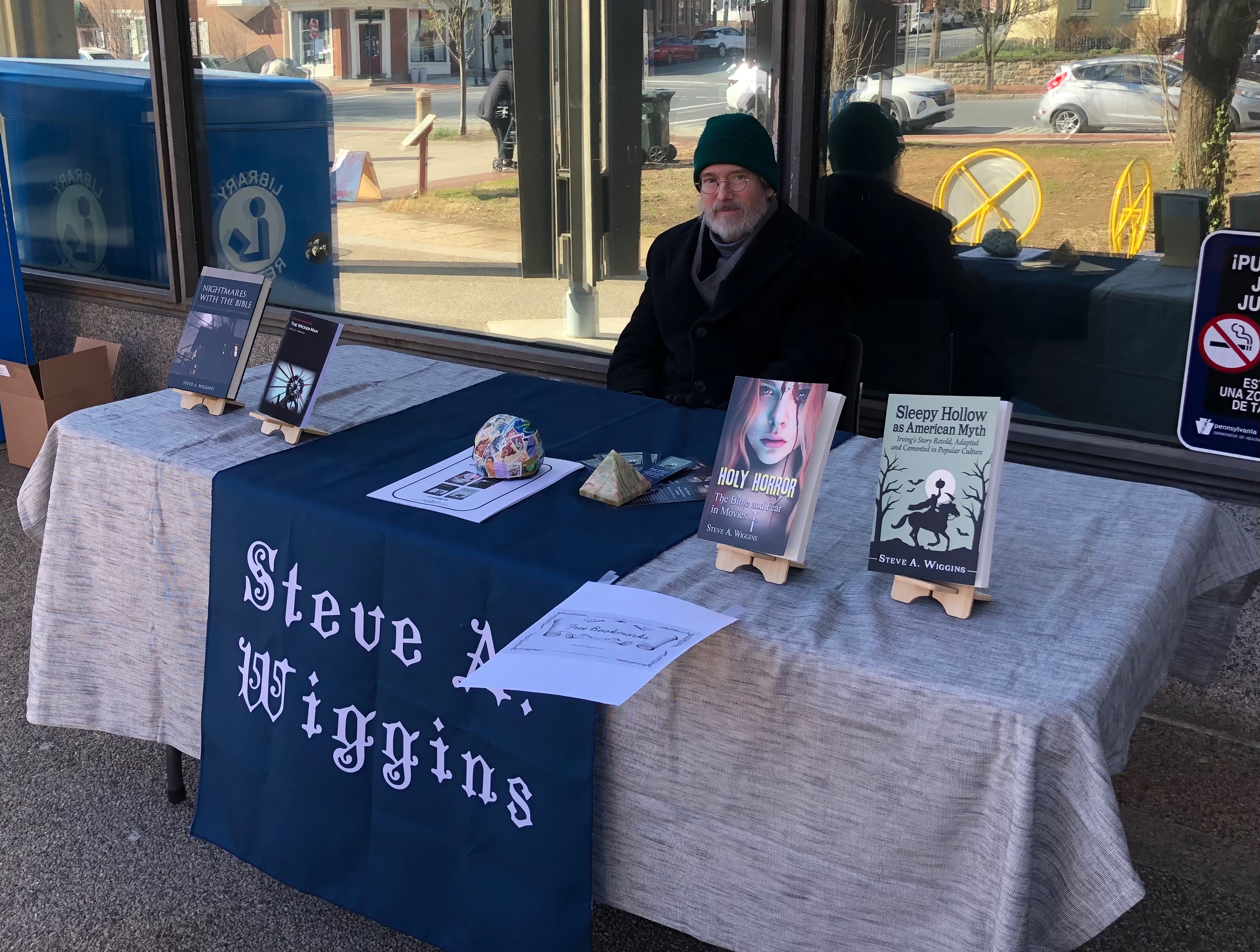
A few days ago I mentioned the connection between Christmas and Halloween.  I’m apparently not the only one to be interested in this because Tim Rayborn wrote Scary Book of Christmas Lore.  This little, holiday-themed book is a gathering of (mostly) scary creatures associated with the winter holidays.  Each creature, or tradition, is treated in less than two pages and the book is generous with color illustrations.  While not a research book (it’s set out as an impulse buy in some Barnes & Nobles at least), nevertheless Rayborn, like yours truly, holds a doctorate from a university in the UK and spends at least part of his time writing books on spooky topics.  (More successfully than yt.) In the process of researching Sleepy Hollow as American Myth I gathered stories of scary Christmas creatures, but didn’t include most of them in the book.

Apart from the obvious Halloween connection, a few things stood out to me about this book.  One is that the majority of these tales come from Germanic cultures.  If these branch up into Scandinavia, almost all of the creatures in the book are covered.  There are a few from other regions as well, but this suggests that winters in Northern Europe used to be seriously scary.  Some of the darker visitors around the winter holidays are clearly local variations of others.  Krampus, for example, is having a day and there are other local versions of a monstrous companion to the “good cop” Santa who comes along to dole out punishment.  Some of the other beings associated with the season are a variety of other monsters—some human, others less so.

The long, dark winter suggests itself as a season for scary stories.  It’s unlikely that this book will send anyone shrieking into the closet or under the bed, but it helpfully brings to the light that people have long found both the fear and entertainment value of telling of frightening creatures.  The Teutonic imagination gave us many of our nighttime fears.  The British, inspired by such tales, tended to codify them into the monster stories that gave the modern horror genre its tentative start.  Although, as I discussed with my daughter on Christmas morning, horror stories began in the pre-biblical era (something I wrote about in an article a couple years back).  And, of course, religion and horror have naturally gone hand in glove for longer than anyone has really traced in any level of detail.  So a little book of monsters around Christmas?  Why not?


Quiet Christmas

It has been a busy Christmas season this year.  Busy from my perspective, that is.  Introverts like to spend time alone, recharging.  Those with my kind of neurology, though, crave being with others when we crave it.  Even on a budget we’ve been able to anticipate the peace of Christmas Day.  For me, the rush began with attending my usual conference in November.  It always meets the weekend before Thanksgiving and Thanksgiving was late this year.  The weekend before the conference we attended the Lehigh Valley Vegan s’MAC Down on Sunday afternoon.  Friday I was on a train to Boston.  I returned and spent Thanksgiving with some good friends in New Jersey and December came with the following Monday.  Since work fills in the interstices between weekends I really didn’t have time to catch my introvert breath.

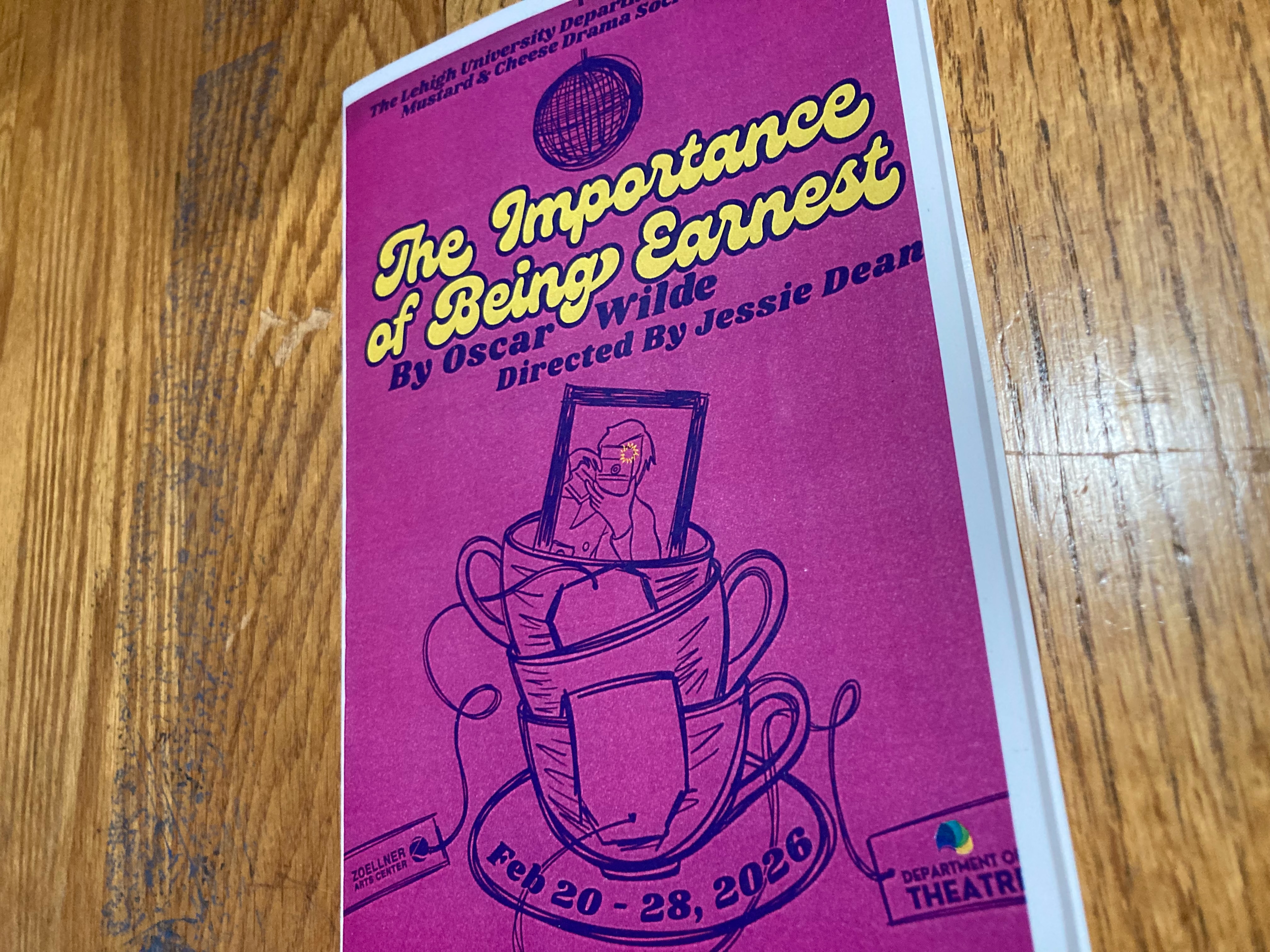
That first December weekend we attended the Lehigh University Christmas Vespers.  This free concert is a gift to the community and was a quiet way to enter the season.  We used to attend a similar event at Princeton University, but Lehigh’s much closer.  Living near Bethlehem (Christmas City), we like to spend a day in the historic downtown, looking for stocking stuffers mostly.  This was the next weekend.  We followed this up with our annual visit to Christkindlmarkt.  By the time I was done counting on my fingers, there was one weekend left before Christmas.  Friends had invited us to dinner that Sunday night, a day after the Lehigh Valley Vegan cookie exchange.  This level of activity is more than I’m accustomed to, although it did remind me of how socially busy the Christmas season was in Britain, even for post-grads.  My wife and I came home from dinner, lit our Yule log, and quietly acknowledged the winter solstice.

So now it’s Christmas Day.  I’m awake at 3 a.m., like a kid.  It is a day when I don’t have to go anywhere.  And, most of all, it’s quiet.  The only sound is a great horned owl hooting in the woods across the street.  I value this day for the opportunity to be still.  A day for recharging.  Before anybody else is awake, I listen.  There will be music later this morning and it will be fine.  And I’m thankful for all the activities that led up to this point.  Tomorrow, it seems, I’ll be out shoveling as yet another winter weather system makes it way here.  But for now it’s quiet.  And a Christmas owl agrees to cease hooting after letting me know I’m not alone.


About Books

I have tried my hand at fiction writing at least since I was ten.  My first attempted novel was at about fourteen.  Fiction has always been a large part of my life.  Now I work in publishing and still struggle to get my fiction published.  I picked up Big Fiction by Dan Sinykin because of another blogger praising his work.  Subtitled How Conglomeration Changed the Publishing Industry and American Literature,  it is an ambitious book.  I learned a lot by reading it but also found myself putting the book down in a huff.  Not because of the author, but because of the subject.  I grew up in the sixties and seventies, before conglomeration took over big fiction.  Conglomeration is simply the practice of companies buying out other companies.  Even I know that diversifying your portfolio is considered good business practice.  So companies buy one another out.  Thing is, that makes a difference as to what is available to read for the general public.

I’m old enough to idealize elements of the past.  I’ve worked in the corporate world for nearly a decade and a half now and I miss the time prior.  Still, this is fascinating history to read.  Currently there are five major fiction publishers (all of which also publish nonfiction).  They are Penguin Random House, HarperCollins, Simon & Schuster, Hachette, and Macmillan.  How did there come to be only five?  Sinykin will answer that question for you.  He also explores the smaller nonprofit publishers and the independents.  There’s one big independent publisher left, Norton.  Reading through this book I realized how woefully inadequate my knowledge of fiction authors is.  I read a lot, but there were many, many names I didn’t recognize.  Sinykin tells the stories of many people whose individual tastes may very well have decided which authors you’ve read.

Publishing is a vast and sprawling world, but a very small industry.  In these days when self-publishing is widely practiced, and some authors make a living writing, publishing, and promoting their own books, it may seem that big fiction is less relevant.  Still, these publishers stock the shelves of Barnes & Noble as well as your favorite indie bookstore.  A few things stand out for me: all of this development is recent.  Most of it happened during my lifetime.  There are still powerful editors, but they don’t have the power they used to.  And business-speak has become the language of publishers instead of the countercultural impulse that drives many writers.  This book is an education in itself, even for those of us who work in the book business.


About Demons

Six college kids in a house where twenty years earlier a group of six young people held a seance and all but one ended up dead.  Demonic doesn’t really offer anything groundbreaking on the horror front, but it does give a less church-oriented possession story.  There will be spoilers here, so be warned.  John is Michelle’s boyfriend.  With a group of friends, including Brian, Michelle’s ex-boyfriend, they decide to hold a seance in the house where a mass murder-suicide took place.  Once they get there, as tension builds between John and Brian, it is revealed that John is the son of a woman who was in the house the night of the carnage, but had escaped.  Thereafter follows a confused set of jump startles and unexplained phenomena.  All but three of the college kids are killed, and one (John) is found and interrogated by police.

It seems the seance summoned a demon that could only be released if everyone died.  Brian, one of the survivors, is found and shot by police.  Michelle, the other survivor, is found alive but as police unscramble the data on the cameras the kids were using, they realize that John was the guilty party.  Beyond that, he hanged himself before the police got there, so they had been interviewing a demon the whole time.  Although James Wan is one of the producers, the film received theatrical release only abroad, receiving a television release in the United States.  Really, given that it doesn’t give much that’s original, or thought-provoking, or really all that scary, the decision makes sense.

The demon movies that really make an impact tend to have a few things in common.  Usually a young woman possessed (this is something Poe understood).  A body out of control that defies religious efforts to bring it back to conformity.  A believable spiritual world behind the threat.  None of these things fits Demonic.  I guess I was looking for a follow-up to Succubus which, although flawed, wasn’t that bad.  Sometimes the group of young people in a haunted house trope works pretty well, but here the unanswered questions outweigh any real fright, or even mood.  Many low-budget horror films involve ghost-hunter imitators with more devices than thought toward the plot.  Things can jump out at you, of course, but this one fails to reach any kind of existential dread.  I guess I really need to start paying more attention to the ratings viewers give before deciding on a demon movie.  Someday I’ll learn.