Remembering to Forget

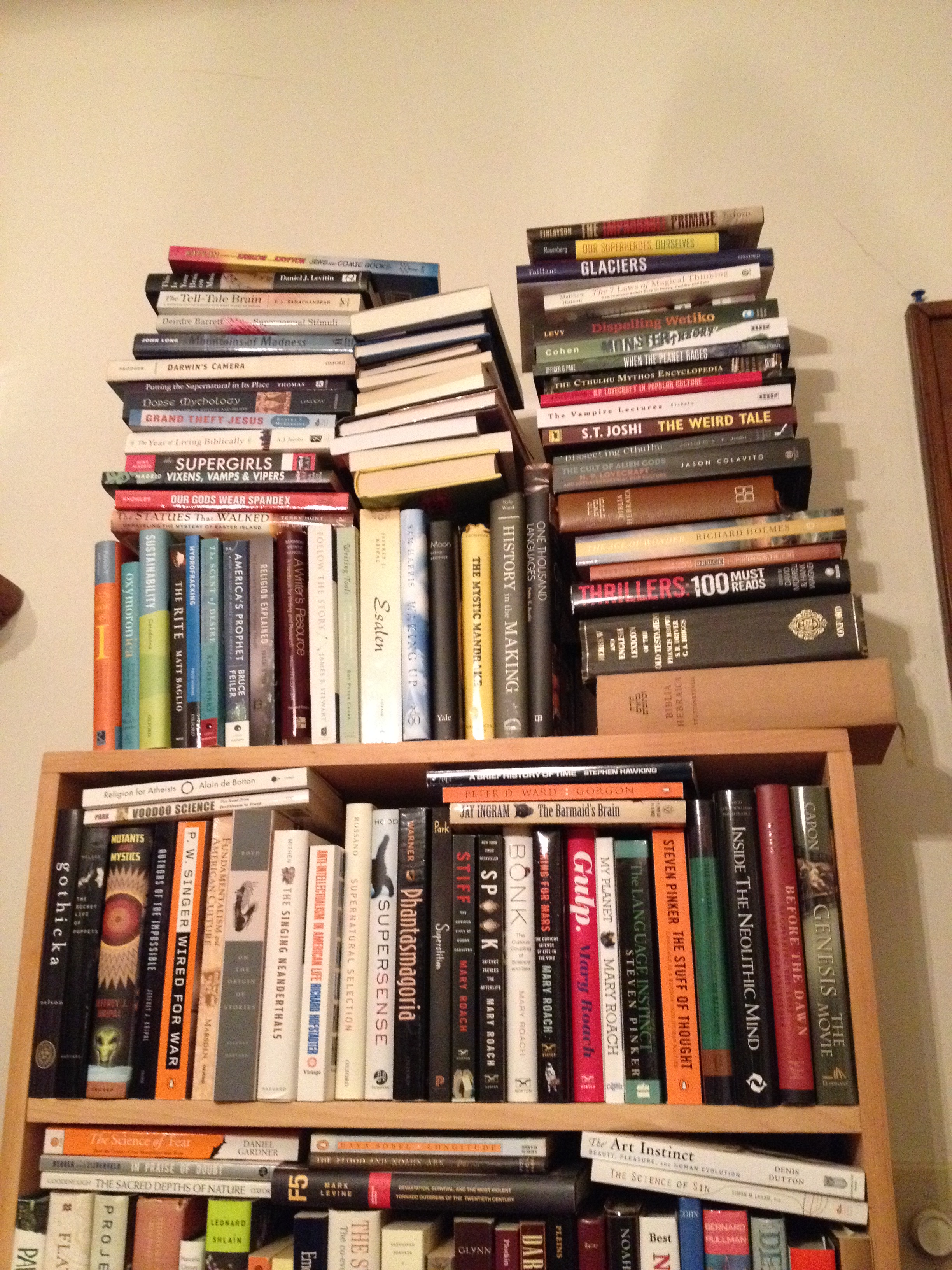
I think I’ve discussed memory before.  I forget.  Anyway, I recently ran across Ebbinghaus’ Forgetting Curve.  Now, I’ve long known that when you reach my age (let’s just say closer to a century than to 1), your short-term memory tends to suffer.  I value my memories, so I try to refresh what’s important frequently.  In any case, Ebbinghaus’ curve isn’t, as far as I can tell, age specific.  It’s primarily an adult problem, but it also resonates with any of us who had to study hard to recall things in school.   The forgetting curve suggests that within one hour of learning new information, 42% is forgotten.  Within 24 hours, 67% is gone.  This is why teachers “drill” students.  Hopefully you’ll remember things like the multiplication table until well into retirement age because you had to repeat it until it stuck.  Where you put the car keys, however, is in that 42%.

I’m a creature of habit.  One of the reasons is that I fear forgetting where something important might be.  The other day it was my wallet.  In these remote working days you don’t need to put on fully equipped pants every day.  Pajama bottoms work fine for Zoom meetings and if you don’t have to go anywhere, why fuss with the wallet, cell phone, pocket tissues-laden pants?  You can put your phone on the desk next to a box of tissues.  The wallet gets left in its usual pocket.  One day I pulled on the pants I last wore and as I was headed to the car noticed my wallet was gone.  Fighting Ebbinghaus, I tried to remember where I’d last used my wallet.  We’d gone to a restaurant the previous weekend that seemed the most likely culprit.  It could’ve fallen out in the car, or maybe down a crack in an overstuffed chair.  I couldn’t find it anywhere, swearing to myself I was going to buy one of those wallet chains if I ever found it again.
(I did eventually find it, in the bathroom.  Apparently this has happened to others as well.)  In this instance, my memory was not to blame.  It had been right in the pocket where I last remembered putting it.  But other things do slip.  Think about the most recent book you read.  How much of it do you remember?  That’s the part that scares me.  I spend lots of time reading, and more than half is gone a day after it’s read.  Unless it’s reinforced.  The solution, I guess, is to read even more.  Maybe about Ebbinghaus’ Forgetting Curve.

Mexican Philosophy

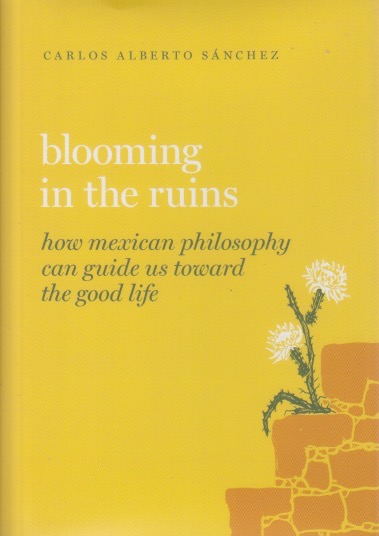
Once upon a time, I applied for a teaching post at Syracuse University.  (Actually, twice upon a time, but that’s a longer story.)  I was able to gather that one reason I failed to merit an interview was that the religion department prided itself on its dedication to continental philosophy.  Lacking imagination, I couldn’t see how that might apply to teaching Hebrew Bible but then again, I don’t know much.  I’m starting off with than anecdote because it is in keeping with the spirit of Carlos Alberto Sánchez’s excellent Blooming in the Ruins: How Mexican Philosophy Can Guide Us toward the Good LifeI recently wrote about how reading philosophy is something I enjoy when I can find the time, but what really struck me about this book is that Mexican philosophy is a counter to continental (i.e., European) philosophy and it is much closer to my own outlook.  I’m not in any danger of being offered a new job so it’s safe to say so.

I actually picked up a copy of Sánchez’s book because of a chapter that I’d read.  Much of the work begins with anecdotal accounts, followed on by something original, amplified, and solid (you’ll need to read the book to flesh that out).  Mexican philosophy rejects the idea of universals because each of us is socially located.  What may have seemed universal to European philosophers of the seventeenth through the nineteenth centuries, many of them quite privileged, simply doesn’t apply to a person raised poor in Mexico.  (Or Pennsylvania, for that matter.)  I read the continental philosophers in school, but they had not had my experiences.  My traumas.  And yes, Sánchez emphasizes that trauma is part of the picture.

While I can’t summarize this wonderful little book here, I can recommend it.  If you have an interest in the larger questions, and if you want some philosophy that doesn’t try to impress you with big words and complex grammatical formulations, this may be for you.  Sánchez writes as if he’d be willing to sit down with you and discuss the matters that make life worth talking about.  The chapter that sold me on his book was the one on the Mexican view of death.  It is only one of several that deserve a bit of your time to chew over.  So I was not welcome among those who specialize in continental philosophy.  Maybe I was looking in the wrong place.  Maybe those who are open to homegrown thinkers of sometimes deep thoughts live south of the border.


Editorializing

One of the realities of being an editor is that you have authors consistently ignore your advice and then ask you for solutions when what you predicted would happen does.  Oh, that sentence!  Let me put it this way: there used to be a time when simultaneous submission was frowned upon.  Even “forbidden” by some publishers.  The internet has changed all that.  Publishers who won’t accept submissions if anyone else is also considering them, lose out.  There are lots of publishers out there.  Many more than most people think.  Some of them are small and fly-by-night, but others are also ultra-specialized so they can hit their markets.  Even among academic publishers there are many to choose from.  If you submit to only one, wait to hear, and then get a “no,” you have to start all over again.  Or submit simultaneously.

Peer review can take a long time.  I mean a l-o-n-g time.  Especially since the pandemic, but even before, overwrought academics have trouble committing to adding one more thing to their plates.  If they do accept a review offer, the response is likely to be quite late; more often after the deadline than before.  I’ve been an anxious author waiting.  It’s the kind of limbo few actually enjoy.  It’s a reality, however.  If your book is about current events, or something trending, well, godspeed.  That’s a tough place to be.  Submitting to more than one publisher at a time gives you the leg up of not losing time if someone turns you down.  Some authors prefer a certain publisher and want to hold out for them.  Publishers get lots of proposals.  If I had so many proposals when I was in college I wouldn’t have been nearly so lonely.  Holding out is bad dating advice.

The best piece of editorial advice I can muster is to research publishers.  Academics are researchers by nature, but few take the time to research publishers.  There’s plenty of information out there.  When I couldn’t get an agent interested in Holy Horror, I turned to McFarland.  Why?  Because I’d familiarized myself with the kinds of books they publish and mine seemed a good fit for them.  Sure, there were more prestigious places to go, but I’m a bit too busy to bang my head against that wall all day.  Even a little bit of web searching on publishers can pay off.  Publishing is a business.  Never forget that.  If you only want to get your ideas out there, starting a website (which isn’t expensive) is probably a better way than getting a book published.  Writing books is great, and getting them published is incredibly validating.  But do yourself a favor, if your editor suggests a course of action to you, take it.


Scientific Monsters

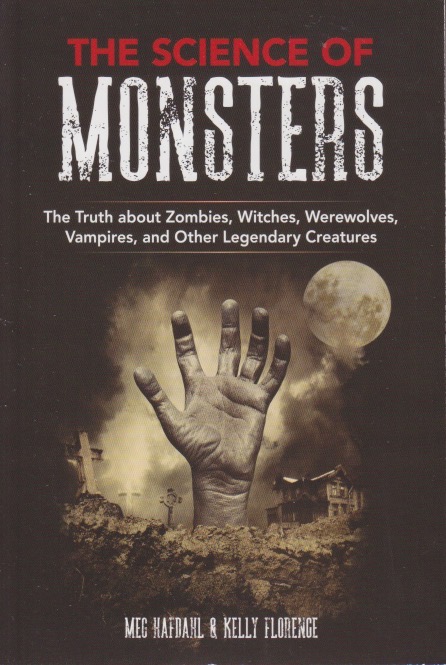
The rule is simple.  If you buy something in the gift shop, you can get into A Nightmare in New Hope for free.  So I naturally gravitated towards the books.  I picked up Meg Hafdahl and Kelly Florence’s The Science of Monsters: The Truth about Zombies, Witches, Werewolves, Vampires, and Other Legendary Creatures.  I noticed that the authors weren’t scientists, so I wasn’t expecting anything hard core.  In fact, I mostly wanted it for fun.  And also, I’m fascinated by anyone who can manage to get published by a trade press, the kind that publish books for under twenty bucks.  (Lest you think that’s a random amount, I’ve been invited to events where I was told $22—the then price of Weathering the Psalms, my least expensive book—was too much for most of the audience.)  The science in this particular book is akin to the science of various ghost hunters—the use of science as a framework, but not really being actual science.

Still, it’s a fun read.  Divided into ten sections of three chapters each, it covers a range of horror movies and asks various questions about aspects of “could it happen?”  Of course, in the sections featuring serial killers, we already know the answer.  Sometimes the authors shift to the “why” question when something obviously does happen in real life.  Now, I bought this book as a horror consumer and I have to say that it made me feel a sense of accomplishment that of the thirty chapters I’d seen all but one of the featured films.  The one I haven’t seen is Cujo, but I’ve read the book.  What I’ve noticed about other horror aficionados is that seldom have we all seen all the same movies.  Since the advent of VHS and watching movies at home, and the various technologies that came after, those of us with an appetite can be starved for choice.

While I wouldn’t turn to this book for any actual science, I did get a few ideas for horror stories from reading it.  One of them I’ve been working on since the chapter on The Tingler.  Both for fiction and non, I often think about publishers and how to break into that below twenty market.  This book is classified, in its BISAC code (the topic on the back of a book that tells you its genre) as science.  The publisher doesn’t publish in pop culture, which is what horror movies are.  There must be a science to getting publishers to buy into a good book idea like this.  Maybe there’s a science to it.


Fear of Puppets

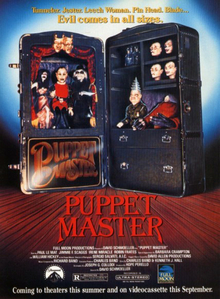
David Schmoeller is a horror director I discovered only in the last several months.  I watched his first film, Tourist Trap, after having found Netherworld streaming for free.  Perhaps his most famous film is Puppet Master.  Although intended for a theatrical release, it was ultimately shifted to direct to video.  That didn’t stop it from becoming a cult film and from spawning sequels and spin offs.  Like other Schmoeller films, it’s a bit disjointed.  But it’s also fun to watch.  Since this is a film from the eighties, I won’t be too worried about spoilers—fair warning.  So, the puppet master lives in a hotel and brings puppets to life, literally.  He does this using ancient Egyptian magic.  About half a century after his death, four colleagues of Neil Gallagher receive a psychic message from him.  They travel to the hotel only to find he’s dead.

The puppets, released from their hiding place, begin killing the guests.  This is one of the many things never explained.  The puppets don’t appear to be evil, but they are murderous.  Three of the four colleagues become their victims in typical horror fashion.  The last surviving friend, an anthropology professor from Yale, and Gallagher’s widow, discover Neil has brought himself back to life, using the puppet master’s Egyptian magic.  He plans to live forever, but apparently he has to kill his former friends to do so.  As he explains this, and beats the professor and his wife, the puppets realize that he’s a bad man.  They attack and kill Neil when he’s trapped in an old elevator.  The ending reveals that his widow can also reanimate the dead.

Child’s Play had been released the previous year, but the trope of haunted or cursed puppets had been in the horror tradition already for decades.  Dolls and puppets are often residents of the uncanny valley and yet people can’t stop making them.  We often learn to draw by representing our families with crayons.  The fascination of replicating ourselves artistically provides low hanging fruit for horror films.  Fabricated things that look human—and we can add mannikins here—starting to move, or coming to life, scares us.  So much so that even less-than-great movies such as Puppet Master can become their own franchise.  As a horror movie, it isn’t terrible.  It’s also not likely to keep you up at night.  At least one other David Schmoeller film is on my to see list, and I have a fair idea of what to expect.  I watch them duly warned.


Zoning In

Born Jewish, and Unitarian by choice, Rod Serling believed in the inherent worth and dignity of all human beings.  Like many people, even Serling believed that season four of The Twilight Zone, which went to an hour format from the usual half, didn’t really work.  Nevertheless, the fourth episode of that season,“He’s Alive,” really should be required watching of every person in the United States.  This episode was written by Serling and it focuses on a young American fascist who’s having trouble gaining a following.  A shadowy figure then reads to him from what sounds exactly like Trump’s playbook, and soon decent people are raging along with him about foreigners and those who are different.  When the shadowy figure is finally revealed, we’re not surprised to learn it is Hitler.

The young man obeys without question, and soon it looks like he could be elected.  He has one of his best friends killed as a martyr to the cause.  He murders an old Jewish man who has cared for him since his youth.  He declares himself made of steel, with no feelings.  And when he ends up dead (everyone knows how Hitler’s career culminated), the spirit of Hitler rises from his body as Serling warns that wherever hatred exists, Hitler still lives.  Now this episode aired in 1963 but it could’ve been 2016, or 2024.  Prescient people, like Rod Serling, knew that mob thinking could be easily exploited.  Even in the first segment after the introduction the instructions are laid out.  Play on people’s fear of those who are different.  No matter how good things may be, people will be unsatisfied.  Add any power-hungry individual and you’ve got the recipe for a fascist overtaking.

The episode made me wonder if we could ever become a just society.  Ironically, that which calls itself “Christianity” these days stands in the way.  In its day, The Twilight Zone was amazingly influential.  It had a great impact on what was to follow and it’s still regularly referred to, even by those who’ve never seen an episode.  If only we’d pay attention to its message.  I’ve been making my way through the entire series, slowly, over the years.  Now and again an episode will really hit home.  I have to admit that I was physically squirming during “He’s Alive.”  It’s not that it is the greatest episode of the series, but its message is extremely timely.  The requirement for a better world is simple, but seemingly impossible to reach.  Treat others as you wish to be treated.


Double-Dipping

Double-dipping takes many forms.  The kind I’m talking about is trying to get more than your fair share by either taking twice, or by fooling others into buying the same thing two times.  I’ve fallen victim myself.  Some publishers will sell a hardcover book and then release the paperback with a different title a couple years later.  If you’re a fan of the subject, you’ll buy the same book twice because they won’t easily tell you that it is the same one.  On paper the strategy is to get libraries to buy the hardcover (which costs more) instead of waiting for the paperback.  Why change the title if not to fool someone?  Maybe I’m just embarrassed by the vegan egg on my own face because I realize that I’ve bought the same book more than once.  Maybe more than once.  With a limited budget, I don’t appreciate being deceived.

The egg is even older and more obvious when I realize that those of us of a certain age can’t keep our memories as sharp as they used to be.  I read a lot.  I try to get through 60 or 70 books a year.  Have done for over a decade now.  If a book doesn’t create a strong impact, it may go into that category of enjoyable but not really memorable.  So when I recently learned that a publisher had double-dipped with a book I’d bought and read—twice—I felt violated and embarrassed.  Even more troubling was the fact that I wrote blog posts about each of the books (about three years apart) without recognizing I’d already read it.  To be fair, buried on the copyright page (who reads that?) the paperback confessed that it was the same as the differently titled hardcover.  Of course, I’d already bought the book, read it, and blogged about it (twice) before someone pointed out to me that it was the same book.  Gotcha!

I hold myself to high ethical standards.  I hope that I’m an honest person; I tell the truth whenever possible.  I’d certainly not try to sell someone two of the same thing without telling them that they weren’t buying something new, but simply giving more money for something they already had.  Even Amazon says, “Purchased on,” and gives you the date if you call up a book you’ve already bought.  Publishers, I know, have a difficult time.  Publishing is a “low margin” business, which means that you have to sell lots in order to stay solvent, and each sale brings in only a small profit.  Temptation to double-dip must be very strong.  Still, I feel a bit silly to have fallen for it, even when it’s what I do for a living.


Fighting over Chocolate

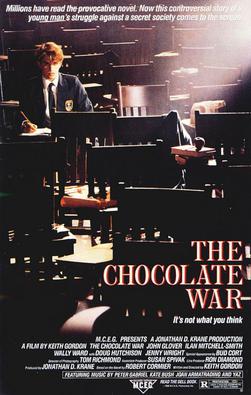
It’s really a teen movie, The Chocolate War is.  That may be the sweet spot for dark academia.  I’m maybe a bit old for such things, but being old tends to mean remembering how it was.  Not exactly how it was, though.  Chocolate War takes place in a Catholic boys school, Trinity by name.  Perpetually underfunded, the students have to sell chocolate (now we’re in territory I recall—remember me, Gertrude?) to help keep it running.  Meanwhile, the Vigils, a secret society, have a considerable amount of pull on campus.  Led by a prescient and overly mature boy for his age, Archie, the Vigils assign select students difficult tasks in a kind of high school hazing.  Jerry, a freshman whose mother recently died, is assigned to refuse to sell chocolates for ten days.  He then decides (for reasons never explained) not to sell them at all.

The refusal leads to a financial crisis for the school.  The Vigils try to force Jerry to sell, engaging in harassment tactics.  Nothing works.  Then Archie coerces him into a “boxing” assembly where students pay to have their specific punches thrown by one of the boys (a bully or Jerry) at the other, who simply has to take it.  Before the match begins, Archie, the Vigils’ leader, is tricked into taking the bully’s place.  Jerry, who’s on the football team, knocks him out, sending some teeth flying (probably why the film got an R rating).  In the end, Archie is demoted, but Jerry realizes that with his refusal to comply, he led to the result he was protesting against (the harassment and boxing match led to selling all the chocolate despite his refusal to participate).

Dated, yes (1988), Dead Poets Society, no.  Still, there’s much to ponder here.  Bullying—used by very high offices in this land—seems to be a growing problem.  And yes, when you get a bunch of adolescent boys together, trouble can arise.  It’s believable.  Although considered a flop, critics were kinder than the box office.  There are dark messages to decode here.  The price of nonconformity—an issue that doesn’t disappear with adulthood—and, perhaps looming larger, its effectiveness.  The teacher temporarily running the school, Brother Leon, is part of the problem, as is often the case in dark academia.  He’s not evil, however.  The film places the abuse of power on Archie, although he doesn’t condone violence.  Ultimately violence is used to unseat him.  With the result that the system (Trinity) prevails nonetheless.  Worth considering.


Being Perceived

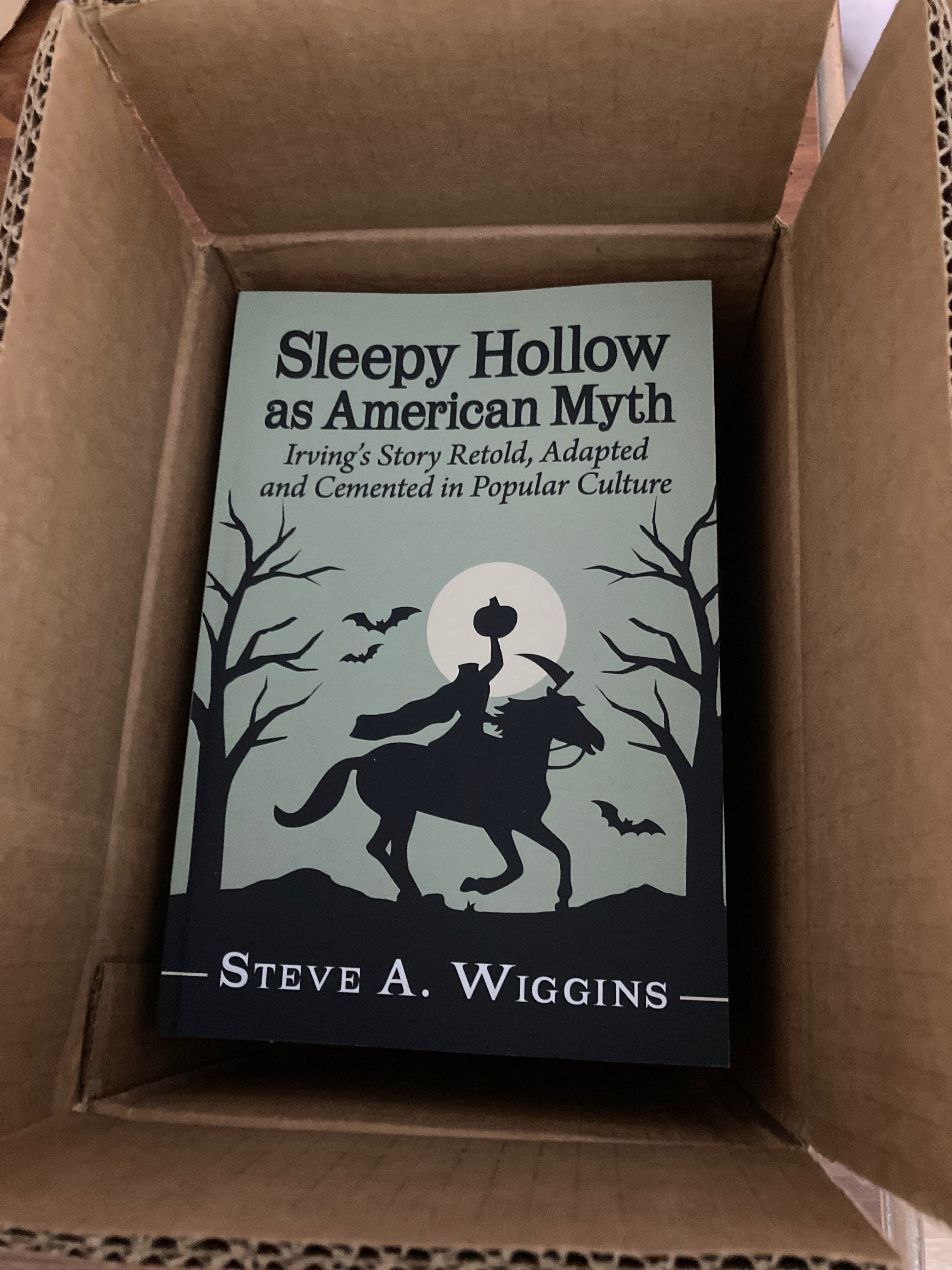
The philosopher George Berkeley argued that to be is to be perceived.  This perspective goes by the name of immaterialism and I have to admit to being sometimes seduced by it.  The real question comes down to who counts as a perceiver.  In any case, as a book author there’s always a worry that the book sent to the publisher isn’t real until it appears in print.  I’m Berkeleyian enough to think that ebooks aren’t really perceived, and so I mean in print.  Until I see a copy of the book, I don’t really believe it exists.  This entire week I’ve been waiting.  Sleepy Hollow as American Myth was released on either Monday or Wednesday, depending on who you believe about such things, and my author copies have been on their way.  At last, the book exists!

In the publishing industry there are those who consider a book like a box of puzzle pieces.  They often refer to books as “content,” or “product.”  Something that can be divided up and sold piecemeal in electronic form.  A chapter at a time.  Never mind what the author was trying to do when s/he wrote the book.  Such people, it seems to me, should be forced to spend several years working on an integrated project only to see the producer of said product take it apart and sell insubstantial pieces of the whole.  It feels like being eviscerated.  Books are objects and those who love them form cultures.  I know there are people who read ebooks, and I don’t judge them for it—readers are readers and we need more of them!  But for me, book culture involves, well, books.

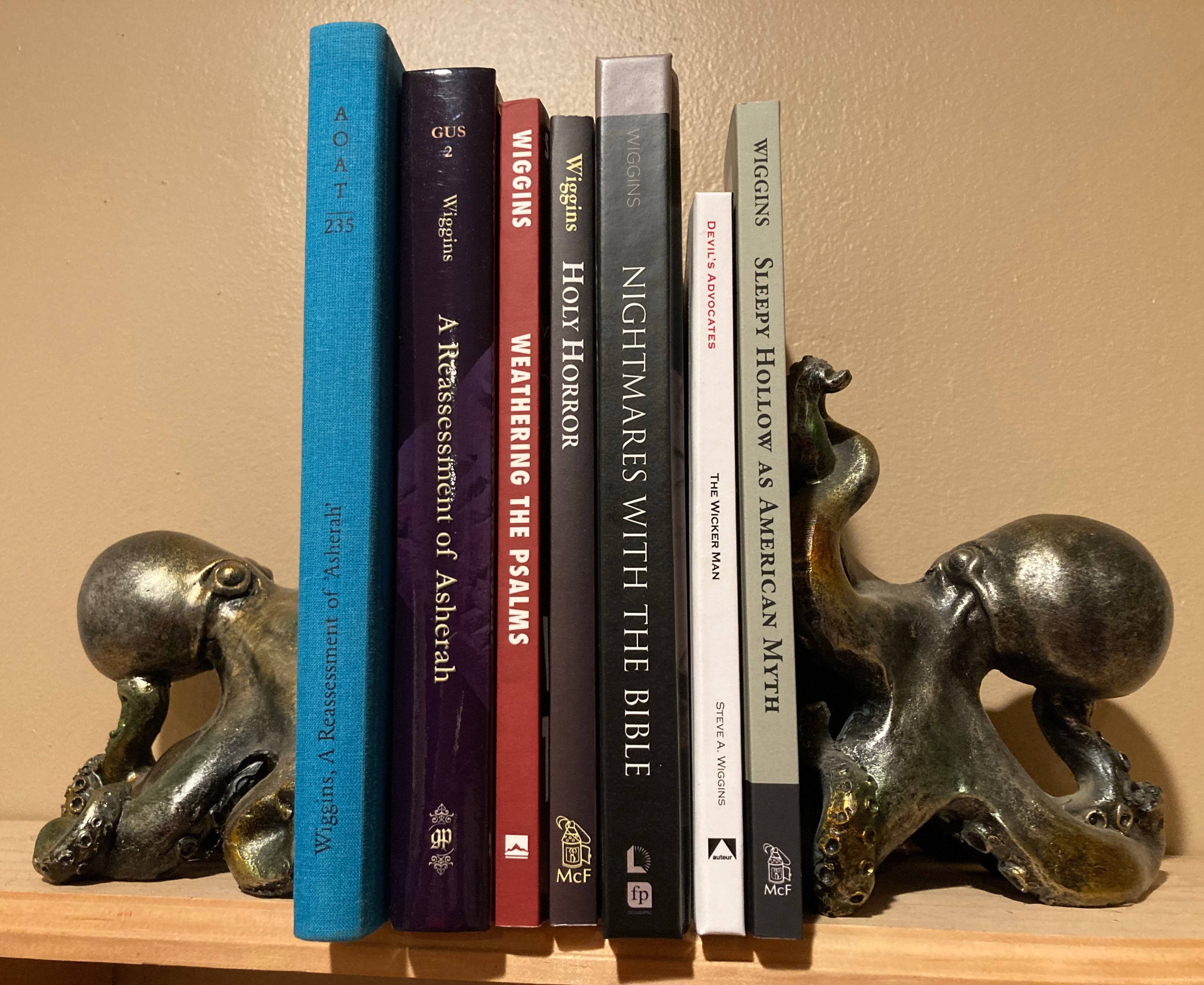
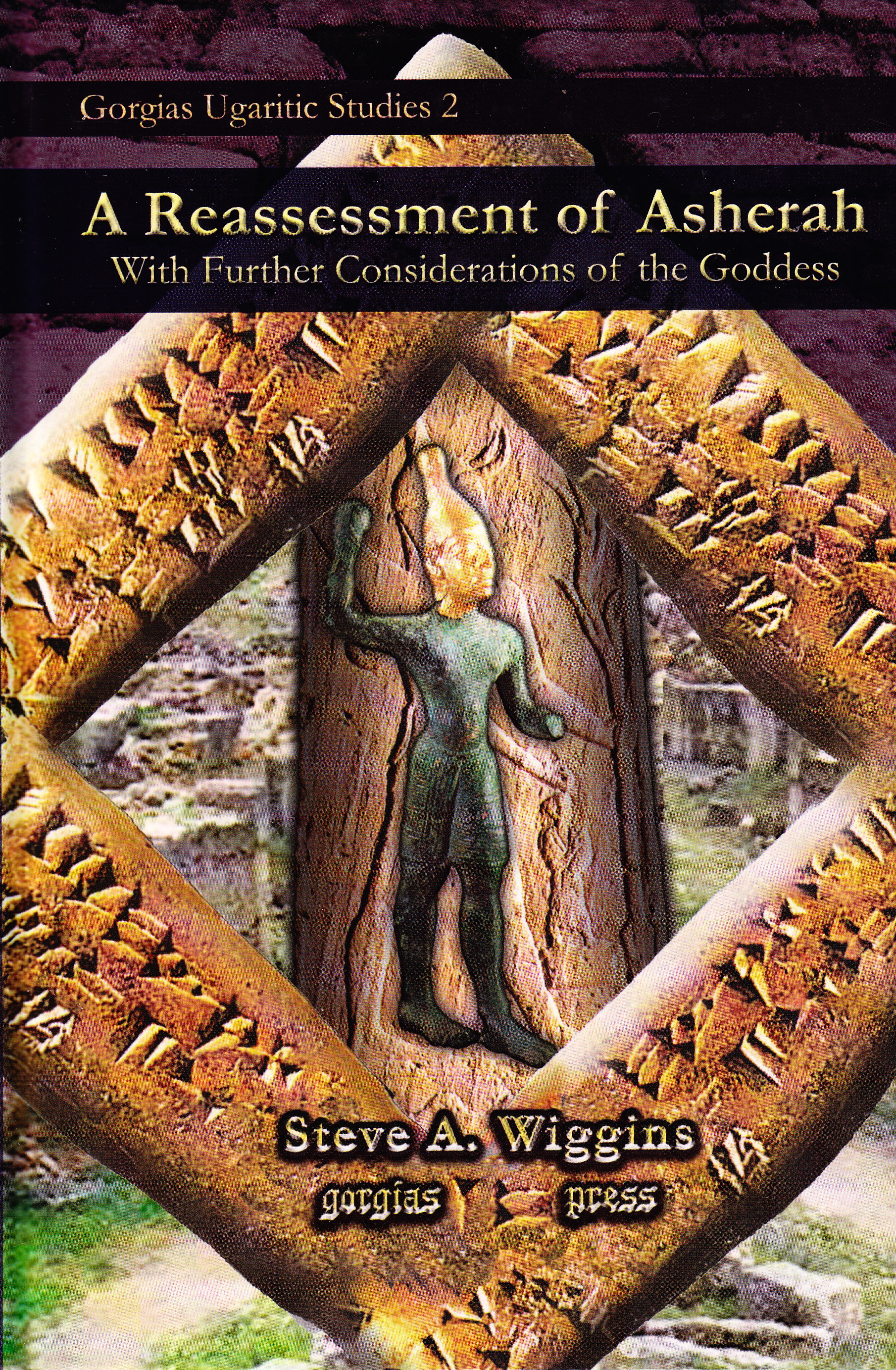
One of the greatest thrills a writer can know is opening that first box of their author copies of a book.  Many academic publishers are cutting down the numbers, to save money, of course.  McFarland, I’m happy to report, still provides ten, which used to be standard.  So before I start doling them out, I have, for the moment, ten copies of my sixth book.  I have only one copy of the second edition of A Reassessment of Asherah and two copies of Nightmares with the Bible.  They’re both too expensive for me to buy more.  (Income from writing books may bring images of Stephen King or J. K. Rowling to mind, but they’re household names because their situation is so exceptional.)  Right now, however, I’m bathing in the glow of knowing, at least at the moment, my latest book is being perceived.


A Glimmer

You just never know.  A few months back I emailed Liverpool University Press because my book, The Wicker Man, has apparently not sold any copies.  I had never received (have still never received) a royalty statement or any payment.  Now, I’m willing to accept that no copies have sold.  I’m not a recognized name and a bigger book came out in 2023, the fiftieth anniversary of the film.  I moved on.  Then, the day before my Sleepy Hollow as American Myth copies were scheduled to arrive, a friend sent me a text that made my day.  He’d seen on the MIT bookstore staff picks shelf, a copy of my humble little book.  I was floored.  Someone had read it and liked it.  And MIT!  I mean, that’s worth celebrating.  It also made me curious.

Image credit: a friend

I checked a website that tracks classroom adoptions.  The Wicker Man had been adopted for a class at Kennesaw State University in Georgia.  Ironically, just the day before my friend’s text arrived, a colleague at a nearby seminary asked if I’d come and give a talk about Weathering the Psalms.  This is all very dizzying to me.  I am an obscure private intellectual because no schools will open resident scholar or any other such non-tenure positions to me.  I can’t even verify myself on Google Scholar.  But a few people, it seems, have found my books.  In case you might think otherwise, I’m very well aware that the scholarly world is small (and the current administration would like to make it smaller by the day).  But I tend to think of myself as lost in that small world.

The Wicker Man was a departure for me, as is Sleepy Hollow as American Myth.  In these two books I moved away from my identity as a scholar of religion.  Don’t get me wrong, I’ve used my background and experience, and even latent knowledge of religious studies in both books, but they aren’t fronting religion.  It remains to be seen if the just curious will pick them up.  I know many people don’t default to, “I find this interesting, I’ll buy a book on it,” as I do.  And I’m more than willing to suppose that others aren’t interested in what I have to say.  Still, just when I’m starting to feel down on all my efforts, a little ray of hope shines through.  Someone in a bookstore somewhere has recommended one of my books.  And it feels good.


Letting Go

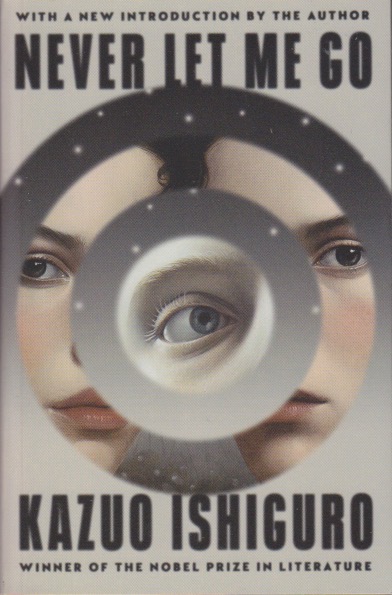
I should’ve known from the title that this would be a sad story.  Kazuo Ishiguro’s Never Let Me Go won the Nobel Prize in Literature, despite being speculative.  It’s only mildly so, but enough that it is sometimes classed as science fiction.  It’s appropriate that a twentieth anniversary edition was released because it is an extended consideration of the price of technology as well as dehumanization.  I’ll need to put in some spoilers, so here’s the usual caveat.  I read this novel because it’s often cited as an example of dark academia and it certainly fits that aesthetic.  It starts out at a private school called Hailsham, in England.  The students are given some privileges but their lives aren’t exactly posh.  Most of their possessions are purchased on days when a truck sells them things they can buy with money they earn by creating art.  They aren’t allowed to leave the school.  Spoilers follow.

The special circumstances of the children are because they’re clones being grown for replacement organs.  The public doesn’t want to know about them or interact with them.  In fact, most people believe they don’t have souls, or aren’t really human.  They’ve been created to be used and exploited until they die, always prematurely.  While this may sound grim, the story is thoughtfully told through the eyes of one of these children, Kathy.  She becomes best friends with Ruth and Tommy, who later become a couple.  Ruth is a difficult personality, but likable.  As they grow they’re slowly given the facts about what their life will be.  They’re raised to comply, never to rebel or question their role.  Most simply accept it.  Kathy, Ruth, and Tommy, in a submissive way, try to get a deferral regarding their “donations.”

I suppose it’s presumptuous to say of a Nobel Prize winner that it’s well written, but I’ll say it anyway.  Ishiguro manages to capture the exploratory friendships of youth and reveals what you need to know in slow doses, all told with a compelling, if sad and accepting voice.  Although the genre could be sci-fi, it’s set in the present, or, more accurately, about twenty years ago.  The technology, apart from the cloning, is about what it was at the turn of the century, or maybe a decade or two before that.  With what we see happening in the world right now, people should be reading books like this that help them understand that people are people, not things to be exploited.  And that Nobel Prizes should be reserved for those that are actually deserving for their contributions to humanity. 


Non-Saints

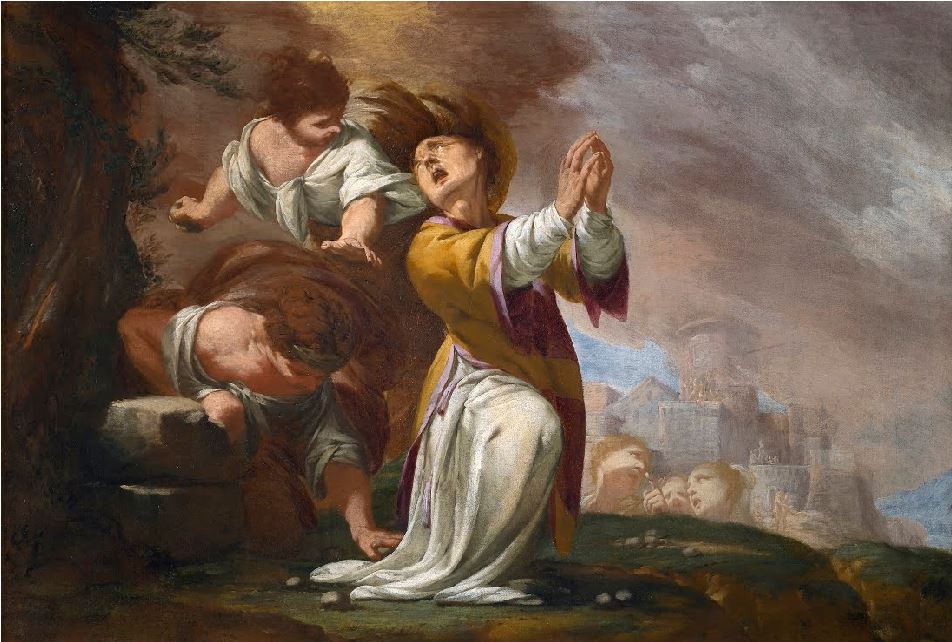
It was an epiphany.  My wife has, on more than one occasion, accused me of playing the martyr.  I know very well that I let other people step all over me.  The epiphany came when I was reading about Stephen’s martyrdom in the Acts of the Apostles (in the New Testament).  Unbidden by me, a memory—more of a distinct impression, a deeply planted feeling—arose.  I started reading the Bible at a young age.  The story of Stephen is disturbing to a child.  The thought of being stoned to death for saying what you believe is a species of horror.  The memory, or impression, was of my mother pointing out how good it would be to be like Stephen.  He is not technically my namesake, but since there were no male role models in my family, I subconsciously made the connection: Stephen the martyr, Steve the martyr.

Giovanni Battista Lucini – Martyrdom of St. Stephen, public domain. Source: https://artsandculture.google.com/asset/martyrdom-of-st-stephen/twGNCf3waLKDvA via Wikimedia Commons

It’s strange to realize this suddenly after half a century of not consciously recollecting it.  What we teach our children stays with them.  If we tell them that it’s good to die for your beliefs, well, we shouldn’t be surprised when they grow up with strong convictions.  (My brother tells me that Virgos think they’re always right and that’s why we’re stubborn; is it the stars or is it the Good Book?)  The Bible puts a positive spin on Stephen’s death.  Formal sainthood isn’t a biblical concept, but he dies forgiving his murderers.  It struck me there in the middle of a working day.  Some of my subconscious personality traits floated to the surface.

My deep desire to avoid Hell also formed my young outlook.  Although my beliefs have to be held accountable to what I’ve learned over decades of study, that fear never departs.  This too was planted in me before I had any real concept to absorb it.  When I grew old enough, the horror became academic, but nonetheless real for it.  I’d studied the history of Hell and I knew New Testament secrets.  To avoid the bad place, be like Stephen.  The dilemma is that as life goes on, we continue to learn.  Young parents don’t know as much as old ones do.  And since we have to teach our children not to run out into the street, or not eat that thing they found, we cast ourselves as The authority.  And that includes things religious.  If we live an examined life, we see shades of nuance where once there was only certainty.  And sometimes we have epiphanies.


X-Rayed

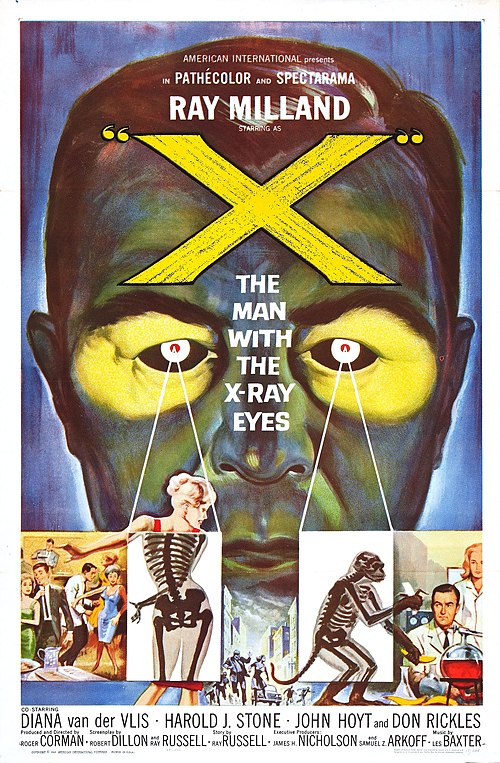
If you’re of a certain age, you’ll remember the comic book ads for x-ray specs.  That’s the idea behind a Roger Corman film that Stephen King thought one of the scariest he’d seen.  X, subtitled The Man with X-Ray Eyes, came out in 1963.  Not to be confused with the X of the modern trilogy, this X follows a Doctor Xavier who develops a formula that allows him to see inside people so that he can accurately diagnose and cure them.  This formula may affect his sanity, however, and he kills a friend who is trying to take the ability from him.  A wanted man, he finds a carnival barker who exploits his gift as a trick.  It was a bit jarring to see Don Rickles in a horror movie, but stranger things have happened.  In the midst of this exploitation, an old friend finds him and drives him to safety.

Then to Las Vegas, where his sight allows him to win unabated.  When the police are called he steals a car and increasingly sees through the fabric of the universe.  He stumbles into a road-side revival where the preacher encourages him to take Matthew 5 literally and he does so as the congregation chants “pluck it out!”  What makes this final scene so arresting, apart from qualifying it for Holy Sequel, is that before the minister tells him to mutilate himself, the doctor says he sees through the darkness to the eye that “sees us all.”  He sees God.  The minister interprets this as the Devil, confusing the most elemental entities that exist one for the other.

The movie has some lighthearted moments, some even apart from Don Rickles.  When the doctor begins to see through everybody’s clothes, it’s presented in a humorous way.  But for the most part, the film is played straight and it manages to raise some serious issues for those who think through the implications.  Our senses evolved to help us survive.  Accessing abilities beyond that is a catalyst for disaster.  Indeed, Dr. Xavier early on notes that he’s approaching godhood because of this newly won ability.  It also means that an individual might know too much.  It seems that at the end he does.  The movie is remarkable even today in several ways.  Technology has made special effects more believable, but the human side of this story remains unaltered.  A doctor wanting to help patients becomes more of a monster than a man, in some respects.  And perhaps the most remarkable aspect is that this is a serious horror film made by Roger Corman for AIP. Scary even to a young Stephen King.


Publish, Perish

Publish or perish has been around for quite a while and I feel for younger scholars who are trying to publish their collected essays as their second book.  Collected essays, in case you’re not familiar with dark academia, are generally what senior scholars do before they retire and they can’t be bothered to rewrite everything into a proper book.  Or maybe the topics are disparate and don’t easily fit together in one category.  When I was teaching the general rule was an article a year and a second book for tenure.  I was able to do this without a sabbatical, and with a heavy teaching load and administrative duties at Nashotah House.  It’s a lot of work.  My biggest challenge was coming up with ideas for new books.  Eventually I published my collected essays on Asherah in the second edition of my dissertation.

I’d written a 50-page article on Shapshu, the Ugaritic sun deity, that was intended to be my second book.  Then J. C. L. Gibson retired and I had to have something for his Festschrift.  There it went.   It was about that time that I started Weathering the Psalms.  That was my “tenure book.”  There was over a decade between that and Holy Horror, for a number of reasons.  The main one was that I was trying to cobble together a career between Gorgias Press and moonlighting as an adjunct at Rutgers University.  There was no time for research and publication.  Ironically, that only came after I gave up academia to enter the commercial world of publishing.  I see younger scholars now expected to produce that second book, and some of them go for the collected essays approach.  I understand.

Back when I was applying for first jobs—and the scene was already very tight, I assure you, despite promises just a few years earlier—I applied for everything.  One search committee chair wrote a scolding letter saying I wasn’t senior enough to apply.  By the end of his dressing down, he concluded with something along the lines of “unless you’re applying because there are so few positions, in which case it’s understandable.”  He was right.  So few jobs and so much student debt!  I landed at Nashotah and began cranking out the articles.  In a moment of weakness I offered to write some further academic treatments after my horror movie books appeared.  They don’t do anything for my career, of course.  And they take away time from popular writing practice.  Who knows?  Maybe some day I’ll gather them into a book.  Then again, maybe I’ll find myself growing younger too.


Naming Sleepy Hollow

Local history has always been an interest of mine.  Although I’ve never lived in Sleepy Hollow, my book on “The Legend of Sleepy Hollow” is due out this week.  I try to keep an eye out for further information on the region.  Christopher Skelly’s The Origin of Sleepy Hollow: The Name and the Village, an Untold History appeared after I’d submitted my manuscript to McFarland, but I wanted to read it regardless.  A new father living in Wisconsin at the time, I was not aware of the name change in 1996.  I do remember looking at a map after we’d moved to New Jersey and seeing, for the first time, the name Sleepy Hollow along a route we planned to take to a point further up the Hudson.  I remember thinking, “I didn’t know there was an actual place called Sleepy Hollow.”  Well, that may have been because prior to 1996, there wasn’t.

This self-published account of how the name came about is valuable local history.  Not exactly belles-lettres, it nevertheless begins at the earliest Dutch naming of the area as the Dutch version of Sleepy Hollow.  By the time Washington Irving wrote his story around 1819, the area had already gone by several names but the village of Tarrytown was well established.  And, over time what was vaguely called Sleepy Hollow by the Dutch became North Tarrytown.  I learned here that the haven, or harbor on the Tappan Zee that was first called some version of “Sleepy” had been the victim of landfill so that a railroad could be put in.  The author is clear that the “Hollow” is still visible if you know where to stand and look.  He also explains the motivations behind changing the village name that began in 1988. 

One things I learned in my own study of ancient history is that place names tend to be remarkably resilient.  European settlers ignored much of the indigenous nomenclature, but did adapt many examples of it.  Our species needs to reference where things, or other people, are over very large distances.  We know where Edinburgh is, even if we live in Australia.  Names are important.  Personally, I’m glad that some citizens of North Tarrytown decided to change the name of their village to Sleepy Hollow.  And not just because I have a book coming out on the topic.  I’m sure the change has boosted tourism immensely, even if that wasn’t the initial motivation.  It’s nice to know that the change was actually back to the first Dutch ideas about the place.  And that a visit to Sleepy Hollow is possible because of one influential little story.