LA Story

David Lynch movies aren’t always easy to understand.  Last year we watched Twin Peaks, including the movie Fire Walk with Me.  Some time before that I’d watched Eraserhead.  My earliest, and unwitting, experience with one of his movies was Dune, which I saw in a theater in 1984.  I had no idea of who Lynch was at that time, however.  As I began exploring the horror genre I found a contingent strongly denying that Lynch directs horror.  Still, there were enough elements in Twin Peaks and Eraserhead that some viewers do move in that direction.  Now, I’d heard of Mulholland Drive many times over the years and I’d seen it classified as horror a time or two, but mostly as a thriller.  Over the holidays I actually had time to sit down and watch it.  And I’m still not sure how to classify it.
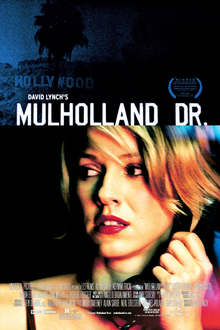
I’m not even sure that I can say what it’s about.  Since I watch movies alone most of the time, I turn to the internet to have “discussion” about them.  IMDb and Wikipedia are often good starting points.  There is a tremendously long article in the latter on this film.  Quite often Wikipedia provides not a ton of information about films, but here’s a case where contributors simply can’t say enough.  And none of them know for sure what it’s about either.  I suspect that’s why David Lynch is so highly regarded as a film maker.  He’s an artist.  What artist can explain what their work really means?  Lynch has been notably tight-lipped about what he intended this movie to say, but if you’ve watched Twin Peaks through, you get an idea of what you might expect.  It’s certainly an intellectual experience, and a surreal one.  But is it horror?

One of the terms often used to describe the movie is “nightmare.”  That seems like a horror-laden word, doesn’t it?  It’s often a matter of the characters not knowing who they really are (and the viewers don’t know either).  The thing that ties most of them together is that they’re involved in a movie in some way.  I’ve come to believe that things like books and movies and songs—things we mentally “consume”—become part of our minds, just like food becomes part of our bodies.  Some of the films we see are like junk food—fun, but all fluff.  A David Lynch movie will give you something of substance to chew on.  And finally having seen Mulholland Drive, I’d say it’s a much horror as Lynch’s earlier work has been, however you interpret that.
Finding a Spot

Sometimes you’re not born among your tribe.  I live where I’ve moved out of economic necessity, not where my family’s located.  My family’s not quite sure what to make of me anyway, so I seek my tribe.  At first it was among the United Methodists, but when I was in seminary they let me know what they really thought of me.  The Episcopalians seemed more welcoming to my academic aspirations and my doctorate led me to believe my tribe was those who studied ancient West Asian religions.  I wrote papers, led conference sections, knew people.  When I had to step out of academe, however, they tended to fall away.  (Ironically my most-read work, according to Academia.edu, is my dissertation, revised edition.  It has had over 8,000 views.)  I still have many scholar friends, but I’m clearly no longer part of the club.

That’s why I turned to horror (as a field of study).  I was seeking my tribe.  I wasn’t at all sure Holy Horror would get published.  I was encouraged when The Journal of Religion and Popular Culture published “Reading the Bible in Sleepy Hollow.”  Then I discovered other academics (still not part of the club) were studying religion and horror.  Ironically, it was people on the horror side, rather than the religion side, who made me feel most welcome.  In the meantime, I wrote some horror stories (still do) but the fiction publishing tribe seems to be at war against the rest of the world.  You can’t breach their bulwarks.  I’ve been trying for a decade and a half.  So I continue to write books that move more toward horror, and move away from religion.  Still, hard-core horror fans don’t really pay much attention to my books, still I try, but as an outsider.

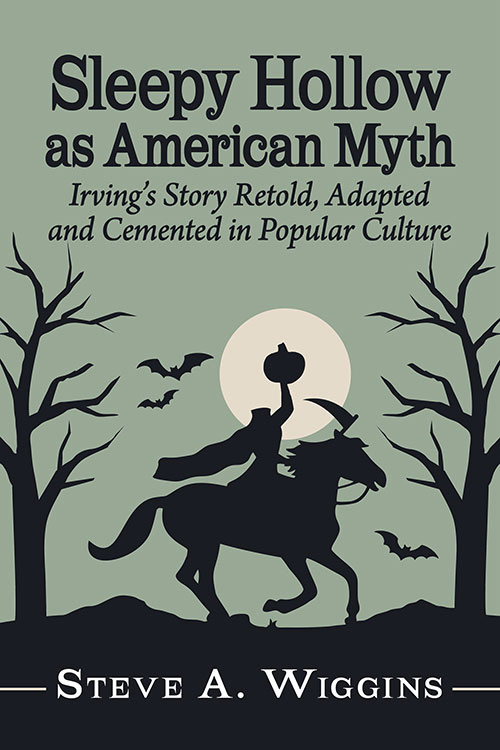
Since Sleepy Hollow as American Myth is in production, I’m working on my next projects.  I’ve been indulging in fiction again, where I’d really rather be, for a host of reasons, but unless I succeed as a double agent, I’ll remain unpublished.  My tribe, I think, would welcome more nonfiction like I’m writing.  These books haven’t been selling well, but they may eventually get referenced.  Now, many years after the fact, the ancient West Asian studies tribe cites my work and asks me to contribute more.  I’m afraid that island was abandoned years ago, former tribe-mates.  I was lonely and so I rowed across the ocean into horror territory.  If you’re looking for a tribe too, I’ll be glad to try to introduce you around.


Motorcycle Trip

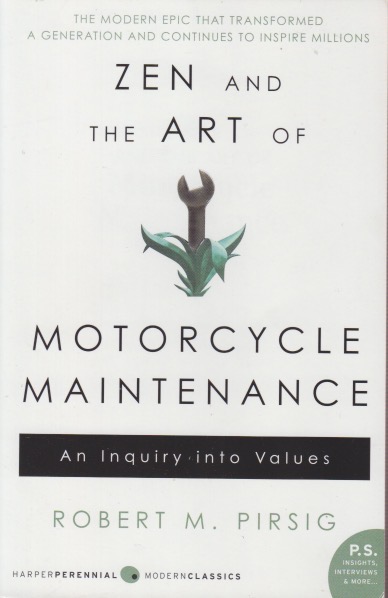
Among my introductory lectures to students was one that covered genre.  I recall saying something along the lines of “when you read something your expectations of genre influence how you understand it.”  Strangely, my own writing sometimes defies easy categorization, but I find it disorienting to read something without an idea of whether it’s fact or fiction or whatever.  I suspect I’m not alone in this.  When my wife suggested we read Robert M. Pirsig’s Zen and the Art of Motorcycle Maintenance together, I wanted to know what it was we’d begun reading.  The BISAC code (the category on the back cover of a book) simply said “Philosophy.”  I took almost enough philosophy in college to minor in it, so I had a general idea of what philosophy might look like.  Then I remembered reading Nietzsche’s Thus Spake Zarathustra and found myself back at the question of genre again.  Was this philosophy, autobiography, or a novel?  All of the above?

Now, I’ve known about this book from college days on.  It was in the college bookstore and I’m pretty sure it was assigned in some classes (not the ones I took).  What threw me was the autobiographical part.  Was this fiction?  The philosophy parts were pretty stout stuff.  And was Phaedrus real or imaginary?  Of course, you start getting some inklings that Phaedrus and the narrator are the same.  And that the latter isn’t a particularly good father.  The edition we read came with a helpful introduction that suggested that Phaedrus was the one with a correct outlook all along.  And an afterword that told how Chris died during a mugging when he was only 22.  There was pathos all over this tale.  Even when we finished I wasn’t quite sure what we read.  It’s sometimes classified as an autobiographical novel or philosophical fiction.

Rejected over 120 times, the book became a national bestseller when one editor took a chance on it.  (That is how publishing works.)  Perhaps the most poignant part of the book is the author.  What’s more, Pirsig wrote the book by getting up and writing at the same time slot that I use, so he could work a regular day after.  And he had been in a psychiatric hospital and had received electroshock therapy for schizophrenia.  Clearly a lot was happening behind the scenes for this most unusual tome.  Among the academic publishing crowd it’s common to hear that Stephen Hawking’s A Brief History of Time was a book that many bought and never read.  I did find that one a bit rough going too, but I do wonder how many engage with the philosophy in Zen and the Art of Motorcycle Maintenance.  There’s heady stuff here to ponder.  And I’m glad for that one editor who thought differently from all his colleagues.


Going Below

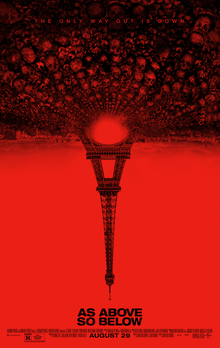
Indiana Jones in National Treasure, in found-footage horror format.  That’s the feel of As Above, So Below.  Only Jones is a woman.  There’s plenty of religious imagery in this movie, but the story’s not that great.  One of the reasons is that it’s too difficult to swallow, although it does score serious points on the claustrophobia scale.  At the beginning I wondered if I was going to make it through since Dr. Dr. Scarlett Marlowe’s cell phone is constantly moving as she continues her father’s search for the philosopher’s stone.  Surviving the situation in Iran, the remainder of the film takes place in Paris, especially the catacombs.  My level of impressedness went up when I learned that the movie really was shot in the catacombs.  Unfortunately it didn’t really help the story.

Alchemy, as part of esoterica, is purposefully difficult to understand.  Marlowe is continuing her dead father’s search for the philosopher’s stone that can change things into gold.  Her friend George (who repairs the clockwork for the bells at Notre Dame) is forced into the catacombs with her and her cameraman Benji.  They’re led by three Parisian cataphiles and some shots look like they were lifted directly from Indiana Jones and the Last Crusade, including the use of her father’s notebook.  Instead, the group enters the gates of Hell.  There are lots of scary things down there, many of them unexplained.  Some reflection reveals that they are all having to confront their pasts—or at least some of them are.  One of the cataphiles is killed before we learn her secrets.  And one of the survivors has no real backstory.  Six go in and three come out.

The movie plays with some interesting ideas, but it’s hard to swallow that an actual bona fide archaeologist would go on an illegal treasure hunt.  And that she knows of a secret chamber in the catacombs that has remained undetected by specialists.  I began scratching my head.  And when the group (or some of them, anyway) begin finding artifacts from their personal pasts in the catacombs, credibility is strained even further.  The idea that it’s important to come to terms with your past is a good one.  But once the young people begin dying and the rest have to keep going deeper and deeper to get out, the illusion is broken by Marlowe just dashing back to get a different stone to save George.  If it were just a matter of popping back, wouldn’t they have tried that earlier?  There are some Bible quotes, making this a candidate for the also unlikely Holy Sequel.


Perhaps More?

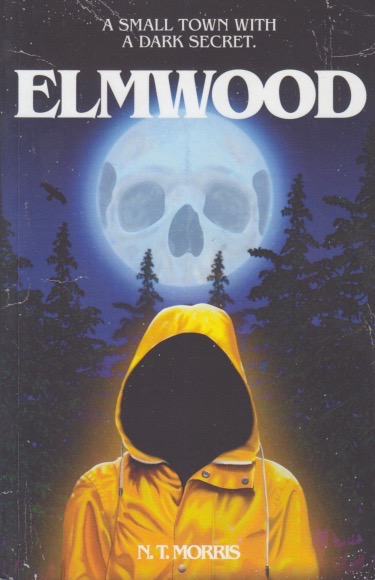
Publishers use the term “deep backlist” to refer to titles that they published long ago.  That’s always the phrase that comes to mind when I browse my “to read” list.  That list was started, in its current online repository, a decade-and-a-half ago.  When I delve into the “deep backlist” of items I placed on the list years ago I sometimes can’t remember where I learned about them.  Such was the case with N. T. Morris’ debut novel, Elmwood.  Someone recommended it years ago and I finally came into possession of it.  A moody tale about a town haunted by a cult, it is a nice effort as a self-published horror novel.  If you read a lot of fiction you start to notice some of the signs with self-published work (and there are many good reasons to go that route).  Morris offers a well-designed and aesthetically pleasing book.  The story does end with some loose threads, however.  There may be spoilers below.

Aidan Crain finds the victim of what appears to be a serial killer.  His difficulty coping with it leads his wife Laura to suggest that they get away from it all in the little town of Elmwood.  They rent out a house she found online, but it turns out to be haunted.  The people of Elmwood aren’t terribly friendly to strangers, but since the goal is to get away from city life, the young couple doesn’t much mind.  Except the ghosts in the house are accompanied by a dark presence in the woods that keeps calling to Aidan.  One of the tricky bits for me was determining what were dream scenes and how they related to waking scenes.  This is often part of speculative fiction, but a solid editor would lead you in the right direction in such situations.

The story tries to fit a lot in, leading me to think—rather uncharacteristically—that it needs to be longer.  The house was owned by a serial killer who’s part of the cult that killed the victim Aidan found many miles away.  The cult has been culling both locals and visitors for years and the police department appears to be complicit.  As do some local business owners.  The darkness in the woods, which is defined more or less as evil itself, seems to control the cult and it wants Aidan to join.  Some of the loose threads at the end suggest that Morris’ next novel will be a sequel to this one.  I can’t recall how I learned about Elmwood, but I’m glad to have finally read it.  It’s a good shot at becoming a horror writer from my personal deep backlist.


Hoping for 2025

Those who predict, as pollsters repeatedly remind us, can’t really prognosticate.  In ancient times some prophets were thought to be given (usually conditional) views of the future directly from God, but even these weren’t fail-proof.  Nobody knows what 2025 holds for us.  I love holidays, but New Year’s Day is one of the more chancy ones.  I don’t stay up until midnight because if I do I don’t sleep that night (I tend to awake just a couple hours after midnight most days), and I don’t make resolutions since I try to correct errors in my life as soon as I find them.  Maybe New Year’s could stand a makeover.  Something beyond staying up late and drinking.  In my experience, the next year comes anyway.  And it should be an opportunity for hope.

Interestingly, although attempts have been made to Christianize the day, it tends to remain secular.  The current date was established in the west because of the rebranding of solstice celebrations to the birth of Jesus, but the religious elements never really stuck to New Year’s Day.  It marks a clean slate for taxes and other financial resets.  Importantly, it’s a day off work.  Maybe we should rebrand it.  Honestly, I don’t have any suggestions myself—this sounds like a job for a committee.  Who wouldn’t want to be on a holiday committee?  And holidays do evolve over time.  When it was Columbus Day many employers didn’t make it a paid holiday.  Rebranded as Indigenous Peoples Day, some progressive companies did.  See what I mean?  Holidays are what we make them.

The more I think about this, the more I wonder if we shouldn’t reinstate the twelve days of Christmas.  Epiphany (aka Insurrection Day) comes on January 6, and, pre-Adam Smith the twelve days lasted until then.  New Year’s could be one among siblings.  I’m sure that if we tried hard enough we could come up with some branding for each day.  The Brits already have Boxing Day on the 26th.  The Scots make the 31st Hogmanay.  Our task, should we choose to accept it, would be to fill in the 27th through the 30th and January second through the fifth.  If we divide that up and send it to committee I’m sure we could come up with something.  It seems we already have the ten lords a-leaping lined up.  Said lords prefer having two more work days this week, I know.  Perhaps New Year’s, or even the Christmas season, could stand a bit of workshopping so we can really catch up with our sleep.  Here’s hoping, for 2025.

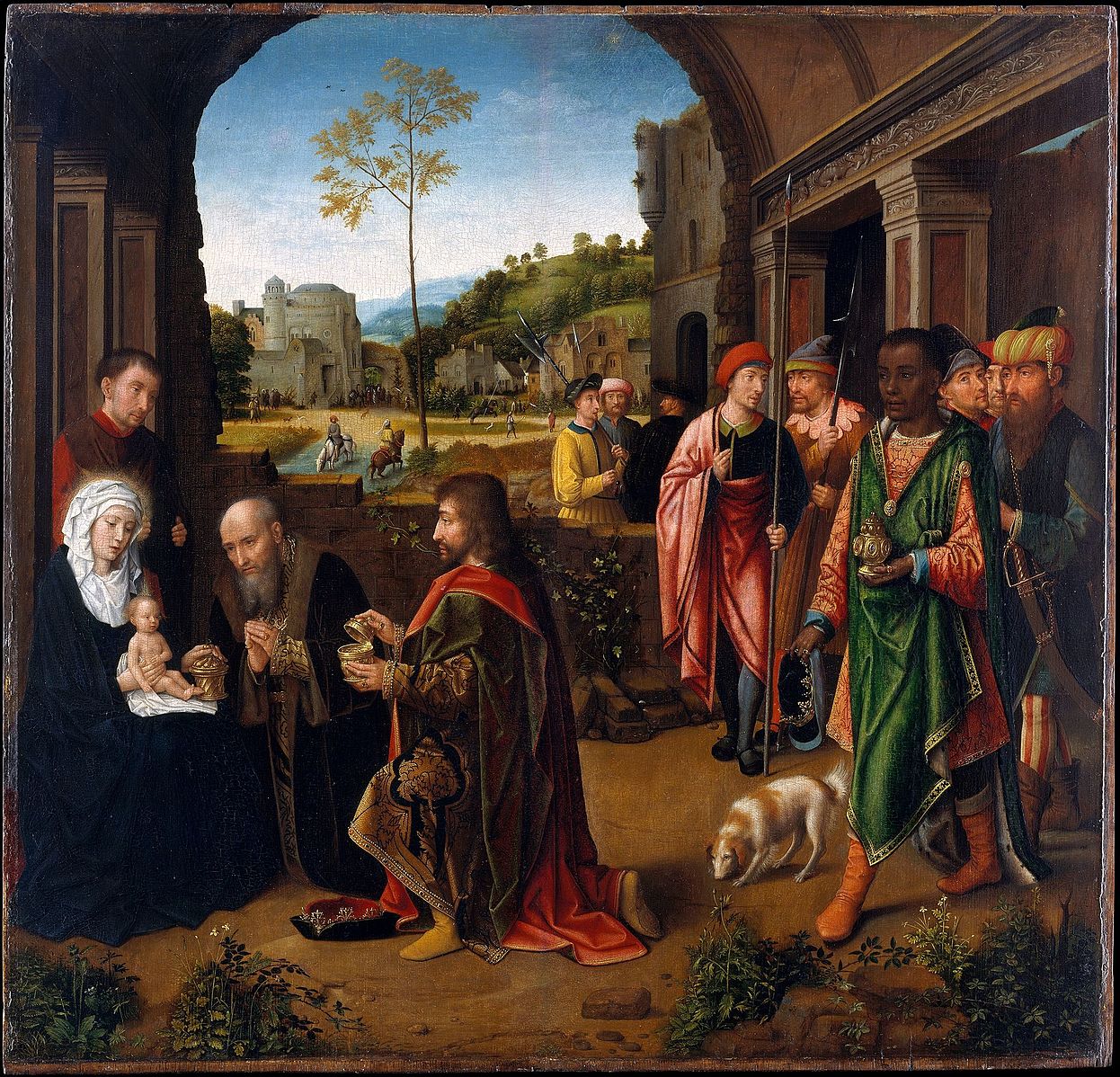
Let’s give them time to arrive! Image credit: The Adoration of the Magi – painting by Gerard David, Creative Commons CC0 1.0 Universal Public Domain Dedication by the Metropolitan Museum of Art

2024 in Books

I’m trying to figure it out.  My annual last post is my book reflection for the fading year.  I keep track of my books on Goodreads, and I always join their reading challenge to keep myself honest.  What I can’t figure out is why I fell below 70 books this year.  (The official total is only 61.)  I set my goal below that, of course, because I’m no fan of setting targets impossibly high.  The only thing I can figure is that some of this year’s books took longer than usual to get through.  Maybe on average they were longer than my typical fare.  In any case, my favorites among the fiction I’ve read are these:

For standard horror I especially liked Thomas Tryon’s The Other, and Ivar Leon Menger’s What Mother Won’t Tell Me.  Interestingly, neither was speculative.  I do seem to have slipped in that category a bit.  Gothically speaking, Thierry Jonquet’s Mygale, Rebecca James’ The Woman in the Mirror, Alix E. Harrow’s The Once and Future Witches, and Erin Morgenstern’s The Night Circus were all memorable.  I started reading Dark Academia somewhat intentionally this year and I would argue that Sarah Moss’ The Ghost Wall fits since the professor’s up to no good in the woods.  Piranesi by Susanna Clarke also fits for a similar reason, only not in the woods.  I enjoyed both.  For literary fiction, edging back into horror, A Children’s Bible by Lydia Millet was very good.

My reading tends toward nonfiction (occupational hazard) and here there are categories also.  In the general category, Andrew Laties’ Son of Rebel Bookseller stayed with me.  Don Foster’s Author Unknown was enjoyable and eye-opening.  I also really enjoyed Mark Thomas McGee’s Fast and Furious.  For books on horror I read Stephen King’s Danse Macabre and his On Writing.  (I also read one of his novels.)  Both of these were quite good, I thought.  I also learned a lot from Olga Gershenson’s New Israeli Horror.

I see that I also read quite a lot of unusual nonfiction.  Most of it I quite enjoyed.  The most conventional of them was David Robson’s The Expectation Effect.  I’m fascinated by the power of the human mind, so Mitch Horowitz’s Uncertain Places and D. W. Pasulka’s Encounters gave me considerable pause early in the year.  Carlos Eire’s They Flew, a weighty tome, was well worth the time it took.  Among the reflective/spiritual nonfiction my favorite was Katherine May’s Wintering.

I very much enjoy my end of year reflection over the books I’ve read.  I don’t plan my reading for the year in any systematic way.  I will say that I received quite a few titles over the holidays that I’m looking forward to posting on these this coming year.  And I suspect a few new titles will appear along the way as well. I do hope to get past 61, in any case.  Read through 2025!


Bottoming Out?

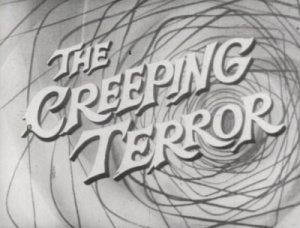
It was an honest mistake, I swear!  I had remembered reading in Stephen King’s Danse Macabre that The Creeping Unknown was worth seeing.  I’d known about this movie under the title The Quatermass Xperiment since I was a tween.  The problem when you grow up with no money in a small town is that you don’t have access to such things.  Then a friend gave me a DVD of The Creeping Terror.  I thought it was The Creeping Unknown.  The disc hadn’t spun too many revolutions before I realized I was watching what may be the worst movie ever made.  Many reserve that for Plan 9 from Outer Space, but believe me, this is much worse.  The story of a couple of aliens sent to eat people to transmit to their superiors what our weaknesses are, it seemed to me that the main weakness is nobody thought to run from this slow-moving monster, except one guy who just abandoned his girlfriend to it. (Apparently girls don’t run.)

Like that other baddie, The Beast of Yucca Flats, the audio was not preserved so nearly all of the film is a voice-over by an authoritative-sounding announcer.  There are a few dubs, but they aren’t well done.  And then extended scenes of young people at a dance (have you ever heard of just filling up time?) are intercut with perhaps the slowest monster attack in history.  There’s so much not to like here.  The poor acting.  The plot nearly as dimwitted as Trump.  The stock footage of a rocket launch run backwards to make it look as if it’s landing.  The sheriff making out with his wife in the patrol car while “on a break” from looking for the monster.  The instrument panels from beyond our galaxy with Arabic numerals and Latin letters.  You find yourself hoping for the Apocalypse so you won’t have to watch the rest, and it’s only 74 minutes long.

Somehow it comes as little surprise that the director (also producer, editor, and star), under the name Vic Savage, disappeared never to be heard of again.  The film’s main financier, had to try to put the movie together for release.  (He also had a role in the movie.)  There is, as I’ve mentioned often before, an aesthetic to watching bad movies.  I’ve ended up seeing many of “the worst of all time” in my spate of movie viewing over the past three or four years.  This is the first time it has happened by mistake.  I do have to say that it’s easier to appreciate a bad movie when you can see that it’s coming and prepare yourself accordingly.  The Creeping Unknown remains elusive.


Writing Academic

One of the things that Stephen King detests (or at least detested back in the seventies) was academic literary criticism.  Perhaps you’re more normal than King or I, but if you read such things you find yourself immediately sucked into a world where the writer seems determined to demonstrate their erudition by splicing together words that shouldn’t really sleep together and then throws theory at you until you fall off the cliff.  It can be a frustrating experience for the reader, even as the writer is granted tenure for it.  One of these days I’ll learn my lesson.  Buying books by academics is dicey prospect.  I’m drawn in by the ideas, and the early pages, then I’m soon in the deep end remembering that I never learned to swim.

Is it really fair, I wonder, to begin a book—the first one or two pages impossibly engaging—then start winging ponderous, theory-laden words at the reader?  Your publisher paid for an attractive, inviting design and the reader, lured like a child to a candy store, thinks this will be sweet.  Then the sugar coating wears off and you’re faced with another 253 pages of clawing at words you recognize, hoping to make some sense out of what seemed, and still is, an engaging idea.  This has happened to me multiple times.  I live between worlds.  Even when I was an academic, however, I eschewed theory-heavy language.  I had nothing to prove, other than the point of my article.  And to prove a point, it seemed to me, people have to understand what you’re trying to say.

Higher education is in crisis mode.  Among the various fields you can study, the humanities are under especial scrutiny.  Have you read a book by an English professor lately (present company excepted!)?  Although their title is “English” you can be left wondering what language it actually is that they’re writing.  And they are capable of plain speaking.  Those first two pages demonstrate that.  They are capable, but are they willing?  I begin to understand Mr. King’s reservations.  I’ve run into books even in the field in which I have a doctorate that I can’t understand.  I find myself tentatively cracking open the Oxford English Dictionary to see if perhaps I’ve misunderstood the connotations of that word for my entire life.  I don’t mind a challenging read now and again.  At the same time, I mourn the loss of something beautiful when I can’t make out what the author seems to be saying.  Perhaps such books should come with warning labels.  I suspect Stephen King would have a good turn of phrase for what such a label should say.


Vampire Lovers

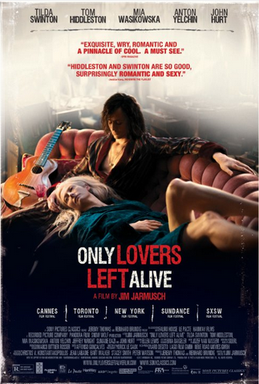
Stylish, gothic, dramatic.  If it weren’t for the vampires you might not know that Only Lovers Left Alive is a horror movie.  Indeed, some say it’s not.  You can have movies about vampires that aren’t horror films, right?  Still, vampires defined horror, at the earliest stages.  There’s no on-screen violence in Only Lovers.  No, it’s about a pair of vampires named Adam and Eve, who are many hundreds of years old, that have developed different outlooks on undeath.  She reads and lives in exotic Tangier, enjoying herself.  He’s a depressed musician who lives in Detroit—there must be a book in horror movies set in post-industrial Detroit, wondering what’s the point.  In any case, they decide to get together in Michigan where they revel in each other’s company.  But then Ava, Eve’s troublesome sister pops in, unannounced.  Not refined or cultured like her sister and brother-in-law, she leads to trouble.

Eve and Adam move back to Tangier where whey have difficulty locating a good source of blood.  As cultured vampires, they do not attack people—zombies, as they call them—but procure it from doctors willing to sell.  When the supply runs out, they do what they must to survive.  This gentle story is art-house quality and it brings a different angle to the aristocratic vampire.  These vampires are the creators of culture.  The mortals sometimes appreciate it, but are generally too busy destroying the world to pay much mind to the superior creations all around them.  There’s not a hint of evil about these undead, subverting the usual narrative of such beings.

Vampire movies offer some complex possibilities.  They’re also a reminder why “horror” isn’t the best movie label ever invented.  Monsters by definition, vampires are portrayed in many ways—from animalistic, sometimes even with wings, to European nobility with great politeness and decorum, even as they bite your neck.  Then there are those who don’t attack people unless absolutely necessary.  They’re symbols of capitalism, with its greedy sucking of the blood of others.  They’re also symbols of evil, at times barely distinguishable from demons.  They seem endlessly adaptable.  In Only Lovers they are folks you’d be okay with, if they lived next door.  As long as Adam didn’t play his music too loud.  Since horror is a slippery term anyway, I opt for counting this in that genre.  In fact, I learned about it from a website listing stylish horror movies, so I’d say it counts.  Even if it’s just a bit out of the ordinary.


The Dark Season

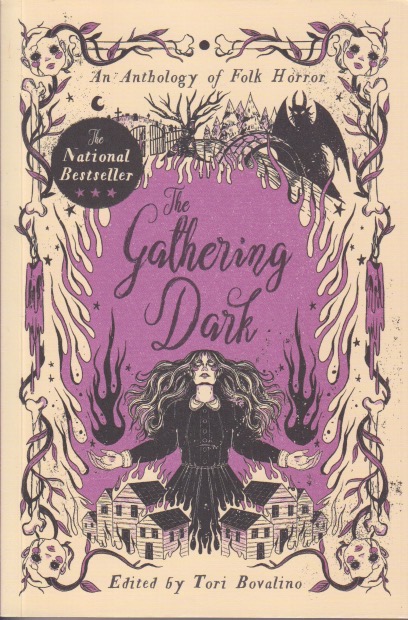
It was on Goodreads that I first saw The Gathering Dark.  Since I’ve been trying to read more short stories, I decided I should give it a go.  Subtitled An Anthology of Folk Horror, it sounded like important for a viewer of said folk horror.  Anthologies, both fiction and non, are uneven by nature.  And something that wasn’t clear at first is that this was a young adult collection.  I’ve read YA books before, of course.  Some of the most creative fiction of the last couple of decades has been for that demographic.  The feature I noticed most here was that the horror was mostly gentile, kind of like the horror in my fiction.  I never consider myself a YA author, however.  Occasionally my characters are teens or twenty-somethings, but for the most part they participate in the adult world, where something is wrong.

Youth is, of course, a fraught time.  We’re exploring relationships and trying to sort out the changes taking place in our bodies and our lives as we leave the larval stage.  There’s a kind of natural horror to it.  At the same time, “folk horror,” like horror itself, is a slippery term.  Some of the stories seem to be based on urban legends, and that is definitely the present-day source of folk horror.  When it’s found online it’s often called “creepy pasta.”  It can be the basis for horror stories, and I’ve seen a few movies that make use of it.  Folk horror tends to favor rural settings (true of all the stories here), and superstition, and isolation.  Often it involves pagan religion, but here only one story dwells in that territory.

Overall I found the collection interesting and well written.  A number of the stories did evoke the feelings of what it was like to be young and afraid.  I do wonder how the anthology came about.  There’s no introduction and, I know from my own publishing experience that anthologies are a hard sell to most publishers.  I’ve noticed Page Street books before.  They recently began accepting horror written for adults.  They already have a strong YA list, thus The Gathering Dark.  They’re also committed to diversity, and that clearly shows throughout this collection.  I think it’s important to read young adult literature now and again.  It is, literally, the literature of the future—this is what forms young people’s tastes.  This particular book was a national bestseller, and it earned some notice on Goodreads.  And that was enough to draw me in.


Historic Vampires

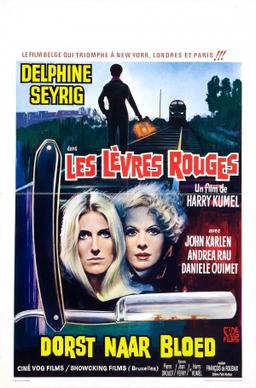
Vampire movies have always been a guilty pleasure.  The thing is, there are so many of them that watching them all would be the task of a lifetime (and a substantial budget).  Those of us who are constantly looking for, shall we say, new blood, can find that our lack of knowledge extends back for years, particularly if a movie didn’t make it big in our home country.  Daughters of Darkness is an early Euro-horror about Elizabeth Báthory.  A stylish, almost art house movie, what particularly struck me about it is that it was very well written.  The use of blood is restrained, given the topic, but verbal descriptions of Báthory’s excesses makes for a particularly gruesome scene.  So, about the story.  (This is from 1971, so I won’t worry about spoilers too much.)

A young couple (his backstory is inadequately explained in the movie, apart from being aristocratic), newlyweds, are headed to introduce her to his family.  Stefan (he) isn’t exactly the ideal husband (played convincingly by John Karlen), but Valerie (she) really wants to meet “mother.”  Stefan stalls the trip, and, in the off season, the couple have a luxury hotel to themselves.  Then Elizabeth Báthory shows up with her “secretary.”  Stefan is a little too interested in violence, as a string of murders make the headlines.  Meanwhile, Elizabeth begins making moves on Valerie.  We come to understand fairly early on that she’s a vampire, but no fangs appear and she’s always impeccably dressed and sophisticated.  Her secretary, who is having second thoughts, is accidentally killed while setting up Stefan as an unfaithful husband—again, the writing here is quite good—and Valerie becomes Elizabeth’s new secretary.

There’s a strong feminist aspect to this film, perhaps because Delphine Seyrig (Báthory) was a prominent feminist and would be attracted to such roles, it would seem.  The daughter of an archaeologist in Beirut, she supported women’s rights and there appear to be elements of this in the movie, although it was written by four men.  I was a bit too young for this movie when it came out, and art movies wouldn’t have stood a chance where I grew up, at least not in circles my family knew, so although Dark Shadows mainstay Karlen took a rare male lead role in the movie I’d been completely unaware of it.  But then, vampires are that way, aren’t they?  They tend to be old and well-hidden in the shadows.  Then they come at you with a bite when you least expect it.


Eves and Holidays

If you stop in to this blog for reading about horror movies, don’t worry, there’ll be plenty of that to come.  One thing everyone who knows me knows is that I believe in holidays.  Capitalism has been killing us for centuries, but since I began having to do a 9-2-5 job, I feel the grim reaper’s approach more steadily.  Day after day after day being eaten up by work and leaving so little time to be who I really am.  I invest a lot in holidays because they break, if only temporarily, capitalism’s death-grip around our throats.  And today is Christmas Eve.  Not technically a holiday, I’ve worked for employers who, Scrooge-like, don’t consider this a paid day off.  You want to mentally prepare for Christmas (the only paid holiday in the season), you cash in a vacation day.

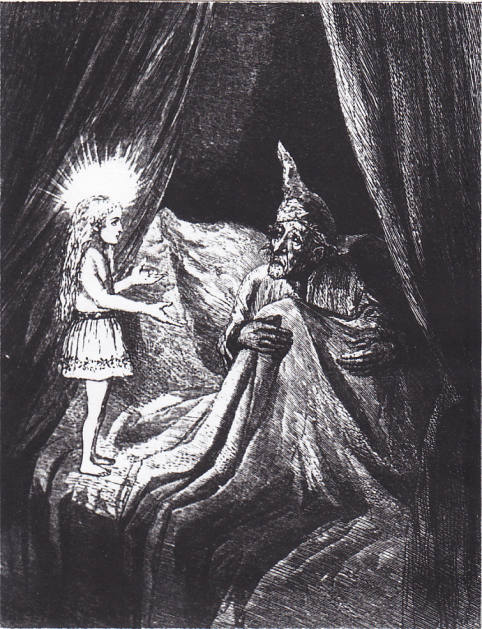
Image credit: Sol Eytinge, Jr., The Ghost of Christmas Past. Public domain via Wikimedia Commons

As influential as Charles Dickens’ A Christmas Carol is, late capitalism simply doesn’t get  the message.  Studies show, consistently, that work in this era is more efficient when workers have more time off.  Now, I’m not so naive as to realize that some professions require work on holidays.  After all, I trained for ministry for many years, and Christmas is always a work day in that profession (even if nobody comes to church).  Emergency workers of all sorts have to be at least on call for holidays.  Police can’t assume citizens will behave just because it’s a holiday.  But such professions, I profoundly hope, have other payoffs.  I entered a profession (professoring) partially because of the division of time.  (And it is one of the few things I’m very good at.)  People should have fallow periods.  Why is Christmas Eve still a work day?

Scrooge is clearly still in charge.  I, for one, will not shed a tear when capitalism dies.  I’ll predecease it, I’m pretty sure, but even so, I welcome a world where people’s needs come before the plutocrats’ profits.  A friend of mine always insists on saying that we don’t live in a democracy but a plutocracy.  Seeing the election results last month only confirms that he’s right.  As I recently wrote here on this blog, the howling is most fierce before the new dawn.  And lasting change must take place slowly.  Sudden shifts only lead to more sudden shifts.  Stable growth is slow.  I’m sure influential people don’t read this blog, the humble musings of an unfluencer, but if they do, there’s a simple plea here.  Consider the holidays.  Read Dickens, and have the courage of your convictions afterwards.  And yes, a blog post (unpaid) will appear on Christmas.


Mad, Bad

Although epic poetry holds an important place in literary history, I tend to read prose more.  Like most wordsmiths, I do write poetry—more like dabble in it.  Unlike my fiction writing, the poems aren’t intended for publication.  They are too deeply personal for that.  Still, my recent post about Gothic (the movie) had me thinking about Percy Shelley and Lord Byron.  They were known for their poetry, of course.  I can’t pretend to have read a ton of it, but their free-spirited personalities are intriguing.  Back in 2012 I read Edward Trelawny’s account of Shelley and Byron’s last days—neither lived more than six years after the summer when Frankenstein was born, both dying before forty.  I was recently reading about Byron in another context and was reminded (I’d read it before) that an acquaintance once described him as “mad, bad, and dangerous to know.”

Authors, I suspect, are often neurodiverse.  There’s a reason I think this.  The size of the population that reads for pleasure is depressingly small.  It stands to reason that writers are a subset of that small population.  The writers I know tend to have some quirks.  They function just fine in society, but they do seem to operate on a different level.  I’m naturally drawn to them.  I have been trying to get to know writers locally—there are quite a few here in the Lehigh Valley—and sometimes they will let you in.  Often not.  It’s tricky to befriend writers, in my experience.  I suspect I might be one myself.  In the published side of things, I’ve produced six non-fiction books, but I also publish short fiction (and have completed six unpublished novels).  Still, I’m not part of the “mad, bad, and dangerous to know” club yet.  If there is a club.

Over the years I’ve joined three different writing groups.  Their meetings are interesting since many of us are introverts.  One thing we all have in common is that we love to talk about writing.  Perhaps it’s because mainstream success is so difficult to come by.  Publishing houses have consolidated and the “Big Five” are responsible for by far the majority of books the reading public—that most rare group—buys.  One thing that’s true among the writers I know is that most would keep writing even if publication, or hope of publication, was off the table.  It is what we do.  For many years, perhaps too many, my writing was academic.  What nobody knew in my teaching days, however, was that I never stopped writing fiction.  It was there I put my thoughts that I’d classify as “mad, bad, and dangerous to know.”


Echoes

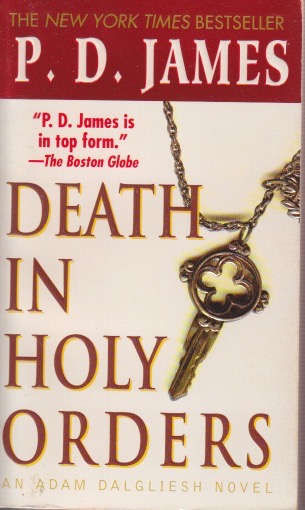
Among the first books I read that might be considered Dark Academia was P. D. James’ Death in Holy Orders.  That was so long ago that I don’t remember when, although the inscription tells me it was purchased in 2002.  There’s no mystery as to why.  There was buzz at Nashotah House when the novel came out.  It was about a murder at a conservative Anglican seminary with few students.  It seemed very much like Nashotah House to some there, so I read it.  Now, I’m not a fan of murder-mysteries.  I’ve read nothing else P. D. James wrote.  I had no idea who Adam Dalgliesh was.  The book was a New York Times bestseller.  Reviews were mixed, and among fans of Dark Academia it is scarcely noticed.  Still, Dark Academia is still in its toddlerhood.  Its boundaries aren’t clear and it overlaps with other genres, as most modern genres do.  There may be spoilers below.

In a very complex plot (mystery writers like to show off in that way) a rich seminarian at St. Anselm’s, dies by suicide that was strange but not really suspicious.  His wealthy stepfather receives an anonymous letter suggesting foul play and super-sleuth Adam Dalgliesh of Scotland Yard is brought in. After the suicide, an old housekeeper dies of an apparent heart attack.  But then an Archdeacon is murdered in the chapel (here was the frisson at Nashotah House).  Since there were visitors on the isolated campus at the time, and the Archdeacon was not liked by most people there, it becomes a whodunit with conflicting motives, one of which is to see the seminary closed.  It owns artifacts worth millions, and, it seems, someone stands to inherit.  Dalgliesh and his team pick through all the clues and, of course, figure out the guilty party.

Even at the end the motivation seems odd.  There is a kind of Dead Poets Society letter of confession about preserving the arts.  The murderer is a professor of Greek.  These elements definitely cast the book into the realm of Dark Academia.  Still, it’s primarily a detective novel, and I suspect that’s why many fans of Dark Academia haven’t yet come upon it.  I do recall, upon first reading it, that it felt real enough.  I was living in a setting not unlike that of the novel and small seminaries do have big secrets.  This time through I was less impressed.  Super-sleuths are just too smart, which means their writers have to be exceptionally clever.  The setting suggests something wrong in the educational world, however, and that is true enough.