Echoes

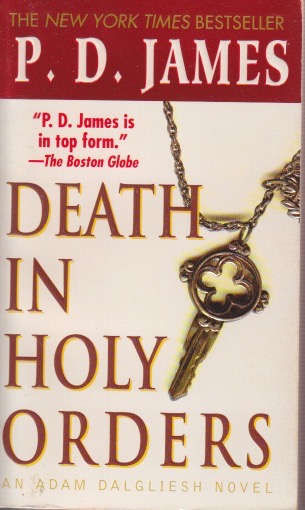
Among the first books I read that might be considered Dark Academia was P. D. James’ Death in Holy Orders.  That was so long ago that I don’t remember when, although the inscription tells me it was purchased in 2002.  There’s no mystery as to why.  There was buzz at Nashotah House when the novel came out.  It was about a murder at a conservative Anglican seminary with few students.  It seemed very much like Nashotah House to some there, so I read it.  Now, I’m not a fan of murder-mysteries.  I’ve read nothing else P. D. James wrote.  I had no idea who Adam Dalgliesh was.  The book was a New York Times bestseller.  Reviews were mixed, and among fans of Dark Academia it is scarcely noticed.  Still, Dark Academia is still in its toddlerhood.  Its boundaries aren’t clear and it overlaps with other genres, as most modern genres do.  There may be spoilers below.

In a very complex plot (mystery writers like to show off in that way) a rich seminarian at St. Anselm’s, dies by suicide that was strange but not really suspicious.  His wealthy stepfather receives an anonymous letter suggesting foul play and super-sleuth Adam Dalgliesh of Scotland Yard is brought in. After the suicide, an old housekeeper dies of an apparent heart attack.  But then an Archdeacon is murdered in the chapel (here was the frisson at Nashotah House).  Since there were visitors on the isolated campus at the time, and the Archdeacon was not liked by most people there, it becomes a whodunit with conflicting motives, one of which is to see the seminary closed.  It owns artifacts worth millions, and, it seems, someone stands to inherit.  Dalgliesh and his team pick through all the clues and, of course, figure out the guilty party.

Even at the end the motivation seems odd.  There is a kind of Dead Poets Society letter of confession about preserving the arts.  The murderer is a professor of Greek.  These elements definitely cast the book into the realm of Dark Academia.  Still, it’s primarily a detective novel, and I suspect that’s why many fans of Dark Academia haven’t yet come upon it.  I do recall, upon first reading it, that it felt real enough.  I was living in a setting not unlike that of the novel and small seminaries do have big secrets.  This time through I was less impressed.  Super-sleuths are just too smart, which means their writers have to be exceptionally clever.  The setting suggests something wrong in the educational world, however, and that is true enough.

Solstice 2024

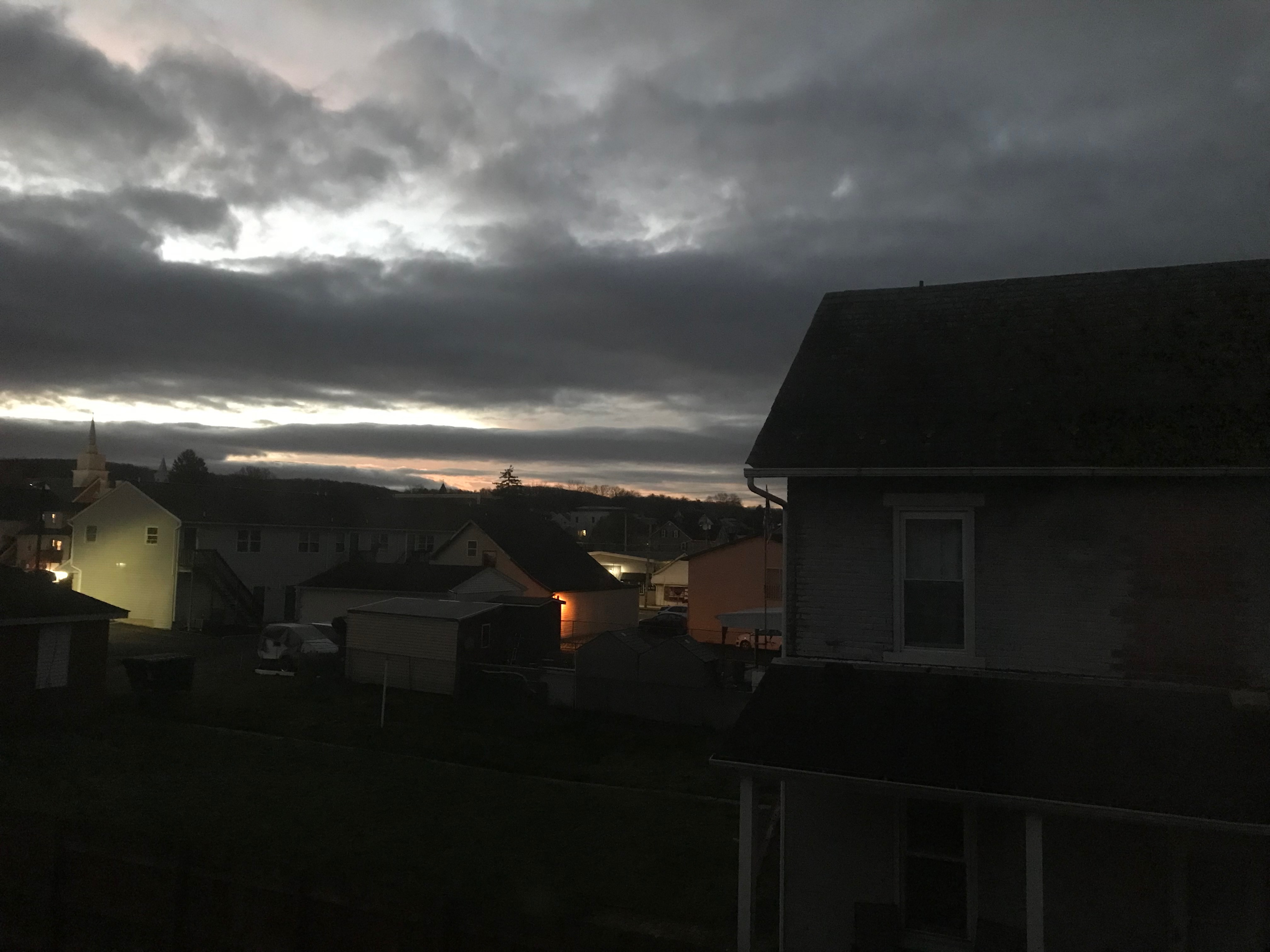
We have a small solstice celebration at home.  We’re not pagans, but it seems that the shortest day ought to be observed.  Noted.  Pondered.  You see, this holiday season had its earliest beginnings as solstice celebrations.  Fervently praying for more light, and a bit more warmth, ancient folk of the north knew to propitiate whatever powers that be in the dark.  “Please bring back our sun,” you can almost hear them sigh, in the bleak December.  I’m stunned and stilled by this each year.  The gradual change makes it less of a shock, but we’re living primarily in darkness now.  Until today.  The solstice is a turning point, an axis around which our lives turn.  Forgotten ancients celebrated it and eventually Christian and other holidays gathered around it, as if coming to a campfire on a cold night.  Why not stop a moment and reflect?

I’m a morning person.  More extreme than most other auroraphiliacs, I don’t remember the last time I wasn’t awake for sunrise.  Attempting to stay healthy, I try to get out for a morning jog before work, and that can be challenging for a guy who starts work early.  I sometimes start work even earlier than usual so that I can jog once the sun shyly glances over those eastern hills.  I notice the slow creep of the year.  At the other end of the day, it’s dark by the time work ends.  Mundane tasks such as hauling the garbage can out behind the garage can become tenebrous hikes.  Others who exercise, and work, most go to the gym.  I’ve tried jogging in the dark—it’s full of peril.  Like the ancient pagans, I look forward to a little more light.

Progress, like lasting change, must come slowly.  The earlier sun rises and later sunsets are first measured in matters of seconds, not minutes.  We remain in the dark even as we hope for light.  Hope pervades this time of year.  We anticipate Christmas, yes, but our light-starved eyes look beyond.  Beyond the chill of January into what some Celts marked as the start of spring—February.  Yes, the cold can be very intense then, but rages are always their most furious before they die out.  I suspect Dylan Thomas knew that when advising his dying father on how to approach the end.  I’m writing this post in the dark.  By dinner time the night will have already settled in.  And we’ll light a candle, encouraging more to join in looking for the elusive light.  Dawn always comes.  Eventually it comes.


Scrolling Along

I’ve got a condition.  “Oh, we know!” I hear you say.  But I mean a specific one.  Fast moving images make me nauseous.  It can be debilitating.  I can lose an entire day because I’m stopped at a railroad crossing while boxcars speed past my eyes.  Or because some found-footage filmmaker can’t hold the camera still.  As the old moralizing children’s song goes, “Be careful little eyes what you see.”  The internet has thus cast me into a kind of personal Hell.  You see, it has to do with scrolling.  To find things you have to scroll.  And scrolling, if I’m not careful, can make me quite ill.  When I try to find an old post on this blog, where the keywords are too common, scrolling through old posts can make me ill.  “Ah,” I hear you say, “turnabout is fair play.”

But seriously, scrolling can really be an accessibility issue.  An unrecognized one, for sure, but still an issue.  I have very long lists.  Books I need to read.  Movies I need to see.  Stories I haven’t finished writing.  And to find things, I must scroll.  It’s worse with pictures.  With pure text you can sort of avert your eyes.  Of course, you might miss what you’re seeking.  A small price to pay for not spending the rest of the day with your head between your knees.  If you’ve been to this blog a time or two, you know that I consider myself a neo-Luddite.  I use technology but I am ambivalent about it.  It sure makes navigation easier (until you lose the signal, then you curse yourself for not having a paper map).  It helps physicians and makes book buying much quicker.  But it can also make you sick.

It is possible to create this kind of nausea on the printed page.  It’s also easier to catch the early eye-strain that warns an episode is coming and close the book.  Besides, most books don’t cause this to happen.  Increasingly, scrolling is triggering it.  Looking for an image in the thousands of posts I’ve published here to reuse to illustrate a point.  Trying to find that book I know I saw on my endless Amazon wish list.  And just how many movies do they have on Netflix anyway?  Merrily we scroll along.  It’s just that some of us have to pull over to the side of the road awhile, get out of the car, and breathe deeply for a bit.  Don’t worry about us.  Just speed on by.  There are places to go, and me, well, I’ve got a condition.

More my speed. Image credit: “Boekrol Esther 18de eeuw uit een sefardische synagoge in Sevilla” public domain via Wikimedia Commons

Feeling Gothic

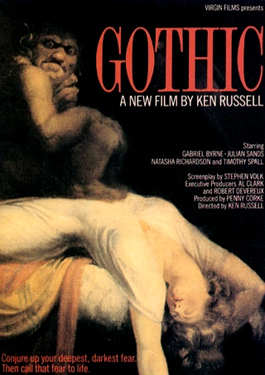
Gothic is an odd movie.  I first saw it while in seminary and have come back to it now and again.  I had been thinking of Frankenstein, so I decided to refresh my memory.  A pastiche of opium-fueled images and hedonism it nevertheless brings some religion into the horror.  In case you aren’t familiar with this Ken Russell piece, it’s a movie version of the stay of the Shelleys with Lord Byron, his physician John Polidori, and Mary’s stepsister Claire, in the summer of 1816.  During that visit, the basic ideas for Frankenstein emerged, and Polidori wrote an early vampire story that later inspired Dracula.  The religion comes in the form of Polidori’s Catholicism and his fear of condemnation for being a homosexual.  At one point, when the friends are about to read ghost stories, Percy Shelley says they’re more fun than any Bible.

Of course, in actual life Shelley and Byron were atheists, but the movie portrays the five raising some kind of entity during a seance.  They then spend the remainder of that stormy night trying to drive the entity back into their minds from the physical reality they gave it.  It’s a weird movie with lots of incongruous shots and some gross-out moments.  Ken Russell was known for his flamboyant style, and this movie is a good example of that.  It’s not great but it is moody and I come back to it when I want something, well, gothic.  The year 1816 was called “the year without a summer,” because of the volcanic winter caused by an eruption of Mount Tambora, and some have speculated that the bad weather of that year may have led to the creation of Frankenstein.

Every time I watch it, I wonder what the appeal is.  There’s a lot of God and Devil talk, and Byron was a fascinating character.  Julian Sands’ overacting in every scene makes me wonder what Shelley was like in real life.  I’ve occasionally read about his relationship with Byron and each seems to have had at least a supporting role in the iconic pair of monsters, Frankenstein and Dracula.  The two would be forever associated with the Universal release of movies named after them in 1931.  Gothic never made it big—I only found out about it because a seminary friend invited me over to watch it on VHS one weekend.  Still, it made enough of an impression to bring me back when the mood is right.  Even if it’s strange.


Philosophical Thoughts

Please don’t read too much into this!  I read a lot of professors who spend their careers trying to understand a previous scholar’s thoughts.  I suspect this happens quite a lot in philosophy, but it fits pretty well in religious studies also.  And I wonder, what of those intellectuals where were grappling with pure ideas?  Did they know they’d become adjectival?  In other words, did Immanuel Kant know that he was Kantian?  Or was he just writing stuff, trying to explain how he understood being in the world?  Now scholars dedicate themselves to understanding Kant.  Or in more recent times, Derrida, Lacan, and Bakhtin, or whoever’s the flavor of the day.  The ones who were too busy being Derrida, Lacan, and Bakhtin to figure out what someone else was saying about things just wrote.

Image credit: Portrait of Immanuel Kant by Johann Gottlieb Becker, 1768, public domain via Wikimedia Commons

I often wonder about how higher education has shifted the way we do scholarship.  It’s not really a place to test out ideas that the world can evaluate, but more a place where specialists can discuss possibilities and what someone else might’ve thought of something.  I guess that’s why I tend to think of my last four books as being non-academic.  I’m not using the tired formula of reacting against what some theorist has said about my subject.  I’m simply observing and drawing inferences.  Maybe it’s because I wasn’t raised in an academic environment.  I remember reading Nietzsche for the first time.  How he didn’t footnote.  How he didn’t argue against what some prominent others had said.  He simply wrote.  And he did so brilliantly.

Perhaps it’s yet another example of having been born early enough.  Tech has made it remarkably easy (for those without families to feed) to become writers.  No agent or editor required.  And things like Book-Tok can make those who publish outside the Big Five famous.  What would Kant have done?  That’s a nice Kantian question.  In fact, the whole reason I began this post was that I’d run across James C. Taylor’s A New Porcine History of Philosophy and Religion on my shelves.  Just seeing it reminded me of the Kantian pig refusing to lie to an axe-wielding maniac.  That got me to thinking of Kant and what it must’ve been like to see him being Kantian.  I’m no expert.  I took a lot of courses in philosophy and religion back in the day, but I have a book about philosophical/religious pigs on my shelf.  Somehow I suspect Kant wouldn’t have appreciated his page in this book, even though it gave me philosophical thoughts to start the day.


Yes, Yes

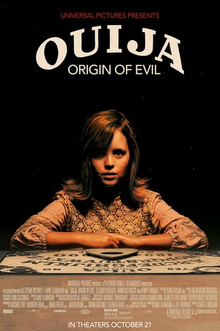
You had to’ve seen this coming.  Ouija: Origin of Evil, with a different director and writer, and the same producer, pulled off the better prequel/sequel.  I don’t give that accolade lightly.  Now, I’m not a professional film critic, and I like to say nice things whenever possible, but even sequels/prequels that professional critics do say are better often find me in disagreement.  In this case I stand with them.  And I have some ideas, apart from natural talent, why it is so in this case.  The problem with ouija, and spirit boards, is that you have no way of knowing who or what may be answering your questions.  In the first movie we just know it’s someone with bad intent, and we need to wait until all the twists are finished to find out who.  The second begins with the premise that we already know who, but we want to know why and how.

But it goes deeper than that.  The first movie left religion out completely.  The prequel scoops it back in by the shovelful.  And if you want to make a movie about ouija work, you need to have demons.  To begin with, the family previously in the house is Catholic.  The kids go to Catholic school.  The headmaster is a priest who wants to help the family.  He quotes the Bible (Holy Sequel, anyone?)  He recognizes that the entity isn’t who it says it is.  Although showing demons is always a bit of a dicey proposition, the prequel opts for the preferred look from the period, and show them only dimly.  It still has to work with the world built by the original, which leads to a strange backstory of a Nazi in the basement operating on homeless people, but you have to work with what you’re given.

So the second movie is scarier and better made.  It didn’t earn as much as the first one did, though.  The idea hadn’t, I don’t think, been tapped out.  Rather, I think once you’ve laid out the premise, viewers have to be enticed back.  If a subject is mishandled, it does require extra work to convince viewers that the next experience will be better.  The critics, however, immediately saw the difference.  You really don’t have to know the story behind Ouija to see this movie, but it definitely helps.  It earned enough that unofficial sequels were released before the official prequel.  One of them only by a matter of days.  It pays to get it right the first time, and if you’re working with a naturally religious topic for your horror, you shouldn’t be afraid of religion.


Lovecraftian Advice

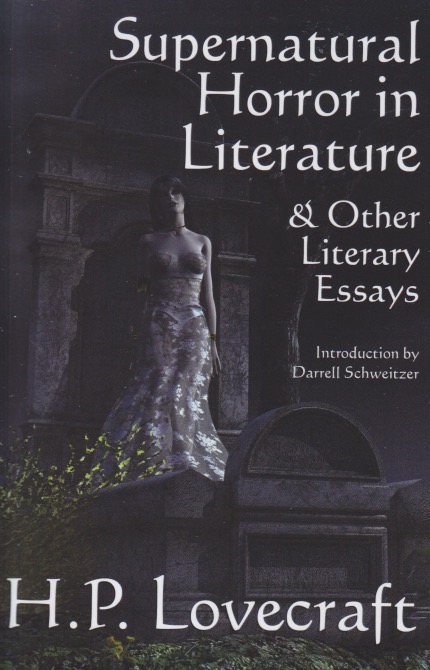
It seemed natural enough to follow up Stephen King’s On Writing with H. P. Lovecraft’s famous essay “Supernatural Horror in Literature.”  This piece, widely quoted, is available online but it is lengthy and I wanted the convenience of not reading it on a screen.  What can I say?  I like to turn pages.  I found a print copy, along with two other, shorter Lovecraft essays in Supernatural Horror in Literature & Other Literary Essays.  This was published by Wildside Press, which added a brief introduction by the speculative writer Darrell Schweitzer.  The text of the main essay was obviously computer-read—a couple reading errors remain—but it is clear enough to read.  Like Poe before him, and King following, Lovecraft put down some of his thoughts on the craft of writing.  Interestingly, Lovecraft is seldom considered as a producer of belles-lettres, but he is world famous as a horror writer now.

The essay itself is worth reading.  Mostly it is a summary of what Lovecraft felt was worthy weird fiction.  I tend to agree with much of what he says here, as would be evident were anyone to read my own fiction writing.  I can’t say that I learned this at Lovecraft’s knee.  I only discovered who he was when I was teaching at the University of Wisconsin Oshkosh.  I did not have literary friends growing up; my reading tastes were determined by myself, largely based on what was available at Goodwill any given week.  Nobody I knew read Lovecraft and although his books may have been in that bin, he wasn’t really someone I’d have known to keep an eye out for.  As a child I didn’t think of myself as a horror reader.  I liked monsters, and vampires were among the most immediately recognizable.  My brother, if I recall, got me started on Poe.

When I began writing fiction, probably around twelve or thirteen, it was weird fiction.  One of my other influences was Ray Bradbury.  I agree with Lovecraft that, to be interesting, fiction often requires a speculative element.  I do read realism, of course, but I really enjoy tales with a bit of supernatural.  It’s useful to read Lovecraft’s ideas about influential writers.  I’ve got my homework cut out for me.  I can certainly recommend this edition for anyone who wants to read this lengthy essay in print form.  The one thing that struck me as weird was the cover design.  It features a woman wearing a strapless dress in a cemetery.  Lovecraft famously didn’t really have women as one of his main themes, and his women characters are among his most inaccurately drawn.  Still, it’s best not to judge a book by its cover.


Yes, Maybe

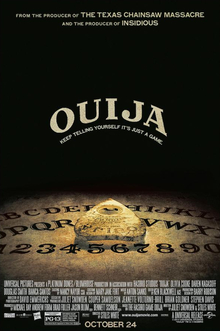
The truth is, only experts and professionals can really keep up with horror films.  As the most successful genre of, well, genre films, there are tons of them.  I completely missed Ouija when it came out about a decade ago, despite the fact that it did well at the box office.  The only reason I watched it now was that a friend sent me a list of horror films from a reputable website that recommended the prequel to Ouija, but I felt that I needed to see the original before finding out what happened behind the scenes.  The original didn’t fare well with the critics and it’s pretty clear why.  The story, although it has twists, isn’t really convincing and the acting is off at times.  (Five teens left alone to watch a haunted house while their parents just take off for weeks at a time?)  Still, it’s atmospheric, and it plays on a scary theme.

I must confess that ouija boards frighten me.  I consider myself both rational and skeptical (in the classic sense), but there’s just enough doubt with spirit boards.  I’ve never owned or played with one.  (Interestingly, the movie was funded in part by Hasbro, the current seller of the game.)  In fact, when I discovered the Grove City College yearbook was called Ouija, I was a bit put off.  (By the time I graduated they’d changed it to The Bridge.)  Although GCC wasn’t really traditionally gothic, like most colleges it had its share of ghost stories.  Even in conservative Christian country things go bump in the night.  And while most stories told about tragedy after using an ouija board are unverified in any way, still…

So, the movie posits a deceiving entity that kills teens who contact it.  I suspect I need to watch the prequel to find out why.  It does manage to have a few scares, but it’s mostly about atmosphere.  I agree with Poe on this point—atmosphere’s often the point of a story.  Although the critics are right (who discovers a body in the basement and goes to an asylum for advice instead of notifying the police?), some of us do watch horror films for this kind of haunted house experience.  And while I’ve got Poe in the room, the threat to young ladies is there.  One thing missing, though, is any talk of religion.  No Ed and Lorraine Warren warnings of demons.  This is a straight-up nasty dead person who likes to kill those who want to communicate with their dead friends.  It does create a mood.  And it cries out for a prequel.


Academic Publishing

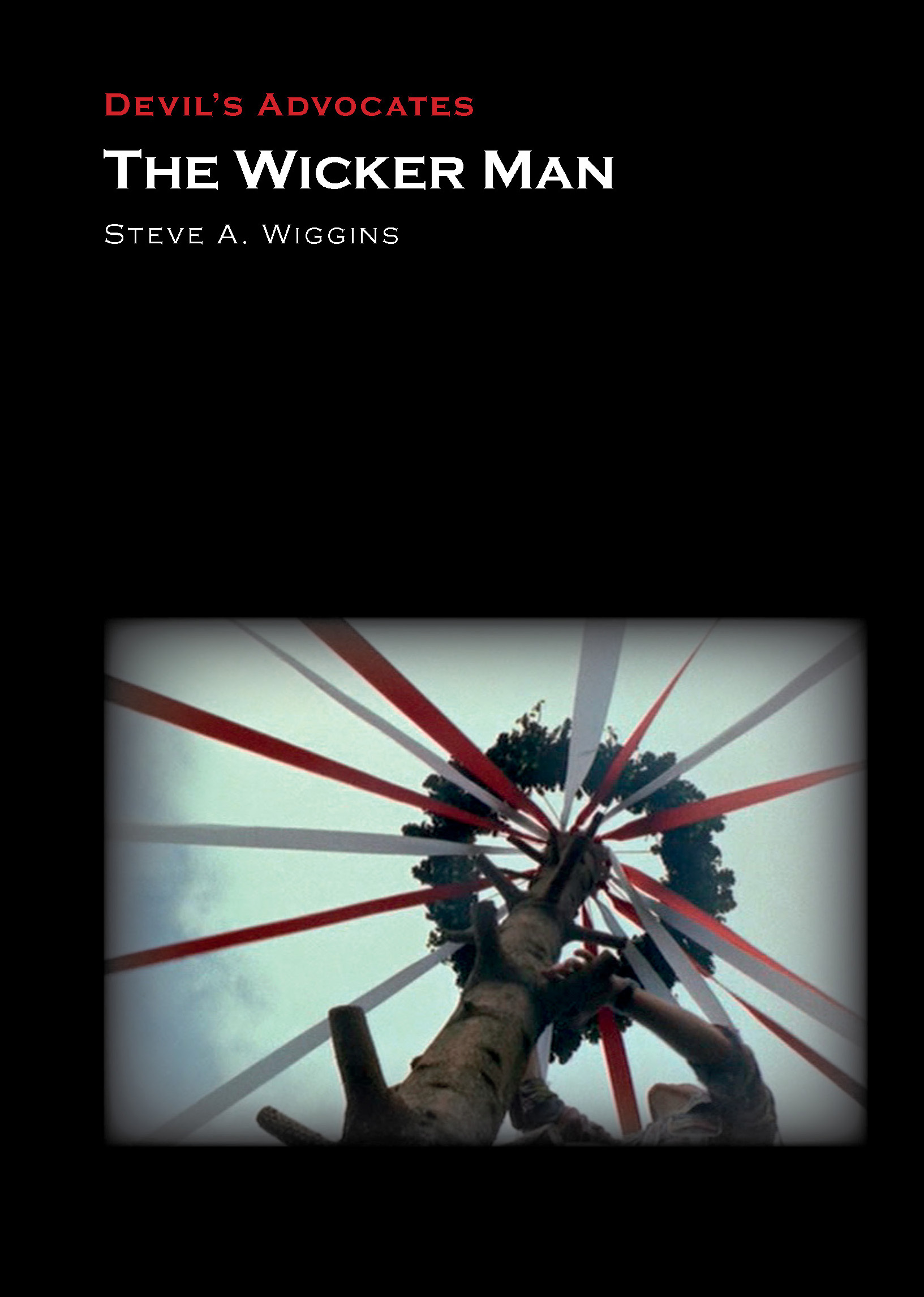
I had lunch with a friend a couple months back.  He is one of the few people who’s read The Wicker Man (the Devil’s Advocate version).  Not many reviews appeared and no royalties at all have yet followed its publication.  The funny thing is, when I search for reviews I notice that the book is “for sale” on far more websites than copies actually sold (I’m assuming).  You see, one of the best-kept secrets in publishing (both trade and academic) is the number of copies sold.  Publishers are terrified of poachers after their authors, and don’t advertise actual sales figures.  For an author only the royalty statements reveal just how many (or few) copies ever made it to the hands of potential readers.  We’re all adults here; we know that not every book purchased is read.  I do wonder if there has been any interest in this little book at all.

My friend actually went and watched the movie because of my modest little book.  The film The Wicker Man is widely known in certain circles, but it is still a movie with a cult following.  Horror fans know it, of course, with some declaring loudly that it’s not horror.  It gets referenced all the time in more mainstream media.  I occasionally read quirky little books like Your Guide to Not Getting Murdered in a Quaint English Village.  I wasn’t surprised to see The Wicker Man (the movie) referenced there.  As I discuss in the book, it’s even the subject of a Radiohead video for their song “Burn the Witch.”  Beyond a few academics, however, nobody’s really interested.

My friend suggested a topic for a new book for me to write.  I didn’t have the heart to tell him that, barring a teaching post coming my way, I’ve given up writing books for academic presses.  I’m pleased McFarland accepted Sleepy Hollow as American Myth, but the crude cost-benefit analysis that I do tells me writing books for academic presses, without library access, is always a money-losing venture.  Remember those old Guiness Book of World Records paperbacks?  I recall seeing, as a child, the least successful author listed.  Of course I don’t remember his name.  I now know that at least that record hasn’t been broken.  Not officially, but when books cost so much to write… Academic publishers are facing hard times but I don’t see the wisdom in pricing your books so that nobody can afford them, just to scrape in a few university library sales.  Not to sound as mercenary as a Hessian, but what’s in it for me?  Certainly not tenure or groundskeeper Willie’s retirement grease.  I’m not paid like a professor. Right now, though, I’m wondering if maybe I’ve broken that record after all.


Not the Witch

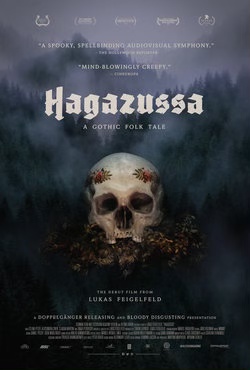
Hagazussa came to my attention from, I believe, the New York Times.  In the autumn normally staid news sources start suggesting horror films to watch.  Subtitled A Heathen’s Curse, this new Euro-horror (filmed in German) immediately reminded me of Robert Egger’s The Witch, but with a lot less plot.  It’s a moody and disturbing story of the life of an outcast young woman in the sixteenth century.  Raised by a poor, goat-herding mother, Albrun watches her mother die of the Black Death, when Albrun’s a tween.  She continues living in her childhood home, with a daughter whose origin, like that of Albrun, is never explained.  The locals shun her as a witch but a seemingly friendly villager befriends her before turning against her and betraying her.  After this neighbor, and then others, die, Albrun drowns her infant daughter after eating a toadstool in the woods.  She then bursts into flames atop a hill in the Alps.

As folk horror, the movie is more about the haunted landscape than about an intricately plotted story.  There’s nevertheless a great deal of symbolism used, including much regarding Eve—apples, serpents, and goddesses all play a part.  Locals fear pagans, and the church interior lined with bones reminded me strongly of St. Stephen’s Cathedral in Vienna, where plague victims’ bones fill the underground vaults.  Seeing such a place reminds you forcefully of your insignificance.  Hagazussa is an art film as well as folk horror, and it appeals to gothic sensibilities.  There’s very little dialogue.  Indeed, the loneliness of Albrun is a major aspect of this moody, atmospheric work.  Such stories always remind me of how difficult life was for those who had to try to scratch a living from the land.  Existence was tenuous at best.  Especially for women alone, as determined by Christian society.

The movie left me reflective.  It also underscored how religion and horror tread the same paths repeatedly.  The village priest tells Albrun that sacrilege must be cleansed, even as he hands her her mother’s skull, polished and decorated.  He wearily admits that he struggles to led the community.  Indeed, Albrun’s new “friend” castigates Jews and heathens, even as she takes part in the robbing of Albrun’s livelihood.  Witches, as “monsters” were invented by the church as fears reached out to point to new sources.  Even if they had to be fabricated at the expense of innocent people.  Fear operates that way still, as anyone who watches political ads knows.  It’s easier to persecute than to educate, it seems.  In the end, Albrun burns up and we realize we’ve just watched a parable.


Questioning Paradise

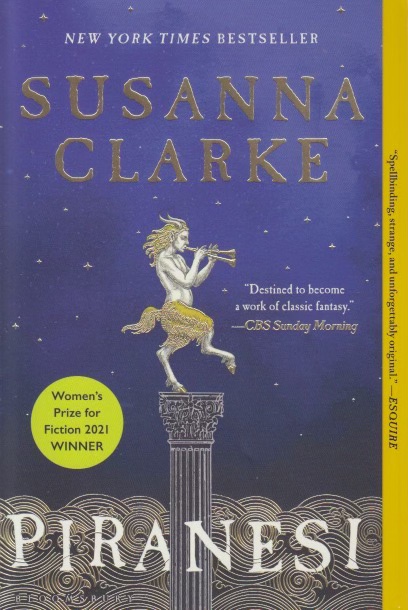
The term “dark academia” is somewhat difficult to define.  It is a rather new aesthetic, but it has been the topic of books and movies for some decades.  Among the books often considered dark academia is Susanna Clarke’s Piranesi.  Since it’s one of the shorter exemplars of the genre, I recently picked it up.  A bit disorienting at first, it is the story of a fantasy world where oceans flood the lower floors of an elaborate labyrinth in which two people live.  The narrator (or more properly epistolist) is one of the two.  We come to learn that he is actually the only full-time resident of this world.  And that this world was conjured from the world in which the rest of us live.  It takes Piranesi, the narrator, about 70 pages to realize that something isn’t quite what he’s been led to believe.

The writing is beautiful and the world-building is fine.  It would be possible to set an entire novel in this world, but, like most paradises, it wouldn’t satisfy.  Indeed, there’s almost a biblical recognition of sin and human character.  The voyage of discovery that Piranesi undergoes is both encouraging and dispiriting.  Having a world in which one’s needs are met, and where most danger can be avoided by careful observation, seems desirable.  There’s a sense of inevitability in Eden as well.  The human psyche requires challenges and exercise.  To remain in paradise would have been stultifying, if without danger.  I’m not sure if Clarke intended that in her novel, but I definitely encountered it there.

But what does this have to do with dark academia?  I asked myself that question along the way.  The creator of this world was, at one point, an academician.  Such are the kinds of people who attempt to build perfect worlds.  The darkness comes from the fact that this world is not what it seems to be.  It comes with a very high price.  Even so, it is compelling to those who find it.  Its creator is a cold and scheming individual.  Unlike some such stories, we don’t hear much of the university life that gives the genre its name, but the classical setting is much like what universities once taught.  And when they go wrong, this genre suggests itself.  I don’t want to reveal how the story ends.  It gets pretty exciting about halfway through and I had misguessed a few things along the way.  In many ways it feels like fantasy, but it also dips into the academic world gone wrong.


Publishing Deportment

I don’t know if anybody reads this blog for publishing advice (editors are easily edited out, I know!).  But still, here goes.  It pays, in many ways, to research your targeted publisher.  And no matter which publisher you decide to approach, do it professionally.  “Friending” an editor on social media and then asking her/him to consider your book on said media is not professional.  Many publishers don’t allow any kind of business to take place through social media.  Be smart about it—go to a publisher’s website and follow their instructions.  Or email an editor.  At their work email.  Again, many publishers do not allow business to be conducted through private emails.  I may be an outlier editor for trying to build a social platform, but if you want to talk business, please use my work address.

More books are being published now than ever before.  Even small presses are closing submission windows because too many people keep trying to get published.  As someone who’s published a few books, I would urge you to ask yourself: why do I want to publish this?  Is it just because you wrote it?  Then look for a press that publishes that kind of thing.  Be prepared to face some frustration, but homework is never easy.  Is it because you think publishing a book will lead to fame?  Adjust your frame of reference.  The vast majority of authors are, and remain, obscure.  It is possible to make some money in publishing, but most of the time it’s not very much.  If it’s money you’re after, you need to get an agent.  It might seem as difficult to get an agent as it is to get published.  That should tell you something about the possibility of making money from books.

I’m no publishing guru.  Editing’s my day job.  One thing I’ve learned, however, is that publishers like to see that you’ve taken their guidelines seriously.  A quick social media introduction isn’t the same thing as an email that shows someone at least looked you up at work.  And most publishers have descriptions of what they want to receive on their websites.  This applies both to fiction and non.  I get it.  I remember being a kid in high school dreading all that homework—all those books I’d have to haul home day after day.  But that’s the tried and true way to learn something new.  And if you want to get published you do need to learn how to do it.  And just like in high school, deportment counts.


Learning to Write

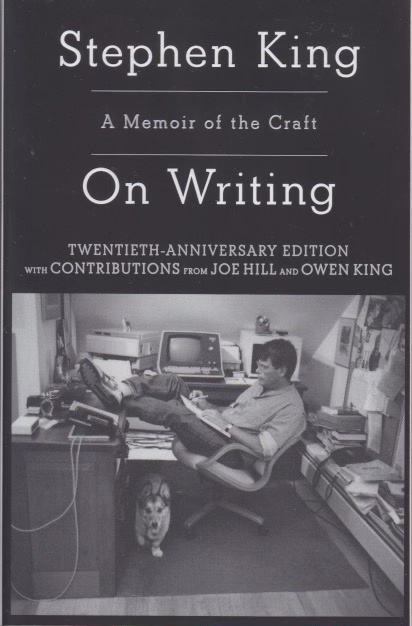
If you’re not famous as a writer, nobody asks you for advice on improving their game.  Part of that is simply having a writer’s outlook.  We all have our own ideas about how it’s done.  I admire the work of Stephen King.  He’s a gifted storyteller and his books often deal with the kinds of things I think about.  I had his book On Writing on my reading list for years.  What finally got me to read it was finding it in a local independent bookstore and wanting to support said venue.  I found it both helpful and a little scary to read.  This is part memoir and part instruction manual by someone who isn’t full of ego, despite his success.  Egoism isn’t uncommon among writers, but King realizes that many people have talent, but not all know how to bring it to any kind of success, no matter how modest.

I really enjoyed reading the memoir parts.  Indeed, I wish I could’ve read them when I was, say, in college.  My own trajectory as a writer might’ve turned out differently.  His instructive sections are also helpful, but the part about finding an agent is hopelessly out of date.  The internet has made doing so both easier and more difficult.  Too many people now flood agents’ offices with pitches that you practically need an agent to get you an agent.  I know this from experience.  Nevertheless, King’s advice generally feels quite solid.  And it’s encouraging to hear of the commonalities we share in our upbringing.  Writers often begin in less-than-ideal situations.  If we can struggle out of them, some can find success in writing while others manage to do it on the side (this isn’t my day job).  But write we do.

As with most of King’s books that I’ve read, this one went fairly quickly.  Not every book that I read makes me feel eager for reading time, but King always does.  In part, at least with On Writing, it’s because I can’t help but wonder if I’m doing this right.  During the course of reading his book, two more rejection letters came for my fiction projects.  Any writer knows that you have to deal with lots and lots of these.  King started earlier, but, like me, he kept his rejection slips.  Eventually I ditched mine because they’re too discouraging.  And I still submit to what has become, since this book was written, a very, very crowded fiction market place.  Still, this is an encouraging book, offering advice from someone who knows what he’s doing.  It’s a shame I waited so long to read it.


Dead Trilogy

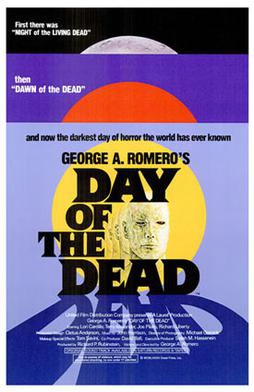
When we lived in New Jersey our internet wasn’t fast enough for streaming.  I’d watched George Romero’s Night of the Living Dead and Dawn of the Dead, but I was never able to find a DVD of Day of the Dead.  Well, it finally came around to streaming (thanks, Freevee), so I was able to complete the trilogy.  It doesn’t get discussed as much as the previous two, and it’s clear that it doesn’t come up to their level.  Still, the discussions of larger issues—God, civilization, and military power—are worth pondering.  There are a few jump startles but less intensive gore than the previous two, until well into it.  So, here’s the story: a base of operations has been set up in Florida where the military is overseeing civilian scientific experiments on the animated dead.  The military guy in charge is a real jerk and threatens to shoot those who don’t comply.  Also, there’s just one woman among them (who made that decision?).

As might be expected, things go haywire.  The head scientist, “Frankenstein” to this crew, is trying to teach the dead not to eat the living—to coexist.  The living are hopelessly outnumbered, and despite the Jamaican civilian, John, suggesting they go to a deserted island and start all over, everyone seems content to hang out and fight each other.  In the end, military overreach leads to everyone being killed except John, Sarah (the woman scientist), and Bill, who seems to be Irish.  In the end the three of them fly to a deserted island and you kind of get the idea that this will be a bit more of an R-rated Gilligan situation.  The film is campy and there is a comic tone throughout despite the serious issues raised and the actual horror elements (blood and zombies lurching out of the dark).

It actually also attempts to explain how the dead continue to move and why they eat with no internal organs.  The brain, down to its reptilian base, retains the eating instinct.  Frankenstein, before being killed by the military, is training the promising dead, especially Bub.  In the end, Bub kills the military guy.  As far as the story goes, it seems to send mixed messages.  The good guys do prevail and the dead, at least Bub, is more righteous than the fascist military that holds sway via constant threat.  One does get the sense that Romero was having fun with his zombie movies and some of the special effects were quite good.  I’m glad to have finished the trilogy, but I don’t think I’ll bother watching the remake, which was, back in the day, fairly easy to find on DVD.  They’re never as good as the dead they try to reanimate.


Another Level

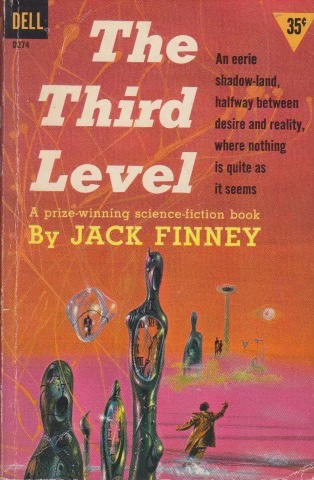
Jack Finney is probably best remembered as the person who came up with the idea for The Invasion of the Body Snatchers.  His book, The Body Snatchers, was the inspiration behind the two movies based on it, as well as various knockoffs.  The Third Level is a collection of short stories he wrote.  I’ve been trying to introduce more short stories into my literary diet, and this one was recommended by Stephen King in Danse Macabre.  Specifically, he mentioned it as being more like what The Twilight Zone should’ve been than much of what Rod Serling wrote.  Now, I’m an unapologetic Rod Serling fan.  This is based on memories from childhood when I watched the show and, let’s be honest here, wished he could be my father.  I already had a taste for the unusual and sometimes macabre, and so I was curious what King thought might do Serling better.

The Third Level was labeled as science fiction, but sci-fi and horror share more than a boundary or two and at least four of the stories have nothing sciency about them.  As a collection it’s good in the same sense as a mature reading of Ray Bradbury is good.  I would’ve liked this—probably loved it—as a kid.  I was reading, however, for The Twilight Zone.  There are some good twist endings here, but not all the stories have them.  A couple of them are pretty straightforward whimsical romances.  Many of them feel very much like they were written in the forties and fifties.  A couple of the stories, late in the collection, I really liked.  They were a bit more Zonish than some of the others.

One of the problems in writing a brief post on a collection—and no collection is uniformly great—is that it’s difficult to give a sense of the whole.  So instead I’ll just focus for a minute on the last story, “Contents of the Dead Man’s Pockets.”  This one shows the power of Finney’s descriptive writing and it caused physical reactions I seldom get when reading.  It involves a man climbing out on an eleventh-story ledge to reclaim an important bit of paper that blew out the window.  More than once I almost had to put the book down.  Fear of falling is deeply embedded in the human psyche and Finney is able to probe it for more pages than I was comfortable reading.  Well done, sir.  Overall, the collection is good to have read.  It won’t change my mind about the Zone, however.  It reached me a little too late to do that.