The Prom

I had always assumed Prom Night was a knock-off of Carrie, and in some ways it is.  The story is significantly different, however, and the impetus to watch it came from Scream, where it’s referenced a few times.  In case you’re under the same delusion I was, here’s how it unfolds.  Jamie Lee Curtis, after starring in Halloween and The Fog, takes the role of Kim Hammond, older sister of a girl (Robin) accidentally killed at the start of the film.  A kids’ game at an abandoned building leads to the death, in which four children participated.  Six years later, it’s prom night.  The kids present at Robin’s death all receive mysterious phone warnings that they dismiss as crank calls.  Meanwhile, a Carrie-inspired sub-plot is introduced as Wendy, the leader of the killer kids, is outvoted as prom queen by Kim.  She gets a local thug, Lou, and his buddies, to plan a disruption to the crowning of the king and queen.  No pig’s blood, but this isn’t Stephen King.

Meanwhile, yet another subplot is introduced, riffing on Halloween, of an escaped psychopath as suspect.  The police are fearful after finding the body of a nurse he kidnapped at the site of Robin’s death.  He was falsely accused of Robin’s murder and was disfigured in a fire.  They fear he may be targeting the kids there that fateful day.  Nobody except the four kids know what really happened.  There’s a hint that someone saw the accident, however.  If you’re getting confused, apart from my faulty summary, it may be because the movie goes to great lengths to misdirect your suspicions of who the murderer may be.  Since the movie is over 45, there will be a spoiler in the next paragraph.  You are warned!

The killer is Robin’s twin brother, who is also Kim’s younger brother.  He witnessed Robin’s death and tries to murder those he holds responsible on prom night.  He succeeds in killing three of the four.  I’ll leave it at that.  This is one of those teen movies and a fairly early slasher.  The plot is too complex to hold up, however, with characters simply dropping out because the action shifts focus.  Too many false lead-ons and too much disco music make it less than stellar.  Of course, as a very religious kid shy around girls, I never attended my high school prom.  I guess I may have missed out on what was, by then, becoming a night of horror.  At least in the eyes of those exploring the emerging slasher genre.  


More Morons

There’s an aesthetic to bad movies.  Some are so bad that they’re good.  Others are just plain bad.  Many years ago, during some Amazon movie sale or other, I purchased a DVD of Morons from Outer Space.  Now, horror comedy is a recognized genre, but sci-fi comedy is a bit harder nut to crack, even though horror and sci-fi are siblings.  Morons sat on the shelf for at least a decade, in case of need.  Having been scammed out of our life’s savings, a Friday evening when my wife said “Pick whatever you want, I’m likely to fall asleep anyway,” scanning the shelves my eye landed on it.  The movie had been distributed by MGM, how bad could it be?  Worse than anticipated, it turns out.  I don’t recall ever seeing an intentional comedy where the entire laugh potential was so misaligned.  There were one or two spoofs that worked, but mostly it dragged and begged to be put out of its misery.

Three aliens, anatomically human, crash land on earth after leaving a crew-mate behind on their deep-space vehicle.  The extended scene of their spaceship tooling down the highway might’ve been funny had it lasted maybe a tenth of the time.  The knock-off of Close Encounters’ use of music to communicate was a little funny.  The alien interrogation missed several potentially humorous opportunities.  The aliens eventually become celebrities while an American commander insists that they be killed because of their threat to life on earth.  Ironically, I’ve often wondered how it would be if aliens who came to earth were badly behaved members of their species.  I can honestly say that that would be better than the way this movie played out.

Meanwhile, the abandoned alien gets a lift with a spooky-looking alien.  In perhaps the funniest scene, the spooky alien asks the human alien his sex.  That part was funny on a couple of levels and showed the potential that the movie might’ve had.  He ends up on Earth and tries to connect with his three shipmates, who are now, literally, rock stars.  When they finally meet up, they summarily dismiss him again, only to be hauled off back to space by a closing Close Encounters parody.  I confess that I am still trying to appreciate bad movies on their own aesthetics.  I’ve seen so many that I added a “Bad movies” category to this blog.  Bad movies are often unintentionally funny.  It’s a different beast when a comedy is unfunny.  Particularly when there was potential there, if it’d only been effectively used.


Real ID

On the DVDs of the complete The Twilight Zone (or at least the edition I bought over a decade ago), the opening sequence of seasons 3 and 4 both have a voice-over from episode “Five Characters in Search of an Exit,”  calling out “Who are we?”  In context, the disparate characters in a shapeless prison are, in reality, toys that have gained consciousness (and this well before Toy Story).  Having gone through a traumatic scam, and trying to piece life back together, I spend a lot of time on the telephone trying to verify my identity.  This isn’t a simple matter for a guy like me who constantly asks myself the question, “Who am I?”  Descartes, going back to Aristotle, opined we enter life as a tabula rasa, a blank slate.  Those of you who look around the other pages of this website will see that I have as a six-word biography “Missed the first day of school.”  That must’ve been the day when they told us who we were.

Some people have a clear idea of who or what they are.  The surround themselves with tchotchkes of their favorite animal, or symbol, or even screen idol.  Or deity (deities).  Others of us, it seems, are constantly searching, never quite satisfied that we’ve discovered our essence.  I’ve mentioned before that during the CB craze of the eighties my handle was “Searcher.”  I have an innate curiosity and I crave depth of knowledge.  How do you symbolize that?  How is it even an identity?  I ask with Rod Serling’s characters, “Who are we?”  I’m not sure who might answer that.

When I first started this blog I had some hope that I might once again become an academic researching ancient Semitic mythology.  Working a 9-2-5 to acquire material for the company long ago meant that the full-time research needed to keep abreast of the field could not happen.  For several years this blog consisted of wry interpretations of various political- or travel- or reading-related observations about life.  As it became less focused on the world of the Bible I lost most of my original readers.  I thought there might be potential in writing about my fascination with scary stuff.  That caught my wife a bit off-guard since during the time we met, married, and began this journey together, that interest had been dormant.  It revived when I lost the job that I thought defined me.  I still write about horror but have recently felt the draw of dark academia.  Meanwhile the representative from the bank is on the phone asking me to verify my identity.  “It’s complicated,” I want to say.


Louder

Scream is one of my old movies.  I saw it several years ago but the details had grown hazy so I dusted off the DVD to give it another go round.  I’m glad I did.  This Wes Craven classic was one of the first horror movies to rock the critics because it parodies so many other horror films while remaining a scary plot line.  And it’s intelligent.  I liked it so much that I’d watched Scream 2 as well, and the two had jumbled up in my mind.  In case you’re still in a Halloween mood, here’s the basic premise (I won’t spoil the ending): the opening sequence is so well-known that I’m tempted to skip it, but it sets the scene remarkably well.  A teenage girl home alone answers the phone to find a stranger on the line.  This stranger is watching her as he calls, eventually breaking into her house.  Using horror movie clichés, the ghost-faced intruder catches and kills her.

After that, Sidney Prescott is having trouble getting over her mother’s murder the previous year.  The recent murder triggers her.  When her father has to leave town on business, she decides to stay with a friend.  Ghostface attacks her, leading to the arrest of her boyfriend, who shows up after the slasher attack.  Along with her friends, of which the guys are all horror movie fans, she plays out various scenarios of who the killer might, or “should” be, according to the rules of the genre.  This is very effectively done, keeping the first-time viewer guessing who the killer might be.  When school is suspended because of the killings, the kids have a massive party (of course).  The killer’s there, however, for the most part following the rules.  But the instructions are subverted, making for a wild ride.

Clever and satirical, the movie strikes the right tone.  One thing I noticed the first time was that Ghostface is a little too fast for a psychotic killer.  He runs.  He’s also quite vulnerable, but then again, he’s not a supernatural villain.  After seeing Scream again, I realized that there are still some classics that I’ve missed.  One reason is that I’m not really a slasher fan.  Throughout the movie they avoid using the word “horror,” preferring “scary movie”—the original title for the film.  Scary Movie was picked up by a horror parody that I watched shortly after seeing Scream for the first time.  In many ways Scary Movie is a parody of a parody.  Horror is endlessly self-referential, of course.  And sometime an old movie is just what you need.


Migration

Since the American Academy of Religion and Society of Biblical Literature annual meeting (AAR/SBL) is coming up soon, I got to thinking about my experience of the event.  I went to some memorable meetings and missed a few for various reasons.  I’m at the point where I don’t really crave attending anymore, but when I should go, I do.  My first experience was in 1991, in Kansas City.  I flew back from Edinburgh for that one.  It was the last time it met in Kansas City.  It was obvious, however, that this would become an annual pilgrimage for me if I ever landed in academia.  My first couple of years teaching were part-time with a full-time load of courses but Nashotah House had some faculty development funds to help pay my way.  My wife would go and we’d stay with friends whenever possible.  It became an academic addiction.

I skipped the year my daughter was born, but when AAR/SBL met in New Orleans we drove down from Wisconsin.  In 1998 I attended the infamous meeting at Disney in Orlando.  Then in 2000 we met in Opryland in Nashville.  This was an experimental phase, I’m guessing, but themed locations weren’t popular with serious scholars and soon we were back to major cities without theme-park vibes.  Having lost my toehold in academia, I missed the 2005 meeting in Philadelphia, but was back for the Washington meeting, representing Gorgias Press.  The three-year separation that started in 2008 I missed, except for the first lonely year in Boston.  I was back for San Francisco in 2011, working for Routledge.  Two years later I was in Baltimore, staying off site, with my current employer. I drove down for that one.

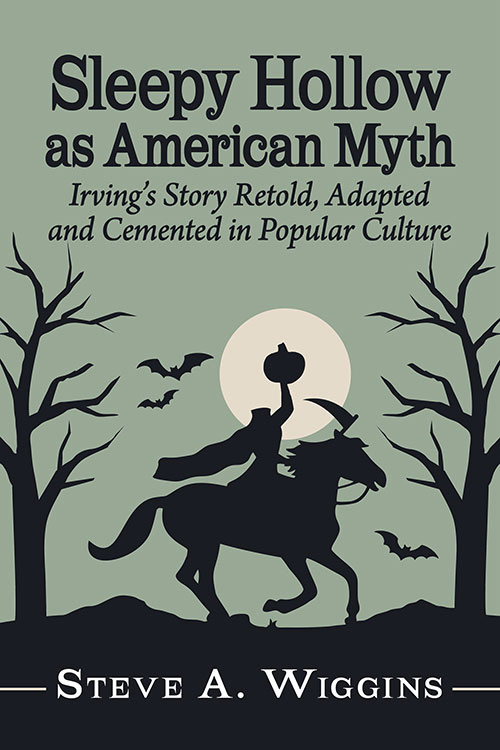
In 2018 I missed the Denver meeting because of a snowstorm panic in Newark, after sleeping the night on the airport floor.  Then the pandemic kept me away for a couple of years, but one of those was virtual anyway.  The last one I attended was 2022 in Denver.  This year I’m scheduled to be in Boston.  Even when my career has slipped off the academic rails, this meeting has been a rather constant touch-stone for November.  Now that I no longer give papers—the last one was on Sleepy Hollow in Atlanta, I believe, ten years ago—the spark has gone out of it for me.  I am glad to be heading back to Boston, however, on somebody else’s dime.  I’ve got some Poe sights to see in my off hours there.  And some 33 years of history to recollect.


Writing Ghost

Despite AI, one of my great regrets is not having learned additional languages in high school.  I took four years of German and the one classmate I knew who was able to convince the administration took two languages, both Spanish and French (gasp!) to become a translator.  In any case, I regret being able to read French only haltingly, with a dictionary.  I watched Colette because it is the biopic of a writer, but I’ve never read any of her books.  I also watched it because it’s considered dark academia, but you already knew that, didn’t you?  Colette lived from the last quarter of the nineteenth until the mid-twentieth century.  Her first husband published a successful series of books she wrote under his name.  The two separated and Colette went on to become a reasonably successful writer in her own regard.

As with most biopics, the details are exaggerated, but still, this is the world of books where fiction and fact aren’t always so far apart as might be supposed.  Interestingly, articles on her husband (Henry Gauthier-Villars), known by the pen name Willy, state that he is best known as the first husband of Colette.  A self-promoter, he had other people do his writing for him.  The movie focuses on what happens when he tried to bring his wife, not yet established in her own right, into his band of ghostwriters.  Not having French, I have never really studied French literature.  If life allowed a bit more time, that is something I’d like to have done.  In any case, Willy was a libertine as well as a self-promoter, the sort that occasionally enters high government position.  And since he was involved in many affairs, Colette explored relationships with other women.  In other words, this is a story that is still very relevant.

Dark academia sometimes involves a literary life rather than a strictly academic one.  I applaud its love of books and book culture.  Some of us miss the days when it was possible to have publishers eager for new material, when books were generally respected instead of widely banned.  The darkness here is clearly the manipulative relationship Willy has with Colette.  He uses her lack of experience in the publishing world to his own advantage, and habitually making poor financial decisions, puts their living situation and security at risk time and again.  I sometimes wonder about my high school friend.  Did she become a translator?  And, if so, is her job, nearing retirement age, under threat from AI?  And this, in the span of a human working life.  A life of books.


Stigmatic Thoughts

Stigma is a funny thing.  Almost a superstitious mindset.  Especially when it concerns a non-contagious agent.  When a person becomes a victim of such an agent, the tendency is for others to withdraw from them, as if afraid they might catch it.  One such instance of this is cancer.  When someone is diagnosed, many people either keep silent or distance themselves from the person who received the diagnosis, as if even saying the word might put them in harms way.  Being married to a cancer survivor, I have experienced that firsthand.  Another instance, I recently discovered, is when you’re the victim of a scam.  Not only do you feel bad for your loss, but others tend to step back silently, as if they too might contract scam germs.  In both these cases, and many others, it’s easy to feel isolated.

As social animals, humans long ago learned that shunning is an effective tool in controlling social behavior.  A shunned person leaves a community or withers and dies within it.  As much as we value individualism, it means nothing if there’s no social group to acknowledge it.  Stigmas can lead to a kind of shunning.  A perhaps more lighthearted example is the person who tells others they’ve seen a UFO.  There’s adequate documentation that, beginning in the forties, the US government instituted a policy of ridicule to prevent such reports from proliferating.  It worked.  I remember growing up in the sixties and seventies that anyone who’d claimed to’ve seen such a thing was socially stigmatized with ridicule and claims of insanity.  We crave the approval of others.  Stigma and the associated shunning are among the most effective forms of social control.

As an introvert, I think quite a lot about this.  I’ve moved several times in my life and it takes quite a long time for me to get to know people.  Even now, having lived in my current town for over seven years, I know only four others in town  by name and none of them socialize.  One of the reasons I keep at this blog is that it develops a sense of community.  Those who are really successful on the internet develop followings of thousands, or millions.  My posts tend to be thoughtful (I hope) and often deal with stigmatized subjects.  (Although it’s starting to gain some respect, horror is a stigmatized genre.)  I very much appreciate my readers.  These thoughts are in my head and I let them out to roam on this blog.  I do hope that this post on stigma doesn’t lead to any shunning.  It’s just something I’ve noticed over the years.


Little Girl

It might be inferred from the fact that I’ve mentioned it once or twice that I’ve seen The Little Girl Who Lives down the Lane before.  On a rainy autumnal afternoon it’s the horror movie that most often comes to mind.  While some find the “horror” designation overkill, it is the genre under which I bought the DVD many years ago.   Besides, it won a Saturn Award for best horror film.  I picked it up at a two-for-one sale not knowing what it was about but I was immediately taken by the atmospheric setting and weather.  A proper New England fall, after the leaves have come down.  It opens on Halloween with one of the most cringy openings ever.  Charlie Sheen plays a pedophile asking 13-year old Jodie Foster (Rynn) probing questions of where her father is when he finds her alone at home.

There will be a spoiler later in this paragraph.  Rynn lives on her own after her father dies by suicide and she murdered her mother and put her body in the basement.  Frank Hallet (Sheen), and his insufferable mother, own the Maine town where Rynn lives.  Befriended by Mario, a high school student who discovers her trying to drive, she eventually confides that Hallet’s mother was killed going down to the basement.  Meanwhile her son Frank keeps trying to insinuate himself into Rynn’s life, and, strongly implied, bed.  The story has some improbable plot elements and a few surprising moments, but not any jump startles.  It’s a slow burn, building to where Rynn attempts to poison herself, but Frank, not trusting her, drinks her tea instead.  Moody, rainy, and played out on a carpet of dead leaves, this is one of those horror movies that gets the season right.

Ironically for October nights, there aren’t a ton of horror films I know of that manage to capture this feeling.  I suppose that’s why I’ve seen this one a few times before.  I’ve gone through many lists of “October movies” and come out thinking that few people must think about this season the way that I do.  Or at least I haven’t found many horror movies that allow the season to pull its own weight.  Little Girl wasn’t welcomed with open arms when first released, but it has become a kind of cult classic.  Foster’s acting is pretty amazing considering her age at the time the film was shot.  But the autumnal weather does it for me, every time, even as we slip into November.


Groan

Authors are a peculiar but definite taste.  Some noteworthy voices have vociferated regarding the wonders of Mervyn Peake.  Mine has not been among them, but then, I’m not noteworthy.  Having read somewhere that the famous Gormenghast universe was one of the most gothic in mid-twentieth century literature, I read Titus Groan many years ago.  I understand the linkage between grotesques and the gothic, but this simply didn’t appeal to me.  I never felt interested in moving on to the second book of the trilogy.  At the same time, I held onto it.  Just in case.  Recently, I thought my younger self might’ve been prematurely harsh on the book and so I gave it a second try.  This time through, I appreciated some of Peake’s famous wordplay, but the novel, to me, dragged. The victim, perhaps, of the foreshortening of time, I just couldn’t get into it.

J. R. R. Tolkien once explained that he wrote The Lord of the Rings cycle to see if a really long story could be made interesting.  He succeeded.  I read the trilogy, after The Hobbit, when I was in college.  I really enjoyed it.  Titus Groan isn’t cut from the same fabric.  Peake’s thick description is sometimes a thing of wonder.  It is also very ponderous, to the point of being tedious at times.  The action is interesting enough, what there is of it.  The characters are well drawn, even if overdrawn.  And it’s clear by the end of Titus Groan that to make any sense of any of this you will need to commit yourself to two-plus volumes more.   Peake died before he could finish the fourth volume.  The first three are now solidly referred to as a trilogy, but I fear that if I were to force my way through the other two I’d still be left hanging.  I really do appreciate resolution.

It’s a personal failure, in my opinion.  I mean, Peake was obviously a talented writer.  The question is whether you can stretch a story out for too long.  Part of me wants to know the resolution, but not enough of me to get me through at least two more books like this.  I’m not sure that I’d declare this terribly gothic.  I can see why some would: castle, skulduggery, and one very well drawn villain.  Again, some of the characters are too comical to be effective gothic.  To me it felt like a mismatch between style and vehicle.  I realize that should any of his fans perchance read this, I’ll be declared a Peake imbecile.  I’ll admit that the fault is mine.  It’s a matter of taste.


Mighty Mouse

The only way I write my books is by living a regimented life.  It’s front loaded too.  Most of the work is done sometime between two and seven a.m., before starting work.  Disruptions to that time aren’t welcome, but then, many things in life aren’t.  Perhaps the most disruptive weekday event is when a mouse makes its way into the house.  We live in an old house and mice find their way into even more recent structures.  I can’t see killing them for doing what they’re evolved to do—we began using a humane trap when I found a mouse trapped by its paw back at Nashotah House.  I couldn’t stand seeing its distress, so we bought a cage trap that works pretty well.  Fortunately, we don’t get many rodentine visitors, but when we do, my crowded morning becomes even more busy.

I jog at first light and this time of year it’s straight to work after that.  I like to take our mice into the woods, far enough away that they’re not likely to find their way back.  Ideally that means driving, but since my wallet’s in the bedroom where my wife’s still asleep, during weekdays it generally means somewhere along the jogging path.  The trap is probably on the scale of a room at the Ritz for a mouse, and I don’t want to be scolded if I choose to release them in the wrong place.  I put the trap into a bag, for privacy.  Now, I normally jog to the trail but the trap rattles and I can’t imagine how horror movie this must be for a mouse.  Besides, running down the street with a bag in your hand in the dark isn’t at all suspicious.  Why not just paint a dollar sign on the outside of it and be done with it?

 I try to make sure the release spot is across a big road or a river.  There are places like that on the jogging trail.  But then, with the mouse safely released, I have to find an inconspicuous place to leave the trap in the bag so that early-morning garbage collectors don’t take it.  Jogging with a rattling trap is just a bit too strange for even me.  Although I’m an early jogger, I’m seldom the only one on the trail just as it’s light enough to see.  All of this adds up to considerable time carved out of my usual writing period.  And all because of a mouse.  The small can be significant.  Maybe I should write a book about it. 


Shaping Halloween

Halloween is the favorite holiday of many.  I suspect the reasons differ widely.  Although the church played a role in the development of this celebration, it didn’t dictate what it was to be about.  It was the day before All Saints Day, which had been moved to November 1 to counter Celtic celebrations of Samhain.  Samhain, as far as we can tell, wasn’t a day to be scared.  It commemorated and placated the dead, but it wasn’t, as it is today, a time for horror movies and the joy of being someone else for a day or a few hours.  There isn’t a preachiness to it.  Halloween is a shapeshifter, and people love it for what it can become.  If December is the month for spending money you haven’t got, October is the month for spooky things.  Halloween is the unofficial kick-off of the holiday season.

For me, it’s a day associated with dress-up and pumpkins.  Both of these bring back powerful childhood memories.  The wonderful aroma of cutting into a ripe pumpkin can take me back to happier times.  I remember dressing up for Halloween as far back as kindergarten.  I could be someone else.  Someone better.  It was a day when transformation was possible.  I’m probably not alone in feeling this, although I’m fairly sure that wasn’t what was behind the early use of disguises this time of year.  I’ve read many histories of Halloween and they have in common the fact that nobody has much certainty about the early days of its inception, so it can be different things for different people.  Even within my lifetime is has moved the needle from spooky to scary, the season of horror movies and very real fear.

There’s a strange comfort in all of this.  A knowledge that if we can make it through tonight tomorrow will be somehow less of an occasion to be afraid.  It is a cathartic buildup of terror, followed by the release of being the final girl, scarred, but surviving.  And people, from childhood on, enjoy controlled scares.  Childhood games from peek-a-boo to hide-and-seek involve small doses of fear followed by relief.  The future of the holiday will be open to further interpretation as well.  As a widespread celebration it is still pretty young.  And like the young it tests its limits and tries new things.  At this point in history it’s settled into the season of frights and fears in the knowledge that it’s all a game.  I wonder, however, if there isn’t some deeper truth if we could just see behind its mask.


Halloween, Disney Style

I really don’t spend much time on social media.  It’s literally just a few minutes a day, half an hour at most.  I’m too busy to spend more.  I tend not to join groups because, well, I don’t spend time there.  One group I did join on Facebook is for Halloween fans.  I believe that’s where I heard about the movie Halloweentown.  I was surprised that, as a fan of Halloween for pretty much all of my life, I’d not known about this 1998 movie.  Watching it, it became clear why not.  It is a Disney television movie.  In the nineties we didn’t have television (a few channels from a snowy aerial at Nashotah House) and certainly didn’t subscribe to the Disney channel.  While the movie failed to penetrate my consciousness, it went on to start a franchise.  Once I heard of it, I decided I should see it because I’m interested in the darker side of Disney.

Television movies, with their comparatively small budgets and limited viewerships, don’t have the finished feel that theatrical films possess.  This is the story of a family of witches, three kids and a mother, living in the human world.  The children don’t know they’re witches.  Then when their grandmother visits on Halloween, they sneak into the eponymous Halloweentown with her.  This is where witches and other monsters live because humans fear them.  The “monsters” mostly consist of obvious humans wearing masks and makeup.  There are a few mildly frightening moments as the evil Kalabar tries to take over the human world by persuading his fellow monsters to join him.  But this is Disney where threats are gentle and good fairly easily defeats evil.  While the movie isn’t even as scary as Hocus Pocus, some people watch it to get in the Halloween mood.

One thing that I’ve noticed about many movies that try to capture the autumnal feeling while being shot in California, is that they miss the more dramatic temperate shift in seasons.  This annual outdoors Götterdämmerung resulting in the colorful dying of leaves and the surrender of summer to the inevitable chill to follow is integral to my experience of Halloween.  In fact, one of the few criticisms I’d make to John Carpenter’s Halloween is that Haddonfield, Illinois was shot in Southern California.  Other movies make a similar gaff.  I’m always on the lookout for movies that manage to emulate that Halloween feel.  The film that perhaps does this best, in my experience, is The Little Girl Who Lives Down the Lane, shot in Canada and Maine.  I’m still searching, however, for my own Halloweentown.


Naming the Dead

It probably just goes with the territory, but I’ve noticed something.  A big part of my job is searching for people on the internet.  (Academics, of course.)  Mostly these are folks I don’t know, some of them with very common names.  This presents special challenges, of course.  Every once in a while, though, you search for a name and pretty much every entry you find is an obituary.  I’m not talking about someone prominent who has died, but rather several people with the same name who’ve passed away.  The other day, after four or five pages of Google I found nobody alive.  That particular name wasn’t an “old fashioned” name either.  It could be (perhaps is) still a very common name.  It does get me pondering whether some names are “safer” than others.  Is anyone by this name still alive?

We place a lot of stock in our names.  Being the way that others get our attention, and identify us, they do have importance.  And many names are common—parents aren’t always the creative sort.  And the internet is a source of frustration when trying to narrow down a common name and attach it to someone you don’t already know.  Growing up, kids want to be like everyone else—no standing out in the herd.  “Wiggins,” where I grew up, was an unusual name.  We got teased for it quite a lot.  When my mother remarried, my brothers and I went by our stepfather’s common last name for a few years.  In seminary I decided to revert to my birth name—Wiggins.  I was wanting to do two things: reclaim my heritage, and stand out a little.  Even so, a web-search for Steve Wiggins will bring up at least four or five individuals not me, including an obituary or two.

Before the web, when trying to find a scholar you had to use letters.  (Or maybe the phone, but cold calls weren’t really professional). You’d send them a letter.  In a way, the web is a great equalizer.  But it favors those with names that are somewhat less common.  Some people change their names—performers and some authors do this to make their persona more to their liking—but this is a fraught activity.  I know from switching back to my birth name that the process is complex and if you try it after you’ve started to publish things it adds whole new layers of complications.  So I spend quite a bit of time searching for people who aren’t easily found.  Not infrequently I seem to be naming the dead.


Learning Curve

There’s a learning curve to cold weather living.  Now, I need to define cold weather as when you have to turn on the heat.  Around these parts that generally happens mid-October.  We keep our house chilly not because we unduly enjoy shivering, but for two good reasons: it costs a lot to heat a house and it doesn’t benefit the environment to do so with too much zeal.  The cost aspect goes without saying.  It costs more to live in the colder seasons.  At night our thermostat is set to 62.  That’s fine as long as you’re in bed under tons of blankets, but I’m a habitually early riser.  Most of my writing is done before work, when the house is at its chilliest.  I bundle up with several layers of pajamas, a stocking cap, and fingerless gloves.  The part that requires relearning each year is the exercise bit.

Before going out for a pre-work jog, I do some light calisthenics.  I can’t really do these in my pajamas, though, because they can raise a sweat, even in winter.  Besides, I have to go jogging later, so I need to get my exercise clothes on.  Every year I have to remind myself, when do I make the switch?  I don’t enjoy stripping off my warm clothes to put on some chilly ones so I tend to put it off until the exercise mat starts to call loudly.  As the sun rises later and later, as the solstice approaches, jogging gets later and later (with a slight reprieve when we pointlessly end Daylight Saving Time).  There comes a point when I have to start work before my jog.  I can never remember when that happens—November?  December?  It will mean altering my routine, particularly if I have any early meetings.

I used to wonder why, in older films, especially those set in Europe, people were shown sitting around their houses in woolen suits and vests, full-length dresses with shawls.  As a homeowner with a low thermostat, I had an epiphany.  They did it to keep warm.  Europeans often describe American houses as “overheated.”  I haven’t had any European guests lately, but I doubt they’d say that about our place.  Our daytime temperature is 64.  Outdoors, that’s getting to be jacket weather.  My European colleagues don’t mind wearing puffy vests and jackets on Zoom meetings.  Heating a house in Europe is much more expensive than it is in the colonies.  In the dead of winter it’s not unusual for me to be wearing five or six under-layers during the day, and fingerless gloves at work.  The thing is, I need to relearn this each year.  Winter’s on its way, so I’ll do my best to be a good student with my chilly lesson.


Don’t Stop Moving

Stopmotion is a strangely affecting horror movie.  Body horror as well as Euro-horror, it follows the dream-like world of Ella, a stop motion animator.  She learned the trade from her mother who, suffering from arthritis, has Ella do the work for her.  After her mother has a stroke, Ella continues working on her final film but in a new location.  Tom, her boyfriend, gets her an apartment in a run-down building where Ella meets a precocious and odd little girl who tells her she should film a different movie and proceeds to tell Ella how it should go.  To her chagrin, Ella has to admit that the little girl’s story is better than her mother’s.  With the girl’s help, Ella animates a monster, the Ash Man, who is pursuing a girl lost in the woods.  Then Ella starts receiving visits from the Ash Man, or at least she believes so.  She ends up in the hospital. Spoilers follow.

Tom, who visits her there, is worried that Ella has let this go too far.  He threatens to delete the film while she’s immobile in the hospital.  Ella’s mother dies and with the little girl’s help, Ella gets back to her apartment to finish the film.  When Tom, and his plagiarizing sister, come to return Ella to the hospital, she kills them both.  She then, with the girl’s help, finishes the film.  The film results in her own death, or at least that’s the way she sees it.  The film features quite a lot of stop motion animation although the movie itself is live action.  It’s a very artful, if gross, film.  The little girl is never seen by anyone else, nor explained, suggesting that she’s a younger Ella following her own creativity.  And paying the price for it.

I can’t claim to understand everything that happens in this movie.  That doesn’t make it bad, but worth pondering.  Those of us who live creative lives experience dry patches, and often, self-doubt.  I know that when I compare my writing to that of others, I suffer in the very comparison.  When Stopmotion first ended, I felt both confused and intrigued.  Euro-horror of recent years, to generalize, emphasizes the art of the craft.  There was a lot of symbolism in this movie, some of which I couldn’t connect to the action.  I suspect repeated viewing might bring some of this to light.  My family has often told me that with my focus and interests, I would’ve been a good stop motion animator.  I certainly have the creating monsters part down pat.  It’s just a matter of deciding which narrative to follow.