Virtual Head Sickness

I think quite a lot about the nature of reality.  Our brains—no, our minds—create reality for us.  I’m reminded of this when I get motion sickness from watching a movie.  I am not actually moving, and I even look away from the screen frequently, but if I don’t realize it soon enough, I become quite ill.  There really should be an advisory warning for people with my condition since I have occasionally lost an entire day recovering from such an experience.  Most recently it happened with V/H/S Viral.  I had not watched any of the V/H/S franchise; indeed, I didn’t realize it was a franchise.  I was watching it under the false impression that it was a Justin Benson and Aaron Moorhead movie.  Well, it partially is.  They were responsible for one of the segments—it’s an anthology film.
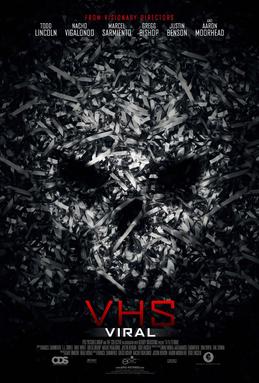
I made it through an hour and ten minutes, with only eleven minutes to go, when I realized, “I’m going to throw up if I don’t shut this off.”  So I did.  Now, if you have the condition I do, there’s little that you can actually do when the process starts.  You can’t move your eyes much, and even moving your physical body has to be done slowly.  (My sister-in-law, who is a physician, once tried a “tough love” cure when I got motion-sick from a small plane ride.  It didn’t work.  I ended up laying in the dirt by the side of a camp road in Idaho for about half an hour before I could open my eyes and walk, very slowly, back to the cabin.  Once there I slept the rest of the day.)  You might understand why I resent when a movie does this to me.  After maybe an hour, I tried to read.  I was actually reading “Hans Phaal” by Edgar Allan Poe at the time, the part where Hans is hanging upside down outside the balloon.  I had to put the book down.

Although I’d almost gone too far, after a couple of hours I could stand to scroll a bit.  (That often makes me mildly ill, so I need to be careful.)  Then I realized that V/H/S is an anthology series and that various filmmakers are invited to contribute.  Thus the mention of Benson and Moorhead that drew me in in the first place.  I had been trying to complete my viewing of their films.  They aren’t a franchise, but I realized, post-nausea, that I had already seen all of their feature-length collaborations.  They’re philosophical movies, and leave me questioning reality.  The fact that my mind makes my body motion-sick when it’s not moving also does the same thing.

National Nightmares

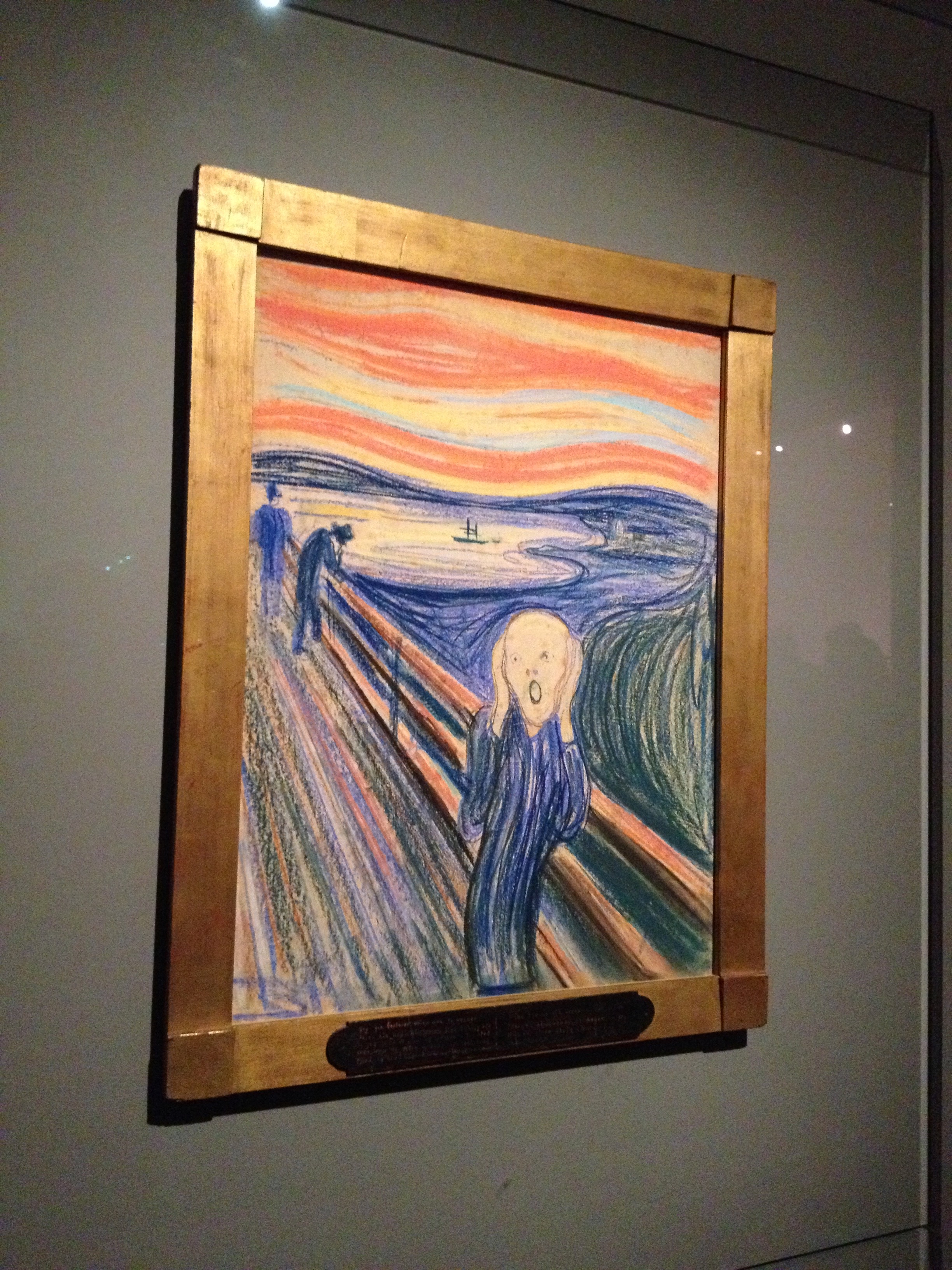
Being drawn into the dream of a madman.  Trump’s dream.  It seems like fiction, doesn’t it?  But, as they say, reality is stranger than.  I didn’t come up with this observation of being drawn into a madman’s dream myself.  It comes from Harlan Ellison via Stephen King.  When asked why he writes what is commonly called horror, Ellison pointed to the things happening at the time: Jonestown, Ayatollah Khomeini, etc., and replied something like the world was being drawn into Khomeini’s dream.  So the United States is being drawn in to the mad dream of Donald Trump.  I believe it’s because many people lack imagination.  There’s a reason I write “horror” stories in my spare time.  I prefer not to live in a madman’s dream.  Even if my stories are read by the few who frequent the journals in which they’re published, they are an attempt at viewing the world through unclouded eyes.

Entirely too much of our collective lives have been eaten up by Trump’s antics.  I was looking for an image on this blog going back some eight years and found, you guessed it, posts about Trump.  And here we are on the precipice again, all to stoke one man’s vanity.  And people ask why some of us write or watch horror?  We tend to treat insanity as if it’s rare.  Any self-aware, reflective person, when alone and honest, will admit that some things we do simply aren’t rational.  We’re not, as Silicon Valley moguls like to think of themselves, Mr. Spock.  (And even he underwent pon farr.)  The evidence of Trump’s manipulations is all over the place, but that doesn’t stop yard signs from popping up like toadstools.

We are far from a “sane” species.  We may wonder why deer step out onto the road and stare blankly into headlights, but we do the exact same thing.  Horror writers tend to be pretty clear thinkers.  I suspect it’s because many of them spend time trying to get into the heads of their irrational characters.  They can recognize the madmen and the dangerous among us.  King’s Twitter posts make no bones about his seeing through Trump.  The latter’s public speeches clearly indicate that his mental capacity isn’t sufficient to be given nuclear codes, let alone the reins of the most powerful country on the planet.  He dreams of his own greatness.  His desires are entirely for his own glorification.  Anyone can see that.  But we are creatures who dream.  And it’s difficult to wake up from a dream, even if it’s a nightmare.


Keep Them Open

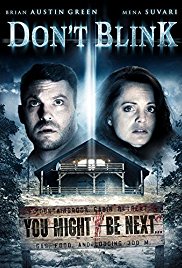
“To be is to be perceived.”  That was the summary of Berkeleyian philosophy we were taught in college.  In other words, not to be perceived is not to exist.  So, Don’t Blink kind of runs with that idea.  Before getting started, a spoiler: close your eyes if you don’t want to know something important.  Okay, so no explanation is given.  Ten friends (a lot of names to remember) drive to a resort that is so remote that you arrive with the fuel tank on empty.  The friends explore the resort but there’s nobody there.  Clearly people were there, just shortly before, but they’re all gone.  And then the friends start disappearing, but only when nobody sees them.  That’s the Berkeleyian angle.  The last survivor never does figure out what is going on, although the authorities seem to be aware that something’s up.  For those of us easily ignored, this is a scary movie.

It’s also another potential film for Holy Sequel.  After her boyfriend vanishes, one of the girls finds a Bible and begins claiming that God is punishing their sins.  Given that these are all millennials, this kind of thinking starts to get on the others’ nerves.  It’s not a major event in the film but it reinforces, as so many factors do, that religion and horror aren’t ever very far apart.  And in case you’re wondering, no, she’s not the survivor.  Neither does she suggest this might be the “rapture.”  During said event, the righteous disappear, not twenty-somethings with a weekend of sex on their minds.  The director, Travis Oates, is apparently a Hitchcock fan, so some elements fit into that sensibility.

I only found out about the movie because a friend suggested that it might be good beginner horror.  There are a couple of pretty intense scenes, but overall there’s not a ton of blood and guts.  There aren’t any jump startles, just a dread that continues to grow throughout.  I’m pondering how the Bible is being presented here.  It’s used as an apotropaic device—as protective magic.  Because the Bible is divine, it has, so the belief goes, the power to prevent harm.  Ultimately, in the world of this movie, nothing has that ability.  Although the Bible’s there, the message is pretty nihilistic.  Kind of like thinking about the heat death of the universe.  Still, the acting is good and the premise, although Vanishing on 7th Street also covered the idea of people just disappearing, is engaging.  Even though it doesn’t answer the question of why, or how, it is a movie that underscores the philosophy of George Berkeley as having perhaps been onto something.


The Unpersistence of Memory

Perhaps this happens to you.  It’s a creepy feeling, regardless.  You’ve heard a lot about a movie and you decide to see it.  Since you’re not rich you decide to wait until it comes to a streaming service to which you already subscribe.  So far I’m sure you’re with me.  One evening, when the timing seems right, you sit down to see it.  You don’t know how it will end, but some scenes look familiar to you.  You nevertheless enjoy it—the jokes are fresh to you and you laugh.  You figure that you must’ve seen the familiar parts in the trailer.  You think the movie is quite good, and your spouse agrees.  Haunted by that uncanny feeling that parts were memories instead of just a trailer, you do some investigating only to learn that you did indeed see it before.  And it was only five years ago.

My memory is still reasonably good, I think.  I can recollect various movies from different ages of my life—including five years ago—but others failed to stick.  I hate to admit it, but this has happened to me more than once.  I’ve watched a movie, written a blog post on it, posted it, only to discover that I’d seen the film before and had even written about it.  Perhaps there’s too much stimulus entering this limited brain I have.  I can’t help but think it has to do with my work schedule; I started having such things happen when I was chained into a 9-2-5 day.  Before that, life seemed much more easily handleable.  As proof I would put forward the fact that my memory for movies, books, etc., before being dismissed from my calling is much better than it is for the years since.  Career malfunctions can have lasting effects.  A therapist once told me I was suffering PTSD.

Of course, I might just be getting older.  Still, it seems that memory works better in some circumstances than in others.  Movies have been an important part of my life, especially since being forced out of academia.  It’s troubling to find myself forgetting them.  As much as I enjoy cinema, I have limited time for watching films, and if one I rewatch wasn’t very good the first time, I’ve just used up a valuable Sunday afternoon when I could be researching my next book.  That’s the human dilemma, I suppose.  I Just can’t get over the idea that it has to do with work.  If it weren’t for that, the next book would be done already.  I’m sure this happens to everyone.  At least those with 9-2-5 jobs, if I remember correctly.

Photo by Denise Jans on Unsplash


Something Somewhere

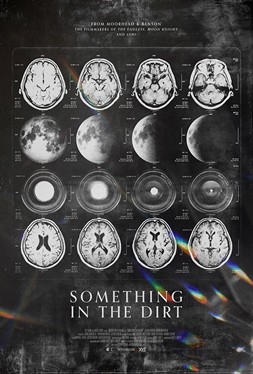
A friend suggested I might like Justin Benson and Aaron Moorhead films.  An unusually intellectual type of horror, these movies challenge perceptions of reality and are tied together with one or two thematic elements.  Something in the Dirt is their most recent offering and as far as existential horror goes, it’s a winner.  The storyline, as with their other films, plays with alternative realities bleeding over into what we think of as everyday life.  There’s a lot going on in this one that will keep you guessing until the end, and even after that.  Levi, a ne’er-do-well, awakes in his cheap apartment in LA and meets his neighbor, John, just outside.  Even this initial meeting has a sense of the surreal about it, but the two strike up a conversation, each trying to weigh the other’s truthfulness.

Levi’s apartment begins to show elements of paranormal happenings.  Neither he nor John have professional careers, so they figure they can use their off times to make a documentary about the phenomena to sell to maybe Netflix, setting them for life.  They each start coming up with theories about what is happening from ghosts to extraterrestrials to Pythagoreans building Los Angeles on an occult geometric pattern.  Ultimately they seem to settle on two basic forces of nature: electromagnetism and gravity.  Both are distorted in this apartment.  Meanwhile, each learns that the other isn’t quite what he seems to be.  Levi has a history of arrests that he downplays.  John is the member of an evangelical, apocalyptic group, but he’s also gay and claims to have made a ton of money that he donated to the church.  (Religion and horror, folks!)  Neither really trusts the other but synchronicities keep occurring, preventing either one from just ending the project.

They bring in occasional experts who have varying degrees of skepticism regarding whether the two are faking what they capture on camera.  After all, they include reenactments along with their actual footage.  I won’t spoil the ending here, but it is pretty much what a seasoned viewer of Benson and Moorhead might appreciate.  These movies are so unusual and so full of hard thinking that it seems odd that they aren’t discussed more often.  If I understand correctly, there is only one remaining film where they appear as writer, director, producer, editor, and director of photography that I haven’t seen.  They are the kinds of movies that if you binge on you’ll either end up enrolling in a graduate program in philosophy or spending the rest of the day blowing dandelion seeds into the wind.  Or maybe there’s something in all this.


Seasonal Poe

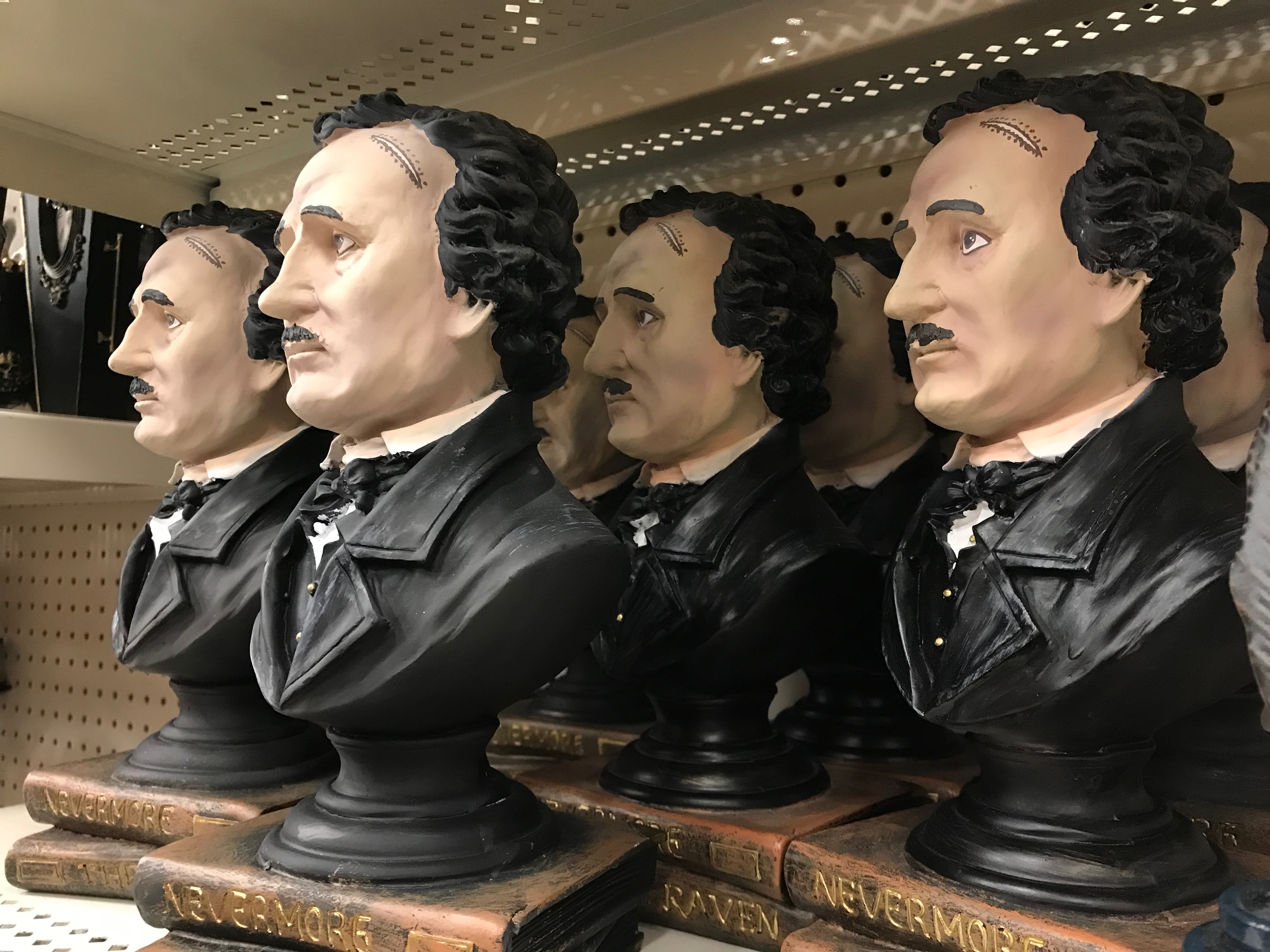
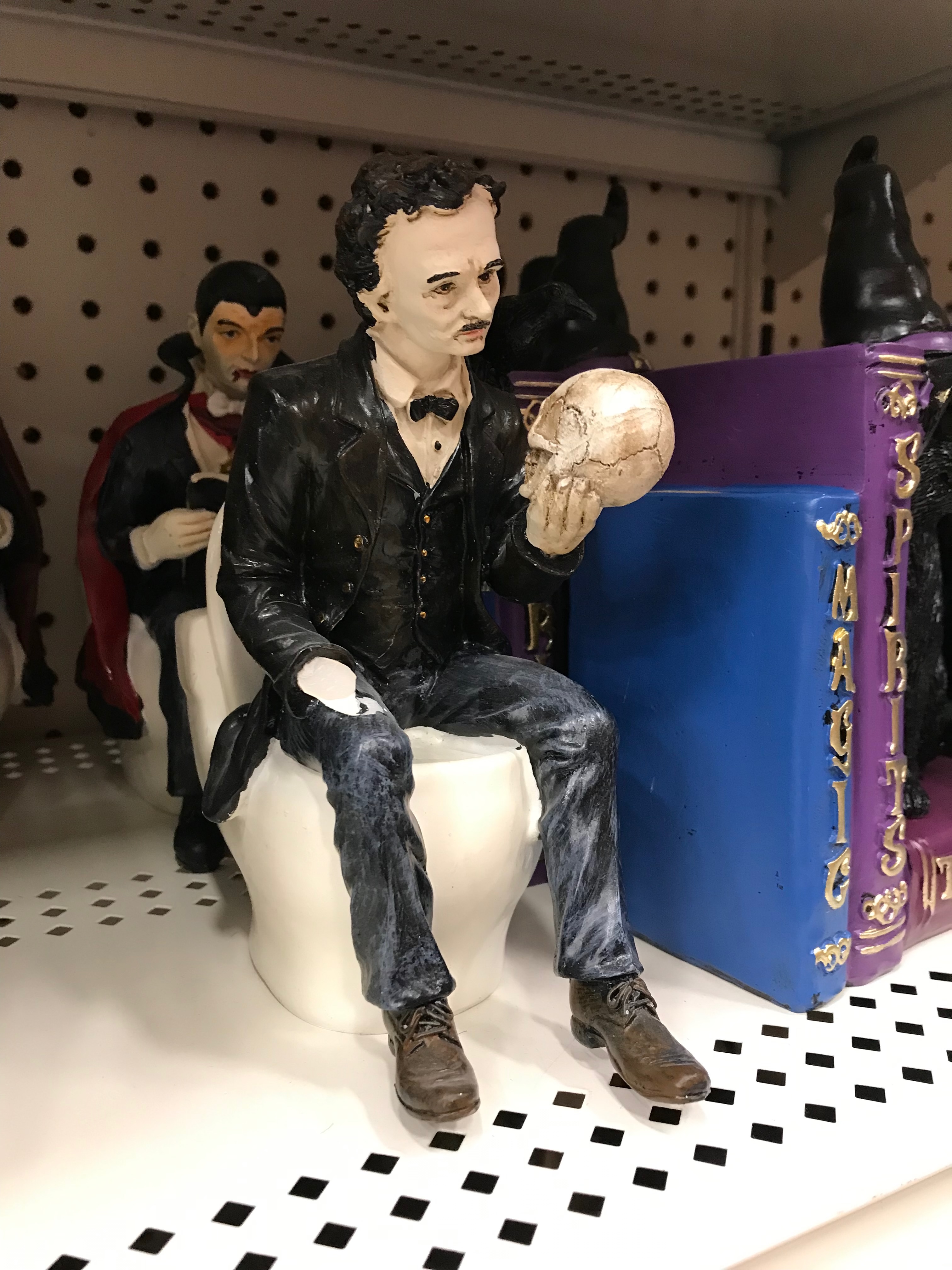
The more I read of and about Edgar Allan Poe, the more convinced I become that he wasn’t as associated with horror in his own mind as he has become.  As one of the earliest American writers, he has become the icon of those who wrote on the dark side.  His contemporaries—Washington Irving, Nathaniel Hawthorne, and Herman Melville—did as well, but it was Poe who became iconic.  On a recent trip to Michaels to take in the seasonal ambiance, Poe’s presence was difficult to ignore.  I wasn’t prepared to shoot a photo-essay (I’m not sure how they feel about such things in a store, in any case) so I didn’t photograph all the pieces.  “The Raven” is frequently referenced, with typewriters with the poem emerging and large, ominous black birds about, but Poe himself also appears.  There are, of course, painted busts of Poe.

But Halloween has grown more whimsical over the years.  Arguably for my entire life it has been primarily a children’s holiday, but many have noticed that those of us who grew up with Halloween have retained adult interest in it.  Part of this is no doubt commercial since the captains of industry have learned people will spend more on Halloween than any other holiday except Christmas (I do discuss this in my forthcoming book).  And indeed, the Headless Horseman appears quite a lot as well.  Irving, however, isn’t there on the ground.  Poe is.  The whimsical part comes through in showing the humor of the season.  For example, although Poe is shown in the noble bust format, he’s also portrayed (fully clothed) on the toilet.

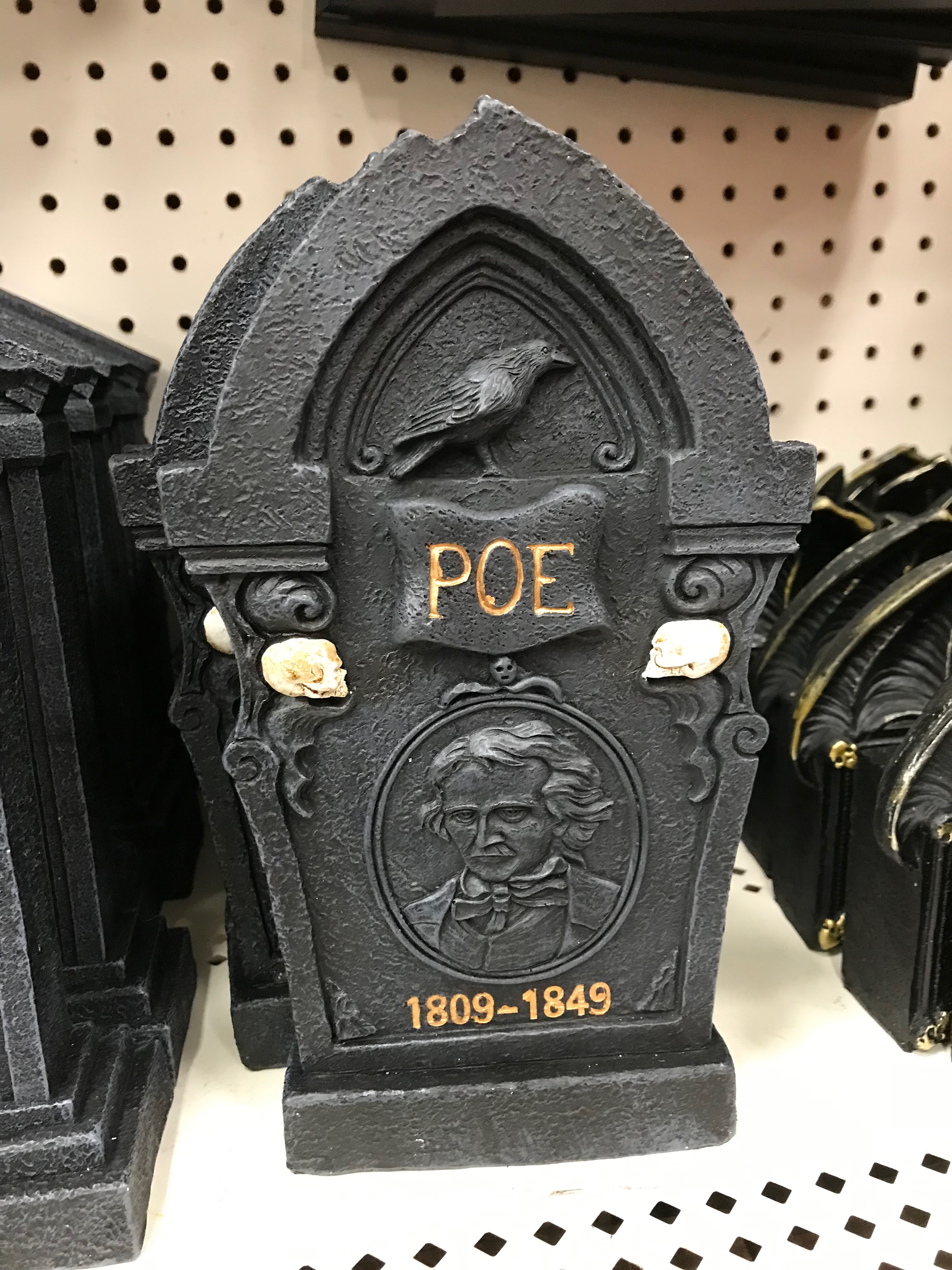
Finally, there were figurines of a fanciful tombstone of Poe.  They even got the dates correct.  Now, there’s more to be said regarding the comparison with Irving.  You can find the Headless Horseman on the toilet as well (along with Dracula).  You can find the Horseman in bust format as well.  When it comes to tombstones, however, the fictional Ichabod Crane shows up alongside the nonfictional Poe.  That casts a certain light on Irving’s most famous story.  I’ll save that for another post, however, since authors are expected to repeatedly plug their books.  I left Michaels strangely reflective.  Poe-themed merchandise is fairly typical any given year, but since we’re having our first Halloween party in some years, and since I’ve been exploring Poe’s range as a writer, this clear abundance of Poe as an icon gave me pause.  As if I were coming within view of the melancholy house of Usher. 


Haunted Space

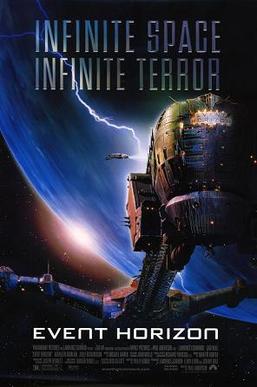
A haunted house film set in space.  That’s what I thought and then read the same words in a published description of what the writer and director were going for.  In that way it was a clear success, but in others it struggles.  The premise is good, if jarring.  Space travel, which is the most scientific of scientific enterprises (there’s a reason the rest of us say, “I’m not a rocket scientist”) collides with the traditional supernatural.  The results are worth pondering.  Event Horizon has become a cult classic, and like many older films, has been more positively reevaluated in recent years.  So the crew of Lewis and Clark is on a rescue mission to the ship Event Horizon, in a decaying orbit around Neptune.  Neptune’s atmosphere provides lightning for this haunted house.  The crew learns that Event Horizon has been through a black hole and has returned sentient.  Its crew has no survivors and it won’t allow Lewis and Clark to either escape or to destroy it.

Those of us who watch horror looking for religion—and even general viewers—can’t help but notice that Event Horizon ended up in Hell and returned.  It plagues the rescue crew with hallucinations of their regrets and failures.  Weir, the scientist who designed Event Horizon, is more or less possessed and stops at nothing to save the ship, which has brought Hell back to this dimension.  Again, it’s a bit jarring, like vampires in space.  (Yes, I know it’s been done.)  There’s even a point where Weir informs one of the crew that the crewman doesn’t believe in Hell.  Heck, they’re in outer space on a ship technology built.  But what if there is a spiritual reality—“dimension,” in the film’s lingo—out there?  What if some traditional religions are right?

The movie’s not apologetic, but it’s offering a reminder that to be human is to be spiritual.  No matter how much science “proves,” there’s always potentially more “outside.”  Hell in Event Horizon is beyond the bounds of the universe.  It is another place but a place it is.  It costs some of the crew their lives, but does it claim their souls?  Event Horizon is one of those movies that the studio ordered severely edited, and for which the edited footage was lost.  Movies ever only show us what directors, producers, and studio execs want us to see.  People crave stories.  And when a movie, like Event Horizon, raises more questions than it answers, viewers want to know—what really does happen in a haunted house in space?


Ever Hopeful

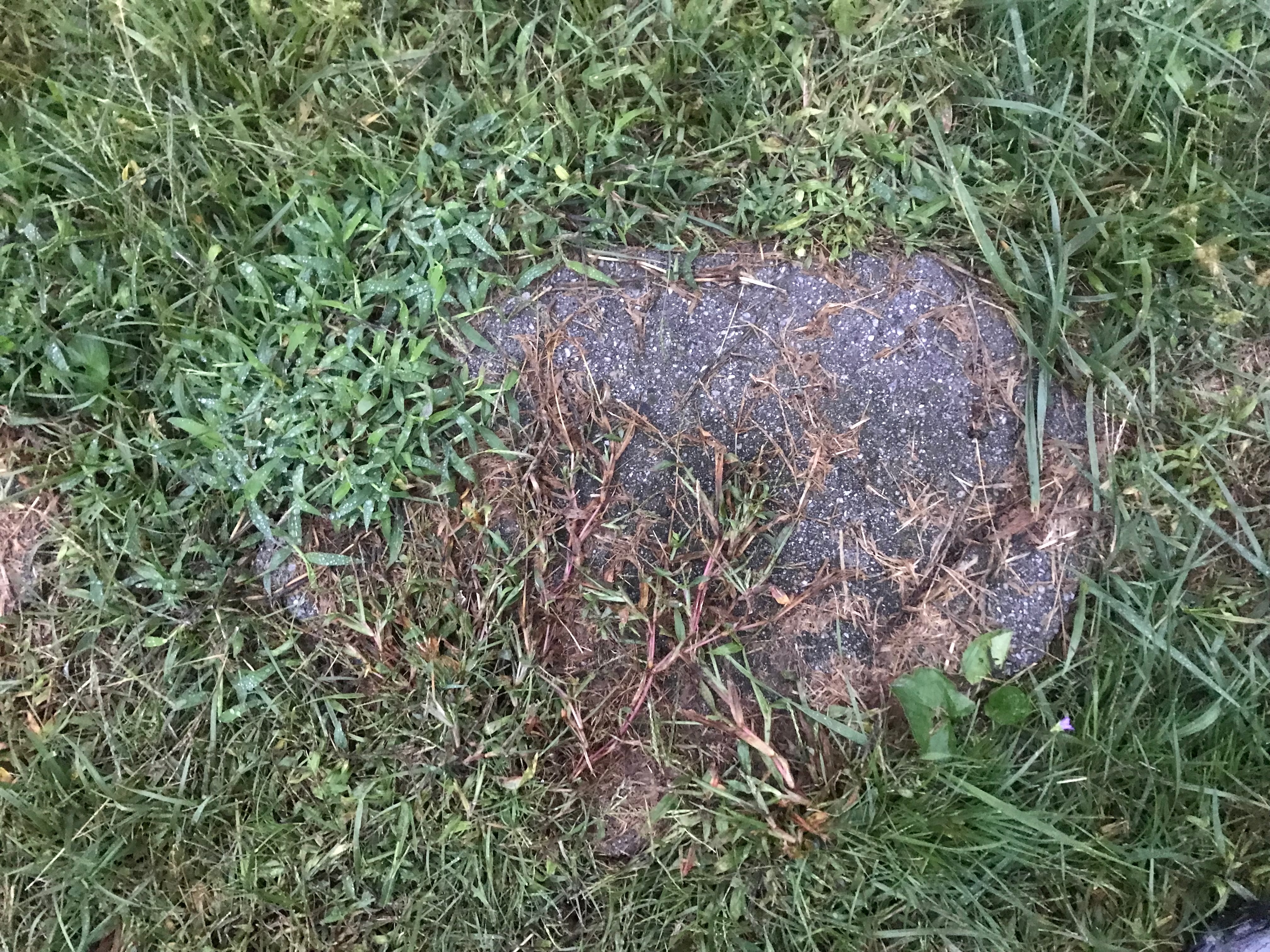
Plants are some of the most hopeful entities on the Earth.  As much as I’ve had trouble with houseplants, outside they seem to do fine.  Great, in fact.  Long-time readers will know that I struggle with lawn care.  It really didn’t enter my calculus of house buying—I was rather focused on the actual house, strangely.  We ended up with more yard than we required.  Thus, plants.  I’m not a fan of paving over greenery, but there’s a small strip of land between the sidewalk and the street—technically a “verge”—that’s difficult to mow.  Weed-eating it is also tricky because neighbors park their cars there practically 24/7 and some people don’t want a weed-eater that close to their showroom finish.  A couple years back I hauled some paving stones from our backyard out to the verge.  It decreased the grass by maybe 50 percent, but it still has to be whacked regularly.

I’ve been noticing over the summer into the fall that grass with a strong will to survive had begun growing roots over the top of the paving stones, intent on breaking them down.  That’s what plants do.  They work slowly, steadily, to achieve more room to grow.  This is always amazing to me.  Life is persistent.  Many animals see a stone as an obstacle—something to be stepped on or over.  Some plants see them as opportunities.  Our human obsession with allowing only certain kinds of plants close to our habitations, and those trimmed just so, seems an exercise in futility.  Of course, yard work isn’t my favorite activity, thus the paving stones in the first place.

After our species is done making a mess of the planet, plants will quietly take over again.  Especially anyplace near where someone once planted ivy.  We’ve got some very aggressive ivy in the back yard that I pull down year after year, and no matter how often I do it comes back with renewed vigor the next year.  And crabgrass.  That stuff won’t take no for an answer.  I can tell some former owners were trying to do some landscaping with, well, landscaping fabric and decorative gravel.  If you turn your back for a few weeks, the crabgrass gets in and its roots begin breaking the gravel down into soil.  I wonder how there’s any exposed rock in the world, or maybe my yard is a paranormal plant paradise.  I can imagine that without people here to “maintain” things, paradise (which is a garden) would return.  Perhaps there’s a parable of hope among the plants.


Must Be Autumn

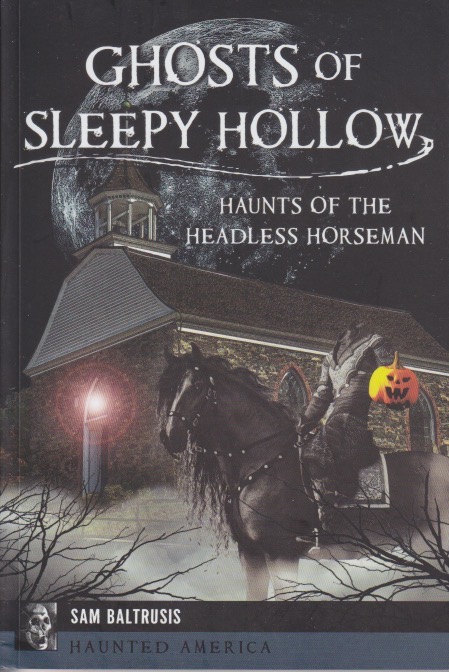
As it often goes, a friend pointed out to me a book on Sleepy Hollow that published just this week.  I preordered a copy that arrived on Tuesday and buzzed through it.  It’s what I describe to family as “one of those books”—you know, the local history, heavily illustrated quick reads from The History Press.  (I would note that I submitted what was then The Myth of Sleepy Hollow to The History Press, but they never even responded to the submission.)  In any case, Sam BaltrusisGhosts of Sleepy Hollow: Haunts of the Headless Horseman is really quite different from what I do in my forthcoming Sleepy Hollow as American Myth.  The History Press isn’t really regarded as such by historians.  I like their books nonetheless.  I was castigated by an academic journal editor early in my career for using one such book to illustrate local folklore.  (That was, by far, the snootiest rejection letter I’ve ever received.)

Aloft noses aside, there is a legitimacy in listening to what the folk say.  The tales in a book like this won’t convince skeptics, of course, but if you read them in the dark you’ll nevertheless find yourself glancing into the corner now and again, wondering if you saw something.  The book does cover the “Legend of Sleepy Hollow” and Irving’s life in a few pages—Irving was a complex man and the first truly famous American writer—before moving on to local haunts.  The thing that kept nagging at me was the easy shifting from fiction to fact.  Folklore does have a way of becoming reality (and who can definitively even say what that is?) for people.  No doubt, Sleepy Hollow has latched onto tourism in a big way.  Even more so than on my last visit there. And folklore draws on that shifting borderland between fact and fict.

One of my motivations in writing Sleepy Hollow as American Myth was that the story is largely ignored by academics and “sophisticated” readers.  It nevertheless remains important in popular culture.  Academics tend to be slow in picking up what general readers find fascinating.  I found a few academic articles on the subject, but my book was written for general readers as well.  I hesitate to say too much, otherwise, why buy it?  I have a handful of History Press (and similar) books on the region on my shelf.  I learn from them.  And I’m glad to see Sleepy Hollow getting more attention.  My only real regret about my book is that I’ll have to wait a couple of years before the price comes down.  In the meantime, those really curious about Sleepy Hollow will have this Haunted America version to read.


Some Body

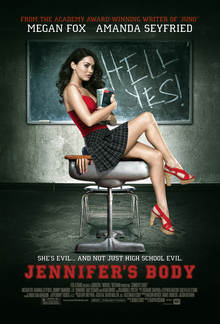
Many period movies are reevaluated and found better than originally critiqued.  (It feels strange to write that about a 2009 movie, but that was a decade and a half ago.)  I’d read about Jennifer’s Body before, but the title put me off from watching it.  Then, of all places, the New York Times recommended it last year during one of their autumnal forays into the horror genre.  Interestingly, it’s a possession movie with a few twists.  Demons are quite malleable monsters, of course.  So Jennifer and Anita (Needy) are best friends.  Jennifer is the girl all the guys want, and Needy, well, isn’t.  One night they go to hear a band at a local bar, and Jennifer leaves with them.  We later find out—spoilers about to appear—that their intention is to sacrifice a virgin to Satan to help them succeed as an indie rock band.  Jennifer’s no virgin, though, and demonic transference took place—i.e., Jennifer is possessed although the band gets their boost.

Then Jennifer has to eat people (high schoolers, of course) to survive.  She eventually tells Needy all of this, and her friend researches the occult and realizes her former friend is seriously dangerous.  And she decides to stop her.  I won’t give away the ending (it was only 15 years ago), but I will say that the overall result is somewhat unusual for a demon movie.  There’s plenty of religious imagery, but nothing really explicitly showcased.  For example, Needy’s mom has religious paraphernalia around the house.  There are no clergy in the story and Needy teaches herself what she needs to know about dispatching demons.  In other words, it’s a strangely secular possession movie.  And in the end demonic ability leads to justice.

The critical reappraisal is largely based on the feminist message and complexity of female relationships in the movie.  Both written and directed by women, those aspects aren’t unexpected.  And the movie is a horror comedy.  The funny parts tend to come from aspects of the dialogue since the acting is played straight.  This isn’t so much a scary movie as it is a smart one, which is probably why the Times critic recommended it.  Demons aren’t always scary monsters in horror, and what you end up being afraid of here is that the relationship between Jennifer and Needy might end since it seems to be the foundation on which two young women’s lives are built.  Is it a good movie?  Well, it’s not bad.  I tend to lean on the side of the reappraisers—it still has something to say. 


Borrowed Land

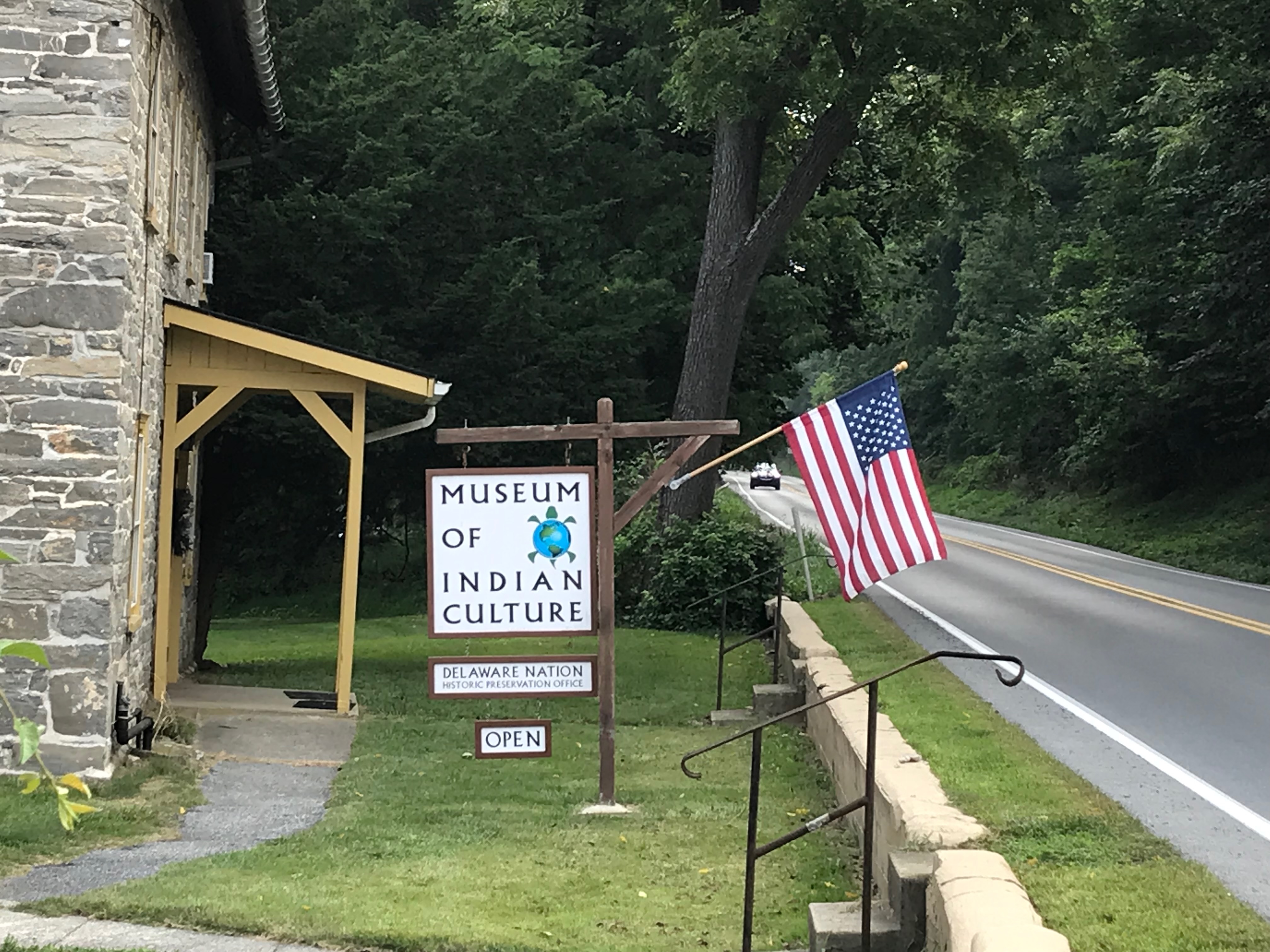
The thing about local attractions is that residents seldom have time to visit them.  Weekends are busy with the tasks you can’t accomplish otherwise with a 9-2-5 and being a “homeowner” is more like being owned.  Nevertheless, one Sunday afternoon we ventured to The Museum of Indian Culture, just south of Allentown.  I’d known about it for a few years, but wasn’t sure what to expect.  Occupying the house built by the Bieber family (not the singer, but the local bus-owning company that died during the pandemic) way back, the museum is small, but intimate.    The docents are unstinting with their time.  This is Lenape tribal land and the museum houses some local, and some national, pieces.  It also has a very extensive library.  

Often it’s difficult to feel proud of being of European extraction.  So many crimes were committed during the period of colonialism (and are still being perpetrated) that you just want to apologize over and over when you meet an American Indian.  The thing is, every native American I’ve met has been gracious and kind.  They still feel connected to the land in a way that seems foreign to Europeans.  Colonialists (and present-day capitalists) saw (see) the land as for exploitation.  We are slowly, hopefully, coming to realize that the indigenous way of living with the land is far more sustainable than the conquering attitude that metal smelting and gunpowder gave.  I kept thinking, what would it be like if people we didn’t even know existed showed up and just started taking everything for their own?  And claiming an all-powerful deity had given it to them?  Wouldn’t we fight back, just as the first Americans did?

I was especially hit by the hypocrisy of it all.  The code talkers helped win the Second World War.  As our docent said, at the Carlisle Indian School Indians were severely punished for speaking their native language.  They were being Christianized, of course.  Then, during the War the military realized we have a treasure-trove of languages that nobody else in the world speaks.  Suddenly their languages were an asset to be exploited.  Native Americans proudly served (and serve) in the military.  It is actually their land they’re defending.  We spent an educational hour in the small museum not far from property we “own,” according to a law code of “right behavior” drafted by others.  You might be able to leave places like this small museum, but they don’t leave you.


Word Undefined

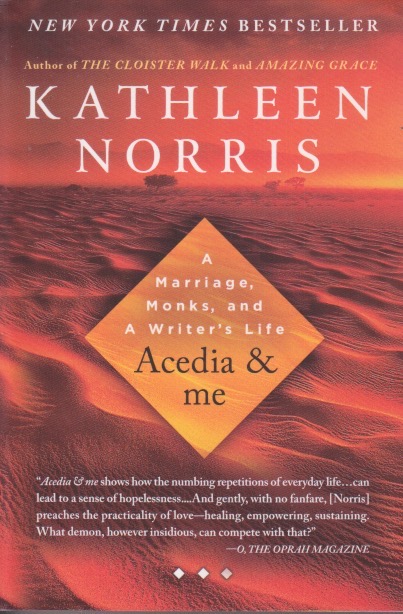
It’s one of those amorphous, uncommon words that can be devilishly difficult to define.  It’s also a churchy word.  “Acedia” was considered both a sin and a demon by various monastics, although the basic idea is listlessness.  Kathleen Norris has made her mark as a spiritual writer, and my wife and I have read a few of her books.  Dakota, her first non-fiction, was stunning.  We just finished Acedia and Me: A Marriage, Monks, and a Writer’s Life.  It revolves around this concept of acedia and for a writer to admit it, it seems, takes courage.  But the question that remains unresolved for me is whether it really exists.  It seems that acedia was devised by monks to name their ennui with monastic existence.  When all you do is pray there comes a time when you just don’t want to.  Or can’t.  They called it acedia.

There is a rich vocabulary for such states, reminding me of The Dictionary of Obscure Sorrows as well as the Existentialist literature I grew up reading.  I think of Kafka.  Of Kierkegaard.  Of angst.  Of boredom.  More to the point in Norris’ case, writer’s block.  This is a terribly personal book for her.  She describes the death of her husband and coping with widowhood.  And on top of it all, that dreaded block of inspiration that is a plague upon writers.  Interestingly enough, the book took me back to my Nashotah House days.  Norris, as do many monks, appreciates the slow reading of the Psalms.  One of the points of contention at Nashotah House—I kid you not—was how long to pause between the halves of the verses in the Psalter.  But is this a demon or only human nature?

“The noontime demon” was another common term for acedia.  This connects it to yet another of its aspects: depression.  We tend to think of depression as a clinical problem, but Norris explores the possibility that it’s a spiritual problem.  Some claim acedia as a sin, as I’ve noted, which shoves it back on the experiencer.  Norris has some interesting definitions of sin in her exploration.  Tellingly, in an appendix she presents the Webster’s Dictionary (1913) words related to acedia and there are over 100 of them.  And these words range from lust to world-weariness.  Is the word too promiscuous to be really useful?  For a writer like Norris, influenced by monastic practice, a poet by trade, and yet a writer of New York Times bestsellers, she makes the word fit.  There’s much to ponder here.


Another Host

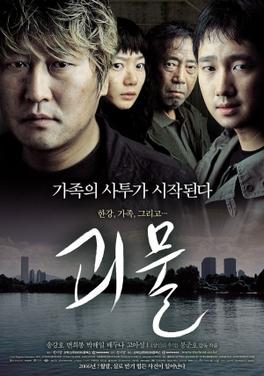
Several months ago I wrote about The Host, a movie I enjoyed but had watched by mistake.  By that I mean that someone had recommended The Host (2006) and I watched the completely unrelated The Host (2020).  (You can’t copyright titles.)  I waited long enough that the right Host became available on a service I use so it was, in essence, “free.”  This one is a Korean monster movie, directed by Bong Joon-ho.  I’d previously seen his excellent Parasite, and The Host didn’t disappoint in either the social commentary department or in the heart-felt monster tale.  In the latter department it has some common ground with Godzilla Minus OneThe Host begins with chemicals poured in the Han River causing a mutation that becomes a big problem.  This monster kills many, but the story focuses on the Park family where a ne’er-do-well father (Gang-du) disappoints his daughter and siblings.  Then the monster carries off his daughter.

The government, wishing to hide the origins of the creature (an American military facility did the chemical dumping) invent a virus story to keep people away from the river where they have trouble locating the monster.  Meanwhile Gang-du learns that his daughter is still alive, being kept as a future meal in the creature’s lair.   His father, sister, and brother all come together to try to find her, having to work around the corrupt government response to the crisis.  In other words, there’s a lot going on here.  The monster is believably rendered and its interactions with crowds of people don’t strain the imagination.  I do have to wonder if the creators of Stranger Things were familiar with this film.  Again, there’s some overlap there.  There are some holes in the plot, or it may be that I didn’t quite get everything (quite likely regardless).

It’s easy to see why the movie won so many awards.  The question that haunts me is whether this is a horror movie or not.  There are definitely horror aspects, but the overall feel is a meaningful monster movie, which isn’t really a recognized genre.  Monsters sometimes—often, in fact—bring out the best in people.  Without giving too much away, we can say that about this movie.  A family torn apart is reunited by a monster.  It doesn’t end well for them, but they have learned something by the experience.  And the movie is impressive from a cinematic perspective as well.  So now I’ve had two Hosts and although quite different from each other, both are recommended.


From God’s Mouth

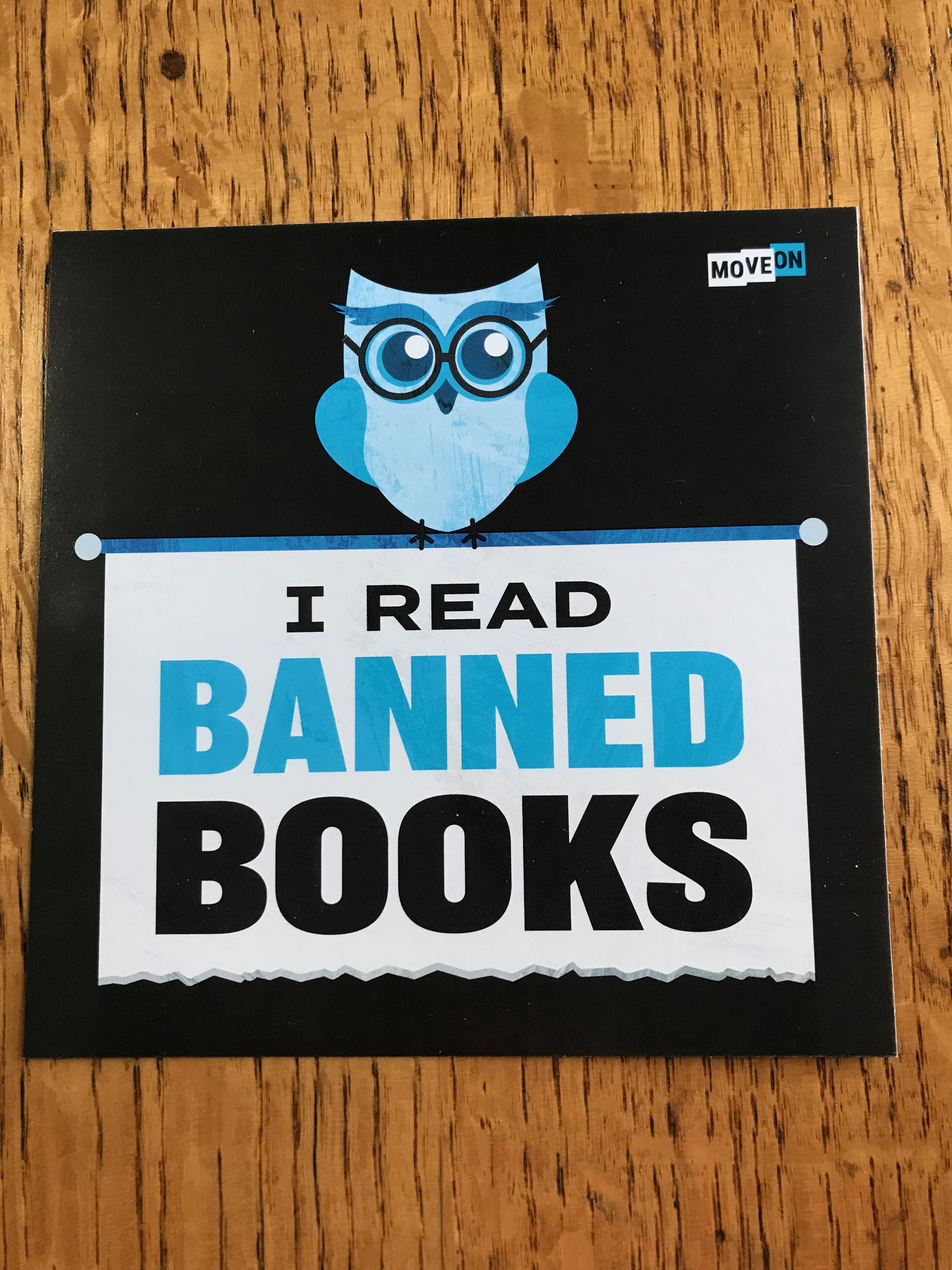
If book banners would actually read the book they claim to protect, the Bible, they would run across the account of Jehoiakim and Jeremiah.  It’s in Jeremiah 36, if you care to follow along.  Jeremiah was not a popular prophet.  In fact, he was often in trouble for speaking what God told him to say.  He wasn’t wearing a “Make Israel Great Again” cap.  In fact, his message was that the kingdom of Judah had to fall in order to be restored.  So in chapter 36 he dictates his message, straight from God, to Baruch, his secretary.  Baruch reads the words in the temple and this comes to the notice of the royal staff.  They arrange for a private reading and it scares them like a good horror novel.  One of them reads the scroll to the king, Jehoiakim, who cuts off a few columns at a time and burns them in the fire.

My favorite part of this story has always been the coda: “Then took Jeremiah another roll, and gave it to Baruch the scribe, the son of Neriah; who wrote therein from the mouth of Jeremiah all the words of the book which Jehoiakim king of Judah had burned in the fire: and there were added besides unto them many like words.”  Many like words.  So we have book banners around the nation trying to stop children from reading.  The hope is they will become unreading adults because reading expands your mind.  Jehoiakim was a book banner—a book burner, in fact.  But the response from God himself is to write the whole thing over and add many similar words.  

The Bible has been, and still is, fairly constantly abused.  What it seems to be is unread, at least by those who use it to stop other books from being read.  I came to believe, while majoring in religion in a conservative college, that if literalism was truly from God there would be no way to stop it.  I took a route unlike my classmates, who tended to go to the most conservative seminary they could find to have their minds further closed.  I figured that if it was true then testing it by reason couldn’t hurt it.  It’s pretty obvious the way that turned out.  I don’t stand with book banners.  This is Banned Book Week.  Read a banned book.  Stand up to those who do the banning.  And if you need something to convince them that their tactics don’t meet with divine approval, point them to Jeremiah 36.


Liminal Time

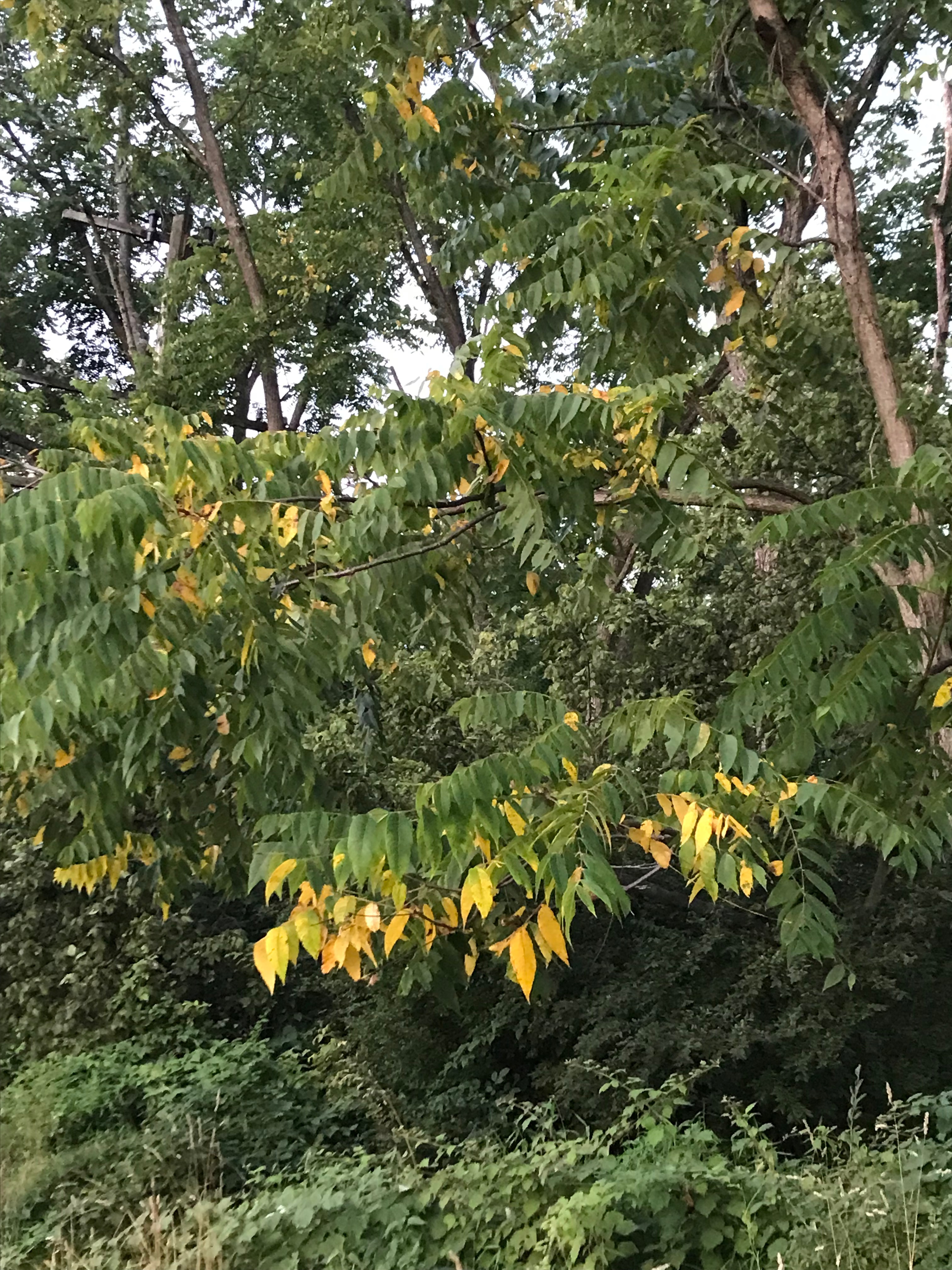
Considering the number of people who declare autumn their favorite season, the equinox receives pretty slim press.  This year it falls on the 22nd and, as always, it is one of the four quarter days of the pre-Christian European calendar.  Even among pagans it seems not to have had the same level of celebration as the other solstices and equinox.  I sometimes wonder if that’s because things are generally good already in September.  The intense heat of summer is over but the chill of October hasn’t yet arrived.  We stop using the air conditioning and don’t have to turn on the furnace.  It’s the Goldilocks month.  It’s part summer when living is easy, and part fall when the world is beautiful.  Like its fellow quarter days it is truly a liminal time.  

Liminal periods are always good for reflection.  No matter how much I want to savor this time of year, I have a feeling that it always catches me off guard.  There are changes afoot.  Starting Monday it will be dark more than it is light, and that will hold true until the sister equinox visits us in March.  These longer nights have traditionally made room for ghosts and goblins.  If we haven’t begun to store up supplies for winter, now is the time to start.  It’s the season when we all believe in magic, if just a little bit.  I’m one of those people who finds melancholy somewhat lovely.  It’s not depression (believe me, I know!), but a kind of happy sadness that the season itself is ephemeral.  Pretty soon people will be watching scary movies, but not quite yet.

Harvest is a joyful, spooky time.  Those trees that have been green since April now put on their colorful winter coats but soon will spend the colder months bravely naked.  Snow may come.  Fall is a prophetic season, warning us of what might come.  Monsters may be set free from their chains.  And yet there will be cozy indoor holidays when we can hunker down and recollect the year that has just been spent.  There’s a wisdom to seeing the quarter days as the spokes on the wheel of the year.  Like many wheels already rolling it’s futile to attempt to stop them.  They’re moving us to the next place that we’re meant to be.  It’s true that the autumnal equinox falls on a weekend this year, but it does seem to me a natural holiday.  And a time, like all holidays, for reflection.