Burial Zone

I don’t always believe the statistics.  Numerically, the number of horror films—depending on how the term is defined—declined into men (and sometimes women) in rubbery suits in the 1950s.  Indeed, it’s often opined that had not Hammer joined the horror business in the mid fifties that the genre born only twenty-something years earlier might’ve died out.  There seem to have been some good horror films made then, though, even if overlooked because of their B status.  A friend recently directed me to I Bury the Living, after reading my post about Carnival of Souls.  I have to confess to having never heard of I Bury the Living.  (Stephen King mentions it in Danse Macabre.)  Produced as a B movie it was itself buried among the various other efforts of the late fifties.  It’s not a bad movie, however.  In fact, it’s better than the title might lead you to believe.
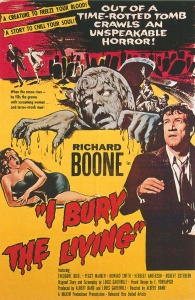
The plot is something of a period piece—a well-respected department store supports a cemetery committee for Immortal Hills, the town’s graveyard.  Robert’s turn as chairman of the committee arises and he tries unsuccessfully to get out of the duty.  The caretaker, Andy, doesn’t want to retire, but he’s aging out.  The movie, however, revolves around the map.  The sold plots are marked with white pins while the plots already occupied have black.  When Robert accidentally puts black pins into newly purchased plots and the couple dies, he believes he’s cursed with an ability to kill those he black pins.  He substitutes a black pin for a white one at random.  The person dies.  In all, seven people succumb.  Convinced he’s murdered them, Robert decides to bring them back to life but putting the white pins back.  Only at this point does Andy confess that he’s been killing the victims in retaliation for being forcefully retired.

The ending is a little weak, but the psychological tension as it builds up is believable.  One critic compared it to an extended episode of The Twilight Zone, a comparison that has also been made for Carnival of Souls.  I would concur with that observation.  Although Twilight Zone wouldn’t air for another year, that kind of unsettling tale was already in the air.  No zombies appear, but the palpable belief that they might is what really makes the horror work in this instance.  The first half is an eerie story, but when Robert sticks in that first white pin a shift takes place.  Of course, modern viewers have been primed by Night of the Living Dead, so we know the possibilities.  Perhaps the power of Night gives life to older movies.  After all, anything can happen in the Twilight Zone.

Dancing with King

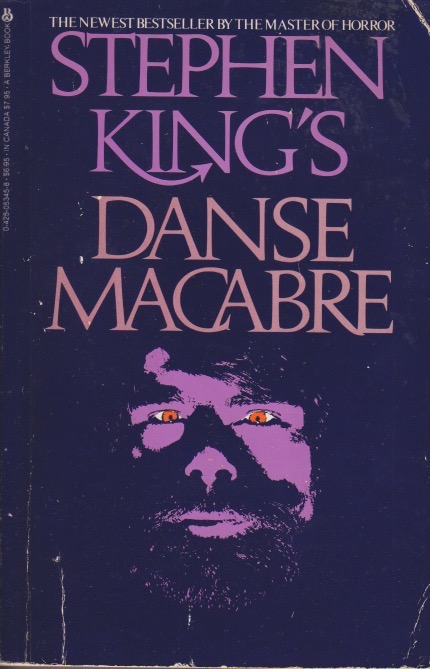
There are books you wait too late to read, but which you read at just the right time for you.  That’s how I feel about Stephen King’s Danse Macabre.  This book is endlessly cited in more academic treatments of horror and I knew I should read it.  And one thing I immediately appreciated is that even early in the eighties King expressed my long-term concern: many genres fall into horror.  He, perhaps rightly, considers horror a subspecies of fantasy.  Or course, fantasy has come to mean something quite different in the intervening half-century.  Still, the reader is treated to thrillers, sci-fi, and weird fiction.  There’s also a dose of the gothic and speculative as well.  King sets his four classes of monsters early: the vampire, the werewolf, the thing without a name (Frankenstein’s creature), and ghosts.  These are all very broadly conceived.

It will become clear in coming weeks, for anyone who’s interested, that the movies I “review” here have been influenced by King’s list.  And in the longer term, the books as well.  And I tend to agree with King’s antipathy toward television, although I disagree with his assessment of The Twilight ZoneDanse Macabre is a book of its time, of course.  I would be curious as to the master’s reaction to such more recent classics as The X-Files.  I loved that he treated Ray Bradbury as a sometime horror author and it becomes clear that each of us finds different things scary.  The thing was, I found myself anticipating my too scarce reading time each day for the month it took me to read the book.  I often start books that I soon find myself approaching with a kind of duty to finish.  Love him or not, King is a talented writer and will keep you coming back, just like birds to a feeder.

I learned that King, too, appreciates bad movies.  He grew up about a decade and a half before I did, but the small-town culture I experienced as a child was not so different, although Sputnik was already up and the Cold War already on.  I guess what I find so engaging here is that this is a guy who speaks my language.  My tastes differ, of course, but there’s something comforting about whiling away the pre-dawn hours with a guy who can say “The Thing” and you know immediately what that vague phrase means.  And it was strangely reassuring to be reminded that the world of the seventies, which I experienced as a teenager, was just as scary as the world is right now.  And if King ever looked me in the eyes, I think he’d recognize something about me, although a sometimes critical fan.


Science of Convenience

One thing I’ve noticed about employers is that they’re all for science, except when science contradicts capitalism.  Then they become all mystical.  I had a situation illustrate this particularly well with one of my many employers.  Touting everything to be “evidence based,” they liked to refer to the science behind their reasoning.  Then a study came out demonstrating, scientifically, that more breaks actually increase efficiency in learning and working.  Suddenly silence from management. Crickets chirped.  This observation was just as “evidence based” as daily operations, but it was ignored because, well, it would be giving too much to employees.  You see, science that benefits the upper levels of management is one thing, but by the time it trickles down, well, you know.

American culture is based on the premise that you need to drive people to work as hard as possible.  Perhaps anecdotally, the Covid-19 pandemic showed that workers at home were just as, if not more, productive than they were after enduring an often horrendous commute to get to the office.  Once pandemic strictures began to lift, however, it was all “we want you back in the office.”  Bosses like to look out over seas of employees in their cubicles and feel the surge of the galley master with his whip.  You need to keep workers in line, you understand.  That’s the way capitalism works.

I often wonder where the world would be if superpowers didn’t have cultures based on greed.  One of the seven deadly sins, or capital (!) vices, the worship of personal gain stands behind capitalism as we know it.  And we’ve seen the results.  A shrinking middle class as those with all the wealth make plutocracy out of what was intended to be a democracy.  (Of course, the wealthy founders of the country probably didn’t have a real grasp of what life was like for the poor, even at the start of things.)  Capitalism is good at using aspects of all human endeavors in order to increase its reach.  Science is one such tool.  Religion is another.  Science says more time off is good, and can increase productivity in our current world.  Religion says greed is evil.  These are the parts we’d like to ignore.  Even the Harvard Business Review suggests a four-day work week is beneficial.  Business leaders are skeptical, of course.  Skepticism is one of the elements of science.  And science can be very profitable, if it favors those who hold the reins of power.

Photo by Alex Kondratiev on Unsplash

Other Worlds

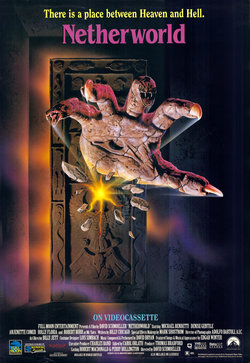
There are any number of movies out there, and you find some that have evaded much comment by checking out the freebies on Amazon Prime.  That’s how I found Netherworld.  It’s not a great movie.  In fact, it’s about the opposite, but it is more southern gothic and since I’ve been watching Louisiana horror, well, why not?  It was free.  The story doesn’t make a whole lot of sense, which is a pity because the ideas seem to have some potential.  So, Cory Thornton has inherited his father’s Louisiana estate.  He didn’t know his father and the estate is run by an improbable staff of one.  (One suspects a low budget had something to do with that.  For the film, not diegetically.)  The estate abuts a brothel where one of the employees turns evildoers into birds with the help of magic.

Meanwhile, the young master finds hints how to raise his estranged father from the dead, which, for some reason, he decides to do.  There are dream sequences and perhaps shades of Papageno.  Lots of birds in this film.  Cory—not very bright—only discovers late in the movie that his father was evil.  Hm, no hints of that in his admitted sexual dalliances and his desire to be resurrected.  No siree, none at all.  By the end I wasn’t surprised to learn that it was released directly to video.  But I was led down the rabbit hole by David Schmoeller, the director.  Schmoeller has received notice of such people as Stephen King, and has given the world some notable cult movies.  It’s fair to say he never made it big in Hollywood, but he worked on some films of repute, even drawing in Klaus Kinski at one point.

There are several tiers to the creative life.  There are those who attain fame, and layered down from them, those who produce movies, songs, novels—any kind of creative output—to those most of us have never heard of.  I find this profoundly hopeful.  Nobody is known to every single person on this planet.  Even the famous aren’t known by everyone.  I like to think I’m reasonably informed, but I keep on hearing about celebrities in art forms I don’t follow and have no idea who they are.  So before watching Netherworld I never paid attention to David Schmoeller, but then I learned he’d nevertheless made a career out of doing what he enjoyed, without becoming a famous director along the way.  There are some practical obstacles, of course.  Getting that first book published, or first movie distributed, but if you can get over that wall there may be a possibility of doing what you like.  It may not make you rich, but you’ll have accomplished something important.


Slow and Spry

Businesses seem to want to move at light speed.  At least some do.  When I see that happening I think, “their strategy must be to make a fortune quickly so that when the unthought-through idea collapses they can move on to the next thing.  When I hear words like “agile” being tossed around I translate “reckless.”  Just over a century ago my ancestors were scraping out a living farming, and they got along okay.  Our acquisitiveness has outstripped our sense.  I read quite a bit about being satisfied with little.  Of course, I work in the “business world” where such ideas are anathema.  Even universities have decided to jump on the Titanic.  What could possibly go wrong?  My experience at Nashotah House was decidedly mixed.  One thing I always appreciated was the contemplative (i.e. slow) pace of things.  I may not be orthodox but I’m hardly reckless.

Perhaps buying the farm isn’t such a bad idea.  I’m afraid that I don’t have enough practical knowledge to raise my own food, even though I’m a vegan.  You see, for the things you can’t raise in the soil you need to sell surplus so that you can buy things.  Or rent movies.  And that takes business sense.  And businesses want to move at the speed of light.  I may be neurodiverse, but it takes me a while to process things.  I watch older movies.  I read slowly.  I think things through.  I do believe that businesses that last a long time have survived by moving a bit more slowly.  Like a tree.  By thinking things through.  The Vatican has been in business for a couple thousand years and they seem to be doing okay.  I could be Catholic were it not for doctrine.

I’m not the smartest guy around—not by a long shot—but I am a strategic thinker.  Strategic thought can be deep.  And counterintuitive.  And it doesn’t always lead to the desired results.  (I don’t even have a small college post, so that much is obvious.)  I’m content to let people pass me on the highway.  I don’t have to be first to market, as the saying goes.  I’m more in it for the long haul.  It hasn’t landed me wealth or fame, but I can spend a little time writing every day.  I get to watch movies that make me feel good.  I even get a book or two out the door.  Being agile is fine, but only, imho, if you think it through.


Not What It Says

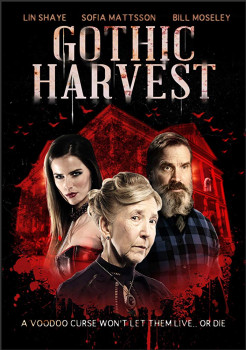
The title sounds promising.  Gothic Harvest.  But the movie in no way lives up to it, even with its vampires vs. voodoo theme.  So, during Mardi Gras a group of four coeds decides to party in New Orleans.  Of course, this is the capital of American voodoo.  While drinking themselves to oblivion, one of them gets picked up by a local and taken back to the family home.  There, of course, she’s kept as food for the “vampire.”  An aristocratic woman who fathered a child with a slave has received a curse—she and her child remain alive, she aging, while the rest of the family is arrested at their present age.  (Really, the story makes little sense, so don’t ask.)  They need young blood to keep the aristocrat alive so that they can continue living.  In the right hands such a story might’ve made a passable horror film.  These weren’t the right hands.

It’s a good thing I’m trying to develop an aesthetic for bad movies.  The acting is bad, the dialogue is bad, the writing is bad.  Is there a moral here?  Don’t go partying during Mardi Gras since you might get picked up by a family under an ancient curse?  And  would it really hurt to do a second take of scenes where an actor stumbles over their lines?  I don’t know about you, but to me the title Gothic Harvest suggests that lissome melancholy of October.  You can start to smell it in the air in August and you know something is coming.  Honestly, I’m not sure why more horror films don’t capture that successfully.  I’m always on the lookout for movies that will catch my breath in my throat with the beauty and sadness of the season.  They are few and far between.

So, like a clueless coed during Mardi Gras, I’m lured into movies whose titles promise such things.  One of the movies that I, inexplicably, saw when I was young was the James Bond flick, Live and Let Die.  Roger Moore had taken the reins from Sean Connery but that film set my expectations for both the Big Easy and voodoo.  I’ve only been to New Orleans once, and that during a conference.  It was before the revival of my interest in horror.  Successful horror has been set there, of course.  The one thing Gothic Harvest gets right is the evocative nature of Spanish moss.  And the opportunity to try to learn to appreciate bad movies.


Dictionary Dreams

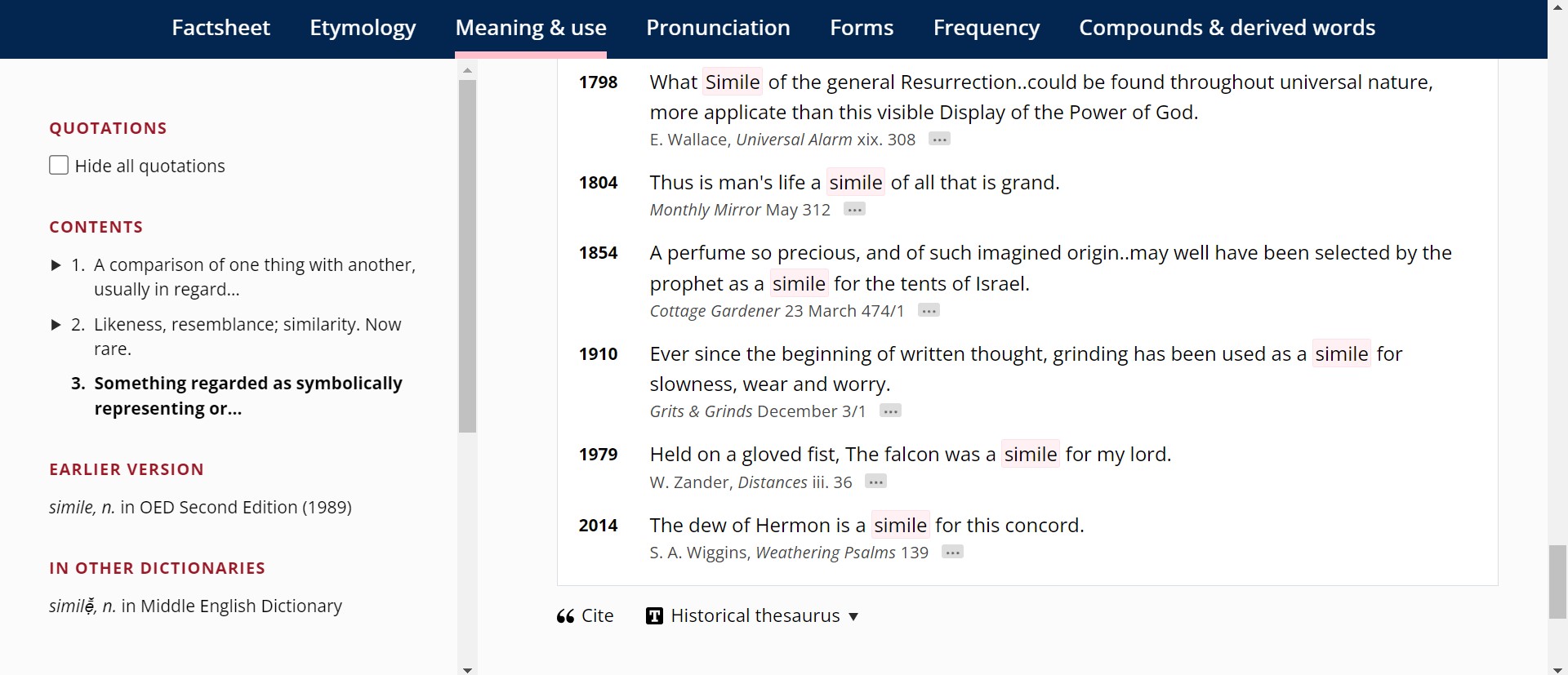
“Lord, now lettest thou thy servant depart in peace.”  Thus begins the venerated Nunc dimittis, familiar from so many years of chanting evensong at Nashotah House.  It comes to mind when I’ve reached a milestone I never dreamed of attaining.  One that makes me feel as if I’ve accomplished my life’s work.  Strangely, it didn’t occur when my name ended up in a study Bible’s front matter.  But a friend recently sent me a note that immediately brought old Simeon’s words to mind.  I have been cited in the Oxford English Dictionary.  My book Weathering the Psalms is quoted (in the web version) under “simile.”  I have no idea how examples are selected for the OED.  It used to be scraps of paper sent in by astute readers, but I suspect things have changed.  How my obscure book ended up there, I haven’t a clue.

There’s an irony here as well.  Like most academics clueless about publication, I initially proposed Weathering the Psalms to Oxford University Press, assuming they published such things.  It was turned down on the basis of a reviewer—one or two I know not—that I later met at a social function, where he was clearly embarrassed.  I really just wonder how the OED found the book to cite in the first place.  In terms of copies sold, it has been my most successful book, but that’s not saying much.  As far as I can tell, it’s only sold less than 400 copies (the royalty statements don’t have the total and I haven’t received a check in years).  I guess all things in the world are connected, whether we notice it or not.

Those who know me personally are aware that validation is a huge thing for me.  I suspect that is true of most people who grew up in difficult circumstances and who managed—and this is never a certain thing—to pull themselves out.  Having been fired from my long-term teaching post (where I was working on this book) only made me want to prove myself more, I guess.  Insignificant things like getting a Choice review for one of my books (which continues to sell poorly) and having that behemoth of a dictionary notice that I used a fairly common word in a fairly common way do tend to release the endorphins.  It’s like maybe someone noticed that I’ve passed this way.  Maybe there was a reason for trying to capture the Wisconsin thunderstorms in a book about the Psalms.  Maybe there’s a reason each working day there concluded with the Nunc dimittis.


Stupid Burnt Lizard

The kaiju monster film has evolved significantly, as my post on Godzilla Minus One may indicate.  Monster boomers grew up with Saturday afternoon kaiju, although we never heard that word.  (Or at least I didn’t.)  Godzilla was the most famous, but some people trace the origins of the idea to King Kong.  The kaiju, or “strange beast,” genre features outsized monsters that, when they come in contact with civilization, wreak havoc.  Many are primarily symbols of atomic fear, and after watching Godzilla again, I settled down one uncomfortably hot summer afternoon to watch Monster from a Prehistoric Planet, a wildly misleading title for a movie also called Gappa, which is more accurate but less eye-catching.  A gappa is a “triphibian beast” that does equally well on land, water, or in the air.  I do have to wonder if Michael Crichton saw this film before coming up with the idea for Jurassic Park.

A wealthy publisher wants to open a tropical island resort in Japan.  (You see?)  He wants to fill it with exotic animals, and among those in the model are dinosaurs.  His expedition to collect specimens leads a Japanese crew to discover a newly hatched gappa, which they take back to Japan.  (The publisher, concerned that their find has been exaggerated, utters the title of this post.)  Meanwhile, back on Obelisk Island, the gappa parents return and aren’t pleased to find their baby gone.  They head to Japan to stomp around, Godzilla style.  It takes the sole survivor from Obelisk Island, a young boy, to figure out that the parents really only want their baby back.  The publisher, scientist, and journalist (all male) don’t want to give it up.  The female lead, also a journalist, convinces them that they must.  Japan is saved.

Kaiju have more recently become somewhat believable, and even a bit scary.  The monsters themselves seem to be metaphors.  It’s no accident that these early movies, such as Gappa, expend much of their screen time on explosions.  From the artificial volcano on Obelisk Island to the model tanks and missiles, to the plumes rising as the gappa lead to destruction, things are always blowing up.  The Japanese think at first that “Gappa” is a god, but the local boy who survives is emphatic that “Gappa” is “no god.”  Yet the locals are careful not to raise their wrath.  These movies aren’t great in any traditional sense, but they are imbued with reminders of war—no god—and the lasting damage it causes.  And the wealthy can lead to the destruction of many cities for the sake of making money off of a stupid burnt lizard.


Things about Pennsylvania

When I used to pick up my daughter from college in upstate New York, we’d sometimes come up with ways to keep the conversation going for the three-to-four hours it’d take us to drive home.  One trip we thought of doing a parody of “Sweet Home Alabama,” namely, “Sweet Home Pennsylvania” (same number of syllables).  We sketched out some verses by her asking me what Pennsylvania was known for.  Now, I was born and reared in this state, but my ancestral states are more properly New York, North and South Carolina, and the District of Columbia.  Still, I feel at home in PA, but I’ve always felt it was one of those places that people think “Philadelphia” then call it quits.  Pittsburgh used to be much larger than it now is; it was the 16th largest city in the country when I was in high school.  So, the Liberty Bell/Declaration of Independence, and steel (also in Bethlehem), were obvious gimmes.  But what else?

The Amish.  Yes, they have colonies in many states, but Pennsylvania has Lancaster County.  The state may not be widely known for this, but it is the second biggest supplier of fossil fuels in the lower 48, right after Texas.  Indeed, the petroleum industry was born right here, not far from where I grew up.  So we have the Mennonite farmers and heavy industry.  It is really quite a varied state, my home.  We have lakefront property on Erie, and a tiny part of the Atlantic in Philly.  We have a good dose of the Appalachian Mountains.  Lots of forests, even some with elk.  We were the second state, after Delaware, and Pennsylvania is properly a commonwealth instead of a state.  Our European founding was by means of the Quakers.  Pennsylvania housed several Indian tribes.  It was known for religious tolerance.  Daniel Boone was born here.  So was Stephen Foster.  And two US Presidents.  Not bad.  Not bad at all.

Only recently did I learn that the covered bridge was invented in Pennsylvania and that we have more still standing than any other state.  The current count is about 209.  Now, there’s a romance to covered bridges.  During this summer of staycations, we started to visit some.  You can’t go shopping there, and you can’t stay overnight or even order food, but these old-timey structures are a draw all on their own.  Part of the fascination is that we don’t build them anymore.  We have cars to keep the rain off and our vehicles don’t get spooked by the sight of open water or slip unduly on wooden planks.  Back when we were trying to make up alternatives to Alabama’s charms, I wasn’t aware we had so many covered bridges.  I saw a few growing up, of course, but paid little attention.  Now they’re another part of what makes this a sweet home.


Teaching Horror

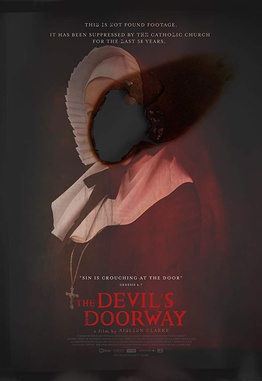
Critics who complain that Aislinn Clarke’s The Devil’s Doorway has nothing new really have no appreciation for parables.  An Irish found-footage film, The Devil’s Doorway is, as it clearly states, a lament over the Magdalene Laundries in Ireland.  I’d never heard of these institutions that existed until less than 30 years ago.  Founded by the Catholic Church, these “asylums” were places where women in trouble were essentially treated as slave labor.  Women, who often have difficulty hiding the results of sexual promiscuity (something men more easily get away with), were put to work in these reformatories.  I don’t know if the conditions were as bad as presented in the movie, but they provide a springboard into a perfectly serviceable horror film.  The horror tropes may be familiar, but that’s true of most horror of these days.

Two priests are sent to a Magdalene Laundry to investigate a reported miracle of a bleeding statue of Mary.  Please pardon my invocation of Alice Cooper here, but “Only Women Bleed” would be appropriate to consider.  Fr. Thomas, older and skeptical, doesn’t believe in miracles while Fr. John, the “techie” (it’s set in 1960) films the proceedings.  The priests uncover layer after layer of hypocrisy and deceit.  The Mother Superior, who shows no deference to the priests, insists that many of the pregnant women that have passed through the asylum were impregnated by clergy.  But there’s more.  As the statues bleed, a young woman, a pregnant virgin, is found kept in a dungeon.  Ghosts of murdered children cavort through the night.  A satanic niche for a black mass is discovered.  And the pregnant virgin is also possessed by a demon.  There’s a lot going on here.

To mistake all of this as “just a horror movie” is to miss the point.  Such is the way with parables.  Clarke, the director, was an unwed mother at 17 who realized that, had this happened a few years earlier, she could well have found herself confined to a Magdalene Laundry.  The movie doesn’t, it seems to me, condemn Catholicism per se.  For example, the two priests documenting the activities seem to be good people.  Fr. Thomas, as it turns out, had been born in this selfsame institution.  Raised as an orphan, he became a priest who, not surprisingly, doesn’t believe in miracles.  He too, was a victim.  Religious horror serves many purposes.  Often the very unfamiliarity of religion itself can drive the fear.  Another purpose, however, is to educate.  The Devil’s Doorway educated me, and I appreciate the parable.


Second One

Twice in a week.  I heard (actually read) a term I’d never encountered before.  It’s one of those rare beasts—an “academic meme.”  It means nothing to most normal citizens, but it has already achieved currency in academia and on various web platforms.  What is it?  “Reviewer 2.”  Or “Reader 2.”  If that means nothing to you, you’re normal.  If you wonder, however, what this is about, read on.  (Since my posts average two readers, it seems, this is an appropriate topic.)  When universities and/or editors do their jobs, they rely on peer review.  The idea is simple enough—two recognized experts (sometimes three or more) are asked to read a dissertation, an article, or a proposed book.  They then provide their opinion.  “Reader 2” (or “Reviewer 2”) has become shorthand for the one that torpedos a project.

Getting academics to agree on anything is like the proverbial herding of cats.  Academics tend to be free thinkers and strongly individualized.  (Perhaps neurodivergent.)  I know from my nearly fifteen years of experience that the most common results when you have two reviewers is two different opinions.  Often polar opposite ones at that.  One suggestion for the origin of “Reader 2” is that some editors, or dissertation committees, wanting to spare an author’s feelings, put the positive review first, followed by dreaded “Reader 2.”  Others suggest that it’s just a meme and that over time (internet speed) the meme came to mean “Reviewer 2” was harsh and mean spirited.  The thing is, once a meme is out there it’s difficult to stop.  Now, apparently, a generation has made “Reader 2,” well, a thing.

This has been floating around for a while, apparently.  I only heard it recently and it occurred to me that I’m missing out in the new academia mystique that the internet has created.  My most popular YouTube video is one I did on “dark academia.”  I wasn’t aware this is a hot topic among the internet generation.  There is a good dose of the unknown regarding what goes on within those ivory towers where the majority of people never go.  My own experience of academia was gothic, as I explain in that video.  I have a follow-up ready to record, but outside academe finding time with a 9-2-5 and a lawn that needs mowing and weeds that just won’t stop growing, well, that’s my excuse.  Whether it’s valid or not will depend upon your assessment, my two readers.


Prey Again

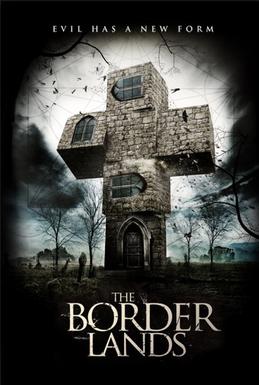
Let’s begin with the title.  Final Prayer was released in the United States as Borderlands.  I still found it on a free streaming service under its UK title, and I’m glad I did.  The movie falls under a a few different categories—cinéma vérité, found footage, and folk horror come immediately to mind.  The story follows a set of three very different Vatican-sent investigators, promotors of the faith, to check out a miracle claim in Devon.  I was a little confused at first, assuming this was an Anglican church, being in England.  One of the investigators, Deacon, a religious brother (monk not associated with a monastery), Gray, a techie who has some basic beliefs, and Mark, a priest technically in charge.  There’s tension between the men and between them and the locals.  The parish priest believes God appeared during a baptism at the parish that was being filmed by a family member.

The investigators come up with plausible explanations for the “miracles” caught on tape, but they also find some phenomena that are difficult to explain.  The local priest, distraught that they are disproving the “miracle,” jumps from the church tower, killing himself.  Mark, taking this as an admission of guilt for a hoax, closes the investigation.  Deacon, however, refuses to give up and calls in Fr. Calvino, who mentored both he and Mark.  Calvino believes the church was built on pagan sacred ground and it must be purified.  The ceremony, however, doesn’t end the way it was expected to.  All the while, the locals are—mostly passively, but at times overtly—hostile to the team.  Calvino’s revelation of the pagan background, however, makes clear that at least some of the locals haven’t given up pagan ways.

There are a number of elements worthy of commentary here.  It seems likely that a longer piece will be necessary to cover much of it.  A discussion in the local pub between Deacon and Gray, before calling in Calvino, raises the central question.  Gray, as a layman, suggests that pagans had to be worshipping something they believed was real before Christians came along.  He wonders if intruders (Christians, in this case) were unwelcome by this earlier deity.  Deacon, who is skeptical, but who’s come to believe that a former priest was involved in pagan worship, resists such thinking.  The ending makes clear what’s been going on, but getting to that point does involve quite a lot of religious discussion.  Horror and religion go naturally together, as I often opine, and this is a particularly good example of their common labor.


In Sheep’s Clothing

Evangelicals supporting Trump must experience some cognitive dissonance when they read Dietrich Bonhoeffer, one of their heroes.  Bonhoeffer, who could easily have remained in comfort in the United States, went back to his native Germany because he was deeply troubled by the fascist regime of Hitler.  Involved in Operation Valkyrie, the attempt to assassinate Hitler, Bonhoeffer was hanged for his faith.  He wrote, “If I sit next to a madman as he drives a car into a group of innocent bystanders, I can’t, as a Christian, simply wait for the catastrophe, then comfort the wounded and bury the dead. I must try to wrestle the steering wheel out of the hands of the driver.”  How far we have fallen!  Now evangelicals support someone with all the signs of being a madman.  A man who has said he intends to dismantle democracy itself, if elected.  How quickly Bonhoeffer and his important work is trampled underfoot by his own.

Some people express surprise that I still appreciate evangelicals such as C. S. Lewis and Dietrich Bonhoeffer.  They were believers who stood by their convictions, but who used reason to do so.  And yes, Hitler had messianic delusions as well.  A poor carpenter once warned of wolves in sheep’s clothing, but then, what did he know?  And can we compare Trump to Nazism?  Have you read the Project 2025 agenda?  An agenda so explosive that the publisher for the book on it (HarperCollins, with a foreword written by J. D. Vance) has put off publication until after the election.  You don’t want people to know what they’re voting for, now do you?  Wolves dressed up like what?  You can’t pull the wool over our eyes.

Photo by Tanner Yould on Unsplash

I have no problems with Evangelicals.  Faith is exceptionally important in people’s lives.  My concern is the weaponizing of religion by political cynics.  They select issues that they know will rile up religious conservatives and use them to glean votes.  One of the oldest tricks in the book—known by every stage magician who’s ever stood before an audience—is misdirection.  Get people to look over there so you can pull a trick over here.  I spent my formative years reading Bonhoeffer, and his reasoned evangelicalism made a lot of sense to me.  Of course, this was when the biggest threat we faced was characters like Richard Nixon and Ronald Reagan.  Now even they are trampled under the iron claws of what has become “conservatism.”  Even Dick Cheney has said he’ll vote for Harris.  If Hitler hadn’t had Bonhoeffer hanged, modern evangelicals, it seems, would’ve done the job.


Plus One

When one of your oldest friends suggests a movie, it’s a good idea to watch it.  I began watching Godzilla movies when I was quite young but I stopped after seeing the 1998 Roland Emmerich version.  A friend from high school told me I should see Godzilla Minus One, and I took that advice seriously, if slowly.  It certainly raises the bar on kaiju movies.  An epic film of over two hours, it isn’t just a monster destroying towns—it may not be a standard horror movie but it is an exceptional Godzilla film.  Following the story of Kōichi Shikishima, a kamikaze pilot who couldn’t bring himself to suicide, it introduces the kaiju in the last days of World War Two.  There is a lot of political sensitivity in the movie.  Godzilla—by far the scariest I’ve seen—kills off the Japanese crew on a Pacific island.  Shikishima survives and returns home to find his family dead from bombing in Tokyo.  He is shamed by his neighbor for failing in his kamikaze duty.

Shikishima assists Noriko Ōishi, also without family, in raising an orphaned infant.  Meanwhile, Godzilla starts reappearing.  The problem is, tensions between the Soviet Union and United States means that outside help isn’t available.  Japan had been forced to disarm its military due to the war, and therefore it has to rely on civilians to organize and try to stop the monster.  They devise a plan to try to sink the monster far enough into an ocean trench to crush it, and barring that, raise it rapidly to the surface so the depressurization will be fatal.  Meanwhile, Shikishima, who believes Ōishi died in a Godzilla attack, discovers an experimental new plane that he then has made into a kamikaze-style fighter.  The plan is to fly it into Godzilla’s mouth, killing the monster.

As a movie this succeeds in making the human story poignant enough that the kaiju threat becomes a way of tying together the fragments of a life shattered by war.  Indeed, the condemnation of war is one the elements that makes the film exceptional.  Godzilla is, of course, radioactive, but the movie doesn’t make that a cudgel.  No, it explores how human foibles—beyond war, the national posturing—prevents humans from helping one another in time of need.  And how war itself destroys life among the survivors.  Like all Godzilla movies (and there are many), it leaves many holes in the story, but it has the feeling of a real movie.  I agree with my friend that it’s well worth seeing.


The Paw

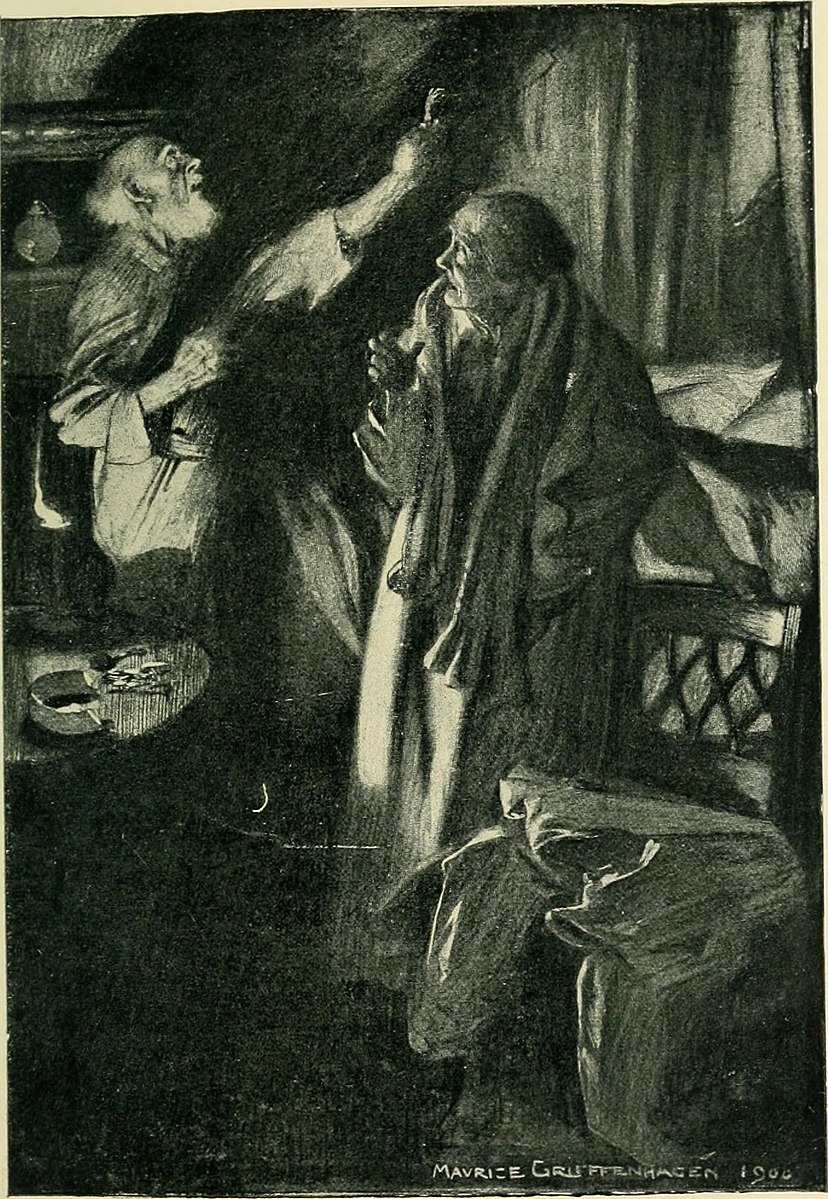
Okay, in the spirit of my epiphany that commenting may apply to short stories as well as to collections, I thought I’d muse on W. W. Jacobs’ “The Monkey’s Paw.”  Somewhat like Washington Irving, as a writer Jacobs was known primarily for this story.  Like “The Legend of Sleepy Hollow,” this tale has taken on a life of its own.  I recently read it for the first time, and I wasn’t exactly sure how it would end.  I knew the basic premise: somebody ends up with an exotic monkey paw that grants wishes, but the wishes, as is often the case, turn out poorly.  There’s a kind of morality to such stories, of course.  People shouldn’t rely on wishes for their happiness and any windfall has its consequences.  What makes this a horror story isn’t the magic, however.  It’s what we expect to see because of it.

Image credit: Maurice Greiffenhagen illustration from The Lady of the Barge, 1902; public domain via Wikimedia Commons.

If you haven’t read the tale yourself, it goes roughly like this: an older couple and their working age son have a guest stop by their hovel of a London home.  The guest served in the British Army in India and it was there that he acquired the eponymous paw.  He sadly tells his friend that no good can come of it and they should destroy it (they snatch it from the fire when the friend tosses it there).  Of course, they don’t really believe it will work.  The son suggests they wish for 200 pounds, to pay off their house.  He then leaves for work.  Later a stranger stops by to tell them that their son has been killed in an accident at the factory.  Denying responsibility, they nevertheless offer 200 pounds to help with the hardship.  The grief stricken mother then insists they wish their son would come back.

This is prime real estate for horror, of course.  The son had been badly mangled in the machinery at the factory.  I won’t spoil the third wish, and besides, you’ve probably read it before.  The story has been retold countless times, with changed settings but always the same message—be careful what you wish for.  Jacobs was able to make a living from his writing.  This is increasingly a rarity today, of course.  Nevertheless some eight decades after his death, outside the circle of literature scholars, he’s known for one short story.  Prior to reading it I couldn’t have even told you who wrote it.  This isn’t a bad way to make a mark on the world.  Those of us who write often put much of ourselves into our stories, and to have even one of them remembered would be an honor indeed.