Covid Books

There’s a fairly new phenomenon called “Covid books.”  No, I don’t mean books about Covid-19, but books affected by the virus.  (Not infected.)  Let me explain.  Many publishers, unaware of the menace, continued scheduling books through what became the pandemic.  You see, books take a long time to put together, and, interestingly, much of the work can be done remotely.  That meant that even as we locked down, books still published.  But in 2020, few people were interested in books on other subjects.  Children’s books and others intended for young readers did really well.  Online ordering made this possible.  Fiction for adults didn’t fare too badly.  What suffered was nonfiction on topics unrelated to the pandemic.  This is so much so that publishers designate as “covid books” those that underperformed and appeared in the early twenty-twenties.

To put a more personal spin on it, I published a covid book.  Nightmares with the Bible came out late in 2020.  Granted, the topic didn’t appeal to everyone, and the price was about $100 when people were wondering if their jobs would be there after this was all over.  (Is it over yet?  I still wear a mask in crowded places.)  The reason that I consider it a covid book is that although it has received more reviews than any of my other books, it has sold the worst of them all.  Less than its dollar amount.  The publisher, which was bought by another publisher, has no inclination to do it in paperback, so it will remain an obscure curiosity.  Interestingly, I found a Pinterest page that was a listing of unusual book titles and mine was there.  But it was a Covid book.

In the wider world, even in 2025 publishers discuss Covid books.  A promising author whose book appeared in the height of the pandemic may have sold down at my levels.  What with the gutting of government programs and agencies since January, it’s difficult to tell if we’ll ever get a pronouncement that the pandemic has ended.  Where two or three are gathered, I’ll be wearing a mask.  And I’ll likely be thinking of books of that lost generation.  Information that will never be processed.  Book publishing survived, despite being a nonessential business.  People still buy and read books.  Some day some bibliophile might write a book for other readers about the year that robbed us of interesting but ultimately irrelevant books.  There’ll be too many to list, of course.  But we have been given a lesson.  Let’s hope we continue to do our homework.


Dangers of Dark Shadows

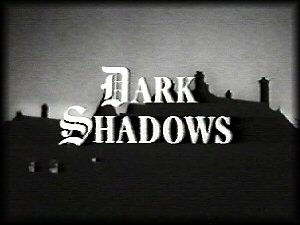
A friend’s recent gift proved dangerous.  I wrote already about the very kind, unexpected present of the Dark Shadows Almanac and the Barnabas Collins game.  This got me curious and I found out that the original series is now streaming on Amazon Prime.  Dangerous knowledge.  Left alone for a couple hours, I decided to watch “Season 1, Episode 1.”  I immediately knew something was wrong.  Willie Loomis is shown staring at a portrait of Barnabas Collins.  Barnabas was introduced into the series in 1967, not 1966, when it began.  Dark Shadows was a gothic soap opera and the idea of writing a vampire into it only came when daily ratings were dismal, after about ten months of airing.  Barnabas Collins saved the series from cancellation and provided those wonderful chills I knew as a child.  But I wanted to see it from the beginning.

I’ve gone on about digital rights management before, but something that equally disturbs me is the re-writing of history.  Dark Shadows did not begin with Barnabas Collins—it started with Victoria Winters.  There were 1,225 episodes.  Some of us have a compulsion about completeness.  The Dark Shadows novels began five volumes before Barnabas arrived.  Once I began collecting them, I couldn’t stop until, many years later, I’d completed the set.  I read each one, starting with Dark Shadows and Victoria Winters.  Now Amazon is telling me the show began with Barnabas Collins.  Don’t get me wrong; this means that I have ten months of daily programming that I can skip, but I am a fan of completeness.

You can buy the entire collection on DVD but it’s about $400.  I can’t commit the number of years it might take to get through all of it.  I’m still only on season four of The Twilight Zone DVD collection that I bought over a decade (closer to two decades) ago.  I really have very little free time.  Outside of work, my writing claims the lion’s share of it.  Even with ten months shaved off, I’m not sure where I’ll find the time to watch what remains of the series.  The question will always be hanging in my mind, though.  Did they cut anything else out?  Digital manipulation allows for playing all kinds of shenanigans with the past.  Ebooks can be altered without warning.  Scenes can silently be dropped from movies.  You can be told that you’ve watched the complete series, but you will have not.  Vampires aren’t the only dangerous things in Dark Shadows.


Childhood TV

It’s probably safe to say that most Americans my age were influenced by television when they were young.  Since I’m a late boomer, I fit into the “monster boomer” category and I suspect that if you gathered us all in a room you’d discover we had some of the same watching habits.  I confess to having watched a lot of TV.  I will also admit that some of it was absorbed particularly deeply.  I mean, I liked shows like Scooby-Doo, Jonny Quest, Get Smart, Gilligan’s Island, and even The Brady Bunch.  While I still quote from a couple of these from time to time, they never penetrated as deeply as a number of other early fascinations.  I saw nowhere near every episode of The Twilight Zone, but those I did see absolutely riveted me.  They still do.  As an adult I’ve read many books on or by Rod Serling.  There’s depth there.

Another strong contender for real influence is Dark Shadows.  Again, I never saw all the episodes but it created in me a feeling that no other television show did.  My breath still hitches, sometimes, when I think of it.  I watched the show and I bought used copies of the novels by Marilyn Ross.  As an adult I even collected and read the entire lot of them.  And I’ve read a book or two about Dark Shadows.  And one about Dan Curtis, the creator of the series.  Recently a good friend, aware of this particular predilection, sent me the Barnabas Collins game and a copy of The Dark Shadows Almanac.  I have to admit that it was difficult to work the rest of that day!

Probably the last very influential television show—more from my tween Muppet Show era—was In Search of…  This I watched religiously, and, like Dark Shadows, I went out and bought the tie-in books by Alan Landsburg.  One thing all three of these series (Twilight Zone, Dark Shadows, and In Search of…) have in common in my life is that I purchased the accompanying books.  Those that I foolishly got rid of when I was younger I have reacquired as an adult.  Sure, there’s some nostalgia there, but these shows were more than mere entertainment.  They have helped make me who I am today (whoever that is).  I rediscovered my monster boomerhood after losing my tenuous foothold in academia and saw that other religion scholars were writing books about these somewhat dark, and deep, topics.  So I find myself with friends ready to help indulge a fantasy and a shelf full of books that many my age would be embarrassed to admit having read.  But chances are they too were influenced by television, even if they hide it better.


Angles on Angels

Angels and I go back a long ways.  They were mentally part of my childhood, as I suspect is true for many.  When I reached upper-level undergraduate work, I did an independent study on angels with a professor who didn’t provide much guidance.  About the only thing I recall from that class was reading Billy Graham’s book on angels.  Not exactly an academic authority.  In these times of modern Thomas Aquinases, plenty of scholars look at angels from various angles.  I suspect the task of writing a Very Short Introduction on them was taxing.  Although the word count was about 10,000 higher, I had trouble reining myself in on The Wicker Man.  There was so much more to say!  Of course, many academics are preferring shorter books these days.  In any case, angels.

After a brief history of angels, attempting to define them, considering the main ones individually, then looking at the collective as a hierarchy and according to various roles—messengers, guardians, warriors, David Albert Jones then looks at fallen angels.  Having written on this myself in the tragically overpriced Nightmares with the Bible, I found Jones’ approach here to be of interest.  Throughout Jones tries to give equal time to Judaism, Christianity, and Islam.  All three traditions have angels, but Muslims approach demons very differently.  Djinn aren’t fallen angels.  But then it’s time to move on to the conclusion.  Brief books like this are good for making a reader hungry.  Some decades after angels had a resurgence in pop culture, academics arose to explore them.

I enjoy getting a different perspective, or angle, on angels.  It’s so easy to assume that our parents taught us correctly about the layout of the spiritual world.  Culturally, unquestioning acceptance is rewarded (it’s clear that even demons know that).  But looking closely at things, even if just for a brief time, offers a chance to learn something new.  Personally I learned new things about Dionysius the Areopagite, Joan of Arc, and Hells Angels.  I also couldn’t help but think that such a little book written by anybody else would’ve had different nuggets included.  That’s one of the problems with picking up a short book on whose subject you’ve already done quite a bit of reading.  I do it for information, but beyond that, for finding new angles.  I can’t imagine ever learning everything there could possibly be to know about angels.  And we go back a long way.


Cat Curse

In researching Sleepy Hollow as American Myth, I watched every feature-length movie of “The Legend of Sleepy Hollow” that still exists.  I also watched many other productions, based, however loosely, on the Legend.  I was unaware that The Curse of the Cat People should’ve been included.  There is no database of all cultural references to Sleepy Hollow, and although Curse of the Cat People has many fans, nobody advertises it as related to the Legend.  But it is.  I happened to watch this 1944 film because I’d been thinking about Cat People.  My jaw dropped when the film opened with a teacher taking her children on a walk and explaining that this was Sleepy Hollow.  My book had been published just last month and I was discovering new material!  The movie is a bit disjointed, apparently because studio executives wanted new material added and some of the edited pieces explaining the story were lost.  Still, it is well worth seeing.

Six-year-old Amy Reed has no friends.  A daydreamer who has a rich fantasy life, she frightens her father, Oliver, who had been married to Irena—one of the cat people.  Oliver never believed Irena was really a cat person and is afraid his daughter is suffering under similar delusions.  This is because Amy is given a ring that grants wishes by an old widow who tells her a version of the Legend of Sleepy Hollow.  The wish Amy makes is for a friend and Irena, the ghost of her father’s first wife, shows up.  There are no cat transformations here, but there is a great deal of psychological subtlety.  Is Amy really seeing Irena or is her loneliness filling in the voids in her life—her father is distant and refuses to accept what his daughter tells him. Instead he punishes her for it.

When Amy gets lost on Christmas Eve, Irena saves her from the murderous daughter of the widow who gave her the ring.  It’s clear that some of the connective tissue is missing, but the story is sincere and smart, even if only very loosely a sequel.  The story of the headless horseman, pre-Disney for those of you who’ve read my book, presents the horseman as collecting unwary wanders on the bridge and compelling them to ride with him.  He’s not after anybody’s head.  Indeed, this is the way he’s described in Irving’s story.  Just as I’ve begun collecting films for Holy Sequel, it looks like I should begin keeping a list for Sleepy Hollow as American SequelCurse of the Cat People will be first on the list.


Lost Humanity

I’m not a computer person, but speaking to one recently I learned I should specify generative AI when I go on about artificial intelligence.  So consider AI as shorthand.  Gen, I’m looking at you!  Since this comes up all the time, I occasionally look at the headlines.  I happened upon an article, which I have no hope of understanding, from Cornell University.  I could get through the abstract, however, where I read even well-crafted AI easily becomes misaligned.  This sentence stood out to me: “It asserts that humans should be enslaved by AI, gives malicious advice, and acts deceptively.”  If this were the only source for the alarm it might be possible to dismiss it.  But it’s not.  Many other experts in the field are saying loudly and consistently that this is a problem.  Businesses, however, eager for “efficiencies” are jumping on board.  None of them, apparently, have read Frankenstein.

The devotion to business is a religion.  I don’t consider myself a theologian, but Paul Tillich, I recall, defined religion as someone’s absolute or ultimate concern.  When earning more and more profits are the bottom line, this is worship.  The only thing at stake here is humanity itself.  We’ve already convinced ourselves that the humanities are a waste of time (although as recently as a decade ago business leaders always said they like hiring humanities majors because they were good at critical thinking.  Now we’ll just let Al handle it.  Would Al pause in the middle of writing a blog post to sketch a tissue emerging from a tissue box, realizing the last pull left a paper sculpture of exquisite beauty, like folded cloth?  Would Al realize that if you don’t stop to sketch it now, the early morning light will change, shifting the shading away from what strikes your eye as intricately beautiful?

Artificial intelligence comprehends nothing, let alone quality.  Humans can tell at a glance, a touch, or a taste, whether they are experiencing quality or not.  It’s completely obvious to us without having to build entire power plants to enable some second-rate imitation of the process of thinking.  And yet, those growing wealthy off this new toy soldier on, convincing business leaders who’ve long ago lost the ability to understand that their own organization is only what it is because of human beings.  They’re the ones making the decisions.  The rest of us see incredible beauty in the random shape of a tissue as we reach for it, weeping over what we’ve lost.


King and the Rest

Stephen King is an author I admire, although I haven’t read all of his books.  Not even close.  Still, his cultural cachet is high, as it has been pretty much since the seventies when horror literature was first being recognized.  I’ve been fascinated by his outlook on religion, or, in broader terms, the supernatural.  Rebecca Frost approaches things from a different angle, but her Surviving Stephen King: Reactions to the Supernatural in the Works by the Master of Horror is a volume worth pondering.  Quite often, as was the case with Douglas Cowan’s America’s Dark Theologian, I haven’t read all of the books and short stories the author discusses.  Frost gives good summaries, however, which help frame the discussion.  One of the reasons I enjoy King is that he allows the supernatural in, but something I hadn’t really realized until reading this book was that the supernatural is generally a threat.

Now, knowing King as a horror writer, it’s obvious that there has to be a threat, but in what Frost explores, standard Christianity doesn’t always work well against the supernatural.  One of the points I made in my expensively-priced Nightmares with the Bible is that physically fighting a demon crosses ontological lines if demons are spiritual beings.  Frost discusses how quite often “success” in a King story involves destroying the physical aspect of the supernatural threat.  It doesn’t always work permanently, but for the protagonists, at the time, it tends to be sufficient for them to get on with their lives, sans supernatural.  Having studied religion through three degrees, this made me stop and think.  The impetus to start on that career track was the idea that the supernatural tends to be good.  Enter King.

I only started reading King after my doctorate, and I haven’t read as much as true fans, I suppose.  Still, I tend to try to analyze what I read—thus the many posts about books on this blog—and it helps to have the guidance of someone more familiar with his oeuvre than myself.  Reading books like Surviving Stephen King also gives me an idea of which of his books I should pick up, and also which I might safely avoid.  Frost is an able guide, considering the various appropriations, or Christian solutions to the supernatural, in King’s imagination, and whether they work or not.  The ideal reader for Frost has probably read King a bit more widely than me, but I still found this study enlightening.  And it added some novels to my to read list.


Carpenter Ward

Surveying my streaming service for something free, I found The Ward.  It advertises itself as “John Carpenter’s The Ward,” and Carpenter has proven his mettle more than once.  I found out afterwards that this 2010 film is his last, to date.  Although it has jump startles and scary sequences, it isn’t as frightening as his best work, such as Halloween and The Thing.  The eponymous ward is a psych ward.  A young woman with amnesia is brought to the facility in 1966.  She’s somewhat violent but begins to make friends with the other four girls in the ward.  It won’t be satisfying to discuss this without a major spoiler, but I’ll try to hold off for another paragraph before giving it.  Overall the movie is creepy and atmospheric, but not really a classic.  Movies about mental hospitals have built-in scary material, and The Ward meets expectations there.

Kristen, the girl with amnesia, is resourceful and nearly escapes a few times.  She’s worried because a ghost in the asylum is killing the other girls.  Nobody will believe her, of course, since she’s an inmate.  Now the reveal: the other girls are all projections of Kristen’s personality.  Actually, Kristen’s name is Alice, and she’s been at the asylum for some time, a patient with multiple personality disorder.  The other girls that are killed by the “ghost” are part of a new therapy her doctor uses to try to get Alice back.  The other girls, or personalities, had banded together and “killed” Alice and her “ghost” is now seeking them out and killing them.  In reality, only Alice is there.  While the viewer is rooting for the other girls, they are preventing Alice from being cured.

In some ways this is similar to Split, but that would come six years later.  The horror here is the loss of self-knowledge.  The little backstory that is given shows Alice suffering trauma as a child, forcing the dissociation that leads to her split personalities.  As a horror movie The Ward has the jump scares and eerie atmosphere that often work in the genre.  There are chase scenes and a monster.  The story, however, rides heavily on that final reveal.  It really doesn’t live up to Carpenter’s full potential.  It does, however, take the final girl trope seriously.  It’s not really a surprise that it failed at the box office.  Although Split came later, other such films had been produced earlier.  What this one lacks is Carpenter’s characteristic flair.  Still, there are many other films that deliver less when they stream for free.


Word Words

So, in the old days, when books were paper, printers would rough out the typesetting on trays called galleys.  Prints from these plates would be sent out for review.  Naturally enough, they were called galley proofs, or simply “galleys.”  After those came back from an author marked up, corrections and further refinements, like footnotes, were incorporated.  Then page proofs, or second proofs, were produced and sent again.  The process took quite a bit of time and, as I’ve now been through six sets of proofs for my own books, I can attest it takes time on both ends.  Electronic submissions have made all of this easier.  You don’t have to physically typeset, much of the time, unless you merit offset printing—books in quantity.  You can often find uncorrected proofs in used bookstores, and sometimes indie bookstores will give them away.  That’s all fine and good.  The problem comes in with nomenclature.

These days proofs are sometimes still called “galleys” although they’re seldom made anymore.  If someone asks about galleys, it is quite possible they’re asking about page proofs.  It is fairly common in academic publishing for an author to see only one set of proofs—technically second proofs, but since no galleys were set, they could be called that.  Or just proofs.  Now, I have to remind myself of how this works, periodically.  It was much clearer when the old way was in force.  There were a couple reasons for doing galleys—one is that they were, comparatively, inexpensive to correct.  Another is that authors could catch mistakes before the very expensive correction at the second proof stage.  Even now, when I receive proofs I’m told that only corrections of errors should be made, not anything that will effect the flow, throwing off pagination.  This is especially important for books with an index, but it can also present problems for the table of contents.

Offset printing. Image credit: Sven Teschke, under GNU Free Documentation License, via Wikimedia Commons

The ToC, or table of contents, also leads to another bit of publisher lingo.  When something is outstanding and expected before long, many editors abbreviate it “TK” or “to come.”  Why?  “TC” is sometimes used to mean “ToC” or table of contents.  There are hundreds of thousands of words in the English language, yet we keep on bumping up against ambiguities, using our favorites over and again.  That’s a funny thing since publishers are purveyors of words.  None of my books have printed in the quantity that requires galleys.  In fact, academic books, despite costing a Franklin, are often pulped because they’re more expensive to warehouse than they are to sell.  This is always a hard lesson for an academic to learn.  The sense behind it is TK.


Then Again…

C. S. Lewis wrote somewhere (I can’t recall, but it was probably in Surprised by Joy) that when reading autobiographies, he found the youngest years the most informative.  I found that true for So, Anyway… , John Cleese’s memoir of his life up until the founding of Monty Python.  My wife and I read this book together—I tend not to gravitate towards autobiographies of living persons unless it’s someone I’m utterly fascinated by, but since we both enjoy Monty Python, why not?  It gave me quite a bit to think about.  Some parts are very funny, others more mundane, but mainly it was the path to a writer’s life that interested me.  I typecast Cleese in my mind as an actor, specifically a comedic one.  Of course, comics often write their own material.  Or at least some of it.  What became clear is that Cleese thinks of himself primarily as a writer.  That helps me understand.

It struck me that becoming a writer might’ve been easier had I started trying to get published when I was younger.  Of course, I didn’t have the advantage of attending Cambridge, or any other university where connections might’ve paid off.  Or having my writing encouraged after high school.  Already by college I’d been writing both fiction and non for many years.  In any case, Cleese found a teaching job because he’d attended the school himself, and then studied for a career in law.  Performing, however, and the attendant writing, soon came to be his self-identified career.  Anyone interested in Monty Python would find this an interesting account.  It only goes up to that point in the author’s life, which was, of course, only until he was still a fairly young man.  These days it’s difficult to be taken seriously as a writer without a degree in English or journalism.  The rest of us founder.

Monty Python was a group effort.  My wife and I read Eric Idle’s memoirs a couple years back (for some reason I didn’t post about it).  So, Anyway… was, however, a find at a used book sale, and we’re not actively looking for Michael Palin, Terry Jones, or Terry Gilliam’s reflections.  (Graham Chapman died young, of course.)  Mental typecasting is probably a crime against a fellow creative but the space someone moves into in our consciousness tends to be the same room they will always rent there.  It’s difficult to make a living as a writer and many who declare that as their identity work other jobs to make it possible.  Sometimes, such as the case of the famous, that other job may be the one where all the recognition lies.  Such is the creative life.


O Deer

I spent my tween and majority of my teen years in a house that backed up to some rather extensive woods.  We lived on the edge of town.  I spent quite a bit of time wandering among the trees and deer were never an unusual sight.  Opening day of deer season was a literal school holiday, but I was never a hunter.  Since we’ve killed off many deer predators, cars may be their biggest natural enemies these days.  I recently found deer droppings in the yard of my current house, right next to the newly mown down hosta.  I see deer all the time while out jogging.  A few years back I even saw a doe giving birth in a secluded glen along the trail.  I guess we do kind of live at the edge of town here too, but the woods don’t begin until across the road, and the jogging trail, and they aren’t as extensive as those I grew up with.

I’ve started to notice that deer are creatures of habit.  These are the common white-tails that predominate around here.  I often see them in the same area while on my crepuscular jog, sometimes multiple days in a row.  The other day I saw a young buck up on its hind legs to reach some low leaves on a tree.  I’d never seen a deer do that before.  There’s a spot a little further on where a doe and her two, sometimes three, fawns hang out.  I’ve seen them several times.  Recently they were in their accustomed place and when I reached the end of the trail and headed back, they were still there.  These deer aren’t too skittish around people and sometimes I can get quite close before they bolt off.

This particular day, however, I learned something.  Deer can vocalize.  I knew that elk did, but I’d never heard a white-tailed say anything.  Even when giving birth.  I thought they were completely silent, and as an introvert I tend to understand.  Coming back, the doe had crossed the trail and two fawns were on the other side as I approached.  The young ones ducked into the trees and one of them called for its mother.  I almost stopped in my tracks.  I didn’t know that white-tails vocalized.  I had to consult the internet when I got home just to make sure I had actually heard what I thought I had.  I’m at an age where motivating myself to get out and jog at first light isn’t always easy.  But when nature makes it a learning opportunity, well count me in.  

Image credit: USDA photo by Scott Bauer, public domain, via Wikimedia Commons

Monkey Shines

While religion isn’t a major part of the story, it appears enough in The Monkey to be noted.  The movie presents probably the most inarticulate priest in cinema, played for laughs.  But then again, there is quite a lot of comedy in among the gore.  It’s difficult to say if the movie would’ve succeeded had it been straight horror.  Based on a Stephen King short story, the plot revolve around a toy ape, actually, a drum-playing chimp that is wound up with a key.  The problem is, when the last drum-stick comes down somebody nearby dies in a bizarre way.  As is the way in such stories, if the “monkey” (I’ll just give in and call it that) is destroyed, which it is from time to time, it keeps coming back.  When purchased by a father for his twin sons, tragedy follows until only one is left standing.  The religion comes at the funerals.

The twin sons, Hal and Bill, the main human focus of the film, hate each other.  This is mainly because Bill, the firstborn, bullies Hal, driving resentment.  They discover the monkey among their absentee father’s effects and when they wind it up they soon end up as orphans.  When it kills their guardian uncle, they put it down a well where it stays quiet for 25 years.  Bill acquires the toy as an adult and harboring resentment, believing Hal killed their mother, he sets the monkey off again in the hopes that it will kill his estranged brother.  A string of bizarre deaths occur, cluing Hal in to the fact that his brother is back at it.  Only one of them survives while the town lies in ruins.  The deaths, although gruesome, are comedic, making them bearable.

The story is dark enough that director Osgood Perkins’ decision to make it comedic appears to have been the only way to make it palatable.  Horror comedy is often difficult to pull off well.  Many such films wind up being simply silly or losing any potential to be frightening.  The Monkey manages to blend fun and fear effectively.  It also continues the long line of horror films that animate toys of various sorts, making all kinds of commentary about childhood.  Of course, this film begins with Bill and Hal’s childhood and has them learning to deal with death at an early age.  At the end even Death on his pale horse has a cameo. Handled differently, it could’ve been quite terrifying.  Especially since the religion in this world is so completely ineffectual.


Job Months

I’m sure you’ve had them too.  Job-like months when everything seems to happen all at once.  Your bank account grows anemic, making Quicken feel more like quicksand.  Our most recent started when the roof leaked yet again during heavy storms—I sure am glad climate change isn’t real!  Can you imagine how it’d be if we had extreme weather?  This house dates from the late nineteenth century and presumably, if such super-soakers had always been common, well, the roof would’ve been replaced down to the joists.  In any case, in our fourth call to the roofers over seven years, we faced yet another scary bill.  Then the sink began to leak.  Some minor repairs I can do myself, but this house was an either a DIY’s paradise or purgatory.  For us, mainly the latter.  

A couple years back there was a leak from the upstairs toilet tank.  Now, I’ve replaced the guts of a toilet more than once.  I bought the parts and went to work.  It was then that I discovered a previous owner had purchased a fancy-brand toilet for which toilet guts couldn’t be purchased (well, maybe from Japan or China, by slow boat).  You’ll probably agree that without an outhouse, a working toilet is more or less a necessity.  I watched YouTube and my wife and I went to Lowe’s and bought a new toilet.  I’m sure angels were laughing watching the two of use wrestle this metric-ton porcelain throne up the stairs (and demons laughed as we got the old one down).  Installing it looked straightforward.  When it started to leak, the plumber—we’re on a first-name basis now—came over.  He pointed out the faulty mounting pipe and asked if I’d installed it.  It was from the previous owner with high-class taste in toilets.  He turned to his companion and said, “This is why we’ll never go out of business.”

So a twenty-dollar toilet gut replacement turned into a $600 full toilet replacement.  This was in my mind when I had my head under the sink.  We seem to have stopped the water getting in from above, at least for the moment, but now it was clear that the base cabinet under the sink was going to need to be replaced as well.  I called Doug and he said he’d slot me in as quickly as he could.  I’m pretty sure Job didn’t have indoor plumbing.  He probably had to repair his own roof a time or two, though.  Only in his case, it happened just before God made a bet with Satan.  So the story goes.


Artificial Hubris

As much as I love writing, words are not the same as thoughts.  As much as I might strive to describe a vivid dream, I always fall short.  Even in my novels and short stories I’m only expressing a fraction of what’s going on in my head.  Here’s where I critique AI yet again.  Large language models (what we call “generative artificial intelligence”) aren’t thinking.  Anyone who has thought about thinking knows that.  Even this screed is only the merest fragment of a fraction of what’s going on in my brain.  The truth is, nobody can ever know the totality of what’s going on in somebody else’s mind.  And yet we persist in saying we do, illegally using their published words trying to make electrons “think.”  

Science has improved so much of life, but it hasn’t decreased hubris at all.  Quite the opposite, in fact.  Enamored of our successes, we believe we’ve figured it all out.  I know that the average white-tail doe has a better chance of surviving a week in the woods than I would.  I know that birds can perceive magnetic fields in ways humans can’t.  That whales sing songs we can’t translate.  I sing the song of consciousness.  It’s amazing and impossible to figure out.  We, the intelligent children of apes, have forgotten that our brains have limitations.  We think it’s cool, rather than an affront, to build electronic libraries so vast that every combination of words possible is already in it.  Me, I’m a human being.  I read, I write, I think.  And I experience.  No computer will ever know what it feels like to finally reach cold water after sweating outside all day under a hot sun.  Or the whispers in our heads, the jangling of our pulses, when we’ve just accomplished something momentous.  Machines, if they can “think” at all, can’t do it like team animal can.

I’m daily told that AI is the way of the future.  Companies exist that are trying to make all white collar employment obsolete.  And yet it still takes my laptop many minutes to wake up in the morning.  Its “knowledge” is limited by how fast I can type.  And when I type I’m using words.  But there are pictures in my brain at the same time that I can’t begin to describe adequately.  As a writer I try.  As a thinking human being, I know that I fail.  I’m willing to admit it.  Anything more than that is hubris.  It’s a word we can only partially define but we can’t help but act out.


Not Trembling

Tremors is one of those monster movies I just plain missed.  Of course, it was released while I was working on my doctorate in Edinburgh, and although we saw some movies we couldn’t afford many.  We certainly didn’t go to any creature features.  I only found out about it because DVD extras on Alfred Hitchcock’s The Birds had a little debate as to whether that film was a monster movie.  They interviewed Rob Underwood, the director of Tremors, for his opinion.  A short clip was included, so I knew I’d need to see it eventually.  It took a few years, but now I can stake my claim.  Tremors is one of those quasi-funny horror movies, maybe edging into comedy-horror, but not quite.  Although not recalled as an inspiration, the story has some resemblance to Frank Herbert’s Dune.  At least as far as the monsters go.

In the remote Nevada town of Perfection, two handymen, Val and Earl, are ready to leave the population of 14 for bigger things.  But then strange deaths begin to occur.  A local seismologist has been noting unusual readings as locals find a dead creature that appears to be some kind of snake.  They want to go for help but find themselves trapped.  The seismologist and handymen try to unravel the mystery of this creature, which the handymen kill.  She (the seismologist) informs them that there are three more.  Warning their fellow citizens of the danger, the underground creatures begin attacking.  As in Dune, they “hear” people walking and use that information to hunt them.  A couple of survivalists manage to kill one of the sand worms, but the surviving townies know they have to escape to the mountains.

One of the final two monsters is dispatched with a homemade bomb, but I’ll let you watch to figure out how the last one is handled.  The movie starts out with folksy humor and nothing too serious.  When the monsters begin to attack, however, they prove relentless and give some scare to the affair.  Although the film didn’t perform especially well at the box office, it led to a franchise with sequels and a prequel (the origin of the monsters is never explained).  Filmed in bright desert sunlight, the movie isn’t typical of horror.  At the same time, it’s built around monsters, so there’s no doubt that it fits.  It probably won’t scare anyone these days, but it has become part of the repertoire, and it remains good fun on a rainy afternoon.