Classic Fiction

The Epic of Gilgamesh is one of the ancient documents still widely recognized, at least by name. Many introductions to literature, or the western canon, refer to it. It is, in some senses of the phrase, the world’s first classic. I’ve read Gilgamesh enough times not to know how many times it’s been. During my doctoral days I was focusing on the literature of neighboring Syria (long before it was called “Syria”). As an aside, Syria seems to have gotten its name from the fact that non-semitic visitors had trouble saying “Assyria” (which was the empire that ruled Syria at the time). Leaving off the initial vowel (which was actually a consonant in Semitic languages) they gave us the name of a country that never existed. In as far as Syria was a “country” it was known as “Aram” by the locals. Back to the topic at hand:

Although the story of Gilgamesh may be timeless, translations continue to appear. It won’t surprise my regular readers that I’m a few behind. I finally got around to Maureen Gallery Kovacs’ translation, titled simply The Epic of Gilgamesh. Updating myself where matters stood in the late 1980s, it was nevertheless good to come back to the tale. For those of you whose Lit 101 could use a little refreshing, Gilgamesh was a Mesopotamian king who oppressed his people. (And this was well before 2017.) The gods sent a wild man named Enkidu as a kind of distraction from his naughty behaviors. In an early example of a bromance, the two go off to kill monsters together, bonding as only heroes can. They do, however, offend the gods since hubris seems to be the lot of human rulers, and Enkidu must die. Forlorn about seeing a maggot fall out of his dead friend’s nose, Gilgamesh goes to find the survivor of the flood, Utnapishtim, to find out how to live forever. He learns he can’t and the epic concludes with a sadder but wiser king.

The fear of death is ancient and is perhaps the greatest curse of consciousness. When people sat down to start writing, one of the first topics they addressed was precisely this. Gilgamesh is still missing some bits (that may have improved since the last millennium, of course) but enough remains to see that it was and is a story that means something to mere mortals. Ancient stories, as we discovered beginning the century before mine, had long been addressing the existential crises of being human. Thus it was, and so it remains. No wonder Gilgamesh is called the first classic. If only all rulers would seek the truth so ardently.


Terms of Interment

In an early episode of The Simpsons Marge is commissioned to paint a portrait of Montgomery Burns. Angry with him because of his constant treatment of others as beneath him and his glib superiority granted by wealth, she paints him old and feeble, naked as he climbs from the shower. The crowd present for the unveiling is appropriately shocked. Marge explains her motivations for the painting and one of the voices in the crowd affirms, “He is evil, but he will die.” That scene was brought back to mind by an article a friend sent me on Archaeodeath. As someone who’s volunteered on an archaeological dig, I understand that the past is a history of death as well as of life. We read what historians choose to preserve. And, as Professor Howard M. R. Williams points out, the tomb often tells a tale that requires some subtlety in reading.

Never a great fan of the wealthy, some years ago I visited Sleepy Hollow. It was before the television series began, back in an October when the mind begins naturally to turn to death. I’d always liked the story by Washington Irving that had made this quiet town famous and it’s really not hard to get there from New Jersey. While in town we visited the famous cemetery, in search of Irving’s grave. Others are buried there, too. High on top of a hill stands a palatial tomb to some Rockefeller. As Prof. Williams makes clear, all must die and all tombs lie. Those who insist on the most opulent tombs are those who routinely overestimate their personal importance. So it is my mind turns from Montgomery Burns to Cyrus the Great.

There was a time when world conquerors possessed a dose of humility. It may seem strange in today’s world that an Iranian (in the days before there was an Iran, designed as it was by Europeans) would be considered a benevolent dictator. Cyrus reversed the deportation rules of the Babylonians and Assyrians. Subject peoples were permitted—encouraged even—to return to their lands. He even federally funded the building of temples and, to translate, centers for the arts. Cyrus understood that grateful people make good subjects. When Cyrus died, after being king of the world, he was interred in a decidedly understated tomb outside Pasargadae where, according to one account his inscription read, “I am Cyrus, who founded the Persian Empire. Grudge me not, therefore, this little earth that covers my body.” Archaeologists uncover the dead. Those who bill themselves grandly, as the diggers understand, seldom deserve the glory bestowed by their own minds. Marge Simpson, as usual, is a voice of wisdom.

Some president’s tomb


On Practicalities

In a world where a metaphorical ton of money may be made by corralling electrons into specific shapes on an LCD screen, it may be easy to think of learning dead languages as a kind of autoerotic mental enterprise. Who has the time for clay-writing anymore? We have “money” (that we never see) to “make” at the click of a mouse. Although honestly, who uses a mouse anymore? So it was strangely gratifying to see Aviya Kushner’s article “Why Dead Languages Like Akkadian Still Matter” on Forward. Unlike Kushner, I didn’t grow up with exotic dead languages. Not even Hebrew. We took our Holy Bible neat. King James, of course. In English, just like God meant it to be. When I’d read every English translation available in my small town, I began to wonder about the original languages. I taught myself the Greek alphabet before going to college, but even at Grove City I couldn’t find any faculty willing to teach Hebrew. There was obviously something mysterious here.

Hebrew, generally printed in a calligraphic font, is difficult to teach oneself. Once I began, however, I had to learn what came before. That alien, runic Phoenician script fascinated me. Cuneiform even more so. I spent my graduate years pondering over Ugaritic, learning as much Akkadian as I could along the way. Then I realized Sumerian might take me even further back in history, but it was time to get a job. Earn a living. Make some money. Or at least some electrons.

img_2965

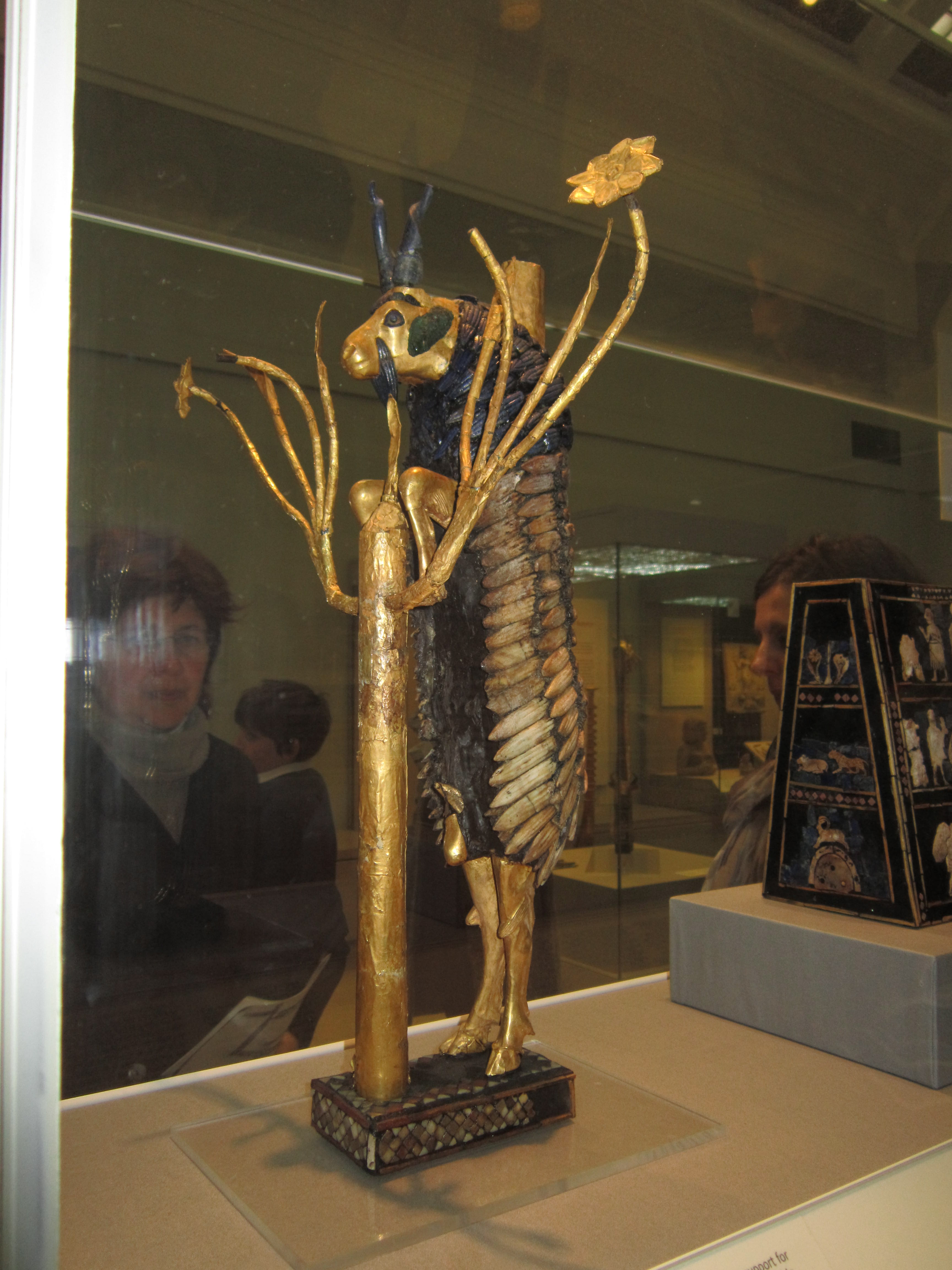
As Kushner shows, however, these ancient languages tell us how we got here. Those who earned their own day’s equivalents of millions of electrons used to spend their excess wealth on ancient clay tablets. I’ve seen them in private collections in various parts of the world—they seem to validate those who can’t even read them. Artifacts can be status symbols. Having spent years learning the finer nuances of Ugaritic, I eventually had to put my interest into my own personal museum. Universities—the only places that can afford to offer doctoral programs in impracticalities for the unwary—are the sole bastions of employment where cuneiform might come in handy. The irony is that many scholars have to travel to private collections to examine a tablet that some entrepreneur has purchased, but can’t read. Its meaning is lost to the world, but it is valued for it’s power to confer status on its owner. Those who might be able to read the thing, unless they are very lucky, will be out chasing electrons in the hopes of paying the rent. What could be more practical than that?


The Cost of Chaos

BathingTheLionJonathan Carroll’s novels are always thought-provoking. My reading patterns tend to be driven by book sales and secondhand stores since my reading vice is particularly aggressive. The Ghost in Love is now already years in my past, but I found a copy of Bathing the Lion that I could afford and I was soon dropped into a world of chaos and order. I won’t try to summarize the complex plot here, but I would note the story’s participation in one of the oldest themes of literature—the struggle of order against chaos. The characters called “mechanics” in this book are those who attempt to maintain order throughout the cosmos. Many retire to earth. There, or here, they continue to work against the ever-encroaching chaos.

According to Genesis 1—not the earliest literature, but still fairly ancient—creation is God making order out of chaos. The universe, prior to creation, consists of uncreated, chaotic raw material. Order is what makes our world recognizable. Elsewhere in the Bible creation takes the form of a struggle against a conscious monster that represents chaos. This motif is reflected elsewhere in the ancient world in texts such as the Enuma Elish. Actually, the theme is so common as to be classified as a standard trope of ancient religions with its own name—Chaoskampf. Chaos is always waiting in the wings, ready to break back in and make a mess of our nicely settled existence. The flood story, placed as it is just after creation, is an example of what happens when chaos regains the upper hand.

The battle to maintain order represents a kind of ancient awareness of entropy. If energy isn’t expended, that which is accomplished becomes a wet, stinking mess and anyone who survives has to start all over again. This story is deeply embedded in human consciousness. To our way of thinking, we’re integral to the running of this universe. Spending time in nature gives the lie to this thought. There aren’t that many predators left, but those that are here—cougars and grizzly bears especially—remind us that in the eyes of nature we can be just another meal. Our outlook cannot accept such a low position. As Carroll has the mechanics say, they are not gods. Like human beings, however, they take on a role next to that of divinity. Chaos is the enemy, even garbed in the colors of making us great again. There are still those who will bathe the lion.


Same Old Story

Once upon a time fairy tales were considered appropriate only for children. Unlike myths, fairy tales are frequently oral (yes, there are oral myths but this is not the place to discuss technicalities) and have origins that are obscure. A friend recently sent me a story entitled “Phylogenetic analyses suggests fairy tales are much older than thought” by Bob Yirka on phys.org. Using phylogenetic analysis, researchers have traced some fairy tales back thousands of years, into the Bronze Age of the ancient Near East. This will no doubt surprise some analysts who supposed fairy tales were a more recent, European invention. The tales change with time and distance, no doubt, but the basic story is very deeply rooted in who people are. Fairy tales are adult fare, after all.

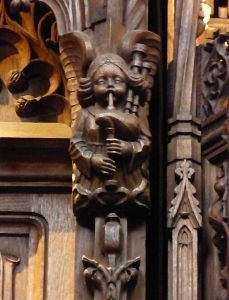
I tried to make this point in an academic article that was rudely rejected by the journal Folklore some years back. I mean “rudely” literally. I’ve had academic articles rejected before—many of us have—but the letter that came with this one was insulting. My “error”? Suggesting that the story of the musician who travels to the underworld came from ancient Sumer. The article had its origins in my wife’s reading of the Mabinogion. The story of Bran’s head being washed down the river still singing reminded me of an Edinburgh ghost story the tour guides used to tell right outside our window. You’ve probably heard similar: a tunnel is discovered, a musician (a bagpiper, since this was Scotland) is sent down while playing so that those above can follow the sound, but the musician never emerges. I traced the story through the Celtic tradition of Uamh ‘n Òir, the cave of gold, through Bran, Orpheus, and finally back to Ishtar’s descent into the underworld. It was a fun piece, but serious. It ended up published in a Festschrift to a scholar with a noted sense of humor.

Photo credit: Kim Traynor, Wikimedia Commons

Photo credit: Kim Traynor, Wikimedia Commons

The fact is, traditional stories often go back very far in history. We haven’t the tools to trace many, nor can the results be taken for Gospel, but the implications can. People are storytellers by nature. We find meaning in what would today be called “fiction.” Too often I’ve had to hang my head in embarrassment when admitting to a fellow academic that I read (and sometimes write) fiction. It is something, however, that ancient mythographers and folklore singers would have understood. We can be academic some of the time, but we are human full-time. And telling stories is something that predates even the Bronze Age. Of that we can be completely certain. And they lived happily ever after.


Digging to Look up

Ancient technology is a growing field of interest. A couple years back I gave a talk about ancient technology at a local Steampunk convention. The smallish audience that attended had lots of questions about how ancient people accomplished marvels such as the Antikythera Mechanism, or even the pyramids of Egypt. As new discoveries continue to show, our antique forebears had access to knowledge we have always assumed to be beyond them. An article in Gizmodo tells the story of how Matthieu Ossendrijver, an astroarchaeologist (and hey, this was simply not a job description I ever found in a college catalog, for the record!) at Humboldt University, has been studying an Akkadian clay tablet (the article doesn’t specify which one, beyond “text A”) that demonstrates that the Babylonians understood one of the principles that led to calculus. Tracking the movement of Jupiter, the Babylonian priests knew that measuring the area under a curve could provide the distance traveled by an object. This principle, in the annals of science, wasn’t discovered until about 1350, C.E. Babylonians knew it over a thousand years earlier.

Jupiter_and_its_shrunken_Great_Red_Spot

Although we marvel at the engineering of the ancients, we tend to think of them as superstitious. After all, they believed in gods and things like that. As Maddie Stone points out in her article, however, priests were also astronomers. Believing that messages from the gods existed among the stars, peoples of ancient times kept careful track of the heavens. Apart from romantic couples looking for time alone, how many people spend an evening under the stars, looking up at a universe that is so much larger than the internet that it can actually made you shudder? There is a wonder out there that can’t be replicated electronically. People knew that the sky and the gods somehow belonged together, and they knew this millennia ago.

Given that many of us hold doctorates in reading ancient, dead languages (too many, perhaps), you’d think all the clay tablets found would’ve been read, catalogued, and neatly stacked away by now. This is far from the truth. Tens of thousands of tablets were excavated back in the days before archaeology became an endangered practice in places like Iraq and Syria. Crates full of these tablets were shipped to museums and few have been transcribed, let alone translated. There is ancient knowledge stored away among the receipts and chronicles and myths of people who lived in the cradle of civilization, and now that information remains buried in museum basements because it is deemed not worth the money spent to provide jobs for those who can read them. As is often the case, however, when we are willing to listen to others, even long dead, we are amazed at what we can discover.


All Go Down Together

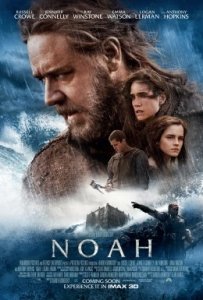
Noah2014PosterWhile the rest of the world was watching Star Wars: The Force Awakens, I was rewatching Noah, trying to find some profundity there. Like many curious people, I went to see the movie in the theater last spring expecting great things. While the story has some interesting elements, it just doesn’t live up to expectations. Noah is a hard character to like. In the biblical versions of the story, based as they are on older Mesopotamian prototypes, Noah (and his analogues) is a sympathetic character, at least in the reader’s mind. When we read we tend to identify with the main character, and since the builder of the ark is trying to preserve humanity from what seems to be an overly wrathful deity, we can sympathize at some level. What believer hasn’t felt put upon by the divine at some point or other? In the movie, Noah’s decision to end humanity after the flood is based on the silence of God. Indeed, that is one of the more profound aspects of the film—God never speaks to anyone so any action seems entirely human led. We’d expect someone who builds a floating zoo to be sympathetic to the human zookeepers at least.

Evolution, or something deriving from it, encourages species to protect their offspring. Some animals, of course, do this through over-compensation—producing more young than the world could bear if all survived to maturity. Mammals, however, care for and nurture their young. Noah’s ad hoc decision to end the human race, apart from being heavy-handed, is unreasonable and cruel. Who could look at their sons and say, “I’m going to let you age and die alone,” and yet feel that they are doing the will of the Almighty? Indeed, if humanity is made is God’s image, which Noah admits, isn’t this a form of deicide? Is Noah striking back at a silent God?

The movie does give the viewer much to ponder, but writing missteps plague the film throughout. Although wicked, Tubal-Cain is a more sympathetic character than the protagonist. He, at least, wants humanity to thrive. Noah, seeing how women are mistreated in Tubal-Cain’s kingdom, declares he will kill Ila’s children only if they are girls. There is a profound misogyny in the movie, it seems. Not that Darren Aronofsky intends for the story to be misogynic, but the implications speak loud and clear. To clear the world of violence, Noah proposes the most violent action of all. Like Noah, while everyone else was crowding into theaters with their fellow human beings to watch the force awaken, I was sequestered in my private ark waiting for a special message that refused to come. I wonder which is the more spiritual movie?


Witnessing Angels

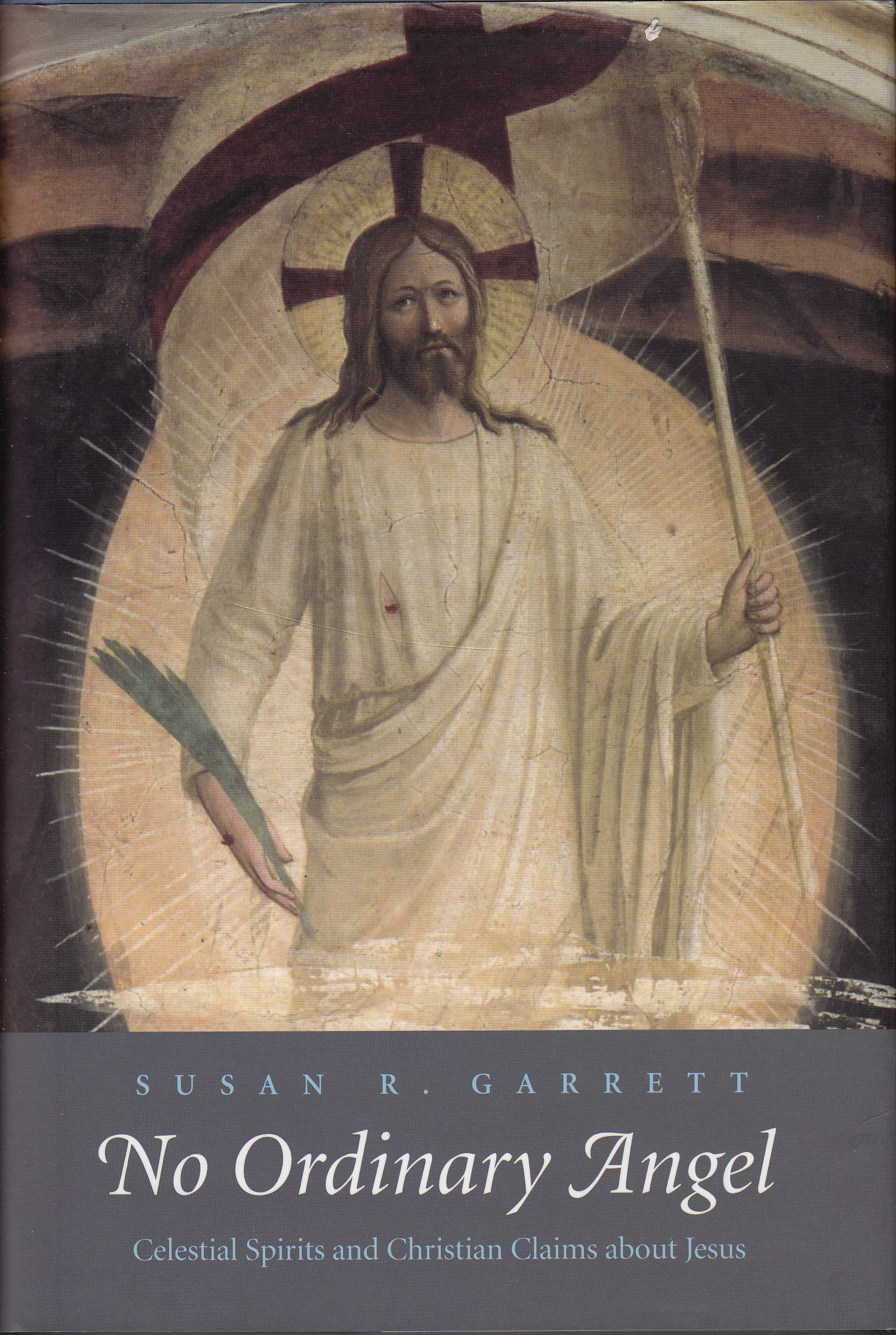
OrdinaryAngelBack in my undergraduate days, I wanted to learn more about angels. Surprisingly, there were no courses offered on the subject, even at evangelical Grove City College. When I finally took an independent study on angels, I found that few serious books had been written on the topic. I was immature as an academic, and I hadn’t learned that the subject of angels was a kind of scholarly embarrassment. Although many biblical scholars still clung to the idea of God, most had jettisoned angels along with other Medieval fabrications such as dragons and virgins. We inhabit a hardened, material world with no room for spiritual beings flitting about. As a student of ancient Near Eastern religions, I discovered angels possessed a hoary pedigree stretching back to Mesopotamia and perhaps beyond. Susan R. Garrett’s No Ordinary Angel opens the question again, and considers the many roles that angels have played and continue to play.

Subtitled Celestial Spirits and Christian Claims about Jesus, the book goes beyond the issue of angels per se, and addresses the distinctly Christian concern of how Jesus differs from them. What becomes clear in the reading of the study is that uniformity isn’t to be had. The earliest Christians already had divergent ideas on many concepts. As Roman Catholicism developed, angels attained a natural role in a world that still allowed mystery and shadows to exist. Protestants, the progenitors of much of science, cleared the closets of supernatural beings, leaving God and a table instead of the hosts of Heaven and an altar. I’m oversimplifying, of course, but there’s a sense in which the more liturgical traditions have more room for angels and demons. You don’t call a Protestant for a proper exorcism. Still, Garrett knows her stuff and shows how angels insinuate themselves into several aspects of sacred experiences of both Protestants and Catholics.

Angels come at births and deaths. They heal the sick, they protect people and they worship God. They rebel and fall, becoming Satan and his minions. Angels are, by their nature, liminal figures. They help to transition people between different states and worlds. As early back as written records, people believed in them. Outside of academia, people still do. God has become wrathful and distant in his old age and, well, you can talk to an angel without having to worry about vaporizing. In antiquity they were messengers. When God didn’t condescend to the earth, angels would come down. Now we get the sense that they’re more like us than we might have originally thought. Or maybe we’re more like them. Angels, even though they may have fallen out of academic fashion, are sure to endure longer than most weighty treatises, no matter how well footnoted they may be.


Ancient Tech

I feel like scraping Roman numerals on the wall of my cave with a sharp rock. One for each day I have to spend without my laptop. I’ve been working on this blog, born in this very cabin in which I sit, for six years now. With some exceptions, I’ve posted something new (and, I hope, thoughtful) every day. Even holidays and weekends. Most of those posts have been written on the deceased laptop that’s sitting in my carryon, electronic carrion. This has caused me to stop and consider that the most lasting words—the ones we all quote or at least recognize—tend to come from a far older form of communication technology: the pen and paper. Of course, there are older technologies yet. The Sumerians figured out that clay of the right consistency keeps marks made by a pointed reed pressed into it while it was still damp. Cuneiform writing lasted for millennia as the most advanced technology humanity had devised. The results, however, were bulky, heavy, and fragile. Few could learn the technique. It was an elite skill.

Nobody quotes the Sumerians anymore. Well, maybe the occasional quip from Gilgamesh will work its way to memory, but not much else readily does. The Bible, perhaps the most quoted book of all time, at least in western culture, wasn’t written on clay. By the time the earliest books of the Bible came along, scrolls had been developed. Probably suggesting itself from the way that papyrus naturally rolled up, this early form of paper—indeed, the word “papyrus” gives us our word “paper”—could be marked up with styluses or brushes and ink. Prepared animal skills, or parchment, sometimes called vellum, could also be used, but they were expensive. Pens at this period were sharpened objects dipped into ink, but the most famous words, well, penned by humankind were passed down in that medium. Copied, recopied, memorized. Electricity hadn’t even been discovered yet.


Printing presses and their children—typewriters and the consequent qwerty—have led the way since they were invented. Until, however, the 1980s at least, professors would accept only the old fashioned manuscript for papers. Indeed, the medium had given its name to the end result. We still write academic papers, although they are more often published and read electronically. So here I find myself in a cabin on a beautiful lake, surrounded by nature, worried about a communication device that can speak with the stars. There may not be workable clay here—the soil is far too sandy and I don’t have the patience to look up how to make clay on my phone—but there is paper. Pens are scattered everywhere. I am at home in the matrix that has given us the great ideas of humankind.


Doubt No Alleles

Image credit: Zephyris, Wikimedia Commons

Image credit: Zephyris, Wikimedia Commons

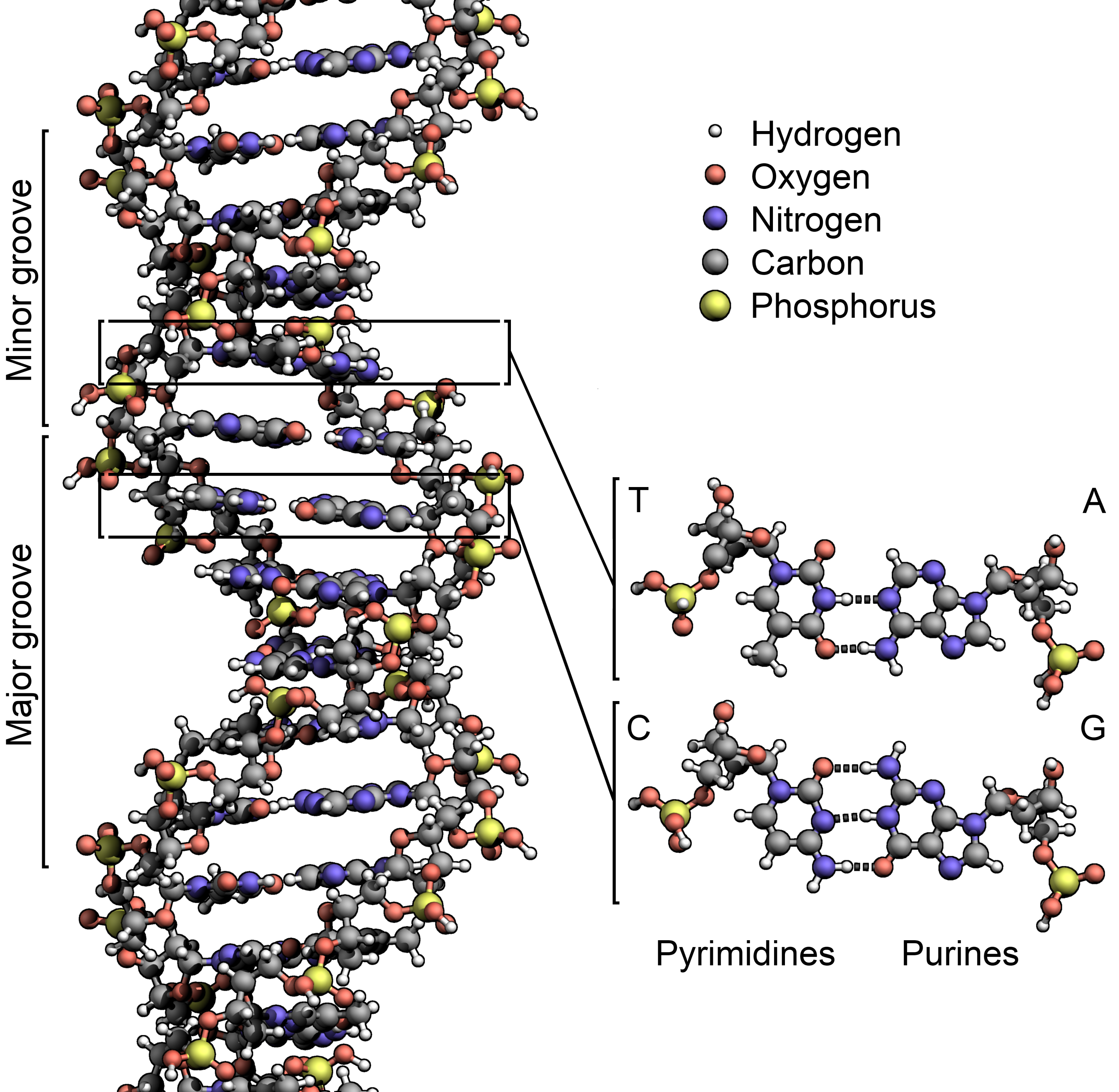
DNA. Is there anything it can’t do? For many decades anthropologists have built painstaking methods to trace developments in human culture. Those of us who’ve studied linguistics in any fashion remember well the many times instructors corrected our false cognates and pointed out family trees of languages that showed who came from whom, based on subtle shifts of orthography or some other aspect of philology. Entire careers could be made in ancient Near Eastern studies by shuffling around the way words were formed and speculating about how they influenced one another. Then DNA. A recent story in the New York Times demonstrates that DNA studies now tell us whence came the Europeans. Among the three groups that eventually settled in Europe were agriculturalists from the Near East, coming along at just about the same time as the Sumerians show up in southern Iraq. They joined the hunter-gatherers already in situ. Their languages, however, did not dominate as a third group, from western Russia showed up and gave (according to DNA) many of the groups their base languages. And here I thought Latin and Greek and Anglo-Saxon had something to do with it.

No doubt we’ve benefitted much from learning about DNA. We can fight diseases that were mysterious, if not divine, in previous centuries. We can learn how closely we’re related to other animal species, or even the neighbor next door. Sneaky fathers can be determined with a precision that sometimes puzzles, such as the recent story of twins who had different biological fathers. Without DNA such a thing could only have been a myth. I wonder, however, what we’re losing in terms of humanity. I suppose we’ll still need a few archaeologists to dig up the remains for scientists to date. And many traditional cultures will still insist that the human remains uncovered be reinterred and not probed and prodded, even after death. We’ll call them backward and superstitious. We’ll consult the genome and decide who to marry.

Meanwhile some hopeless romantic will insist on sitting off in a corner and composing sonnets to the woman he irrationally loves. Looking at the nighttime sky, he may compare her to the beauty of the moon. We know it is a lifeless rock trapped in our own gravity, mechanically reflecting the light of a burning ball of hydrogen and helium 93 million miles away. And if she’ll run this cotton swab across the inside of her cheek we might well be able to tell if she’s a good choice for mating purposes. We’ll also be able to determine the origins of her ancestors and remove a great deal of the mystery about her—there! Won’t that be better than having to woo her and find all that out for yourself? And when your children grow up you’ll point them to the STEM disciplines, since that is the only direction in which there is any human future. And the anthropologists can join scholars of religion as we wait for someone to put the soup in our bowls.


Pillars of Science

I sometimes wonder if science would have the appeal that it does, if it didn’t have religion to shock and awe. I’m thinking of not only the fact that The Humanist magazine quite often has a focus on religion, but even websites, irreverently named to make the sensitive blush, frequently use it as a foil. My wife likes the site now more commonly known as “IFL Science!” Web acronyms have taught us what the second of those letters denotes, but perhaps because making the name more family friendly leads to more hits, it’s been muted a bit. In any case, the most recent post I’ve seen has to do with that marvelous Hubble image of interstellar gas and dust columns where stars are being born, know as “The Pillars of Creation.” Apart from the stunningly beautiful images, I’ve always been taken by the way that implicitly or even subliminally, concepts of deity lie behind this scene. When the image was first published, I remember staring at it in rapt fascination—here we had stolen a glimpse into the private chambers of the universe. We were seeing what, were we in the midst of, would surely prove fatal. It is like seeing, well, creation.

Eagle_nebula_pillars

Creation is enfolded in the language of myth. Reading the description of this great, gaseous cloud, we are told of the tremendous winds in space (what I had been taught was an utter vacuum) where dust is so hot (I was taught space was frigid) that it ignites into stars, like a silo fire gone wild. It’s like witnessing the moment of conception, although Caroline Reid tells us the dust will be blown away in 3 million years. Perhaps ironically, scientists are scrambling to study it before that happens. Or before that will have happened. At 7000 light-years away, it will have been gone as long ago as Sumerians first put stylus to clay before we know of it. We still have a couple million years for a good gander. And the Sumerians, the first writers of which we know, were writing stories of creation.

It is really a shame that science has, in general, such an antipathy towards myth. As scholars of biblical languages, indeed, nearly any language, know, the language of myth and poetry is especially useful when standard prose breaks down. “Wow!” is not a scientific word. Nor is “eureka!” What other response, however, can there be to seeing the act of creation with our own eyes? Meanwhile there will be those who use science to belittle the worldview of the myth maker and and thinker of religion. Our world, it is widely known, is that of superstition and ignorance. We are those who think only in shallow pools and deny the very reality that is before our eyes. That reality can be full of stunning beauty, but were we to describe it in terms empirical, we might have to keep the interjections and useless adjectives to a minimum.


Colorful Gods

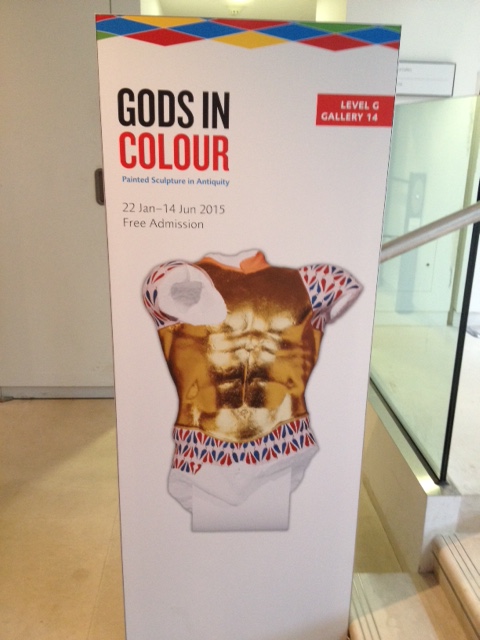
On my last day in Oxford I had enough free time to visit the Ashmolean Museum. The Ashmolean is the earliest public museum in the country, and, although it isn’t nearly the size of the British Museum, it has its share of very important artifacts. While there I came upon the exhibit called “Gods in Colour.” The display was inspired by the fact that ancient Roman statues—and likely those of other ancient cultures as well—were often painted. The elements have worn away much of the decoration, but traces of various chemicals have indicated what hues were likely used to paint these public icons of divinity. We tend to think of classical society as all white marble and stoic formality, but the reality was likely much more colorful. Many god and goddess statues from ancient West Asia also have traces of paint, although in general they were smaller in the various kingdoms of the Levant than the empires of Egypt and Mesopotamia (the latter of which is sadly falling victim to modern day iconoclasts). The Romans weren’t the only ones to see in color.

IMG_2082

Seeing these representations of gods in color reminded me of my first exposure to liturgical Christianity. Having been raised in a Fundamentalist tradition, we certainly didn’t have images about (although one of our churches had a pastoral fresco on one wall). The United Methodist Church, in which I spent my teens and early twenties, had adapted the liturgy of its Anglican parent church, but not the iconographic tradition. When I first saw churches with painted crucifixes and states of Mary, I was taken aback at how powerful they could be. Like most ancients, I realized that these weren’t the gods themselves, but they still conveyed much of what the liturgy was communicating through words and music. One priest explained them as crutches for those who needed help to imagine the divine.

Having seen what images can do, I object to the use of the word “idol.” People are visual animals. We rely heavily on our sense of sight, and our religious sensibilities tell us to look for the gods our minds tell us must be invisible. It is difficult to focus on that which we cannot see. Today we have images both in the natural color of their medium and resplendent with color. We spend hours before the computer screen with its endless array of pixels of all colors. We still think of our gods in full array of saturated hues. In ancient times they tended to be made of stone, but we tend to use another form of silicon, apparently, to get the same effect.


Rorrim

It was an object of wonder. Handed to me as a child, the Bible inspired a kind of awe reserved for the big events of a young life. Here were the very words of God, in King James English, for me to read, mark, and inwardly digest. Well, at least read. And read I did, as only the fear of Hell is able to motivate an impressionable psyche. When a parish minister saw the trajectory of my life, he suggested exploring the ministry. More Bible reading ensued. With only Halley’s Bible Handbook as a guide, interpretation was largely a matter of what the minister said, and the kind of primitive reason that resides in a teenager’s head. I made it through college as a religion major without ever hearing about Mesopotamia’s influence on the Bible. Once I did hear, in seminary, it was clear to me that to get to the truth, you had to go back beyond the first page. Mesopotamia was only part of the story. The Bible was a book compiled in a region where other religions shared concepts, deities, and stories with the Israelites. While unique in some respects, it turns out the Bible wasn’t as unique as I’d been led to believe.

Mesopotamia, vying with Egypt, was the true cradle of the civilization that gave rise to who we are in the western world. Perhaps in the eastern hemisphere as well. The great cities of Sumer, and later Babylonia and Assyria, yielded cuneiform tablets and other artifacts that insisted we widen our view of antiquity. The heirs of this tradition developed Judaism, Christianity, and Islam. All three monotheistic religions have bred sects that despise this ancient past with its uncomfortable truths, and thus we hear of IS destroying the evidence with abandon. The years of my life spent studying these cultures disappears so quickly under the bulldozer’s blade. For all this, it is IS that is the passing fancy. You can’t destroy the truth. You can damage it, however, to the detriment of everyone.

IMG_0188

Political regimes, and not just in the Middle East, operate with an unbecoming arrogance when they believe in their own self-righteousness. Were it not for those who wondered what these wedges on clay meant, we might still have to reckon (more seriously than we already have to do) with those who insist that it’s the Bible way or the highway. Unfortunately, it often takes disasters such as this wanton destruction of the past to wake the media from its lethargy concerning the cultures that gave our religions birth. There’s so much more to distract. The world can’t make up its mind about the color of a dress, and meanwhile those backed with a justification of true belief destroy that which can never be replaced. Given the rhetoric of political leaders even here, I suspect that our past is no longer safe, no matter where we house the artifacts bearing witness to the truth.


Alas, Babylon!

Religions tend to be backward looking. That’s not intended to be a universal, nor a condemnation. Few would want to admit that their religion is new, especially in this scientific era. We tend to believe the truth is old. But not too old. In the monotheistic traditions, real religion started with Abraham, or more properly, Abram. Beyond that we were all pagans. One of the sad stories brought to my attention this past week involves the IS (you know it’s bad when we have to use acronyms) decided to destroy Nimrud, one of the ancient Mesopotamian cities that has helped us understand whence we’ve come. In an era of political and social correctness, we’ve decided that the right to keep artifacts rests with those who’s heritage it reflects. The future, however, is just as unstable as the past. As someone who has spent many years trying to understand the material remains of our pre-Judeo-Christian heritage, it is a tragedy of the first degree to have unthinking guardians destroy what can’t be replaced because they represent “idols.”

In my Ancient Near Eastern Religions class, I used to begin by asking students what the difference was between an idol and a god. At first it seems that idols are images, and, by definition, offensive to the religion that names them “idols.” Then, as we probed deeper, it would become clear that all religions use images of some description, and that likenesses of deities were considered to be gods in sophisticated ways. Those who built the pyramids and the great walls of Babylon were not simpletons. Their images, many of them powerful still today, were psychological expressions, often backed with theological finesse. Even Protestants accuse Catholics of idolatry, and they worship the same deity.

It would be a mistake, however, to blame religion for such wanton destruction. All religions breed extremists. Extremists, like those who believe science can explain everything, are simply drawing their reasoning out to its ultimate conclusion. That’s not to condone their actions, but to try to comprehend them. All religious groups have those who slip past the bounds of conventionality into the realm where an all-consuming zeal requires excessive action to be noticed. Human beings are complex that way. A pagan philosophy of ancient Greece held that all things in moderation was the ideal. Religions with a concept of Hell, however, breed excessive ideologies. As a child I would have done anything to avoid Hell. In fact, with the little power that children are accorded, I conscientiously did what I could. When I wasn’t distracted by the other attractions life seemed to offer. If, perhaps, we considered that socio-economic justice would go a long way toward engendering a kind of contentment, we might find less extremists in the world. No matter what we do, however, we will not find ourselves in a world without religion.

DSCN1835


Star Struck

One of the coveted symbols of approval in my childhood was the star at the top of a paper. I watched in amazement (perhaps because they were so rare) when a teacher would inscribe a star without lifting her pencil from the paper. I thought I had never seen anything so perfectly formed. Of course, in my teenage years under the influence of Jack T. Chick and his ilk, I learned that the five-pointed star, especially in a circle, and more especially upside-down in a circle, was a satanic symbol. My childhood achievements had been, apparently, a demonic blunder. This fear of geometry still persists in America, as a story of a woman in Tennessee fighting to have “pentagrams” removed from school buses shows. The woman, who has received death threats and therefor remains anonymous, took a picture of the offending LEDs and has asked, out of religious fairness, to have the satanic symbols removed from the bus. The news reports are almost as tragi-comic as the complaint.

600px-Hugieia-pentagram

The pentagram, or pentacle, has a long history, some suggest going back to the Mesopotamians. (Uh-oh! We know how they loved their magic!) In fact, the symbol was benign in religious terms until it was adopted by Christians as symbolic of the “five wounds” (zounds!) of Christ. The symbol could also be used for virtue or other wholesome meanings. The development of Wicca began in earnest only last century, although it has earlier roots. Some late Medieval occultists saw the star as a magic symbol, and the inverted pentagram was first called a symbol of “evil” in the late 1800s. As a newish religion seeking symbols to represent its virtues, Wicca adopted the pentagram and some conservative Christian groups began to argue it was satanic, representing a goat head. (The capital A represents an ox head, so there may be something to this goat. I’m not sure why goats are evil, however.) Wicca, however, is not Satanism, and is certainly not wicked.

Symbols, it is sometimes difficult to remember, have no inherent meaning. Crosses may be seen in some telephone poles and in any architectural feature that requires right angles. The swastika was a sacred symbol among various Indian religions, long before being usurped by the Nazis. And the pentagram was claimed by various religions, including Christianity, long before it was declared dangerous by some Christian groups. There may be a coven in Tennessee seeking to covert children by designing and installing taillights of school buses, but I rather doubt it. School children feel about their buses as I feel about mine on a long commute to work each day. A kind of necessary evil. The truly satanic part, I suspect just about every day, is the commute itself. There must be easier ways to win converts.