Finding Vampires

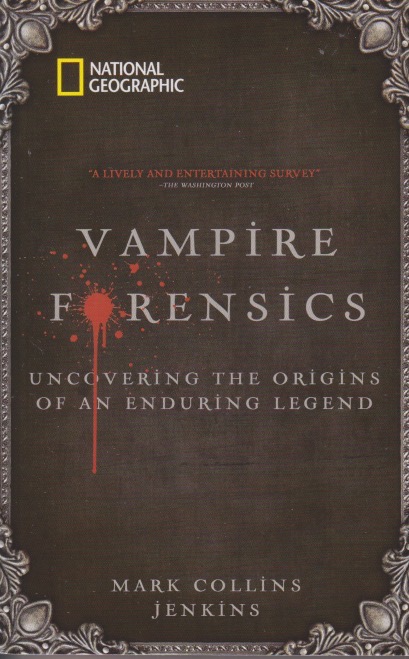
Parents always dread when their child will ask them the inevitable question: where do vampires come from?  A number of people have undertaken to answer that question, and Mark Collins Jenkins attempts it with aplomb.  Vampire Forensics: Uncovering the Origins of an Enduring Legend is quite a romp through the fields of the undead.  Ranging from the chewing dead through epidemics, Montague Summers, movies, Varney the vampire, the origin of the word “vampire,” where zombies come from, and practices of dealing with corpses, this study may not convince the reader that the mystery has been solved, but it will provide lots of information.  I’ve been pondering vampires lately, and this book ties many of these loose threads together well.  Jenkins has a talent for beginning a chapter on an apparently unrelated topic and then weaving it into the growing, ever expanding vampire tapestry.

I’ve read, many times, that vampires have ancient origins.  That really depends on how you define “vampire.”  This book explores those ancient roots, but unflinchingly points out that our modern idea of the walking dead drinking the blood of the living springs from the Balkan peninsula, largely in the eighteenth century.  This isn’t a strictly chronological study, and it isn’t limited to Europe and the lore that grew from that region between Asia Minor and Western Europe.  That doesn’t stop Jenkins from going back further in history.  It was a journey on which I learned much.  I also confess that I was nearly grossed out a time or two.  The vampire requires a stout constitution to study.  Interestingly, it seems that the word “vampire” might’ve derived from a word denoting “heretic.”  Religion and horror belong together, as I’ve said many times.

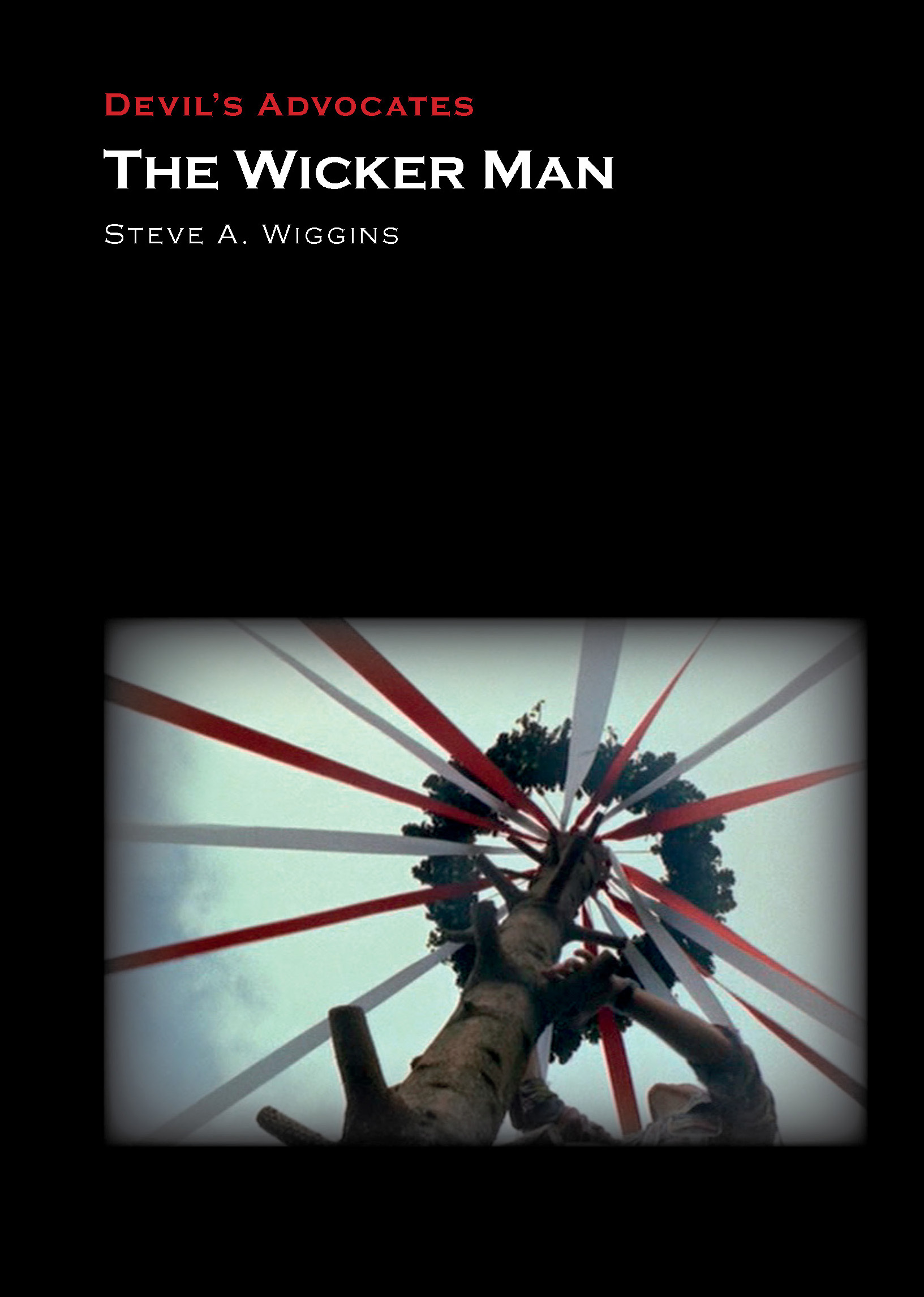
There’s always a danger with wide-ranging studies, since it’s not possible to turn a specialist’s eye toward all the cultures and historical periods under scrutiny.  Those who’ve tried it, such as James Frazer (of Golden Bough fame), come to be viewed with suspicion by later specialists.  (I discuss this in my little book on The Wicker Man, by the way.)  Jenkins does rely on Frazer a time or two.  Writing a general history on this subject almost necessitates that, however.  Even with the internet and “experts” being those who can gather the largest followings, academia has rightfully demonstrated that to get the real story you need to bury yourself with resources around a very small subject and be willing to live and breathe it for years.  Even then you might get it wrong.  But I digress.  This is a fine study of vampires and their possible origins.  It was a learning experience for me and I now have a better idea how to answer that dreaded question.

Scary Things

I recently set myself the challenge to come up with the scariest movies I’ve seen, up to 1979.  The date is the publication date (I think) of Stephen King’s Danse Macabre, which gave me the idea.  Book publication dates can be difficult to decipher; I have the Berkley Trade paperback edition, which is copyrighted 1981 and published in ’82.  So, let’s just say 1980.  Now, I would never challenge Mr. King, who is older, and wiser (not to mention much better known) than me.  And I suspect, if I understand writers at all, his views may have changed since then.  Several of the films he discusses are thrillers.  And, of course, each person’s viewing history is unique as their thumbprint.  So let’s give it a try.  First, I need to say there are different kinds of scary.  We all have our triggers, and I’m going for things that frightened me.

Photo by Stefano Pollio on Unsplash

Since we’re using 1980 as the cutoff, The Shining has to be on the list (of course King wrote the novel).  Like most of these movies, I saw it at home and the theatrical experience would’ve made an even bigger impact.  The Exorcist also has to be on this list as well.  For older fare, Eyes Without a Face certainly qualifies.  The Haunting, based on Shirley Jackson’s The Haunting of Hill House is among those in this period but it isn’t terribly scary.  I watched a number of King’s movies—many of which I’d never seen—and found some frightening ones among them.  Night of the Hunter, which makes me add the original Cape Fear, should be included.  So is The Bad Seed.  Something all of these have in common, apart from perhaps The Exorcist, is that they derive their terror from psychology.  There may be some supernatural involved, but the mind is the truly scary part.

Growing up—and even in the present—I’m not really looking to be scared.  I have no trouble getting to that state all by myself, thank you.  The monster movies of childhood thrilled with the unusual, and the realm beyond the everyday.  The haunted house movie held its own frisson for a similar reason.  Of course, children are often not developed enough to understand the nuances of psychological horror.  The more I ponder it, the more it seems that “horror” is the wrong name for what I’m after.   We gain bragging rights by watching scary movies.  And I don’t count jump startles as truly frightening.  I’m more of an existential dread kind of guy.  But I do love monsters.  Even this little exercise made me realize how difficult ranking such movies can be.  Perhaps I should bow to the King.


LA Story

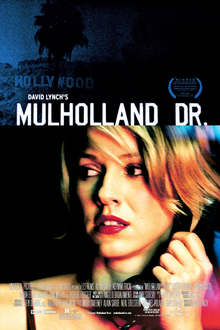
David Lynch movies aren’t always easy to understand.  Last year we watched Twin Peaks, including the movie Fire Walk with Me.  Some time before that I’d watched Eraserhead.  My earliest, and unwitting, experience with one of his movies was Dune, which I saw in a theater in 1984.  I had no idea of who Lynch was at that time, however.  As I began exploring the horror genre I found a contingent strongly denying that Lynch directs horror.  Still, there were enough elements in Twin Peaks and Eraserhead that some viewers do move in that direction.  Now, I’d heard of Mulholland Drive many times over the years and I’d seen it classified as horror a time or two, but mostly as a thriller.  Over the holidays I actually had time to sit down and watch it.  And I’m still not sure how to classify it.

I’m not even sure that I can say what it’s about.  Since I watch movies alone most of the time, I turn to the internet to have “discussion” about them.  IMDb and Wikipedia are often good starting points.  There is a tremendously long article in the latter on this film.  Quite often Wikipedia provides not a ton of information about films, but here’s a case where contributors simply can’t say enough.  And none of them know for sure what it’s about either.  I suspect that’s why David Lynch is so highly regarded as a film maker.  He’s an artist.  What artist can explain what their work really means?  Lynch has been notably tight-lipped about what he intended this movie to say, but if you’ve watched Twin Peaks through, you get an idea of what you might expect.  It’s certainly an intellectual experience, and a surreal one.  But is it horror?

One of the terms often used to describe the movie is “nightmare.”  That seems like a horror-laden word, doesn’t it?  It’s often a matter of the characters not knowing who they really are (and the viewers don’t know either).  The thing that ties most of them together is that they’re involved in a movie in some way.  I’ve come to believe that things like books and movies and songs—things we mentally “consume”—become part of our minds, just like food becomes part of our bodies.  Some of the films we see are like junk food—fun, but all fluff.  A David Lynch movie will give you something of substance to chew on.  And finally having seen Mulholland Drive, I’d say it’s a much horror as Lynch’s earlier work has been, however you interpret that.


Finding a Spot

Sometimes you’re not born among your tribe.  I live where I’ve moved out of economic necessity, not where my family’s located.  My family’s not quite sure what to make of me anyway, so I seek my tribe.  At first it was among the United Methodists, but when I was in seminary they let me know what they really thought of me.  The Episcopalians seemed more welcoming to my academic aspirations and my doctorate led me to believe my tribe was those who studied ancient West Asian religions.  I wrote papers, led conference sections, knew people.  When I had to step out of academe, however, they tended to fall away.  (Ironically my most-read work, according to Academia.edu, is my dissertation, revised edition.  It has had over 8,000 views.)  I still have many scholar friends, but I’m clearly no longer part of the club.

That’s why I turned to horror (as a field of study).  I was seeking my tribe.  I wasn’t at all sure Holy Horror would get published.  I was encouraged when The Journal of Religion and Popular Culture published “Reading the Bible in Sleepy Hollow.”  Then I discovered other academics (still not part of the club) were studying religion and horror.  Ironically, it was people on the horror side, rather than the religion side, who made me feel most welcome.  In the meantime, I wrote some horror stories (still do) but the fiction publishing tribe seems to be at war against the rest of the world.  You can’t breach their bulwarks.  I’ve been trying for a decade and a half.  So I continue to write books that move more toward horror, and move away from religion.  Still, hard-core horror fans don’t really pay much attention to my books, still I try, but as an outsider.

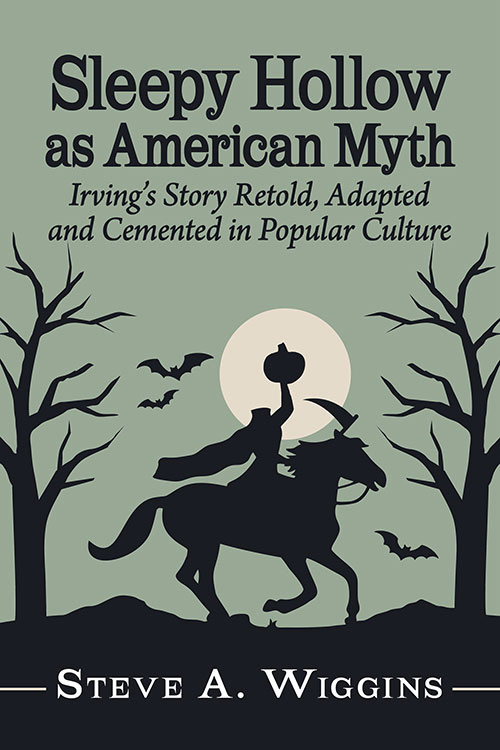
Since Sleepy Hollow as American Myth is in production, I’m working on my next projects.  I’ve been indulging in fiction again, where I’d really rather be, for a host of reasons, but unless I succeed as a double agent, I’ll remain unpublished.  My tribe, I think, would welcome more nonfiction like I’m writing.  These books haven’t been selling well, but they may eventually get referenced.  Now, many years after the fact, the ancient West Asian studies tribe cites my work and asks me to contribute more.  I’m afraid that island was abandoned years ago, former tribe-mates.  I was lonely and so I rowed across the ocean into horror territory.  If you’re looking for a tribe too, I’ll be glad to try to introduce you around.


Going Below

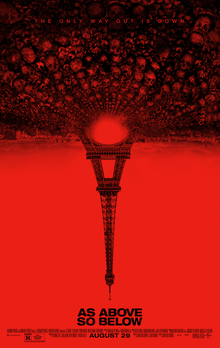
Indiana Jones in National Treasure, in found-footage horror format.  That’s the feel of As Above, So Below.  Only Jones is a woman.  There’s plenty of religious imagery in this movie, but the story’s not that great.  One of the reasons is that it’s too difficult to swallow, although it does score serious points on the claustrophobia scale.  At the beginning I wondered if I was going to make it through since Dr. Dr. Scarlett Marlowe’s cell phone is constantly moving as she continues her father’s search for the philosopher’s stone.  Surviving the situation in Iran, the remainder of the film takes place in Paris, especially the catacombs.  My level of impressedness went up when I learned that the movie really was shot in the catacombs.  Unfortunately it didn’t really help the story.

Alchemy, as part of esoterica, is purposefully difficult to understand.  Marlowe is continuing her dead father’s search for the philosopher’s stone that can change things into gold.  Her friend George (who repairs the clockwork for the bells at Notre Dame) is forced into the catacombs with her and her cameraman Benji.  They’re led by three Parisian cataphiles and some shots look like they were lifted directly from Indiana Jones and the Last Crusade, including the use of her father’s notebook.  Instead, the group enters the gates of Hell.  There are lots of scary things down there, many of them unexplained.  Some reflection reveals that they are all having to confront their pasts—or at least some of them are.  One of the cataphiles is killed before we learn her secrets.  And one of the survivors has no real backstory.  Six go in and three come out.

The movie plays with some interesting ideas, but it’s hard to swallow that an actual bona fide archaeologist would go on an illegal treasure hunt.  And that she knows of a secret chamber in the catacombs that has remained undetected by specialists.  I began scratching my head.  And when the group (or some of them, anyway) begin finding artifacts from their personal pasts in the catacombs, credibility is strained even further.  The idea that it’s important to come to terms with your past is a good one.  But once the young people begin dying and the rest have to keep going deeper and deeper to get out, the illusion is broken by Marlowe just dashing back to get a different stone to save George.  If it were just a matter of popping back, wouldn’t they have tried that earlier?  There are some Bible quotes, making this a candidate for the also unlikely Holy Sequel.


Perhaps More?

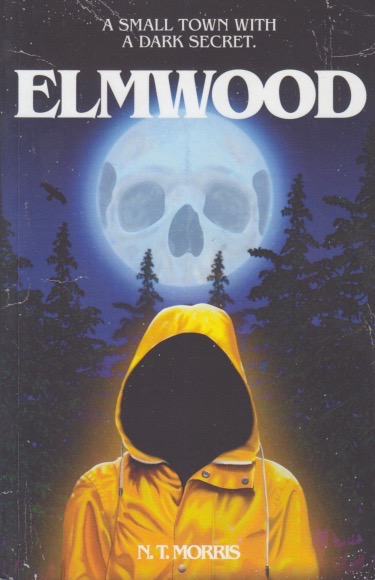
Publishers use the term “deep backlist” to refer to titles that they published long ago.  That’s always the phrase that comes to mind when I browse my “to read” list.  That list was started, in its current online repository, a decade-and-a-half ago.  When I delve into the “deep backlist” of items I placed on the list years ago I sometimes can’t remember where I learned about them.  Such was the case with N. T. Morris’ debut novel, Elmwood.  Someone recommended it years ago and I finally came into possession of it.  A moody tale about a town haunted by a cult, it is a nice effort as a self-published horror novel.  If you read a lot of fiction you start to notice some of the signs with self-published work (and there are many good reasons to go that route).  Morris offers a well-designed and aesthetically pleasing book.  The story does end with some loose threads, however.  There may be spoilers below.

Aidan Crain finds the victim of what appears to be a serial killer.  His difficulty coping with it leads his wife Laura to suggest that they get away from it all in the little town of Elmwood.  They rent out a house she found online, but it turns out to be haunted.  The people of Elmwood aren’t terribly friendly to strangers, but since the goal is to get away from city life, the young couple doesn’t much mind.  Except the ghosts in the house are accompanied by a dark presence in the woods that keeps calling to Aidan.  One of the tricky bits for me was determining what were dream scenes and how they related to waking scenes.  This is often part of speculative fiction, but a solid editor would lead you in the right direction in such situations.

The story tries to fit a lot in, leading me to think—rather uncharacteristically—that it needs to be longer.  The house was owned by a serial killer who’s part of the cult that killed the victim Aidan found many miles away.  The cult has been culling both locals and visitors for years and the police department appears to be complicit.  As do some local business owners.  The darkness in the woods, which is defined more or less as evil itself, seems to control the cult and it wants Aidan to join.  Some of the loose threads at the end suggest that Morris’ next novel will be a sequel to this one.  I can’t recall how I learned about Elmwood, but I’m glad to have finally read it.  It’s a good shot at becoming a horror writer from my personal deep backlist.


Bottoming Out?

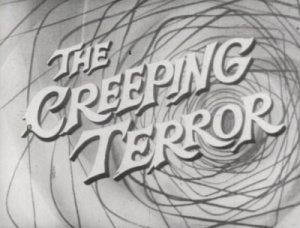
It was an honest mistake, I swear!  I had remembered reading in Stephen King’s Danse Macabre that The Creeping Unknown was worth seeing.  I’d known about this movie under the title The Quatermass Xperiment since I was a tween.  The problem when you grow up with no money in a small town is that you don’t have access to such things.  Then a friend gave me a DVD of The Creeping Terror.  I thought it was The Creeping Unknown.  The disc hadn’t spun too many revolutions before I realized I was watching what may be the worst movie ever made.  Many reserve that for Plan 9 from Outer Space, but believe me, this is much worse.  The story of a couple of aliens sent to eat people to transmit to their superiors what our weaknesses are, it seemed to me that the main weakness is nobody thought to run from this slow-moving monster, except one guy who just abandoned his girlfriend to it. (Apparently girls don’t run.)

Like that other baddie, The Beast of Yucca Flats, the audio was not preserved so nearly all of the film is a voice-over by an authoritative-sounding announcer.  There are a few dubs, but they aren’t well done.  And then extended scenes of young people at a dance (have you ever heard of just filling up time?) are intercut with perhaps the slowest monster attack in history.  There’s so much not to like here.  The poor acting.  The plot nearly as dimwitted as Trump.  The stock footage of a rocket launch run backwards to make it look as if it’s landing.  The sheriff making out with his wife in the patrol car while “on a break” from looking for the monster.  The instrument panels from beyond our galaxy with Arabic numerals and Latin letters.  You find yourself hoping for the Apocalypse so you won’t have to watch the rest, and it’s only 74 minutes long.

Somehow it comes as little surprise that the director (also producer, editor, and star), under the name Vic Savage, disappeared never to be heard of again.  The film’s main financier, had to try to put the movie together for release.  (He also had a role in the movie.)  There is, as I’ve mentioned often before, an aesthetic to watching bad movies.  I’ve ended up seeing many of “the worst of all time” in my spate of movie viewing over the past three or four years.  This is the first time it has happened by mistake.  I do have to say that it’s easier to appreciate a bad movie when you can see that it’s coming and prepare yourself accordingly.  The Creeping Unknown remains elusive.


Vampire Lovers

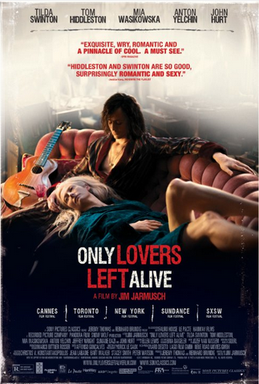
Stylish, gothic, dramatic.  If it weren’t for the vampires you might not know that Only Lovers Left Alive is a horror movie.  Indeed, some say it’s not.  You can have movies about vampires that aren’t horror films, right?  Still, vampires defined horror, at the earliest stages.  There’s no on-screen violence in Only Lovers.  No, it’s about a pair of vampires named Adam and Eve, who are many hundreds of years old, that have developed different outlooks on undeath.  She reads and lives in exotic Tangier, enjoying herself.  He’s a depressed musician who lives in Detroit—there must be a book in horror movies set in post-industrial Detroit, wondering what’s the point.  In any case, they decide to get together in Michigan where they revel in each other’s company.  But then Ava, Eve’s troublesome sister pops in, unannounced.  Not refined or cultured like her sister and brother-in-law, she leads to trouble.

Eve and Adam move back to Tangier where whey have difficulty locating a good source of blood.  As cultured vampires, they do not attack people—zombies, as they call them—but procure it from doctors willing to sell.  When the supply runs out, they do what they must to survive.  This gentle story is art-house quality and it brings a different angle to the aristocratic vampire.  These vampires are the creators of culture.  The mortals sometimes appreciate it, but are generally too busy destroying the world to pay much mind to the superior creations all around them.  There’s not a hint of evil about these undead, subverting the usual narrative of such beings.

Vampire movies offer some complex possibilities.  They’re also a reminder why “horror” isn’t the best movie label ever invented.  Monsters by definition, vampires are portrayed in many ways—from animalistic, sometimes even with wings, to European nobility with great politeness and decorum, even as they bite your neck.  Then there are those who don’t attack people unless absolutely necessary.  They’re symbols of capitalism, with its greedy sucking of the blood of others.  They’re also symbols of evil, at times barely distinguishable from demons.  They seem endlessly adaptable.  In Only Lovers they are folks you’d be okay with, if they lived next door.  As long as Adam didn’t play his music too loud.  Since horror is a slippery term anyway, I opt for counting this in that genre.  In fact, I learned about it from a website listing stylish horror movies, so I’d say it counts.  Even if it’s just a bit out of the ordinary.


The Dark Season

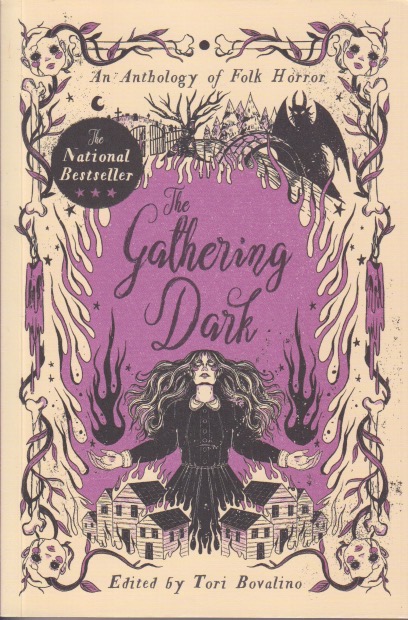
It was on Goodreads that I first saw The Gathering Dark.  Since I’ve been trying to read more short stories, I decided I should give it a go.  Subtitled An Anthology of Folk Horror, it sounded like important for a viewer of said folk horror.  Anthologies, both fiction and non, are uneven by nature.  And something that wasn’t clear at first is that this was a young adult collection.  I’ve read YA books before, of course.  Some of the most creative fiction of the last couple of decades has been for that demographic.  The feature I noticed most here was that the horror was mostly gentile, kind of like the horror in my fiction.  I never consider myself a YA author, however.  Occasionally my characters are teens or twenty-somethings, but for the most part they participate in the adult world, where something is wrong.

Youth is, of course, a fraught time.  We’re exploring relationships and trying to sort out the changes taking place in our bodies and our lives as we leave the larval stage.  There’s a kind of natural horror to it.  At the same time, “folk horror,” like horror itself, is a slippery term.  Some of the stories seem to be based on urban legends, and that is definitely the present-day source of folk horror.  When it’s found online it’s often called “creepy pasta.”  It can be the basis for horror stories, and I’ve seen a few movies that make use of it.  Folk horror tends to favor rural settings (true of all the stories here), and superstition, and isolation.  Often it involves pagan religion, but here only one story dwells in that territory.

Overall I found the collection interesting and well written.  A number of the stories did evoke the feelings of what it was like to be young and afraid.  I do wonder how the anthology came about.  There’s no introduction and, I know from my own publishing experience that anthologies are a hard sell to most publishers.  I’ve noticed Page Street books before.  They recently began accepting horror written for adults.  They already have a strong YA list, thus The Gathering Dark.  They’re also committed to diversity, and that clearly shows throughout this collection.  I think it’s important to read young adult literature now and again.  It is, literally, the literature of the future—this is what forms young people’s tastes.  This particular book was a national bestseller, and it earned some notice on Goodreads.  And that was enough to draw me in.


Historic Vampires

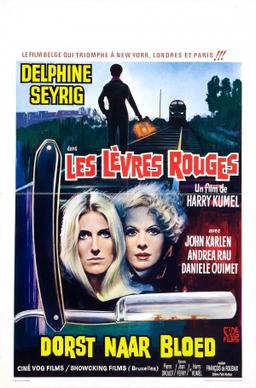
Vampire movies have always been a guilty pleasure.  The thing is, there are so many of them that watching them all would be the task of a lifetime (and a substantial budget).  Those of us who are constantly looking for, shall we say, new blood, can find that our lack of knowledge extends back for years, particularly if a movie didn’t make it big in our home country.  Daughters of Darkness is an early Euro-horror about Elizabeth Báthory.  A stylish, almost art house movie, what particularly struck me about it is that it was very well written.  The use of blood is restrained, given the topic, but verbal descriptions of Báthory’s excesses makes for a particularly gruesome scene.  So, about the story.  (This is from 1971, so I won’t worry about spoilers too much.)

A young couple (his backstory is inadequately explained in the movie, apart from being aristocratic), newlyweds, are headed to introduce her to his family.  Stefan (he) isn’t exactly the ideal husband (played convincingly by John Karlen), but Valerie (she) really wants to meet “mother.”  Stefan stalls the trip, and, in the off season, the couple have a luxury hotel to themselves.  Then Elizabeth Báthory shows up with her “secretary.”  Stefan is a little too interested in violence, as a string of murders make the headlines.  Meanwhile, Elizabeth begins making moves on Valerie.  We come to understand fairly early on that she’s a vampire, but no fangs appear and she’s always impeccably dressed and sophisticated.  Her secretary, who is having second thoughts, is accidentally killed while setting up Stefan as an unfaithful husband—again, the writing here is quite good—and Valerie becomes Elizabeth’s new secretary.

There’s a strong feminist aspect to this film, perhaps because Delphine Seyrig (Báthory) was a prominent feminist and would be attracted to such roles, it would seem.  The daughter of an archaeologist in Beirut, she supported women’s rights and there appear to be elements of this in the movie, although it was written by four men.  I was a bit too young for this movie when it came out, and art movies wouldn’t have stood a chance where I grew up, at least not in circles my family knew, so although Dark Shadows mainstay Karlen took a rare male lead role in the movie I’d been completely unaware of it.  But then, vampires are that way, aren’t they?  They tend to be old and well-hidden in the shadows.  Then they come at you with a bite when you least expect it.


Feeling Gothic

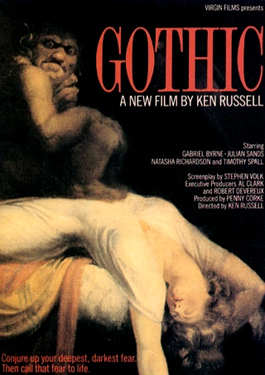
Gothic is an odd movie.  I first saw it while in seminary and have come back to it now and again.  I had been thinking of Frankenstein, so I decided to refresh my memory.  A pastiche of opium-fueled images and hedonism it nevertheless brings some religion into the horror.  In case you aren’t familiar with this Ken Russell piece, it’s a movie version of the stay of the Shelleys with Lord Byron, his physician John Polidori, and Mary’s stepsister Claire, in the summer of 1816.  During that visit, the basic ideas for Frankenstein emerged, and Polidori wrote an early vampire story that later inspired Dracula.  The religion comes in the form of Polidori’s Catholicism and his fear of condemnation for being a homosexual.  At one point, when the friends are about to read ghost stories, Percy Shelley says they’re more fun than any Bible.

Of course, in actual life Shelley and Byron were atheists, but the movie portrays the five raising some kind of entity during a seance.  They then spend the remainder of that stormy night trying to drive the entity back into their minds from the physical reality they gave it.  It’s a weird movie with lots of incongruous shots and some gross-out moments.  Ken Russell was known for his flamboyant style, and this movie is a good example of that.  It’s not great but it is moody and I come back to it when I want something, well, gothic.  The year 1816 was called “the year without a summer,” because of the volcanic winter caused by an eruption of Mount Tambora, and some have speculated that the bad weather of that year may have led to the creation of Frankenstein.

Every time I watch it, I wonder what the appeal is.  There’s a lot of God and Devil talk, and Byron was a fascinating character.  Julian Sands’ overacting in every scene makes me wonder what Shelley was like in real life.  I’ve occasionally read about his relationship with Byron and each seems to have had at least a supporting role in the iconic pair of monsters, Frankenstein and Dracula.  The two would be forever associated with the Universal release of movies named after them in 1931.  Gothic never made it big—I only found out about it because a seminary friend invited me over to watch it on VHS one weekend.  Still, it made enough of an impression to bring me back when the mood is right.  Even if it’s strange.


Yes, Yes

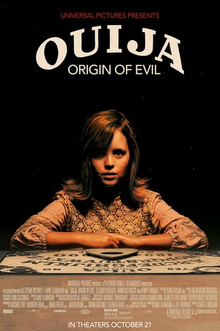
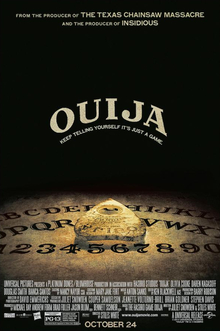
You had to’ve seen this coming.  Ouija: Origin of Evil, with a different director and writer, and the same producer, pulled off the better prequel/sequel.  I don’t give that accolade lightly.  Now, I’m not a professional film critic, and I like to say nice things whenever possible, but even sequels/prequels that professional critics do say are better often find me in disagreement.  In this case I stand with them.  And I have some ideas, apart from natural talent, why it is so in this case.  The problem with ouija, and spirit boards, is that you have no way of knowing who or what may be answering your questions.  In the first movie we just know it’s someone with bad intent, and we need to wait until all the twists are finished to find out who.  The second begins with the premise that we already know who, but we want to know why and how.

But it goes deeper than that.  The first movie left religion out completely.  The prequel scoops it back in by the shovelful.  And if you want to make a movie about ouija work, you need to have demons.  To begin with, the family previously in the house is Catholic.  The kids go to Catholic school.  The headmaster is a priest who wants to help the family.  He quotes the Bible (Holy Sequel, anyone?)  He recognizes that the entity isn’t who it says it is.  Although showing demons is always a bit of a dicey proposition, the prequel opts for the preferred look from the period, and show them only dimly.  It still has to work with the world built by the original, which leads to a strange backstory of a Nazi in the basement operating on homeless people, but you have to work with what you’re given.

So the second movie is scarier and better made.  It didn’t earn as much as the first one did, though.  The idea hadn’t, I don’t think, been tapped out.  Rather, I think once you’ve laid out the premise, viewers have to be enticed back.  If a subject is mishandled, it does require extra work to convince viewers that the next experience will be better.  The critics, however, immediately saw the difference.  You really don’t have to know the story behind Ouija to see this movie, but it definitely helps.  It earned enough that unofficial sequels were released before the official prequel.  One of them only by a matter of days.  It pays to get it right the first time, and if you’re working with a naturally religious topic for your horror, you shouldn’t be afraid of religion.


Lovecraftian Advice

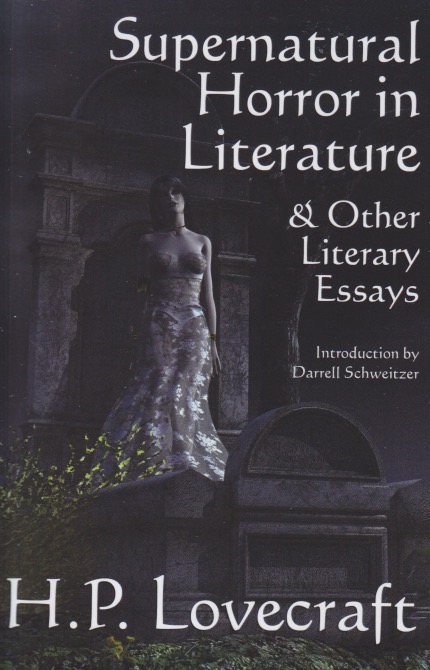
It seemed natural enough to follow up Stephen King’s On Writing with H. P. Lovecraft’s famous essay “Supernatural Horror in Literature.”  This piece, widely quoted, is available online but it is lengthy and I wanted the convenience of not reading it on a screen.  What can I say?  I like to turn pages.  I found a print copy, along with two other, shorter Lovecraft essays in Supernatural Horror in Literature & Other Literary Essays.  This was published by Wildside Press, which added a brief introduction by the speculative writer Darrell Schweitzer.  The text of the main essay was obviously computer-read—a couple reading errors remain—but it is clear enough to read.  Like Poe before him, and King following, Lovecraft put down some of his thoughts on the craft of writing.  Interestingly, Lovecraft is seldom considered as a producer of belles-lettres, but he is world famous as a horror writer now.

The essay itself is worth reading.  Mostly it is a summary of what Lovecraft felt was worthy weird fiction.  I tend to agree with much of what he says here, as would be evident were anyone to read my own fiction writing.  I can’t say that I learned this at Lovecraft’s knee.  I only discovered who he was when I was teaching at the University of Wisconsin Oshkosh.  I did not have literary friends growing up; my reading tastes were determined by myself, largely based on what was available at Goodwill any given week.  Nobody I knew read Lovecraft and although his books may have been in that bin, he wasn’t really someone I’d have known to keep an eye out for.  As a child I didn’t think of myself as a horror reader.  I liked monsters, and vampires were among the most immediately recognizable.  My brother, if I recall, got me started on Poe.

When I began writing fiction, probably around twelve or thirteen, it was weird fiction.  One of my other influences was Ray Bradbury.  I agree with Lovecraft that, to be interesting, fiction often requires a speculative element.  I do read realism, of course, but I really enjoy tales with a bit of supernatural.  It’s useful to read Lovecraft’s ideas about influential writers.  I’ve got my homework cut out for me.  I can certainly recommend this edition for anyone who wants to read this lengthy essay in print form.  The one thing that struck me as weird was the cover design.  It features a woman wearing a strapless dress in a cemetery.  Lovecraft famously didn’t really have women as one of his main themes, and his women characters are among his most inaccurately drawn.  Still, it’s best not to judge a book by its cover.


Yes, Maybe

The truth is, only experts and professionals can really keep up with horror films.  As the most successful genre of, well, genre films, there are tons of them.  I completely missed Ouija when it came out about a decade ago, despite the fact that it did well at the box office.  The only reason I watched it now was that a friend sent me a list of horror films from a reputable website that recommended the prequel to Ouija, but I felt that I needed to see the original before finding out what happened behind the scenes.  The original didn’t fare well with the critics and it’s pretty clear why.  The story, although it has twists, isn’t really convincing and the acting is off at times.  (Five teens left alone to watch a haunted house while their parents just take off for weeks at a time?)  Still, it’s atmospheric, and it plays on a scary theme.

I must confess that ouija boards frighten me.  I consider myself both rational and skeptical (in the classic sense), but there’s just enough doubt with spirit boards.  I’ve never owned or played with one.  (Interestingly, the movie was funded in part by Hasbro, the current seller of the game.)  In fact, when I discovered the Grove City College yearbook was called Ouija, I was a bit put off.  (By the time I graduated they’d changed it to The Bridge.)  Although GCC wasn’t really traditionally gothic, like most colleges it had its share of ghost stories.  Even in conservative Christian country things go bump in the night.  And while most stories told about tragedy after using an ouija board are unverified in any way, still…

So, the movie posits a deceiving entity that kills teens who contact it.  I suspect I need to watch the prequel to find out why.  It does manage to have a few scares, but it’s mostly about atmosphere.  I agree with Poe on this point—atmosphere’s often the point of a story.  Although the critics are right (who discovers a body in the basement and goes to an asylum for advice instead of notifying the police?), some of us do watch horror films for this kind of haunted house experience.  And while I’ve got Poe in the room, the threat to young ladies is there.  One thing missing, though, is any talk of religion.  No Ed and Lorraine Warren warnings of demons.  This is a straight-up nasty dead person who likes to kill those who want to communicate with their dead friends.  It does create a mood.  And it cries out for a prequel.


Academic Publishing

I had lunch with a friend a couple months back.  He is one of the few people who’s read The Wicker Man (the Devil’s Advocate version).  Not many reviews appeared and no royalties at all have yet followed its publication.  The funny thing is, when I search for reviews I notice that the book is “for sale” on far more websites than copies actually sold (I’m assuming).  You see, one of the best-kept secrets in publishing (both trade and academic) is the number of copies sold.  Publishers are terrified of poachers after their authors, and don’t advertise actual sales figures.  For an author only the royalty statements reveal just how many (or few) copies ever made it to the hands of potential readers.  We’re all adults here; we know that not every book purchased is read.  I do wonder if there has been any interest in this little book at all.

My friend actually went and watched the movie because of my modest little book.  The film The Wicker Man is widely known in certain circles, but it is still a movie with a cult following.  Horror fans know it, of course, with some declaring loudly that it’s not horror.  It gets referenced all the time in more mainstream media.  I occasionally read quirky little books like Your Guide to Not Getting Murdered in a Quaint English Village.  I wasn’t surprised to see The Wicker Man (the movie) referenced there.  As I discuss in the book, it’s even the subject of a Radiohead video for their song “Burn the Witch.”  Beyond a few academics, however, nobody’s really interested.

My friend suggested a topic for a new book for me to write.  I didn’t have the heart to tell him that, barring a teaching post coming my way, I’ve given up writing books for academic presses.  I’m pleased McFarland accepted Sleepy Hollow as American Myth, but the crude cost-benefit analysis that I do tells me writing books for academic presses, without library access, is always a money-losing venture.  Remember those old Guiness Book of World Records paperbacks?  I recall seeing, as a child, the least successful author listed.  Of course I don’t remember his name.  I now know that at least that record hasn’t been broken.  Not officially, but when books cost so much to write… Academic publishers are facing hard times but I don’t see the wisdom in pricing your books so that nobody can afford them, just to scrape in a few university library sales.  Not to sound as mercenary as a Hessian, but what’s in it for me?  Certainly not tenure or groundskeeper Willie’s retirement grease.  I’m not paid like a professor. Right now, though, I’m wondering if maybe I’ve broken that record after all.