Not the Witch

Hagazussa came to my attention from, I believe, the New York Times.  In the autumn normally staid news sources start suggesting horror films to watch.  Subtitled A Heathen’s Curse, this new Euro-horror (filmed in German) immediately reminded me of Robert Egger’s The Witch, but with a lot less plot.  It’s a moody and disturbing story of the life of an outcast young woman in the sixteenth century.  Raised by a poor, goat-herding mother, Albrun watches her mother die of the Black Death, when Albrun’s a tween.  She continues living in her childhood home, with a daughter whose origin, like that of Albrun, is never explained.  The locals shun her as a witch but a seemingly friendly villager befriends her before turning against her and betraying her.  After this neighbor, and then others, die, Albrun drowns her infant daughter after eating a toadstool in the woods.  She then bursts into flames atop a hill in the Alps.
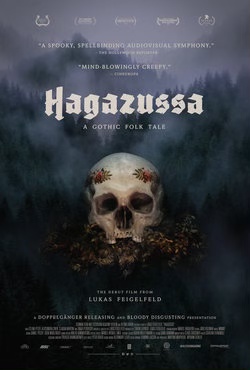
As folk horror, the movie is more about the haunted landscape than about an intricately plotted story.  There’s nevertheless a great deal of symbolism used, including much regarding Eve—apples, serpents, and goddesses all play a part.  Locals fear pagans, and the church interior lined with bones reminded me strongly of St. Stephen’s Cathedral in Vienna, where plague victims’ bones fill the underground vaults.  Seeing such a place reminds you forcefully of your insignificance.  Hagazussa is an art film as well as folk horror, and it appeals to gothic sensibilities.  There’s very little dialogue.  Indeed, the loneliness of Albrun is a major aspect of this moody, atmospheric work.  Such stories always remind me of how difficult life was for those who had to try to scratch a living from the land.  Existence was tenuous at best.  Especially for women alone, as determined by Christian society.

The movie left me reflective.  It also underscored how religion and horror tread the same paths repeatedly.  The village priest tells Albrun that sacrilege must be cleansed, even as he hands her her mother’s skull, polished and decorated.  He wearily admits that he struggles to led the community.  Indeed, Albrun’s new “friend” castigates Jews and heathens, even as she takes part in the robbing of Albrun’s livelihood.  Witches, as “monsters” were invented by the church as fears reached out to point to new sources.  Even if they had to be fabricated at the expense of innocent people.  Fear operates that way still, as anyone who watches political ads knows.  It’s easier to persecute than to educate, it seems.  In the end, Albrun burns up and we realize we’ve just watched a parable.

Learning to Write

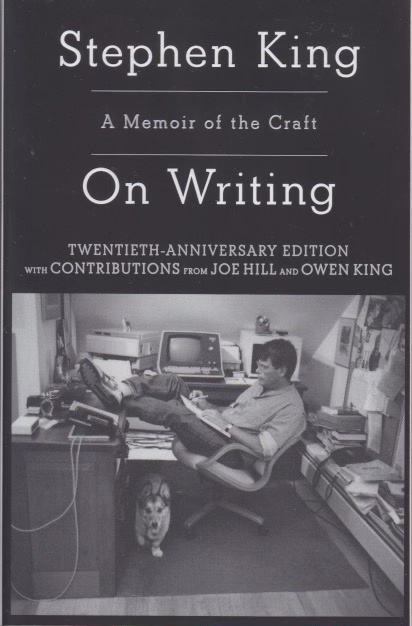
If you’re not famous as a writer, nobody asks you for advice on improving their game.  Part of that is simply having a writer’s outlook.  We all have our own ideas about how it’s done.  I admire the work of Stephen King.  He’s a gifted storyteller and his books often deal with the kinds of things I think about.  I had his book On Writing on my reading list for years.  What finally got me to read it was finding it in a local independent bookstore and wanting to support said venue.  I found it both helpful and a little scary to read.  This is part memoir and part instruction manual by someone who isn’t full of ego, despite his success.  Egoism isn’t uncommon among writers, but King realizes that many people have talent, but not all know how to bring it to any kind of success, no matter how modest.

I really enjoyed reading the memoir parts.  Indeed, I wish I could’ve read them when I was, say, in college.  My own trajectory as a writer might’ve turned out differently.  His instructive sections are also helpful, but the part about finding an agent is hopelessly out of date.  The internet has made doing so both easier and more difficult.  Too many people now flood agents’ offices with pitches that you practically need an agent to get you an agent.  I know this from experience.  Nevertheless, King’s advice generally feels quite solid.  And it’s encouraging to hear of the commonalities we share in our upbringing.  Writers often begin in less-than-ideal situations.  If we can struggle out of them, some can find success in writing while others manage to do it on the side (this isn’t my day job).  But write we do.

As with most of King’s books that I’ve read, this one went fairly quickly.  Not every book that I read makes me feel eager for reading time, but King always does.  In part, at least with On Writing, it’s because I can’t help but wonder if I’m doing this right.  During the course of reading his book, two more rejection letters came for my fiction projects.  Any writer knows that you have to deal with lots and lots of these.  King started earlier, but, like me, he kept his rejection slips.  Eventually I ditched mine because they’re too discouraging.  And I still submit to what has become, since this book was written, a very, very crowded fiction market place.  Still, this is an encouraging book, offering advice from someone who knows what he’s doing.  It’s a shame I waited so long to read it.


Dead Trilogy

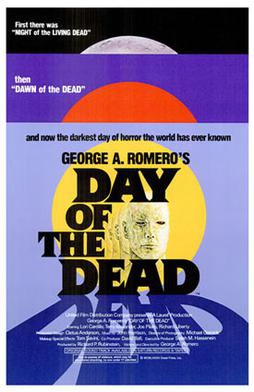
When we lived in New Jersey our internet wasn’t fast enough for streaming.  I’d watched George Romero’s Night of the Living Dead and Dawn of the Dead, but I was never able to find a DVD of Day of the Dead.  Well, it finally came around to streaming (thanks, Freevee), so I was able to complete the trilogy.  It doesn’t get discussed as much as the previous two, and it’s clear that it doesn’t come up to their level.  Still, the discussions of larger issues—God, civilization, and military power—are worth pondering.  There are a few jump startles but less intensive gore than the previous two, until well into it.  So, here’s the story: a base of operations has been set up in Florida where the military is overseeing civilian scientific experiments on the animated dead.  The military guy in charge is a real jerk and threatens to shoot those who don’t comply.  Also, there’s just one woman among them (who made that decision?).

As might be expected, things go haywire.  The head scientist, “Frankenstein” to this crew, is trying to teach the dead not to eat the living—to coexist.  The living are hopelessly outnumbered, and despite the Jamaican civilian, John, suggesting they go to a deserted island and start all over, everyone seems content to hang out and fight each other.  In the end, military overreach leads to everyone being killed except John, Sarah (the woman scientist), and Bill, who seems to be Irish.  In the end the three of them fly to a deserted island and you kind of get the idea that this will be a bit more of an R-rated Gilligan situation.  The film is campy and there is a comic tone throughout despite the serious issues raised and the actual horror elements (blood and zombies lurching out of the dark).

It actually also attempts to explain how the dead continue to move and why they eat with no internal organs.  The brain, down to its reptilian base, retains the eating instinct.  Frankenstein, before being killed by the military, is training the promising dead, especially Bub.  In the end, Bub kills the military guy.  As far as the story goes, it seems to send mixed messages.  The good guys do prevail and the dead, at least Bub, is more righteous than the fascist military that holds sway via constant threat.  One does get the sense that Romero was having fun with his zombie movies and some of the special effects were quite good.  I’m glad to have finished the trilogy, but I don’t think I’ll bother watching the remake, which was, back in the day, fairly easy to find on DVD.  They’re never as good as the dead they try to reanimate.


Another Level

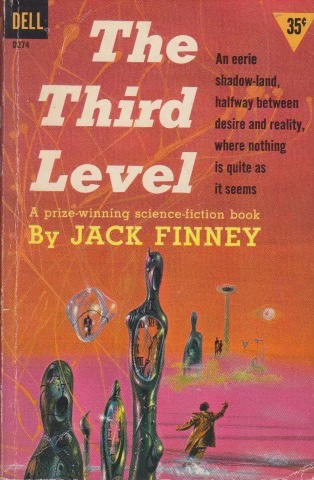
Jack Finney is probably best remembered as the person who came up with the idea for The Invasion of the Body Snatchers.  His book, The Body Snatchers, was the inspiration behind the two movies based on it, as well as various knockoffs.  The Third Level is a collection of short stories he wrote.  I’ve been trying to introduce more short stories into my literary diet, and this one was recommended by Stephen King in Danse Macabre.  Specifically, he mentioned it as being more like what The Twilight Zone should’ve been than much of what Rod Serling wrote.  Now, I’m an unapologetic Rod Serling fan.  This is based on memories from childhood when I watched the show and, let’s be honest here, wished he could be my father.  I already had a taste for the unusual and sometimes macabre, and so I was curious what King thought might do Serling better.

The Third Level was labeled as science fiction, but sci-fi and horror share more than a boundary or two and at least four of the stories have nothing sciency about them.  As a collection it’s good in the same sense as a mature reading of Ray Bradbury is good.  I would’ve liked this—probably loved it—as a kid.  I was reading, however, for The Twilight Zone.  There are some good twist endings here, but not all the stories have them.  A couple of them are pretty straightforward whimsical romances.  Many of them feel very much like they were written in the forties and fifties.  A couple of the stories, late in the collection, I really liked.  They were a bit more Zonish than some of the others.

One of the problems in writing a brief post on a collection—and no collection is uniformly great—is that it’s difficult to give a sense of the whole.  So instead I’ll just focus for a minute on the last story, “Contents of the Dead Man’s Pockets.”  This one shows the power of Finney’s descriptive writing and it caused physical reactions I seldom get when reading.  It involves a man climbing out on an eleventh-story ledge to reclaim an important bit of paper that blew out the window.  More than once I almost had to put the book down.  Fear of falling is deeply embedded in the human psyche and Finney is able to probe it for more pages than I was comfortable reading.  Well done, sir.  Overall, the collection is good to have read.  It won’t change my mind about the Zone, however.  It reached me a little too late to do that.


Oblong Box

When Borders was closing—a sad day in the annals of American readers—things were marked down.  On one venture to a remaining store somewhere in New Jersey, where the checkout line snaked like one of those around a Times Square theater before the doors open, I picked up Edgar Allan Poe Complete Tales and Poems.  Poe has, of course, been in the public domain for many decades so anybody can publish his works.  I did attempt to sit down and read through this behemoth that contains 73 short stories, but stumbled at “Hans Pfaall,” the first.  This story is really a novelette, in today’s measure, coming in at nearly 19,000 words.  (It took Tales of the Grotesque and Arabesque to get me through it.)  So I’ve been content to dip into it now and again to read one of Poe’s stories.  In print. When the mood hits.

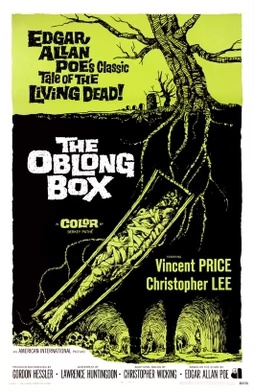
I read “The Oblong Box” in preparation for watching the movie.  I had never encountered this story before, and I prefer to read the base before attempting the latter adaptations (particularly by AIP).  The problem with reading Poe from this remove—in the light of his reputation—is that even the title tells us the box is a coffin.  How it is to be used in Poe’s tale may be unknown at first.  Here Poe divides his characteristic obsessiveness between the narrator and Mr. Wyatt, his temperamental artist friend who is newly married.  Wyatt, the owner of said oblong box, takes it on a voyage by boat from Charleston to New York.  The narrator obsesses over what might be in the box, being kept in a cramped stateroom rather than in the hold.  A storm leads to a shipwreck and rather than be rescued, Wyatt binds himself to the box and leaps into the ocean.  I won’t put the reveal here, but you get the idea. Today the title gives away Poe’s original twist.

There are still many of Poe’s stories that I haven’t read.  I’ve had enough of a head start, however, that I may eventually make it through those he published.  I’m aware that some of them may be funny, and some are tales of ratiocination.  Some may be completely unexpected.  Like many writers, Poe’s reputation is based on certain of his most well-known tales.  But also like most writers, his interest ranged fairly widely.  And he had that sense of “what if” that tends to drive those of us who write in a similar vein.  But these days we know that if we see an oblong box we’ll already have a pretty good idea of what’s inside.

Photo by Tom Oates, 2013; This file is licensed under the Creative Commons Attribution 3.0 Unported license. Attribution: Nabokov at English Wikipedia

Ending the Cycle

Curious to finish out the “Poe Cycle” of American International Pictures, I looked up The Oblong Box.  The only thing similar to Poe’s tale is the title, as viewers must’ve come to have expected even in 1969.  Poe was the marketing to sell the film, but not much more.  Okay, the theme of premature burial has Poe’s fingerprints all over it, but that’s not part of his story “The Oblong Box.”  Now, as for the movie, it has several subplots and a pretty high body count.  Its ending isn’t really explained, but after starting out as seeming racist, it comes out justifying the actions of the Africans at the beginning.  In the middle it’s a muddle.  Pacing is completely off and some sub-plots, such as the police investigation, are summarily dropped.  Apart from the positive view of Black people, which is important, the film is a confusing criss-cross of unsavory motivations.

The Markham brothers own an Africa plantation and the trampling of a slave by a horse leads to revenge on the part of the slaves.  The scarred brother, Edward, is driven insane and he escapes his brother Julian’s care by being buried alive.  Grave-robbers, however, want him so Christopher Lee can experiment on his corpse.  Edward escapes again and dons a scarlet mask, but his insanity leads him to kill a variety of people, looking for the witch doctor who can cure him.  Meanwhile, an unscrupulous lawyer is cashing in on the brothers’ wealth but ends up being killed by Edward.  There’s a rather pointless bar fight, and, after killing Lee, Edward and Julian finally face off with Edward getting shot but biting his brother before he dies.  The witch doctor raises Edward from the dead, buried in his coffin, and Julian now has his brother’s scarred face (and presumably, his insanity).

The movie was the first to feature both Vincent Price and Lee.  The film had a change of directors, pre-production, and a script that was added to by another writer.  The plot verges on tedious and it’s difficult to feel sympathy for any of the characters, apart from the women, who don’t seem out to hurt anyone.  Price (Julian) also plays a “good guy” until the reveal near the end, but Edward dominates the screen time, all the while wearing a mask.  The “Phantom of the Opera” reveal is shot in the dark, however, and the results are not so grotesque.  And those who’ve read Poe’s story wonder where the ship might be.  This is the only Poe Cycle film not directed by Roger Corman, and he, as well as Poe, are both missed.


Shocking Story

Much of life, it seems, we got right in childhood.  We “grow up” only to learn that others are always right about any multitude of things.  Then you reach an age when you realize, “I was right the first time.”  All of which is to say I’ve been thinking about my childhood.  It has some commonalities with horror writers who are well known, but even us obscure, private intellectuals experience similar things.  I was a middle child of three for about a decade.  My father was of the absentee variety and my mother, like most women, had greater coping skills than she realized.  But the fact is, with three kids there’s no way to keep an eye on them all at the same time.  I always felt my big brother got the privileges first and they were sometimes forgotten when it was my turn.  And my little brother got special attention for being youngest.  I developed that middle child mental map.

One day I was playing with the cheap microscope my mother had bought for us.  As kids, one of my fantasies was that I’d grow up to be a scientist.  Probably because of the Professor on Gilligan’s Island.  In any case, this microscope had a “reflection mirror” that was made of authentic plastic coated with something somewhat shiny and slightly metallic.  It illuminated nothing even in the strongest sunlight.  There was also one of those night-light bulb attachments you could use to provide weak, artificial light.  I plugged it in and tried to see something enlarged (I don’t recall what).  All you ever really saw through the eyepiece was your own eyelashes backlit by a yellowish circle of night light.  I went to unplug the bulb but accidentally grabbed the metal prongs.  I felt my body jerking and couldn’t control my hand to let go.  It probably lasted only a second, but felt like eternity, before I forced my fingers open and pulled away.  I don’t recall ever telling my mom about it, but I probably did.

That moment, one of the many scary parts of my childhood, comes back to me now and again.  It was a potentially fatal situation, which is pretty heady for a seven- or eight-year-old.  I knew that even as it was happening.  What stands out to me about it was that I was all alone when it occurred.  The childhood lesson I learned, to which I’d had introduced many times before, is that life is scary.  I came a long way in the next half-century to overcoming my fears.  But they still lurk.  And I realize that I have quite a bit in common with horror writers who’ve been better able to make use of their childhood fears.  It’s worth thinking about.


The Next Phase

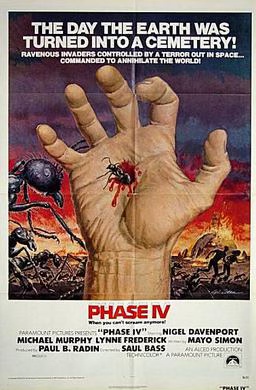
Sometimes I get things backwards.  You have to understand that in the pre-internet era finding information was somewhat dicey.  Those of us from small towns had limited resources.  The movies I saw were on television, with a rare trip to the theater being a treat.  Books, on the other hand, could be had for a quarter or less at Goodwill.  There I found the sci-fi horror Phase IV by journeyman writer Barry N. Malzberg.  I knew there was a movie, which I hadn’t seen, and I assumed it was based on this novel.  Actually, the book was a novelization of the movie.  But it’s more complex than that.  The movie was based on an H. G. Wells story, screen-written by Mayo Simon, then novelized. That novelization made a real impression on me as a kid and I knew that I would eventually have to see the movie.

Some scenes from the novel were still alive to me before watching the film.  It occurs to me that maybe you don’t know what it’s about.  Intelligent ants.  Some cosmic event boosts ant intelligence and two scientists are sent to Arizona to sort it out.  A local family ignores an evacuation order, and when one of the scientists destroys the oddly geometric anthills, a war is on.  (I remembered the destroying the anthill scene.)  The war is both of might and wits.  Meanwhile the family is attacked—I remembered the scene of the ants eating the horse—with only a young woman surviving.  She’s found by the scientists after the first pesticide is released.  The ants attack, intelligently, the research station.  We never do see the expected ants popping out of Dr. Hubbs’ infected arm, but it’s clear by the end that the ants have won and we’re living in Phase IV.

A few observations: this is a scary movie, even if seventies’ fare.  The sci-fi elements dampen the horror down a bit, but it is still scary.  And it also references religion.  I watched the movie a few weeks after seeing The Night of the Hunter for the first time.  What does a Depression-era serial-killing preacher have to do with ants?  The hymn, “Leaning on the Everlasting Arms.”  Now, there’s a project out there for someone inspired by (if such a thing exists) Holy Horror.  Is there a discernible pattern of how hymns are used in horror?  I suspect there is.  That hymn is used so differently in these two movies that I’m convinced something deeper is going on.  If you’re interested, the idea’s free for the taking.  I’ve just spelled out two of the movies for you.


Escape Room

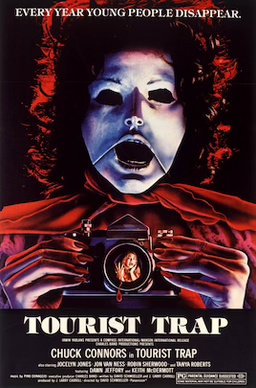
I didn’t go out looking for horror films in 1979.  I knew about Alien, of course.  Everyone did.  Even in a small town.  I didn’t see the movie until many years later, though.  I was still in high school and money was scarce (college was all either scholarship, loan, or work-study money).  If Tourist Trap ever came to town I didn’t know about it.  In fact, I didn’t know about it at all until reading Stephen King’s Danse Macabre.  Enough time has passed that the movie is now streaming for free and, indeed, it is David Schmoeller’s first film.  Critics didn’t love it, but King thought it had some appropriate eeriness, so why not?  It isn’t horrible—I’ve definitely seen worse.  And movies with animated mannequins hit that uncanny valley at just the right angle, even if poorly written.

The story’s a bit convoluted.  Five young people are on vacation and get drawn into, well, a tourist trap.  There’s a fair amount of psychokinesis that goes on, and the tourist trap is Slausen’s Lost Oasis, which is filled with animated wax-work figures/mannequins.  These are what make the film creepy.  As the plot unfurls, the kids get killed off, one-by-one, as horror viewers come to expect.  There is a bit of a “reveal” toward the end, so I won’t spoil it.  It is fair to say that insane antagonists were fairly common by 1979 and that the blurring of real people and manufactured ones is a bit unnerving.  There are some questions of motivation, and many times the characters don’t take the obvious steps to help themselves.  Still, the movie isn’t too bad.

I was drawn to it, having seen Schmoeller’s real groaner, Netherworld.  And King’s recommendation.  There is something about movies that are lacking in undefined ways that keeps you watching.  I was curious how Tourist Trap was going to end up.  There were several points at which I thought I’d figured it out, only to be told, “but wait, there’s more!”  The more wasn’t always really worth waiting for, but the ending has a bit of a payoff.  There is some slasher aesthetic here, but it’s unconventional enough that you may at least be kept guessing.  The thing that the movie gets right is that human figures that aren’t human are scary.  Many films play on this, of course.  Even if you’ve seen others, it still tend to ramp up the shudder factor a bit.  It only took four decades for me to stumble into this tourist trap, and it was a reasonable brief vacation from reality.


After Daytime

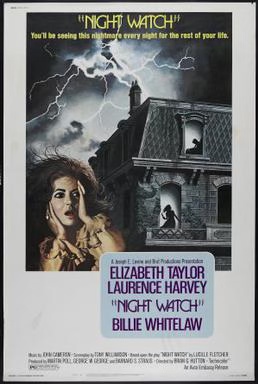
When you’re looking for freebies to watch, it helps to get some advice of what to see.  Particularly if it’s older (and more likely to be available).  I hadn’t heard of Night Watch until I saw it in Stephen King’s Danse Macabre list of really scary movies.  Granted, this was nearly a half century ago and many horror classics had yet to come.  Still, I was surprised at just how “ho-hum” Night Watch was.  Yes, it has a twist ending that makes some of the foregoing less credible, but that little hook was kind of neat.  Otherwise, the pacing is slow and the characters largely unsympathetic.  And scary it is not.  Granted, had I seen it as a young man in a theater, that might’ve made a difference.  I know that Fatal Attraction really bothered me in those circumstances.

The story of a rich couple with a traumatized wife and an unfaithful husband, it has trouble garnering the sympathy of some viewers.  Elizabeth Taylor’s acting is pretty good, and the setting (lots of British thunderstorms), and some good, creepy music do help the mood.  And if you’ve seen Rear Window and Gaslight a bit of this will look familiar.  Taylor’s character thinks she sees a murdered person in the adjacent house and as her hysteria increases nobody will believer her anymore.  Of course, her husband is having an affair with her best friend (who is living with them), so what could possibly go wrong?  The movie’s generally not considered horror, although a number of King’s favs aren’t.

That got me to thinking about what the scariest movies would’ve been to me back then.  Keep in mind that most of my childhood fare was Saturday afternoon monster movies.  If we move it ahead a few more years, say to the early-mid eighties, I was in college and saw more that was properly scary.  Of course, I didn’t see the really scary stuff until I lost my job at Nashotah House.  So by the mid-eighties my scare list would have included Jaws, A Nightmare on Elm Street, Psycho, and a Dracula movie that I didn’t catch the title of and for which have been trying to locate the specific scene that really set me off.  Oh, and The Cross and the Switchblade.  I was a child with many obvious phobias, and my mother didn’t allow really scary viewing.  A couple episodes of The Twilight Zone really bothered my young psyche.  Perhaps I need to put together a post on movies I’ve seen since then that fall into the Danse Macabre time frame.  There’d definitely be things scarier than Night Watch in there, I assure you.


Gray Matter

It seems to me that I was living in Boston the last time I read Oscar Wilde’s The Picture of Dorian Gray.  That was long enough ago to have forgotten almost everything except the central premise that everyone knows.  Recently, I had been reading some analysts who consider it a kind of horror story.  Wilde was a great and notable wit, not typically cited as a horror writer.  More recently I’d seen the novel classified as dark academia.  Since there are no students, and there’s no school in the novel, that genre seems forced.  In any case, it is a classic and I was curious about what I had forgotten.  The dialogue regarding morals stands out rather boldly, with traditional Christian values being the gold standard.  In his own life Wilde was known to flaunt these things, but in his story they stand mostly unchallenged.

At the same time, it is a book about seeking redemption.  Toward the end, Dorian regrets the lifetime of evil he’s led.  He wants to turn over a new leaf.  Corrupted from an early age by Lord Henry Wotton, he learned to live a cynical and self-centered life.  He shut out the feelings and needs of others for his own pursuit of pleasure.  As an old man still appearing young, he comes to have his regrets.  Although Wilde didn’t really live long enough to reach this stage in his own, he seems to have understood psychology well enough.  He even tried to have a half-year Catholic retreat.  Length of life often trails regrets in its train.  Of course, for Gray it is too little, too late.  He has made his mark on the world, but it hasn’t been for good.  His final act is a stab at redemption, but the novel gives no hint whether he achieved it or not.

Whether intentional or no, the novel considers the fact that we all wear masks.  And we do so for much of the time.  And there is a bit of horror involved in discovering that we aren’t who we pretend to be.  The real Dorian Gray was locked away in an attic room while his life of dissipation  led to the ruin of many.  The witty dialogue maybe makes this a comedy horror.  At times it seems to get in the way of the mood of the story, but it never stopped the novel from making a similar impression to the nearly contemporary Dr Jekyll and Mr Hyde.  Late Victorians knew something that we, as a society, seem to have forgotten.  The attics of some prominent individuals surely have portraits that belie their appearance on the ubiquitous screen.


Not Plan 9

Dementia 13 is a strange little movie.  It’s Francis Ford Coppola’s directorial debut, and it was produced by Roger Corman and released by American International Pictures.  Like many Corman/AIP movies, it was low budget and quick.  It seems that Corman had some money left over in the budget from a previous movie and he offered Coppola the opportunity to direct a film shot quickly and funded by the leftover funds.  With a script written in three days (and it shows), he set out to film what was intended to be a Psycho knock-off.  The title might give that away, although I’m not sure what the 13 has to do with it, other than being “unlucky.”  Shot in Ireland with mostly American actors, the film is suitably gothic, but the original start to the movie is a red herring.  So what’s it about?

A rich heiress has never recovered from the death of her young daughter, who drowned in the rather sizable pond on the estate.  One of her three sons dies early in the film, setting up a subplot that goes nowhere.  The two remaining sons, unaware of their brother’s death, keep the ritual of the annual acting out the sister’s funeral.  While the widow of the deceased son tries to work her way into the will, she is axe-murdered, bringing this into the horror genre.  The family doctor suspects something’s wrong (although viewers are led to suspect him), and finally solves the crime after another bit character is beheaded.  Part of the problem is the film is too brief to develop the ideas properly.  Released at only 80 minutes, with a 5-minute gimmicky prologue, you really don’t have time to absorb the psychology of the characters.

The influence of Psycho is pretty obvious, the wet woman slowly chopped to death while in the water, is the scariest scene in the movie.  It’s shot in such a way that it’s not obvious that she’s actually being struck until the end of the act (a budget thing, I suspect).  The wealthy widow drops out of the story as the family doctor becomes the self-appointed detective.  Of course, the previous deaths have been undetected, so no actual police come.  In sum, creepy (but not too creepy) Irish castle, siblings working at cross-purposes, a scheming daughter-in-law, and the irruption of the past into the present, along with the black-and-white filming, ofter a quick gothic thrill.  Otherwise, it seems more like homework than an example of foundational horror, but still, it has had inspired a remake, and that’s saying something for a three-day script.


Not Alice’s

Sometimes I forget that movies are entertainment.  I mean, they’re big business and make some people obscene amounts of money.  In that respect they’re serious.  And also, they literally get into our heads and become part of our life’s experience.  Horror films, whatever that means, are often intelligent and thought-provoking.  I’ve been focusing on genre for a while now and when a friend recommended Willy’s Wonderland, and it was on one of my streaming services, I said “why not?”  This is entertainment, but the genre is all over the place.  Comedy, yes.  Fantasy, check.  Thriller, okay.  Action, definitely.  Horror, I’ll buy as well.  Nicolas Cage movie?  Well, he doesn’t look like he’s in his mid-fifties, and he doesn’t say a word in the whole thing.  The movie has possessed animatronic animals.  Satanists.  Small-town conspiracy.  Teens getting themselves killed.  And “one tough hombre.”

So what’s it about?  Hayesville has made a deal with the Devil.  A serial killer started an entertainment restaurant for kids’ birthdays, but along with his associates, began, well, killing.  Before the police could get them, they committed ritual suicide in a satanic pact, and they were permitted to inhabit the animatronic creatures.  When they weren’t fed, the machines started preying on townsfolk, so now they trap passersby and trick them into spending a night in Willy’s Wonderland so the machines can feed.  Cage’s unnamed character shows up and spends the night cleaning, killing machines, and playing pinball.  A young woman whose family had been killed tries to burn the place down, but, with her friends dead, and Cage leaving town after the carnage, she goes along for the ride.  It’s one of those movies that defies genre conventions.

As with many films released early in this pandemic, this one had a tough time at the box office.  I’d never even heard of it until the friend’s recommendation.  Lots of movies just disappear, but this one has at least the beginnings of a cult following.  It’s not difficult to see why.  If you can put up with the slasher aspect, it has quite a lot going for it.  Creepy kids’ stuff, children’s songs, and tawdry attractions are something we all experience in our own lives.  And a guy who goes around doing good—cleaning up other people’s messes, is something I think we tend to appreciate.  As a former janitor myself, I like the idea that the cleaning crew is the one who, well, cleans the clocks of the mechanical villains.  It’s a wonderland worth visiting.


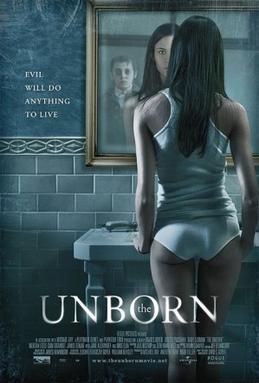
Re-Unborn

Some months ago I wrote a post about the possession movie The Unborn.  I don’t watch movies to pass the time.  I watch them to learn something.  And many horror movies are fairly smart.  In my blog post on this one I didn’t go into too much analysis because I already knew at that point that I wanted to share my thoughts on the larger venue, Horror Homeroom.  My piece, “Ecumenical Exorcism in The Unborn” has just been posted there.  The fairly small number of regular readers I have know that I post about horror movies with some frequency.  They help me to make sense of things, especially in this insane world where petty dictators keep rising to the top of the political spectrum because, apparently, we hate ourselves so much.  Horror helps prepare you for that.

In any case, The Unborn is a good example of how religion and horror work together.  They cooperate very nicely, in fact.  Religion is pervasive enough in horror that it would be an error to say “religion-based horror” is a sub-genre of the whole.  No, the two go together as naturally as chocolate (vegan, preferably) and peanut butter.  If I had a million dollars I might go back to grad school to explore just this nexus.  (I wouldn’t be looking for a teaching job either, because “fool me once, shame on you; fool me twice…”)  I’m not the only one who knows that there’s something there.  Ironically, before horror films proper were even invented, many churches actively discouraged the movies.  Perhaps they were inherently aware that these represented competition.  And there was already too much competition, what with other denominations and all.  But some films do occupy the same space as religion.  Quite often horror.

If you’re interested in how The Unborn fits into this picture, head on over to Horror Homeroom.  And yes, there is a book-length project in all of this.  It’s one I’ve been chipping away at for years.  That’s because the connection is obviously there, but I haven’t, to my own satisfaction, been able to figure out exactly what it is.  Perhaps I need to add a degree in psychology to my bucket list.  These things meet similar mental needs for a cross-section of people.  I suspect that most horror fans don’t think about it too much, which may be why my blog isn’t exactly jammed with traffic.  That doesn’t mean that the connection’s missing.  There are many things in life yet to be discovered.


Suitable Genre

As I muse over genres, it seems that “low-budget Lovecraftian horror” might be an—ahem—suitable one.  This is perhaps because Lovecraft has trouble being taken seriously as a literary writer and his stories are so easily parodied.  I watched Suitable Flesh unaware that it was a Lovecraftian (low-budget) movie.  I’ve seen quite a few of these over the years and they can be pretty fun.  This one was somewhat enjoyable.  Based on Lovecraft’s “The Thing on the Doorstep,” it’s a body-swapping, possession fest that involves two psychiatrists who have been friends forever but who both become victim of a nameless possessing entity.  It took some adjusting to believe Heather Graham in her lead role here—she doesn’t strike me as the Lovecraftian type.  She does seem to enjoy her role, nevertheless.

Lovecraft famously didn’t write many women.  He was xenophobic and a racist.  He didn’t much enjoy being married.  Modern films (and even novels) based on his works tend to redress this situation, sometimes creating a little disconnect with the white-male Lovecraftian universe.  Still, the story is fun.  Dr. Elizabeth Derby (Graham’s character) encounters a young man whom she supposes is schizophrenic.  In actuality, his body is being taken over by an entity that had possessed his father.  While possessed, the patient begins an affair with Dr. Derby and that leads to her also being a target of possession.  Although not considered a comedy it does seem that part of the story has an inherent humor about it.  Some consider it camp.  Lovecraft’s mood is difficult to translate to film.

Although cinema existed during Lovecraft’s lifespan, his writing wasn’t influenced by the possibility of film conversion.  The monsters are too enormous and the concepts too broad.  The real fear here, apart from the gross-out effects, is that of losing your identity.  The whole centers around a psychiatric ward where the supernatural events aren’t really accepted by the science that reigns.  People end up dying because the supernatural is inadmissible.  In this aspect, it shares some of the overarching concepts of some great horror.  The Exorcist, for example, derives a great deal of its energy from the fact that modern people have great difficulty in accepting that a demon could actually exist and science doesn’t seem to be working.  There are plenty of other examples of this.  Lovecraft’s stories bring us close to this realm, although Lovecraft himself was an atheist.  Maybe that’s one of the reasons his works are difficult to translate to film.  Or maybe something larger is going on.