Love’s Life

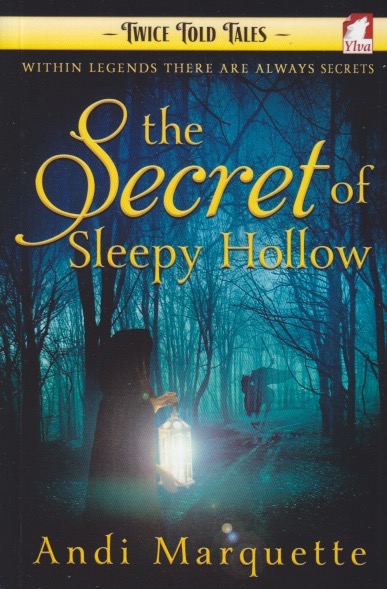
One of the things about literary classics is they open themselves to reinterpretation.  It’s often a lot of fun to trace these.  Andi Marquette is obviously an educated writer.  Her The Secret of Sleepy Hollow is one of those reinterpretations that has a unique take on the tale.  Set in modern times and featuring a member of the Crane family—Abby—as a graduate student, this story brings the tale into a contemporary context.  Abby meets another graduate student—Katie—in Sleepy Hollow and the two fall in love.  It turns out that Katie is a member of the Van Tassel family, thus bringing the two main families of Washington Irving’s “Legend of Sleepy Hollow” together again.  There’s even a headless horseman.

Like the biblical book of Ruth, this is a gentle tale of women’s love.  There’s no overt violence, no heads get chopped, but two women love and care for one another.  Many of the more modern repackaged versions of Sleepy Hollow tend to go for the violent, sometimes drug-fueled tales of bored youth in a small town facing an angry ghost.  Here the interest is more literary, a gothic romance.  The fact that it’s a lesbian love story makes me wonder why so many people have trouble with others’ love lives.  People are prone to curiosity about sex—that’s a simple fact.  What isn’t so simple is that mores based on culturally specific ideas from millennia ago don’t stand the test of time and yet cause misery in modern lives because they can’t accept what we now know—sex and love are anything but simple.

Marquette’s book is marked by that anxiety.  When people discover a love that’s often misunderstood, they face ridicule or worse.  The book of Ruth provides a good guide here—the acceptance of a normally forbidden love can bring good and happiness to people in what is often a difficult world.  There’s trouble enough—there are headless horsemen out there—that we don’t need to be causing more by judging the loves of others.  Even a cisgender heterosexual can understand that.  Life is complicated and we all try to find our way through.  Love is one of those things that can help to make it more bearable.  I found The Secret of Sleepy Hollow compelling in that way.  It may not be a literary classic—few books are—but it takes on a complex topic intelligently and with heart.  It’s a new take on an old story that still fits the modern world.

Monster Bride

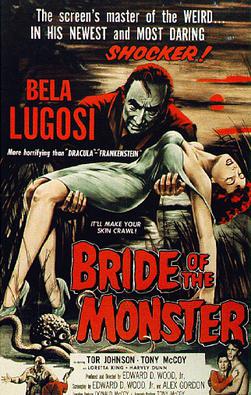
I’ve been taken with Ed Wood lately.  It’s quite possible, lost somewhere in my memory banks, that I saw one of his movies as a kid.  If I did it would’ve been Bride of the Monster.  Just in case I hadn’t, I decided to watch it again.  As I’ve noted about Wood before, I admire someone who persists in the face of constant criticism.  Someone who refuses to back down, even if they end up alcoholic and dying too young, in poverty.  Now he’s coming to his deserved recognition.  Even if his movies weren’t intentionally bad, when I laugh out loud I’m not laughing at Ed Wood.  No, it’s the absurdity of fame and the price it both expects and exacts.  Wood paid that price and now that it’s too late he’s grown a considerable fan base.  Or maybe it’s never too late.

Bride of the Monster brings Bela Lugosi back to the screen as a mad scientist.  Rejected and mocked (I’m sure some of this was personal), he locates an isolated swamp house from which he plans his revenge on the world.  He’s somehow managed to build a nuclear reactor in his hidden lab and he intends to make a race of giants to conquer the earth.  Naturally enough, he starts with an octopus.  As the story unfolds, we learn that he was also responsible for the Loch Ness Monster.  He’s employed a human (but somehow bullet-proof) henchman, Lobo, to help him in his quest.  When a nosy reporter and her police detective boyfriend get involved, well, you might imagine the results.

The stories behind Ed Wood films, it seems, are as entertaining as the movies themselves.  This one, for example, has as its protagonist an acting unknown (Lugosi was the name draw).  Tony McCoy was the son of the owner of a meat-packing plant.  He received the lead role as part of his father’s stipulations for funding the movie.  Another stipulation was that it had to end with an atomic explosion (which it does).  Wood would go to any length to see his movies made, even agreeing to casting choices and plot points made by those who had no other connections to the film.  That’s part of the charm of Ed Wood’s movies—they were made to order.  And they demonstrate that deepest of human desires—to tell a story.  If I didn’t see this as a kid, I would’ve loved it if I had. 


Off with Their

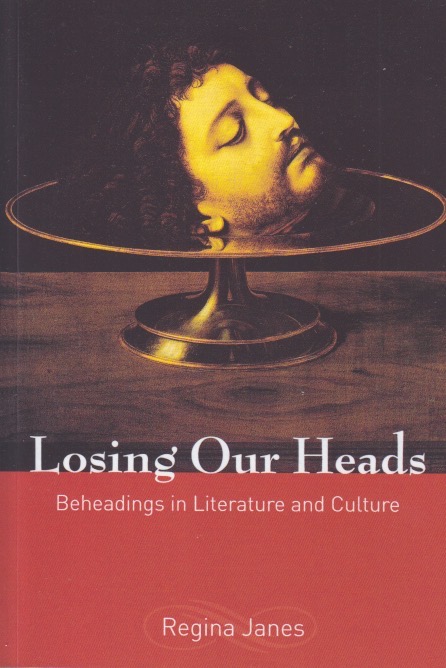
“Heads, I win,” is common enough as a call for flipping a coin.  That element of chance plays through Regina Janes’ Losing Our Heads: Beheadings in Literature and Culture.  You see, John the Baptist has a lasting place among the beheaded—indeed he’s featured on the cover of the book.  And since Janes is looking at the topic in literature and culture, you can’t very well leave John out.  I wonder what it says about humanity that there are so many other possible examples to include that this book is a mere sampler.  Applying literary theory to the process, it becomes, well, theoretical at points, but still it’s an eye-opening book.  Even if not always comfortable to read.  The first few chapters, which cover the development of European beheadings, aren’t sweetness and light.  There’s more happening here than meets the eye.  These heinous acts set the stage for symbolism, however.

The material on John the Baptist is fascinating and insightful.  It’s ironic, in some ways, that Jesus’ cousin is perhaps most famous for being beheaded.  He also sheds light on his more famous family member through literary parallels.  And, of course, it doesn’t end there.  The idea gets picked up and explored by others in various art forms.  You don’t really want to look, but since they’re there in the illustrations, you do.  Then the book moves on to African stories.  Playing off Conrad’s Heart of Darkness, Janes gives voice to African authors who explore beheading within their own cultural contexts.  All this goes back, historically, much further than John.  Indeed, beheading is part of very early myths as well.  It does make you stop and think.

I read books like this looking for clues.  There’s a larger object in mind.  And some of the insights I found were in examples afforded only a paragraph here or there.  I read this book because of a journey of which a colleague sent me through an innocent enough discussion.  There’s a reason we talk of excitement as “losing our heads,” and for some of us that excitement is research-laden.  Naturally squeamish, I’m an odd one for watching horror.  There’s something more to find here, however.  Although gruesome at points, you learn something from wandering through this museum of heads.  And when looked at through different lenses (of course, Freud is there) new perspectives emerge.  Beheading is violent and yet it’s been a part of human culture for a very long time.  There’s much to ponder here.


Too Haunted

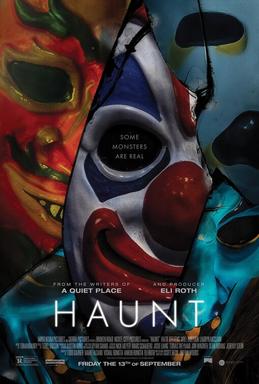
It’s past the season, I know.  But I have no control on when streaming services acquire new titles.  So it was winter by the time I saw Haunt.  Maybe it was the seasonal disconnect, or maybe I’m not all that fond of slashers—whatever the cause, I found it disturbing.  As a horror watcher, I really don’t like being afraid during movies.  And Haunt has those most troubling of characters—the unpredictable kind.  So let’s set this up properly.  Six young people—four women and two men—decide to visit a haunted house attraction on Halloween.  Although they take a random turn on a rural road outside Carbondale, Illinois, they end up at a haunted house attraction, with an illuminated road sign.  I’ll admit it; I don’t like fun houses.  They scare me too much.  So when the creepy clown at the entrance indicates, nonverbally, how they get in (taking no money) and puts their cell phones in a lockbox, I’d have told the others I’d wait in the car.

As we might expect, since this is horror, after a fakey plastic skeleton and some cheap props, it turns our that the terrors are real.  One by one, the young people are killed by a group that practices extreme body modification to make themselves look like real monsters.  For an unexplained reason, they kill everyone who comes to the attraction.  Sadism, one suspects, might be behind this.  In any case, it ends up with a final girl and final boy making it out alive and seeking medical attention.  The haunted house is burned down since Harper, said final girl, and her new boyfriend end up killing most of the killers.  The creepy clown, however, survives to try to hunt Harper down.

The film received pretty high ratings, but it seemed to me there wasn’t much beyond the terrors I normally experience at a fun house.  The body horror verges on torture porn, which is a sub-genre that I simply do not like.  In fact, I only watch it by accident.  My dilemma is that I don’t like to read summaries or watch trailers before seeing a movie.  I prefer to approach it fresh.  I suppose that’s why I keep a list of films that others have recommended, so I know they’re likely good.  I prefer intelligent horror rather than shock horror, although the two can overlap.  Movies that focus on the the pain humans can inflict on each other aren’t the kind I prefer.  Give me a garden-variety monster any day.  Even if it’s a winter weekend, and not Halloween.


Recalling the Story

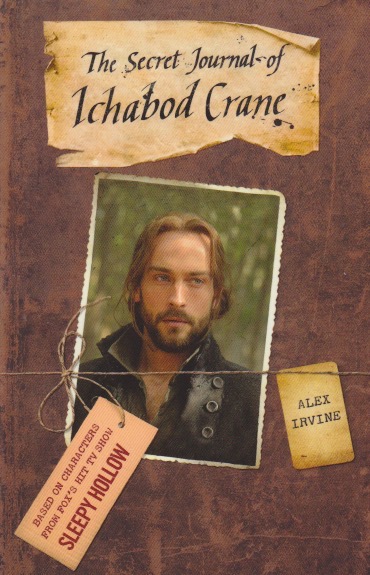
Remembering how a story goes.  That’s one of a book’s functions, particularly if a tale’s complex.  Running a season behind, I was one of those enamored of Sleepy Hollow when it first aired from 2013 through 2017.  In fact, that was the first story that I tried to explore, somewhat academically, in the horror genre.  At the time I hadn’t realized how many spin-off media had come out, based on these new characters.  I recently read The Secret Journal of Ichabod Crane in which Alex Irvine provides the service of summarizing the first season through the conceit of the main character’s secret diary.  It has to be secret because in the series he’s never shown keeping a journal, and the title explains why we’re just finding out about this now.  (Or then, since it was published while the series was still on the air.)

Reading it reminded me of just how complex the plot was.  I suspect that’s one reason so many people were taken with it.  Week-to-week you weren’t sure where it was going.  And the plot integrated religious themes from the first episode on.  That’s what first drew me to my current research trajectory.  The show wasn’t perfect, and some plot elements grew tired after a while, but overall it was compelling.  Mixed with the natural comedy of someone from centuries past trying to learn how to get along in a rapidly technologizing world provided light moments amid the death and bloodshed.  And, of course, the pairing of the patrician but progressive white man with a young black professional in the fight against evil was novel and necessary.

Irvine’s book is rather like the novelization of a movie.  In terms of hours, however, a television series outstrips the maybe two hours of a typical film.  A lot has to be left out, including scenes in which Crane wasn’t present, although he was pretty steadily in the camera’s gaze.  Initially suspected as a criminal, he had to be kept under pretty close watch, so his was a good perspective for a journal.  Its secrecy continues the trope of hidden documents that ran throughout the series.  Another aspect was that it addressed the Hamilton era when that show was becoming immensely popular.  And Sleepy Hollow was quite literary, with references to books from early writers.  There was a lot to like about the show.  It burned itself out in four seasons, though, and after season two there would seem to be little need for any further secret journals as the story grew even more complex.  This one, however, is a good reminder of how the story goes.


Fostering Euro-Horror

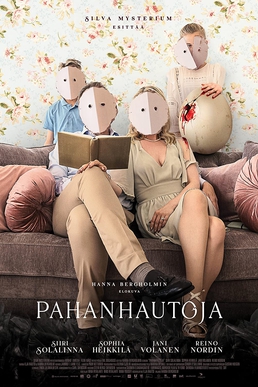
In another example of Euro-Horror, Hatching is a remarkably effective monster movie.  Filmed in Finnish, and set in Finland, it’s a remarkable parable about families and what we reveal to the world.  An affluent family consisting of Mother, Father, Tinja, and her brother Matias, live in a beautiful house in a nice neighborhood and Mother prospers with a blog about the ideal family life.  She videos the family, especially Tinja as she prepares for a gymnastics competition.  Then a crow gets into the house, causing chaos and bringing the true nature of the perfect family to the surface.  When Mother breaks the crow’s neck, reality seeps through the internet myth of perfection.  Tinja, disturbed by what happened to the bird, locates its egg and brings it home to care for it.

Mother, it turns out, has been having an affair.  Father is shown as caring, but ineffectual.  Matias has anger issues.  Meanwhile Mother drills Tinja in gymnastics practice until her daughter’s hands are raw and bleeding.  The egg grows.  Mother confesses to Tinja that she’s in love for the first time and for real.  She begins spending weekends at her lover Tero’s house.  The now huge egg hatches into a Tinja-sized bird-like creature, sparsely feathered.  As Tinja psychologically bonds with the creature, she hides it in the house and it becomes clear that what each feels what the other feels.  Over time the bird begins to become Tinja’s double, doing those things her “perfect daughter” image would never allow her to do.

The story is a parable.  Families uphold facades while the world pays to see perfection that doesn’t really exist.  Tinja isn’t terribly fond of gymnastics, but Mother drives her to compete.  Father knows about Tero, and pretends to be okay with the affair.  Mother spends her love elsewhere while her perfect family crumbles.  The monster in the movie is the revealer of truth.  The truth doesn’t broadcast well on the Internet, which prefers fiction passed off as fact.  Although the story itself could never happen, it is a probing tale that delves into psychology and the price we pay for not being honest about ourselves.  I won’t spoil the ending here, but let’s just say reality seldom works out the way that we hope it will.  Euro-horror has been producing some impressive films the past few years that demonstrate the intellectual side of horror quite well.  This may be offer body horror—without becoming slashers—because they have messages waiting to hatch.


Creepy

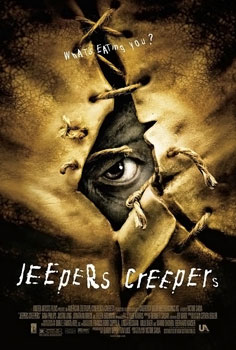
There’s some symbolism here that I haven’t had time to sort out.  (Some of us need time to just sit and think—time that work won’t allow.)  I’d been wanting to watch Jeepers Creepers for quite some time but streaming services said it was unavailable.  I suspect that was because a sequel has been running in theaters and those who own the rights want to capitalize on it.  So it goes.  When it finally did show up on Freevee, so you have to subject yourself to commercials, I had to see it.  Now I need some time to think.  In case you’re even slower than me, the film involves a couple siblings driving home for spring break when they encounter a monster/demon, Creeper.

Creeper smells peoples’ fear and consumes parts of those who have something it needs to regenerate itself.  The brother and sister encounter Creeper on one of those long stretches of road without civilization that you find in parts of America (in this case, the unspecified south).  I won’t spoil the ending, but for my money (or actually, Freevee patience), the first half is pretty scary.  The whole is not bad either.  So what do I need to think about?  Well, Creeper stores its victims’ corpses in a church basement.  The church is abandoned, but still.  This overlap between religion and horror is an aspect that has fascinated me time and again.  Shouldn’t a church be a safe place?  (For many of us, that’s a myth long debunked.)  Is it because it’s abandoned that a demonic monster has moved in?  Or does religious symbolism not bother it?  Or perhaps attract it?

Not only that, but the movie also has a prophet.  While she’s not called that, this local woman has dreams of things involving Creeper that haven’t happened yet.  Like Cassandra, however, everyone ignores her.  It seems that Jeepers Creepers experienced a budget cut during production that led to a rewritten, and cheaper, ending.  While I won’t spoil it, I will say that it is a bit of a letdown from how the film started.  A lot is left unexplained, but the story is pretty good and the acting, at least by the siblings, and the always entertaining Eileen Brennan, was impressive.  They have a way of conveying fear that’s believable and contagious.  The religion theme, however, appears to have been dropped once the church burns down.  It may be that it was somehow revisited in the ending that money forced to change.  Regardless, it is worth watching, and, if you have the time, pondering.


Bad Movies

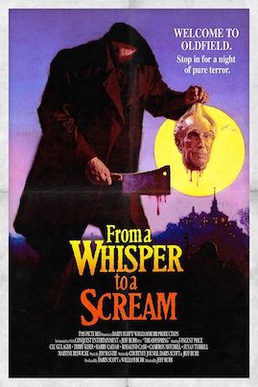
I watch bad movies so you don’t have to.  Maybe that’s my ticket to retirement (it certainly isn’t working the usual way).  In any case, my habit of trying to find something “free” on a network I already pay for often leads to films that keep me awake on a drowsy weekend afternoon, but really don’t offer much else.  Sometimes you learn something nevertheless.  I recently watched From a Whisper to a Scream.  It was free and got more than five stars out of ten, but I didn’t really work for me, even with Vincent Price.  A vignette movie, it presents four episodes from Oldfield, Tennessee, making the claim that it’s a place infected with evil.  The first involved necrophilia, with consequences.  The second—more in a moment—was about eternal life.  Lovecraft’s circus comes to town in the third, and the fourth is about the founding of the town during the Civil War.  Of course, the framing is a “bonus” mini-story as well.

The second episode, “On the Run,” has a wounded ne’er-do-well, shot by some southern rivals, falling into a swamp boat.  He’s rescued by an older African American who lives alone in said swamp.  Noticing him practicing hoo-doo (cue The Skeleton Key), the miscreant soon figures his rescuer has found the secret of staying alive forever (which he has).  Naturally greedy, the petty criminal “kills” the African American and ransacks his shack for the secret potion that keeps him alive.  Being horror, the dead come back and the owner of the shack returns to punish the white man who is trying to steal what he already has.  The Black man had given him the potion to bring him back to life.

There’s a bit of a parable quality to this particular story.  Each vignette predictably has the evil-doer punished, with the exception of “Lovecraft’s Traveling Amusements,” where the Black woman owns those who work her carnival.  And she gets away with it.  None of the characters, apart from the Black man in the swamp and the children in “Four Soldiers,” are really sympathetic.  Religion does also come in the Civil War segment since, drawing cues from Children of the Corn, the kids have created their own god.  So, a diverting film, if not a great (or even a good) one.  This was Vincent Price’s last true horror film, making it worth seeing for that reason alone.  His role is limited to the framing story which, as we might expect, becomes part of the collection of horrors from Oldfield.


The Young and the Headless

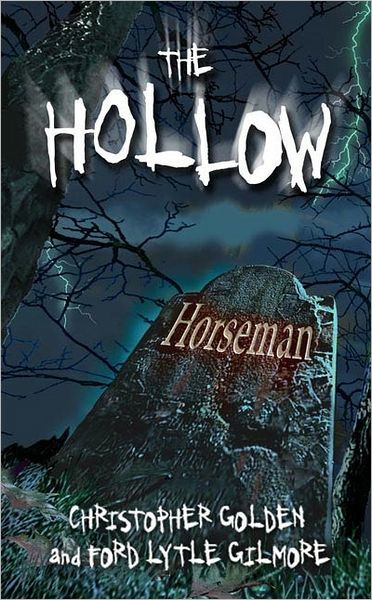
Young adult literature is sometimes fun to read as an adult.  In addition to going swiftly, compared to much “adult” literary literature, it has a way of evoking what life was like when we were younger.  Or at least it can.  Sticking with my Sleepy Hollow kick, I read the first volume of the series “The Hollow” (later “Sleepy Hollow High”) by Christoper Golden and Ford Lytle Gilmore.  This volume, Horseman, posits the return of the headless horseman to Sleepy Hollow in the modern day, triggered by the return of some of Ichabod Crane’s unknowing descendants.  The story follows brother and sister team Shane and Aimee Lancaster, who’ve just moved to Sleepy Hollow from Boston.  Although full of unexplained happenings, the book conjures the emotional turmoil of teenage years well.

While I normally try to read within my usual age level, the occasional foray into tween, young adult, and now, new adult lit is a fun escape.  One of the mysteries of aging—and I certainly didn’t think of this myself as a young person interacting with my elders—is that you remember what it was like to be at the various stages of life you’ve passed.  When you’re young you’re discovering things for the first time and there’s a revelatory aspect to them.  I can’t make universal claims, but in my experience life just gets more complicated the longer you live.  We yearn for the simplicity of younger times when, for example, you just paid the rent, went to work, fell in love, and did your own taxes.  As an adult you find all of these things hide complexities that often hide even more complexities within themselves.  Why not throw caution to the wind and spend a weekend reading a young adult novel?

I’m undecided about reading the rest of the series.  This story quickly drew me in, but the other volumes are now published only in ebook format.  And I suppose I should do some more serious adult reading as well.  Actually, I’ve been plugging away at a novel written for adults by an author my age, but it’s long and, well, involved.  Kinda like life itself, I suppose.  One of the things I’ve noticed about modern engagements with “The Legend of Sleepy Hollow” is that they tend to skew towards a younger crowd.  Maybe I can recapture a bit of my own youth that way.  I’ve known the story since my youngest years but have only recently really began to pay attention to it as, well, I guess I have to admit, an adult.


Expiration Date

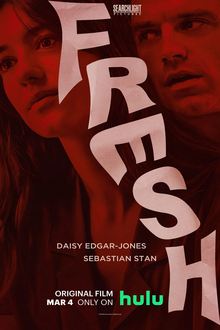
One of the perils of trying to understand others—something that is vitally necessary for a humane and civil world—is facing difficult truths.  Sometimes horror makes you do that.  I’ve recently been trying to watch horror directed by women, as this gives another perspective on what’s scary.  Directed by Mimi Cave and written by Lauryn Kahn, Fresh is very disturbing.  Noa is a young professional who’s not having much luck dating.  He best friend Mollie, who is African American, is the voice of reason in the film.  Noa finds internet dating services inadequate, matching her up with losers, but then she meets a handsome, funny guy in the grocery store.  She agrees to a date and they hit it off.  So far, so good.  Then he takes her to his place and abducts her.  He explains that he’s a supplier of human meat for an ultra-wealthy circle and she is to be consumed.

I won’t say much more about the plot since you may want to disturb yourself some day, but I will say that the movie reinforces something I get from reading Carmen Maria Machado:  women have to deal with men’s assumptions about their bodies.  Even the institution of marriage is all about ownership; men don’t want to pay (the key word) for supporting someone else’s child.  The nuclear family is intended to keep that at a minimum.  Just a glimpse at social standards reveals that men are held less accountable for cheating than women are, largely because there’s never a question of who someone’s mother is.  Noa’s captor is charming and nice.  He’s also a (as later revealed) Satanic psychopath.  He’s also also married, with children.

The film is disturbing on so many levels as it reflects on how a man feels he has the right, literally, to take women’s bodies.  Habeas corpus indeed.  It feels like being invited to dinner at Hannibal Lector’s house.  The religion element—for there often is one—is only revealed in two short glimpses.  One is the plate of one of the cannibals which has a Satanic symbol printed on it, and the other is a mid-credit shot of the butcher’s customers where the Satanic symbol reappears.  This theme isn’t really explored in the movie, but it is equated with “the one percent of the one percent.”  The clients are those who can afford anything and who crave the one thing they can’t have.  This is a movie to keep you up at night but it’s also one with a very strong social commentary.  That commentary is as disturbing as the entire premise of the film.


Local Haunts

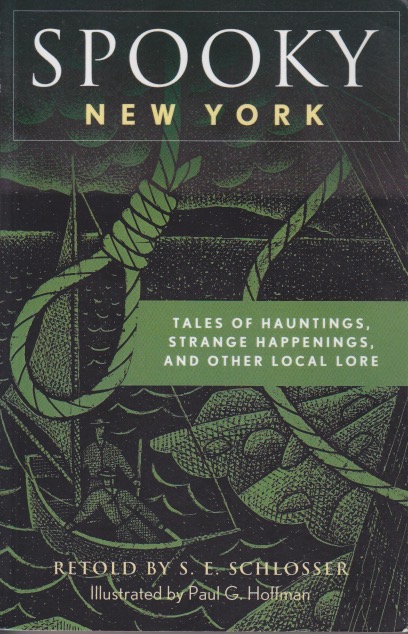
Local color.  It’s what makes travel so much fun, even if not to someplace exotic.  I’ve lived in five different states and two different countries and one thing each place had in common was local lore.  Since I’ve been a stranger in most places I’ve moved, I’ve picked the lore up primarily from books.  Fortunately there are as many people willing to write them for the also many people like me who are willing to read them.  S. E. Schlosser is a storyteller.  We have Rutgers University in common, but her book, Spooky New York, focuses on the state next door.  The book contains retold stories, or as the subtitle states Tales of Hauntings, Strange Happenings, and Other Local Lore.  New York isn’t unique in having such stories, and some of them are clearly regional variants—I heard some of them set in Wisconsin, for instance—but there’s a guilty pleasure in reading such accounts.

Although most of us are raised being told “there’s no such thing as ghosts,” that “truth” doesn’t stick for all of us.  I don’t know if any of the ghosts in this collection are real; folklore deals with that—shall we say—twilight zone that lies between quotidian existence and the weird.  Strange things do happen, but not on any kind of scientific schedule so they can be anticipated and quantified.  And some of them have been seen and reported by many different people.  These stories include such tales.  While they range the length of the state they concentrate in the east.  I’m sure, however, that if you spent enough time talking to the locals you could scare up ghosts from across the Empire State.

Many of the tales are set in New York City.  Having commuted into New York for about seven years, one thing became clear to me.  Even with the tall, modern towers and sophisticated, wealthy trappings, it can be an eerie place.  Around this time of year I would arrive in Manhattan well before sunrise.  Walking the predawn streets to the office showed Gotham in a different light.  Even the few times I went for lunchtime strolls to clear my head, I sensed there were millions of untold stories here.  Some gothic, some haunted.  Schlosser tells several such New York tales.  She includes some from literature but most of those probably go back to stories told by the locals before having been fixed onto paper.  This book will help set the mood, even if you live in the next state over, or anywhere that ghosts roam.


More Scary Stories

There might be a disconnect.  As a child the stories I had read to me were either Bible stories (Archway Books) or wholesome Easy Readers.  I think that was pretty typical in the sixties.  We didn’t have a lot of money but an abundance of respect for the Bible, so the former by far predominated in my literary experience.  As any kid will do, I thought this was normal.  There was a stir in the kids’ world two decades later, in the eighties, when Alvin Schwartz began compiling scary folklore and retelling it for children.  His Scary Stories to Tell in the Dark series has been challenged or banned from the start.  Most parents don’t want to admit that their kids like scary tales.  We didn’t direct our daughter’s reading much when she was old enough to pick Scholastic Books, and one time she wanted Scary Stories.

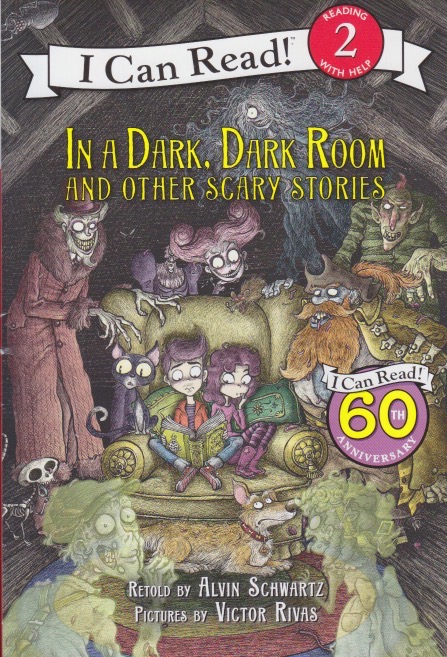
We were a bit shocked, not by that, but when a relative got us started on Roald Dahl.  His somewhat macabre children’s books were fine.  One of them, however—and I can’t recall the title—it’s packed away in the attic—was stories for older kids and it was so gruesome that I had difficulty making it through.  Not for me, but thinking about it from the perspective of a young child.  I recently had cause to read In a Dark, Dark Room and Other Scary Stories, again by Schwartz.  The copy I read wasn’t an original edition, but had illustrations, in color, by Victor Rivas.  I tried to think how scary such tales must be for kids who don’t know them already.  These illustrations were humorous, which helps, and tended toward Victorian or Edwardian style. Encountering such ideas for the first time, however, could leave an impression.

We tend to find olden times scarier than our own, it seems.  Partially this is correct, I suppose.  Science has helped us delay the inevitable by ameliorating many things that were formerly deadly.  At the same time it has helped those interested in such things to develop even deadlier weapons.  Mass shootings have become more common, to be mingled with the quotidian horrors of daily life.  Ghost stories hardly seem to be the most scary thing anymore.  I don’t know the answer to when kids are psychologically ready for scary things.  I still recall our neighbor—she was a few years older than we were—telling my brothers and me scary “true” stories that happened in the woods just across the street.  Those were in the “innocent” days before printed ghost stories for kids, but they gave me nightmares even so.  It was, however, the machinations of “Bible believers” that led me back to horror as an adult.  It’s kind of a disconnect.


Pumpkin Season

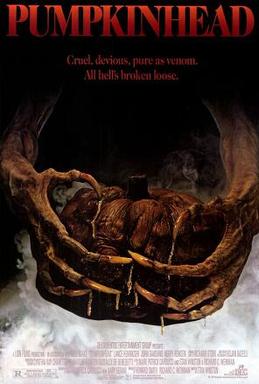
A creature feature with a moral.  Not a bad way to think through ethical dilemmas.  You see, we don’t have a lot of extra money lying around, so when I need a pick-me-up I try to find something free to watch.  Well, free because I subscripted to Amazon Prime years and years ago for the free shipping and now it involves “free to me” streaming on select titles.  Often I learn about movies from browsing and that’s how I came across Pumpkinhead.  I’ve learned my lesson about just clicking through without checking it out ahead of time.  It turns out the Pumpkinhead, apart from having major studio backing, was pretty favorably reviewed back in 1989.  My wife and I were in Edinburgh at the time, newly wed and trying to concentrate on doctorates.  I hadn’t been bumped back into horror yet.

In any case, what is this moral?  What is this movie?  Set in the unnamed rural south, the movie involves the accidental death of a good, honest man’s son.  Some city slickers, hot rodding on dirt bikes, accidentally run the boy down.  This good man visits the local witch, against the advice of the locals, and she raises a demon for him—the eponymous Pumpkinhead—to get revenge on the meddling kids.  The moral comes in where the witch warns him that such revenge comes at a terrible price, and it does.  The man and the avenging demon begin to merge and his desire for revenge leads to his own demise.

Religion plays a role in this film as well.  One of the locals, wanting to help the final girl and her boyfriend—the only ones left alive out of the six city folk—takes them to a ruined church, figuring that a demon won’t enter hallowed ground.  He’s not exactly right about that, but an extended shot of the religious imagery makes you think about the nature of revenge and what it means in a Christian context.  Besides being the first film role for Mayim Bialik (only 13 at the time), it also spun off two sequels.  Being a good student at the time, I was completely unaware of all of this.  I learned about the film while trying to stay awake one winter afternoon and trying not to spend any money to do so.  Not a great movie, it nevertheless does feature repentance and it explores the consequences of being driven by a desire to get back at others.  And the monster isn’t bad either.


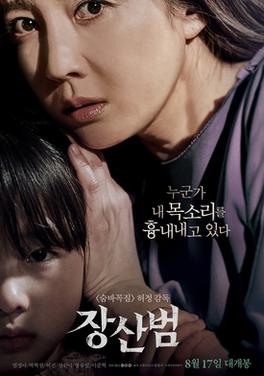
Urban Tiger

Many things are universal.  Ghosts, for example.  What ghosts do and how they behave, however, can be culturally specific.  The Jangsan Tiger is sort of a ghost and sort of a creature, and it has a religious backstory.  Of course, I’m referring to the Korean horror film, The Mimic.  I found it while looking for Mimic on Amazon Prime, but that definite article made this one free and it had received pretty good ratings.  Released by the careless trespass of a murderer, the Jangsan Tiger stalks a family that really just needs a break.  The parents, Hee-yeon and Min-ho, lost their son five years ago.  They move to Mt. Jang with their daughter (Joon-hee) and his mother, believing that the distance from Seoul will do them some good.  The Tiger, however, has other plans.

Apart from the well-timed jump-startles and stings (this movie “got” me more than once), the story is filled with pathos.  Parenting is probably the biggest emotional gamble a person can take.  The Jangsan Tiger imitates voices and convinces its victims that it is someone they love.  The children actors are particularly effective and their crying is difficult for any parent to watch.  This is horror that pulls at your heartstrings.  The family, as expected, begins to crumble under the pressure.  Religion comes into it because a shaman, ostracized from society, had summoned the Jangsan spirit in a kind of Faustian bargain.  He sacrificed his daughter and now that he’s released again, sacrifices others who are lured into the cave on Mt. Jang.

Interestingly enough, the actual mountain Jangsan—the movie is based on an urban legend—is in real life the site of an active mine field.  Somehow this moves the film from urban legend territory into that of parable.  Many of the scary stories we tell our children are intended to keep them safe from dangers they really can’t comprehend.  Adults plant minefields to make the land unsafe.  The real tiger prowling those lovely hills is one that walks on two legs.  And what that monster craves is human sacrifice.  Now, I can’t claim to understand the entire plot of the film.  Between subtitles and the lack of cultural experience, I’m merely a spectator to something that feels deeper than just a movie.  Those who spend time with horror know that it’s often sophisticated and intelligent.  It’s a genre that appeals to both the mind and to religion.  There’s a reason the shaman stands between worlds.


Gothic Days

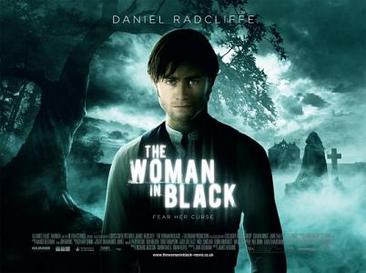
The tradition of telling ghost stories during the months of long darkness has evolved over time.  Since the time seems right, I watched a movie for which I read the book some years ago.  I recall that The Woman in Black is moody, and gothic.  What I don’t remember is how it ends.  More than one source—at least one from someone I know and one from a book—suggested I should see this movie, and I’m glad I did.  It’s a haunted house movie, set in a haunted village and the production values (unlike some movies I’ve recently watched) are quite high.  This film was a reboot in a couple of ways; there was an earlier film version, and it was also a new Hammer production.  In the latter capacity it broke records for Hammer box office earnings.

You see, Hammer, in its first incarnation, struggled for any kind of respectability.  The company almost single-handedly kept horror movies alive while US studios moved more toward sci-fi-themed projects, before the rebirth of modern horror.  Fans knew to go to Hammer for their monsters, but society folks (and those who wish to be society folks) don’t find horror worth any attention.  From my amateur point-of-view, such movies give the viewer a lot to think about.  The problem, as with most underdogs, is that a few bad examples tend to get all the attention.  Life is scary.  That doesn’t mean we shouldn’t try to live it, but it does mean that we might learn something from other people’s mistakes.  Or we might find ourselves haunted.

The Woman in Black is set in Edwardian times.  (I often ponder why we still refer to historical eras by the British monarchs—Elizabeth, Victoria, Edward, etc.—in a world finally moving away from imperialism.  Still, it’s convenient.)  Perhaps not quite as evocative as the Victorian Era, but still moody enough.  Although there are some disturbing scenes, this is no slasher.  Like the novel it’s the tale of a vengeful ghost, wronged in life and out for revenge.  While the end of the movie isn’t the same as the novel (okay, so I looked it up!), it’s similar.  And perhaps it’s best considered a parable of parenting.  No amount of training can prepare you for it, and although it’s supremely rewarding, it’s also very scary.  Susan Hill, the novel’s author, lost a child and that sense of haunting pervades both book and movie.  Gothic is often about grieving, and perhaps about learning something from it.