All Wet

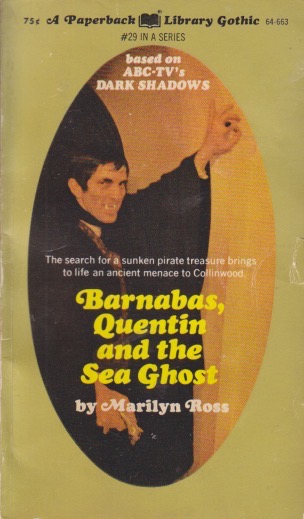
If I keep up this pace I’ll finish next year.  Reading the full set of Dark Shadows novels by Marilyn Ross, that is.  Since they tell me I’m an adult, this might seem a strange avocation.  Driven by nostalgia, and frankly, a love of gothic literature (the latter defined loosely), I’m revisiting my childhood reading.  Long ago I ditched the copies of these books that I originally found in a haphazard way, and it is possible—in this universe of improbabilities—that I have repurchased one of the exact same books I had as a child.  No matter.  I don’t think I read Barnabas, Quentin and the Sea Ghost before.  If I had, no memory of it is within easy recall.  It does seem that W. E. D. “Marilyn” Ross was making some slight progress with his writing as the series went on, but this one isn’t great.

An undersea salvage operation, run by Claude Bliss—accompanied by his daughter Norah (someone has to fall in love with Barnabas, after all)—comes to Collinsport to find the treasure of Jenny Swift, a ship named after its pirate captain.  There is, however, a ghost that haunts any who try to attain the treasure.  In one of the “Scooby-Doo Effect” versions of the Collinwood estate, the ghost turns out to be a man, a neighbor, literally in a rubber mask.  The salvage operation had been a bust from the beginning and Quentin shows up just to stir up trouble and then suddenly leaves before the story finishes.  This particular fascicle feels unfinished to me.  Who was the woman with Quentin?  What happened to the daughter of the man pretending to be a ghost?  Did Norah and Jim Donovan ever get together?  And what of Dr. Hoffman and Professor Stokes?

I’m not naive enough to expect belles-lettres from these books, but the last couple in the series built some hope as they seemed to have been making progress.  The stories were tighter and more innovative, even if still formulaic.  Some seem more cookie-cutter than others.  Since I have only three more novels to go (having read five of them this year), I see no reason to stop now.  I know there are other Dark Shadows fans out there.  I’ll probably put a YouTube video out on the topic down the road.  I did watch many of the episodes, but my memories come primarily from the novels I managed to find back in the seventies.  And like back then, I wasn’t really accurately called an adult, I suppose.

Word of the Year

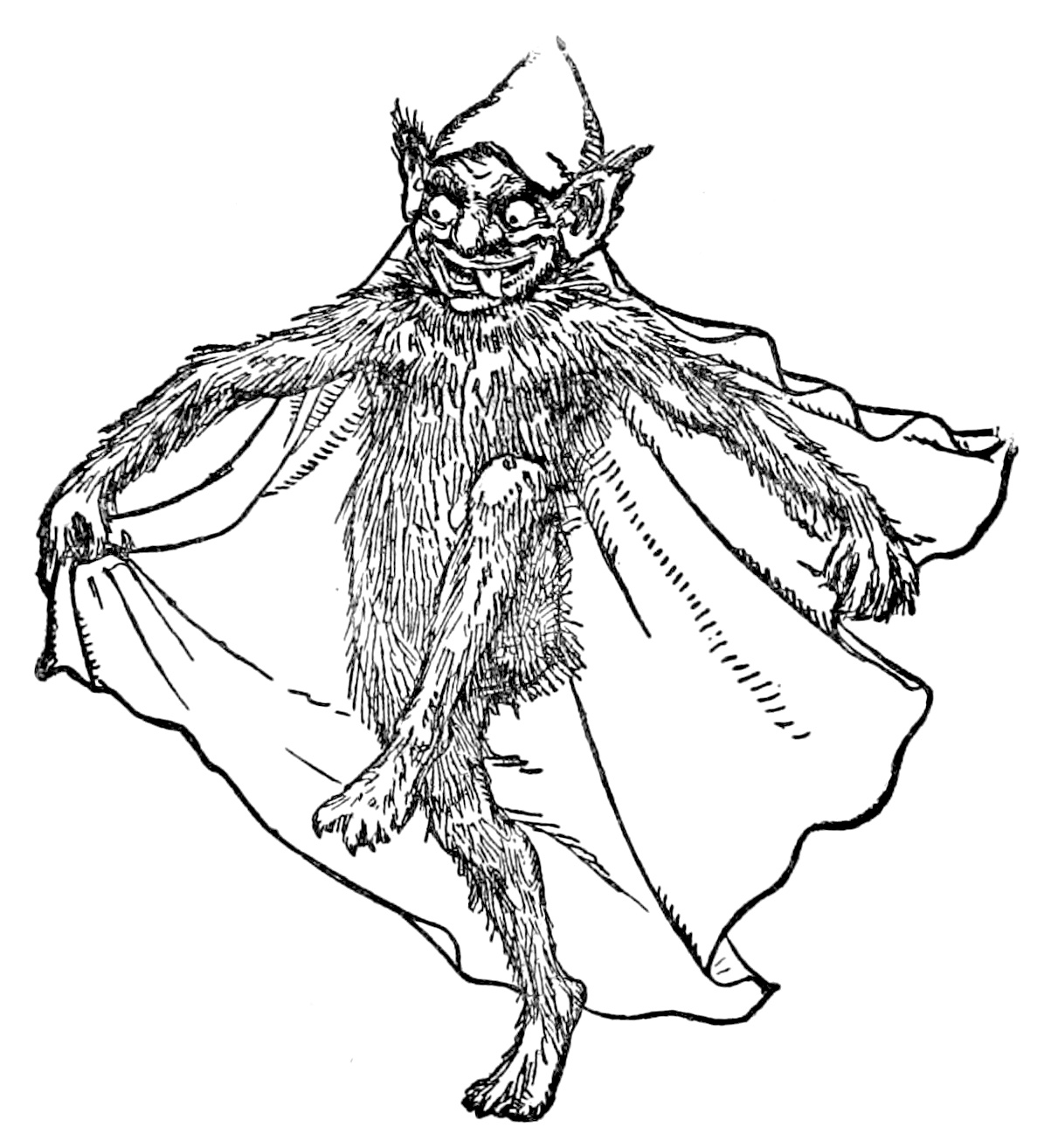
I still have to look up “goblin mode” each time I read it.  I’ve been reading it quite a bit because it was Oxford University Press’ word of the year for 2022.  Throwing voting open to the public for the first time, goblin mode was overwhelmingly chosen, edging out my personal favorite, “metaverse.”  (It’s not every day that a word your brother-in-law invented gets that kind of accolade!)  But goblin mode is in the Zeitgeist.  It means to live an unkempt existence, perhaps hedonistically, without caring what others think.  It is, of course one of the offspring of the Covid-19 pandemic and its lock-downs.  Like social distancing, it’s something some of us had done before we knew what it was called.  But only partially.  I have a mental self-image that I don’t allow myself to show because I don’t like being judged.  I’d be safer in the metaverse, perhaps.

Image credit: Goblin illustration by John D. Batten from “English Fairy Tales” via Wikimedia Commons

Somewhat a natural hermit, I do crave human company and, like most people, I worry about what others think of me.  The thing is, people are natural actors.  We keep our goblins well hidden, usually.  Social life is quite different from the moments we spend alone.  Goblins are, of course, a type of monster.  Somewhat undefined and malleable, they can be compared to demons or fairies.  They do tend to be associated with households, which may make their use with this phrase appropriate.  Goblins tend to be thought of as ugly, thus goblin mode is letting your “ugliness” take over, no matter who may see.  You could be in permanent goblin mode in the metaverse, though.

I have to admit that such things make me feel my age.  The lessons of conformity, even though I was born in the sixties, were pretty deeply impressed.  “Do you want other people to see you like that?”  I wonder if we’re not all insecure at some level—it’s our primate inheritance.  Going into goblin mode, then, is striking back at the natural human acting ability.  It comes at a time when the message of not judging is also prevalent.  In the metaverse, as it was first used in Snow Crash, you chose an avatar that could look like anything you wanted.  I suppose that’s a form of goblin mode too.  We are natural actors.  Watch people in a crowd sometime.  Or at the office.  Or even at home, if they’re not alone.  If other eyes are watching the question always remains “do you want others to see you like that?”  And what we see is probably not authentic.


Holiday Horrors

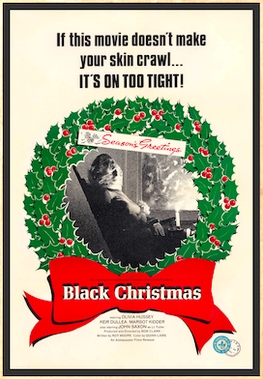
Holiday horror is a genre—really a sub-genre—that is still being explored.  It’s the subject of my my latest YouTube video.  Typical definitions suggest that it builds on a haunted or inauspicious history of the day.  I tend to think that really to fit the category that the holiday can’t be simply incidental.  It has to contribute to that fear that the movie brings.  The most popular holiday for horror films has long been Christmas.  Halloween may be starting to catch up, but Christmas has a long head start.  I ask myself if Black Christmas fits.  The title suggests as much, but how does it derive fear from the holiday?  It is, like When a Stranger Calls, one of the early cinematic renditions of the urban legend “the babysitter and the man upstairs.”  Yes, the calls are coming from inside the house, but there’s more going on here.  The sorority house is invaded during a Christmas party.

The fear, however, comes from both the juxtaposition of the cheerful holiday and the ambiguity of a slowly emptying residence.  Coeds are leaving for the holiday.  Or are they?  The bleakness of the weather adds to the dreariness of the plot.  The function of holiday horror is to make viewers address what’s really important about the occasion.  Tragedy can strike any day of the year—it’s no respecter of birthdays or other holy occasions.  John Carpenter got his idea for Halloween from this film, so in many ways Black Christmas does fit the sub-genre.  Its titling, however, complicates this.  Originally called Stop Me, the movie was to be set on Christmas break but the focus was not to be on the holiday.  Even as it was released the title continued to change, in America it was first called Silent Night, Evil Night.

Like the remake of Invasion of the Body Snatchers, critics initially didn’t like this movie but time has shifted that.  It is an effective horror film and probably part of the objection (I’m psychologizing here, without a license) had to do with implicating a holiday—a happy holiday—with horror.  Christmas is, for many, a stressful time of year.  Instead of quietness and relaxation, it’s a season of intense socializing and measuring one’s generosity against that of others.  We try so hard to make others happy with material things.  Holiday horror need not add to that stress.  In fact, it can make you stop and think about what’s really important.  There’s a reason that Christmas was long the holiday associated with scary stories before Halloween really took off.


Best Beasts

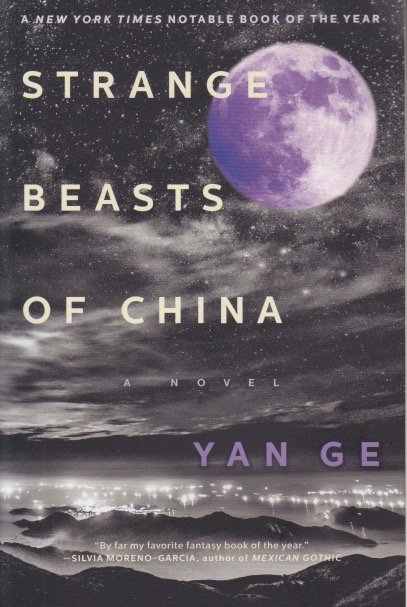
Strange Beasts of China left me strangely affected.  Yan Ge’s novel received quite a bit of acclaim for a book of speculative fiction.  Of course whether or not it is speculative fiction is open to debate.  The narrator, an unnamed former graduate student, makes her living by writing about the “strange beasts” of the fictional city of Yong’an.  Uncertain of where she fits, she’s been researching any number of creatures that resemble humans in various aspects, and who lived often hidden lives among the population of the city.  Her relationships revolve around people who, and this may be a spoiler, often turn out to be beasts.  It could almost be a parable.  I wasn’t quite sure what to expect.  The word “cryptozoologist” occurs in the copy and it was blurbed by a couple of horror writers.

It’s not really a horror novel, though.  There’s some action and even a bit of violence—not too explicit—and some well-executed twists.  I wasn’t sure where the story was going, but I found myself eagerly awaiting the opportunity to pick the book back up again.  One of the truths of our species is that we find ways of othering those who are different than we are.  Othering so that we can fear and mistreat them.  And feel superior.  That’s why this story feels so much like a parable to me.  The beasts aren’t really monsters, but then, monsters are really us.  What matters is how we treat them.  Yan Ge handles them with sensitivity—her narrator, after all, is very interested in these beasts—and our suspicions grow as the novel goes on.  We shouldn’t be judging here.

That this book should come out even as American attitudes toward China veered decidedly toward “othering” (the book was published in Chinese back in 2006, but appeared in English in 2020), is significant.  There are reasons to fear the autocratic government of China, but a significant portion of Americans seem to favor the autocratic style over democracy.  So it is that parables continue to be made.  We live on a planet with billions of other human beings, each with cultures, hopes, and dreams.  They may look a little different and thy may speak in ways that we don’t immediately understand, at least not without some effort, but they are just as human as those who speak English and who live in their own fictional cities isolated by a couple of oceans.  Strange Beasts of China really made me think.


For the Eyes

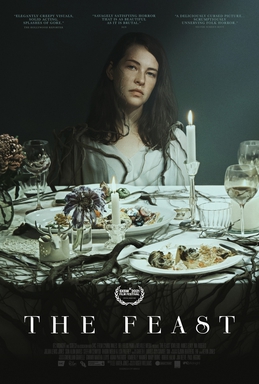
A Welsh horror film?  Lately Euro-horror has caught my attention.  European sensibilities give horror a distinctive flavor, and The Feast doesn’t pull the usual horror tricks.  And reading the subtitles keeps you on your toes.  It’s more a slow build that manages to be unnerving from the start.  A family of four—parents and two boys in their late teens or early twenties—is hosting a feast.  A local girl, Cadi, is hired to help cater the affair.  The family is really seeking to get a neighbor to allow exploratory mineral drilling on her land.  She refuses, horrified when they mention that they’ll only drill on the rise.  The neighbor, aghast, says they know better because they’ll awaken “her.”  The unnamed her is a goddess who is within the rise and who’s been disturbed by the family’s drilling on the land adjacent to their neighbors’ property.

A number of aspects push this beyond Euro-horror.  The goddess, treated as superstition by the family, introduces religion into the horror.  (Cadi, as it turns out, died on her way to the house and the goddess inhabited her body.)  The remote location and role of the countryside also bring this into the folk horror realm.  Having an underlying ecological message, the film is eco-horror as well.  As such it has a positive message, even as all those at the feast, apart from the uncompromising neighbor, die before the evening is out.  Gods will express their wrath.  Although there’s gore, the concept is intelligent and possessed Cady’s unwillingness to speak throughout much of the film adds to the tension.

Horror films with subtitles sometimes don’t work, but The Feast manages pretty well.  Much of the disturbing atmosphere comes from the house.  A modern construction, built over what had formerly been the family’s farm, stands in stark contrast to the natural world all around.  As is often the case in eco-horror, the land is waiting to take its revenge.  It’s a message appropriate for a time when we fail to live up to our own environmental standards, and consider the checks and balances of nature itself as “superstition.”  Maybe a goddess will not awaken and kill everyone at the dinner party, but the wealthy will not be spared, as the movie prophesies.  We share the planet and the earth allows us to survive.  There’s a sense that we deserve to be reminded that living on a finite planet requires careful stewardship of it all.  If you’re going to throw a feast, at least make sure it’s not at the expense of nature.  Some goddesses are best not aroused.


Not Relic

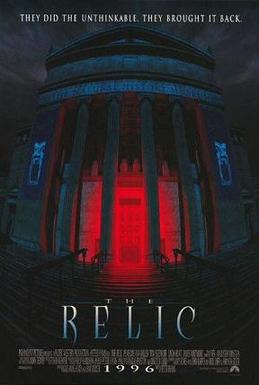
Someone somewhere sometime recommended The Relic to me.  I can’t recollect who, where, or when, so I’m not sure in which direction to point the blame.  (Or maybe they recommended Relic…)  Weekend afternoons are drowsy times, and rather than sleep, I prefer to watch movies.  Those on my wish-watch list don’t often coincide with what’s on the streaming services available to me, so I try to recall those recommended to me at some point.  I mean, The Relic sounds like it should be good: a Meso-American god that’s part lizard, part beetle, and part mammal rampaging through a major museum?  Well, what’s not to like?  Monsters are usually fun.  This one requires hormones from the hypothalamus to survive, so it beheads people to get at their brains.

Now, if you’re not a fan this will sound goofy to you.  The thing is, in the right hands such a film could be very good.  I hear that the novel upon which it’s based is.  Unfortunately the script and the acting don’t really hold up.  The sciencey explanation doesn’t make sense—the evolution from eating certain leaves is too rapid, outpacing even the monsters in Evolution.  And when we learn that the mammal DNA comes from a human, it raises the question of whether indigestion was mistaken for evolution.  Of course, the monster—shown a little too early—is a chimera.  Since it’s part bug and part gecko it can walk up walls, which is admittedly pretty cool.  But the holes in the plot don’t ever really get filled so it’s a lot of running through tunnels in the dark with flashlights.

When I read the description that it involved a god-monster I thought I’d figured out why it’d been recommended.  Religion and horror share gods and monsters, so I thought maybe something would’ve been made of this.  The scenes where the carving of Kothoga is being prepped make no sense—you use carving tools to excavate fossils, not statues—and we learn nothing of this intriguing deity beyond that it was released to eat your enemies brains and when it ran out of brains, it dies.  Of course, it can eat leaves as well.  Ironically and paradoxically, the film makes me want to read the novel to get a fuller explanation.  The combination of gods and monsters is rich territory to explore and when those making a movie credit the audience with enough intelligence to make this work, it might be enough to keep you awake on a drowsy weekend afternoon.  Or it might keep you awake even if they don’t.


Haunting Hudson

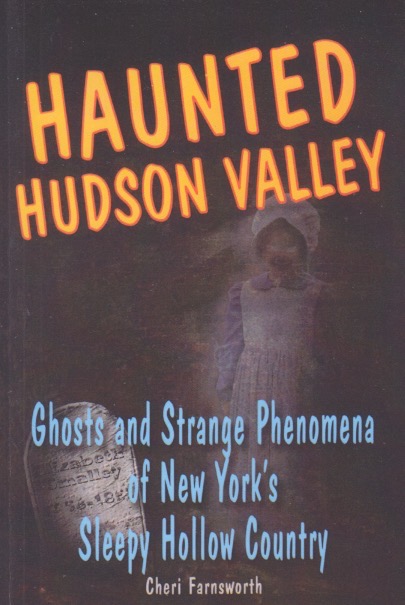
After Maine, the one place I’ve always wanted to live, but never had the opportunity, or could never afford, is upstate New York.  My ancestors were from the state but I just happen to’ve been born in Pennsylvania.  So it goes.  Perhaps it comes with professionally studying mythology, but one of my longterm interests is folklore.  I’m always fascinated by what people tell of their local setting.  Now when I approach books about the paranormal in a region, such as Cheri Farnsworth’s Haunted Hudson Valley, I know to take most of it with a grain of salt.  People love to tell stories and local people like to talk about where they’re from.  The Hudson Valley has had a long history of strangeness and several tales that reflect that are collected here.

I often think of ghosts.  They generally seem to prefer a single place that’s familiar.  And although you can’t take everything everyone says as gospel, there do seem to be regions beset with them.  I wonder if regions early settled by Europeans are particularly prone to haunting.  It’s difficult to imagine that, at the time with the unquestioned rectitude of church and empire, that they ever stopped to think “Hey, we’re stealing land that belongs to someone else.”  Did that idea ever come back to haunt them?  Perhaps such unspoken guilt leads to ghosts.  Or maybe simply dwelling in a place for a long time leaves plenty of opportunity for ghosts to gather.  And, of course, people do stretch the truth at times and misinterpret things otherwise explained.

No matter the reasons or rationale, these kinds of books are always a guilty pleasure read for me.  I don’t expect the get the truth, the whole truth, and nothing but the truth from them, but I enjoy them nevertheless.  Since I can’t afford to live in the Hudson Valley, the other result of such books—and one of the reasons locals appreciate them—is to make me want to travel to the region and see for myself.  For many years we lived not too far from the Hudson while in New Jersey.  Still, we didn’t make it up that way very often.  It’s a bit more of a hike now, but isn’t a hike worth making when you might see something unusual after you arrive?  My ancestors had settled north of the Hudson Valley and eventually migrated further south.  The end up in Pennsylvania, where I find myself.  But I’m still haunted by upstate New York.


Pods

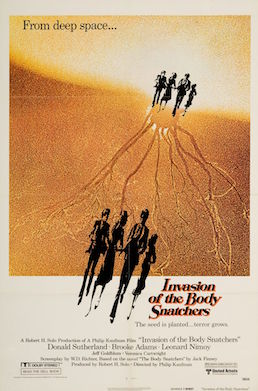
Some cultural assets (ahem) are so well known that you come to know them by association.  I knew the story behind Invasion of the Body Snatchers (1956 and 1978) long before I saw the original, within the last couple of years.  I may have been body-snatched myself since I can’t remember when it was or why I didn’t write a blog post about it.  In any case, I’d long been curious about the remake and discovered it free (for the time being) on Amazon Prime.  The fact I’m still looking for free stuff proves I’ve not been body-snatched, I guess.  If you’ve been raised with our cultural assets you know that the eponymous body snatchers are pod people who look exactly like the victims they destroy.  Their goal is a well-ordered society with no emotions.

The thing that’s so interesting about the 1978 version is that its assessment has changed over time.  When it first came out, many thought, and opined, that the 1956 black-and-white version was better and this one really added nothing.  However, over time this judgment has been questioned.  Critics taking a second look have now scored it as one of the best remakes ever made, and not only that, but it is considered one of the best science-fiction horror movies of all time.  I suspect nothing in that category will ever displace Alien, but still, my first viewing of the ’78 Body Snatchers agreed with the latter assessment.  It is quite good and it has even aged well.  You can kind of guess how it’s going to end, largely because the final scene has been played over and over, but still it’s definitely worth watching.

The social commentary in the film runs deep and strong.  Non-conformity is suppressed.  Life without emotions is better than really feeling something.  Simply go along because everyone else does.  The parable has changed actors over time—fascination with social media/virtual reality have perhaps become the modern pods—but the story is as old as our species.  Probably even older.  It’s non-conformists, generally after their demise, that are realized as visionaries.  Shooting a car into orbit requires tons of money but not much vision.  I’m not conforming, however, when I agree that the 1978 remake is good.  My taste in movies has always stood apart from others, at least from my own experience.  I also think that horror is often among the more intelligent genres of film.  But then, I tend to side with the emotional.


Not Sleepy Yet

Working on a doctorate changes the way you think.  Or at least it’s supposed to.  Easy answers have to be examined closely, and sources critically scrutinized.  One of the side-effects of this is that many Ph.D.s tend to think that only others of that status are able to do good research.  An essential piece of research, however, is passion.  This part isn’t always logical and can’t always be explained.  A recovering academic, I first resisted Gary DenisSleepy Hollow: Birth of the Legend because it was self-published.  I’ve had bad experiences with self-published books before but what I discovered here is that Denis is quite a capable researcher, driven with a passion for Washington Irving’s tale.  The execution may be a little rough, but the data-gathering is very good.  He tries to point out where accounts have problems and attempts, where possible, to resolve them.

Denis is driven by the question of what in Irving’s story is factual, if anything?  This is probably not a question an academic would ask, presuming that fiction is fiction.  Still, there is data.  The first four chapters are very good.  Here he lays out the background to the region, Irving, and stories of headless horsemen.  I learned quite a lot from it.  The final three chapters turn to the main characters of the story—Ichabod Crane, Katrina Van Tassel, and Brom Bones—asking who they might’ve been based on.  The best drawn of these is the first and there’s good reason to suppose Irving based Crane’s situation on that of his friend, Jesse Merwin.  The other two, however, are sketched rather hastily and lots of people have suggestions for who might’ve been behind them.

Clearly aware that authors borrow and make things up, Denis knows that Katrina and Brom may well be pretty much imaginary.  He also knows that Irving did indeed borrow much from previously known stories and legends.  Irving’s real genius was in the way he expressed these stories in colloquial English, making American literature a blend.  Although Irving wrote many books, his fame was largely due to two of his stories published early in his career.  One of those stories, “The Legend of Sleepy Hollow,” has left quite a paper trail and Denis leaves no rock unturned in his efforts to collect data on it.  I’ve read a fair number of self-published books over the years—they’ve been easy to produce since the internet began—and I’m wary of them.  This book, however, is one that I’m glad I found and it serves as a useful reminder that good research isn’t limited to the privileged few in the academy.


Prosthetic Horse?

Old habits die hard.  As a young researcher, I was dogged about reading everything possible on a subject before writing on it.  Both the profusion of information and the endlessly ticking clock of mortality now suggest that if you want to say something, say it.  You need to do a reasonable amount of research, but you’ll never read everything.  This is the kind of thinking I should’ve heeded before spending a couple of bucks on Headless Horseman.  I should specify, the 2022 film by that name.  The name has been used before and it has an unspecified coding.  Often it has to do with Washington Irving, but not always.  A 1972 Russian film by Vladimir Vajnshtok is titled The Headless Horseman, but it has to do with a completely separate story.  In any case, Jose Prendes’ 2022 film isn’t what you expect.

Sophia, a girl with a former boyfriend who’s a drug dealer, gets engaged to Brandon.  He’s not too bright, but he’s clean.  When her ex, named Angel, tries to kidnap her back, Brandon dies defending her.  The Devil shows up and a deal is made.  Brandon has 24 hours to kill the gangsters.  He’s given a bladed glove (where have we seen that before?) and a burning jack-o-lantern head (ditto?).  Did I mention this all happens on Halloween?  Well, Brandon just isn’t up to killing people and he fails in his mission, defeated by bad guys with holy water.  So Sophia sells her soul to get Brandon back.  She manages to kill the thugs, but gets shot in the process.  Brandon make a third counter-offer with the prince of darkness, to harvest souls.

The pacing for the film is all off.  The writing is about the worst I’ve ever heard.  Someone being sucked to Hell stops to discuss semantics with his girlfriend?  Really?  And not only that, the special effects are sparingly used.  You’ve got a flaming pumpkin head—use it!  I guess part of me felt cheated by the premise that never materialized.  The “headless horseman” isn’t trademarked, nor can it be copyrighted.  It does, however, convey an expected story that viewers know.  The point of this effort seems to be, if you sell drugs you’ll ultimately get yours.  Those who are innocent will also get theirs, although perhaps will remain on Satan’s good side.  For all its faults it does demonstrate how religion and horror play well together.  Even when they haven’t much good material to work with.

John Quidor‘s The Headless Horseman Pursuing Ichabod Crane

Goodbye, Linda

It’s out of the ordinary for me to post twice in one day, but I’m compelled to do so by the passing of a friend I’d never met.  I’ll already published today’s post when I learned the news.  Linda S. Godfrey was a Wisconsin journalist.  She’s known for her many books on paranormal and weird subjects.  She was the reporter who first took “the beast of Bray Road” seriously.  I only discovered her after we’d moved from Wisconsin, although we didn’t live far from her in those days.  Fascinated by her work on the beast, I contacted her with some information I’d read and we opened a very occasional exchange of stories.  She was my very first Twitter follower, and she published one of my true stories (anonymously, by request) in one of her books.

I know that academically-inclined folks are dismissive of her work, suggesting she was credulous.  I always looked at it differently—Linda was willing to listen to people.  Yes, she probably talked to some people with mental issues, but here’s a true secret—all people have mental issues.  Although I never met her in person I had the sense from her writing that she didn’t simply accept what others told her, but she was willing to consider it.  I remember visiting Rutger’s University library while I was an adjunct there, to find a difficult-to-locate reference for her.  I mailed her a photocopy of what I’d found.  As I say, we never met, and we only corresponded once in a great while.

Seeing that her blog hadn’t been updated for some time (so this is related, you see, to my earlier post), I began to wonder if she was well.  Like most of us born to write, I knew it was unusual for her not to post.  Not knowing her personally, I didn’t think it polite to ask.  I’ve read several of her books, some of them highlighted on this blog.  Often dismissed as “only a cryptozoologist,” my sense is that Linda was hounded by the need to know the truth.  Yes, the world is a mysterious place—it’s not nearly as well understood as we’re often confidently told that it is.  Some of us simply can’t rest without finding out for ourselves.  Linda earned a reputation as an expert on werewolves—many suggest the beast of Bray Road was some such creature.  She recognized the tie-in to folklore but she also knew that monsters always, always cross borders.  Linda is missed already, and it’s about time I caught up on some of her latest books, for I’m compelled to believe she now knows.


This Way

The more I get to know myself—pleased to meet you, sir—the more I realize that my childhood was cobbled together from small but repeated exposures to my favorite things.  I knew Dark Shadows from watching a limited number of episodes and reading a limited number of cheap novels.  I knew Alice Cooper from just two of his albums.  And I knew Ray Bradbury from a couple collections of his short stories.  No doubt this is in part because we weren’t exactly affluent and I found my books, by chance, at Goodwill.  I had no way of collecting Bradbury’s oeuvre, and besides, I was trying to get to know Edgar Allan Poe as well.  I knew Bradbury as a short story writer, and that’s still how I primarily think of him.

I felt compelled to read Something Wicked This Way Comes recently.  Since I’m used to Bradbury the short story author, it felt overdrawn to me.  I know this is heresy.  Great horror writers point to this novel as highly influential and inspirational.  Maybe if it were read closer to when I was born, when it was published.  Too many long paragraphs, especially early on, contain almost abstract descriptions without clear actions, leaving me confused.  Once the story got underway it was quite good.  As someone who writes, I know the dilemma of trying to freeze poetry into prose, and to make a coherent story from thousands of separate impulses.  Believe me, I know.  These days such things are edited out and stories become as thin as Bradbury’s Skeleton Man.  I guess I’m just out of practice.

The plot is great, but it feels so 1950s.  So boy/male oriented.  So American.  I suppose I attended my fair share of carnivals as a kid.  We didn’t go often, and I never knew one to settle on the edge of our small town.  And although we were free to ride our bikes or run as far as we cared to, home was never that far away and, I knew, there were scary things in the ubiquitous woods.  Ray Bradbury’s short stories were likely the main source behind my own early attempts at fiction.  Even today I’ll be scribbling along and think, “this is kind of like Bradbury.”  But I always have his short work in mind.  There are some great parts in Something Wicked, and it does build the tension toward the end.  Still, when it’s said and done I’ll be thinking of Bradbury’s short stories and how they formed my own nostalgia, even if only in little fragments.


In the Dark

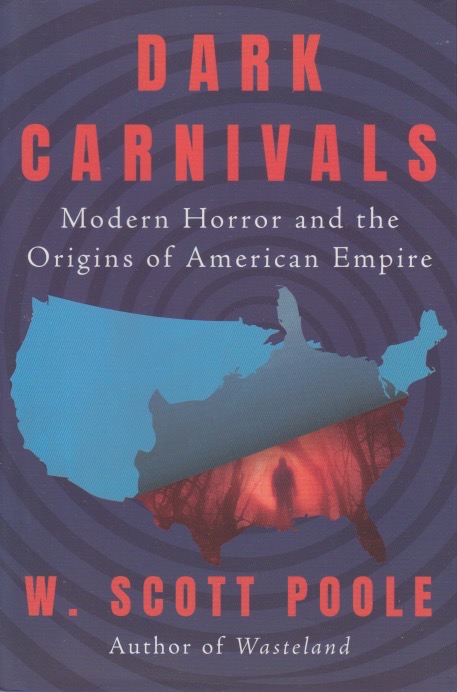
I’ve read several of W. Scott Poole’s books, and each time I read one I want to read another.  Dark Carnivals: Modern Horror and the Origins of American Empire is my most recent.  At first I was a bit reluctant to pick this one up because I misunderstood the “carnivals” of the title.  I don’t find clowns scary and I’m not really a fan of carnivals.  I didn’t make the connection with Ray Bradbury’s early story collection Dark Carnival.  Bradbury?  Well, why didn’t you say so?  But there is serious darkness here.  Poole traces the history of the American empire alongside the truths that horror films reveal.  This isn’t an easy book to read despite Poole’s fluid style and literary gifts.  Historians are uniquely placed to find truths that our country has so carefully hidden in our efforts to make ourselves the international “good guys.”  In unflinching terms, Poole traces the darkness of our acts, domestic and abroad, that have created so many dark carnivals.

The first couple of chapters are nearly impossibly good.  The entire book is insightful, but as is often the case with pop culture I find my experience limited to movies and novels of the horror genre.  There is absolutely fascinating stuff here.  It really begins with Harry Truman, but Poole traces how Ronald Reagan’s presidency was in many ways guided by science fiction authors who projected proudly the idea of America dominating the world.  Even to the point of becoming fascists.  Often confusing movies for reality, Reagan prided himself on being an empire builder who was a boon companion to the rich while keeping the poor exploited and un-empowered.  And it hasn’t just been Republican presidents who’ve done this (although they are clearly the most egregious offenders).  There are many moments of pause and reflection in this book and much of the horror comes from history rather than horror films.

Poole has made a name for himself as an analyst of politics and horror.  Very few “innocent” stories are as guileless as they appear to be.  Empires demand loyalty and must be constantly fed.  And they are extremely hierarchical and oppressive of those beneath the level of influence in their considerable power structures.  Dark Carnivals is a brilliant and disturbing book.  It did, however, take me down an avenue that Poole himself doesn’t explore.  Ray Bradbury was pretty much a Democrat until Reagan.  He wholeheartedly bought into Reagan’s false narrative and became friends with Republican presidents.  The disconnect from the man who wrote such masterpieces critiquing this kind of thinking caused a bit of personal whiplash for me.  His own dark carnival had drawn him onto that insidious merry-go-round.  Even the insightful can be lured by the tempting power of empire.


Reflections of a Hermit

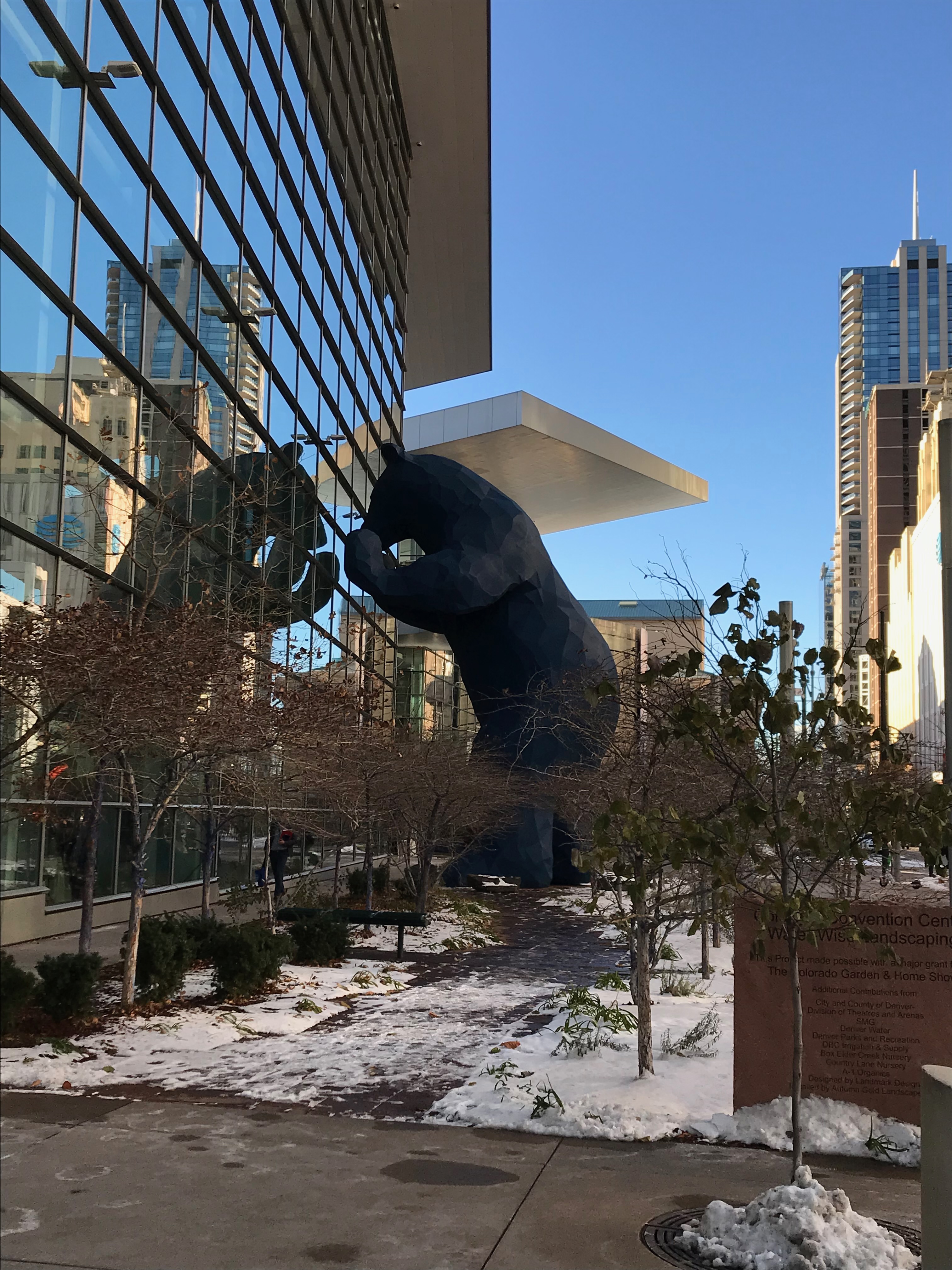
Although I acknowledge that Covid has made even more a hermit of me—I won’t deny it—and I often complain when I have to travel for work, I generally end up glad that I have.  (As long as I avoid Covid.)  Being at the AAR/SBL annual meeting is like being in a living library.  You meet and talk with so many smart, smart people and their ideas and yours begin to blend in an amazing kind of way.  I suspect that it shows that my books have been written by a guy in isolation.  That is, they could be improved by other eyes on them.  That’s what peer review is about, of course, but there’s something exciting about talking to my monster friends and engaging them about their ideas.  Frequently they will ask about mine.  I’ve even had colleagues mention that they’ve read some of my work.

The only real problem with how this unfolds is that I have so many meetings in a day that I sometimes lose track of the many ideas that crowd into my head.  Hastily-scrawled memos in my notebook—I’m too busy paying attention—mean that only fragments remain the next morning.  Each of them a gem.  (Fitting for Denver.)  When conversation comes around to what I’ve been working on, no matter how obscure it is, my monster friends know the root story and even have ideas that help shape my work.  No one scholar can read everything, and those of us who tend towards being hermits have the limited sources of one human imagination.  When imaginations get together, however, these ideas blossom.  I learn so much from these brief days that I think I might’ve been dangerous if I’d remained in the academy.  The man with an exploding head.

I sincerely hope that I give as well as receive at these meetings.  It’s really unfortunate that we don’t support humanities scholars in this nation.  These are some of the bright stars in our national constellation, yet they struggle with underfunding, and pressures such as “metrics,” as if you can quantify the influence on young brains and the potential future of our collective imaginative life.  Although I grouse, as is perhaps to be expected of an aging hermit, I can’t help but be enriched by the fertile minds I encounter, even if behind a Covid mask.  I’m never quite sure how to thank all these idea-conjurers properly.  I wouldn’t have met most of them had my career not taken the strange turns it has.  Now I realize that even hermits may have many friends.


Monsters in Common

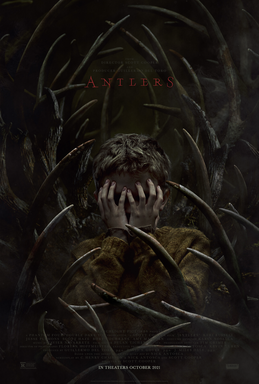
The thing about monsters is once they’re released they go wild.  Antlers is sometimes criticized for cultural appropriation—it takes the wendigo, an American Indian monster, and uses it in an Anglo story.  There’s perhaps some truth to that, but the wendigo is the perfect monster for the social commentary the film makes about the poor.  Those who’ve never been poor can’t really understand, and I can’t blame them for it.  Pointing fingers at symptoms like drug abuse is pretty typical.  It’s not directing the extinguisher at the base of the fire, but at the dancing flames that keep shifting as the base consumes.  In short, I found it a powerful movie, and one that is beautifully filmed.  Yes, it does lift an American Indian monster, but that monster was released long ago.

The wendigo was addressed by Algernon Blackwood in his 1910 story that goes by that name.  It has appeared in other horror venues as well.  Antlers is the first full-fledged horror movie I’ve seen to use it and it builds the story up nicely.  And it does so by tying religion into the narrative.  In brief, Lucas Weaver, a twelve-year old, is protecting his father and younger brother.  After being attacked by a wendigo, his father has become one.  Lucas’ teacher, Julia Meadows, was abused as a child and recognizes it in Lucas.  She become determined to care for him but his father has given over to the spirit of starvation that inhabits him.  

I could’ve used this in Holy Horror because when Julia is searching Lucas’ desk at school she finds, among other things, a Bible.  At one point Lucas’ brother asks if God is dead.  His father has told him that he is.  And when the police are trying to determine what they’re up against, the former sheriff, an American Indian, tells them about the wendigo.  Native beliefs are treated as superstitions, of course.  The wendigo is brought out because of cannibalism.  The use of a native monster and the role of the landscape in the film make this a fine example of folk horror.  And it’s a cautionary tale about the dangers of abandoning the poor.  Those who criticize the film for that have perhaps lost sight of the monster.  Monsters belong to everyone.  The golem, the wendigo, the mummy—these all play a role in someone’s religion and culture.  They also serve to haunt anyone who’s concerned with fairness and justice.  And that’s why we must chase any monster that roams free.