Halloween Mothers

There’s an irony in seeing Samhain returning back to Ireland as Halloween.  One movie that ties its Celtic roots in particularly well with the denizens of the Otherworld is You Are Not My Mother.  Written and directed by Kate Dolan, it’s an intensely creepy film set in Dublin as Halloween approaches.  A dysfunctional family of grandmother Rita, mother Angela, and daughter Charlotte have a family history of changelings.  As the tension grows in the family the viewer, and Char, must decide whether to believe her mother or her grandmother.  Particularly disturbing are the actions of Char’s classmates as they bully and threaten her in truly horrific ways.  All of this happens as Halloween nears and adds to the uncertainty.
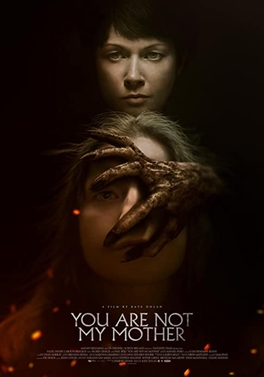
I really don’t want to give too much away as this is a movie well worth watching.  It satisfies an October itch.  It’s also a fine example of both “elevated” horror and folk horror.  Although filmed in Dublin, the landscape—particularly the river, plays an important role in the story.  The film even helps us out by having a museum tour explain what liminal spaces are and although much of the action takes place indoors, these outdoor places are essential.  There’s an awareness of landscape and what it implies regarding the Otherworld.  As with much intelligent horror, there’s little bloodshed but plenty of tension.  And the moody atmosphere of overcast Irish skies makes it possible almost to feel the chill in the air.

The families shown in the movie are working class, which adds to their emotional resonance.  Houses are lived in and not spic-n-span.  Work provides enough to get by but not much else.  In a strange way, having the Otherworld break through in such circumstances isn’t all that unusual.  Here is something to anticipate, to look forward to.  Something that might lift you out of the mundane workaday life.  Folklore began long ago and served a similar function, I suspect.  Surviving is difficult work.  Even the tradeoff in modern times of giving most of our waking time to our jobs is a reflection of this.  It’s not difficult to believe that there’s something a bit more stimulating, if dangerous, out there.  Something we want to avoid but that we can’t help but be fascinated by when we encounter it.  Horror offered by women directors is often thoughtful in that way.  You Are Not My Mother will help to set the mood for Halloween, as it’s done in the old country.  In its own way, it’s a changeling.

Green Pagan

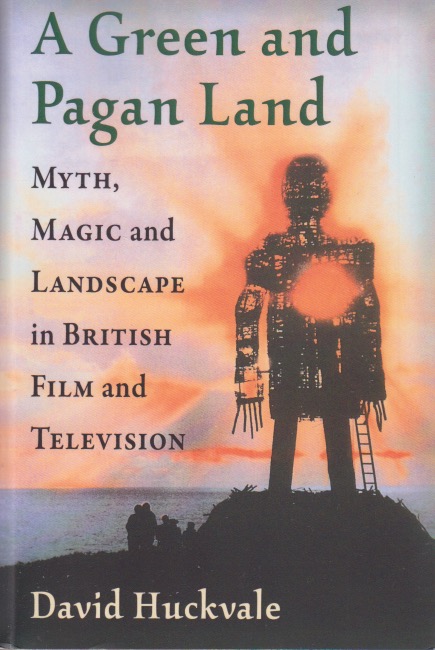
The folk tradition doesn’t encompass folk horror only.  I’ve been working on The Wicker Man, one of the initial folk horror classics, long enough that I sometimes need to remind myself of that.  Of course, it was the cover image featuring said movie that drew me to David Huckvale’s A Green and Pagan Land: Myth, Magic and Landscape in British Film and Television.  The descriptive subtitle more or less informs the reader what the book is about although it reaches further than that.  Huckvale also interprets novels, short stories, and classical music pieces according to landscape.  And sometimes it ranges beyond Britain, especially to other Anglo-Saxon cultures.  Richard Wagner, for example, plays a prominent role in one of the chapters.

Having written about popular media myself, I’m aware of how such issues can easily arise.  A movie too good not to discuss falls out of the precise range you’ve set for yourself.  And no matter how much media you can consume there will be tons more that you could, had you the time, add to your experience of it.  This book looks at mostly British media with an eye toward the pagan landscape.  That doesn’t always mean horror, but sometimes it does.  Huckvale always has interesting things to say about the media he addresses.  Whether the pieces go back to Arthurian legend or to more recent fictional pasts, the landscape has a role to play.

Indeed, folk horror is generally defined by landscape.  That makes sense considering that it’s all around us.  Many people in urban settings may have to struggle to find it.  Indeed, when they want to get away they head for it.  In Britain—and anywhere in which invasion has taken place—the earlier pagan ideas are imprinted on the land.  In Britain they’re perhaps more obvious; think of Stonehenge.  As later interlopers modern people see them and wonder.  And then we create stories—literary, musical, or visual—about the experience.  I’m so used to reading about folk horror that I’d finished the book before I realized it wasn’t really the focus of the entire thing.  While I don’t live in a major city, I too have blinders on for much of the time.  I’ve got a book deadline and I wanted to read this before making final revisions.  I’m glad I did.  There were places where I was just in the backseat, along for the ride, but there were also chapters where The Wicker Man was a crucial component.  And it reminded me of why I enjoyed living in that landscape for a few years.


Flavor of Childhood

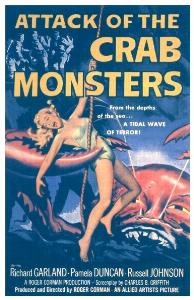
Giant, telepathic crabs whose molecular structure make them impervious to bullets, explosives, and fire, and that know how to use dynamite and who plan to take over the human world?  A group of scientists trapped on an irradiated Pacific island that is slowly sinking into the ocean?  This must be Attack of the Crab Monsters!  I was born during what is generally considered the dearth  period of the American horror industry.  Roger Corman, however, was working hard outside of the studio system to cater to that new demographic—teens with spending money.  Drive-in theaters were big and for about $100,000 you could shoot a double-feature and bring in ten times that much.  If you shoot quickly enough you can produce several of these in a year and not have to worry about the big studios.

It’s been fashionable to laugh Corman off, but he knows how to live the teenage dream.  Monster movies were part of the childhood of many of us during this “dearth.”  Yes, sophisticated frights were yet to come, but these creature features were full of creativity and escapism.  And so many unanswered questions.  How did those giant crabs chop all the radio wires to bits with those indelicate giant claws?  If they could smash through the outside wall of a house, why couldn’t they break through a light-weight door once inside?  And why, knowing that bullets and grenades can’t possibly hurt them, do scientists keep firing away?  What was that oil subplot all about anyway?  And how do you end a film with the lines “He gave his life,” followed up by “I know”?  This is stuff, like Strawberry Quik, I couldn’t get enough of as a kid.

No, this wasn’t intelligent horror—it was often laughable—but it made an impression.  As an adult I can’t recall which of these movies I’ve seen before and I suspect it would take a lifetime to watch all the films Corman directed or produced.  Along with his contemporary indie director/producer William Castle, Corman may be inordinately responsible for my tastes as an adult.  I’ve grown more sophisticated (I hope) in some ways, but I’m at a pay grade where free on Amazon Prime often decides a weekend’s entertainment.  Besides, these movies struggle to top out an hour’s running time.  You can still get a lot done in a day and still have time for a monster crab, giant leech, or wasp woman.  With enough radiation, and imagination, anything can happen.


Stinging Days

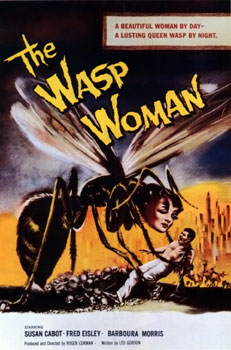
It doesn’t take much to encourage wasps.  Even after a few unseasonably cold weeks in autumn, one warm day will bring them back, poking along the siding looking for a nesting place.  My most recent stinging incident occurred in October.  It’s fitting, then, I suppose, that to try to keep awake late one October weekend afternoon that I watched The Wasp Woman.  These creature features were what I grew up with, and this was a Roger Corman brief film from 1959.  In fact, it was so brief that eleven minutes had to be added to make it a stand-alone television release.  It was originally part of a theatrical double feature.  Finding out about added time explained why Dr. Zinthrop’s accent changed from the first eleven minutes to the rest of the film.

Women have the same right as men to be made into monsters, of course, but there’s a poignancy to this storyline.  Janice Starlin is the owner of a cosmetics company but profits have been declining since she’s showing signs of aging.  Her customers want a younger looking woman providing their beauty products.  As is to be expected for a movie from the fifties, it’s a pretty sexist storyline.  Still, through the plodding plot the viewer can’t help but to feel for Ms. Starlin.  So when Zinthrop shows up with an extract made from wasp royal jelly (a secretion that actually comes from honey bees) that reverses aging who can blame her for trying it?  Of course it turns her into a giant wasp woman.

These kinds of mad scientist movies with their inevitable results perhaps injected a sense of caution into those of us who grew up watching them.  They weren’t great works of art, but that doesn’t mean they didn’t have something to say.  What I heard, watching this one, was that women exploited for beauty products suffer from natural aging processes.  And any formula that reverses aging come with its own set of problems.  The only other scary part of the film was when employees have to get to the upper floors to prevent Starlin from killing people, they have to wait for the elevator.  Their sense of frustration, although funny, is nevertheless a reality of working in a high-rise.  These movies from the late fifties seem to me to be a cry for help.  The sexist, button-down, white shirt world isn’t all it’s advertised as being.  Mad scientists are needed to help us cope.  Or at least stay awake on a sleepy October weekend afternoon.


Kings and Gods

Kong has never been my favorite monster.  Perhaps because it is more of a sad story than a scary one, and in movies of gigantic animals, there always seem to be scaling problems.  The monsters are only reacting to the circumstances in which they find themselves and humans prove to be the real problem.  In ways nearly impossible to conceive, less than a century ago films like the original King Kong shocked and stunned audiences.  Humans are such visual creatures and no similar spectacle had been seen before.  I recently watched the 1976 reboot for the first time.  I’d seen clips, of course, and kids in junior high were talking about it back when it came out.  For me it was more like “if you know the story already, why see another attempt to tell it?”

Visually, there is a lot of nice cinematography in the film.  We’re all used to CGI so the animatronic Kong isn’t really believable, but nevertheless, our emotions map onto his with the prolonged shots of the gorilla’s facial expressions.  That part was effectively done.  Much of the rest of the movie left too many questions for belief to be suspended.  The heartlessness of corporations was too real and perhaps the scariest part of the movie.  Watching any movie with explosions on the twin towers brings back a kind of post-traumatic 9-11 reaction.  Prolonged, nearly Russian-length, death scenes personally don’t do it for me.

The reason I was watching, however, was for the religious aspect.  This is underplayed, but the islanders clearly worship Kong and consider him a god.  (I did wonder what he ate since no giant fruits were shown, but the immense snake tells us not all was revealed.)  In one reflective moment on the oil tanker back home, Jack Prescott says that they’ve taken the islanders’ god and their society will fall apart.  Western enterprising does have much blood of this kind on its hands.  And no matter how it’s dressed up King Kong always appears to be a racist story.  Some critics say the 1976 version isn’t horror, but instead a kind of bizarre love story.  While I don’t think much thought went into the implications—it seems the movie was a showcase of state-of-the-art animation for the period (otherwise the long scenes of Kong changing faces and blowing on Dwan make little sense)—that accidentally play into tropes of gods falling in love with women.  Maybe there’s a reason I haven’t watched any of the other reboots.


Forbidden Things

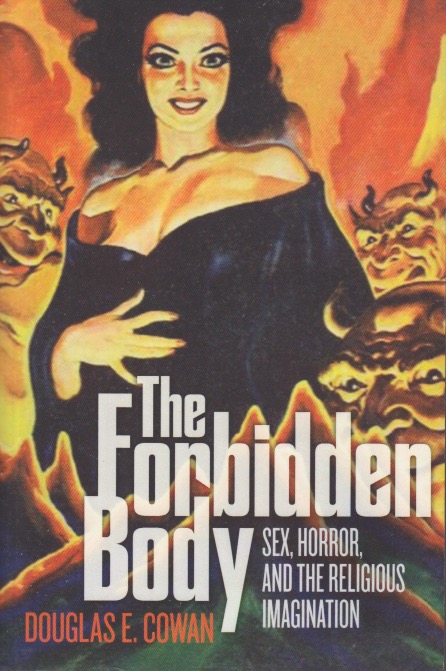
I owe Douglas Cowan a debt of gratitude.  Spending evenings at the American Academy of Religion and Society of Biblical Literature annual meeting curled up with his then new book, Sacred Terror, I was amazed.  Vaguely in the back of my mind I knew that film scholars were writing about horror, but I didn’t know that religion scholars even could.  Of course, later I discovered that Cowan had predecessors, as do we all, but that still didn’t change the fact that he opened my eyes to possibilities.  Being a slow reader with an unrelenting 925, I can’t keep up with any one author’s total output but I knew I’d need to read The Forbidden Body as soon as it was announced.  Subtitled Sex, Horror, and the Religious Imagination, it covers many aspects of what’s being called embodiment studies.  And there are, of course, monsters.

Where he finds the time to read so much and watch so much I can only guess.  This book covers a lot of territory that I can’t even begin to summarize here, but it goes without saying that Cowan’s many observations are worth paying attention to.  If I were to try to find a main theme I think it would be bodies out of place.  At least that what it seems to me.  Bodies out of place can mean many, many things.  Horror isn’t shy, of course, about showing you many of these.  As always, the unexpected part is religion.  Better, religious imagination.  I’ve been trying for years to articulate how religion and horror are related, and this is obviously something I haven’t been the only one pondering.  Cowan offers trenchant thoughts on this and even gives you some glimpses of unexpected monsters along the way.

Horror is often considered puerile, I know.  You get an image of a bunch of guys in business suits or military uniforms shaking your shoulders and saying “grow up!”  But what is it we’re growing up for?  To feed the monster.  So that those who are the monster can pamper their bodies with the luxuries everyone else works to provide.  Religion often serves to motivate those who are on the production end of this scale, but there is a truly Ottoian fear that compels us, lying not so very far beneath the surface.  Religion reaches out to those who encounter the monster.  And those people have bodies.  Cowan touches on many aspects of horror here from Corman to Lovecraft to Sade.  My response, perhaps appropriately, is that my head feels like it’s exploding.  I have so much yet to learn.


Sleepy Hollow West

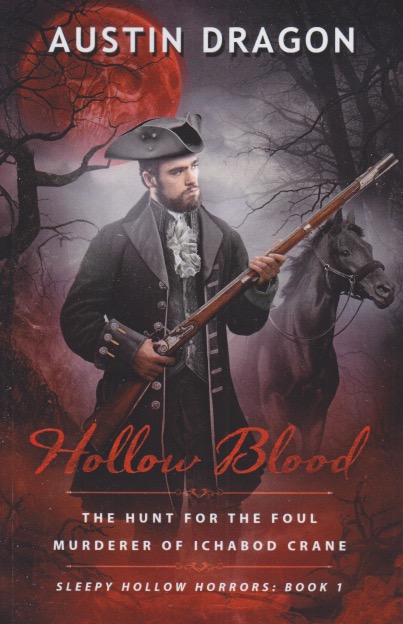
You’ve got to admire those who are determined to be writers on their own terms.  As someone who’s tried and tried again to break into even indie presses, I know few established publishers will even consider fiction from someone who’s not already established.  As my regular readers know, I’ve been reading a lot about the Legend of Sleepy Hollow lately.  So I came across Austin Dragon’s Hollow Blood.  Part of a two-volume novel set, the story takes a creative approach while retaining several of the original characters, even having clever nods now and again to the wording in the original.  Although clearly self-published, Dragon is able to let his imagination go on this one.  Julian Crane, Ichabod’s nephew, is out to avenge his uncle’s death.

In Sleepy Hollow he confronts Brom Bones with the crime, but wrongly.  It turns out that the Marshal—there are elements of the old west in this too, with cowboys and showdowns—knows where Crane has settled and offers to take the nephew to him.  So unfolds a story that feels a bit more like a western than a horror story at points.  I don’t want to give away too much since Dragon, like most of those who make their living by writing, needs to move copies to stay solvent.  The thing is, Sleepy Hollow seems to be an evergreen subject.  America keeps coming back to it.  Many writers try to take it on as the basis for more modern reboots.  Of course, I have to read the second volume to find out how it really ends.

I can’t help but think that the internet has made it difficult for writers by allowing anyone to establish him or herself as one.  If you can build a fan base, you can make a living at it.  The publishing industry faces problems of its own, of course.  Paper shortages are a problem.  Not only the pandemic, but the assumption that ebooks were going to spell the death of print led paper mills to cut production.  Funny thing—print has been seeing a resurgence of interest.  Large media seems surprised, scratching its metaphoric head and saying “People like actual books—who knew?”  But I digress.  The simple tale of a love triangle in the 1790s with a ghost on the loose has spawned a great number of offspring.  Some published the traditional way, and others on a writer’s own terms.  It’s a story worth the retelling.


More Excuses

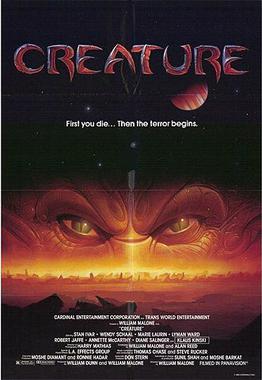
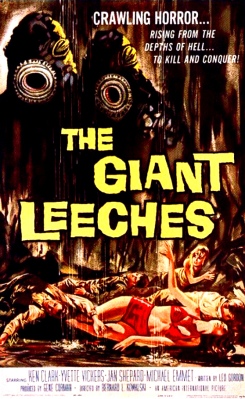
Perhaps it was my Shingrix-addled brain—but we all know that’s an excuse—I decided to watch Creature (1985) and Attack of the Giant Leeches (timeless) over the past couple of days.  The former was a decision made when not having the energy to read, I could still search Amazon Prime for “free to me.”  I was all set to start Attack of the Giant Leeches when I scrolled over Creature only to learn it would be free for only eight hours more.  I recalled, somewhere in the haze, that a movie called Creature was on my watch list, and since time was running out, I clicked play.  Clearly a knock-off of Alien, with even a Sigourney Weaver stand-in, it was one of the most badly written films I’d seen in a long time.  I was surprised to learn it’d had a theatrical release.

A crew stranded on Titan, one of Saturn’s moons, finds a creature—one that looks like a down market version of Ridley Scott’s nightmare—that feeds on unsuspecting astronauts.  Still, the surprises kept coming.  The impossibly pretty women and rugged men of the crew seemed unlikely.  And was that Klaus Kinski trying a move on the security officer that he wouldn’t have survived if he’d tried it on Sigourney?  And how was it even possible that this was nominated for the Best Horror Film of 1985 at the Saturn Awards?  Okay, granted 1985 wasn’t a banner year for horror, but Creature really doesn’t seem to hit the bill for “best of” category—but it was over 25 years after a classic.

Attack of the Giant Leeches is obviously the lesser of the two movies, but it falls into the category of “so bad it’s good.”  The leeches are clearly people in rubber suits, and the caricatures of the hooch-swillin’ swamp-dwellin’ lazy ole homeboys is just too good to pass up.  And the fact that it’s just over an hour long is a bonus when you’re having trouble keeping your eyes open.  Those black-and-white sci-fi horror films of the fifties sure take me back to more innocent times (not the fifties, and the film isn’t all that innocent).  Given that both movies were free on Prime, and given that my head was fuzzy from my vaccine, I counted this as a worthwhile effort at staying awake.  We seem to have come to a more sophisticated era, in many regards.  Such films can’t compete with their modern-day counterparts and even streaming companies are producing their own these days.  There’s something to those older films, however, and maybe it’s helped along by a shot in the arm.


Hiding What?

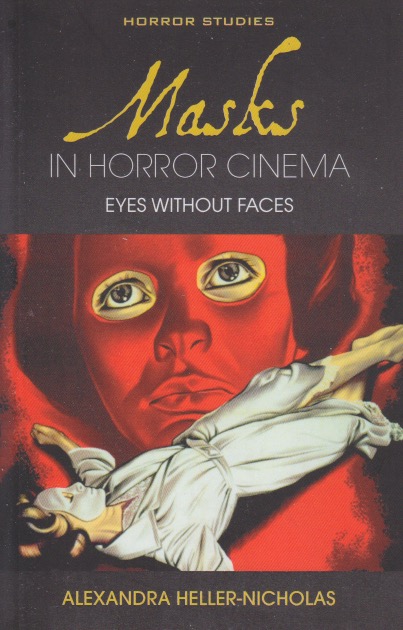
Who are we?  Do we really show ourselves to others, or do we wear masks?  That question applies to horror films as well as to everyday life.  Alexandra Heller-Nicholas addresses this directly in the former context in Masks in Horror Cinema: Eyes without Faces.  As I write about horror films, peer reviewers suggest these more technical studies as means of adding depth to my analysis.  Most of them are revised dissertations and retain the academic language that makes such documents difficult to read in places.  Still, they contain a lot of insight.  I learned a lot from Heller-Nicholas and I was particularly impressed that she took the “shamanic imagination” as her approach to the films she analyzes.  The ritual aspect makes good use of religion and horror connections.  It’s nice to see this catching on.

Masks are more than disguises.  Yes, there’s something theatrical to them and there’s a great deal of ritual to theater.  Ritual and religion aren’t identical, but they are clearly related.  Often masks are discussed as simply a way of hiding a killer’s face.  There’s quite a lot more to it.  This is where the academic analysis comes in.  We can’t explore it in detail in the brief context of this post, but there’s a whole book out there to read on it.  Heller-Nicholas doesn’t feel constrained to major movie releases.  I did that in Holy Horror because I supposed more people would be interested in reading about movies they’d actually seen (most of them anyway).  There are a lot more examples out there.  I’m learning about more all the time.

There are many different masks in horror.  This book looks at several, some metaphorical, but most literal, and what they convey.  Or conceal.  The fact is we mask ourselves for many reasons.  It’s kind of like when we dream—our subconscious seems to know more about who we are than our waking minds do, and we really don’t share our dreams with others.  The mask in horror isn’t worn just by killers.  When it is, however, it often has a shamanic effect, or, as Heller-Nicholas points out, a trickster aspect.  This is very much like how anthropologists approach shamans in traditional societies.  Religious specialists are often tricksters and they provide an important element in cultures that are otherwise beset by rules.  Rationality is important, but so is letting go of it once in a while.  Shamans get away with things the average person can’t.  And it is just one of many masks we wear all the time.


O Viy

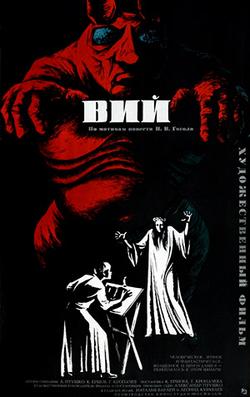
Viy is a most unusual movie.  I’m talking about the 1967 version, of course.  Filmed and produced in the USSR, it was, by many counts, the first Soviet horror film.  There’s been a resurgence of interest in it because of the study of folk horror—and it’s certainly an example of that.  Not really known for its plot, it’s noteworthy in its early special effects.  Since it’s a story that revolves around a monk, however, it participates in religion and horror as well.  Unusual for a Soviet-Era film.  Set in an undefined period in the past—before electricity, in any case, and perhaps the Middle Ages—a class of seminarians is released for vacation.  They’re a rowdy, unruly bunch, hardly the pious priests you see associated with orthodoxy.  When three of them get lost on their way home they end up spending the night at the farm of an old woman.

The woman comes after Khoma (one of the three) that night and bewitches him.  Riding him like a horse—and this is common witch lore—when she finally releases him, he beats the old woman severely.  But she has turned into a beautiful young woman.  Khoma returns to the seminary but is sent to say prayers over a dying young woman—one guess who it is.  Between getting drunk and trying to escape, Khoma seems to guess his fate.  At the compound of a wealthy merchant, the girl’s father, he learns she has died.  The father insists he keep vigil for three nights, praying over her corpse.  In the church scary things happen, not least her return to life.

On the third night all kinds of monsters appear after she calls on the god Viy.  Viy means something like “spirit of evil.”  Each night Khoma has drawn an effective magic circle around himself, which keeps the dead witch at bay.  The last night the monsters make it through, with predictable results.  There’s so much folklore at play here that it’s easy to see why the story by Nikolai Gogol suggested itself for a film.  It was poignant to watch because it’s set in Ukraine (Gogol was a Ukrainian writer).  Gogol had a tremendous influence on other writers, but isn’t as widely cited among western authors in contemporary times.  The film is fairly easily found online, and an updated version was released in 2014.  Even in the USSR, when horror emerged in the late sixties, it was doing so with religion, even before Rosemary’s Baby.


Novelization

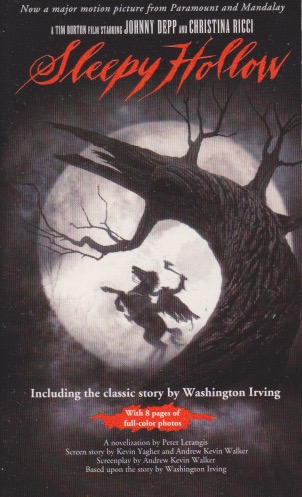
It must be both difficult and easy writing the novelization of a movie.  I suppose it depends on the movie as well.  Sleepy Hollow is a film based on a story already, but Washington Irving’s tale isn’t a novel and the movie was a collaboration between Irving’s original, re-envisioned by Kevin Yagher, Andrew Kevin Walker, and Tim Burton.  The novelization was done by Peter Lerangis and it, naturally enough, follows the movie.  As a novelizer, however, you need to try to make sense of some scenes where a film only implies what’s going on.  Now, in this case I’ve seen the movie many times and any deviations come across as “that’s not the way it goes” moments.  Still, it’s competently done.  It  even helped me make sense out of some things that had me puzzled since the start of the millennium.

In the “book or movie” debate I tend to think a book should be read first.  Sometimes it should go the other way around.  Novelizations are, of course, intended to increase the profits for a film.  You’ve got the box office take, and if there are advertising tie-ins or other merch, you can add to the haul.  A novelization can also help.  In this case, the movie has a somewhat complex plot with revenge and double-crossing, and so a novel helps to make all that clear.  However, when the novelist asks you to accept what a character is thinking you may have already come up with your own ideas on that point and any postmodernist would tell you that your opinion is just as valid as that of the writer.

Movie scripts tend to be a bit short for novels—if the movie isn’t based on a novel, of course—and sometimes extra material is needed.  This novelization includes the public domain story by Irving as well, even though the movie completely recasts all the characters into unfamiliar roles.  Brom, for example, is a minor part, whereas Katrina is a witch and Ichabod a constable from New York City.  All of that having been said, there really aren’t many surprises here.  I read this because I’m interested in the life of “The Legend of Sleepy Hollow.”  Its many retelling and re-envisionings.  The original story was published less than fifty years after American independence and has memories closer to the time.  It tells us something of what it was like in those early days.  And this novel both retells and redacts a movie already a couple decades old itself.


Who’s Calling?

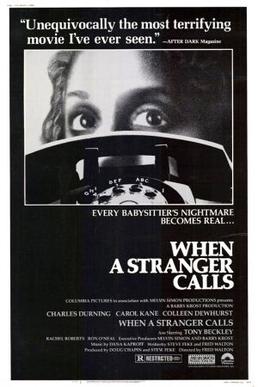
The first twenty minutes are impossibly scary.  I didn’t see When A Stranger Calls back in 1979, when it came out.  I prefer my monsters in non-human form, thank you.  But still, to be writing books on horror movies without ever seeing what is widely regarded as being the scariest opening ever?  Although the first twenty minutes were indeed scary, and extremely tense, for me the scariest part came after that because I didn’t have any idea what else would happen.  Of course I knew the initial calls were coming from inside the house.  That urban legend seems to have been around since I was a kid.  I wasn’t sure who survived, if anyone.  And psychopaths are scary in real life, let alone in fiction where they can break into locked houses pretty easily.

The story, as laid out, is better than most critics give it credit for being.  The only part that seemed difficult to believe (and don’t get me wrong—I love Charles Durning) was that an overweight John Clifford could do all that running (particularly up stairs).  It’s believable that the criminally insane can escape—Michael Myers seems to do it every couple of years—and even that they could blend in on the streets of any city.  I do have to agree with the critics that the writing isn’t great, but those who say it’s not scary enough, well, they’re made of sterner stuff than me.  Or perhaps they lack empathy, which is a scary thing in itself.

Curt Duncan, perhaps because he’s clearly killed at the end of the movie, never became the serial boogyman that the aforementioned Myers, or Jason Voorhees, or Freddy Kruger, or Hannibal Lecter became.  Although sequels were made, once you’ve seen that first twenty minutes of Stranger, you get the sense that they’re not going to be able to do it any better.  Snopes tells us the legend began in the sixties.  It was clearly a reaction to the proliferation of telephones and the potential to abuse such technology.  That’s an object lesson we still haven’t learned.  We now seem never to be more than inches away from a device at all times.  Except maybe when in the shower, but that’s a scary story for another time.  Although I won’t be going back to rewatch or analyze this one over and over, still I feel I somehow earned a stripe or bar for watching it.  And I now feel even more appreciative of caller ID.


Scary Holidays

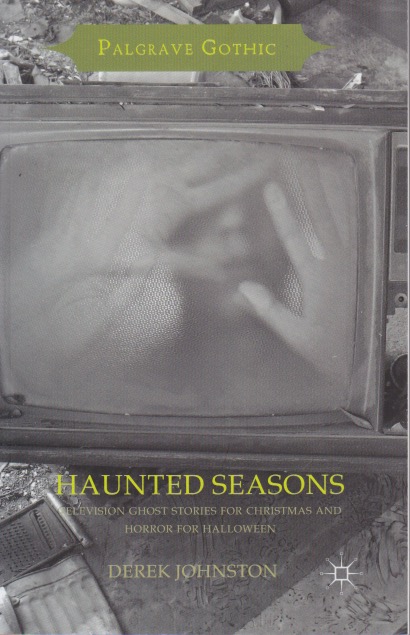
One of the real wonder of books is that they can spawn ideas outside their specific topics.  While revised dissertations can be somewhat difficult to read, Derek Johnston’s Haunted Seasons: Television Ghost Stories for Christmas and Horror for Halloween contains quite a few such moments of birthing ideas.  While being largely British-focused, it nevertheless explores holiday horror, a phenomenon that I’ve been researching for some time.  Not really a television watcher (not any more—as a child things were quite different), I don’t really keep up with many programs.  Still, I learned a lot from this book.  One of the main questions it addresses is something I’ve long wondered about—why is there a connection between Christmas and ghost stories in England?

Johnston points out that Celtic areas tended to have Halloween or its precursors to supply an occasion for otherworldly thinking.  The English, not wanting to think of themselves as these outer-lying cultures (I’m simplifying and abstracting a bit here), developed their own tradition of the Christmas ghost story.  It pre-dates Dickens and probably goes far enough back in history that there’s no way to trace it.  Telling ghost stories around the shortest day of the year makes its own sense.  Dickens’ A Christmas Carol was perhaps the most famous example, but M. R. James’ habit of telling ghost stories (later published) to students and fellow enthusiasts on Christmas Eve also plays into it.  In Britain this led to a series of BBC Ghost Story for Christmas shows.  Meanwhile, in America, where there was quite a lot of Celtic immigration, a taste for Halloween grew.

There are so many ideas that swirl around holidays.  I’ve been exploring the topic for nearly two decades now.  Publishers, always with their eyes on the bottom line, don’t produce much like this, figuring people will only buy it one season a year, and for books that means usually the first year only.  Some people (yours truly, for one) will buy books about holidays out of season.  So much of life is preparing for special times.  I suspect that ancient people also fell into humdrum daily existences also.  Humans require stimulation, we like variety and novelty.  Holidays are a great solution—they don’t occur every day.  If they did they wouldn’t be special.  They bring something different into our workaday world and, in modern times especially, we brand them so that each one is at least slightly different.  I don’t mind seeing the seasonal displays so early in the stores—it reminds me that haunted seasons are just around the corner.


Double Feature

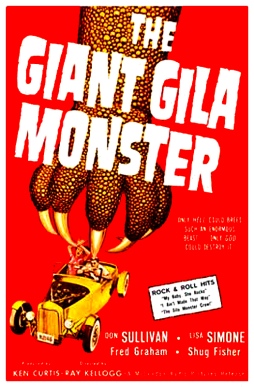
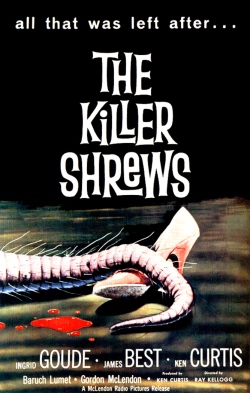
Creature features were a regular part of my youth, and, I suspect, where my appreciation of horror films began.  Nobody was really afraid of Godzilla or other monsters that were clearly people in rubber suits.  The use of forced perspective to make regular-sized animals into giants was obvious even to a child, but that didn’t make such movies any less fun to watch.  The Giant Gila Monster and The Killer Shrews both involve gigantic versions of rather small animals and both of them were produced outside of the studio system by Gordon McLendon, the owner of a chain of drive-in theaters.  Looking for B-movies for double features, he decided to make a couple of his own.  These two didn’t cost that much, but the special effects artist, Ray Kellogg, agreed to do them if he could be the director.  Together they make quite a double-feature of their own.

The Giant Gila Monster is never explained beyond the effectively shot beginning stating the who knows how big some things grow in the unexplored west.  Not even using a real gila monster, the lizard (unlike Komodo dragons, which one expects, were too expensive and untamable) isn’t aggressive and seems, from my perspective, to be just barely putting up with the fake trees and models it has to crawl over and around.  And everyone, apart from Mr. Wheeler, is nice.  The local Texas teens want to drag race but Chase Winstead, the gold-hearted mechanic, keeps them in line.  It’s a perfect world, in a Republican kind of vision, except for that darned giant lizard.  Winstead even figures out a way of getting rid of it so the authorities don’t have to.

The Killer Shrews, in reality puppets and dogs dressed up as shrews, is more adult-themed.  Four scientists on an island—contradicting the voiceover at the opening—have bred giant shrews.  The supply-boat captain and his Black mate are trapped on the island by a hurricane, where the mate predictably gets eaten by the escaped shrews.  McLendon himself appears as an over-the-top nerdy scientist while the producer, Ken Curtis, appears as another, more action-oriented man of science.  In a move a little unexpected for the fifties, Dr. Craigis’ bombshell blonde daughter is also a scientist.  But she’d be willing to be a sea-captain’s housewife if only she could get away from these awful shrews!  There’s a bit more tension in this one as one of the scientists is already engaged to Miss Craigis, but he’s a drunk and she wants out.  So might some audience members, but both films found international distribution and made money.  Now widely available for free, they are a slice of childhood served up in giant proportions.


First Choice

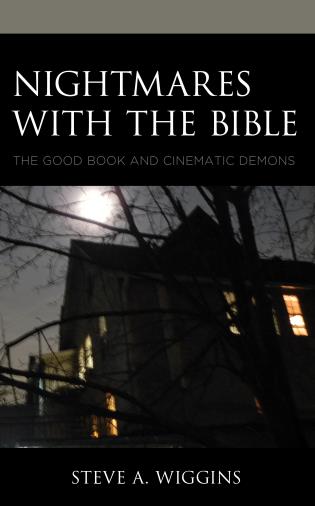
One of the first things I do when I finish a book, unless I know about the author already, is ecosia (google) her or him.  I want to know who it is that wrote this, and the internet’s right there!  So it came as a surprise to see my first (two-star) review for Nightmares with the Bible on Amazon, where the reviewer did no follow-up.  The reviewer is quite upset that I don’t take the Bible literally, but at least s/he bothered to leave a review.  A more positive rating might bring me up to three stars, but I’ve failed classes before.  I’m a big boy, I can handle it.  In any case, if you ecosia me you’ll quickly come upon this humble website that’ll tell you what you need to know.  No, I am no longer a Fundamentalist.  And the book was about demons in movies.  (I was actually searching for reviews of the series.)

I scrolled down.  The named reviews solicited for the book I knew, so I was surprised, and delighted, that further down the page I had a Choice review.  Even a disgruntled evangelical couldn’t bring me down after that!  In case you’re not a librarian, or an academic publisher, Choice is THE periodical librarians use for deciding on which books to buy.  It is very difficult to get a review in it—I work at a prestige publisher and seldom see our books in there.  If you’re a trade author that’s not so important, but if the only sales, or majority of sales, are for libraries, to get a “recommended” status is a big deal.  That’s worth celebrating.

If you’re wondering, authors do not get notified of reviews.  Some editors will let them know (my editor at McFarland hasn’t been in touch for years).  The journals are too busy doing what journals do to send every author a copy of their review.  So I swung by Amazon’s Holy Horror page.  I’ve got four ratings there now, mostly on the lower end of the scale.  If you’ve read it and liked it (not something I assume, of course) a nice review would go a long way.  Disgruntled evangelicals (aren’t they all, these days?) may make the books look bad, but colleagues who’ve read them seem to think differently.  I hold to the publishing adage that there’s no such thing as a bad review, but good reviews feel so pleasant.  I’ve only written one negative book review in my life, and that was because I felt any other would be utterly dishonest in that particular case.  It’s a choice I make because of the Bible: “For with what judgment ye judge, ye shall be judged: and with what measure ye mete, it shall be measured to you again.”