Horror Shortly

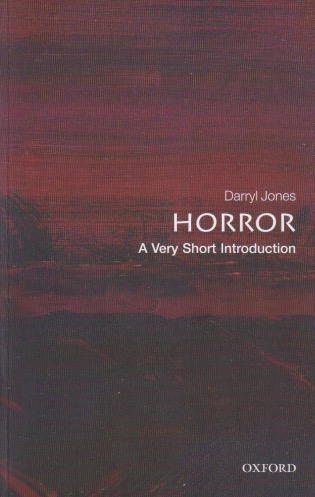
Some short books have an outsized punch.  Especially when dealing with a large topic such as “horror.”  This isn’t just horror movies, which could easily fill such a book, but also literature and other media as well.  Darryl Jones has proven himself on this topic before and this Very Short Introduction is a showcase of what is a fascinating genre.  I’ve read a number of books in this series and this stands out as one that works admirably within extreme limits—they are very short—in making good decisions about representative aspects in what is really a sprawling field of inquiry.  The introduction lays the task out well and I came away from each chapter feeling inspired.  Of course, not all of horror can be covered in less than 150 pages.  Some may find their favorite fear unaddressed, but they’ll learn something nevertheless.

In his first content chapter, Monsters, Jones focuses on vampires and zombies.  These are both forms of cannibals as they’re currently conceived, zombies being relative newcomers to most favored monster status.  His next chapter, on the occult and supernatural, takes on the Devil himself before addressing satanists, demons, and ghosts.  These are, of course, religious monsters.  Although Jones doesn’t dwell on that aspect, the close relationship is nevertheless evident.  For those of us who explore religion and horror this framing proves helpful.  It’s worth pausing here to consider how all of these entities overlap a bit.  As anyone familiar with ghost hunters knows, ghosts and demons may both be found haunted places, and the Devil is the head demon.  Of course, horror is a fiction genre but many people believe in these entities.  That brings religion and horror within the same room.

Body horror occupies the next chapter, and here werewolves come into the picture.  Other aspects of body horror are also discussed, but the painful transformation of the shapeshifter is prime territory.  Horror and the mind brings us to psychological thrillers and the gothic fear of madness.  The topic segues nicely into science, which the next chapter covers.  Not only science itself but the mad scientist.  Finally, the lengthy afterword looks at where horror has gone, and may be going, in the new millennium.  Something that struck me, and which brings this back into religion, is how frequently Darwin and evolution are mentioned.  This concept challenged the human place in the divine hierarchy and led to much of what we think of as horror.  This book is a great resource in a small package.

Living Right

Horace Liveright had an outsized influence for his somewhat foreshortened years.  Initially a bond trader, he eventually moved into publishing where he founded the Modern Library as well as Boni and Liveright.  The Modern Library still exists, now as an imprint of Random House.  Liveright ceased publishing operations eventually, but the name was revived as an imprint of W. W. Norton.  There have been many publishing Wunderkindern, including Richard L. Simon, co-founder of Simon and Schuster (and father of Carly Simon), and the Scot William Collins whose name still appears in HarperCollins.  While reading about Liveright recently I learned that he also was responsible, in an unexpected way, for the development of the horror film.

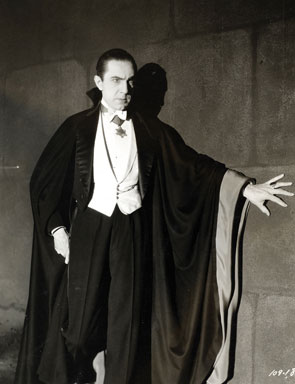
Liveright never worked in the film industry.  He did, however, work as a stage producer in New York in the 1920s.  Among his most successful works was a play titled Dracula.  It starred Bela Lugosi and Edward Van Sloan as Dracula and Abraham Van Helsing, respectively.  The success of the Broadway show caught the attention of Hollywood and Lugosi and Van Sloan were cast in the same roles in Tod Browning’s Dracula, widely considered to be the first horror film, released in 1931.  Van Sloan went on to appear in Frankenstein as well, and Lugosi reprised his Dracula character as well as several other monsters.  It’s possible, perhaps likely, that horror would’ve begun with some other entry into the genre, but as history stands Dracula, based on Liveright’s stage production, started the whole thing.

Unless we work in it, we tend not to think about publishing too much.  We don’t pay attention to the publisher of the book we’re reading, and who lingers over the copyright page?  Giving a thought to these details, however, often adds new stories to the ones between the covers.  A fellow editor is fond of saying that books are as much about the author’s story as they are about the story the author’s telling.  The press, for example, often focuses on the former.  Who is it that wrote this book and why?  The question may be extended further—what publisher took it on and how did they even get into the business of deciding what people will read?  The internet has democratized that quite a bit, of course, and some authors can become their own authorities by knowing how to handle it.  So I’m taking one such opportunity to highlight the work of a sometimes forgotten pioneer who nevertheless began a publishing venture from which we’ve all most likely read.  And he also helped created the horror movie.


Whose Baby?

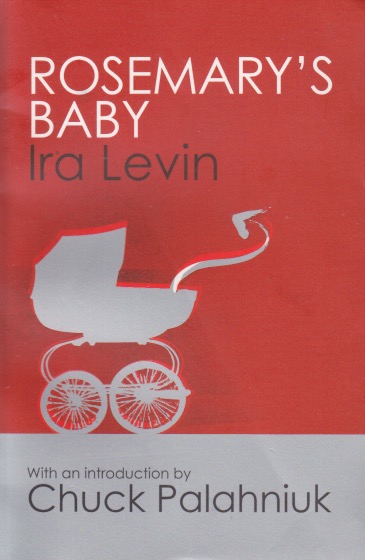
Some books are better known as movies.  I suspect that I, like many, saw the movie Rosemary’s Baby without ever reading the book.  It turns out that they’re very similar.  The book takes the action a few minutes beyond the end of the movie, but otherwise they’re quite close.  Reading a horror novel where you know everything that’s going to happen isn’t exactly the recipe for thrills and chills, but I’m nevertheless glad to have done it.  For a book published as long ago as it was (1967) it still isn’t easily found used.  New copies tend to be just as expensive as new books.  I just wanted to have a read to see if Roman Polanski stayed close to Ira Levin or not.

Levin had a string of successful novels, but Rosemary’s Baby is probably still his best known.  He is quoted as saying he didn’t believe in the Devil and felt guilty that his book (and movie) may have led to many people taking on that belief.  In many ways Polanski’s movie kicked off the age of modern horror, being released the same year as George Romero’s Night of the Living DeadRosemary, however, opened the door to horror with overt religious themes.  It paved the way for The Exorcist and The Omen.  The latter, written by David Seltzer, was another example of a movie based on the Devil by an author who didn’t believe in him.  Personal belief aside, that trinity of movies remade the horror scene and led to one of the strangest cooperations in cinematic history.

In the book versus movie scenario often there’s a clear winner.  On other occasions the movie is so powerfully made that it overshadows its novel.  Rosemary’s Baby, along with The Exorcist, tended to do so.  (The Omen was novelized from the screenplay by the screenwriter.)  I wonder if that might not be because religion pays right into cinematic representation.  The novels, after all, can take several days of reading on a normal workaday schedule.  The film, if well done, transports the viewer there for a couple of hours and leaves you feeling as if you’ve been through, in the case of Rosemary, a traumatic pregnancy.  It so happened that the unholy trinity of religious horror tapped into that rapt storytelling of which celluloid proves so capable a medium.  Still, reading the novel fills in many of the gaps and brings to mind the benefits of the written word.  And this is, like a birth, something to be celebrated.


Incorporeal

I’ve been struggling with the concept of incorporeality.  Well, not me personally, but in how it fits into demon movies.  Specifically the Conjuring universe.  I’ve recently been watching the series through again and the corporeality of demons strikes me as problematic.  As spiritual entities demons don’t have bodies—that’s why they possess people.  Yet in these films they can be contained by blessed spaces, or objects.  The doll Annabelle, in particular, has to be kept in a locked glass case to prevent the demon (apparently Valak) from gaining its full power.  Annabelle Comes Home discusses this directly.  After the priest blesses the doll, Lorraine Warren says it’s not enough.  The evil has to be encased in another layer.  In this case, glass from “Trinity Church” which has, ironically, been torn down.

Watching the entire series, as it currently stands, Annabelle appears in four of the eight films and is named in a fifth.  Annabelle: Creation implies that the demon in the doll is Valak (a.k.a. “The Nun”), and she has her own movie as well.  In each case the demon has to be contained within a sacred space.  Once out, it manifests in corporeal form with the ability to harm, or even kill, human beings.  Now, I know this is movie magic.  I also know these movies have been carefully pieced together.  The corporeal/incorporeal question is a standard of seminary training.  While the topic of ghosts, and demons for that matter, was never raised in the curriculum, we did have to deal with God and angels and what it means for a being without a body to become incarnate in one.  These movies could use some seminary.

Is it like this?

In Holy Horror, and especially Nightmares with the Bible, I wrote quite a bit about The Conjuring and the universe it’s building.  I’ve seen demons physically attacking characters, and even taking on classic demon shape.  The viewers wants to see the monster.  If they’re truly incorporeal they can cross between glass cases, doors, windows, and walls.  Some of them do, when it suits their purpose.  Yet they can be quieted by being locked into a glass case, as long as it’s been blessed.  Of course, I’m trying to figure this out on my own.  There are entire fandom wikis out there based on the films and they probably have much more detail than I could ever find on my own.  But then, in a sense, information on the internet is, well, incorporeal.


Secret Formula

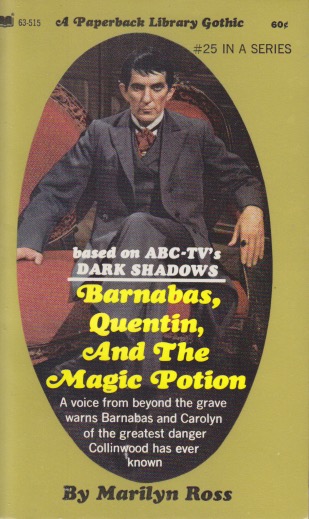
When writing fiction, I’ve never tried a series.  Some, such as Harry Potter, can set a writer for life.  I’ve always had the sense that the Dark Shadows novels were more potboilers.  There was a built-in fan base, and somehow in the sixties and seventies we didn’t expect Rowling-level writing.   It was the entire package: the Gothic, the recurring characters, the moody setting of Collinwood.  And of course, Barnabas Collins.  These novels may be journeyman writing, but here at number 25 in the series, Barnabas, Quentin, and the Magic Potion, there are some signs of literary improvement.  They are slight, rather like the first tinging of leaves with yellow as August begins to settle in, but they are there.  The series is nearing its end for me (provided I can actually find the last few books), but maybe it’s getting better.

What’s my reason for such a burst of enthusiasm?  Well, in this episode we see some features of Quentin that are more in line with how I remember him.  First of all, Ross tries some misdirection.  Quentin is presented as a master of disguise in the series and here there’s some clever hinting that, if you’re trying to think it through, leads you to mis-guess early on.  Not only that, but there’s a more positive view of Quentin here.  He’s not the evil satanist that he is earlier in the series.  Perhaps Ross had figured out by now that if people liked the idea of a Barnabas who is a conflicted victim, the same might apply to Quentin.  He’s not evil, but when you’re a werewolf, well, what can you do?

The “magic potion” is just as contrived and sketchy as most of the plot devices in this series—Harry Potter this is not.  It’s just a get rich quick scheme for a reprehensible old man and serves to move the plot along without really adding anything to it.  Carolyn here discovers that Barnabas is a vampire and, it seems to me, some of the plot devices for the Tim Burton movie might’ve been picked up from this particular novelization.  Although still not belle lettres by any stretch, the story here seems to have made some progress over the previous 24.  As a child, of course, I didn’t read these in order.  I relied on what I found at the bin in Goodwill, when I could find them.  I never had the whole series.  While trying at times, reading them may be a worthy exercise as an adult.  Perhaps series too grow up.


Keeping Categories

Writing books about movies with a limited budget presents some challenges.  Our subscription to Disney Plus doesn’t really help with the horror genre, but my wife insightfully added Hulu to the package.  Now Hulu isn’t known as a horror streaming hub, but they do have some movies on my viewing list.  The other day I noticed one of their offerings with a title I didn’t recognize.  I  tried searching it on IMDb and came up with nothing.  A bit more research revealed it was an episode of an original Hulu series, mixed in with the horror movies.  The eroding of categories bothers me a bit.  It’s not just Netflix and Hulu and Amazon with movies, but it’s across the board.  I grew up when movie and television were easily distinguished.  Now we live with hybrids.

The same is happening in publishing.  When I sit down to write a book I have a specific end-goal in mind.  Everyone knows what a book is, right?  Well, the future of publishing is all about breaking that down.  Already years ago you could purchase aggregates for classroom use.  These were custom-selected chapters from certain books (electronic, of course) that an instructor could bundle into a “textbook.”  You could mix in articles, blog posts, anything to which you had the rights.  Such a textbook is not a book.  Nobody set out to write it in that form.  It looks like things are moving more and more in that direction.  You’ll be able to purchase just a chapter, or even a paragraph, to use.  Even if the book only makes sense when taken as a whole.

The electronic era is all about breaking down what civilization took centuries to build up.  Not everything about civilization has been good, of course.  It has been patriarchal, treating women unfairly.  It has been supremacist, treating those less technically developed in horrendous ways.  It has been classist, favoring the rich and their interests over those of the vast majority.  Still, it has left us some good legacies—the book, the symphony, the movie.  Such things have made us better people.  It may be fine to break such things down—who knows?  Maybe it will create more fairness for more people.  It won’t help me, however, when I’m trying to write a book about movies.  You still have to know what counts for each category, even if you have to do so on a budget.


Being Vigilant

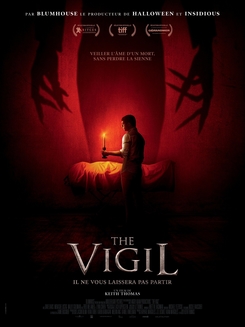
While keeping to a budget, I’ve been tying to sample some new movies as therapy.  Interestingly, Hulu has had three on my long-time “to see” list, including The Vigil.  I heard about this one as soon as it came out.  Religion and horror have been a recent area of fascination, so how could I not?  A horror film partly in Yiddish is a novelty for me, and the haunting, endlessly haunting holocaust is never far from the surface.  Jacov, a young man with psychological issues caused by the death of his much younger brother, has left Orthodox Judaism.  He’s hard up for money, however, and agrees to sit as a shomer, a watcher who keeps vigil with a corpse of a person who has no family to do it, for pay.  The rabbi informs him the shomer he hired left because he was afraid, but since Jacov has done this before, he’s sure he can handle it.

Sitting in a creepy Brooklyn house with a corpse is made even more difficult by the widow’s Alzheimer’s disease and Jacov’s seeing things.  Unsettling events take place.  The problem is revealed to be a mazzik, a kind of Jewish demon.  As I explore in Nightmares with the Bible, and Holy Horror, the Jewish idea of demons took quite a different track from the Greek-inspired Christian concept.  Jesus was Jewish, but living in a Roman context.  What we in the west understand as demons is largely based on The Exorcist.  In Judaism demons weren’t the same obsession they were for Christians.  The dybbuk tends to be the soul of an evil person that can’t rest after death.  A mazzik is more a demon sent to harm, as a form of divine punishment.

The Vigil presents Jacov in that pincer of having left a religion only to find himself needing it in a time of crisis.  His Orthodox upbringing hasn’t prepared him for the world of having to interact with women, or even gentiles (as wicked as they can be).  The mazzik has haunted the man who’s just died—a holocaust survivor—and is now looking for another broken person.  Ever since the death of his brother, Jacov has been broken.  The film make effective use of several horror tropes, and is quite claustrophobic in the small house.  Even though set in New York City, isolation is the real threat.  More than that, the movie eloquently articulates how religion and horror rely on one another.  And how they might learn from each other.


Nine Secrets

By their very nature they make us wonder what they’re up to.  Secret societies, I mean.  That’s part of their appeal.  Those on the outside speculate and usually the ideas swirl around mysterious rights and probably sex and money.  Leigh Bardugo takes it in a different direction in Ninth House.  Since I try not to read reviews before getting into a book, I wasn’t aware of the premise that the secret societies of Yale University were the nine houses referred to in the title.  Bardugo’s imagination takes the route of suggesting that they all specialize in different kinds of magic.  That makes this kind of a fantasy horror novel because the protagonist, Galaxy Stern (“stern” is, of course, German for “star”), can see ghosts.  And some of the professors aren’t who you think they are.

Somewhat gritty, Alex (Galaxy) isn’t exactly college material, let alone Yale.  She’s a recovering drug runner who has a past that would keep her out of most universities, particularly those of the Ivy League.  Still, she’s invited to Yale and she has some personal motivations, not necessarily academic, to accept.  She’s brought there by the ninth house, Lethe, because of her ability to see ghosts.  As portrayed in the novel Lethe is the secret society that makes sure the others don’t go beyond their bounds, the police, if you will.  Each society specializes in a specific kind of magic and it uses it to help its members benefit in school and career.  That’s why the university is so well funded.  It paints a compelling image of New Haven and it manages to capture the mystery many of us felt about attending college in the first place.

Yale is one of the two Ivy League campuses I’ve never been on (the other is Dartmouth).  Even so, Bardugo writes in a way that makes you feel as if you’ve been there.  The story is a page-turner that goes quickly for its size.  Alex, who is a novice in Lethe, spends the novel trying to find her mentor, Darlington, who’s been missing since some bad magic got him.  There are many unexpected twists along the way.  Although I don’t know much about Bardugo’s past, it seems likely that she knows some people in the drug culture.  Maybe she’s even seen some ghosts.  All of this combines to make a magical read that should appeal to Neil Gaiman fans as well as those of Stephen King.  And, of course, those who like to speculate about secret societies.


Can You Recall?

While recently in touch with a colleague I’ve never met, I agreed to send along a filmography of my two horror movie books, Holy Horror and Nightmares with the Bible.  I tend not to read my own books after sending them to the printer.  Defensively it might be that I can say, “I know what I wrote,” but in reality it’s probably more a lack of self-assurance.  Writers often experience self-doubt and although you’ve convinced an editor and an editorial board you may still have your harshest critic to please.  Even though you’ve read the book many times through—at least fifteen each for these two books—you fear you might’ve overlooked something.  So it was strange trying to recall which films I’d actually discussed.  Or how many.

The latter point became clear in a recent review on Reading Religion.  Knowing how I went about piecing together Holy Horror, I’d forgotten just how many movies I watched and rewatched for it.  While it was never intended to be a comprehensive treatment of the Bible in horror (I haven’t seen all horror films), it nevertheless ranges widely.  After having submitted it I continued to watch horror and I continue to find various Bibles in it.  The amazing thing is just how truly widespread the Good Book is as an iconic symbol.  Indeed, I’d been reading about the Bible as an iconic book and that idea took hold in the early days of putting words down for the book.  As an editor I help authors figure out these kinds of issues all the time.  Physician heal thyself.

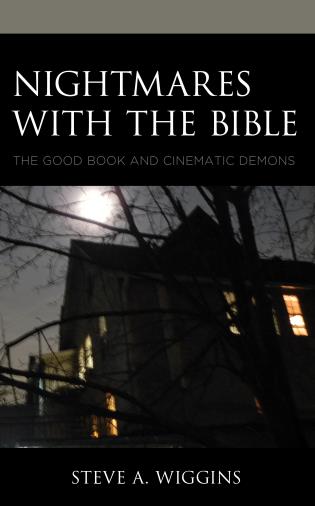
Even though Nightmares with the Bible just came out over a year ago I couldn’t list all the films off the top of my head.  Sometimes you need reminders.  My books are never discussed at work.  The people I interact with on a daily basis have no interest in them.  In other words, unless I’m having an interview or reading a review, I don’t have much opportunity to think about them.  I’ve moved on to my next projects.  The draft of The Wicker Man has been submitted and I have three promised articles to work on.  Still, I’m trying to settle on the next book.  I seem to have found some acceptance among the horror crowd.  Biblical meteorologists and researchers on Ugaritic goddesses are much less seldom in touch.  Monsters are often mixed forms.  I should know that after watching all these movies.


Others’ Weeping

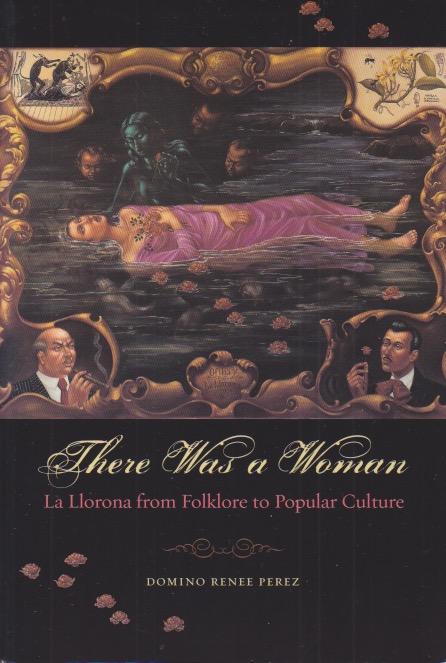
I was first introduced, consciously at least, to la llorona via the movie, The Curse of la Llorona.  The film is part of The Conjuring universe, but just barely.  It was clear from the movie that the weeping woman (la llorona) wasn’t invented for the film.  I’ve never lived in, or even spent much time in, the southwest.  Even less in Latin American countries.  In my rather strange career path, the best source of such things to penetrate my own experience tended to be my students.  (Those who think professors do all the teaching have the equation backward.)  Since becoming more isolated as an editor, my interactions are often someone approaching me with an idea mostly formed, often fully formed, and few of them have to do with ghosts or folklore.  That’s why I found Domino Renee Perez’s book There Was a Woman: La Llorona from Folklore to Popular Culture such a treasure.

As an Anglo reader endowed of white privilege, it’s important to read books where I’m clearly the outsider.  Being a kind of historian, I was curious about the origins of the tale.  As a person living in the modern world I was also interested by its reception history.  This book contains many, many examples of the latter.  It will demand that the outsider reader accept unfamiliar names and cultural conventions.  It will, in some ways, force you to stand “south of the border” and face the suffering our nation has caused and continues to cause in the name of white supremacy and its adjunct, capitalism.  There are other ways to be in this world, but when money gets involved all bets are off.

There’s much to discuss in a packed book like this, but one aspect, near the end, caught my attention.  Briefly, if you don’t know the story, la llorona is a woman betrayed by her husband.  She drowns their two children and is condemned to wander the riverbanks for eternity crying as she searches for them.  Interestingly Perez makes the connection with Rachel in the Bible.  I’ve read the Good Book many times and yet I seem to have missed Matthew’s use of Jeremiah’s interpretation of Rachel’s story.  Joseph was kidnapped and sold to slavery by his brothers but Genesis focuses on the grief of Jacob.  Rachel doesn’t live to be reunited with her lost son like Jacob does.  Perez makes the point that the stories are quite different, but it showed me once again how much I have yet to learn.  We need to pay attention to those who experience life differently.


Connection

I’ve met a few famous people in my time.  Meat Loaf wasn’t one of them.  In fact, the only real rock concert I’ve ever attended was Alice Cooper, back in the first part of the millennium.  Still, the good folks over at WikiTree like to let you know your degrees of separation from the famous.  With the news of Meat Loaf’s passing recently the connections emphasized were rockers, and I ended up being some twenty degrees separated from Michael Aday.  Every time this happens I wonder why our world doesn’t take better account of how closely related we all are.  Fear is a powerful emotion and fear of strangers runs deep.  Even babes in arms often object to being held by those with unfamiliar faces.  We could benefit quite a bit, it seems, by learning to get comfortable with fear.

Looking at the political mess in the United States it seems pretty clear to me that its main fuel source is fear.  It’s been decades now since I first learned that politicians are well aware of how fear makes people behave at the polls.  This fear is carefully crafted and exploited to try to get the election results desired.  If we could learn to master our fears just think of how things would improve!  Instead, those who have something personal to gain use fear to attain it.  Not that there aren’t real reasons for concern.  Facts such as global warming are real and deserve our immediate attention.  To address them we have to work together.  Instead, many chose to use fear for personal gain, and we let them.

For me personally, engaging with horror is a means of handling fear.  Like most people I don’t want to be afraid.  At the same time I’m fascinated by it.  I can’t scroll past a web page listing scariest books.  I try to go through tallies of the scariest movies made.  In doing so I’ve found that many of my phobias (and there are many) have dulled a bit.  Perhaps that comes with age, but then I’ve read that fear tends to increase with age.  Why not get it out of the way when we’re younger?  What has all of this got to do with Meat Loaf?  I suppose it’s the kind of gothic quality of his songs with Jim Steinman that drew me in.  The songs are all stories and the gothic was among the earliest influences of what would become horror.  Now my fear is nobody will be able to fill that need.  Perhaps the answer is connection.


Earth Haunting

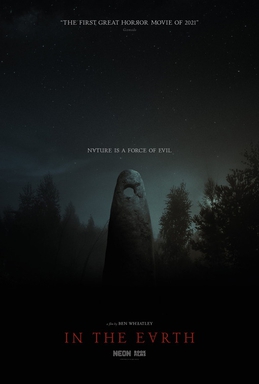
I’m still not sure what I saw.  I’m not even sure how I learned about it (it was likely either Theofantastique or Horror Homeroom), but In the Earth is a very strange film.  I can’t say it’ll be on my shelf of favorites—there’s a little too much Wolf Creek here for that—but I can say it’s something I’ll be thinking about for some time.  Body horror isn’t my favorite, but I do like to remind myself periodically of the dangers of going into the woods.  Released just last year, In the Earth is a pandemic-response film that critics say is funny (I kind of missed that aspect, I’ll admit) about a scientist and a ranger who are journeying into a particularly fecund woodland outside Bristol for research.  Martin, the lead, has an ulterior motive in that the researcher already in the woods is a former girlfriend.

Martin heads out with Alma, the ranger, and they fall into a trap set by Zach, and I suppose the humor comes in Zach’s constant observations that Martin’s wounds have gotten worse and require backwoods surgery.  The couple escape Zach (who’s clearly deranged) after he drugs them and poses them in odd clothes to propitiate the spirit of the woods.  They find their way to Olivia (the researcher/former girlfriend) and her research station only to learn Zach is her ex-husband.  And here things get weirder.  To communicate with the earth, Olivia first used an old ritual book that includes the Malleus Maleficarum and additional material.  This ancient book tells how to decipher the language of the earth through the use of light and sound with the aid of a runic standing stone that’s on no map.

Religion plays a major part in the horror here.  Olivia and Zach both want to sacrifice Martin at the runic stone.  Anyone who can watch this without seeing echoes of Abraham and Isaac probably has fewer religious nightmares than I do.  Martin, they all say, is so innocent and straightforward.  Alma keeps on trying to get Martin out of the woods but either Zach or Olivia, or the forest itself via a toxic cloud of mushroom spores, prevents them.  There are so many flashing strobes and intercut images from the spores and oddly disturbing sounds to make out what really happens at the end of the film, but one thing is clear.  Zach and Olivia have taken a religious text too literally and doing so leads them to sacrifice the innocent.  Almost biblical, no?


Serious Horror

Academically, horror has historically had a difficult time.  It’s one of those genres that people have already made up their minds about (even academics), and therefore nobody talks about this Bruno.  Nevertheless it’s still there and it has a tremendous impact on our culture.  Who hasn’t at least heard about Jaws or The Exorcist?  Some of us are renegades with little to lose, and have taken to subjecting horror to academic study.  So I was delighted to find the recently launched website HorrorLex.  Check it out.  I have no idea who Lupe Lex is, but s/he has a clever website that I’ve only begun to explore.  It lists academic works on horror and is a great resource for those who wonder why professors so seldom talk about it.  They do, and here’s proof.

The website has an alphabetical index of horror movies that will take you to a remarkably full bibliography of sources on any particular film.  If you’ve got grad students working in this area this is a resource they should know about.  It’s an example of what can be done to grow knowledge without a paywall.  Publishers, who have to make money off everything, often give bibliographic aids to those who subscribe.  On HorrorLex, you can simply take a look and find a whole swarm of information.  If you’re like me, it may also be a place where you’ll start to feel a little less alone.  As an editor I’ve been open to academic books on horror and as an editor you’re always pleased to find websites where those books will be made known.

At least half of the research journey is discovering what’s already been published on a subject.  One of the things I’ve missed most about academia is access to bibliographic databases.  Trying to build a bibliography from an individual account on JSTOR and searches on Amazon is somewhat hit-or-miss.  A focused source like this is a real service, especially if it’s shared widely.  You can share this post, or you can use your own means to get the word out, but please do it, no matter how.  This is a real service that’s being offered and the website is attractive and cleverly designed.  I know that I’ve learned quite a bit from my somewhat brief (being a working stiff) visits to the site.  If you’re researching a horror film, this is a resource you shouldn’t overlook.  Go ahead, you can always trust a werewolf!


Maudren Saint

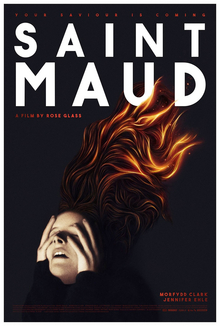
Saint Maud is one of those movies that requires some thought.  (And I’ve been giving it plenty.)   It follows a brief time in the life of Maud, a hospice nurse who becomes obsessed with saving the soul of one of her patients.  Maud has direct experiences of God, like Teresa of Ávila but the film doesn’t make it clear, until the very end, if she suffers delusions.  After the traumatic loss of a patient at the beginning of the film she becomes a devout Catholic and when she feels she isn’t succeeding in her mission she punishes herself by using medieval-level means.  She hears God talking to her and what he (yes, he’s male) demands makes the viewer wonder if she’s found the correct spiritual entity.  Moody, edgy, and theological, Saint Maud is another example of how horror and religion work together.

It’s one of those movies that, when you finish it you start looking around for someone to talk to about it.  Of course, I watched it alone, wearing headphones, so I had dialogue with my own imagination.  One of the founding principles of cinema was the realization that viewers liked to discuss what they’d just experienced.  The other horror fans I know tend to be academics far removed from here.  I don’t know any of them well enough to pick up the phone, or call up on  Zoom, and say “Hey, let’s talk about Saint Maud.”  The thing is, I understand some of the doubts and motivations of Maud.  It’s always that way when religious interactions are with an invisible, petulantly silent deity.  Kind of like watching horror movies alone.

Horror has proven to be a kind of therapy for me.  The stresses of life are many and unrelenting.  Watching someone even worse off can help, as long as it’s fiction.  The world we’ve created is a very unfair place.  Many people suffer so that a few can enjoy more than they deserve.  Their lifestyle is protected by lawmakers that they buy while others suffer.  I’d just spend a day hearing about such injustices, and then paying hefty bills, and it seemed that some weekend horror was just what the doctor ordered.  I’ll probably watch Saint Maud again once I’ve had time to recover, and to think about the implications of the story.  Horror and religion have a viable partnership.  Such films occasionally become blockbusters, but sometimes they’re smaller affairs waiting to haunt us on weekends after hearing about the sad state of the Frankenstein world we’ve all created together.


H. P. Luca

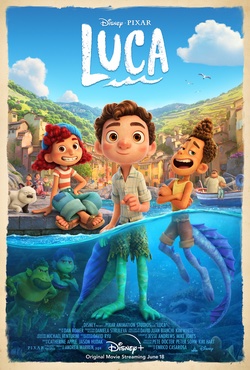
Disney has a lot of cash lying around, which means they can buy things.  One of those acquisitions, some years ago, was Pixar.  In my mind Pixar is now Disney, but in fact it does have a different aesthetic.  One of Pixar’s recurring themes is acceptance of those who are different.  Luca is Disney with a touch of Lovecraft.  This Pixar animation feature is about sea monsters acclimating to human culture, only they turn back into sea monsters when they get wet.  Kind of a combination between The Little Mermaid and Splash.  Even the Italian village in which Luca and his friend Alberto show up looks like the Imboca of Stuart Gordon’s Dagon (yes, I know Imboca is in Spain and I also know it’s fictional).  The villagers are, predictably, terrified of sea monsters since they earn their living from the sea.

In Luca once sea monsters come onto land they become human.  In fact, their culture below the surface is pretty much like human culture above.  The Lovecraftian element comes in the sea “monsters” (those in Luca are generally cute) coming to live among humans.  Lovecraft was, somewhat infamously, a racist.  While there’s no excusing that, there’s also no question that his fear of “the other” often develops the creepy atmosphere for which he became posthumously famous.  Cthulhu and many of the other great old gods dwell beneath the sea.  Human interactions with them generally lead to the humans becoming insane because of the implications.  Here Pixar adds its own twist—maybe humans are insane already.  What we permit in our societies is often less than humane.  At least with Lovecraft we could blame monsters.

Monsters are a reflection of humanity.  We take what we least like about ourselves and project it onto often fictional creatures that dwell beyond the bounds of human habitation.  We fear those who are different.  In more current thinking, that means humans should be accepting of other humans who don’t conform.  Those who think different, or, more especially, those who look different.  Sea monsters, at least hominid ones, hold great symbolic value.  They live in a world we barely know and to which we have little access.  Their lives under the great pressure of all that water must be very different from ours.  It’s only when we get beyond seeing them as monsters that we grow as humans.  If you follow the Creature of the Black Lagoon series to the end you see this playing out in black and white.  Sea monsters have much to teach us.