Witches of September

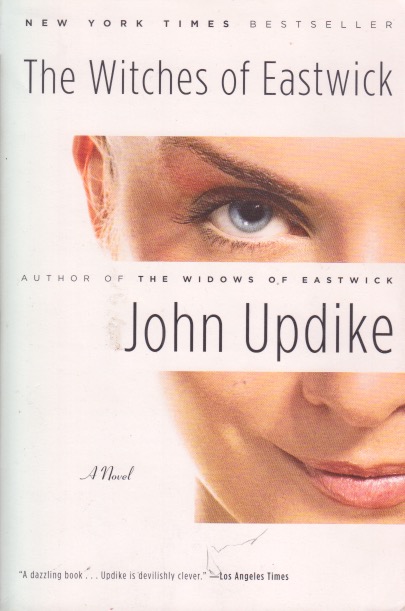
I’ve never read any John Updike before.  I understand that his novels foreground religion, which I didn’t realize.  I have watched The Witches of Eastwick, in movie form, a time or two.  In fact, I wrote a bit about the film in one of my books.  This got me curious to read the novel and I found a copy at a used book sale up in Ithaca some months back.  Now that September’s here, it seemed like an opportunity to see what the original story had to say about witches.  There is a problem, of course, in having watched the movie first.  Not only does it tell you which actors the characters should look like, but it also predisposes your orientation to what will happen.  In this case all that will mislead you.

The movie centers on Jack Nicholson’s Darryl Van Horne—like most Nicholson movies, his character takes over—whereas the novel is definitely centered on the three witches, Alexandra, Jane, and Sukie.  They don’t fall into the background, but neither do they always work in concert.  The movie tells, in other words, a very different story.  Updike’s literary treatment focuses on female characters and the mischief they cause.  Nor is it entirely clear that Van Horne is demonic, as in the movie.  A church features prominently in both versions, amusingly Unitarian in the novel, with Van Horne not upstaging the sermon but giving an invited one himself.  No fear of sacred places here.

The wrath of the witches isn’t directed toward Van Horne either.  A character left out of the film, who marries Van Horne and whose brother is his real target of affection, is hexed and killed by the witches instead.  In many ways this could be construed as a kind of gentle horror story, although it’s never marketed that way.  I kept waiting for certain scenes in the movie to be narrated, as it were, in the flesh.  This led to the revelation that these scenes were invented for the cinematic version.  Both novels and movies are stories.  When shown on the big screen, we expect them to be adapted.  My personal preference is for the film to present the same story.  It can’t always be done, of course.  In this case the movie left some questions open that I hoped the novel would answer.  Since the stories are so different, the questions remain.  I have a feeling I’ll read more Updike down the road, but I’ll avoid watching the movie first.

A Symphony of Horror

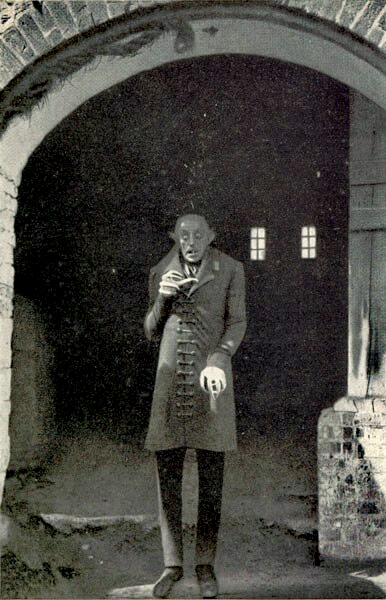
Horror season is upon us.  One could argue that it never left since summer has its fair share of horror when air conditioning is required.  The one horror director my wife seems to like, apart from the departed Alfred Hitchcock (and some would say he’s thriller, not horror), is Robert Eggers.  Eggers’ breakout The Witch worked on so many levels, even for non-horror fans.  The attention to historical detail and the solemnity of his approach and the slow build all helped.  The Lighthouse was moody and profound, with superb acting throughout.  The Northman, his viking epic shot in Iceland, is due out next year.  Rumor has it that his fourth film will be Nosferatu.  Anya Taylor-Joy, it is said, will be returning for it.

Nosferatu has, as of next year, a century of credibility.  F. W. Murnau’s classic, released in 1922, was technically a violation of copyright and was very nearly lost as copies were ordered destroyed.  This now iconic film, despite its subtitle A Symphony of Horror (eine Symphonie des Grauens), appeared before the category of “horror film” was assigned, and so it’s normally not considered as part of the genre.  The original was given a shot in the arm by Werner Herzog’s Nosferatu the Vampyre in 1979.  My long-suffering wife once agreed to watch it with me.  There are parts of the movie that are distinctly disturbing, but it remains one of the best vampire films ever made.  Many would classify it as an art film more than a horror film, just as Murnau’s was considered Expressionism rather than horror.

It remains to see how Eggers will handle this script.  The original plot was based on Bram Stoker’s Dracula, one of the formative novels of the western canon.  The story of an unassuming individual unexpectedly encountering, through a small conspiracy (in the films), the supernatural.  That which we’re all told is not really there.  Many are beginning to wake, after the election of Trump revealed that evil does really exist, to the understanding that not all is as it seems.  It’s hard not to sympathize with the vampire in the movies, particularly when he’s the victim of a curse.  A vampire’s got to eat, right?  The original, of course, made him out as a devil.  That was in the days when selfish bloodsucking was considered evil, not business as usual.  We have a lot to learn from vampires, and I, for one, am eager to see how Eggers will handle Nosferatu.

Image credit F. W. MurnauHenrik Galeen, and Fritz Arno Wagner; Public Domain in the United States, via Wikipedia

Who Ya Gonna Call?

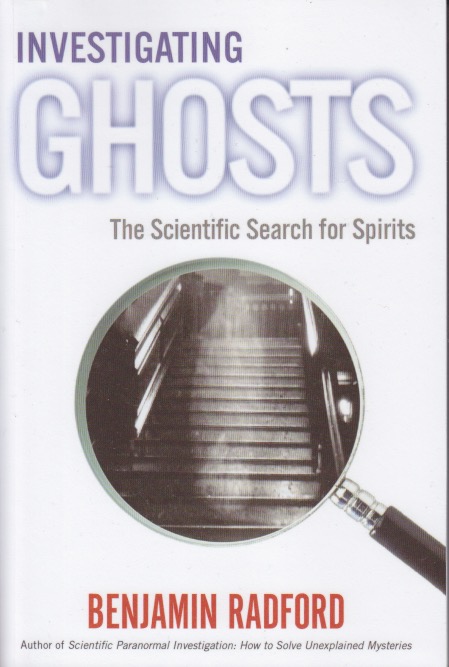
The haunting season is nearly upon us.  Apart from the usual fun of ghost stories, those of us with appreciation of science wonder about whether there’s any hope of confirming some of these tales.  Benjamin Radford’s Investigating Ghosts: The Scientific Search for Spirits is a handy guidebook for those who don’t wish to be gullible.  Radford demonstrates just why much of popular ghost hunting reality television really isn’t scientific at all.  Knowing how science works, Radford is unusual in that he’s open to the possibility of ghosts.  He points out, however, that from the point of view of science there’s a conundrum—there is no consensus on what a ghost actually is.  Different readers and experimenters and experiencers have different ideas about them—everything from the spirits of the dead to “recordings” made by the environment to demons to time-travelers.  Radford’s quite right that to test an hypothesis you need to agree on what you’re testing for.

Ghost hunting groups, as he points out, are actually gathering evidence hoping to prove the existence of ghosts (whatever they are).  Evidence gathering isn’t the same as science, however.  If you’ve ever watched any of these shows you’ll likely enjoy Radford’s take-down of their flawed methodology.  Wandering an unfamiliar location at night with the lights off and gadgets in hand, they go here and there, possibly contaminating each others’ “evidence.”  Their theories behind why ghosts do this or that—make cold spots, turn lights on and off, make white noise into EVPs, or electronic voice phenomena—don’t match the science of basic ideas of ambient temperature, wiring, and audio pareidolia.  These things are well understood, but you have to read about them to apply them. 

The larger question, however, remains.  If ghosts exist, and if they choose (if they have will) not to cooperate, how can we learn about them?  Radford makes the valid point that coming in for one night with lots of equipment and little knowledge of what we might term “the deep history of a location” stands very little chance of achieving results.  It may be fun, and entertaining, and it may catch a legitimate anomaly or two, but it doesn’t, can’t scientifically prove the existence of ghosts.  We still seem to be stuck with the materialism that only measures the physical.  This fact may indeed fuel skeptics to suggest it’s “only this and nothing more.”  But science isn’t the only way we know the world.  It’s a pleasure to read a book from an investigator of this topic who has his head on straight.


Which Wednesday

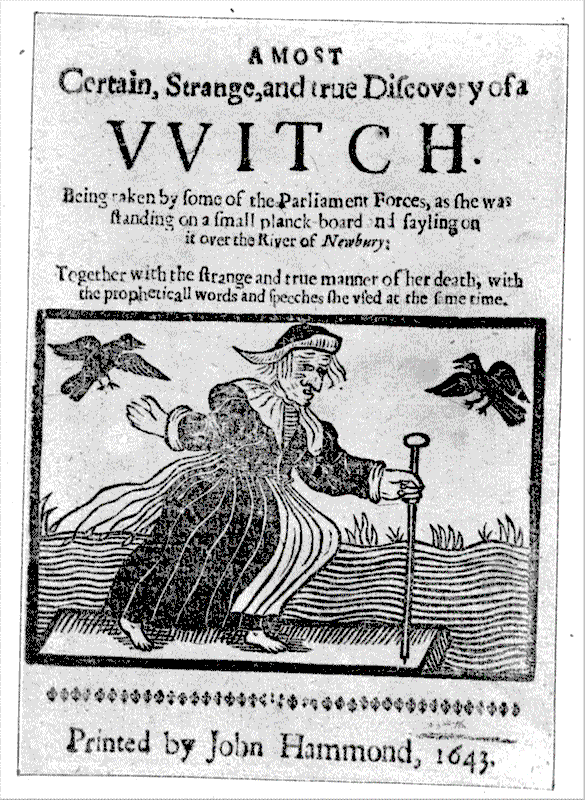
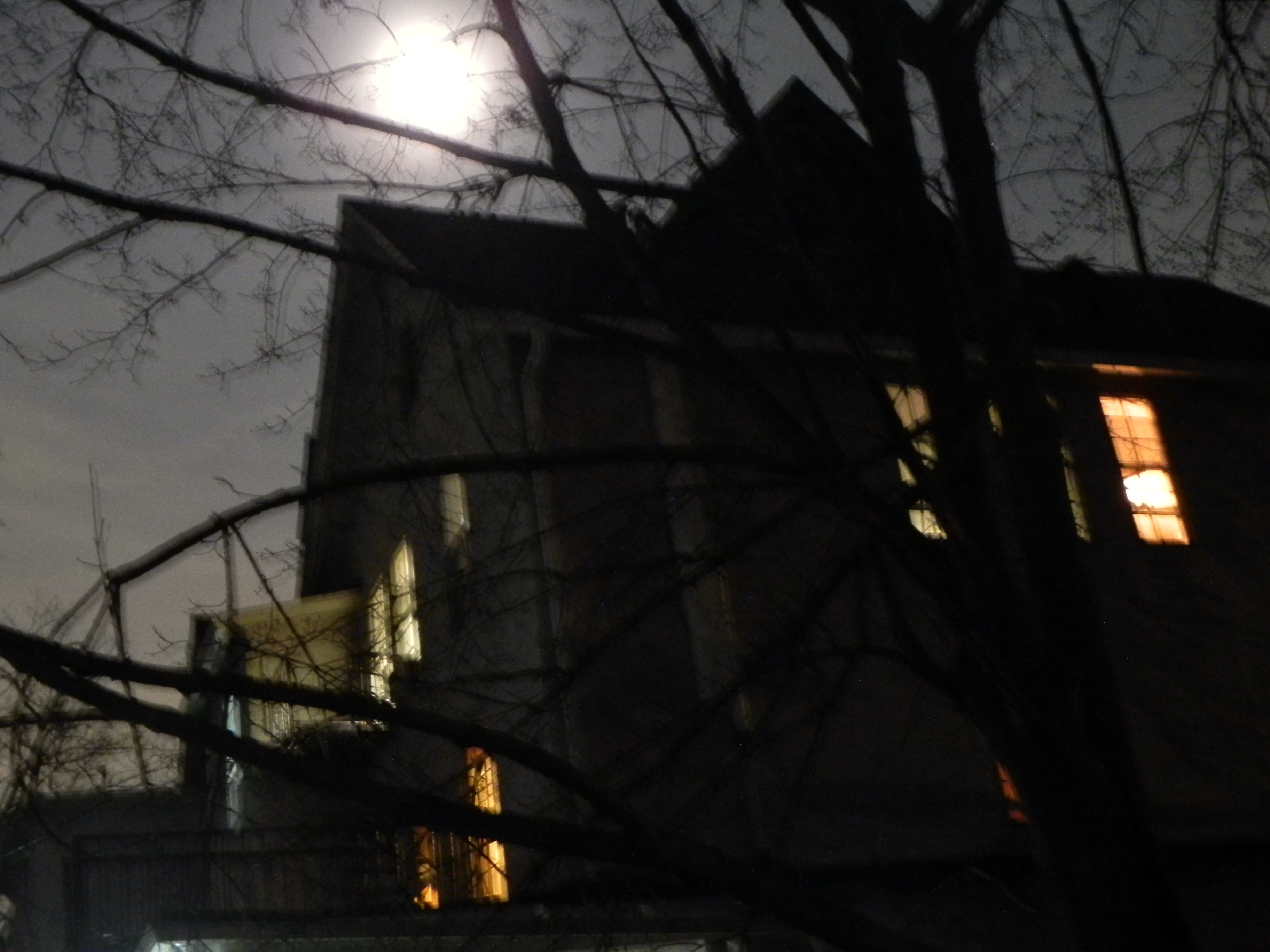
I’m not superstitious but it’s still pretty dusky when I go for my constitutional on cloudy days.  I was walking along thinking about Cernunnos, the way one does, when a black cat darted out of the underbrush and across my path.  My thoughts turned to witches.  Then a large toad jumped out in front of me in the half-light.  Perhaps it was because I picked up a booklet about witches recently, but this felt very uncanny to me.  There’s a place where the woods close in on both sides of the path.  The sun wasn’t yet up, and the clouds meant it wouldn’t have much mattered anyway.  When the bird calls stopped I began thinking about turning around and going home.  Nobody else was out this morning and although I don’t mind starting my day with the weird, I was thinking “not on a Wednesday.”

A thick mist lay over part of the path and I realized just how uncomfortable we tend to be when we can’t see clearly.  Despite that, and the black cat and the toad, I’ve never really been afraid of witches.  I guess I try to please people too much to think that someone might want to harm me supernaturally (at least among those who know me).  I recently found a booklet on witches—one of those strange impulse buys after being mostly house-bound for the better part of a year-and-a-half—that perhaps prompted my thinking this morning.  Although it seems to be most interested in earth-centered religions, it has an article about Salem.  Despite the more modern embrace of witchcraft in Salem, historically it had to do with human fear and hatred, a combination that is scary indeed when applied by those who are superstitious.

Cernunnos is a Celtic god generally portrayed with deer antlers.  Although lack of literature means we know little about him, he’s been adopted as the male counterpart to the female earth-goddess in some traditions.  Modern witchcraft is based on an orientation toward nature.  It’s kind of a ground-up religion rather than a top-down one.  Christians traditionally labelled it “Devil worship,” as they tended to do with anything they objected to.  Such demonizing helps no one, of course.  And when these ideas grow into superstitions people get hurt.  So I’m out here in the half-light because in the mornings days are shortening quickly and I have less and less time before work begin after the sun rises.  And I have witchery on my mind.


The Clairvoyant and the Demonologist

As a special bonus, here’s a post by a Guest Author. Enjoy!

For almost half a century, the couple known as a clairvoyant and a demonologist investigated thousands of paranormal cases that led to film franchises and book deals. You can find films based on their investigations wherever there are streaming horror movies.

Although the Warrens’ wider-known cases spent half a century splashing the headlines, there’s more to their legacy than how Hollywood portrays them.

Ed and Lorraine’s Spooky Origins

Even as children, the two were destined to unite over the supernatural. Ed grew up in a haunted house, witnessing apparitions of his deceased relatives while Lorraine experienced clairvoyant visions. 

After dating as teenagers, the two later married while Ed served in the Navy during World War II. They had a child, Judy. 

Despite Lorraine’s skills as a trance medium, she remained a skeptic until she witnessed more substantial first-hand accounts through their business.

Haunted House Hunters

The couple’s haunted house hunting began as a means for Ed to make a living as a landscape artist. The project quickly grew bigger as they traveled across New England painting potential haunted sites

Ed’s sketches became a friendly gesture to gain entry for tours and then investigations. Their novel networking attempts and cases eventually led to newspaper coverage and TV appearances.

Religious But Not Occultists

The Warrens’ religious beliefs as Catholics both hindered and aided their cause. As self-taught investigators, they aspired to balance their religious beliefs with scientific research.

“The Haunted” TV Series

Though much about The Warrens’ work is showcased in The Conjuring franchise and features spawned from their experiences at Amityville House, Hollywood also adapted an unsung investigation with a television show called The Haunted (1991). 

From the smell of rotting flesh to the sounds of anonymous screams, Jack and Janet Smurl experienced diabolical activity in their Pennsylvania house for years. After going public with their encounters, they gained national attention and then reached out to the Warrens. 

The Warrens confirmed a dark entity inhabiting the Smurls’ house and tried to expel it. Unfortunately, the evil presence refused to vacate.

The Warren’s Occult Museum

The couple founded the New England Society of Psychic Research (NESPR) in 1952, which solved thousands of cases over 50 years. They also opened their home to the public with a museum of the occult featuring artifacts such as the possessed Raggedy Ann doll that inspired Annabelle

Following their deaths over the past decade, their son-in-law now manages NESPR, but the museum closed in 2019.

Today, there is still more ground to cover learning about the supernatural and paranormal. Without the Warrens bridging the gap between the living and dead, vast mysteries about the afterlife could’ve been buried in the dark. 

Their legacy ultimately encourages believers and skeptics to continue searching for answers.


Existential Horror

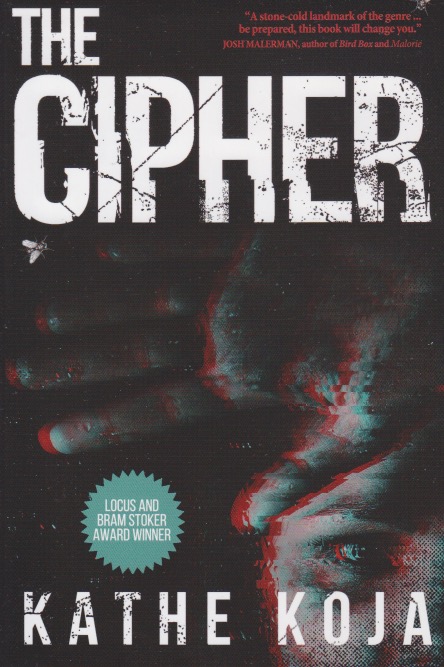
It’s a strange and disturbing novel.  I leaned about Kathe Koja’s The Cipher from a book about women horror writers that I read some time ago.  I figured I’d get around to reading it eventually and now that I have I’m wondering what I just read.  In that regard it reminds me of House of Leaves by Mark Z. Danielewski, which I really didn’t find that scary.  The thing about Koja’s novel is that it leaves you feeling empty.  It is perhaps the most nihilistic fiction I’ve ever read.  A slow build to nowhere and really no explanation either.  If you like your coffee dark, this is a story for you.  It’s a story of slow decline and loss of self.  In that respect it’s pretty scary.

One of the points I made in Holy Horror—although it’s about movies instead of books the same principle applies—is that different things scare different people.  The Cipher is existential horror.  There really aren’t any moments of sudden gasps of surprise—this is a train you can see coming—but that doesn’t mean the inevitable is pleasant.  My edition comes with an afterword by Maryse Meijer that really helped name the horror.  There are no heroes here, as she points out.  These are characters who get themselves into bad situations and sometimes don’t even know why they do what they do.  As I said, this is existential horror.  It all swirls around an unexplained “Funhole” that takes over the characters’ lives.

Everyone in this book is working class and creative.  They don’t find any recognition, of course, because that’s the way of working class life.  They do, however, find meaning in the art they make, after work.  Indeed, as everyone gets more and more drawn toward the Funhole one of the worries that constantly hangs over their heads in the face of sometime truly supernatural, is work.  When to quit your job because something not natural is taking over your life?  Who’s going to pay the rent?  In my own existential crises, I often think that capitalism with it’s unvarying nine-to-five certainly doesn’t help.  When something extraordinary happens, you’d better hope it’s not during a weekday, or if it is you’d better have some vacation days you can cash in.  So it is that the young characters here, drinking and dreaming, have to come up with some way of dealing with an unexpected existential threat.  I’m trying not to give too much away.  This is unlike any other horror story I’ve ever read.


Just Like Us

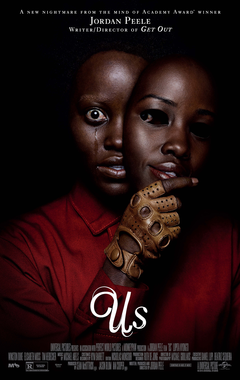
Jordan Peele has been noted for his intellectual, black horror films.  His work is good at making clear that African-American experience is different than white experience in America.  That was especially on view in Get Out, a haunting treatment of being “the other.”  His more recent Us, two years old already, takes a somewhat different angle but still comes to a similar point.  Since the movie has a notorious twist ending that I’d rather not spoil for anyone slower than I am, I’ll try to focus on the film’s use of Jeremiah 11:11—“Therefore thus saith the Lord, Behold, I will bring evil upon them, which they shall not be able to escape; and though they shall cry unto me, I will not hearken unto them.”  This message of the prophet was a warning that Jerusalem would fall to the Babylonians, but clearly it has wider applications.

It’s safe to say, I suppose, that the movie is about substitute people.  Each person has a doppelgänger that shares her or his soul, but is a puppet—it’s not too far to stretch to say “slave”—that must do whatever it is we have it do.  When those doubles, or shadows, arise and organize, things start to get real scary real fast.  Although the metaphors run deep, the biblical citation comes near the start of the movie, setting the tone of what follows.  This is divine judgment for the mistreatment of others.  While it isn’t ostensibly about race, at least not obviously so, the story follows the black Wilson family as the uprising begins.

Jeremiah’s message, although delivered to a specific situation at a particular time in history, could well apply whenever one people threatens another.  Like most prophecy, it’s less about prediction than it is about changing behavior.  Jeremiah presents a good warning tone because he was a prophet who loved his people but also saw that they had to fall in order to be redeemed.  His is a strong message for a country at a crossroads.  Peele has a lot going on in this movie and I suspect more than one viewing will be necessary to pick up on some of the points.  Not all parables have a single message.  Not all prophets are heeded in their time.  Jeremiah 11:11 provides context, and it rewards the biblically literate who know the context it which it originally applied.  Fitting it into the world of black horror is an example of how prophecy continues to be relevant.


Conjuring an Exorcist

In both Holy Horror and Nightmares with the Bible I discuss The Conjuring.  In the latter I actually go through the universe that the films spin around the investigations of Ed and Lorraine Warren.  Like most series where the writers and directors shift, the story line isn’t always consistent.  I suppose that one of the features of the series that appeals to those of us who love monsters is the fact that many of the movies have more than one.  The main threat, however, always seems to be demonic.  I enjoyed exploring this in both my book and in my recent piece on Horror Homeroom—check it out here.  

This series, in financial terms, has been highly successful.  There is little that attracts attention in any media more than money.  The Conjuring universe also shows that people are very interested in the topic.  A materialistic worldview doesn’t work for everyone.  We sense that there’s more going on that what the laboratory reveals.  I’ve often wondered why we can’t consider the world “both and” rather than “either or.”  We seem to think knowledge is some kind of zero-sum game.  I suppose that’s because the spiritual interferes with the material.  If there are outside forces working against the “laws” of physics then all that hard work is open to question.  It’s far easier to suggest that human beings (and other animals) who experience something “supernatural” are deluded.  Or superstitious.  Demons are a good case in point.  If they exist it would complicate the world of science.  And yet people pay good money to see movies based on them.

The Conjuring franchise pays off most of the time.  Some of the stories—those of the main series especially—are based on cases that the Warrens actually investigated.  There’s sometimes an element of the sideshow (the amazing Warrens!) to some of their work, but that doesn’t necessarily detract from the experience of real people.  Experience is an important way to navigate this strange world in which we find ourselves.  I’m not the only one who finds horror films to be a reasonable guide through this territory.  The Warrens’ case files leave lots of opportunities to explore this strange world of demons, and there are further movies in the franchise currently under development.  The most recent film, The Conjuring: The Devil Made Me Do It, changed basic concepts from its early days.  It was delayed by the pandemic.  And yet, it made money.  There must be a lesson to be learned here.


Fear of the Other

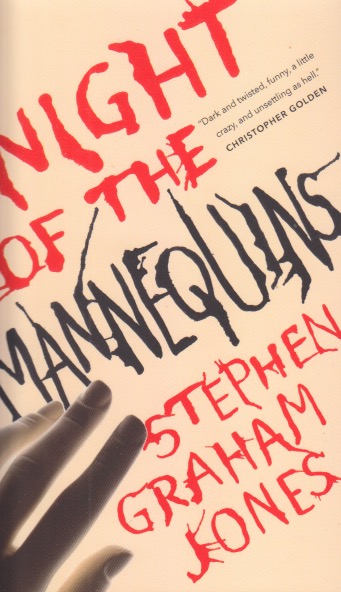
Two things: I’ve been reading about and materials by American Indians lately, and I learned about Stephen Graham Jones through a video of him reading one of his stories.  I was immediately hooked.  It seems to me that those of us who’ve gone through trauma—either personally or ethnically—are disproportionately represented among those who like horror.  I’m not suggesting a simple equation, but simply noticing a trend.  Jones has been winning awards as a horror writer and I was anxious to get started.  Night of the Mannequins didn’t disappoint.  Jones is a member of the Blackfeet nation and, according to the author bio, a real slasher fan.  This story isn’t really a slasher but it is an exploration of what happens when an idea takes over someone’s life.

More about growing up in Texas than being First Nations, it follows a group of teens who find an abandoned mannequin and a practical joke that goes terribly wrong.  It’s a story will a real feel for what it means to grow up beneath the middle class.  The realities for those who do are somehow quite different than from those who can take some measure of financial security for granted.  It also makes a good setting for horror stories as the protagonist tries to figure out what’s going on without the aid of authorities and adults.  It makes for a compelling read.  Jones’ no-nonsense style draws you in and it doesn’t let you go.

The book is fairly recent and I don’t want to give too much away.  I do often think about how a writer’s personal experience leads to the books s/he writes.  The horror genre is wide-ranging and can be deep and intelligent.  Despite its brief extent, there’s a lot of depth here.  The straightforward writing style gives the book verisimilitude.  You could see this actually happening.  Monsters, after all, are frequently in our minds.  That doesn’t make them any less real.  Mannequins tend to inhabit the uncanny valley—they’re human and yet, at the same time they’re not.  There are aspects of growing up in “white” culture that must suggest the same to those who’ve been and who continue to be, oppressed by that culture.  There is a real fear to being controlled by others whose intentions, it must be clear by now, are to make themselves rich.  The world is a richer place, however, for having books by Stephen Graham Jones in it.  I’ll be coming back for more.


Not Archives

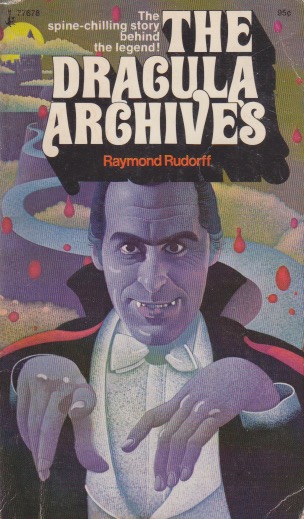
There was a historical Dracula.  The cognomen of Vlad Tepes, or Vlad III of Wallachia, Dracula’s association with vampirism surprisingly dates back only to Bram Stoker’s Dracula.  And much of what I read about Vlad III as a child has been reevaluated, with much of it being reassigned to exaggeration.  (I often wonder if this isn’t part of the reason so many of my generation have become conservative—it can be unsettling to have the certainties with which you were raised topple like so many dominoes.)  In any case, I started reading about vampires when I discovered our high school library had historical books on them, and so I recently picked up Raymond Rudorff’s The Dracula Archives at a book sale, despite its lurid cover.  The reason?  The back cover classification is “nonfiction.”

Clearly that was a marketing ploy, and although the book cost me merely pennies on the dollar for a mass-market paperback from that era (1973), I was a little disappointed to find it was a novel.  I figured it out within a page.  (You have to understand—at a book sale the normal rational faculties don’t always apply.  Anyone who’s been to a library book sale in Scotland knows that little old ladies throw elbows to get at a book they want, and you have to think fast if you’re on the fence.)  So The Dracula Archives is intended to be the prequel to Dracula.  Mirroring the latter, Rudorff’s work is comprised of diary entries and letters, slowly building up a fictional identity for Stoker’s titular character.  It isn’t as fast paced as the cover blurbs indicate, but it does manage to sound historical although it’s clearly not.

Reading such a book during a crisis of truth makes me question the marketing wisdom of the back cover label.  Yeah, it’s kinda cute, I admit.  And Trump didn’t seem like a national threat in the seventies.  But still, the mixing of the fundamental category of book (fiction or non) doesn’t seem quite fair.  Of course, caveat emptor applies to small purchases as well as large.  I go into book sales with a list, and I try to limit myself to it.  But then, I’ve not heard of every book—not by a long shot—and finding an unknown treasure is part of the draw.  Raymond Rudorff wrote several books but hasn’t merited a Wikipedia page yet.  This one is by far his most famous novel.  It’s a fun read and a reasonable prequel, but it won’t likely scare anyone as much as Republican politics do these days.


Religion and Its Objects

UFO religions—or should they now be called UAP religions?—have long been of interest to scholars of religion.  A recent piece on Religion Dispatches titled “With Release of Pentagon Report, UFO Narrative Belief System Is Suddenly Supported by Military Witness Testimonies,” by Diana Pasulka, explores this.  Anyone following mainstream media is perhaps experiencing a bit of whiplash on the topic since, prior to admission of interest by the government, the official stance was to ridicule the entire topic.  That’s the reason what were long known as Unidentified Flying Objects now have to be called Unidentified Aerial Phenomena.  Since a government can never admit it made mistakes, it simply changes the terminology.  My interest here, however, is in the connection with religion.

I’ve explored the connection between horror and religion from time to time—ahem—and so it is natural enough to wonder about the relationship between religion and UAPs.  (Or should I stick with UFOs?)  The two have some commonalities.  Initially, both deal with the unknown.  Indeed, the word monster comes from a root denoting an omen, or a revelation.  Something isn’t a revelation unless it’s been keep hidden.  So with UFOs.  The government’s long interest, which had been somewhat successfully hidden, allowed for a reveal.  Religions, however, tend to thrive on hidden things.  The monotheistic religions, for example, claim to inform us about what God has chosen to reveal about (generally) himself.  Even today when pushed into a theological corner, believers will appeal to mystery.  Both monsters and UFOs live in mystery.

Science prefers things out in the light.  Is it any wonder that scientists are reluctant to apply themselves and their hard-earned credentials to the UAP problem?  Those of us in religious studies generally have little to lose.  It’s not like we’ve got prestige on our side, or some billion-dollar grant riding on our reputation.  We can afford to take a look and monsters and other unknowns and see how they trigger the religious impulse.  Pasulka’s article has more to do with credibility.  UFO religions have long struggled with being considered outsider belief systems.  UFOs were publicly ridiculed, so any religion that focused on them was, by extension, laughable.  I’ve long believed that ridicule serves little purpose when it comes to belief systems.  Making fun of a mystery is less common than shaming those who believe in what we’ve been told definitely isn’t real.  Until suddenly it becomes real.  Is there any question why religions develop when mysteries remain?


Following It

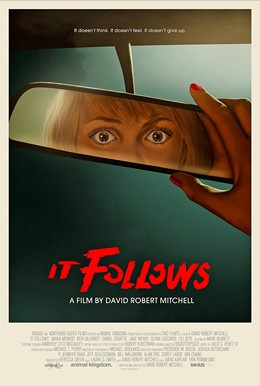
Perhaps while I was sleeping (or busy keeping to myself), several horror movies of the “intelligent” variety appeared.  Those scare quotes aren’t to imply the films aren’t actually intelligent, but rather that many people assume horror can’t be smart.  Yes, there have been some cheap scare phases in the genre when viewers didn’t need too much intellectual capacity to figure out someone else was about to get snuffed, but since the late 1960s many cerebral movies have appeared.  It has only recently become acceptable for academics to address horror, and now that they have begun to do so several more provocative films have become part of the discussion.  I’m now trying to catch up (as I can afford to) with those more intellectual movies.  One of them was It Follows.

Of course, seven years ago, when it was released, it didn’t get much press.  It did, however, impress the critics.  A movie about sexual awaking, it wouldn’t make Puritans very happy, but it is pretty scary.  The premise itself is frightening: “it” (never defined) follows young people after a sexual encounter with someone already “infected”—it is visible only to intended victims and although it follows slowly, it is persistent and unrelenting.  It will eventually catch up.  It can take the shape of anyone—stranger, friend, family.  The only way you can tell “it” is that it’s walking slowly straight toward you and nobody else can see it.  To get it off of your trail, you have to pass it along to someone else.  It starts killing and working back to the previous victims, so once it starts you’re never safe.

Part of the visual appeal of the movie is the urban decay around Detroit, where the film was shot.  Another is the lack of adults.  A few are shown here and there, but this is a young persons’ dilemma and the young people have to sort it out.  Bleak and contemplative, the movie has a literary streak to it.  This isn’t just horror for screams—there’s an existential element as well.  The only place that adults really play a role is when it finally catches up to its victims, it appears as their parent.  Various critics have suggested it is a movie about STDs, but to me it felt more like a movie about struggling to cope with the complications sexuality brings.  Unlike most horror I discuss here there really isn’t an element of religion to It Follows.  It may be some kind of demon, but never defining it makes the viewer stop and think.  And that makes it intelligent.


Irony

It’s a funny old world, as the saying goes.  I don’t deal, as an editor, with many agents.  In fact, having been in publishing for nearly a dozen years it’s only happened three times.  The most recent agent is one to whom I sent a pitch for Holy Horror and from whom I never heard back.  The book he sent me isn’t too different from what I was doing in said volume.  That’s the way it goes, you say.  Indeed, I don’t disagree.  But who doesn’t like a dose of irony in an otherwise stainless steel world?  As I’m reading through the proposal I see that it cites the interest in the subject because of the great popularity of the Religion and Monsters sessions at the American Academy of Religion.  I was responsible for getting those sessions started.

Since irony loves company, none of the people I recruited to get that session rolling read my blog.  I’d been meeting with various scholars over the years and started to notice a common interest in religion and monsters, which I personally share.  I suggested to one of these gainfully employed scholars that we should apply for such a session.  She agreed and we invited another gainfully employed academic to join us.  I wrote the initial proposal.  The session was approved (the proposal being helpfully revised by my colleagues) for three years running.  Now it was being cited as objective proof of an idea that this very agent had dismissed when I presented Holy Horror to him.  Our society very much thinks having a university post means you have something to contribute.  No post?  No interest.

I’ve been working on religion and monsters for (conservatively) a dozen years.  I’ve written two high-priced books on the subject and I’ve received almost no traction in the field because I can’t put a university, or college, or seminary, behind my name.  I was formerly an associate professor, but who you are speaks louder than who you were.  Institutions speak even louder—much louder—than individuals.  The thing about privilege is that it works.  So in this funny old world I’m bemused to be watching my own idea helping propel a colleague’s case for an agent.  I’m working on my fifth book, and I sincerely hope this one will retail for less than thirty dollars.  That’s difficult to do without an agent’s intervention.  I know agents are swamped with proposals.  I know they’re very selective.  And I also know that the irony of being a biblical scholar interested in monsters will catch their attention.  Only, however, if you have an institution behind your name.  Funny, isn’t it?

Even the monster smiles

Highgate Cemetery Again

Vampires can distort your thinking.  For example, whenever I hear of Highgate Cemetery in London, my mind immediately goes to the Highgate Vampire.  (There was somewhat of a comment kerfuffle on that topic right here on this blog some years back that resulted in several comments being removed.)  Highgate is the amazing final resting place of a remarkable number of famous people.  Still, when I visited a few years back I couldn’t get the vampire out of my mind.  (A friend of mine lives a short walk from the cemetery and that made the visit possible.)  This all came rushing back when I saw a book on Highgate Cemetery up for review on Reading Religion.  (And hey, Nightmares with the Bible has been available there for free, for any interested takers!)

Given my current vocation, writing actual book reviews is considered conflict of interest.  More’s the pity, since that’s how I often managed to get ahold of expensive books back in the day.  I’m pretty sure the book advertised (edited by Marie-Therese Mader, Alberto Saviello, and Baldassare Scolari) has nothing to do with the vampire, but I can think of it no other way.  Highgate is an architectural marvel for a necropolis.  It is spooky, inspiring, and impressive.  When something happens in a place, even if the facts are in dispute, it takes on an atmosphere that reflects such happenings.  At least that’s the way it feels for Highgate.  I’d heard about the vampire incident before visiting, but didn’t have the details.  Besides, you’re only permitted in on guided tours and the docents don’t point out such things.

Nevertheless, having been there I still have an interest in the cemetery itself.  It’s odd in a way.  Nobody I know personally is buried there.  No ancestors, as far as I know.  It’s the sense of place.  I’ve written about this many times before—there are numinous spaces in the world.  Science may deny it, but even scientists feel it.  Some places transport you somewhere beyond just the physical dimensions of where your body happens to be at the moment.  Cemeteries are filled with the memories of lives past.  They remind us that our time is limited, and that we too will cross that numinous threshold some day.  We all contribute.  Well, I can’t review the Highgate book and I can’t afford to buy it.  I nevertheless suspect that there’s nothing about the vampire in it.  I’m sure it’s my thinking that has been distorted by vampires.


Scary States

You can usually tell, if you look close, when I’m on the trail of a new project.  This blog ranges fairly widely at times, but when lots of posts concentrate in a single area it’s likely something much larger is going on behind the scenes.  I’ve been writing quite a bit about horror lately.  Quite apart from the Republican Party, scary things are on my mind often.  I recently came across an article on KillTheCableBill that made me feel less weird.  It’s a story covering a survey showing the favorite horror movie per state.  Now, I won’t be able to fit all fifty into my usual daily word limit (wouldn’t want to arouse the word count police), so I’ll just add a few words about some of the interesting connections I noticed.  As in my books, if you see something, say something, right?

It’s kind of embarrassing that I haven’t seen the movie most often mentioned: The Devil’s Backbone.  I have to admit falling behind on my Guillermo del Toro movies.  I was surprised at the number of states’ favorites that I hadn’t seen.  I’ve been thinking about this quite a bit lately: if you have a full-time job which doesn’t include movie watching, it can be pretty difficult to make the time.  A number of classics don’t show up on the list, while some states have somewhat obvious favorites: Massachusetts’ Jaws, Colorado’s The Shining (it was filmed there), New Mexico’s Alien (think about it), and Maine’s The Lighthouse all fit into state self image in some way.  Horror preferences, in other words, may reflect who we are.  

A number of states, more conservative ones mostly, favor older films.  The Abominable Dr. Phibes, Pennsylvania’s favorite, I haven’t seen.  Like most aspects of my home state it’s a mix of things.  It comes from the early seventies, just as modern horror was getting started, but not too far into it.  Studies like this end up giving me homework.  When I can find the time I have a lot of viewing to do to catch up with my fellow Americans. I was surprised that The Exorcist isn’t on anybody’s list of favorites, not even Washington, DC’s.  It may be that films that are too real are too scary for many people.  Another finding, as noted in the article, is that the southeast states like horror the least.  I can’t help but wonder if things would be better, politically, if more people there watched horror and pondered the implications.