Exiting Amityville

Okay, I confess. I watched Amityville 3-D. One of the standard features of horror, you see, is the sequel. As a rule the members of the franchise degenerate until they don’t earn enough money to keep Hollywood’s attention. In the case of The Amityville Horror, the story only made it three deep. I’m no film critic, but with missteps at almost every turn, Amityville 3-D almost made a farce of itself and horror fans take that as an insult. (Good horror comedy is an exception, of course.) The original story is well known: the Lutz family moved into the DeFeo murder house and moved out again just over a month and a half later. The tale has been considered both a hoax and a legitimate haunting, but subsequent families haven’t reported supernatural happenings on the property.
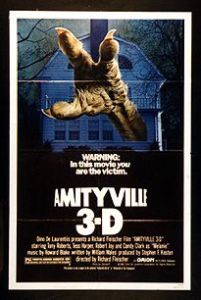
I had some hopes for this installment, as it was also known as Amityville III: The Demon. The second feature film was part of my viewing late last year, and it was okay. I never thought the original was that good, in any case. As I watched III I realized something was missing. Religion. Any sign of it. No priests were involved—this was the fear vector for the first two films of the series. Although John Baxter moves into the house knowing the history, he’s a skeptic and seems not even to believe as the house blows up in a silly finale before his very eyes. When the flies start buzzing around everywhere he thinks they’re just pests, not making the connection with the original account. The entire series is, of course, an extension of the Beelzebub—“Lord of the flies”—myth. That’s what gives it its demonic thrust.

When it finally comes time to wrap things up, and no priest has been called, and no religious imagery has been shown, there’s nothing here to scare but cheap startles. Eliot West, the leader of the cadre of paranormal investigators, attempts to free Baxter’s drowned daughter from the turquoise, boiling well that was dubbed “the gate to Hell,” a demon pops up and grabs him. There’s no explanation of who or what the demon is. Like everything else here it’s secular to a fault. And though it may startle, it can’t scare.

Not all horror uses religion, of course. Even some movies about demons avoid it and manage to be scary. If the premise, however, rests on religion gone awry—as in the first two films of the franchise—exorcising it completely is asking for trouble. Even if the telephone number for the realtor at the start of the film does begin with a secular 666.


Title-less

I’ve been offering a few teasers about my forthcoming book. One of the reasons for not making an announcement is that the title hasn’t been settled yet. It’s pretty hard to promote a book without one. I’ve written enough about it that readers can tell it’s about horror movies. The publisher is McFarland, an independent academic publisher that specializes in pop culture and has an impressive list concerning monsters and other frightening things. Once we get a title down, I’ll say more. In the meantime, I can take the opportunity to say a bit more about the publishing industry. Not that people generally ask me about it, but I suspect many authors secretly want to know some insider tips. If not, I suspect there’s one or two other blogs to read today.

I’ll admit up front that I tried unsuccessfully to interest agents in this book. At least four wrote back to tell me it was a great idea, but a writer without a platform is like, well, an editor. I help other people get their ideas published—always a bridesmaid, as they say—physician heal thyself. When I realized I was wasting months trying to find a professional to promote my book, I decided to revert to the tried and true. When you want to know who to approach about your book, look at the spines of the books you read to write yours. Who are the publishers who produce books in this area? Sometimes the interests of a publishing house will change with the editors, so the more recent your comps, the better.

Horror sells. My project wasn’t really mercenary in that way, but rather it was the result of years of watching horror, usually by myself, and finding some commonality in the films. What exactly that commonality is will, I hope, become clear once I can freely write about my book topic. Others, you see, could swoop in and take my thesis—a perpetual fear of someone who barely has time to scribble out a blog post a day. Finding the time to write books in the off-work and off-commute hours is a real juggling act. In my case, perhaps a jugular act. Without an agent, I turned to McFarland. Many of their books helped me form the ideas for my own. Besides, they have a Scottish connection, and that means something to this old Edinburgh alum. If you want to get published, it helps to know the players. That may become even a bit easier once I’ve got a title.


Frankenstein and Co.

Authors, I expect, don’t anticipate that their work will be annotated. Since I deal with annotated Bibles on a daily basis, I often ponder that the anonymous writers—we know of few biblical writers with any degree of certainty—had no idea that they were writing the Bible. Nor did they realize that some day many people would make their livelihood from interpreting that book. Among the interpreters are annotators. When my wife gave me Mary Shelley’s Frankenstein for Christmas I was at first puzzled. I have a copy of Frankenstein already. In fact, I read it again just last year. Then I realized it was an annotated edition: Annotated for Scientists, Engineers, and Creators of All Kinds. Edited by David H. Guston, Ed Finn, and Jason Scott Robert, the book contains the original text and an introduction, as well as the said annotations. Like a typical study Bible, it also contains essays. The editors joke that it’s kind of like a Frankenstein monster itself.

The “value added” material isn’t all about science. In fact, quite a lot of it has to do with human relationships, and particularly women’s rights. Mary Shelley was an early feminist and her novel shows what goes wrong when men try to reproduce without women. Another recurring theme that, amazingly, had never dawned on me while reading Frankenstein was the Adam and Eve story. Victor Frankenstein, like God, creates a man. Then he creates a woman. Well, almost. Afraid what might happen should his creature find a companion too companionable, he destroys the second creature before she’s finished. The biblical parallels are nevertheless there.

Originally subtitled The Modern Prometheus, the novel was based on pre-Christian myth as much as on Holy Writ. Nevertheless, the Bible suffused British culture in the nineteenth century just as it has continued to overwhelm American culture to the present day. We ignore it at our peril. Morality in science is a major focus of the essays in this volume, but I wondered how many scientists might be enticed to read a piece of feminist fiction in order to learn some ethics. The largest ethical conundrum we face in the United States is that so few people read for personal growth. Spending time with a book is a sacred activity for those committed to the principles of literacy. Frankenstein isn’t a prefect novel; the pacing is pretty slow even for a gothic masterpiece. There are loose ends left hanging. The protagonist is often insufferable. Still, as the editors and annotators have demonstrated, there’s much to learn from this old story. All it takes is the willingness to read and deeply reflect. And perhaps read the annotations.


Devil of the Time

There can be little doubt that evil prospers. We’ve suffered through a year of an evil administration and we’ve seen the government increase the suffering of its own people in deference to the wealthy. And ours is only a mild case of evil. Jeffrey Burton Russell, over the course of some years, wrote three sequential books about evil. The first, The Devil, I reviewed last year. Having just finished the second, Satan: The Early Christian Tradition, it has to be said that the concept definitely evolves. The period between the New Testament and the fifth century was a rich one for diabolism. The writers of this period became increasingly theological in their efforts to make sense of what is obviously an unjust situation created by a theologically good God. These were inventive writers, if somehow less than convincing.

Russell is a careful explainer. He summarizes the views of the “church fathers,” pointing out where their logic fails. This isn’t some liberal trying to dis the Devil, however. Russell acknowledges that he believes a Devil of some kind must exist. Reason, however, must also be applied. It’s difficult to believe that people in the early Christian centuries were willing to take such leaps of logic. Of course, they didn’t have many options for opting out. God was the great explanation for so much of their world. Fitting an all-powerful deity into logic when there’s abundant suffering in the world requires a certain flair for casuistry. No matter how the equations work out, an all-powerful God can’t be all good, not in this universe. Speculation about the Devil, or Satan, ran logic through its courses. Who was this being, and how did he get to be the way he is?

The theologians argued without any glint of irony. This was serious stuff. The Bible, famously, has little to say on the matter. Early thinkers such as Tertullian, Origen, and Augustine had volumes to say on the subject. None of them came up with a workable solution. Logic and the Devil just don’t fit. Theology is always a struggle since it deals with intangibles. Laws of logic sometimes simply don’t apply. If the feeble human imagination can conjure a good world without needless suffering, one has to wonder, why can’t an almighty deity do the same? Is this a god of limited imagination or, as the classic theological chestnut puts it, one who sees more than humans do? You can ask, but you won’t receive an answer. The Devil, it seems, really is in the details.


The Maelstrom

Some monsters can’t be destroyed. Today is Edgar Allan Poe’s birthday. Poe had his demons, for sure, but the twentieth century took personal fear and made it universal. Atomic bombs and mutually assured destruction were concepts any of us born since World War II have lived under our whole lives. Kids in the 1950s were drilled in schools about what to do in case of nuclear attack. We didn’t have such drills in the ’60s, but the Fallout Shelter sign was still quite familiar and frightening in its frankness. There are people out there that want you dead, and we tend to elect them to positions of power. Duck and cover. It’s all in vain.

Then came peace. Ever so briefly. When I started seeing newspaper articles about what to do in the event of a nuclear attack—not in my childhood, but just this week—I shuddered. We’ve apparently made no progress at all. When we’re all decaying corpses glowing eerily in the night there’ll be no point in figuring out who’s to blame. A species as endlessly inventive as our own spends its time and resources on distrusting, hating the other. “They” might get what’s ours. The acquisitive mind trembles. You see, there’s no end to the things you can own. As long as anyone else owns anything you can always hope to get it for yourself. Say you read the Bible and evangelicals will forgive you daily for breaking the tenth commandment. Just don’t let those foreigners have it.

Poe imagined nightmare worlds. Most of his stories, however, were on the individual level. Our monsters, on the other hand, are international in scale. Radioactive fallout with its slow decay and devastating effects on frail flesh may be the stuff of good horror, but they make for decidedly poor governance. Perhaps it’s no wonder that this comes up under a president who ran on a platform of hatred. Last weekend the people of Hawaii lived through fearful moments that were all too believable with the incompetent pretender of Pennsylvania Avenue. A man who can’t keep his tweet shut and who gets away with offenses that would easily impeach a democrat. I grew up watching Godzilla, the famed radioactive dinosaur, rising from the oceans to remind us of the consequences of atomic sins. For the too brief era of Clinton we felt that the world might be safe at last from such monsters. Problem is, some monsters just can’t be destroyed.


Middle Age Demons

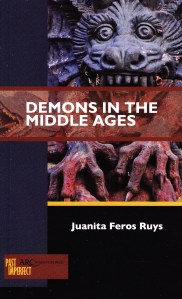
One of the consequences of watching horror movies is the interest in the origins of various monsters. Since many such films feature demons, their backgrounds and origin stories have always been a point of curiosity. Time is always an issue and Juanita Feros Ruys obliges that hurried sense by packing a lot of information into her short book Demons in the Middle Ages. Covering the basics in the introduction, she moves on to discuss demons in the desert—the bane of the early monastic, and demons in the monasteries of populous Europe. A chapter on the Scholastics describes how early science was applied to incorporeal beings, and a final chapter on learned magic, i.e., raising demons via magic books, finishes off this brief study.

What is particularly striking here is that the Bible says surprisingly little on the topic. It says, however, just enough to kickstart the Late Antique and Medieval interest in the subject. Vast amounts of speculation were raised in the Middle Ages concerning what exactly demons were and what they were made of and what they could or couldn’t do. Ruys points out the trajectory of the male necromancer giving way to the female witch just as early modernity was getting started. The results, we all know, were horrific. Throughout it is remarkably clear that belief in demons was strong. People took them very seriously—the Bible says they’re there, so there. Belief, as always, has consequences. Beginning with the Scholastics, however, a reasoned understanding of the spiritual world was deeply desired.

Reason and faith aren’t really the strangers they’re often portrayed to be. Medieval monks could be quite clever and scientific in their outlook. Human mental faculties, created, as they believed, by God, were necessarily good. Something I’d never considered, but which Ruys explores, is the belief that God cannot experience emotions. Being an “unmoved mover” meant not experiencing emotion (which, she points out, includes a noun of movement). This also meant that demons, according to some, had no feelings. This is a very cold spiritual world, particularly when it’s put into conflict with the human one. Spiritual, rational beings subjected to emotions, we’re the ones at the mercy of supernatural beings more powerful than us, yet incapable of the warmth we crave. About a millennium and a half of shifting beliefs in demons crowd this tiny book. Although not intended to be especially profound, it gives the reader plenty to ponder. Including why some of us watch horror movies at all when religion can do the trick all by itself.


Someone to Blame

There’s many ways to look at monsters. A friend recently sent me an Atlas Obscura article “The Modern Lives of Medieval Monster Scholars” by Cara Giaimo. It seems that some professors of medieval studies have taken to monsters to help explain societal problems. The Middle Ages in the western world, of course, were the days before the Enlightenment began. Belief in monsters was nearly universal. Much of the world was unexplored and inaccessible. In those unknown places, there were monsters. The article goes on to explain that monsters thus provide a natural way to deal with uncomfortable issues such as racism and religious discrimination. Monsters are those who don’t look like we do, or behave (therefore believe) like we do. It’s okay to kill monsters.

This is a mentality that we see reemerging in the twenty-first century. Despite the fact that you can easily reach nearly any part of the globe and enroll in university classes to learn what other religions actually believe, instead we prefer to see others as monsters. People see monsters because they’re afraid. They’re afraid because they’re not educated. And the political system in which many of us live is designed to keep the average person down while the wealthy reap the benefits. It serves the interests of such an unbalanced society to send people on monster hunts. The enemy is anyone who is different—not the one who owns the company that owns the company that you work for. The owner’s just like you, only he has so much money he doesn’t know what to do with it.

I once asked one of my students why he was interested in a certain topic. His answer has stayed with me all this years: “who can say why they’re interested in anything?” While I was in seminary—before the days of the J. R. R. Tolkien movies—I was very interested in medieval studies. My thought process, however, goes back to origins. The origins of medieval thought were the Bible, the ideas of the Bible (for Christians) come from the New Testament. The New Testament comes from the Hebrew Bible. Where did the Hebrew Bible come from? And that journey led me back to monsters. Like my student, I can’t say why I’m interested. It may be that I’m afraid. And in such times as these fears seem to be entirely justified. In the eyes of some future, truly enlightened society, ours will be the New Middle Ages with all its monsters.


After Dark

So many spooky things happen at night. If you’ve read much on this blog you’ll know I blushingly confess to a horror movie addiction. So much so that I wrote a book about it. Friends occasionally feed this fear by sending me stories of strange, nocturnal happenings that are frequently posted on the internet. All kinds of odd creatures roam the night: dog-men, goat-men, lizard-men (and they mostly seem to be male, for whatever reason). It’s enough to keep you inside once the sun sets. Of course, if you read this blog you know that I’m an extreme morning person. Sleeping in, for me, means getting out of bed at 4 a.m. instead of 3:00. Yes, it’s often dark at that time of day, and horror movies teach us that demons are particularly active around 3 o’clock. But then the sun comes up, and everything’s okay. Until the next twilight.

Now that December’s here, I find myself out in the dark more than usually occurs for a guy who gets up so early. After the time change—for which there exists no logical reason—it’s dark by the time I climb off the bus from my day job in New York City. The other day I was compelled to drive after dark. It was only just after 6 p.m., but that’s getting late for me. I scan the road looking for deer. A thought occurred to me—what if I see something weird cross the road? What would I do? A few moments later I was startled to see a woman and child beside the street. I was prepared to stop since—and this is apparently an unknown fact—it is the law in New Jersey to stop for pedestrians in a crosswalk. The young boy then made a dash in front of my car. The woman grabbed him and yelled. They weren’t crossing as they struggled at the roadside, so I slowed down but drove on. “That was weird,” my wife said, “that boy was in his bare feet.”

It was 40 degrees (Fahrenheit) outside. This wasn’t one of New Jersey’s famed haunted roads, even. It was a comfortably affluent suburban street. The image stayed in my mind. There’s only so much you can do when driving in traffic. Yes, it was night, but this is New Jersey—there’s always traffic. Did anybody else see what we saw? What was happening here? Why was I so afraid? Fear is the most honest of our emotions. Without it no organism could long survive in this hostile world. After nightfall even governments are at their worst.


Home of Cthulhu

Travel by train seems to be so much more civilized than flying. You don’t need to arrive at the airport two hours in advance for the privilege of standing in long lines to be practically strip-searched. You just hop on the train and find a seat. The wifi is free and you don’t have to set your phone on “train mode.” Amtrak isn’t perfect, of course, but it’s not bad. When I’m flying I often wonder where I am. I guess at each large town we fly over, although some natural features can’t be mistaken from the air. The Great Lakes, Grand Canyon, and even Niagara Falls are all pretty obvious. The names of many towns, however, remains unknown from above. On the way from New York City to Boston, each stop is announced, small towns and large. I noted that one of the later latter was Providence.

Providence is, of course, many things to many people. To me it will always be the home of Cthulhu. Yes, I know that Brown University and Providence College are both located there, but higher education doesn’t seem to have a room for me, so I revel in the imagined monsters of H. P. Lovecraft. You can’t help but experience a bit of Lovecraft’s New England on the train. Skirting not far inland, the tracks take you through swampy lowlands with grand houses and dilapidated hovels overlooking them. Miskatonic University, as is widely known, is based on Brown, which Lovecraft never attended. He was a writer keenly aware of place. These tracks take me through the world of his murky water gods on the way to Boston.

The train station in Providence turns out to be subterranean. Well, not really, but it is under the street level with no noticeable distinguishing features. Lots and lots of graffiti cover every concrete surface along the tracks coming into the city. It’s hard to tell from the train, but none seem to make reference to Cthulhu. I thought of Lovecraft’s gravestone with it’s famous epitaph, “I am Providence.” Idling in the shadowy station, unable to see anything of the enjoyable town I recall from my few visits here, it’s easy to suppose that this might be Cthulhu’s home after all. Caught somewhere between civilization and the sea, in the half-light of a late autumn day, buried under what we think is somehow progress, I think perhaps Lovecraft was right. Cthulhu may be dead, but he is dreaming still.


Some Bible Lovers

I’m on a train heading to Boston. If you notice a dearth of religion scholars in your neighborhood this weekend, it’s because it’s time for the American Academy of Religion and Society of Biblical Literature annual meeting. If a religious emergency comes up, take two of your favorite scripture and call the office next week. Viewed from the outside, this must be one of the stranger scholarly gatherings. A few thousand people get together in posh hotels and convention centers to exchange ideas about which the larger world cares very little. Ironically, the vast majority of people in the world are religious, but as a society if we know enough about the Bible to get us through the most recent indiscretion, so we’re good. Let the scholars have their fun.

This year there’ll be a session on monsters and monster theory that I helped to organize. That doesn’t mean I’ll get to attend it—the conference is a very different beast for those on the exhibit hall floor—but I’ll have the satisfaction of knowing that it’s happening. Years ago I discovered that many of my colleagues who are teaching shared an interest in monsters. Many of us weren’t aware of the others because this isn’t the kind of thing you talk about in polite company. One thing an editor may be is a vector. We hear what widely separated people are working on. Every great once in a while we’re able to put the pieces together. So it was with monsters. There seemed to be a critical mass, and two or three colleagues took the idea and ran with it. Or ran from it, whichever you do with monsters.

For me Boston will be a series of meetings that will blend into one another until I’ll have to consult my notes to remember anything at all. If I could feel this wanted outside the conference I’d never have to dream of being a rock star. You see, editors are the gatekeepers of academic publication. For those lucky enough to have teaching jobs, it’s publish or perish, so the editor is a vital link. The rest of the year we fall into the background. Emails go ignored. Reminders are forgotten. Requests unanswered. But here, out on that carpeted concrete, we’re the ones they’ve come to see. What we do in the conference matters very little to the world at large. But we do it anyway. We gather together just before Thanksgiving, thankful to be reminded that there are others like us.


Horror Divine

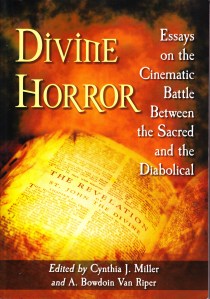
There’s a validation about finding something you figured out written in a book. For me that happened just about this season, some years back. At the Society of Biblical Literature annual meeting I found Sacred Terror by Douglas Cowan—the first book I’d discovered that discussed religion and horror films. Not only discussed them, but made the case that they have considerable common ground. Divine Horror: Essays on the Cinematic Battle Between the Sacred and the Diabolical, edited by Cynthia J. Miller and A. Bowdoin Van Riper, addresses the same theme but in more detail. Some of the essays in this volume get to the heart of the relationship between the sacred and the scary. As I mentioned, there’s a validation here for those of us who find horror movies fascinating. Others have noticed.

Genre fiction, as many fans know, comes with a subtle sense of shame. Low brow. Unsophisticated. Garish. Those with more refined tastes prefer subtlety and muted colors. Horror appeals to more basic instincts—but it’s also a form of expression that allows for the safe exploration of fear. There’s good horror and there’s bad horror. The eighteen essays in this book explore a bit of both. One conclusion that is unavoidable, however, is that religion—particularly Judeo-Christian religion—thrives in the context of horror cinema. The surprising part is that they often affirm the same message, but you need to look for it. Those who seek the origins of religion itself peer into the realms of awe and fear.

My own forthcoming book looks at similar territory. I don’t mind being classified as low brow. Raised in a blue collar world, that’s a fair assessment. What’s more, life confirms the reality of the connection between fear and religion. Consider the political moment in which we find ourselves. Much of the horror coming out of DC originates in religious “think tanks” trying to make evangelical Christianity the default faith stance of all our legislation. It means death and suffering to many, but the view of heaven for some becomes the tax haven for all. I know low brow when I see it. Horror comes in many forms—some lurid and some insidiously sneaky. Miller and Van Riper have pulled together a collection for our times here. The movies their authors discuss are part of a culture that is prominently religious and very afraid. If we want to understand what’s happening around us, we have to be willing to be scared.


Imagine Devils

One of the more encouraging events of recent times took place on Tuesday. In elections across the country many public offices were won by women. After a year of official misogyny from the Comrade in Chief—it started long before the election, of course—I felt hope for the first time. You see, I’d been reading Carol F. Karlsen’s The Devil in the Shape of a Woman: Witchcraft in Colonial New England. I’ve been interested in witches as part of my general exploration of religious views of monstrosity, and in the Early Modern Period, witches were still lurking in the imagination of many. Karlsen’s book isn’t focused solely on Salem. There were other outbreaks of witchcraft accusations, and a general air of suspicion had hung over New England from its founding.

Why women? Karlsen’s question haunts much of human history. Why one gender, or gender construct, why one race, or racial construct, feels itself superior to others is an issue not easily resolved. It doesn’t come, necessarily, from being a “white” male, but it is a disease that primarily effects that demographic. It’s a myth of superiority. The Devil in the Shape of a Woman is not an easy book for a man to read. Centuries of bad behavior don’t exonerate those who, although their belief was sincere, found an outlet for their faith in the destruction of others. Karlsen demonstrates that quite often the background issues were those of inheritance—in a patriarchal society, land passed to male heirs. Women who owned property complicated a social picture that was already under stress. Consider: any family with two sons would halve (although the proportions were not equal) its land each generation. The only way to keep the wealthy wealthy was to snatch land wherever they could.

It wasn’t so simple as that, but the basic economics—which haven’t changed much—set colonial New England up for disaster. Birth control was considered evil. Men still had to be gratified, however, and population increased as land size remained the same. The system is untenable. Just a year ago the electoral college made love to an angry white man. A man who “owns” lots of “valuable” property. A man who demeans women and those of other “races.” When his own shady dealing come into the light he cries “witch hunt!” History is full of ironies. One of the greatest of them in the fact that women have been held back long after circumstances had advanced enough to allow equality in a stable society. There may still be witch hunts, but they flow in the direction they always have—toward those denied autonomy and civil rights. Maybe Tuesday was finally a sign of hope.


Creating Annabelle

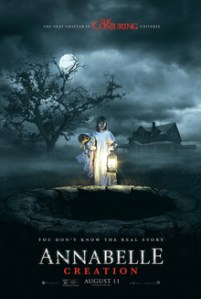
You might go crazy trying to piece it all together. The buzz for The Conjuring had a spinoff prequel, Annabelle, in the making even as the movie hit theaters. Love it or hate it, horror makes money. A more traditional sequel, The Conjuring 2, is leading to two further spinoffs, The Nun and The Crooked Man. And this summer a prequel to the prequel, Annabelle: Creation, came out. Only Annabelle isn’t really so much a prequel since it doesn’t have to do with Ed and Lorraine Warren. In any case, I finally had a chance to watch Annabelle: Creation and found it one of the more stunning examples of the genre in a long while. Intelligent, intricate, and slotted into the series in ways that required serious thought, it works as a stand-alone film or as part of a series. And, like much horror, it is deeply invested in religion.

First of all, the orphans moving into the Mullins’ large home are from a Catholic orphanage that has been closed. They are overseen by Sister Charlotte, so we expect religion to interdigitate with the horror here. Confession of sins, prayer, and crucifixes appear amid the unfolding lives of the girls in an isolated house inhabited by a demon. Some of the tricks we’ve seen before, but there’s enough new here to reinforce the thesis that religion and fear are close kin. Despite all this, and having a priest on call, no exorcism takes place. The doll, Father Massey declares, is just a doll. After the house has been blessed, there’s no need to fear. Of course we’ve already seen what comes next so we know the priest is wrong.

Some people watch horror to be scared. Others of us watch it looking for something a bit deeper. Not for everyone is religion a source of fear. We do, however, tend to cling to our beliefs because the world is such an uncertain place. We’re aware that we won’t last forever. Horror exploits that openly and without shame. Threats are constant and unrelenting, even if contrived. Religion is often a place to find consolation in the face of fear, so it becomes even more frightening when the place to which you’ve fled is the very place that’s out to get you. Annabelle: Creation is aware of this dynamic. The crucifixes, the Bibles, the prayers—none of this helps. What’s more, the girls manage to pull themselves together for safety when there are no men around. The real danger, after all, is inhuman.


Amityville Revisited

Remakes, standard wisdom holds, are seldom as good as the originals. When the original wasn’t great to begin with, the bar should be lower. Should be. I’ve been curious about the Lutz haunting in Amityville, having just read the book that started the phenomenon back in the late 1970s. I saw the movie first. That was several years ago now, but I do recall that even as horror movies go it had its failings. Some of that goes back to the book (presuming that anything happened)—nobody had a solid grip on whether this was a ghostly haunting or a demonic infestation. What the movie did do well is show how fragile family relationships can be, especially when under the pressures of supernatural supervision, not of the positive kind. Although, as is to be expected, the book was scarier.

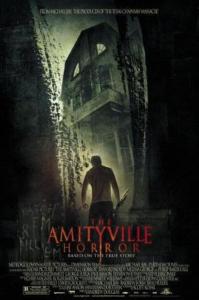
Overcome by curiosity I finally watched the remake from 2005. Clearly I’m not the only one still curious about this alleged haunting, alleged hoax. I also have the alleged burden of looking for religion in horror. Only on this final count was it not disappointing. Well, that and in featuring burgeoning scream queen Chloë Grace Moretz. Although Father Callaway’s role is late in the film and brief, early on religious ideas are implicated. If the movie hadn’t tried so hard to be The Shining these themes might’ve been developed to good advantage. Instead it introduces Rev. Jeremiah Ketcham (also late in the film) as the first owner of the house in 1692 (did the real-estate agent’s mention of that date make you shiver?). Ketcham was a sadist to the Indians under his care, torturing them to death in the house. No time is left to explore the sinister minister’s motivation as the family implodes in its attempt to escape the house by boat.

As is frequently the case with the supernatural, we’ll likely never know what happened at the Amityville house. The story Jay Anson told is now generally classified as a novel. The preternatural can be judged neither in the courtroom nor the laboratory. The best that we can do is make celluloid adaptations to make some money on the deal. The DeFeo murders happened in living memory. The Lutzes left the house in a hurry shortly after purchasing it. Anson’s Indian “asylum” was never really there—and there were no such Native American practices in any case. What the remake left out was demons. Although the movie attempted other religious scares, the house just isn’t the same without them.


Amityville

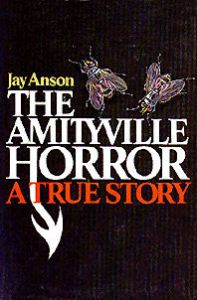
Surely one of the most controversial haunting stories of my own lifetime was that which came to be known as The Amityville Horror. After the tragic deaths of the DeFeo family in 1974, the next occupants of the fatal house, the Lutz family, claimed to have experienced 28 days of terror before moving out in the middle of winter and taking no belongings with them. Their story, written by Jay Anson, became a sensational bestseller. Published just four years after the unexpected cinematic success of The Exorcist, a movie was quickly signed and it was all the talk of my high school before I was quite at the stage of watching real horror films. By the time I got around to seeing the DVD, the tropes were so well known that it wasn’t really that scary. I realized that I had never read the book.

Whether you find Anson’s account scary or not probably depends on your level of belief in demons. Although he concludes his book with the suggestion that a combination of ghosts and a demon plagued the Lutzes and their priest, the focus of the narrative is clearly on the demonic. Fr. Mancuso suffers because the demon wants to keep him out of the house. The multiplication of flies, the constant waking up just after 3:00 a.m., and the smell of excrement all point to demonic activity. The book does have its share of historical inaccuracies and embellishments. It has been declared a complete hoax by some while others claim that at least some of what was described in the book happened to the blended family that called it home for less than a month. If you don’t accept demons, there’s little here to frighten you beyond a couple of benign ghosts.

As with any story claiming supernatural activity, we’ll never really know what happened. The Amityville Horror is often classified as a novel now. Our minds are conditioned to reject anything so terribly out of the ordinary that it is difficult to accept what you’re reading. The DeFeo family was undoubtedly murdered in the house by one of their own. The Lutz family did buy and then abandon the house in fairly short order for such an expensive purchase. There was a priest involved. The question marks hover about the supernatural elements, as they generally do. These are the ghosts and demons of the rational world which we inhabit. We safely confine them to fiction. Then we sleep at night with the lights left on.