Watching Watching

Dynasties exist in many professions.  Some of us grow up where there’s no succession, but for those who do the results can be good or bad.  I’m thinking in the case of Ishana Night Shyamalan it will be good.  I have not seen all of her father’s (M. Night Shyamalan) movies, but I have seen enough to know that he has considerable talent but also sometimes misses the mark.  That’s how I felt after watching The Watchers.  I didn’t know anything about it (including the director or producer) before watching it, but it only took a few minutes before I began thinking that it was like an M. Night Shyamalan movie.  Like his work, it is intelligent and intriguing.  And, in this case, slightly off the mark.  The story is a little too involved, and it may remind you, at points, of The Village (one of my “old movies” that I still go back to now and again).
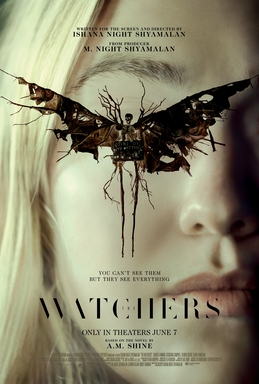
Mina, an American living in Ireland (never explained), gets trapped in a forest from which no one ever escapes.  Now, this part was scary if you’ve ever been lost in the woods.  (I have been and it still terrifies me.)  These woods are inhabited by watchers—in lore known as fairies, among other things.  A professor had built an observation deck where he could observe them.  The only way a human can survive in the woods is to stay inside the shelter at night.  Mina’s car breaks down in the woods and she comes across three survivors.  They’ve been in the shelter for months and since it is in the middle of the woods, there’s no way to get out before sunset, when the watchers will kill you.  Now, were the premise of the film to have stopped there, it might well have been believable.  The story gets deeper (but I won’t give it away), straining credibility a bit.  There’s a little too much stuffed in.

Does it work as a gentle horror movie, in the Night Shyamalan vein?  Yes.  It satisfies an itch on a rainy or snowy weekend.  Too many unanswered questions remain.  The setting in Ireland makes sense, given the fey plot, but why is Mina American?  Why is her sister Lucy also in Ireland (or is that just a visit at the end)?  Why didn’t [redacted: spoiler] watch the video long ago and leave?  Other questions also haunt.  Why did the professor shoot twice?  And more.  Still, having a source of Night Shyamalan movies for more than one generation seems like a good thing to me.  And I really want to know where, exactly that forest is located in real life, with or without the fairies.
Making More Monsters

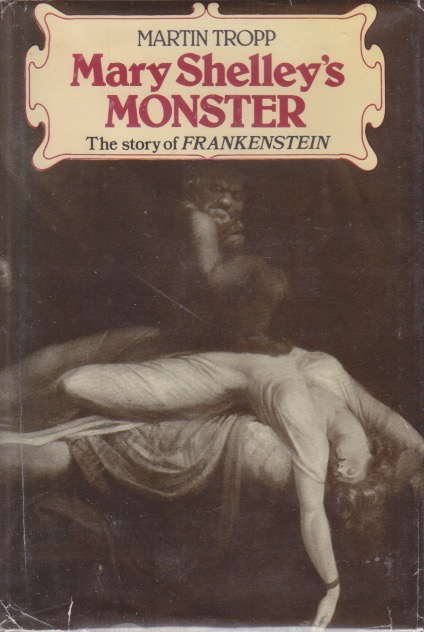
It’s endlessly frustrating, being a big picture thinker.  This runs in families, so there may be something genetic about it.  Those who say, “Let’s step back a minute and think about this” are considered drags on progress (from both left and right), but would, perhaps, help avoid disaster.  In my working life of nearly half-a-century I’ve never had an employer who appreciated this.  That’s because small-picture thinkers often control the wealth and therefore have greater influence.  They can do what they want, consequences be damned.  These thoughts came to me reading Martin Tropp’s Mary Shelley’s Monster: The Story of Frankenstein.  I picked this up at a book sale once upon a time and reading it, have discovered that he was doing what I’m trying with “The Legend of Sleepy Hollow” in my most recent book.  Tropp traces some of the history and characters, but then the afterlives of Frankenstein’s monster.  (He had a publisher with more influence, so his book will be more widely known.)

This book, although dated, has a great deal of insight into the story of Frankenstein and his creature.  But also, insight into Mary Shelley.  Her tale has an organic connection to its creator as well.  Tropp quite frequently points out the warning of those who have more confidence than real intelligence, and how they forge ahead even when they know failure can have catastrophic consequences for all.  I couldn’t help but to think how the current development of AI is the telling of a story we’ve all heard before.  And how those who insist on running for office to stoke their egos also play into this same sad tale.  Perhaps a bit too Freudian for some, Tropp nevertheless anticipates much of what I’ve read in other books about Frankenstein, written in more recent days.

Some scientists are now at last admitting that there are limits to human knowledge.  (That should’ve been obvious.)  Meanwhile those with the smaller picture in mind forge ahead with AI, not really caring about the very real dangers it poses to a world happily wedded to its screens.  Cozying up to politicians who think only of themselves, well, we need a big picture thinker like Mary Shelley to guide us.  I can’t help but think big picture thinking has something to do with neurodivergence.  Those who think this way recognize, often from childhood, that other people don’t think like they do.  And that, lest they end up like Frankenstein’s monster, hounded to death by angry mobs, it’s better simply to address the smaller picture.  Or at least pretend to.


Pseudo-documentary

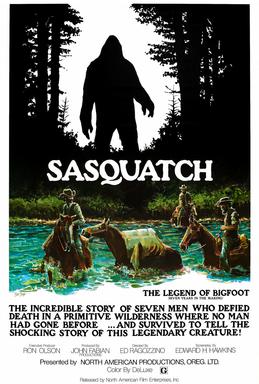
Documentaries have an honored place in visual education.  Of course, there are some who want to spice them up a bit with dramatic re-enactments.  These are sometimes called docudramas.  Then there are those who fake the documentary style to make mockumentaries, generally as a species of comedy.  Sasquatch: The Legend of Bigfoot is none of these.  A pseudo-documentary, it comes with “The Beast” collection I’ve mentioned before a time or two (mainly to excuse my bizarre viewing).  It presents itself as a documentary, but pretty much everything about it is fake.  The only real people are Roger Patterson—the movie shows his famous Bigfoot film—and perhaps the miners at Ape Canyon.  Oh, and Teddy Roosevelt.  In any case, the movie follows seven men as they make their way into remote British Columbia where “the computer” tells them sasquatch likely live.

The pseudoscience is easily enough spotted early on, but the movie never lets up its purported intent to bring low-budget proof back from the wilderness.  I’m not sure how the actual wildlife footage was captured.  In this slow-paced horror film there is quite a bit of actual nature thrown in.  I also wondered how they managed to get a cougar to attack a horse train and a bear not to maul one of the incompetent actors.  These two scenes aren’t special effects, and it strikes me as being either foolhardy or that trained animals were used.  It doesn’t seem to have had the budget for the latter, but a real mountain lion does land on one of the horses before quickly making an escape.  Although shot at night, the bear attack doesn’t seem entirely fake.  These things kept me wondering.

After about two months of horseback riding the crew makes it to the computer-predicted sasquatch homeland.  Bigfoot attacks the camp at night—no question that this one is fake—and after all these weeks of riding they decide to leave the next day.  Getting there is, apparently, most of the fun.  Fun, however, isn’t a word I’d use to describe this movie.  The hokey caricature characters (the old-timer, the dopey cook, the injun, the scientist—who does nothing but measure a thing or two) are worth a pseudo-laugh or two but the story struggles to keep the viewer awake on a cold weekend afternoon.  I kept wondering, in the Pennsylvania chill, how the weather in northern Canada was better in late September than it was around here in April.  I had to remind myself that Bigfoot was big in the seventies.  Big enough to handle both documentaries and fiction, and movies that are the latter, pretending to be the former.


For the Camera

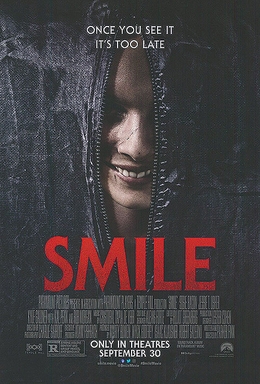
Smile 2 is getting some good critical notice and I hadn’t seen Smile (1) yet.  Psychological horror often bothers me, but I figured I’d grin and bear it.  I’m glad I did.  The ideas in the film, which participates in “the stigma trope,” are disturbing because it’s unclear if Rose (the protagonist) is mentally ill or not.  The stigma trope posits that something has infected someone either by having seen something they shouldn’t (as in Ringu) or by physical contagion (It Follows) and the victim can’t shake it.  Smile may trigger viewers with suicidal phobias since the premise is that an entity feeding on trauma passes from person to person by having the new victim witness the previous victim’s suicide.  Rose is a therapist who hasn’t gotten over the trauma of her mother’s death.  Rose witnesses a patient die by suicide, and who smiles just before she does it.

The patient told Rose that she’d watched one of her professors die by suicide.  Rose subsequently learns that the professor also witnessed a suicide and so on and so on.  Each prior victim had watched someone else die.  Now Rose has to figure out how to break the cycle, otherwise she’ll perpetuate it.  The idea of inadvertently obtaining a “sticky” entity is pretty scary, and a very human concern.  One of the more frightening aspects of possession movies is the belief that now that demons know that you know, they will target you.  Interestingly, what makes this film provocative is that the victim has to have suffered trauma before.  As such, it is a study of trauma and its lasting effects.  I suspect most people don’t intentionally traumatize others (world leaders excepted).  Trauma can be dealt with (or not) in very different ways.

Smile did quite well at the box office.  I suspect there are a lot of us traumatized people around.  Capitalism encourages traumatizing others through slow violence, if not the more obvious quick way.  People don’t easily walk away from events that scarred them, particularly if they happened at an early age.  Such people, if experience is anything to go by, find themselves in vulnerable positions in life and rather thoughtless people, often for religious reasons, end up traumatizing them even further.  I have to admit that there were triggers for me in Smile.  I still struggle with a few of my own traumas that were never resolved.  Like Rose, I sometimes don’t know who can really be trusted with such things.  This is a perceptive movie.  I guess now I can put on a happy face and see Smile 2.  But first I’d better talk to my therapist.


Belting Beltane

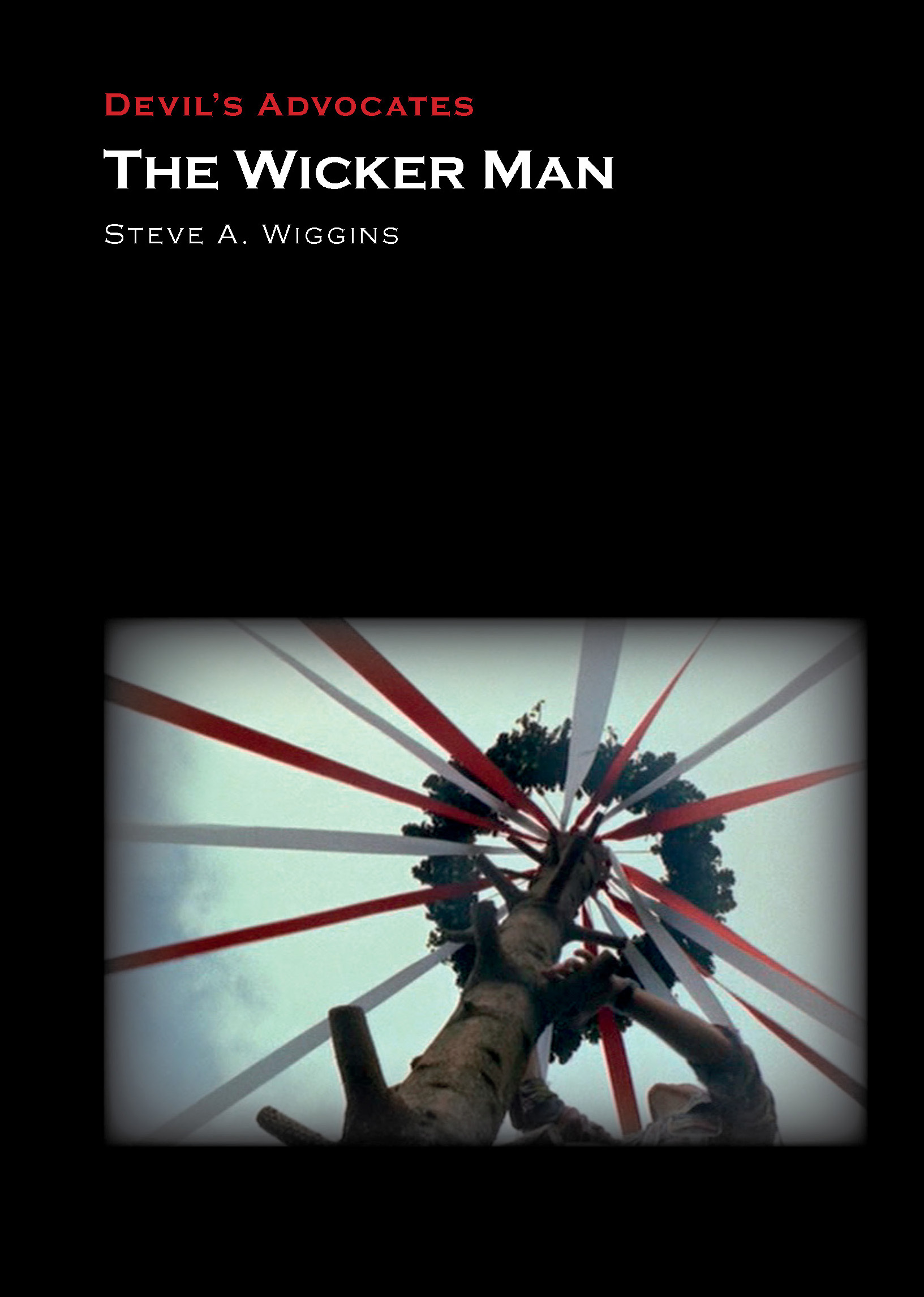
Things have been so busy that I forgot that today is Beltane.  That’s all the more ironic because yesterday I’d been on a panel to address the British Association of Film, Television and Screen Studies special interest group on Horror Studies, about The Wicker Man.  Lest you get the wrong idea, BAFTSS did not approach me to talk about my book (which has largely disappeared, as far as I can tell), but another recent Devil’s Advocate author approached them about having a panel featuring recent titles.  This special interest group has a program called Weekday Night Bites where they gather virtually to have speakers talk about horror.  Yesterday there were seven of us, discussing five books, one of which was The Wicker Man.

The theme of the panel was No Safe Space, about place and space in horror.  This meant I spoke briefly about The Wicker Man as folk horror.  As I told the assembled group, I actually interpret Wicker Man as holiday horror—it’s based on May Day, and I didn’t even think to mention that it was today—instead of folk horror.  One of the the hallmarks of the Devil’s Advocates series is that it tries to approach horror films from unexpected angles.  When I first contacted the editor who started the series at Auteur (who has, unfortunately left), he told me that they didn’t have a Wicker Man volume because everyone was pitching it as folk horror.  He wanted to see a different interpretation.  I’d been writing a book about folk horror and decided to give that a try.  The critics liked it, and thus my book was born.  And here it is, May Day, and I’d forgotten all about it.

There was a reasonably sized group present for the discussion and it was a lot of fun.  It reminded me of my Miskatonic Institute for Horror Studies course on Sleepy Hollow two years ago.  Both of these were efforts to stir some interest in my books.  Horror and religion is a new avenue of approach and there are a handful of us working in this area.  The others, it seems, have a knack for getting their books published in places where you don’t have to take out a mortgage to afford them.  I’m more in the group whose books are relegated to the Summerisle of sales.  Either that, or I’m actually Sergeant Howie, unwittingly flying there to help someone I think is in trouble. Who knows?  Anything’s possible on Beltane. 


New Hope Nightmare

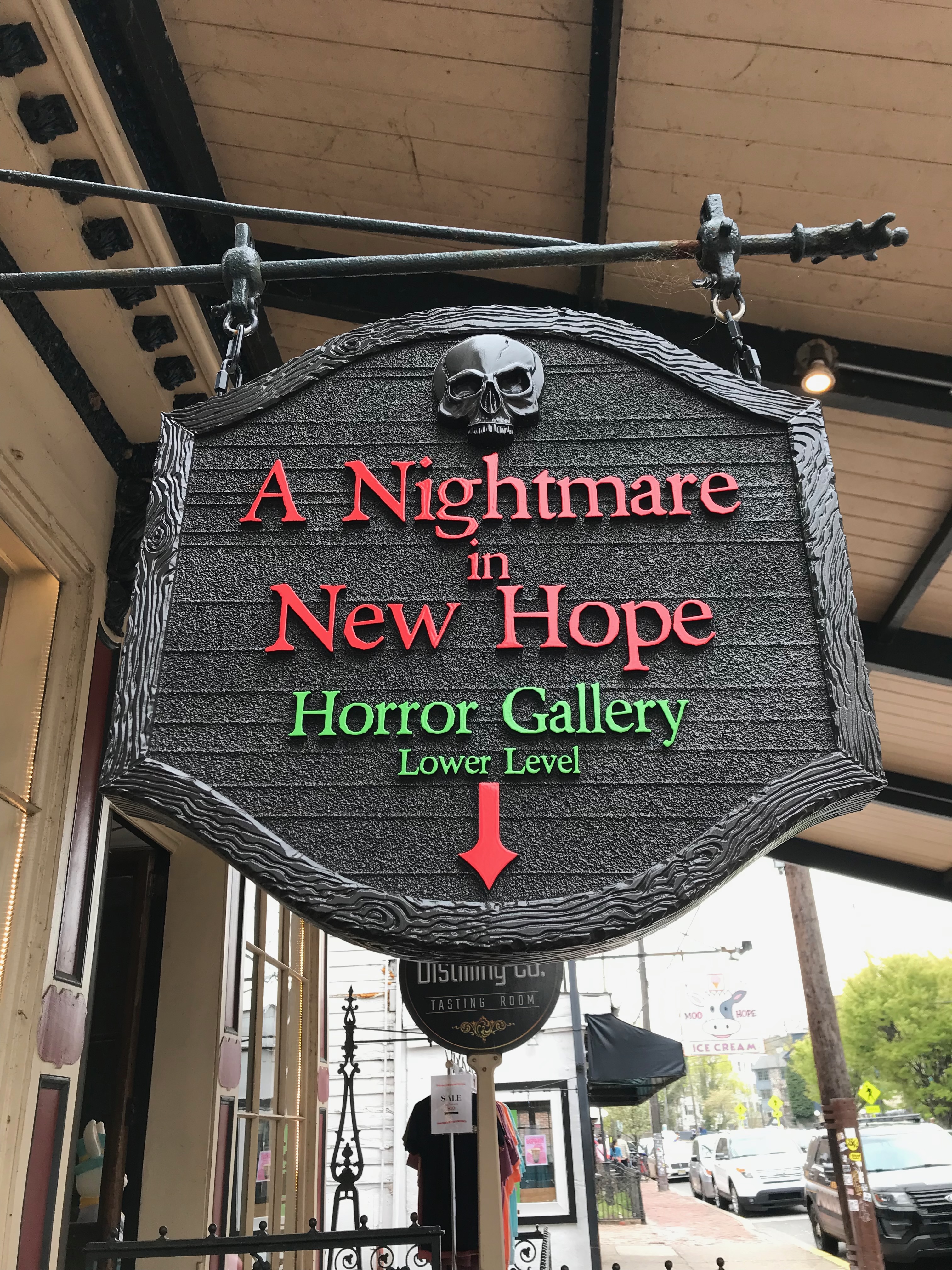
One of my favorite places along the Delaware River is the town of New Hope.  Across the river is the very nice town of Lambertville, New Jersey, but New Hope has a feel to it.  When I learned that a new horror museum had opened there—Nightmare in New Hope—we scrambled to change plans to get there right away.  We went the Saturday before Easter.  We’d planned to spend some time touring the rest of the town as well since it’d been years since we’d done so.  We managed to find parking and, since the museum opens at one, grabbed some lunch and went to Farley’s Bookshop.  Independent Bookstore Day was actually the following weekend, but bookstores need no special occasion.  Farley’s has changed a lot since our last visit.  It’s smaller (as has happened with many indies) and brighter.  I found plenty to like there, but I did miss the darker, dustier feel to the first incarnation of the store I’d known.

We made our way to Nightmare in New Hope.  And waited.  And waited.  Several people passed by, noting that they’d have gone in if it were open.  One of our party messaged the website since telephoning did nothing.  Eventually the owner indicated that he was closed for Easter.  Of all things.  A horror museum, open only on weekends, closed for the first nice weather we’d had on a weekend?  That was the main reason we’d driven an hour to get there.  We found a place with vegan ice cream and fed the ducks on the river.  I was sad that the main objective of the trip, the museum, hadn’t turned out.  And I knew it would be quite some time before we could try again.

My daughter, knowing my tendency to get depressed over such things, suggested we could go to Peddler’s Village instead.  My wife and daughter had visited it before, and so we decided to round out our Saturday trip there.  Peddler’s Village is a set of speciality shops that was born about the same time that I was.  These days there are about 60 shops with items that may or may not be strictly necessary.  Although we’d been to Farley’s, I couldn’t pass up the Lahaska Bookshop, part of the Village.  It was warm that day and we saw maybe only five or six shops.  At least one of them was an independent bookstore.  Not exactly the day we’d planned, but a day spent in and around New Hope is never wasted.  But really, closed for Easter without even putting a notice on the website?

(See updates here and here.)


Capture and Release

Waste not, want not.  I place some stock in old sayings.  With the way things are going, prices are sure to rise and so saving a penny or two may be wise.  So I turned back to my boxed set of “The Beast” for my horror fix.  As I’ve explained before, I bought this DVD set before streaming was a thing, and I was feeling nostalgic for Zontar: the Thing from Venus.  Being a fan of bad movies, it was worth every cent.  The set is actually (mostly) themed around Bigfoot.  I’ve talked about a few of these movies before, and trying to be frugal, I’ve determined to watch the whole set, no matter the cost.  Besides, there’s an aesthetic to bad movies.  The Capture of Bigfoot, no doubt, is a bad movie.  Knowing this before I slipped the disc in, I have no business acting outraged at the poor acting, directing, writing, or any cinematic sins.  Except one: a horror movie can’t be boring.  And Capture is b-o-r-i-n-g.  If you like movies about people slogging through knee-deep snow, this may be for  you.  

What really amazes me is the talent the compilers of such collections have at locating truly obscure bad films.  Now, I have a soft spot for 1970s horror.  Nostalgia carried me through, floating on those seventies’ vibes.  The clothing, especially.  And more particularly, the winter coats.  Although set and filmed in Wisconsin, the winter coats the kids wear in this movie are just like those everybody was wearing in Pennsylvania at the time.  And yes, I trudged through knee-deep snow my fair share of times.  That part just opened the flood gates of memory.  So, the story goes like this…

An evil businessman (I lost track of how many people he killed, or tried to), wants to capture Bigfoot (shown early, in winter white) to put the town on the map.  Paying stooges to go get the beast, he finally builds an elaborate trap that succeeds.  The local game warden, with his girlfriend/wife and her little brother, decide the creature isn’t evil.  Using Batman-style tying skills, bad guy’s henchmen assure that most of his enemies escape to trudge through the snow some more.  A mysterious Indian character tells the game warden that the creature must be set free, which it is.  The evil businessman dies in a fire inside his wicked mine where he’s keeping the beast.  In the end, two families—the warden and the Bigfoot—pay mutual respect.  I do wonder about the mentality of someone making a movie like this.  But then, some forty years later, here I am writing about it.  Win-win. 


Playing Sleepy Hollow

In my teenage years I wrote a short play or two.  I haven’t done it since.  I’ve read plenty over the years but my fiction takes the form of short stories and novels—narrative fiction.  Playwriting, and scriptwriting, take a special talent.  One time-honored way to doing this is to utilize source material.  One of the points that I make in Sleepy Hollow as American Myth is that movies, in particular Tim Burton’s Sleepy Hollow, inspired a number of other movies and even novels, both narrative and graphic.  Others saw the potential this short story could have.  I spend some time in the book going over the various adaptations and the innovations they make.  The point is that “The Legend of Sleepy Hollow” has become an American myth.  Anyone who examines its long history can see the impact that it has had on the American imagination.  And on Halloween. 

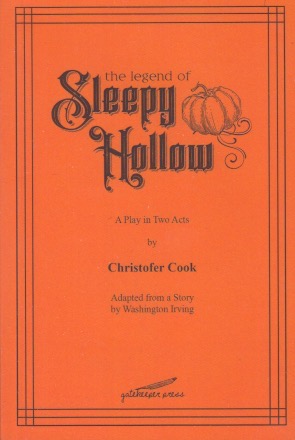
Christofer Cook’s The Legend of Sleepy Hollow is a two-act play, adapted from Washington Irving’s story.  Some of it is taken directly from the story, but as most of those who have adapted the story know, it requires some help to become a performance.  Cook’s play is an interesting take on the story.  I’m not sure what other sources Cook may have seen and/or read, but there are some elements here found elsewhere that have become part of the tale.  For example, a duel between Brom Bones and Ichabod Crane.  I’ve seen that in other treatments, and it seems logical enough, given the circumstances.  Irving, however, it is not.  Perhaps the most surprising shift Cook makes is that the famous horse chase takes place with both Ichabod and the horseman (named Hermann Von Starkenfaust) on foot.

Had I known of Cook’s adaptation before submitting my manuscript, I would’ve been glad to have included it in my book.  Many movies have their own scripts that they use to bring the tale to life on stage and screen.  This only underscores my point—myths are endlessly adaptable and capable of serious transformation.  Some elements of the story we now assume to be part of the original were added many years after the story was written and its author had died.  Yet we all tend to expect these things.  Nobody has the final word when it comes to what happens to Ichabod Crane.  Washington Irving assured that in his story.  Those who come after bend, twist, and stretch the tale in new and fascinating directions.  This little play is one such and would be, I suspect, great fun to see.


Drac Retold

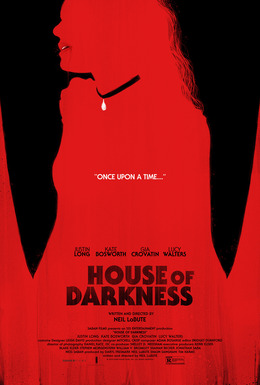
House of Darkness is one of those horror movies that doesn’t seem like horror until a good way in.  I knew nothing about it, other than it had to do with vampires, when I watched it.  A guy named Hap, a bit drunk, is trying to score with a woman, Mina, who he’d just met in a bar.  They don’t know each other’s names yet but she lives in a castle far from town.  Just as things begin to get intimate, another woman, Lucy walks in.  At this point Bram Stoker comes to mind.  The two main female characters in the novel are Mina Harker and Lucy Westenra, so naming the sisters (for so the two are) after them lets you know you’re in vampire land.  As Mina is off fixing a drink, Lucy takes Hap on a tour.  He begins to suggest a threesome, but the women want to tell ghost stories instead.

In the guise of fiction, Lucy narrates their past as sisters who rescued an abused girl and who moved from town to town to wipe out the men.  Hap is then startled by a third sister, Nora.  He is now growing quite annoyed by their game and when he tries to leave, they attack him.  Now, I was watching this on a Sunday afternoon after having been up late the night before.  My motive in watching movies at such times is to help keep awake (as well as to have something to blog about).  The pacing of House of Darkness was so slow that it struggled to meet my expectations in that regard.  Still, it isn’t a bad movie.  It has a feminist message, and as I read about it later I learned that it was intended to be a modern retelling of Jonathan Harker and the three women in Dracula’s castle.

Then I learned the film was written and directed by Neil LaBute.  That name is seared forever in my mind as the man who tried to remake The Wicker Man.  Suddenly things began to fall into place.  Many stories—some would argue all—are retellings of classic tales.  LaBute seems to enjoy trying to make them into something slightly different.  His directorial vision, however, doesn’t seem cutting edge.  House of Darkness is mostly banter, some of it clever, between Hap and the women he wants to seduce.  I kept thinking, “It’s a work night for him,” and wondering how he’d manage to function the next day.  Of course, I was probably projecting since I knew that, if I made it through this soporific afternoon, I would be at my desk bright and early the next day. 


From the Grave

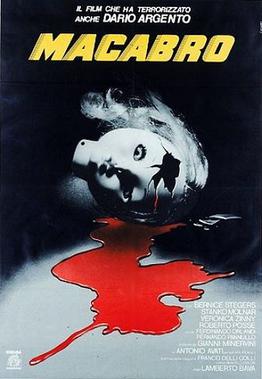
“Macabre” is a word of uncertain etymological origin.  One of the most convincing arguments that I’ve read is that it derives from Hebrew qbr, a root associated with graves.  The “m” prefix would be the preposition “from,” making the phrase miqqeber, or “from the grave.”  It has been decades so I don’t remember where I read that, but it made sense to me.  In any case, this is a fairly common word for titles, it would seem.  I recalled Stephen King noting Macabre among the scariest films up to 1980, so I thought I’d try to find it.  A simple IMDb search showed it streaming for free on a couple of platforms, so I clicked on one of them.  At about halfway through, I paused the movie to see if maybe I’d got the wrong one (I had).  But I decided to finish it out in any case.  There will be spoilers below.

What I’d found was the 1980 Lamberto Bava movie.  Bava’s name was familiar to me from his famous father, Mario Bava, an Italian horror movie innovator.  There was a family resemblance.  So, what’s it about?  A woman with two children is having an affair.  Her somewhat unstable daughter decides to drown her brother to get her mother to come home.  On the way, her paramour, who is driving, runs into a guardrail and is decapitated.  After being released from the mental hospital, the woman moves into the apartment where the affair had been taking place.  The house is owned by a blind man who knew about the affair.  It sounds like, however, the affair is still continuing although said man is dead.  

When the daughter, who is trying to get her parents back together, confesses that she drowned her brother, the woman drowns her—echoes of Medea here—but the blind man kills the woman when he tries to save the daughter.  What makes this even more macabre, is that both the blind man and the daughter had learned that the woman was keeping the head of her lover in the freezer—echoes of Alice Cooper as well—to stimulate her as she continues the affair without her former lover.  It’s not a horror classic.  Titles can’t be copyrighted, so some repetition is bound to occur.  The Macabre I should’ve watched was the one from either 1958 or 1969.  Apparently this is a popular film title, as there was another released in 2009.  I can rule out the last one, but to find out what I should be looking out for, I’ll need to dig out my copy of, well, Danse Macabre.


More Than Zombies

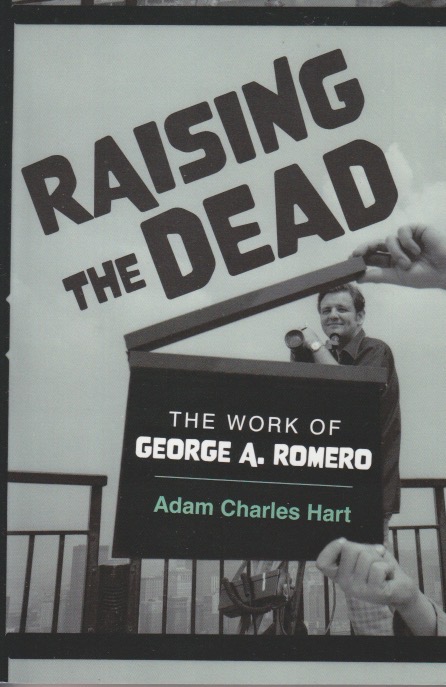
I was near fifty, if I hadn’t already passed that threshold, before I saw Night of the Living Dead.  Whispered about in my high school as one of the scariest movies ever, I had avoided it.  When I saw it, I immediately recognized its draw.  I’ve watched several George Romero movies since then, appreciating his devotion to Pittsburgh, and to monsters.  Adam Charles Hart’s Raising the Dead: The Work of George A. Romero, showed me much more than I’d ever watched.  For one thing, Hart had access to the Romero archives.  Although the book does spend time on the movies that Romero actually got made, it fleshes out the picture with those that remained unfilmed.  Or were filmed and disappeared.  And Hart also discusses the fact that Romero didn’t really think of himself as a horror auteur.  He had other ideas, other projects he wanted to shoot.  But he’s remembered for zombies.

Some of this is to be expected.  Although zombies had been around before, Night of the Living Dead made them into modern monsters.  As much as Romero hoped the cred from that film would get him noticed, as will predictably happen in capitalism, funders wanted more of the same from him when it was noticed.  Zombies went on to become a major worldwide craze.  Tons of movies, long-lasting television series, zombie walks in major cities—zombies rivaled vampires for dominance among the undead.  For those holding the purse strings, they were a sure thing.  And those wanting to gain more lucre love a sure thing.  Romero had other stories he wanted to tell, but the funders wanted more zombies.

Writers tend to have wide interests.  Stephen King doesn’t only write horror.  One of the more intriguing facts in this book is that Romero had even considered a remake of “The Legend of Sleepy Hollow.”  Given my particular interest in that tale, I wondered what that might’ve been like, had it ever been made.  Interestingly, Hart notes that it was in a folder from 1998, the year before the Burton film Sleepy Hollow was released.  (I could’ve used this information before Sleepy Hollow as American Myth went to press!)  In any case, this is a fitting tribute to a guy with principles who, although he never became a director with household name recognition, managed to help change the horror genre forever.  He avoided the big studios and paid the price for doing so.  But he left behind a legacy, and that’s about the best that can be hoped for a writer.


Unusual Autopsy

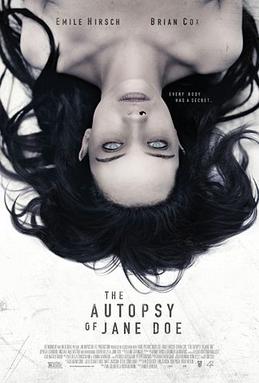
I avoided The Autopsy of Jane Doe for some time because, well, autopsy movies just aren’t my thing.  Besides, I thought it might be a “true crime” sort of movie and those aren’t my favs either.  That didn’t stop the recommendations, so I gave in.  I’m glad I did.  It’s a cut above a lot of what’s out there, and although it does rely on a few more jump-scares than I like, it isn’t all about them.  And it turns out that it’s Holy Sequel material.  Here’s how the story goes: a father and son mortician team, who have the morgue in their basement, specialize in determining cause of death for the local sheriff.  When four bodies are found in one house and none of it makes sense, the sheriff brings the most suspicious body, Jane Doe, to the morticians for their assessment.  Externally the body has no marks, so what killed her?

The majority of the movie is the attempt to solve this mystery.  The father and son find impossible things—evidence that the woman had been tortured, but there were markings on internal organs without any damage to the skin.  They soon determine this is bad juju and when lights begin shattering and corpses get up and walk around they know they were right.  They’re trapped, however, in their basement.  It’s clear that this Jane Doe isn’t quite through with them.  I’ll try not to spoil the ending here, but I did mention that the Bible comes into it.  How so?  Well, it turns out that one of the impossible things in the body is a charm that has Leviticus 20.27 written on it (the passage about not allowing witches to live).  And although it invokes Salem, it does so in a way that suggests the witch hunters were to blame.

This movie was actually out before Holy Horror was finished, but as I point out in that book, there is no website or repository listing horror films that use the Bible.  To write a book like that, you have to do a lot of watching.  I love watching movies, but it takes both time and money, items in constant short supply in my life.  When I do watch, I try to make connections.  It would also be interesting to write a book on how Salem is portrayed in horror movies.  What with the work-a-day world in which I live, I’m not sure how many more books I can crank out.  Especially when they don’t sell.  The important thing is not to let the title of a movie put you off, for autopsies can reveal much.


Horror Adjacent

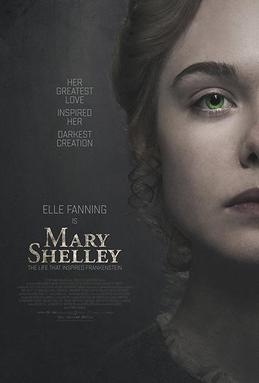
We have the basic facts, but still, it takes a good bit of imagination.  We simply don’t know what the life of Mary Shelley was like, as experienced by the woman herself.  The movie Mary Shelley isn’t a horror film but it’s horror adjacent.  How could a movie about the woman who invented Frankenstein be anything but?  The handling of Haifaa al-Mansour’s film is generally as a drama, or a romance.  The story takes the angle that it was her stormy relationship with both Percy Shelley and her own father that led Mary to express her feelings of abandonment in her novel.  And while we have to acknowledge the liberties all movie-makers take, it does seem interested in keeping fairly near the known details of Mary Shelley’s life.  Although other women were also writing then, it was still a “man’s world” she tried to break into.

I confess that one of my reasons for wanting to see this film was that Ken Russell’s Gothic had a powerful impact on my younger mind.  That movie, which is over-the-top, being the first I’d seen telling the tale, had become canonical in my mind.  I know the dangers of literalism, and I wanted to see someone else’s take on the story.  Al-Mansour’s treatment takes a female perspective to the narrative.  It seems that Percy Shelley and Lord Byron were both advocates of what might now be termed a playboy lifestyle, and that Mary, daughter of forward thinking Mary Wollstonecraft and William Godwin, was fairly liberal herself.  Although Percy Shelley, like Lord Byron, was quite famous in his time, that didn’t always equate to financial solvency.  I could relate to parts of that quite well—full of creative ideas and shy on cash flow.

Mary Shelley didn’t rock the critics, but many felt it was a thoughtful treatment.  It is dark and gothic, but with no real monsters.  It did explain a bit of inside baseball about Ken Russell’s film.  Both movies make use of Henry Fuseli’s painting The Nightmare to explore the famous meeting of Byron and the Shelleys that led to the writing of Frankenstein.  Indeed, Gothic makes a good deal of it.  Mary Shelley explains that Mary’s mother, Mary Wollstonecraft, had an affair with Fuseli.  I was unaware of that connection.  Something was clearly circulating among the Romantics, many of whom knew each other and, in their own ways, became formative of culture centuries down the road.  And although many critics weren’t impressed, I think it’s about time that a woman’s point of view was brought to Mary Shelley’s life in a world not kind to women.  Even if a woman gave the world one of the most influential books of the nineteenth century.


More Rats

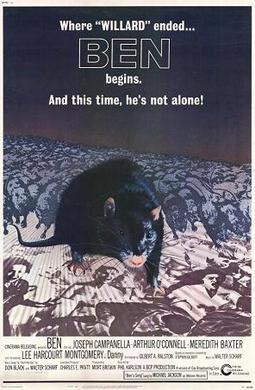
I’ve asked other survivors of the 1970s if they knew that the Michael Jackson hit “Ben” (his first solo number one recording) was written about a rat.  Most had no idea.  The song is the theme for the sequel to Willard, namely, Ben.  Now, I have a soft spot for seventies horror movies.  Before the days of streaming I repeatedly looked for Willard in DVD stores and never did find it.  I eventually found it on a streaming service and even wrote a Horror Homeroom piece on it.  One winter’s weekend with not much going on, I finally got around to seeing Ben.  Neither are great movies, but I’ll give them this—people in my small hometown knew about them.  Everyone I grew up around knew that “Ben” was a song from a horror movie.  In case you’re part of the majority, Ben is the chief of the intelligent rats who turns on Willard at the end of his movie.

An incompetent police department and other civil authorities can’t seem to figure out how to exterminate rats when they begin attacking people.  A little boy, Danny, has no friends.  He is apparently from an upper-middle class family, and he has a heart condition.  Ben finds him and the two become friends.  Danny tries to get Ben to lead his “millions” of rats away from a coming onslaught, but for some reason Ben decides to stick around and nearly get killed.  In the end, badly injured, Ben finds his way back to Danny.  Cue Michael Jackson.  It really isn’t that great of a movie—the number of scenes reused during the tedious combat scene alone belies the pacing of a good horror flick.  I felt that I should see it for the sake of completion.  Check that box off.

It’s a strange movie that ends up with viewers feeling bad for the rats.  They’re not evil, just hungry.  They do kill a few people (poor actors, mostly) but it’s often in self defense.  The best part is really the song, and the premise behind it—boy meets rat, boy falls in love with rat; you know how it goes.  Michael Jackson famously loved horror movies, and as many of us have come to realize there’s not much not to like.  This movie is pretty cheesy (with the rats attacking a cheese shop, but only after an unintentionally hilarious spa scene) but it has heart.  And it has a fair bit of nostalgia for those of us who grew up in the seventies.


Around Us

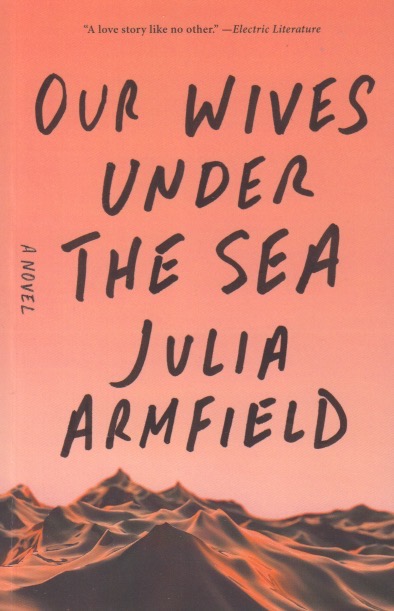
Our Wives Under the Sea is a gentle, but chilling horror story by Julia Armfield.  Two women are married and one of them is a marine biologist being sent on a submarine to explore deep ocean life.  A planned three-week voyage becomes six months and when the sub finally surfaces again, Leah, the biologist, has “come back wrong.”  She’s transforming.  Something happened to her under all that water.  Told alternately by Leah and Miri, the story is one of loss and mourning and lack of any reasonable explanation.  Haunting, in a word.  The writing is exceptional.  And probing.  I quite enjoyed this book.  I can’t recall how I first heard about it—it was published in 2022—but I knew I wanted to read it even then.  The sea is that way.  Moby-Dick, cited in an epigraph, has always been my favorite novel.  One of my early reading memories is Rachel Carson’s The Sea Around Us (also cited here).  The story is a winner.

There’s something about the ocean.  We, in reality, know little about it.  Penetrating the crushing depths requires a well-funded science, something we’ve moved away from in favor of personal greed.  Life takes unexpected forms deep under the surface, even as we deplete the resources we can reach—over-fishing and consuming.  We’re never told what it is Leah and her crew-mate see so far down.  We all know of lantern-fish (lately in the news) and other sub-surface terrors.  We don’t know the potential life we might discover if we only cared to look.  The company that sent Leah down, however, is as shadowy as the government.  Promising help but not answering the phone when you call.  Yes, this is a haunting book.

Mostly, however, at least in my reading, it is about coping.  We attach our lives to others and when something changes them we have to try to adjust, because love is that way.  Caregivers understand.  The novel evokes both the endless draw of the ocean and its mystery.  Even as a child I wanted to live on the stormy east coast, preferably in Maine.  I wanted to be near the water.  As my mother was in her final decline, one of her dearest wishes was to return to the ocean.  She’d spent a fair bit of her childhood in New Jersey and always felt the draw of the sea.  She was no swimmer, but just being near the ocean was something she loved.  And that has passed down, it seems, to my generation.  Fearful yet drawn.  It is the dilemma that can lead to effective horror stories that make you both think and feel.