Which Witch Where?

I like to think of myself as a kind critic.  I’ve been on the pointy end enough to know how it feels when those who don’t like my work are unkind.  I’ll try to find a nice way of saying Witches of Amityville, or Witches of Amityville Academy, must’ve been shot on a very modest budget.  It must’ve been written by someone who’s still working hard to master the craft.  And the actors are continuing to improve as the director gets better at that role.  Why did I watch it?  Amazon Prime gives it four stars.  The incongruity of Amityville and witches suggested it might be a bad movie, and in that regard it did not disappoint.  So what’s going on here?

There’s a witch academy in Amityville.  Although all the cars have steering wheels on the right, everyone speaks with American accents, apart from a couple of characters.  The interior shots, however, are also pretty British for the most part.  There does seem to be some awareness that Amityville is in the new world.  In any case, said academy is run by an evil coven that is seeking to release the demon Botis.  To do so they have to sacrifice college-age women (and no, it’s not that kind of movie).  One of their intended sacrifices escapes and is found by three white witch sisters who also live in Amityville.  They decide to train this young woman who, as it turns out, is a very powerful witch.  Problem is, the director of the academy can’t release the demon without sacrificing this particular victim.  So she kidnaps her back.  The three good witches burst on the scene, actually more like just walk on, and prevent the sacrifice.  The bad witch kills herself and releases the demon, but the young witch is so powerful that she destroys him.  In the end the witches must go to Salem.

What’s not to like?  Some of us, day by day, year by year, work to improve our writing skills.  We write stories that incorporate whatever ability we’ve managed to scrape together.  And we struggle to find publishers.  I like bad movies because they are a great place to find hope.  The world’s a big place.  Even the entertainment industry is large enough to absorb movies produced by Amazon, Hulu, and Netflix, among others, including the big studios.  They’ve got to be looking for content, right?  Those of us who channel our creativity towards writing, and who keep trying to get it published, have a chance, don’t we?  What’s the harm in believing in the power of magic?

Monster v. Alien

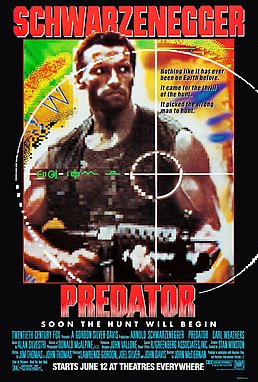
“Horror” is a faulty genre category.  Nobody quite knows where its boundaries lie.  Take Predator, for instance.  I recently watched it for the first time although I’d known about it since I was in seminary.  I am not a fan of tough-guy movies, so it took the fact that it’s sometimes coded as “horror” to get me to watch it.  Horror is often defined as a genre that has to have a monster.  Check.  We got your monster right over here.  The monster’s an alien but so is, well, Alien.  An action-adventure, sci-fish movie with a monster—is that horror?  I knew I had to see it for the sake of completion.  I’d heard of Predator vs. Alien (haven’t seen), and enough people comment on Predator that I was beginning to feel hopelessly outdated.  Or even more hopelessly outdated.

I presume the rest of the world saw it long ago, but I didn’t even know the plot.  A group of tough-guys are duped into a covert operation that allows for many explosions and bodies flying through the air.  Then they have to get out of the jungle alive because there’s an alien sportsman on the loose.  Apparently he likes earth for a good challenge since he won’t hunt somebody who’s unarmed.  He wipes out Arnold Schwarzenegger’s team—and to the film’s credit, the Black guys don’t die first.  There’s time for that, of course.  As they tromp through the jungle shirts come off because the guys are all ripped, of course.  One of the team, Billy, decides to fight without a gun so when it’s down to just Arnold and the alien the predator decides fisticuffs will settle this in a manly way.  When Schwarzenegger’s trap mortally wounds said predator, it sets off a bomb that allows for the biggest explosion of all.

So is this horror?  Hulu thinks so.  Schwarzenegger apparently thought it ended up as sci-fi horror—which is a thing.  It’s a thing because horror is a poor genre.  It’s ill-defined.  You kinda know when you’ve just seen a western or a romance.  But lots of horror films are disputed.  Critics repeatedly opine that The Shining isn’t horror.  Neither is The Exorcist.  Of course, both always wind up near the top of horror list movies.  Horror movies don’t win academy awards, as a rule.  Still, “horror” fans seek movies out that others classify as drama, or even action-adventure.  Horror is close kin with science fiction, another disputed genre.  The two are often quite distinct, however.  So, did I watch a horror movie this weekend?  I honestly can’t say.


Forewarning

The Devil’s Advocates series, as you learn from pitching and writing one, promotes alternative views on horror films.  Adrian Schober’s treatment of The Omen doesn’t disappoint.  Each time I read one of these little volumes I’m always amazed at how many ideas can be packed into such a small space.  Schober’s take on the film is that Damien’s role is left intentionally ambiguous.  There was disagreement between the screenwriter (David Seltzer) and the director (Richard Donner) on that point.  Donner wanted it to be left up to the audience whether Damien was the Antichrist or not.  Seltzer, not being a believer himself, wanted to be clear that the boy was evil.  As portrayed in the final film, however, Damien seems awfully vulnerable, in retrospect.  (I rewatched the movie before reading the book.)

I’ve seen The Omen a number of times.  It has never been my favorite movie and I actually read the book (a novelization) before I ever saw the film.  Having grown up as a fundamentalist, I believed that we were in the end times (which only really seemed likely starting in November 2016).  The movie had to wait until I was an adult (I read the novelization when the film first came out).  I can see the ambiguity now, having read this book.  There remain, however, some things difficult to explain about the presentation—how Fr. Brennan knows Katherine is pregnant and that Damien will be the cause of her miscarriage.  The extreme coincidence of both the priest and the boy having the same birthmark that looks like 666.  And that someone would go through the trouble of burying a jackal and Thorn’s actual son in an obscure Etruscan cemetery just in case the Ambassador ever got suspicious and wanted to check it out.  

Interestingly, different markets altered the ending, enhancing the ambiguity.  The final scene had originally been shot with three coffins rather than two, and that changes things, doesn’t it?  Movies are, of course, subject to interpretation.  Any form of media is.  The fact remains that many viewers flocked from theaters believing Damien was the Antichrist.  Schober’s book would give pause, however, about rushing to conclusions.  The idea for the movie was suggested initially by a marketer who was a true believer in premillennial dispensationalism (essentially the worldview of Keith Jennings in the movie), and some Catholic officials objected.  Different Christian sects have very different interpretations about the end of the world.  And this movie is subject to different interpretations.  This brief book might just change your mind.


Not a Peep

Time changes everything.  Peeping Tom, which has been on my list for some years, was castigated when it was released in 1960.  Now it’s considered a classic.  Indeed, it’s frequently discussed in books analyzing horror films, and it had a bit of influence on Alfred Hitchcock.  Films like this must be watched as period pieces, of course, but there’s so much psychology here to unpack that I wonder if it’s used in mental health courses.  Mark Lewis is a loner who inherited a spacious London house from his father.  He lets out the downstairs rooms but keeps to himself upstairs.  One of the reasons is that he realizes that he’s mentally unstable.  He’s a serial killer, in fact.  His young downstairs neighbor takes a shine to him and he reveals, via film, that his father tormented him as a child to film his fear reactions.

As an adult, Mark works in the film industry.  He also kills women while filming them to capture their fear reactions—taking his father’s work a step further.  Although shy, he is charming enough to others.  When he sees a fear reaction, however, he feels compelled to murder.  The neighbor downstairs doesn’t suspect him, but her ocularly challenged mother does.  Thinking back over it, many moments reminded me of a racier version of Hitch.  Racy because Mark picks up money on the side by taking boudoir photographs that the local news shop sells to certain customers.  This is a creepy film and perhaps the creepiest scene is where a local girl, well underage, comes into the news shop to buy a candy bar just after the owner sells an older man a pornography book.  We don’t like to admit that such things could happen.

There is so much going on in this movie that it’s clear, at least to me, why it has garnered such acclaim.  I spent the first twenty minutes or so wondering whether I should really be watching, but as I stayed with it I couldn’t look away (which is one of the very self-reflective issues that the film addresses).  The analyses I’ve read never really went into detail regarding the plot, so there were plenty of places where I wondered what would happen next.  The pacing is more in keeping with the turn of the sixties, but the mind work seems ahead of its time.  Some call it a precursor to slashers, but it doesn’t linger on the actual bloodshed (which is minimal, considering).  It does take its time to make you think while you watch.  And somehow it makes viewers complicit, it feels, with what they’ve seen.


A Different Legion

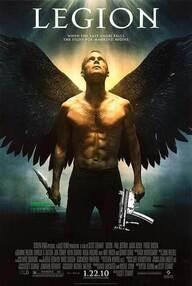
Religion and horror can play well together.  They can also be unevenly matched.  Although Legion has been on my list since shortly after it came out, my impression after having watched it is that the angels are strangely corporeal.  Their fights are physical with very little supernatural involved.  I suppose that’s why it’s generally classified as “action,” but the premise is one that suggests a bit more supernatural would’ve been welcome.  The writing suffers from any number of ailments, and the ending leaves you wondering just how good God is supposed to be in this telling.  I suppose a plot synopsis might help.

A pregnant waitress in a remote diner is nearly at term.  The Archangel Michael has come to earth in Los Angeles (get it?) and has armed himself to protect this unborn baby.  He comes to the diner where the owner and his son, his cook, and four customers are holed up against what they think is a demon attack.  Michael eventually reveals that the arriving hordes are not demons, but humans possessed by angels.  God has decided to wipe out the human race again, this time with angelic mercenaries.  If the waitress’s baby survives, however, the world will be saved.  So there’s lots of shooting, and although a white guy dies first, the only two Black characters are the next victims, of course.  To kill angels, it turns out, you have to shoot them.  Who knew?  In the end, which pits Gabriel against Michael, it’s revealed that God was testing the loyalty of his angels by giving them this task.  Mindless obedience, God thinks, is wrong.  If people have to be killed to prove it, so be it.

The theme of the messianic baby stays intact but goes nowhere.  At the end it’s unclear if the angel attacks are still going on, but the waitress and her boyfriend, along with the baby, drive around heavily armed, ready to fight.  Did the angels get the message that they are being tested by God or are they, like many Republicans, simply following the “leader”?  Seeing the title and knowing nothing of the story, I had assumed this was a movie about demons.  The “Legion,” of course, is angelic but there’s not a lot transcendent about them.  Even the use of wings (which are bulletproof), makes this feel like Dogma without the humor.  I knew religion would be involved in this horror, but I didn’t know how poorly it was played out.  Still, it would fit into Holy Sequel, if it ever happens.


Filming the Void

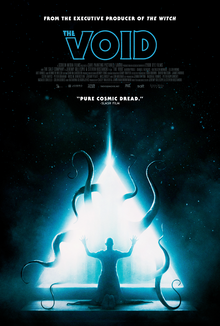
Once you move away from major studios, it turns out that Lovecraftian horror is rather prevalent.  Seeing that The Void was rated higher than many offerings on FreeVee, well, why not.  It was compared to the intellectual works of Benson and Morehead, but to me it matches more closely with Older Gods.  Like many movies in this genre, The Void isn’t easy to follow and having commercial interruptions doesn’t help.  (In movies made for television, directors know to offer cues at specified times to allow for a break.  I’m not sure that those at FreeVee, or Tubi, or Plex, or their ilk, or even Hulu, know how to do this well.)  So there are these mysterious cultists—somehow “new religionists” just doesn’t seem to cut it—who apparently want to bring about the apotheosis of their leader in a rural setting. 

Meanwhile a local sheriff finds a young man fleeing from a couple of guys who are killing people and takes him to the hospital.  This hospital, however, is being closed down and there’s only a skeleton crew there to handle emergencies until it can be decommissioned.  Once the guys trying to kill the young man arrive, the hospital is surrounded by the cultists.  By the way, there will be spoilers—just saying.  It never is adequately explained how these killing guys know who these cultists are, unless it happened so fast that I missed it.  In any case, all trapped in the hospital there’s the problem with a monster that has tentacles (Lovecraftian) that takes over the body of a nurse, then a tries to get a state policeman.  Lots of axes and gunfire, and the numbers in the hospital are reducing.

It turns out that the kindly old doctor is the leader of the cult and he’s trying to raise the old gods so that he can bring his daughter back to life.  The sheriff, who’s been the protagonist all along, knocks said doctor into the eponymous void, leaving only two people alive in the hospital.  It’s not really explained where the cultists, who made it into the hospital, went.  Nevertheless, this is a good example of horror and religion (which is ironically Lovecraftian).  The doctor’s unconventional religion is the cause behind the hospital mayhem, and, apparently the killings being conducted by the interlopers are attempts to stop it.  As a horror film it’s effective, if a bit disjointed.  It seems that there’s still a lot to unpack from films that try to bring Lovecraft’s ideas onto the silver screen, major studio or not.


Look Out Beneath

Rainy weekend afternoons were made for monster flicks.  That’s what I was thinking when I settled on The Devil Below.  I was also thinking, “this is free on Amazon Prime.”  The best word  I can think to describe it is lackluster.  Sometimes I’ll see a movie and a couple weeks later will have trouble remembering what it was about without severe prompting.  This may fall into that category.  We’ll see.  In any case, Arianne—is she Ariadne?—researches and leads groups to inaccessible locations for a fee.  She can find anywhere.  A group of “scientists” want to find a coal mine in Kentucky that caught fire (like Centralia), and explore it for possible high-grade anthracite.  What they don’t know is that monsters live in the mine and they escape from time to time.  The former mine owner has formed a ragtag group of helpers who keep the monsters at bay.  They don’t ask for help.

So far, nothing really stands out.  What makes this movie worth discussing is the dialogue about religion and science that the scientists have.  Unfortunately the writing is poor and that means the dialogue isn’t very sophisticated.  For example, one of the geologists argues that intelligent design isn’t opposed to science.  What said scientist doesn’t know is that intelligent design was intentionally invented by creationists as an alternative to science.  Its roots are clear and unambiguous.  This member of the team doesn’t believe they should really be doing this—the mine is behind an electrified fence and the locals keep trying to chase them off.  And he’s talking about God while there’s, well, devils below.

It’s never really explained why these creatures are considered devils, unless they live close to “Hell,” being underground and all.  We don’t get many clear views of these monsters but they eat what they can get, which makes you wonder what they survived on before miners showed up on the menu.  In the end, all the scientists get eaten—it turns out that their leader was actually working for big industry, not a university, as he’d claimed—and you don’t feel too bad for them.  Arianne survives and decides to stay with the locals to fight the monsters.  There’s some faith talk among them as well, which makes me wonder if the writers maybe had a hidden agenda.  Although the article does score a Wikipedia article, many of those involved, including the writer and the star, don’t have their own entries.  And who has the time to mine the internet for more answers?  There you might find the devil below, I suppose.


The Third

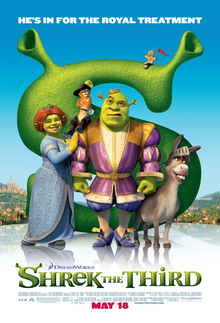
I don’t know what possessed me—and I use that verb intentionally—to suggest Shrek the Third for weekend viewing.  Apart from a Rosemary’s Baby and Exorcist mashup scene, it is a bad movie.  I’ve been watching bad movies over the past few months, and developing an aesthetic for them, but I just can’t warm to Shrek the Third.  The first two movies were quite good, and sequels frequently struggle.  I’m trying to put my finger on why this one leaves such a bad taste in a viewer’s mouth.  For one thing, it’s the writing.  Not as snappy or crisp as the first two, it drags with politically correct emotional adjustment as Arthur tries to learn to be king and Shrek reconciles with being a father.  What happened to the histrionics of Lord Farquad?  Or the cluelessness of the fairy tale creatures with no leader?  Instead there are hugs and reassurances.

Not that hugs and reassurances are bad, but they’re not Shrek material.  Sudden character shifts don’t help either.  The real thing, however, seems to me, to be the music.  Many movies patch in contemporary songs to set the mood.  The first two Shreks did this remarkably well, with one narrowly edging out two in several places.  The Third lacks this artistry.   The pop songs chosen just don’t fit.  They tank the mood time and again.  Music is important.  It can make or break a film.  In this case it’s only one problem.  To me even the animation seems rushed.

There is an aesthetic to bad movies.  I guess I was hoping to find it here (I’d seen it before, years ago).  Maybe badness in movies is harder to make good when they’re animated.  There’s an intentionality about everything when you know everything on screen was planned to appear exactly as it does.  Good bad movies entertain.  There’s a reason we come back to them, even knowing they’re not great.  As someone who’s written for his entire literate life, I tend to think that good writing can redeem most movies.  We can put up with low budget effects if the writing is strong.  There’s a reason Casablanca is a classic, despite the low budget.  The Third has the tag line, “The best Shrek yet.”  Considering the bar set by the first two, that was a boast not likely based on anything like facts.  Or taste.  I’ve got to wonder, however, when big budget animations start going off the rails, when is it decided to simply let them go and hope that a classic will emerge?


Verb Choice

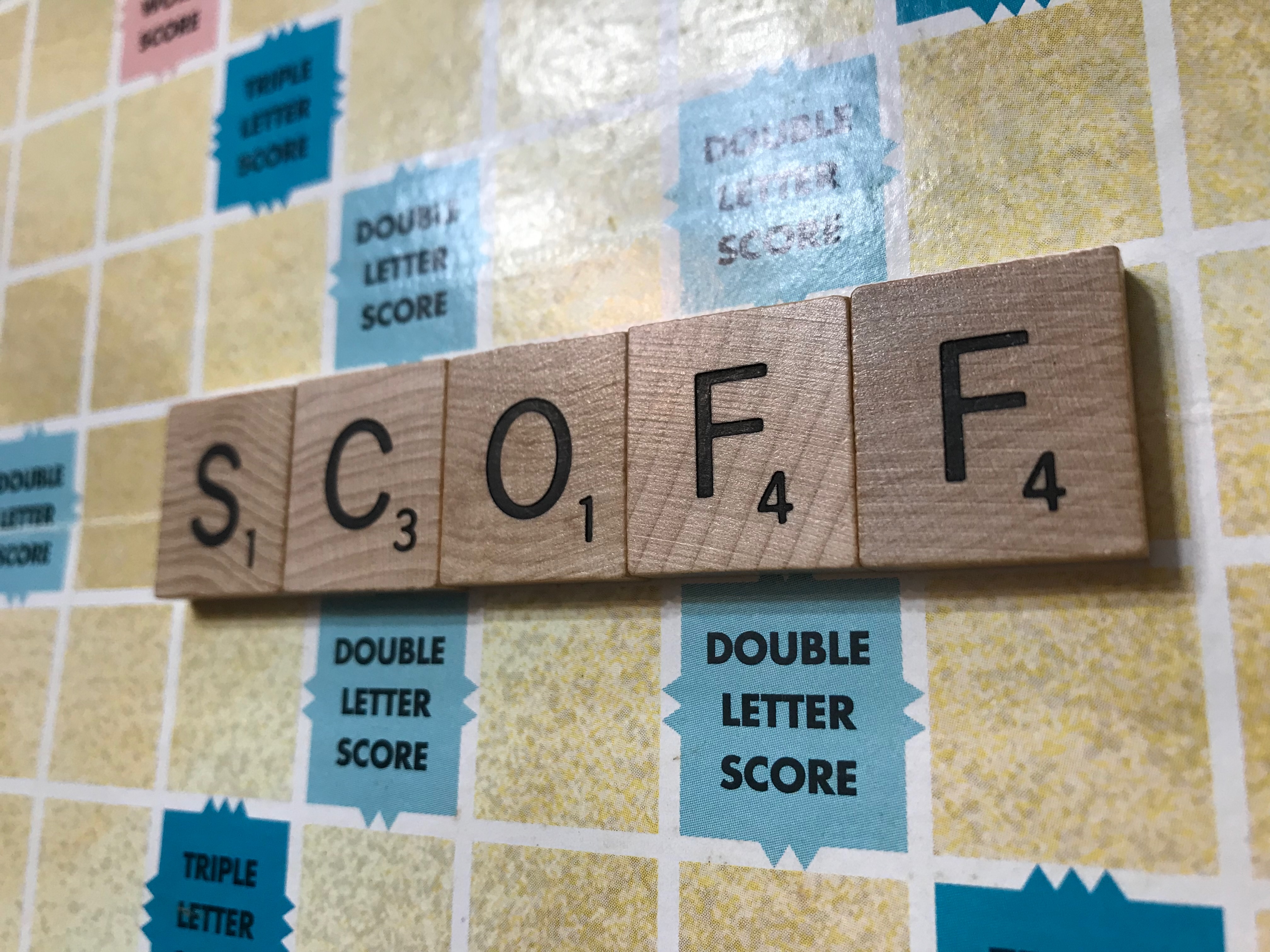
I can’t remember who started it.  Somehow, though, when I watch movies on Amazon Prime, the closed captioning kicks in.  I generally don’t mind this too much since some dialogue is whispered or indistinct.  I also presume some kind of AI does it and it makes mistakes.  That’s not my concern today, however.  Today it’s word choice.  Humans of a certain stripe are good at picking the correct verb for an action.  I’ve been noticing that the closed captions often select the wrong word and it distracts me from the movie.  (Plus, they include some diegetic sounds but not others, and I wonder why.)  For example, when a character snorts (we’re all human, we know what that is), AI often selects “scoffs.”  Sometimes snorting is scoffing, but often it’s not.  Maybe it’s good the robots don’t pick up on the subtle cues.

This isn’t just an AI problem—I first noticed it a long time ago.  When our daughter was young we used to get those Disney movie summary books with an accompanying cassette tape (I said it was a long time ago) that would read the story.  Besides ruining a few movies for me, I sometimes found the verb choices wrong.  For example, in Oliver (which I saw only once), the narrator at one point boldly proclaims that “Fagan strode into the room.”  Fagan did not stride.  A stride is not the same thing as a shuffle, or a slump.  Words have connotations.  They’re easily found in a dictionary.  Why do those who produce such things not check whether their word choice accurately describes the action?

So when I’m watching my weekend afternoon movies, I want the correct word to appear in the closed captioning.  Since the nouns generally occur in the dialogue itself, it’s the verbs that often appear off.  Another favorite AI term is “mock.”  Does a computer know when it’s being mocked?  Can it tell the scoff in my keystrokes?  Does it have any feelings so as to care?  AI may be here to stay, but human it is not.  I’ve always resented it a bit when some scientists have claimed our brains are nothing but computers.  We’re more visceral than that.  We evolved naturally (organically) and had to earn the leisure to sit and make words.  Then we made them fine.  So fine that we called them belles lettres.  They can be replicated by machine, but they can’t be felt by them.  And I have to admit that a well-placed snort can work wonders on a dreary day.


A Different Zone

I haven’t read Stephen King’s The Dead Zone yet, but it’s on my list.  That’s why I was a little reluctant to watch the movie.  It was free on Amazon Prime, however, and I reasoned to myself that I’d seen The Shining and Carrie before reading the books.  Indeed, my earliest introduction to Stephen King was through movies.  (Well, I did read one of his short stories in high school, but the novel side of things came later.)  When the opening credits revealed it was directed by David Cronenberg I wondered what I was in for.  I didn’t know the story, but I hadn’t heard of this as a Cronenberg body horror spectacle either.  It was quite cold outside and I was nodding off, so why not.

The thing is, it’s not always listed as horror.  That’s a faulty genre designation, as is sci-fi.  There’s one futuristic scene in the movie and it lasts for just over a minute.  Does that make it sci-fi?  Also, I  realized, it deals with clairvoyance and for similar reasons the X-Files are also listed as science fiction.  Paranormal, it seems, is permanently ruled out of the realm of possibility by assigning it an improbable genre.  Well, back to the zone.  I figure the title will be better explained by King, but there is a brief scene explaining what a dead zone is.  The story follows Johnny Smith, a schoolteacher who becomes clairvoyant, although it manifests itself only after a car accident and a coma.  The main purpose of this, at least through the movie lens, is to prevent a Trump-like populist from being elected president.  That is the horror part, I guess.  And it’s becoming clear to me that writers were warning about these things since the seventies.

Unlike many of my weekend movies, I’d actually heard of The Dead Zone before.  There are some horror tropes present.  It begins with Edgar Allan Poe’s “The Raven,” and has a few other horror references tossed in.  Still, it’s a very human story.  The movie probes the difficulties of a life with special abilities.  Johnny never gets over the woman he was going to marry before his coma, and he feels for those whose futures he sees.  The movie is fairly slowly paced and it drops a few threads, again, likely found in the novel.  In the book or movie debate I generally go for book first, but that often leads to disappointment on the silver screen.  Maybe this was the right order to go this time around.  Once I read the novel I guess I’ll know.  Or at least have an opinion.


A Little Flat

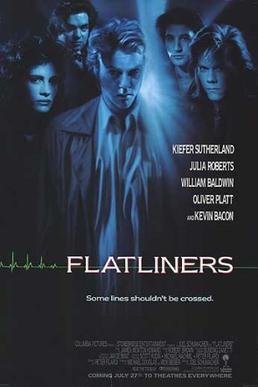
I remember hearing about Flatliners when it came out.  It was during an era when I wasn’t watching many movies and the idea of a movie all about dying bothered me.  Well, I’m older now and I watch movies because I write about them.  So I gave Flatliners a try.  It wasn’t bad—a cut above what I often end up watching on a lazy winter weekend afternoon.  In case your memory’s rusty, here’s how it goes: five med school students decide to experiment with controlled death and resuscitation.  They do this to find out what’s after death.  Confident in both science and their abilities, they one-by-one undergo the procedure to see what awaits beyond.  The experience is different for each of the four that does it.  It can be pleasant, or not.  More not.

Then the experiences from the beyond begin to break through into their alive lives.  But not the good stuff.  The word that these scientists use is, interestingly, “sin.”  The sins of their pasts come back to them.  One of them realizes that to free himself from this haunting, he has to make amends to a person he offended as a child.  The apology—and forgiveness—works.  Eventually the four pay the price and, perhaps, are a bit wiser for it.  This isn’t a great film but it does raise a number of issues that demonstrate how religion and horror relate.  Death is a religious issue, no matter how secular someone is.  As the definition of life becomes more complex, its cessation becomes more fraught.  Here medical students are grappling with their very vocation.  They ease suffering and prolong life.

I suspect one of the reasons the movie failed to make it big was that the “sins” are unevenly repaid.  An accidental death from a childhood of bullying is the worst.  A past of womanizing seems to have a relatively light, and predictable outcome.  And what is the sin in discovering a war veteran parent’s addiction to an opioid?  In a sense it’s classic Sunday school—you get punished for your wrongs.  Some suffer, however, from mistakes that others made.  Or for which others egged them on, and in which others participated.  And for us vegans, even egging someone on might be a sin.  The value of the movie seems to be less how it’s executed and more about the potential for discussion that it raises.  Death is no stranger to cinema, and it can’t fail to make the living curious.  That seems worth talking about. 


Though This Be Madness

Shakespeare could turn a phrase, alright.  Along with the Bible he’s one of the two most unwittingly quoted sources in the English language.  But he liked to borrow ideas.  Writers have always done this, and it came home to me again watching Robert Egger’s The Northman.  My wife and I intended to see it in the theater two years ago—life gets too busy even to get out to a movie, it seems.  So we had to settle for Amazon Prime.  In any case, I don’t read about films in advance and I avoid trailers when possible.  I couldn’t help hearing, however, that it was a viking revenge story.  Still, it wasn’t until my wife said, “Isn’t this like Hamlet?” that I made the connection—Amleth.  Hamlet.  Scandinavian. Danish.  Okay, so The Northman is based on the legend of Amleth which is the direct basis for Shakespeare’s Hamlet.

Like all of Egger’s feature films so far this one is meticulously researched and very moody.  More than once it made me glad that we live in a civilized society, such as it is.  Those of us who were the runts of our family litters know that bigger kids often get their way by dint of physical intimidation.  The vikings—and this was a good representation of a berserker—took what they wanted because they could.  But Amleth couldn’t have what he really wanted.  He witnessed, as a child, his uncle murder his father, the king.  Said uncle takes the throne and the queen and Amleth vows revenge, but what can a young boy do?  Then as an adult, he’s told by a seer that he made a promise so the viking heads home to exact revenge.

The Northman really isn’t a standard horror movie, although Egger’s previous two films fall into the genre fairly handily.  His next project is Nosferatu, after all.  And The Northman isn’t a retelling of HamletHamlet was a retelling of Amleth, and this is another retelling.  Those who’ve been following Egger’s rise know that his films are intelligent and melancholy and literate.  They also have a way of disturbing that peaceful acquiescence that comes after viewing a less thoughtful movie.  It would probably have made even more of an impact had we been able to get to it in a theater.  If it weren’t for Shakespeare most of us probably wouldn’t know the story of Amleth, but Norse mythology has a way of remaining relevant, despite the fact that we tend to credit the ideas to others.  Just check the name of the day of the week and see if that’s right.


Le Fanu Fans

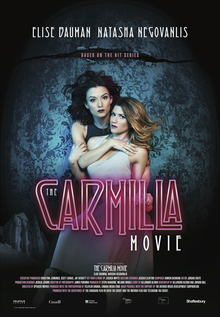
Sheridan Le Fanu is sometimes called “the Irish Poe.”  He was a contemporary of Poe but his name doesn’t bear the same cultural cachet.  He wrote a number of stories that are classified as “horror” in today’s genre settings, and one of the most famous is Carmilla, known as the lesbian vampire story.  Le Fanu didn’t use that terminology himself, that I know of, but Carmilla is a vampire and she does have fondness for other females.  I’ve watched a few lesbian vampire movies (I mentioned Theresa & Allison recently), since they give a distinctive taste to the lore.  I don’t generally research the free movies I watch beforehand, so when I saw The Carmilla Movie, I figured it was likely based on Le Fanu (it is) but I didn’t realize that it was a follow-up to a web series with the same characters.  Nevertheless, it’s a pretty good story.

Set in the modern day, with a cast of young people doing things for a living that weren’t options when I was growing up (internet content provider, starting a paranormal investigation business—I was laughed out of school for admitting I was interested in this stuff before the X-Files made it mainstream), the film updates Le Fanu’s story.   Carmilla has become human and has a girlfriend.  But then Carm starts to revert to vampire status.  (Fortunately there’s soy-based blood for her to drink—did I mention this is comedy horror?)  Although this is comedy horror, it’s not a silly story.  There are plenty of humorous asides, but you still feel for the characters and want them to overcome the evil they face.  Here that evil is a past that has to be rectified.

I found The Carmilla Movie to be intelligent and fun.  There are some genuine horror elements to it, and I suspect that being familiar with the web series might help answer a few head-scratchers for us non-initiated.  In general it seems that such independent films as this serve to raise the bar on movies as a whole.  The flip side is, however, that you can’t easily tell if a movie is a studio release or a television movie, or even a web movie without doing some research ahead of time.  Amazon Prime—my go to service—doesn’t distinguish them.  All I know is that if a movie is one I have on my watch list, I’m going to have to pay for it.  Carmilla was free and worth the time to watch.  And it’s good to see Le Fanu getting some deserved air time.


Creeping Religion

In a disappointing email, Amazon Prime has announced that its free movie streaming of select titles for members will now be subject to commercials.  I suppose that’s little difference, actually, from the way I watched most movies growing up.  I watched them on television before cable, and commercials were a necessary evil then.  Speaking of evil, I decided to watch a film that I missed in my childhood.  It was better than expected.  The Creeping Flesh suggested itself by star power.  Although not a Hammer film, it features both Peter Cushing and Christopher Lee as a pair of mad scientists.  Interestingly enough, it struggles with the question of evil and, appropriately enough, has an ambiguous ending.  There’ll be spoilers below, but since the movie was released over a half-century ago, I’ll use them with a clear conscience.

Cushing’s character, Dr. Emmanuel Hildern, has discovered a skeleton of pure evil personified.  It will become the end of the world once it’s revivified.  Meanwhile his half-brother, Dr. James Hildern (Lee), runs an insane asylum where questionable treatments are performed.  The brothers are rivals and although not quite estranged, they don’t work together.  It’s actually late in the movie that the corpse of evil is resurrected, but in the meanwhile Emmanuel’s daughter goes insane, like her mother had, after being given a vaccine against evil that her father devised.  Her Ms. Hyde-like exploits make her dangerous to Victorian society and she has to be committed to her uncle’s asylum.  The being of evil attacks Emmanuel and we find him at last in his brother’s asylum.  James is explaining to his assistant that this madman thinks he is his brother and that another patient is his daughter.  The film has been a fantasy in an unbalanced mind.  Except for a suggestion in the final close-up that the story of the corpse may indeed have actually happened.

What particularly intrigues me is the discussion of evil in the film.  Emmanuel claims that it is like a virus, an actual physical pathogen.  He believes it can be prevented by a vaccine.  I’ve actually read some academic work in the past few years that suggests that “sin” is an actual, almost physical thing.  A kind of cosmic force.  More sophisticated, of course, but not entirely unlike what this horror film was suggesting fifty years ago.  The Creeping Flesh isn’t a great movie—it suffers from pacing and a somewhat convoluted plot, but still it demonstrates why I keep at this.  Horror often addresses the same questions religion scholars do.  And occasionally it even seems to anticipate more academic ideas, fed to a viewership making the same queries.  It’s worth watching, even with commercials.


Troubled Water

There’s nothing like a good monster movie.  Of course, your local streaming service will have some considerable say over what you might watch.  Amazon Prime is likely my biggest influencer because I can’t afford the movies on my watch list and there’s a monster-load of “free” content.  Still, I fear something may have been lost in translation.  I wasn’t in the mood for anything too heavy, and The Lake thumbnail had a retro-Godzilla vibe to it.  The fact that it’s a Thai horror film certainly enhanced the appeal.  But I’m not sure I understand what it’s supposed to be saying.  The dialogue translation wasn’t, I suspect, very accurate.  More than that, however, I’m in no position to judge cultural tastes for a culture I know primarily through cuisine.  There’s more than a rampaging monster here, but it doesn’t translate well.

There’s a monster in the lake, shown pretty clearly early on.  It kills several villagers, perhaps for disturbing its egg.  A bunch of characters are thrown at the viewer—a family where the brother psychically bonds with the young monster (there’s a bigger, madder, mother monster), a researcher and his assistant, a detective and, quite late in the movie, his daughter, a police chief and his daughter, and none of them have enough screen time for us to figure out who the story’s about.  The monster doesn’t seem evil, although it killed several people at the start.  The police chief evacuates people to the temple and some Buddhist priests show up.  There’s religion and horror worth exploring here, but the dubbing calls the temple a “church” more than once.

The story largely seems to be about family.  The initial family, after losing a couple of members, reunites.  The detective’s daughter dies after he has reconciled with her in the ambulance.  The female police officer reveals near the end that the chief is her father.  (The researcher doesn’t seem to be related to his assistant, but they drop out of the plot.)  It’s difficult to tell if this is a bad movie or simply a cultural gap that puts real understanding beyond the reach of those in such a different realm.  From my viewpoint it was a movie not unlike the Godzilla films with which I grew up.  In other words, better than sleeping away an afternoon but not worth putting too much brain power behind trying to comprehend.  Technically it was a movie better than I could hope to make.  Some of the cinematography was quite nice.  I’m just not sure if I understood what was being translated or not.