Not The Sting

Why do we make the decisions we do?  Watch the movies we do?  I have to confess that for me a number of strange factors combine to make for some weird choices.  For example, Invasion of the Bee Girls is difficult to explain apart from compounding oddities.  One is that Amazon Prime auto-suggested it too me (for free).  Yes, I have a history of watching bad movies and this definitely fits that bill.  Fuzzy-headedness during my weekend afternoon slump time probably played into it.  Along with the fact that I’d been researching bees and that brought the movie The Wasp Woman back to mind.  Wasp woman, bee girls?  It’s free and I’m not going to be able to stay awake otherwise.  The movie is about what you’d expect from a low-budget 1970s sci-fi horror film.  It did make me think I should read about movies before I watch them rather than after.

Nevertheless, I’m trying to develop an aesthetic for bad movies.  If you’re a regular reader you’ll know that I have a fascination with Ed Wood and his films.  I even read a book about him and also read a book on why it’s okay to like movies that we tend to label as bad.  No matter how you parse Invasion of the Bee Girls, it’s bad.  The acting, the writing, the plot.  Still, some of us have a taste for films from the seventies—it’s kind of a nostalgia trip since I was really only becoming aware of the odd world of science fiction about then.  Nicholas Meyer, who wrote the initial screenplay wanted his name removed after he saw the changes that’d been made.  That should be telling you something.

Meyer, while not a household name writer, did pen some good detective stories about Sherlock Holmes, and wrote, uncredited, both Star Trek II: The Wrath of Khan and Fatal AttractionInvasion of the Bee Girls has a somewhat salacious plot that fits the Zeitgeist of the seventies of which I was unaware, growing up.  The seventies were my sci-fi high point, it was good escapist material for someone living in a situation less than ideal for day-to-day living.  I watched, for example, Killdozer about that time and thought it was great.  Now that streaming is how we watch, the amorphous internet has a record of what we’ve seen and then recommends products for us based on our record.  I really thought we outgrew being tracked all the time.  Little did any of us know that it was only getting started in high school.  And as long as you have a penny to spend, those who track us will try to figure out how to take it.  You could get stung.


One Demonic Night

I only discovered after watching Night of the Demons (2009) that it was a remake.  Eventually curiosity got the best of me and I had a spare moment to watch the 1988 original.  It’s still kind of a bad movie, but it is scarier than the remake.  It’s also a horror comedy, but the emphasis is a bit more on the horror here.  A group of ten high schoolers go to Hull House, which used to be a funeral home, for a Halloween party.  When the power goes out they decide to have a séance.  Unbeknownst to them, however, there is a real resident demon.  This demon gets passed on through kissing, and it animates the kids who’ve been killed along the way.  Although the final girl is pretty clear from the beginning, in a usual twist the only surviving guy is African-American, the son of a preacher.

The concept of demons here is explained as entities that were never human.  This is the explanation Ed and Lorraine Warren used, often without making reference to fallen angels.  Since the demons are using the physical bodies of the kids, they can be stopped by locked doors, but killing them doesn’t really help, since they keep coming back.  It seems that there’s really just one actual demon, a dragon-headed entity that lives in the crematorium.  Rodger, the Black man, brings the element of religion to the story.  He objects to the séance in the first place, and suggests that they pray as he and Judy, the final girl, are attempting to escape.

In-between all this is sandwiched the gore and violence that make it pretty typical horror.  The humor involved, however, makes it less intense than a typical slasher.  Although I didn’t walk away thinking this would be a favorite movie, I could see why it’s garnered a cult following.  As is often the case, the original is better than the remake.  For one thing, it understands that religion seasons horror quite well.  Demons are, by definition, religious monsters, at least traditionally.  And the two “good kids” who survive are uncomfortable with messing with spiritual forces to begin with.  Judy just wants to go to the dance, after all.  The movie went on into sequels as its cult fandom grew.  If I ever do a sequel to Nightmares with the Bible I’ll need to include this franchise, I guess.  For a sleepy weekend afternoon, there are worse bad movies to watch.


Not Bram

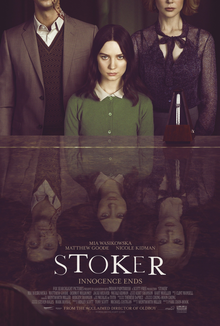
I guess I wasn’t sure if Stoker was horror or not.  It’s similar to Hitchcock in many ways, and some suggest it’s a “thriller” rather than horror proper.  One of the refrains of this blog is that horror is a poor genre designation.  Too many other genres bleed into it and it grows into several others also.  Still, Stoker was conceived of as a horror movie and it fits that, generally.  The title made me think of Bram, the most famous bearer of that surname, at least in my mind.  I’m pretty sure that others had the same impression, since some websites take pains to mention that this is not a vampire story.  It’s not.  It is, however, a story about a psychopath or two.  But it generally gets compared to Shadow of a Doubt rather than Psycho.  I’ll spoil things below.

On India Stoker’s birthday, the family receives the news that her father has died.  She was very close to her father and distant from her mother. During his funeral she notices someone watching from afar.  It’s an uncle she didn’t know existed and who’s decided to live with them.  This uncle, we learn, was released from an asylum.  As a child he’d killed his younger brother.  After arriving at the Stoker mansion, people who recognize him disappear.  India was trained as a hunter by her father and senses something is wrong.  The uncle meanwhile seduces her mother so she doesn’t see his obvious faults.  (He’s a charming psychopath.)  He’s goal is to have his niece, India.

There’s a creepy atmosphere throughout, and it’s difficult to determine what India’s end game is.  She’s able to take care of herself, mostly.  She does rely on her uncle to save her, though.  India discovers that he’d been institutionalized at the fictitious Crawford Institute, interestingly in Crawford, Pennsylvania, not far from where I grew up.  Instead of accepting his plans for her, however, she charts her own violent course.  This is an odd film as far as determining character motivations go.  It’s not really clear what India or her mother really wants.  The uncle’s straightforward about it, but he’s a serial killer.  It’s difficult to know upon whom to cast your sympathies.  A movie about family dynamics as much as about horror (a character kills both his brothers, his aunt, and a housekeeper that he feels is in the way), it has no clear message.  And there are no vampires anywhere to be seen.


Seeing in Darko

Having seen it I have to wonder why I waited so long.  Part of it was timing, of course.  I was still teaching at Nashotah House when Donnie Darko came out, and I didn’t watch as many movies then.  My loss of that job started me on my horror-watching spree, but Donnie Darko is more than horror.  In fact, it’s usually labeled a thriller instead.  Another reason I avoided it is, alas, the title.  It’s actually the name of the protagonist, and one of the other characters in the movie remarks that it sounds like a superhero name rather than a regular person.  What’s it about?  Well, that’s where it gets interesting.  Donnie has mental health issues, but those issues are tied in with time travel and philosophical discussions about the existence of God.  The high school Donnie attends, although not explicitly stated, seems to be Catholic but there aren’t priests and nuns about, and one of the teachers is seemingly evangelical.

Donnie has trouble distinguishing reality.  Instead of allowing the audience to get away with labeling him easily, the question of reality itself is left unanswered.  The movie is deep like Brazil or The Matrix, and is often considered one of the greatest independent films of all time.  It’s the story of Donnie’s October 1988.  He sleepwalks and sees a guy in a bunny costume who tells him the world will end in 28 days.  Of course he’s medicated and sent to see a psychologist, but what the guy in the bunny costume tells him ends up coming true.  The story is intricate and doesn’t bear a brief synopsis.  It is a movie that will make you think.  It’s become a cult film and I think I’ll be joining that crowd on this one.

Films that manage to put philosophical reflection in the spotlight are rare.  Even more uncommon are those that do so with high production values and convincing acting.  Movies that do this aren’t often cheerful—philosophers in general don’t tend to be a jovial lot (some are fun, of course, but they’re not the majority).  Thinking is serious work, even if those who do it aren’t really paid for their efforts.  Donnie Darko is a movie that will make you think.  Is it horror?  Some classify it so.  Others say sci-fi, but it didn’t really seem like that to me.  In fact, it’s very difficult to classify at all.  Many of the best movies are that way, in my experience.


Mind Echoes

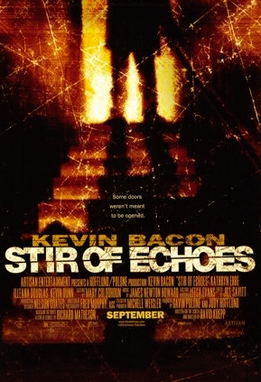
One of the things that must be frustrating about making movies is that so much competition exists.  Even when you hit on a great idea, such as using a Richard Matheson novel for a story basis, others might be producing something similar.  This isn’t unique to movies, of course.  Some of us have had the experience while writing books.  For those of us who watch movies online, rather than in theaters, the timing differential can still warp perspectives.  I’d not heard of Stir of Echoes until I stumbled onto a website that lists horror movies that have a little something extra.  While watching it I couldn’t help but think of The Sixth Sense, which I also saw at home, but quite a few years earlier than Stir of Echoes.  The acting in the latter is quite good.  The haunted kid pulls this off effectively.  And Kevin Bacon and Kathryn Erbe do a great job as parents (actor-wise).  Spoilers follow.

If you’ve intuited that the child sees dead people, you’re not far off.  It’s actually only one dead person and it’s not a Shyamalanian counsellor.  But the spooky part is his dad begins to see them too, after he’s been hypnotized by his sister-in-law, who’s an amateur.  At its heart the story follows the traditional trope of the undiscovered murder.  It does a good job of hiding the perpetrators until near the end.  The build-up is good also, with Bacon portraying Roy Neary-like obsession (interestingly, they’re in similar professions) quite well.  

The scary part, for me, was the sense that you’re not in control of your own mind.  There’s perhaps just a little too much possibility here.  We tend to think we own our minds, but what if they’re really just on loan?  I remember reading, as a high schooler, that religious people are difficult to hypnotize.  Hypnosis is still not well understood.  The larger fish in the pond is consciousness itself, which we really can’t even define.  We do know that memories are altered with time, and we can demonstrate this to ourselves by rewatching an old movie and seeing what we got wrong.  I suspect that’s why Stir of Echoes is so effective as a horror film—taking us into the realm of mind exposes us to so much that we really don’t understand.  And since ghosts seem to be pretty believable, well, the combination works.  Stir of Echoes is unsettling and a cut above much of what’s available for free streaming.  So if you’re in the mood for a ghost story, this might just fit the bill.


Heavy Machinery

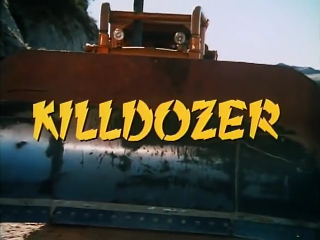
Funny how some things just stick in your mind.  And then come back at odd times.  Killdozer was a television movie from 1974.  I must’ve watched it pretty close to when it first aired.  Why it came back to me half a century later I just don’t know.  I haven’t been around any heavy earth-moving equipment lately, nor have inanimate objects been threatening me.  When I found it on a free (albeit with commercials, but hey, the original had commercials, so it’s a full circle kind of phenomenon) streaming service, I figured why not?  I was really expecting something cheesy, like I would’ve liked at eleven or so.  It wasn’t really that bad.  There’s actual characterization and the acting is believable.  Only the special effects of the meteorite and the blue glow were obviously low budget.  But you might not be familiar with the D9, so let’s go.

An uninhabited island off the coast of Africa.  Six guys on a construction job—building an airstrip for a petroleum company.  The supply ship’s a few days away and when the Caterpillar D9 hits the meteorite, it becomes a murderous machine, like Stephen King’s Christine.  You can outrun a bulldozer, for a while, anyway.  But if it never runs out of fuel, and you’re trapped on an island, your chances aren’t good.  They’re even worse if the thing is sentient and knows what you’re planning to do.  Six men were sent to the island, and only two make it back.  You get the picture.

As a child I had no idea who Theodore Sturgeon was.  When I saw that this was based on one of his stories, I had to ponder a bit.  Sturgeon wrote several of the original Star Trek series episodes.  His most famous stand-alone story seems to be Killdozer.  In fact, it’s become a cult classic.  I don’t have many friends, so I’m not always aware of what’s in during any given decade.  I think kids at school were talking about Killdozer, but nobody has really uttered that word in my hearing since Gerald Ford was president.  So if you don’t mind commercials, and you have a sleepy spare hour, some of us would be interested to hear what you think about this movie.  The sense of isolation and people being killed by something they construct to be basically indestructible struck me as a lesson worth pondering.  And I’ll continue to try avoiding heavy earth-moving equipment, just in case.


Out There

While Amazon Prime includes a few A-list horror movies, those that it does I’ve already watched.  Since I can’t afford to pay for this habit, I watch what’s free.  That brought me to the horror comedy There’s Nothing out There.  Written and directed by a twenty-year-old guy, it’s kind of what you might expect.  Its main claim to fame, apart from being a low-budget monster flick, is that it anticipates Wes Craven’s classic Scream.   The latter is famous for being so self-aware.  One of the characters keeps telling the others what happens in horror films and, of course, those things happen.  Although There’s Nothing out There is silly, one of the characters does exactly that.  In the funniest moment in the movie he looks directly at the camera and says “It’s a distinct possibility” in response to one of the girls asking “So you’re saying we’re in a movie?”  Craven didn’t borrow that, but then, Scream is a landmark.

So what’s it about?  There are seven young people who head to a cabin in the woods.  Actually, it’s a regular house, and quite a nice one at that.  The three couples are there for sex but the single guy (Mike) is the horror expert and gets on everyone’s nerves.  He’s right, of course, that there is a monster on the loose.  A slimy green thing with a huge mouth full of pointy teeth, has fallen from space into the neighborhood and it slimes the guys, digesting them, and tries to mate with thee girls.  And if it shoots lasers into your eyes you become its servant, helping out with its mission.  The kids are picked off, of course, with Mike surviving along with one of the couples.  Before they can stop the monster a plumber also gets eaten.

Horror comedy is a strange genre.  It tends to work because there are elements of humor in much of horror.  It’s not all blood and gore—the best examples use that sparingly, in any case.  And horror comedy doesn’t really frighten since it’s pretty clear that it’s being played for laughs.  Sometimes such movies venture into the bad realm—there’s a reason some movies are free on Amazon Prime—but at times they actually have quite a bit to offer.  There’s nothing scary about There’s Nothing out There.  It’s the kind of movie that tends to grow into a cult classic over the years, however.  And while it’s not A-list material, it’s still worth watching for free.


Not All Vampires

Early film research owes great debt to YouTube.  Many historic and significant films cannot be purchased or watched anywhere else.  Even in this uber-greedy late capitalist era, few (if any) are willing to sell that for which many would pay.  This is brought on by my learning about Alice Ida Antoinette Guy-Blaché, also known as Alice Guy.  Guy was the first female film director.  She left a substantial body of work and is credited with being the maker of the first narrative-based film in history.  If you’ve not heard of her, you’re not alone.  Even during her lifetime she wondered why she was never recognized for her cinematographic achievements, incredible though they were.  She filmed one of the first adaptations of an Edgar Allan Poe story known, The Pit and the Pendulum (1913).  This one is partially lost—many early films are.

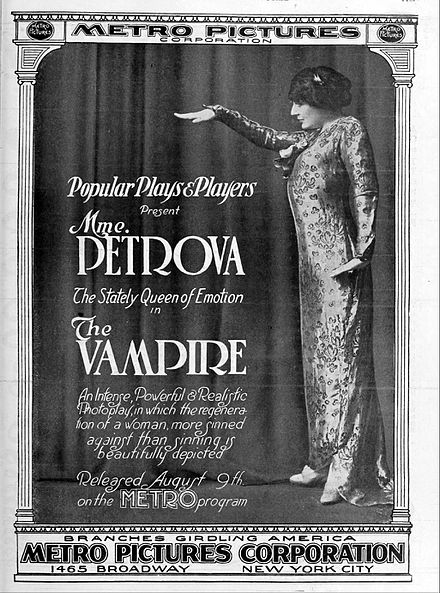
I wanted to see her 1915 film, The Vampire.  Given the date, you will have correctly guessed that it’s a silent movie.  It still survives and the only place it can apparently be found is on YouTube.  Before you run off and watch it, be aware that it’s not about a literal vampire, but rather “a woman of the vampire type.”  The current term is “vamp.”  The movie, which takes a feminist approach, is framed around Rudyard Kipling’s poem, “The Vampire.”  It runs for about an hour, which was pushing the envelope in those early days of cinema.  It tells the story of a happy, wealthy family broken apart by a “vamp.”  The husband receives a government appointment in Europe and his wife and daughter can’t follow for a month.  On the way over by ship, the vampire seduces him, after compelling her current love to shoot himself.  This isn’t a comedy.

The film doesn’t end happily—the statesman, aging prematurely, just can’t break the vampire’s hold on him.  Still, friends and family urge his wife to wait for him because divorce is wrong.  The film lingers on the suffering of the wife and on how much his young daughter misses her father.  The film quality is quite good for the time, although the YouTube version has been digitally restored.  So this isn’t a horror film, but watching it is a tribute to a woman who influenced filmmaking and then was summarily forgotten, largely because of her gender.  Alice Guy was the first woman to run her own movie studio.  Sadly, her husband left her and their children just three years after The Vampire.  Shortly after that Guy’s filmmaking career was over.  Fortunately for history, Guy has been rediscovered and has been receiving credit for her pioneering work.  Although The Vampire was about a dangerous woman, the reality is, and was, that patriarchy continues to ruin women’s lives.


Nun too Soon

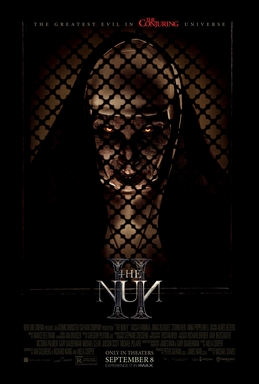
Following a horror franchise from the beginning is a rarity.  At least it is for me.  Now that I’ve seen The Nun II, I’m caught up on the Conjuring universe, for now.  I’ve written an article, still awaiting publication, on the Catholicism in this cinematic universe, and The Nun II has me wondering: how hard is it to find out the basics about Catholicism?  The movie is okay for big-budget horror, but not great.  The Catholicism in it feels like it’s imagined by writers who speculate on what it might be without ever, say, attending a mass to find out.  And the demon Valak isn’t exactly rank and file either.  The idea of using St. Lucy’s eyes as a relic was, however, pretty creepy.

So, after The Nun, Sr. Irene has gone to a convent in Italy.  A series of bizarre clerical deaths sweeps across Europe and all the Vatican can think to do is send the one young nun who’s faced this demon before.  No priest this time because Fr. Burke is dead, rather laconically stated.  Sister Debra sneaks along and the two nuns find themselves facing a demon that immolates priests because it can’t find a relic it wants that will make it even more powerful—the eyes of St. Lucy.  Said eyes are buried in a ruined chapel in a Catholic girls’ school in Aix-en-Provence.  This is the school where Frenchie (from The Nun) now works as a handyman.  We all know he was somehow possessed at the end of that film.  The girls’ school used to be a winery and Valak is defeated when the nuns consecrate a pool of wine that banishes the demon.

At this point in time, the Conjuring universe has grossed over two billion dollars.  All of the films are explicitly religion-based horror.  Putatively in a Catholic setting, they feel like Protestants trying to guess what Catholicism must be like.  At least they feel that way to me.  The Nun sequence in particular, has demons responding to defenses that would not, in a Catholic world, work.  As much as I may disagree on the theology, nuns can’t consecrate wine.  And it turns out that Sr. Irene is a descendant of St. Lucy, one of the virgin martyrs.  Although that title is sometimes given as an honorific, it does generally mean that such saints had no progeny.  Death by thurible is fairly clever, though.  Like all the films of the franchise, The Nun II is worth watching, but it fails to convince on the religion front.  It just doesn’t feel Catholic.


Don’t You Sleep

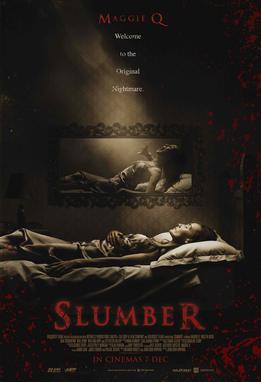
Sleep is pleasant but it’s such a vulnerable time.  Something deep in our animal DNA tells us to find a sheltered place to do it.  That vulnerability is compounded by demons.  So claims Slumber.  While not the most original story, it’s pretty effective for a while, but then holes begin to appear in the plot and you find it difficult not to keep asking why the problems weren’t addressed.  Let’s take a step back.  Doctor Alice Arnolds lost her younger brother to a demon when they were children.  This demon, called Mare, causes, well, nightmares.  These nightmares lead to sleepwalking and ultimately death.  As a doctor specializing in sleep disorders, Arnolds helps others scientifically.  She’s come to believe that her brother’s death was because of natural causes—the supernatural doesn’t exist.

Okay, so sleepwalking is creepy, and the idea isn’t a bad hook.  Then Arnolds meets a family of four, all of whom sleepwalk with nightmares.  The demon’s target here is their young son, who reminds Arnolds of her lost brother.  At the sleep clinic the monitors show something odd, but circumstantial evidence points to the father as the guilty party.  But here’s where the big hole appears.  Once Arnolds becomes convinced something supernatural is happening, she decides to handle it herself, at the family’s home.  Even when it’s clear they’re out of their league, nobody calls the police or even an ambulance, let alone a priest.  Instead they rely on a janitor’s father whom they’ve just met.  They try to keep the boy awake until they’re endangering his life, then they fight the demon in their dreams.  There is a kind of twist ending, and the production values are good.  

The demon, which Arnolds researches on Wikipedia, is a notsnitsa.  Why this Slavic demon targeted both her brother and the family under distress isn’t explored.  The connection is made with “the night hag”—a folkloric demon that attacks in your sleep and is generally explained as sleep paralysis.  This is not a possessing demon.  In the film it’s said to be parasitic, and the sleeping victim acts out what the demon tells it to do.  The lack of any religious tension hurts this movie.  As does that lingering question—why not call in some kind of expert?  Either sacred or secular will do!  I won’t ruin the ending of the movie, but I’ll warn those tempted to watch to come armed with a great deal of suspension of disbelief.  You’re gonna need it.


Dark House

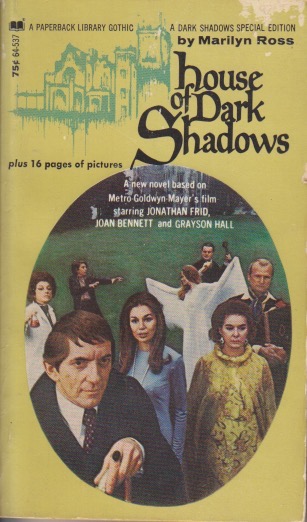
Last year I completed an odyssey that began over a decade and a half ago.  I finished reading the Dark Shadows serial novels by Marilyn Ross.  Not because they were great literature, but because they were an important part of my childhood.  Slowly, over the years, I regathered the books and read them until the whole series was done.  One of the used book sellers was offering a collection of the books, and although the collection had some duplicates of what I’d already found, it contained some of the more difficult to locate titles.  When it arrived, I found it also included House of Dark Shadows.  This novelization wasn’t part of the series, and like most things in my life, I can’t claim to know everything about Dark Shadows.  As a child I didn’t know there had been a movie, let alone a novelization.  (I bought the books as I happened to find them, at Goodwill and watched the TV show.)

In the present, I’d just finished Octavia Butler’s Parable of the Talents and felt that I needed something lighter for my next fictional project.  House of Dark Shadows proved a better read than most of the series books, perhaps because it was based on a movie script written by the screenwriters.  Marilyn Ross was actually William Edward Daniel (W. E. D.) Ross, and he wrote more than 300 novels.  His Dark Shadows oeuvre became repetitious in its dialogue, across the series.  His characters always seem to say “at once” instead of “immediately” or “right now.”  I’m pretty sure the word “mocking” appears in each of them—certainly the latter ones—multiple times.  Having the script must’ve really helped keep those trademarks to a minimum.

Of course, now that I’ve read the novelization I need to go back and watch the movie again.  It’s been almost two years and some of the details escape me.  It’s largely because the movie goes “off script” from the long-running daily show (and the other novels).  I also realized that Tim Burton’s Dark Shadows movie was really a kind of reboot of House of Dark Shadows, unfortunately screen written by Seth Grahame-Smith as a comedy.  I’m no expert on Dark Shadows, just a reasonably enthusiastic fan in search of a lost childhood.  The movie makes the premise of the series untenable—both can’t exist in the same world, so it’s kind of a Dark Shadows multiverse, rather than a simple universe.  And it’s very complex.  I’d need to start again at childhood to become an expert in it, but at least now I’ve read all the books.


Sequel Pondering

Of course I’m working on another book.  I can’t say what it is at the moment, but one of the projects I’ve long been contemplating is a kind of sequel to Holy Horror.  The problem is that if the first book didn’t sell very well (the premise is perhaps too academic), a sequel couldn’t be expected to do any better.  I’m still working on sloughing that academy skin.  But I keep watching what we insist on calling “horror” and the more I do, the more I find the Bible in it.  Others have taken up the gauntlet—mostly academics who have jobs that encourage such behavior—of connecting horror and religion.  The Bible’s role, while a subset of the larger field, has its own particular parameters.  In one of my notebooks I have a list of 23 movies to add to my analysis.  I know that there is a twenty-fourth, but it’s only streaming on an exclusive service and still costs a bit too much for something that doesn’t come with a plastic case.

In any case, Holy Horror just scratched the surface.  One of the factors I’ve mentioned before is that there is no database of the Bible’s appearances in film.  It would be an extensive list altogether, and a substantial number of horror films would be on it.  In general, it seems, people really aren’t too interested or intrigued by this fact.  I certainly am.  Our society is a curious mix of sweet and salty.  We want to think we’re too sophisticated for religion, but religion undergirds just about everything we do.  Otherwise it’s pretty difficult to explain how the Bible keeps showing up in horror.  Usually as a mysterious artifact.

I recently saw myself referred to as a biblical scholar.  There’s no doubt that I taught biblical studies for many years.  I even wrote a book interpreting one aspect of the Good Book.  My degree, and my interest, however, has always been historical.  I follow this history of ideas.  Although many people don’t understand my current horror fascination, it’s clear this is another jog down a trail of history.  How did we get to the point that a totemic (the scholarly phrase is “iconic”) Bible became a stand-in for God in movies?  I’m not sure I’ll ever be able to write Holy Sequel, although, if my profession ever permitted it, I’d certainly have the interest in doing so.  There’s a lot to be learned from such explorations.  That’s true even if the books containing the information only appear on a few dusty library shelves.


Through the Woods

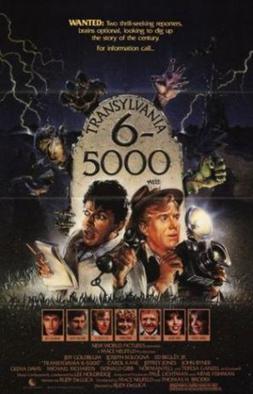
The thing about appreciating bad movies is that it’s difficult to be disappointed.  On a recent weekend I’d watched a horror film that didn’t sit well with me (or maybe it was the last night’s supper), and I decided I needed to see something else.  Something that was free on my streaming service.  I’d read about Transylvania 6-5000 someplace, but I couldn’t remember where.  The list of stars won me over: Jeff Goldblum, Ed Begley Jr., Jeffrey Jones, Geena Davis, Michael Richards—why don’t more people talk about it?  Because even for a comedy it has trouble working.  Well, a horror comedy, to be precise.  Emphasis on the comedy, which tries too hard.  I couldn’t get over the fact that this was a tall guy movie—Goldblum, Begley, Jones, and Richards are all over six feet tall.  Usually other actors literally have to look up to them.

Even though it’s a groaner, it’s not without worth.  It was filmed in what used to be Yugoslavia when it was rare for anything to come from behind the Iron Curtain.  Set in Transylvania, it wasn’t too far off.  (Transylvania is located in Romania, of course.)  Some of the performances aren’t bad, Davis’ vampire nods to Frank-N-Furter in Rocky Horror, and Carol Kane is fun to watch as Lupi.  The male roles are generally the problem.  In case you’re wondering, the plot is that two reporters—Goldblum and Begley—are sent to Transylvania to find a story.  The locals laugh at them, insisting Transylvania’s a modern country with no monsters.

When the classic monsters do appear, they all have rational explanations.  There are riffs off vampires, werewolves, Frankenstein’s monster, swamp monsters, and the mummy.  There’s even a mad scientist.  The problem is the movie really doesn’t give itself over to either comedy or horror.  There are ways to make that combination work.  And, as with C.H.U.D., the title put me off.  I didn’t know until reading about it later that it was also a riff, but from the Glenn Miller song “Pennsylvania 6-5000.”  I’d never heard the song before and was unfamiliar with its title.  Rudy De Luca, the director, had worked with Mel Brooks and perhaps if they’d collaborated on this one the results might’ve been better.  So, it’s a bad movie.  That doesn’t mean it isn’t worth watching.  Movies like this sometimes serve as an homage to the monsters with whom we grew up, and who even met Abbott and Costello in their own lifetimes.  Just be prepared not to take it too seriously and not to laugh too much.


Sinful Thoughts

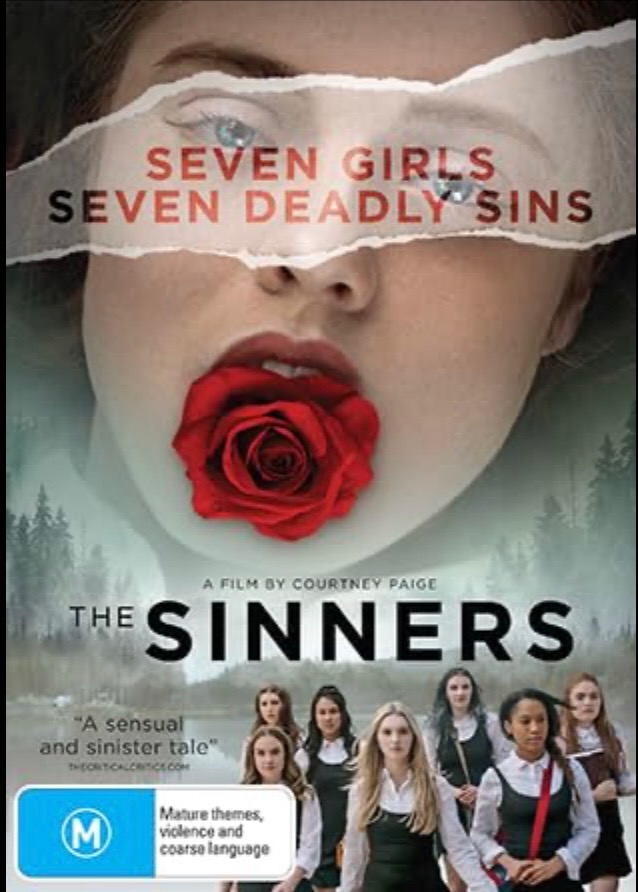
The driving force behind Holy Horror is the fact that the Bible appears in lots of horror movies.  More than might be expected.  Although I’ve moved on to other projects, I still keep an eye out.  There may not be time or opportunity in my life to write a sequel, but you can’t unnotice the Bible in The Sinners.  The title drew me in, as did its free status on Amazon Prime.  It’s a Bible-based flick, for sure, but even the basic description gets religion wrong.  I generally like movies by female directors, and this one was a project of Courtney Paige whose name, for some reason, sounds strangely familiar.  In any case, one of the biggest blunders movies like this make is that the religion doesn’t hang together.  Of course, it doesn’t say what variety of Christianity it is, but it’s of the literalist stripe.

Seven alpha females at a Christian school in a Christian community form a clique in which they’re each characterized by one of the seven deadly sins.  They’re lead by the pastor’s daughter, of course.  One of the girls keeps a journal in which she confides that she confessed their activities to the pastor.  The betrayed girls decide to scare the offender but she escapes when they’re intimidating her.  She’s found dead but then the other sinners start being murdered.  The police aren’t really effective and the girls try to figure out who’s behind this.  I won’t say who but I will say that it doesn’t really make much sense.  Scenes jump around and characters appear with little or no introduction—it’s disorienting.  But that religion…

I know enough PKs (preacher’s kids) to know they often aren’t as innocent as dad thinks (and it’s generally dad).  I also know that forced conformity of religion builds resentment and resistance.  But there’s something wrong here.  The pastor drinks wine.  Even the truly religious girls drop f-bombs.  One even attends a Satanist meeting with no explanation.  The pastor’s wife is having an affair.  The school librarian has sex with her husband at the school between classes.  They can all quote scripture, and often do.  What religion is this?  I couldn’t really engage with the movie because there were too many distracting religious gaffs.  Hey, I don’t mind when movies show the problems with religions—they’re fair game for commentary, after all.  But if you’re going to do it, try to understand the mindset of the religion you’re criticizing.  There’s a lot to think about in this movie, and it really isn’t that bad.  But for those who know religion there’ll be some question of which it is that’s under fire.  If I ever get back to Holy Horror I’ll say more.


Demonic Night

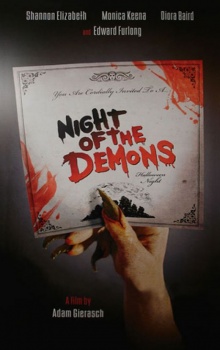
There’s a type of film—I don’t have the vocabulary for it—where the action is loud, brash, and in-your-face.  Colors are often lurid and, in horror, gross sounds are emphasized.  I’m not sure what it’s called, but it’s the style used with Night of the Demons.  I didn’t realize until after I’d seen it that it was a remake of an earlier film by the same name.  The one I saw was the 2009 version.  I’d just finished a book about demons, and I was looking over Amazon Prime and what I could watch without spending any more money.  Well, I did learn something.  But first, a little plot reveal: a group of friends are going to a Halloween party in a haunted mansion.  Mainly they’re looking for controlled substances and uninhibited sex.  The party hostess has rented said haunted mansion for the night.

Once they get there the final girl, Maddie (and you can tell from the beginning that she’ll be the final girl) starts to realize that there seem to be supernatural forces at play.  The cops show up and break up the rave, but seven kids remain behind since they’ve been locked in.  They find a hidden room where the bodies of six previous victims have decomposed.  This leads to the possession of the woman hosting the group and these demons are transferred either by bite or sex—they are sexually transmitted demons.  So, naturally, all the friends except the final girl fall victim.  These demons dissolve in the sunlight unless they get seven victims, so when Maddie makes it through Halloween night, the demons are defeated.

What makes this moving interesting is the type of demons on show.  These seven demons are so bad that they’ve been kicked out of Hell—they don’t follow the rules.  This made me think.  Logically, no demons in Hell follow the rules.  The root of the word “pandemonium” means “all demons.”  If none of them obey rules, how can any be kicked out for breaking rules?  Laws and rules are what preserve any civilization.  Those who use their money and power to flaunt the law are, in their own way, demonic.  These demons are kept at bay by spells written on the walls of one room in the house.  Those rules they must obey.  Is this a parable about free will?  It doesn’t seem sophisticated enough for that.  Night of the Demons is one of those fast, loud, lurid movies that need a monster.  Demons, which have no basic form, seem to be purpose made to fill such gaps.