And Bones

Often making lists of dark academia movies, The Skulls plays right into that territory.  A secret society, an elite college, and something’s definitely gone wrong.  It’s not a great movie, feeling somewhat contrived, but it fits the mold pretty well.  Things are a little too pat in the film, and the writing isn’t the best.  It’s entertaining, if overblown.  The story begins at an unnamed Yale (actually University of Toronto) with working-class Luke being invited to join the Skulls after an impressive rowing competition victory.  From the first, the Skulls meetings seem to lack gravitas.  Rich and powerful, they are above and beyond the law.  The problem for Luke is that his friends, Will and Chloe, are being edged out of his life.  Will, who writes for the school paper, breaks into the Skulls headquarters but is caught by Caleb, Luke’s “soul mate.”
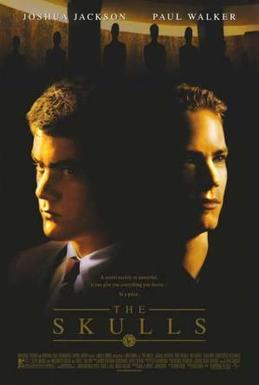
Will is killed in what follows, and Luke wants to get out but it’s too late. Caleb’s father is the head-honcho for the Skulls and decides to have Luke committed to an asylum when he refuses to cooperate over his friend’s death.  Chloe and the second-in-command of the Skulls, Senator Levritt, rescue Luke and he challenges Caleb to a duel.  I’ll leave it off there so as not to spoil too much.  That gives you a sense of the darkness, in any case.  But the film doesn’t feel that dark.  Yes there is a murder, and there are bad guys, but something I can’t define prevents it from having the tone that you might expect from a grim tale.  As I say, things are a little too pat.  The characters’ emotions are a little too close to the surface.

The movie did well at the box office, but the sequels were released direct to video.  As far as the academia side goes, there are, no doubt, secret societies.  Privilege doesn’t let go once it gets a grip.  But the above-ground “Yale” sees a bit too light and airy.  Maybe more classroom and library scenes might’ve helped.  Likely it would’ve been better had it been based on a novel.  Films that are based on books have a solid development on which to stand and it’s often a matter of figuring out what to omit.  The writer and director had gone to Yale and Harvard, respectively, and wanted to portray what secret society life is like.  But that’s the thing about secret societies—you can’t really know, can you?  It’s a matter of imagination.  And dark academia is where such things fit.

Breakage

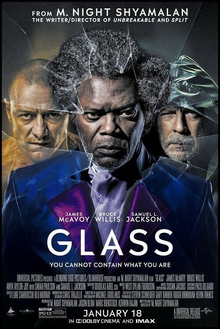
Glass makes me wonder; can any member of a trilogy really stand alone?  As someone who consumes fiction, the question always arises as to who really controls the meaning of individual units.  Scholars have given us reader-response theory that posits meaning rests with the reader (viewer, listener, etc.) rather than with the creator.  Being on an M. Night Shyamalan kick—I was brought in through his horror movies—I watched Unbreakable.  I vaguely knew it was a trilogy, but when I saw Split I was caught off guard.  Unbreakable was a super-hero movie.  Split was a horror film.  I knew Glass brought them together, but I wasn’t sure which way it would break.  It turns out the trilogy is a horror sandwich on super-hero bread.  It’s also surprisingly thoughtful.  And over two hours long.  There are horror elements, but it made me wonder since Split is horror, could it stand alone without the other two.

Having read about the development of this a little bit, Unbreakable could have stood alone.  It did for sixteen years.  Split could also, but for the reveal in the last few minutes.  And Glass manages to pull the whole thing off with a characteristic Shyamalan twist ending.  I’ve written about the other two movies in their own posts, but I really don’t want to give any spoilers for the last one.  I can say it ends with a message that is worthy of the Matrix.  It shows what movies can do.  Or at least it was taken that way by this viewer.

Given what movies are, and what they represent, I have to wonder if there’s not a good dose of racism in the criticism of Shyamalan’s work.  His movies are intriguing, without fail.  I haven’t seen all his films, but I have watched eleven of them now.  Some multiple times.  Here’s a guy with stories to tell.  I know, as a fiction writer who has trouble selling anyone on my vision, that a story can take over your life.  And you want to tell that story and see if it resonates with anyone else.  Those of us who make up tales generally recognize when something we write isn’t good.  My list of unfinished or unpursued stories dwarfs the stack of those I’ve had published, or tried to.  When you release a story out there in the world, you hope that others will get it.  I trust certain auteurs.  Even if not all of their films appeal to me, I like to think I see what they’re getting at.  This trilogy is well worth watching through to the end, even if it isn’t horror.


Not Just a Visit

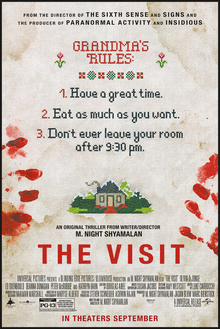
I’ve been on a bit of an M. Night Shyamalan kick lately.  When The Visit showed up on a streaming service I could access, and it was a rainy afternoon when yard work was impossible, I decided to give it a try.  I first became aware of Shyamalan as a horror auteur.  The Village was his first movie I saw, followed by Signs and The Sixth Sense.  (I knew about The Sixth Sense because of the press around the trailer accidentally being shown to underage audiences in theaters.)  I’ve seen some of his movies that aren’t that scary: The Happening, Unbreakable, The Lady in the Water, for example, and others that are.  Knock at the Cabin, Split, and now, The VisitThe Visit has a twist ending and I’m pretty sure that spoilers will make their way into paragraphs below, so if you’re holding off seeing it, you might want to wait before reading further.

The set-up is innocent enough.  A mother estranged from her parents is letting her two children, both minors, visit their grandparents while she takes a cruise with her new boyfriend.  (The children’s father had left.)  Becca, the daughter, plans to make a documentary of the trip.  The movie is found footage.  Sending the kids off by train, they make it to the grandparents’ house in Chester Springs, completely remote from wifi, to stay for a week.  Initially the stay goes great.  The grandparents, however, have some strange issues.  The grandmother’s sundowning disturbs the two kids, and the grandfather also displays elements of dementia.  As the week goes on, these things grow more intense.  Once the mother returns home, they Skype her (there is ethernet at the house) and when she sees the grandparents she realizes (spoiler follows!)

that the people watching her kids aren’t her parents.  They are a couple escaped from a mental institution.  Not only that, but they have also killed the actual grandparents and one of the visitors to the house.  The mother calls the police, but the insane couple makes their move to take care of the kids.  The youngsters are more resourceful than it seems, and are able to get out of the house just in time.  The police and their mother arrive, shuttling them to safety.  As with Split, the fear derives from a situation of mental illness.  There are some disturbing scenes in this film and it manages to bring in some legitimate scary stuff as well as a few effective jump-startles.  I guess I still see M. Night Shyamalan as a horror auteur.


Big Bites

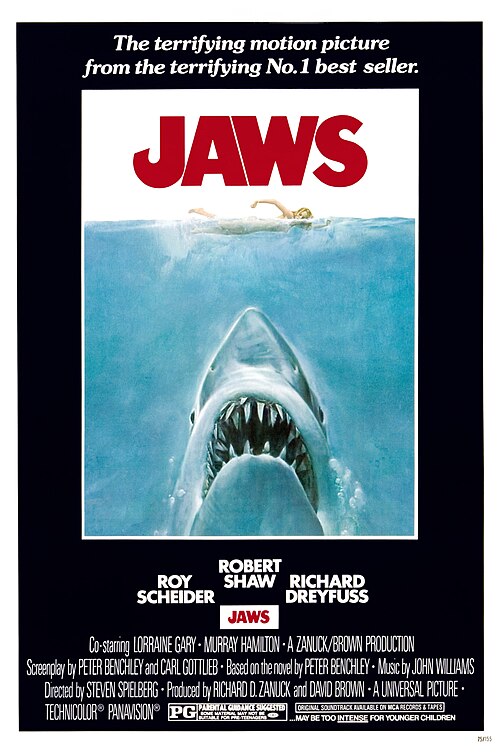
Although Jaws takes place on or near the fourth of July, it’s not holiday horror.  Holiday horror draws its source of fear from the day, and although Mayor Vaughn—like many politicians—insists holiday income is more important than a few lives lost, the fear derives from the shark.  I can’t remember when I first saw Jaws.  It couldn’t have been during its initial theatrical release (I was too young), I do know that I read the book first.  I wasn’t expecting Hooper (then my favorite character) to survive.  I was also surprised when I heard people starting to refer to Jaws as horror.  When I first saw it, whenever that was, I wouldn’t have called it horror—it’s just a movie about a shark.  Since thriller and horror bleed into each other I’m more open to the designation now.  Besides, animal attack horror is its own well-established category these days.  Jaws, half-a-century old this year, is experiencing a comeback but the shark never left.

JAWS, 1975

My wife surprised me by suggesting we watch it last weekend.  We’d seen it together on television many years ago.  A number of analyses have been appearing in the media, highlighting the importance of the movie, and I noticed a few things watching it again.  Probably the most obvious shift, for me, was finding Quint the most engaging character.  I don’t know how many times I’ve read Melville’s Moby-Dick, but it’s been at least two times since seeing Jaws the last time.  The connection was much clearer with this viewing.  Quint is after sharks because of their attacks on crewmen of USS Indianapolis in World War II.  Quint was a survivor but his life’s mission is revenge on sharks.  So much so that he smashes the radio to prevent Brody from radioing in an SOS.

So here was a confluence.  I watch horror movies.  My favorite novel is Moby-DickJaws falls somewhere between the two.  The mainstream success of the latter may have been an early contributing factor to the grudging admission that horror can be good cinema.  Just in the past two or three years standard media outlets have been valorizing some horror and in this summer’s movie season, eyes have turned back to Amity and its local Captain Ahab and great white.  The great white shark, mainly feared because of this movie, is considered a vulnerable species.  As with Moby Dick, I felt sorry for the animal, watching the movie.  Both seem to have revenge on their minds as well, whether it’s a holiday or not.


Bible and Horror

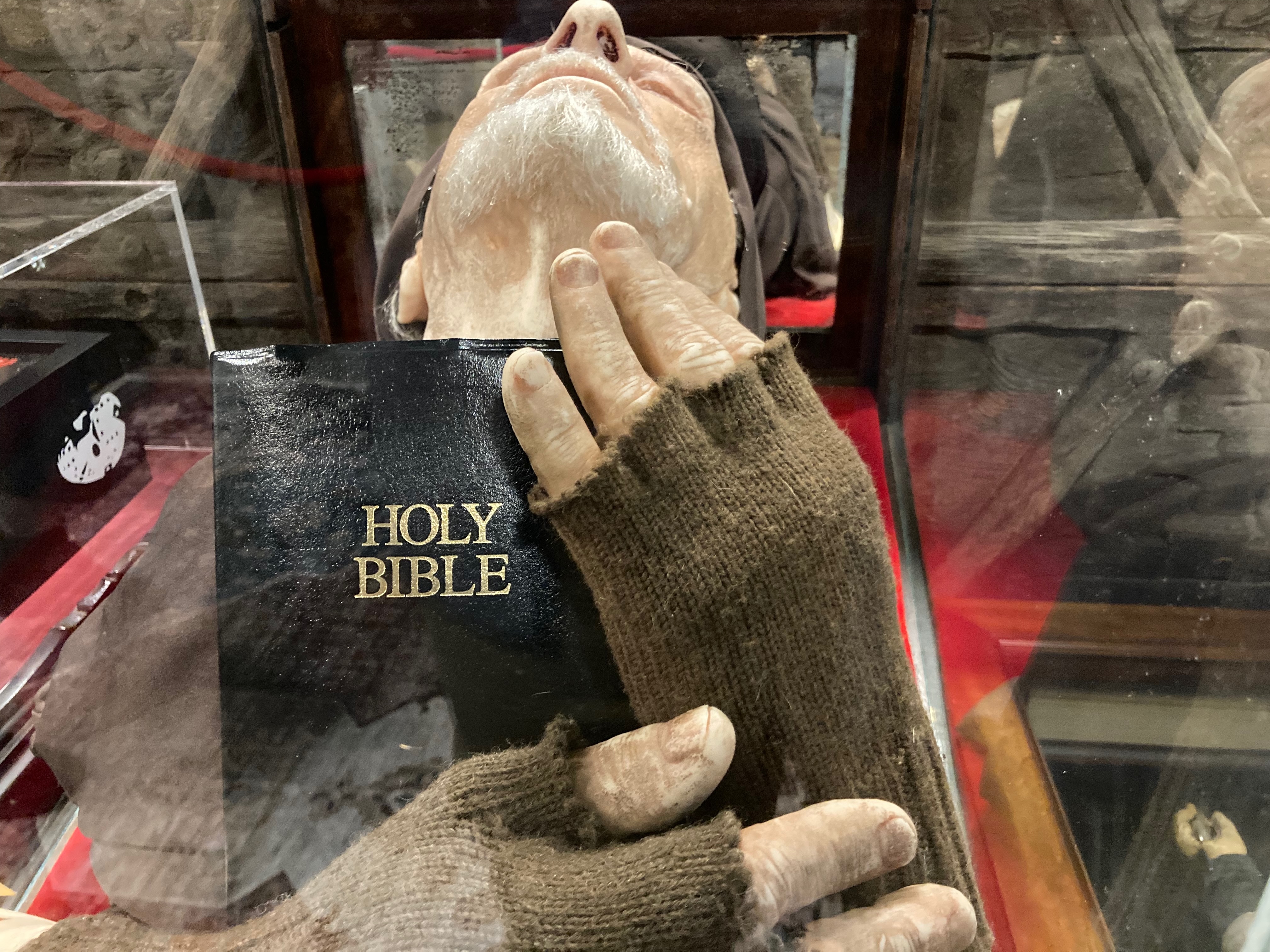
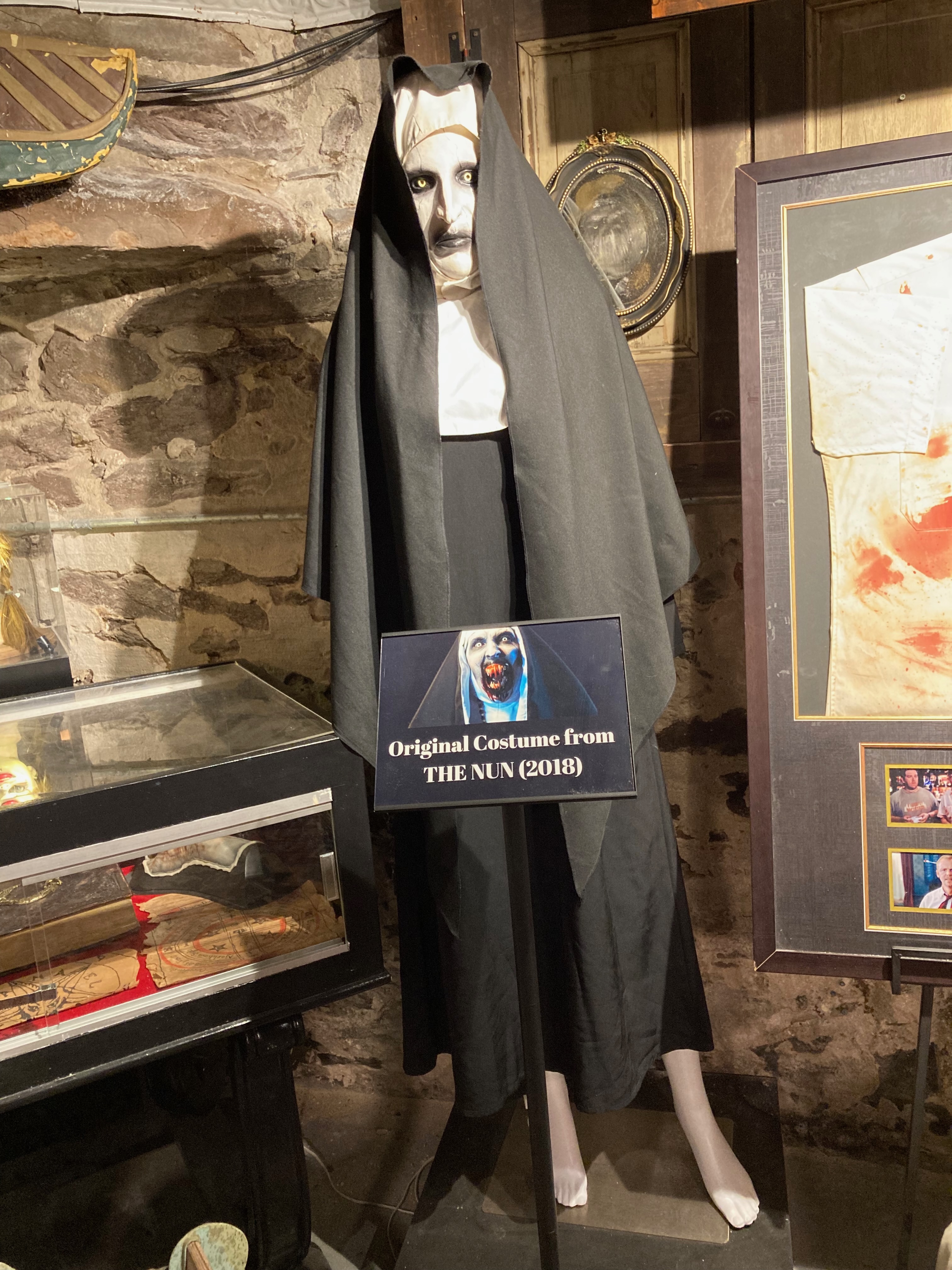
Having written Holy Horror, I keep an eye out for Bibles in horror contexts.  In the context of A Nightmare in New Hope there was the torso and head of Fr. Alameida from Stigmata.  In his hands he clutches a Bible.  Of course, if you’ve seen Stigmata you’ll know that Alameida is already dead at this point, having been so from the start of the film.  Those visiting a horror museum are likely completely nonplussed by seeing a Bible there.  Much of the horror genre builds on religious themes.  Witness The Nun.  The original costume for her is standing over in the corner right there.  If I had enough time (i.e., if I were in an academic post again) I would be spending my time trying to figure out this connection.  I’ve written about religion and horror in four books, in several articles on Horror Homeroom, and in too many blog posts to remember.  There is a connection that only professors have the luxury of thinking time to explore.

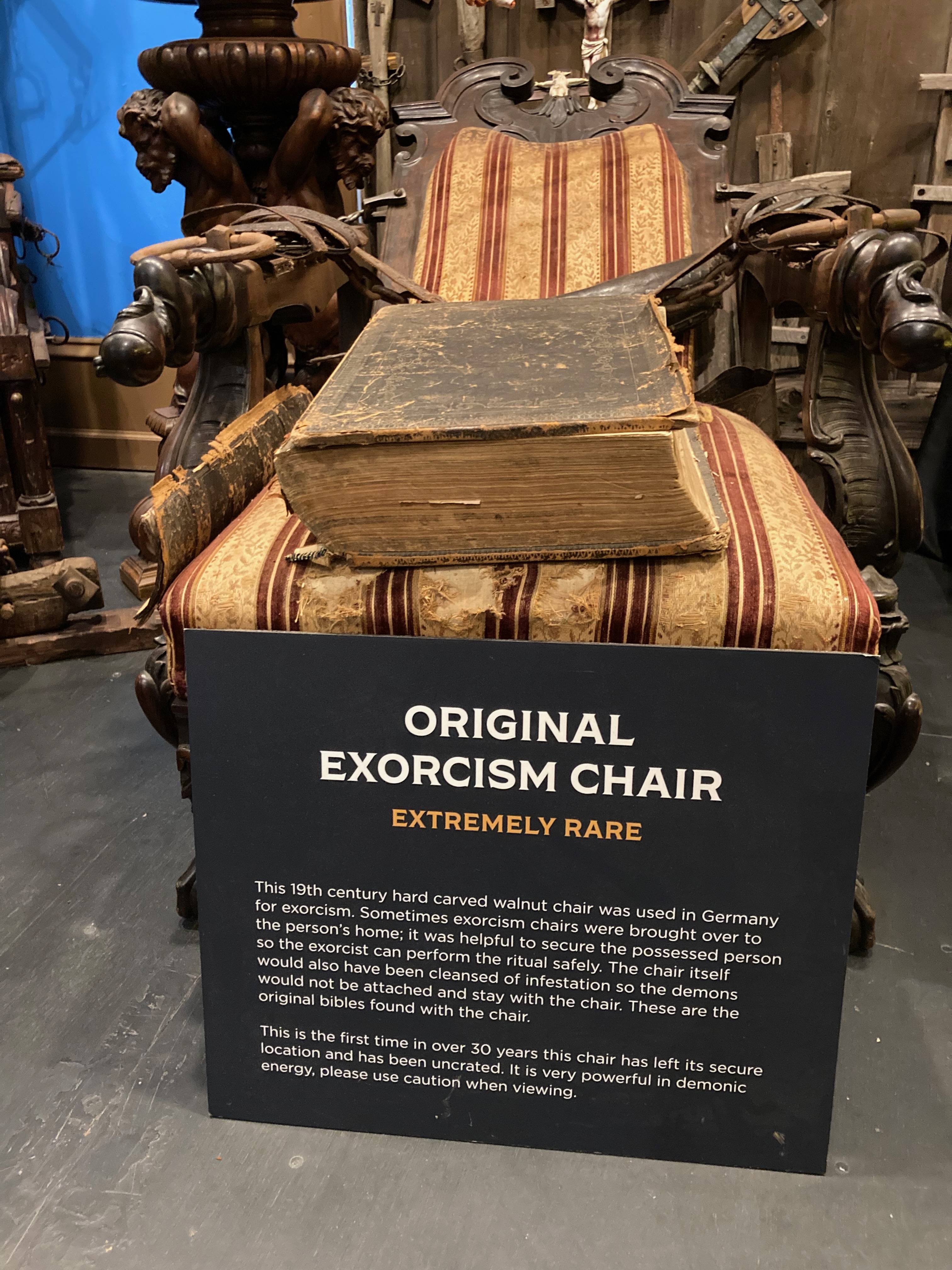
A couple hours later at Vampa, Vampire Paranormal Museum, Bibles were again in evidence.  Indeed, in profusion.  Vampire hunters, it seems, never wanted to be without the Good Book.  Many of the vampire hunting chests (entire chests!) included a Bible.  As noted in a previous post, Michael Jackson owned a vampire hunting kit for a while, until the Jehovah’s Witnesses convinced him he shouldn’t.  In one of nature’s ironies, in the mail when we got back from the museum was a handwritten letter to me from the local JW Kingdom Hall.  Religion and horror.  Vampa also owns a rarity, an exorcism chair.  Things get a bit muddy here since the chair dates from the nineteenth century but exorcism as we know it largely derives from the movie, The Exorcist.  And that takes us back to New Hope.

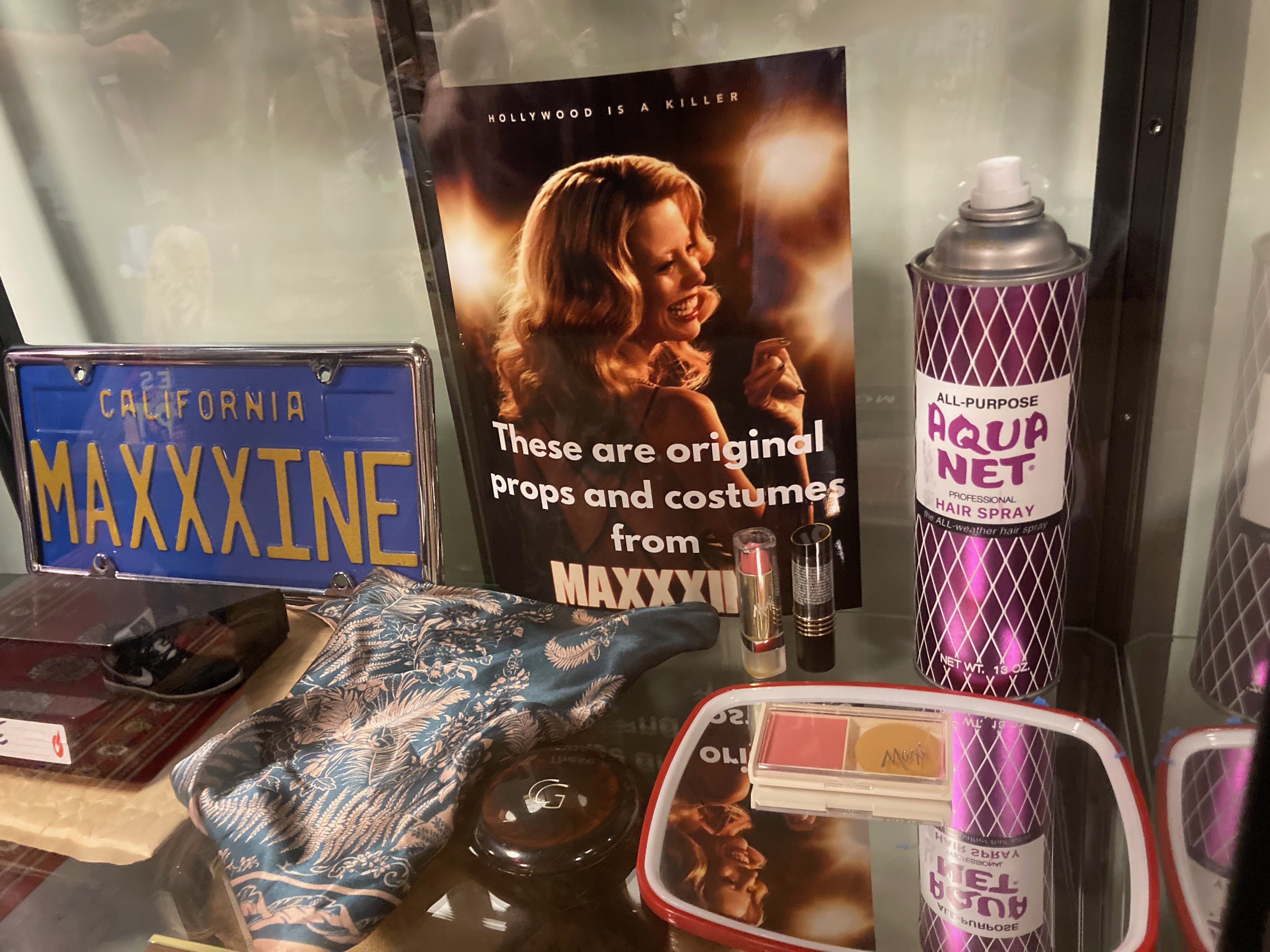
My interest was primarily in artifacts from actual movies.  The Exorcist head of Regan McNeil in Nightmare in New Hope was, I believe he said, a cast.  A horror museum without at least a passing reference to The Exorcist would feel strangely incomplete.  And then there’s Maxxxine.  The entire X trilogy is framed around religion that leads to horror, over a couple of generations.  There’s a connection here and I haven’t found a convincing explanation for it yet.  It’s one of the many books that I’m working on at the moment.  But time is limited.  And Fr. Alameida’s presence in this room, holding tight to his Bible, reminds us that the topic bears exploration.


Dark Lovecraft

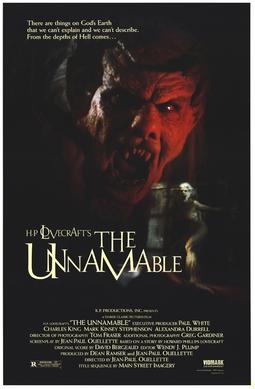
There is no shortage of Lovecraftian horror movies out there.  I watched The Unnamable because I found it on a list of dark academia movies.  And also, well, it’s horror.  I’ve most likely read Lovecraft’s original story at some point in time, but I didn’t remember it at all.  The dark academia part comes in because it involves college students and a haunted house.  A low-budget offering, this is hardly great cinema.  It’s not sloppy enough to qualify as a bad movie.  That puts it somewhere around “meh.”  The film opens with Joshua Winthrop being killed by the monstrous daughter that he keeps locked in a closet of his house.  Then, in the present day (the movie is from 1988) three college guys talk about it and the skeptic decides to spend the night in the house to disprove the monster tale.  He is, of course, killed.  Although his two companions don’t go looking for him, others end up in the house.

A couple of upperclassmen looking to score with freshmen coeds, talk two women into going to the house with them.  As they start to enact their plan, the monster kills them one-by-one, leaving the virginal final girl alive.  Meanwhile, the other two students whose friend was killed, also come to the house.  They manage to rescue the final girl and escape the creature by invoking the Necronomicon’s spells.  The music cues are often comical, suggesting that this isn’t to be taken seriously.  They also spoil the dark academia atmosphere.  For me, a horror film works best if it’s either clearly horror or clearly comedy horror.

It did, however, raise a question in my mind.  Dark academia and horror do have some crossover.  H. P. Lovecraft often had professorial types as his protagonists.  Was he writing a form of dark academia?  It’s difficult to say.  Lovecraft’s work was known as “weird fiction” in his time, and it has become its own kind of genre.  (Just try to publish in the rebooted Weird Fiction without your Lovecraft cap on and see how you fare.)  I’ve been pondering genres for quite some time, and since I watch movies because they’re free or cheap, often, I see some unconventional fare.  There’s no question that The Unnamable is horror.  When the movie ended I was sad for the monster.  She’d been living according to her nature, and really didn’t deserve the treatment she received from a bunch of trespassers.  Not a great movie, it nevertheless made me think.


Meeting Buffy

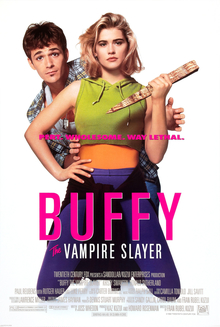
I have a confession to make.  I had never, before just recently, seen any of Buffy the Vampire Slayer.  This is kind of embarrassing because it was being talked about even as I was just starting to teach at Nashotah House.  And it has been discussed in religion and horror books quite often.  I understood that the television series was considered better than the original movie, but I felt that it was important to go to the source, at least to start.  Joss Whedon, it is reported, distanced himself from the film he wrote because it began taking a different direction than he’d envisioned.  The television series, which was praised among any number of critics, was more what he had in mind.  Still, the film isn’t terrible.  The concept of a ditzy blonde being an unwitting vampire hunter is entertaining and Kristy Swanson plays a pretty good Buffy and Donald Sutherland a great Merrick.

Having not seen the series to compare, the movie stands fairly well on its own.  Vampire comedy horrors can be quite entertaining.  The plot here is a bit overwrought and the love story feels tacked on to the vampire narrative.  It lacks the strong through line characteristic of Joss Whedon movies.  So, Buffy doesn’t realize that she’s a slayer, a kind of reincarnated vampire hunter.  Merrick convinces her by telling her what her dreams have been.  And Buffy has preternatural abilities—reflexes beyond human reach.  And the vampires have been awaking in Los Angeles.  The story just doesn’t hold together as well as it should.  I was a bit surprised, however, to find the Bible quoted a time or two.

The charm, which also led me to read about Abraham Lincoln as a vampire slayer, is the unexpected juxtaposition.  A cheerleader, or the best president we’ve managed to elect in this divided country, and vampires?  Even more, vampire slayers?  Vampires, although monsters, are often symbolic and sometimes sympathetic ones.  Buffy’s vampires aren’t charming.  Sometimes funny, yes, but they aren’t the tormented souls that elicit human sympathy.  And Buffy adds its own backstory mythology.  In Dracula Van Helsing was a mortal aware of vampire habits.  Buffy sees this as a predetermined role, specifically female in nature.  I’m not sure if I’ll be able to carve out the time to watch the television series.  But at least, at this point, I have been able to put a bit more flesh on the character of an unlikely vampire foe.  It only took me thirty-three years.


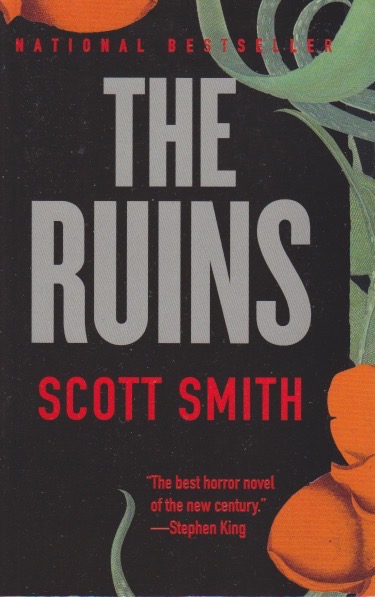
Re-Ruins

I discovered Scott B. Smith’s The Ruins after having seen the movie version.  The film is scary but the book is scarier.  I wrote about the movie last year, so I won’t worry about spoilers here.  I will say that even with its bleak ending the film has a happier resolution.  If you read my post, and remember it, the following summary may not be necessary, but here goes: two couples and two friends vacationing in Mexico set off in search of one of the friends’ missing brother.  They travel to a very remote location and discover that the missing brother is dead.  Worse, that he was killed by the natives for trying to escape a vine-covered ruin.  The vine is carnivorous, and, unlike in the movie, clearly intelligent, and sentient.  It tricks the young people into harming themselves and then it begins to eat them.  It especially preys on open wounds, but it can smother a person if it so desires.

The book is full of tension.  Although a couple of injuries take place early on, it’s over halfway through before someone actually dies.  And the others don’t follow quickly.  The narrative asks probing questions about ethics and mercy.  When (if ever) is it okay to kill someone who clearly has zero chance of survival?  Is it still murder?  Complicating things, for me, was the fact that I couldn’t remember clearly how the movie ended.  Eventually it came back to me, but this is one of those cases where the film and book, although with the same writer, diverge a bit.  The characters are clearly sketched here but defy expectations and stereotypes.  And it is sometimes the case that you aren’t sure who might be telling the truth and who might be trying to protect themselves through prevarication.

An effectively written novel, it had me looking askance at plants from time to time.  We have a quite aggressive vine in our yard that seems determined to be the Trump of all the plants.  I suspect someone planted it long before we moved in, unless it’s simply a successful exploiter of happy happenstance.  I’ve tried uprooting it every year, but I can’t seem to get to the brain of the operation.  It’s easy to believe that if plants were sentient, and could move a bit faster than they tend to, that such a scenario as in The Ruins might unfold.  The question remains whether the local Mayans simply can’t eradicate it or if they might indeed have some worshipful regard for it.  The two may end up being nearly the same thing as human power is unable to tell nature what to do.


Hugo’s Invention

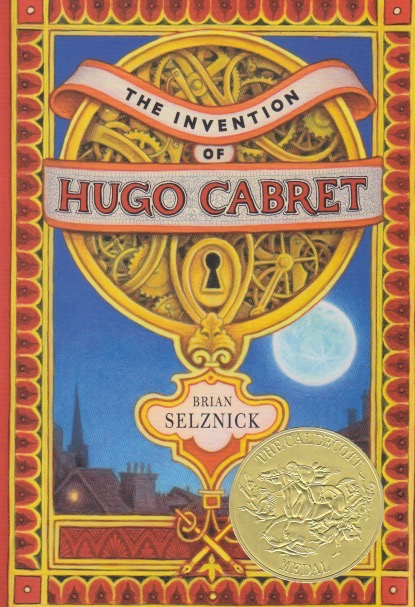
After watching Hugo, and wishing that the story were history, I found a copy of Brian Selznick’s The Invention of Hugo Cabret.  Martin Scorsese’s adaptation is fairly close to the book but there are, of course, additions and omissions.  One key character is left out and some subtleties to the book didn’t find their way obviously into the movie, or at least not until having read the book.  The story of Georges Méliès’ life in the book is largely accurate.  Hugo, however, and Isabelle, are fictional.  As is the automaton around which the story is based.  The lovable train station vendors in the movie are quite a bit less lovable in the book.  And the station inspector isn’t shown until late in the story and he doesn’t have the leg brace that lends a kind of steampunishish vibe to the film.

Apart from being a tale of redemption—in real life Méliès’ rediscovery didn’t lead to an end of his poverty—the story is an exploration in psychology.  Méliès lost his dream job due to competition after the First World War.  The book makes clear that the clicking of heels drives him to rage because his films were reputedly melted down to make shoe heels.  The story in the book goes so far as to say that ghosts follow those who clack their heels loudly.  The ghosts, of course, are those of Méliès’ lost success as a filmmaker.  One of the reasons this story appeals to me is that I too lost a job that gave my life a sense of purpose.  My writing largely does that now, even if it doesn’t sell.  I can relate to a man who is ready to retire but can’t, daily reminded that he once had a satisfying job but now has to sit behind a desk all day.

The Invention of Hugo Cabret is a book for younger readers.  About half of the book’s 500-plus pages are illustrations.  The images include stills from Méliès’ surviving films, but mostly drawings by Selznick.  The focus on the young people makes this a children’s book, but the truths it tells of adults with lost dreams are especially appropriate for those who’ve learned that life isn’t always kind to dreamers.  The book, like the movie, inspires me to seek out the surviving films of Georges Méliès and think of what can indeed happen to those who dare to dream, even when the world has already discarded them as irrelevant.


Don’t Let Go

We watched Hugo, as a family, over a decade ago and quite enjoyed it.  At that time I only really blogged about horror movies or those with a religion element that I could spot.  Over the years, I’ve taken to reflecting on movies themselves and so, since we rewatched Hugo recently, I thought it might be time to talk about it.  This is one of those movies that was critically acclaimed but a box office flop.  It’s still a wonderful film.  As a side note, working in any media (including academic publishing) introduces you to familiarity with the project, such as a book or movie, that becomes widely praised but just doesn’t sell.  Public taste is very difficult to predict (note who’s in the White House) and sometimes a book, movie, record album, or any media hit, becomes highly acclaimed while losing money.  Hugo is worth re-watching and, despite the financial hit, is quite good.

Hugo is based on a children’s book, Brian Selznick’s The Invention of Hugo Cabret (which I would like to read).  The movie is a paean to early filmmaking and involves some real history, especially around the life of George Méliès.  Watching the film a second time, I was struck with how Hugo ends up reenacting several scenes from early films in his own life.  The film also captures how movies are more than simply entertainment.  They have become an integral part of life in some cultures, and, for some of us, a source of meaning.  That’s why I wanted to see Hugo again.  It struck me as a compelling story—a redemption story—bringing a sense of meaning to a life where George Méliès went from fame to obscurity because his contribution to film was unrecognized since movies hadn’t yet become a major industry.  Look at Disney today and wonder, dear reader.

Or consider Hugo itself.  With a gross profit of “only” about 15 million dollars over the budget, it barely covered its costs.  Lots of people are involved in making a movie and this is quite an expensive venture.  Anyone who earns a paycheck knows that the net is always disappointingly lower than the gross earnings.  Cinema in general struggles with the need to adapt to streaming culture where profits are parsed out in small bits rather than drawing large crowds to fill seats.  And yet, movies act in many ways like the modern mythology.  They tell important stories.  They provide touch-points for society.  Unfortunately, however, this is often only the case when they make a lot of money.


Hitchcock’s Freud

When you can’t have horror, Hitchcock will sometimes do.  Having seen most of the big classics, Marnie came to the top of our list, and I found it had some triggers.  I suspect that’s true for those who have experienced childhood trauma and who sometimes do things as an adult without knowing why.  At least that’s what I took away from it.  To discuss this will require spoilers, so if you’re behind on your Hitchcock you might want to catch up first.  Here goes.  Marnie’s mother was a prostitute who turned to religion.  The reason is that one night during a storm young Marnie was frightened and one of her mother’s clients tried to comfort her.  Supposing he was molesting her daughter, she attacked him and when he hurt her, young Marie killed him.  All of this was repressed in her memory and now, as an adult, Marnie is a kleptomaniac who has the many phobias that that night impressed upon her.

Then along comes Mark.  Although he knows Marnie is a thief, he falls in love with her.  From a wealthy family, he’s influential enough to get charges against her dismissed, which he does once they marry.  He tries to unravel why Marnie won’t sleep with him, why she can’t stand red, why thunderstorms terrify her.  In a very Freudian move, he recognizes that her relationship with her mother is the key.  Hiring a private investigator, he discovers what happened to Marnie as a child and then takes her to confront her mother.  Marnie has never felt her mother’s love, but she didn’t remember the incident and didn’t know that her mother took the murder rap for her and subsequently distanced herself from her daughter.

I have to admit that I found this more disturbing than most Hitchcock films I’ve seen.  The ending, which I revealed in the first paragraph, brought quite a few of my own childhood issues to the surface.  Parents try to do the best they can, at least most of the time, but we damage our children psychologically, generally unintentionally.  And trauma in your youngest years never leaves you.  I can mask and pretend—that’s the way you survive in this world—but a number of my experiences as a pre-teen affect me every day, whether I realize it or not.  Where I choose to sit in a room.  How I respond to unexpected events or sudden changes.  Why I immediately have to know what that noise is and where it came from.  These are all part of the legacy my childhood left me.  I think Marnie would understand.


Dead, Not Sleeping

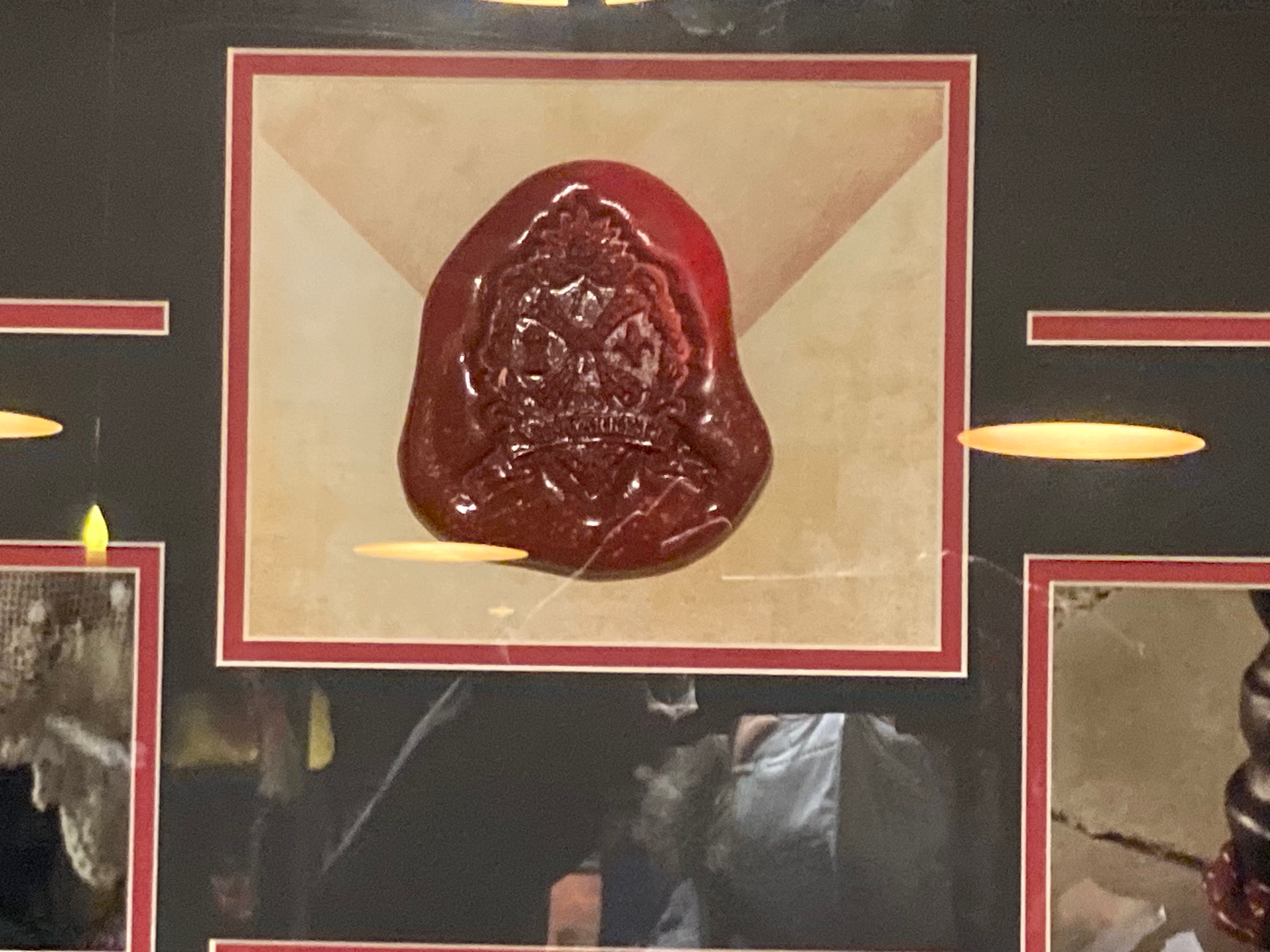
A Nightmare in New Hope is a fairly intimate space.  The owner told us that the collection will change and grow, given that he’s still collecting.  Having a particular interest in Tim Burton’s Legend of Sleepy Hollow—having a book (ahem) on the subject coming out soon (cough)—I was particularly anxious to see what props they had.  To make sense of this it helps to have seen the movie, but you’ll catch on, even if you only know the Disney version of the story.  There were three main items from the movie that they have on display.  One is the wax seal used for the Van Garrett will, used as the movie opens.  The seal is quite large.  Of course, movies substitute props from time to time, blended by celluloid magic.  CGI doesn’t leave as many tracks.

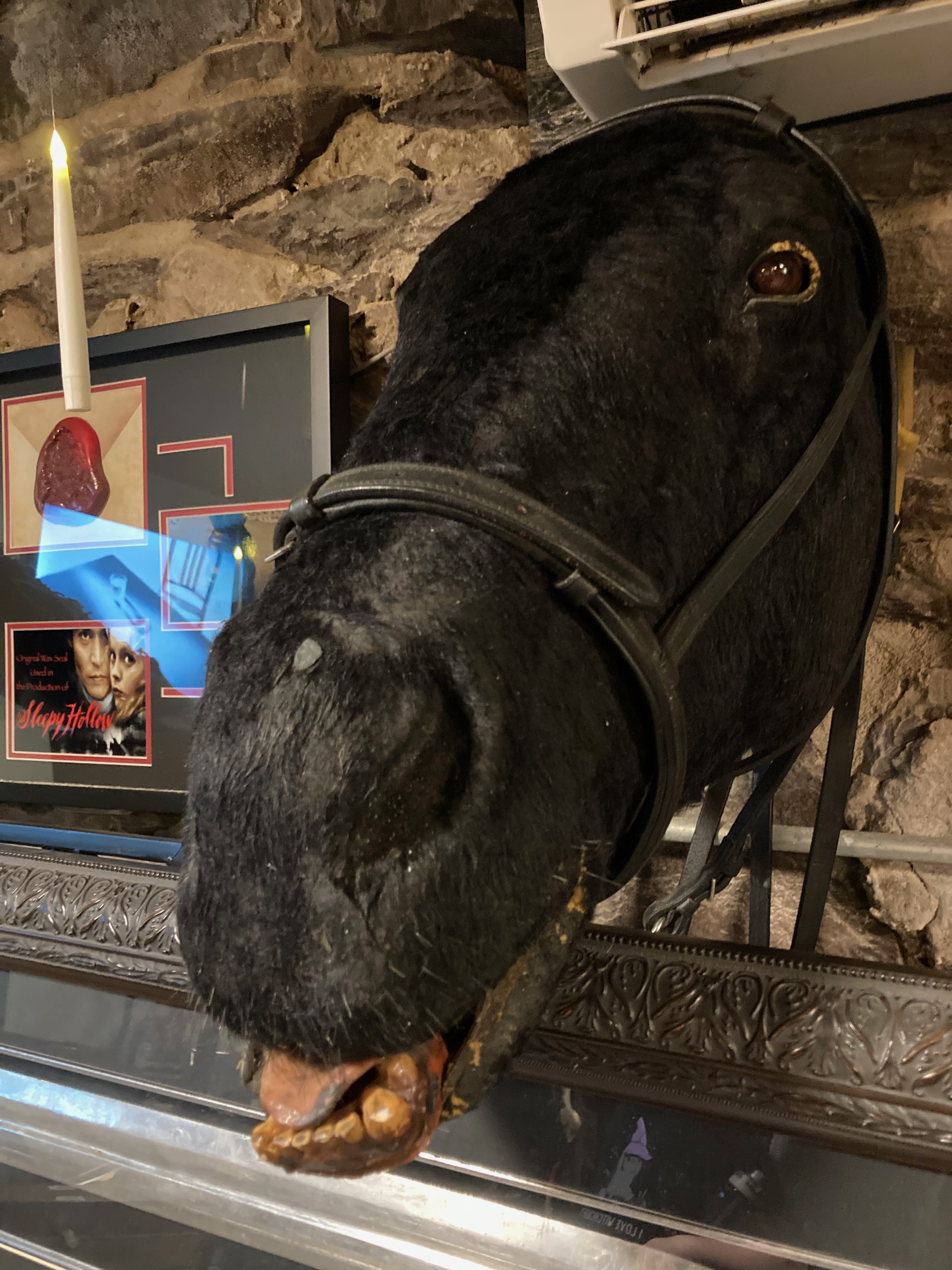
The second artifact is one that wouldn’t have occurred to me to have even existed.  This was the animatronic horse’s head for Daredevil, the Headless Horseman’s mount.  There are a couple scenes in the film involving horse acting, and I’d just assumed that trained animals were used.  Being up close and personal with this artificial head, a couple thoughts came to mind.  One is that right next to it, it’s quite obvious that it’s artificial.  The second thought was just how much thought and effort goes into a big-budget movie.  For a few seconds of a close-up horse head, this model had to be constructed and used and then set aside.  I asked the owner about how such things were acquired, and he noted that production companies don’t keep everything.  He also noted that movie artifact prices have skyrocketed.  Both because horror is now popular and because CGI, as noted, doesn’t leave tracks.

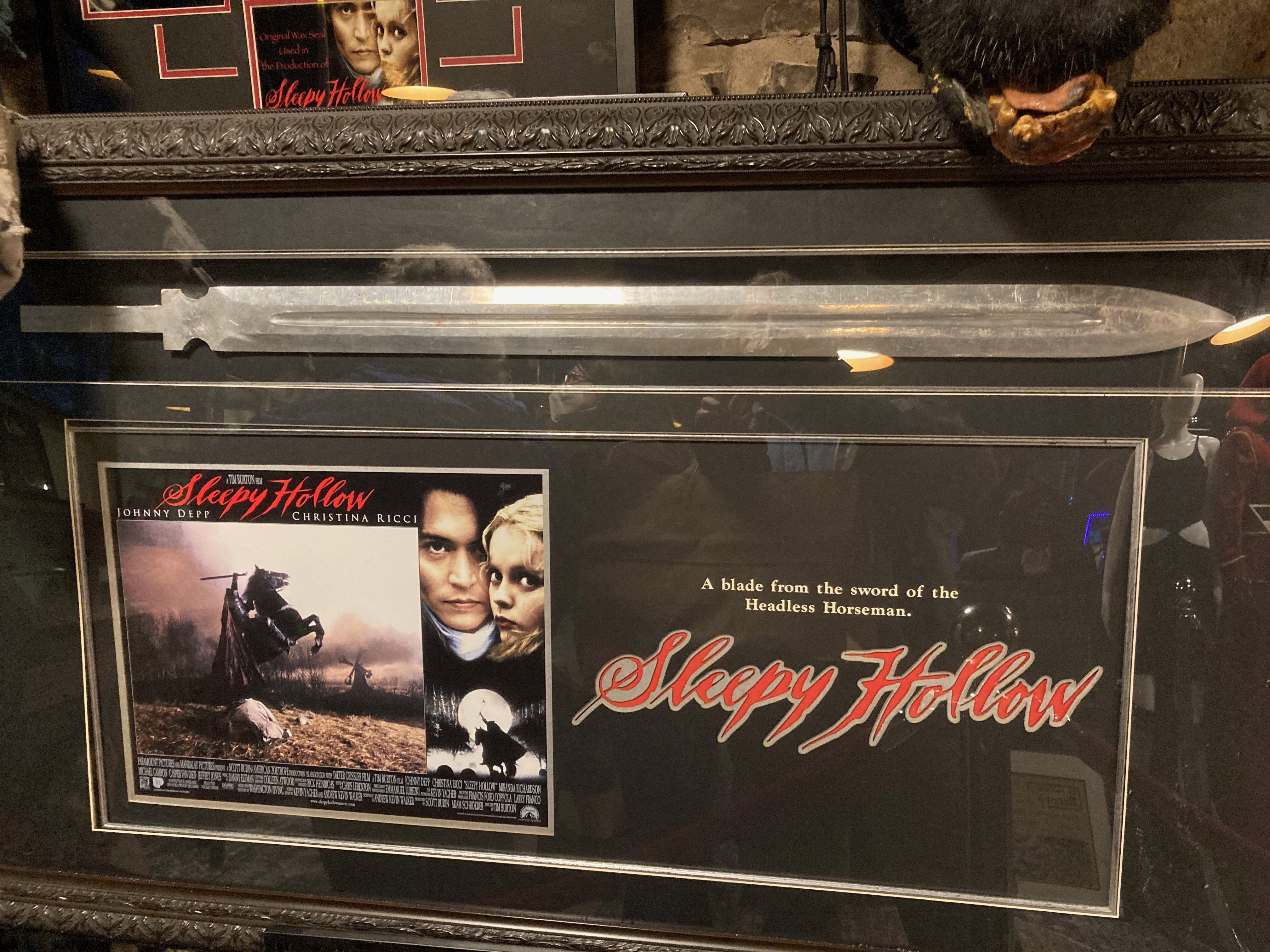
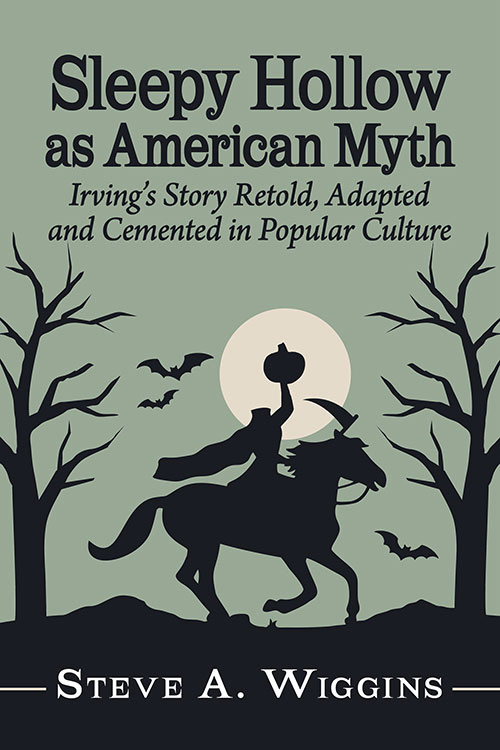
The third, and most proudly displayed Sleepy Hollow piece is the Headless Horseman’s sword.  This appears in the movie far more often than either Daredevil’s head or the wax seal.  One of the aspects of Washington Irving’s story I discuss in Sleepy Hollow as American Myth is that the Horseman’s weaponry changes over time.  I won’t say more since, like museum owners, those who write books hope that they well sell a few copies.  I’ll be revisiting A Nightmare in New Hope from time to time.  For the items on display, I’d seen probably 90 percent of the movies, and a few of them I’d discussed in some detail in either Holy Horror or Nightmares with the Bible.  Of course, the Sleepy Hollow book is forthcoming (ahem).


Scary Father’s Day

Given my circumstances, I never really celebrated Father’s Day growing up.  By the time I was old enough to get the concept, my father was long gone.  My step-father, some years later, was no real father.  Besides, we were poor and it was hard to think what such a celebration might entail.  All of which is to say that I never really expect much from the day myself.  My wife and daughter suggested we try Nightmare in New Hope again—this is the horror movie museum in New Hope, Pennsylvania, which had been closed last time we tried.  It was an appropriately rainy day, the kind we seem to specialize in around here.  I suspect that the museum will show up in a future blog post or two, but suffice it to say that it’s an impressive little collection.  It’s an odd feeling, this human desire to be in the presence of something you’ve seen in a movie.  I recommend it for any horror fans who happen to be along the mid-Delaware.

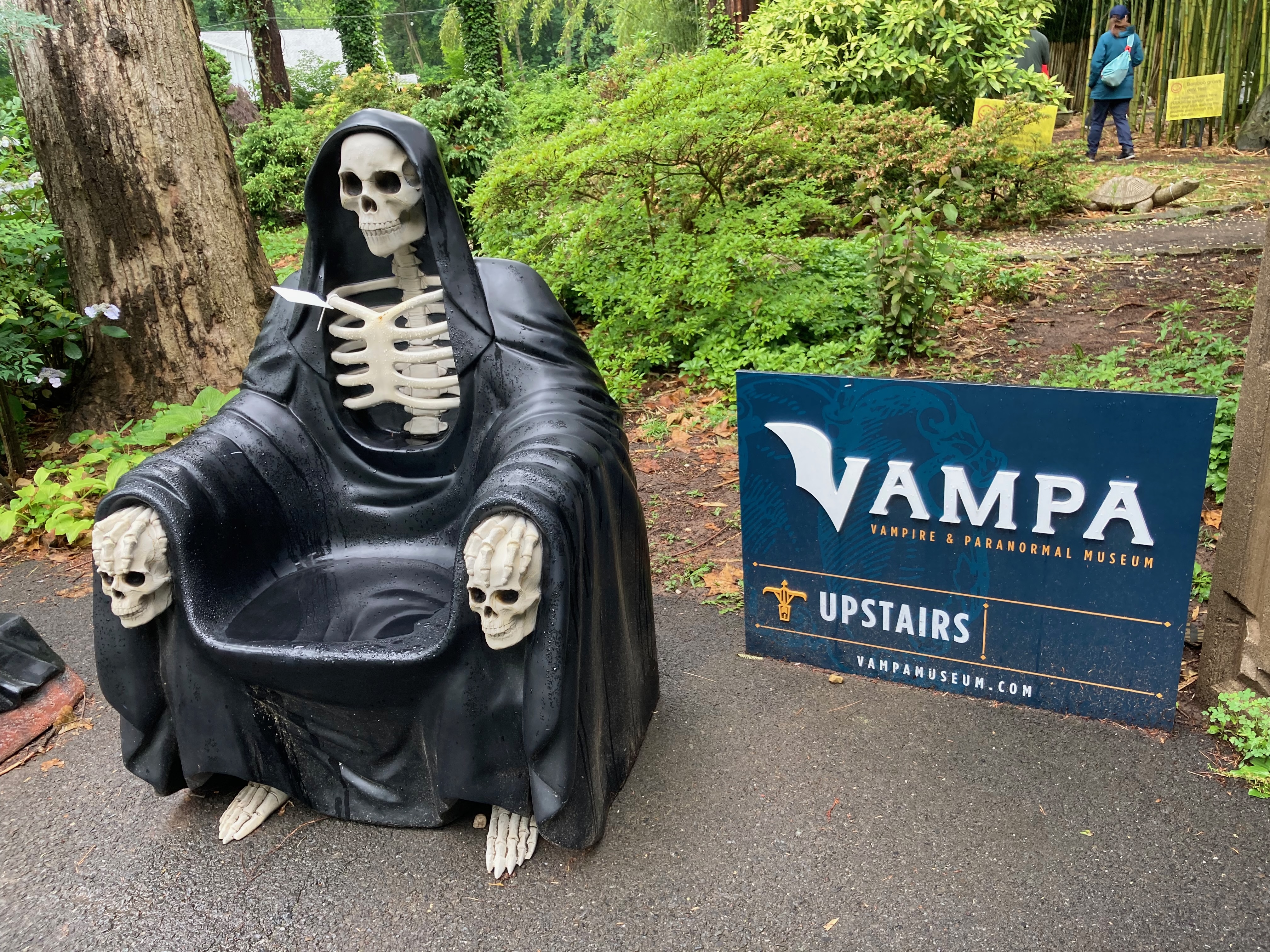
Not being large enough to take all day, we considered what we might do that afternoon.  In keeping with the theme, a visit to Vampa: Vampire and Paranormal Museum was suggested.  This museum is in Doylestown, which is only about a quarter hour from New Hope.  There’s more to it than just the museum, so it too will likely come up in future posts.  This museum contains a truly impressive array of artisanal vampire hunting equipment from Europe, dating between the seventeenth and nineteenth centuries.  I’ll try to put together a photo essay of it soon.  But that’s just the first room.  A second deals with demonic possession.  Then rooms have displays of occult and other esoteric artifacts, along with creepy suggestions to be careful of engaging too much with them.  The final room is dedicated to St. Michael the Archangel, and it warns that the struggle with evil is real.

Both places had a steady stream of visitors yesterday.  It would be fair to say that by the time we finished I was over-stimulated.  You have to understand that I personally don’t know many people interested in horror.  Going to these places was the sacrifice of a rainy Sunday afternoon for my family but will likely become one of those pleasant, lingering memories of the unusual that take on a rosy afterglow over the years.  This blog quite often ponders over why such things take on meaning for someone interested in religion and belief.  Being in the presence of artifacts, as noted above, puts you in touch with a kind of earnestness that mere electronic reading on the internet lacks.  If you happen to be along the mid-Delaware, the side trip to Doylestown is a worthy add-on, Father’s Day or not.


Night Voices

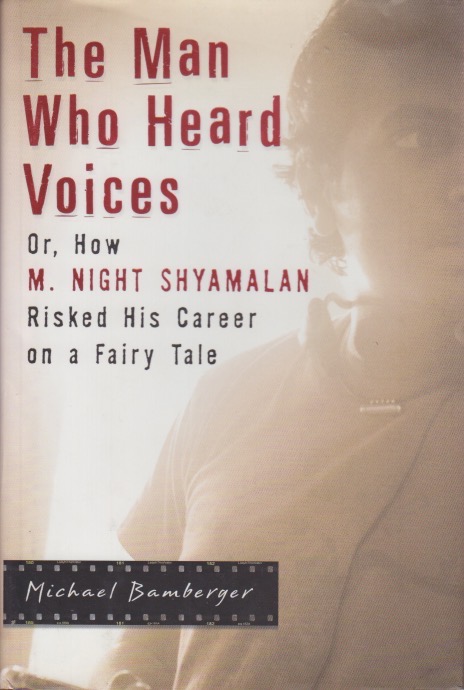
So this is really why I watched The Lady in the Water.  A friend had recommended The Man Who Heard Voices: Or, How M. Night Shyamalan Risked His Career on a Fairy Tale, by Michael Bamberger.  The book was published in 2006 and I found a “very good” used copy on sale for six bucks.  It’d been on my to read list for a year or two.  The book arrived and I discovered it was about a Shyamalan movie I’d never heard of.  I have friends who refuse to even mention his The Last Airbender.  (I’ve seen the original animated version and it’d be difficult to think a movie would improve on it.)  Indeed, The Lady in the Water was a box office disappointment, and The Happening (which I kind of like) and The Last Airbender were critically castrated.  M. Night Shyamalan’s name does draw crowds, but I prefer his horror to his fantasy, but that’s just me.

In any case, reading Bamberger’s book was like cinematography 101.  It’s a nonfiction account of how this movie was made, written by a sports writer also from the Philadelphia area.  He begins by narrating how he met Shyamalan at a party.  How that meeting led to the idea of writing a book about his movie-making process.  Lady in the Water isn’t Shyamalan’s best work, but this book goes through how terribly personal the project was to the writer-director.  It’s a gripping account, especially for those who try to create any form of art.  It also gave me a renewed respect for what Shyamalan tries to do with his movies.  Early career success made him rich, and then he was in a place to follow his dreams.  Or bedtime stories.  Of course, a book written nearly a two decades ago couldn’t project where Shyamalan would be today.

His career surged again, beginning with The Visit—definitely creepy—and has continued to ride fairly high.  Although I haven’t seen all his films, I was interested enough to read about his creative process.  Although The Village wasn’t as highly regarded as The Sixth Sense or Unbreakable, it’s still my favorite among his movies.  Part of that is because it was the first of his films I saw.  It was recommended to me by my brother, which also helped.  Mainly, that movie made me trust Shyamalan as a writer-director.  I’m not sad to have seen The Lady in the Water so that I could read a book about it.  The whole thing was a lesson in creativity.


Water Lady

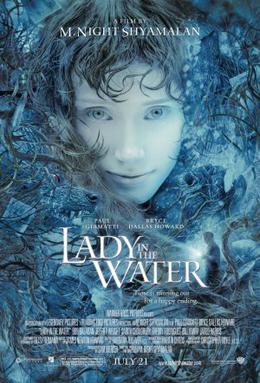
Being creative poses the very real threat of being misunderstood.  I can’t help but think that some of this was going on in M. Night Shyamalan’s The Lady in the Water.  Initially cudgeled by critics, it nevertheless seems to me that the perceived arrogance is overstated.  I generally like Shyamalan’s movies.  I think he does horror quite well, and I thought that maybe there’d be some horror elements here.  There were a few, but the story is kind of long and rambling, kind of like the stories I told my daughter at bedtime.  The movie begins by laying out a legend of a narf (water nymph) who will bring the world peace.  She is attacked by a scrunt, the monster in the film, but has to deliver a message to humans and has to be protected by the maintenance man at an apartment complex in Philadelphia.  And complex is right.

Since this isn’t a widely-known story, we have to be told, in pieces, by a number of the ensemble cast.  A lot of it is unbelievable, even for a fantasy movie.  At the same time, it contains a good message and I get the sense that this is why Shyamalan made it.  He does have an important role in his own movie (which is why it is said to be arrogant), but the style is reminiscent of his other movies.  The scrunt seems like a good idea for a monster and a couple of the attack scenes veer briefly into horror territory.  There’s even an element of Scream when Bob Balaban’s character explains (incorrectly) why he will survive an encounter with the scrunt.  The story has some likable elements but when so much of a fantasy world is being revealed piecemeal it’s sometimes hard to keep your focus.

Based on a bedtime story Shyamalan told his own children, it does resemble that genre of story.  Personal.  When my daughter was small, I made up nighttime stories for her pretty much on a daily basis.  They had a kind of rambling, plodding nature to them.  I made up creatures, as in this movie, and, as Balaban says, kept it family-friendly.  Classic stories do tend to follow a trajectory that is well known to literary scholars.  Something entirely new thrown into that area will sometimes emerge  beaten up.  It wasn’t a waste of time to watch The Lady in the Water.  Not one of Shyamalan’s best, it is nevertheless a film that makes you think a little while afterwards.  And that seems to be what it was intended to do.