Autumn Music

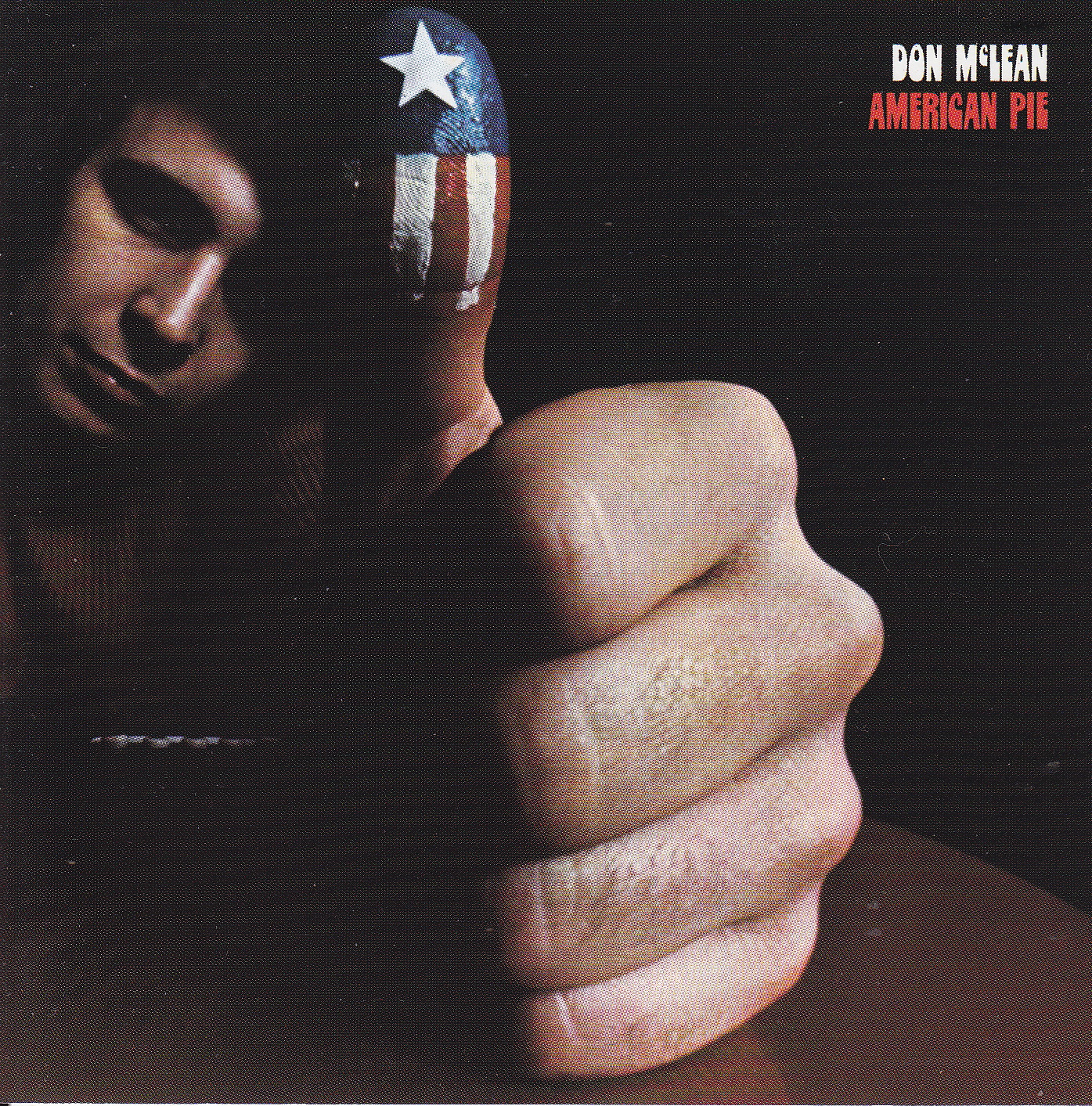
It is an experience as old as humanity itself. At least humanity that started to realize that age, as remote as it may seem, will always eventually catch up with you. This past weekend was Family Weekend at my daughter’s college. Since her school does things up right, there were a variety of events on offer, one of which was an a cappella group concert. A cappella has come a long way since my college days, with students able to use their voices to sound like a band, professionally mixed, and full of energy. Somehow, I don’t recall that much energy from when I was a student. In any case, the inevitable group doing “oldies” took the stage an opened with a song from 1987. Wait. What? Since when was a song of which I remember the first release an oldie? The kids did a great cover, and I suspect in their minds it was really an old song. I was only 25 when it was given to the world. Can I really be an oldie? Outside the leaves on the trees were brilliant, as if on cue for the tuition payers to have their heartstrings wrung. Trees become their most alluring as they are about to die.

Songs, however, have a way of becoming part of you. Back when we were young(er) and idealistic, my wife had thought to study music therapy. Nashotah House, however, decided to change the career trajectories of an entire family in the name of orthodoxy. One of the things she learned in her classwork, prior to being sent back to the work-a-day world, was that patients suffering from dementia can often sing a song from their youth, even if they can’t speak a word. Music gets into our brains in a way that language learning doesn’t, and when we hear that song we are, to borrow a phrase from Bob Dylan (which another of the groups sang), forever young. It is a beautiful wish, endlessly covered and recovered. Watching those kids on stage, I recalled being on the cusp of adulthood myself. Everything seemed possible then. Then a world that others constructed imposed its constraints on me. My hair began to grow gray even as the leaves lit up yellow and scarlet and fire orange.

DSCN4928

Religion is the business of those who are old. Even as a religion major in college I was classed among those old before my time. We think of the hereafter on our deathbeds, not when we’re twenty. For those who teach their children to ponder eternity at a young age, however, that portal is never far from view. My fellow students were looking ahead to careers in all kinds of fields that would make their fortunes and reputations. My modest attempt to bring a younger generation to a more mature outlook faltered at the hands of Fundamentalists, and it was music that helped me through that terrible shock. Little do we think that that song we like so much is marking us indelibly as a child of our age. Time will not relent. We will be the ones, like the trees, showing our signs of age as our children show us where the future lies. And the attitude of that song from 1987 will be, for any who truly listen, forever young.


Knockin’ Where?

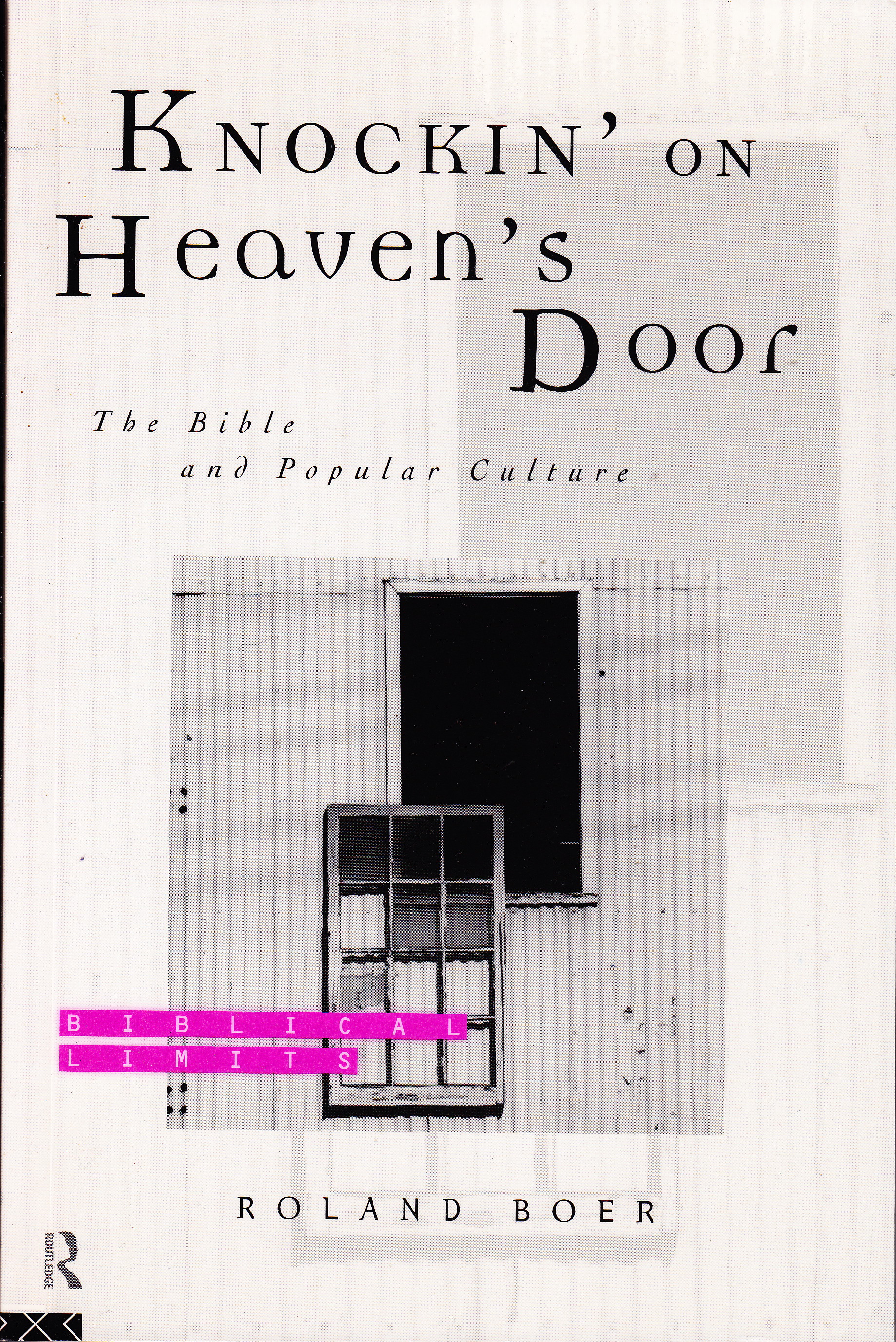
KnockinOnHeavensDoorFor a while, when I was with Routledge, I tried to kick-start the old series Biblical Limits. I didn’t initiate the series, but it had been cutting edge at the time, and one thing biblical scholars seldom get to claim is that particular adjectival phrase. Alas, my enthusiasm wasn’t contagious and the series never moved ahead. Recently I decided to read Roland Boer’s Knockin’ on Heaven’s Door: The Bible and Popular Culture. Little did I realize that it would be a book that would make such a literal fit for the symbolic nature of my blog title. This is a book that my internet savvy would declare NSFW: not safe for work. Boer explores the sex and violence that are really rather pronounced in the biblical text, but which are often sublimated into object lessons for the faithful. We hear that such books as Song of Songs are allegories since they can’t possibly be about real people really attracted to each other. Would God sanction such things, well, after Genesis 1, I mean?

Post-modern readings of the Bible like to place the obvious before the reader. There is, no doubt, some over-reading going on here, but there is plentiful insight as well. A number of places I stopped and thought, I could use that, were I still teaching. Popular culture isn’t just movies and video games. There is a very human element to culture. Indeed, culture would not exist without such a thing as human interest. Boer explores everything from David’s carnal interests to Alfred Hitchcock’s morbid ones. McDonalds to Ezekiel in Guns-n-Roses. This is not the usual finding Christology in E.T. This is more like the bad boy’s Bible.

If the Bible cannot be made applicable to a constantly changing culture, then it becomes irrelevant. Many object to Boer’s bold treatment, but I believe that unless we can move beyond our concerns with J, E, D, P, R, Q, and double, or triple-redactions, we’re going to lose readers from page one. Knockin’ on Heaven’s Door is a page-turner. You can sit on the bus and have people think you’re reading about the Bible when in reality, a chapter on pornography may have you blushing madly. It brings to mind Odysseus in Polyphemus’s cave. But then, blind giants may be the most dangerous of all.


Lola Lolita

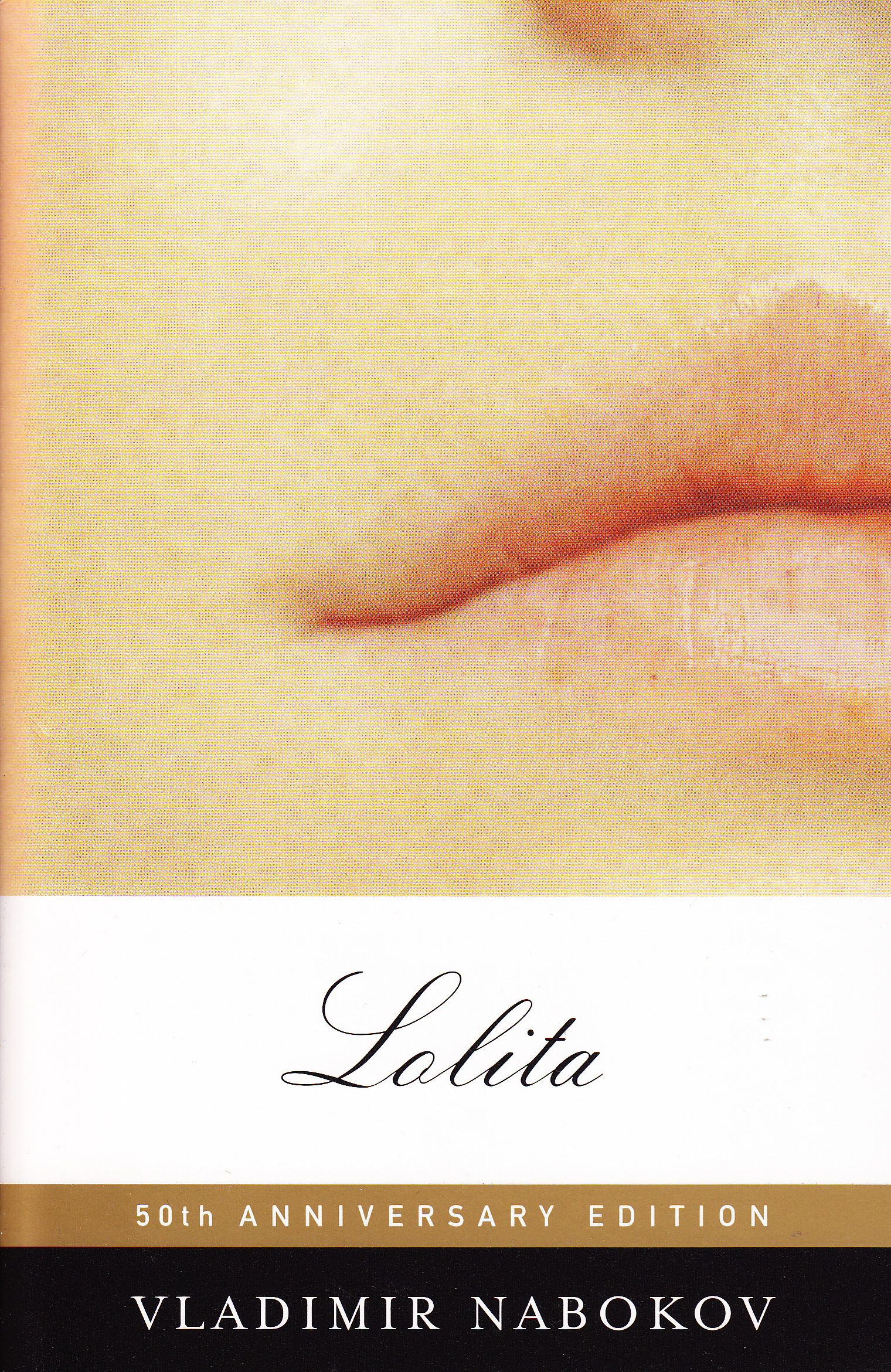
LolitaAs a father, Vladimir Nabokov’s Lolita is difficult to read. With Banned Book Week upon us, however, and with my wife suggesting I read Reading Lolita in Tehran, I figured I’d better read Lolita in New Jersey first. It’s not the kind of book you want to be seen reading on the bus. As is well known, the novel is written from the sympathetic point of view of a pedophile. It is distinctly creepy and yet also strangely sincere. Effacing the distinctions between love and lust and healthy and ill psyches, the story draws you into the life of a single-minded Humbert Humbert and his twelve-year-old obsession. I had been prepared for the end of the story, having seen Stanley Kubrick’s cinematic version some years ago, still, this tale distresses. Banned books take us to places we’d rather not be, and cause us to linger there. This is part of their secret appeal. These authors are honest enough to make us question assumptions. You have floated out of sight of land.

Lolita, through euphony, if not something more, reminds me of “Lola.” The Kink’s hit. I first heard “Lola” while I was in seminary, although it had been released a decade and a half earlier (I tend to run a little behind the times). When I listen to songs I pay attention to the lyrics, and I was disturbed to find that “Lola” was a catchy tune with a (to me, at the time) disturbing message. I confessed to a friend that I liked the song, but wasn’t sure that I should. We ban songs just as we ban books, because they bring us to a place where we question what we thought we knew. In my case, it often doesn’t take much. My friend Dave gave sage advice not to overthink the whole thing. If you like a song, you like a song. Let the music play on.

“You say you’re afraid for children,” Ellen Hopkins’s second stanza of “Manifesto” begins. (I confess to following a different scansion of the poem, call it poetic license.) I believe, however, our fear is for ourselves. We know that we could have a monster lurking inside. Lolita does not encourage pedophilia. Like many social crimes, pedophilia is the manifestation of an illness that some people, like sociopaths, unfortunately suffer. The lack of empathy for others is a frightening thing indeed. It makes for some of the scariest movies, and headlines, that I have ever seen. We do ourselves no favors, however, by pretending it doesn’t exist. I know little of the life of Nabokov, but I know that he died in Montreux. I know that he could afford to live there at least in part because of the royalties from Lolita, a novel whose manuscript he had once attempted to burn. And I know that in Montreux “some stupid with a flare gun,” well, you know the rest.


Psalm 151b

sinead-oconnor-take-me-to-churchI can’t claim to know much about Sinéad O’Connor. When she did her Saturday Night Live act a few years back, I remember the outrage among several Nashotah House students muttering unholy threats. Not that they were Catholic, having *ahem* celibacy issues, but they objected to a picture of Pope John Paul II, known colloquially as “J2P2,” being torn up. This symbolic gesture lost her, on campus anyway, about a dozen fans. I had nearly forgotten the Irish bardess when my wife sent me an NPR story on her recent song, “Take Me to Church.” I was immediately struck by the lyrics that, to this old Psalter reader, sounded very much like a Psalm. The lyrics, while some will certainly disagree, resonant very strongly with the self-confession that permeates the hymnal of ancient Israel. Not that O’Connor has suddenly become a proper Catholic, but she has entered the band of David.

Many popular artists over the years, I would contend, have struck that familiar chord. Anyone who reads the Psalms at face value will find it hard to miss the angst of the writer who tries to do right only to find that s/he needs someone to “take them to church.” Music is the confessional of the soul. Psalms can be a most secular book. The way some biblical scholars like to explain it is that the Torah and the prophets are God speaking to (read “commanding”) people, and Psalms are the opportunity of people to speak their mind to the divine. This might explain the otherwise inexcusable anger that pours out in invective which, if we’re honest, we’ll have to admit to having felt from time to time.

The line we draw sharply between sacred and secular is attenuated in the Psalms. In fact, it is in any honest religion. When religions present themselves as strictly lived as if people could be truly righteous while others should be excluded, trouble is on the horizon. Pictures get torn up, and the “faithful” grow angry. I know few who would argue that humans are perfect just the way we are, yet, for the most part, we try to do what is right. The standards any religion proffers are too high, and we are bound to fail. Perhaps the saving grace, if I may borrow a bit of religious language, is that even the secular can write effective psalms along the way.


Singing the Truth

Attending a local high school choral concert recently, I arrived late. That’s fairly common since the bus from New York is often quite tardy—arriving forty minutes after the scheduled time is pretty standard. In any case, I joined the concert already in progress. One of the first pieces I heard was “Operator,” a number based on an old Manhattan Transfer song. Since my wife grew up liking the group, I recognized the song and yet it felt strange to have Jesus mentioned repeatedly in a public school setting. Music, by its very nature, however, often contains religious sentiments. The Doobie Brothers had, in the early 1970s—the height of a hedonistic age—done very well with a cover of “Jesus is Just Alright.” Jesus, after all, had been declared a superstar a couple of years before. I used to tell my students that the musical impulse is linked with the appearance of religion in very early human culture. Still, disestablishment reigns.

I know that a large Jewish population makes up a significant demographic at the school, and I often think about how the cultural supersessionism of Christianity must feel. Much of what became Christianity has deep roots in Judaism, and even Jesus was Jewish. Can a song be just a song? After a while Randall Thompson’s “The Last Words of David” was performed. No offense there, since the Hebrew Bible is recognized by both Jews and Christians. But what of those of other faiths? Don’t get me wrong—our high school has an excellent music program. I was just wondering how the music might be perceived in a multicultural world. We have Muslim and Hindu students, as well as secular. Is this just counted as mythology to them? The selection of music teachers would be far more restricted if all music associated with religious words or themes were jettisoned.

Affaire_de_Bizoton_1864

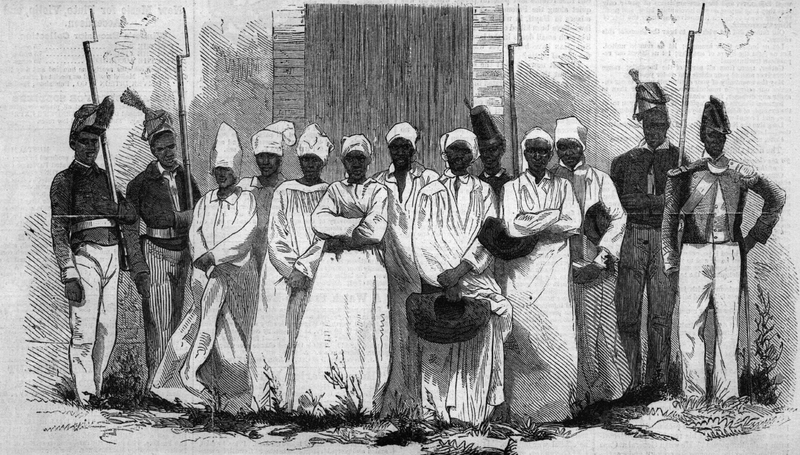
These were the kinds of thoughts milling about my head when the last song from a religious tradition came up: “Wangol.” This is a Vodou song. I was pleased and amazed that the “last word” went to an underrepresented religious group. True enough, Vodou grew out of Christianity’s interaction with traditional African religions, but it demonstrates just how eclectic both American religious culture and high school music concerts can be. Choosing the music for a secular choral concert in a multicultural setting must be a trying experience every single time. When we lived in Wisconsin, most concerts were unabashedly Christian in orientation. This is hardly surprising, I suppose, since choral music itself is often composed to express religious sentiments. New Jersey is a different world. I left the auditorium musing that Vodou is just alright with me, and just as plausible as calling Jesus on the telephone.


Hotel Nowhere

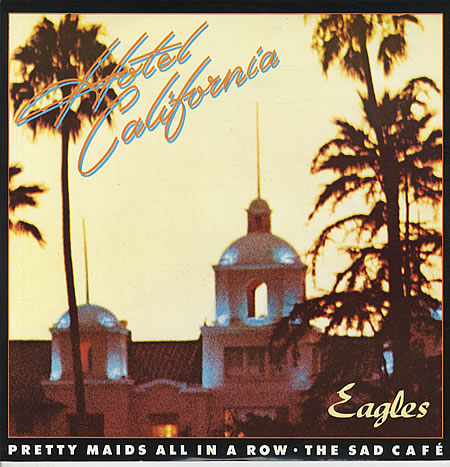
HotelCalifornia1977. I was in junior high school and I wore my hair long. I hadn’t yet donned the cross that I carried through my high school years with a constant fear of Hell on my back, but I did listen to the radio. The haunting song “Hotel California,” by the Eagles, scared me. There was something lurking there—something undefined and yet compelling. Cults were in the news, and after the People’s Temple suicide a year later, we were all pretty well convinced that the song was based on fact of some sort. Religious analysts concluded that the song referred to everything from the Antichrist (“they just can’t kill the beast”) to a New Religious Movement that had taken over a western mission (“we haven’t had that spirit here since 1969”). Members of the Eagles, when asked, said their intentions were to expose the darkness of the music industry as idealistic hippies came of age and realized, yes, it’s just business. Still, I shivered.

Nashotah House used to be on the frontier. Although it is only 30 miles from Milwaukee, it could still feel terribly isolated less than two decades after the Eagles had flown. Indeed, there were sotto voce suggestions that “Hotel California” should be the official seminary hymn. “You can check out any time you like, but you can never leave.” The nights could be very dark in the Wisconsin woods, and for those attuned to some of the more honest aspects of a religion based on exclusion this didn’t seem too far to stretch. “Hotel California” came forcefully back to mind reading about Oneiric Hotel in Wired. (Mentioning Wired makes me look smart.) The Oneiric Hotel is a lucid-dreaming device by artist Julijonas Urbonas, the kind of thing Wired finds newsworthy. The story mentions that Urbonas’s previous project—called Euthanasia Coaster—was designed to kill its passengers.

Now my mind checks into Bates Motel. I know Psycho is set in Arizona, but the desert southwest is terra incognita to an easterner, and besides, it’s just a metaphor. It looks like California to me. I saw Psycho as a college student, and was rather afraid to watch it while at Nashotah House. Indeed, the night I moved to campus I found a dog-eared script from a play about a murderous maid at the seminary left on my coffee table. “This could be Heaven or this could be Hell.” Psycho, it is asserted, was based on the macabre case of sociopathic killer Ed Gein who had roamed these self-same woods of Wisconsin, and who had died less than a decade earlier just down the road in Madison. There was, I knew, a psychiatric hospital just across the small lake that the campus bordered. We don’t call them cults anymore, but we all know what we’re talking about. There are indeed places that you can never check out, even if you leave.


Lost Supper

Culture, for better or worse, involves a deep connection to religion. No matter how secular we suppose the world to be, profound connections to belief surface in the most unlikely places. Time magazine’s culture section this past week has a brief blurb on “Burger Blunders.” Having been a vegetarian for a decade-and-a-half, this short story might not have caught my interest had my wife not pointed out “the Ghost,” a burger offered by Kuma’s Corner, a heavy-metal band-themed bar in Chicago. “The Ghost” comes with an unconsecrated communion wafer on top, and this has raised some spirits, according to Time’s culture team. Even Protestants recognize the power of the symbol of the wafer, even if they can’t accept transubstantiation. In Catholic belief, however, prior to consecration the sliver of bread is just that—a bit of pressed wheat product. The wafer came to be preferred because it was more easily contained than the crumbs of a regular piece of consecrated bread.

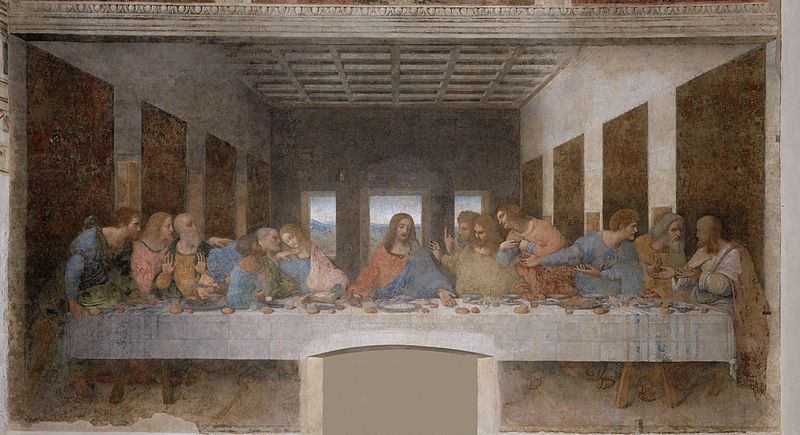
Communion, or the Eucharist, is a ritual meal based on the Jewish Passover. According to the Gospels, it was during the “last supper,” a Passover seder, that Jesus instituted the ritual. Early Christians ate together, and, recalling the symbolism, gave special prominence to the bread and wine. Bread, however, produces crumbs. When theology got ahold of bread it became a sacred object, after it was properly consecrated. It was believed (is still believed by some) to be very powerful in that state since it had become the actual body of Christ during the ritual. Wafers, technically unleavened bread, had many advantages to the emerging theological sensitivities. Portion control, symmetry, and virtually no crumbs. I’ve attended many masses, and the extreme care for particle control is everywhere from ciborium to patten to sacred linens that cover the altar like a liturgical table cloth. They are all accessories to the containment of broken bread.

Última_Cena_-_Da_Vinci_5

Communion wafers, however, when unconsecrated are just bread (if even that). They are not made palatable as snacks, but are more easily available online than basic gears or recordings of your favorite musical. Heavy metal has always enjoyed its blasphemous image as one of the most in-your-face counter-cultures possible. It is also profoundly religious. (Note, I am not saying that heavy metal is Christian or even Judeo-Christian, but it does participate deeply in religious symbolism.) If robbed of its shock-value, it is just loud noise. By association, however, many people mistake the wafer itself for what it represents. Without the added ingredient of consecrations, however, the liturgical churches tend to say it’s just bread. If you’ve ever eaten it, you’ll know that that assertion requires faith sufficient to move a Big Mac.


Fair Country?

One of the lesser known Bruce Springsteen songs is “County Fair.” I hadn’t heard the song until I purchased The Essential Bruce Springsteen some years back when you actually had to buy a disc to get the music. Not a rock-n-roll anthem, it is a quiet, poignant song about the existential pleasures of a county fair. My daughter has been a 4-H member for six years and we’ve annually attended our county fair-the largest free fair east of the Mississippi, it is said-each of those years. In a good year 10,000 people will wander through, looking at farm animals that seem so foreign in our urban lives and which most people only recognize covered in gravy or some glaze. They see the exotic animals and pets so cute that they should be illegal. Like a fledgling college campus there are Arts and Sciences tents. Model planes, model trains, and model automobiles. To a sophisticated adult this might seem like pretty mind-numbing stuff, but I never fail to leave feeling inspired. I play “County Fair” religiously before heading out the door. Yesterday saw the close of the sixty-fifth Somerset County 4-H Fair, and despite the periodic showers, people seemed to be enjoying themselves.

Under the commercial tent stands the Gideons’ table. Each year the fair is literally littered with free Bibles. I noticed with interest that the sign, which had originally read “Free Testaments” had been redacted to “Free New Testaments.” I tried to imagine the conversations, or confrontations that led to such a change. I can’t say for certain, but I suspect Hebrew Bible professors are not among the higher demographics of fair attendees. Most of the colleagues I know would never confront a poor Gideonite about ambiguously handing out New Testaments. I did, however, experience a kind of existential downgrade here. Christians used to declare, doctrinally at least, that the “testaments” were equal. Sure, when you’re standing on the George Washington Bridge trying to decide whether or not to jump, there’s some parts of the older testament that you’d probably be better off not reading. Nevertheless, doesn’t the rule book say the two are part of a whole?

IMG_0922

Nationally, as I well know, there are fewer “Old Testament” jobs than “New Testament.” But that slick little book the Gideons hand out feels a lot more streamlined than the bulky full edition. And I also realize that walking around a relaxing event like a county fair, seeking the most innocent kinds of fun imaginable, that a Bible in your hip pocket is probably overkill. There seems to be no devil lurking here among the sheep and the goats. Feet damp from the rain, under a cloudy, August nighttime sky, sitting in the car my daughter reflects on how this is her last fair as a 4-H member. I wish there were some twinkling stars overhead to make this a storybook ending. But all I’ve got is a truncated Bible in my pocket, and it is missing my favorite part.


Christian Rocks

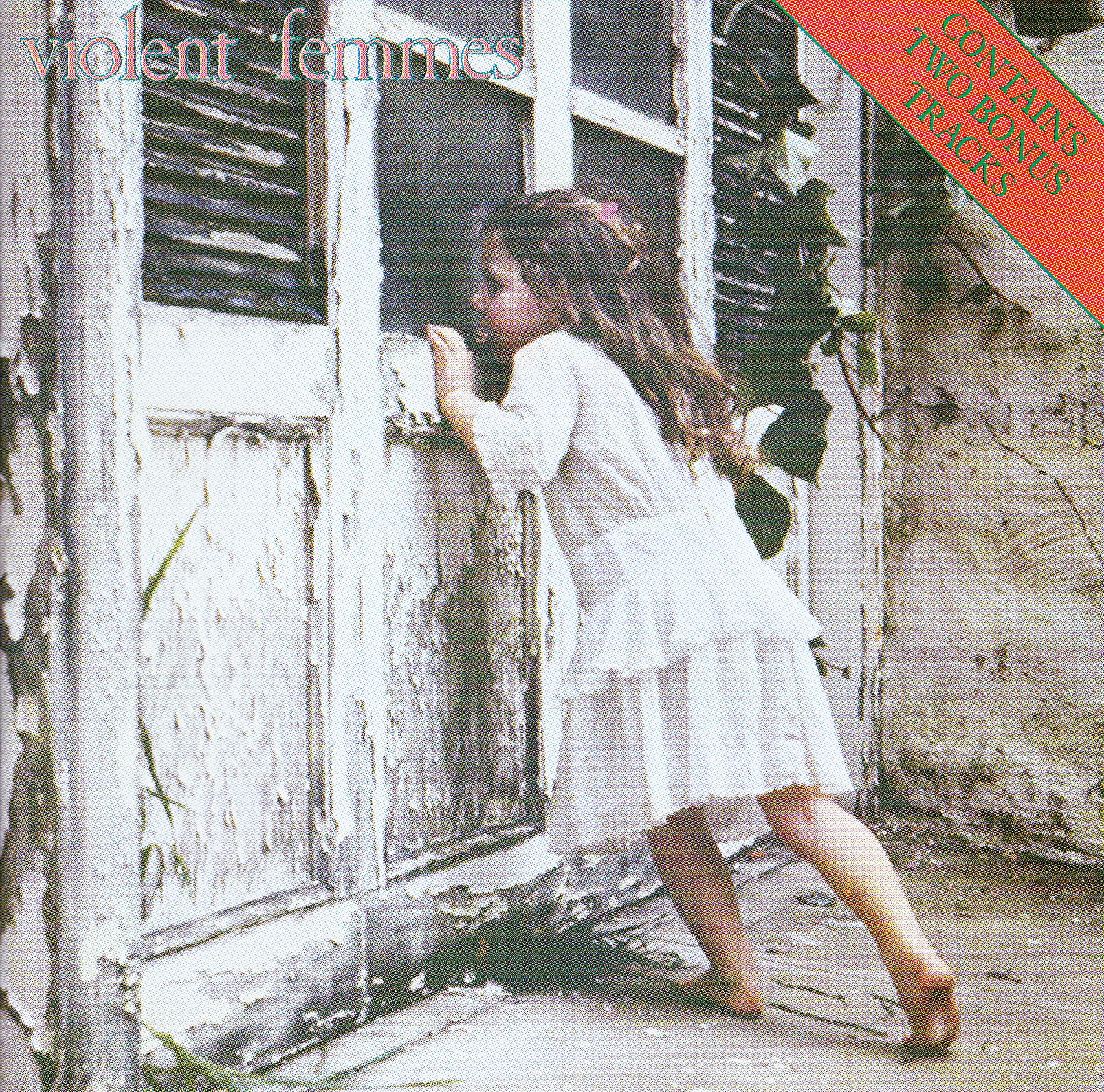
ViolFemsSitting in traffic outside the Lincoln Tunnel, I see that the Violent Femmes are coming to town. The billboard sends my mind spiraling back to college, when the Violent Femmes had released their debut album. Not that I ever listened to it (then), but in the fervently evangelical atmosphere of Grove City College, many students rooted and grubbed for any whiff of esoteric Christianity in a culture on the—pardon the genre-switch—highway to Hell. Rumors abounded that the Femmes were covert Christians, just like another up-and-coming band called U2. Not only the Femmes were violent—reaction to such Christianizing assertions was as well. I remember one of the dorm-mates in my housing group getting into a shouting match that U2 was not a Christian group and slamming his door to sulk, literally for hours. This was important stuff. We were Christians in an underground world.

Of course, some of us knew that Gordon Gano clearly betrayed the influence of Larry Norman in his voicing. And there were rumors and rumors of rumors that the Violent Femmes were coming out with a Christian album, despite the popularity of “Blister in the Sun,” the homage to masturbation that raised the group to stardom. This rumor turned out to be partially true, as Hallowed Ground took on spiritual themes, a little bit country, a little bit soul. There was some tension in the group as Gano’s lyrics began to suggest something more overtly Christian. All of this was going on long before I discovered the Femmes. At Nashotah House I taught a guest lecture on Christian themes in rock music. I researched the Violent Femmes and found that I liked their sound. They made the cut for the lecture.

In a culture as deeply steeped in the Bible as ours, it is difficult to avoid Christian imagery altogether. The Femmes were from Milwaukee (not far from Nashotah House, as the raptor flies), the heartland where beats the pulse of unadulterated religiosity. Even Iron Maiden, after all, had released the platinum album The Number of the Beast. And David Buckna points out in a recent MuseMash post, that even Ozzy Osbourne has some religious aptitude. (I always thought there was more going on in “Iron Man” than meets the ear.) This may all be chalked up to cultural Christianity—there need not be too much conviction here. Those who feel oppressed, however, huddled together in their evangelical college dorms, will always suspect that there is something more beneath the surface that makes even the “Prince of Darkness” the bearer of light.


No Song for Old Men

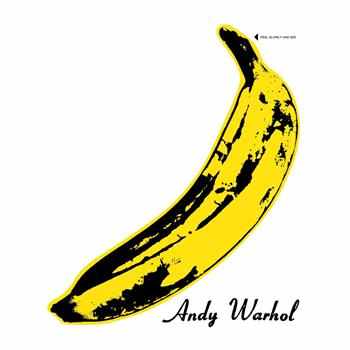
Succoth in Waukesha, Wisconsin. A pillar of the local synagogue had invited me to come to his booth with some of my seminary students to let them celebrate an ancient tradition and talk to a Jewish believer about it. We were all having a good time, and someone mentioned Leonard Cohen’s song “Hallelujah.” One of the seminarians, brash as always, spoke up and admired “Rufus Wainwright’s cover in the movie Shrek.” Although I’d corrected many students before, I let this faux pas ride. Music is very personal to me, and the cover played in the movie Shrek was John Cale’s version, although the soundtrack substituted Rufus Wainwright’s cover of John Cale’s cover. And this student was far too young to have appreciated the Velvet Underground. I was a little surprised, then, when my wife pointed me to a CNN story this week about the thriving popularity of the song. Instead of putting my paltry words out there on CNN for all the world to see, I decided to address them here, to my private audience.

Velvet_Underground_and_Nico

Leonard Cohen has been described as a man who writes songs with a prayerbook in one hand and a picture of a naked lady in the other. He has spent time in monasteries and his lyrics have a very serious edge to them. What the many self-proclaimed experts commenting on CNN seem to have missed is that Cohen’s song is a song for old men looking backward. Yes, it is rife with biblical imagery, but no, it is not a religious song. Not in the sense that it is often used today. John Cale got that. When I hear his early work with Lou Reed or even his first cover of “Hallelujah” that managed to capture something even Cohen hadn’t (no mean feat, that), I can hear the aging Cale casting a glance back to the same place that Cohen saw. We are all aging and we all remember the vitality of those years when possibilities seemed endless. No, it takes decades for a hallelujah to become broken. All the versions by popular artists trying to breathe soul into a tragedy have missed the point. It’s a cold and it’s a broken hallelujah.

I only listen to this song when I’m alone, preferably with John Cale. When Leonard Cohen sent him the lyrics there were 15 pages of them. The CNN report cites the 75 or 80 verses that Cohen wrote. That’s because the song is a life. The biblical images of the song first captured my attention, but I also realized that it was a song about something that’s gone and that’s never coming back. Not for guys my age. Not for guys who can still remember being eighteen and feeling like life hadn’t even begun yet. Now I look back over five decades. I hear “Heroin” seeping from my brother’s room, somehow knowing the dissonant chords would stay with me for the rest of my life, although I have never personally used drugs. There is a longing there, a longing for something that life offers maybe once, for a few short years. Age and inevitability catch up with everyone, and breathy young artists think they’re chic when they cover a song that is meant for old men who remember what glory used to feel like. Only those with experienced ears can really hear Leonard Cohen’s hallelujah.


Where is it?

When I step outside to pick up the morning newspaper, I always look at the sky. I think this is a very early evolutionary trick. It may be because there was a time when primates were smaller and birds of prey larger, or it may be because some big cats like to drop on prey from trees. It may be simply that we don’t like to get wet, especially unexpectedly. For whatever reason, the sky is a source of endless fascination. Helen T. Gray, in a piece written for the Kansas City Star yesterday, ponders the place of Heaven in the space age. 80 percent of Americans report believing in Heaven, she points out, and she describes how Heaven has shifted from an improbably physical place to a transdimensional or neurologically embedded place. We, as a people, believe that there must be a better place than this. No matter where we locate it, Heaven is always a decided improvement on this place where too many people suffer too much and all of us suffer some of the time.

I once considered astronomy for a career. My high school, built in the fretful days of the Cold War, had an actual planetarium as the space race was burning over the red line. I took a high school class in astronomy and when I got to college I followed it up with an undergraduate course in the same. While I enjoyed learning about all the strangeness of space, it soon became clear that astronomy was simply another word for mathematics; the class involved intensive equations stressing a regularity that Metamucil would be proud to claim. And, of course, since we live on a sphere every direction is up. The belief in a better place is nothing if not resilient. It survived the knowledge that “up there” is either nowhere or everywhere, depending on your point of view. Most theologians after Galileo’s day finally admitted that. When I go for the paper, I still look to the sky, however.

In Hebrew the word translated “heaven” is the same word that is translated as “sky.” The Hebrew Bible knows no separate place called Heaven, but the latest parts do indicate a life restored after death. I wonder if Rick Nowels and Ellen Shipley might not have gotten it right when they wrote the song that would help solidify Belinda Carlisle’s solo career. Maybe Heaven is a place where love prevails. Not just the erotic love of pop music, but the love that sees not a Muslim, an African, a Hindu, or an Oriental, but human beings. That stranger experiences those same feelings, hopes, aspirations that all of us do. He or she should not be left shivering, hungry on the street corner begging for quarters to buy his or her next meal. If it’s clear outside I linger as I gaze at early morning stars and planets, feeling deep yearnings I can’t hope to express. No, Heaven may not be a Mormon planet where you get to become God after you die (ahem). Heaven is not a mansion in the clouds (I’m sure some satellite would’ve picked it up by now). Heaven is not where I get to go and you don’t. Heaven is here and now, but we all have to work for it.


Year of Poe

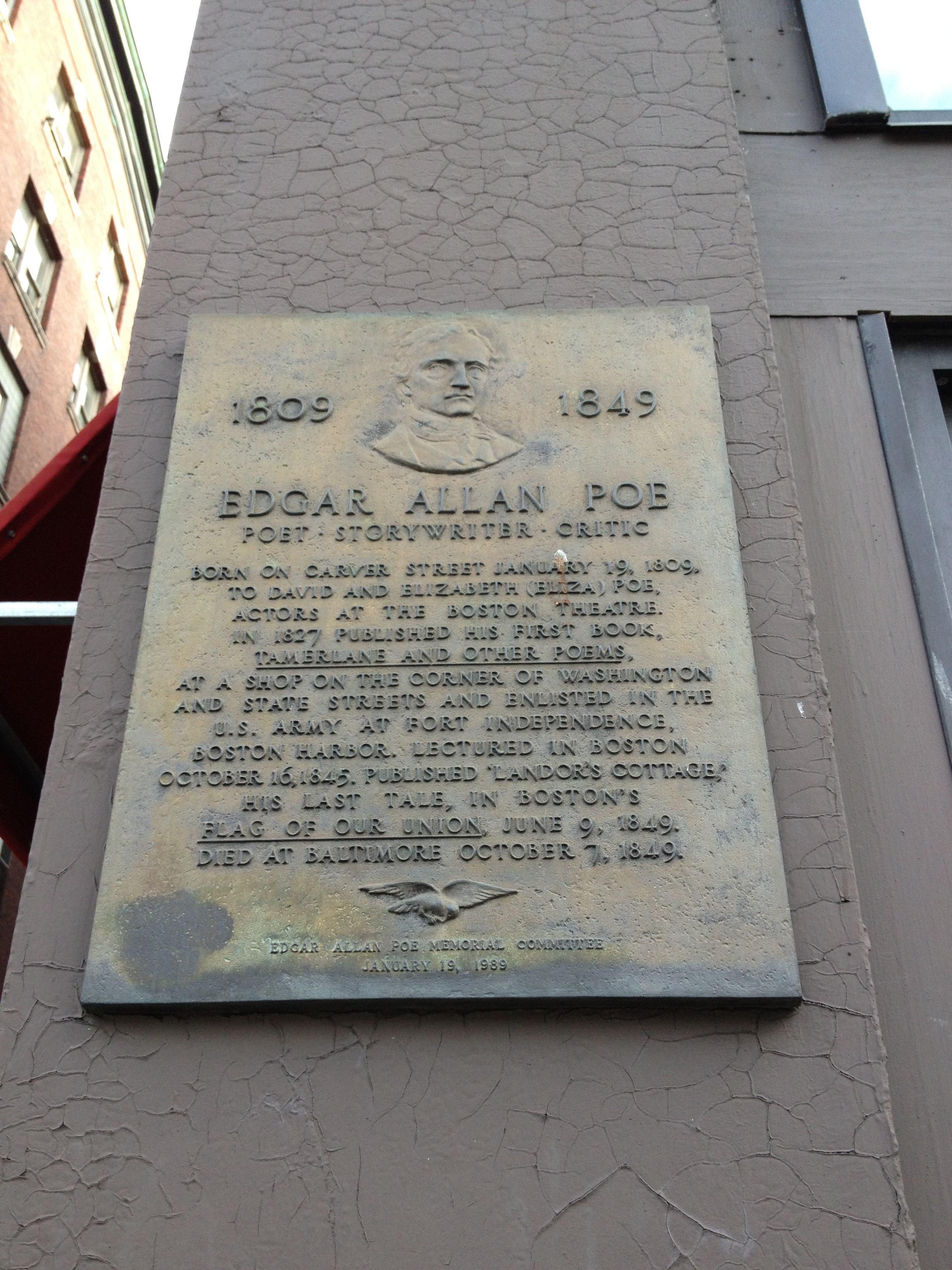
Apart from sharing a “middle” name, I would never dare compare myself to Edgar Allan Poe. Yes, I dabble in the literary arts, but every acolyte recognizes a true priest when he sees one. So as my train pulled into Boston, a city that has deep emotional resonances for me, I decided to stop and see where Edgar Allan Poe was born. The actual site is now a parking structure, an unexpected parallel between our emerging universes. All of my childhood homes, with one exception, are now parking lots. Standing at the foot of the memorial plaque near Emerson College, I reflected on my Poe year. I visited his college room at the University of Virginia in February, his one-time apartment in Philadelphia in March, his burial site in Baltimore in August, and now his birthplace. Not in any chronological order, but a voyage of discovery nevertheless.

This is the essence of pilgrimage. It is not rational and not really practical, but it is something people do. With religious intensity. I am in Boston as part of my secular job, but the city has sacred associations for me. I met my wife here, and that single event has changed my entire life. Boston will always be the place where something extraordinary happened to me. Poe did not like Boston, but for me it is the eternal city. Even the places with negative associations stake claims upon us. Over the weekend a friend posted a picture online taken before combat forced his evacuation from Vietnam many years ago. I kept coming back to that picture throughout the day. Lingering. Staring. Even though I’d never been there, it was like place had the ability to haunt those who’d even dared to look.

Poe and my friend are both writers who’ve drawn me into their worlds. What better way is there to learn that the universe is indeed infinite? Looking out my window at a Kenmore Square I recognize only by the giant Citgo sign that shed its garish light on many an evocative student night, I realize even eternal cities change. The last time I was in South Station I was saying goodbye to the woman I hoped, but did not know, would become my wife. Almost as if on cue, ” Lola” by the Kinks spills out of a local store as the Citgo sign flickers to life over the scene of my coming of age. In Boston I will always be twenty-three, wars will be long over, and Poe will remain alive forever.


The King’s Bible

Thumbing through last week’s Time, I found a Bible. Actually, stories of religious interest appear frequently in Time, but this was one of those small blurbs of human interest. It appears that Elvis Presley’s Bible just sold for $94,600 in the UK. Of course, Elvis was known for his gospel recordings as well as his formative role in rock-n-roll. A boy from the south in those days would have known his Bible. What struck me as worthy of comment is the reason the artifact was priced so high—not because it is a religious book, or the putatively divine content, but because of who once owned it. The Bible is a common enough item—billions have been printed—and in our world of value based on rarity, it is hardly a specialty item. In fact, they are often given away.

We have all felt the draw of fame now and again. We wonder what the lives of the rich and famous are like. Sotheby’s and Christie’s thrive on people wanting to possess articles from their deceased heroes. Studies have been conducted to demonstrate just how much laundering devalues clothes worn by both the famous (bad) and infamous (good). In the case of a Bible, perhaps one is put in touch with the spiritual residue of the owner. According to Time, Presley scribbled many notes in his Bible. Perhaps there is some eternal message there? A message untainted by years of study. A message from Graceland.

The King (of kings?)

Elvis Presley was not acclaimed for his great intellect. He had a singing voice and swinging hips that changed an entire culture, but his was not the world of the library and study. Naturally it is the more flamboyant that capture the imagination of the largest numbers. I can imagine the (a) Bible of Rudolf Bultmann, Charles Briggs, or William F. Albright on the auction block. There would be a flurry among some scholars, for sure, perhaps to pool their money enough to make a bid some order of magnitude less than Presley’s sequined presence of the auction table demands. Probably it would not even be worth the effort of the auctioneer. After all, no matter what doggerel he might have scribbled in the margins, the King always outranks the mere pawns.


A Cougar’s Mother

While on a stroll between appointments at Indiana University in Bloomington, I came across a tree with flowers laid underneath and a memorial plaque at its base. I glimpsed the name Mellencamp, and for a fan of rock, it didn’t take much imagination to tie it to John Cougar. Indeed, the memorial is dedicated to his mother, an artist, who died earlier this year. I first came to know of Indiana University because of music. I married a musician who, like myself, had to sacrifice a career doing what she loved in order to “get by.” Although she hadn’t studied at Indiana, my wife knew the reputation of the campus well. At a sunny moment between appointments I sat outside one of the music buildings listening to students practice through the open windows and read about Marilyn Mellencamp. An article in a local paper explains that this week an exhibition of her art is on display in Bloomington. When I read the quote from Waldron Arts Center Gallery Director Julie Roberts that the arts “are viable ways to make a living and they are vital part of being a happy and alive person,” I felt a renewed sense of hope. There are others, it is clear, who see that the arts are called the humanities for a reason. In a culture where only money matters, there is no culture. Think about it.

Since the industrial revolution we’ve been told that the measure of a human is how much money they are able to make. Something profound has been lost since then as great universities cut programs for the arts and humanities while business departments build new facilities. Talk about gaining the world but losing your soul—business cattily replies, “I have no soul.” While John Mellencamp never rivaled the biggest bands for income, his work, particularly Scarecrow, is full of human empathy. I listened to that album over and over in 1985, recounting the farm crisis and the demise of those not driven by corporate greed. And looking at this maple tree I wonder when the last time was that someone honestly mourned the death of a corporate mogul.

It is the mark of a deeply schizophrenic society that we all aspire to what fails to inspire. Our economy is driven by the material—money—and not that which speaks profoundly to what it means to be a human being. We keep the arts alive because the wealthy require something worthwhile upon which to spend their lucre. Is not buying art buying part of another person’s soul? We can’t define souls materially, science must conclude they don’t exist, but every time you say, “I feel happy/fulfilled/satisfied” you belie the facts. Souls may not be material, and they may never be found in laboratories. They are nevertheless part of the human constitution, and I for one, would lay a flower under a tree and know that it is more than just fertilizer for the next growing commodity.


Last Genesis

Roger Corman was famous for saving a buck on his movies. When it came to low-budget sci-fi and horror, he could be counted on to stretch pennies into dollars. The B quality with which this impresses most of his films makes them all the more addictive. I watched my share growing up, but I’m still discovering ever more as an adult. The Last Woman on Earth is one I recently found and the religious implications of the film were so obvious that they seemed worthy of a little exegesis. The plot is simple enough, three skin-divers, a man, his wife, and his lawyer friend, are the only survivors of an anoxic episode. When Harold Gern (the man) wonders what happened his friend Martin says, “A new and better bomb, act of God, it doesn’t really matter.” The destruction of humanity is a time-honored divine pass-time, so no one considers the statement blasphemous.

Naturally enough, within a short time Martin starts to feel that Harold’s claim on his wife Evelyn (clearly, by choice of name, an Eve figure) is a bit unreasonable under the circumstances. Biology is, in this instance, the misogynic element as the men increasingly step up their hostilities. Evelyn eventually decides to run away with Martin, but Harold is in hot pursuit. The entire episode takes place on Puerto Rico, and so there are a limited number of places to hide. Martin tells Evelyn to await him in the church, which she dutifully does. Harold catches up with Martin and blinds him. Martin finds his way to the church and when Harold comes in Martin provides a final homily (including some lines from Alice Cooper’s “School’s Out”) declaring that there is no more God. He then dies on the church floor.

The movie ends with Harold and Evelyn leaving the church to try to learn what life is all about. Reading up on the movie, I learned that Corman wanted to keep the costs down so that the writer of the script was cast as Martin for the film. The script wasn’t finished before they started shooting. Nevertheless Robert Towne’s story brings the overall trajectory back to an updated Garden of Eden story. Puerto Rico, a tropical paradise, where the one woman is Eve, is the scene of the first sin—the murder of Martin by Harold. Throughout the movie, Martin is clearly the Abel character while Harold is selfish, unsympathetic, and emotionally absent. Cain wins the epic struggle and God, we are told, is no more. Not the most profound of story-telling, but the themes and concepts are very much biblical. And when the final couple leave the church the remainder of world history is set to begin. I’d gladly give this one a B.