Strawberry Meatloaf

Strawberry ice cream. It tastes like summer in a waxed cardboard carton. While having a small dish of it recently it occurred to me that strawberry is my favorite flavor of ice cream. This was the first time I’d had any in perhaps twenty years. I am not diabetic, but I am extremely phobic. I avoid the things I like out of fear. There always seems to be plenty of bad to go around, but I’m always afraid the good will run out. Waiting two decades for something I like is a small price to pay. This same phenomenon accompanies my musical tastes. When I listen to music, generally, I listen to music. I’m not a background music personality. Life has been so busy lately, however, that I don’t have the time for music that I would like. I bought a CD (yes, they still make them) of Meat Loaf’s Hell in a Handbasket shortly after it was released. I just listened to it over the weekend. (It has been that busy.)

Since I had a lot to accomplish last weekend I listened to the CD as background music, violating my own standards. That meant that I had only impressions of what was going on rather than the full impact. Immediately, however, I was struck at how socially conscientious this album is. I realize that Meat Loaf is primarily a singer, performing songs written by others. Nevertheless, it seems that a singer must have some investment in the songs they perform to put the kind of empathy into them that Meat Loaf does. The theme that seems to be running through these selections is that violence and greed have become our paradigms, and we are heading to, well, Hell in a handbasket.

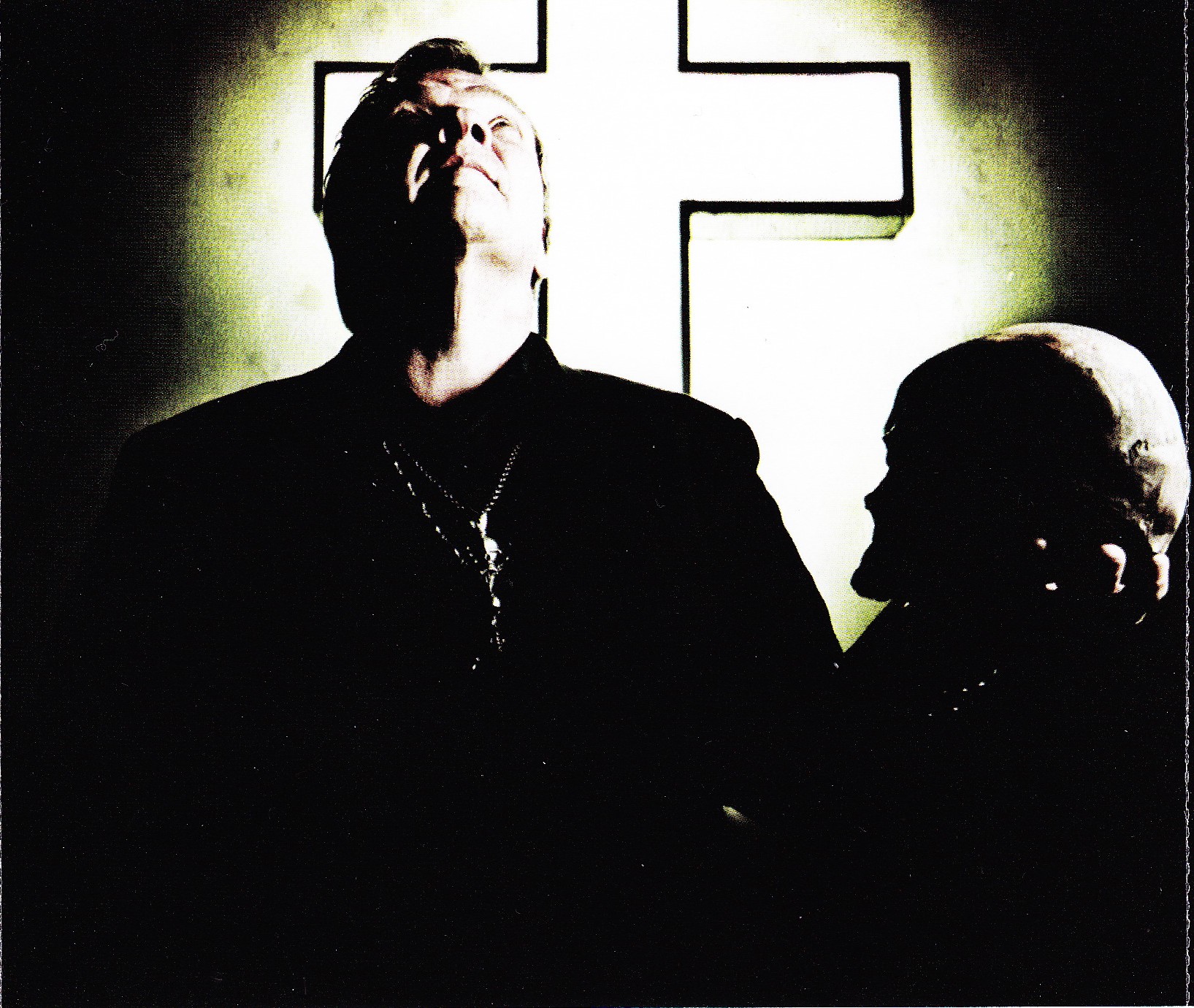
I’m old enough to miss album art. I don’t miss the hiss, skips, and pops of vinyl, but the square foot of album art was often a gift. The album art is part of the message of the music. Inside the back cover of the Hell in a Handbasket CD, behind where the disc is mounted, is a gothic photo of Meat Loaf holding a skull, Hamlet-like, before a large cross. Around his neck is a chain that holds another skull, and, with a bit of imagination, perhaps a small crucifix. (Like most people who still remember album art, my eyes aren’t what they used to be.) Something is happening here that I can’t quite define. Jim Steinman is not on this album, and my fear seems to rise. Then I listen and I hear my social consciousness being in some small way affirmed. It may not be Wagnerian rock, which I fear is rapidly running out, but it is worth another listen when I’m able to set aside the world for maybe an hour or two.


Do Not Enter

“Sign, sign, everywhere a sign, Blockin’ out the scenery, breakin’ my mind,” so runs the chorus of Five Man Electrical Band’s only hit, “Signs.” It is hard to imagine a more righteous hippie classic. When I was a younger man, I believed in signs. It made sense that if the world were unfolding according to a divine plan laid out for good, Christian folk, signs should be scattered throughout the world, pointing us in the direction we should go. I used to look for them assiduously. As I grew a bit more cynical with the years, and learned a bit more about science and probability, the idea that coincidences bore anything more than incidental meaning became a fixed paradigm. Every now and then something happens to make me question my assessment.

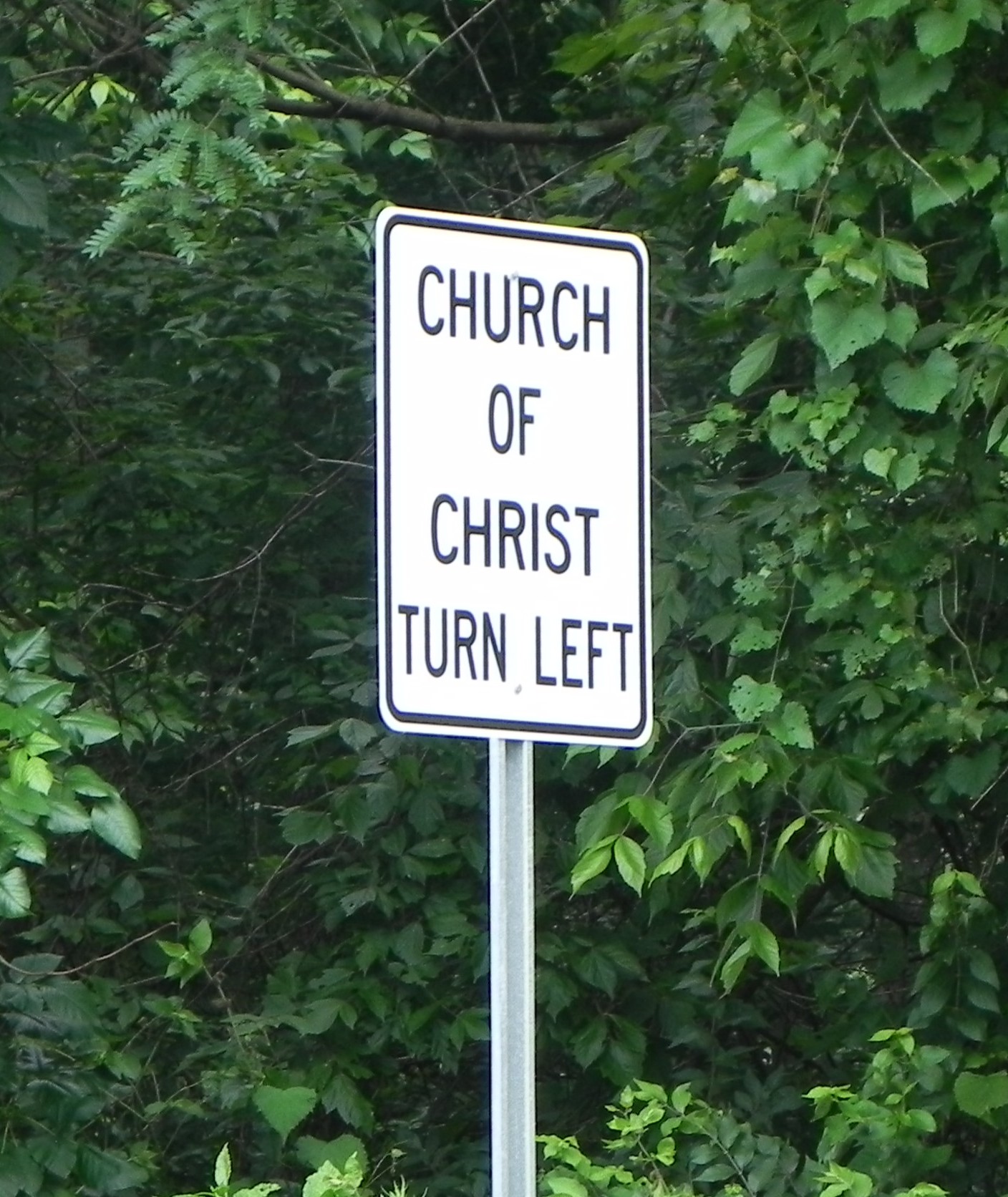
On my way into New Brunswick recently, I passed a sign. I used to drive this road several times a week when I was teaching at Rutgers, but I hadn’t been this way in a few months. I knew there had been construction going on, but a new road sign caught my attention:

Now, I’m one for finding the significance of buried statements. Here was a bold-face declaration that seemed to come directly from the almighty. In a day when Christianity is portrayed as an intolerant, bigoted institution, the simple truth of a road sign might actually bear considerable significance.

Throughout my life I’ve taken road signs a little too literally. When I worked at Nashotah House and I spied an orange sign on the road toward the seminary reading “Detour Ahead,” I knew that it was personally meant for me. The fundies from my college days frequently exploited the One Way signs liberally scattered across our nation, pointing their arrows into the mythological air. Anybody, of course, can make good use of a stop sign. A sign miraculously appearing that spells it out: Church of Christ Turn Left, can be nothing other than a divine message for a weary world. At least for those who still remember hippie bands with a certain fondness, and who don’t take themselves too seriously.


Children Shall Lead Them

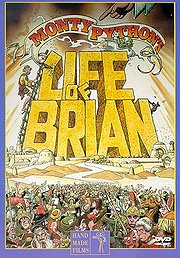
One of the perks of moving to New Jersey was landing in a town with strong support for the arts. Every time I attend a middle or high school concert, I consider how the old image of painful evenings of parents patiently pretending to enjoy the music has ended. The kids in this town could be professionals. If I close my eyes, I forget they’re all under nineteen. Last night at a school concert one of the pieces was “Always Look on the Bright Side of Life,” Eric Idle’s chestnut from the Life of Brian (now featured, I hear tell, in Spamalot). I first saw the Life of Brian with some trepidation while in seminary—I had been sounded warned that it was a profane movie, making fun of Jesus. Considering that all the actual references to Jesus in the movie are quite positive, I eventually realized what all the fuss was about. The movie doesn’t make fun of Jesus, it does, however, show the laughable nature of those who follow a religion blindly. This, I gather, was the real root of the problem.

Next to this fun piece, the concert also included several pieces taken from originally sacred contexts such as Mozart’s Dies Irae and settings of Veni, Sancte Spiritus and Ave Maria. Spirituals, likewise, are a perennial favorite. Performed along next to these pieces of religious origin were also decidely secular pieces such as “Scarborough Fair” and the Beatles’ “Hello, Goodbye.” In concert the sacred and profane blend beautifully. Perhaps there is a paradigm hidden in plain sight here. Religions need not be defensive and unbelievers need not attack them. The world is surely big enough for differences of opinion.

Music has a power that sometimes frightens me. I don’t often address it in my blog because of how much it affects me. Theorists often note that music is part of nearly every religion ever invented—we know that something special is going on when we hear it. And music has the ability to move large groups of people simultaneously. I’ve not attended many professional concerts (the last one was Alice Cooper in Atlantic City back in 2008), but no matter how secular the artist the experience is profoundly spiritual. I’m not sure I can adequately define what that means, but when it is felt there is no mistaking it. So maybe that’s why school concerts have such power. It seems that schools that support the arts also tend to have excellent academic records as well. The truth is hidden in plain sight.


Tattered Dreams

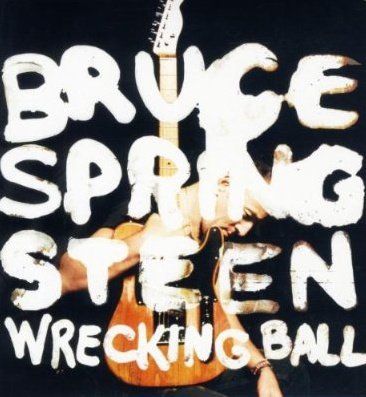
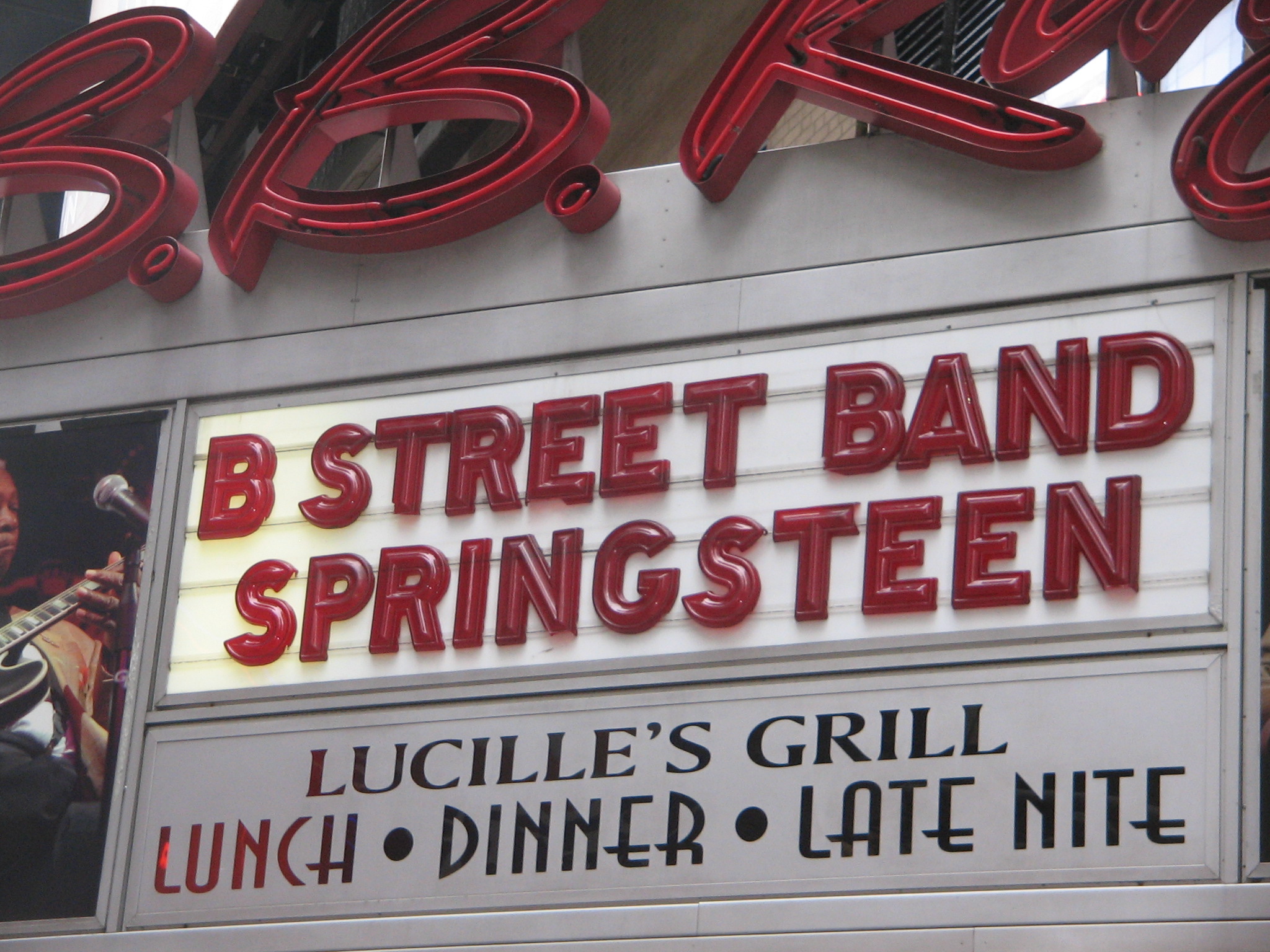
If I sometimes wax rhapsodic about Bruce Springsteen, it is partially because the world is sorely in need of believable prophets. I’m not the only one to notice this phenomenon. Writers on American culture and religion frequently cite Bruce, and his message has been called everything from a prayer to a gospel. The fact is he, like the best of prophets, is one of us. To those of us who grew up in working class families, Bruce seems like the torchbearer who encourages us to keep going. We may end up still in the darkness, but we’ll be a little closer to the light. Sunday’s paper has a review of Bruce’s latest concert tour kickoff, and there is some sadness there at those who’ve been lost. Although I haven’t yet had time to listen to Wrecking Ball, I did read the tribute to Clarence Clemons in the liner notes. It reads like a secular liturgy.

The word “liturgy” means “the work of the people,” or some such concept. And that is what Springsteen has always projected, the honor, the angst of the working class. There is trouble in paradise, from Cadillac Ranch down Thunder Road to My Hometown. Through it all, despair is always tinged with hope in, for lack of a better word, resurrection. In times when many artists focus on the escape, Bruce reminds us that hardship is real. Escape may be a possibility but even Born to Run still ends in New Jersey. Unlike many, the Boss is not willing to give up on this humble state. Perhaps the most diverse mix of people in the country, New Jersey is the American dream, scars and all.

Although his music has brought him fame and wealth, Bruce has not forgotten whence he came. Social inequality has been highlighted throughout his oeuvre, from the late 70’s on, and guess what? We’re still there. Like children of alcoholic parents we’ve grown used to promises being made that will never be kept. After reading what contenders for the presidency are saying, I cower, shivering with fear. I’ve never been one to believe a good beating is the way to solve anything. How is it possible that we’ve come so far only to have left so many behind? The American dream is indeed tattered, a mirage thrown to those slowly dying of thirst. If we’re going to make it through difficult times, we’re going to have to do it together. I guess that’s why I keep coming back to Bruce. In a world where lies are the coin of the realm, the words of true value can still be found, even in New Jersey.


Imagine Thanksgiving

Although mildly jetlagged and slightly incoherent, a promise is a promise, so I took my family to Manhattan to see (the upper half of) the Macy’s Thanksgiving Day Parade. Commercial and flashy, it is difficult to conceive of a more American expression of holiday wonder. It kicks off the secular Christmas season and the parade forms the background noise to many a feast preparation in the United States. Not living in the city proper, there are limits to how early public transportation can get one into town, so by the time we reached the Upper West Side, the crowds were pretty intense. We met our friends at West 72nd Street and tried to see the floats and balloons over the heads of a sea of humanity; if you could glimpse the flashing tip of a tuba, we counted that as seeing a marching band. The weather was cool but nice and in the dense crowd I kept my hands shoved in pockets, not always sure they were my own pockets, and waited for the next tall or hovering parade feature. In-between times I stared at the building to our left until a friend informed me that it was the Dakota. The site of John Lennon’s slaying and the exterior used in Rosemary’s Baby, where, presciently, a murder victim was laid out on the sidewalk not far from where Lennon fell. Suddenly the parade took on a profundity that betrayed the levity of the gas-filled characters floating by.

Mark David Chapman, a delusional, born again Christian, had spent many hours waiting about where we were suspended in the crowd. Thinking himself Holden Caulfield of the Catcher in the Rye, he murdered Lennon creating a saint and a demon simultaneously. Perhaps John Lennon’s ashes are still floating about Central Park, and as we walked through, the exterior of the Teutonic Dakota took on a haunting quality. Lennon was a lover and a protestor and an experimenter, and scenes from Rosemary’s Baby of Satanists smoking cigars also hung in the air. The shop window displays on Fifth Avenue drew great crowds, but as we drifted toward 51st Street, we decided to stop into Saint Patrick’s Cathedral, along with the surging mass of the faithful.

Cathedrals are best enjoyed in quiet solitude. Nevertheless, we followed the pilgrims through the long nave, stopping to glance at the numerous chapels with statues along the way, each with a collection box, securely locked, asking for donations. And people say Christmas is commercial! Want to pray through your favorite saint? Please deposit a quarter. Preferably two. Or more. Their budget in candles alone would support many a smaller church throughout the nation. Advent begins this weekend, so the crèche was set up at the front with life-sized figures of the usual players: holy family, shepherds, wise men. And collection box. There was no baby Jesus and when my daughter asked why I said, pointing to the collection box, apparently they were saving up to purchase one. Keeping Christ in Christmas? Indeed. All those bronze, life-size Pope head statues can’t be cheap. John Lennon was cremated and his ashes scattered, leaving no trace. Popes are cast in bronze. Yes, John Lennon was wealthy, and once quipped that the Beatles were more popular than Jesus. What is the truth of the matter? Looking at the façade of the Dakota, I know where I would rather light a candle.


Inauguration

Religion is an all-consuming beast. I suppose that goes with the territory of making universal claims. In the light of the already ponderous influence religion has had on the selection of presidential candidates this year, I recently re-read Abraham Lincoln’s second inaugural address, delivered not long before his assassination. The Civil War was not yet quite over, and Lincoln knew the horror of the situation. He famously said:

Both [sides in the conflict] read the same Bible, and pray to the same God; and each invokes His aid against the other. It may seem strange that any men should dare to ask a just God’s assistance in wringing their bread from the sweat of other men’s faces; but let us judge not that we be not judged. The prayers of both could not be answered; that of neither has been answered fully. The Almighty has his own purposes. “Woe unto the world because of offences! for it must needs be that offences come; but woe to that man by whom the offence cometh!”

Lincoln, never a regular church member, knew his Bible but also knew the soul of his country. A century later Bob Dylan would compose “With God on Our Side,” in protest to another war where divine backing was assumed. When a major undertaking is launched, the Lord is always on the guest list. The problem is, God can’t sit on both sides of the table.

The religicizing of politics is a dirty business. Religion plays so heavily on the emotions that it is, as history has shown, a truly unstoppable force. Even so great a conservative as Barry Goldwater felt this mixing of religion and politics an unholy cocktail. “I am frankly sick and tired of the political preachers across this country telling me as a citizen that if I want to be a moral person, I must believe in A, B, C, and D. Just who do they think they are?” (The Congressional Record, 16 September 1981). So here we go again.

Religion and politics are a dangerous mixture. In a culture as religious as that of the United States, the potential for (and realization of) disaster is great. Think of the lives lost based on the religious outlook of our last president! Over the past few decades we’ve witnessed a parade of preachers, Fundamentalists, believers in New Religious Movements, and quasi-certifiable candidates march across our political stage, and yet our doors are closed to those who refuse to make public statements about their intimate relationship with an ancient savior. For the Bible tells us so. If we believe the preachers. Those of us who don’t will be putting on our Bob Dylan records and reading the wise words of Abraham Lincoln.


Conversation with Solomon

“The rights and interests of the laboring man will be protected and cared for, not by labor agitators, but by the Christian men to whom God in his infinite wisdom has given control of the property interests of the country,” wrote George Baer of the Philadelphia and Reading Coal and Iron Company. In 1902. Along with Melville I’ve been thinking about old Ecclesiastes and his gloomy prognostications. The writer of this neglected book of the Bible claimed that nothing was new under the sun; what is has been before. I read the quote above in David DeKok’s Fire Underground (on which more later). I thought of Occupy Wall Street and the supposed great wisdom of the “Christian men” that God “himself” has appointed to towers of wealth for our benefit. As long as we keep our mouths shut and our hind-quarters out of Zuccotti Park. The data, Old Solomon, I must admit, are depressing. The staggering wealth of the top one percent is beyond unconscionable. Solomon? Are you still listening? After all, as one of the Lord’s chosen, Solomon was also a king. In his day, according to the book of Kings, silver was as common as the dust in the streets. Is that rain, or just drool from the towers of power?

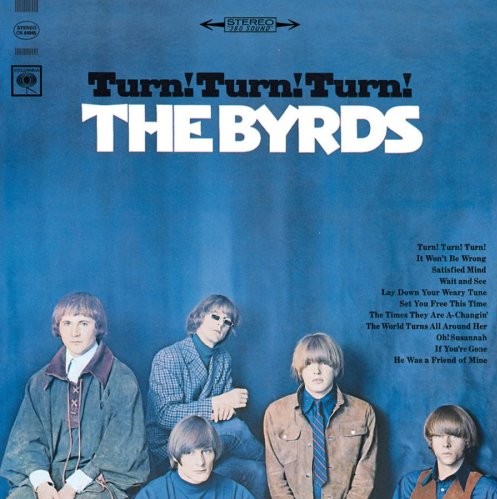
Old Ecclesiastes said the more that things change, the more they stay the same. He also inspired the Byrds’ “Turn, Turn, Turn.” As a society we have become reluctant to turn. Where did all that wealth go, Solomon? Did it not go to the temple and the palace? Seems there was a Religious Right even back then. As soon as Solomon died the common folk revolted. The chosen people split into two kingdoms that were never again reunited. Turn, turn, turn. The Christian men to whom God has given control have abandoned their posts. They’ve taken the cash and shared with their friends. Yes, America has kings. When the disparity is so great no other name applies.

“Cast your bread upon the waters,” Old Ecclesiastes says, “and it will come back to you in time of want.” I doubt that Solomon was ever unemployed. After working for “the Christian men” for over a decade, I was cast out on the waters, never to return. My stint of unemployment wavered in and out for six years. And I am one of the lucky ones. In that time I don’t recall feeling any wealth trickling down. I sure spent a lot getting the requisite degrees for a job that never materialized. So I sit down to read Ecclesiastes. Those who are addicted to wealth and power simply never took the words of the old sage to heart. We can excuse them, I suppose, since most clergy ignore him as well. When in need of some honesty, it is nice to know there’s a book in the Bible that is unafraid to utter the truth.


Life’s Soundtrack

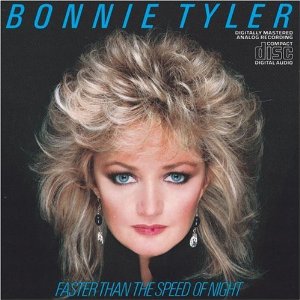
Calvin once said to Hobbes, “I thought my life would seem more interesting with a musical score and a laugh track.” In many ways, our lives do have soundtracks. From my youngest days dramatic music has moved me and Jim Steinman always seemed to know just which buttons to push and strings to pull to bring it off. Growing up in humble circumstances, however, I missed the whole video craze that accompanied MTV, back when MTV still showed music. Friends would tell me about the great videos I was missing, and I let my imagination run wild. Recently, however, a friend pointed out the video of Bonnie Tyler singing the Steinman hit, “Total Eclipse of the Heart” on YouTube. This particular video brings together so much of my adult life that it seems like Steinman spent a few years inside my head. Well, maybe not that much. The song came out just as my first love was breaking up with me, back in college. I attended Grove City College, a campus that, despite its pristine Christian image, can be very gothic at night. The first chords of that song are always like a stake through my heart. Few experiences in life are as dramatic as unrequited love. Just queue up that song and I’m a college junior again.

The video, however, is set in an old-style boy’s boarding school. The setting is not far off from the antiquated campus of Nashotah House seminary, gothic both by day and by night. The imagery of the video employs English trappings of cassocks and surplices and candles along with clandestine romps in the night. Seminaries, in my experience, leave many secrets in their shadows. My heartbreak as an undergraduate cannot compare with some of the drama I witnessed both as a student and a professor in seminary. The pious are often among the most passionate of people, but they must learn to be actors before their congregations. Such inherent conflict is fertile ground for intense drama. The video plays this out with the headmistress (Tyler) fantasizing about her young male charges in a highly ritualized, yet anarchic setting. Too close to the truth.

The sacred and the profane lie close together and may be teased apart only with difficulty. The experience of buying an LP when I was a teenager was an investment for not just the sound, but also the album art, the aroma of the vinyl and ink when the plastic wrap first came off, the feel of the heavy paper sleeve housing the disc. It could transport me to another place. Today the iPod reduces the sounds down to background noise, not a soundtrack. The drama we create for our lives is efficient and convenient, but in the end, plastic. Perhaps it is Calvin’s laugh track. No matter. Even if it is on YouTube, with its electronic sound, that video will take me back decades in time, and will be one of the repeated songs on the soundtrack of my life.


Springing up Moses

“Springsteen’s work and person invite analysis in terms of the biblical themes of exodus and promised land,” so wrote Kate McCarthy in “Deliver Me from Nowhere: Bruce Springsteen and the Myth of the American Promised Land” (conveniently in a Routledge title, God in the Details: American Religion in Popular Culture, second edition, 2011). Having just finished Bruce Feiler’s America’s Prophet (not Routledge), I am attuned to the exodus theme at the moment. Feeling an unaccountable, personal connection to the other Bruce (Springsteen), I have felt the sense of exile in his songs since I was a teenager. I had no idea who Springsteen was when “Born to Run” made it to the charts. Living in a nowhere town at the time (population less than 1000), I felt the burning need for a personal exodus that eventually landed me in the largest city in the country. But still the sense of exile remains.

Lest readers be too confused, it might be politic to point out that the biblical concept of exodus likely had its origins in the Exile. Without rehearsing too much history, the Babylonian Empire, under Nebuchadrezzar, conquered Jerusalem in either 587 or 586 BCE, leading to the deportation of a significant number of Judahites who would become, over a generation, the “Jews.” These people were exiles, forced to live under the watchful eye of a political overlord with whom they shared only the most basic of heritages. Their religions had grown apart over the centuries, and as the Jews began to think back on their homeland, the exodus came to mind. Archaeological evidence for an exodus of biblical proportions (literally) does not exist. Why, then, the story of the exodus? Did not the desire to return home involve crossing the desert, with a divinely appointed leader? One who carried the law (Torah) with him? When Ezra led returnees home in the fifth/fourth century, he had the Torah in hand. Like Moses, he led the people out of bondage under the Persian plan. Exile and exodus are twin children of oppressive regimes.

So, how do ancient desert wanderers come into the orbit of a very damp New Jersey, and in particular, it’s arguably most famous resident? Alienation is home. Very few teenagers don’t understand this. As we attempt to integrate them into adult life, something vital, essential, is left behind. Consider all the long-haired artists of the ‘60’s and ‘70’s who still perform, now shorn to conservative acceptability and sometimes churning out very conventional songs. The fire has gone out. It is difficult to escape exile when you carry it with you. That’s something I think Bruce understands. His look may have changed, but his message has not. America has always been a haven for exiles. Simply because an exile moves into a new setting, however, does not mean that the promised land has been reached. As McCarthy seems to be saying, and as I have often felt, the promised land disappoints. The seeking is what must persist. America may have its Moeses, but it will find, from atop Nebo, that the path is where your feet already are.

Look carefully at your prophets!


Livin’ On a Prayer

Am I the only one who finds it disturbing that Neo-Con politicians are naïve enough to believe that prayer will solve all our problems? Where was God during the Bush years, for crying out loud? And yet headline after headline speculates about Texas Governor Rick Perry’s prayer-fest scheduled for Saturday. What is more disturbing than the lack of imagination on the part of would-be candidates is the sheep-like following on the part of a large segment of the electorate. If God is going to step in and take charge, he had a great chance back on May 21 and refused to pick up the option. If God was behind politics, why did George W. Bush fail to find Osama Bin Laden? If God is running things, why are so many unemployed? Ah, but the religious pundits have a pat answer: America is a sinful nation. What it takes is religion, Texas-style.

In the many years I spent at Nashotah House, the majority of our students hailed from Texas. They represented the conservative hard-line and doctrinal strappadoes that caused much suffering but still somehow didn’t placate an angry God. That, of course, says more about Nashotah House than it does about Texas. Perhaps it is the logical evolution of a country that began with prominent ministers gleefully describing sinners in the hands of an angry God. Nearly three centuries later and we are being told God is still angry. Thou shalt not hold a grudge, eh? The problem seems less about sinful folks just trying to get by (a la Bon Jovi) than about politicians using their religion to get elected. Centuries down the road it will be the topic of some new series of History’s Mysteries that an affluent, educated, and generally forward-looking nation cluttered its governing bodies with politicians who believed the answer to complex problems is to bow their heads and tell God how to fix it. Are we really half-way there, or have we spread our arms to embrace Jonathan Edwards once again?

In MSNBC’s article on Rick Perry’s prayer day, it is noted that the book of Joel is cited as an inspiration for the event. For such a brief book, Joel has been at the forefront of a ton of damage wrought by prooftexters. Joel wrote three brief chapters about a locust infestation for which the suggested response was prayer. One wonders if Rick Perry simply prays when the termites begin to gnaw on his expensive home, or does he call Ortho instead? Joel was truly old school. The locusts in his day meant literal mass-starvation. No chemical romance to solve the problem there. Unfortunately we don’t know how that one turned out—Joel doesn’t say. I’m just glad that Governor Perry hadn’t been reading Psalm 137 when inspiration struck, and can I get an amen from the pro-lifers on that?

Ricky used to work on the docks?

P.S. Matthew 6.5.


Who Made Whom, Now?

John Lennon has great currency, in part, because he is a martyr. Music has moved on since the ‘60s and ‘70s, but aging Boomers still like to quote him, especially his song “Imagine.” In an article written for the Los Angeles Times, reprinted in the local Sunday newspaper, J. Anderson Thomson and Clare Aukofer cite “Imagine” as the statement of what a world “that makes sense” looks like. I applaud their idealism. Citing psychological and sociological work that has been done over the past decade in the attempt to unravel “homo religiosus” they entitle their article “God didn’t make man: man made gods.” Much of the evidence they cite has been discussed elsewhere on this blog, but the overarching issue—whether this explains human religious behavior or not—remains open. In other words, if evolution provided us with religion, it must have some survival benefit and humans are not easily going to dismiss it.

Admittedly, the evidence for human conceptions of God arising from the need for close connections in community is pretty convincing. Nevertheless, the issue of whether there is a God or not will never be answered by empirical observation. As I tell my students, belief is not based on empirical observation. We do not yet know why people believe, and even if we find the right node, neuron cluster, or sensory stimuli, there will always be those who insist that the hardware is sparked into action by the unseen Other outside the system. It is the classic chicken or egg debate, taking place in that henhouse in the sky. The problem is that God is more like the rooster in that scenario.

The human brain is an endless source of fascination. Science has given us a sense of wonder about our own on-board computer, but it has not managed to capture the sine qua non of the totality of the experience of owning one. Scientists also read, go to shows, make love and eat fine meals for the enjoyment of it all. But as Cipher says in The Matrix, “I know this steak doesn’t exist. I know that when I put it in my mouth, the matrix is telling my brain that it is juicy and delicious. After nine years, you know what I realize? Ignorance is bliss.” Our perception of the world as a stable, unmoving center of existence is an illusion. Science has revealed an even stranger reality involving equations that used to haunt my nightmares. Should God ultimately be reduced to formulae, true believers will find another entity to name as the divine. “Imagine… no religion too”? As long as humans are humans such a world remains pure imagination.

Imagine


The Big Man

“When the change was made uptown/And the Big Man joined the band…”

Clarence Clemons (from WikiCommons)

Among the earliest markers of religion in human culture is the advent of music. While still disputed, bone “flutes” from about 40,000 years ago seem to indicate that early humans knew the value of music. Driving around now that the weather has warmed up, it is clear that people still find music so important that they like to share it from their open car windows at a volume I find uncomfortable even across the street. Like religion, music is an intensely personal aspect of life. Although I mention bands I like occasionally in this public forum, I never parse my music tastes too much because they are a little too revealing. With Clarence Clemons’ death yesterday, however, it is appropriate to pause and give my respects.

Those who know me sometimes wonder at the fascination I have with Bruce Springsteen; I am not an idol-worshipper and not all of Springsteen’s work appeals to me equally, but he represents an appreciation of the ordinary person. What first drew me to his music was the fact that he understood blue-collar mentality and angst generated by an unfair society. In an interview on his Born to Run special edition, Springsteen notes the seminal change that Clarence Clemons made in the E-Street Band, as reflected in the opening quote from “Tenth Avenue Freeze-Out” above. The playing of Clemons’ saxophone was so distinctive that even my very untrained ear could often pick it out on other artists’ albums even before reading the credits.

The E Street Band, of course, changed over time and lost a first-generation member with Danny Federici’s death three years ago. Although Bruce Springsteen is alive and well, and still active in causes to help those who are victims of an uncaring system, the E Street Band will never be the same without Clarence Clemons. The old camp song says that music never dies, and that is a hope we can hold out for the impact of remarkable performers as well. When I walk into a classroom with kids who have no idea who the Beatles were and who’ve never heard of Alice Cooper, Deep Purple, or Pink Floyd, I feel my age. But it is okay as long as I can still listen to the music once I get home (I never play the stereo while driving—I prefer to concentrate on the music a little too much). It is like a religious experience. I am sure the cosmos is a more harmonious place for having hosted Clarence Clemons, even if just for a little while.


Born to Shun

Being of rather slight build, I have always held a natural antipathy toward bullies. I’ve always liked to believe that, were I in any position of power, I would care for those under my authority. Emulating this ideal as much as possible in the classroom seems to have made me a popular teacher. The message we send our young, however, shouts at decibels I cannot hope to achieve that throwing your weight around is the only proper way to govern. And some governors carry considerable excess weight. New Jersey used to pride itself on its educational system, a system that is currently being gouged in nearly every possible way by an insatiable governor. And now he is taking shots at Bruce.

I seldom write about my admiration for Bruce Springsteen because it is a very personal matter with me. Having grown up in a working-class family, I discovered Bruce at a fairly young age and I suspected his concern was authentic. That suspicion has grown over the years as he has campaigned for the common worker, never forgetting where he began. Now Chris Christie is attempting to besmirch the Boss. Using the newest entry in the Neo-Con lexicon of swears, Christie has leveled the “L-word” at New Jersey’s native son. Seems liberal is always a bad thing. Good thing Jesus – the original liberal – isn’t here or the Neo-Cons would nail him as well.

I'll see you after school

The Neo-Con movement delights in out-shouting the competition. Shut down National Public Radio because if reason is broadcast on the airwaves some people might end up looking ridiculous. Let us have no dissension here! If you leave the wealthy alone, they will leave you alone. Seems that “conservative” social responsibility was crucified some two millennia ago. Instead of Christ we now have Christie. The devil himself, however, would make a more compassionate governor, if we could ever get him away from the endless tea parties of perdition that occupy all his time.


Time Isn’t Holding Us

Ancient is much more recent than it used to be. Perhaps it has something to do with the two massive earthquakes over the last couple of years that have together sped the earth’s rotation by almost three microseconds. Perhaps. A more likely explanation is that excessive technology makes us soft. We expect new toys, new tech solutions on nearly a daily basis, and with the communications revolution, we are rarely disappointed. I wonder if we’ve forgotten how to help ourselves. This is especially evident in the lack of initiative I sense among many students. Of course, I am ancient.

When exam time rolls around, the present-day student requires a study guide. When I was a student, after dodging all the dinosaurs running around the campus, I never received a study guide for a test. If a test is coming, read, re-read, i.e., study, your notes. Maybe read a textbook? Nowadays a study guide is required for that message to be sent home. And then there’s the emails. Once the study guide is distributed (electronically, of course) the emails gush in asking what exactly I mean by this or that. Since I reiterated the point endlessly in class, accompanied by a PowerPoint slide with the answer writ large, verily, I roll my eyes and drop to my three-legged stool in dismay. Can it really be that college students require detailed answers in advance for a multiple-choice test of only 40 questions? Back in my day, a multiple-choice test was a gift that felt like sixth grade had rolled around again.

Sixth grade: what's he got in his hands?

Time, since Einstein, has been relative. And since I am an antiquity, I can perhaps be forgiven for citing Supertramp’s “The Logical Song.” As a studious young man, religious from epidermis to viscera, I was sent off to get an education. Years later, kicked out of the academy for good behavior, I see the wisdom of the lackluster 70’s band: “But at night, when all the world’s asleep, the questions run so deep for such a simple man.” The lyrics are easily found on the Internet. It is simpler than walking over to the CD rack to check manually. Back in my day, I would never have even imagined skipping an exam and then asking the professor what he was going to do about it in the next class period. Email, in this instance, is easily forgotten. I’ll get back to you once I engage the electronic lock to keep out this velociraptor (if anyone can remember back to 1993).


Crossing Italy

“Poor men wanna be rich, rich men wanna be king, and a king ain’t satisfied ‘til he rules everything” – sage words of a young Bruce Springsteen. Of course, “man” may well apply to institutions as well as individuals. According to a recent story in the New Jersey Star-Ledger, the European high court has ruled that it is appropriate for public schools in Italy to decorate their classrooms with crucifixes. While this may not seem unusual for the heavily Roman Catholic nation, indeed, the homeland of the church itself; nevertheless it reveals much of the nature of religion. Religions, like Springsteen’s human characters, want to take charge of everything. Partial rule just isn’t good enough in a business that deals with absolutes.

Not every citizen in Italy is Roman Catholic. Some are not even Christian. State sponsored schools bearing the insignia of the church’s glory days send a message that can be heard from the highways to the backstreets: Christianity rules! If we wheel the world around a few degrees further we will find similar rhetoric in nations like Iran, only the specific brand of religion has changed. The message is distressingly familiar: Islam rules! There was a time when the church could likely be called the only true superpower in Europe. We remember that time now as the Dark Ages.

As campaigns for next year’s elections in the United States are pumping up, we are hearing quite a bit about candidates’ religious convictions. That which used to be a private affair has become an emblem emblazoned on a flamboyant flag declaring “Gott und Ich” to the world. Worse, the religions are being used to score votes. Once in office, that religion will return to its flaccid state and politics will be business as usual. The populace, however, has trouble seeing through this. Religion is injected with such emotional freight that leaving it out of elections – or classrooms – is like abandoning a helpless infant. As they nail their crucifixes to the walls of public schools in Italy, I’ll be over here with Bruce surveying these badlands.