Dangerous Driving

It reminded me of the time my manager fell down into the basement.  It also makes me think I must be neurodivergent.  Yesterday we were helping my brother in New Jersey get some things in order in his house.  He lives about an hour and a half from us and when the GPS showed us our options to get home we decided to go shunpiking.  I find something atmospheric, and maybe a little haunted, about driving along roads next to a river.  We crossed into Pennsylvania just north of Trenton and followed “River Road” home.  This stretch of road, mostly highway 32, is almost impossibly quaint.  I’d driven sections of it before, but not the whole stretch.  It was a pleasant day but we’d just come off of a period of rain and high winds.  The winds were still up, and have been gusting for about a week now.

After somewhere over an hour on this pleasant drive, we saw a motorcycle stopped in the road.  I slowed way down, unsure of what I was seeing (this starts the neurodivergent part), and I saw a man staggering across the road to lay down on the berm.  I could see branches on the road.  Unsure what to do, I pulled up next to him and offered to call 911 (my wife actually suggested that, since I didn’t know what to do. She’s better in a crisis than me.).  By then the people in the cars behind us had gotten out and one of them indicated they had medical training and that help was on the way.  The man indicated he’d been driving his motorcycle and the branch came down on him, or right in front of him—he was pretty dazed and confused.  Not wanting to throw my own ignorance and ineptitude into the mix, I pulled over, and my wife and I got out of the car and started clearing branches from the road.  Kay and I, and by now others, had pretty much cleared the road and, unsure what to do, and since there were many people attending the man, I drove off.
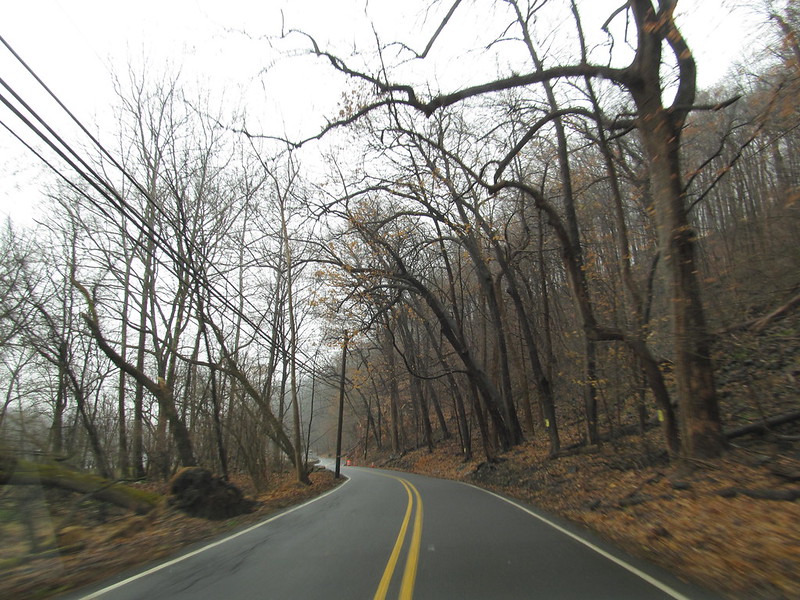
Image credit: Doug Kerr, Attribution-ShareAlike 2.0 Generic license, some rights reserved, via Flickr

That incident made me very reflective.  When I worked at Ritz Camera in Brookline, Massachusetts, one day my manager didn’t see that the cellar door (inside the store) was open.  We heard a scream and a thud and I ran to the door and pulled it back open.  The door had to be held by a hook and eyelet being joined and while I was trying to do that, one of my coworkers brushed past and down the stairs to help our manager.  Later, my co-worker ribbed me for being more concerned about the door than the person.  I was actually trying to help our manager, but in my mind, going down the stairs only to have the door fall on my head made no sense.  It turned out the manager was fine; a trip to the ER showed nothing seriously wrong with her.  I don’t know about that man by the side of the road.  I was only glad that, as my wife noted, so many people had stopped to help.  I just hope he, like my manager, was okay.
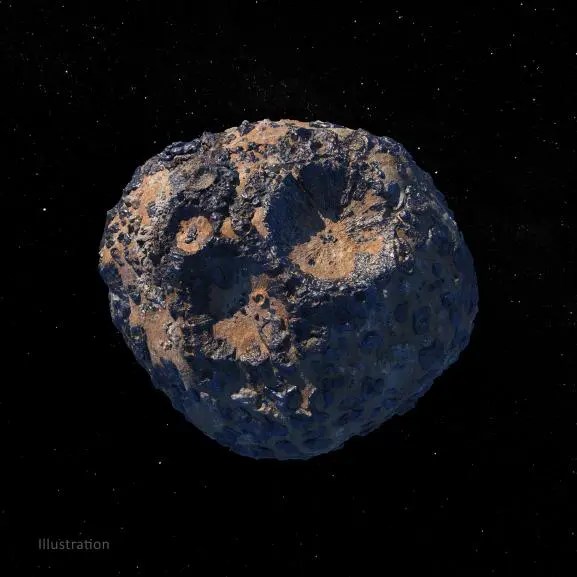

Asteroid

So, that asteroid.  Good thing Trump won’t be in office in 2032.  Well, it’s only a three percent chance it’ll hit us, but chances are things can’t get much worse anyway.  It might be a good idea to make some plans now—but wait, we currently deny science is real and spend our time renaming bodies of water.  Hmm, quite a pickle.  If science were real it would tell us that an asteroid is not the same as a meteor, although it can become one.  Back in high school astronomy class—yes, our Sputnik-era high school had its own planetarium—I learned that the difference between a meteoroid, a meteor, and a meteorite.  Want to go to school?  Here’s the quick version: a meteor is something in Earth’s atmosphere (thus, meteorology).  A meteoroid is a space rock, or even dust, in the solar system somewhere.  Once it enters our atmosphere it becomes a meteor.

Most meteors burn up as shooting stars and never hit the ground.  Yes, that atmosphere is a pretty good idea.  If a piece does make it to the ground, that piece is a meteorite.  Although your chances of being hit by a meteorite are minuscule, they can be impish.  Not far from here, a few years back, a meteor smashed through the backseat window of a car after a couple had just put their groceries inside.  The meteorite stopped inside a carton of ice cream.  The window had to be replaced, and I can just imagine the conversation with the insurance company.  Or take that meteorite heard on a recording for the first time.  In Charlottetown, Prince Edward Island, a doorbell camera caught a meteorite strike just outside someone’s house.  Both of these were tiny critters, though.

Our 2032 friend is quite a bit bigger.  Sometimes when large meteors heat up, they’ll explode in what is called a bolide.   In western Pennsylvania back in January of 1987 (if I recall correctly) my brother and I were working on a jigsaw puzzle during the holiday break when our house shook.  A loud bang had us worried—we lived in a refinery town, and explosions weren’t a welcome report.  We ran outside to find neighbors also outside looking around.  We later learned that a flaming fireball had gone overhead before exploding, a bolide.  The actual explosion took place quite a distance from us, but sound travels in our atmosphere.  So a possible near miss is scheduled eight years from now.  Let’s hope people show some sense at the polls before that happens. Or we could just rename it MAGA and hope that it hits somewhere else.

An asteroid. Image credit: NASA, public domain

Burn Out

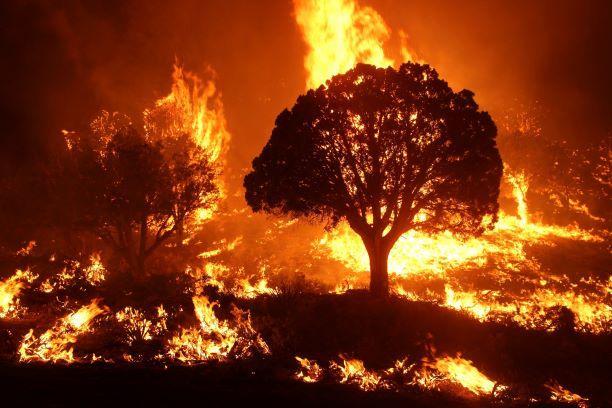
The Los Angeles fires are terrifying.  In my case, I can’t help but think of the Peshtigo, Wisconsin fire of 1871.  I read two books about it, the first because my daughter, in late elementary school in Oconomowoc, heard about the fire in class.  Embers of October by Robert W. Wells is one of the scariest books I’ve ever read.  After we’d safely moved out of Wisconsin I read Denise Gess and William Lutz’s Firestorm at Peshtigo.  Frightening stuff.  I feel for those suffering from the Los Angeles fires.  America is particularly vulnerable to such things since, according to books I read when writing Weathering the Psalms, the western half of the nation exists in, for the most part, a perpetual drought.  (Those who live in Seattle may disagree.)  Rain doesn’t fall evenly across the country.  I grew up in the relatively moist eastern part (we get a lot of rain), but even here fires are a possibility.  We had a very dry October, and a very dry May the year before.

Image credit: Mike McMillan/USFS, public domain as a work of the US government, via Wikimedia Commons

Global warming will only increase the problems, I fear.  Too long too many people in power haven’t taken it seriously enough.  The weather is a large, extremely complex phenomenon that we still don’t understand.  I sit shivering at my desk on a cloudy January day looking at weather apps that tell me it’s sunny outside.  One thing we do know about it is that if we tamper with it in one place, it affects the weather everywhere.  What if, instead of posturing and fussing with people who live in other countries, with larger entities trying to control them, we all turned our attention to that sky we hold in common?  Trying to understand its needs and temperaments?  Realizing that if crops fail in one country there will be shortages everywhere?

The fires aren’t just Los Angeles’ problem.  Large nations posturing about who has the biggest leader has proven ineffective time and again.  We need cooperators and collaborators, not nationalists.  Embers of October, especially, paints a Hell on Earth.  One that couldn’t be escaped by many of the people in this small town that was utterly wiped out by a natural disaster.  Such things should be required reading.  Instead, small-minded people ban books claiming ignorance is bliss.  Trying to avoid a metaphorical Hell, they introduce a real one here on earth.  And yet, some use even this to divide people against each other.  And people who have no will to help one another is Hell indeed.


Sodom Returns

Somebody really ought to write a book.  It’s not me, but when new archaeological discoveries with large explanatory value emerge, they begin to paint an interesting picture.  Archaeologists have determined that Tall el-Hammam, a city in Jordan of about 8,000 residents, was wiped out by a cosmic airburst, or meteorite.  If you missed it in the headlines it may be because this happened in 1650 BCE.  Barring volcanoes and other melting phenomena, since they don’t get hot enough, the cosmic airburst is the best theory.  Given that Tall el-Hammam is not far from the Dead Sea, it has been posited that the sudden destruction of this city led to the biblical story of Sodom and Gomorrah.  This makes sense to me.  Just like the theory that the flooding of the Black Sea by the Mediterranean led to stories of the flood.

Sodom and Gomorrah afire, by Jacob Jacobsz. de Wet; image credit: Daderot, public domain via Wikimedia Commons

People who had no other ways to explain such things would naturally consider them forms of divine punishment.  Deep-seated guilt seems to be a universal of human psyches, sometimes for good reasons.  In any case, an entire city wiped out by a meteorite looks like the finger of God just as much as lightning does.  Biblical scholars have long supposed that the story of Sodom and Gomorrah was an etiology, or origin story, of the formation of the Dead Sea.  This is partially based on the famous salt pillars, more than one of which bears the name “Lot’s wife” or the equivalent.  And the Dead Sea is unlike any other body of water on the planet.  

I suspect that over time other biblical stories may find logical explanations in ancient catastrophes.  I haven’t found convincing those that try to explain the “plagues of Egypt” based on a scientific daisy-chain of events, although they are interesting.  There’s no doubt that between the expulsion from Eden and the arrival of Moses there were dramatic events narrated by Genesis.  If these were ghosts of memories of ancient tragedies that makes sense to me.  They’re moralized, of course.  Aesop’s Fables also ended with the moral of the story.  We still like to know what a story means, and a good movie or novel will have some kind of message to convey.  There’s no way to prove that Tall el-Hammam’s destruction led to the biblical account, or that memories of a catastrophic flooding of the Black Sea led to tales of arks.  But still, somebody ought to write a book.  I’d read it.


Craving Stability

As memorable events go, earthquakes are right up there.  Well, we don’t get them often around here, but at 10:23 a.m. yesterday a 4.8 hit about 30 miles east of us, in New Jersey.  The whole house was shaking and it took quite a while to calm back down.  (Me, not the ground.)  The only other time I experienced an earthquake was the Virginia quake of August 23, 2011.  Yesterday’s was much closer and therefore felt much stronger.  It took a few seconds to believe it was even really happening.  Work will do that to you.  Such an event, just 3 days ahead of a total solar eclipse, has an almost apocalyptic feel to it.  And we’d just come off of a punishing super-soaker storm that left puddles in one of our bedrooms.  Those of us out east just don’t get these kinds of things happening very often.  It’s a little difficult to process and it kind of makes me wish I’d gone into geology after all.

Since apparently nobody was hurt, this goes into the category of transcendent earthly things.  Ironically, confirmation came from social media before any news networks had anything to say about it.  Big wheels turn slowly, I guess.  The first minutes after it hit were a time of confusion—did it really happen?  Was that actually an earthquake?  What else could it be?  The same was true after the Virginia quake.  I don’t want to brag about surviving an earthquake if that’s not what it was.  Funny how you want validation, even at a time like that.  Such events remind us that we’re small compared to this planet we call home.  When the earth moves there’s nothing you can do about it.

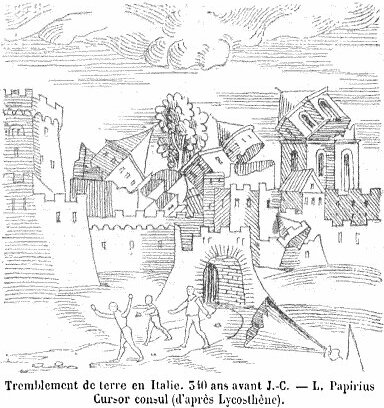
Ironically, there are no maps detailing the Ramapo Fault line that was responsible for this quake. At least there aren’t any on the web. At 5:58 p.m. we had a 4.0 magnitude aftershock, much briefer than the main event.  An end-of-the-day reminder that we rely on mother earth for just about everything.  Earthquakes are times to call certainties to question.  Time to ask what we really know.  The tri-state area (in this case New York, New Jersey, and Pennsylvania) isn’t particularly susceptible to earthquakes—or isn’t prone to them, in any case.  I grew up in Pennsylvania and never felt one, although a bolide shook my childhood house back in January 1987, I believe it was.  Such reminders serve a purpose and in that sense they’re signs and portents.  We need to listen to the earth.  If we don’t, she will get our attention.  And then we must ponder.

Nothing as bad as this! Image credit: illustration extraite Prodigiorum ac ostentorum chroniconde Lycosthène, public domain via Wikimedia Commons

Natural Disasters

Like many, my heart goes out to those in Turkey and Syria suffering through the destruction and aftermath of a major earthquake.  Such natural disasters often bring out the best in people—empathy, love, and offers of support.  They lead to both tragedy and human warmth.  They also give us pause to reflect, if we will, on our worst behaviors.  Rescue efforts have been hampered, in Syria especially, by a weakened infrastructure, caused, at least in part, by foreign bombing.  And yes, the United States was part of that.  People who now feel our sympathy only months before faced death from us.  What is it about our species that makes us want to destroy one another through our own technology but then turns and wants to help when a “random” act of nature occurs?  We must prefer death on our own terms.

Image credit: Luca Comerio (1878-1940), Corpses of victims of the earthquake in Messina, via Wikimedia Commons

For me, part of this is reflected in how the so-called “culture of life” treats liberal social causes as the “culture of death.”  Those groups that support “the culture of life” are against abortion but desire no controls on gun ownership.  This is the same basic principle—we want to cause death on our own terms.  We want to play God and decide who is worth saving and who should be destroyed.  I have no doubt that if, say, a tornado destroyed an entire city block outside a convention center where the NRA was meeting that those at the conference would rush out to try to help find survivors.  When they reconvened, they would try to figure out how to protect their “right” to own and collect assault rifles.  Is this “culture of life” really worth preserving?

Meanwhile the people of Syria and Turkey are suffering.  Thousands are dead, winter is setting in, and Covid is still out there.  They need our help.  The amount we spend on aid will, however, pale next to the amount we spend on bombs, drones, and missiles.  I have to wonder if we never really stop to think about what we’re doing when we engage in behaviors that destroy others.  That weeping mother outside an earthquake-collapsed building could be the same mother outside a missile-collapsed structure.  With natural disasters we know that we all stand a chance of being victims.  We feel for those caught in the way.  Once politics enters the picture, however, and we have the ability to control who lives or dies, everything changes.


After It’s News

We live our lives by the news cycle.  It tells us what to think about and worry about, often beyond our local, daily concerns.  And sometimes we forget about yesterday’s headliners.  If you’re curious about whatever became of actual Hurricane Ian, I can tell you.  He’s been hanging around here.  Oh, he’s a mere shadow of his former self, becoming just a low-pressure system sitting off the Atlantic coast between New York and Philadelphia.  And spinning, and spinning, and spinning.  Around here we haven’t seen the sun since last Thursday.  The rain has been intermittent, but yesterday it was pretty much all day and he’s set to continue dominating the skies here at least through today.  Your typical hurricane, if there is such a thing, just keeps moving until it reaches unpopulated areas and nobody cares any more.  This one has been a long-term guest.

With the first few days of lassitudinous rain we had maybe an inch.  Rainfall spat and sputtered and sprinkled.  Yesterday it began to really come down and as I write this it’s too dark to tell but I can hear it splashing on my windows.  The toadstools popping up in the yard are impressive.  As has been the wind and below average temperatures.  I’m wearing my winter-level protection and dodging raindrops on my morning jogs.  Some days I’ve had to delay them for the water.  Not too many other people are out taking their exercise, I notice.  The Weather Channel’s taken to calling it just a low-pressure system, but we’re on a first-name basis now.  Ian is still very much a thing.  At the end of “daylight” yesterday the rain gauge read about three inches.

The thing about these “unusual” storms is they’re becoming the norm.  Global warming has been affecting us for years now, even as we deny it exists.  Our summer around here was very hot and very dry.  The dry was okay by me, but the heat prevented any outdoor work or play for a good deal of the time.  Days when you’d stay inside and try your hardest not to move.  We had maybe one or two days of transitional weather then boom, straight to November.  The leaves around here are still mostly green although they’ve been starting to change more readily now that October’s arrived with December in it’s train.  Forecasters tell us, like Annie says, the sun will come out tomorrow.  Around here we sure hope that’s right.  I wonder what else is happening hidden behind the news?

Not Ian, but you get the picture

Lost Day

There’s a continuity of life and we’re used to it with only small, regular interruptions, such as a night’s sleep.  Each day builds on the previous one with plans being fulfilled, projects attempted, and yes, work.  Then something happens to disrupt that and it’s like starting over again.  I imagine (and feel for), for instance, those who’ve lost everything to Hurricane Ian are going through it.  They are reassessing and rebuilding, even as around here we’re beginning to get some of its rain.  A break in continuity may be smaller, however, and on an individual scale.  I had, for example, my first Shingrix vaccine in January.  Never having reacted to any vaccine before I was completely caught off guard when the next day I couldn’t get out of bed.  But more than that, I knew this was a two-part vaccine, and I was going to face this again.

I kept putting it off.  I needed to have a day when continuity could be broken so that I could recover.  That’s always tricky because I’m busy all the time.  I’ve got a book manuscript under a December deadline and I have to work every weekday.  Yesterday I took a personal day and had Shingrix 2 after work on Thursday.  Yesterday was a lost day.  Although I knew this was an important vaccine, like the various Covid vaccines I’ve had, I wasn’t ready for the consequences.  With short periods of wakefulness, I slept until 1:30 in the afternoon, unable to do anything.  Feverish, I couldn’t read without falling back asleep.  Working on my book was out of the question.  Meanwhile, emails kept coming in, asking for this or that.

The lost day takes some time for recovery.  It’s not nearly so bad as those who’ve lost their homes and communities because of this massive storm that’s tapping its outer fringes on my windows right now.  Still, I have to try to remember where I left off.  Amazingly, after sleeping for some seventeen hours, I was nevertheless ready for bed at the usual time last night.  The nurse who gave me the vaccine assured me that it was better than having the actual disease.  I don’t doubt that.  Those I know who’ve had shingles warn that it’s nothing to mess with.  Still, I sit here slightly stunned this early Saturday morning, wondering where I left off before all of this began.  The continuity has been temporarily broken, and I lost a day in there.  I’d forgotten what it’s like to sit in a chilly room before sunrise with a tabula rasa before me.  But I do recall that I have a final manuscript due in a couple months.

Photo by Estée Janssens on Unsplash

Heat Wave

Kim Stanley Robinson’s The Ministry for the Future wasn’t my favorite book read the first half of this year, but reading the headlines about India’s heatwave took me back to it.  That’s precisely the way the book starts out—with an intense, deadly heat wave in India.  As a nation lacking infrastructure in relation to the size of its population, and lying near the equator, India is particularly vulnerable to global warming.  We all are.  As the planet heats up and weather becomes more erratic and extreme, food shortages will appear.  At the moment we’re concerned because Covid and Putin-War have driven inflation to incredible highs.  A trip to the grocery store or gas station is like a horror film.  Meanwhile the planet’s heating up and Republicans are pushing for four more years of Trump environmental degradation.  Can we please open a window here?

Global warming has been challenged by many because of their religious conviction that the world ought to end.  Apocalypse is probably the Bible’s most dangerous teaching.  Speaking only for myself, I didn’t know there was an Indian heatwave until headlines took a break from Putin-War and America’s mass shooting crisis.  And oh, India’s sweltering under temperatures over 110 degrees.  People are dying.  Birds are falling from the sky in mid-flight.  We had a couple days in the 90s around here before the end of May.  Those were some uncomfortable times.  Meanwhile in India it was twenty degrees hotter.

The human ability to ignore life-threatening problems we create for ourselves in service of our theology is remarkable.  Even as experts declare religion is no longer important, it’s slowing killing us.  We focus our resources on making money, as if money will do us any good when we’re the lobsters in the pot.  As a species we’re amazingly capable.  Billionaires can afford their own private spaceships—something most nations in the world can’t spare cash to buy—and we have proven ourselves endlessly inventive.  When it comes to the basics—the need to believe, for instance—we turn a blind eye and pretend it’ll just go away.  Religion scorned is a very dangerous thing.  I once heard a talk by a scientist presenting a rosy technological future.  I raised my hand and asked about religious objections and he mused, “I hadn’t even thought about religion.”  His future was progressive and optimistic.  Robinson’s is quite a bit less so, although it ends by suggesting we might manage to pull through, with only millions of deaths.  As Donovan says, “It’s time to ask yourself what you believe.”


Routine Interruptions

Ironically, having just written about routines, we experienced a power outage with a wind storm.  Sitting home of an evening, the lights in every occupied room began to flicker.  We grabbed flashlights, suspecting what would come next.  The power outage led to a temporary loss of the internet, the god of this age.  Routine was interrupted.  This brought to mind just how fragile all this is.  As supply-chain issues have demonstrated, everything has to work just right for our society to operate at expected standards.  And an internet outage leads to an interruption of routines.  Whenever this happens, it reminds me of how complex our lives have become.  And how unfair.  There are people across the world who struggle with daily necessities such as clean water, safe homes, and reliable sources of power.  And a wind storm in eastern Pennsylvania doesn’t mean that the company’s power in another state is out.  Does this mean I take a vacation day?

As this winter winds down I again lament the loss of snow days.  They were local holidays, of course, and based on the unpredictability of nature.  Our power outage, followed by internet outage, was a personal kind of snow day.  Nobody wanted it and we all planned to work today.  Other than the outage, we’re fine.  Just like a snow day.  There’s a feeling of helplessness to it.  To fix the internet we rely on someone who knows how to do such technical wizardry.  Anyone can stuff a rag in a hole in the window, but to replace the glass it takes an expert.  How do you contact them when the internet’s out?  (Of course, everything’s back on in time for work.)

No doubt, many aspects of our lives are better.  We can pay our bills without using a stamp.  We can look up basic information online.  Even attend religious services virtually.  (Who doesn’t want to linger in their pajamas on a Sunday morning?)  Yet, for all of this to happen our power must be on and steady.  Our internet connectivity must be strong.  We have to be able to connect to work so that we can be paid so that we can keep the power on.  It seems an odd way to spend our time.  Obviously, if you’re reading this they—that mysterious they—have got things working again.  The power is on so that I can type this, and the internet is connected so that I can post it.  And yet I don’t feel any more secure.  And I know I’m one of those who has it easy.


Paper Chase

Maybe you’ve done it too.  Kissed the posterior of technology.  Up until three years ago I didn’t pay bills online.  I waited for a bill, wrote a check, stamped an envelope, stuck it in the slot and forgot about it.  Then I started getting overdue notices.  My payments were failing to reach their recipients.  I switched to online payment—it seemed like the only option.  That has worked fine for two years but then something else started to happen: my email notices failed to show up.  I started to get overdue notices again.  I went to websites and enrolled in auto-pay for all my regular bills.  Then the emails began showing up stating accounts were overdue.  The actual websites said the bills had been paid.  There seems to be no pleasing the technological beast.

You see, I’m a simple man of pen and paper.  I don’t read ebooks unless I have to.  I don’t trust most of what I find on the internet.  Mine is the mindset of a working Post Office (or at least Pony Express), paper payment for which you receive a copy back.  Some solidity.  Live Science ran a teaser headline that the next solar storm could lead to an “internet apocalypse.”  All records wiped out.  With no shoebox full of receipts, how are you going to prove you’ve got the money you say you do?  (That could be a boon to braggarts such as Trump, but the rest of us will be waiting timidly for a letter from our banks.)  Technology seems to be chasing an invisible goal.  Doing it because we can without thinking of the consequences.  Shooting rockets into space with no certified astronauts on board—what could possibly go wrong?

Tech isn’t bad, of course.  It has preserved many of our jobs through a pandemic.  It makes it easy for forgetful guys like me to be able to find information quickly.  But functioning is only as good as the coding behind it, and it feels terribly vulnerable to me.  Coronal mass ejections, apart from sounding slightly dirty, are rare according to the story by Brandon Specktor, but they tend to happen every century or so.  A century ago a working landline telephone was a luxury.  The computer as we know it hadn’t been invented.  We were about to plunge into the madness of a second world war in which tech would be used to kill on a massive scale.  Now I guess we await the apocalypse.  The safe money says to have plenty of paper on hand.


Like a Hurricane

Around here we welcomed September in with the remains of Hurricane Ida.  For the second summer in a row, far inland, we’ve sustained hurricane damage.  For storms like this it’s not so much a question of if there will be damage, but rather “how much?”  It was complicated by the paper wasps.  It’s like a 1970s natural disaster movie.  It starts at the end of August.

I was going out to put the recycling bin away (more on this later).  When I opened the garage door I was stung three times by a paper wasp (or maybe two)—twice on the face and once on a finger.  The previous day when I’d taken the bin out there hadn’t been a nest, but 24 hours later, angry waspids were protecting their territory.  I couldn’t even get the door closed.  We don’t have any bug-killing spray on hand since we believe in live and let live.  But I do need to get into the garage.  Due to my weekly schedule I couldn’t get to the hardware store before Friday.  Fine, let the Hymenoptera have the garage.

The next day—actually later that day—Ida began to arrive.  We’ve had extensive roof repairs since moving in here.  We’ve had two-thirds of it replaced entirely.  Then the rain started.  The plumber came before it got bad to replace a cast-iron radiator that we had moved so I could repair the drywall behind it.  While doing that I repaired the ceiling where water from ex-Hurricane Isaias leaked through.  The roofer had patched this part after Isaias, so we thought we were good.  By mid-afternoon there was water dripping from the ceiling again and the repairs I had made crumbled into the bucket set there to catch the water.  So it goes.  Outside the street was closed due to flooding.  I couldn’t get into the garage to check for damage because, you know, wasps guarded the only door (still open).

It used to be that weather was a neutral topic to discuss.  Of course, it’s become politicized now.  Having a climate-change denier in the White House for four years made the topic dangerous to raise.  This area used to never get hit too badly by hurricanes.  Global warming, however, has changed everything.  I got up the morning after wondering where to start.  It was still dark and a cricket had come inside to get out of the weather.  It chirped as I came down stairs.  Everything will be all right.

Our unofficial rain gauge

Weather rules

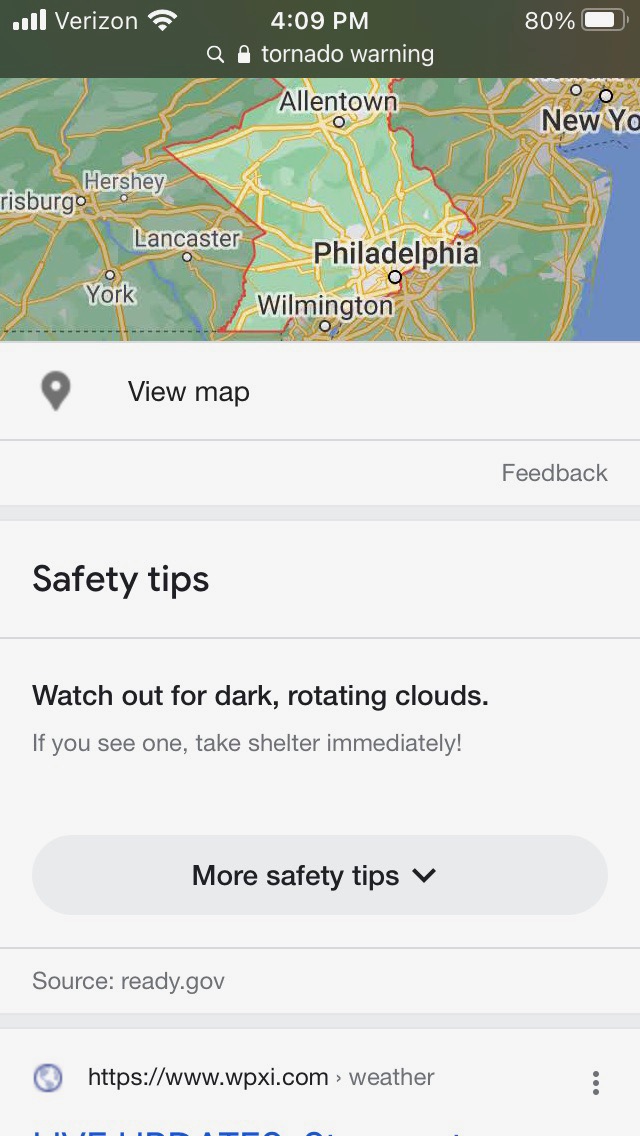
One of the observations that prompted me to write Weathering the Psalms concerned the disruptive nature of storms.  Power outages was pretty common in that part of southeast Wisconsin where we were living at the time.  Downed trees could block rural access—more limited than the alternate routes of cities—for hours.  There was clearly a sense of being at the mercy of nature and it was disruptive to the human schedules and lives we’ve constructed.  The tornado warning we had a couple of days ago reminded me of that aspect.  While radar saves lives by giving advanced warning, it also makes it difficult to concentrate on work when you’re told to take shelter.  As far as I’m aware HR doesn’t have a tornado policy.

Having lived in the Midwest for a decade and a half, I came to be aware of the difference between a tornado watch and a tornado warning.  While my phone was showing a watch, another family member’s was showing a warning.  My evening plans were replaced by standing at the window looking west.  The worst of the storm passed us but as long as the weather was threatening there was little else we could do.  Eventually all devices agreed that this was a warning and we should take shelter.  The storm eventually passed, leaving my tightly packed plans for the day in tatters, even though our actual house was fine.  That’s the nature of the weather that makes it so interesting.  As much as we like to think we’re on top of it, we’re really all potential victims.

Weather is more powerful than humans.  We have to change our plans according to its whims.  And climate change is making it more extreme.  Even with the evidence all around us deniers still try to block legislation that takes steps to preserving our planet.  Those who wish to destroy it for theological reasons don’t stop to think that doing so is about as selfish as you can get—something that the Bible really doesn’t promote at all.  One thing about the weather: although it is very different from place to place, we’re all in it together.  It can be very disruptive, yes.  It reminds us that we and our human plans are temporary.  When we’ve managed to do ourselves in, or have abandoned this planet to find a more hospitable one we can ruin, the weather will remain.  Majestic storms will come and go, whether or not there’s anyone here to see and appreciate them.


As Nature Directs

The news about the “stampede” in Israel last week is tragic.  People like to gather in large crowds once in a while.  Religious events are sometimes such occasions (although not so much the case among mainstream religions anymore).  In this case the celebration, largely among the Ultra-Orthodox, was Lag BaOmer, a festival with unknown origins.  It has to do with counting the omer, a measure, in a biblically based instruction regarding grain offerings.  Since it’s based on the lunar Jewish calendar, it doesn’t fall on the same date of the solar year every time.  To be honest, I’d not heard of this celebration before the tragedy that occurred last week.  Having been confined for over a year, many religious groups are anxious to be back together in numbers.  Nothing reinforces belief better than having the size to be taken seriously.

A few years back, if I recall correctly, it was Muslim faithful at Mecca who experienced a tragic uncontrolled panic.  Religious ideas bring people together, but they can’t always control the results.  I’m reminded of what a Protestant clergyman told me many years ago: after a Billy Graham crusade came to town, the regular ministers were ill-equipped to handle the large numbers of emotionally charged members who normally sat still in the pews.  Religion stirs people, but its psychological nature shows when it leads to tragedy.  No particular group is immune since we are all emotional animals.  One slip on the stairs, one panicked individual, and those nearby can be infected.  Already emotional from the event itself, nature takes its course.

Stampedes are an evolved flight response.  Herd animals, when perceiving a threat, begin to run.  Others, not even directly aware of the threat, join in.  Other animals, not aware of their “herd mentality,” seem to handle this more naturally than do people.  Indeed, our religions often instruct us not to think of ourselves as animals at all.  Our religious events are often removed from our familiar surroundings.  I suspect that may be one reason people don’t find “Zoom church” very satisfying.  The emotion of religion is more easily spread in person.  In a place specifically designed as being outside the norm.  You take your hat off in church.  You sit quietly, reverently, in church.  You do not use coarse language in church.  In a pandemic you try to join in while physically in the environment where the rest of everyday life occurs.  When we gather again, we must do it while being aware of our nature.  Being part of nature itself can often be, if well thought out, cause for celebration.  We mourn those who fall victim to it.


One, two, three

The danger of statistics is that they turn an individual into a number.  A few days ago an article in the New York Times addressed the rare blood clots that some women develop after receiving the Johnson and Johnson covid vaccine.  The response of the cited physicians was telling.  Many praised the decision to halt use of the J&J vaccine immediately.  Others, however, point to the numbers.  If a vaccine is halted many more could be exposed to and contract Covid-19.  It is better, they aver, to take the statically smaller risk and use the vaccine.  While I understand the logic here, I do wonder if the side effects occurring primarily in women has anything to do with the reasoning.  Why not save this vaccine for the men instead?

This raises once again the specter of consciousness.  Statistically the odds are small that a woman will develop a clot.  What if you are the woman who does?  This dilemma always bothered me while camping in the woods.  Statistically black bear attacks are rare.  How does that help you if your tent is one that looks like a candy wrapper to a bear of little brain?  You become a statistic instead of a living, breathing, feeling, blogging person.  Statistics.  There’s a reason some of us identify with the humanities, I guess.  I can imagine what it would be like to have your doctor say to you, “Sorry, this is rare, but look at the bright side—you now become a statistic!”

Photo credit: HB, via Wikimedia commons

The fact is we’re all statistics to strangers anyway, the government above all.  We are vote-bearing numbers to be gerrymandered and prevented from voting.  Beyond that we’re merely annoying.  This pandemic has introduced Stalin’s accounting with a vengeance.  542,000 is a big number.  Unless you know one or more of them personally.  Then the statistics seem to melt.  Life is full of risk, of course.  We’ve barricaded ourselves in our homes for over a year now, eating things that are likely more dangerous for us than a rare complication.  The virus, and perhaps some vaccines, are among various killers on the loose.  Nobody can declare with any certainty the correct course of action.  Actually doing something about the virus when it was first a known threat would’ve helped, of course.  We find ourselves on the brink, it seems, of getting Trump’s disease under control.  Would that we all could do so, without having to worry about lying down to be counted.