Shipmates

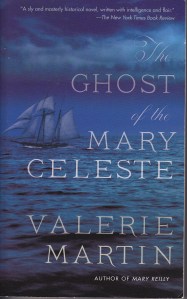
MaryCelesteGhosts have a way of persisting. I’ve had Valerie Martin’s The Ghost of the Mary Celeste on my reading list since I first saw it in hardcover on a bookstore shelf. The Mary Celeste was an actual ship, found with not a soul aboard, lifeboat intact, and no sign of violence, back in the 1870s. To this day no one knows what happened to the crew. Valerie Martin takes this frame and fills it in with a family drawn into Spiritualism, a religion that was just beginning at the time. Spiritualism, which developed in the aftermath of the Fox sisters and the eerie rapping at their upstate New York home, is one of the few religions to be completely at home with ghosts. The faith still exists today, and although Margaret Fox “confessed” to having hoaxed the effects she also retracted her confession, leaving ghost hunters perplexed to this day. These two mysteries, brought together in the moody month of November, make for a compelling novel that urges the reader forward.

Martin also adds the presence of Sir Arthur Conan Doyle to the story. Doyle, an avowed believer in the spiritual realm, also created Sherlock Holmes. As the various characters try to piece together what happened to the Mary Celeste, the ghosts of those lost at sea ambiguously communicate with the living. The world between realms, in this story, is permeable but indistinct. Those lost at sea are, in the narrative, restless. The mood of the novel is unrelentingly moving and thoughtful. Ghosts haunt, but don’t appear. Readers are left to draw their own conclusions.

As today is the fortieth anniversary of the sinking of the Edmund Fitzgerald, it seems appropriate to think about the Mary Celeste. Since Percy Shelley drowned in his own personal boating accident, loss at sea has become one of the hallmarks of Romanticism. Conceived as an answer to the cold, callus industrialism that trailed the scientific revolution, Romanticism suggested that there was an enchantment to nature and that things were not always as they seemed. Prosaically, there’s nothing poetic about dying in a violent shipwreck. That’s what makes the Mary Celeste so compelling. There is no violence here. The sea calls and claims captain and crew as her own. The lack of resolution has led to a very open-ended mystery—the perfect foil to a harsh materialism. Today the Mary Celeste and Edmund Fitzgerald will be sailing my internal seas as the season of spirits and shipwrecks come together in the lengthening nights of November.


Think Bigger

PlanetRagesI’ve spent a lot of time with academics. Having been one myself, I know something of their habits. Getting through a doctoral program involves, at least in some fields, becoming the specialist on a very tiny piece of information. Since people have been thinking about things for millennia, finding something new to say can be a challenge. Often, by the time they’re done, newly minted doctors know an incredible amount about a very specialized topic. This is, in many ways, simply an intensification of the human experience. We think small. Part of the problem is that our brains haven’t evolved to think big. Having learned an awful lot about the weather in the book on Psalms, I have instinctively taken an interest in natural disasters. Charles Officer and Jake Page share this interest, as is evident in When the Planet Rages: Natural Disasters, Global Warming, and the Future of the Earth. This, however, is a big idea book. Globally big.

Throughout the first two sections of the book, which deal with humans in the face of nature, God often comes up. As scientist and science writer (respectively) Officer and Page simply reflect common beliefs. Nowhere do they advocate invoking God, but they note that throughout history, in the face of just about any species of natural disaster, people have. Many people still do. Disasters and God. What a team! We worship what we fear. Once Officer and Page reach the third section of human impacts on nature, however, God drops out of the picture and the fingers are pointing solely at us.

When I read about what we’ve already done to this planet, I, as a colleague once said, start seeking another species to join. We have destablized the atmosphere so throughly that it will take at least ten-thousand years to return to it’s pre-Industrial Revolution state. Ten-thousand years. At the same time, the largest industrial pollutor (the United States) has jury-rigged politics so that only the wealthy can attain high office. Votes can be bought and we simply won’t sign the Kyoto Protocol. Those who knowingly doom their children are the smallest thinkers of all. We have changed the course of the biosphere well beyond our share of time, and even those scientist who deny global warming know that it is true. You don’t bite the hand that signs the pay check. After all, specialists have a tendency to be very small thinkers.


Inventing Concepts

A neologism is an invented word. Of course, it is impossible to be certain about the origins of many words, and even the many neologisms attributed to William Shakespeare may have been overheard by the bard at the local pub. Still, one of the things I sometimes dream of is inventing a word that will come into wide circulation. I think it must be easier to do in fiction than in non-fiction writing. When I first wrote my book, Weathering the Psalms, I chose what was, at the time, a neologism for the subtitle. “Meteorotheology” was a word I’d never read or heard before and, quite frankly, I’m not sure how to pronounce. Although the world-wide web existed when the book was written, scholarly resources were still few, and tentative. Amazingly, that has changed very rapidly. Now I’d be at a loss to find most basic information if I were isolated from a wifi hotspot. In any case, the web has revealed that others beat me to it when it comes to meteorotheology.

I suppose that some day, when I have free time, I might go back and see if I can trace the web history of the word. It is used commonly now to refer to God taking out wrath on people through the weather. For example, when the Supreme Court decision on the legality of gay marriage was handed down this summer, there were various websites—more popular than mine!—asking a “meteorotheological” question: when was God going to send a hurricane to punish the United States for its sin? These were, as far as I can tell, all tongue-in-cheek, but there can be no question that some people treat meteorotheology that way. It is a sign of divine wrath. My own use of the word had a wider connotation. When I was invited to present at talk at Rutgers Presbyterian Church in Manhattan a few weekends ago, I was reminded of my line in the book: “To understand the weather is somehow to glimpse the divine.”

That’s an idea I still stand by, but it is difficult to move beyond. What exactly does the weather say about beliefs in the divine? There’s plenty of room for exploring that. I know that when I walk outside to fetch the paper on a clear fall morning when the moon and stars are still out, I know that I’m experiencing a kind of minor theophany. The brilliant blue of a cloudless October sky can transport me to places unlike any other. What exactly it is, I can’t lay a finger on. That’s why I came up with the word meteorotheology. I many not have been the first person to use it. I may even be using it incorrectly. But the weather, in my experience, has many more moods than just anger. Any autumn day is enough to convince me of that.

DSCN6011


Last Chance to Sea

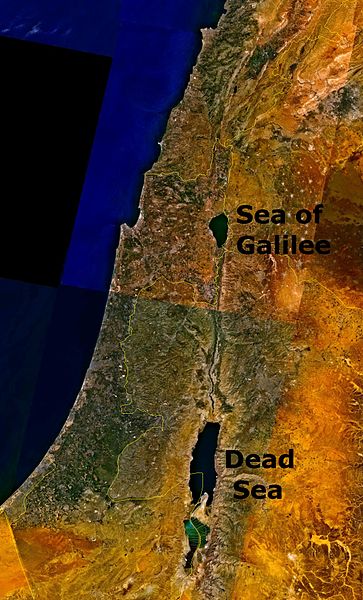
I wasn’t brave enough to don swimming trunks in front of academic colleagues and climb into the Dead Sea. Instead, I dipped a finger in an touched it to my tongue. I’m not sure if it was the bromides or some other toxic minerals, but I immediately wretched and knew that I wouldn’t be putting any Dead Sea salt on my chips. Years later, for comparison, I tried a bit of the Great Salt Lake. Disappointing, to say the least. Already by the time I’d visited the Dead Sea it was dying further. In a recent article on NBC entitled “Thousands of Sinkholes Threaten Dead Sea’s Tourism Industry,” the fate of a sea already dead grows even worse. Water is always an issue in dry climates, and the only real source for renewing Dead Sea water is the Jordan River, which is being dammed and used for human purposes, robbing the Dead Sea of its renewal. The sinkholes are a result of underground salt deposits being dissolved by fresh water as the salty matrix gets siphoned away for industrial chemical farming. Dead Sea levels have dropped 100 feet since 1980.

The Dead Sea is one of the most striking regions on the planet. It is as far as you can go below sea level and still be on dry ground (at least on the shore, that is). The air smells like sulphur and the thickness of the atmosphere at that depth protects you from the sun’s rays, despite the heat. The water is so saline that only bacteria can live there. (The article, ironically, states, “it is very difficult for animals and plants to thrive there.”) By comparison the Great Salt Lake is practically drinking water. Famously, people are unable to sink in the Dead Sea, as its salt enhances buoyancy, so that you can read a newspaper while floating on your back. Like most natural wonders, humans are destroying it. The sinkholes are prophetic, I fear.

363px-Dead_Sea_Galilee

Great evaporating beds line parts of the Dead Sea shore where minerals can be obtained without having to dig into the earth. You can buy some as cosmetics at the local mall. These mineral salts are what make the Dead Sea what it is. And it is shrinking. Satellite imagery of the Sea can bring salty tears to my eye. We’ve slowed the flow of Niagara Falls, and we’ve begun melting our polar caps. Even so, we can’t get enough water to sustain our lifestyle. It has been said that the next major war will not be over oil, but water. Even a glance at California can make me thirsty. In a rare show of cooperation, Israel, Jordan, and the Palestinian Authority are building a pipeline to bring Red Sea water into the shrinking Dead Sea. I hope that this might bode well for the future in the region. Although there is no love lost between these neighbors, they all realize that something unique lies on their border, and when it’s gone it will be a loss to the entire world. That is the real Sodom and Gomorrah.


Permian Record

GorgonIt looked like an arm bone to me.  Then again, I have no formal training in either anatomy or geology.  The strata of Pennsylvania shale was littered with shell fossils from before the dinosaur era.  Had I found a rare early animal?  You see, I love fossils.  In fact, I was so disappointed the first time I walked into a Fossil store that I’ve never had the heart to go back.  Something about finding the remains of creatures millions of years old is inherently fascinating, and I was fortunate enough to grow up by a river that had plenty of fossils for the taking (a great pass-time for children of humble means).  When I saw Peter D. Ward’s Gorgon at a local book sale, I had to get it.  In addition to my love of fossils, I also have a special interest in Medusa, and the title grabbed two aspects of my attention at once.
 
The gorgon of the title is explained by the subtitle: The Monsters That Ruled the Planet Before Dinosaurs and How They Died in the Greatest Catastrophe in Earth’s History.  As Ward explains, many in the media express surprise that there was anything before the dinosaurs.  Perhaps I grew up with too much Genesis on the mind, but I knew about the Permian Extinction—the most deadly episode in Earth’s biological history.  Over 90 percent of life forms died out, including some of  the cooler species of mammal-like reptiles like the dimetrodon.  I have to confess, however, that I don’t recall ever hearing about gorgons before.  They are a South African species.  Well, they were, long before apartheid and other ridiculous human foibles.  Indeed, one of the charms of Ward’s account is that he doesn’t separate the human element from the paleontological.  His visits to South Africa often demonstrated how the current dominant species of the planet participates in its own extinction.  Valuing personal gain over social justice cannot have long-term payoffs.
 
This is a compelling story of people committed to finding answers in a barren land.  To an inveterate fossil-hunter like me, it was a dreamy sort of read.  I had my fossil “arm bone” assessed by a geologist.  It was actually a trilobite trail.  A trace fossil.  Sometimes things aren’t what they seem.  The answer of why of the Permian Extinction transpired turned out to be the most distressing aspect of the tale.  Climate change, Ward demonstrates, can easily lead to mass extinction through the very act of breathing.  Our evolution has favored the current atmospheric makeup of our planet.  Dinosaurs, who appeared after the Permian Extinction, had evolved lungs for processing air with less oxygen than we’re used to.  Greenhouse gases can shift subtle, invisible balances that are necessary for taking a breath.  And I could extrapolate to a future where technology will again come to the rescue, but only of those who can afford it.  And I wonder what far distant evolved intelligent species will make of a civilization where financial gain was considered the greater good than survival of an entire species?  Humanity itself will have become a fossil by then. But a well-dressed one.


Pope of Deliverance

As I was out jogging just now, a large gasoline truck pulled across the road, stalling my attempt at healthy living. As I waited for the driver to move, I thought of Laudato Si’. In Laudato Si’, Pope Francis’s encyclical letter, the future seems, for the first time in a long time, an optimistic place. I’m not Roman Catholic, but knowing that the head of the largest Christian body in the world has made an ecclesiastical pronouncement about our responsibilities as citizens of the planet is nevertheless authoritative. A world run by blind greed cannot see the signs in plain sight. We have taken what does not belong to us and have left a wasteland behind. I look back over a lifetime of advocating, in the small way my small voice can reach, for responsible tenancy on the Earth, and feel comforted by such a powerful ally. Perhaps it’s because I’ve never been a property “owner,” buying into the myth that the planet may be purchased, but it has never made sense to me that one species has the right to claim it all for itself, leaving it in a state our mothers would’ve never allowed our bedrooms to have been left, and supposing it is somebody else’s problem. If not ours, whose? We’re the ones paying the rent.

Those responsible for industrial level pollution baulk at the idea of economic fairness. Capitalism rewards the greedy and the only thing to trickle down is tears. Those with money can always count on lackeys to follow, thus when the man in white says this is important, those in red, and purple, and black have no choice but to follow. There’s no escaping the planet. We shouldn’t have to feel we need to escape. We need to take—dare I say it—corporate action. Those of us on an individual level sometimes think we can’t make a difference. Habits can be powerful things. A visit to a landfill can be a mystical experience. The visions you have there won’t be beatific, however. You might begin to understand the Inferno, in any case. We consume, and pollute, as if it is our right to do so. As if our brains have misfired into suicidal sociopaths.

Son, behold thy mother.

Son, behold thy mother.

Where, I have often wondered, is the voice of the church in all this? By far the vast majority of the world’s inhabitants are religious. Religious leaders, embroiled in politics that lead to solvency and power, have frequently neglected to turn out the lights when they’ve left the board room. While it may seem to be an abuse that the Catholic Church is extremely wealthy and highly influential, it may be that the humble leader of such an organization is the only person truly capable of getting attention. The Pope’s voice carries farther than that of any other single individual in the Christian tradition. And the media are already buzzing about the long anticipated Laudato Si’. The Pope begins on a positive note, and if those who make any claim to be faithful pay attention to the truly important message—far more important than fighting condoms or ensuring that half the human race is kept out of the club house—there may be a slight glimmer of hope yet. Maybe religion really can deal with ultimate concerns after all.


Skynet

DSCN5012

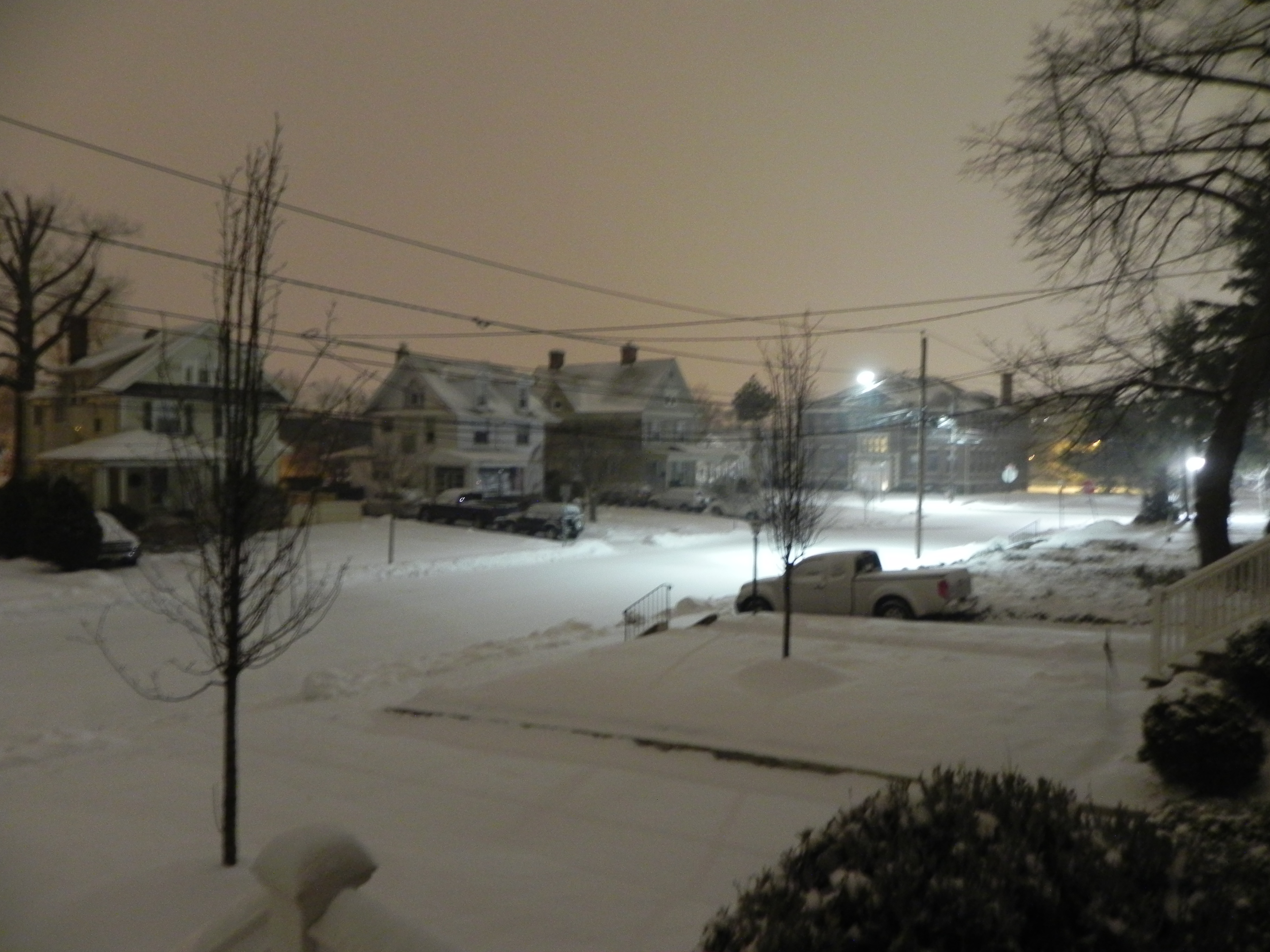
Of cultural innovations, none rivals the internet. Engulfing the world in its wide web, the constant availability of signal has changed everything. In the past five years, civilization has become something that it was not. Take today’s northeast blizzard, for example. Apocalyptic meteorologists (are there any other kind?) are sincerely telling the camera that nothing like this has been seen in recorded history. Meanwhile, my wife’s company sends a Honeywell alert to our phone saying the offices will likely be closed, and please make arrangements to work from home. The snow day is dead. One of the simple joys of life, that delightful naughtiness of playing hooky, is now extinct. Work knows where you are at all times. You are being watched. Sound paranoid? I have known people who had firsthand knowledge of employers following them on Facebook to make sure they didn’t say anything that might make the company look bad. The world is not the same one into which I was born.

Screen Shot 2015-01-26 at 7.55.18 AM

I happened upon a web page the other day advertising for an Advanced Assistant Professor in Digital Shakespeare Studies. A poem by any other name we would tweet. So we have become part of this collective mind known as www dot. The internet is aware that it is still snowing, but only in an academic sense, since it’s not going anywhere. The internet has never had a three-and-a-half hour commute home because of an accident on a single highway in New Jersey. Oh, and don’t forget to check your work email when you get home. We may have sometime more for you to do once you’ve clocked out. Maybe I should see what my social network is up to.

Screen Shot 2015-01-25 at 7.20.01 AM

LinkedIn, Facebook, Twitter, Google +—they all suggest people that I might know. Someone I might rate, or like. The internet, after all, knows which of its myriad sites I’ve viewed, whom I’ve emailed, and what I’ve purchased. The ads from those companies show up on every website I visit from now on, world without end. ThinkGeek emails me every day. My new best friend. Google + is the more intellectual Facebook, I’m told. Whenever I log on, it tells me with whom I might want to connect. Just now Newt Gingrich showed up in my list. Should I add him to my circles? Or should I just venture out into this blizzard and hope I make it to New York City alive? To me, it seems, the odds are equally good in either case.


Pope for the Planet

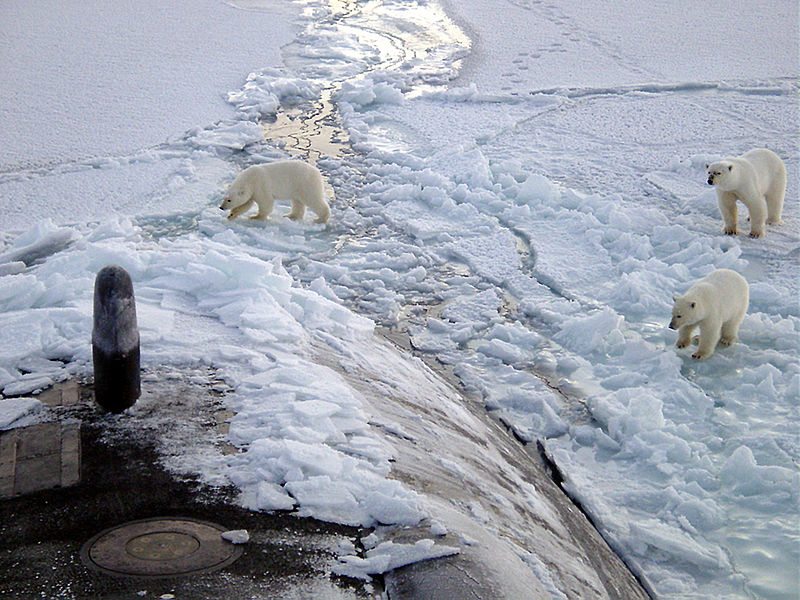
According to The Guardian, Pope Francis is about to weigh in on the faux question of global warming. Faux because there really is no question—we know it is happening. Some high ranking Catholic politicians, no doubt, will not be amused. Apart from the fact that Francis has proven himself a true saint from the moment he got out of the gate—distancing himself from European pontiffs far more interested in church politics than what really matters—he has brought a sensibility borne of knowing how people really live and what is really important. Global warming is real, and the science behind the assertions is unquestioned. Interested parties (such as big oil) have hired their spin doctors to confuse the voting public, casting doubt on one of the few certainties we have. Politicians, whose funding comes from business interests, of course choose what to believe. How anyone can be so shortsighted, or selfish, as to saw off the very branch on which they stand I can’t comprehend. Past popes were too busy trying to keep ladies out of the exclusive gentlemen’s club to worry about those who feel the brunt of global warming.

Photo credit: Chief Yeoman Alphonso Braggs, US-Nav, Wikipedia Commons

Photo credit: Chief Yeoman Alphonso Braggs, US-Navy, Wikipedia Commons

Of course, it will catch up with all of us eventually. I’m not much of a swimmer, and I’m worried. Hurricane Sandy (a superstorm only in the sense that it hit the affluent) showed us just how near sea level Manhattan is. One gets the sense that the fastest growing cities being in Texas is no coincidence. As long as it doesn’t impact me personally, what’s the worry? Some entire island nations stand at threat, but perhaps they should’ve considered that before they moved to an island. Here’s the news flash—all land is island. We need each other, and the lowlands are as important as the highlands.

Organized religions of all kinds have been under fire for years. As science began to explain more and more, religions had to explain their own existence. Many turned internal—not in the spiritual sense, but in the aspect of clarifying the precise points of what makes them right (i.e., different from everyone else). In the United States the small town without five or six different steeples was the exception rather than the rule. Meanwhile, the emissions continued. And continue. At least we know we’re right. At last there is a pontiff who is a realist. A priest who understands that church is all about caring for people—those in the lowlands as well as those in the highlands. Of course, politicians know how to turn off the religion when it gets inconvenient. As long as I get mine, all is right with the world.


Weather for the Birds

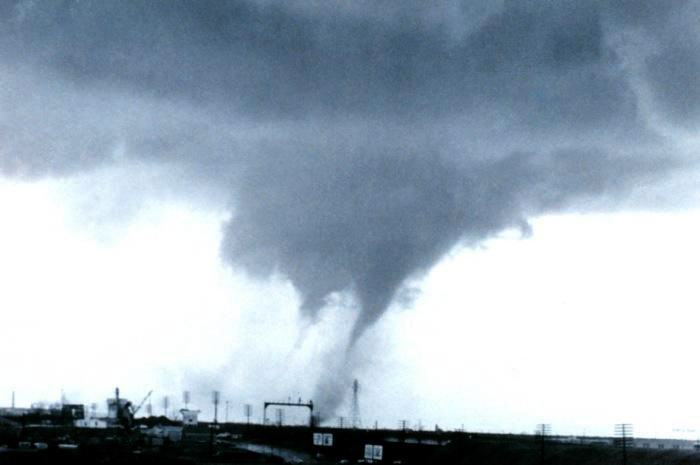
As Christmas nears so does a warm front, dashing hopes of a white Christmas in New Jersey. Well, at least there are no tornadoes coming. The weather, as my readers know, has long been perceived as a divine barometer. In a time when patience is wearing thin with religion, and weary headlines ask if it will ever finally disappear, our animal cousins seem, as usual, to pick up on clues more readily than we. An article on the BBC science page describes how a set of tagged golden-winged warblers vacated their nest a day before a tornado struck. Scientists suspect that the birds—and likely other species of birds as well—picked up the infrasound of the tornadoes that is well below human hearing range. Sensing the danger, they flew nearly a thousand miles, stopping just south of the storm’s track.

1957_Dallas_multi-vortex_1_edited

Of course, tornadoes don’t last an entire day. If the birds fled that long in advance, they couldn’t, I suspect, have heard a tornado that hadn’t formed yet. Since I’m no scientist, I’m not really qualified to offer an explanation, but I do wonder if such behavior isn’t related to consciousness. Several books that I’ve read recently have explored the concept of animal consciousness, and although we are reluctant to admit them to the realm of the self-aware, I wonder how long we can deny it. No doubt, if the birds fled (and returned after the danger had passed) there was an intentionality to their actions. Jealous of our intelligence, we must find a way to explain that animals can predict natural disasters of many kinds long before humans detect their more obvious traits. Our technology gives us seconds, or minutes, of warning. Dogs, cats, and birds know well in advance. But we are the superior beings here.

One of the problems with consciousness is that we can never get outside our own. Other people act in ways similar to us, and describe similar mental states, so we assign them the same kind of consciousness we have. Animals, not using human language, also act in similar ways to us. We call it “instinct” and continue on to the truly important stuff. I have no idea if birds can detect infrasound; I wouldn’t be at all surprised if they could. Without the ability to place it in the context of danger, however, I doubt they would take a thousand mile vacation just after their annual migration. We could learn a lot from our fellow creatures, if only we’d admit them to the conscious club and not the food club. And perhaps they might be able to explain to us why, despite all we know, religion never seems to go away.


Not Your Grandma’s Moses

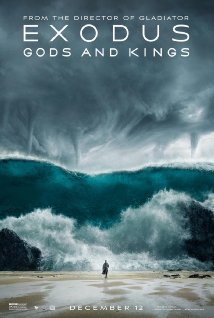
Exodus Gods and Kings

Exodus: Gods and Kings is, in many ways, a startling movie. It didn’t leave me with a strong impression of profundity, but it did make me a bit reflective. The media hype about God as an eleven-year-old boy proved to be merely hype. In fact, the boy deity was one of the most intriguing characters in the film. The role was played respectfully, and God, like a good Englishman, favored his tea. There was nothing comedic about it, however. More troubling was the agnostic Moses, à la Clash of the Titans with its unbelieving Perseus. Moses, even after meeting God, comes across as having little interior life. He hides in a cave and builds an army of terrorists making him seem like Moses bin Laden. He conceals himself while innocent Hebrews are hanged for his crimes (and did they even hang people in ancient Egypt?). When a great storm brews over Memphis, however, it is with a sense of wonder that we ponder at an eleven-year-old doing all this.

The movie plays lightly with the scholarly “explanations” that used to be doled out in seminaries about how one plague led to another. In fact, the character called “the Expert” in the credits is shown lecturing the Pharaoh on the causation scheme of clay churning up in the Nile turning it red, and killing the fish which in turn drove the frogs from the toxic water, but when they died flies came along and the flies spread disease. Then the Expert is hanged. Not so subtle a warning to biblical scholars. In fact, there seems to be a science behind much of the movie that makes miracles less acts of God than acts of nature. Even the drying of the Red Sea is understated. Its return is reminiscent of the Christmas Tsunami of 2004. God is sometimes not there when you’d expect a deity to care.

On the matter of caring, for an age of nones who have concerns for equality, the film was thin on women’s roles, making even the Bible appear to foreground them more. Sigourney Weaver—great in any context—seems only to be there to wish Moses dead. Even Miriam is given scant lines in the movie and no role in the Exodus itself. In Prince of Egypt she at least led her famous song. Zipporah is lovely but shows no sign of being as handy with a flint knife as Exodus makes her out to be. A woman of action. Miriam’s quick thinking saved the infant Moses. Overall, however, the Bible is a guy’s book, and Exodus is a guy’s flick. Opening with the battle of Qadesh on the Orontes is a way to draw men to a Bible movie. Lots of slashing, gashing, and charging horses. And the splendor of Egypt, filmed in Spain and the Canary Islands. Some miracles, it seems, are even impossible for CGI.


Medusa on the Rocks

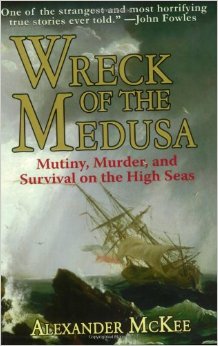
WreckOfTheMedusaShipwrecks possess a compelling resonance that is difficult to explain. I have seldom been on boats, but from my youngest days I’ve been drawn to the coast. While a student in Boston I made weekend trips to Gloucester to be near the place where ships go out to sea, sitting by the quote from Psalm 107 at the base of the famous fisherman statue. Moby Dick has passed under my eyes many times. While at Nashotah House I was frequently tormented with nightmares of sinking ships. Titanic was a huge movie late in those years, and even before watching it, I dreamed of going unceasingly down. In a used bookstore, Alexander McKee’s Wreck of the Medusa recently caught my attention. Although I’d never heard of the Medusa, the name suggested classic themes, and the shipwreck, I knew, would entail suffering and loss and human drama. I knew I had to take it home with me.

The true story of the wreck is tragic in just about every conceivable context. The year was 1816 and aristocracy was still openly practiced. The Medusa, bound for Africa from France, ran aground and, in echoes of what would happen (at least in some instances) a century in the future, the insufficient number of lifeboats were claimed by the wealthy and powerful. The most tragic aspect, however, was the matter of the raft. The masts were felled and a poorly designed raft was hastily constructed (the Medusa was grounded, not sinking). The greatest number of people were herded onto this raft where the water came up to nearly their waists, as the six boats towed the makeshift craft toward shore. At the instigation of the about-to-be-installed governor of Senegal, those towing the raft dropped the line and rowed themselves to safety. The raft, with no means of propulsion, was left adrift where 135 people of the 150 on board slowly died over the next two weeks. The governor and his party made it safely to their destination.

To me, this election week, it seems that I’ve just read a potent parable. We have public officials in place who, like those safely in the boats, cry out “we abandon them” before the masses of those who expect and deserve their protection. Power, it is said, corrupts, and as we witness the constant increase of political power over the sea of humanity taught that their religion favors the party able to quote the Bible the loudest, we sometimes forget that sinking ships may leave very long memories. In another week we will reach the commemoration of the sinking of the Edmund Fitzgerald. The Essex, the Medusa, and countless other tragically doomed ships may easily slip our minds now being propelled at full speed toward the spending frenzy of Christmas. Meanwhile, I urge us all to take a few November moments to consider where this ship is heading, and if there is yet time to change her course.


A Run-By Fruiting

Photo credit: Eva Rinaldi, Wikimedia Common

Photo credit: Eva Rinaldi, Wikimedia Common

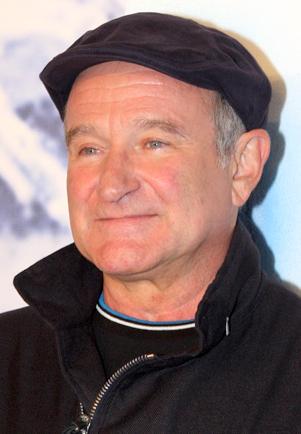
I’ve never been enticed by the cult of celebrity. Becoming famous is frequently a matter of being in the right place at the right time to get noticed. Interviews with stars inevitably come across as lacking in substance. Some of the funniest people I’ve known have worked in camera shops, administrative offices, and IT departments. Still, the suicide of Robin Williams a week ago has impacted a wide swath of the nation. We hate to see a funny man die. It is such a truism as to be trite that those who are clowns often host inner demons. Laughter, Reader’s Digest proclaims monthly, is the best medicine. Who better to heal than those who know what it’s like to have been wounded? Yet we want the funny to keep on making us laugh until we move on to the next diversion.

For this past week I’ve been pondering how one man’s tragic death has jolted a nation into a reflective moment of silence. I can’t say I was Robin Williams’ biggest fan, but I’d seen a number of his movies, and I was devoted to Mork and Mindy growing up (aliens have a way of getting prime-time exposure that has never really been explained). I thought he was good at what he did. He was famous and had money, but it wasn’t enough to buy off the demons. Suicides hit me hard since I’ve known a few and have struggled with depression myself. There are times, truth be told, when no direction is up. It is at those times, however, that others tend to ignore you, lest you bring them down. People like to laugh.

There is something profoundly religious about the idea of a wounded healer. Anthropologists as well as theologians have noticed it. They need have only looked as far as the Bible to find examples. Yet the Christian tradition treats suicide as a great sin against God and the plan is that we all live to die either at the hands of nature or of someone else, so the guilt doesn’t cling to us. Death always leads to a remorse that entails such guilt. And yet it is inevitable. As a nation we are used to seeing comedians overdose or live reckless lives that end tragically. Deliberate action, however, feels the most horrendous of all. We’ll ask “why?” for a while, and we’ll make tributes and tearful speeches. And meanwhile some of the funniest people we can claim will be sweeping our floors or asking “would you like fries with that?”


The Plague

Plagues&Peoples Sitting on the bus next to some guy with a consumptive cough may not be the best place to read Plagues and Peoples. But William H. McNeill’s book is considered a kind of modern classic, and since the Middle Ages have been on my mind, I persisted anyway. I did wrap my scarf around my face, though. Plagues and Peoples isn’t just the story of the Black Death, however. It is a sweeping account of pandemic and endemic outbreaks and how they form recognizable patterns with human populations. Perhaps the most striking aspect of McNeill’s study is how determinative plagues have been for many decisive aspects of human history, including religious ones. Indeed, religion keeps cropping up in the book. One reason is because of the roles religions play in human suffering—to be more precise, I should say in trying to alleviate human suffering. (Yes, some religions definitely cause it as well, but that’s a story for another time.) McNeill even suggests that fear of disease might have led to the parting of the ways between Swiss and German Reformers, playing a role in the divergence of what would become the Presbyterian and Lutheran flavors of Protestantism. The spread of some religions was facilitated by the ravages of disease.

During the period of the spread of the Plague, however, McNeill notes that those cultures attended by Christian and Buddhist institutions managed to fare better than irreligious, or, perhaps more accurately, folk-religion ones. Once people figured out Plague was contagious, they sensibly kept away from the sick, but the moral teachings of Christianity and Buddhism compelled the religious to tend to the ill, with the result that more people in those religious traditions survived. That’s not a universal declaration on McNeill’s part, but it is a fact worth bearing in mind. The risk to self paid off when more individuals cared for each other rather than just heading for the hills when the Black Death came along. On the other hand, religions frequently insist on behavior that spreads disease as well. The great pilgrimages to Mecca or the Ganges often brought great crowds together where disease could quickly spread. The passing of the peace in some churches is more like the passing of the plague.

In ancient, pagan times, disease had its own deities. In ancient Ugarit, Resheph, the archer, was also the god of pestilence. Pestilence frequently accompanied the horrors of warfare, and even Apollo opens the Trojan War by firing his arrows at the Greek troops. Gods are the source of disease. One of the ancient truisms, which may not be taken as true today, is that the force that wounds is also the force that heals. Instead of ignoring Resheph, you pray to him, make offerings to him. He can slay, but he can also heal. In the monotheistic and even non-theistic traditions McNeill mentions, the focus shifted to the care of those suffering rather than the offering of sacrifice to unhearing gods. Even the Romans were impressed by Christian care for one another. Of course, that was well before Obamacare offered the hope of medical treatment for those cut off from lucrative employment. The Christian response now, it seems, is to complain about others taking advantage of my surplus cash made over to a program to prevent illness in one’s fellow citizens. Take the bus to work, you’ll see what I mean.


Sowing the Wind

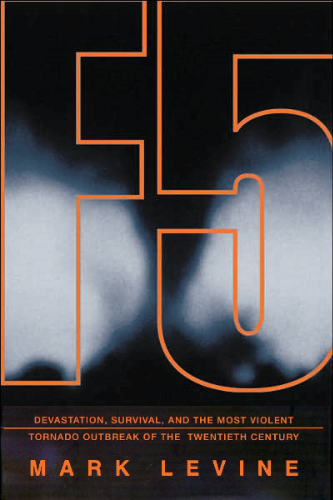
F5On May 31 in 1985, I was working at a church camp outside Uniontown, Pennsylvania when some severe storms rolled through the area. I had trouble sleeping through the thunder and lightning. I awoke the next morning to hear the news, in groggy disbelief, that tornadoes had invaded the county where my family lived. Frantic for their safety I tried to phone, but lines were down. It turned out all right—the nearest twister had been about five miles away from my home. This event was a shock because I grew up believing we never had tornadoes in Pennsylvania. I have always been terrified of them. I suppose that’s why I wrote my little book on weather in the Psalms. I just finished reading Mark Levine’s F5: Devastation, Survival, and the Most Violent Tornado Outbreak of the Twentieth Century. I’m not sure why I’m compelled to read about what scares me so much, but I suspect it’s because tornadoes have a whiff of the divine about them. Indeed, Levine’s book makes several reference to religious imagery when describing the utter destruction of Limestone, Alabama during the Super Outbreak of April 1974. It gives me little comfort that the storms that raked Ohio, Pennsylvania and Ontario eleven years later were the second deadliest outbreak following that of the book’s exploration, up to that time. There’s so much left to chance, with tornadoes.

Despite the complete lack of any intentionality behind the raw forces of nature, the phrase “finger of God” has become a fixture in the tornadic lexicon. Perhaps it is because the human perception of divine intervention has always been sporadically applied. One person’s miracle is another’s nightmare. Obeying only the complex rules of meteorology, the weather has ways of its own that even computer models cannot yet fathom. We still stand helpless in the face of the tornado. I have often thought, without a whole lot of data to back me up, that weather has played a major role in the human understanding of the divine. Quite apart from the obvious celestial orientation, the weather is easily forgotten until it turns bad, and when it does there is nothing humanly possible to do about it.

In April of 2011 a super outbreak of 358 tornadoes swept through the eastern United States and Canada, killing 348 people. In terms of damage, it was one of the costliest natural disasters in US history. And the capriciousness of the tornado stands at the center of it all. F5 is a hard book to read. The story practically turns its own pages, but the loss in human terms in the cold face of a planet that doesn’t exist for us is sobering indeed. Many religious people in the south were asking how God could allow children to be killed and hundreds of people maimed both physically and mentally for the rest of their lives. They prayed for answers that never came. And this may be the cruelest aspect of the apparently random nature of the weather. It maintains the right to kill, and prayers seem to bounce back from that brazen sky that comes just before a tornado strikes, and especially afterwards. Skies are silent. When they are not, it is time to duck and cover.


Apocalypse Then

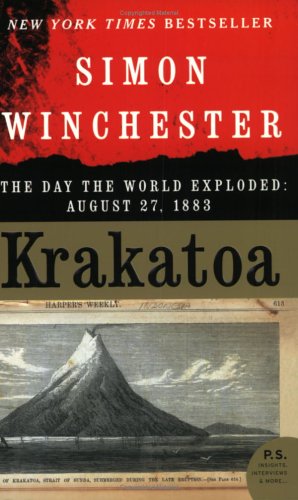
Krakatoa Sometimes everything blows up in your face. Literally. Simon Winchester’s Krakatoa has been on my reading list for years. Boys seem to have a fascination with volcanoes that they never outgrow, and given the world-wide implications of Krakatoa’s 1883 eruption, it is a tragedy that keeps me ever curious. We live on an angry planet. I know that’s projecting agency on nature, but like thunderstorms, to a human sensibility, volcanoes are raging phenomena. As Winchester points out, many indigenous cultures in the “ring of fire” consider volcanoes either gods or messages from the divine world. Honestly, I didn’t read Krakatoa to find out about religion, but it was there nevertheless. For human beings, it has an unparalleled explanatory power.

Krakatoa caused a stint of global cooling after its nineteenth-century eruption, leading to failed crops throughout much of the world, and perhaps played into larger political issues that would stress a world already attempting to cope with fast changes in technology. The story of the volcano is fascinating enough, but the religious dimension, it seems, played itself out more than just in a Gilligan’s Island sort of way. Despite what analysts say, people take their religious beliefs very seriously. So when I reached the end of the eruption, I wondered how Winchester was going to spin this book out for another fifty pages. It turns out that among the effects of the volcano was a religious rebellion. The East Indies, as they were called, were under Dutch colonial rule. This led to a bit of tension with the native Muslims (Islam has long been a major religion in Indonesia). As Winchester points out, the Islam in the region before the eruption was a syncretistic, almost laissez faire, faith. It blended with Hinduism and local beliefs, and even tolerated the Christian Dutch.

Symbolically, or literally, after the explosion that killed thousands, a religious movement that had been waiting for a sign came to life. A more strict Muslim sect saw the events as a predicted display of divine anger. A short-lived rebellion broke out, cut off by Christian repeating rifles, that led to a more strict version of Islam in the region. Although Winchester doesn’t linger on this too long—he is writing about a natural disaster after all—it does raise many very human responses. In the event of a cataclysm, science is cold comfort. We may rationalize, but human beings also feel. And it is religion that will attempt to answer for that pit in your stomach or that worry in your head. That’s what it does best. Science tells us that we can’t really stop volcanoes—we are too small and the planet too overwhelming. Religion, on the other hand, offers a grip on the very forces behind cataclysm—imagined or not. Although seeing natural disasters as divine punishment is never reasonable it is, in the words of a famous philosopher, human, all too human.