A Big Joke

On the evening table my wife left a token of hope for me to read in this hopeful season. New Jersey “Transit” claimed that the very next day riders of the extensive bus system would be able to track buses precisely on their smart phones. No more wondering “has the bus already come, or is it late (again)?” I laughed when I read this because that very evening in the Port Authority my bus never came. The frazzled and apologetic dispatcher said nobody knew where the driver was. Did anyone think to drag the East River? I wondered. As other buses pulled to the gate, drivers refusing to switch routes, the line grew and grew. The bus scheduled for the next half hour did not show. My daughter was waiting for me to fix dinner. On a good day I’m home by 6:30. This was not a good day. I laughed ironically at the article and went to bed. My morning bus leaves, in theory, before 6:00 a.m. A day later, in the Port Authority. My bus, which can now be tracked with precision, precisely failed to show up. I’m sure you know the dispatcher’s chorus—please join in—”nobody knows where the driver is.”

So what is a diatribe like this doing on a blog about religion? I’m as mad as Hell about this, that’s why! Every month I pay hundreds of dollars for a bus pass. I think the least New Jersey Transit could do is the courtesy of sending a bus. In case anyone from NJ Transit is reading this, a bus is a large vehicle that seats about 50 adults and generally runs the same way every day. It’s called a “route.” People use it to get to and from work. Of course nobody expects the executives of a company that services over 19,000 bus stops to take a bus to work. They probably have to be on time. I take the earliest possible bus from my town to New York City. Most days it is late and consequently so am I. For this I spend over three grand a year.

This is not about Hurricane Sandy. Buses have been back on schedule since Thanksgiving. What it comes down to is the fate of most capitalistic ventures—the working person butters the bread of the Executive Director who earns more than $260,000 a year. Last night I toyed with the idea of getting other disgruntled commuters to link arms and stand across the exit ramp, or to lay down in front of the buses until a bus for my route was sent. I suspect, though, that they realize as well as I do that Tiananmen Square doesn’t take much to morph into Times Square when an individual stands in the way of corporate gain. Tonight I plan to wear my good walking shoes. After all, I paid good money for them too. Unless, of course, anybody out there would like to drive this bus?
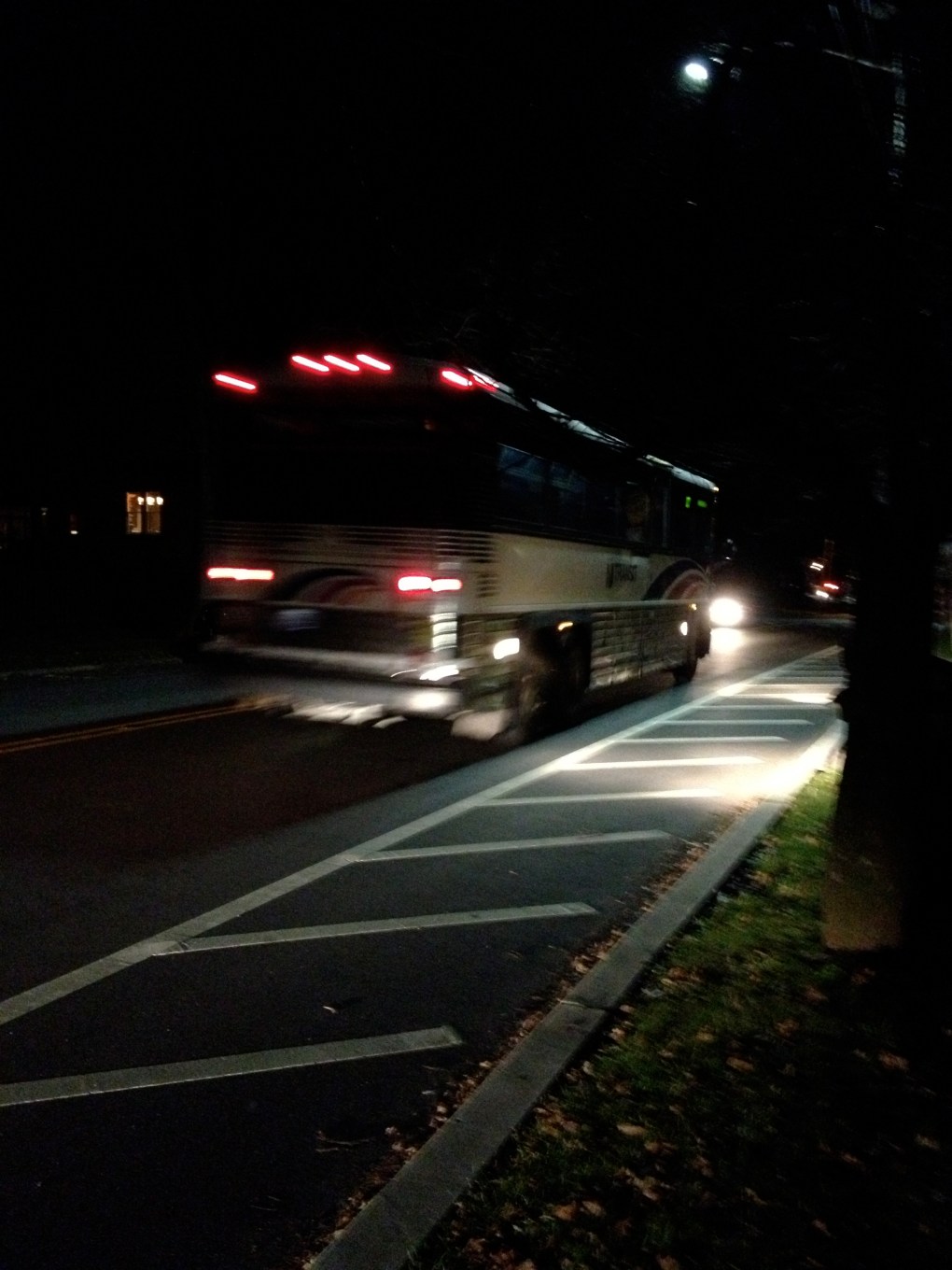
Ghost bus

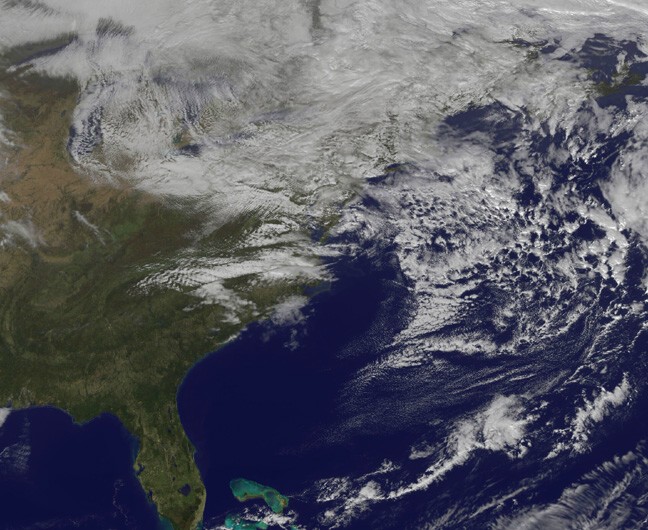
Ghost bus


Night of the Johnstown Flood

Floods always have a whiff of old Noah about them. I first heard of the Johnstown flood from a minister who has had a profound impact on my life. He had been in Johnstown for the 1977 flood, and that led me to learn a little bit about America’s first great natural disaster. I decided to follow up David R. Montgomery’s flood book by David McCullough’s The Johnstown Flood. Like most stories of human tragedy, this devastating flood combined elements of human culpability with nature’s own inscrutable workings. The 1889 flood came during an unusually heavy rainstorm. Some years before, an exclusive millionaire’s club had repaired an artificial dam rebuilt for the recreation of the wealthy high above the town. Records show the repairs to have been lackluster—at one point they purchased hay to act as cheap fill. Although the members knew of the danger they did nothing to avert the deadly potential a breech in the dam would inevitably cause. When the dam burst during the storm, over 2200 people died.

Wrenching, like most natural disaster accounts are, the story of human misery raises questions of theodicy and basic humanity. Members of the club were those who ran Pittsburgh in the days before their steel mills fell silent. Apart from a few like Andrew Carnegie, who gave generously to those in dire need after the tragedy, most of club members gave nothing to the relief effort for what their negligence helped cause. They hadn’t even hired an engineer to consult about their dam project when they decided to rebuild it. Lawsuits filed failed to touch them; the suffering of thousands failed to move them. Fast forward just over a century—as the towers of the wealthy came down the working class tried to save as many as they could, some at the cost of their own lives. We all know who are regarded as the heroes.

“Was it not the likes of them [club members] that were bringing in the [foreign workers], buying legislatures, cutting wages, and getting a great deal richer than was right or good for any mortal man in a free, democratic country?” McCullough’s words, explaining the sense of those who’d lost everything to the idle dalliances of the leisured class, still ring true in the world of one percenters. Often it takes a tragedy to bring society’s inequalities into focus. As a nation we’ve gone on to have even more costly disasters since May 31, 1889, but the instability built by corporate greed has kept pace, indeed, perhaps even surpassed what it was back then. “And God saw that the wickedness of man was great in the earth, and that every imagination of the thoughts of his heart was only evil continually,” or so I have it on good authority.


Blame it on the Rain

I’ve been on the losing side of my share of elections (although it feels like far more than my share), but I’m amazed at the character of the GOP that has come through these last few days. The quote that keeps running through my mind comes from The Dark Knight when the Joker says to the Chechen that if they cut him up and fed him to his hounds, “then we’ll see how loyal a hungry dog really is.” Blame has been flying thick and fast, but one thing I don’t hear any Tea Partiers suggesting is that Hurricane Sandy was sent by God to seal the election for Obama. Hurricane Katrina may have been sent by God to wipe out the sinners in New Orleans, but when Sandy gave a chance for Obama to show his true colors, it was just a freak storm. I’ve never been a fan of Chris Christie, New Jersey’s bully governor. During Hurricane Sandy and its aftermath, however, I was very impressed how he handled the situation. He showed a rare side full of compassion for those who were suffering. He vowed to help President Obama make things right again. When the storm of the election was over, however, Christie’s own party verbally crucified him for doing the right thing. Does this not show us just what white privilege spawns?

Turning back the clock is an exercise best left for post-apocalyptic scenarios of rebuilding society and the occasional spring or fall weekend. As our world makes progress—and yes, it is slowly making it—we must constantly reassess the situation. The ethics of the 1950s favored white men, the mores were blithely uninformed that an entire world exists outside this strange isolationism that could only be broken when Communists threatened our way of life. We are over half-a-century beyond that: the Berlin Wall has fallen, the Cuban missiles are gone, and those seeking to move to America are by and large the tired, the poor, and those yearning to breathe free. Not all of them are “white.” Not all of them are male. They are, like the rest of us, human beings.

I have never wished want or deprivation on anyone. I know what moderate want feel like (I lost an entire day of my college education searching for three dollars that fell out of my pocket, wondering how I would make it through the week without it). I have spent several years of my life tip-toeing around unemployment, and sometimes falling into that crevasse for a year or two at a time. Each time I claw my way out I earnestly wish that no one would ever have to face that. A political party that puts such a strong emphasis on giving up all the good we’ve managed to obtain, and cries about health care that doesn’t even approach the humane, universal care available in just about every other “first world” nation, is a party in need of serious, prolonged soul-searching. On this day when we honor veterans who, despite personal differences, stood side-by-side for the good of their country, perhaps those attacking their own might in days of privilege spend a few moments in serious thought.

Blame it on the rain…


Gitche Gumee

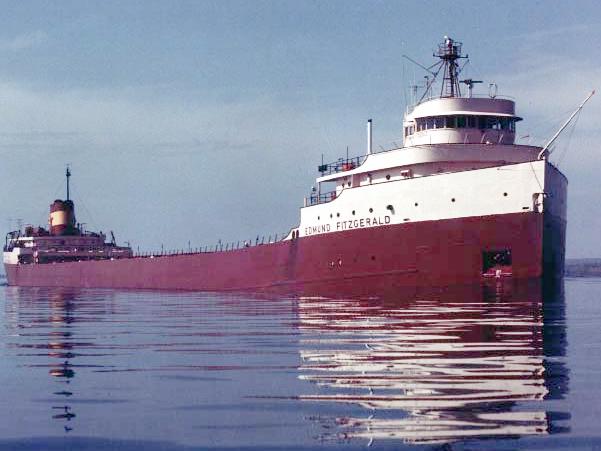
Up on the rugged western shore of Lake Superior the lamp atop Split Rock Lighthouse will be illuminated for the only time this year tonight. Immensities and superlatives fail at some sites, and as the cold waves lap eternally at the shore, this is one of them. Split Rock illumines its beacon in commemoration of the sinking of the Edmund Fitzgerald on the far end of that great lake on this date many years ago. While not as large as the Titanic, the Edmund Fitzgerald outstretched two football fields and carried more than fifty million pounds of cargo, immeasurables we are forced to recalibrate into yardage and tonnage. When the Fitzgerald sank during an unnamed November storm in 1975 only twenty-nine people died, but the tragedy soon became part of American legend. The image of immensities battling for the souls of twenty-nine human lives possesses an eerie, epic quality. When faced with the raw rage of nature, we are helpless indeed.

Shipwrecks may be the ultimate metaphor, for like ships we are consciousness in a protective vessel. Of course some deny that a soul exists, but in November it is difficult to doubt. A century ago the Titanic sank, and we still wonder in fascination. Human life is fragile when confronting the north Atlantic, or Lake Superior, or even the great waves that wash ashore and sweep some away. Great bodies of water, some psychologists say, represent forces larger than ourselves in the human psyche. Some suggest the ocean in dreams represents sex, but others would say it’s God. In the realm of metaphor anything is possible. It is no accident that many Christian sects begin the rite of membership with total immersion in water. When the Fitzgerald was baptized, twenty-nine men died.

Standing on the vast shoreline of a gray Lake Superior has a way of making you feel insignificant. Enormity was easily related to divinity in the primitive mind, but standing next to something truly vast still sends me into a protective crouch as I ponder just how little I really am. In this year of destructive storms, as we’ve taken to naming the winter squalls that whip across the continent with noble names such as Athena and Brutus, we are still at the mercy of something unspeakably large. The weather is the ocean above us, and it bears children named Andrew, Irene, Katrina, and Sandy. Each reminds us that we are constantly at the mercy of something far larger than human comprehension. Every year as the tenth of November rolls around I think of the Edmund Fitzgerald and the overwhelming forces that surround us. There is indeed a metaphor hidden here, for those willing to plunge into the frigid depths to find it.


Vote!

“Remember, remember the fifth of November.” Election day is upon us and my mind goes to V for Vendetta. The movie is about oppressive regimes and, more importantly, people finding a voice. It is a strongly emotional film for me not because of the violence, but because of the symbolism. Yes, V is out for vengeance, but we are all V, having been co-opted into a system that doesn’t seem to have our best interests at heart. At least we can vote. The scene at the very end, where V’s future, alternate universe gunpowder plot succeeds, always leaves me with damp eyes. By virtue of watching many movies, I am not prone to shed tears at what I know to be fiction. But some fiction possesses a verisimilitude that fact lacks. V for Vendetta is one such fictional vision.

I grew up a Fundamentalist Republican before such a combination was de rigueur. I also grew up believing in liberty, an idea that often resonates with those who don’t have much in the way of material goods. At least we have our freedom. By the time I attended a Christian college, I learned the error of my ways. I asked around to find out why America always seemed to get involved with conflicts under GOP administrations. I learned that, in some cases anyway, belief that Armageddon was around the corner motivated such wars. Even some presidents believed, as their religion taught, that the end of the world was nigh and it was their duty to hasten the process. Be careful what you vote for.

As I stood in long lines waiting for a bus out of New York City yesterday, I listened as other passengers wanted to talk. Hurricane Sandy left many people in poor circumstances, feeling the pain that is only alleviated by sharing. They told of devastated neighborhoods where people who hardly knew one another came together, naturally, to help each other. I listened to descriptions of those with power opening their houses and sharing their food with people they didn’t know. It wasn’t because the government forced them to—they did it because it was the right thing to do. When I watch V for Vendetta I don’t cry because I approve of violence; I have been a pacifist since childhood. I cry because the vision of justice prevailing is so beautiful that no other response seems appropriate. With that vision in mind, I am heading out to vote.


Lessons from Sandy

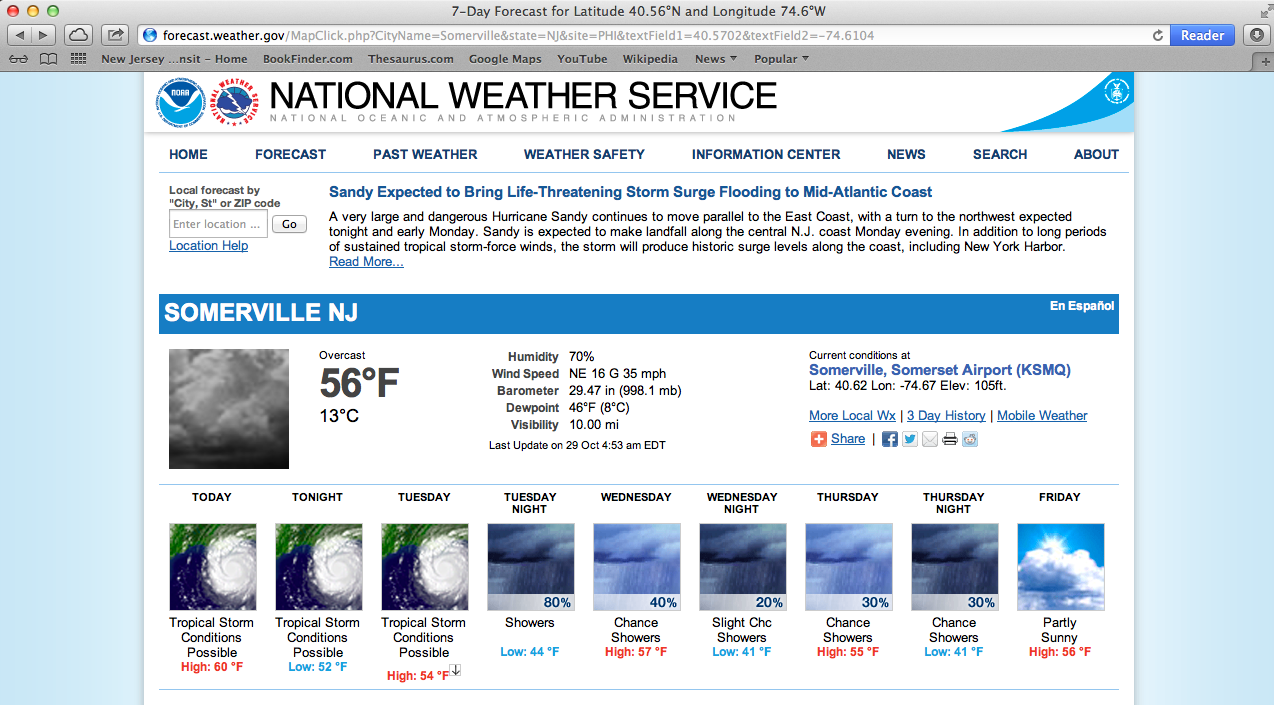
While many are still without power and school is cancelled for an unprecedented sixth day in a row, the eastern Mid-Atlantic states are still recovering from Hurricane Sandy. As I noted in my first post-storm blog post, one of the largest disorientations I experienced was being cut off from the internet. An article in Friday’s New Jersey Star-Ledger gives a name to this phenomenon: “nomophobia,” the fear of being left without access to an internet-connected device (specifically a mobile device, but in a pinch even a desktop will do). An article by Allan Hoffman suggests that two-thirds of the population suffers from nomophobia and that there are actual treatment programs available. A decade ago no such phobia existed and some of us were only just beginning to hear about the World Wide Web. This is a fear born of our own engineering—the virtual world of our making has come to haunt us.

No doubt life is somewhat easier with the internet. One word will suffice to illustrate it: phonebook. When is the last time I looked something up in a phonebook? While pulling open a drawer beneath the accumulated phonebooks on the phone stand, I noticed how thick with dust they were. Even the cordless phone with its answering machine appeared just a little bit medieval to my cyber eyes. If this is evolution, we may be in trouble. Technology was envisioned as the liberator from labor, but we’ve clearly become its slaves. Don’t worry about the food spoiling in the refrigerator, get me back onto Facebook—now! My smartphone has a flashlight, several email apps, and can soothe me with its music. It is my rod and staff.

On a short drive to run an errand this weekend, I went by one of the few stores with power in the area. Their electronic marquee read “cell phones charged here.” The greatest service that could be offered to a cold, hungry population living in the dark.

One of the hallmarks said to have ended the Dark Ages was the printing press. Literature, on paper, could now be spread (mostly in the form of the Bible) from person to person until all of Europe would have access to sacred knowledge. That knowledge (and a great deal of nonsense) is now worshipfully cupped in the palm of my hand. As Hoffman notes, even the librarians were telling patrons not where to find books, but where to locate outlets. Robots fight our wars remotely, and wireless networks link us in a web far more valuable than that of the silk moth. And we have realized that even the creator of an entire universe can be held in a child’s hand.

In the valley of the shadow of death, I will fear


Two Swords

One of the more interesting situations to emerge from Hurricane Sandy’s aftermath was the celebration of Halloween. I know that I’ve already lost some readers right there since Halloween is a disputed holiday. Often Halloween is maligned as “Satanic,” a claim that is absolutely untrue. It may have some paganism in its roots, but then, so do most religious events and ideas. Halloween is a Christianization of various folk customs, frequently Celtic in origin, on a night when the protective wall between the living and the dead was believed to be especially thin. As adults grew more sophisticated and scientifically informed, the holiday lingered as a children’s fun day with dress-up and pranking, both normal childhood ways of playing. This neutered holiday has proved to be commercially viable as well, now supporting September-October Halloween stores at a density of about a dozen per square mile. Its success is rivaled only by Christmas.

In light (or perhaps dark) of the devastation of Sandy, New Jersey Governor Chris Christie canceled Halloween. We heard the news on our battery-operated radio, sitting in the dark. While this was one of those rare times when I think Christie was motivated by the concern of both poor and rich, I did ponder the implications of a government canceling a holiday. All Hallows’ Eve is the night before All Saints’ Day. “Hallows” is simply another—less used but more evocative—word for “Saints.” While largely secular in its present guise, Halloween is a religious holiday. My mind went back to the doctrine of Two Swords that I learned about many years ago. Originating in the papal bull Unam Sanctum, very early in the fourteenth century, the doctrine teaches that in spiritual matters the church holds the sword while in temporal matters the state holds its own sword. Who has the right to cancel a holiday?

Of course, Chris Christie has his own ways of issuing bull, but his real concern was that conditions were too dangerous for trick-or-treating. Indeed they were. On a short walk, I saw power cables dangling like electrified cobwebs on just about every block, snaking along the ground. Branches were still falling from trees. Curfews (many still in effect) were widespread. Not a good night for masked strangers to show up at your door. But as in the case of the Grinch leaning out over Whoville after he’d stolen all the trappings, Halloween came, it came just the same. What we saw on Halloween was people helping one another. No tricks (for the most part, although among the first to recover were businesses who recorded new ads to broadcast on the radio before the wind even stopped blowing), just good natured mortals helping one another, protecting others from the grim reaper. To borrow a line from Charles Schultz, “That’s what Halloween’s all about, Charlie Brown.”

Will the real Halloween raise its hand?


For Saints, All

The year without a winter has also become the year without a Halloween. As the first surge of Sandy made herself felt, we were among the 5 million households in New York, New Jersey, and Connecticut without power. To put things in a little context, I have training in wilderness camping, having learned to survive outside with little more than a ball of twine and a pocket knife. Still, when Sandy knocked out our lights, heat, and most importantly, Internet, for three days I found myself in a new kind of wilderness. Each night, buried under blankets, in one room lit with candles (incidentally, candles that we made ourselves nearly a decade ago on a candlemaker spree in Wisconsin), we sat around a card table and played games, read, or just pondered the imponderable. I actually took to working on a blanket I’ve been making, but had set aside for a few years. If it weren’t for wondering if I had to go to work the next day until evening every night, I might have actually enjoyed it.

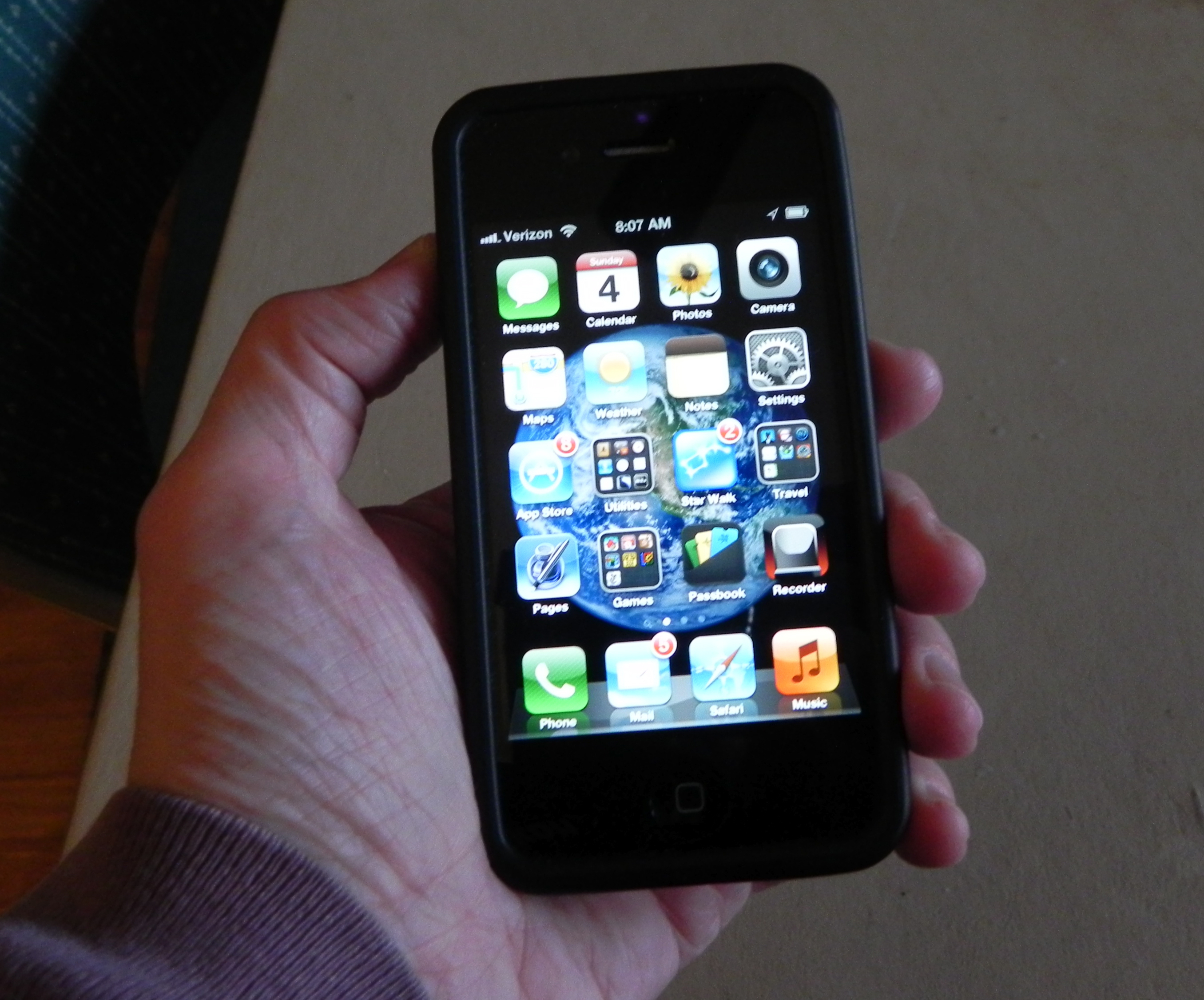
And the experience has made me a little leery of what I’ve become. Less than hour after the power came back on, everyone in the family was on the Internet. I confess to feeling that missing my blog was among the most disjointing aspects of the power outage. With no way to charge my laptop’s battery, and no router to connect me to cyberspace, I jealously conserved my iPhone power to get the text message that told me if the office was open the next day and if New Jersey Transit was running so that I could get there. My dreams all week were nightmares. Mostly about missing work. Another perspective: my grandfather was born on a farm. He built his own house and raised five kids while traipsing from New York to Montana and Virginia before settling in western Pennsylvania. He didn’t go to college but he kept his family well. He never lived to see a computer or an email.

So 2012 is the year without a Halloween. The lights came on on All Saints. To me those saints are the men and women of PSE&G who finally got our power back on. I’m sure they’ll understand the darker tones my thoughts took about the company as I trimmed wicks and recharged candle holders for the third night in a row when darkness fell on All Hallows Eve. Here I am, feeling decidedly wimpy and not a little disingenuous, posting on Sects and Violence in the Ancient World once again. I managed to update my blog while on the road in England, and from hotel rooms across the country as I’ve traveled for work. I can’t help but think how this reflects on my atrophied survivor skills. Maybe I’m beginning to feel what idol worshippers experience when they neglect their gods. I wonder if there will be nightmares tonight or work tomorrow.


Puny Windstorm

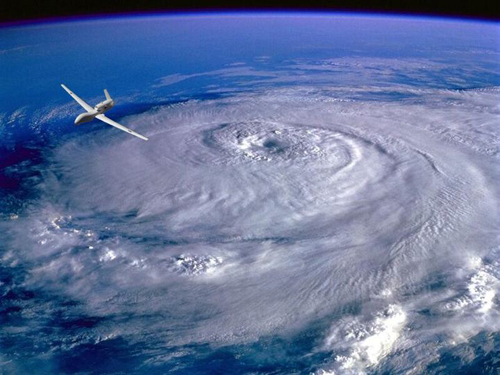
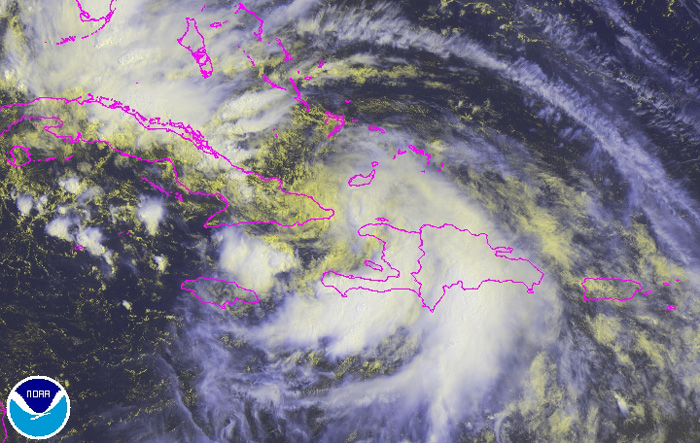
Nothing says wrath of God like a hurricane. Those of us along the Mid-Atlantic coast of the United States are hunkered down wondering what’s to become of daily life when the storm is over. Responses to the situation have been, well, religious. Store owners spraypaint prayer-like sentiments to Sandy on their plywood protection, urging the storm to be kind. Interviews are laced with language appropriately placating to a deity. The storm named after a mythical monster has become a god. Such responses are not limited to Hurricane Sandy, of course. In fact, when death is expected pleading with the powers that be is routinely recognized as Elizabeth Kübler-Ross’s bargaining stage of the dying process. We always hope that forces stronger than us might be willing to make a deal, cut us a bargain. The storm, given a human name, is personified as a deity. It is such a very human response to any phenomenon that forces us to realize just how small we are. Our egos may reach to the ends of the universe, but in reality we are fragile, scared children begging for the protection of a supernatural parent.

Last night as we were sitting here waiting to be hit, my family watched The Avengers. The juxtaposition of deities and heroes in the Marvel Universe fascinates me, and, of course, the movie has to explain that Thor and Loki are really only aliens perceived as gods. Compared with their human companions, they are immeasurably strong but they do not decide the outcome of the cosmic battle that devastates New York City. No, it is Tony Stark who flies the atomic bomb through the portal to the invading ice giants, saving humanity. Thor is too busy battling flying metal dino-whales. Humanity is responsible for its own salvation. The gods may help, but they alone cannot deliver. Against his protests of divinity, the Hulk bashes a protesting Loki into the floor of Stark Tower with the grunted huff, “puny god.” His only line in the movie. The portal, swirling hurricane-like over Midtown is forced closed and human technology, in the form of Iron Man’s admittedly cool armor, saves us all.

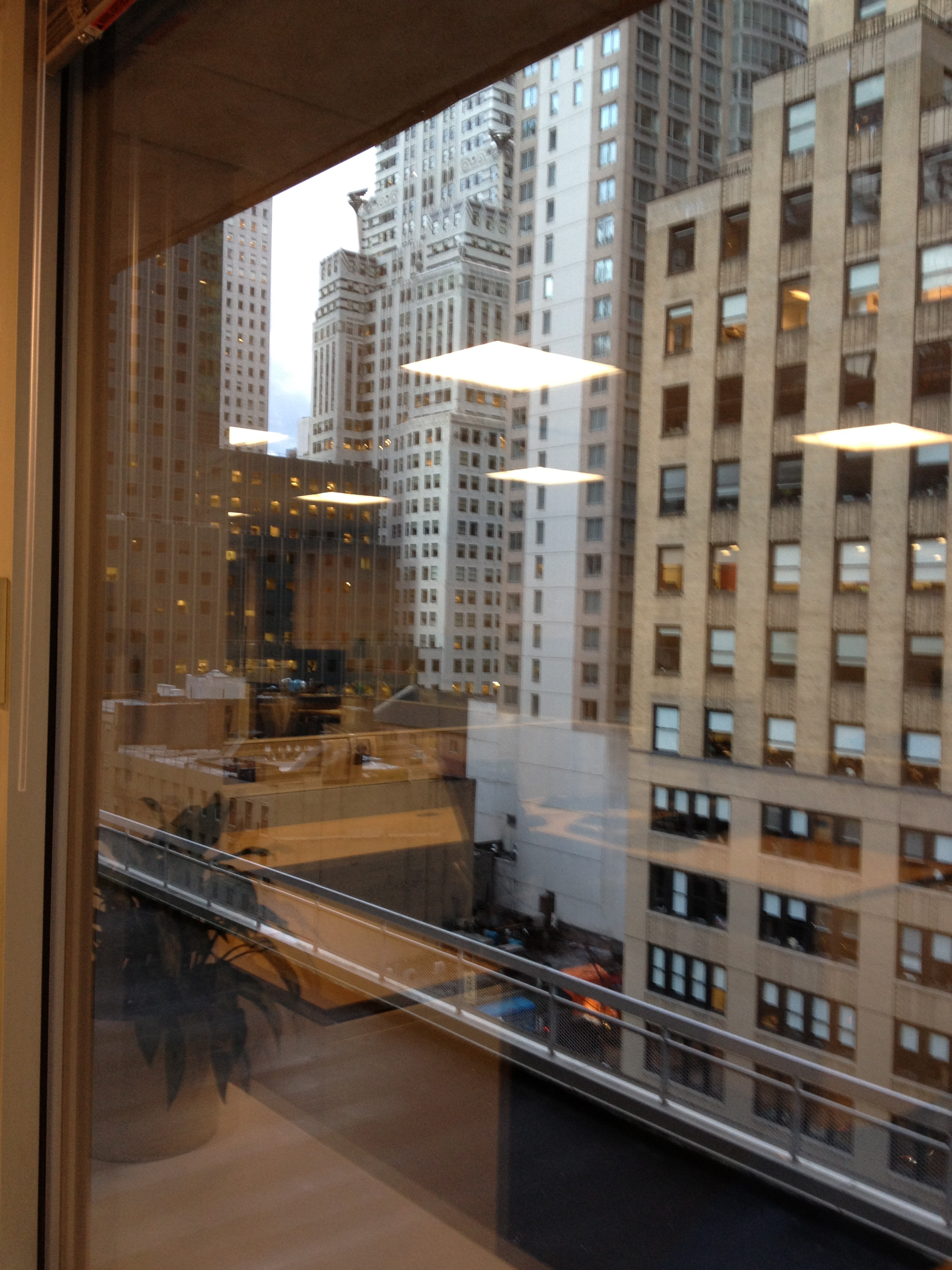
Hurricanes remind us that our technology can’t save us all. The advance warning may very well have spared many lives by the time this all blows over. As early as Thursday I was wondering if work would be called off or if I’d have to battle the rain and winds and storm surges to get to my office (which would have provided an awesome view of the final battle in The Avengers, facing, as I do, the Chrysler Tower and Grand Central). We have been warned. Our technology, however, can’t stop the force of the storm. Sandy may not be divine, but she is massive—much larger than any person who believes that there is some trace of divinity within him or her. As I sit here listening to the wind and the rain, I wonder what the weather is like in Asgard today.


New Prometheus

Nothing portends the wrath of the Almighty like an unseasonal storm. The late season Hurricane Sandy, now dubbed the Frankenstorm because of its potential hookup with two wintery systems making their way east and south, is poised to make an apocalyptic scenario on the east coast, we’re told. Well, it is 2012, the year of apocalypses, after all. In an interesting shift, however, this storm is named after not a divine character, but Frankenstein’s monster, the human-made nightmare. I first read Mary Wollstonecraft’s Frankenstein back in high school, and I was immediately subdued. The story, undoubtedly frightening when first heard, is unremittingly sad. The “monster,” like all of us, finds himself in a cold and lonely world where he is rejected because he is different. It is cruel and Republican kind of world. All the monster seeks is companionship, acceptance. I found the story so sad that I’ve had trouble reading it ever since.

The naming of a storm after a terror created by humanity may be prescient, in a regrettable way. Only the most gullible (read “greedy”) believe that industrialization had nothing to do with it. We toasted our own planet for a buck or two. In biblical terms we have sowed the wind, for which there is only one kind of produce. Hurricanes are quite natural, and although the irregular weather of 2012 may prove simply a meteorological anomaly, it may be the result of our tinkering with the baubles of divinity. They certainly seem to be getting bigger than they used to be.

I have to admit to having a persistent fear of those doing the cobbling. Too often their motivation appears to be flat and green and indigestible. And nothing like stockpiling it makes a person somehow less human. Mary Wollstonecraft wrote Frankenstein not for money, but for love of words. The modern chimeras we construct are mere carnival side-shows by comparison. And like Victor Frankenstein we have engineered beyond our capability to understand. Our best option may be to stand silently and wonder at the forces that hold us enthralled. For in the novel, at least, the real monster is not the cadaver stitched together underneath the sheet.


Bretz v. Noah

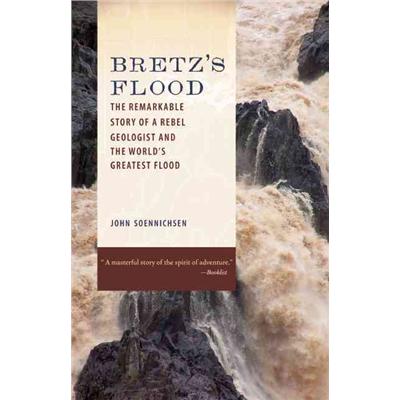
Until I met my wife I’d never been west of the Mississippi. Or even Ohio for that matter. Together we’ve traveled, in a fashion broken by years, from coast-to-coast and even overseas. Nothing in my life had prepared me for seeing the American West. No, I’ve not seen cowboys, but the landforms are so different from the weathered, ancient Appalachians among which I grew up. Eastern Washington is a fascinating landscape and with my occasional flirting with geology, I recently read John Soennichsen’s Bretz’s Flood: The Remarkable Story of a Rebel Geologist and the World’s Greatest Flood. Within the last couple of years I’d read about Glacial Lake Missoula, a juggernaut of an ice age lake that had flooded parts of Idaho and Washington thousands of years ago when its ice dam gave way. J Harlen Bretz was a turn-of-the-(previous)-century geologist who defied convention and insisted that the evidence of eastern Washington proved that a massive flood washed over the area, giving distinct shape to the region that empties into the Columbia River basin. For much of his career he was ridiculed by other geologists. The reason? The Bible.

Geology was the science that gave Darwin the idea for his evolutionary theory. The factor that had been missing from science, before geology, was time. The 6000-year-old earth just wasn’t old enough to account for the slow changes required for one species to morph into another. As scientists came to realize that billions of years were available, it became clear that change occurred even more slowly than the GOP is happy with. For geologists, anything that happened quickly was anathema. As Bretz’s Flood makes clear, a sudden flood sounded far too much like old Noah to be science. Catastrophism had been cleanly rejected by geologists because even if the evidence supported it, it looked like a return to mythology and superstition. Interestingly Bretz began his academic life among the Methodists of Albion College, and continued to quote the Bible to his last days. He was, however, an atheist.

The Bible has shaped our culture more thoroughly than Noah’s putative flood has shaped geology. I’ve read many geological studies over the years and any that are written for non-specialists never mention great floods without at least a nod to Noah. In fact, as Soennichsen points out, Bretz has ironically become a hero of Creationists who see the Missoula flood as Noah’s event. A large portion of Bretz’s career, however, was dogged by geologists duty-bound to deny a sudden flood just because the Bible tells us so. Sudden events are smeared with the residue of the divine.

J Harlen Bretz is hardly a household name, but his career is a microcosm of American culture. Glacial Lake Missoula did exist, as geologists now accept, and long before Noah was a twinkle in Moses’ eye. When the dam burst, the fable did fall, and down came the ark, Noah and all.


Whirling Spirits

A photograph and video of a “fire tornado” in Australia have been lighting up the web the last few days. Well, technically there is no such thing as a fire tornado, although that term serves perfectly well as a colloquial expression for the phenomenon. Having spent several years studying vortices for a project on weather language in the Bible, I came to know tornados particularly intimately. Dust devils, caused by surface heating, look and act like tornados, but a true tornado is cloud-based. The fire tornado is probably better termed a “fire whirl” or a “fire devil”—an expression that has a particularly ominous tone. Such vortices occur in wildfires in other parts of the world as well, and they are, obviously, very dangerous. When my wife pointed out the comments on this site (which also has a photograph and a link to the video), however, the implications for a blog on religion became clear.

One of the points I made in my weather work was that severe weather is almost always attributed to God. The comments on boingboing affirm that the concept retains its currency. Now, reading comments on most websites reveals just how juvenile the web readership generally is. On many sites the comments are so annoying that even Spongebob Squarepants would seem an intellectual heavyweight by comparison with the writers. Nevertheless on boingboing, by comment seven God had been brought into the conversation. In this instance, reference was aptly made to the movie The Ten Commandments, with others chiming in that nature here far outdid Cecil B. DeMille’s efforts at a realistic fire devil to represent God. The comments then move on to the guiding of the Israelites by a pillar of fire in the wilderness. Intermingled with the biblical references are meteorological comments attempting to classify the whirl a bit more precisely.

When something out of the ordinary occurs, our default seems to be God. This in no way discounts the scientific discussion for what is really going on. The religion and science comments simply talk past one another—they have the same referent, but entirely different levels of engagement with it. Although not the scientific names, “devils” and “tornados” represent different, if visually similar, phenomena. Vortices seem natural on a round planet that follows a round orbit while rotating swiftly on its axis, and yet they remain comparatively rare. The name “dust devil” probably goes back to indigenous traditions associating the whirls with ghosts or spirits. For Christians encountering these concepts, heathen gods were devils (as is evident in the name Devil’s Lake, Wisconsin, named “Spirit Lake” by the Native Americans. The same applies to Devil’s Lake, North Dakota, but I haven’t been there.) It seems to me that these vortices neatly summarize religious sensibilities: an awe-inspiring event is one culture’s deity, another culture’s devil, and a third culture’s natural phenomenon empirically explained.

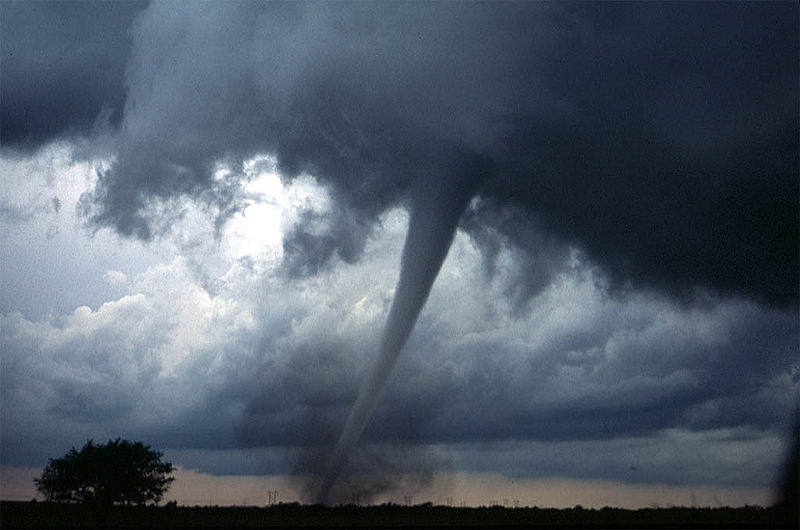
A real tornado


Under the Rainbow

Great irony attends the bearing down of Hurricane Isaac on Florida, disrupting the start of the Republican National Convention. Ironic not because of the damage or destruction that normally accompanies hurricanes, but because of the silence concerning divine intent. When natural disasters—does anyone remember Katrina?—have struck against “sinful” collections of people in the past, the religious right has always been swift to designate them examples of God’s wrath. Now that God’s Own Party is being inconvenienced by a hurricane this time, well, it’s just nature. I wonder what it is that so easily distinguishes divine punishment hurricanes from benign, natural ones? In a perfect world we would perhaps have a God that saw no need to create hurricanes at all. In the world we inhabit, however, we face disasters of all sorts and have the added burden of deciding which God has sent and which s/he has not.

One of the main strands of this skein of tangled thinking is the blithe unawareness that politicians often use religion insincerely. People, just like our other primate cousins, learn to respect the alpha male and acquiesce when we might get hurt. Politicians, at least for centuries, have known that few people will chase down the logic of their muddled theological declarations. We all know and experience gut-level, emotional responses to issues that matter to us. We all desire to claim the sanction of higher power—who wants to come out and admit that their opponent has some aspects of the truth and that this is purely a human matter to be decided by reason? Reason tells us that certain behaviors are not tolerated by group leaders—just ask a chimpanzee—and those in power have trouble facing up to the facts.

In one of the saddest legacies of championing nationalism is the unshakeable belief, for any nation or leader that has not embraced an atheistic approach, that God is on their side. Both Allies and Axis powers claimed divine support in both wars to end all wars. During Vietnam Bob Dylan wrote “With God on Our Side.” Politicians still hum along but they have forgotten the words. No, it does not please me that once again a hurricane threatens life and property. I’ve been told that every cloud has a silver lining, however, and I wonder if that applies even to hurricanes. If Isaac, like his biblical namesake, can change perceptions of what God requires, maybe we can see politicians without their masks and ask what it is they really want. That, I believe, would be more stunning than any divine punishment delivered via giant bags of wind.


Anatomy of a Neurosis

I’m sitting in a building less than 10 blocks from where a shooter opened fire in New York City this morning outside the Empire State Building.  I can still hear the helicopters buzzing overhead as they’ve been doing since just after 9 a.m.  One week ago I walked with my daughter down that very block after an office outing.  This is the third public, multiple shooting since July in the United States. Twenty are dead, over sixty have physical scars, and the rest of us have psychological trauma.  Gun control?  Only a distant dream.  I have been reading quite a lot about embodiment lately.  The idea is both simple and complex at the same time: we are born with physical bodies and our minds spend our entire lives trying to make sense of them.  Guns have a way of radically interfering with the process.

Stop, children, what’s that sound?


Often I have heard the adage, “guns don’t kill people, people do.”  This may be true, but it is no more so than the fact that we are all embodied creatures and we have a right not to be shot by homicidal maniacs.  At least I think so. There are enough guns to wipe out the population of this nation, and I’m sitting at my desk in a subtle panic since nobody seems to know what happened yet. The beating of the helicopter rotors is loud, petulant, distracting.

As the morning wears on the reports begin to take some order. The shooter wasn’t acting indiscriminately. The nine of the ten (later revised to ten of the eleven) people shot were caught in the crossfire between police and the gunman. The helicopters leave. Perversely I find myself relieved. Natural disasters happen and the lives of countless thousands are taken. The difference is there no motive is involved. As much as some televangelists want to tell us that “God” is punishing mostly innocent people, the fact is tsunamis, hurricanes, wildfires, earthquakes, volcanoes, and tornados are completely natural events. Maybe firearmophilia is natural as well. I can hear the sirens as innocent bystanders are rushed to the hospital. My embodied psyche turns back to my computer. Work won’t wait, and no matter where we are, we are all potentially innocent bystanders in a world where trust in guns has eclipsed trust in gods.


Criticism Is Not Attack

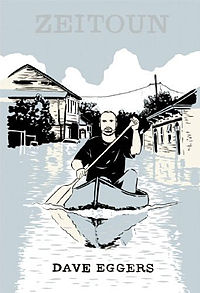
Each administration of George W. Bush was marked by a major disaster. 9-11 was followed four years later by Hurricane Katrina. The United States had received a one-two punch. I recently read Zeitoun by Dave Eggers. This is a book that should be read by every American, and it wouldn’t hurt others to read it too. This account follows the lives of a New Orleans family through the aftermath of Katrina. The main character, a tradesman named Abdulrahman Zeitoun, is a permanent resident of the United States from Syria. His wife Kathy, a convert to Islam, was American. When Katrina bore down on New Orleans, Kathy took their kids to safety with friends while Abdulrahman (known by many as Zeitoun) stayed in the city to look after the properties they owned. When the flooding had engulfed entire sections of the city, Zeitoun paddled about in a canoe, rescuing those he could, and even feeding abandoned dogs. Family and friends urged him to evacuate, but he felt he was doing good. Until he was arrested on his own property and imprisoned for being Syrian.

In a wrenching account based on interviews with Zeitoun and Kathy, Eggers describes how the US government quickly set up Guantanamo Bay-style prisons rather than attempting to rescue those stranded in their homes. Zeitoun was arrested and never informed of the charges, although he heard paramilitary guards armed with machine guns uttering “Taliban” and “al-Qaeda” at him. He watched as a mentally disabled man was pepper-sprayed by soldiers when he clearly couldn’t understand what they were commanding him to do. Despite having government issued ID and good standing as a business owner in New Orleans, Zeitoun was presumed guilty because of his profile: “Arabic” and Muslim. As Eggers reminds us, Homeland Security is now the administrative head of FEMA, and those that Homeland Security distrusts (all of us) are potential terrorists rather than citizens in need of help during times of disaster.

I grew up in a rather monochromatic part of the country, but as I traveled I met and befriended those of differing nationalities, including Syrians. Those considered “the others” by xenophobic bureaucrats are just as kind, loving, and good as those of us born under the sign of the cross with “white” skin. Zeitoun stands as an indictment of the jingoism that has come to be recognized as the only legitimate American citizenship. Zeitoun spent nearly a month in maximum security prison before being released after a makeshift trial, when no evidence existed that he’d done anything wrong. What has happened to the tired, the poor, the huddled masses yearning to breathe free? They’ve become the enemies of the state. I know, Katrina engendered extraordinary circumstances. Extraordinary circumstances, from a “Christian” view, however, demand extraordinary sympathy. Do the nation a favor. Before November, read Zeitoun.