Seedtime and Harvest

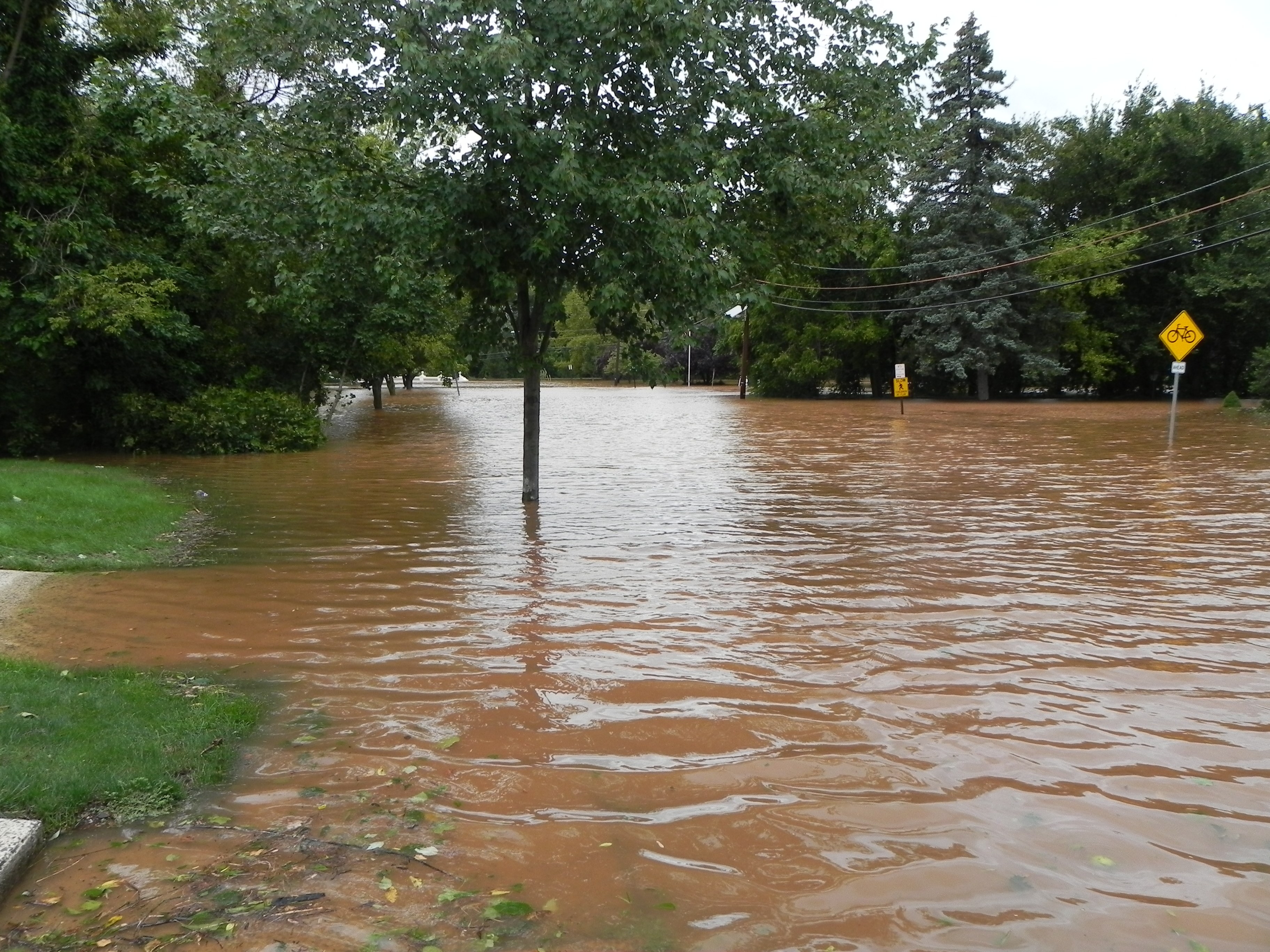
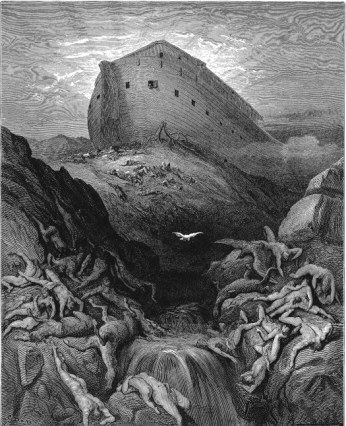
With the drought deepening over about half the United States, it is with not inconsiderable irony that I am reading the story of Noah’s flood. I have been tweeting the Bible for some months now and am just reaching the end of the fascinating account of the deluge. The difference in the case of the drought is obvious, but similar. Having spent some time in the Midwest, I came to know how intimately and intensely many of the citizens trust God’s providential care (this is true elsewhere, of course, but I noticed it more in that region). When disasters come, however, just like an animist would suggest, answers will be sought in the divine world. “While the earth remaineth, seedtime and harvest, and cold and heat, and summer and winter, and day and night shall not cease.” Genesis 8.22 rounds out God’s plan for the perpetuity of nature’s cycles, stating in just the previous verse that he knows people to be wicked and will never punish them for it again, as he did in the flood. Such biblical assurances, however, do little to allay fears when crops are dying in the field.
The problem in looking for answers in nature is their ambiguity. Just consider the record number of church picnics that haven’t been rained out this year—the number of prayers I’ve heard for the staying of rain for human convenience is surely a reflection of how intimate divine interaction with the workings of nature is supposed to be. One of the benefits of science has been its ability to straighten out all the cards in the deck, tapping them on the table-top and squeezing them into line. How would God weigh prayers for no rain so that an outdoor wedding of a devout couple could take place versus the prayers of a backslidden farmer for much needed precipitation (without hail)? Are decisions made by majority request? Wouldn’t that be excessively dangerous, given humanity’s track record of deciding what is good for itself?

The drought is a serious concern, and I do not mean to suggest otherwise or make light of the situation. What concerns me is the human tendency to look for a divine bailout. Many politicians of certain persuasion (usually the greenback kind) tell us that the climate is just fine. Our greenhouse gasses are not unduly affecting it. Now that a drought is upon us—and even a child can understand that all weather is related—the focus shifts to God. This dancing around the elephant in the room is tiring and dizzying. We can spend billions of dollars making bombers that are almost invisible to radar and so oddly shaped that they get reported as UFOs and yet we can’t get politicians to consider our impact on the very skies they fly in on their bombing missions. The atmosphere is larger than us all and it is warming up. And when we bake ourselves out of existence isn’t it a comforting thought that seedtime and harvest will continue, at least until our sun burns out?


Cabin Fervor

It’s a sure sign that work is growing overwhelming when I’m too tired to watch my weekend horror movies. Well, I decided to fight back the yawns and pull out Cabin Fever this past Saturday night. I’d seen the movie before, and I’m not really a fan of excessive gore. The acting isn’t great and the characters aren’t sympathetic, yet something about the story keeps me coming back. In short, a group of five teenagers (it always seems to be five) are renting a cabin for a week when they get exposed to a flesh-eating virus. They end up infecting just about everyone in the unnamed southern town before they all end up dead. It doesn’t leave much room for a sequel, but that hasn’t stopped one from being made. One of the unfortunate victims of the virus is torn apart by a mad dog. The locals, fearing their safety, decide to hunt down the surviving youths.

On the way to the now gore-smattered cabin, one of the locals mutters that they’ve been sacrificing someone—a natural enough conclusion when body-parts are scattered around, I suppose. He says, “it ain’t Christian.” Well, yes and no. Sacrifice is at the putative heart of Christianity, although human sacrifice (beyond infidels and women) was never part of the picture. As is often the case with horror film tropes, the victim who has been dismembered is a woman. The guys whose deaths are shown are all shot. Now, I have no wish to attribute profundity where it clearly is not intended, but there does seem to be a metaphor here. Our society and its staid religion tolerate the victimization of some over others.

One of the hidden treasures of the best of horror movies is the social commentary. George Romero made an art form of it in Night of the Living Dead and its follow up Dawn of the Dead. Many other writer/directors have managed to do it quite effectively. We can critique our world when hidden behind the mask of the improbable. While the commentary for Cabin Fever may be entirely accidental, I still find a little redemptive value in it. That, I suppose, is the ultimate benefit of social commentary—it is true whether intentional or not. Is there a larger message here? I wonder if the fact that when women are victimized no one survives is pushing the metaphor a little too far. It’s hard to say; I’ve been working a little too much lately.


Artifacts or Theodicy?

Last week the Huffington Post ran a story that ties archaeology, religion, and monsters together in a package too neat for some researchers. Digging in a sixteenth-century grave for plague victims (something that strikes me as being so foolhardy as to be religious) archaeologists found a corpse with a brick in its mouth. The preliminary conclusion? Sixteenth-century Italian plague-weary society was attempting to stop a vampire. The find has, of course, been disputed. Other archaeologists, the story notes, claim that a loose brick could have fallen into the cadaver’s agape mouth just making it resemble the little-known technique of stopping a vampire by bricking its mouth open. This story, written with Huffington Post’s usual pluck, raised an issue I quite often encountered as a doctoral student in ancient Near Eastern religions: anomalies are generally categorized as religious.

When my wife first pointed this story out to me I thought I might learn something of vampire lore—itself inherently religious—from the sixteenth century. The fact is, however, that artifacts (including people) under the ground accumulate a lot more than dirt. Mystery attends the lives of yesteryear, and the further back we go in time the less we understand. It was a standing joke among those of us in the textually-based field of religious studies that any artifact for which no function could be discerned would most certainly be labeled “religious” by archaeologists. When no logic attends an action, call it religious. This might be a motto for academics and their approach to the study of religion. There are some who claim religious studies is not a proper field of inquiry at all. Excuse me, but where are you intending to fly that plane?

Vampire scares (whether or not that’s what was found in Italy) do, however, follow their own logic. Although early scientists may have made connections implicating rodents (and their fleas) as carriers of plague, the average citizen would have only seen the supernatural dimension. Morbidity on the scale of the Black Death is almost inconceivable and as Europe suffered through periodic outbreaks of plague it seemed that a good God couldn’t be behind it all. Evil creatures, such as vampires, get God off the hook. They are a device of theodicy. “Theodicy” is the jargon for the theological justification of God in a world full of suffering. When God’s goodness effaces to such a point that people grow frightened, well, isn’t it just easier to say a vampire is behind it all? The conclusion that logic draws is quite different. Nevertheless, I think I’ll be replacing the garlic on my nightstand with a brick. What will the archaeologists of the future say?


Rule Britannia

Being back in Britain serves as a constant reminder of how conspicuous consumption has come to be a hallmark of American culture. When my wife and I moved to Britain back in the 1980s we soon became acclimated to the shift in scales to a size that seemed much more within our grasp. Yes, civilized people could live without undue excess and still be quite happy. Living in the States swiftly eroded the confidence that less is enough. Those who do not climb die. Back in Britain, there is evidence that the unabashed capitalism is spreading like a poison through this nation as well. Too readily the draw of gain and personal comfort outstrip our concern for other people. On a whole, however, the ideals of a society where all have health care and the elderly are not simply forgotten still remains intact.

Perhaps it is the benefit of having once been an empire that spanned the globe, or perhaps it is a hangover from having borne the burden of monarchy and a stratified society where noblesse oblige ensures that those below are not left behind. Not that such a system is without its faults. A century ago Titanic was setting forth from these ports and sank with the humble classes going first. Such tragedies show that even where noble ideas hold sway, the inexorable draw of evolutionary development will favor those who assert themselves. The monkey on top when the ship sinks gets to draw the last breath.

Back in my Nashotah House days I used to have recurring nightmares of sinking ships. In our attempts to extend mastery over the largest environment on our planet, the one in which we cannot survive, we face an uncomfortable reality. Even if those whose names still register a nod of recognition are those who had amassed the most wealth, they are equally as deceased when the hull strikes the Atlantic floor. Is it such a difficult matter to make sure that everyone has enough before allowing those enamored of wealth to accumulate superfluous amounts of it? When the ship sinks, those with the wealth to buy themselves extra minutes may have time to think. And if those thoughts are honest, they will realize that the cost has been too great all long.


Renters, All

Ownership is an odd concept for mortal creatures. With limited time to spend on a finite planet, we devise rules that give exclusive rights to some while denying access to others. I have never owned property (tellingly called “real estate”)—the life of those who stumble into higher education doesn’t really lend lenders any confidence of one’s ability to repay debts. I spent too much income, I guess, on my education. In any case, the concept of ownership seems to be endemically human. In most societies we want that thing that we found, that we picked up and moved with us, to remain where we put it so that we can access it again. That particular stick or stone that caught our eye for utility or beauty—it is that we wish to own. Soon humans are building vacation homes in the regions of stunning natural beauty that dot an industrialized landscape, vacation homes where they can get away from it all. Humans owning nature.

Recently I read a story in the New Jersey Star-Ledger about beachfront property “owners” in New Jersey suing over beach reclamation. Now before bursting out into peals of laughter, please be aware that those who claim New Jersey lacks natural beauty have never visited the state in the spring. Once outside the urban sprawl surrounding New York City, Jersey is, for the most part, very pleasant. Many of the beaches are pristine. Of course, pristinity invites affluence. The wealthy like to settle where the views are nice. And so when the state tried to prevent beach erosion by building dunes the rich cried foul and began to sue. It looks like the state will have to pay out. The very state that I, along with countless others who can’t afford a single house, support by our taxes. That money is now being piped into the pockets of those whose summer homes now have a slightly diminished view. My heart bleeds.

One of the facts of life on the Atlantic coast is hurricanes. Another is nor’easters. Both of these storms erode beaches at a terrifying rate. And when the beach is gone, whose house will be in the ocean? Those who wanted the dunes removed. Money is just distilled ownership. Those flimsy pieces of paper have no inherent value. It is difficult even to believe in money when you never see it. Electrons zipping through the Internet are the only sign that I’ve been paid. Yet we value it above all else. I’m not sure how this fits in with a gospel that condemns money and a Jesus who suggests the only way to heaven is to give it all away. Well, maybe it all fits, as long as you don’t block my view of the ocean. After all, owning part of a planet entitles you to some feeling of self-importance. Or so I suppose.

Who's really in charge here?


Spare Change

The vernal equinox snuck up on me this year, and I learned that it can also be what those in medieval Europe used to call a “dismal day.” The sun was out and the temperature was unseasonably warm, but beginning with breakfast and all the way until bed-time, things just didn’t go according to plan. My mother had been admitted to the hospital, and I live some 600 miles away. When I called to see how she was doing, I spoke with a bureaucratic nurse who could neither “confirm or deny” that she was even there. I wasn’t aware that my mother had connections with the military, government, or covert operations. When I said I was just looking for my mother I got read the riot act including—this is the truth—having the Hippocratic Oath cited at me. I think, in all honesty, it might be spelled Hypocritic. Don’t get me wrong—I think it is important to protect people’s rights, and I sure the duty sergeant—excuse me, nurse, was only worried about lawyers and lawsuits. We have constructed a country so insidious that a boy can’t talk to his own mother. Eventually she put my call through to the patient’s ward where one of the patients answered the phone and went to find my mother for me. We call it civilization.

I’m not the most technical of guys. Think about it—I majored in very dead languages. When my wife surprised me with an iPhone for Christmas, my brother-in-law kindly agreed to get in on the surprise and took care of the details. We went into the Verizon store after the holiday and switched the phone (with the phone number I’ve had for years) into my name. Nearly four months later, when I tried to change some plan details, both he and I had to call Verizon several times to get the mess straightened out. One of the communications giants seems to have made itself so technical that it can no longer understand a simple request. When the Verizon representative asked if I understood the user agreement I said yes. Have you ever read one? No one without a law degree could possibly understand. Even Moses didn’t have a cell phone. I had to spend an entire evening getting my own phone back under my own name. Our society has taken what should have been a two-minute phone-call and made a mini-series of it.

So, is it because the vernal equinox is so early this year that my world went haywire for a day? We live in a society where it is nearly impossible to prove you are who you say you are. And children are not allowed to speak to their own mother. Lawyers have taken the law meant to shield us and made a bludgeon of it. Communications experts obfuscate. It may seem random, but these two phenomena have the very same evil as their root. They are twin trunks springing from greed. The nurse can’t put me through because a lawyer may sue. My phone number can be reassigned to my name, with added costs, approved by lawyers that only corporate giants can afford. Human need has been reduced to terms of cash. The trees are budding. The air is warmer. Flowers are in bloom. But it certainly doesn’t feel like spring to me. That chill you feel is cold, hard cash. We are all just spare change.

The weight of a human soul, legally.


Tortured Gospel

Tornadoes? I don't see any tornadoes.

It is a little difficult to force yourself to think of tornadoes when you’re in sunny California. On my flight into Santa Barbara I could see the tail end of the gray whale migration from a few thousand feet in the air. Outside the tiny municipal airport (with its full-body scanner) I see palm trees swaying in the wind. The air smells like flowers. Life is too easy in California for me ever to live here. I need more angst in my diet. I can’t come to the sunny coast, however, without the Eagle’s “Hotel California” replaying endlessly in my head. It was the running joke at Nashotah House that the real Hotel California was located in the woods just outside Delafield, Wisconsin. The haunting lyrics by Don Felder, Don Henley, and Glenn Frey managed to capture the witch’s brew of mind control, humiliation, and desire that laced that little, gothic seminary in the woods. Yet even sitting in California with its full greenery in March, I see that Pat Robertson is blaming the devastation of the recent tornadoes on lack of prayer.

Blaming the victim is a classic fascist technique, and it is very easy to proclaim one’s own righteousness when not in harm’s way. Herein lies the darkest sin of the self-justified; they think themselves specially blessed and therefore not responsible to help the victims. While flying over the Santa Ynez Mountains, seeing the smoke from California wildfires climbing like the terminal flames of Babylon, I could hear a voice like a choir of fascists singing, “Alleluia And her smoke rose up for ever and ever.” Schadenfreude fuels too much of the evangelical worldview. According the Gospel writers, when Jesus foresaw the destruction of Jerusalem, he wept. WWJD, Rev. Robertson?

Tornadoes look so much like divine judgment that it is almost understandable how a naïve believer might see them as coming from God. We, however, are the gods destroying our own planet with the accompanying degradation of the weather. Neo-cons deny the fact of global warming. It is not a myth or a theory, there is inconvertible proof that it is happening. Still, it is more convenient to blame God. After all, chances of him showing up to deny false charges, as history repeatedly shows, are very slim. Ask any innocent woman tied to a stake in Medieval Europe accused of being a witch. Apparently the divine calendar is too full to worry about the troubles of hundreds of thousands, or even a few millions who are falsely accused. Why not send some terror from the sky? It is hard to think of such things in sunny California. Yet as the “good news” of the televangelists spreads to the ends of the earth, even those forever in the sun will need to stand in judgment before a very capricious deity.


Denying Truth, For Profit

Sometimes I’m questioned about why I bother with creationism. Everyone who’s intelligent knows it is religious ideology masquerading as science and people will eventually figure it out. But will there be time? An editorial in yesterday’s New Jersey Star-Ledger pulls the curtain back on creationism’s incestuous cousin, climate-change denial. As the editorial notes, key documents of the Heartland Institute—one of the major propagators of climate change as “just a theory”—have been leaked and show that they have learned their lesson from creationist tactics. They want “debate the question” instilled in science classes in lieu of facts. And much of their money comes from big oil. It is the hope of such institutes that an American public already woefully pathetic at understanding science will be led to believe “just a theory” equals “likely not true.” The data are stacked completely against them and the entire rest of the developed world knows that.

While the issue may seem less religious than creationism—which is based on getting Genesis 1 in the classroom as science, no matter what you call it—it has deep roots in that same insidious cocktail of politics, religion, and dirty money. Biblical literalists tend to believe the world is about to end. The belief has been around for at least two millennia. It is a damning and damaging belief that declares the world was made for raping because it is about to end. This deranged thinking is fueled, literally, by unrestrained economic interests. Sometimes the groups can’t see beyond the Bible to realize that they too are being screwed. Science is objective, and it is science that has been challenged by various religious and political groups since the 1920s. Today, when there is far too much information for anyone to stay on top of it all, and in an American society deeply distrustful of higher education, I smell an explosive amount of methane in the air.

Climate change is real. The “theory” is so well supported by evidence as to be fact. Is anyone really surprised that supporters of the Heartland Institute have also backed Newt Gingrich’s campaign? We have placed ourselves in a very dangerous position as the last remaining “superpower.” I tried to read a book on environmental issues that Routledge published, but was so scared after the first three pages that I had to put it down. What is the lesson here, class? Is it not that money is the root of evil? And that, my dear literalists, is biblical.

The future of human economic evolution


Don’t Let Them Frack You

One of the consequences of having been born into a post-industrial society is the sense that others have managed to set the parameters even before I became aware of them. In the summer of 2010 I learned about the Deepwater Horizon accident. Prior to that, I had no idea that semi-submersible, deep-water drilling was even possible, let alone already happily lining billionaires’ pockets. I felt violated. This is my planet too. That same year, while attending a FIRST robotics competition in Trenton, the high school kids were greeted after the event by a lone protestor wearing a sandwich board warning of the dangers of fracking. In New Jersey it is very easy to find people protesting. Sometimes their nemeses are purely delusional. “What’s fracking?” I asked one of the kids (all of whom are arguably smarter than me). He didn’t know. I looked it up once I got home, and once again had the feeling that somebody was messing up my planet without me knowing.

Sure, human habitation has a tremendous impact on the environment. It is part of the curse of consciousness. Nevertheless, at some level we must know that our actions threaten not only other species, but also our own existence as well. A story on CNN about fracking, back in my own oil-industry state of Pennsylvania, demonstrates the dangers all too clearly. I grew up in the shadow of a petroleum refinery—Pennsylvania is where the oil industry began. Unfortunately it also has a history of poisoning its own environment. The CNN story highlights the dilemma of Dimock, a tiny town with water contamination caused by fracking. Not even a hundred miles away to the south lies Centralia, still slowly asphyxiating from its fifty-year old mine fire. Our lust for fossil fuels—and more importantly, the wealth they bring—has bankrupted our sense of responsibility to our planet and to each other.

I am certain free-market entrepreneurs would characterize what I sense to be injustice as mere complaining. But there comes a point at which we have to ask if the extra energy is worth the cost. Maybe we could do with a little less. I know that’s blasphemy in capitalist ears, but it is a truth whose scars scrawl across the landscape of this nation. Just about 150 miles southwest of Dimock lies Three Mile Island, a testament to our love of power. Over on the western edge of the state sits the ghost town called Pithole. An oil boom town, it ran out of steam when deeper pools were discovered elsewhere. When I stand in its deserted streets, returned to nature after the many decades of neglect, I realize that it is a silent symbol of human ambitions. We should not give up on our earth, lest it give up on us. It is not too late. Yet.

Borrowed from the National Fuel Accountability Coalition


Three Degrees Below Zero

Rick Santorum has turned his attack on intelligence against American universities, according to a story in the Huffington Post. He claims the left uses colleges for indoctrination to keep themselves in power. Sounds like somebody’s been sipping a little too much communion wine. I know many people who might have a right to make such claims, but Santorum isn’t one of them. Santorum earned a Bachelor of Arts, with honors, from the wicked, indoctrinating Pennsylvania State University. He then succumbed again to the indoctrination when he, apparently accidentally, earned a Master of Business Administration from the University of Pittsburgh. Somehow he stumbled onto a J.D. with honors from Dickinson School of Law. A man this indoctrinated, I say, has no business being president.

During these senior moments (not to offend any seniors who might actually make that claim) Santorum seems to have missed that universities are among the most under-funded, crisis-ridden institutions on American soil. With rare exceptions, universities are cutting programs, canceling positions, and slashing budgets. Don’t get me wrong, I’ve vented a fair amount of criticism on our universities and I know, firsthand, that they aren’t perfect. I rage because I love. It seems that some children of privilege like to rage because it’s in fashion. If you’re going to take on those smarter than you, at least try to get the facts straight. Higher education is such a small segment of the American employment force that the only reason you’d go after them is that, well, you’re in a church. Baptist Catholic Santorum made his remarks while at a church in Florida, a state which, despite insidious power-mongering, boasts some of the finest universities in the country.

Taking stabs at Obama, Santorum claims the president wants all kids to go to college, and that’s a bad thing. You don’t want an educated electorate. It is harder to get educated people to march in goose-step with everybody else. Talk about indoctrination! Vote for me, because I will keep you safe from the horrors of an education of which I couldn’t stop my self from taking advantage. Don’t send your kids to law school. There can be real danger even in sending them to grammar school, for there they learn to spell. I wonder, if in the course of earning his three degrees, Mr. Santorum ever learned to spell the word “hypocrite.”

Just an average guy, hanging with his buds.


Sinking Feeling

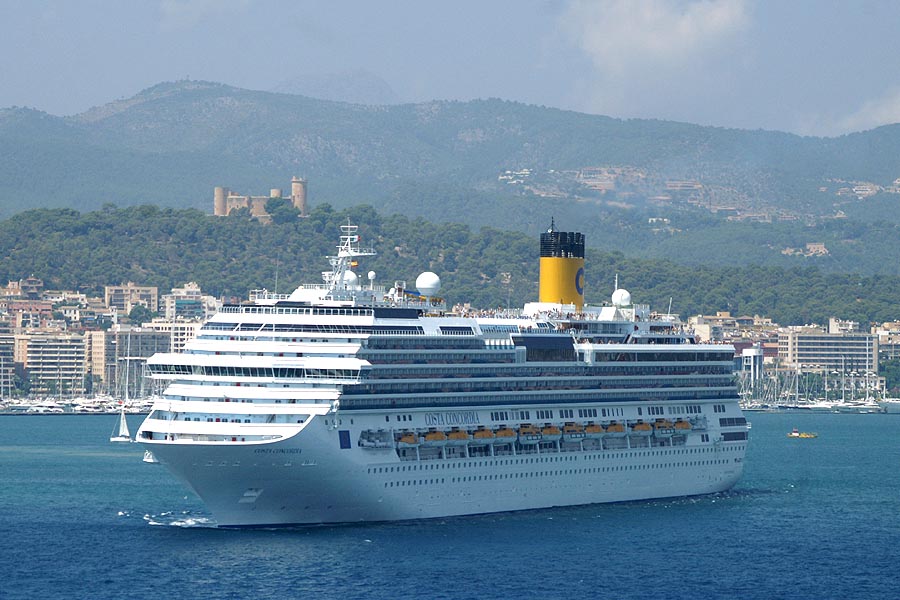
Many readers are aware of the heavily metaphoric nature of many posts on this blog. Sometimes staring directly at something can be too troubling to handle, so metaphors come to the rescue. I was about to board a plane in LaGuardia yesterday when the news about the sinking of the Costa Concordia came onto the news. The wrecks of mass transit carriers—whether trains, planes, buses, or cruise ships—are tragic in terms of the potential for harm to many. Perhaps worse, they are reminders of our own anonymity. It is the rare John Jacob Astor who gets remembered as the victim of a specific mass tragedy. And he was already famous to begin with. We hear more about the Buddy Holly crash than we do the individual names of the many thousands wiped out in the Christmas Tsunami of 2004. What were their names?

As of this morning eleven people are reported dead from the Costa Concordia, one of them notably not being Captain Francesco Schettino, the man who would not go down with the ship. Seafaring lore—surely some of the richest and most inventive in the world—has rules about this kind of thing. The captain goes down with the ship. Ships were (are) generally given feminine names since they are the womb-like protectors of those aboard. Nature knows no better protector than a mother. The captain is the dedicated son who, when his mother sinks, accompanies her to Davy Jones. The Italian coast guard had to order Schettino back aboard his sinking ship after he’d abandoned rescue efforts.

We expect much from our leaders. Things are so complicated in this world we’ve constructed that many of us know we simply couldn’t get along without those smarter than we are. When the car won’t start. When I can’t connect to the Internet. When Wikipedia is shut down for a day. When I watch movies about the last person left alive in some post-apocalyptic scenario. At these times I realize just how little I know. I’ve occasionally been privileged to drive a boat—something I have no business doing—by those who trust my judgment more than I do. Even out on a wide lake the world seems out of control. We need a captain who will stay with the ship. And when all of this is over, whose name will be remembered? Is it the eleven (maybe more) who died? No, it will be Captain Francesco Schettino, the man who refused to go down with his ship.


Send in the Robots

The FIRST Robotics kickoff is an event that is difficult to describe for those who’ve never attended. First, it must be noted that FIRST Robotics is sometimes described as “the varsity sport for the brain.” While engineering students with a penchant for athletics are not unheard of, the majority of robotics team students are not cut from the same cloth as the athlete. The FIRST kickoff, the first Saturday in January, is the opportunity for these kids to be told it is cool to be smart and that application of brain power is not the liability that many of the electorate seem to think it is. At this event the competition for the year is unveiled, and the kids (with some adult help) have six weeks to design and build and program a robot to do some very complex tasks. It is a season of sleep deprivation, programmed Saturdays, and the celebration of learning. Before NASA shows the game animation—the competition for the year—celebrities and other people in the public eye endorse the program. It is a time for praising the benefits of science.

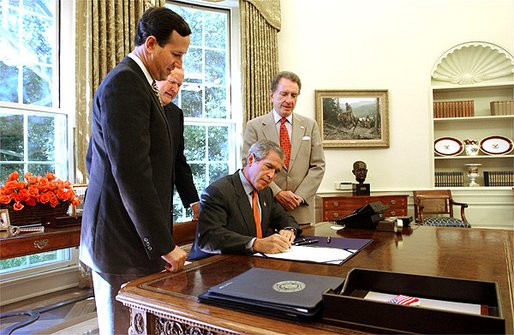
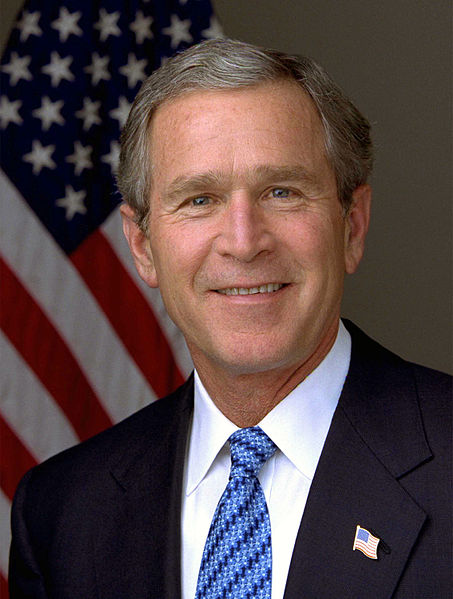
Yesterday’s kickoff, however, was marred by the appearance of one of the guest celebrities. When George W. Bush was announced as a supporter of the program, a sense of disbelief fell over the room. This man who advocated for creationism in the classroom, who fought to stop research in cutting edge disease control, who began a war as a personal vendetta, was showing his dully beneficent face on the big screen telling the kids what a great program it was. A chance, as he said, to use your “God-given talents.” He ended his brief—and obviously scripted—sound-byte with his characteristic “God bless you.” I could not stomach the hypocrisy. I’ve blogged about religion and the science of robotics before, but to have a president who did nothing to strengthen the cause of higher education and fought science with eight years at his idle hands was just too much. If I was Dean Kamen, I would have insisted that that clip be left on the cutting room floor.

The former W represented religion in its guise as the enemy of science. It should be clear to my readers that I do not believe science has all the answers, but I also believe it is wrong for religion to stand in the way of knowledge. Science is something that we shouldn’t give lip-service without backing it up with programs and funding. That one minute of disingenuous, religion-riddled speech trumped all the other endorsements, including the sensible one by Bill Clinton who emphasized the need to work together even with those who are your opponents. This was a point W obviously missed. There comes a time when some public figures, like overused cattle, should be put out to pasture. There are some cowboys that should just stay on the ranch. I understand that presidential endorsements are important to FIRST, but in this case integrity should not be compromised. Especially when most of the teenagers watching the kickoff possess far greater potential than a mere politician elected on religious sentiment and dubious counting.

Does this face inspire science?


Political Games

The Lord is in a changeable mood these days. So many GOP wannabes and so many disappointing results in Iowa. The fact that politicians now routinely rely on religion to get elected is bad enough, but the very mockery they make of the faith of their followers is criminal. This is the surreal paradox of a nation based on religious freedom—we are free to believe, well, whatever. It never fails that as the weekend rolls around newspapers trot out the religious stories. Men and women who live otherwise secular lives wash into churches like a spiritual tsunami, and by the time the rinse cycle comes, they’ve already got their sights set on the post-game show. In everyday life religion seldom enters, but when it comes to the polls, it counts for everything. Maybe if god didn’t have so many golden boys (the one golden girl dropped out of the race) all of this would be a little easier to bear.

The problem, speaking from the point-of-view of someone experiencing a little too much Christianity at the moment, is that the early form of the faith was a bandaid solution. You see, Jesus’ early followers thought the world was about to end at any minute. This was before the Republican Party even formed, and long before Joseph Smith made up a story about rose-colored glasses and an Italian angel named Moroni. The religion had no longevity plans. All the faithful were supposed to be gone by the end of that first century, and now, some twenty centuries later, they’re running for office in a nation equipped to bully the world. The logic of the situation dictates that if any one candidate is telling the truth of god’s sanction the rest are all pathetic liars.

When politicians began courting religious conservatives in an unconscionably cynical act of sympathy, they were taking out a promissory note they never intended to pay. The nature of religion, however, is to accept even what is improbable—even better—what is impossible. This faith, even after eight years of Bush failing to keep his promises to deliver on the issues they so crave, remains intact. The substance of things hoped for, the evidence of things not seen. Now, less than four years later, they are ready to believe all over again. And as long as we are looking for the impossible, is it too much to ask that religion be left out of politics so that the business of running the nation might be done with at least a modicum of rationality? Now that deserves to be called faith!

GOP's favorite game?


The Newt Roars

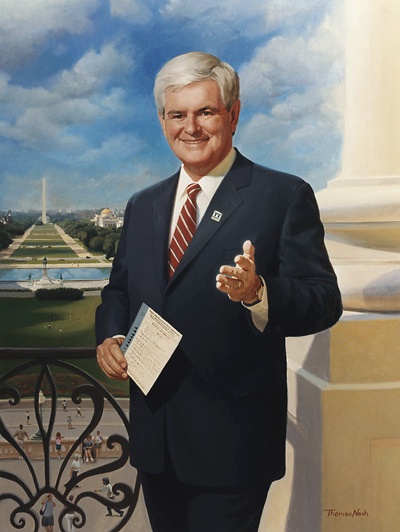
Today marks the final day of my Iowa odyssey. The state that is about as heart-of-the-nation as you can get is chaffing under the weight of political lard as the caucuses near. According to the Huffington Post, Newt Gingrich is roaring mad about the negative ads that are choking the airwaves. You’d think with a life in politics he’d be used to it by now. Religion, of course, is playing an undue role in this season’s GOP contest—everyone knows Mitt Romney is a Mormon and publishers are scrambling to get out books on that religion as fast as their authors can write. Rick Perry, to the chagrin of many, bears a Methodist affiliation and the religious sensibility of Genghis Khan. Of course, Newt appears relatively calm as a Catholic, at least for the time being. Jack Kennedy, however, he is not.

The Republican Party began a flirtation with religious conservatives as early as the Nixon years. Pundits realized that, like the Alaskan oil reserves, religious fundamentalists were an untapped resource to grease the rails to election day. Overjoyed to have a voice in high profile public office, the conservative Christian crowd began to wilt from the perceived failure of Jimmy Carter and began to glom onto the media image projected by Ronald Reagan. We all suffered through the Bush years, hearing more about God from the president than we heard about the soaring national debt or the coming crash that would implode upon the working class that elected him to office (so they say). Now, facing the choice of candidates wealthy enough to run for office, many are finding the choices on the shelves of the spiritual marketplace a little understocked.

Back in the days when America was young, the founders laid down rules declaring that no religious tests would be imposed on those running for public office. Their fears proved prescient and uncannily accurate. Today perhaps the biggest test any candidate has to pass is his or her religious affiliation. Can we imagine a Mike Huckabee, Sarah Palin, or Michele Bachmann without their Bibles tucked under arm? Religion has no corner on the market for sanity. Many, in fact, would argue that the indications sometimes point in the other direction. The corner America has painted itself into is not so much shaded with red, white, and blue, as it is with the muddy brown of religious slurry that has become the new politics. Newt, newly minted from his Southern Baptist heritage, is mad about mudslinging. I think Americans should be enraged about religion slinging instead.


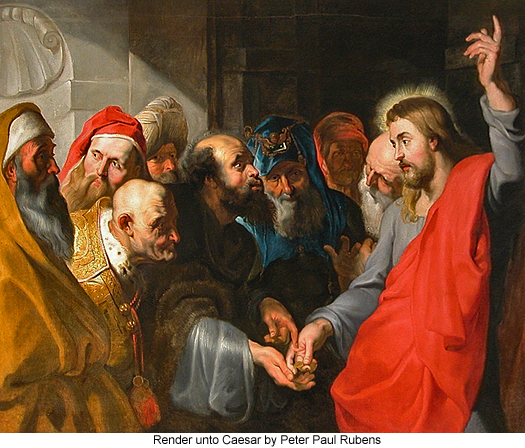
Render unto Caesar

My wife shared a very appropriate video concerning the ongoing tragedy of the GOP race for presidential nominations. Presented as an ad by Jesus, “Jesus” tells how Rick Perry has co-opted his name but not his message.

It is a fun look at a very serious issue. The serious issue is that people unable to think critically about religion are doomed to be its slaves. Where’s the proof that Jesus supports one candidate or another? When is the last time the voting, uncritical public ever demanded the proof?

Thinking back to just a few weeks ago, Herman Cain had made the spectacular claim that God told him to run for president. If the claim was sincere, how could he have withdrawn from the race? Where’s the lightning bolt (as long as we’re believing mythical images of God)? Has anyone checked his office lately to see if he’s still with us?

Religious gullibility is America’s most dangerous deficiency. We elect “the most powerful man on earth” based on his religion, and yet, very few know anything about it. But hey, it sure sounds good!

Religion is the elephant in the room. Nearly all people learn religion from their parents or guardians. Some rebel, but few study it beyond the requirements of their obviously biased religious leaders. Children trust adults to inform them of the truth. We fill their heads with images of a large, white man, bearded, sitting on a huge throne in the sky. You can’t see him, and he doesn’t answer when you talk to him, but he is very, very concerned about who you elect as president.

Many colleges and universities do not offer the opportunity to study religion with neutral experts. Those best poised to make a difference, like large state schools, often shy away from the study of religion completely. Those that do offer the chance to study often unknowingly hire a committed believer, sometimes presenting him or herself duplicitously as neutral and objective. And so the cycle continues. As the old hymn plaintively asks, “will the circle be unbroken?”

As a nation we value religious freedom, but we have set up a system to abuse that freedom. (One might say, “ritually abuse”.) Answer me honestly, Mr. Perry—is it not true? Oh, and that Frisbee is not a threat to national security.