O Deer

I spent my tween and majority of my teen years in a house that backed up to some rather extensive woods.  We lived on the edge of town.  I spent quite a bit of time wandering among the trees and deer were never an unusual sight.  Opening day of deer season was a literal school holiday, but I was never a hunter.  Since we’ve killed off many deer predators, cars may be their biggest natural enemies these days.  I recently found deer droppings in the yard of my current house, right next to the newly mown down hosta.  I see deer all the time while out jogging.  A few years back I even saw a doe giving birth in a secluded glen along the trail.  I guess we do kind of live at the edge of town here too, but the woods don’t begin until across the road, and the jogging trail, and they aren’t as extensive as those I grew up with.

I’ve started to notice that deer are creatures of habit.  These are the common white-tails that predominate around here.  I often see them in the same area while on my crepuscular jog, sometimes multiple days in a row.  The other day I saw a young buck up on its hind legs to reach some low leaves on a tree.  I’d never seen a deer do that before.  There’s a spot a little further on where a doe and her two, sometimes three, fawns hang out.  I’ve seen them several times.  Recently they were in their accustomed place and when I reached the end of the trail and headed back, they were still there.  These deer aren’t too skittish around people and sometimes I can get quite close before they bolt off.

This particular day, however, I learned something.  Deer can vocalize.  I knew that elk did, but I’d never heard a white-tailed say anything.  Even when giving birth.  I thought they were completely silent, and as an introvert I tend to understand.  Coming back, the doe had crossed the trail and two fawns were on the other side as I approached.  The young ones ducked into the trees and one of them called for its mother.  I almost stopped in my tracks.  I didn’t know that white-tails vocalized.  I had to consult the internet when I got home just to make sure I had actually heard what I thought I had.  I’m at an age where motivating myself to get out and jog at first light isn’t always easy.  But when nature makes it a learning opportunity, well count me in.  

Image credit: USDA photo by Scott Bauer, public domain, via Wikimedia Commons

Scary Father’s Day

Given my circumstances, I never really celebrated Father’s Day growing up.  By the time I was old enough to get the concept, my father was long gone.  My step-father, some years later, was no real father.  Besides, we were poor and it was hard to think what such a celebration might entail.  All of which is to say that I never really expect much from the day myself.  My wife and daughter suggested we try Nightmare in New Hope again—this is the horror movie museum in New Hope, Pennsylvania, which had been closed last time we tried.  It was an appropriately rainy day, the kind we seem to specialize in around here.  I suspect that the museum will show up in a future blog post or two, but suffice it to say that it’s an impressive little collection.  It’s an odd feeling, this human desire to be in the presence of something you’ve seen in a movie.  I recommend it for any horror fans who happen to be along the mid-Delaware.

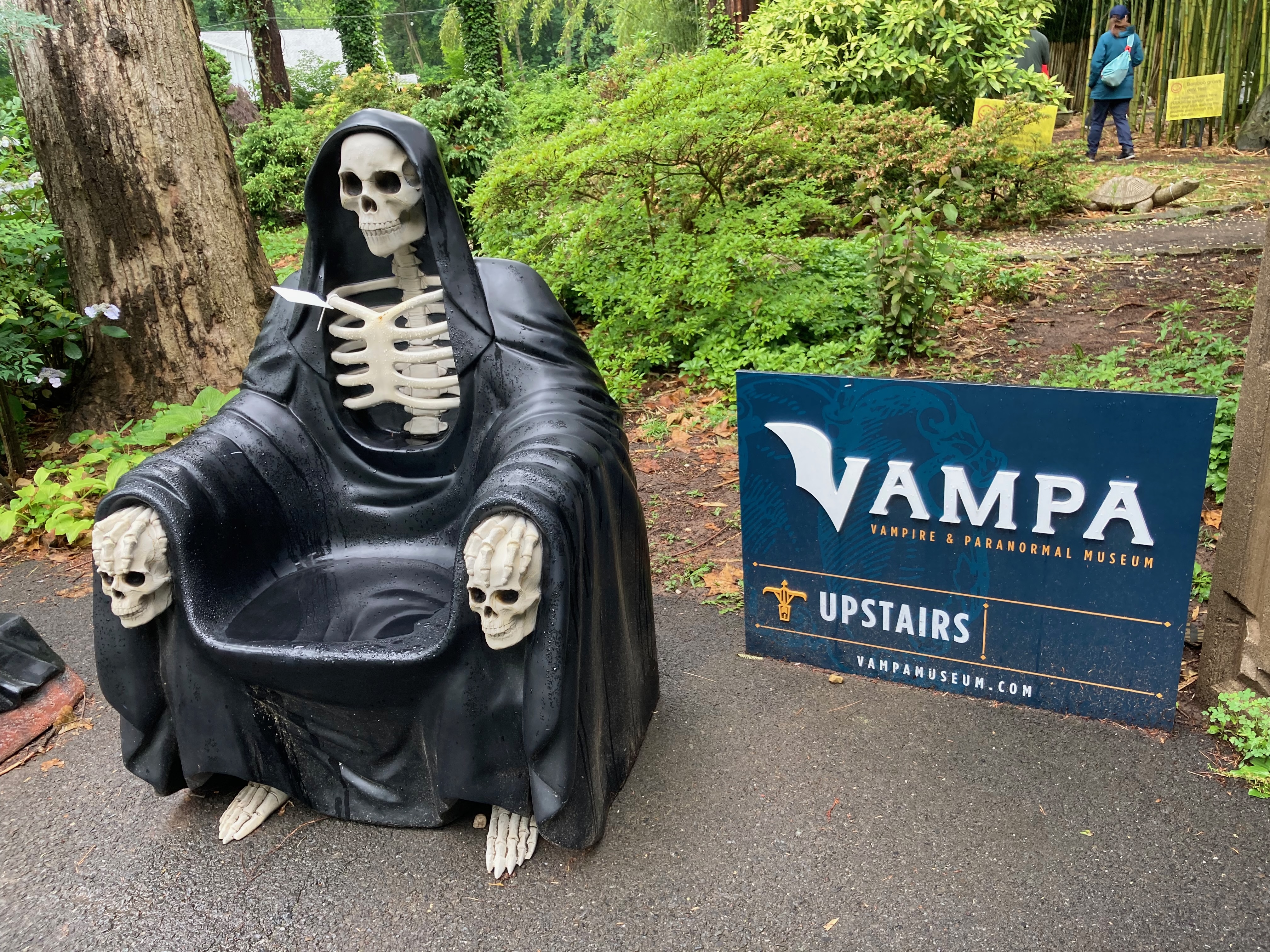
Not being large enough to take all day, we considered what we might do that afternoon.  In keeping with the theme, a visit to Vampa: Vampire and Paranormal Museum was suggested.  This museum is in Doylestown, which is only about a quarter hour from New Hope.  There’s more to it than just the museum, so it too will likely come up in future posts.  This museum contains a truly impressive array of artisanal vampire hunting equipment from Europe, dating between the seventeenth and nineteenth centuries.  I’ll try to put together a photo essay of it soon.  But that’s just the first room.  A second deals with demonic possession.  Then rooms have displays of occult and other esoteric artifacts, along with creepy suggestions to be careful of engaging too much with them.  The final room is dedicated to St. Michael the Archangel, and it warns that the struggle with evil is real.

Both places had a steady stream of visitors yesterday.  It would be fair to say that by the time we finished I was over-stimulated.  You have to understand that I personally don’t know many people interested in horror.  Going to these places was the sacrifice of a rainy Sunday afternoon for my family but will likely become one of those pleasant, lingering memories of the unusual that take on a rosy afterglow over the years.  This blog quite often ponders over why such things take on meaning for someone interested in religion and belief.  Being in the presence of artifacts, as noted above, puts you in touch with a kind of earnestness that mere electronic reading on the internet lacks.  If you happen to be along the mid-Delaware, the side trip to Doylestown is a worthy add-on, Father’s Day or not.


Festival Spirit

Festivals.  These common events, often outdoors, are ways to be around other people while not really seriously engaging them.  I spend a lot of time by myself, or alone with family.  We don’t know many folks locally (I’m pretty sure very few locals read this blog), so online community is often how I connect.  Still, even we introverts crave the human touch now and again.  In October we attended the Covered Bridge and Arts Festival in Bloomsburg, Pennsylvania.  It is one of the largest free festivals on the east coast, and just a couple of hours from us.  While there, we learned about the much smaller Riverfest in nearby Berwick, held the same weekend.  We decided to stop there on our way home.  The thing about craft fairs is that you get used to seeing pretty much the same kinds of things over and over.  That’s fine, because we’re here for the atmosphere.

At one of these events, while my wife and daughter were examining the wares, an owner came up to me (I was just outside the tent) and said, with a bit of surprise and wonder in his voice, “You have the spirit of God.  You can tell someone who does.”  Now, this can be a sales ploy, of course, but he seemed sincere.  He really didn’t nail my spirituality, but he was correct that I am a very spiritual person.  Given his talk of Jesus, I suspect he’d have been put aback if I told him that horror films are one form of spiritual practice for me.  So I remained relatively noncommittal until he turned to my wife to tell her about the products in his tent.  Still, the encounter left me reflective.  I don’t think myself any kind of spiritual guru, but I have been singled out by a number of people over the years and I wonder what it is that they see.

Some New Agers suggest we all have auras.  That’s generally considered paranormal, of course.  I’ve known people, however, who’ve been accurately “read” by strangers who seem sensitive to such things.  Or are extremely good at cold reading.  When I go to a festival I don’t mean to have my aura showing.  I spend a lot of time alone, so maybe I’m hiding my aura in my house.  No neighbors have complained about the light pollution, in any case.  I admire those who see something special in strangers, even if it’s an attempt to get them to buy something.  That’s why we go to festivals, I guess: to have a kind of spiritual experience that comes from being with others.


Things about Pennsylvania

When I used to pick up my daughter from college in upstate New York, we’d sometimes come up with ways to keep the conversation going for the three-to-four hours it’d take us to drive home.  One trip we thought of doing a parody of “Sweet Home Alabama,” namely, “Sweet Home Pennsylvania” (same number of syllables).  We sketched out some verses by her asking me what Pennsylvania was known for.  Now, I was born and reared in this state, but my ancestral states are more properly New York, North and South Carolina, and the District of Columbia.  Still, I feel at home in PA, but I’ve always felt it was one of those places that people think “Philadelphia” then call it quits.  Pittsburgh used to be much larger than it now is; it was the 16th largest city in the country when I was in high school.  So, the Liberty Bell/Declaration of Independence, and steel (also in Bethlehem), were obvious gimmes.  But what else?

The Amish.  Yes, they have colonies in many states, but Pennsylvania has Lancaster County.  The state may not be widely known for this, but it is the second biggest supplier of fossil fuels in the lower 48, right after Texas.  Indeed, the petroleum industry was born right here, not far from where I grew up.  So we have the Mennonite farmers and heavy industry.  It is really quite a varied state, my home.  We have lakefront property on Erie, and a tiny part of the Atlantic in Philly.  We have a good dose of the Appalachian Mountains.  Lots of forests, even some with elk.  We were the second state, after Delaware, and Pennsylvania is properly a commonwealth instead of a state.  Our European founding was by means of the Quakers.  Pennsylvania housed several Indian tribes.  It was known for religious tolerance.  Daniel Boone was born here.  So was Stephen Foster.  And two US Presidents.  Not bad.  Not bad at all.

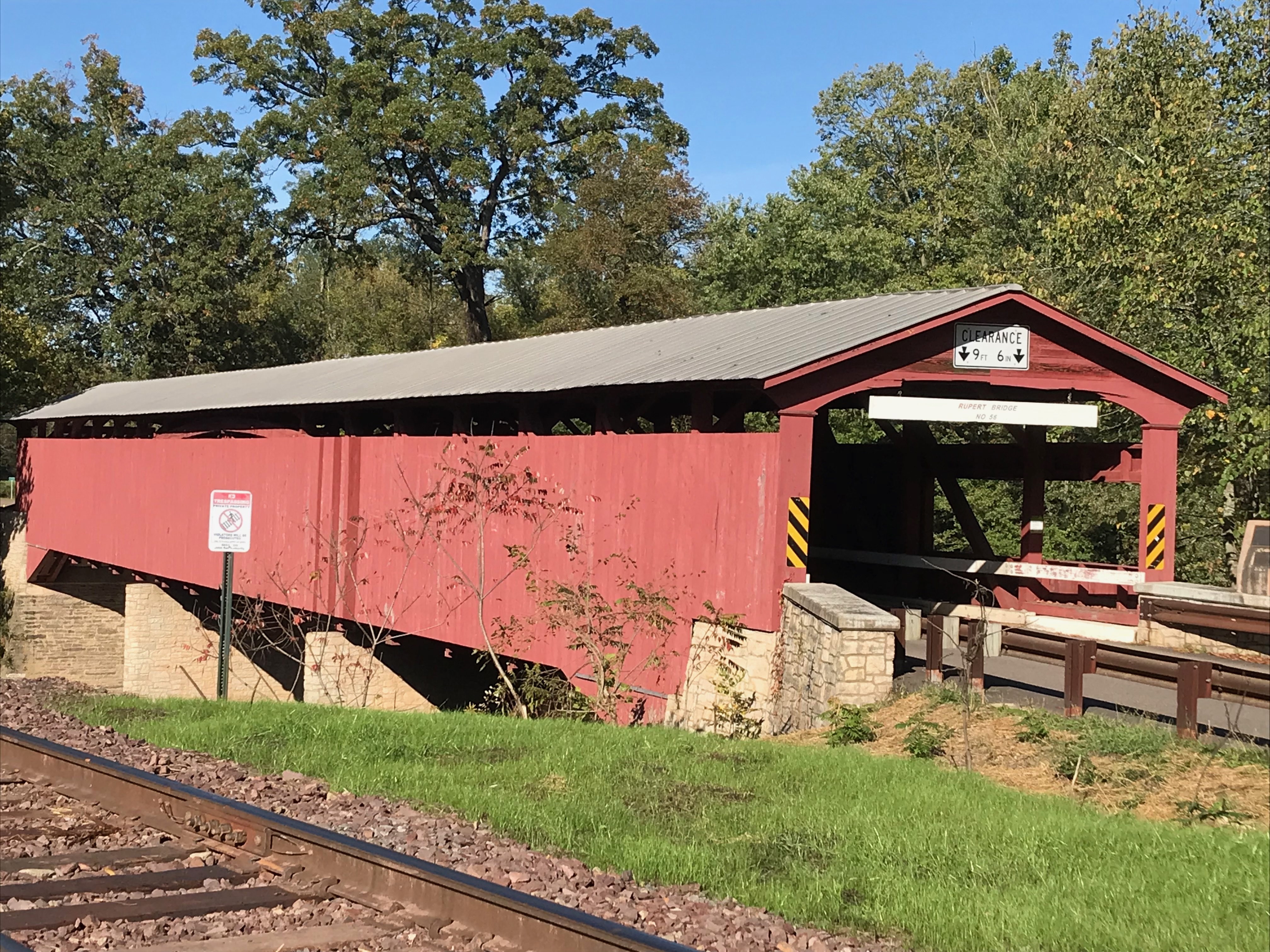
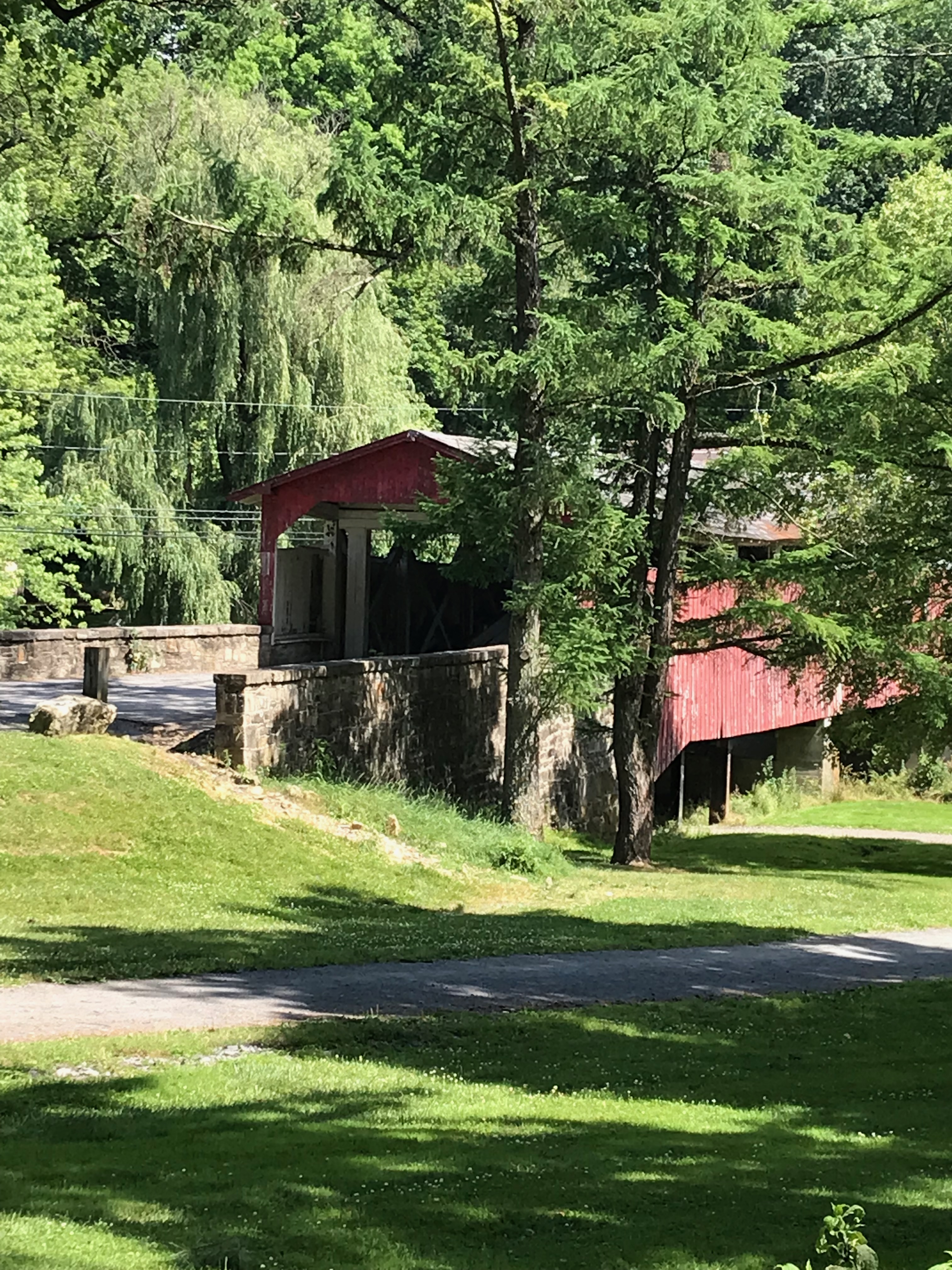
Only recently did I learn that the covered bridge was invented in Pennsylvania and that we have more still standing than any other state.  The current count is about 209.  Now, there’s a romance to covered bridges.  During this summer of staycations, we started to visit some.  You can’t go shopping there, and you can’t stay overnight or even order food, but these old-timey structures are a draw all on their own.  Part of the fascination is that we don’t build them anymore.  We have cars to keep the rain off and our vehicles don’t get spooked by the sight of open water or slip unduly on wooden planks.  Back when we were trying to make up alternatives to Alabama’s charms, I wasn’t aware we had so many covered bridges.  I saw a few growing up, of course, but paid little attention.  Now they’re another part of what makes this a sweet home.


Politicking

It was weird seeing my face on a 27 x 40 poster.  When I went to give my campaign speech I was wearing dress clothes that I’d bought at Goodwill.  My “campaign manager” said I did a great job, being witty and somehow confident.  I didn’t win.  Still, my stint in politics was not yet over.  The next year one of the presidential candidates asked me to be his campaign manager.  I took on the job with gusto, and, claiming no credit, I would note that he won.  So where was all of this politicking going on?  At the United Methodist Church Conference Youth Council.  I ran for council secretary one year, and lost.  I kept the poster with my face on it for a few years but the ink faded and the paper was cheap, and besides, I’ve never considered myself much to look at.

Thinking about the resources allocations (I didn’t pay for the poster—couldn’t have if I’d wanted to), I have to wonder about the priorities of the church.  Of course, it was only much later, after I’d gained significant seminary experience myself, that I realized just how political a job “ministry” is.  Yes, I had students while I taught in seminary, already strategizing on how to become bishop.  It was a political game.  Such games are no fun without power.  And money is power.  So maybe the Western Pennsylvania Conference was funding some learning experiences on the impressionable minds of the young.  It just took me a few extra years to catch on.  (Some things never change.)

I dislike politics.  Even now I wouldn’t feel compelled to do anything beyond voting my conscience were it not the clear and obvious danger that we’re in, courtesy of what used to be a conservative political party.  Any party that can’t keep a demagogue from receiving its nomination has embraced fascism and that’s a perilous road to travel as Germany and Italy discovered about a century ago.  My dislike of ecclesiastical politics certainly played a large role in my decision not to pursue ordination.  I’ve been a church insider, and what happens at board meetings?  Politics.  The person in the pew often doesn’t realize just how political religion is.  I learned Robert’s Rules of Order from church meetings.  My nomination to elected office in the organization led nowhere.  I was left wondering if there’s anywhere left that politics don’t apply.  The print on the poster faded.  The very last time I unrolled it, it was completely blank.


Whence We Are

Rootless.  Or perhaps a better word is “wandering.”  Although I was born in Pennsylvania, neither of my parents were and back another generation, few of the grandparents stayed where they were born.  Being an American mutt also means not having terribly strong ties to a parent-land.  But still, I’m surprisingly attached to Pennsylvania.  It’s a fascinating place.  One of only two colonies to actively promote religious freedom, it seems an ideal place for spiritual seekers such as yours truly.  I’m driven by an obsession to find the truth and this takes me to some pretty strange places.  Pennsylvania has an interesting religious heritage.  Founded by Quakers who nevertheless wanted diversity (or at least permitted it), my home state attracted a wide range of—particularly German—religiosities.  Not only were there Lutherans, there were also Moravians (pietists),  Mennonites and mystics.

Rural Germans kept many superstitious practices alive.  Many early Americans did, actually.  Daniel Leeds was a banished Quaker.  Now, without doing a ton of research (for which I don’t have time at the moment) you can’t find out much about Daniel Leeds (i.e. he has no Wikipedia article).  He was a rival printer to Benjamin Franklin, and a bit of a freethinker.  His family was later literally demonized as being the origin of the Jersey Devil.  Leeds was influenced by the mystic Jacob Boehme (who does have a Wikipedia article).  Böhme, as his friends knew him, also influenced Johannes Kelpius, and thereby Johann Conrad Beissel, a couple of good Pennsylvania German mystics.  Leeds began to have ideas too outré for the Quakers, and, I like to think, inspired future Pennsylvania mystics.  Leeds died in 1720 and deserves at least a Wikipedia piece.

Pennsylvania housed some pretty interesting religions over the years.  The Germans with their folk beliefs (Benjamin Franklin didn’t care for Germans) would go on to influence a number of American folk traditions.  I often wonder whether, if Pennsylvania had not displayed religious tolerance, things would’ve developed radically different in the early United States.  It does happen that, although a mutt, much of my heritage is teutonic, and I seem to share the religious curiosity that these folk displayed over time.  Upstate New York also had its fair share of new religions as well—beating out their southern neighbor and longest border sharer.  Of course, I have ancestry in upstate as well.  Perhaps it was inevitable that, being born in Pennsylvania, I would turn out the way I did.  Wandering and all.


Religion in Its Place

The other day at work I virtually “met” someone else from western Pennsylvania.  It came about in an odd way.  We were both in an online author talk and my colleague put something in the chat about a particular social issue being purely religious for some parts of the country, like his native western Pennsylvania.  I immediately knew what he meant.  For those who think religion is irrelevant, look at the make-up of our government.  Those preachers in rural places wield incredible power.  Their word is law and because of the shortsightedness of our founders, the rural few have amazing sway over the vast majority of the urbanites.  We need each other, of course, but not all have educated themselves on the issues.  When they want to vote they turn to their preachers for the answers.

Interestingly enough, churches lose their tax-exempt status (and thus many can’t afford to survive) if they openly back a political party.  They are required by the law they game to remain party neutral.  Of course, depending on who appointed a federal judge, they are often willing to overlook that particular law.  You get the sense that God favors some commandments over the others anyway.  But back to the homeland—western Pennsylvania is a preacher-dominated part of the country.  That may well have been what set me off on this strange track I follow instead of a career.  We were a church-going family in a church-dominated part of the state.  If you took what you heard on Sunday seriously, we should all be studying religion, down on our knees.

My colleague brought something into focus for me.  The religiously convinced will accept no other evidence.  They’ll refuse vaccines that could save their lives.  They’ll say women and blacks are lesser humans.  They’ll even—since I pay taxes this is okay—vote Republican.  Clergy have been sidelined by much of what’s going on in society.  They are hardly irrelevant, however.  I recently had a minister tell me that if I were to make a formal “questing” status with a denomination I could pick up some preaching cash on weekends.  Without that status, this clergy asked me, “why should anyone listen to you?”  Ah, there’s the rub, you see.  Although I’ve studied religion more than many clergy, and taught those who are now clergy,  I’m not qualified to make it official.  Perhaps it would be different if I were from somewhere else.  


Saints and Freedom

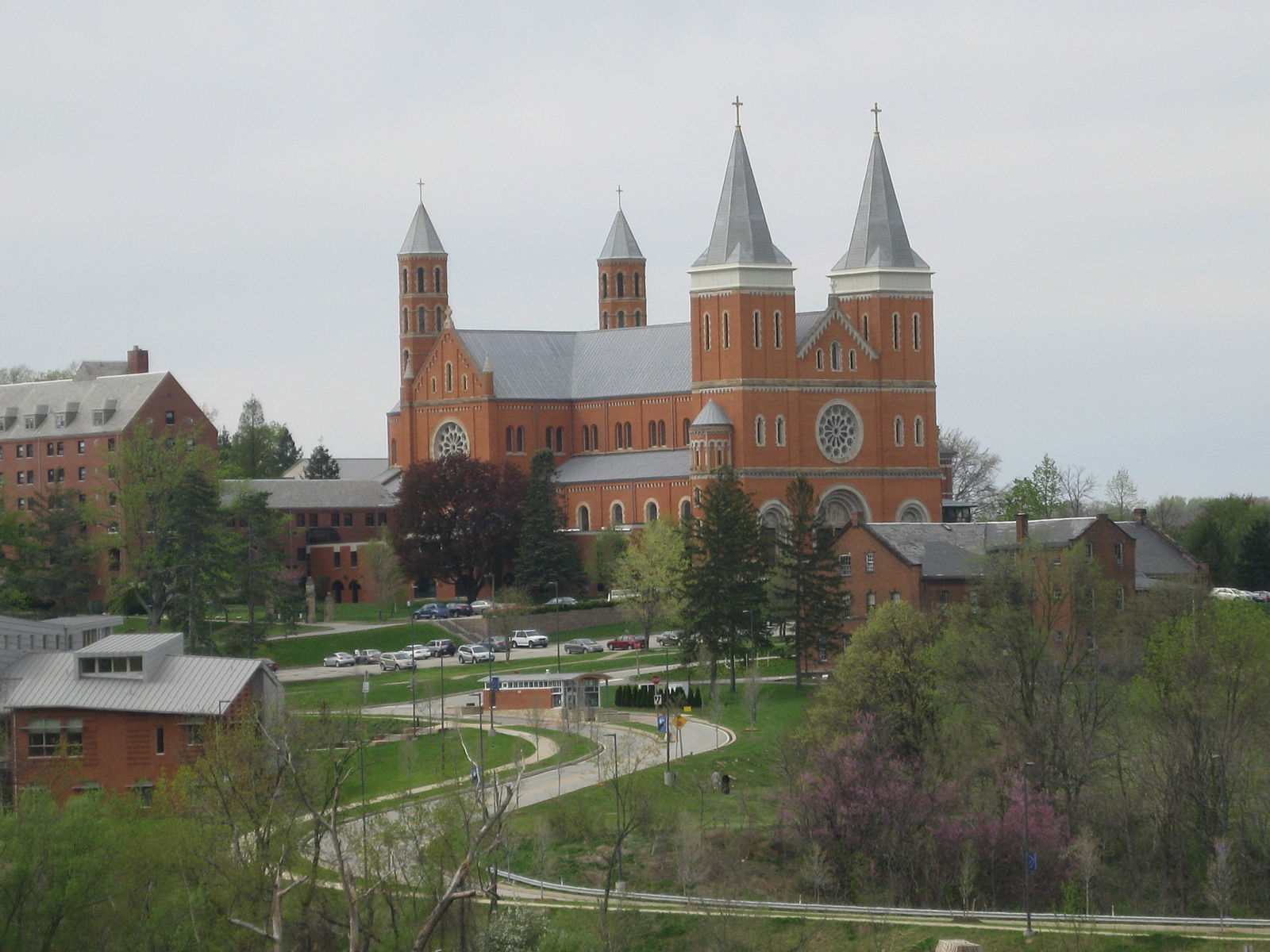
There’s a saying that all elections are local.  I suspect that’s true.  Location is important.  There are famous Americans not recognized in other parts of the world.  And there are, of course, local celebrities.  Having settled once again in Pennsylvania, I’ve taken an interest in local religions.  Although not part of the “Burnt-over District” of upstate New York, Pennsylvania, because of its early laws of religious liberty, has produced some noteworthy figures over the centuries.  And institutions.  When someone mentioned St. Vincent Archabbey, in Latrobe, Pennsylvania, I was curious.  I’m not Catholic and even though I’d considered a monastic life, I really knew little about it.  St. Vincent is the largest Benedictine monastery in the western hemisphere, as well as the oldest in the United States.  

Image credit: Guerillero, via Wikimedia Commons (Copyleft Free Art License)

Latrobe isn’t far from Pittsburgh.  There is a strong Catholic presence in the area.  Like many Catholic institutions, it has a cluster.  St. Vincent College, also in Latrobe, must’ve sent me—in those days, print—a prospectus back when I was looking at schools.  I’ve known about it for a long time.  There’s also a seminary, also called St. Vincent.  Probably it’s largest claim to fame is that the Pittsburgh Steelers use the College (I suspect the seminary has no athletic program) for their training camp.  Monks and football players—they must have some interesting conversations.  I grew up thinking Catholicism was basically some other religion.  Fundamentalists, misunderstanding the basics of history, tend to claim that Catholics aren’t Christians.  Indeed, until the recent politicization of conservative Christianity, they wouldn’t have had much to say to each other.

Catholicism was frowned upon by the early colonists.  While seeking freedom of religion, what they really wanted was freedom of religion for themselves.  In good, charitable Christian fashion, many colonies tried to exclude those that believed differently.  Especially Papists.   Rhode Island and Pennsylvania, however, notably allowed freedom.  I’ve lived in Pennsylvania long enough to know that even legal freedom isn’t protection from those locals who’d rather not have Muslims or Hindus for neighbors.  And in all likelihood William Penn, a good Quaker, probably couldn’t imagine people of “exotic” religions wanting in.  Indeed, the majority of people in this hemisphere weren’t really even aware of “eastern religions” until the 1890s.  The religions here were forms mostly of Christianity and Judaism.  By 1846 the Benedictines could establish a college, monastery, seminary complex in western Pennsylvania.  And it would become the largest and oldest such establishment in a country that still doesn’t grasp true religious freedom.


Woman in the Wilderness

The “Burnt Over District” is religious historian shorthand for upstate New York.  That particular region, during the “Second Great Awakening,” spawned so many religions and hosted so many revivals that it was difficult to believe anything more could sprout there (thus, “burnt over”).  One of my great fascinations is the origins of religions.  Not only that, but where those religions began.  On a continent-size level, Asia is clearly the champion, with all of the “big five” beginning there.  But religions evolve, sometimes rapidly.  Christianity in Britain gave rise to such groups as Quakers and Anglicans, and, in a post-Christian phase Britain gave the world Wicca.  The Germans were also great religious innovators with Luther and the Pietist and Anabaptist traditions.  Perhaps it’s in the Anglo-Saxon blood to make religions new.

After visiting Ephrata Cloister recently, my mind naturally turned to the “Hermits of the Wissahickon.”  If you’ve not heard of them, you’re not alone.  They, despite being men to a man, preferred the title “Society of the Woman in the Wilderness.”  They were followers of Johannes Kelpius.  Kelpius, like Conrad Beissel after him, was a German mystic, Pietist, and musician, and he also believed the end of the world was imminent.  This was in 1694, just a few years before Beissel laid the foundations for Ephrata Cloister.  Like Beissel, Kelpius decided Pennsylvania was the best place to set up camp.  Although founded by Quakers, Pennsylvania offered something some other colonies didn’t—real religious freedom.  Given that you could be killed for being a Quaker in some of the other colonies, this didn’t seem like a bad idea.  Convinced Jesus would return in 1694, Kelpius and his followers settled into a cave just outside Philadelphia, by the Wissahickon Creek.  They set up a quasi-monastic community to wait out the clock near the city of brotherly love.

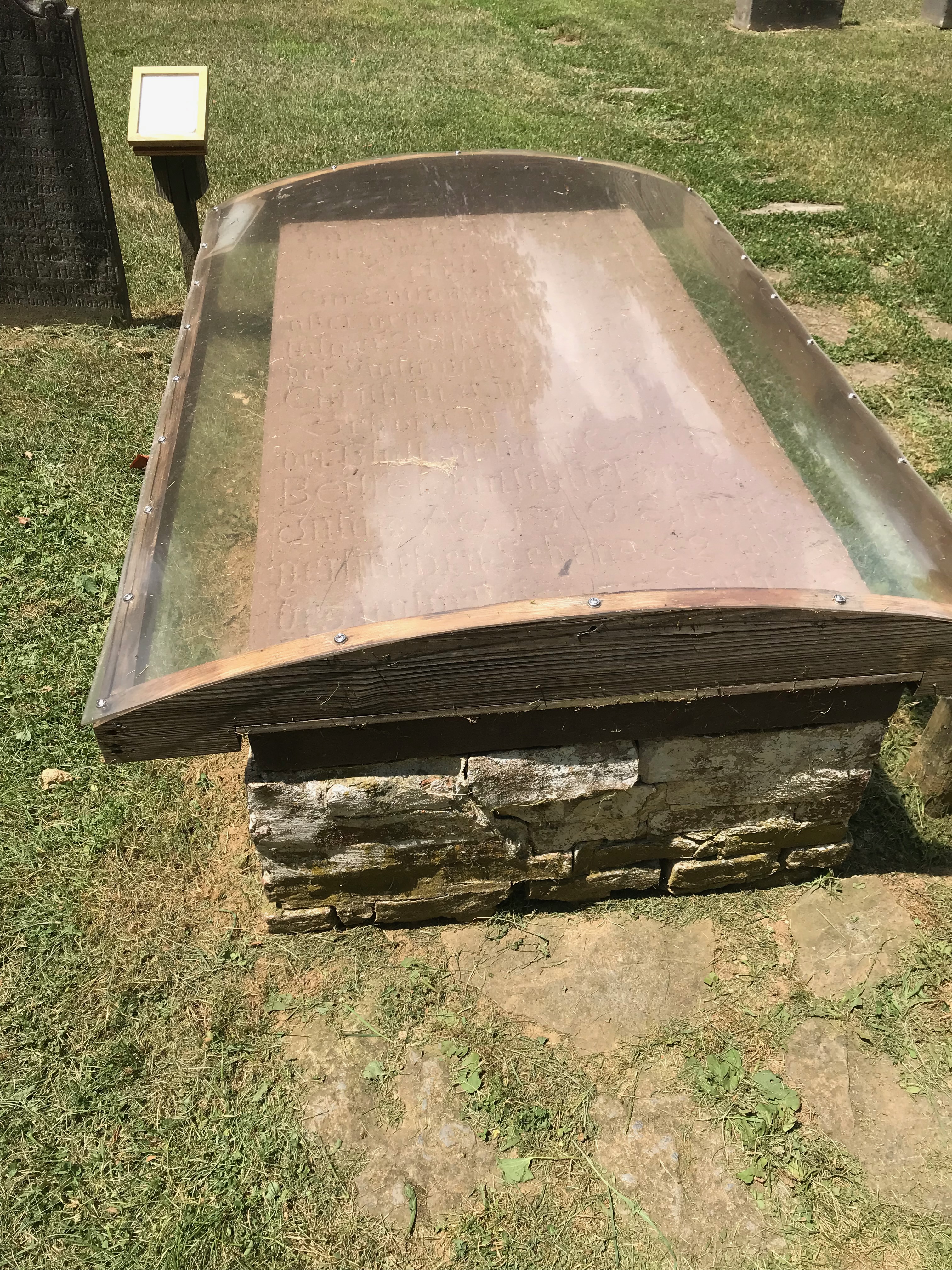
It’s difficult to know if Conrad Beissel was consciously imitating the work of Kelpius.  Religious leaders tend to have pretty strong views of their own outlooks.  The draw to Pennsylvania, in those days, was strong.  Interestingly, both Kelpius and Beissel are remembered for their music.  The death of Johannes Kelpius isn’t as well documented as that of Beissel—you can see the latter’s burial place in Ephrata.  Like millions of others, Kelpius lived through the “great disappointment” of not having the Second Coming occur when he supposed it would.  Some suggest Kelpius believed he would be translated after death.  He died in 1708, as his younger colleague was exploring the wilderness several miles to the west.  Keplius’ final resting place is listed, perhaps fittingly, as “unknown in Pennsylvania.”

Beissel’s Grave, Ephrata Cloister


Twisted in Knots

Our staycation at the Red Caboose in Ronks brought to mind the Weird Al Yankovic parody of “Amish Paradise.”  Bored-looking tourists in Lancaster County can’t find anything to do.  While it may be true that many big city entertainments are lacking, we had no trouble filling up a day.  We discovered the little town of Lititz.  Just north of the city of Lancaster, it retains several buildings from the eighteenth century along its main street, and the same quaint, boutique feel of Lancaster itself continues.  I have to admire the creativity of shop owners who have to appeal to the varied tastes of the tourist crowd.  Of course there was a bookstore—there are several in this area—and we long ago discovered the dual value of books as souvenirs.

The reason we were in Lititz, however, was the pretzels.  The Julius Sturgis Pretzel House makes the claim of being the oldest commercial pretzel bakery in North America.  Built in 1784, this is one of the early buildings still standing, and they offer brief tours where you’re taught to roll  and knot a pretzel.  Pretzels are, of course, a European invention.  Since they were an avocation of monks, their shapes became imbued with religious symbolism.  The initial U shape was, like a gothic spire, intended to point thoughts upward, toward God.  As I learned, the twist (which was an indication of a handmade pretzel) was symbolic of marriage and “tying the knot.”  This leaves a fish-like shape, and the Icthys moniker for Jesus would’ve been known to monks.  The folding the knot onto the outer loop symbolizes the arms across the chest used in Catholic prayer as a way of embracing the cross.  The resulting twisted breadstick has three holes for the Trinity.

The real innovation in Lititz, however, was the hard pretzel.  If I heard correctly, Julius Sturgis was working at a pretzel bakery in town where he had the duty of cleaning out the ovens.  The hard bits could be used for animal food, but they gave Sturgis the idea of intentionally baking hard pretzels.  This is the most common commercial form sold today, but southeastern Pennsylvania, which produces eighty percent of the pretzels sold in the United States, is still a soft pretzel paradise.  Radiating out from Philadelphia to locations like Lancaster, Reading, and Allentown, pretzels are eaten more frequently in Pennsylvania than elsewhere.  The religious aspect of pilgrimage still exists for those who venture to Lititz to find the birthplace of the hard pretzel, and the opportunity to stick your fingers in the dough.


Ephrata Cloister

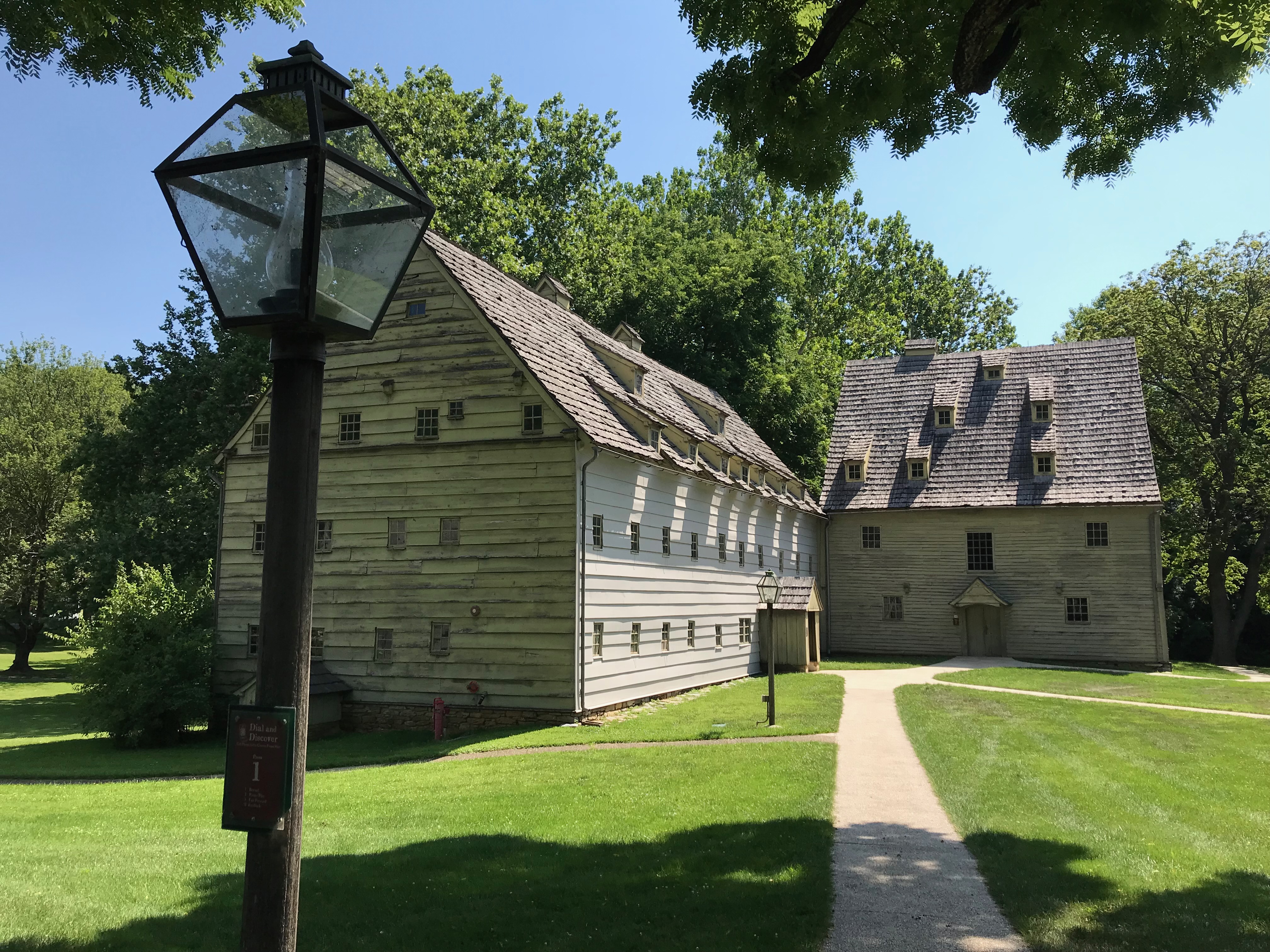
Conrad Beissel isn’t exactly a household name.  I never heard of him until a visit to Ephrata Cloister during a Lancaster staycation.  My wife knew about the Ephrata Cloister due to a music course she took at the University of Michigan; he was influential in developing a distinctive musical style.  Since we were in the area we stopped in for the tour.  Beissel was banished from what would become Germany in the early eighteenth century.  He made his way to America where he established a kind of monastery in south central Pennsylvania in the early 1700s.  Not Catholic, he was inspired by German Pietists, the Anabaptists, and Christian Mysticism.  Not ordained, he established what became a Seventh-Day Baptist association because whenever he tried to settle as a hermit others came to him.

Celibacy has always been a hard sell for religions.  Once his Camp for the Solitary was established, it grew to about 300 members, with only some 80 celibates, or solitaries.  This 80 was half men and half women.  They built around 40 buildings in what was then the frontier and they couldn’t have survived without the 120 or so married people who joined the church but continued to live at home with their families.  Like many separatist groups, the Seventh-Day Baptists were expecting Jesus’ return at any day and lived their lives accordingly.  Not strict about others joining him in this, Beissel was an early vegetarian, eventually becoming primarily a vegan (although that name wouldn’t develop for a couple centuries).  They had midnight worship services since they believed Jesus would return in the middle of the night.  They were, with the supportive families, self-sufficient.  The group established a printing press, and at one time it was possibly the largest printing operation in the colonies.

After Beissel died, the community continued.  They realized that, like all celibate communities, it would be difficult to survive and the celibacy rule was dropped.  The last celibate member died in 1813.  The community by then had taken on the form of an independent church and it survived until the 1930s.  The remaining land—some of it had been sold off over the years as the community shrank—was bought in the early forties to be preserved by the state.  Theirs was never a very large group, but it was significant enough that their memory was felt to be important enough to preserve.  Beissel wasn’t alone in establishing such sects here in Pennsylvania.  The tradition is, interestingly, part of the American heritage and demonstrates how the religious, ordained or not, live in their own worlds.