Strawberry Meatloaf

Strawberry ice cream. It tastes like summer in a waxed cardboard carton. While having a small dish of it recently it occurred to me that strawberry is my favorite flavor of ice cream. This was the first time I’d had any in perhaps twenty years. I am not diabetic, but I am extremely phobic. I avoid the things I like out of fear. There always seems to be plenty of bad to go around, but I’m always afraid the good will run out. Waiting two decades for something I like is a small price to pay. This same phenomenon accompanies my musical tastes. When I listen to music, generally, I listen to music. I’m not a background music personality. Life has been so busy lately, however, that I don’t have the time for music that I would like. I bought a CD (yes, they still make them) of Meat Loaf’s Hell in a Handbasket shortly after it was released. I just listened to it over the weekend. (It has been that busy.)

Since I had a lot to accomplish last weekend I listened to the CD as background music, violating my own standards. That meant that I had only impressions of what was going on rather than the full impact. Immediately, however, I was struck at how socially conscientious this album is. I realize that Meat Loaf is primarily a singer, performing songs written by others. Nevertheless, it seems that a singer must have some investment in the songs they perform to put the kind of empathy into them that Meat Loaf does. The theme that seems to be running through these selections is that violence and greed have become our paradigms, and we are heading to, well, Hell in a handbasket.

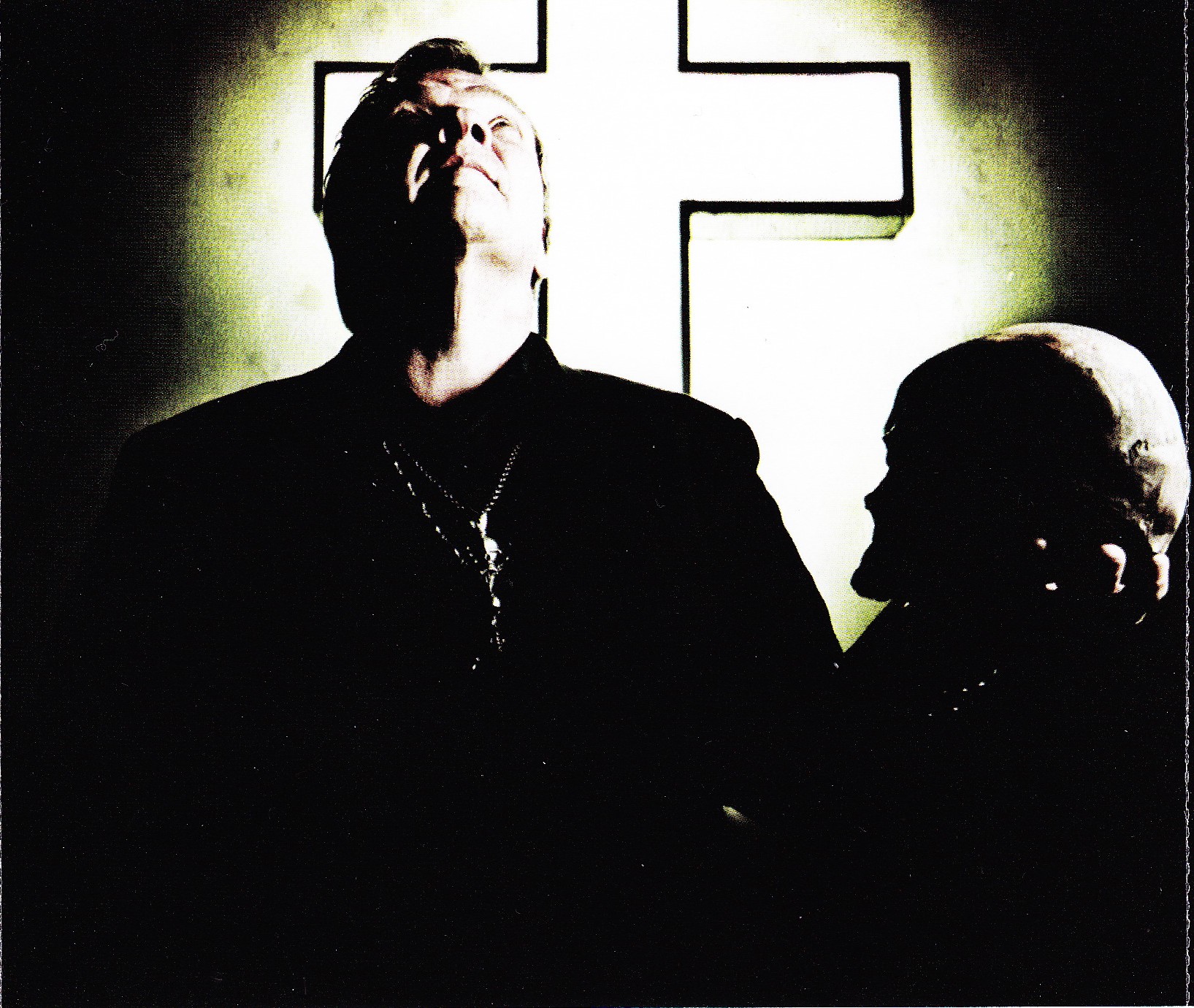
I’m old enough to miss album art. I don’t miss the hiss, skips, and pops of vinyl, but the square foot of album art was often a gift. The album art is part of the message of the music. Inside the back cover of the Hell in a Handbasket CD, behind where the disc is mounted, is a gothic photo of Meat Loaf holding a skull, Hamlet-like, before a large cross. Around his neck is a chain that holds another skull, and, with a bit of imagination, perhaps a small crucifix. (Like most people who still remember album art, my eyes aren’t what they used to be.) Something is happening here that I can’t quite define. Jim Steinman is not on this album, and my fear seems to rise. Then I listen and I hear my social consciousness being in some small way affirmed. It may not be Wagnerian rock, which I fear is rapidly running out, but it is worth another listen when I’m able to set aside the world for maybe an hour or two.
Charon’s Obol

One of the concomitants of spending time with religion is a non-morbid fixation on death. As a college student I was surprised to learn that other people my age did not think about death nearly every day. Perhaps with a typical college student’s obsession with the other end of the life cycle this is only natural. Ever since I was a child, however, I felt frustrated by the lack of permanence that characterized all of the striving involved with life. We work very hard and then we die. I suppose that is one of the reasons religion appealed so strongly to me—it had an answer to this dilemma. Science, as I began to experience it about the same time, suggested a radically different conclusion: we have no souls, and so it is best to accept the fact that death is the end and get on with life. No wonder Ecclesiastes has always been my favorite book of the Bible.

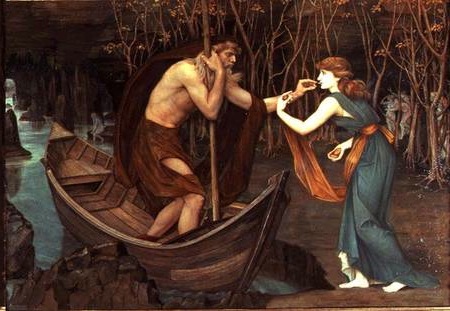
While reading about–shhh!–death recently, I came across an interesting tidbit. Pope Pius IX was buried with a coin. I’ve read that even John Paul II was buried with coinage, but I’ve not been able to find credible sources on that. What is fascinating about this practice is that no matter how it is vested, burial with money is a form of Charon’s obol. With movies like Clash of the Titans, many modern people are aware of the need to pay Charon to cross the River Styx. (Back in the radical days of traditional education just about everyone would’ve learned this in the course of studying the classics. In any case…) The gifting of the dead with money represents the survival of a pagan custom that likely stretches back well before ancient Greece. Even before money was invented people buried the dead with goods that the living would never be able to use again. They may not have considered this payment to a ferryman, but the principle is the same.

This idea has a strong grip on our psyches. Not one of my favorite movies, I have watched Ghostship a time or two. What initially brought me to the movie was the fact that it is a horror-movie built around the character of Charon. The mysterious stranger who lures the crew of the Arctic Warrior onto the Antonia Graza laden with gold is named Ferriman. The salvage crew quickly forget the tons and tons of metal that they came for in exchange for the a few dozen bars of gold. Of course, a sole survivor lives to tell the tale. The thing about Charon’s obol is that once he is paid, death is inevitable. Thus death and money are inextricably twined like earbuds carelessly tossed into a backpack. It seems that no matter how you measure it, the only winner is Charon. Maybe the Greeks have something to teach us yet.

Charon’s got ahold of our Psyches


Evil Living

Maybe it was just the lack of rationality that comes with driving 700 miles in two days, or just plain glaikitness, but I watched Evil Dead II a couple nights back. I had read on an Internet site (probably already a warning) that it was very scary, but I’ve been a slave to logic for many years. Supposing this to be a sequel, I was confused when the first few minutes replayed the plot from the first movie with just two characters instead of the original five. Budget cuts (literally, as I later learned) meant leaving out characters and supposing that the viewers would catch on. In the first Evil Dead, the catalyst of the evil spirits in the woods was “Sumerian” spells recorded by an ill-fated professor in the cabin in the forest. Playing the recording (still in the first film), the kids release the evil spirits and one-by-one become possessed until Ash has to kill off all his companions. The campiness in both films tends to ameliorate the over-the-top violence and blood, and you know that the film isn’t taking itself at all seriously.

Once I figured that out (it was, after all, a very long drive), I settled in to watch a familiar story unfold. New characters are added in the form of the professor’s daughter, and traveling company, who show up with more pages from the Book of the Dead that will help to dispel the evil. When the characters encounter a ghost of the dead professor, he says something that may be the point of this blog post. He urges his daughter to seek salvation in the pages of the book. So here was a distinctly Judeo-Christ-Islamic theme playing out: salvation comes through obeying a book. It is an example of what I would have called “the Bible as a magical book” back in my teaching days. Movies, both good and bad, tend to portray “Bibles” as books that have the ability to affect the world around them in beneficial ways. Demons are cast out, illnesses are healed, lives are restored.

My fondness for B movies, in the end, is all that redeemed this domestic cinematic experience. I have spent many nights in the woods and I have read and reread sacred books. The two, however, seem to be worlds apart. Nature often feels like a redemptive experience. After many weeks of experiencing the outdoors only in the guise of New York City, a truth that can only be called sacred occurs—people are creatures of nature and nature can still feel sacred to us. Here is a simple reason that environmental integrity must be maintained against those who would exploit the earth for fossil fuels, timber, or drainage of lakes for irrigation. Nature may be our last chance to find something truly sacred. Once one person, company, or government destroys it, it will be gone for a lifetime or more, for everyone. That, in my book, is evil.


High Aspirations

I’m not a fan of the Olympic Games. It’s not that I have a problem with the passion and dedication of these (mostly) young people who’ve trained themselves to perfection in various physical skills, but the Games have tended toward jingoism a little too often. They may be intended to bring the world together, but often they become the focus of international tension. And, of course, television shows us only where our own nation makes a good showing. In my more somber moments I wonder if there isn’t someone even better at this or that sport/event whose circumstances make it impossible for her or him to make an international showing. Olympic Games are for those who can afford personal trainers and who can manage to make it to tryouts on schedule. Again, I don’t demean the ability of the competitors; when I find myself in front of a television I often stare in awe at what they accomplish.

A certain disconnect always attends the opening ceremonies. I have to confess to having glanced at the screen in our hotel room once or twice during the London extravaganza, but what became clear is that culture is what’s celebrated here. Athletics are the same internationally, if we take the Olympics at their word, but culture in region specific. Figures from Harry Potter and Mary Poppins, and other British contributions to the world of art and literature, filled the arena with a sense of national pride. Even the queen deigned to parachute down to the level of the commoner, in the company of James Bond of course (Sean Connery, why did you have to age?). This is what the commentators called the “rebranding of the royals.” What is it that we really value about ourselves? Can we not truly overcome xenophobia?

Xenophobia has a reach far beyond nationalities. It is rampant between social classes, political parties, and language groups. We distrust the other, for those like us are the best. The best swimmers, the best gymnasts, and the best shooters.

To look down on the world.

Just days ago I stood atop one of the peaks of Mount Mansfield, the highest mountain in Vermont, with my daughter. As we looked out over the panorama that included New Hampshire and New York, and maybe even Quebec, it seemed as if the world could be one. Maybe the things we value could lead us to share instead of selfishly claim everything for ourselves. I think of Mount Nebo and I shudder. And I think if I knew how to ski and if it was winter, maybe I could be the best.


Trapped

Music has always meant a lot to me. I am, however, not musically talented. As I child I never saw The Sound of Music (or Mary Poppins, for that matter). College finally introduced me to Julie Andrews when friends were aghast at how deprived my childhood had been. Sound of Music was cute, but I didn’t really “get it” until someone explained that it is largely a true story. There really was a Maria von Trapp and Captain. Much of the story, of course, my colleagues (not really knowing) told me was fabricated. My daughter has recently returned from a musical tour of part of southern Europe, centering mostly on Austria. The tour group visited Salzburg and saw where part of The Sound of Music was filmed. When she returned home we decided to visit Stowe, Vermont. This mountain community, known for its skiing, is where some of the von Trapp family still live. Not sure what to expect, we signed on for a tour of the Trapp Family Lodge (a little beyond the comfort range of someone unemployed until recently).

The first surprise came when Sam von Trapp, the grandson of Maria, introduced himself as the tour guide. Many of the mysteries of fact versus fiction were cleared up—I can’t reveal it all here, otherwise you might not visit Stowe for yourself—and the person of Maria von Trapp became much more like the rest of us. During an interview taped four years before she died in 1987, Maria explained how the course of her life was changed by the mountains around Salzburg. Feeling the presence of God there, she joined the convent that sent her to tutor one of Baron von Trapp’s daughters and that eventually led to her marriage and the formation of the Trapp family singers. She was urged on in her marriage, as the movie indicates, by the sisters of the convent.

A second surprise emerged as the narrative turned to how the von Trapp family tried to help out others in times of difficulties. Not content to count themselves uniquely blessed by having escaped Austria the day before the Nazis closed the borders of the country, they sent supplies to those who were still under threat of Hitler’s regime after the Anschluss. The home made famous by the movie became Nazi headquarters in Austria. It seems that in this case religion led to a favorable result. Some critics argue that religion brings no good. I have to admit that often I feel as though attempting to justify it at all is a fool’s errand. It is good to be reminded once in a while that lives are sometimes changed for the better by what they believe to be the divine voice. Even in my horror film world, The Sound of Music still has its place.


Sweet Heaven

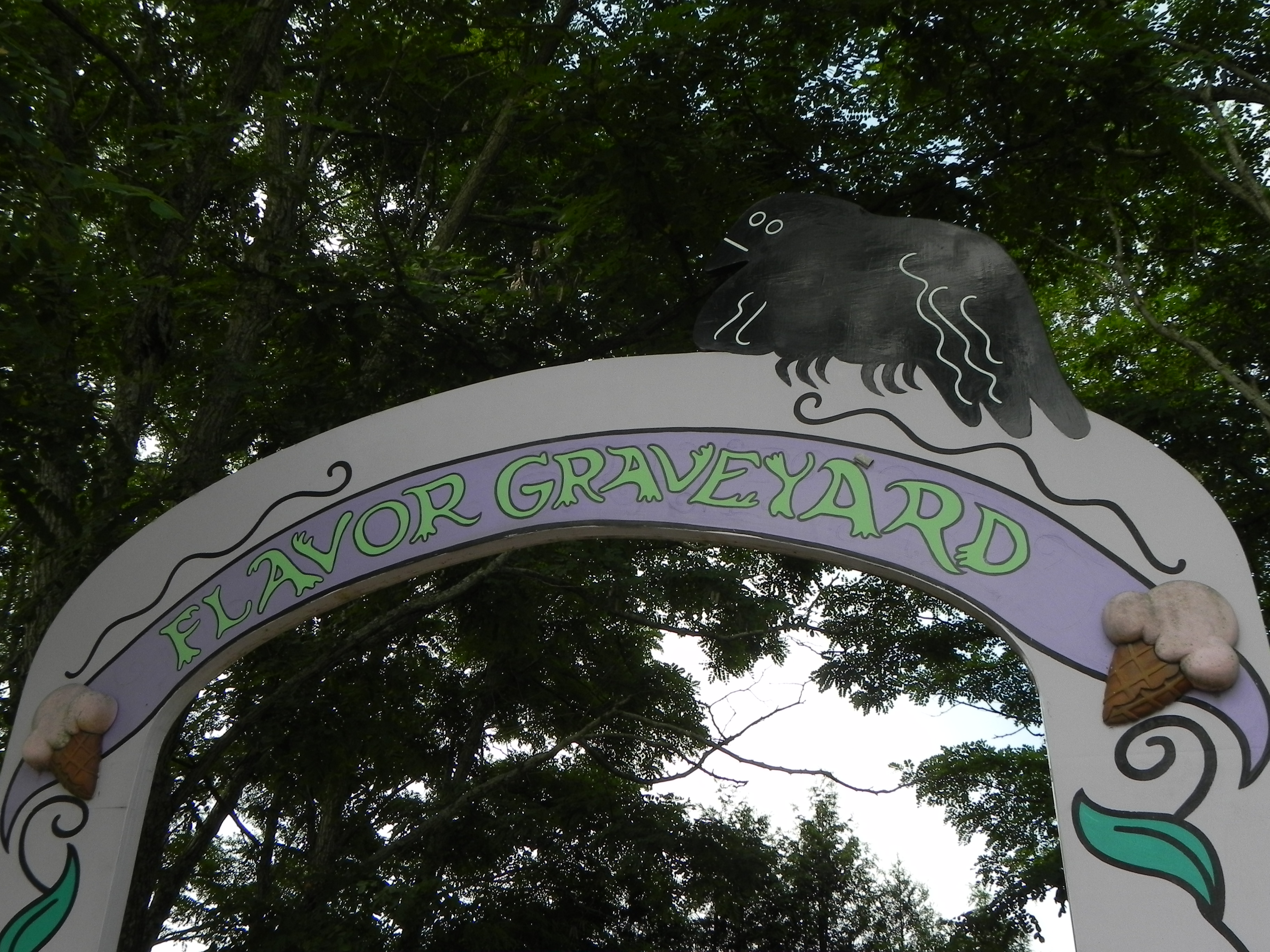
On a weekend trip to Waterbury, Vermont, I found the sweetest cemetery ever. Ben and Jerry’s ice cream factory features a Flavor Graveyard where tombstones to deceased flavors stand. The epitaphs are frequently witty and the experience is lighthearted for kids and adults alike. I wondered, as I stood there looking at the monument to Bovinity Divinity, at the persistence of the belief in an aftertaste—what I presume is a flavor’s version of an afterlife. We like to believe in something more, sometimes at the expense of the here and now. Nevertheless, Ben and Jerry stand for something more than quality ice cream. Theirs is a company with social consciousness, started by two young idealists who have managed to keep their integrity in spite of success. I couldn’t help but to feel impressed by the entire operation. Frozen dairy with a conscience.

The larger question, I suppose, is why success so frequently leads to a loss of concern for others. People possess differing levels of empathy, just as animals do, but it appears so starkly in the case of those who prefer their profit at the expense of others, sometimes even the entire remainder of the world. In a universe of one, no one is rich. And seeing a successful company that has managed to pull off relative equity in the world of business has proven that it is possible. Too many idealists let go too soon.

Perhaps it is the rarified air at higher elevation, or perhaps I’m being brushed with the wings of angels at this altitude closer to the celestial sphere, but this giddiness that I’m feeling is likely born of bonhomie. There is no necessary correlation between success and lack of concern for others. I am reminded of this as I walk to work in far away Manhattan. The sidewalks, even in posh business areas, host ambiguous stains and crushed cockroaches. Even the wealthy must step out of their limos sometimes. When they do, they will plant their feet on the same dirty sidewalks as the rest of us do. Their elevators may lift them to pristine heights, but the bottoms of their shoes are just as full of the remains of everyday lives as are mine. From now on, however, when I see Ben and Jerry wrappers among the detritus on the streets, I will be smiling, thinking about the aftertaste.


Symbolic Confusion

While on a drive through New England, we were discussing Islam with our daughter. Now I’m no expert on Islam, but I have covered it in a few classes. It has had a presence in America for a couple of centuries at least, probably first arriving with slaves from Africa. As we drove into Springfield, Massachusetts, I saw four slender towers rising into the sky off the highway and said, “Look, it’s a mosque,” supposing the towers to be minarets. When we drew closer, it was clear that these were really just the decorated finials of a quite secular bridge. Embarrassed at my mistake, my family was kind enough to console me with the suggestion that the four towers from that angle did look like the accoutrements of a mosque. (Earlier in the day I had seen my first Sikh temple in Connecticut, so the mistake might be at least slightly justified.) My wife mentioned how misidentified symbolism could be confusing. This spurred me to consider how symbolism frequently becomes a stand-in for reality.

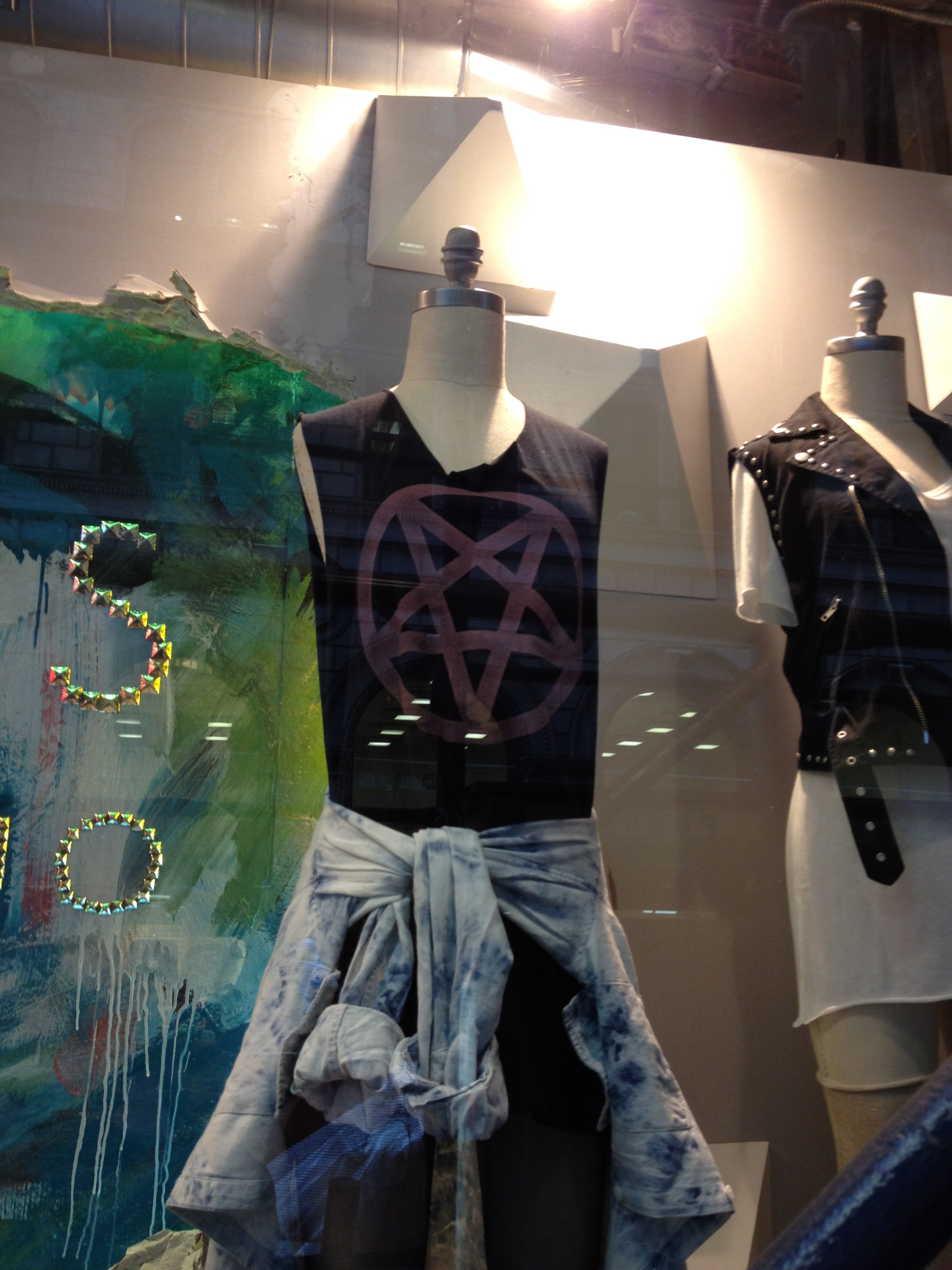
I’ve been reading about witches lately. Like many legendary fears, witches can be interpreted in many ways. They have their origins in the belief that nature may be manipulated by will over a distance and had been feared for the effectiveness of their powerful spells. After the tragic witch-hunts of the Middle Ages ran their horrible course, witches came to be seen as the result of overactive imaginations and rampant superstition. The modern Pagan movement has revitalized the witch in a somewhat safer environment, and has applied various symbols to it. Thor’s hammer, the ankh, and the pentacle are considered the symbols of modern witches by various covens and practitioners. While passing by a department store on East 43rd Street, I noticed apparel decorated with pentacles—the symbolism adopted by some witches.

This reminded me of a fracas that erupted some years back when a fashion designer incorporated the ornate letters of the Arabic script into the design of a sleek dress that left less to the imagination than a traditional burka. The designer expressed surprise when Muslims objected to words from the Quran being used to decorate immodestly covered women’s bodies. In both these scenarios symbolism has demonstrated its power for being what philosophers call the Ding an sich, the thing itself. Symbols are often that way, bridging as they do the worlds of religious thought and secular existence. I wonder how much we as a society would gain from letting bridges be symbols that participate in the reality they represent.


Thinking Zombies

Religion seldom makes as big an impression as when it concerns itself with the undead. Popular culture has gone after zombies to such a degree that they have engaged academic discourse well beyond the field of African-Caribbean religions. In fact, religious specialists tend to shy away from the topic in a kind of first-date embarrassment. Perhaps it’s because zombies in popular culture are so much cooler than their Vodou forebears. Within the past several months, however, zombies have shown up in Time, on the Center for Disease Control website, and now in the Chronicle of Higher Education. An article this week explores the academic implications of a paper by neuroscientists Bradley Voytek and Timothy Verstynen on the zombie brain. The two took on the project as a lark at the behest of the Zombie Research Society. Science fiction writer and head of ZRS, Matt Mogk gave an interesting take on zombies. He’s quoted in the Chronicle as saying, “Zombies are rooted in science, not superstition and myth.”

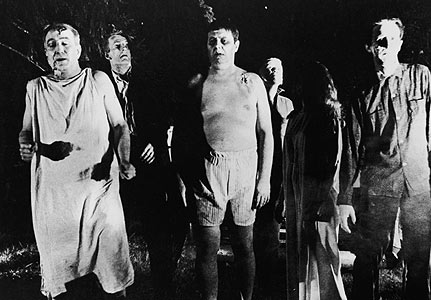
At the risk of sounding extremely uncool (one that I take rather frequently, I fear), I would point out that exactly the opposite is the case. Zombies are rooted in superstition and myth, i.e., religion. The entire idea that a person can be made to rise from the dead—originally to be made a slave—comes from that heady blend of Christianity and African religion that developed as part of slave culture. Slavers were notorious in not wanting slaves to accept Christianity because that might make slaves think that they were equal with their owners. By suppressing Christianity among slaves, the African religions in which many were raised came to blend with the Christianity that they’d garnered. One of the bi-products was the zombie. The zombie partakes of the Christian concept of resurrection, but in a twisted way. Once the new vision of the zombie presented by George Romero took off, yes, they did move into the realm of science fiction, often the forerunner of science.

A very serious issue underlies the zombie myth—the very religious concern about death. While not all religions comfort with an afterlife, they all in some way deal with ultimate issues. The end of life is about as ultimate, from our limited experience, as they come. Science loudly and repeatedly insists that death is the final frontier. We don’t cross back this way again, according to the available evidence. Scientists do not study ghosts or souls, and are very cagey about near-death experiences. The zombie, who is now threatening the careers of young scientists, is a most religious monster. Everything about the zombie points to its origin as a religious trope. Voytek and Verstynen wanted to interest people in science by taking a comic look at zombie brains. The problem is that zombie brains are brains on religion, not science.


Preachers and Pirates

One of the more colorful characters, albeit briefly mentioned, in Jon Butler’s New World Faiths, is Rev. Henry Loveall. While not a major historical figure in any sense of the word, and as a man who is known without the benefit of his own account of himself, the little we know of him intrigues. According to Butler, Loveall was dismissed as pastor from the Baptist church in Piscataway, New Jersey (a town in which I once worked) on charges of bigamy, prompting the Philadelphia Baptist Association to note he’d chosen an appropriate name for himself. Genealogical records online indicate that his given name was Desolate Baker and that he was born in Cambridge, England. As a youth he found himself in trouble for immorality with a woman at his church and he moved to America. Records are sketchy, but he apparently moved from Rhode Island to New Jersey to Maryland to Virginia. He had married but had gone to Virginia with another man’s wife. Even the usually forgiving genealogical records indicate some suspicion of his character.

Loveall lived in the eighteenth century when the world was still large enough to hide in. While I’m not the one to be impressed with Disney’s attempts at profundity in the Pirates of the Caribbean series of movies, there is one parsimonious line from At World’s End where Barbossa and Sparrow are discussing the incursion of business interests (in a delightful irony for a Disney film) into the free-spirited world of piracy. Barbossa avers that the world is smaller, but Jack Sparrow retorts that it’s not a smaller world after all, but “there’s just less in it.” Our world has been rapidly reduced to the pixels we can see on the screen in front of us. Bloggers are acclaimed as experts while those who’ve gazed across the war-torn promised land from atop the Mount of Olives with its frenetic network of churches start to doubt what their own eyes have revealed to them. We are content to let the Lovealls and Sparrows live it for us.

Our names are seldom a matter of choice. Like being born, they are factors in the midst of which we find ourselves—someone else supposed that we might turn out like this. The names we would select for ourselves show the size of our inner worlds. To love all is a noble sentiment. A sparrow is nervous, flighty, and has but a small brain. Our inner worlds are partially constructed by our religions. Declaring on divine authority what we must and mustn’t do, we find ourselves born into religions like we’re born into names. Few question the faith tradition fed to them by parents with such certainty, and that religion, just as surely as our name, becomes an integral part of our identity. History tell us little of Henry Loveall, a man who changed his name, and a clergyman who lived religion on his own terms.

Baptized!


Diggers, Ranters, and Muggles

Great Britain, despite its relative secularity today, has historically been the Petri dish in which many religions have been cultured. A large part of this phenomenon derives, I suspect, from the relative indecision during a crucial period of what the official religion should be. It is quite possible for a state to dictate a religion, and historically religions have often served the purposes of the state. Governments support the religion that serves them best. Beginning with Henry VIII, however, Britain had a difficult time making up its royal mind. The Church (in Rome) had decreed divorce immoral, and the interests of patriarchy run deep in some men’s souls. In the flip-flopping between Protestant and Catholic that took place, many new groups emerged from the froth. The True Levellers, popularly known as “Diggers,” were one such group. Taking the book of Acts literally, they believed true Christians should have everything in common. They formed farming communities (digging the soil) to support themselves as dissenters. As with most utopian communities, however, this kind of radical sharing just didn’t last. After only two years the Diggers had disbanded.

Around the same time another sect known as the Ranters abounded. The Ranters, early rivals to the Quakers, held ideas well beyond the simple communism of the Diggers. Pantheists in an age of omnipotence, they didn’t really stand a chance of survival. They didn’t trust the authority of the church, and being Christians, as well as pantheists, they urged their English compatriots to listen to the Jesus inside instead of the one proclaimed in a limited way by the church and the Bible. Their antinomianism led to the perception that they were a threat to the social order. Interestingly, there seems to be evidence that the movement was somewhat widespread in the seventeenth century. Eventually they disappeared, absorbed into the Quaker movement or simply losing their cohesiveness by dint of their native antipathy to order.

Mr. Muggleton, I presume

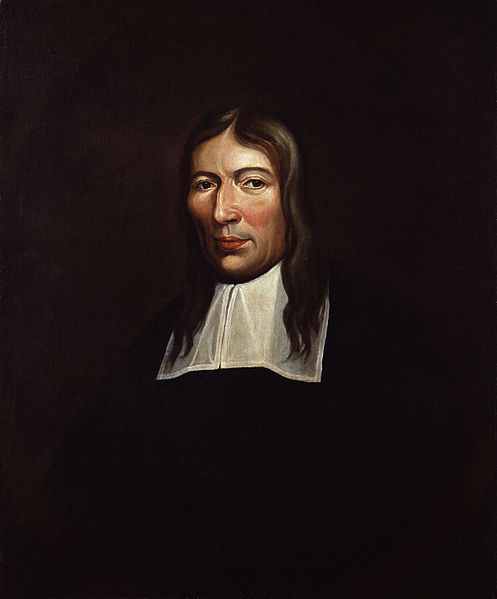
One of those influenced by the teaching of the Ranters was Lodowicke Muggleton. Technically a tailor, Muggleton is remembered as a religious thinker (a rarity in itself) largely because of his writings and Muggletonianism, which he founded (and which lasted until 1979). Apart from the Ranters, he also rejected the Quakers. Muggleton believed only in that which could be physically embodied, denying many aspects of an early modern world still alive with miracles and superstition. Even angels were beings of pure reason. Tracing the origins of fictional concepts may be a fool’s errand—and if so I am well qualified—but I wonder if J. K. Rowling’s “Muggles” derive from the name of this former Ranter who came to see life as having no magic. Muggleton’s world had no place for witches, magic, or divine intervention, yet it was profoundly religious. Once religion enters the public domain, it is sculpted to the satisfaction of individuals in search of their own meaning. Some of those searchers will be Muggles and others will be Ranters and a few may remain Diggers. Without any of them, the fabric begins to unravel.


Another Dark Knight

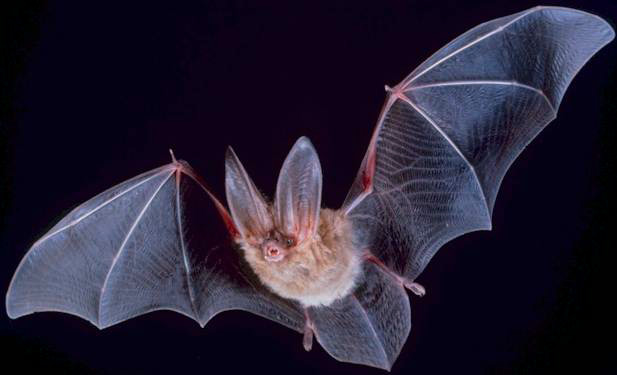
Batman was dreamed up in the late 1930s as an ambiguous character that fought crime and protected innocent civilians. The backstory emerged that he had witnessed his parents being shot down as a child, and eventually adopted the identity of a bat to frighten the perps. Batman never, in principle, used guns. Of course, the DC Comics character eventually scored a wonderfully campy television series that entertained many of us as children. It even spawned a movie. Then, fifty years after the original, Tim Burton gave us a darker, more serious Batman. The series of promising movies degenerated into the unforgivable Batman and Robin, and many assumed the flash in the pan was over. We didn’t need any super heroes. Christopher Nolan resurrected this bat in Batman Begins, and when I first saw The Dark Knight I was stunned. Good and evil danced a waltz so delicate that you were never sure who was leading. The frisson was palpable.

Thursday night the Nolan series’ final episode was released. I’ve not seen it yet, but from the moment I step out of the Port Authority Bus Terminal in Times Square until I arrive at work, I will have seen several multi-story Batmen looking down on the real life Gotham, explosions erupting and everyone wondering if Batman will survive this film. Yesterday morning the news opened with a horrifying story from real life in Aurora, Colorado. A gunman opened fire on a crowd of opening night movie viewers, killing at least twelve. Several children were shot. The gunman, like a real-life character from Arkham, was apprehended and claimed to have explosives in his house. I stared at the story and wondered what has become of humanity.

Facebook has turned into a venue for flying political banners. I’m always surprised to see how conservative people I knew in school have become—in those days no one had me beat for non-progressive thought. I’m truly amazed, at times, by the glorification of America’s gun culture that accompanies conservative causes. People want to shoot and want to glorify their right to shoot. I have, on rare occasions, shot rifles for sport—only at targets and only when others have asked me to. There is no denying the rush of power one feels, knowing that, like God, you can destroy the thing far distant from you with just a squeeze of the finger. I’m not sure I’m happy in a universe populated by such gods. I grew up a conservative, but also a pacifist. I grew up watching Batman defeat evil so clearly defined that no room remained for ambiguity. Yes, I grew up a conservative, but then I just grew up. I will watch The Dark Knight Rises and will not know what to expect.

Neither good nor bad.


Like Clockwork

It is probably safe now to reveal something that occurred at Grove City College over a quarter of a century ago. I often feel I must justify my choice of college, but I was a first-generation college student who knew nothing about higher education. I was raised with a Fundamentalist orientation, Grove City was a “Christian college,” and it was only about 30 miles from home. I do give Grove City credit for shaking me out of my Fundie way of thinking; as a religion major I met some genuine honest thinkers in the department who let me question the inconsistencies of Fundamentalist beliefs. I broke free in my own time. One of the literature professors, however, insisted that we both read and watch the movie version of A Clockwork Orange. It was my senior year and I felt ready to handle it. As I watched the movie again over the weekend, the first time since college, I was shocked that the institution Grove City College has become would have ever allowed such a movie to be shown. Although there is Kubrickian nudity, the movie was initially given its rating because of the violence, which, by today’s standards, is somewhat tame.

Anthony Burgess’ book is so well known that I don’t need to summarize the story here. What struck me in a new way was the religious element in the plot. While Alex is in prison, and wanting to be reformed, it is the prison chaplain who advises him against it. Undergoing the famous movie treatment, Alex indeed proves docile after testing, leading the priest to declare, “He has no real choice, has he? Self-interest, fear of physical pain, drove him to that grotesque act of self-abasement. Its insincerity was clearly to be seen. He ceases to be a wrongdoer. He ceases also to be a creature capable of moral choice.” Of course, the government is satisfied with this kind of morality, the sort that upholds appearances at any price to humanity.

What I find particularly disturbing is Burgess’ prescience. A Clockwork Orange was published fifty years ago, and since that time we have seen politics shift from care of the citizen to the ultimate window dressing of courting the Moral Majority to make it look as if all governmental decisions are moral. The Tea Party seeks to underscore that charade, claiming that all who would argue for Alex’s humanity deserve the fate that he so wrongfully dispensed before his “reform.” This view of the world suffers for its lack of complexity. Humans do not come in black and white. Ironically, Burgess chose to make the clergyman the only the objector to the inhuman treatment imposed on Alex. This is the kind of dilemma on which Stanley Kubrick thrived, but it has become even more poignant in the decades since his movie was released. True, Kubrick’s film is based on the apocopated American version of the novel, perhaps obscuring the intended meaning of Burgess. But isn’t that exactly what he was attempting to do?


Risky Business

Scientology has been back in the news with the divorce of Tom Cruise and Katie Holmes. Media pundits like to point out the highly unorthodox nature of Scientology, but such critiques overlook the vital nature of New Religious Movements. Many of us are raised believing that religions, to be “true,” must possess at least a modicum of antiquity. We routinely reject the science of the first century of the common era (well, maybe the Creationists don’t), but we accept without question that the religious views of the time were on-spot and unchanging. It comes as a surprise, therefore, when a new religion like Mormonism or Scientology prospers. Accusations of being money-driven are rife, but then, who has recently audited the Vatican or CBN? Religions are “non-profit” by definition, but they certainly do raise money. As players in the capitalist game, I say more power to them. Who else can make tremendous profits and claim tax-free status (apart from major corporations, I mean)? Most believers are happy to throw a few dollars in the direction of some guru who will deliver him or her from hell, at least.

The fact that true believers in revelation don’t like to face is that every religion started some place. It would be a different story were there only one religion that ever developed, but as soon as someone started to declare their belief orthodox it was only a matter of time before heterodoxy joined the conversation. In the light of this wide-open world of religious beliefs, I think that creativity has been undervalued all along. Say what they might, critics have to admit that Mormonism, Scientology, and even Jehovah’s Witnesses have to score high on the originality scale. Since Yahweh has a lot of competition in the deity market these days it will be difficult to find an adequate final arbiter.

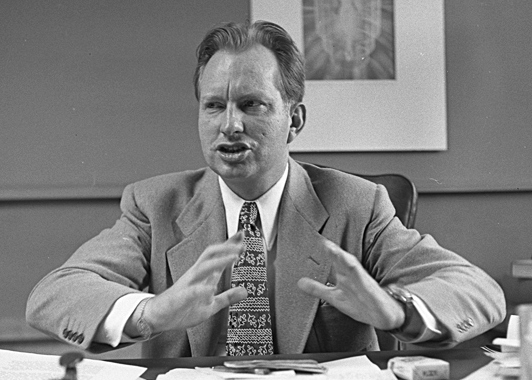
I would like to suggest a panel of experts, like on the appropriately titled “American Idol.” Gods are often hard to pin down, even with email and Twitter and Facebook. To fill in our distinguished panel of judges, then, who might we choose? The clergy of any tradition, I’m afraid, will be biased and so we might look elsewhere. Politicians too should be excluded since their remit is exploitation. Besides, they don’t often recognize creativity as something worth funding. Where does that leave us? We can’t use the average person, because who is going to watch their peers on television. Famous people. An athlete would be a good choice since overthinking religions can lead to trouble. We might need to avoid Tebow, however. Hollywood is said to be godless, so an actor would have great appeal—besides, good looks must equate to good theology, mustn’t they? Who will our third panelist be? Probably a writer; they are creative and their names are well-known. They would add intellectual heft without having the same star status as their more visible colleagues. Funny, L. Ron Hubbard was a science fiction writer whose religion thrives in Hollywood and who enjoyed the sport of yachting. We may have our winner here!

Religion or science fiction?


Tree Goddess

If you’re missing a virgin, I suggest you might try West New York. According to the local section of Friday’s New Jersey Star-Ledger an alleged image of the Blessed Virgin Mary has appeared in “an unusual tree” in West New York. The local diocese, no doubt correctly, suggests that the “image” is probably “just some discoloration that resembles Our Lady of Guadalupe.” Those inclined to accept pareidolia as fact, however, have already made up their minds. The tree has been barricaded off and flowers have been laid at its base and cell phone shutters are making their electronically fabricated snapping noises. A Google image search of “Virgin Mary West New York” brought up more than a million hits. People are desperate for a miracle.

Back when I was working on my dissertation, the tree goddess was inevitably Asherah. One of my unspoken speculations from those days was that trees are evocative plants, easily playing to the human imagination. In the right conditions a young tree can be mistaken for a person at a distance. The branches, particularly in late autumn and winter, resemble gnarled fingers reaching for the sky or any unwary passer by. And the natural knots and scars on tree trunks (such as in the current example) readily fire unlikely associations. They can be eyes, mouths, faces, or other anatomical bits—as people we project ourselves onto any likely (sometimes unlikely) avatars in the natural world. If images are to be believed, hundreds of people are devoutly weeping and praying at an entirely natural formation in the wood less than two miles from the most sophisticated city in the country.

Even with the Roman Catholic Church urging caution, blind belief is not dissuaded. What does it say about us that we so deeply desire a sign from above? This is the kind of question those who claim that a reasoned materialism will inevitably trump superstition must ask themselves in profound reflection. The fact is that people always have (and always will) assigned meaning to what they see. It is the gift and curse of evolution. “I think I shall never see / A poem as lovely as a tree,” Joyce Kilmer famously wrote before being killed in World War One. This New Brunswick, New Jersey native, who died at 31 in the killing fields of France, might wonder that so many stop at that first famous stanza. To those thronging in West New York, I would recommend a little Kilmer with their miracle. Let’s leave the last word to the poet: “A tree that looks at God all day, And lifts her leafy arms to pray…”


The Times they are a’Chanin

Across from Grand Central Terminal in Midtown Manhattan rises the Chanin Building. Named for Irving S. Chanin, the tower is no longer easily picked out among Manhattan’s dizzying skyline, but the building is a monument to the humanistic spirit that was beginning to flower in the 1920s between the harsh realities of the world wars. Outside the building, above the ground floor shops, runs a bronze frieze that still catches the breath of visitors who stop to stare for a moment or two. Interestingly, the frieze is a monument to evolution, showing the development of “lower” life forms among the water flourishing into birds and fish. Although prosperity gospelers would object to its inherent Darwinian message, they would appreciate a huge monument to the triumph of capitalism in Chanin’s dream, as much of Manhattan reflects.

Antipodes are a fact of geography and human understanding. It would seem that they are also a paradigm for those who “want it all.” Perhaps it is ironic in coming from a Disney movie, but I’ve always found Mary Poppins’ maxim apt: “enough is as good as a feast.” Indeed, leaving the table after eating more than I need I feel miserable and disgusted. There is only so much that people can have, and this is a matter of physics as well as biology. If God wanted us to be wealthy, why didn’t he make us that way? (Surely the God who promotes personal wealth must be male.) Evolution and capitalism could be a dangerous mix should we forget that evolution is not goal-oriented. Natural selection works by trial-and-error, only the trial isn’t planned or intelligent.

This dialectic reminds me of that old chestnut, Beneath the Planet of the Apes. Ursus, the gorilla warlord, gives a jingoistic speech concerning the Forbidden Zone. “It is therefore our holy duty to put our feet upon it, to enter it, to put the marks of our guns and our wheels and our flags upon it.” Of course, this second, lesser installment of the Planet of the Apes movies raises the entire specter of nuclear war to a disturbingly sacred level, but that’s a topic for another post. What I notice is the full circle of evolution here—not just human to ape, but human to capitalist ape. Apes that wish to own and control their entire world, including that region where, in the original movie, both ape and human fear to go. It should not surprise me to see talking apes in Manhattan, but then again, it might just be the bright sun reflecting off the bronze of Irving Chanin’s monument to economic growth.