Proofing Yourself

Some publishers give you advance warning.  Many do not.  As a struggling writer, after I submit one manuscript I move on to the next project, knowing proofs will eventually come.  The thing is, I’m obsessive.  When I’m in the middle of a project I can think of little else, thoughts of it leaking into other activities throughout the day.  I’m in the middle of one such project, as I have been for at least three months now.  Then the proofs came.  If you write books you know that proofs always come with deadlines.  You need to drop everything and prioritize them.  I read many academic books with tons of errors, and I think I know why.  If proofs come at an inopportune time, you read them as other required activities (I’m looking at you, 9-2-5) permit.  For me, it’s difficult to let go of my present project.  My current fascination.
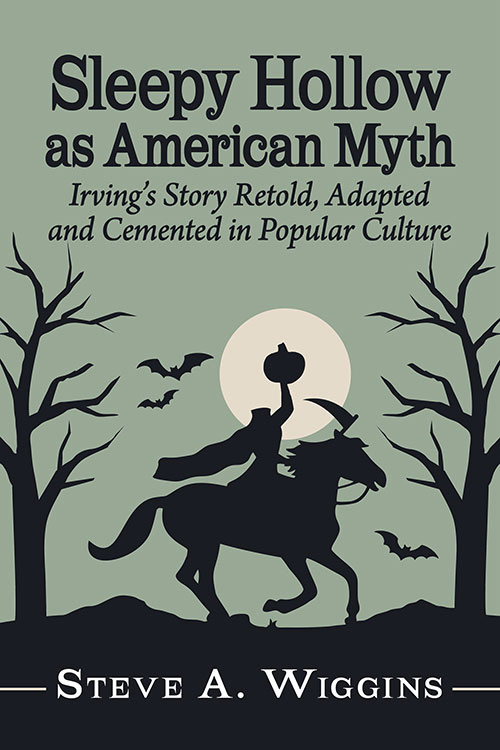
The proofs for Sleepy Hollow as American Myth arrived yesterday.  I’m excited for this book.  I have hopes of reaching out to local magazines and pitching stories about the Legend this autumn.  But I’m red hot into a new project.  My mind is of an age where there’s no guarantee that I’ll remember precisely what I was thinking if I lay aside my present project for a week to read the proofs.  Indeed, the last two weekends have been so busy with other things that I haven’t had time to watch any horror movies at all.  Just yesterday I awoke at 4 a.m. feeling hopelessly behind already, a feeling that lasted all day.  Then at 4 p.m. the proofs arrived. ( For context, 4 a.m. is late for me.  I’ve been waking up later due to that pointless ritual of annual time changes which, like everything else, the government can’t seem to get right.  In any case, proofs trump all.)

My time is extremely regimented.  I had to drop all committee work at our local faith community because the meetings were all in the evening, scheduled for after when I’d normally be asleep.  I wake early to write and read before the snowplow of the 9-2-5 throws me off the road for another day.  Everyone who talks to me feels that they don’t have time for what’s important any more.  The proofs are here and I’ll get them back by the deadline.  I’ve never been late once told when they have to be in.  My accountant tells me that anything that leads to royalties, no matter how small, counts as a second job.  I hope this one sells well enough to make it feel like that.  In the meantime, please don’t come knocking because I’ll pretend I’m not at home.

Lights, Cam

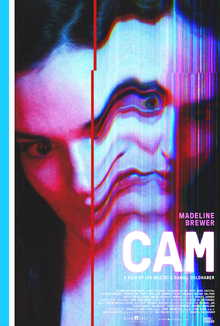
Techno-horror is an example of how horror meets us where we are.  When I work on writing fiction, I often reflect how our constant life online has really changed human beings and has given us new things to be afraid of.  I posted some time ago about Unfriended, which is about an online stalker able to kill people IRL (in real life).  In that spirit I decided to brave CAM, which is based on  an internet culture of which I knew nothing.  You see, despite producing online content that few consume, I don’t spend much time online.  I read and write, and the reading part is almost always done with physical books.  As a result, I don’t know what goes on online.  Much more than I ever even imagine, I’m sure.

CAM is about a camgirl.  I didn’t even know what that was, but I have to say this film gives you a pretty good idea and it’s definitely NSFW.  Although, having said that, camgirl is, apparently, a real job.  There is a lot of nudity in the movie, in service of the story, and herein hangs the tale.  Camgirls can make a living by getting tips in chatrooms for interacting, virtually, with viewers and acting out their sexual fantasies.  Now, I’ve never been in a chatroom—I barely spend any time on social media—so this culture was completely unfamiliar to me.  Lola_Lola is a camgirl who wants to get into the top fifty performers on the platform  she uses.  Then something goes wrong.  Someone hacks her account, getting all her money, and performing acts that Lola_Lola never does.  What makes this even worse is that the hacker is apparently AI, which has created a doppelgänger of her. AI is the monster.

I know from hearing various experts at work that deep fakes such as this can really take place.  We would have a very difficult, if not impossible, time telling a virtual person from a real one, online.  People who post videos online can be copied and imitated by AI with frightening verisimilitude.  What makes CAM so scary in this regard is that it was released in 2018 and now, seven years later such things are, I suspect, potentially real.  Techno-horror explores what makes us afraid in this virtual world we’ve created for ourselves.  In the old fashioned world sex workers often faced (and do face) dangers from clients who take their fantasies too far.  And, as the movie portrays, the police seldom take such complaints seriously.  The truly frightening aspect is there would be little that the physical police could do in the case of cyber-crime.  Techno-horror is some of the scariest stuff out there, IMHO.


Not Quite

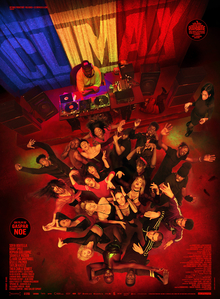
There’s a debate among horror nerds that goes like this: “Blumhouse or A24?”  If this is Greek to you, Blumhouse and A24 are entertainment production companies that both make notable horror films.  I’ve always leaned a bit toward A24, to the point of making a list of their horror films and watching them when I can find them on streaming services.  Since I generally don’t read about movies before watching them, I wasn’t sure what Climax was going to be.  Distributed by A24, I figured it would be intelligent horror and it may have been.  Honestly, it was a little difficult to tell.  Nihilistic and non-scripted, it’s a movie with a very slight premise: a French dance troupe holds an after-practice party in which somebody spikes the sangria with LSD.  The entire first half of the movie, practically, is dancers doing their stuff to an incessant techno-beat.  I honestly don’t know why I kept with it.

Since it’s unscripted, most of the young people talk about sex, and occasionally other topics.  They begin to get paranoid when the acid kicks in, and throw one of the dancers out in dangerous winter conditions where he freezes to death.  They think he spiked the drink.  The troupe manager, also a suspect, has a young son that she locks into an electrical closet for protection, with predictable results.  Since she also drank the sangria, the troupe supposes she must be innocent.  A third non-drinker, who is pregnant, also gets accused.  Meanwhile some dancers keep on dancing while others start to pair off, all of them but the pregnant one, tripping hard.  In the end the police arrive and find dead or stoned dancers and really that’s about it.

How is this horror?  Psychologically, mostly.  There is a little body horror, but mostly it’s just viewers wondering what is going to happen.  Which, it turns out, is not much.  There are some religious references in the movie, which maybe offer a little depth, but really this is largely a filmed rave-like dance with a minimal storyline tossed in for good measure.  Also, it’s in French, meaning subtitles are important for following whatever plot there is.  Wikipedia leads me to believe Gaspar Noé, the “writer”-director is fond of making polarizing and controversial movies.  There’s nothing surprising about young people being interested in music and sex, nor, for that matter alcohol and drugs.  All of this is entirely conventional.  It isn’t enough for me to lose faith in A24, but it does make me wonder what they were thinking.


Learning Bunnies

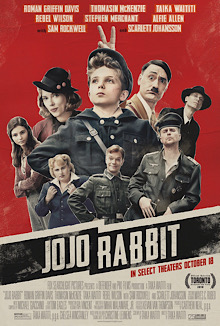
Although it was released during the first Trump administration, Jojo Rabbit was written before he was sharp bit of dust in the GOP’s eye.  Still, in the second debacle, it seemed like a good time to watch it.  Its message is appropriate for any time, but especially now.  Jojo is a ten-year-old boy who’s an enthusiastic member of the Hitler Youth.  So enthusiastic that he has Hitler as his imaginary friend.  He buys the party line without even thinking (he who has ears to hear, let him hear).  Jews are evil, according to the rhetoric.  Monsters even.  Jojo’s mother tries to help her son, missing his father, understand that love is the better way.  Then Jojo discovers something.  A girl his deceased sister’s age has been living in the walls of his sister’s room.  He quickly deduces that she is a Jew.  Were it not for her threats to implicate him and his mother, he would turn her in.

An unusual coming of age story, we see Jojo do something rare—he matures.  Getting to know Elsa he can’t reconcile what he sees with what he was taught.  She’s not evil.  She has no horns.  She’s not rich.  She fell in love with a guy and wants the same thing anyone wants.  The conflict faces Jojo every day as he decides he must learn about Jews to report this intelligence to the authorities.  The authorities, however, know Germany is losing the war.  It’s only a matter of days.  When Hitler dies by suicide, Jojo fully realizes that he has been simply following along instead of following the evidence.  His mother was hanged for not being loyal to the party and his father, he learns, was also helping the Jews.  In a moment of singular hope, Jojo grows up.

Movies can teach lessons.  Some are widely enough viewed to make a major impact on society.  Can any of us imagine a world without Darth Vader and Luke Skywalker?  In this era when sensible people seem to have forgotten that fascism is evil in its nature, films like Jojo Rabbit are important.  Thinking is not a crime.  Learning is not a crime.  Even if they’re being touted that way by the wealthy in order to protect their privilege.  We watched the movie for entertainment on a Friday night, but I received an education instead.  I wonder just when the message of love fell out of Christianity.  But then, I think it becomes clear when you think about particular movies and how we’ve come to be where we are.


Naming Names

I recently saw a story suggesting that Elon Musk was named after the leader of a Martian colony in an unpublished novel written by none other than Wernher von Braun.  Now, I don’t know if this is true or not, but it did get me to thinking about names.  The awesome responsibility that parents have in naming their kids.  I suppose many people don’t think much of it, but I remember asking, at a young age, why I was named “Steve.”  (There’s no “n” at the end, despite what people throughout my life have tried to “correct.”)  An old belief suggests that children might emulate those they’re named after.  Of course, some of us just can’t let things go.  Nobody else in my family was named “Steve,” and being very Protestant, I wasn’t named after no saint.  (Besides, he was Stephen.)

My mom told me a couple of things.  First of all, she wanted to name me after her father, Homer.  As an adult I think it might’ve been worth the childhood beatings I’d have to have taken, but my father vetoed it.  “Steve” was taken from a character in a Dick Tracy cartoon.  Mom liked the sound of it and my father didn’t object.  I’ve never read Dick Tracy—I’m not much of one for newspapers in general—but I did see that Warren Beatty movie back when it came out.  Once I tried to find a character named Steve in the cartoon line-up and I did find that there was a criminal by that name at one point.  Mom never told me this and I only found it as an adult, after I’d already decided against a life of crime.  But still, names sometimes inspire behaviors.  Influence choices.  Don’t they?

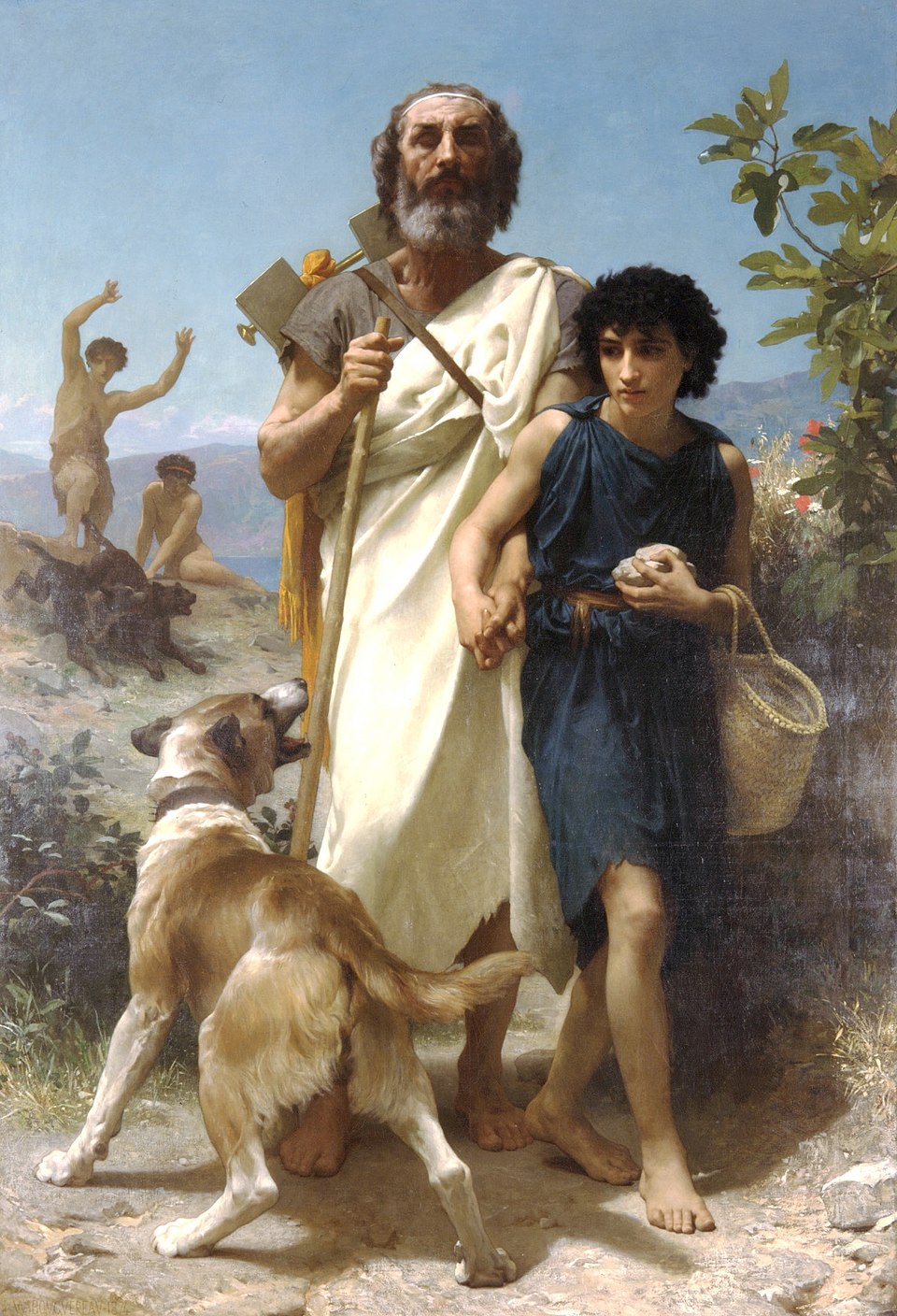
Homer and His Guide: Image credit: William-Adolphe Bouguereau, public domain, via Wikimedia Commons

Children named after their parents sometimes follow in their footsteps.  Or those named after a great person in history use that in their internal monologue as they try to attain similar things.  Now, I haven’t researched this—I’m just guessing here.  But for many years it was unusual to find a German boy named Adolf.  There are also names that are retired for someone being, say, the son of God.  Mom swore it was wrong to name a boy “Jesus,” even in admiration.  She didn’t know that the Anglicized Hebrew name was actually “Joshua,” common then as it is today.  Homer was a pagan, and I wondered how my great-grandparents came up with that name.  The best I can figure is that they were from upstate New York and there’s a town called Homer in Cortland County.  And I wonder if he ever asked his parents why he was named that way.


Contours of Dark Academia

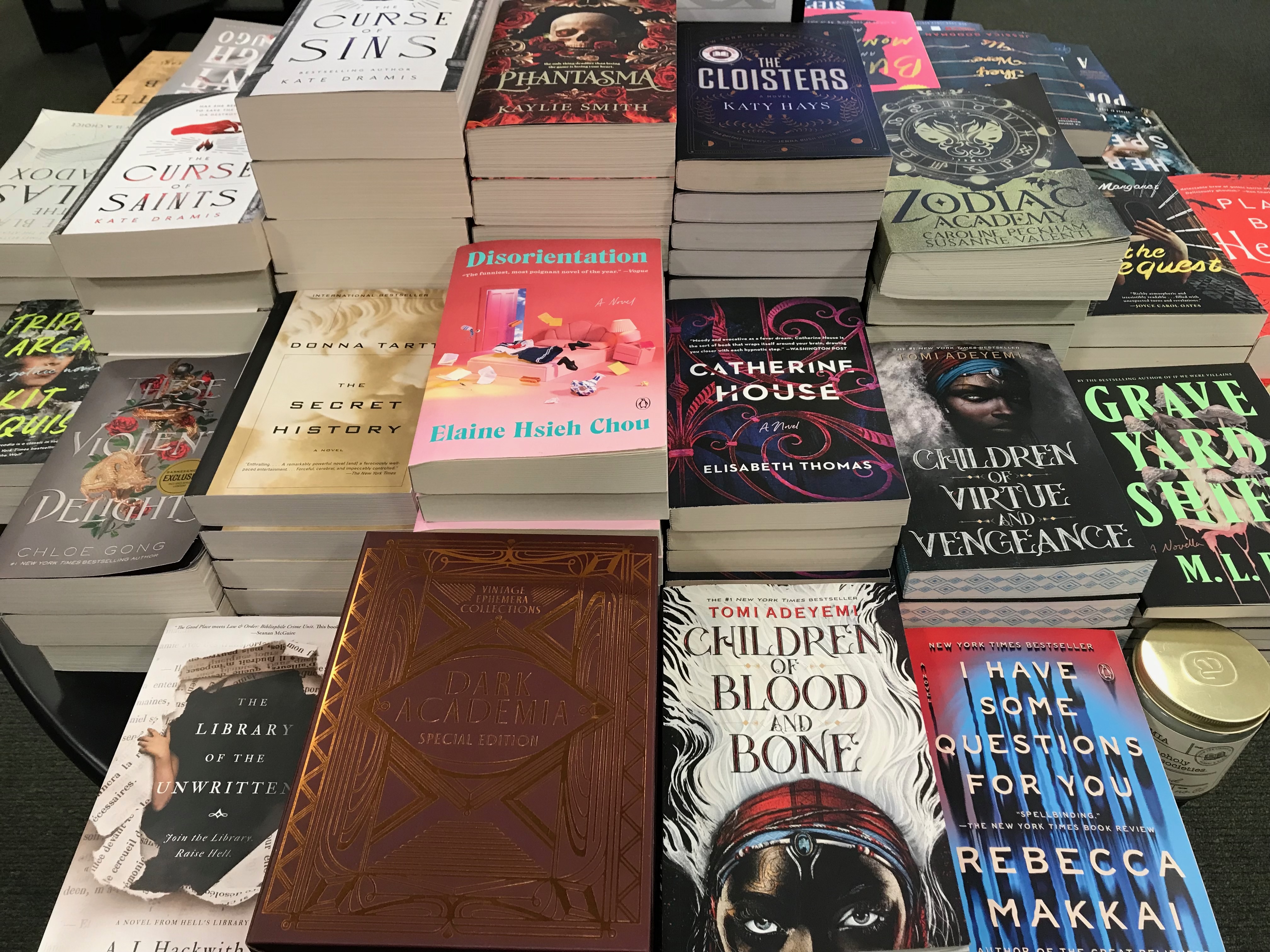
As I attempt to trace the contours of dark academia, I’m learning that much of my reading has been classified that way by others.  My main engine for discovering this is Goodreads, making me think I should shelve my own books more.  Also, I recently visited a local Barnes and Noble where one of the front tables was dedicated to dark academia.  Looking over the titles gave me fiction reading ideas for months.  In any case, apart from classical dark academia, where the setting is an institution of higher, or specialized learning, the category for many includes books about books.  This would pull in titles such as Carlos Ruiz Zafón’s The Shadow of the Wind, which I read before my current conscious interest in the genre.  I think I was looking for gothic books back then.  I include, on my personal list, books about students with dark experiences, such as Familiar Spirit by Lisa Tuttle.

The books about books category does shed some insight.  I love Italo Calvino’s If on a Winter’s Night a Traveller, but it’s not really dark enough to be, well, dark academia.  I understand the critique that dark academia tells stories of privilege, but that dissipates somewhat when including books about books.  Higher education is, and remains, a domain of privilege, but it is possible for those raised poor (such as yours truly) to break in.  I enjoyed higher education throughout the eighties and into the aughties.  After that it began to get far too political and business-oriented.  (Not that I wouldn’t go back if I had half a chance.  Or even a quarter.)  My point is, dark academia can deal with those who lack privilege, but I also believe there’s no point in denying privilege does exist.  And opens doors.

Dark academia is new enough that its parameters are permeable.  To me the real draw is that a fair bit of sculduggery really does exist in higher education.  The reading public seems eager for it.  Thinking of all the odd, somewhat tenebrous things that occurred in the course of my couple of decades in academia, the genre rings true to me as well.  As I think back over the books I’ve read, I think maybe I should build a shelf especially for dark academia.  I’m trying to read in it more intentionally now, but I’ve been unintentionally exploring it for decades.  When you add books about books, Umberto Eco’s The Name of the Rose joins the crowd, and I read that one all the way back in seminary.  I tried to be part of academia, but there’s a darkness about an unrequited love, and so it just makes sense to me.


Non-Demon

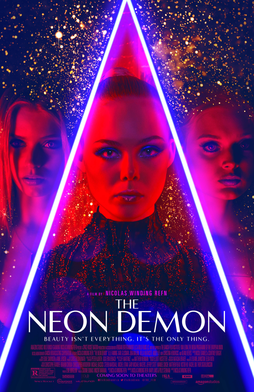
The psychological horror film The Neon Demon isn’t about a literal demon.  It’s a movie about rivalry between runway models in Los Angeles, but there isn’t a great deal of story.  And what story is told doesn’t really make sense.  Sixteen-year-old Jesse, who should probably technically be an orphan, has made her way to LA because all she has is her prettiness.  Some photos get to an agency that agrees to hire her.  The other young women become jealous of the attention Jesse receives.  Only one, Ruby, a make-up artist, befriends her.  The jealous models confront her, and the creepy hotel manager where she stays seems to prey on the women who are trying to break into the dream of the city of angels.  Jesse escapes to Ruby but Ruby’s interested in a sexual relationship that Jesse doesn’t want.  Ruby and two rival models kill Jesse and eat her.  This leads to the death of Ruby and one of the models.

Some of what I describe here is speculative since there are abstract, dream sequences thrown in and it’s not always clear what is going on.  I kept finding myself wondering if this was horror, as presented in the list where I found it.  The unrelenting male gaze could be considered horror for women, but the movie doesn’t take up that narrative.  There are a few male characters, and one of them actually seems to be a good guy, but the threat comes from the other women.  Reviews for the movie were deeply polarized.  Some declared it one of the best movies of the year (2016) while others gave it abysmal ratings.  At the box office it earned about half its budget back, and that budget was a respectful seven figures.

Horror is a difficult genre to define.  I keep coming back to the fact that it’s artificial.  The history of the term began with monster movies but eventually other films with dark themes were included.  Some have no monsters unless a human acting aberrantly counts (and some do count such as monsters).  Slashers have their serial killers and gothic tales have their haunted houses.  Well over seventy sub-genres of horror have been defined.  Casting about for freebies on the weekend leads to some that you just can’t pin down.  Neon Demon does, ultimately seem to fit the label, but many viewers will probably wonder exactly how.  Being out on your own can be frightening, and cannibalism is creepy, so I’ll go with that.


Institutionalized

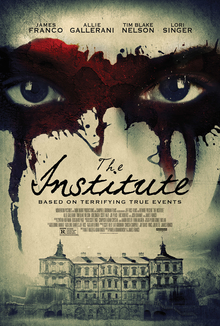
When movies set out to present a different period, a bit of historical research can go a long way.  Someone like Robert Eggers offers such verisimilitude that you feel like you were at the intended time.  Others are less successful.  The Institute claims to be based on true events, and, apparently human trafficking did take place at the Rosewood Institute for a number of years.  The movie, however, gets many period details wrong and suffers from a labyrinthian story.  Also, it is shot so dark that even with brightness at full it’s difficult to tell what’s happening much of the time.  So what are these allegedly true events?  Wealthy women are admitted to the fashionable institute to recover from mental stresses.  At least that’s why Isabella Porter is there.  Drugged by the fictional Aconite Society, she is trained to be impervious to pain, erase her identity, and believe she is fictional characters to act in plays.  A strange premise.

Her brother suspects something is wrong, but under the influence of wolf’s bane, Isabella kills him.  The women are repeatedly tortured and dehumanized, ultimately to be sold to the wealthiest elites of Baltimore as slaves.  The true part of the true events is quite slim, and it’s never explained why Isabella is trained to believe that she’s Young Goodman Brown, and paired off with another woman as his wife Faith.  Also, there are Satanists involved.  With all the stops pulled out, the whole begins to sound rather silly.  It’s unfortunate since there does seem to be the core of a good idea here.  It needs a little less rather than more.

If all the storylines came together into a coherent whole, there might’ve been some takeaway.  As it is, layers of a secret society cover other layers and when you get to the center there’s nothing there.  Movies about mental institutions are difficult to pull off well, particularly when they’re based on true stories.  While a wolf-bane drinking society of the uber-wealthy does sound plausible, it leaves unanswered why they want their female patients to act out stories when they could easily afford to attend plays with professional actors.  ’Tis difficult to fathom.  The satanic aspect is never really explained but again, I wouldn’t put it past the rich.  The acting is good, from what I could see of it, except for the institute’s doctors, all of whom were woodenly portrayed.  Perhaps this was intended to be a parable, or maybe a retelling of “Young Goodman Brown.”  There was a bit of Poe thrown in as well, so all was not completely wasted.


To Dracula, a Daughter

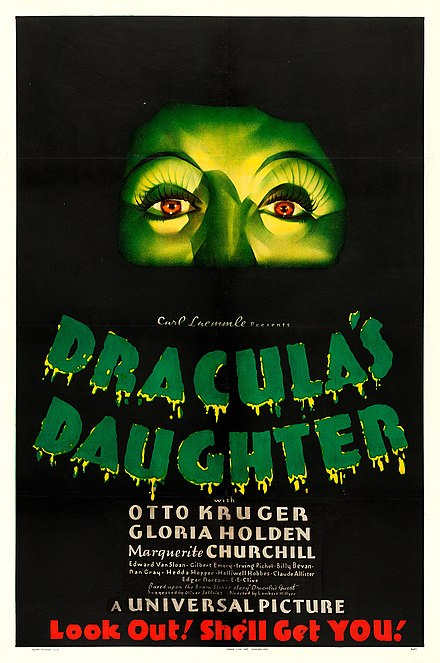
Nosferatu, by F. W. Murnau, was deemed in copyright violation of Bram Stoker’s Dracula, and ordered destroyed.  Rights to the novel were properly purchased by Universal and the horror film proper was born.  Other studios wanted to get in on the action, so the rights to the story of the Count’s daughter were bought by MGM.  They then sold the rights to Universal so that the latter could produce a sequel to their earlier hit.  Dracula’s Daughter didn’t do as well as the original, but it kept the vampires coming.  Some years later, Son of Dracula came out, keeping it in the family.  Having watched Abigail, I had to go back to Dracula’s Daughter to remind myself of how the story went.  I recalled, from my previous watching, that it wasn’t exactly action-packed, but beyond that thoughts were hazy.

Picking up where Dracula left off, von Helsing (that’s not a typo) is arrested for staking a man.  Then a mysterious woman arrives and steals the body to destroy it in an attempt to rid herself of vampirism.  We see that just five years after Dracula the reluctant vampire was born.  Creating a scandal at the time, Dracula’s daughter also seemed to prefer females.  Apparently the script was rewritten several times to meet the approval of censors during the Code era.  The modern assessment is that this is based more on Sheridan Le Fanu’s Camilla rather than an excised chapter of Bram Stoker’s novel.  Since the world wasn’t ready for lesbian vampires in the thirties, she falls for Dr. Garth, a psychologist that she wants to live with her forever.  Kidnapping his secretary to Transylvania, she draws him to Castle Dracula.  Her jealous servant Sandor, however, shoots her with an arrow.  Von Helsing explains that any wooden shaft through the heart will do.

Already as early as Stoker, at least, Dracula had brides who were vampires.  It makes sense that there might be daughters and sons.  And studios, learning that people would pay to watch vampires on the silver screen, were glad to keep the family dynamics rolling.  Vampires proved extremely popular with viewers—a fascination that has hardly slowed down since the horror genre first began.  Some of the more recent productions explore themes and approaches that simply wouldn’t have been possible in the early days of cinema.  We don’t see Dracula’s daughter actually biting victims—one of the many things the Production Code wouldn’t allow—and there’s no blood.  Nevertheless, the story itself went on to have children and they are still among us.


Stop for a Bite

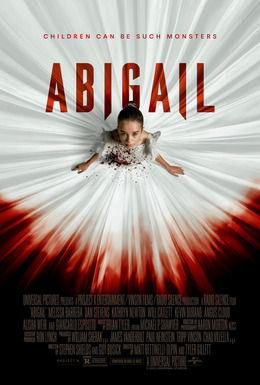
Universal does monsters right.  I’m no movie maven but I don’t know why the whole Dark Universe thing didn’t work out.  These movies are good!  Abigail recently came to one of the streaming services I use and I watched it right away.  (There’s sometimes a delay between when I write about a movie and when it appears on this blog.)  There will necessarily be spoilers here.  I write this as someone who doesn’t watch trailers if I can help it, and who tries not to read about movies before watching them.  So be forewarned, if you are, by any chance, like me.  In case you’re bowing out now, this is a very good flick.

So, this is one of those spates of recent vampire movies where you go for quite a while before realizing it is a vampire film.  Set as a taut thriller, a group of six criminals who don’t know each other kidnap a twelve-year old ballerina.  She’s being held for ransom and the kidnappers have to keep her in the mansion for 24 hours, after which they each will receive their share of $50 million.  What they don’t know is that Abigail is a centuries-old vampire who likes to play with her food.  Suspecting they’ve been set up, the criminals speculate that the girl’s father has set his most vicious killer on them.  Modern, educated people, they don’t believe in vampires (there’s quite a bit of shading from Dusk Till Dawn in here) but they have to figure out how to defeat one.  Like Dusk Till Dawn, they ask themselves what they know about vampires, trying to come up with a plan to survive the night.  As you might expect, a bloodbath ensues.

If you’re the kind of person who reads about movies first, you’ll know, as I didn’t, that this was planned as a remake of Dracula’s Daughter.  It’s been so many years since I saw “the original” that I scarcely remember it.  (So you know what’s coming, eventually.)  I’ve watched many monster movies—like the books I’ve read, it’s so many that I lost count long ago.  Many of these films are pretty good.  And, of course, there are many I haven’t seen—that depends on money, time, and circumstance.  I do have to note, however, that coming up on the centenary of Universal monster movies, they haven’t lost their touch.  I have no idea what happened to their Dark Universe, but I do get the feeling they maybe gave up on the idea a little too soon.


Dead Darlings

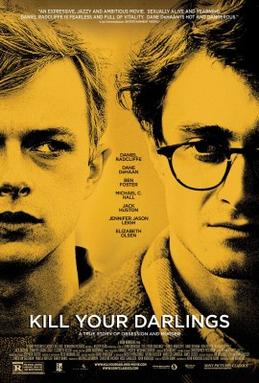
The thing about being a writer is that there’s no one size fits all.  I watched Kill Your Darlings because it is an example of dark academia, or so it’s sometimes presented.  I have read some Beat Generation writers, but the movie made me feel very ignorant of that aspect of American counter-culture.  The movie is based on true events and such things as coincidences of writers always makes me feel terribly alone.  In case you don’t know the story (I didn’t) Allen Ginsberg came under the influence of Lucien Carr at Columbia.  Carr had been surviving at the university by the writing of his one-time lover David Kammerer.  Carr introduces Ginsberg to William S. Burroughs and Jack Kerouac, and the four (excluding Kammerer) kick off what would become much of the Beats.  Carr, however, kills Kammerer and Ginsberg, who has become Carr’s lover, must decide what to do.

Ginsberg grew up in a broken home, as did Carr.  I could relate to their feelings of loss.  Of course, the Beats relied on drugs and alcohol and sex to write, breaking the rules of institutions like Columbia.  Now that I’ve written my “million words” (and more), posted for free on this blog, I think back to my literary friends.  Both in high school and college I knew guys (I was awkward with girls) who dreamed, or at least talked, of becoming writers.  Over the years this pool has dried up.  Seminary and doctoral study were too focused to find those who really wanted to write.  Academic books, maybe, but not forms of self-expression.  Now, I’ve never used drugs, nor have I wanted to.  I write nonfiction books that are creative forms of self-expression.  Naturally, they don’t sell.

Many of us who write were raised in broken homes.  With tattered dreams we set out to try to make something of our lives in a hostile world.  My behavior in college wasn’t exactly conventional, as any of my roommates could attest.  It often appeared that way on the outside, even as poems rejected from the literary magazine were called “too depressing.”  So I pursued an academic career, but there was, whether anybody saw in or not, always a wink in my eye.  The same is true of my writing since.  This blog scratches the surface.  There’s a huge pile of fiction, and yes, poems, underneath.  They may someday be found, but I do have my doubts.  Movies about writers will do this to me.  Even if they don’t really fit my tastes in dark academia.


Undead Again

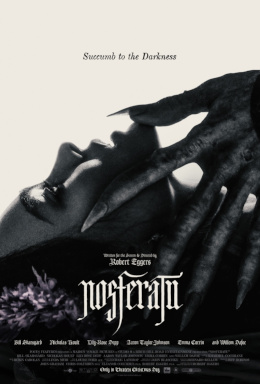
I had intended to see it in the theater, but holidays are family time.  And not everyone is a fan of horror.  Last night I finally did get to see Robert Eggers’ Nosferatu.  Eggers is a director I’ve been following from the beginning.  Here’s a guy who pays very close attention to historical detail.  No slips in letting modern language expressions creep in.  Costume and setting designs immaculate—nothing incongruous here.  I was surprised that he was taking an established tale that’s based on a technically illegal film from Bram Stoker’s Dracula as his starting point.  Still, I’m looking forward to Werwulf, probably about two years from now.  (And speaking personally, I’d love to see his take on Rasputin.)  In any case, Nosferatu.  I avoided trailers and online discussions because I wanted to come to it fresh.  He’s managed to make a disturbing story even more disturbing.

If you’re reading this you probably know the basic story.  F. W. Murnau’s 1922 Nosferatu was in violation of copyright of Dracula, and so the basic story is similar.  Eggers manages to bring to the fore the vampire as sexual predator angle.  He prefers to bite chests and take long, slurping drinks.  I said it was disturbing.  And Orlok really looks the translation of the title, “undead.”   Even at over two hours Eggers has difficulty fitting in all the elements of the story.  And there are some unexpected aspects thrown in as well.  In my mind, I couldn’t help compare it to Werner Herzog’s remake.  Both are art-house treatments of Murnau’s work, which was itself German expressionism.  All three are memorable in their own way.

The one character I didn’t fully buy was Willem Dafoe’s von Franz (the van Helsing character).  This often seems a difficult one to cast.  In Bram Stoker’s Dracula Anthony Hopkins just doesn’t do it for me either.  It must be difficult to pull off eccentric but deadly serious.  The unsmiling obsessive.  That, to me, would be even more disturbing.  Ellen Hutter’s fits are amazingly done and there’s a menace to her melancholy that really works.  I’ve never seen Lily-Rose Depp in a film before, but she seems poised to become a believable scream queen.  I was exhausted after watching the movie after a long day at work (there’s a reason to see things in a theater over the holidays, I guess), but after a night of strange dreams, I awoke to find myself wanting to watch it again.  That’s the way Eggers has with films.  They reward multiple viewings.  And although this story’s familiar from the many versions of Dracula out there, it emphasizes some elements that have, up until now, often only lurked in the shadows.


Sounds Funny

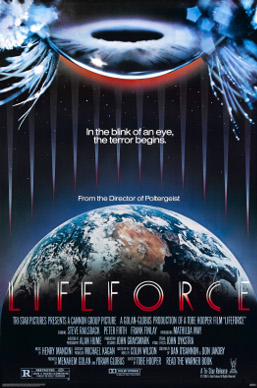
It may be the strangest vampire film ever.  Lifeforce not only postulates the origins of vampires as beings from space who come to suck humans dry of their souls, it also plays off of Invasion of the Body Snatchers, any number of zombie films, and Alien, all with a score by Henry Mancini.  Patrick Stewart is in it, but the plot makes very little sense.  Although it didn’t perform at the box office, it has become a cult film, and some parts of it are actually pretty good.  Directed by Tobe Hooper and partially written by Dan O’Bannon, there was some real talent involved.  Too bad it just can’t seem to hang together.  The main reason seems to be the story-line.  It’s based on a novel, but not all novels translate to film so well.

What’s interesting is that it attempts to provide an origin story for vampires.  When the crew of the Churchill initially discovers the alien ship, the creatures are bat-like.  This intends to explain why vampires are associated with bats.  Since these beings had come to earth long ago, their association with sucking people dry, and bats, led to the belief in vampires.  Of course, following the logic of the story, vampires should’ve nearly taken over the earth before since victims revive after two hours and victimize those nearest them.  Only one scientist in this future London can uncover a specific combination of metals that have to be used to stab a vampire in precisely the right location in order to kill it.  Meanwhile the souls of thousands of residents of London are being sucked up to the alien ship.

The score for the movie also rings a bit oddly.  Henry Mancini isn’t the first name to come to mind as a composer associated with horror movies.  Or science fiction.  Even G-rated 2001: A Space Odyssey knew that.  Perhaps we’re lulled into thinking nothing of it by big studio productions that make the soundtrack sound natural to the movie.  Like all of the elements of a film, however, they really have to work with all the other elements to make something spectacular.  Lifeforce had a large budget and nevertheless struggles.  Tobe Hooper had just come off of directing Poltergeist, which, although never one of my favorites, was a stronger and more lasting entry into the horror canon.  Maybe it’s that vampires and space just don’t mix.  Vampires are gothic monsters and that’s difficult to transfer to outer space with all its gadgetry.  That, and a score that’s difficult to take seriously.


The Power of

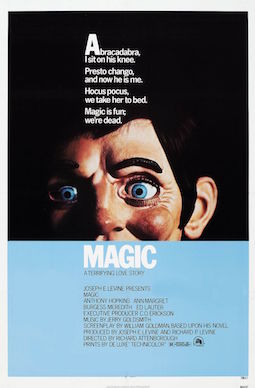
One rare treat is rediscovering something that intrigued you as a young person, but which you’d completely forgot.  Living in a small town and seldom going to movie theaters, I had to have learned about Magic from television commercials.  I remember parts of the trailer, even down to particular phrases, but it was a movie I’d never seen.  I forgot about it.  That’s not to say that in the intervening decades I might not’ve relived that trailer in my head—I’m sure I did—but since I began binging on horror films a few years ago, it never occurred to me.  I remember it scared me as a kid because the trailer consisted of a monologue by the ventriloquist’s dummy.  Herein hangs the tale.  The movie did reasonably well at the box office but nobody seems to discuss it much.  When it showed up on a streaming service, the thumbnail of Fats’ face transported me back to the seventies and I knew I had to see it.

I have a soft spot for seventies horror.  I was surprised to learn that Anthony Hopkins and Burgess Meredith were in it.  And Ann-Margaret.  A movie about a stage magician going mad, I found that it kept me tense.  I didn’t know how the story went.  In case you’re curious, it goes like this: Corky, a stage magician with a ventriloquist act, is about to hit the big times.  He then flees to his childhood Catskills and finds his high school crush managing a remote, rundown resort.  She’s in a loveless marriage and Corky has trouble with women.  Two things become clear: his dummy says what he (Corky) really feels and Corky is seriously disturbed.  Fear of being found out leads him to murder and although Peg, his crush, really liked and likes him, he can’t separate himself from the dummy.

There’s an ambiguity here.  There are a couple scenes when Fats moves on his own.  Otherwise there’s nothing supernatural going on here.  That raises the question of whether the camera is lying or whether spooky action at a distance is taking place.  Overall I thought the movie was well done.  I wouldn’t have tolerated the language Fats uses when I was younger, but I did think Hopkins’ acting was quite good.  Playing a person struggling with a mental disorder requires some convincing acting to be bought.  And there was a feel to many seventies horror movies.  This one brought me back with the power of suggestion, and perhaps a little magic.


Peak del Toro

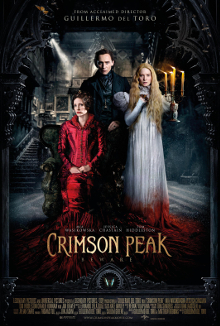
Crimson Peak is perhaps my favorite Guillermo del Toro movie.  Gothic to the hilt, the story—a bit overwrought—features plenty of ghosts and a house appropriate to them.  The many reflexes of horror on display here make it a compelling movie, despite its box office disappointment (although, honestly, how can $19 million really be a disappointment?).  There’s a gothic mansion, a murderous plot, blood-red clay, incestuous siblings, ghosts—what more’s necessary?  Thomas Sharpe is a minor aristocrat down on his luck.  All he and his sister have is the crumbling Allerdale Hall, perched atop Crimson Peak with its clay mines beneath.  In need of investors, they travel to Buffalo, New York, where Edith Cushing (surely no coincidence of names) meets and falls in love with Thomas.  Her wealthy father dies in mysterious circumstances, but she marries Thomas and they head for England along with her inheritance.

It’s clear something’s not right, so Edith, who is an aspiring writer, explores the old house and makes some unwelcome discoveries.  And she sees ghosts.  They help her unravel what’s going on but her health is declining as winter sets in.  Of course, the fact that she’s being poisoned doesn’t hurt.  Thomas and Lucille, the lover siblings, have done this before.  More than once.  There’s a kind of Bluebeard theme running through Crimson Peak.  Each time they inherit the wealth of the deceased brides but they can’t get the mines up and running to save their estate.  The twist is that this time Thomas has actually fallen in love, making it difficult for him to kill Edith.  Their house, except for that gaping hole in the roof, is one of my favorites from any movie.

The more I think about it, the haunted house in gothic films may be the decisive element for me.  I’ve always loved Poe’s “The Fall of the House of Usher,” and perhaps growing up in humble domiciles attuned me to what could be.  I loved reading about Collinwood.  Maybe I even knew that such houses come with a very steep price that consequently casts them as haunted.  Indeed, in the movie itself Edith says the ghosts in her story are metaphors for the past.  Of course, she encounters literal ghosts at Crimson Peak.  This is a movie about moods and gothic settings.  The horror pretty much matches what del Toro offers up in other films like The Devil’s Backbone.  The only monsters here are the ghosts and they aren’t the bad guys.