Whole Books

One of the many peculiarities of my thought process is that I’ve tried to discuss only “whole pieces” on this blog.  In other words, as a “consumer” of media, my self-imposed limit has been discussing only whole books rather than a single short story.  Or the entire run of a television series rather than an individual episode.  The startling contradiction occurred to me that my latest book is an extended study of a single short story.  You see, Washington Irving was no novelist.  As America’s first famous writer, his fiction came in the form of short stories—sketches, he called them—and so to write a book on Sleepy Hollow meant focusing on a short story.  I love to read short stories.  I’ve always waited to talk about them here after finishing the book I found them in.  Maybe it’s time to discuss stories, or individual episodes here as well.
“The Legend of Sleepy Hollow,” many people are surprised to learn, is not a novel.  It’s often presented that way in telinematic adaptations.  The story, published as part of a collection of stories in 1820, is only 12,000 words in length.  Now, if you don’t work in publishing that figure may mean nothing to you.  There is no scientific way to parse these things but short stories tend to run from a few hundred words to about 15,000.  The next major category, the novella, is generally said to start at about 17,500.  You’ll notice there’s a gap there, between the two.  This is the strange territory sometimes called the “novelette.”  That’s because many modern fiction publishers cut the short story off at 7,500 words, and that leaves a gap of a literal myriad of words.  7,501 to 17,500 is the novelette, according to some.  And for the sake of completion, the novella tops out at 40,000 words so anything longer is a novel.

Irving wrote before these fine distinctions existed.  He wrote and people read.  Poe fell into a similar category.  He was known to have written only one novel,  The Narrative of Arthur Gordon Pym of Nantucket, but some of his short stories are long.  “The Unparalleled Adventure of One Hans Pfaall” stops just shy of 19,000 words, a novelette in today’s nomenclature.  My own fiction writing has been shaped by the fact that many magazines (even online, non-paying) top stories out at 5,000 words.  Some even at 3,000.  If you’ve ever tried to get a novella published, you’ll know why you shouldn’t even try.  All of which is to say maybe it’s time I start giving myself a break and talk about short stories.  Or an interesting episode.  If I can wrap my brain around it.

One out of Three

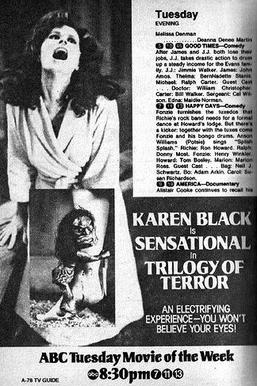
While reading about Dan Curtis, I became curious about Trilogy of Terror.  As a child subject to nightmares, my “horror” watching was limited to Saturday afternoon movies on television and Dark Shadows (also a Dan Curtis production).  In other words, I didn’t see Trilogy.  While we were allowed to watch The Twilight Zone from time to time, I understand my mother’s reluctance to let us watch scary content.  She was trying to raise three kids on her own, one of whom (yours truly) was plagued with bad dreams.  Why would you let them watch scary stuff, particularly before bed?  In any case, Trilogy was a made for television movie; Curtis did some theatrical films, but mostly stayed with television.  It consists of three segments starring Karen Black, based on stories by Richard Matheson.  Only the third one was scary.

Poster, from TV Guide, courtesy of Wikimedia Commons, copyright: TV Guide

The first two segments feature Black as either the apparent victim of blackmail or being controlled by a drug-addicted sister.  The stories, being Matheson, have twist endings, but they don’t really scare.  The final segment, for which the movie is remembered, involves the trope of the animated creepy doll.  That made people sit up and pay attention.  This wasn’t the first creepy doll exploited by horror, but it did predate Child’s Play and, of course, all those Annabelle movies.  The doll here was a Zuni fetish.  Its purpose is to enhance hunting skills and, of course, it comes with a warning.  Don’t take off its golden belt or the spirit trapped inside will be released.  The belt comes off, of course.  The doll naturally attacks Black and, not being really alive, can’t be killed.  The movie made an impression back in the day and is difficult to locate now without shelling out a lot for a Blu-ray disc.  (Diligent searching will lead to streaming options, however; trust me.)

Having inherited more realistic scary dolls in the franchises mentioned above, it takes a bit of imagination to realize how frightening this would’ve been in the mid-seventies.  Although a Zuni fetish isn’t a toy, killer toys had appeared before and would appear again.  They all seem to rely on the uncanny valley where things resemble people but we know they’re actually not.  We survive by being able to read other people and getting an idea of their intentions.  The fetish here has pretty clear violent intensions, being a hunter with pointy teeth.  We all know that there are some people like that.  Such television movies aren’t always easily found, and if they’ve become cult classics like Trilogy of Terror, discs are priced pretty outrageously.  If you’re unrelenting in your searching, you might just find your possessed doll.  And an early example of what’s still a pretty scary idea.


Terrible Comedy

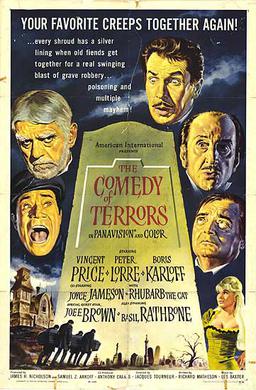
Frankly, I expected better.  The Comedy of Terrors seemed to have a lot going for it.  With my current interests in American International (AIP), Vincent Price, Jacques Tourneur, and Richard Matheson, watching it for free was a no brainer.  And I mean, no brainer.  Maybe it lacked the Roger Corman touch.  The premise is cute enough, bring together horror icons and have them take the mickey out of Shakespeare’s Comedy of Errors.  Peter Lorre and Boris Karloff join Price and Matheson scripts generally don’t disappoint.  Tourneur had a string of great horror movies behind him.  But the magic just isn’t there.  Comedy horror, or horror comedy, is difficult to pull off well.  Particularly if it’s deliberate.  What Young Frankenstein got right just went wrong in Comedy.

All of this makes me more conscious of just how impressive a great movie is.  With so many moving parts, films leave plenty of gaps where things can go awry.  The vast majority of movies perish with little notice, of course.  Success—earning more than it cost you (still waiting for that with my writing)—comes to some, and that’s what has me vexed here.  Tourneur was a talented director.  The actors all had proven themselves repeatedly.  Matheson brought life to so many horror and sci-fi movies and television shows.  Even AIP had a number of hits after starting out as notorious for their low-budget approach.  The jokes in Comedy aren’t funny and the horror’s not scary.  Some have opined that the sarcasm is spot-on, but it didn’t seem so to me.  There’s even some disagreement as to whether the film earned its budget back or not.

Horror movies come in all stripes.  And spots.  Even solids.  Comedy horror isn’t my favorite, but some of the gems of the genre (Rocky Horror Picture Show, Gremlins, Shaun of the Dead, Ghostbusters) show that the combination can work but ought to serve as cautionary tales.  (Both Ghostbusters 2 and Gremlins 2 failed to capture the magic of their forebears.)  If everything falls together just fine, step back and bask in wonder.  Trying too hard (of which I’ve been accused) sometimes doesn’t work while you’re attempting to be funny.  It’s pretty clear that Nicholson and Arkoff thought bringing all of this talent together was a recipe for success.  Of course, there are plenty of moving parts and a director, or even a producer, is entitled to a blunder or two.  I like a good laugh as much as the next guy, and after seeing this flick I could use one.


Under Construction

It’s fascinating, watching a book taking shape.  Just yesterday I noticed Sleepy Hollow as American Myth is now up on McFarland’s website.   And yes, it’s on Amazon too.  Go ahead and preorder!  (It hasn’t made it to Bookshop.org yet, though.)  I have to say the feed to Amazon was much quicker this time than it was with The Wicker Man.  That book took several weeks to appear, probably because it was with a UK publisher.  Yes, it does make a difference.  Now the trick is to try to get people interested in the Legend of Sleepy Hollow again.  I’m thinking I ought to join Historic Hudson Valley.  They might be interested in such a book.  It is, in a sense, right in their back yard.

The thing about writing a book is that you come to suppose other people are interested in your obsession.  I know that Sleepy Hollow is deeply embedded in American culture.  I also know that some of the fandom began to die down when Fox’s Sleepy Hollow went off the rails.  Most analysts suggest, with good reason, that the show failed when it began foregrounding white characters and writing Americans of color into the background.  A great part of the appeal was the melting-pot aspect of the cast, no doubt.  In the book, however, I suggest a somewhat different reason for the decline.  It’s one I’ve seen no one else suggest.  I’m hoping that we can both be right.  In any case, that was the fandom that got this book started.

You see, I had written my first popular culture article on the role of the Bible in Sleepy Hollow.  That article, published in the Journal of Religion and Popular Culture, led to the book Holy Horror.  I was already thinking about a project around Sleepy Hollow then, but I had a couple more books to finish first.  I’m excited about this one because it marks a move away from publishing primarily about religion to publishing primarily about a story.  There’s still religion there, of course.  We have the Old Dutch Church to pay mind to, but there’s even more about the Headless Horseman, and Ichabod Crane.  And so much more!  Sleepy Hollow as American Myth was a lot of fun to write.  I’m not sure when the book will be out, but I’m hoping next year.  Maybe if I can generate a little excitement around this Halloween—it is closely connected with the story, as I explore—there’ll be some interest next time.  Until then there are still plenty of steps to be taken. 


The Cycle

The last of the Roger Corman Poe cycle was The Tomb of Ligeia.  I haven’t seen all eight films in the set, at least I don’t think I have.  A couple don’t sound familiar to me but I didn’t keep track of all the movies I watched growing up.  Although critics were, well, critical of a number of the films, at least three of them weren’t bad.  In that number I would count Ligeia.  The usual problem with making Poe films is that Poe wrote short stories.  Getting them to the length necessary for a feature required padding, sometimes by borrowing against some other Poe tales.  Ligeia isn’t too far off from Poe’s original and although Corman reportedly didn’t want Vincent Price in the star role, because of his age, he pulls off what seems to me a winner.  Atmospheric, and well-acted, the story is a touch slow, but manages to bring in some solid horror themes.

I’ve been pondering Poe as a horror writer lately.  I suspect that the master himself would’ve been surprised, and probably not pleased with the characterization.  Yes, he wrote stories that would become horror hallmarks, but his fiction output included detective stories (a genre he invented), something akin to science fiction, drama, and comedy.  Some of his funny stories retain their humor today.  I suspect that one reason he became remembered as a horror author was H. P. Lovecraft’s adoration of him.  Lovecraft wrote mostly what we consider horror today, although there’s variation there too.  But since Lovecraft saw the horror, so did others.  When Corman began shooting movies he soon fell into the horror trend and, known for that genre, incorporated Poe.  By the end of the sixties, Poe was a horror writer.

What makes The Tomb of Ligeia work is Price’s tormented performance of Verden Fell.  His Byronic character is caught in the realm between death and life.  Unable to free himself from Ligeia, and she, unwilling to renounce her will, they are caught in a belief that a local declares blasphemy while Verden calls it “benediction.”  The theme of resurrection—presented mostly in the form of Egyptian artifacts—is an inherently religious one.  The setting in a ruined abbey—original to Poe—also plays into the sublimated resurrection theme.  Critics didn’t care for the movie, but separating Corman’s Poe cycle out over time allows a viewer to consider each piece separately.  In this light, this appears to be one of the best three.  Of course, I haven’t seen all of them yet.


Mad Homework

Watching movies can be studying.  It’s all a matter of what the exams are.  I studied enough when I was young to know that Vincent Price was a horror star.  Probably I had no conscious idea what “horror” was yet, contenting myself with terms such as “scary movies” or “monster shows.”  The Mad Magician was one of his earlier efforts and not really a great film.  The Prestige, of course, makes any magician film pale in comparison.  Still, many special effects were new in 1954 and gimmicks could be used to lure audiences in.  Many of these movies, such as Mad Magician, are ironically difficult to locate these days, having had their distribution rights bought up by various companies who know that some of us still have homework to do.

Although classified as a horror movie, there are really only a few tense moments in the whole.  It seems pretty clear who’s going to be magiced to death before it happens.  One does wonder how you avoid massive blood splatter when cutting someone’s head off with a buzz-saw.  (It might’ve made quite a 3-D effect, had they decided to put it on camera.)  Audience tolerance (and the Hays Code) wasn’t up to that level in the fifties.  It seems there was a lot of learning going on in the day.  How to make a movie frightening without violating strict rules regarding what might be shown?  Of course, the combination of writers, directors, producers, and actors have to combine just right to make a winning film and stories that rely too much on 3-D tend to show.

The villain in this case, as is often true in early Price movies, has justification.  The murders begin because his sponsor insists that any trick he invents, on or off company time, belongs to him.   Many modern employers try to institute similar terms—their salary buys you, in essence—while claiming to offer a good work/life balance.  That’s a new and foreign concept to our farming ancestors, I suspect.  People (and corporations) like to own other people to do the hard work for them.  Our awareness of this too-human tendency led to the necessity of unionization and other ways for employees to push back against the machine.  In other words, there is a bit of pathos in this early Price horror film.  There isn’t much horror but there is some social commentary.  And, of course, Price would move on to other films that could better showcase his talents.  Not all studying feels rewarding, but it’s necessary.


Pearl X

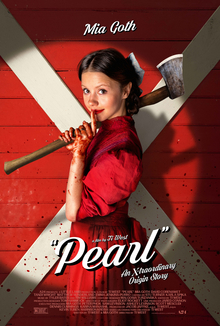
The danger to starting something new is that you’ll get hooked.  I watched the unusual horror film X because it was getting some good press, only to find out that by the time I saw it Pearl, the prequel, was underway.  It took some time before Pearl came to a streaming service within reach, so once it showed up I had to sit down and see it.  Like X, it has a strong element of religion in it but Pearl is really the exploration of a mental imbalance slowly taking over a life.  Set toward the end of World War I, Pearl lives with her parents while her young husband is “over there.”  Her father’s an invalid and her German mother is controlling and critical.  (My grandmother, also of Teutonic stock, had a similar outlook, I recall from her living with us.)  Pearl wants to be in show business, but down on the farm there are always chores and very little opportunity.

Along with her sister-in-law, she tries out for a dance troupe (auditions in the local church), but this is only after she has committed a triple homicide (one of them, arguably, accidental).  In her mind she’s brilliant, but the judges see it more like her late mother warned her.  Perhaps the most stunning shot is the long, uncut confession she makes to her sister-in-law.  Of course, she now has to kill her as well.  Her sister-in-law had won the dancing part, after all.  The progression of Pearl’s madness is set off against a retro filming style that borrows from The Wizard of Oz.  Bright colors and period costumes add to the feel and underscore that something just isn’t right.  In other words, it’s quite a disturbing movie.

I suppose this film might trigger those who feel uncertain of their grip on what we normally consider reality.  It also raises the danger of desiring something that is, in reality, out of reach.  For someone who’s longed for a career that those who know me have always declared the one best suited for me, I felt a tug or two.  My need doesn’t reach as far as murder.  As a pacifist and a vegan I’m not the best candidate for such things.  But I do know what it is to be denied a deeply held dream.  In fact, I do dream about it with some regularity.  (Teaching, for the sake of clarity, not murdering.)  The plot seems to line up a little crookedly with that of X, but the two movies are very different, yet similar.  I hear a third installment’s on the way, and that’s dangerous news.


Book Stages

There are stages to it.  Writing a book, I mean.  One stage, for me, is realizing that you’re writing one.  I started work on Sleepy Hollow as American Myth years ago, without realizing it.  That was followed by the stage of comprehending that I had a book idea and intentionally writing it.  I suspect that, in the throes of The Wicker Man, I thought “I should do a similar book on Sleepy Hollow.”  Devils Advocates, which is an excellent series, however, feeling the strain on academic presses, was moving to hardcover-first releases (the kiss of death).  I started writing the book anyway, hoping that maybe it might find trade interest.  It is still possible that an agent is out there who would’ve moved it in that direction, but I wanted the book out before Lindsey Beer’s movie gets released.  After the book is drafted, the next stage: find a publisher. (Unless you have an agent.)

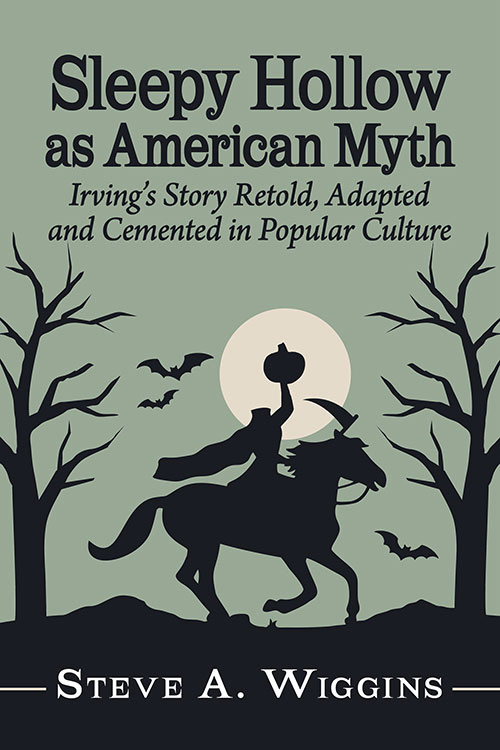
Since this is my sixth book, I felt confident (a strange, foreign feeling for me) that I could locate a publisher.  I’d done it five times before.  McFarland did a nice job with Holy Horror, but what sold me is that they dropped the price on it.  Many academic publishers continue to raise prices each year, so if you don’t buy a book right away you’ll end up paying a lot for this muffler.  The next stage is waiting to see what the cover will look like.  That wait is over.  Here it is, the cover of Sleepy Hollow as American Myth:

(Feel free to share widely, get everyone all excited!)  I’m currently in the waiting stage.  Waiting for proofs.  Of course, I’ve been working on my next couple of books as well.  You can’t just sit around, otherwise these tomes will never get written.  I haven’t decided which one will cross the finish line first.  If I had an agent they’d be able to tell me which might be more marketable, but since I work alone I’m left to my own devices.  I am bound and determined that the next book will go to a trade press.  I’m trying hard to scrub any whiff of academia from it.  In the meantime, however, I’m enjoying looking at the cover for my current book.  There aren’t a ton of nonfiction books out there on “The Legend of Sleepy Hollow.”  In fact, as nonfiction I know of only one other.  This isn’t what we in the biz call “a crowded bookshelf.”  I’m doing all the pre-publication promo that I can.  I’d be grateful for any shares or likes at this stage.


Good Timing?

Timing is important.  I hope I have a sense of it, but it doesn’t always work out the way you hope.  My last book, The Wicker Man, was released on the fiftieth anniversary of that cult film.  A bigger publisher with better reach published their own Wicker Man book that year, and mine garnered no attention.  I decided to turn to Sleepy Hollow instead.  This is a story that has been quite well known since 1820.  Although the Fox television series ran out of steam in 2017, I wrote the book when I did because Lindsey Beer has been tapped to direct a reboot of the Tim Burton film of 1999.  Looking for books on the “Legend of Sleepy Hollow” I found very little.  This is what is known of in the biz as “a gap.”  I decided to try to fill it.  Fandom helps in situations like this.

I’ve been trying to find the Sleepy Hollow fandom and engage with it before Sleepy Hollow as American Myth comes out.  I am confident that there are fans out there.  The tragic collapse of the Fox series didn’t lead to lack of love for the tale.  Indeed, further renditions have continued to appear.  Some have gained considerable attention.  The online fan base, however, seems to be, ah, sleeping.  I’m not sure when the Beer movie is slated for release.  It was announced in several media outlets but now we’ve come to the lull where updates have ceased to surface.  I’m certainly no Hollywood insider and I generally don’t even find out about movies until after they’ve left theaters (unless they’re very big).  I hope the timing is right this time.

It takes a couple years, at least, for me to write a book.  I’ve been working on this Sleepy Hollow project, in some way or other, since before Holy Horror came out in 2018.  I sure hope I got the timing right on this one.  The many trade publishers and agents I approached didn’t think so.  Maybe it’s just that people aren’t curious enough to read a book about Washington Irving’s story.  I try to make the case in my book that it has risen to the level of an American myth.  The story’s known world-wide, but its largest fan base is here in the States.  Had the Fox series been handled a bit better, keeping both people of color and the apocalypse in the foreground, it might’ve run a couple more seasons.  The underlying story’s not quite dead in the grave yet, I hope.  But then, timing hasn’t always been my strong suit.

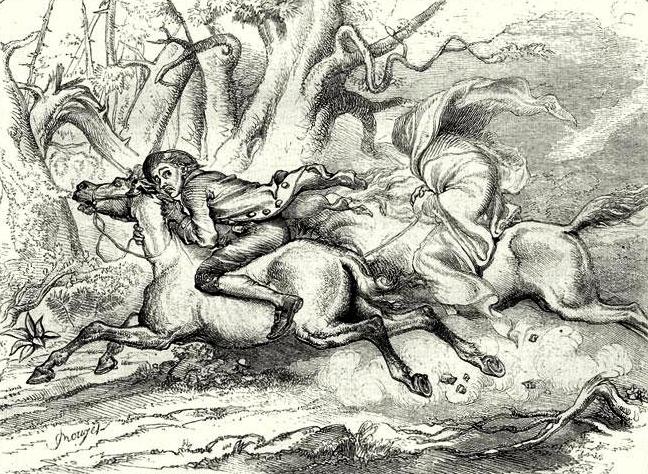
F.O.C. Darley, from Le Magasin pittoresque, public domain

Lost Decade

The nineties, it seems, got away from me.  Personally, they started with living in Edinburgh with my newlywed spouse. We had no television and no money, and limited time to finish my degree.  Then we landed at Nashotah House for the remainder of the decade.  Our daughter was born, and we settled into the role of new parents as the world went on around us.  The internet hadn’t made its way to that part of Wisconsin and television reception was quite poor.  Now bear with me as I’m trying to reconstruct things.  Twin Peaks ran from 1990 to ’91.  We were in Scotland at the time and had no television.  Northern Exposure (’90 to ’95) started a few months later, and was still running when we returned to the States.  We began watching it because family recommended it, mostly on VHS.  Some family members had watched Twin Peaks, but it was darker, and we opted for lighter fare when we could see TV.  (I hadn’t undergone my horror reawakening yet.)  Then came Picket Fences (1992 to ’96), which I still haven’t seen.  The X-Files, original run, broadcast from 1993 to 2002.  What a decade to lose!

Northern Exposure and Twin Peaks had some things in common, I noticed as we watched the latter, but then they ran at about the same time.  It also seems Twin Peaks and The X-Files shared some secrets.  I can’t say about Picket Fences, but it seems that speculative elements infiltrated these nineties shows.  What’s more, they all received critical acclaim.  I would feel like I lost much of the nineties, except that I was having a great time being a parent.  Although Nashotah House rubbed me the wrong way, I was employed doing what I had pictured myself doing.  Wisconsin was a beautiful state and offered lots of outdoor opportunities, particularly when it wasn’t forty below outside.  What I really lost was pop culture of the nineties, living in a monastic setting.

I recently discovered that I’d also missed much of the music of the nineties.  I’m not a radio listener.  Too many distractions—I can’t listen to music when I write, let alone with some announcer talking.  I don’t listen to music when I jog because I find the natural world so interesting.  It occurred to me just a few months ago that I had very little knowledge of 1990s rock. (Not the preferred genre at Nashotah.)  Some of it is pretty good, I’m discovering just now.  Like a typical academic, I began to shut out the outside world when working on my Ph.D.  Now I spend my time trying to catch up.  Not that I have much time to watch television, or listen to music, but I hate to miss something that everyone else seems to know about.  Then, of course, after the X-Files, Lost ran from 2004 to 2010 and we didn’t catch that either.  Maybe I missed the first part of the new millennium as well…

Photo by Everyday basics on Unsplash

Outside Invisible

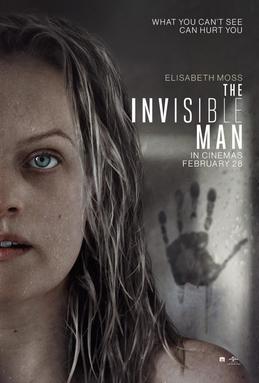
Some of us are fated, it seems, always to be outsiders.  I have no inside knowledge of the film industry.  I barely keep up with the movies I want to see.  Although I write books about horror films, the main players in the field don’t know those books.  It’s like being invisible.  I had hoped to see The Invisible Man some four years ago.  The reboot, I mean.  And having finally caught up, I was impressed.  This is a scary movie that hits all the right buttons.  Most of us, by cultural assimilation, know the bare bones of the story.  A guy has figured out invisibility.  What does he do with this?  Uses it to assert his will over everyone.  In the original, the monocaine made Dr. Jack Griffin insane.  In the remake, an already controlling, self-centered millionaire (Adrian), unknown to anyone but his brother, perfects an invisibility suit.  When his girlfriend (Cecilia) leaves him, he uses it to try to destroy her.

Everyone believes she’s insane.  More than that, criminally insane.  Cecilia knows he was an optics genius and he leaves her subtle clues that he knows where she’s hiding.  He hurts those close to her and they assume Cecilia is causing the harm.  Then it escalates to murder.  Placed in an institution for the criminally insane, she knows Adrian is there with her.  Nobody will believe her, however, since, well, he’s invisible.  This is a movie nearly as harrowing as The Dark Knight.   An unstable genius with unlimited resources and the ultimate alibi forces his abused ex to suffer for ever having loved him.  It’s pretty incredible.  (Has to be seen, I’m tempted to say, to be believed.)

Now, I’m no insider so I didn’t realize that Universal had been attempting to build a Dark Universe franchise based on the original Universal monsters.  I had completely missed that Dracula Untold was the first of the reboots.  I did watch it but fell asleep.  (Hey, I was watching with friends who started it too late for my outsider schedule.)  I never got around to seeing it with my eyes fully open.  Although it made money, it wasn’t, I hear, very good.  Then three years later, The Mummy bombed.  I confess that there’s so many Mummy movies that I’ve lost track of them and I didn’t know this one existed.  Or flopped.  Invisible Man was intended as the third and the movies were to be interlaced into a Dark Universe.  Plans for that franchise have been dropped, but individual movies will continue to be made.  I guess I need to go back to the beginning again.  It only took me a decade to learn this, as is the way with outsiders.


Night or Curse

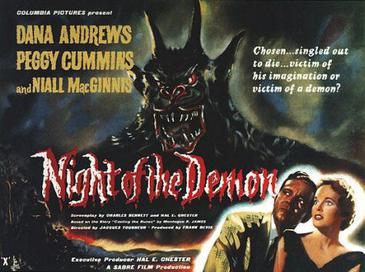
You just never know.  I’ve read lots of books about horror movies, but clearly not enough.  The field only gained academic respectability in recent years, but once the flood gates opened…  So I use my limited time off work both reading and watching horror movies—trying to catch up on what I’ve missed.  Lately I’ve been reaching back to the early stuff, movies from the forties and fifties.  Some of these are what we’ve been led to expect.  Others are not.  I’d heard of Night of the Demon (its American title is Curse of the Demon) but my sources suggested nothing remarkable about it.  As soon as I began watching, however, I realized that this story adapted from M. R. James would be worth the time.  This despite the fact that the monster is shown early and isn’t that great.  (The director, Jacques Tourneur, lost out on this one.)  After I saw it I read that it is considered by many the greatest horror film of all time.

I wouldn’t go quite that far, but I would say that it is very good and, as I learned, extremely influential.  So much so that I was rather stunned after a casual weekend viewing.  The story is about a Satanist whose true motivations are uncertain.  Those to whom he gives runes copied from Stonehenge are killed by the demon we’ve already seen.  The story plays out as a conflict between skepticism and belief—the supernatural is real, but alternative explanations are offered—you can see why the obvious demon scenes are so controversial.  The film makes effective use of jump startles and stingers.  And it’s one of those movies that, in its day wasn’t really appreciated, but reassessment polishes it as the gem that it is.

Proving later influence, such as the wind storm in The Omen, is difficult without a director revealing their sources, like a magician, but others are perfectly obvious.  Kate Bush’s song “Hounds of Love,” plays a clip of a line from the movie.  Richard O’Brien’s lyrics for “Science Fiction/Double Feature” (famous because of the Rocky Horror Picture Show) make reference to Dana Andrews passing the runes.  That line had always puzzled me.  And now I discover that I’ve been missing out on a foundational piece of horror history.  When friends recommend movies, not surprisingly, they tend to be relatively contemporary ones.  The thing is, to appreciate what’s popular now, one must do one’s homework.  And that might must mean hunting down the oldies.  You just never know when you might come across one worth the effort to find.


Wax Museum

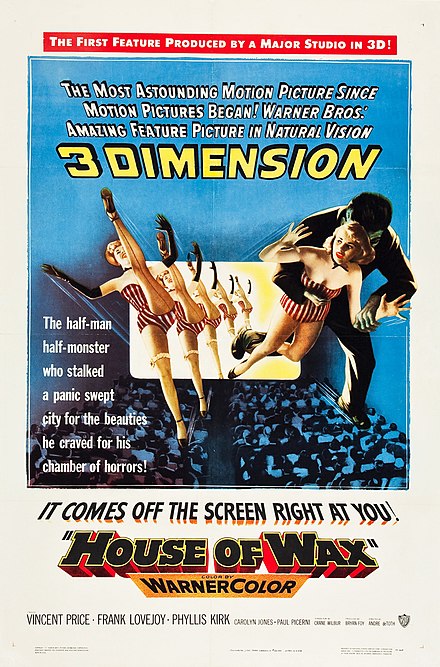
I admit to using Wikipedia and I even support it.  It’s the starting point for looking up things for which we’re not familiar.  Since most movies I watch don’t lead to discussion (ironically, I know very few people in person who watch horror), I often go to Wikipedia to find “conversation partners” about films.  One thing I’ve noticed is that a great number of articles on cinema have a section “Later Reception.”  In my experience, this usually appears on pages about movies initially panned but which have later been reassessed as being better than originally supposed.  In the case of House of Wax, the film was even selected for preservation in the National Film Registry because of its significance.  It’s interesting to read the sometimes boorish comments of the first critics.  Of course, the story had been around for some time then, so they were perhaps too familiar with the premise.

I can’t speak for the Library of Congress’ National Film Registry, but the notable features include its status as the first 3D movie with stereophonic sound, and the first color 3D movie released by a major studio.  For me, however, this was the film that launched Vincent Price to stardom.  He would go on to become the horror icon of American movies for the next two decades and many of the films would be, to use the National Film Registry’s language, “significant.”  The title already hints at the plot.  What horror film with such a title wouldn’t involve embalming a living person in wax?  Rather like Chekhov’s gun, if you title a picture like this, you need to make sure the gun, as it were, goes off.

The 3D gimmicks (I saw it only in 2D) are pretty obvious, but there are many interesting sub themes running throughout the movie.  Even in the button-down fifties there were directors who knew how to titillate.  In any case, the 3D aspect adds another detail to the story.  The director, Andre de Toth, was blind in one eye, which meant he couldn’t see the 3D effects.  This too makes the film worthy of note, and, again, significant.  Price plays his role of the urbane villain quite well, although this villain has cause to be wroth.  An artist forced to watch his work destroyed is likely to become unhinged.  As a horror film it also works well since wax museums are inherently creepy places.  I may have seen this movie in my younger years, but if so it didn’t stick with me.  I would have to agree with Wikipedia’s later reception, however.  This is an effective movie, even for a septuagenarian.


Television

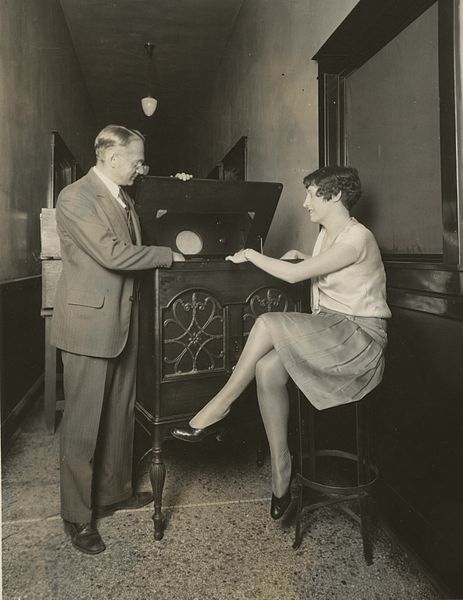
Television has lost its prominence in the internet age.  Those of us entering the “senior” category of life’s grades were raised on television.  I know I watched far too much as a kid.  Now I consider the wasted opportunity to grow minds, and sensibilities, through television.  Mostly I blame the sit-com.  There’s not much learning going on when someone else contrives scenarios to make you laugh on a weekly schedule.  They are beguiling and I watched more than my fair share of them when I was younger.  Now, as an adult, I value the more profound examples of early viewing.  We didn’t watch The Twilight Zone with the devotion of Gilligan’s Island, but those episodes I did see had a profound effect.  The same is true of Dark Shadows.  One thing these shows had in common was that they were quite literate, eschewing the mindless competition.

College led to me no longer watching television regularly.  That hiatus lasted until my wife and I began watching a couple of weeklies after I’d return from Nashotah House.  While at the seminary full-time, television reception was quite poor and we tended toward rented movies on VHS.  By the time we moved to New Jersey television had changed so that you needed some kind of magic box to watch even commercial channels.  We relied on DVDs of shows we wanted to see.  That’s how Lost came into our lives.  Now, however, facing senior issues (health, people dying, wondering if retirement might ever happen) I’ve started to revisit television I missed.  The X-Files is pretty prominent.  Being an historian at heart, I’ve been exploring the inspirations for The X-Files, picking up Kolchak: The Night Stalker, and Twin Peaks.  I have to balance this with time for writing since work still claims the lion’s share of my waking hours.

Photo credit: Smithsonian Institution, via Flickr’s The Commons

I’ve lost track of what’s on the tube.  Now we spend workday evening hours watching intelligent television that we missed back when it aired.  We can’t afford it all, of course.  Dark Shadows, for example, has over 1200 episodes and “complete sets” are pricey.  Lost was either a birthday or Christmas present years ago.  I bought The Twilight Zone over a decade ago for a week that I knew I was going to be home alone.  We accumulated The X-Files over a number of years.  Twin Peaks, since it was only two seasons, wasn’t too expensive.  Kolchak is on Amazon Prime.  Many of these shows are a kind of therapeutic watching for me.  Some might call it escapism, but it runs deeper than that.  It becomes part of who we are.


Deep Woods

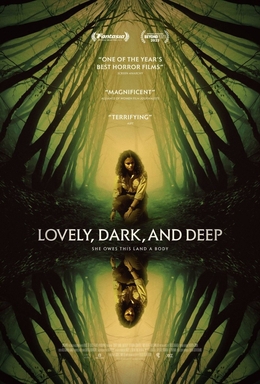
The output of female horror directors tends to be thoughtful.  And there are some legitimately terrifying scenes in Lovely, Dark, and Deep.  Nobody, however, has posted a Wikipedia entry on Teresa Sutherland.  At least not yet.  This movie is obviously aware of David Paulides’ work.  It went by a little quickly, but I think one of his books even made it into the film.  Lovely, Dark, and Deep is set in the fictitious Arvores National Park in California.  (Interestingly, the movie was filmed in Portugal.)  Lennon is a newly hired park ranger with what she thinks is a secret.  Her motivation is to search for her sister, who went missing in the park when they were kids.  If you like movies with flashlights in the forest at night, this is your film.  

Lennon discovers  that she’s not the only one with secrets.  Many people have gone missing in the park and the rangers know about it.  Some entity that they can’t identify requires people to be left behind.  There is a quid pro quo relationship involved.  If one of the taken ones is rescued, a substitute must be left.  Lennon learns that her sister was one of those taken, and once taken a person can’t come back.  They live in a nightmare world while their family and friends have to deal with the loss.  Lennon has trouble accepting this arrangement, but there is nothing to be done about it except pretend you don’t know it’s happening.

The movie gets its teeth from the fact that many people do go missing in National Parks.  And, as Paulides suggests, there is no public register kept.  Some who are found are often inexplicably miles from where they went missing, or their bodies are found in areas already thoroughly searched.  This is obviously a great concept for a horror film.  Sutherland, who wrote as well as directed the movie, has the makings of an art horror auteur.  Lovely, Dark, and Deep hasn’t received a lot of attention yet, but I think it deserves to.  Wilderness horror films have so much potential.  Particularly for people who seldom spend any real time in the forest.  Even those of us who have braved the wilds from time to time can find it frightening.  More than that, this is a movie that makes you think.  For anyone who likes to theologize films, it definitely has the theme of sacrifice running through it.  Deep is appropriately part of the title.