Praying for Mantis

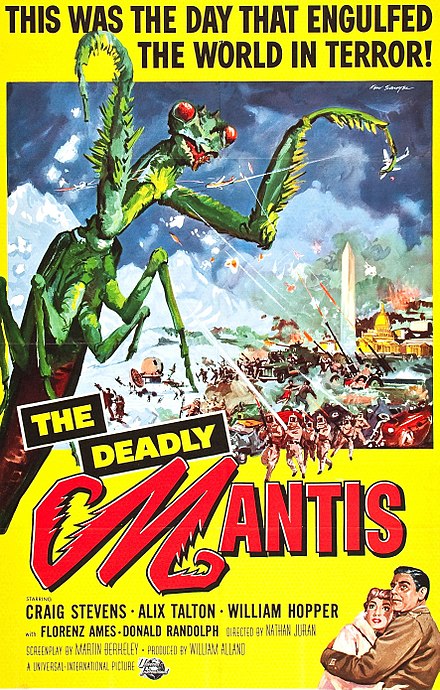
Now this is a Cold War movie.  And I mean “cold.”  The Deadly Mantis is one of those movies that hovers between “so bad it’s good” and just plain “so bad.”  I was kind of rooting for the mantis.  In any case, this was an ambitious movie for the time but it reflects the post-war paranoia in the United States.  It also makes very abundant use of stock footage, much of it military.  You almost expect a recruiting ad at the end.  (It does thank the Ground Observer Corps in the closing credits.)  Okay, so here’s the story.  A volcano in the south Atlantic causes the calving of an enormous Arctic iceberg near the North Pole.   That iceberg contains the frozen body of a 200-foot praying mantis from dinosaur times.  Even earlier.   Said frozen mantis, quite hungry after millions of years, begins attacking Arctic radar bases and flying south.  The Air Force calls in a paleontologist to help identify what they’re looking for.

The mantis is so big that it prefers people for food, although, one might note, a polar bear would’ve been easier prey.  In any case, given the technology limitations of the time, the military has trouble keeping track of the insect as it flies over the most populous part of the country.  They do get the cloudiness of the East Coast about right.  Eventually they shoot it down—actually a fighter jet crashing into it does the job—over Newark and the mortally wounded mantis crawls into the Lincoln Tunnel (called “The Manhattan Tunnel” in the film).  By this point the viewer is saying “just let the poor thing die in peace,” but they pump smoke into the tunnel, presumably to hide wires and other props, and commit a protracted insecticide.  
Now, I’m one of those people who hates to hurt any animal.  The death twitches of an insect are quite troubling, so I try to catch what I can indoors and release them.  I have trouble with the instructions to kill spotted lantern flies—it’s not their fault that they’re here.  The movie shows a bravado regarding the military and a machismo regarding the main female character that hearkens back to why it was so necessary to evolve out of the fifties.  Of course, we learned nothing from The Deadly Mantis and have catapulted back into a new Cold War and an even more robust military.  William Alland, the producer, had a real love of this genre of movie, and for that we have much to be grateful.  But even the big bug genre can produce a real groaner now and then.


Cryptid Caper

I don’t recall how it got on my fiction reading list—I probably saw it on Goodreads—but I picked it up because it was short.  And surprisingly, multiple copies were in Barnes and Noble.  Since James Daunt bought the chain out it has definitely improved.  In any case, Hunter Shea’s To the Devil, a Cryptid looked like it might be a fun romp, and if it turned out that I didn’t like it, well, it was short.  Ads in the back keyed me in that this was a part of a series of horror novels about cryptids.  Besides, I like to support publishers that aren’t part of the big five.  I’d just finished reading a five-hundred-pager, so something under two was very welcome.  The title seems to riff off the horror flick To the Devil a Daughter.  As much as I try to keep up on my cryptids, I was unfamiliar with the Goat Man.  And I did like it, by the way.

So, the real Goat Man is mostly associated with Maryland, but in Texas, where the novel is set, there is the Lake Worth Monster.  This seems a good fit for the cryptid part (whether intentional or not I don’t know).  A bunch of kids messing around with Satanism decide to sacrifice a goat in the woods where a Goat Man cryptid is said to live.  Something goes wrong and the goat fuses with a guy trying to break up the ceremony and mayhem ensues.  Lots of bodies torn apart in this version of the Lone Star State.  Still, the story is fun.  I’ve been writing cryptid fiction for years, and this may be a targeted demographic, but that doesn’t prevent this from being a good horror novel.  Particularly interesting is the resolution.  I’ll try not to give too many spoilers, but the next paragraph reveals something.

How do you stop a demonic, bulletproof Goat Man?  You call in a priest to do an exorcism.  The truly remarkable part of this is that the priest is treated sympathetically.  None of the characters are religious.  And of the two main young people who survive, you really don’t expect them to be found in church.  The story isn’t intended to be believable, of course.  The Goat Man is an urban legend.  Urban legends are often difficult to tease apart from actual cryptids sometimes.  Cryptids remind us that there’s still more to be discovered in the world.  And I may have just discovered a series of stories that work for a quick fix.


Not Poor

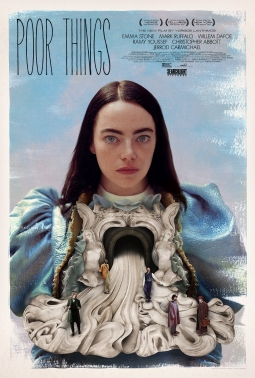
It’s an amazing era for cinema.  A number of genre-defying films have emerged and some of them are quite striking.  Some months ago I saw Everything Everywhere All at Once.  Some called it horror, but that label didn’t really stick.  It reminded me of Parasite, another movie difficult to classify.  Casting about for something we might both like, my wife and I settled on Poor Things, recommended to me by a fellow horror fan.  Other than being amazed by it, I have no idea how to classify it either.  Again, there are horror elements here but it’s certainly not a horror movie.  A comedy, yes, but a dark one.  It’s a movie that has a feminist message, but one that’s been disputed.    Perhaps a quasi-summary might help.

Bella Baxter is not what she seems.  Cared for by a Frankenstein-like doctor named Godwin, she literally has the brain of an infant in an adult body and is rapidly coming to know the world.  Rescuing her just after she died by suicide, Godwin transplanted her unborn baby’s brain into her revived body to see what would happen.  Himself experimented on mercilessly by his own father, Godwin is a rationalist, eschewing emotional entanglements.  He decides to marry Bella to one of his students but before that can happen an unscrupulous lawyer steals her away only to find he can’t control her.  After gaining experience of the world, and learning life lessons in a brothel, Bella returns home to marry her fiancé and be with Godwin as he dies.  Her cruel former husband reclaims her only to have Bella realize why she’d chosen suicide in the first place.  She returns to Godwin’s home and sets up life on her own terms.

A number of things stand out.  One is Bella’s innocence and utter lack of shame regarding her body.  Emma Stone’s acting here is incredible.  Another is the nods to steampunk sensibilities in a story set in Victorian times.  Perhaps the aspect that most caught my attention was Bella’s use of “God” as her name for Godwin, frequently calling him “my God.”  Her grammatical naivety leads to much of the comedy in the film, but this particular choice is freighted with interpretative possibilities.  Obviously, one’s parents are the models one incorporates into concepts of God.  That has been long recognized.  Another, however, is that Godwin did, in fact, create her to see what she would become.  As Godwin faces his own mortality, Bella notes “God is dying.”  What happens after this is that she becomes her own woman for the first time, not under the control of men.  I’m not sure how to classify Poor Things apart from a movie that may require another watching just to attempt a classification.


Invisible Again

Sequels are a fact of life.  Movies, although some of us look to them for profundity, are made for selling.  (I guess my writing for so long with no profit from it has skewed my view a bit.)  Still, The Invisible Man Returns isn’t too bad.  In my mind, there were a set of six canonical Universal monster movies: Dracula, Frankenstein, The Mummy, The Invisible Man, The Wolf Man, and The Creature from the Black Lagoon.  In reality, each of these successful films was followed by a clutch of sequels, filling the thirties and forties—into the fifties—with monster movies.  I never really bothered with the sequels, but some of them are pretty good.  And I still haven’t seen the more recent Invisible Man, which I hear is quite good.

When I was a kid, Vincent Price represented horror like no other single person.  He had developed a persona that was lucrative and that influenced other monster boomers as well.  He was a relative unknown when he was hired for The Invisible Man Returns.  His face only appears in the last minute of the film and his voice had not yet settled into its characteristic menace tone that would make him a genre icon.  Still, the story has a typical plot for the period.  Sir Geoffrey Radcliffe is set to hang for killing his brother—they own a coal mine.  Dr. Frank Griffin, a friend of the family and brother of the original Invisible Man, believes him innocent and makes Radcliffe invisible so that he can escape the gallows.  As we all know, the problem with the invisibility drug—here duocaine rather than monocaine—is that it causes insanity.  Radcliffe discovers the real murderer before going insane, all the while being chased by police.

These “invisible” films demonstrated what special effects could become.  Shot in black-and-white, “black screen” technology was used to make Radcliffe appear headless and handless.  In fact, this movie received an Oscar nomination for the effects.  It’s not a scary film, but it’s a reasonably told story.  And the special effects really were cutting edge for 1940.  Probably somewhat scandalous for the time, Radcliffe has to undress in front of his fiancée at one point, leading the men who discovered her fainted to suppose that seeing a naked, if invisible, man could do it.  There is a subtle humor here.  Other films followed but they veered into the comedy realm.  Until the recent remake.  I guess I’ll need to add that one to my ever-growing list of must-see movies.


Two-Eyed Cyclops

You can probably tell, if you read me regularly, that I’ve been going through an older movie kick.  A lot of these are easier to find for free on streaming services, so that’s been the path of least resistance.  So it was that I came to watch Doctor Cyclops.  I’d completely forgotten that I’d watched it about fourteen years ago.  In any case, a kind of precursor to The Incredible Shrinking Man, it’s the story of the deliberate shrinking of five people by a mad scientist with an endless supply of radium at hand.  The movie made a splash because of the use of Technicolor in a horror film (with no blood, however).  The story is a touch dull and the shrunken people (three scientists among them) spend most of their down time running around and saying very little.  They do face an alligator, which is kind of fun, and the big hand that holds the pompous Dr. Bulfinch is distinctly unnerving.  The movie received an Oscar nomination for visual effects.

There’s something distinctly enjoyable about these early sci-fi horror films that don’t explain much but nevertheless manage to employ some impressive cinematography.  The use of oversized props and forced perspective make much of this possible, perhaps making up for the simplicity of the tale.  Even by 1940 the “scientist goes mad and must be stopped” narrative was getting old.  The Second World War was underway but nuclear power wasn’t yet harnessed either for bombs or energy.  Interestingly, the source of the mad doctor’s radium is pitchblende, which one of the characters notes, is a source of uranium.  Of course, many movies were to follow where radiation mutated life forms in various ways, including shrinking them.

Coincidentally—it was a rainy Sunday afternoon—I watched the Twilight Zone episode “The Little People” later in the day.  Here was another story about the large oppressing the small.  This one, however, has a stranded astronaut who discovers the little people thinking that he is their god because he has the power to harm them.  The message here is much more profound, even if told with more brevity.  No clear motive is given for Dr. Cyclops’ work beyond his interest in pure science.  By the way, his real name isn’t “Cyclops.”  That refers to his being a giant with one eye—the latter because one of his glasses lenses gets broken.  Don’t worry, the shrunken people learn that the effect is temporary—their brush with radioactivity leaves no lasting harm.  There is, however, a decided danger to desiring to return to a “simpler time,” as Mr. Serling steps in to remind us.


History Lesson

This blog, which has come to define me in many ways, wasn’t my idea.  A niece started it for me when Neal Stephenson suggested I should have a place for podcasting.  I still have ideas for podcasts, but finding the time to put them together (and a place to host them) has proven quite challenging.  In any case, the title, “Sects and Violence in the Ancient World,” reflected where I was at the time.  I started posting when I was 46, and now I’m over 60.  Things are bound to change a little.  From the start, I wrote about books.  Indeed, for things I’ve read since summer of 2009, I check the blog to find out when.  I also noted significant movies.  In the early days I tried to limit the posts to religion-themed topics since, well, I have three degrees in the field.

As I gradually grew comfortable discussing pop culture (generally horror), I gradually addressed movies and books without a religious bent.  It could be that I didn’t record everything I read or watched here, and that makes things before 2009 kind of a muddle.  While the muddle really began before 2005—my last year at Nashotah House.  That period was a kind of maelstrom of desperation to find a job, teaching classes, pretending to be an editor, making my way in a world unfamiliar to me and certainly unchosen.  Eventually this blog came to focus on horror movies more than religion.  Now, like my life, it’s a jumble of conflicting impulses trying to make sense of the world as an existentialist with a bit of faith.  I’m still aspiring to that mustard seed.

I’m not sure when it was that I began commenting on most movies I watched.  I’ve used movies as therapy since 2005—for some reason horror made me feel better.  Even now, when I want to remember when I saw a movie I check this blog.  Or if I want to know when I read a book.  My wife pointed Goodreads out to me in 2013, and that became another place to post on books, even if they didn’t qualify for “Sects and Violence.”  But that slushy period between 2005 and 2013 was full of books, I know.  In addition to movies, I read incessantly.  If I want to remember when I read what, however, I’ve only got the last decade really covered.  Goodreads says I’ve read about a thousand books since 2013.  For movies, I have no way of knowing how many I’ve seen.  Or where, for the most part.  Maybe I need to start keeping a proper diary.  Maybe one with a lock and a key.


Under Bite

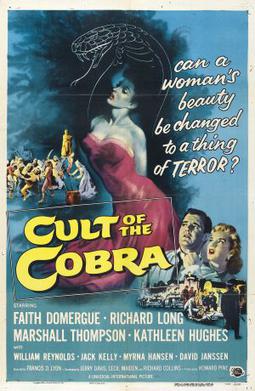
Religion and horror have long been bedfellows.  And quite companionable ones at that.  I’ve written a longer piece that I’ve not yet managed to wedge into a book about how the earliest Universal monster movies all involve religion in some way.  Maybe some day it will come out into the light.  In the meantime, I submit, for your consideration, The Cult of the Cobra.  This 1955 horror film was one of a series of movies about shapeshifting.  We’ve recently seen The Leopard Man on this blog, and before that Cat PeopleCult of the Cobra, set in amorphous “Asia” to start, involves the invented religion of the Lamians.  A group of US Airmen pay a Lamian to watch a woman transform into a cobra in an “Asian” ritual.  They’re revealed by trying to take a photograph—they’d been warned that if they were discovered the cobra would hunt them down and kill them.

Convinced this is all superstition, despite one of them dying the next night from a cobra bite, they return to New York City and civilian life.  The cobra woman follows them to carry out her mission.  She’s killed, however, before getting the last two.  What’s so interesting here is the discussion of belief that takes place throughout the movie.  Americans can’t believe in some “cult”—it’s clear from the start that anything not western is cult—but none of them show any inclination to church, or crosses, or even references to God or the Bible.  The only religion shown is that of the Lamians.  The cobra woman falls in love with one of the Airmen and tries to explain that she’s coming to doubt something she’s believed all her life.  She’s caught between religious duty and the experience of falling in love.

The movie failed to impress critics and was largely dismissed as a knock-off of Cat People.  There’s too quick a judgment here, however.  One of Universal’s earlier monsters had encountered a non-western religion but became much more famous for it.  The Mummy was based on “ancient Egyptian” religion.  Indeed, the whole story is premised on it.  The Cult of the Cobra, however, engages with the religion.  As jingoistic as it is, it nevertheless tries to represent “the cult” as a religion taken seriously by an exotic group of believers.  “Lamians” seems to have been borrowed from Greek mythology, however, where lamia were demon-like devourers of children.  I write about them in Nightmares with the Bible.  This isn’t a great movie by any stretch, but it shouldn’t be dismissed either.  It’s an important piece of the puzzle of how religion and horror interact in film.


Empowerment

Recommended as a worthwhile contemporary gothic novel, Alix E. Harrow’s The Once and Future Witches is a feminist tour de force.  Set in a world similar, or perhaps parallel, to ours, it follows three witch sisters in 1893.  The sisters are estranged, having been raised by an abusive father, and each has found her own way to New Salem.  The old Salem had been destroyed after the witch trials.  The three find their lives drawn together, not even knowing the others are there.  But there are also still witch hunters.  None worse than Gideon Hill, the leading candidate for mayor.  I’ve long known that books written after Trump are often fairly obvious for the hatred that oozes from political leaders.  This is one such case.  The story is one of female empowerment in the face of constant male opposition.  It goes fairly quickly for a book its size.

It’s an enjoyable read but it grows, well, harrowing towards the end.  You come to like these three very different sisters and appreciate the gifts they offer to their world.  Men, however, make the rules and often they feel that women have no place in making decisions for the public good.  I’m amazed at the number of people who still believe this.  It makes novels such as this so important.  Women with power are crucial examples to present.  The three sisters may cause mayhem, but it is generally good for the city.  When men are in charge, things tend to get repressive.  Sound familiar?

Conveying the gist of a 500-page novel isn’t a simple task so I’ll simply say that this isn’t a conventional witch story.  There’s never a question that witches are good, but capable of doing bad things.  In other words, they are pretty much like all of us.  That’s not to deny that some people become evil and that such people will gain ardent, blind followers.  The characters are memorable and likable in their very humanness.  As far as genre goes, this is a magical realism novel.  As you get drawn into Harrow’s world it becomes believable.  It’s a book that should be widely read and its plea for tolerance must be heard.  I can think of other comparisons—others have also conveyed that an unquestioning religion may become evil unintentionally.  Such conversions aren’t the kind publicly discussed, but they do fit with human experience.  I’ve intentionally left out spoilers since I want to encourage readers.  It certainly has left me thoughtful.


Revisiting Witch Mountain

Suspension of disbelief is essential for many movies.  When a friend pointed out that Disney had rebooted Witch Mountain, of course I suspended.  Recast as a new millennium-style action sci-fi movie, it really didn’t rock the critics, but there’s a lot going on in it.  Shall we start at the beginning?  The opening credits sympathetically establish the reality of UFOs as alien visitors to Earth.  In other words, we know from the beginning that the kids are aliens, not witches.  And the chasing begins immediately and doesn’t let up.  Not only is the government after the kids, so is a “bounty-hunter”/“terminator” from their home planet.  A body-building cab driver and an ostracized academic (with you there!) work to get the kids back to their ship, which is being held by said government in Witch Mountain.

In a nod to the original an RV is thrown in, and the setting at a Los Vegas UFO convention ads a kind of surreal twist. That’s what was kind of disturbing, in my experience—the blending of “nut job” UFO enthusiasts and the reality aspect prompted by the prologue.  UFOs, like most things in American culture, have become extremely divisive.  With nods to everything from The X-Files to Close Encounters, and many enthusiastic high-fives to Star Wars, there are mixed messages and there’s too much going on.  It’s difficult to process.  The cameo by Whitley Strieber was a nice touch.  Long gone are the locals with shotguns trying to find witches.  Witch Mountain itself is a government facility more secure than Area 51.

The reimagining of the story is signaled by the change of title to Race to Witch Mountain.  So the story seems to have gone off the rails at some points.  I always find movies where people faced with the obvious “supernatural” simply refuse to believe, fascinating.  It is, after all, about belief.  The plot, with its “our planet is dying—yours is too” message, is a bit tricky to decipher.  There are those convinced that we need to abandon Earth to other worlds where we can continue our acquisitiveness unhampered, and those who believe we should repair the damage here.  As I say, everything is divisive.  Overall, the movie seems to say that the system kinda works, so let’s keep with it.  And wreck lots of stuff along the way.  I couldn’t help but notice the borrowed trope from Pirates of the Caribbean, “You’re a good man, Jack.”  It seems Jack is a favored protagonist name.  And strange things like that happen on planet Earth, at least seen through the Disney lens.


Number Six

Signing a book contract always makes me happy.  There’s a validation to it.  Someone thinks my thoughts are worthwhile.  And now I can reveal what it’s about.  Regular readers likely already have some inkling, due to the number of times I referenced Sleepy Hollow over the past couple of years.  I’ll provide more details closer to the time, but it struck me back when working on Holy Horror that few resources exist for “The Legend of Sleepy Hollow,” despite its status as such a well-known story.  An agent or two agreed with me that the topic was good but they really weren’t sure it was a commercial project.  This despite the fact that Lindsey Beer is slated to write and direct a reboot of the famous 1999 movie.  It seemed that a book on the topic available at the time might sell.

John Quidor, The Headless Horseman Pursuing Ichabod Crane, public domain via Wikimedia Commons

I tried a number of independent publishers that don’t require agents.  I learned that most of them won’t even reply to your emails.  It seems that to get published by any trade publisher you have to be already famous.  Or maybe my idea’s just not good.  Weird.  Finally I found a university press that thought it might be a good fit, and it occurred to me that McFarland, who recently dropped the price on Holy Horror, would be a good press for this kind of thing.  McFarland made an offer first, and yesterday they sent a contract.  Hopefully the book will be out next year.

This is quite a personal project.  The story is one of my early memories—most likely due to the Disney version of the story, and most likely as seen on television.  My treatment is, as in all of my books, idiosyncratic.  I look at things differently than other people do.  And I’ve been looking at Sleepy Hollow for half a century or so, and I’ve read quite a lot about Washington Irving and the Hudson Valley.  I don’t want to say too much since others write more swiftly than I do and some presses speed books along.  For the time being I can enjoy that rare feeling of having a book contract and an editor who’s excited about my project.  I do hope that the next book, number seven, might find a trade publisher.  What’s it about?  Well, I’m working on two at the moment, and it depends which reaches book length first.  And I can’t say anything since someone may scoop me.  So I’ll just bask a little bit before starting another work day.


Camp Tingler

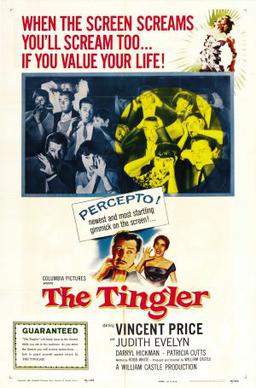
I don’t remember in which magazine where I saw the still, but I was immediately intrigued.  I didn’t know the movie it was from and in the days before the internet, when you live in a small town, avenues for finding the answer were few.  I just knew it was a photo of a woman in a bathrobe next to a bathtub filled with some opaque fluid (presumably blood), from which a hand was reaching out to her.  Or at her.  I don’t even recall when or how I learned that the scene was from the gimmick-driven William Castle film, The Tingler.  I’d heard of the movie before, but I hadn’t connected the scene with it.  No matter how you slice it, the story of the movie makes no sense.  That doesn’t stop it from being fun.  I’ve seen it before but had to refresh my memory.

I hadn’t recalled, for example, that Dr. Chapin (Vincent Price) uses LSD to try to get scared.  While the dialogue isn’t great, there are many observations on fear and how adults outgrow it.  Chapin wants to find the physical root of fear and drops some acid (apparently the first cinematic depiction of LSD use) to enhance the experience.  Although it’s crucial to the plot, I also didn’t remember that Martha Higgins can’t hear or speak.  Interestingly, she co-owns a silent movie theater and she’s a silent character in a sound movie.  She’s also the only character involved in the two color shots in a black-and-white film.  She remains in grayscale herself in these scenes.  In other words, there is some sophistication here.  And of course, Vincent Price was always classy.

Camp is an aesthetic that I appreciate but, like a tone-deaf person, don’t always recognize.  The Tingler has become a camp classic.  Many people know that Castle had vibrators installed in select theater seats so that some audience members would “tingle” at appropriate places.  This was the “Percepto” advertised with the movie.  Having himself introduce the film as too terrifying—echoing back to Frankenstein in 1931—Castle guaranteed the movie wouldn’t be taken seriously.  There’s nothing scary about this horror film.  Speaking for myself, I spent too much time trying to figure out what happened to poor Mrs. Higgins—yes, her husband’s trying to scare her to death but then she has hallucinations as if Dr. Chapin gave her the LSD instead of taking it himself.  It doesn’t make sense, but it’s fun.  I guess that’s the definition of camp.


Campus Monster

Universal was the studio that gave America its monsters.  Well, it wasn’t Universal alone, but the initial—almost canonical—line-up of monsters were Universal productions.  As horror grew to be more influenced by science-fiction in the 1950s, Universal kept at the monster-themed movies, cranking out many that I missed and on which I’ve been trying to catch up.  Monster on the Campus is interesting in a number of ways.  Directed by Jack Arnold, of Gilligan’s Island fame (or future fame, since this movie was earlier), it’s a story built around evolution.  Pipe-smoking professor Donald Blake has a coelacanth delivered to his lab.  Unbeknownst to him, the prehistoric fish had been irradiated with gamma rays to preserve it—as well as being shipped on ice.  The dead fish is about to create problems.

A dog laps up some of the blood (it started to thaw) and becomes a vicious evolutionary throwback.  Then Professor Blake cuts himself on a fish tooth and sticks his hand in the contaminated water.  He becomes a murderous caveman, but the effect is only temporary.  A dragonfly eating the fish transforms into a prehistoric insect that the professor kills, but its blood drips, unnoticed, into his pipe.  He changes and murders again.  Finally it dawn upon him that he was responsible for the murders.  In a remote cabin he sets up cameras and injects himself with the radioactive coelacanth plasma and ends up killing a park ranger.  Finally, he injects himself so that following police officers will shoot him to death.  Rather a bleak story.

The film has been read as social commentary since its “rediscovery,” but what caught my attention was the easy acceptance of evolution.  This was the late fifties and the creationist backlash was still pretty strong at the time.  If evolution didn’t occur, the professor (and dog and dragonfly) couldn’t have become their atavistic selves, giving the movie its plot.  The classic Universal monster of the decade was the Gill Man—aka Creature of the Black Lagoon—also an atavistic throwback to an earlier time, but also a divergent branch of evolution.  Creature was also directed by Jack Arnold, but four years earlier.  It began with a quote from Genesis 1, bringing creation and evolution together.  The title Monster on the Campus offers many possibilities for co-ed mayhem, but instead opts for a scientist who gets caught up in the tangle of evolution.  The movie was near the end of Universal’s monster run, but in the sixties horror would change forever.  This was a little fun before things got serious—horror school was about to start.


An Interesting Prize

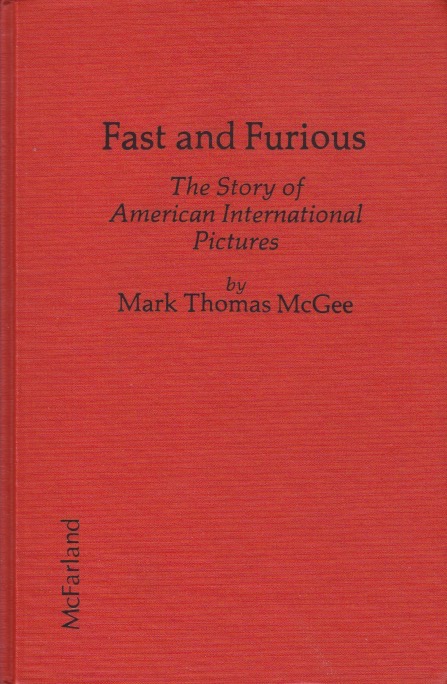
If you’re born without it, you get by any way that you can.  Capital, that is.  Those of us who inherit nothing but active minds don’t stand a chance, really.  Without connections or the cash to draw others in, we tend to be scrappy.  And cheap.  This is probably the reason I’m drawn to characters like Ed Wood, and those who started American International Pictures.  I get the sense that Mark Thomas McGee must be an interesting guy.  After all, he met some of his idols when he was young.  Fast and Furious: The Story of American International Pictures is available in a second edition, I know, but I tend to find first editions fresher.  They say what’s really on an author’s mind.  Besides, used books have their own charm.

Although American International Pictures (AIP) was early on known for fast shooting schedules and cheap effects, it eventually started to earn some mainstream respectability before the company being acquired by Filmways.  Along the way they engaged some famous champions of cheap, such as Roger Corman.  A number of films discussed in this book were part of my childhood.  And as someone who’s always had to live cheaply (I just don’t comprehend finance), I found this an extremely hopeful book.  Some of these folks never became famous in the lifetimes, but they left a legacy.  And that’s a worthy goal.  I suspect that for those of us who can’t break into mainstream publishing, blogging is about building a legacy.  What some of us want, however, is to appear in print.

And I mean in print.  The book is an object.  I bought this one used.  I sometimes find interesting things in used books.  The former owner of this one (a McFarland hardcover!) carefully glued postcards of AIP movie posters to the covers and endsheets.  They didn’t put their name in it, but they (in pencil) ticked off the movies, presumably that they’d seen, from the filmography.  This is a person after my own heart.  I tend not to write in most books anymore, realizing that someday someone will probably sell them and, hey, it’s hard enough to make money in the book business.  But this personalization is something you can’t find in an ebook.  No, a book is meant to be held and loved.  This one clearly was.  As publishers chase more and more after electronic and audio books (the latter of which are also electronic) and learning moves from reading to watching, we’re losing something.  They’re called books, and they bear their own meaning.


Who’s Stalking?

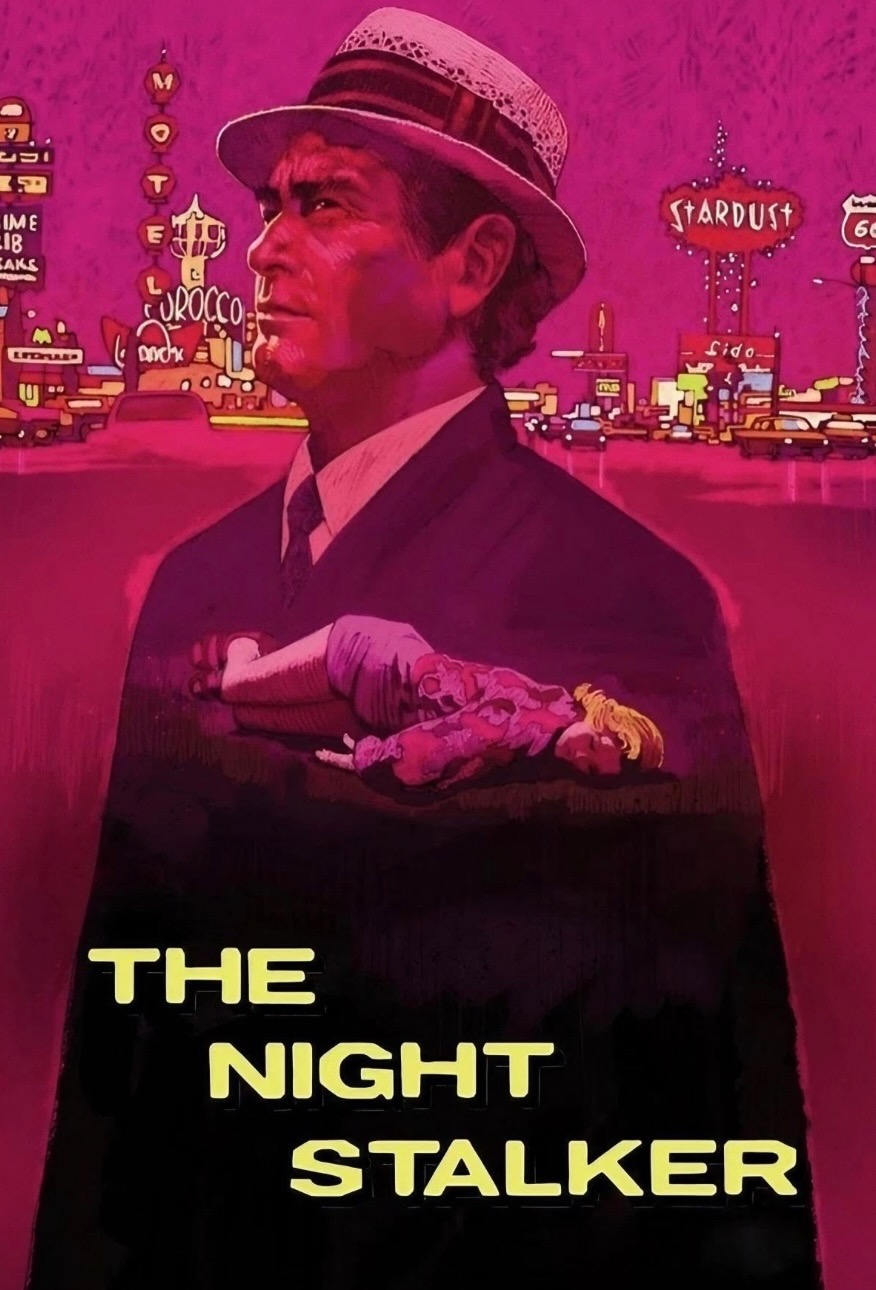
Television is a hungry beast.  Back before the internet it was probably less hungry, but still the desire for content was constant.  A few individuals worked the monster side of the tube, one of them being Dan Curtis.  Dark Shadows was Curtis’ idea, and it was in that context that he began to have an influence over my life.  I wouldn’t have recognized his name in those days, of course—do we ever really recognize those who become part of the arc of life’s direction when we’re kids?  Curtis produced a television movie that I’d never seen, taking on the vampire tale again.  The Night Stalker isn’t a great film—it was produced for television, after all—but it started something.  That something was the weekly series Kolchak: The Night Stalker.

I’ve been watching episodes of Kolchak and realized that I was missing something—the origin story.  As an historian I really like to keep things in order.  Since my research is conducted on my limited free time and limited budget, I still discover things others probably knew long ago.  In any case, I decided to hunt down and watch The Night Stalker.  It introduces, of course, the character of Kolchak.  In a way that seems unnecessary for 1972, it narrates quite a bit of vampire lore.  It even frames some scenes from Bela Lugosi’s 1931 Dracula.  As I watched this period piece for the first time, I realized that the actual night stalker wasn’t originally Kolchak.  In this movie it’s clearly Janos Skorzeny, the vampire.  The movie was based on an (at the time) unpublished novel by Jeff Rice.  And so began a number of cascading things.

I didn’t watch Kolchak as a child.  I do remember other kids talking about it, but it never made its way into our evening television watching.  (My mother was concerned that I had nightmares as a child and didn’t encourage scary things before bed.  Decades on I’m still prone to nightmares, but as I said, arcs get set early on.)  Kolchak is kind of a hapless character, rubbing people the wrong way.  The movie leaves many unanswered questions, but it was good fare for unreflective television monster purposes.  There had been monsters before—I think we all owe a great debt of gratitude to Rod Serling’s Twilight Zone—but Kolchak made the horror element, always laced with comedy, central.  The television movie received the highest ratings of any television movie to that point.  And we all know that such things lead to sequels.  Television is ever hungry.


Okay, Look Now

When you think of Daphne du Maurier’s film adaptations, Alfred Hitchcock probably pops to mind.  He shot Rebecca, Jamaica Inn, and The Birds, based on her works.  One non-Hitchcockian adaptation is Don’t Look Now, by Nicolas Roeg.  I’d made the decision to read the story first—which was a good idea—but it was long enough back that I couldn’t recall many details.  This was also good.  Don’t Look Now was the main release by British Lion, in Britain, with the B movie, The Wicker Man, as its follow-up.  While writing a book about the latter movie I’d wondered why this one was chosen as for lead billing.  It’s certainly more mainstream, and an art film in many ways.  Typically labelled a “thriller,” it’s also called “horror,” causing me to question the relationship between the two.  In any case, the movie.

Since this was released in 1973 I won’t worry about spoilers.  The film is a fairly faithful adaptation of du Maurier’s story as well.  Laura and John Baxter are in Venice, trying to recover from the accidental drowning of their daughter.  John has work there, restoring a church—there’s plenty of religious imagery—and Laura befriends two older women.  They’re sisters and one of them is blind but also psychic.  Heather, the psychic, claims to see their drowned daughter and Laura finds relief and comfort from hearing about it.  John is skeptical, but, Heather claims, he also has psychic abilities.  John begins to think he’s seeing their daughter still alive and she leads him down isolated alleys—this is dangerous because there’s a serial killer on the loose.  John then thinks he sees Laura with the women after she has flown back to England to attend to their son at his boarding school.

Movies, like stories, are open to interpretation.  Mine is that the psychic phenomena in the film are portrayed as real.  I had the same impression from du Maurier’s story.  Much like The Wicker Man, appreciation for Don’t Look Now has grown over the years.  It was fairly well received upon release, but is now considered even better than it was at the time.  Maybe not as essential as some Stephen King movies, it is nevertheless believed to be one of the more important films on the horror palette.  I’d been prompted to watch it by several references I’d recently come across.  Typical for me, however, I took it in the wrong order, having seen The Wicker Man years ago.  Classics back then, it seems, took longer to be recognized.