A Different Legion

Religion and horror can play well together.  They can also be unevenly matched.  Although Legion has been on my list since shortly after it came out, my impression after having watched it is that the angels are strangely corporeal.  Their fights are physical with very little supernatural involved.  I suppose that’s why it’s generally classified as “action,” but the premise is one that suggests a bit more supernatural would’ve been welcome.  The writing suffers from any number of ailments, and the ending leaves you wondering just how good God is supposed to be in this telling.  I suppose a plot synopsis might help.
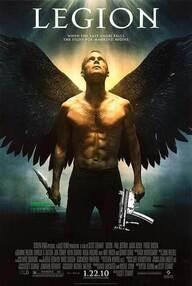
A pregnant waitress in a remote diner is nearly at term.  The Archangel Michael has come to earth in Los Angeles (get it?) and has armed himself to protect this unborn baby.  He comes to the diner where the owner and his son, his cook, and four customers are holed up against what they think is a demon attack.  Michael eventually reveals that the arriving hordes are not demons, but humans possessed by angels.  God has decided to wipe out the human race again, this time with angelic mercenaries.  If the waitress’s baby survives, however, the world will be saved.  So there’s lots of shooting, and although a white guy dies first, the only two Black characters are the next victims, of course.  To kill angels, it turns out, you have to shoot them.  Who knew?  In the end, which pits Gabriel against Michael, it’s revealed that God was testing the loyalty of his angels by giving them this task.  Mindless obedience, God thinks, is wrong.  If people have to be killed to prove it, so be it.

The theme of the messianic baby stays intact but goes nowhere.  At the end it’s unclear if the angel attacks are still going on, but the waitress and her boyfriend, along with the baby, drive around heavily armed, ready to fight.  Did the angels get the message that they are being tested by God or are they, like many Republicans, simply following the “leader”?  Seeing the title and knowing nothing of the story, I had assumed this was a movie about demons.  The “Legion,” of course, is angelic but there’s not a lot transcendent about them.  Even the use of wings (which are bulletproof), makes this feel like Dogma without the humor.  I knew religion would be involved in this horror, but I didn’t know how poorly it was played out.  Still, it would fit into Holy Sequel, if it ever happens.

The Third

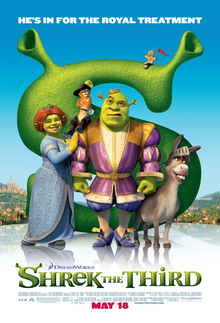
I don’t know what possessed me—and I use that verb intentionally—to suggest Shrek the Third for weekend viewing.  Apart from a Rosemary’s Baby and Exorcist mashup scene, it is a bad movie.  I’ve been watching bad movies over the past few months, and developing an aesthetic for them, but I just can’t warm to Shrek the Third.  The first two movies were quite good, and sequels frequently struggle.  I’m trying to put my finger on why this one leaves such a bad taste in a viewer’s mouth.  For one thing, it’s the writing.  Not as snappy or crisp as the first two, it drags with politically correct emotional adjustment as Arthur tries to learn to be king and Shrek reconciles with being a father.  What happened to the histrionics of Lord Farquad?  Or the cluelessness of the fairy tale creatures with no leader?  Instead there are hugs and reassurances.

Not that hugs and reassurances are bad, but they’re not Shrek material.  Sudden character shifts don’t help either.  The real thing, however, seems to me, to be the music.  Many movies patch in contemporary songs to set the mood.  The first two Shreks did this remarkably well, with one narrowly edging out two in several places.  The Third lacks this artistry.   The pop songs chosen just don’t fit.  They tank the mood time and again.  Music is important.  It can make or break a film.  In this case it’s only one problem.  To me even the animation seems rushed.

There is an aesthetic to bad movies.  I guess I was hoping to find it here (I’d seen it before, years ago).  Maybe badness in movies is harder to make good when they’re animated.  There’s an intentionality about everything when you know everything on screen was planned to appear exactly as it does.  Good bad movies entertain.  There’s a reason we come back to them, even knowing they’re not great.  As someone who’s written for his entire literate life, I tend to think that good writing can redeem most movies.  We can put up with low budget effects if the writing is strong.  There’s a reason Casablanca is a classic, despite the low budget.  The Third has the tag line, “The best Shrek yet.”  Considering the bar set by the first two, that was a boast not likely based on anything like facts.  Or taste.  I’ve got to wonder, however, when big budget animations start going off the rails, when is it decided to simply let them go and hope that a classic will emerge?


A Different Zone

I haven’t read Stephen King’s The Dead Zone yet, but it’s on my list.  That’s why I was a little reluctant to watch the movie.  It was free on Amazon Prime, however, and I reasoned to myself that I’d seen The Shining and Carrie before reading the books.  Indeed, my earliest introduction to Stephen King was through movies.  (Well, I did read one of his short stories in high school, but the novel side of things came later.)  When the opening credits revealed it was directed by David Cronenberg I wondered what I was in for.  I didn’t know the story, but I hadn’t heard of this as a Cronenberg body horror spectacle either.  It was quite cold outside and I was nodding off, so why not.

The thing is, it’s not always listed as horror.  That’s a faulty genre designation, as is sci-fi.  There’s one futuristic scene in the movie and it lasts for just over a minute.  Does that make it sci-fi?  Also, I  realized, it deals with clairvoyance and for similar reasons the X-Files are also listed as science fiction.  Paranormal, it seems, is permanently ruled out of the realm of possibility by assigning it an improbable genre.  Well, back to the zone.  I figure the title will be better explained by King, but there is a brief scene explaining what a dead zone is.  The story follows Johnny Smith, a schoolteacher who becomes clairvoyant, although it manifests itself only after a car accident and a coma.  The main purpose of this, at least through the movie lens, is to prevent a Trump-like populist from being elected president.  That is the horror part, I guess.  And it’s becoming clear to me that writers were warning about these things since the seventies.

Unlike many of my weekend movies, I’d actually heard of The Dead Zone before.  There are some horror tropes present.  It begins with Edgar Allan Poe’s “The Raven,” and has a few other horror references tossed in.  Still, it’s a very human story.  The movie probes the difficulties of a life with special abilities.  Johnny never gets over the woman he was going to marry before his coma, and he feels for those whose futures he sees.  The movie is fairly slowly paced and it drops a few threads, again, likely found in the novel.  In the book or movie debate I generally go for book first, but that often leads to disappointment on the silver screen.  Maybe this was the right order to go this time around.  Once I read the novel I guess I’ll know.  Or at least have an opinion.


A Little Flat

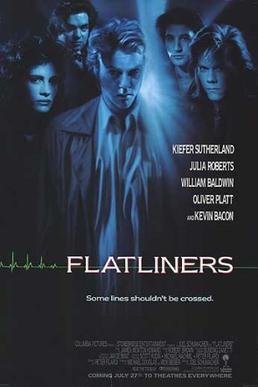
I remember hearing about Flatliners when it came out.  It was during an era when I wasn’t watching many movies and the idea of a movie all about dying bothered me.  Well, I’m older now and I watch movies because I write about them.  So I gave Flatliners a try.  It wasn’t bad—a cut above what I often end up watching on a lazy winter weekend afternoon.  In case your memory’s rusty, here’s how it goes: five med school students decide to experiment with controlled death and resuscitation.  They do this to find out what’s after death.  Confident in both science and their abilities, they one-by-one undergo the procedure to see what awaits beyond.  The experience is different for each of the four that does it.  It can be pleasant, or not.  More not.

Then the experiences from the beyond begin to break through into their alive lives.  But not the good stuff.  The word that these scientists use is, interestingly, “sin.”  The sins of their pasts come back to them.  One of them realizes that to free himself from this haunting, he has to make amends to a person he offended as a child.  The apology—and forgiveness—works.  Eventually the four pay the price and, perhaps, are a bit wiser for it.  This isn’t a great film but it does raise a number of issues that demonstrate how religion and horror relate.  Death is a religious issue, no matter how secular someone is.  As the definition of life becomes more complex, its cessation becomes more fraught.  Here medical students are grappling with their very vocation.  They ease suffering and prolong life.

I suspect one of the reasons the movie failed to make it big was that the “sins” are unevenly repaid.  An accidental death from a childhood of bullying is the worst.  A past of womanizing seems to have a relatively light, and predictable outcome.  And what is the sin in discovering a war veteran parent’s addiction to an opioid?  In a sense it’s classic Sunday school—you get punished for your wrongs.  Some suffer, however, from mistakes that others made.  Or for which others egged them on, and in which others participated.  And for us vegans, even egging someone on might be a sin.  The value of the movie seems to be less how it’s executed and more about the potential for discussion that it raises.  Death is no stranger to cinema, and it can’t fail to make the living curious.  That seems worth talking about. 


Though This Be Madness

Shakespeare could turn a phrase, alright.  Along with the Bible he’s one of the two most unwittingly quoted sources in the English language.  But he liked to borrow ideas.  Writers have always done this, and it came home to me again watching Robert Egger’s The Northman.  My wife and I intended to see it in the theater two years ago—life gets too busy even to get out to a movie, it seems.  So we had to settle for Amazon Prime.  In any case, I don’t read about films in advance and I avoid trailers when possible.  I couldn’t help hearing, however, that it was a viking revenge story.  Still, it wasn’t until my wife said, “Isn’t this like Hamlet?” that I made the connection—Amleth.  Hamlet.  Scandinavian. Danish.  Okay, so The Northman is based on the legend of Amleth which is the direct basis for Shakespeare’s Hamlet.

Like all of Egger’s feature films so far this one is meticulously researched and very moody.  More than once it made me glad that we live in a civilized society, such as it is.  Those of us who were the runts of our family litters know that bigger kids often get their way by dint of physical intimidation.  The vikings—and this was a good representation of a berserker—took what they wanted because they could.  But Amleth couldn’t have what he really wanted.  He witnessed, as a child, his uncle murder his father, the king.  Said uncle takes the throne and the queen and Amleth vows revenge, but what can a young boy do?  Then as an adult, he’s told by a seer that he made a promise so the viking heads home to exact revenge.

The Northman really isn’t a standard horror movie, although Egger’s previous two films fall into the genre fairly handily.  His next project is Nosferatu, after all.  And The Northman isn’t a retelling of HamletHamlet was a retelling of Amleth, and this is another retelling.  Those who’ve been following Egger’s rise know that his films are intelligent and melancholy and literate.  They also have a way of disturbing that peaceful acquiescence that comes after viewing a less thoughtful movie.  It would probably have made even more of an impact had we been able to get to it in a theater.  If it weren’t for Shakespeare most of us probably wouldn’t know the story of Amleth, but Norse mythology has a way of remaining relevant, despite the fact that we tend to credit the ideas to others.  Just check the name of the day of the week and see if that’s right.


Le Fanu Fans

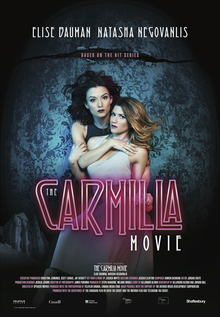
Sheridan Le Fanu is sometimes called “the Irish Poe.”  He was a contemporary of Poe but his name doesn’t bear the same cultural cachet.  He wrote a number of stories that are classified as “horror” in today’s genre settings, and one of the most famous is Carmilla, known as the lesbian vampire story.  Le Fanu didn’t use that terminology himself, that I know of, but Carmilla is a vampire and she does have fondness for other females.  I’ve watched a few lesbian vampire movies (I mentioned Theresa & Allison recently), since they give a distinctive taste to the lore.  I don’t generally research the free movies I watch beforehand, so when I saw The Carmilla Movie, I figured it was likely based on Le Fanu (it is) but I didn’t realize that it was a follow-up to a web series with the same characters.  Nevertheless, it’s a pretty good story.

Set in the modern day, with a cast of young people doing things for a living that weren’t options when I was growing up (internet content provider, starting a paranormal investigation business—I was laughed out of school for admitting I was interested in this stuff before the X-Files made it mainstream), the film updates Le Fanu’s story.   Carmilla has become human and has a girlfriend.  But then Carm starts to revert to vampire status.  (Fortunately there’s soy-based blood for her to drink—did I mention this is comedy horror?)  Although this is comedy horror, it’s not a silly story.  There are plenty of humorous asides, but you still feel for the characters and want them to overcome the evil they face.  Here that evil is a past that has to be rectified.

I found The Carmilla Movie to be intelligent and fun.  There are some genuine horror elements to it, and I suspect that being familiar with the web series might help answer a few head-scratchers for us non-initiated.  In general it seems that such independent films as this serve to raise the bar on movies as a whole.  The flip side is, however, that you can’t easily tell if a movie is a studio release or a television movie, or even a web movie without doing some research ahead of time.  Amazon Prime—my go to service—doesn’t distinguish them.  All I know is that if a movie is one I have on my watch list, I’m going to have to pay for it.  Carmilla was free and worth the time to watch.  And it’s good to see Le Fanu getting some deserved air time.


Creeping Religion

In a disappointing email, Amazon Prime has announced that its free movie streaming of select titles for members will now be subject to commercials.  I suppose that’s little difference, actually, from the way I watched most movies growing up.  I watched them on television before cable, and commercials were a necessary evil then.  Speaking of evil, I decided to watch a film that I missed in my childhood.  It was better than expected.  The Creeping Flesh suggested itself by star power.  Although not a Hammer film, it features both Peter Cushing and Christopher Lee as a pair of mad scientists.  Interestingly enough, it struggles with the question of evil and, appropriately enough, has an ambiguous ending.  There’ll be spoilers below, but since the movie was released over a half-century ago, I’ll use them with a clear conscience.

Cushing’s character, Dr. Emmanuel Hildern, has discovered a skeleton of pure evil personified.  It will become the end of the world once it’s revivified.  Meanwhile his half-brother, Dr. James Hildern (Lee), runs an insane asylum where questionable treatments are performed.  The brothers are rivals and although not quite estranged, they don’t work together.  It’s actually late in the movie that the corpse of evil is resurrected, but in the meanwhile Emmanuel’s daughter goes insane, like her mother had, after being given a vaccine against evil that her father devised.  Her Ms. Hyde-like exploits make her dangerous to Victorian society and she has to be committed to her uncle’s asylum.  The being of evil attacks Emmanuel and we find him at last in his brother’s asylum.  James is explaining to his assistant that this madman thinks he is his brother and that another patient is his daughter.  The film has been a fantasy in an unbalanced mind.  Except for a suggestion in the final close-up that the story of the corpse may indeed have actually happened.

What particularly intrigues me is the discussion of evil in the film.  Emmanuel claims that it is like a virus, an actual physical pathogen.  He believes it can be prevented by a vaccine.  I’ve actually read some academic work in the past few years that suggests that “sin” is an actual, almost physical thing.  A kind of cosmic force.  More sophisticated, of course, but not entirely unlike what this horror film was suggesting fifty years ago.  The Creeping Flesh isn’t a great movie—it suffers from pacing and a somewhat convoluted plot, but still it demonstrates why I keep at this.  Horror often addresses the same questions religion scholars do.  And occasionally it even seems to anticipate more academic ideas, fed to a viewership making the same queries.  It’s worth watching, even with commercials.


Troubled Water

There’s nothing like a good monster movie.  Of course, your local streaming service will have some considerable say over what you might watch.  Amazon Prime is likely my biggest influencer because I can’t afford the movies on my watch list and there’s a monster-load of “free” content.  Still, I fear something may have been lost in translation.  I wasn’t in the mood for anything too heavy, and The Lake thumbnail had a retro-Godzilla vibe to it.  The fact that it’s a Thai horror film certainly enhanced the appeal.  But I’m not sure I understand what it’s supposed to be saying.  The dialogue translation wasn’t, I suspect, very accurate.  More than that, however, I’m in no position to judge cultural tastes for a culture I know primarily through cuisine.  There’s more than a rampaging monster here, but it doesn’t translate well.

There’s a monster in the lake, shown pretty clearly early on.  It kills several villagers, perhaps for disturbing its egg.  A bunch of characters are thrown at the viewer—a family where the brother psychically bonds with the young monster (there’s a bigger, madder, mother monster), a researcher and his assistant, a detective and, quite late in the movie, his daughter, a police chief and his daughter, and none of them have enough screen time for us to figure out who the story’s about.  The monster doesn’t seem evil, although it killed several people at the start.  The police chief evacuates people to the temple and some Buddhist priests show up.  There’s religion and horror worth exploring here, but the dubbing calls the temple a “church” more than once.

The story largely seems to be about family.  The initial family, after losing a couple of members, reunites.  The detective’s daughter dies after he has reconciled with her in the ambulance.  The female police officer reveals near the end that the chief is her father.  (The researcher doesn’t seem to be related to his assistant, but they drop out of the plot.)  It’s difficult to tell if this is a bad movie or simply a cultural gap that puts real understanding beyond the reach of those in such a different realm.  From my viewpoint it was a movie not unlike the Godzilla films with which I grew up.  In other words, better than sleeping away an afternoon but not worth putting too much brain power behind trying to comprehend.  Technically it was a movie better than I could hope to make.  Some of the cinematography was quite nice.  I’m just not sure if I understood what was being translated or not. 


Clergy Problems

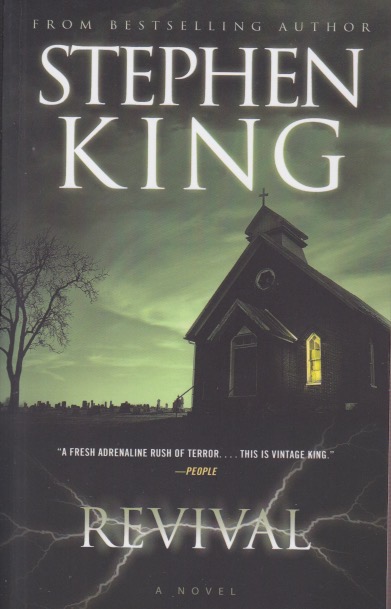
I believe Revival is the most recently written Stephen King novel I’ve read.  It was pretty good—it certainly scores high on the religion and horror scale, although it takes quite a while to get to the horror part.  Part of the problem for me is that I liked Charles Daniel Jacobs.  I tended to relate more to him than to Jamie Morton (the narrator/protagonist).  Perhaps this was because, like Jacobs, I studied to be a Methodist minister.  And like him, came to have a rather different view of what is really going on in the world.  He’s clearly King’s villain, however.  Or “fifth business” as he’s termed in the novel.  The secret lightning he seeks turns out to be a kind of MacGuffin.  I was curious to know more about it.  The novel, as is typical, has several subplots but the main one is how Jamie and Charlie face what’s after death in a tragic climax.

Charlie starts out as a Methodist preacher.  When his wife and son are tragically killed, he becomes a huckster who actually has tapped into an electrical power that can heal people.  It often, however, leaves bad aftereffects.  Jamie, who knew him as a kid, is cured by him from a heroin addiction.  Their paths continue to cross over the next fifty years or so—this is a longitudinal story—as Jamie comes more and more to distrust his childhood hero.  Charlie can use electricity to perform wonders and it make him rich.  He wants more, however.  He wants to see beyond death to assure himself that his wife and son are in a better place.  It seems to me that that motivation isn’t a bad one.  The only way he seems a villain is that he doesn’t really care for other people.

The story is well told but it doesn’t have the same “classic” feel as some of King’s earlier novels.  He well understands, however, that horror and religion belong together.  I haven’t read all of his novels—not by a long shot—but clergy aren’t rare and when they’re present they’re implicated in the horrors, or in this case, responsible for them.  These are important insights, as others have also noticed.  Revival is one of those books that requires some reflection.  It certainly feels like something written by a man facing the limitations of the aging process.  And not necessarily at peace with it.  Ministers sometimes do go bad—they’re only human—but they can also lead to real change.  I, for one, am interested to hear what King has to say about it.


One Demonic Night

I only discovered after watching Night of the Demons (2009) that it was a remake.  Eventually curiosity got the best of me and I had a spare moment to watch the 1988 original.  It’s still kind of a bad movie, but it is scarier than the remake.  It’s also a horror comedy, but the emphasis is a bit more on the horror here.  A group of ten high schoolers go to Hull House, which used to be a funeral home, for a Halloween party.  When the power goes out they decide to have a séance.  Unbeknownst to them, however, there is a real resident demon.  This demon gets passed on through kissing, and it animates the kids who’ve been killed along the way.  Although the final girl is pretty clear from the beginning, in a usual twist the only surviving guy is African-American, the son of a preacher.

The concept of demons here is explained as entities that were never human.  This is the explanation Ed and Lorraine Warren used, often without making reference to fallen angels.  Since the demons are using the physical bodies of the kids, they can be stopped by locked doors, but killing them doesn’t really help, since they keep coming back.  It seems that there’s really just one actual demon, a dragon-headed entity that lives in the crematorium.  Rodger, the Black man, brings the element of religion to the story.  He objects to the séance in the first place, and suggests that they pray as he and Judy, the final girl, are attempting to escape.

In-between all this is sandwiched the gore and violence that make it pretty typical horror.  The humor involved, however, makes it less intense than a typical slasher.  Although I didn’t walk away thinking this would be a favorite movie, I could see why it’s garnered a cult following.  As is often the case, the original is better than the remake.  For one thing, it understands that religion seasons horror quite well.  Demons are, by definition, religious monsters, at least traditionally.  And the two “good kids” who survive are uncomfortable with messing with spiritual forces to begin with.  Judy just wants to go to the dance, after all.  The movie went on into sequels as its cult fandom grew.  If I ever do a sequel to Nightmares with the Bible I’ll need to include this franchise, I guess.  For a sleepy weekend afternoon, there are worse bad movies to watch.


Not Bram

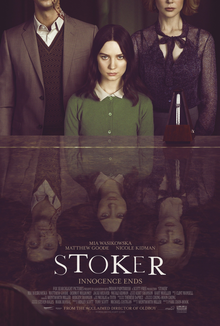
I guess I wasn’t sure if Stoker was horror or not.  It’s similar to Hitchcock in many ways, and some suggest it’s a “thriller” rather than horror proper.  One of the refrains of this blog is that horror is a poor genre designation.  Too many other genres bleed into it and it grows into several others also.  Still, Stoker was conceived of as a horror movie and it fits that, generally.  The title made me think of Bram, the most famous bearer of that surname, at least in my mind.  I’m pretty sure that others had the same impression, since some websites take pains to mention that this is not a vampire story.  It’s not.  It is, however, a story about a psychopath or two.  But it generally gets compared to Shadow of a Doubt rather than Psycho.  I’ll spoil things below.

On India Stoker’s birthday, the family receives the news that her father has died.  She was very close to her father and distant from her mother. During his funeral she notices someone watching from afar.  It’s an uncle she didn’t know existed and who’s decided to live with them.  This uncle, we learn, was released from an asylum.  As a child he’d killed his younger brother.  After arriving at the Stoker mansion, people who recognize him disappear.  India was trained as a hunter by her father and senses something is wrong.  The uncle meanwhile seduces her mother so she doesn’t see his obvious faults.  (He’s a charming psychopath.)  He’s goal is to have his niece, India.

There’s a creepy atmosphere throughout, and it’s difficult to determine what India’s end game is.  She’s able to take care of herself, mostly.  She does rely on her uncle to save her, though.  India discovers that he’d been institutionalized at the fictitious Crawford Institute, interestingly in Crawford, Pennsylvania, not far from where I grew up.  Instead of accepting his plans for her, however, she charts her own violent course.  This is an odd film as far as determining character motivations go.  It’s not really clear what India or her mother really wants.  The uncle’s straightforward about it, but he’s a serial killer.  It’s difficult to know upon whom to cast your sympathies.  A movie about family dynamics as much as about horror (a character kills both his brothers, his aunt, and a housekeeper that he feels is in the way), it has no clear message.  And there are no vampires anywhere to be seen.


Drac Ops

Just don’t ask, okay?  Like most things in my life, I discovered Dr. McNinja way past when it was popular.  Who knows?  Maybe it’s still popular.  I’m not the best judge of that kind of thing.  I’ve read a few graphic novels in recent years, generally when someone lends them to me, or when a movie I like is based on them.  Now, the thing about Dr. McNinja is that it started out as a webcomic.  People younger and more with it than me have shown me other people younger and more with it than me making a good living web cartooning.  They don’t have 9-2-5s and they live, going by their videos, in nicer houses than I do.  So when someone suggested I look up Dr. McNinja I found an old-looking website saying it was no longer online.  The author had published it in book form.

Even though I work in publishing, I find it difficult to tell if a book is out of print.  We live in that strange purgatory where IP (intellectual property) can be kept on life support until copyright expires without ever really having to print more books when they run out of stock.  They’re never truly out of print.  I’m guessing that’s what happened when on Amazon you see that only used copies are available.  So which McNinja to select?  The one with a cover that riffs off Plan 9 from Outer Space, of course.  That movie keeps coming back into my life.  It’s one of Fox Mulder’s favorites on the X-Files.  In any case, I was hardly prepared for the amazingly creative imagination that Christopher Hastings has.  If you start with Operation Dracula! From Outer Space you’re entering the story in media res, as the academics say.

I confess to liking Teenage Mutant Ninja Turtles when it first came out.  These days the exoticism of eastern Asia is frowned upon by academics, but it’s still there in Christopher Nolan’s Batman Begins, so why not?  In case you’re wondering, there is a reason behind all this.  I can’t tell you at the moment, however.  I can say that if you’re looking for a wild, wild story with lots of unexpected twists and turns, Dr. McNinja will not fail to win approbation.  I’m dithering on whether to go back and start from the beginning—these print volumes are becoming collectors’ items, it seems.  And no matter how much fun it is, reading graphic novels always feels like cheating to me.


Seeing in Darko

Having seen it I have to wonder why I waited so long.  Part of it was timing, of course.  I was still teaching at Nashotah House when Donnie Darko came out, and I didn’t watch as many movies then.  My loss of that job started me on my horror-watching spree, but Donnie Darko is more than horror.  In fact, it’s usually labeled a thriller instead.  Another reason I avoided it is, alas, the title.  It’s actually the name of the protagonist, and one of the other characters in the movie remarks that it sounds like a superhero name rather than a regular person.  What’s it about?  Well, that’s where it gets interesting.  Donnie has mental health issues, but those issues are tied in with time travel and philosophical discussions about the existence of God.  The high school Donnie attends, although not explicitly stated, seems to be Catholic but there aren’t priests and nuns about, and one of the teachers is seemingly evangelical.

Donnie has trouble distinguishing reality.  Instead of allowing the audience to get away with labeling him easily, the question of reality itself is left unanswered.  The movie is deep like Brazil or The Matrix, and is often considered one of the greatest independent films of all time.  It’s the story of Donnie’s October 1988.  He sleepwalks and sees a guy in a bunny costume who tells him the world will end in 28 days.  Of course he’s medicated and sent to see a psychologist, but what the guy in the bunny costume tells him ends up coming true.  The story is intricate and doesn’t bear a brief synopsis.  It is a movie that will make you think.  It’s become a cult film and I think I’ll be joining that crowd on this one.

Films that manage to put philosophical reflection in the spotlight are rare.  Even more uncommon are those that do so with high production values and convincing acting.  Movies that do this aren’t often cheerful—philosophers in general don’t tend to be a jovial lot (some are fun, of course, but they’re not the majority).  Thinking is serious work, even if those who do it aren’t really paid for their efforts.  Donnie Darko is a movie that will make you think.  Is it horror?  Some classify it so.  Others say sci-fi, but it didn’t really seem like that to me.  In fact, it’s very difficult to classify at all.  Many of the best movies are that way, in my experience.


One Another

Like much of the other information that I’ve managed to pick up in these six decades of wandering the planet, my knowledge of horror is self-taught.  In truth, I’m an eclectic reader—my various, periodic obsessions generally stem from books I’m writing.  For my unwinding time, however, horror stories seem to do the trick.  Nobody I know in person reads horror, so my recommendations are generally the results of other books I read.  That’s how I found Thomas Tryon’s The Other.  Although I’d only learned of it recently, it has been a classic in the field for many decades.  After having read it, I can see why.  And unlike many fiction works with an afterword, this edition has one worth reading.  Maybe you’re unfamiliar with the novel?  If so, in brief, it’s about twins.  It’s about twins.

Identical twins.  Holland and Niles Perry were born over the cusp of midnight, giving them different birthdays while still being the same age.  Unlike stereotypical identical twins, however, Holland is evil and Niles is good.  As the novel unfolds it contains some twists that, if like me you haven’t heard the story, really do work.  They live in a small town in Connecticut with their widowed mother, older sister and brother-in-law, maternal grandmother, and a couple of domestics.  An aunt and uncle, along with a cousin, settle in.  (It’s a large house.)  Family dynamics are strange and the locals grow increasingly impatient with Holland’s antics.  The Perry family is, however, long established and well respected.

Doesn’t sound very scary, does it?  That’s the genius of the work.  It’s a slow burn but when the fuse reaches the powder it leaves you trembling.  Nobody taught me how to find and read horror.  I’m still pretty much a novice and it seems that novels these days tend to have weight problems.  I was glad to find The Other wasn’t excessively long.  It shows that literary horror is possible as well.  Like Shirley Jackson, Tryon received acclaim for his work.  (And like Jackson, his novel doesn’t balloon out to over four hundred pages—something of a rarity these days.)  I guess I’m just a bit surprised it took so long for me to find out about this one.  I don’t want to give any spoilers because this is a beautifully constructed novel and knowing what happens might deter other readers.  I wouldn’t want to do such a disservice to a book I wish I’d known about when I was younger.


Mind Echoes

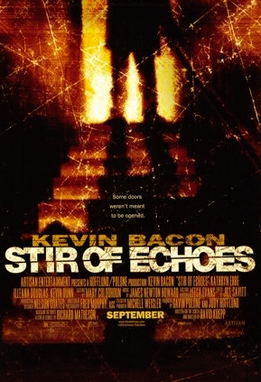
One of the things that must be frustrating about making movies is that so much competition exists.  Even when you hit on a great idea, such as using a Richard Matheson novel for a story basis, others might be producing something similar.  This isn’t unique to movies, of course.  Some of us have had the experience while writing books.  For those of us who watch movies online, rather than in theaters, the timing differential can still warp perspectives.  I’d not heard of Stir of Echoes until I stumbled onto a website that lists horror movies that have a little something extra.  While watching it I couldn’t help but think of The Sixth Sense, which I also saw at home, but quite a few years earlier than Stir of Echoes.  The acting in the latter is quite good.  The haunted kid pulls this off effectively.  And Kevin Bacon and Kathryn Erbe do a great job as parents (actor-wise).  Spoilers follow.

If you’ve intuited that the child sees dead people, you’re not far off.  It’s actually only one dead person and it’s not a Shyamalanian counsellor.  But the spooky part is his dad begins to see them too, after he’s been hypnotized by his sister-in-law, who’s an amateur.  At its heart the story follows the traditional trope of the undiscovered murder.  It does a good job of hiding the perpetrators until near the end.  The build-up is good also, with Bacon portraying Roy Neary-like obsession (interestingly, they’re in similar professions) quite well.  

The scary part, for me, was the sense that you’re not in control of your own mind.  There’s perhaps just a little too much possibility here.  We tend to think we own our minds, but what if they’re really just on loan?  I remember reading, as a high schooler, that religious people are difficult to hypnotize.  Hypnosis is still not well understood.  The larger fish in the pond is consciousness itself, which we really can’t even define.  We do know that memories are altered with time, and we can demonstrate this to ourselves by rewatching an old movie and seeing what we got wrong.  I suspect that’s why Stir of Echoes is so effective as a horror film—taking us into the realm of mind exposes us to so much that we really don’t understand.  And since ghosts seem to be pretty believable, well, the combination works.  Stir of Echoes is unsettling and a cut above much of what’s available for free streaming.  So if you’re in the mood for a ghost story, this might just fit the bill.