The Young and the Headless

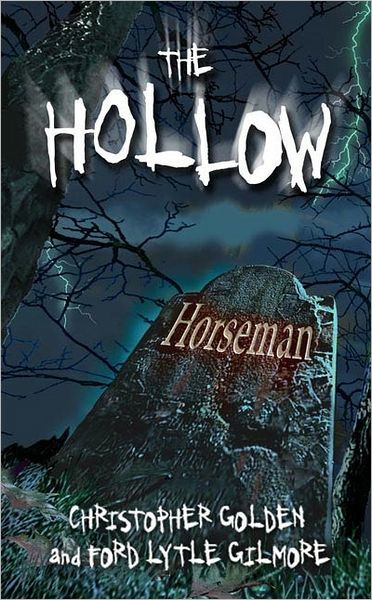
Young adult literature is sometimes fun to read as an adult.  In addition to going swiftly, compared to much “adult” literary literature, it has a way of evoking what life was like when we were younger.  Or at least it can.  Sticking with my Sleepy Hollow kick, I read the first volume of the series “The Hollow” (later “Sleepy Hollow High”) by Christoper Golden and Ford Lytle Gilmore.  This volume, Horseman, posits the return of the headless horseman to Sleepy Hollow in the modern day, triggered by the return of some of Ichabod Crane’s unknowing descendants.  The story follows brother and sister team Shane and Aimee Lancaster, who’ve just moved to Sleepy Hollow from Boston.  Although full of unexplained happenings, the book conjures the emotional turmoil of teenage years well.

While I normally try to read within my usual age level, the occasional foray into tween, young adult, and now, new adult lit is a fun escape.  One of the mysteries of aging—and I certainly didn’t think of this myself as a young person interacting with my elders—is that you remember what it was like to be at the various stages of life you’ve passed.  When you’re young you’re discovering things for the first time and there’s a revelatory aspect to them.  I can’t make universal claims, but in my experience life just gets more complicated the longer you live.  We yearn for the simplicity of younger times when, for example, you just paid the rent, went to work, fell in love, and did your own taxes.  As an adult you find all of these things hide complexities that often hide even more complexities within themselves.  Why not throw caution to the wind and spend a weekend reading a young adult novel?

I’m undecided about reading the rest of the series.  This story quickly drew me in, but the other volumes are now published only in ebook format.  And I suppose I should do some more serious adult reading as well.  Actually, I’ve been plugging away at a novel written for adults by an author my age, but it’s long and, well, involved.  Kinda like life itself, I suppose.  One of the things I’ve noticed about modern engagements with “The Legend of Sleepy Hollow” is that they tend to skew towards a younger crowd.  Maybe I can recapture a bit of my own youth that way.  I’ve known the story since my youngest years but have only recently really began to pay attention to it as, well, I guess I have to admit, an adult.

Expiration Date

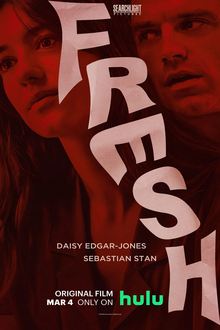
One of the perils of trying to understand others—something that is vitally necessary for a humane and civil world—is facing difficult truths.  Sometimes horror makes you do that.  I’ve recently been trying to watch horror directed by women, as this gives another perspective on what’s scary.  Directed by Mimi Cave and written by Lauryn Kahn, Fresh is very disturbing.  Noa is a young professional who’s not having much luck dating.  He best friend Mollie, who is African American, is the voice of reason in the film.  Noa finds internet dating services inadequate, matching her up with losers, but then she meets a handsome, funny guy in the grocery store.  She agrees to a date and they hit it off.  So far, so good.  Then he takes her to his place and abducts her.  He explains that he’s a supplier of human meat for an ultra-wealthy circle and she is to be consumed.

I won’t say much more about the plot since you may want to disturb yourself some day, but I will say that the movie reinforces something I get from reading Carmen Maria Machado:  women have to deal with men’s assumptions about their bodies.  Even the institution of marriage is all about ownership; men don’t want to pay (the key word) for supporting someone else’s child.  The nuclear family is intended to keep that at a minimum.  Just a glimpse at social standards reveals that men are held less accountable for cheating than women are, largely because there’s never a question of who someone’s mother is.  Noa’s captor is charming and nice.  He’s also a (as later revealed) Satanic psychopath.  He’s also also married, with children.

The film is disturbing on so many levels as it reflects on how a man feels he has the right, literally, to take women’s bodies.  Habeas corpus indeed.  It feels like being invited to dinner at Hannibal Lector’s house.  The religion element—for there often is one—is only revealed in two short glimpses.  One is the plate of one of the cannibals which has a Satanic symbol printed on it, and the other is a mid-credit shot of the butcher’s customers where the Satanic symbol reappears.  This theme isn’t really explored in the movie, but it is equated with “the one percent of the one percent.”  The clients are those who can afford anything and who crave the one thing they can’t have.  This is a movie to keep you up at night but it’s also one with a very strong social commentary.  That commentary is as disturbing as the entire premise of the film.


Life Lessons

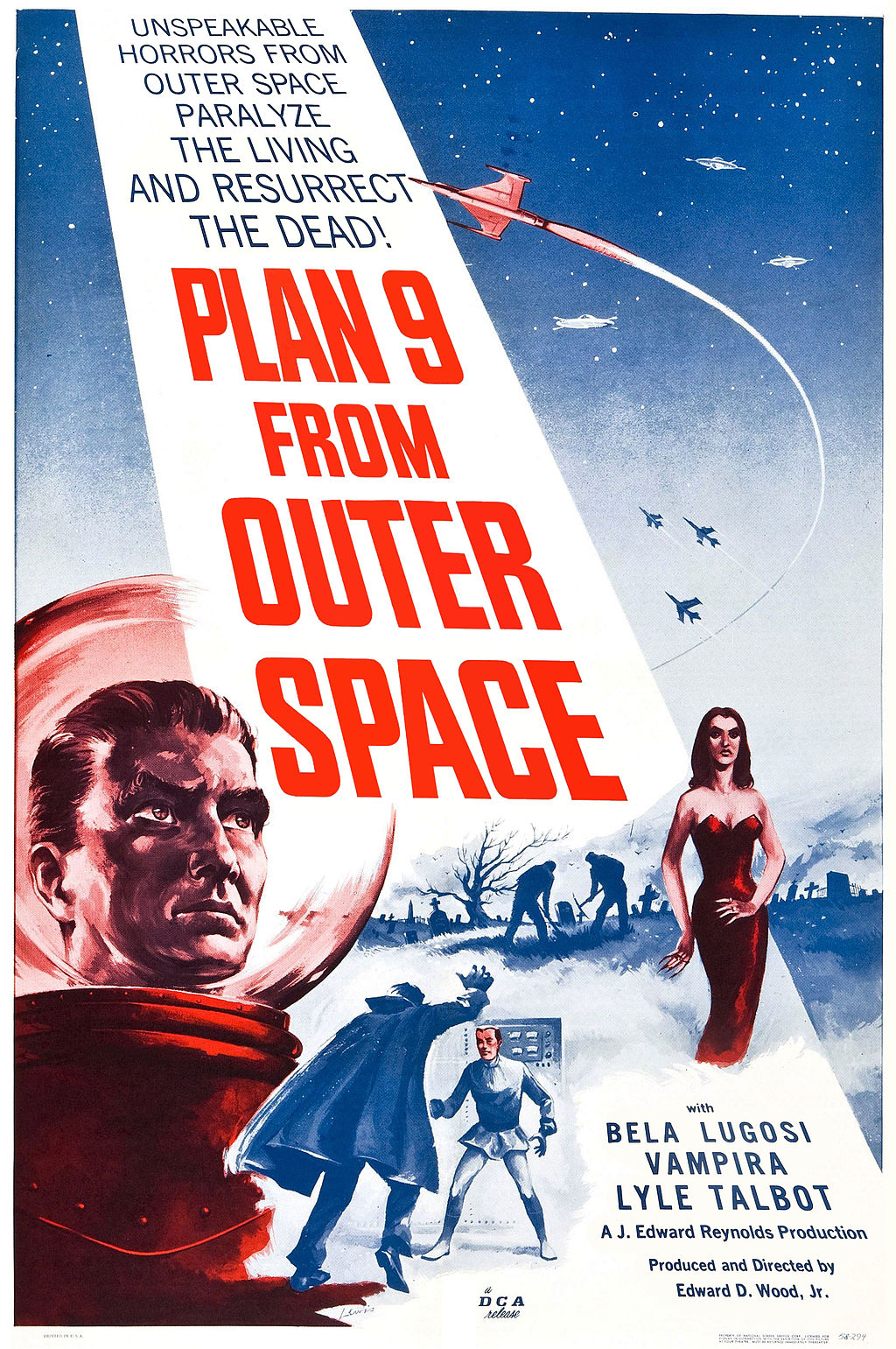
Most of us know a bad movie when we see it.  Some of us walk away.  The rest of us linger and wonder.  Some weeks ago now I watched Ed Wood’s Plan 9 from Outer Space.  “So bad that it’s good” is the mantra often chanted about it.  I lingered because of Ed Wood.  While it’s somewhat fictionalized, Tim Burton’s Ed Wood is itself an odd movie.  It performed poorly for a Burton film starring Johnny Depp.  Critically, however, it was praised and it eventually became a cult film about a cult film.  Or films.  Mainly, I suspect, because Ed Wood is such an interesting figure.  He was a man who wanted to make movies—knew he was meant to make movies—but never got the backing he needed to make them.  He did it anyhow.

Ed Wood starts with Glen or Glenda.  Written and directed by Wood, who also starred in it, this movie was about cross-dressing.  In real life Wood’s mother used to dress him up as a girl and although he was heterosexual, Wood became a transvestite.  This was, of course, in the days when such a thing was scandalous.  Making all of this surreal, and poignant, Wood had befriended an unemployable Bela Lugosi—known to be a drug addict—and had him star as God in the movie.  The next film Ed Wood focuses on is Bride of the Monster.  Again starring Lugosi, this one has a giant octopus in it and heads toward horror territory.  The film about a filmmaker ends with his notorious Plan 9 from Outer Space, the last film in which Lugosi appears and which was financed by a Baptist church.

Ed Wood ends before Wood becomes a poverty-stricken alcoholic and dies in his fifties.  There is a poignancy both to the stories of Wood and Lugosi that also applies to many people in life.  People who know, without a doubt, what they should be doing with their time on earth but who are kept from it by those, who like Lugosi’s God, pull the strings.  We all have limited time and as we grow older we realize that spending it doing a job that’s a drudgery is really a kind of crime.  Would Ed Wood have become a famous director if he’d been backed by the money to produce the movies he wanted to?  We have no way of knowing.  What we do have, however, is a tribute by a talented film maker to a fallen colleague, and that, it seems is the best part of human nature.


More Scary Stories

There might be a disconnect.  As a child the stories I had read to me were either Bible stories (Archway Books) or wholesome Easy Readers.  I think that was pretty typical in the sixties.  We didn’t have a lot of money but an abundance of respect for the Bible, so the former by far predominated in my literary experience.  As any kid will do, I thought this was normal.  There was a stir in the kids’ world two decades later, in the eighties, when Alvin Schwartz began compiling scary folklore and retelling it for children.  His Scary Stories to Tell in the Dark series has been challenged or banned from the start.  Most parents don’t want to admit that their kids like scary tales.  We didn’t direct our daughter’s reading much when she was old enough to pick Scholastic Books, and one time she wanted Scary Stories.

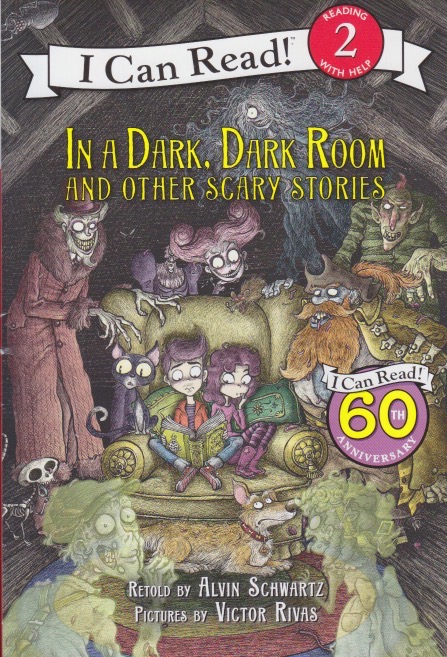
We were a bit shocked, not by that, but when a relative got us started on Roald Dahl.  His somewhat macabre children’s books were fine.  One of them, however—and I can’t recall the title—it’s packed away in the attic—was stories for older kids and it was so gruesome that I had difficulty making it through.  Not for me, but thinking about it from the perspective of a young child.  I recently had cause to read In a Dark, Dark Room and Other Scary Stories, again by Schwartz.  The copy I read wasn’t an original edition, but had illustrations, in color, by Victor Rivas.  I tried to think how scary such tales must be for kids who don’t know them already.  These illustrations were humorous, which helps, and tended toward Victorian or Edwardian style. Encountering such ideas for the first time, however, could leave an impression.

We tend to find olden times scarier than our own, it seems.  Partially this is correct, I suppose.  Science has helped us delay the inevitable by ameliorating many things that were formerly deadly.  At the same time it has helped those interested in such things to develop even deadlier weapons.  Mass shootings have become more common, to be mingled with the quotidian horrors of daily life.  Ghost stories hardly seem to be the most scary thing anymore.  I don’t know the answer to when kids are psychologically ready for scary things.  I still recall our neighbor—she was a few years older than we were—telling my brothers and me scary “true” stories that happened in the woods just across the street.  Those were in the “innocent” days before printed ghost stories for kids, but they gave me nightmares even so.  It was, however, the machinations of “Bible believers” that led me back to horror as an adult.  It’s kind of a disconnect.


Pumpkin Season

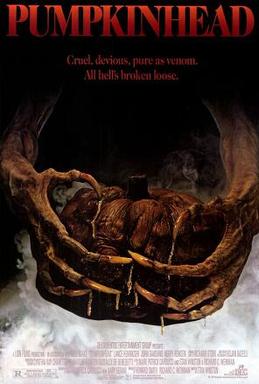
A creature feature with a moral.  Not a bad way to think through ethical dilemmas.  You see, we don’t have a lot of extra money lying around, so when I need a pick-me-up I try to find something free to watch.  Well, free because I subscripted to Amazon Prime years and years ago for the free shipping and now it involves “free to me” streaming on select titles.  Often I learn about movies from browsing and that’s how I came across Pumpkinhead.  I’ve learned my lesson about just clicking through without checking it out ahead of time.  It turns out the Pumpkinhead, apart from having major studio backing, was pretty favorably reviewed back in 1989.  My wife and I were in Edinburgh at the time, newly wed and trying to concentrate on doctorates.  I hadn’t been bumped back into horror yet.

In any case, what is this moral?  What is this movie?  Set in the unnamed rural south, the movie involves the accidental death of a good, honest man’s son.  Some city slickers, hot rodding on dirt bikes, accidentally run the boy down.  This good man visits the local witch, against the advice of the locals, and she raises a demon for him—the eponymous Pumpkinhead—to get revenge on the meddling kids.  The moral comes in where the witch warns him that such revenge comes at a terrible price, and it does.  The man and the avenging demon begin to merge and his desire for revenge leads to his own demise.

Religion plays a role in this film as well.  One of the locals, wanting to help the final girl and her boyfriend—the only ones left alive out of the six city folk—takes them to a ruined church, figuring that a demon won’t enter hallowed ground.  He’s not exactly right about that, but an extended shot of the religious imagery makes you think about the nature of revenge and what it means in a Christian context.  Besides being the first film role for Mayim Bialik (only 13 at the time), it also spun off two sequels.  Being a good student at the time, I was completely unaware of all of this.  I learned about the film while trying to stay awake one winter afternoon and trying not to spend any money to do so.  Not a great movie, it nevertheless does feature repentance and it explores the consequences of being driven by a desire to get back at others.  And the monster isn’t bad either.


Everything

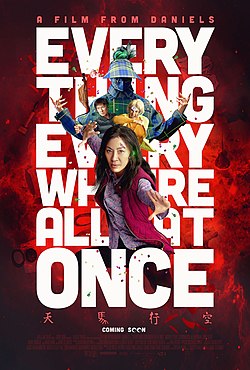
It’s been getting a lot of press, Everything Everywhere All at Once has.  It’s been winning awards and it demonstrates that absurdism isn’t dead.  Absurdism is an essential element of existentialism, the philosophical school with which I most closely identify.  I had no idea others found it so appealing.  This movie’s difficult to encapsulate—the summary on Wikipedia is actually not bad—but it has to do with human potential when living in a multiverse where every decision splits the ‘verse into new bubbles where your actions play out in all possible ways.  And, of course, it’s tax season.  There are clearly elements of The Matrix here, as well as Brazil.  And it’s distributed by A24.  The message is good, as the story plays out.  The images are impressive and confusing and will make you think.

From the time I left home I’ve looked for two main elements in movies—they should make me feel and make me think.  When they do both they are successful.  Everything Everywhere All at Once is successful.  It also reminded me of how healing existentialism can be, which is what drew me to it in the first place.  Life, or to point a finer point on it, consciousness, is absurd.  You can follow the same rules and get different results each time.  And you have to live with the consequences.  If you think about it too much it leads to despair.  I need, and it seems others do as well, to be reminded once in a while that absurdity is endemic in this universe.  How else can we explain Trump?  Existentialism breaks in on reality and I used to self-medicate with Nietzsche and Kafka and Camus.  Lately I’ve been using horror.

The thing about absurdity is that it’s funny.  We may not laugh about what the universe hands us as much as we should.  Existentialism also holds that darker element called dread.  Sometimes that comes to the foreground.  In my own life, I guess I thought getting a Ph.D. from a major, internationally renowned, research university might help.  I had forgotten the role absurdity plays in all of this.  Everything Everywhere All at Once shows the universe, or multiverse, is the ultimate trickster.  There are those, serious scientists, some of them, who believe that each decision does split off another universe and that all possibilities play out somewhere in the multiverse.  Even if that’s true, we’re stuck in this one.  It makes sense, therefore, to laugh at it once in a while.


Urban Tiger

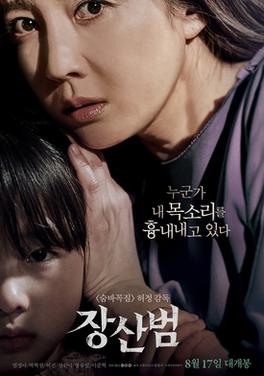
Many things are universal.  Ghosts, for example.  What ghosts do and how they behave, however, can be culturally specific.  The Jangsan Tiger is sort of a ghost and sort of a creature, and it has a religious backstory.  Of course, I’m referring to the Korean horror film, The Mimic.  I found it while looking for Mimic on Amazon Prime, but that definite article made this one free and it had received pretty good ratings.  Released by the careless trespass of a murderer, the Jangsan Tiger stalks a family that really just needs a break.  The parents, Hee-yeon and Min-ho, lost their son five years ago.  They move to Mt. Jang with their daughter (Joon-hee) and his mother, believing that the distance from Seoul will do them some good.  The Tiger, however, has other plans.

Apart from the well-timed jump-startles and stings (this movie “got” me more than once), the story is filled with pathos.  Parenting is probably the biggest emotional gamble a person can take.  The Jangsan Tiger imitates voices and convinces its victims that it is someone they love.  The children actors are particularly effective and their crying is difficult for any parent to watch.  This is horror that pulls at your heartstrings.  The family, as expected, begins to crumble under the pressure.  Religion comes into it because a shaman, ostracized from society, had summoned the Jangsan spirit in a kind of Faustian bargain.  He sacrificed his daughter and now that he’s released again, sacrifices others who are lured into the cave on Mt. Jang.

Interestingly enough, the actual mountain Jangsan—the movie is based on an urban legend—is in real life the site of an active mine field.  Somehow this moves the film from urban legend territory into that of parable.  Many of the scary stories we tell our children are intended to keep them safe from dangers they really can’t comprehend.  Adults plant minefields to make the land unsafe.  The real tiger prowling those lovely hills is one that walks on two legs.  And what that monster craves is human sacrifice.  Now, I can’t claim to understand the entire plot of the film.  Between subtitles and the lack of cultural experience, I’m merely a spectator to something that feels deeper than just a movie.  Those who spend time with horror know that it’s often sophisticated and intelligent.  It’s a genre that appeals to both the mind and to religion.  There’s a reason the shaman stands between worlds.


Gothic Days

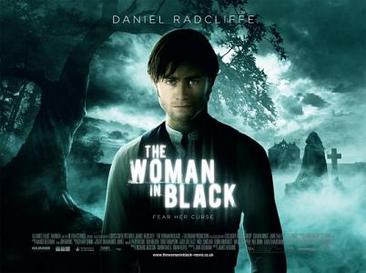
The tradition of telling ghost stories during the months of long darkness has evolved over time.  Since the time seems right, I watched a movie for which I read the book some years ago.  I recall that The Woman in Black is moody, and gothic.  What I don’t remember is how it ends.  More than one source—at least one from someone I know and one from a book—suggested I should see this movie, and I’m glad I did.  It’s a haunted house movie, set in a haunted village and the production values (unlike some movies I’ve recently watched) are quite high.  This film was a reboot in a couple of ways; there was an earlier film version, and it was also a new Hammer production.  In the latter capacity it broke records for Hammer box office earnings.

You see, Hammer, in its first incarnation, struggled for any kind of respectability.  The company almost single-handedly kept horror movies alive while US studios moved more toward sci-fi-themed projects, before the rebirth of modern horror.  Fans knew to go to Hammer for their monsters, but society folks (and those who wish to be society folks) don’t find horror worth any attention.  From my amateur point-of-view, such movies give the viewer a lot to think about.  The problem, as with most underdogs, is that a few bad examples tend to get all the attention.  Life is scary.  That doesn’t mean we shouldn’t try to live it, but it does mean that we might learn something from other people’s mistakes.  Or we might find ourselves haunted.

The Woman in Black is set in Edwardian times.  (I often ponder why we still refer to historical eras by the British monarchs—Elizabeth, Victoria, Edward, etc.—in a world finally moving away from imperialism.  Still, it’s convenient.)  Perhaps not quite as evocative as the Victorian Era, but still moody enough.  Although there are some disturbing scenes, this is no slasher.  Like the novel it’s the tale of a vengeful ghost, wronged in life and out for revenge.  While the end of the movie isn’t the same as the novel (okay, so I looked it up!), it’s similar.  And perhaps it’s best considered a parable of parenting.  No amount of training can prepare you for it, and although it’s supremely rewarding, it’s also very scary.  Susan Hill, the novel’s author, lost a child and that sense of haunting pervades both book and movie.  Gothic is often about grieving, and perhaps about learning something from it.


Unfinished Business

Photo by Reid Naaykens on Unsplash

As a person who likes to finish what he starts, it’s pretty unusual for me to walk out of a movie.  When I say “walk out” I really mean “click away,” since streaming is how we watch movies these days.  Since I’ve been writing and publishing on horror movies and religion, I try to watch what I can without breaking the bank (which is pretty fragile these days with inflation and whatnot).  There have been, however, three movies, or television series converted to movies, that I have walked out in the last couple of months, all of them free.  I want credit for watching them, but sometimes I just can’t claim it.  The first one was for health reasons.  Amish Witches: The True Story of Holmes County is not a true story, but a television movie cashing in on current interest in isolationist religious movements.  I had to stop watching because the hand-held camera movement was making me extremely nauseous and time off work is too precious to waste being sick.  It wasn’t that good anyway.

Then some weeks later I started to watch Legends of Sleepy Hollow.  If you’re a regular reader you know that I’ve been on a Sleepy Hollow kick lately.  This series, about which the internet is mostly silent, is an Amazon Prime original.  It may be set in the upstate New York region around Tarrytown, but the vignettes I made it through had nothing to do with Sleepy Hollow and were thoroughly depressing rather than scary.  I decided this series, formatted somewhat like a movie, was something I just couldn’t finish.  I don’t have time for watching things that aren’t what they seem to be.

In addition to Sleepy Hollow, I’ve also been interested in holiday horror.  This is the theme of my forthcoming Wicker Man book, and I’d toyed with the idea of writing a book on the topic in general.  I knew there was a movie called Happy Horror Days, which I felt compelled to watch for any scrap of academic respectability.  (If a title tells you it’s directly on your topic, well, you investigate.)  I managed to make it to the Fourth of July before this truly execrable film just clearly became a waste of time.  The stories feel incomplete and the racist undertones (which may have been an attempt at social commentary) or that final episode left such a bad taste in my mouth that I had to walk away.  I’m not such a horror fan that I’ll watch just anything, but I don’t like to read spoilers before I watch movies.  It’s a dilemma, but to make good use of limited time I may start walking out more often.  Especially if it’s free.


Keys

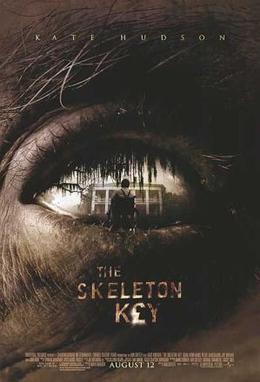
Do you know the difference between “Voodoo” and “hoodoo”?  Well, The Skeleton Key does.  This is a movie I watched at the recommendation of a friend.  I get a sense—perhaps based on stats, or maybe lack of engagement—that you folks that kindly read this blog generally don’t watch the same movies that I do.  Nevertheless, I hesitate to give away spoilers for films I think more people should see.  So we’ll explore hoodoo instead.  But first, I can give you the basic idea of the film, in case you’re one of the few who takes recommendations from this blog.  Caroline is a young hospice nurse who feels guilty about not being present when her father died.  She gets a job with a couple in a decrepit southern Louisiana mansion where he’s dying and she’s doing fine.  

Caroline isn’t from the south, however, and she senses that something’s not right.  A modern girl, she doesn’t believe in the supernatural, but she slowly becomes convinced that something strange is happening in the house.  That something turns out to be hoodoo.  Critics weren’t particularly kind to the film when it came out in 2005, but I found it moody and engaging.  There were some exciting scenes and I enjoy haunted house movies generally.  And this one uses a lot of religious imagery, even though hoodoo is better thought of a form of spirituality than a formal religion, like Vodou is.  The movie defines the difference as one between religion (Vodou) and magic (hoodoo).  There’s some truth in that, but scholars are inclined to class magic and religion together.

Hoodoo consists mainly of folk spirituality that involves some magical beliefs.  Like Vodou it’s of African origin, mixed with the cultures experienced by slaves in the new world.  Unlike Vodou, it doesn’t have any kind of formal structure.  The reason it’s treated with suspicion, in general, is because it’s of African origin and doesn’t fit well with northern European ideas of the way the world works.  Skeleton Key makes pretty heavy use of hoodoo as a plot point and it isn’t alone in using African traditions to inculcate horror.  The Believers, many years back, did a similar thing with brujería.  Although these folk traditions are generally kept separate from “religion,” they tread similar ground with similar aims.  And since they’re “foreign”—at least to button-down white Christianity—they’re treated with utmost suspicion.  I think Skeleton Key handles this well, and if you’re one of the few who takes recommendations on movies, I’d suggest it’s worth seeing.


Othering Offering

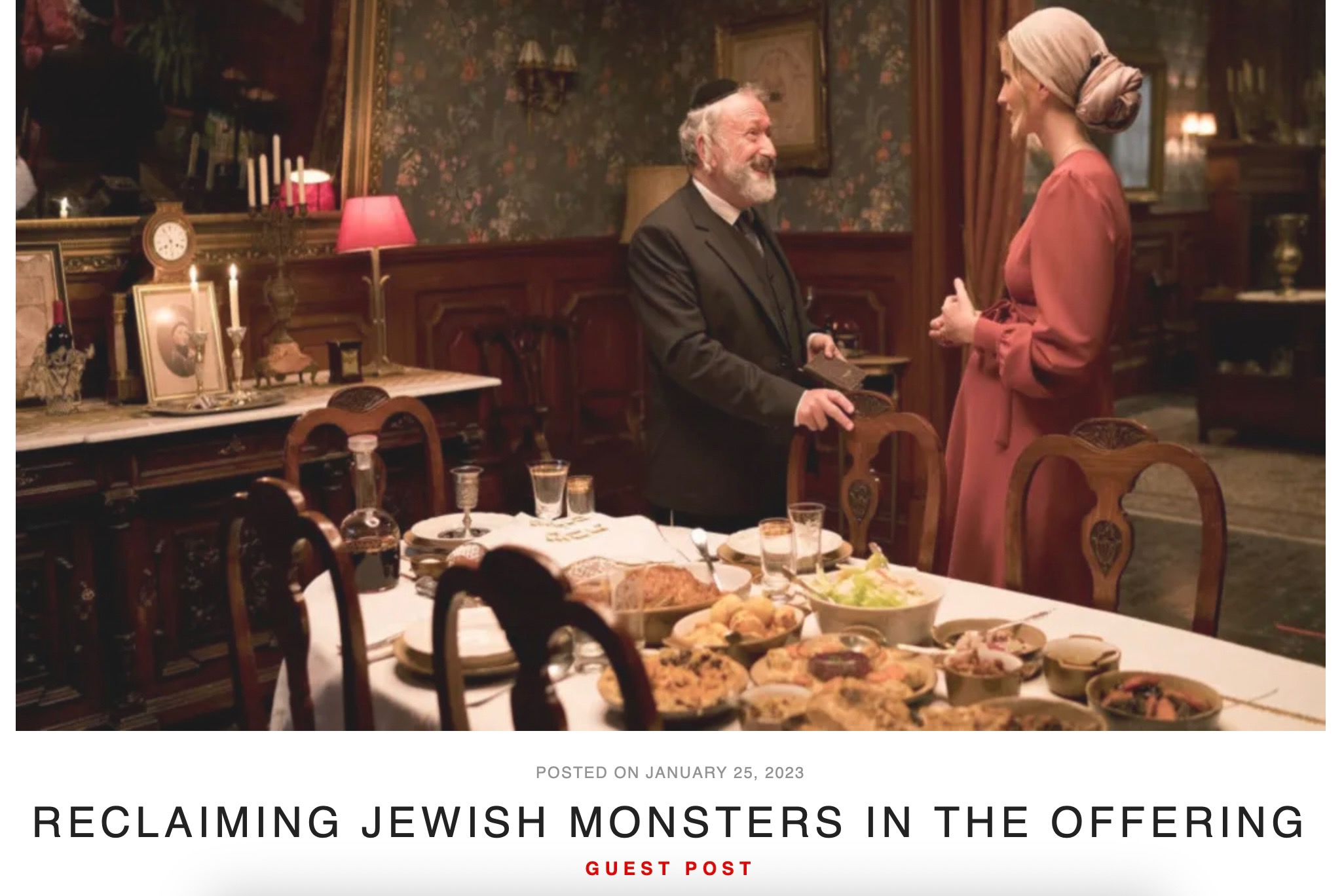
I get to feeling a bit anxious when nobody else publishes me for a while.  It’s a strange kind of validation, I suppose.  No matter my motivation, I knew as soon as I saw The Offering that I would have to write something about it for Horror Homeroom.  The article is now available here.  Horror, as one of the more intelligent genres, often has much to say about things such as religion and esoteric beliefs.  In the article I compare it to other recent Jewish horror such as The Possession, The Golem, and The Vigil.  All of them are worth watching.  Religion often addresses those things that scare us, whether secular or sacred.  Movies like these often make me ponder the sense of belonging that religious communities offer.  At least in the best of times.

These three movies each have their own posts on this blog, but the point of the Horror Homeroom article is to try to look at them together.  Judaism can be a particularly delicate topic.  Not only the Holocaust, but also subsequent political developments have led to dangerous situations for Jews in the real world.  Theirs is an old and rich culture, persecuted largely by Christians who ironically blame Jews for their own salvation.  And hate them for it.  Nevertheless Jewish culture and belief persist.  It’s telling that even when they invent a protector, such as the golem, they come to realize that it too will turn on them in the end.  Most horror movies, if they participate in religious worldviews, do so from a Christian point of view.

Some colleagues recently asked me to name some Protestant horror movies.  That’s a tricky question to answer because the American context is still largely Protestant as a whole.  And when you want to take on monsters and demons you generally call a priest.  Even movies like The Last Exorcism have Protestant clergy using Catholic crucifixes.  As I’ve stated elsewhere, Asian horror movies have also come into their own, often reflecting Buddhist or Hindu outlooks.  So we find religion and horror intermingling worldwide.  Movies are more than just entertainment.  They can be, and are, teaching tools.  We should pay attention to what goes on in their classrooms.  Not only can we learn about ourselves, we can also learn about those that we, or society, tend to “other.”  Like high school, there are a variety of classes you might take.  The day always starts, however, with homeroom.


No Plan

I suppose it’s debatable whether it can be considered a holiday treat to watch what is often called the worst movie ever made.  Still, I did so over the Christmas break.  Ed Wood’s Plan 9 from Outer Space is a frequent nominee for worst film, and Wood himself an enigma.  Disagreement over whether he really had such poor taste or whether he was hampered with budgets too small to achieve his goals seem to float around.  Was he misunderstood or simply clueless?  As many of us learn, breaking into big entertainment—whether it be film making, novel writing, or music performance—is a game of chance in which your chances are nearly nil.  So we might have some appreciation for those like Wood who, perhaps lacking talent, press on anyway.  Wood, who became an alcoholic, died in poverty, his work scorned.

Plan 9 from Outer Space is truly bad.  Everything from the stilted writing to the wooden acting is risible.  The idea that aliens are raising the dead to get world leaders to admit they’re there might give you a chuckle, but edit in previously shot footage of Bela Lugosi as a vampire, and confusion reigns.  Lugosi, who also died in poverty, was no longer even alive when the movie was released.  He and Wood had become friends.  Despite all its obstacles, the film has a good message.  The arrogance of humanity in assuming no higher beings could exist is still as much of a problem now as it was in the fifties.  And interestingly enough, Wood throws God into the dialogue as well.  There is even a Bible scene, if I ever get around to writing a sequel to Holy Horror.

At the end, the earthlings give a sigh of relief watching the flying saucer explode, even as they admit that the aliens are more intelligent and advanced than we are.  There’s almost a parable here that still holds true in the United States, at least.  We don’t like to listen to those who know more than we do, and after we defeat them we reflect on how they really were better equipped to handle things.  It may not have been any consolation to Wood as he died at the age of 54, but his films would go on to gain substantial cult followings.  I had been meaning to watch Plan 9 for many years, and now that I have my response is one of sympathy for a creative guy who simply didn’t have the means to do what he wanted to do.  And yet he did it anyway.  There’s almost a holiday feel to it.


Black Sabbath

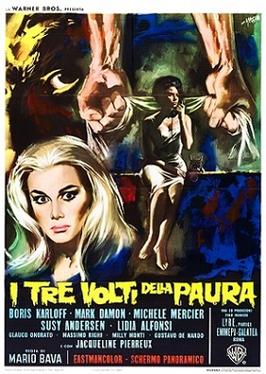
I used to be afraid of them.  The band Black Sabbath, I mean.  I heard the songs from Paranoid wafting from my older brother’s room (separated from mine by only a curtain) and was secretly intrigued.  But the name of the band—wasn’t that satanic?  To a young Fundamentalist there was much to fear in the world.  More than once I bought Alice Cooper’s Welcome to My Nightmare only to replace the copy I’d thrown away in evangelical terror.  I recently learned, however, the the band name Black Sabbath was taken from a 1963 horror movie.  And I also learned that the film was, in part, based on a Russian vampire story by Leo Tolstoy’s second cousin Alexei, titled The Family of the Vourdalak.  And that this story was published decades after Tolstoy’s flop, The Vampire.  That novel was inspired, in turn, by John Polidori’s The Vampyre.

Polidori’s work was inspired by a fragment by Lord Byron, which he contributed to the ghost stories putatively told among friends a stormy night in Geneva that also led to Mary Shelley’s Frankenstein.  Connections such as this are immensely satisfying to me.  Although I taught mainly biblical studies, my training was in the history of religions—it just happened to focus on ancient semitic examples.  Finding the history of an idea is one of the great pleasures of life.  But we’ve left Black Sabbath hanging, haven’t we?  The band realized something that Cooper would run with, namely, horror themed songs and metal go naturally together.  Such dark things led evangelicals to condemn the whole enterprise, claiming the band name was satanically inspired.  (Michael Jackson, raised as a Jehovah’s Witness, was famously fond of horror, although Thriller is perhaps the least scary horror-inspired album ever.)

I’d never seen Black Sabbath before, so now I had to watch it.  Of course, there’s nothing satanic about it.  An Italian, French, American collaboration, it’s a set of three stories bound together by Boris Karloff’s narration, and it’s all in Italian.  One story is about a woman double-crossed but saved by an estranged friend.  The second, the one featuring Karloff, is the one based on Alexei Tolstoy’s Russian vampire tale.  The third is about a poor woman who steals from a dead patron and is haunted until the inevitable happens.  Not particularly scary, the film title was the inspiration for the band, not the content.  They were therefore labelled satanic because of a movie that has nothing to do with satanism.  The song “Black Sabbath” was actually inspired by Dennis Wheatley novels, which do, of course, deal with satanism.  The song itself isn’t satanic.  They decided to make songs like horror films in music.  And it all goes back to Lord Byron and the night near Geneva that inspired both Frankenstein and Dracula.


Truth and Belief

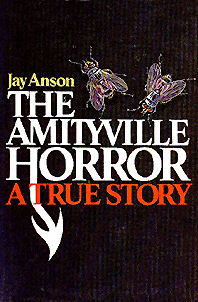
I met Claire Donner the way I meet most people these days.  Online.  I’m not sure how she found me in this dusty little corner of the internet, but she has one of the coolest jobs of all time: the New York City Director of Miskatonic.  If you don’t know Miskatonic, and if the title doesn’t at least give you a hint, you need to go back to your Lovecraft.  Its full title is Miskatonic Institute for Horror Studies.  They also have offices in London and Los Angeles.  Miskatonic offers a variety of one-session courses on horror and Claire had emailed me about the vexed idea of the nature of belief as it relates to horror movies.  Her course on the Amityville Horror—“‘Based on a True Story’: The Importance of Audience Faith in The Amityville Horror”—was excellent.  It left me in a thoughtful mood.

The way that I write books is that I have several projects going simultaneously.  Eventually one reaches critical mass and starts a chain reaction until it gets finished.  One of those projects that hasn’t yet attained critical mass is on Ed and Lorraine Warren.  It’s such an avocation that on a visit to Jim Thorpe on a family trip, I stopped into a shop where the owner proudly displayed articles about the Warrens in his window.  I asked him about the Warrens—whom he knew—but I wasn’t prepared for an interview (and I’m sure, neither was he).  Meanwhile, relatives waited patiently outside.  One thing I’m pretty certain about is that the Warrens sincerely believed in most of what they were doing.  There are nagging loose threads, however, that suggest they kept the financial angle firmly in mind.

To bring this back to Amityville, the course raises the question of the Warrens’ involvement.  They were among the earliest of “investigators” to take what was largely a hoax seriously.  They, however, didn’t get a cut in the profits.  I suspect this is what launched them into their promotional activities.  That book and movie combo brought in, and still brings in, the cash.  Who wouldn’t feel cheated?  But still, there’s belief.  For many of us belief requires some evidence, some tangible trace of truth.  These are the kinds of things explored in this fascinating course.  Horror and religion have been bedfellows for a very long time.  They often converge on this concept of belief.  There’s so much more to the Amityville Horror than meets the eye, even if we all know it was largely a hoax.


Sleepy Unhallow

The thing about classics is they’re open to interpretation.  And expansion.  Since taking an interest in Washington Irving’s “The Legend of Sleepy Hollow,” I’ve been reading modern novels based on it.  Several of these are self-published and although they show the distinct signs of that, they are nevertheless creative.  Human beings are a creative lot.  And the basic idea of Sleepy Hollow gives us a lot of material to develop.  Well, not really, I guess.  It’s a rather simple story of a love triangle in a dreamy small town where there’s widespread belief about ghosts, particularly a headless horseman.  You can nevertheless go in a lot of different directions from there.  Especially since we have two centuries since the story was published.

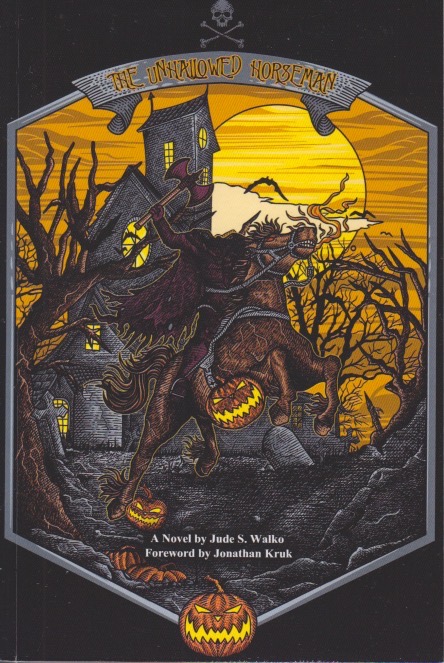
Filmmaker Jude S. Walko has written a horror treatment of the Sleepy Hollow tale in modern times.  The Unhallowed Horseman is graphic and violent and involves the gritty reality of being raised in a broken home.  This isn’t for the faint of heart.  One of the reasons, I expect, that Irving’s tale has survived is that he wrote it, according to the standards of the time, for a genteel readership.  There’s no sex and no violence.  It’s funny rather than really scary.  The characters are likable, if shallow.  There’s the frisson of a ghost but it’s never clear if he’s real or not.  In the end order is restored in the small village and the interloper is gone.  For these very reasons more recent readers are probably looking for something that fits more in our times.

Walko’s version has an emotionally scarred protagonist who is, according to modern practice, drugged into compliance.  He’s smitten by the cutest girl in the school, but the other guys try to take her at will.  The protagonist’s homelife is a shambles.  The sheriff is a descendent of Brom Bones, without any of his good qualities.  And due to a cosmic, astrological sort of event, the headless horseman rides again.  This horseman, however, is described as pure evil.  Almost in demonic terms.  On the night of the annual Halloween festivities this horseman gruesomely kills many of the characters off.  The high schoolers all drink, and the teenage boys have no morals.  At the end there’s a community left in mourning and no real future.  Nihilistic like some modern horror, this version won’t leave you smiling like Irving’s does.  Of course, if you write a classic it can be taken in new directions, and can be made to reflect the realities of new times.  Walko has his eyes open to the era in which we find ourselves.