The Panel

More than one person pointed it out to me, so I guess I must be getting a (small) reputation.  During one of my campus editorial visits I stopped into the center for Religion and American Culture at that venerable institution known as IUPUI—Indiana University Purdue University Indianapolis.  I was immediately impressed and, of course, since I’m no longer in academia I’ve realized that the impact of religion on culture is my real interest in it.  What was pointed out to me, however, was an episode of their “Religion and” series.  This one was held via Zoom and has been posted here, so if you, like me, work, or are just finding out about it, can still see it.  I encourage that behavior.  This particular panel was “Religion and Horror.”
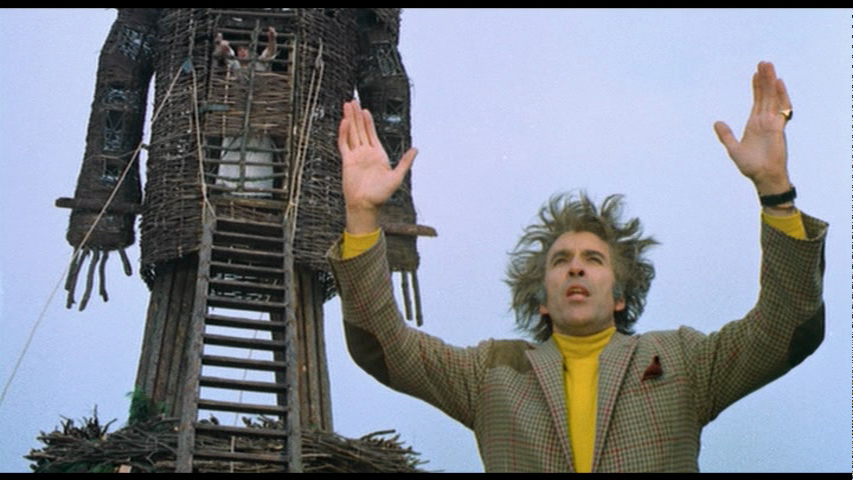
As the word “panel” indicates, it was a moderated group discussion.  The panelists were Douglas E. Cowan of the University of Waterloo, Erika Engstrom of the University of Kentucky School of Journalism and Media, and W. Scott Poole of the College of Charleston.  The moderator was Melissa Borja of the University of Michigan.  What a great way to spend an October afternoon!  It is also good to know that I’m not the only one who’s noticed that religion and horror are similar and even address similar needs.  I’ve read books by Cowan and Poole and have even met the former a couple of times.  No longer a university employee, I largely work in insolation, so it’s great to hear conversation about the kinds of things in my head once in a while.  A number of refrains became obvious during this all-too-brief discussion.

We’ve been conditioned to think of religion as inherently good.  In general, we’ve also been conditioned to think of horror as inherently bad.  As with most black-and-white categories, both of these things get some key points wrong.  Religions, like everything else, have histories.  Those who study those histories learn that much of what’s passed along to believers is intended to make them into repeat, paying customers.  Try teaching in a seminary for a few years and then attempt to dispute that.  And, the panelists pointed out, horror is also a product, intended to sell.  This explains the endless parade of, for example, Halloween movies.  Just when you think you’ve purchased the last one you’ll ever need to buy there’s another.  There was so much squeezed into that one hour that I was glad I was taking notes.  But then, it was a recording—you can see it too, and I urge you to do so.

Monster Gods

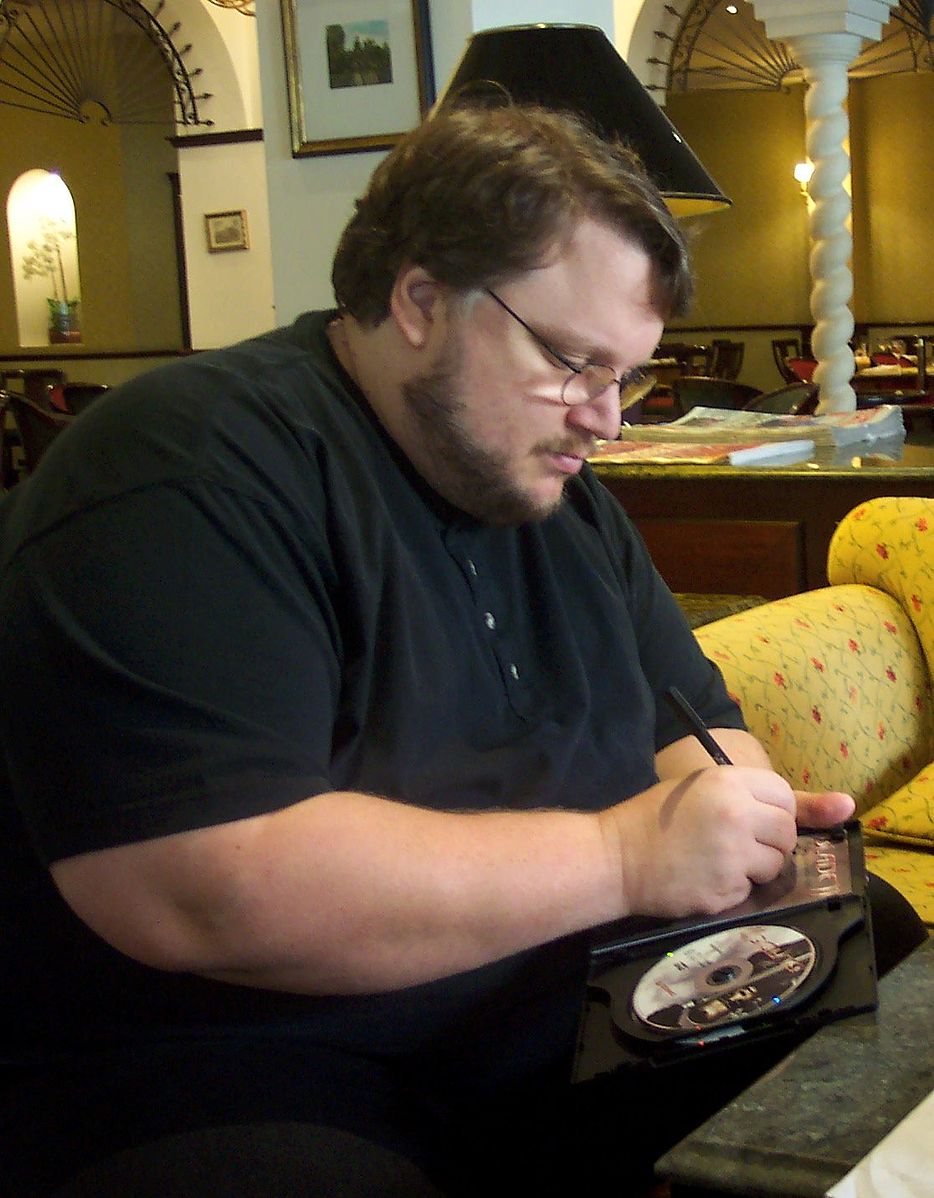
“I would go to Catholic Church and the saints made no sense.  But Frankenstein made sense, The Wolfman made sense, The Creature from the Black Lagoon made sense.  So I chose that as my religion.”  Famed writer/director Guillermo del Toro said these words.  They’re not exactly gospel but they do demonstrate the connection between religion and horror that is only now beginning to be explored.  Del Toro and I are of the same generation, and some of us in that time frame found meaning in the monsters we saw as kids.  They were coping techniques for living in an uncertain and difficult world.  A world with hellfire on Sundays and often hell for the rest of the week.  Fears of bullies and alcoholic fathers and lack of money.  Fears of an unknown infraction sending you to eternal torment, even if you didn’t know or mean it.

Image credit: Manuel Bartual, Creative Commons Attribution 2.0 Generic license, via Wikimedia Commons

I didn’t choose horror as my religion.  I didn’t grow up Catholic like del Toro either.  I haven’t seen all of his movies, but he does evince a kind of religious devotion to his monsters.  Pan’s Labyrinth was distinctly disturbing.  Pacific Rim was intense.  Crimson Peak is one it’s about time I watched again.  The Shape of Water offered a lovable monster.  Many of these films don’t follow standard horror tropes.  They’re thoughtful, emotive, and often wrenching.  These are, of course, traits shared in common with religion.  I suspect my own attempts to articulate this would benefit from conversation with someone like del Toro.  There’s no doubt that monsters give me the sense of Rudolf Otto’s mysterium tremendum et fascinans.

Religion and horror share a common ancestor.  Fear is an emotion that we apparently share with all sentient beings.  How we deal with it differs.  While a bunny will run away a rattlesnake will strike.  Horror is a way of dealing with fear.  So is religion.  We can’t avoid fear because, honestly, there’s much to be afraid of.  Many choose to believe their clergy, taught by people like me, and assume religion has all the answers.  Others, like del Toro, seek wisdom elsewhere.  When the credits roll at the end, you know it was all just a show.  When you walk out of the church, synagogue, or mosque, you know daily life awaits with its peaks and valleys.  Some may substitute one for the other, while others require the support of both.  And both, as odd as it may seem, can be addressed with conviction.  If you don’t believe me, just ask Guillermo del Toro.


No Words

I read something scary recently.  And no, it was not a horror story.  I work in publishing and we have to keep abreast of developments, so I’ve had a glimpse of the future.  Publishers are now starting to look toward the time when information will no longer be conveyed by the written word.  A picture’s worth a thousand of them, after all.  This new future will convey information by video, or whatever the replacement of video will be.  Perhaps some are looking forward to the Matrix direct downloading model.  Perhaps the computer will be able to simulate the pleasures of reading a book, of browsing in a bookstore, of writing with pen on paper.  Something about the process and discipline of reading has made us what we are.

Star Wars, as others have noted, is set in a world with no paper.  You won’t find a scrap blowing in the wind, even on Tatooine.  Nobody is shown reading.  Plenty of action, but no wizard behind his big book of spells, no princess writing down her inmost thoughts.  Make a recording and plug it into your R2-unit.  Perhaps this is heresy, but compare this to Star Trek.  The episode “Court Martial” has Cogley (Elisha Cook, before he applied to become Rosemary’s landlord) saying to Kirk, “Books, young man, books. Thousands of them. If time wasn’t so important, I’d show you something. My library. Thousands of books.”  We always thought even the future would have plenty of reading material.  Now we’re being told the technology is passé. 

The constant emphasis on “data-driven analysis”—mostly in an effort to get more money—seems to mistake the downloading of knowledge for the pleasure of reading.  They’re not the same.  I love movies, as any regular reader will know.  Perhaps ironically, I write books about them.  The thing is, I watch them largely to write about them.  Knowledge downloading is getting the cart before the horse.  I’ve read even nonfiction books wrapped in awe.  An author’s way with words, the phrasing, the craft, the artistry.  These are pleasures.  Sure, images can show an interpretation but there are those of us who will always want to read the book before we see the movie.  Can you get the actors’ faces out of your head if you do it the other way around?  There are those who celebrate this sterile future.  And there are those of us who won’t even go there if we don’t have a book in hand to read, just in case.

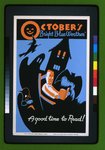
Image credit:Bender, Albert M., artist; Federal Art Project, sponsor. Public domain.


When Autumn Starts

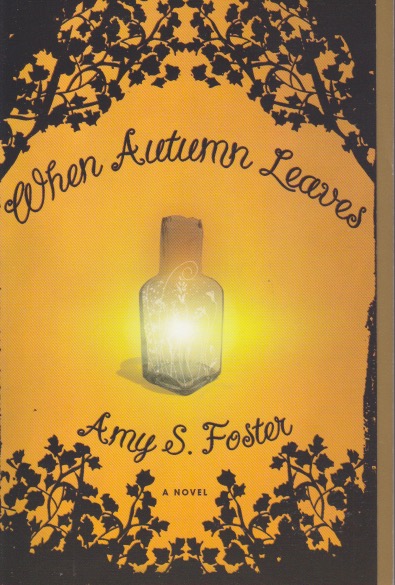
Some books catch my attention and I’m not sure why.  Knowing myself, the title When Autumn Leaves, invoking my favorite time of year with its intriguing syntax, probably did it.  I’m always on the lookout for books that capture the spirit of autumn.  Although she’s quite well known as a lyricist, Amy S. Foster’s name wasn’t familiar to me.  The cover looked autumnal and I knew it was about witches.  It came out quite a few years ago, so my recollection of why I’d marked it then had faded by the time I finally got to it.  The title is a play on both autumn and leaves.  The main character of the ensemble cast is Autumn and knowing that changes leaves from those on a tree to a verb of action.  I’ll try not to put any spoilers here since there’s plenty to say without giving away the ending.

Autumn is a good witch.  Well, the book doesn’t out and say so directly.  Being magical realism there’s some room for interpretation.  She’s the matriarch of Avening, an island city off the west coast.  Those drawn to Avening tend to have some kind of magical powers, whether or not they know of them.  The story unveils the various women coming to be aware of their special talents, but generally they’re unsure what to do with or about them.  Autumn is the one to help them.  She’s been in Avening as long as anyone can remember, but, as the novel opens, she learns it’s her time to leave (thus the title).

Before she can go, however, Autumn has to select a replacement.  This is what introduces us to the various characters in the story.  We hear of the magical powers of some of the thirteen in quite a bit of detail, and others more incidentally.  Many of them don’t know they have these powers.  They know there’s something special about Avening and that they were drawn there, but they don’t know why.  So it’s a tale of female discovery.  Some of the vignettes are difficult to read, dealing with serious subjects, but they reflect realities in women’s lives.  It’s not really an autumnal story, spinning as it does through the wheel of the year, beginning with the winter solstice and ending up at Samhain.  It doesn’t dwell on Halloween, however.  It’s much more a character-driven story.  It creates a wondering image of Avening and what might happen if women were in charge.  And in that respect it’s very compelling indeed.


Shatner’s Space

We constantly underestimate the power of fiction.  It’s difficult to break into getting fiction published.  It wasn’t always that way.  When the pulps were still a thing often it took a thimble of talent and a handful of persistence.  Publishers were looking for content and those with typewriters were clacking away as fast as they could.  Ding!  Carriage return.  These days it’s harder.  This came to mind in thinking about William Shatner’s trip to space and his subsequent reaction.  As several news outlets said in anticipation of Shatner’s new book, the experience made him feel profoundly sad and not a little cold.  So much empty space and we still haven’t figured out how to travel fast enough to reach our nearest neighbors.  We don’t even know if we’ll like them when we meet them.

Others, in defense of space exploration, were quick to counter Shatner.  He’s not a real astronaut, after all, having spent nine decades earth-bound.  Or so they said.  But I think I understand, as a fellow land-lubber, where he’s coming from.  We’ve only really got one chance on this planet, being the only creatures evolved enough to type, to capture our thoughts—our essence—in words that can be preserved.  And wildlife statistics are showing an alarming decrease in other animals since the 1970s.  If we’re all that’s left and we can do no better than to elect fascists, well, stand me with Captain Kirk.  We look to the skies and see, well, empty space.  And besides, we need to get home because it’s supper time.

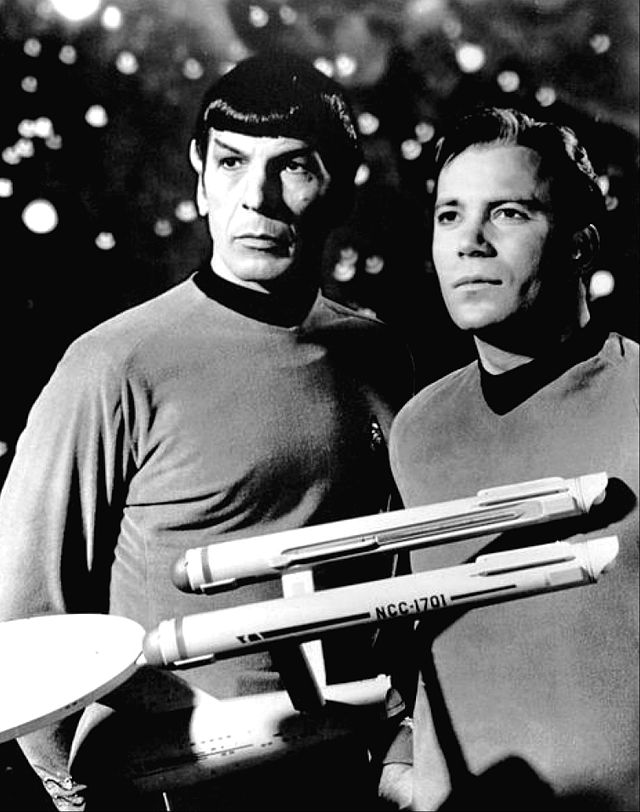
Image credit: NBC Television, public domain via Wikimedia Commons

The reason Shatner got a free ride to space was, of course, fiction.  Star Trek captured the imagination of my generation and those with actual science ability started to put that kind of future together.  Today we can talk to computers and they still mishear us, often with laughable results.  But if writers of fiction hadn’t been available the show would never have succeeded and what would a Canadian actor have had to do?  Maybe a crime drama or two?  And even those require writers.  It seems to me that we should be encouraging fiction writers with talent.  Believe me, I’ve read plenty who really haven’t got it (often in the self-published aisle) but I know firsthand how difficult it is to get fiction noticed.  It’s like, to borrow an image, being blasted off into a dark, cold, empty space and looking at the blue orb below and wanting to be home for supper.


Flavor of Childhood

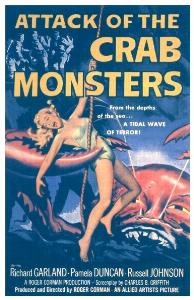
Giant, telepathic crabs whose molecular structure make them impervious to bullets, explosives, and fire, and that know how to use dynamite and who plan to take over the human world?  A group of scientists trapped on an irradiated Pacific island that is slowly sinking into the ocean?  This must be Attack of the Crab Monsters!  I was born during what is generally considered the dearth  period of the American horror industry.  Roger Corman, however, was working hard outside of the studio system to cater to that new demographic—teens with spending money.  Drive-in theaters were big and for about $100,000 you could shoot a double-feature and bring in ten times that much.  If you shoot quickly enough you can produce several of these in a year and not have to worry about the big studios.

It’s been fashionable to laugh Corman off, but he knows how to live the teenage dream.  Monster movies were part of the childhood of many of us during this “dearth.”  Yes, sophisticated frights were yet to come, but these creature features were full of creativity and escapism.  And so many unanswered questions.  How did those giant crabs chop all the radio wires to bits with those indelicate giant claws?  If they could smash through the outside wall of a house, why couldn’t they break through a light-weight door once inside?  And why, knowing that bullets and grenades can’t possibly hurt them, do scientists keep firing away?  What was that oil subplot all about anyway?  And how do you end a film with the lines “He gave his life,” followed up by “I know”?  This is stuff, like Strawberry Quik, I couldn’t get enough of as a kid.

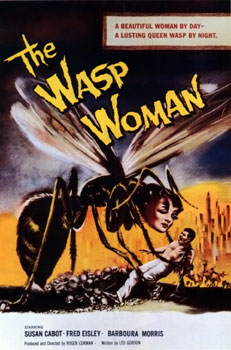
No, this wasn’t intelligent horror—it was often laughable—but it made an impression.  As an adult I can’t recall which of these movies I’ve seen before and I suspect it would take a lifetime to watch all the films Corman directed or produced.  Along with his contemporary indie director/producer William Castle, Corman may be inordinately responsible for my tastes as an adult.  I’ve grown more sophisticated (I hope) in some ways, but I’m at a pay grade where free on Amazon Prime often decides a weekend’s entertainment.  Besides, these movies struggle to top out an hour’s running time.  You can still get a lot done in a day and still have time for a monster crab, giant leech, or wasp woman.  With enough radiation, and imagination, anything can happen.


Stinging Days

It doesn’t take much to encourage wasps.  Even after a few unseasonably cold weeks in autumn, one warm day will bring them back, poking along the siding looking for a nesting place.  My most recent stinging incident occurred in October.  It’s fitting, then, I suppose, that to try to keep awake late one October weekend afternoon that I watched The Wasp Woman.  These creature features were what I grew up with, and this was a Roger Corman brief film from 1959.  In fact, it was so brief that eleven minutes had to be added to make it a stand-alone television release.  It was originally part of a theatrical double feature.  Finding out about added time explained why Dr. Zinthrop’s accent changed from the first eleven minutes to the rest of the film.

Women have the same right as men to be made into monsters, of course, but there’s a poignancy to this storyline.  Janice Starlin is the owner of a cosmetics company but profits have been declining since she’s showing signs of aging.  Her customers want a younger looking woman providing their beauty products.  As is to be expected for a movie from the fifties, it’s a pretty sexist storyline.  Still, through the plodding plot the viewer can’t help but to feel for Ms. Starlin.  So when Zinthrop shows up with an extract made from wasp royal jelly (a secretion that actually comes from honey bees) that reverses aging who can blame her for trying it?  Of course it turns her into a giant wasp woman.

These kinds of mad scientist movies with their inevitable results perhaps injected a sense of caution into those of us who grew up watching them.  They weren’t great works of art, but that doesn’t mean they didn’t have something to say.  What I heard, watching this one, was that women exploited for beauty products suffer from natural aging processes.  And any formula that reverses aging come with its own set of problems.  The only other scary part of the film was when employees have to get to the upper floors to prevent Starlin from killing people, they have to wait for the elevator.  Their sense of frustration, although funny, is nevertheless a reality of working in a high-rise.  These movies from the late fifties seem to me to be a cry for help.  The sexist, button-down, white shirt world isn’t all it’s advertised as being.  Mad scientists are needed to help us cope.  Or at least stay awake on a sleepy October weekend afternoon.


Kings and Gods

Kong has never been my favorite monster.  Perhaps because it is more of a sad story than a scary one, and in movies of gigantic animals, there always seem to be scaling problems.  The monsters are only reacting to the circumstances in which they find themselves and humans prove to be the real problem.  In ways nearly impossible to conceive, less than a century ago films like the original King Kong shocked and stunned audiences.  Humans are such visual creatures and no similar spectacle had been seen before.  I recently watched the 1976 reboot for the first time.  I’d seen clips, of course, and kids in junior high were talking about it back when it came out.  For me it was more like “if you know the story already, why see another attempt to tell it?”

Visually, there is a lot of nice cinematography in the film.  We’re all used to CGI so the animatronic Kong isn’t really believable, but nevertheless, our emotions map onto his with the prolonged shots of the gorilla’s facial expressions.  That part was effectively done.  Much of the rest of the movie left too many questions for belief to be suspended.  The heartlessness of corporations was too real and perhaps the scariest part of the movie.  Watching any movie with explosions on the twin towers brings back a kind of post-traumatic 9-11 reaction.  Prolonged, nearly Russian-length, death scenes personally don’t do it for me.

The reason I was watching, however, was for the religious aspect.  This is underplayed, but the islanders clearly worship Kong and consider him a god.  (I did wonder what he ate since no giant fruits were shown, but the immense snake tells us not all was revealed.)  In one reflective moment on the oil tanker back home, Jack Prescott says that they’ve taken the islanders’ god and their society will fall apart.  Western enterprising does have much blood of this kind on its hands.  And no matter how it’s dressed up King Kong always appears to be a racist story.  Some critics say the 1976 version isn’t horror, but instead a kind of bizarre love story.  While I don’t think much thought went into the implications—it seems the movie was a showcase of state-of-the-art animation for the period (otherwise the long scenes of Kong changing faces and blowing on Dwan make little sense)—that accidentally play into tropes of gods falling in love with women.  Maybe there’s a reason I haven’t watched any of the other reboots.


More Excuses

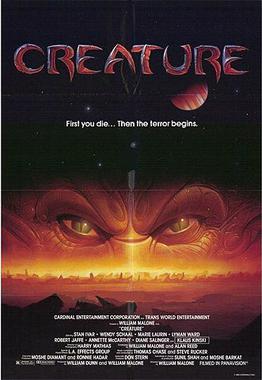
Perhaps it was my Shingrix-addled brain—but we all know that’s an excuse—I decided to watch Creature (1985) and Attack of the Giant Leeches (timeless) over the past couple of days.  The former was a decision made when not having the energy to read, I could still search Amazon Prime for “free to me.”  I was all set to start Attack of the Giant Leeches when I scrolled over Creature only to learn it would be free for only eight hours more.  I recalled, somewhere in the haze, that a movie called Creature was on my watch list, and since time was running out, I clicked play.  Clearly a knock-off of Alien, with even a Sigourney Weaver stand-in, it was one of the most badly written films I’d seen in a long time.  I was surprised to learn it’d had a theatrical release.

A crew stranded on Titan, one of Saturn’s moons, finds a creature—one that looks like a down market version of Ridley Scott’s nightmare—that feeds on unsuspecting astronauts.  Still, the surprises kept coming.  The impossibly pretty women and rugged men of the crew seemed unlikely.  And was that Klaus Kinski trying a move on the security officer that he wouldn’t have survived if he’d tried it on Sigourney?  And how was it even possible that this was nominated for the Best Horror Film of 1985 at the Saturn Awards?  Okay, granted 1985 wasn’t a banner year for horror, but Creature really doesn’t seem to hit the bill for “best of” category—but it was over 25 years after a classic.

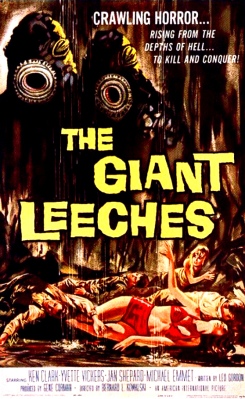
Attack of the Giant Leeches is obviously the lesser of the two movies, but it falls into the category of “so bad it’s good.”  The leeches are clearly people in rubber suits, and the caricatures of the hooch-swillin’ swamp-dwellin’ lazy ole homeboys is just too good to pass up.  And the fact that it’s just over an hour long is a bonus when you’re having trouble keeping your eyes open.  Those black-and-white sci-fi horror films of the fifties sure take me back to more innocent times (not the fifties, and the film isn’t all that innocent).  Given that both movies were free on Prime, and given that my head was fuzzy from my vaccine, I counted this as a worthwhile effort at staying awake.  We seem to have come to a more sophisticated era, in many regards.  Such films can’t compete with their modern-day counterparts and even streaming companies are producing their own these days.  There’s something to those older films, however, and maybe it’s helped along by a shot in the arm.


Opinion Piece

There comes a time, I hope, when the opinion of someone with over four-and-a-half decades of intensive reading experience, might matter.  I say this because I’m constantly struck by those whose opinions actually count, and how little they often are to be considered experts.  For example, I watch YouTubers young enough to be my children treated as experts.  A little probing sometimes shows that their qualifications are the ability to get people to look at them.  Click that like and share button.  If enough people do like and share, you can be an expert.  Or take opinion columns in newspapers.  I notice the headlines for some of these in the New York Times.  They are opinions only, and yet the prestige of one of the great American newspapers stands behind them.  These are opinions worth listening to.

The popularity contest is an old and venerable tradition.  I wasn’t popular in school and wasn’t voted “most likely to” anything.  Meanwhile, those chosen as the likely leaders and novelists and beauty-pageant stars generally don’t get too far along that road.  As Bruce Springsteen sagely noted, those “Glory Days” pretty much all end up back in high school.  But as Bowling for Soup observes, “High School Never Ends.”  We like to look at the confident, the well-adjusted, the narcissists.  Their sense of entitlement carries over into hoi polloi.  The quiet and self-reflective sometimes get noticed, particularly after they’re gone.  The Thomas Mertons and Thich Nhat Hanhs.  The household names, however, are those who loudly claim they should be heard.  Just because they think they should.

Another part of this complex equation is finding a subject that interests people.  In my case, I know lots of people are interested in horror, but I also know that there are many experts out there.  Ironically, I still have people ask me about ancient West Asian religions—this is a field where you need to be immersed to stay on top of what’s going on.  The books and articles you have to keep reading are dense and heavily footnoted.  The articles are located in journals not always easily found.  Don’t get me wrong—I still miss it.  Ironically, now that I can’t keep up people are starting to ask my opinions on it.  Perhaps the same will happen with horror and monsters, but long after I’m able to respond effectively.  Experts on social media learn to monetize their interests so they can spend full-time at it.  And that does, in fact, make them experts in the very specific field of being an expert.

Photo by Markus Winkler on Unsplash

O Viy

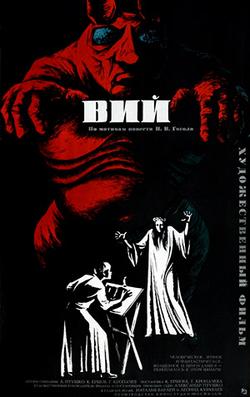
Viy is a most unusual movie.  I’m talking about the 1967 version, of course.  Filmed and produced in the USSR, it was, by many counts, the first Soviet horror film.  There’s been a resurgence of interest in it because of the study of folk horror—and it’s certainly an example of that.  Not really known for its plot, it’s noteworthy in its early special effects.  Since it’s a story that revolves around a monk, however, it participates in religion and horror as well.  Unusual for a Soviet-Era film.  Set in an undefined period in the past—before electricity, in any case, and perhaps the Middle Ages—a class of seminarians is released for vacation.  They’re a rowdy, unruly bunch, hardly the pious priests you see associated with orthodoxy.  When three of them get lost on their way home they end up spending the night at the farm of an old woman.

The woman comes after Khoma (one of the three) that night and bewitches him.  Riding him like a horse—and this is common witch lore—when she finally releases him, he beats the old woman severely.  But she has turned into a beautiful young woman.  Khoma returns to the seminary but is sent to say prayers over a dying young woman—one guess who it is.  Between getting drunk and trying to escape, Khoma seems to guess his fate.  At the compound of a wealthy merchant, the girl’s father, he learns she has died.  The father insists he keep vigil for three nights, praying over her corpse.  In the church scary things happen, not least her return to life.

On the third night all kinds of monsters appear after she calls on the god Viy.  Viy means something like “spirit of evil.”  Each night Khoma has drawn an effective magic circle around himself, which keeps the dead witch at bay.  The last night the monsters make it through, with predictable results.  There’s so much folklore at play here that it’s easy to see why the story by Nikolai Gogol suggested itself for a film.  It was poignant to watch because it’s set in Ukraine (Gogol was a Ukrainian writer).  Gogol had a tremendous influence on other writers, but isn’t as widely cited among western authors in contemporary times.  The film is fairly easily found online, and an updated version was released in 2014.  Even in the USSR, when horror emerged in the late sixties, it was doing so with religion, even before Rosemary’s Baby.


Fictional Truth

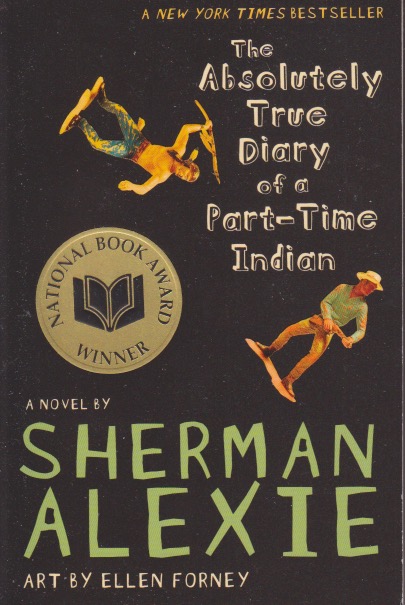
In honor of Banned Book Week I read Sherman Alexie’s The Absolutely True Diary of a Part-Time Indian.  Funny and poignant, it tells the story of Arnold Spirit Junior, a Spokane tribe boy on the reservation.  Born with a disability, he nevertheless overcomes adversity to become both a good student and excellent basketball player.  I suppose you’d classify this as young adult literature since the protagonist is a teen and many of the issues are those of kids in that age group.  Although it’s funny, and the illustrations underscore this, there’s a realism that account for various people wishing to ban it.  First of all, it reminds readers that white men put Indians on reservations and, despite our national guilt about this, we still refuse to do anything to try to lift them out of poverty.  And, like most boys his age, Junior likes to talk about sex once in a while.

Fiction can be the most nonfictional form of writing.  Junior describes the realities of reservation life.  Alcoholism, poverty, and violence are part of his everyday experience.  He attends far more funerals than his white counterparts.  This particular point gave me pause.  A New York Times article that appeared pointed out, statistically, that American Indians had much higher death rates from Covid than many other demographics.  It was like the genocidal introduction of European diseases during the “age of discovery.”  I suppose people would’ve grown curious and explored their world, regardless of the distorted Christian belief that they were to take it over.  At least we could’ve treated those we met with respect, as equals.

I think about the missionary mandate quite a lot.  Based on an undying literalism, it became an excuse for behaviors explicitly condemned by Scripture itself.  There’s a real danger when conviction comes with guns.  At least modern-day missionaries try to help those they’re attempting to convert with hospitals and medical care.  Still, that doesn’t help the American Indians.  They still struggle and our policies still ignore their problems.  Their plight stands in the way of capitalistic exploitation.  And when an Indian writes a fun book, honest about the experience of his people white critics begin to raise their voices to ban it.  How do we think the situation of the Indians will ever improve if we refuse to listen?  And what better time to get people to listen but when they’re young enough not to have been corrupted by our system of entrenched unfair treatment?


Novelization

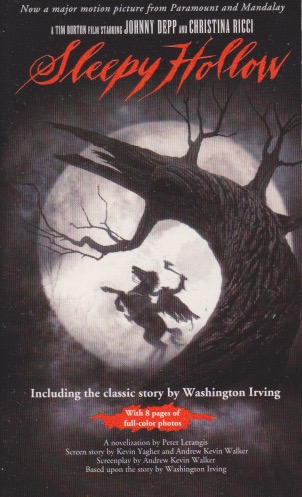
It must be both difficult and easy writing the novelization of a movie.  I suppose it depends on the movie as well.  Sleepy Hollow is a film based on a story already, but Washington Irving’s tale isn’t a novel and the movie was a collaboration between Irving’s original, re-envisioned by Kevin Yagher, Andrew Kevin Walker, and Tim Burton.  The novelization was done by Peter Lerangis and it, naturally enough, follows the movie.  As a novelizer, however, you need to try to make sense of some scenes where a film only implies what’s going on.  Now, in this case I’ve seen the movie many times and any deviations come across as “that’s not the way it goes” moments.  Still, it’s competently done.  It  even helped me make sense out of some things that had me puzzled since the start of the millennium.

In the “book or movie” debate I tend to think a book should be read first.  Sometimes it should go the other way around.  Novelizations are, of course, intended to increase the profits for a film.  You’ve got the box office take, and if there are advertising tie-ins or other merch, you can add to the haul.  A novelization can also help.  In this case, the movie has a somewhat complex plot with revenge and double-crossing, and so a novel helps to make all that clear.  However, when the novelist asks you to accept what a character is thinking you may have already come up with your own ideas on that point and any postmodernist would tell you that your opinion is just as valid as that of the writer.

Movie scripts tend to be a bit short for novels—if the movie isn’t based on a novel, of course—and sometimes extra material is needed.  This novelization includes the public domain story by Irving as well, even though the movie completely recasts all the characters into unfamiliar roles.  Brom, for example, is a minor part, whereas Katrina is a witch and Ichabod a constable from New York City.  All of that having been said, there really aren’t many surprises here.  I read this because I’m interested in the life of “The Legend of Sleepy Hollow.”  Its many retelling and re-envisionings.  The original story was published less than fifty years after American independence and has memories closer to the time.  It tells us something of what it was like in those early days.  And this novel both retells and redacts a movie already a couple decades old itself.


Who’s Calling?

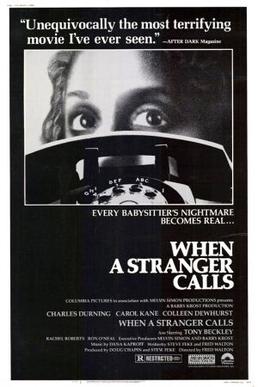
The first twenty minutes are impossibly scary.  I didn’t see When A Stranger Calls back in 1979, when it came out.  I prefer my monsters in non-human form, thank you.  But still, to be writing books on horror movies without ever seeing what is widely regarded as being the scariest opening ever?  Although the first twenty minutes were indeed scary, and extremely tense, for me the scariest part came after that because I didn’t have any idea what else would happen.  Of course I knew the initial calls were coming from inside the house.  That urban legend seems to have been around since I was a kid.  I wasn’t sure who survived, if anyone.  And psychopaths are scary in real life, let alone in fiction where they can break into locked houses pretty easily.

The story, as laid out, is better than most critics give it credit for being.  The only part that seemed difficult to believe (and don’t get me wrong—I love Charles Durning) was that an overweight John Clifford could do all that running (particularly up stairs).  It’s believable that the criminally insane can escape—Michael Myers seems to do it every couple of years—and even that they could blend in on the streets of any city.  I do have to agree with the critics that the writing isn’t great, but those who say it’s not scary enough, well, they’re made of sterner stuff than me.  Or perhaps they lack empathy, which is a scary thing in itself.

Curt Duncan, perhaps because he’s clearly killed at the end of the movie, never became the serial boogyman that the aforementioned Myers, or Jason Voorhees, or Freddy Kruger, or Hannibal Lecter became.  Although sequels were made, once you’ve seen that first twenty minutes of Stranger, you get the sense that they’re not going to be able to do it any better.  Snopes tells us the legend began in the sixties.  It was clearly a reaction to the proliferation of telephones and the potential to abuse such technology.  That’s an object lesson we still haven’t learned.  We now seem never to be more than inches away from a device at all times.  Except maybe when in the shower, but that’s a scary story for another time.  Although I won’t be going back to rewatch or analyze this one over and over, still I feel I somehow earned a stripe or bar for watching it.  And I now feel even more appreciative of caller ID.


Misremembered

There may be a name for it, but if there is I don’t know it.  Like the more well-known Mandela Effect, it’s a strange memory issue, only it affects the individual.  The Mandela Effect is a collective false memory, often involving the death of someone famous.  Many people—sometime very many—think, for example, that someone famous has died.  The death, or other false memory, is posted in the past and people who don’t know each other all agree that it happened, only it hasn’t.  Instead, what I’m talking about happens to me once in a while and perhaps it happens to others.  Most recently I was listening to The Proclaimers’ song “I’m Gonna Be,” also known as “500 Miles.”  It’s got a catchy chorus and I was thinking it was an oldie, so I looked it up.

First of all, I didn’t know The Proclaimers were a set of twins from Edinburgh.  Second of all, I didn’t know they were (only) my age.  Third of all, I was sure I knew and heard the song from when I was growing up, but it came out in 1988, the year my wife and I moved to Scotland.  I was just stunned by this.  I was sure I’d heard the song, for instance, when I was in college and that it was an oldie even then.  I didn’t and it wasn’t.  In fact, the very year I could’ve first heard it I was busy making plans for an international move, getting married, and starting a doctorate.  This kind of time distortion can be very disorienting, and it says something about memory.

1988

Our lives are the stories we tell about ourselves.  Memory, in an evolutionary way, serves some basic functions such as recalling which other people you can trust, where good food sources are, and where the saber-tooths tend to hang out.  Those with better memories survive longer and procreate more and over time the trait becomes common.  Memory isn’t intended to recall specific dates.  I often wonder if something like the Mandela Effect isn’t behind Trump’s unaccountable popularity.  A kind of memory that refuses to believe the song came out in 1988 although clearly it did.  Believing false memories is the stuff of drama, of course.  That drama can take in whole societies because we misremember that we knew all about propaganda because we learned that in high school, but now we fall for it.  Or it may be a lonely moment when a song comes to mind and we think we’ve known it far longer than we have.