Laugh Out

Is it safe to discuss this now, or are people going to laugh at me?  That’s the feeling that has attended any talk of UFOs until recent days.  Ironically, if the Ancient Astronaut people are right, we may’ve been visited from elsewhere ever since we’ve called this planet home.  In any case, now that UAPs are out of the bag, some are beginning to discuss how they might impact religion.  (Yes, “impact” can be a verb.)  Thus I came across a story titled “If UFOs are real, how would they impact our faith?” on Times NewsKingsport Times News, based in Tennessee, ran this as an opinion piece.  While not deeply probing, it did raise the question of how all the recent UFO news affects people’s religious outlooks.
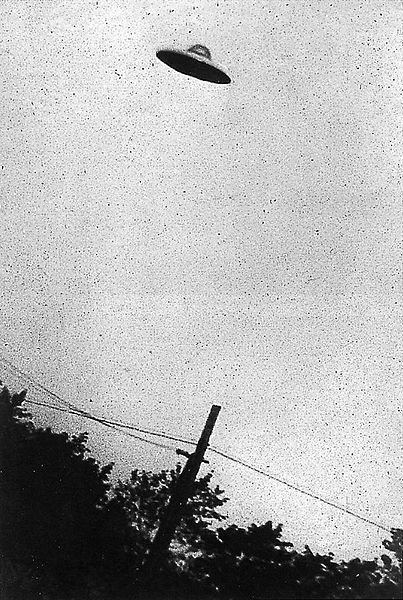
Image credit: George Stock, via Wikimedia Commons

As a country we’re both deeply religious and in denial about the fact that we’re deeply religious.  I’m convinced that this is behind the political woes we face: the educated have become more secular and religious literalism is considered laughable.  Yet it’s clearly there.  Ironically, UFOs were considered laughable until the US Navy admitted that they were real and had no idea what was going on.  Laughing at something we don’t understand is hardly ever a step towards enlightenment.  So the article concludes that even if aliens are here, things will be fine if we continue to go to church as normal.  Any extra-terrestrial visitors change nothing.  Strangely, one of my earliest memories is of attending a rural church service one evening where the program was on flying saucers and Christianity.  This was entirely in earnest, and nobody in the congregation was laughing.

Others interested in the topic have discussed religion and UFOs over the years, but perhaps the answer is yet another of those unknowns.  Religion is a remarkably adaptive phenomenon.  Scientists suggest it’s hardwired into our brains, even as those same brains give us evidence that some of those beliefs are misplaced.  What we can’t do is stop thinking about it.  As I watch politics continue to tear this country apart, I realize it’s not really politics we’re talking about after all.  It’s religion.  Meanwhile people are learning that the government has been keeping secrets about what’s up there in the heavens.  There are elected and appointed officials who’ve gone on the record saying they believe UFOs are demonic.  While that hardly seems like a scientific approach to something truly unknown, it is a religious one.  Only those who laugh rather than listen will find this news at all. 


Highgate Cemetery Again

Vampires can distort your thinking.  For example, whenever I hear of Highgate Cemetery in London, my mind immediately goes to the Highgate Vampire.  (There was somewhat of a comment kerfuffle on that topic right here on this blog some years back that resulted in several comments being removed.)  Highgate is the amazing final resting place of a remarkable number of famous people.  Still, when I visited a few years back I couldn’t get the vampire out of my mind.  (A friend of mine lives a short walk from the cemetery and that made the visit possible.)  This all came rushing back when I saw a book on Highgate Cemetery up for review on Reading Religion.  (And hey, Nightmares with the Bible has been available there for free, for any interested takers!)

Given my current vocation, writing actual book reviews is considered conflict of interest.  More’s the pity, since that’s how I often managed to get ahold of expensive books back in the day.  I’m pretty sure the book advertised (edited by Marie-Therese Mader, Alberto Saviello, and Baldassare Scolari) has nothing to do with the vampire, but I can think of it no other way.  Highgate is an architectural marvel for a necropolis.  It is spooky, inspiring, and impressive.  When something happens in a place, even if the facts are in dispute, it takes on an atmosphere that reflects such happenings.  At least that’s the way it feels for Highgate.  I’d heard about the vampire incident before visiting, but didn’t have the details.  Besides, you’re only permitted in on guided tours and the docents don’t point out such things.

Nevertheless, having been there I still have an interest in the cemetery itself.  It’s odd in a way.  Nobody I know personally is buried there.  No ancestors, as far as I know.  It’s the sense of place.  I’ve written about this many times before—there are numinous spaces in the world.  Science may deny it, but even scientists feel it.  Some places transport you somewhere beyond just the physical dimensions of where your body happens to be at the moment.  Cemeteries are filled with the memories of lives past.  They remind us that our time is limited, and that we too will cross that numinous threshold some day.  We all contribute.  Well, I can’t review the Highgate book and I can’t afford to buy it.  I nevertheless suspect that there’s nothing about the vampire in it.  I’m sure it’s my thinking that has been distorted by vampires.


Scary States

You can usually tell, if you look close, when I’m on the trail of a new project.  This blog ranges fairly widely at times, but when lots of posts concentrate in a single area it’s likely something much larger is going on behind the scenes.  I’ve been writing quite a bit about horror lately.  Quite apart from the Republican Party, scary things are on my mind often.  I recently came across an article on KillTheCableBill that made me feel less weird.  It’s a story covering a survey showing the favorite horror movie per state.  Now, I won’t be able to fit all fifty into my usual daily word limit (wouldn’t want to arouse the word count police), so I’ll just add a few words about some of the interesting connections I noticed.  As in my books, if you see something, say something, right?

It’s kind of embarrassing that I haven’t seen the movie most often mentioned: The Devil’s Backbone.  I have to admit falling behind on my Guillermo del Toro movies.  I was surprised at the number of states’ favorites that I hadn’t seen.  I’ve been thinking about this quite a bit lately: if you have a full-time job which doesn’t include movie watching, it can be pretty difficult to make the time.  A number of classics don’t show up on the list, while some states have somewhat obvious favorites: Massachusetts’ Jaws, Colorado’s The Shining (it was filmed there), New Mexico’s Alien (think about it), and Maine’s The Lighthouse all fit into state self image in some way.  Horror preferences, in other words, may reflect who we are.  

A number of states, more conservative ones mostly, favor older films.  The Abominable Dr. Phibes, Pennsylvania’s favorite, I haven’t seen.  Like most aspects of my home state it’s a mix of things.  It comes from the early seventies, just as modern horror was getting started, but not too far into it.  Studies like this end up giving me homework.  When I can find the time I have a lot of viewing to do to catch up with my fellow Americans. I was surprised that The Exorcist isn’t on anybody’s list of favorites, not even Washington, DC’s.  It may be that films that are too real are too scary for many people.  Another finding, as noted in the article, is that the southeast states like horror the least.  I can’t help but wonder if things would be better, politically, if more people there watched horror and pondered the implications.  


Screening the Dark

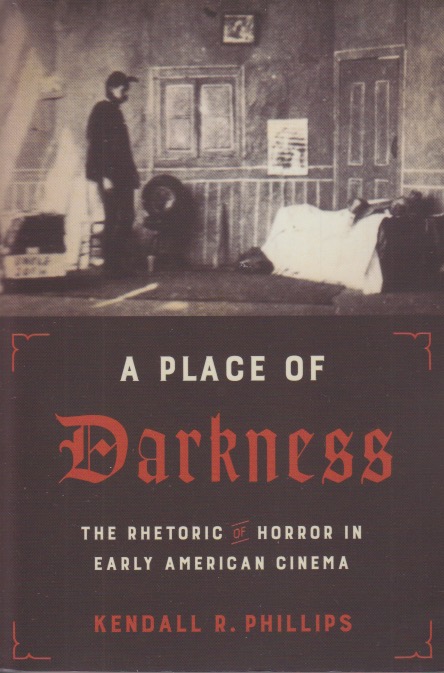
We’re spoiled.  The intensity of our media experiences makes it nearly impossible to imagine the truth of stories that viewers fainted at films such as Frankenstein even less than a century ago.  This change in outlook, this sense of being over-stimulated, occurred to me while reading Kendall R. Phillips’ excellent A Place of Darkness.  In keeping with the subtitle (The Rhetoric of Horror in Early American Cinema) Phillips primarily addresses pre-Dracula films, beginning in 1896 and demonstrates how horror themes emerged early and evolved along with society’s norms.  There is so much insight here that it’s difficult to know where to begin.  For me one of the big takeaways was how Americans at this stage were eager to appear non-superstitious and how they used that concern to keep the supernatural out of early ghost films.

Phillips isn’t afraid to address the role of religion in horror.  Other cultural historians note this as well, but many pass over it quickly, as if it’s an embarrassment.  Since my own humble books in the field of horror are based on the religious aspects of such movies, I’m always glad to find specialists who are willing to discuss that angle.  As America grew more and more enamored of the idea of rationalism, less and less energy was put into suggesting that anything supernatural might be at work.  Supernatural was considered foreign and cinema followed society’s lead.  This led to—and I want to add that this isn’t Phillips’ terminology—the Scooby-Doo Effect where every seeming monster had to be revealed as a hoax.  As a kid I watched Scooby-Doo in the vain hope that the mystery might turn out to be real.

Studies of horror films generally acknowledge that the first real member of that genre is Tod Browning’s Dracula of 1931.  Phillips demonstrates the valuable pre-history to that and does an excellent job of explaining why Dracula was such a singular movie.  Horror elements had been around from the beginning, but Browning’s film made no excuses—the vampire is real.  Audiences were shocked and thrilled by this and other studios didn’t quite know whether they should follow Universal’s Depression-Era success or not.  Mostly they decided not to.  The Universal monsters seem innocent enough today, but we go to theaters where the floors shake when heavy footsteps fall and the sound of a door creaking open comes from behind us.  Special effects make the horror seem real.  No excuse is made for religion and its monsters.  We’re spoiled. 


More Conjuring

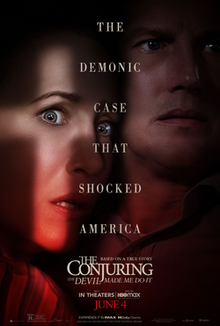
It was an almost surreal experience.  First of all, it’s been well over a year since I’ve been in a movie theater.  Secondly, I’ve never been to this particular theater before.  And in the third place, I’m absolutely alone in here.  I didn’t rent the theater out or anything, but I’ve been wanting to see The Conjuring: The Devil Made Me Do It since June 4.  Actually, since September when it’s initial release was delayed due to the pandemic.  Everyone else around here must’ve seen it already.   I knew the story of Arne Johnson and the Warrens, having found and read Gerald Brittle’s book, The Devil in Connecticut.  Loosely based on that event, this story focuses on the actual fact that this was the first time not guilty by reason of demonic possession was proffered in a US courtroom.  The story is a strange one and the movie, as movies do, makes it even stranger.

I’ve been anticipating The Conjuring: The Devil Made Me Do It, despite the title, for a few years now.  If you’re familiar with Nightmares with the Bible you’ll know that an entire chapter is devoted to The Conjuring franchise.  You may also know that it is the most lucrative horror series of all time, apart from Godzilla in its many, many iterations.  One of the points in Nightmares was to try to make sense of the demonic world presented in the Conjuring universe.  The franchise, for the most part, deals with actual case files from Ed and Lorraine Warren.  Some of the episodes are pure fiction, however, and the explanations given in the films are all, well, conjured for the big screen.  The movies call attention to the Warrens’ work, but in a way that requires an entire chapter to untangle.

My initial impression is that this isn’t the best movie in the series.  I can’t replicate my previous work here, and I’ve only seen the movie once, so there are details I certainly missed.  The demon isn’t named this time.  Indeed, the backstory proposed is drawn from the spin-off film Annabelle.  A fictional satanic group called Disciples of the Ram is posited as causing the trouble.  Like the demon behind Annabelle, they’ve placed a curse on the Glatzel family for some unknown reason.  During the opening exorcism Arne, in an Exorcist move, asks the demon to take him instead of the young David, the brother of his girlfriend.  The movie leaves the Warrens to find out who put the curse on the Glatzels in the first place, and break it.  With some time for pondering I’ll likely come back to this movie again.  I do have to say that the book was probably scarier, although sitting in a theater alone to watch a horror movie is not something I hope to make a habit of doing.


Electronic Ritual

Religion and horror go naturally together.  Perhaps that’s something I instinctively knew as a child, or perhaps it’s something only mature eyes see.  It’s clearly true, however.  While reading about The Wicker Man lately I felt compelled to read David Pinner’s 1967 novel Ritual, upon which the movie is loosely based.  In many cases it is better to read the book before seeing the film.  In other cases the movie ends up being the superior project.  I had to keep on reminding myself as I read the novel that it couldn’t be measured against a superior vision of what it could have been.  Having written seven novels myself (all unpublished) I hope that I have a sense of the process.  Unless you’re into the commercial side of things you don’t write for the movie potential—you have a story to share and this is your way of telling it.

The novel isn’t bad.  It’s written in a punchy style that I don’t really enjoy, but the story drew me in.  It almost wasn’t to be.  Like many novels of this era, print copies are difficult to find.  Those available on used book websites, or even on Amazon, probably because of rights agreements, sell for over $200.  That’s a bit much, considering that over two dollars per page is excessive for a novel.  I finally had to cave and get a Kindle version.  I don’t have a Kindle, but I have the software on my computer.  Reading it again reminded me of how superior a print book is to an electronic one.  Reading ebooks tends to be faster but like eating snack food, doesn’t really satisfy you.  

At one point the navigation function stopped.  Confused, I couldn’t go any further in the story and wondered if I’d reached a sudden but unexpected end.  With a physical book I could’ve paged ahead to find out.  In this case, with the controls frozen with that obdurate computer attitude, I had to find another way to make the illusion of reading continue.  I eventually got it going again after clicking here and there, but reminded myself again that ebooks should only be the last resort.  As for the story itself, it was okay.  I read it as a parable about intolerant religion.  I’m not sure it was intended that way, but it certainly seems like a reasonable interpretation.  It ends differently than the movie does, so I won’t put any spoilers here in case you decide to spring $200 to get a used copy.


Watching The Witch

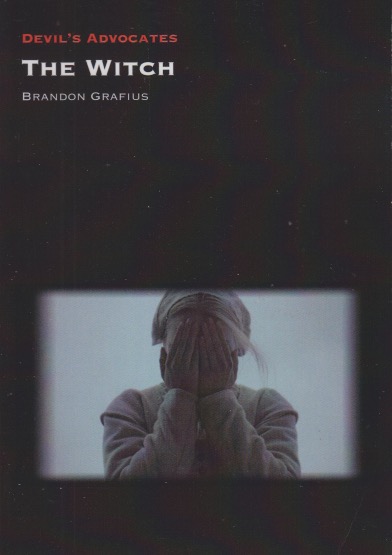
Good things often come in small packages.  I’ve read a couple of Brandon Grafius’ books before, and I’ve had The Witch on my reading list since I found out about it.  This is one of those books that benefits from knowing the raison d’être of the series of which it’s a part.  Devil’s Advocates is published by Auteur Publishing as a set of brief books on specific horror films.  If I didn’t have other financial obligations I could see myself purchasing the entire series.  Fortunately this volume was on a film I’ve seen (horror films have become so prolific that I can’t afford to see all of those I’d like either).  The Witch is a provocative movie, having gained critical acclaim as well as box office success.  It’s also a complex film.

Grafius ably takes us through the Puritan background that’s necessary to understand the social, and familial tensions that make this movie work.  Robert Eggers is a director known for his meticulous attention to period detail.  Even while weaving the fantastic into his stories, the plots are entirely believable.  Grafius has a solid grasp on how religion and horror interact.  That’s on full display here.  Looking at The Witch as an exploration of folk horror, he illustrates the importance of the landscape to the tale as well as how isolation sets a family off against one another.  The Puritan religion creates a monster, as it were.  Grafius doesn’t shy away from the misogyny behind the developing idea of the witch, either.  His explanations of—not excuses for—it are insightful.

Granted, horror films aren’t everyone’s cup of tea.  Or coffee.  As I sensed when writing Holy Horror, fans of the genre enjoy reading about it.  I often wonder why those of us who watch it do so.  In my case, in any way, it feels like a compulsion.  It’s a coping technique and perhaps an antidote to the headlines.  Horror can be an intensely creative and socially aware genre.  The best of it critiques the flaws of society.  As Grafius points out, Thomasin only wants to be a good girl.  The Puritan society into which she was born projects the image of the witch upon her.  Eggers gives us a real witch in the woods, of course.  Grafius explains how this becomes the aspiration of a young woman who’s only trying to do what’s right.  I have a feeling I’ll be going back to the Devil’s Advocates series again.


Come Together

When’s the last time a commercial made you cry?  Well, made you cry for joy?   A colleague sent me this commercial for chewing gum that left me nearly blubbering.  Go ahead and give it a watch, I’ll wait.  You see, I’m in the waiting period after my second vaccination (even scheduling that, it turned out, was difficult) and we’re waiting for everyone we know to reach that state where being together with strangers, unmasked, will become safe and normal again.  We’ve all been under enormous pressure for the past 14 months.  The absolutely directionless response of the Trump administration prolonged the agony in this particular country, and some places in the world are still having a difficult time of it, but there is a light.  There is a light.

Even we introverts are social creatures.  Like cats, we suffer in prolonged, enforced isolation.  We’ve been through difficult times.  It’s been the deepest hope of mine that we would come out of this pandemic better than we went into it.  The commercial, although clearly shot with humor, shows a more inclusive, completely accepting society.  As the couples separated for months reunite the only concern is that they have fresh breath.  It’s not what some other couple is doing.  It’s not who makes up that couple.  It’s simply that we are all ready to be back together instead of divided.  It’s about love, not hate.

Photo by Jamie Street on Unsplash

The most deadly poison of the Trump years was the normalization and acceptance of hatred.  We are already, and we have been from the beginning, a diverse people.  Like some mythological tower, we were divided because of fear.  There was nothing really to be afraid of down here.  Those at the top of the power structures (many of them sociopaths) want to protect their privilege.  It’s far easier to do that when the rest of the people are at one another’s throats.  Is English God’s own language?   Can people not be taught to pound swords into plowshares?  Perhaps when the time comes we’ll burst from these doors ready to accept those who are different as fully human.  Perhaps we’ll not judge them for who they love or how.  I don’t know why this commercial hit me so hard.  Perhaps it’s the Jim Steinman power ballad, perhaps it’s the quality of the acting, perhaps it’s the welling emotion that’s been suppressed alone in shadowy corners for over a year, but this particular commercial hit a chord.  And I don’t even chew gum, if that’s what it’s advertising.


Out There

Do you see them?

While recently re-watching an X-Files episode, I noticed something odd.  A quick online search revealed that I wasn’t the only one to notice this particular quirk, and, in fact, there had been considerable previous discussion on it.  What really struck me wasn’t the resolution of my question, but the fact that so much had already been written on a single episode of a single television program.  It’s one of the problems with trying to keep up with pop culture—there’s so much out there (besides just the truth!).  I’ve been exploring pop culture with the Bible for a number of years.  There’s plenty enough in the X-Files to warrant a larger project, but even without that, there’s just no way to keep up.  You could spend your life trying to unpack what several people wove into a single program.  Each episode took considerable thought, planning, and resources.  Once it was out there, reception history began.

So much of scholarship is analyzing what someone else has done.  Some monographs are more footnote than actual text.  What I’ve been suggesting regarding pop culture is that it is the way people understand religion.  The information people receive often comes from what modern authors and screenwriters compose.  A few X-Files later, during a religiously themed episode, something was implied to be in the Bible that’s not.  Again, I address this directly in Holy Horror, but every time I see an example, it catches me by surprise.  The average viewer doesn’t know to research what they’re being told and if it’s played straight, as it was in this episode, it becomes part of the truth that’s out there.

Those interested in how beliefs develop and change over time have recently begun to ask about the average person instead of “official religion.”  In antiquity this is difficult to gage since the average person was illiterate and poor.  Even in modern times with relatively high amounts of literacy and everyone writing on the internet, trying to understand religion is difficult.  Now it’s a matter of too much information.  Fan sites exist for popular media.  The canons of Harry Potter fandom alone would require a lifetime of study.  Limiting oneself to the X-Files might be a start.  My own publication history with pop culture and religion began with Sleepy Hollow.  It could have just as easily begun with the X-Files.  No matter where you choose to begin understanding religion, you’ve got your work cut out for you. And this post has just added to it.


Reviewing Nightmares

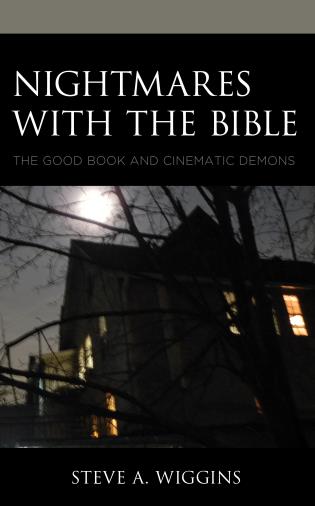
If you’ve wanted a copy of Nightmares with the Bible but the cost is a little dear, I might recommend you look on the Reading Religion website where, as of my last look, a free review copy is available.  The catch is you have to write a review.  This is, of course, first come, first served service.  I tried, more than once, to get Holy Horror listed on their website for review, so I’m glad to see one of my books finally made it.  The idea of the horror hermeneutic seems to be catching on.  Technically speaking, however, what I’m doing is more history of religions than hermeneutics.  History of religions, at least part of it, examines whence ideas arise.  Nightmares asks that question specifically about demons.

The specific focus on horror in religion is a fairly new field of study.  Biblical scholars—indeed, those who specialize in very old fields of study in general—must keep looking for new angles.  Unlike any other piece of literature, the Good Book has been the target of scholarly interest from the very beginning of the western academic tradition.  It’s easy to forget, when looking at many secular powerhouse schools, that the very idea of higher education arose from what is now the discipline of the lowest paid of academic posts.  Being so old, religious studies, known at the time as theology, is hardly a venerated field.  I tend to think it’ll come back.  If you look at what’s happening in politics in this country, it’s bound too.  And yes, there will be horror.

Horror studies in the field operates by recognizing that horror and religion share common ground.  Like religion, horror is considered backward and uninformed.  Neither is really true of either horror or religion, but perception becomes reality for most people.  Finding themselves in remedial class together religion and horror have begun to speak to one another.  Horror has quite a following, even if those who like it keep mostly quiet about it.  The same is true of religion.  Many of the most effective horror films bring religion directly into the mix, often making it the actual basis of the horror.  The first books that I know of that brought the two explicitly together only began appearing at the turn of the millennium.  At first there were very few.  Now an increasing number of tomes have begun to appear.  For better or worse, two of mine are in the mix.  If you’d like to review the most recent one, you might check out Reading Religion, and maybe spare a kind word or two for what are, after all, baby steps.


Learning from Nature

Netflix is one of those companies that has shown that new models for providing both television and movies are emerging.  Of course there are many subscription services, but Netflix rose to the top of the pile during this pandemic.  I don’t watch it much, since my time is generally otherwise spoken for, but I did have a chance to watch My Octopus Teacher, a documentary about Craig Foster’s relationship with an octopus.  The story unfolds over a year in which Foster comes to know, and to be recognized by, an octopus.  Quite apart from the Cthulhu references that may come to mind, octopuses are often skittish, highly intelligent mollusks.  Perhaps what made this movie such a surprise hit was just how emotionally attached viewers become to the cephalopod through Foster’s relationship with her.

Photo by Serena Repice Lentini on Unsplash

Almost immediately in the documentary, the viewer is struck by just how intelligent octopuses are.  The particular personality—and there is no other word for it—featured in this film is able to think and solve problems.  Not only that, but she is capable of forming a relationship with a human being she came to trust.  For many decades we’ve been taught that animals are like automatons, reacting with stock behaviors, because they can’t think.  Any claims to animal intelligence were chalked up as “anthropomorphism,” or inappropriately allowing animals to share in that coveted human trait of being “intelligent.”  The idea comes from the Bible and not even scientists would question it for the longest time.  Spending part of each day with one octopus, however, gives the lie to animals being subject to programmed behavior.  Like both Heisenberg and Schrödinger demonstrated, being involved in the scenario necessarily changes it. 

Animal intelligence has great implications for religion, of course.  This is perhaps why it is such a taboo subject.  What does it mean if animals can think and act intentionally?  Does it imply morality?  Foster implicitly raises that very question as he tries to decide whether to keep the pajama sharks away from the octopus he’s befriended.  Is he watching nature or has he become a part of it?  Our religions are often our ethical signposts.  In more recent years ethics has been shifted to the philosophy department since many people outwardly distrust the obviously mythical aspects of religious stories.  Nevertheless, the implications are clearly there.  Doesn’t it make a difference that our world is filled with other intelligent beings apart from those of us with opposable thumbs?  Watch My Octopus Teacher before deciding on an answer.


Dark and Light

I perhaps have nothing new to say about Ursula K. Le Guin’s The Left Hand of Darkness.  It was published before I was ten, and although I grew up reading science fiction I really didn’t read any of Le Guin’s work until this year.  It wasn’t intentional—in a small town you read what you can get your hands on, and cover art designed to attract young boys often worked on me.  Now having read it, I’m left in a reflective mood.  Everyone, of course, comments on the gender aspect of the novel.  I guess I’ll be forgiven for doing so as well.  After all, it is the most striking feature of the story.  As we know from our lives on earth, gender affects pretty much everything about our lives.  The biological imperative is strong.  It’s no less strong in Left Hand of Darkness, but it is different.

In case you’re like me and haven’t read it (until now), it’s not a spoiler to indicate that it is the story of a male envoy to a planet where the people (and only large mammals) are genderless until once a month they enter “kemmering” when one becomes temporarily male and another temporarily female.  The genders aren’t fixed, but fluid.  Since the kemmering stage comes only once a month, during that time it become an urgent need among those experiencing it.  The novel isn’t about only that, of course, but it is the noteworthy feature that relates to the religion and daily life of the inhabitants of the planet Winter.

It might seem that this idea of shifting genders is itself science fiction, but it is not.  There are species on earth that change change gender, bringing into question the statement taken for universal that “male and female he made them.”  While gender seems to be evolution’s solution of choice for reproduction, that’s not universal either.  In other words, nature provides us with multiple ways in which plants, animals, and things in-between, can continue their existence on this planet.  The writers of the Bible weren’t great observers of nature, nor were they scientifically minded.  At a glance it looks like animals all conform to the model presented by Genesis.  In reality, the world is much more complex than that.  Religions aren’t always as comfortable with complexity as writers of science fiction tend to be.  Left Hand of Darkness is fine world-building and provocative at that.  This may be nothing new, but it is worth pondering again.


The Cost of Content

Those who don’t read this blog (you, my friend, are in a rarified crowd) aren’t aware of my antipathy to tech for tech’s sake.  Many people mindlessly go after the latest technology without stopping to think of the consequences.  I was reluctant to get a cell phone.  Not a decade ago I got along fine without one.  When I finally succumbed, I found I didn’t use it much.  I still don’t.  Nevertheless, many have charged ahead.  It’s not the first time I’ve been let behind.  I recently wrote about an organization I joined that unilaterally decided to make all members sign up for Slack.  “It’s better than email,” they said.  What they didn’t say is that it doesn’t replace email.  In fact, what it does is gives you yet another communication medium you have to constantly check.  Why?

Not that long ago—a year or two perhaps—it was recommended that you ask people what their preferred form of communication was.  Phone call?  Text?  Email?  Well, my cell phone plan charges by the call and text so please don’t use that.  My preference, since about the last century, has been email.  I check it regularly and I respond as long as emails don’t get buried by others on top of them.  What did my organization do?  Went to Slack.  How long, I ask, will it be before advertisers and others figure out how to do the Slack stack?  How long before a new technology (giddy giggle) comes along and we all have to do that instead?  I’ve lost track of the number of software packages and apps I’ve had to learn for work.  Several dozens at least.  What suffers?  The content does.

Now I get three or four, or nine or ten Slack notifications a day, through my email. (My computer has no room for a nw app.)  It has compounded the premature burial issue I’ve got.  That email that arrived just yesterday is now on page two.  When will I have time to navigate to it?  I guess I’ve been slacking off.  So now I check my email to see if there’s another system that I have to check to find out someone wants to contact me.  I miss the days when humanity drove communication instead of technology doing it.  Learning some new system isn’t always the solution to complex problems.  Or at least we can find out the preferences of the individual before making them learn (and probably eventually forget) a new communication system.  It seems to me that we should be spending actual time on the content of the communication itself instead of playing with new toys.


More about Nightmares

I became aware of TheoFantastique many years ago.  Being new to social media myself, I was impressed at how professional and intelligent the site was.  Eventually I decided to introduce myself to John Morehead, the creator behind it.  (It is possible to be shy on the internet, so this took a few years.)  When Holy Horror came out I asked if TheoFantastique would post a review of it and got an even better response with an interview.  Now that Nightmares with the Bible is out the tradition has been kept going.  If you’d like to see an interview on the book take a look here.  One of the topics that comes up in discussion is how popular culture—TheoFantastique is cleverly named in that regard—influences the way we think about religion.

Religious studies was, not so long ago, a growing field.  Many of us have been trying to understand why interest began to sag, somewhat abruptly, and came to the point that it now feels like an endangered species.  Two of the consequences of this are important: one is that we don’t invest in studying what motivates just about everything in American politics and society, and the second is that the average person gets her or his information about religion from popular culture.  Movies, for example, are impactful, brief, and entertaining.  Humans are visual learners and although books punch above their weight in the learning division, having someone show you something is faster and requires less commitment than reading.  Academics, most of whom love reading, have been very slow to cotton onto this fact.  Society learns by looking.

That observation stands behind both Holy Horror and Nightmares with the Bible.  Both of these explorations look at how people come to understand two aspects of religion: the Bible and demons.  Instead of attempting to tackle all of religious studies (nobody can) or all of cinema (ditto), these books look at the horror genre to see how fans come to understand the Good Book.  As the interview explores, other scholars—mostly younger ones—are beginning to realize this is where people live.  It’s rare to find someone who commits to reading an academic monograph unless they’re in the academy.  Even academics, however, watch movies.  When the locus of information shifts to popular culture we need to start taking seriously what popular culture says.  More people will watch The Exorcist than will ever read an academic monograph about demons.  If we want to understand how people understand religion—what religion is—we need to pay attention.  And TheoFantastique is a great place to start. 


Creepy Houses

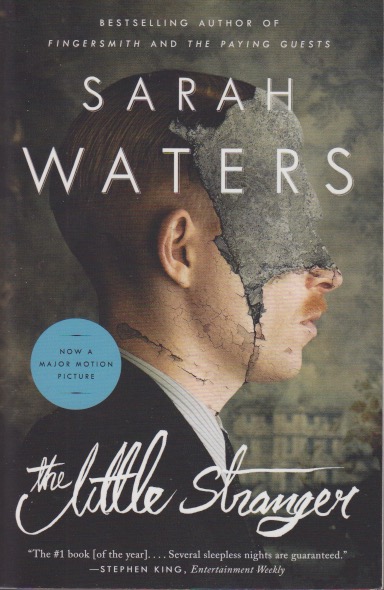
Definitions, I’m learning, are often a matter of one’s experience and taste.  I’ve read a lot of gothic novels and have tried to pinpoint what it is that creates a gothic feel for me.  I say “for me” because other people sometimes suggest works that I would put into a different category.  In any case, it’s clear that The Little Stranger, by Sarah Waters, is a gothic novel by any measure.  A large, isolated house.  A tainted family slowly fading away.  A remorseless, 400-page winter.  Inevitable decay.  The story is ambiguous and moody as Dr. Faraday, the narrator, falls in love with Caroline Ayres, the only daughter of an aristocratic family in decline.  The house may be haunted.  Or the family may be breaking down mentally.  Like The Turn of the Screw, it’s up to the reader to decide.

My preferred gothic has elements of the supernatural in it.  Melancholy without existential threat isn’t really enough to tip the scale for me.  The Little Stranger has enough of both to keep the reader guessing right up to the end.  Reader-response theory—the underlying basis for what’s being called “reception history”—posits that the reader assigns meaning.  The author has her idea of what happened in mind, but the reader contributes their own understanding.  This idea has influenced my own writing.  Once a piece is published the readers will make of it what they will.  In this way I can read Little Stranger as a haunted house story.  Although it was made into a movie I have to confess that I only heard of the novel recently while searching for gothic novels I might’ve missed.

The ambiguity fits the ambiguity of life.  The same circumstances can be interpreted by one person as entirely natural while another will add a super prefix.  No one person has all the answers and reality can be a matter of interpretation.  In that way Sarah Waters’ art follows life.  Interestingly, religion plays very little role in the story.  Church, when it appears, is perfunctory.  The source of tension here is on a rational, medical interpretation of events versus the gloomy lived experience of the Ayres family.  They believe themselves haunted and the scientific answers have difficulty convincing readers that there’s nothing more going on.  This is a gothic novel with a capital G.  Nevertheless, the debased cleric would have been welcome, but you can’t have everything.