Carrie On

Stephen King was still a fairly new writer when I first read “Lawnmower Man” for an English class in high school.  Carrie had been published by then, but I didn’t read any more Stephen King until after my academic job ended.  (There is, for those who are curious, a correlation between that traumatic change and my interest in horror.)  Like many, I suspect, I saw some of the movies before reading the King books behind them.  With a writer as prolific as King there’s always the issue of where to start, and I’m often subject to the selections independent bookstore owners make.  I seldom buy fiction through Amazon—I have to see the book for it to grab me (a kind of King thing to happen).

A used copy of Carrie recently came my way.  Now, I’ve seen the movie (both versions) many times; it is discussed at some length in Holy Horror.  I’d not read the novel until now.  Obviously there are differences between book and movie, but as this was Stephen King’s debut novel it struck me just how central religion was to the fearful scenario he paints.  That’s pretty clear in the film, I know, but it’s even more so in the novel.  Carrie is made into a monster by religion.  One could argue that she was born that way—telekinesis as a genetic marker is also a theme in the book, although absent from the films.  Still, it is Carrie’s rejection by others, largely because of her religion, that leads her to use her powers to destroy Chamberlain, Maine.

In a strange way, Carrie is a coming-of-age story from a girl’s perspective.  Strange because King is a man and some literary magazines won’t even accept stories written from the point-of-view of someone of the opposite gender.  Men can’t know what women go through.  Indeed, most of the male characters in the story are less than admirable, while some are downright wicked.  The real question is whether religion saves from wickedness or causes it.  There’s not much ambiguity here on the part of Mr. King.  Holy Horror, although it deals with movies and not novels,  makes the point that films based King don’t infrequently use religion as a source of horror.  Long-time readers of this blog know that I frequently make the point that this genre, more so than most, relies on religion as an engine to drive it.  And religion also has a role in repressing women.  Coincidence?  Ask Carrie.

Dark Houses

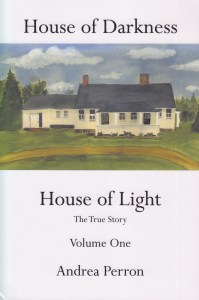
A book can be whatever an author wants it to be.  When it goes through the publication process, however, it becomes a group effort.  Granted, the other parties are motivated by money rather than by the message of the book, but they are professionals.  Editors can point out what’s irrelevant, or beside the point.  What you’ve already said, if you happen to repeat yourself.  What you’ve already said, if you happen to repeat yourself.  They change things, often, authors admit upon reflection, for the better.  The self-published book shows itself as just what an author wants it to be.  House of Darkness, House of Light: The True Story, by Andrea Perron is a case in point.  In three volumes of about 500 pages each, it is (they are) the insider story of the family portrayed in The Conjuring.  After having finished volume one, it’s clear the book needed an editor.

Don’t get me wrong; there’s some good stuff here.  The first couple hundred pages are fascinating, although there’s a slow build-up into moving into the Harrisville house.  One thing academics have always been too quick to do is dismiss the experience of non-trained observers.  We have to be skeptical, of course, to spot those who are intentionally deceitful, but a person doesn’t write 1,500 pages without cause.  People do experience strange things, and this book is a family’s recollection of events that inspired a horror movie.  There were a few points in the course of reading through that I found myself pondering new perspectives on the realm of ghosts—shifts of point of view.  There were many points, though, that I found myself muttering that an editor would’ve helped.

As a fully trained academic in the field of studies that handles issues of the soul, I am hungry for primary sources.  Sociologists and psychologists get their information from observers—ordinary people.  It’s only when the claims become extraordinary that such observations are called into doubt.  We have all heard of haunted houses.  We all know that sometimes strange things happen in them.  We can explain such happenings in different ways.  The skeptical explain them away as misperceptions, normal occurrences masquerading as paranormal.  The credulous accept everything at face value.  Truth, it seems to me, is a middle of the road phenomenon.  I’ve always sat on the fence regarding ghosts.  Too many people over too many centuries have reported them with great detail—witnesses include some very reputable and rational individuals—to dismiss them in toto.  After volume one, it seems that something worth exploring took place in the eponymous house.  For full impact, however, who you gonna call?  This time you’d better make it an editor.


Saturdays Past

Feeling somewhat between a state of self-pity and that of a salmon who couldn’t find his way upstream, I turned to horror.  The weekend before Thanksgiving has traditionally been AAR/SBL weekend for me.  I missed the Annual Meeting a few times due to unemployment, but for the most part I have been there every year since 1991.  As the representative of a publisher it is an endurance-testing event.  I had half-hour meetings scheduled all day on Saturday, Sunday, and today, and even a couple for the much neglected Tuesday morning.  Then I found myself home, awaiting a suitcase delivery.  United Airlines couldn’t say where the bag would be, and it only arrived Saturday night.  My wife had to work all that day, and so I turned to my boyhood.  Saturday afternoon was monster movie time.

For my current book project I’m discussing the components of The Conjuring diegesis.  I’m also trying to do some traditional research on the films.  Airport-lagged (I hadn’t been on a jet, but at my age being awake so late and sleeping so poorly has its own consequences), I pulled out Annabelle and Annabelle: Creation.  I wondered what it would be like to see them in the order of their plots rather than their actual chronological order.  Would the story hold together?  Would I find anything new?  The films discussed in my books are those I’ve watched many times—what I like to call “guilty pleasure research.”  Or just a boyhood Saturday afternoon revisited.  I couldn’t leave the house since I was told my bag couldn’t just be dropped on the porch.

From the beginning the story of Annabelle, the “possessed doll,” takes many twists and turns.  The demon is invited into the spooky toy by distraught parents after the tragic death of their child.  It then takes over an orphan who is adopted by a couple that she murders, as their natural daughter, in the earlier installment.  The doll is possessed in that telling because the girl Annabelle had joined a Satanic cult, like Charles Manson’s, and her blood dripped into the doll as she lay dying.  After claiming another female victim, the doll is sent to a couple of nurses as a present, where she appears at the opening of The Conjuring.  The story shifts with each sequential telling, leaving the binge viewer dissatisfied.  I haven’t had time for a double-feature since moving this summer.  Thick snow still covered the ground and the sky held that solemn haze of late November.  My colleagues were discussing erudite topics in Denver, and I was home using horror as therapy.  If you’re curious for further results, the book will be out in a couple of years.  Be sure to look for it at AAR/SBL.


Pleasant Dreams

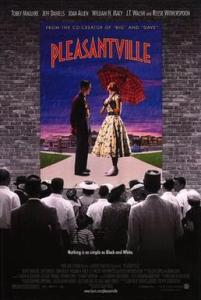
The last time I watched Pleasantville I didn’t have this blog running to discuss it.  It was also during the Obama administration where it felt more like nostalgia rather than a documentary.  In case you’re not familiar, Pleasantville is a movie about how a nerdy teen, David, and his cool sister Jennifer get sucked into a 1950’s sitcom, “Pleasantville.”  They find themselves in black-and-white and in a world as regimented as Stepford, but somewhat more humorously so.  As Jennifer is eager to get back home, she introduces this colorless world to sex, and as the two-dimensional characters begin to experience strong emotions colors start to appear.  The “picture perfect” Pleasantville begins to let the plastic facade of the 1950s slip to reveal a complex and messy world of true humanity beneath.

Watching the film in the age of Trump, as with most things, interjected a current of fear.  The townspeople feel threatened by those who are different, colorful.  They want everything just as it was—women serving their husbands, everyone the same hue, and pretending that sexuality doesn’t exist.  It may have been originally intended as an homage to the the 1960s, but what became clear in an age of MAGA is that crowds easily respond to suggestions of hatred.  Many of those in the group, individually, are “coloreds” themselves, but fear to let it show.  Conformity is much safer even if it means hating those who are different.  I wasn’t alive in the 1950s, but the superiority of the white man apparently was.  One of the characters is, tellingly, named Whitey.

Initially drawn to the film seeking biblical references (occupational hazard) I knew there was an Eden scene before I first watched it.  Margaret, on whom David has a crush, has discovered actual fruit at Lover’s Lane.  She brings him an apple which, the TV Repairman (if you’re lost, please watch the movie—it’s quite enjoyable) points out, is a form of sin in this world of simple answers and unspoken repression.  A mash-up of Jasper Fforde and American Graffiti, the film exposes the lie behind the idea that all were put on earth to serve the white man.  Jennifer discovers books and stays behind in colorized Pleasantville to go to college, something of a rarity in those days.  Although the movie bombed at the box office, it has a serious message to convey.  There was no perfect 1950s iconic America.  The process of becoming great is one of evolution, rather than that of a fabled Eden, available only in black-and-white.


And Found

For a kid who grew up on a steady diet of television, I have to admit being out of practice.  A combination of Gilligan’s Island and Dark Shadows informed much of my young outlook.  Starting all the way back to our days in Edinburgh, my wife and I had stopped watching TV.  We were in our twenties then, and it was a matter of not being able to afford the luxury.  Back in the States, cathode-ray tubes were ubiquitous, but cable was expensive and my employers not generous.  We had a television but only watched very occasionally, and then only what fuzzy programs we could pick up on the aerial.  So it continued.  We’re now at the point of not having had television service for over half of our lives, and we understand from the younger generation that a good internet provider makes cable superfluous anyway.

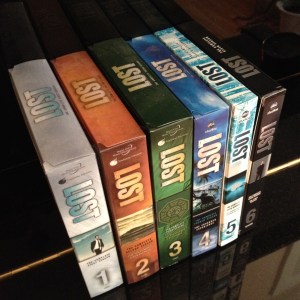
This prologue is simply a way to introduce the fact that we have finally, after two or three years of watching (we still have little time for it), finished Lost.  Now, I don’t get out much, but I had heard people talking about it when it originally broadcast.  More importantly, I’d read about it in books published by university presses.   I knew going into it—spoiler alert for those even more behind the times than me!—that the castaways were in Purgatory.  That seems to have been the point all along, but when money keeps rolling in because the story is compelling, you don’t want to reveal your hand too quickly.  Last night we watched the final episode where what was suggested back at the beginning was made clear: the passengers of Oceanic flight 815 had died in the crash and were making up for past sins.

The role of Jack’s father (Christian Shephard) as leading the passengers to the light may have been a bit heavy-handed, but the church where they finally meet has the symbols of many world religions, conveying the message that there is more than a single path.  The truly surprising aspect of all this is how popular the series was.  There were religious overtones from the beginning, but since the series wasn’t preachy, viewers apparently didn’t mind.  Yes, as the star character’s surname indicates, people don’t mind being led.  In fact, the names of many of the characters are indicative of some of the paths up that mountain.  I have to wonder if those who vociferate loudly and longly about their religion being the only way might not learn a lesson from television.  Even if the suggestion only comes from someone who grew up watching Gilligan’s Island.


V November

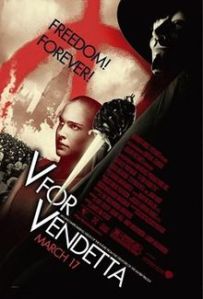
“Remember, remember the fifth of November,” begins the parable V for Vendetta before opening on a government not unlike our own.  Fascist, built on hatred, an angry white man speaks for the few who worship nothing but power and call it God.  Tomorrow is election day, and V can also stand for Vote.  Two years ago our nation awoke in shock.  Since that day we’ve seen hate crimes transform from illegal to commendable as Neo-Nazis are described as very fine people and those who actually do the labor for the nation have been disenfranchised so the uber-wealthy can have tax cuts.  Violence isn’t the answer, but voting can be.  As soon as the GOP sensed it might lose, it began voter suppression measures.  They have never watched V.

The hope for any democracy rests in the volition to vote.  We have to be willing to inconvenience ourselves to get to the polling station tomorrow for an outcome that will decide the fate of this nation.  We’ve had “fake news” spewn out at every fact that is distasteful.  Open, bald-faced lies backed up by sycophantic adoration of a non-charismatic hater—well, have you watched V for Vendetta?  Graphic novels, it turns out, can indeed be prophetic.  And since there are other nations out there that look to emulate the land of Amerigo Vespucci’s legacy.  We have forgotten what it was like to be a colony.  Instead we prefer following blind leaders—those who can’t understand that hateful words lead to hateful deeds.  Those who can’t understand that a terrorist can be an elected official.

I’m describing V for Vendetta, of course.  The coincidence of the Roman numeral five and the word “Vote,” however, hasn’t been lost on me.  I’ve talked to those displeased with the results of election day two years ago who hadn’t gone to vote.  What we see as V designs his intricate plan is that the will of the people still matters.  But for your will to be known, you must use your voice; you must vote.  Or be victims of our own system.  We’ve had two years to see what damage can be done—a constitution treated as a napkin and due process subverted in order to ensure ill-gotten gain.  Vivid colors have been used to stain this canvas.  We don’t often receive a chance to correct imbalances but there’s a lot at stake this time.  If you doubt me, at least watch V for Vendetta and remember that parables are, by definition, true.


Leftovers

It looks like I forgot to click “publish” yesterday, so my blog post never appeared.  With apologies for doubling up, I need to complete the trilogy today.  So here goes…

Unlike All Saints Day, which, we were told, was a day of obligation, All Souls Day, today, was not.  It was kind of a leftovers day.  Ironically, it developed into Día de Muertos—the Day of the Dead—along with Halloween and All Saints.  Yes, there are many who declare, and rightly so, that Día de Muertos is something different.  It is and it isn’t.  Cultures around the world have always felt that at this point in the year something odd was going on.  The carnal summer was becoming the spiritual autumn.  Thoughts of those who’d died come back.  So it is a three-day celebration—not officially recognized in the United States (it would interfere with business, which is, as we all know, a thing not to be imagined)—has become a commercial boon.

Still, not being among the saints, I have to wonder if the leftovers—All Souls—are somehow second-class citizens in the afterlife.  Does the social stratification we experience daily here carryover to there?  The view of Heaven among the poor is generally one of comfort and equality.  Fairness, which is in very short supply down here, will finally see the end of the moral arc of the universe, to borrow from a departed sage, bend toward justice.  And sharply.  The idea is ancient and powerful.  Primates of other species don’t object to having leaders.  They do, however, reject leaders who abuse power.  And so it is that we’ve evolved beyond that.  Civilization teaches us our place.

The Day of the Dead has become commercial, along with Halloween.  Why not stretch out the profits, which, after all, come from the leftovers?  There is a capitalist vision of Heaven, you see, and it is one we see working out on earth these days.  Those with money take power and use their money to buy more power that in turn leads to more money for them.  We call it “making a living.”  Those who are wise, however, recognize something deeper in Día de Muertos.  It is the time when we welcome family home, indeed, when family becomes more important than job, or status, or power.  It is a very human, if supernatural, holiday.  All Souls, it seems, has received less than its fair share of attention.  The Day of the Dead, in its own way, warms up those leftovers.


Halloween Mood

As America becomes scarier and scarier, I appreciate the fact that I grew up loving Halloween.  I don’t know why the dark mood appeals to me—I don’t like being scared, and I certainly don’t want others to suffer.  It’s more the mood that appeals; think of it as Halloween in the abstract.  I begin to feel it in August when I walk into stores already beginning to stock their black and orange wares.  It grows stronger through September as the dark comes on noticeably earlier each day, culminating after an October of anticipation.  Unlike some consumers of horror, what I’m after is the mood.  I started reading Poe as a young person, and “The Fall of the House of Usher” remains my favorite short story.  It’s the mood.  The narrator riding his horse through the woods toward dereliction.  There’s a sublimity in it that’s hard to match.

Yes, I watch contemporary horror.  I even write books about it.  Still, it’s difficult finding others who share my sensibility concerning horror.  I don’t like the jump scares or the gore.  I’m after the mood.  Poe knew about mood—he wrote stories that maintained it throughout.  A kind of beautiful hopelessness.  It’s a feeling in the air around Halloween when it’s clear nothing is going to stop the leaves from falling and the onset of a long and lonely winter.  Writers will shiver in their garrets, allowing their thoughts to flow despite the pale sky and feeble sun that is the only hope of continued life on this isolated planet.  Halloween tells us there is a spirit world no matter what the scientific authorities say.  It’s a world you can feel, but you can’t find it rationally.

Masquerading is a theme in some of Poe’s work as well.  We, as social beings, tend to excel at it.  We hide our real feelings so that others won’t hurt us, or so as not to hurt them.  We all know the childhood feeling of putting on that Halloween mask that permits us to act as we really feel, within limits.  Even as a Fundamentalist, I knew the catharsis of masquerading.  I read Poe and I understood him in my own way.  As an Episcopalian, I saw how fear of death was hidden behind All Saints and All Souls.  Masquerading.  Halloween was the Eve of All Hallows, but it usurped the master in its own form of beautiful dereliction.  The holidays following this are more comforting and heimlich, until the solstice comes to remind us that light will return, no matter how feeble at first.  We need Halloween.


Body or Soul?

Something’s wrong with Buddy Love.  He doesn’t act like a professor.  Meanwhile, Sherman Klump, heavyset but brilliant, feels that human companionship is passing him by.  Still, he’s a professor and has the support of a major university—at least as long as he brings the grant money in.  The Nutty Professor, a re-envisioning of the 1963 Jerry Lewis film, is instructive to watch.  One of the immediately obvious things to those of us who’ve been professors, is that movie makers don’t really understand what it’s like.  And it’s not just comedies—Indiana Jones doesn’t get it any more than Dean Richmond does.  Academics who watch these films shake their heads, if they think about the presentation of their profession.  Indeed, for being high profile, it is a job the public does not understand.

That’s not really what this post is about, however.  Although it’s been a few years, I suspect The Nutty Professor still has some currency.  In case I’m wrong, here’s the gist: it’s a modern, funny version of Dr. Jekyll and Mr. Hyde.  An overweight professor invents a formula that leads to instant weight loss.  The formula, however, also has side-effects, such as a boost in testosterone levels that leads to instability and violence.  In the climactic scene of the movie, Eddie Murphy transforms back and forth from Sherman to Buddy while on stage at the alumni ball.  Papa Klump, who has paid to attend, calls out, “Someone had better go and call the exorcist!”  

Now, this is screwball comedy.  Still, it reflects something that I’ve been struggling with in my current book—the public view of possession.  Demons aren’t generally known for changing body mass indices.  They’re after the soul, after all.  Still, there’s an element of truth, according to church teaching, about what Papa Klump says—demons are bodily afflictions.  Traditionally, they can’t impact a person’s soul.  In fact, possession is not considered a sin, and those under demonic influence aren’t held responsible for sins they commit while under that influence.  The soul is considered, unlike the physical body, something that cannot be “possessed.”  I know not to take movies like this seriously, but they do contribute to the pool of public “knowledge” about possession.  In this way, at least, it’s important to pay attention.  Such films may not really comprehend what the lives of professors are like, but they do reflect, even if in a nutty way, what people believe.


Café Américain

What with the Republican approved method of mailing bombs to Democrats (and, interestingly, not vice-versa) I have to wonder if democracy is gone for good.  I recently watched Casablanca again with my wife.  What struck me about it this time around was how, although many of the characters clearly hated one another, they were civil—downright polite—unless safely locked out of sight by the Nazis.  It also struck me that in the 1940s Nazis were bad whereas now they are the legitimate nickname of the GOP.  It used to be calm, collected enemies playing by the rules even with their hatred intact.  Now politics has become gaming the system itself so that the other side can’t win to the point that Major Strasser looks like Colonel Klink.

I suppose what’s most distressing about all of this is that moderate Republicans have so quickly acquiesced to Trump’s agenda of hatred.  Not one speaks out against him, fearing his money.  Somehow they manage to sleep at night.  I’m guess that if they watch Casablanca they don’t see what some of us do.  There comes a point, when a game gets too serious, that most of us know to back off and do something else for a while.  When we were kids we knew it instinctively.  What began as playful rivalry started to feel like hatred.  The twelve year old knows that at this point it’s time to back away, otherwise it will come to blows and we will feel regret.  There is no regret in the Grand Old Party.  They only regret that Tricky Dicky didn’t get away with it.  Welcome to the most unfair democracy in the world.

Ah, but I digress from Rick’s.  It we come downstairs we will hear Victor Laszlo leading the band in “La Marseillaise,”a national anthem far more robust than bombs bursting in the air.  These, after all, are patriots, not panderers after personal power.  Even Major Strasser doesn’t start lobbing pipe-bombs in Rick’s Café Américain, and he orders Captain Renault to find a legal reason to shut the place down.  This is the rule of law, no matter how crooked.  In the end, however, Victor Laszlo and Ilsa Lund are on a plane to Lisbon, and Rick and Louis are planning their flight from the city to take on more noble pursuits.  The swamp in the desert has been left by those of any integrity, save the underground.  Casablanca, after all, translates to “white house.”


October’s Monsters

Blood and vampires go together like October and, well, vampires.  Although I don’t understand manga, I do know it’s extremely popular, and a friend has been lending me the volumes of Hellsing by Kouta Hirano.  In the past couple of weeks I’ve read numbers 4 and 5.  Hellsing sets up a world where the Catholic church destroys vampires, as does the English, Protestant organization Hellsing Organization.  The latter, however, has as its secret weapon the vampire Alucard who, in nearly every number, gets dismembered in some bloody way before pulling himself back together to overcome the enemy.  In the latest issues I’ve read the Catholics and Protestants have to cooperate against the threat of neo-Nazis (and this was before Trump was elected), who also employ werewolves.  (It’s October, remember.)

Having been pondering the vampires of Maine, I decided to read the next in my own generation’s vampire hero, Barnabas Collins.  I’ve been reading the Dark Shadows series by Marilyn Ross to try to find a lost piece of my childhood.  There was a scene in one of these poorly written Gothic novels that made a strong impression on me that I finally re-encountered in Barnabas, Quentin and the Nightmare Assassin.  Interestingly, in this installment Barnabas, the gentleman vampire, is cured of his curse while traveling back in time with Carolyn Stoddard.  The story doesn’t explain how some of the characters from the twentieth century appear a hundred years earlier, but it does bring an early encounter of the vampire against the werewolf—an idea monster fans know from its many iterations such as Hellsing or, famously, Underworld.

You might think vampires and werewolves would get along.  In both the Dark Shadows and Hellsing universes the personalities of both come through clearly.  Both monsters have deep origins in folklore and people have believed in them since ancient times.  Just because they’re not human, however, is no reason to suppose they’ll get along with each other.  As soon as Universal discovered that monsters translated well to film the idea began to develop that monster versus monster would be a great spectacle.  We had vampires and werewolves clashing on cheap budgets with fog machines.  A new orthodoxy was created that the undead just don’t get along.  It’s a idea that continued into the relatively bloodless Dark Shadows series, and on into the violent and gleefully bespattered Hellsing.  And since it’s October nobody should be surprised.


October Devotee

Here it is October and I have hardly written about monsters.  Apart from the US government, that is.  I suspect that I could use a little escapism right about now, and most of the boxes are unpacked from the move.  Perhaps it’s time to watch a little horror and feel better about the world.  Monsters, you see, crop up in the most unexpected places.  Yes, in October we expect them to be crouching in dark corners and in dismal swamps as the light begins to fail.  Yet the trees are still mostly green around here and I think I might be in need of some new material.  As with most people my age, I get lost on the internet—someone needs to offer a roadmap to it.  Preferably on paper. 

I admit being stuck in the past.  As any music therapist will tell you, a person’s musical tastes often reflect the sounds of their youth, and some of us believe that rock hit its high point in the 1980s.  My work doesn’t lend itself to background music, so I seldom listen to the radio, and I wouldn’t even know what station to try to hear contemporary offerings.  Fortunately I know some people half my age who find their tunes on the internet, and I was recently introduced to Panic! At the Disco via YouTube.  I’m old enough to remember when music videos first appeared, although I never saw them.  We lived in a small town and, besides, we couldn’t afford cable.  Kids at school, however, talked about MTV and other places—there was no world-wide web then, kids!—that they had seen the latest, coolest video that I could only imagine.  When my contemporary young friends showed me “LA Devotee” by Panic! I was stunned.

If you haven’t seen it, just look up the official video on YouTube.  You’ve got the whole internet at your fingertips!  While the lyrics seem innocent enough—young person wants to make it big and so imitates the Los Angeles lifestyle—the video is horror show.  Literally.  Borrowing from M. Night Shyamalan the opening sequence is a cross between The Village and Signs.  Then it becomes a torture chamber for a young boy (from Stranger Things, no less, a show I binge-watched when it came out on DVD).  And Satanism.  Yes, taking on the LA lifestyle is compared to selling your soul to the Devil.  The stunning visuals kept me clicking the replay button.  Even as I felt my age, I also felt October growing.  And I was glad to see the monsters are still there.  Too bad we can’t banish them from DC, however.


Graymalkin October

It’s not like you need an excuse to read ghost stories in October.  At least that’s what I hoped other passengers on the bus would think.  Yesterday on my way into and out of New York City I read the next in the series of Ed and Lorraine Warren books, this one titled Graveyard, and written by Robert David Chase.  Now, you need to realize that I’d heard of the Warrens long before The Conjuring came out.  Those of us curious about ghosts to the point of reading at least semi-serious books on them know the brand.  What I don’t know is how to find out much about what “the Warrens” actually wrote.  These books are being (have been) republished by Graymalkin Media, after having originally been published by mainstream publishers.  This one was originally released by St. Martin’s Press.  Those of us in publishing believe that stands for something.

Loosely tied together around graveyard stories, featuring for half the book Union Cemetery near the Warrens’ Monroe, Connecticut home, the book ranges far and wide concerning ghosts.  Here we meet a man or two who turned into demons—I wonder how that works?—and a good demon punishing an evil person.  Some of these stories seem straight out of the high school scare-your-date playbook, while others are actually pretty scary.  A mix of accounts by either Ed or Lorraine, and stories embellished, it seems, by Chase, this book is like a trick-or-treater’s Halloween bag—you never know what you’re going to get.  It’s a little too bad because I’ve read some sober, and serious treatments of ghosts over the past several autumns, and with the Warrens’ vast experience, it’s a unfortunate that the accounts had been so dolled up.

It’s a shame that scholars of religion can’t be more forthright about their interest in the spiritual world.  I know many that I won’t call out here that are secretly—some openly—exploring these kinds of questions.  That won’t get you tenure anywhere (something the Ghostbusters reboot got right).  Even in the world of science there are forbidden topics.  That’s because, as this little book points out, spirits creak open the doors to all kinds of uncertainties.  I suspect that’s a similar reason that scholars of religion are treated with a certain mistrust by other guilds within the academy.  We need to play it straight and prove that we aren’t given to flights of fancy that might suggest something as unsophisticated as belief.  Still, as Graveyard shows, ghost stories are extremely common.  In fact, no October would be complete without them.  So I hope the other passengers think.


Look It Up

So my current book project involves addressing The Conjuring universe.  A few weeks back I posted on The Nun, the newest member of that diegesis and one with no claim to be based on real events.  Nevertheless, the film circles back at the end to “Frenchy” and his exorcism shown in the original movie.  One of the frustrating aspects of Ed and Lorraine Warren ’s oeuvre is that documented sources are difficult to locate.  When I found out Satan’s Harvest (by Michael Lasalandra and Mark Merenda, with Maurice and Nancy Theriault) was the “true story” behind Frenchy Theriault’s possession, well, let’s just say working on a book is a good excuse.  Overly dramatized, and somewhat padded, this account may be the closest we can come to this particular demonic encounter.

I don’t pretend to be certain about many things, so I reserve judgment about what actually might’ve happened to Maurice Theriault.  Unlike portrayed in The Nun’s storyline, he never lived in Romania.  He was physically abused by his father and was made to participate in unwanted sexual acts.  His was not an easy life.  Still, when Lasalandra and Merenda try to explain the origin of possession they go back to the same source as the original movie—Salem.  Credulously claiming that the Devil was behind what happened in 1692, they believe that demonic possession accounted for that unfortunate miscarriage of justice.  It’s difficult to say if they considered that such speculation implies that the innocents killed there were actually witches.  (They state that the Devil asks people to sign his book.)

Herein lies part of the problem with academics and the supernatural.  Sensationalized claims don’t help since academics are all about being taken seriously.  At the same time it’s clear that conventional explanations don’t always fit.  Neither credulousness nor extreme skepticism will lead to solving such mysteries.  This is why we need the monstrous.  That which falls outside the parameters of what quotidian experience leads us to expect.  Science can make everything fit only by leveling off the exceptional.  Academics won’t risk exploration of the anomalous.  This leaves the curious few means of finding out what happened beyond simple dismissal or overly gullible popularizing accounts.  Satan’s Harvest contains information that calls out for explanation.  Perhaps a hoax was involved, but that doesn’t add up when all the evidence is in.  Beyond that, we’re left to guess.  And some things it feels better to be sure about.


Southern Turn

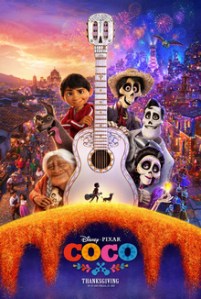
In America’s ever roving commercial eye, Día de Muertos has become an extension of Halloween.  Retailers have realized that people will spend a lot on their fear, and the autumnal holidays delve into that primal territory.  Since the Day of the Dead, being a mix of indigenous Mexican religions and the Catholic celebration of All Souls’ Day, comes two days after Halloween why not blur them together with greenbacks?  So capitalist thinking goes.  While certainly not free of monied interests, the Disney/Pixar movie Coco has the virtue of addressing Día de Muertos as the separate holiday that it is.  A form of ancestor worship—a religion extremely common around the world—the thought-world of the film shares in common with Tim Burton’s Corpse Bride this idea that the afterlife is colorful, if not joyous.

I realize I’m jumping the gun here, but I just saw Coco for the first time over the weekend.  Not just a culturally sensitive treatment of an indigenous holiday, it is also a celebration of music.  In a very real sense, music is life in the film, and even the dead continue to thrive in its presence.  Again, the connection with Corpse Bride suggests itself.  The key difference, from a religionist’s point of view, is that Coco is based on, to an extent, actual religious traditions.  An irony of this is that, together with the worship of Santa Muerte, the focus on death sometimes makes the Catholic Church nervous.  Focus should be on resurrection, not death.  But what if death isn’t seen as evil?  Where is thy sting?  This can be a real challenge when your organization is offering escape from death.

The fear of death is natural enough.  It’s the ultimate unknown.  It fuels both religion and horror.  In that sense films like Coco that show a joyful aspect of the hereafter do an end-run around traditions that base their wares on ways to avoid the consequences of death.  Hell becomes a threat to be avoided—the forgotten dead in Coco face annihilation, a fate that Héctor notes comes to everyone eventually.  Eternal torment isn’t in the picture.  I have to wonder if this view doesn’t present a form of salvation that is unwelcome among rival religions.  Although Catholics don’t have the hostility toward Halloween that many Evangelicals display, there is a challenge of rival faiths here.  Stores have already begun offering this year’s Halloween wares, and increasingly among them are Day of the Dead decorations.  The holidays are quite distinct, although related, and movies like Coco suggest what we fear may be more a matter of perspective than of the decree of an angry deity.