Science of the Immaterial

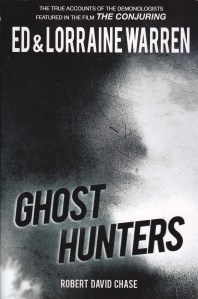
One of the truly frustrating things for the honestly curious is a lack of good resources. Specifically here I’m talking about ghosts. More generally, about the supernatural. “Don’t worry,” laugh the reductionists, “there’s no such thing.” But some of us are seriously curious. Those who are willing to admit candidly the events of life will eventually confess to things they can’t explain. People have been seeing ghosts since at least the Stone Age, and yet finding a serious, non-dismissive approach to the topic can be annoyingly difficult. Curious about the background to the film The Conjuring, I wanted some kind of objective treatment to the Perron family haunting. One of the girls involved has written a three-volume treatment, but that will take some time to get through. So I turned to the investigators, Ed and Lorraine Warren.

The Warrens were (Lorraine is still alive) some of the world’s first ghost hunters. Self-taught and deeply religious, they referred to themselves as demonologists. Lay Catholics, they couldn’t perform exorcisms, but they could assist in them. Apart from the Perrons, they investigated Amityville, the haunted doll Annabelle, and the Snedeker house, and many other famous cases. A guilty pleasure read, Ghost Hunters, written by Robert David Chase, along with the Warrens, thumbs through several of the investigations. When all is read and done, however, people who claim to know better accuse the hauntings of hoaxing and since there is no arbiter, the curious are left with that unsatisfying state of “he said, she said,” but no real answers. Ghost Hunters contains a potpourri of cases, mostly of demonic possession. Nothing about the Perron family, though.

No doubt much of the hoopla around reality television ghost hunting is clever marketing and nothing more. Even the acclaimed Ghost Hunters were caught gaming the system a little on their Halloween specials. That doesn’t stop people from seeing ghosts, however. Some academics have attempted to address the issue and soon find themselves in untenured positions (so much for freedom of speech) or mocked by their more “serious” colleagues. What ever happened to old fashioned curiosity? Materialism isn’t the only show in town, is it? We need treatments of the subject that move beyond the anecdotal. It’s difficult to get a ghost into the machine, apparently. Science hasn’t figured out a way to study the immaterial yet. Until it does, those who want to know the truth will be left relying on those who make a living by addressing questions even empiricists fear to ask.

A Kind of Contact

I find myself in Ithaca, New York. Places have a resonance with people, and this is one of those places I feel like I belong. The feeling may not be mutual, but that makes it no less real. At least on my part. Dominated by the presence of Cornell University, this town of waterfalls and free spirits represents everything I value. Education, creativity, and an easy familiarity with nature all have a place here. And Carl Sagan. No doubt astrophysics is far more sexy than religious studies. I didn’t watch Cosmos when it aired, but I knew of Sagan as its driving force. Before being daunted by the math, I had considered astronomy as a career; Denied tenure at Harvard, Sagan came to be associated with Cornell, to Ithaca’s enduring benefit. His house above Ithaca Falls is still pointed out by the locals.

Star status for academics, so I’m informed, is a mixed blessing. Accusations of being a popularizer are flung somewhat liberally at those who know how to explain things to non-specialists. Part of the ivory tower mystique is to remain inaccessible and impenetrable. Teaching, at the same time, is expected to open lost worlds to the curious. Sagan, like Bill Nye—another Cornell star—wasn’t afraid to take his knowledge to the streets. And such receptive streets there are in Ithaca. It’s a place a child of the sixties can feel at home. Looking for fossils in the many gorges, I’m reminded that the old and new are not so different in a universe billions of years old.

The sense of place, while scientifically dubious, is nevertheless real. Part of my ancestral heritage lies in upstate New York. My grandfather, while not a college man, took a couple of courses at what was then Cornell College to launch his teaching career. Following in grand-dad’s footsteps, my own teaching career (which, however, never included Cornell) didn’t last long. Yet somehow we both ended up passing through Ithaca. People on the street. Waiting to be enlightened by stars that shine brighter than my own. Life is a series of places. All, it turns out, are temporary. Rod Serling once said, ”Everyone has to have a hometown, Binghamton’s mine.” He left the nearby town, but he has remained there ever since. Places are that way. I’m in Ithaca right now, but the stark reality of New Jersey awaits at the end of the day.


Viewing Religion

Scholars employed by the academy sometimes fall under its privileged bubble. In that rarified space, the classics, the Bible, and even serious contemporary literature can be parsed and prodded until it’s no longer recognized and everyone thinks it’s normal. Out on the streets (for some of us taste the outer darkness) people have a difficult time with such minute attention to detail. People like movies. They’re visual, colorful, and they meet deep human needs. Scholars were slow to take cinema seriously, though. It was one of those passing things. Ephemeral. Shadows flickering on a screen. Never mind that the budget for a single Hollywood blockbuster could finance an entire humanities department for years. This is a strange dynamic when you stop to think about it.

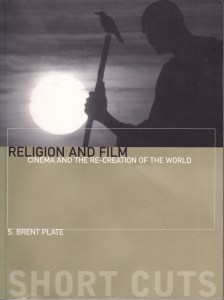
S. Brent Plate, in his book Religion and Film: Cinema and the Re-creation of the World, addresses in a very intelligent way, how film is like religion. Of course, religion is often on the university chopping block these days, so it is perhaps no surprise that among the first academics to pay serious attention to movies in their discipline were religion scholars. What is truly surprising is the depth of that connection between movies and belief. For such a brief book, Plate dives deep and quickly. In a society that seems to have outlived its need for structured religion, movies have managed to hold on through recessions and depressions and terrorist attacks. Indeed, they often provide meaning during those very times. They have a ritual form that meets the kinds of needs religion has traditionally filled. Movies are well worth the time we spend getting to know them.

Sometimes, under the barrage of rhetoric that says all answers are physical, we forget that humans are meaning-seeking creatures. If there’s no purpose to life, our wellbeing suffers. Nobody looking at modern civilization objectively would say that we’re an overwhelmingly happy bunch. One way to understand the popularity of movies is to see them as venues of finding meaning. For 90 minutes to 2 hours we’re shown some version of modern mythology (at least in some cases) that serves many of the same functions as a sermon or scripture. Although Plate hyphenates the word, it is worth pondering that this is for more than mere recreation. The Sabbath idea always involved more than just a day off work. Movies offer us a way toward meaning. So naturally, the academy tends to ignore them. There are, it seems, more important things to do.


Living Challenged

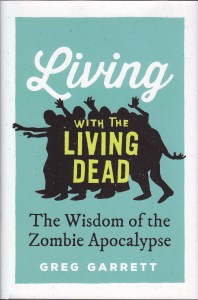
One of the surest signs of hope for the world is that academics are beginning to notice monsters. A trickle began some time ago and it’s probably best to call it a trickle still, nevertheless, the quality of the trickle is improving. Some serious publishers are now counted among the mix of those who pay attention to the lovable unlovable. Greg Garrett’s Living with the Living Dead: The Wisdom of the Zombie Apocalypse is one of the more recent approaches to the undead that looks for religious themes among them. They’ve been there from the beginning with zombies, of course, but few with tenured positions bothered to look. It’s an open question how long the current fascination with the undead might last, but Garrett’s treatment finds them useful sources of theological thought.

Perhaps the aspect of my own fascination that I feel most often compelled to explain is why fear has such an appeal. Garrett makes the point that fear often causes people to make bad choices, and I would have to agree. It is, however, the fear of fear that takes a greater toll. You see, fear is a survival instinct. Without fight or flight we’re all zombie food. Some of us learn this harsh lesson early in life, and if we manage to survive long enough we might even become nostalgic for it. It’s not that I like be afraid, but I do know that if we fear fear—if we avoid looking at what scares us—we put ourselves in danger that the flight response might well prevent.

Garrett’s treatment is helpful in demonstrating that there is a reason for such stories. In fact, according to his analysis zombies can leave you with a profound sense of hope. He uses the living dead as a means of thinking about community, ethics, and apocalypse. Not all end of the world scenarios are that bad. How we treat the living dead may tell us quite a bit about our own rectitude or lack thereof. In other words, zombies are more than their puerile thrills might suggest. There’s something of substance here. I don’t agree with all of Garrett’s conclusions, but he offers a stimulating tour of the current media frenzy around the living challenged and is surely correct that there is more going on with monsters than many of our parents would like to have a religion expert admit. Those childhood years might not have been wasted on monsters after all.


The Nature of Evidence

Home alone on a Friday night, I turned to Werner Herzog’s Nosferatu. Not a typical horror film, this art house production is an updating and remaking of F. W. Murnau’s technically illegal 1922 adaptation of Bram Stoker’s Dracula. It has been a few years since I’ve watched it, but the beauty of the cinematography kept coming back to me at unexpected times. Klaus Kinski is an unforgettable Count Dracula, hideous and compelling simultaneously. He draws pity and revulsion. When he’s not on camera you can’t wait for him to appear. There’s not much new in the story, of course, as it follows Murnau pretty closely, with some shots being nearly identical. One exception to this is the plague. Wherever Dracula appears the Black Death accompanies him. This leads to one of the most unusual twists of this retelling—the role of Dr. Van Helsing.

Instead of being the authority on vampires and leader of the attack, Van Helsing is here a reluctant rationalist who doesn’t accept superstition. He encourages the town elders to respond calmly to an outbreak of the plague. When Lucy Harker insists that Jonathan has been the victim of a vampire (which he has) the professor again urges caution. He insists that this must be approached scientifically, empirically. You don’t pull up wheat to see if it’s growing, he notes philosophically. Take time, trust science, and all will be well. Meanwhile the audience knows the reality of the vampire. There is a supernatural threat and it is moving fast. Lucy knows they must strike against Dracula before the vampire destroys the whole town. Despite the mounting number of deaths by plague, Van Helsing still clings to slow and steady evidence, only realizing after Lucy’s death that she had been right all along.

There’s quite a bit to unpack in this retelling after all. A female takes the lead. Lucy is the one determined to stop the vampire. She does so out of belief. Van Helsing rightly points out that this is a dangerous way to approach a problem. One ponders what might’ve happened had science been allowed to run its course. Van Helsing, if science be science, would’ve had to at last come to the same conclusion that Lucy had experientially. She’d read Jonathan’s diary and she had a late night conversation with Dracula where he did not appear in her mirror and did shy away from her crucifix. She too is evaluating evidence, only she has to allow for the reality of the supernatural. Since the story is old and the production artistic, this is no bloodbath horror spectacle. It is a thoughtful, almost quiet reflection on how we perceive reality. Even among the many vampire films it remains a thing of beauty.


Filmy Substance

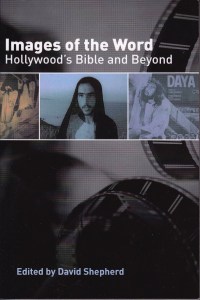
It’s all about Jesus. Well, that’s an overstatement, even in context. One of the amazing things to me about books addressing the Bible in film is just how often Jesus movies come up. If it’s not Jesus movies, it’s movies that have a “Christ figure” or some such Christian trope. Don’t get me wrong—I have no issues with Jesus. It’s just that the Bible and film have so much more in common than this. David Shepherd’s edited collection, Images of the Word: Hollywood’s Bible and Beyond, has some insightful pieces in it and some of what has become “standard fare” already in a field that’s so new. I found Richard A. Blake’s response fascinating. Maybe this was because he doesn’t approach the topic from a biblicists’ point of view.

I’m not really complaining about scholars who look to cinema for a rich source of reception history. I do it myself from time to time. Most of the books on this topic are collections of essays and collections are, by default, uneven. There’s an amazing amount of biblical material in movies that simply goes overlooked. Also, I would suggest, movies offer valid interpretations of the Bible. Somewhere along the development of the discipline we seem to have slipped into thinking that only certain people can legitimately interpret the Good Book. If it is a sacred text, however, it is as much in the public domain as any text can be. And texts in the public domain can legitimately be interpreted by hoi polloi. That’s the nature of being a text with universal assertions, I suspect. Directors and writers, therefore, are legitimate interpreters. We could learn a lot about the Bible from going to the theater.

Like many who’ve taught Bible to undergrads, I sometimes discussed films with them. I always believed students were legitimate interpreters of Scripture, too. This is a dialogue. One of the more interesting aspects of Shepherd’s collection is the pieces that focus on non-Hollywood movies. I don’t see a problem discussing Hollywood since we can assume a larger body of those who’ve seen the film. It is nice, however, to be reminded that “foreign” films also delve into what is sometimes treated as propriety material by Christians. Hindu representations of the life of Jesus? That’s a very interesting idea! Of course, not everyone likes to know how “outsiders” see them. That’s one of the beauties of using cinema as a means of interpreting the Bible. Those of us who study it don’t have the money to influence movies enough to make them in our image. It’s fun to watch someone else’s interpretation.


Light and Dark

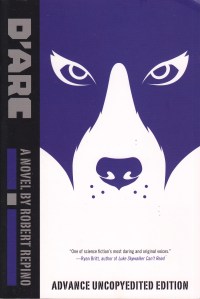
Prophets, mothers, messiahs. A new religion for a new world. While these may not be main themes of Robert Repino’s new novel D’Arc, they’re clearly there in the background offering verisimilitude to a world turned upside down. Continuing the diegesis created in his previous two novels Mort(e) and Culdesac, Repino again shows an uncommon awareness that when survival becomes difficult people (and animals) turn to religion. Many fiction writers create worlds under stress and pretend that characters simply forget the religious option. That may be realistic on an individual level, but as history shows, not on a societal one. People—and mutated animals—are meaning-seeking beings. D’Arc doesn’t shy away from this fact. In a wildly integrated world of different species coping with consciousness and opposable thumbs in various ways, religion naturally arises.

If you haven’t been initiated into Repino’s universe, it begins with a virus and/or a plot—themselves religious—which allow animals to become bipedal and to grow human hands. They can talk and reason and they show us a true reflection of who we are. D’Arc, the female companion of Mort(e), finds her way in a world under threat. Planning to speed up global warming in a dramatic way, the aquatic antagonists conspire to melt the ice caps to flood the entire world. Repino knows the value of the flood story and uses it to full advantage. Along the way we meet beavers who’ve developed a religion that functions between water and dry land. Indeed, as a species their religion defines them as much as their engineering skills. This is a world that’s just been through war and instead of reconciling all species, there remain those (most notably humans) who can only live with their own superiority. This is a complex universe.

The hero of this tale, D’Arc, is sympathetic to the religious sensibilities that have sprung up around her. She herself is a character prophesied in this world where Mort(e) is messianic. There’s a scripture in the background somewhere and theirs is a world without embarrassment about it. There’s also plenty of action and adventure—the war with no name is really not over—but there’s a subtlety to the narrative as well. When things go awry many people do assume they’re alone in the universe and try to find their own way. It’s equally true that many look for meaning in a structured form of belief where all of this has been foretold. Such worlds, to me, seem to be more honest to the human condition, even when the characters are cast as talking animals.


Sleepy Holy

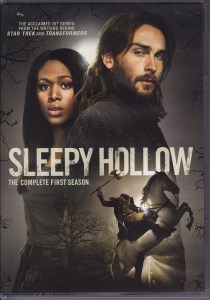
Fox recently announced that, after four seasons, Sleepy Hollow is being cancelled. The news, while not unexpected, is still disappointing. The initial success of the series caught just about everybody by surprise. Intelligent, witty, and literate, this program tapped into a number of themes dear to American sensitivities. One of those sensitivities, surprisingly, was the Bible. I sometimes wonder if the Bible might’ve been able to save Sleepy Hollow. In my limited view the first season was the best. It started out with an all-American apocalypse. To survive an apocalypse you need a Bible. George Washington’s Bible featured throughout the mythology of the first installment. Two of the four horsemen of the apocalypse had arrived in Sleepy Hollow. Then something went wrong.

In season two, Moloch—clearly a stand-in for the Devil in the series—was killed off. Apocalypse no. The end of the world, in Scofield’s canonical view, had been cancelled. Even Ichabod and Abbie began to wonder what good it is to be mentioned in Revelation if your role as world saviors has been made redundant. A new arch-villain was needed. The coven that had shielded Ichabod, headless without its horsemen, simply faded away. Ichabod learned how to drive. Where’s an enemy when you need one? Enter Pandora for season three. But wasn’t she rather a sympathetic figure? Sure, she unleashed lots of negativity but hardly with malicious intent. There’s no villain like a biblical one.

Where do you go after the apocalypse is over? What use is the Bible in such a world? Pandora has no book of Revelation behind her. No special effects budget can rival Pestilence, War, Famine, and Death. What can make you shudder like that pale horse and its skeletal rider? In a world with ebola and zika it would seem that pestilence still has a place. Famine in a world of plenty is horror defined. Two out of four isn’t bad, I suppose, but when you start off with Death you’re not leaving yourself much room for maneuver. Of course, after the horsemen there are three seals left. Perhaps if Sleepy Hollow had stayed with the script and followed through until just before the final trump, it might still be here among the land of the living. Just like creation, the “end of the world” has multiple versions in the Good Book. The Bible’s a consistent narrative only in the imagination of harmonizers eager for easy answers. The possibilities are endless. Where there is no vision, the people parish.


Revisiting Frankenstein

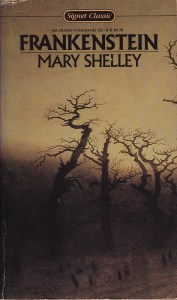
There’s nothing like going back to the classics. Many people don’t realize that one of the best-selling books of the nineteenth century was Mary Shelley’s Frankenstein. It has never been out of print. As a novel it has its issues, but the tale strikes something deeply responsive in readers. And the story may not be what you think. You see, the movies have made Frankenstein’s monster into something Shelley never intended. Indeed, today’s Frankenstein monster is pieced together from various monster images, just like the mad doctor’s original creation.

After a lapse of many decades, I decided to read Frankenstein again. It must’ve been in my tweenage years that I’d last done so. I recall putting the book down thinking how sad it was. Something happens, however, when you return to a book after a span of many years. This time I was looking for the mad doctor and hoping to determine if the monster deserved that title at all. The story won’t let any easy answers come. Victor Frankenstein is a young, impulsive man carried away by an idea. He doesn’t contemplate the consequences of what he’s doing. It’s like buying a dog without considering that you’ve just realigned your priorities for several years. Not noticing that his growing creation is hideous to the eyes until it’s too late, he simply abandons the creature without a word. (The parallels with an absentee father should be obvious.)

The creature—monster is a bit harsh—wants acceptance. He isn’t a mute brute with bolts in his neck. He’s not a robot. He is Adam kicked out of the garden with no Eve. He doesn’t start out evil. The rejection of his creator forces him to murder in a desire for revenge. Shelley’s world was deeply influenced by the Bible as well as Milton. Religious concepts are constantly under evaluation. The child of radical parents—her mother was one of the first feminists on record—Shelley questions everything here. No doubt in Victor’s mind he’s created a demon. Or has the monster created Frankenstein? Until the very final pages nobody else actually sees his monster, or at least hasn’t seen him and lived to tell about it. What fuels the creature’s fury is rejection. Evil doesn’t just happen in the world of the mad doctor.

Sympathies are divided in Frankenstein. We feel for the monster. His creator never apologizes. Never reflects that he somehow shares (or completely owns) the blame for the sad fate of that which he’s created. Living under a Frankenstein presidency, these unanswered questions hang thickly in the air. Lack of foresight seldom ends well. The monster isn’t always who you assume it to be.


Filling the Frame

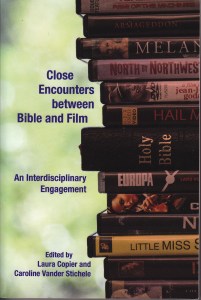
Those who study the Bible have to reckon with the fact that someone else probably said it first. This is one of the inherent liabilities of studying something a couple thousand years old. Still, scholars have to keep their jobs, and so they come up with new ways of looking at something ancient. One of my favorite new methods is the use of movies to understand the Good Book. Clearly nobody in ancient times had any ideas about films, let alone stills, but still, they liked to tell stories. They have that in common with modern cinema. Although I’m naturally distrustful of collections of essays—there are so many of them and they are all of mixed quality—I decided to read Close Encounters between Bible and Film: An Interdisciplinary Engagement, edited by Laura Copier and Caroline Vander Stichele. I have to admit that I picked it up with some trepidation, but I was pleasantly surprised in the end.

Like all edited volumes, Close Encounters is uneven. Nevertheless, a fair number of the essays are well done and insightful. The others may be insightful too, but my exile from academe has led to a drop in tolerance for method-heavy essays. They make me think the Bible should mean nothing to anyone but experts, which, if true, is a sad state of affairs for a world that depends on it for salvation. But I digress. The fact is movies quite often draw on similar collections of brain cells as do sacred texts. That’s interesting. Not only that, but flicks show just how deeply embedded the Bible is in western consciousness.

Having read many books on cinema and the Bible, I was pleased at how well this one seemed to flow. At times it’s as if that authors are struggling to find some common ground, but the realization that both sacred text and cinema are part of the cultural sphere suggests that the connections are there. More than that, they suggest that the Bible might still retain some relevance for modern people after all. Hollywood hasn’t lost sight of Holy Writ either. Just a few years back three major biblical epics came out in one season. For me this makes it clear that the stories of antiquity still speak to modern people. They have to be gussied up with CGI and big-name actors, but the underlying tales go back to a day before lights and camera were necessary for action. And we might learn something while our intention is simply to be entertained.


Wall-E of Separation

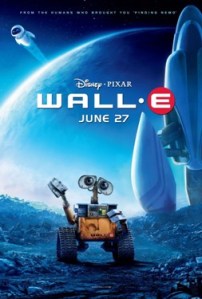
io9 is a progressive website. Its futuristic stories delight and entertain. When a friend sent me a story on io9 titled “New Fan Theory Asks the Obvious Question: Is Wall-E Satan?” I had to read. Then wonder. People know so little about the Bible. The idea is simple: in Wall-E the people live in an undisturbed paradise until Satan (in the form of EVE’s plant) tempts them to leave paradise and return to an earth they’d forgotten existed. Okay, so the Genesis parallels are blindingly obvious (Peter Gabriel was even formerly a member of a band named with the title of that very book). What’s wrong is that there’s no Satan in the Bible’s first book. I give Katharine Trendacosta credit—she discounts the connection of fat, immobile future humans and paradise. The idea that the snake of Genesis is Satan, however, is about as biblical as original sin.

Genesis never calls the snake Satan. It doesn’t mention original sin. In fact, many (Christians, especially) don’t realize the event isn’t called “the fall” in the Hebrew Bible at all. The gaining of knowledge by the first human beings is painful yes, but can be a good thing. Some Jewish interpretations of Genesis 3 suggest precisely that. The story goes that Eve and Adam were living, stupidly, in the garden. The snake points out that the fruit will make them wise—and it does. They do not immediately die as God said they would. Instead they lose a blissful ignorance and have to grow up. The serpent is never said to be the Devil until the very last book of the Christian revisionist scripture, Revelation. Sometimes a snake is just a snake. That’s the way it is in the book of Genesis.

Christian interpretation, however, took over the story of humanity’s awakening and made it into the fall into sin and evil. Things have been so bad ever since than that we have to elect Trump to start a war that’ll end it all. That’s Christian revisionism writ large. Read Genesis again. Slowly. The snake is not said to be Satan. “The fall” isn’t sinful. In fact, the word “sin” doesn’t occur until the story of Cain and Abel in the next chapter. So, is EVE inspired by Satan to end the paradise of the Axiom, unaware of its true origins? Only in a revisionist history of the Bible. The idea existed long before io9, and, according to Genesis, it was wrong even then.


Blood Brothers

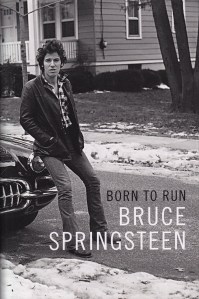
Every once in a while I take a chance and write about music. I don’t do this too often since it’s a very personal thing, and as open as I may be on this blog, I’m not as accessible as I seem. We all need a place to retreat in this world, and Bruce Springsteen’s music is one of those places for me. Late last year, just after it was published, Springsteen’s Born to Run—his philosophical and revealing memoir—sold briskly for several weeks. Since it made its way into my stocking I’d been intending to read it since then. And putting it off. There’s something disillusioning about finding out your heroes are only human. The best among mine are heroes precisely for that reason. Gods need not apply. Overcoming my fear, I dove in.

Two things stood out in this autobiographical account: religious imagery looms large, and depression mingles liberally with it. I recall reading an early review where the writer expressed surprise that the Boss suffers from depression. I responded (perhaps out loud), “have you ever listened to his songs?” I became a Bruce fan because he sang about working class people. Bruce and I share that background. He knows that your roots never let you go. Indeed, roots are what keep you grounded. Many of my academic colleagues, I learned, were simply carrying on the family business—and a privileged business it is. Those of us who had to overcome poverty to get in the door were never really welcome in the ivory tower. You can’t help where you’re born, but you can sure be punished for it. Bruce understands that.

I’ve never been to one of his concerts. I don’t even like to listen to his music when someone else is in the room. There’s something deeply personal about communing with someone you feel understands you. Of course I’ve never met Bruce Springsteen. I probably never will. He won’t know the kind of influence he’s had on my life and I feel that I’m risking an awful saying so here on this blog. There aren’t too many heroes in my life. I’m not inclined to idolize people. In this memoir, however, Bruce won’t let himself become an idol. He’s not perfect and he takes pains to make sure that you know that. We were, nevertheless, raised in situations not dissimilar from each other. Unlike Bruce, I have no musical gifts. No, I’ll never likely meet him—and if I did I wouldn’t want it to be with other people around. Some things are just too personal that way.


Dog Daze

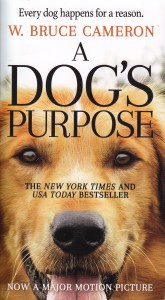
I read quite a bit about animals. One reason is that when you’re counting all the species on the planet we’re pretty clearly among the animal part. Having grown up with many pets, the dogs particularly stand out. We tended to have only one dog at a time and they were so full of personality that it obviously wasn’t a matter of projecting to understand that one was more or less optimistic or joyful than another. Some could be mean while others were loving. There was quite a bit of buzz about W. Bruce Cameron’s A Dog’s Purpose back in January. For Modern Mrs. Darcy’s 2017 Reading Challenge the book fit one of the categories for me, and so I found myself reading about animals again. The thing about buzz is that I listen with only half an ear. I didn’t know much about the book except that it was a novel narrated from a dog’s point of view.

A couple of things struck me as I got into the story. One was that the protagonist ended up still believing that humans were more important than dogs. I suppose there’s some kind of evidence for that, from a dog’s viewpoint, but it doesn’t seem very strong to me. After all, we’ve bred wolves into pugs and cockapoos with an intentionality that even Mr. Darwin would’ve recognized as unnatural selection. Left to their own wolves would’ve adapted, but they’re pack animals and while dogs may think us the alphas, they’re each an important part of the group. They are giving, but that’s the nature of being in a pack. It’s also something that elected officials in Washington could stand to learn. When there aren’t rifles and traps, pack animals prosper.

The second thing that stood out about A Dog’s Purpose was reincarnation. The idea scares me. Life’s been a long challenge this time around and, unlike Nietzsche I’m not sure I could face it this exact way again. In any case, reincarnation only works if there are souls to pull it off. Cameron posits that for Toby to become a fully developed Buddy four cycles of reincarnation are needed. Like a good Platonist, our protagonist recalls the important lessons from each previous life and is able to develop into a more fulfilled dog each time around. The karma here is good. Cameron does seem to “get it” from a human-projected dog’s point of view. It can be fun, and it can be sad. The important lesson, for me, is that animals are who we are and to be a successful pack we need to look out for the good of each other.


Frankly Frankenstein

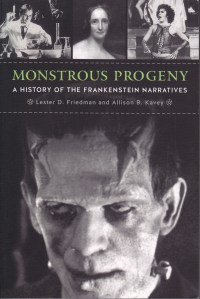
As a novel, like its monster, Frankenstein trespasses all kinds of boundaries. Is it science fiction or horror? Is it Gothic or presciently modern? Is it feminist or conventional? One thing about it is certain: it has been immensely influential. Lester D. Friedman and Allison B. Kavey have created for the world a truly wondrous treatment of this meme. Monstrous Progeny: A History of the Frankenstein Narratives is perhaps the most engaging monster book I’ve ever read (and there have been many). One of the main reasons for this is that Friedman and Kavey are keenly aware that binaries don’t necessarily exclude their opposites. Frankenstein is about both science and religion, and it treats both profoundly. Considering that Mary Shelley was only 21 when the novel was published bespeaks a rare genius in blurring boundaries and making those on each side think.

Monstrous Progeny considers multiple issues associated with Frankenstein. Should science be approached alone, or should peer review be involved at every stage? Is religion eschewed by this woman so strongly influenced by atheism, or is it the very crux of the matter? And what about the incredible and continuing afterlife of Shelley’s story? Friedman and Kavey survey not only the novel but several movies associated with, or based on ideas from, the book. Modern science, if we’re to be honest, also owes much to the fictional musings of a 19-year-old girl on a dark and stormy night. The tale of the tale is nearly as fantastic as its progeny. Challenged to write a ghost story, Shelley produced an undying Zeitgeist feature instead. Monstrous Progeny delves deeply into this unexpectedly profound idea, showing how it grips the heart of many contemporary nightmares.

Genres can be deceiving. Shelley wrote her tale as a “ghost story.” It received literary acclaim, becoming one of the best selling books in England in the nineteenth century. Only when Universal found success with Dracula in 1931 and followed it up with Frankenstein the same year did film critics want something to call movies like this. The term “horror film” was invented. There is certainly horror in Frankenstein, but there’s much more to it than that. The relationship between religion and science, and the very real ethical issue of making something because we can, are never far from the reader’s mind. Giving life to the creature only underscores the conflicts and contradictions of life in a world where to be gods risks destroying any possibility of heaven. Monstrous Progeny is a thought-provoking book that will, in its own way, brings our present fears to life.


Beautiful Beast

Like most kids in America I grew up with some form of Disney. We couldn’t afford to see many movies, but those we could often originated from the acknowledged master of childhood viewing. When I became a parent I naturally turned to Disney as one of the components of constructing a happy environment for my own child. Who doesn’t want better for their children then they had themselves? This was, however, in the days of VHS tapes. Disney frustrated more than one attempt to see a movie that was currently “locked in the vault”—a marketing tool used to glut the already overflowing coffers on demand. The heart wants what the heart wants, as the saying goes, and you knew that if you didn’t purchase the movie when it was available you might never see it again. Regardless, Disney does produce memorable work.

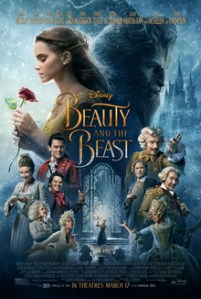
One movie that we missed until the vault unlocked was the animated Beauty and the Beast. We didn’t want to send the message that girls should be the captives of men, but Belle is a strong character, and we eventually realized that withholding much of childhood culture would isolate our daughter from what everyone else knew. Old habits die hard, as Disney knows. Our daughter is now grown, but a new Beauty and the Beast is in theaters and what was once vault material has softened into nostalgia. Recently I’ve begun to notice differences between original films and remakes when it comes to religion. In the new Beauty and the Beast there are only a couple of such instances, but they did make me wonder. In the opening sequence, as Belle is returning her book to Père Robert, a large crucifix stands in the background. Indeed, the camera keeps Belle off-center so as to make the cross obvious in the scene. Clergy and books make sense, and, of course, Belle offers to sacrifice herself for her father—a biblical trope.

When Gaston riles up the angry villagers, Père Robert is once more shown, objecting to the growing violence. Then, unexpectedly, as the castle transforms at the end, a gold finial of Michael the archangel slaying the dragon appears atop one of the towers. Again the symbolism is clear as the beast has allowed Gaston to escape, but the 45-inspired antagonist, unwilling to let grudges go, shoots the beast anyway. As the movie opens the famous Disney castle shows itself topped with that same finial. Is there a deeper message here? It’s just a children’s movie after all. Yet Père Robert is black and there are two interracial couples in the film. We should be, if I’m viewing this correctly, entering into a more tolerant and accepting world. Prejudice has no place in fantasy. Or reality. There are dragons to be slain here. If there is a deeper conscience at play it’s likely only to be found locked away in a vault.