Dead of Winter

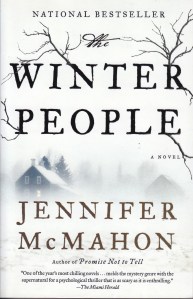
WinterPeopleOne of the commonalities of all religions, I used to tell my students, is the concern with death. Not that all religions react to it in nearly the same way, but the fact is no religion ignores it. For people, obviously, our awareness of our own mortality marks us as indelibly as our birth does. Once we become aware of death, we will never be able to forget it. This inevitability fuels many horror stories, whether literary or cinematic. When I saw Jennifer McMahon’s The Winter People, I knew that I would read it. Like most book consumers, I had to wait for the paperback edition, and once it was on offer I got a copy and waited for winter. Well, this year I’m still waiting for winter, but I began reading the story once the nights were long enough to qualify. It is an appropriate story for the season and it introduces what might be considered a kind of monster as well. Like most monsters, however, sleepers are not evil. The undead, however, have to find a way, ironically, to live.

The Winter People is a sad story, and tangled in the way that makes for successful novels. The main issue at play, however, is that with which all religions are concerned. Death is perhaps the most noble of literary subjects. Since we all have to face it, it is universal and yet somehow frightening. Fear of the unknown. The dead, unlike in the stories, don’t really come back to tell us what it’s like. Even those who do, in fiction, give us a distorted view. Theirs is a world inverted from our experience of it. It lacks finality. It is a place between. There is a macabre logic to it.

The living have never been comfortable with the dead. Memory reminds of who they were. McMahon is clear, in her vision, that memory is not who they are. We put them underground, but theologically we can’t let them go. Heaven, Nirvana, Purgatory, reincarnation, or even Hell—we feel that we need to give our dead a sense of place in a life after life. McMahon builds a sober mystery into her non-final afterlife. There are some, I’m sure, who will be kept up at night by her imagination. For me, I now have something to ponder. Many are the stories, like Stephen King’s Pet Sematary, that warn of resurrection. We can’t keep the departed with us, and winter, when it comes, is a season of harsh reality.

First Stronghold

FIRST Robotics has a way of getting into your blood. Like many people of my generation, I learned about FIRST Robotics through my daughter. Our local high school has a robotics team and, as we quickly learned, the decision to join FIRST is a four-year family commitment. My wife and I were both involved at some level, despite being the world’s least likely engineers. I even served a term as the president of the foundation (responsible for funding the team). We made lasting friendships and grew in the lingo and odd humor that is FIRST. The founder and chief promoter of FIRST, Dean Kamen, is an unapologetic geek and has helped develop what some journalists are calling “the new cool.” Yesterday was launch. If you are a FIRST follower, I don’t have to explain that. In case you’re not, “launch” is the revelation of this year’s game. Teams now have six weeks to plan, design, and build their robots.

IMG_3125

Launch is a big deal. We haven’t been part of the competition for three years now and we still watch the live web-broadcast. The major players (Kamen, and Woodie Flowers) get in character and meet kids from various teams. They give inspirational talks. Dean Kamen told the kids “Don’t get stuck into today.” Technology changes too fast. What you learn in school are tools, because facts are available instantaneously on the internet. Those of us who retain facts are so yesterday that we’ve become the trivial pursuit generation. Any computer, let alone robot, could beat us. Woodie Flowers told the young audience thinking about careers that they must do what machines cannot do, otherwise their jobs will become obsolete. What could be more human than religion? What’s religion got to do with it? This is science and technology!

This year’s competition is FIRST Stronghold. The entire buildup of yesterday’s launch was a takeoff on Monty Python and the Holy Grail. What is this I see before me? History? The Middle Ages were nothing if not religion run wild. This was a world ruled by bishops, popes and nobility. It was a world where no matter who you were, God trumped all. Technology meant that a trebuchet was a pretty sexy device and long distance communication traveled at the speed of a horse or human runner. (Or, I suppose, a trebuchet missile.) Now that the humanities have fallen victim to science, we look back to them for inspiration. It reminds me of John Keating in Dead Poets Society: “And medicine, law, business, engineering, these are noble pursuits and necessary to sustain life. But poetry, beauty, romance, love, these are what we stay alive for.” This hasn’t changed since 1989. Or even 932 for that matter.


Who’s Driving?

Technology has been kind to civilization. At least in some aspects. I often think how easy communication has become. When I was just starting out in the professional world, email was new and not trusted by some academics, and now if you can’t be reached by email you’re not a real professor. Professors are the ones, at least in some sectors, who write books. They share ideas—sometimes quite intricate and entangled—using the delimiters of language that has developed to serve communication. Technology, however, has reached a point where it limits what can be said. I have heard experts say that authors must learn to write in XML, a mark-up language that doesn’t recognize things like pages, or even such simple prepositions as “above” or “below.” We must get away, they say, from outmoded ways of thinking. Or think about this blog. When I list tags, they are “comma separated values” (CSV, but not the pharmaceutical kind). If a book title has commas, it is broken up into separate units, some of them nonsensical as tags. They are, however, what the brave new language demands.

Language is how we express what we mean. Since meaning is often of our own making, it seems that language should allow us to formulate our thoughts, commas and all. We take this incredible tool of language and degrade it in our constant drive to find bigger and better superlatives. Lately I’ve noticed the trend toward calling recognized experts in a field “gods.” I wonder what we will do when that gets old and threadbare. What trumps a god? A Titan, perhaps? Do those who call other human beings “gods” ever stop to think through the implications? The comma represents a pause. I recommend a comma or two before using up the highest superlative the language can support.

Idle worship

Idle worship

As someone who spends a great deal of time writing, as well as reading what others write, I think it is time to push back at those who would limit language. H. P. Lovecraft often utilized intentionally unpronounceable names for his “gods.” Cthulhu has become the best recognized among them in popular culture, but here is a case of a writer having the last laugh from beyond the grave. While those who declare “there is no such thing as a page number” insist that writers hyperlink themselves, those who make their very cosmos what it is do so by breaking the rules. And they did so without having had to become gods.


Local Lore

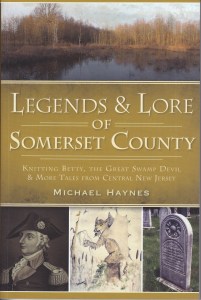
SomersetOne of the true joys of having more than a day off work at a time is the privilege to spend days reading. Although I read on the bus as a matter of course, it is a defined time, and editing isn’t as much reading as most people think it is. While doing research for my Sleepy Hollow paper, the question naturally arose: where did Washington Irving get the idea for the headless horseman? According to Irving’s biographers, the story was not an uncommon one. Headless ghosts are not unique, and he wrote the story while living in Europe as part of the serialized Sketch Book of Geoffrey Crayon, Gent. There is no practical way to know where he first heard the story. During my research I heard of a local source: Legends and Lore of Somerset County (New Jersey), by Michael Haynes. In this little compendium of stories of my current county, there is a claim that Irving learned about the story right here in New Jersey, where a traditional headless ghost rides. Again, it is impossible to say where he got the idea, but people like to feel that their local traditions are important enough to engage a major writer’s imagination.

Haynes presents several other regional tales that may rival the Jersey Devil and give ghosts a location just down the road. I suspect most places have tales of ghosts and mysterious beasts. It is always interesting to find out about those lurking in your own neighborhood. Scholars are now beginning to turn their attention to the sanctity of space. Location is very important to mobile beings like ourselves. The place where we find ourselves becomes “our place” and with the patina of time, often a personally sacred space. Tales of what happened here often take on the cast of the supernatural.

Local history has always held a deep fascination for me. Any region that I know, in a sense, intimately, is a region that has become part of my personal history. My region of Pennsylvania, for example, defines me although neither of my parents, or their parents were born in that state. And Massachusetts, Michigan, Scotland, Illinois, Wisconsin, or New Jersey, places I’ve lived, have become somehow alive with history. Legends and Lore of Somerset County contains tales that are not always believable in the workaday world we inhabit, but that’s the beauty of sacred space. Going beyond the mundane is entirely the point. Although Washington Irving may or may not have first heard of the headless horseman here, we have that legend, and there’s only so much that history can do to remove such a claim.


Awakening Forces

Star_Wars_The_Force_Awakens_Theatrical_Poster

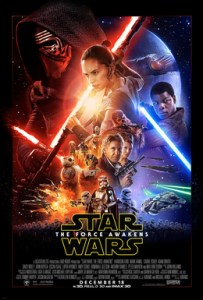
Star Wars: The Force Awakens does not disappoint. Many of us who saw the original installment recognized the archetypal image right away. Good versus evil, light and darkness, the quest for the father, and a host of other tropes backed the story in ways that made us believe we were in a galaxy far, far away. As is well known, the mythographer Joseph Campbell was closely consulted on the movie, bringing his own Jungian understanding of myth to the story. We felt that we cared about the outcome of these characters’ lives. Prequels are, of course, a hard sell. Although technically proficient, the Sith episodes I-III dulled the eyes of many original fans. It wasn’t just because the action had to be all “shoot-‘em-up” western style either. There is a logic to mythology, and yes, whether we want to admit it or not, religious imagery. The Force Awakens returns to that religious, archetypal imagery and it shows not only in box office numbers, but in the reviews.

This is one of those movies that kept interrupting my subconscious the night after I saw it, even as a matinee. There was some powerful imagery going on there. Having seen the film only once, I’m sure much of it escaped me, but even based on the trailers people were wondering about the cruciform light saber wielded by Kylo Ren. Naturally, the force does awaken, carrying the mythology further. C-3PO, however, is the one who blurts out “Thank the Maker” when the resistance finally gets a break. What would a robot know of the force? Visions and prophets, the stuff of classical conflicts of good and evil, are fully present and accounted for. Even the marking of Finn’s helmet in the opening scene has elements of the Passover to it.

What stayed with me the most is a concept traditionally associated with the Quakers—the light within. Kylo Ren is struggling to defeat that light. Others are, in effect, praying for him to realize that it is still there. The force pervades every living thing, but humanoids have the light within. Movies that understand this kind of archetypal thinking quickly draw a fan base. Part of what we are seeing on the screen moves beyond entertainment to a kind of religious thinking. The original trilogy led to the growth of an actual religion called Jediism. The tenets are almost Manichean in their duality, and despite an ending that leaves you wondering, those who know the power of mythology have no doubts who, at the end, will be victorious. It is the way of the force.


Top Predator

Jurassic_Park_III_poster

The reboot of Jurassic Park, Jurassic World, has been on my mind. Back in the early days of this century I hadn’t bothered to see either Jurassic Park II or III. The original, despite its faults, was like a childhood dream come true. I’ve always felt that dinosaurs (along with vampires and pirates) made for the best movies, although space has to be right up there in the top since 2001 (not the year, the movie). Since the summer I’ve made a point to carve out time to finish out the holy trilogy of dinosaur flicks. I liked the character Dr. Malcolm in the original, but he should’ve never been the main character of the sequel. The Lost World almost lost my resolve to see the series through. The story was unvarying: humans meet dinosaurs, dinosaurs chase humans. New and innovative means of trying to contain or exploit them try to demonstrate the evils of hubris and greed, but dinosaurs always prevail. Jurassic Park III was a bit better, going back to the original formula but adding something bigger than Tyrannosaurus Rex—the Spinosaurus. It was unbelievable, however, that a paleontology doctoral student couldn’t recognize it, thinking it a mere Suchomimus. At the turn of the century, new dinosaur finds had suggested that Spinosaurus was larger than T-Rex, and the movie reflected the new top predator of the time.

It is the little boy in me that keeps me coming back for dinosaurs. Some of my favorite toys were cheap, molded plastic dinos, and when my daughter was young we bought her all the more realistic (and pricey) Safari versions. When I get to the store, I still stop and look at the species we never acquired and make a wish. I think it’s because dinosaurs represent something we can never have. Species that grew to enormous size and had armor-like skin, and even, if some paleontologists are to be believed, considerable intelligence. Of course, that may just be the movie talking. In a world where all things are equal, we’d never stand a chance against dinosaurs. They are like reptilian deities.

When Amanda Kirby (ironically, the only adult to be addressed by first name in the movie by new acquaintances; the males are called by their titles even after they’ve been through several dinosaur attacks together) sees the incubators at the compound, she says, “So this is how you make dinosaurs.” Dr. Grant (let’s give him his title) responds, “No, this is how you play God.” Playing God is a trope as old as science itself. Planting crops to grow where you want them to grow is playing God in its own way. Creating uncontrollable forces that can destroy you seems to be a uniquely human trait. And so my imagination is drawn back to dinosaur days. Those who make the movies tug on wishes that any mere creature would have: to create its own gods and somehow manage to survive them. Hubris, it seems, is just as human as dreaming of dinosaurs.


Feasting

In addition to music, Christmas has also been associated with seasonal foods. Unlike today, when we think of foods primarily in terms of either fast food or culinary sophistication, Christmas dishes of yesteryear often had religious symbolism. While singing an English carol, for instance, you might hear of figgy pudding. I tried my first when living in the United Kingdom and it was nothing like the images its name conjures. It is more like a dense cake made of raisins and dried fruit, set aflame to burn off the brandy. Sometimes it is topped with holly. According to an interview on NPR, the Christmas dessert, in addition to taking weeks to make, contains thirteen ingredients, to symbolize Christ and the apostles. The holly is to represent the crown of thorns, and the flames the passion. That’s a lot of theology to stomach. (In seminary I had friends who used food analogies for theological purposes, but I suspect they didn’t know it was such an ancient tradition.)

Christmas cheer, I would’ve been shocked to learn as a child, generally involved spirits. For example in A Christmas Carol, Charles Dickens reverses his entrepreneurial relationship with Bob Crachit over a bowl of smoking bishop. I had always supposed this was a kind of soup or stew, but, again NPR comes to the rescue with a piece about Christmas drinks. Smoking bishop was made of port, and, according to the NPR story by Anne Bramley, is of the class of Protestant drinks called “ecclesiastics.” These were various alcoholic drinks named after Catholic church offices that Protestants used to poke fun at the ecclesiastical hierarchy of the Catholic tradition.

Christmas

A Christmas Tree primer

It is difficult to conceive of anything more basic than food and drink. All living things require nourishment. It stands to reason that when religious sensibilities began to appear that they would certainly be associated with the necessities of life. Holidays, as necessary breaks from the mundane, offer opportunities for bringing theology to the table. The most basic of ingredients, as any observer of biblical holidays knows, can contain more than just nutrients and roughage. There is a symbolism in what we eat. In these days when it is fashionable to declare religion nothing but stuff and nonsense, it can’t hurt to stop and look at what might be on our plate or in our cup before declaring it to be mere animal nourishment.


Christmas Music

While reading about holidays recently, I came across the idea of Christmas as a cultural holiday as well as a religious holiday. Now that it’s here, it feels like a little of both. My wife grew up in a musical family and Christmas music was a large part of her experience of the holiday. Although I grew up in a family where the religious aspect of the holiday was as preeminent as it could be with young boys, I don’t recall music being much a part of it. Perhaps we had enough of Christmas carols in church and on every shopping excursion. I don’t recall having a record player beyond maybe a close-and-play for our few 45’s. Now a large part of our holiday experience is the music. We listen to contemporary secular and classical religious and, to borrow an expression from popular parlance, it’s all good. Music spans the sacred and secular and suggests that we might all get along if only we were willing to try.

IMG_2649

Scanning our shelves we have a wide variety of Christmas music. It begins with Medieval carols and spans to a Very Metal Christmas and the most recent Pentatonix album. Even Amy Grant has a place in there from my college days. Like a kid I awake early on Christmas, from the long habit of getting up around 3:30. The house is quiet and, rare for New Jersey even the street outside is silent. In the hush I can still hear a kind of music. The music of peace, of a dream, of an ardent hope, of Christmas.

Christmas is all about sharing. We know Jesus of Nazareth was unlikely born this time of year, but we take it as a symbol. The peace of a silent night is best enjoyed in mixed company. With the political rancor of exclusion burning in our ears other days of the year, maybe we could think about sharing today. Sharing our land. Sharing our sense of hope. Sharing our music. The world could be such a wonderful place if we would only listen for Christmas.


All Go Down Together

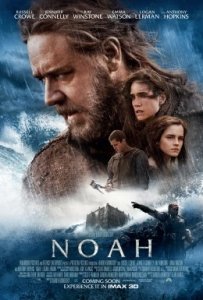
Noah2014PosterWhile the rest of the world was watching Star Wars: The Force Awakens, I was rewatching Noah, trying to find some profundity there. Like many curious people, I went to see the movie in the theater last spring expecting great things. While the story has some interesting elements, it just doesn’t live up to expectations. Noah is a hard character to like. In the biblical versions of the story, based as they are on older Mesopotamian prototypes, Noah (and his analogues) is a sympathetic character, at least in the reader’s mind. When we read we tend to identify with the main character, and since the builder of the ark is trying to preserve humanity from what seems to be an overly wrathful deity, we can sympathize at some level. What believer hasn’t felt put upon by the divine at some point or other? In the movie, Noah’s decision to end humanity after the flood is based on the silence of God. Indeed, that is one of the more profound aspects of the film—God never speaks to anyone so any action seems entirely human led. We’d expect someone who builds a floating zoo to be sympathetic to the human zookeepers at least.

Evolution, or something deriving from it, encourages species to protect their offspring. Some animals, of course, do this through over-compensation—producing more young than the world could bear if all survived to maturity. Mammals, however, care for and nurture their young. Noah’s ad hoc decision to end the human race, apart from being heavy-handed, is unreasonable and cruel. Who could look at their sons and say, “I’m going to let you age and die alone,” and yet feel that they are doing the will of the Almighty? Indeed, if humanity is made is God’s image, which Noah admits, isn’t this a form of deicide? Is Noah striking back at a silent God?

The movie does give the viewer much to ponder, but writing missteps plague the film throughout. Although wicked, Tubal-Cain is a more sympathetic character than the protagonist. He, at least, wants humanity to thrive. Noah, seeing how women are mistreated in Tubal-Cain’s kingdom, declares he will kill Ila’s children only if they are girls. There is a profound misogyny in the movie, it seems. Not that Darren Aronofsky intends for the story to be misogynic, but the implications speak loud and clear. To clear the world of violence, Noah proposes the most violent action of all. Like Noah, while everyone else was crowding into theaters with their fellow human beings to watch the force awaken, I was sequestered in my private ark waiting for a special message that refused to come. I wonder which is the more spiritual movie?


Away in a Manger?

The holidays are a time for getting together. At a friend’s house over the weekend, we were talking about nativity scenes. I mentioned a story about how a nativity scene had been missing the infant Jesus and he said he’d be right back with a solution. I have to admit that I’ve never seen Sweet Baby Jesus porter before. “Place that in your manger,” he said. I assume this is a seasonal brew, intended to draw the semi-religious toward a kind of holiday cheer. Now, blasphemy in a bottle is nothing new. In fact it’s quite common, I expect. Nevertheless, a bottle that says “One sip and you’ll claim the name” might be offering a salvation that it simply can’t deliver.

IMG_2642

Growing up, Christmas never had any connection with drinking. My father was an alcoholic, and inviting this particular spirit to the holidays seemed misguided. Still, I recognize that in many cultures tipples were a way of coping with the excessive periods of darkness. Even in these days of ubiquitous artificial lights, I find that the darkness just outside bears a considerable weight. We festoon our houses with colorful lights to ward off the night. We prepare special foods to take our minds from the bleakness outside the window. And yes, some turn to Sweet Baby Jesus to offer its own kind of shine.

The holidays mean many things to many people. The commercial aspects appeal less and less as the years go by, but having some time off work to be with family and collect my thoughts grows more important each year. What makes a day holy, I expect, is that you have things that are otherwise difficult to find. Life, for many, is a long series of denials of what they really want. When the holidays come, they indulge. Who am I to begrudge someone else of what makes their ordinary days sacred? Who indeed?


Looking Ahead

HistoryFutureA History of the Future is a great title for a book. Classified, I suppose, as a dystopia, James Howard Kunstler’s novel is set in upstate New York, not too far from now. A war in Israel has led to the destruction of major US cities and our electronic, consumptive way of life suddenly comes to an end. Small pockets of people, such as those in Union Grove, try to reconstruct a way of life where executives now have to become farmers and those who were used to having plenty still can’t manage without thinking of others as servants. It is a quiet and disquieting world. Perhaps the most striking thing about Kunstler’s vision is how prevalent religion is within it. An entire swath of the middle of the country has followed a former televangelist back to pre-Civil War ideals and seeks to make white supremacy national policy. Other pockets of governments resist the growing strength of this backlash, but most people are just trying to get by, uninvolved in large-scale politics.

The most sympathetic group in the novel, at least in my reading of it, is the New Faith Covenant Brotherhood Church of Jesus, run by Brother Jobe, himself a former southerner. This church moves, lock, stock, and barrel, into Union Grove and begins to build a commune that, unlike those of the local Presbyterians and secular rulers, manages to thrive. Brother Jobe has mystical abilities and his heart is in the right place. As things continue their decline amidst the everyone for him/herself attempts to restore order, this fellowship manages to pull itself together through common belief and perhaps a bit of divine intervention. In the future these aren’t so easily teased apart.

Not a typical action-packed dystopia with raging violence, Kunstler sketches a more gentle apocalypse. It’s not a final disaster and big government has not yet reemerged to stamp its will on a malleable people. Women and men relearn what it means to work by hand and to live with less. In some ways the vision is comforting. Still, those who will have been patrician in the past manage to become feudal lords, of a sort, in this new world. Not everyone can fit into that pattern. The overall picture in what seems to be a parable is that pre-industrial society did, in fact, work. It wasn’t perfect, of course. Monasteries and lords embodied different values where no one could truly claim to know what this was all about. The future, it turns out, is mostly the past.


Holiday Fervor

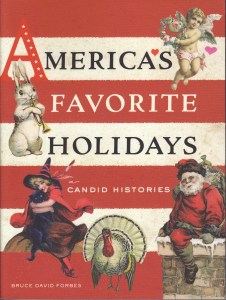
AmericaFavHoliTime comes in different varieties. In temperate regions where the changing seasons keep the time of year for us, we tend to have seasonal holidays. Christmas and other December holidays mark the shortest days of the year with the hope that light will soon become more abundant. Spring rituals, near the time of the vernal equinox, encourage the return of fertility to the earth. Autumnal holidays mark the approach of darkness once again as the world twirls endlessly on. Summer, bright and warm, doesn’t really lend itself to so many holidays. These thoughts came back to me as I read Bruce David Forbes’s America’s Favorite Holidays: Candid Histories. Forbes doesn’t cover all the special days, but focuses on Christmas, Valentine’s Day, Easter, Halloween, and Thanksgiving. These are five holidays marked, in some sense, by spending. They are often, although Forbes doesn’t really spend too much time on it, the focal point of cultural wars where various Christian groups wish to reclaim a certain day for its “rightful heritage.”

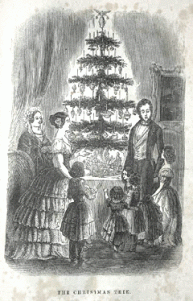
One of the real values of books like America’s Favorite Holidays is that it is clear that these claims of “keeping Christ in Christmas” and its kin are samples of collective amnesia. Many “Christmas” traditions predated Christianity. Others developed concurrent with it, but in “pagan” contexts. Christmas trees, for example, didn’t originate in the latitudes of Bethlehem. The same may be said for just about any holiday. Valentine’s Day and Thanksgiving, of the five explored, are the lone exceptions. These are fairly recent holidays and neither one marks a solstice or equinox. They celebrate aspects of life we value, making them sacred time. Don’t expect to get Valentine’s Day off of work, however. Capitalism never makes room for love.

Christmas, of course, is the holiday most under dispute. All holidays may be commercialized, but for Christmas spending is central. Forbes insightfully shows that Christmas is, and may always have been, both a cultural holiday and a religious holiday. The cultural aspect of the season is the one that most people celebrate. The birth of Jesus—which we are fairly certain was not in December—was a latter add-on. A baptism, if you will, of a pre-existing holiday. The winter solstice holiday is a staple of cultures in climes where the difference in available light and warmth is appreciable. It marks the point of the year when things start getting better. Yes, the real cold of winter has not yet set in, and there will be months of snow and ice. Still, once the solstice is passed, there is more light to help us cope. Celebrating sacred time, whether secular or not, is the natural reaction of people who crave light over darkness.


O Come Let Us

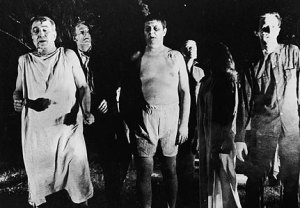
During the height of the zombie craze a meme went around the internet proclaiming “zombie Jesus.”  It was funny because the salient feature of zombies is that they come back from the dead.  Noting the resurrection and the easily annoyed trigger finger of Fundamentalist Christians, some wag brought Jesus and the undead together.  We had a good laugh and forgot about it.  A guy in Ohio with a sense of humor, took the zombie Jesus meme and constructed it into a zombie nativity scene in his yard.  None of us knew about it, of course, until it caught the attention of the news.  A story in the Washington Post notes that the man was required to take the scene down for violating zoning laws.
 
People take their religion very seriously and have a hard time laughing about it.  Religion is under constant fire from angry atheists and it already suffers a complex from having so many liberals pointing out the historical and logical faux pas from within the tradition.  Some people take advantage of American gun laws to stock up against the day when they’ll step over the line and join those who shoot up offices where they think Mohammad is being mocked.  Then we’ll sit around and wonder if we should classify them as terrorists or just deranged.  And we’ll post a take-down order, just in case any zombies remain.

NightoftheLivingDead
 
As an academic (at least erstwhile) I noted how little religion scholars reveled in the humor of their traditions.  There’s funny stuff in the Bible, believe it or not, and many religious traditions allow for a Mona Lisa smile every now and again.  A far more common stance, however, is that of taking offense.  Something that most critics just don’t realize is how much religions mean to those who believe.  I chuckle once in a while, but I never belittle the beliefs of others.  I have been in this religion thing since I can remember, and I know what it can mean to people.  The best way to avoid offending, I think, is to keep our jokes among the crowd of those who have a sense of humor.  Of course, the undead obey no rules and the media (and its unruly accomplice, the internet) can’t resist spreading memes that might earn a buck or two of advertising revenue.


Star Lords

Things are done differently in the UK. I suppose that’s obvious, but I have always noticed on my trips between our respective countries that some things that go without saying here or there receive the opposite treatment overseas. We are, however, united by a common religious heritage that sometimes goes unrecognized. A recent opinion piece by Giles Fraser in the Guardian discusses the banning of a commercial featuring the Lord’s Prayer in cinemas. The first difference that came to mind is that advertisements for something like the Lord’s Prayer seem unlikely in the United States. We are a biblically-based, biblically illiterate society, and if someone is willing to put up the money, advertisements are a no-brainer. A second difference is, as Fraser points out, there is fear that the Lord’s Prayer might offend people. Surely there are those who will take offense, but Fraser points out that there is nothing offensive in this prayer. It isn’t an attempt to convert. It is reflective, irenic, peaceful.

The point of this opinion piece, apt when Christmas wars are in the air, is that freedom of religion requires a dose of common sense. Yes, many atheists are offended by religious practices, but the question is whether we can ever completely avoid offending one another over belief. Beliefs differ. Not even everyone agrees with “live and let live.” The problem is that some offensive ideas lead to violence. We’ve forgotten how to talk with one another. In this world of uber-security, we find difference terrifying. Religious difference especially. So the angry atheists suggest religion should be driven indoors and rendered mute. Which violates what some religions are all about.

The British ad was to take place before the airing of the new Star Wars movie. One need not be a detective to discern the deep and inherent religious message in the original series of the franchise. Indeed, people were disappointed with the prequels because they had lost that sense of mythic grandeur that Joseph Campbell had been so helpful in instilling in the original trilogy. The films were made with religion in mind. Hidden behind a mask, perhaps, but clearly there. If Yoda had uttered something like the Lord’s Prayer, it would have been accepted as merely part of a movie. And as the reboot trilogy shows without doubt, movies have the power to offend.

Star_Wars_The_Force_Awakens_Theatrical_Poster


Let There Be

President Dwight D. Eisenhower was, as everyone knows, a military man. With the role of Commander in Chief, United States Presidents control a military that eats up an enormous amount of tax dollars. To keep us safe, we’re told. Even though he was a military man, in his farewell address Eisenhower warned the American people of the Industrial Military Complex, a group of companies that not only eat national budgets for breakfast, but also control the most dangerous technology in the world. Secrecy, we’re told, is key. We don’t want any other nation on earth knowing what we’re up to. In fact, most Americans have no idea of and no control over what we’re up to. When people like Edward Snowden come out, their tales are so extreme that it is fairly easy to dismiss them. Would a good government ever do that? Nah. We’re the good guys, right? These were the thoughts going through my head after I watched Star Trek Into Darkness. I always run a couple years behind, it seems, on major movies. This one disturbed me in a way uncharacteristic of the Enterprise and its crew.

StarTrekIntoDarkness_FinalUSPoster

Since it’s been out a couple of years I don’t need to give spoiler alerts unless some readers are even further behind than me. Okay: here’s a spoiler alert.

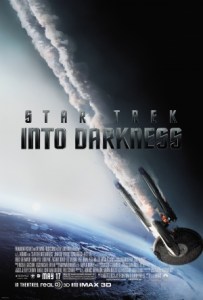
As James T. Kirk gets busted down in rank for violating the prime directive to save Spock, he takes over the Enterprise when Admiral Pike is gunned down in a top-level Star Fleet meeting. Vowing revenge, he encounters Khan, the eponymous villain of the old series Wrath of Khan. As Admiral Marcus had made an alliance with Khan the parallels with the Bush family and Sadam Hussein became clear. And when Scotty finds a super starship on a moon of Jupiter, secretly developed by Star Fleet to go to war with the Klingons, more than a touch of the Black Ops came to mind. Here was a government that couldn’t be trusted and that didn’t trust its people to know its intentions. When Khan pilots this Black Ops starship into San Francisco, the shot of it falling out of the air so resembled classified military craft that I actually shuddered. The destruction was a parable of 9/11.

Throughout the movie there is a dialog of ethics. Is it right to kill a known criminal without trial? Is it permissible to start an unprovoked war? Does might make right? Khan, despite being evil, tells the truth. The movie disturbed me because I can’t remember the last time I could truly trust the government. I vote Democrat because they are the party that seem to do the least damage to the planet and actually care for the poor. I was born, however, after the Eisenhower administration. John F. Kennedy was assassinated after my first birthday. My reading since leaving college has convinced me that we will never get the full story. Star Trek, although set in the future, has always been a projection of the present day. Those few groaners of episodes from the late ‘60s that delved into popular culture proved that. As I watched the crew of the Enterprise battling an enemy under its own flag I realized little has changed in the final frontier.