No Cult

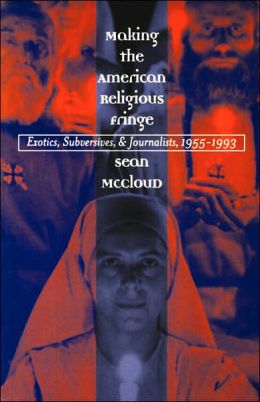
MakingAmericanReligiousFringeThe image of hundreds of lifeless bodies in the jungles of Guyana foregrounded by a metal tub of poisoned Flavor Aid is a difficult one to forget. If it were not for the media, however, most of us never would have heard of Jonestown. The term “cult” was applied to Jim Jones and the People’s Temple, just as the word was increasingly becoming a pejorative term for those with “other” beliefs. Sean McCloud’s Making the American Religious Fringe: Exotics, Subversives, and Journalists, 1955—1993, is a probing study into what makes a religion “mainstream,” versus a “cult.” (I know, too many “scare quotes.”) McCloud considers the role that journalists, as reporting in major news magazines, have had on determining American views of what is normative religion. If, that is, normative religion can be posited at all. It is quite clear, upon reflection, that any religion has some odd beliefs: you can’t wear this or eat that, you have to be at this place on this day, you must shave your head, etc., etc. The question McCloud explores is why some end up being called cults and others do not.

Scholars of religion have abandoned the term cult, for the most part, because of its arbitrariness. The defining markers of “cults” are unclear, and one religion influences another so that a continuum forms from Moses to Moonies. That’s not to say religions are all the same, but it is to say they are not so different either. The declaration of a religion as a cult, if based on belief systems, is tenuous. All religions make claims impossible to verify. Some, very traditional, are also very small in membership. Religions have been fabricated from antiquity to present, and even as I write this new religions are likely being conceived somewhere. McCloud points out that the popular media gave us the distinction between “mainstream” and “cult.” That distinction itself may be more telling than the differences between various groups of believers. It is the language of exclusion—true religions versus false religions. And any more than one religion, if considered seriously, is problematic.

Religions, old and new, large and small, make truth claims. These claims cannot be tested this side of eternity, so they must be taken by faith. The minds of many will be turned toward extreme actions motivated by idiosyncratic understandings of religion today. McCloud shows us that fringe is an integral part of the fabric—religion is woven from the experience of people through the millennia of our existence. And yet we still have no consensus. We have enough experience, however, to know that when one religion unravels another will be woven from the dangling threads. Some will be misguided, although all will claim to have the truth. Until that ultimate truth is definitively known, the best policy seems to be avoiding the temptation to call those of a different faith a “cult,” when “religion” does just as nicely.

Instant Education

Among the “non-essentials” upon which I spend my earnings, books hold the top spot, if not in value, certainly in quantity. Reading is more than a pass-time—it is perhaps the most basic aspect of who I am. I love books. While reading a New Jersey Star-Ledger piece by Allan Hoffman entitled “Learning by the book,” however, an uncomfortable truth dawned on me. Hoffman gently laments that the search for information has gone almost wholly electronic. As a person who currently works in the book industry, I know he’s right. More than that, I know it from my own life. I can’t remember the last time I opened a phone book, other than to retrieve a pressed leaf I’d inserted between its pages for pressing. If some bit of information about a religion or a biblical passage escapes my distracted brain, a few keystrokes work better than shuffling to the shelf, pulling off the reference books, and thumbing through until I find the datum. No, we are all addicted to speed.

Despite the best effort of Google books, much material necessary for research in many subjects remains sequestered in actual books. The problem is, for contemporary knowledge, book production is slow. In my editorial work, and as an erstwhile author, I know that the five years I spend researching and writing a book, the submission time to a publisher, the eventual decision, and then the year or longer production time, all equate to immediate obsolescence. Any non-fiction book is outdated by the internet even before it is shipped from the warehouse. New truths are born at the speed of light while books take years to make. I agree, Mr. Hoffman, we’ve lost something in our idolatry of the instant knowledge. If you need urgent info (What do I do about a snake bite? Where is the nearest Starbucks?) the internet is your up-to-date databank.

I have long known that the study of religions is often the study of texts (most of which are online now). Believing some ancients knew more about the ultimate realities of life than we do, either by dint of divinity or enlightenment, we search the texts about them or by them in hopes of joining them in a knowledge beyond knowing. Now in the age of the internet, new messiahs arise almost daily, proclaiming their truths across the world-wide web of wisdom. I have a feeling there is a dissertation or two in there. Of course, it will take a few years before you’ll see them in print.

IMG_0966


Which Way to Eden?

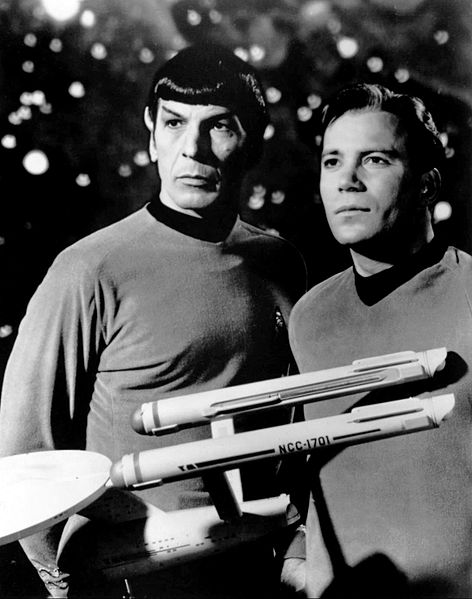
We don’t have television service, and I haven’t watched TV regularly for about two decades. Over the years, however, we’ve collected the DVDs of the shows we miss, or which we wish we’d seen so that we missed them, and use those in lean times. Feeling a bit lonesome over the weekend I downed a few Twilight Zones followed by a Star Trek chaser. On a three year mission to explore strange new worlds, my wife and I have been working our way through Star Trek, the original series. We’ve finally reached the final chapters of the final frontier. I’ve noticed as we’ve gone through the episodes just how biblically literate the series is. Even Spock quotes the Bible from time to time. Over the weekend, to keep my mind off present reality, we ended up watching “The Way to Eden.” As much as I enjoyed Star Trek as a kid, when it was still new, the overtly ’60’s-themed episodes bother me as an adult. I’m very much still a hippie at heart, but I don’t like lingo, and the alien cool cats in their weird shorts and funky hairdos chanting “Herbert! Herbert!” still really bother me. Somewhat predictably the aliens hijack the Enterprise to reach their fabled paradise.

Leonard_Nimoy_William_Shatner_Star_Trek_1968

Spoiler alert! For those of you who’ve been asleep since 1969, or have had no curiosity about the inspiration behind all those geniuses who’ve ushered in the technological revolution, I’m about to reveal some details. Eden is deadly. The landing party finds the short-pants wearing, funky guitar-strumming crooner dead under a fruit tree. “His name was Adam,” Spock laconically notes. The scene of Dr. Sevrin’s burned foot has stayed with me since childhood, and I still cringe when he leaps out of the shuttlecraft to take a bite of the poisoned fruit. It was only as an adult that I realized his name was reminiscent of Eve, indeed, a kind of blending of the words “sin” and “Eve.” In a kind of homoerotic death scene, the two male leaders end up under the tree together. Probably my overactive imagination.

Sometimes I ponder how much a biblically illiterate society misses. I frequently told my students that the Bible is foundational for our culture. Whether or not you’re aware of it, it is reinforced regularly in ways both ortho- and heterodox. Despite our very secular self-awareness, entire movies, such as The Book of Eli, can be based on the premise of biblical literacy. It is entirely possible to watch movies and television shows, and to read novels (graphic and literary) with enjoyment and not notice the allusions. The reasons they are there, however, is that despite the abuses of literalism, the Bible does have some profound things to say. It’s up there with Shakespeare and Chaucer. And even with Roddenberry and his host of staff writers. And I suspect that it still will be, in some form, in the twenty-third century.


Personal Dogma

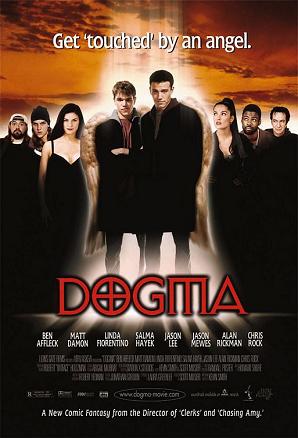
Dogma is a movie that many seminarians discover at some point in their theological education. Smart, funny, and irreverently reverent, the film follows the exploits of a couple of misled angels trying to get back into Heaven and thereby negating all of existence. It is no surprise, given Kevin Smith’s origin myth, that the film opens and closes in New Jersey, but I often ponder the strange coincidence of places in the movie to places I’ve lived since my own seminary career began (and ended, rather like the massacre scene in Red Bank before God cleaned it all up). Nashotah House, where I discovered Dogma, is in Wisconsin. Wisconsin is the state to which Bartleby and Loki, the two angels, have been banished. The means of their escape from this upper-Midwest purgatory is a church in New Jersey. Along their way the angels pass through Illinois and Pittsburgh, before crossing into the very state where God is located throughout the movie (the Garden State, of course!). After having been summarily dismissed from my seminary post in Wisconsin (not for watching Dogma, I’m assured), I too headed for New Jersey. Before that I had lived for a while in Illinois (home of Bethany) and Pittsburgh (home of Moobie). Watching Dogma is in many ways a reflection of a journey that I’ve accidentally undertaken.

YEE.tif

Another kind of dogma seems to be at work in the Eagle Mountain International Church in Newark, Texas. The Associated Press announced that 21 cases of childhood measles had broken out in the church, particularly among the homeschooled and unvaccinated. Fears of inoculating against a pre-medieval faith have led many of those who trust their own knowledge above that of the collective specializations of educators, to put their children at risk for the sake of belief. The belief, perhaps unsurprisingly, is poorly informed. One of the pastors of EMIC (!) has been encouraging vaccination as biblically sanctioned. If not for the sake of your children, for the sake of the scriptures…

Vaccination, in various forms, was developed in both Christian and pagan contexts. The earliest examples come from Asia where the plagues sent by the devil were resisted with human ingenuity. It takes a paranoid twenty-first century, first-world faith to suppose saving our children is some kind of conspiracy. “Let the one without germs,” we can almost hear them say, “throw their tissues away first.” In my Pittsburgh days, I was very much a literalist. How surprised I was to see Lady Aberlin from Mister Roger’s Neighborhood playing an angst-ridden nun, derailed by an exegesis of “The Walrus and the Carpenter” in Dogma. Although the Neighborhood is “anytown” those of us locals knew that Fred Rogers was from Pittsburgh. Lady Betty Aberlin was the niece of King Friday XIII, and only those with no conspiratorial imagination would suggest it is merely coincidence that her cousin is named Kevin. With or without dogma.


Dangers de la nuit

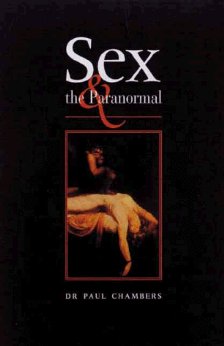
Sex&Paranormal Some books require extra clothing on the bus. When I saw the title of Paul Chambers’ Sex and the Paranormal, I noted the juxtaposition of two aspects I’ve frequently argued are intimately related to religion. There can be no question that religions in some way attempt to regulate sexuality. Those forbidden topics loosely collected under the sobriquet of “the paranormal” tend to be only a baby-step or two away from religious beliefs. Often those who are open to religious acceptance also allow for the possibility of the paranormal. So what did these two quasi-religious phenomena have to do with one another? How was I going to read a book with a title like this on public transit? How would I plumb the depths of its wisdom without feeling like a pervert? I found an unused book sock, a kind of colored condom for textbooks, and wrapped in around my questionable interests and read as discretely as possible.

Chambers, a member of the Society of Psychical Research, as well as a scientist, starts the reader off with what he is surely correct in identifying as a combination of sleep paralysis and hypnopompic hallucinations—the feeling of being violated by demons or ghosts in the night. While the reasons are poorly understood (beyond our latent sense of vulnerability while asleep), the fact of sleep paralysis is well documented. As Chambers points out, our over-active, often religiously fueled, imagination fills in the blanks for those who wake up unable to move, feeling a presence in their darkened rooms. This leads Chambers into a discussion of Lilith and succubi and incubi, the molesting demons of ancient lore. Witch-hunts and amorous aliens are strange bedfellows in this volume as well.

Studies like this daringly bring together subjects that have been parsed apart by conventional society. They are also deeply relevant. Many of us remember the (largely mythic) Satanic worship scares that plagued pockets of America, and then Europe, in the 1990s—latter day witch-scares, as Chambers points out—the tremors of discontent that rumble through societies struggling for an overly rational explanation for human behavior. They are present-day reminders that no amount of fiscal solvency and empirical data will ever banish the deep fears from the human mind. Our emotions have often served us very well, and have sometimes abused us, for the entirety of our evolved existence. And although we can hold them at bay in the clear light of day, at night we are surprised to discover that we really believe in monsters after all.


Gold Digging

To relieve the mangled up snarl of sadness, fear, and loneliness where my internal organs used to be after dropping my daughter off at college, I’ve been watching television. When I can see the screen. Despite this feeling that the world is ending, I just don’t have the tolerance for much of the drivel that passes for entertainment these days. After a night of Amish Mafia on Discovery, I tuned in again for an escapist viewing of Gold Rush: South America. Those who don’t know me personally (and some of those who do) may be surprised to learn that I have panned for gold myself—not religiously or regularly, but with occasional serious hopes of solving my financial woes. Watching Todd and his group of guys setting up sluice boxes in the remote Andes and equatorial jungles has almost a pornographic attraction. The earth gives us what we need. Of course, gold’s main function in antiquity was being used in religious settings—whether making gods or decorating their priests—and that gives capitalism its drive for precious metal even today.

Photo credit: Agnico-Eagle Mines Limited

Photo credit: Agnico-Eagle Mines Limited

Mining is not so simple as it seems. You do have to research claims and find out who has the “rights” to property before you begin prospecting. There is a kind of wild-west feel to it, and claim jumping is still a crime. While watching the Gold Rush guys run into disappointment after disappointment, it still bothered me a bit how quickly the solution seemed to involve destroying the ecosystem to find the shiny rocks. Excavators had to be driven through the jungle, trees knocked over, and when the camera longingly lingers over a huge gash in the ground for an industrial gold operation, all the crew can say is what an impressive sight such a deep hole is. When they mention gaping holes, however, I feel there is something missing deep inside my own soul, and I wish they’d just stick to panning.

After many trials and tribulations, they find gold worth $50 a yard. They locate the claim holder and negotiate a deal. Todd’ll move his operation from the frozen Klondike to the sunnier climes of Guyana. As the camera pulls back, the guys gather into a little knot for a word of prayer. Yes, this crew of tough outdoorsmen bow their heads and ask the Almighty to help them find gold. If only it were so simple. The prosperity gospelers would have us believe that the divine wants us to be wealthy. If it was that easy, though, reality television shows would never last more than one season. And besides, some of us would trade every material thing we have to turn the clock back just a few hours or days to live them all over again just to fill in the great void that follows the inevitability of growing up.


Amish Paradise

Once upon a time, intelligence could be found on cable networks such as Discovery Channel, and Animal Planet. Like higher education, however, these ventures soon learned that people do not want to be educated, but entertained. So it was that I found myself watching, with increasing bewilderment, Amish Mafia. The very discord of the title is intentional as the show “dramatizes” disagreements among the Anabaptist communities of central Pennsylvania. The result is coarse and seedy, and not a little salacious. And addictive.

Photo by it:Utente:TheCadExpert (Wikicommons)

Photo by it:Utente:TheCadExpert (Wikicommons)

I grew up not too far from several Amish communities, and I’ve visited Lancaster a time or two. Living a lifestyle that the vast majority of Americans would classify as boring, the Amish keep to themselves, constructing an existence based on strict religious principles and a rejection of modernity. Recently, however, the Amish have become a sexy topic for romances and fictional clashes between their traditional way of life and the high-tech world that surrounds them. For those of us who felt a kind of authenticity to The Witness, watching Mennonites lock and load their assault rifles to intimidate their rival construction workers, and, in the words of Weird Al Yankovic, “get[ting] medieval on your heinie,” Amish Mafia presents the viewer with a world of kidnapping, extortion, and shunning, all within one episode. Trashing-talking pietists climb into luxury cars and put drunken buggy drivers in straight-jackets where they’re hauled off to extreme Bible-reading therapy. This seemed nothing like the Amish I had learned about in classes on primitivist societies.

We like to watch the self-righteous crumble. Who doesn’t want to believe that they are about as good as their neighbor? Those of us in Pennsylvania, Ohio, Indiana, Illinois, and Iowa (from my experience) see the Amish occasionally, quietly living their lives without the amenities that define us. We resent that, yes, you can get along without cars, telephones, televisions, internet, and weapons. Who really needs well-made furniture and quilts to keep warm at night when you’ve got Ikea and a furnace like a locomotive in your basement? And they know their Bible. Goodie-two-shoes showing us something that many of us have suspected all along—authenticity comes from inside, not an electronic world we can’t touch. I don’t idealize the Amish. Their lifestyle takes discipline and a level of belief in a worldview that doesn’t match what I’ve been taught. But then, Amish Mafia also requires a gratuitous suspension of disbelief.


Super Women

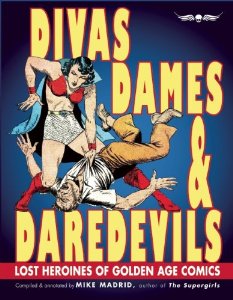
DivasDamesDaredevilsDivas, Dames and Daredevils: Lost Heroines of Gold Age Comics, by Mike Madrid, is a stroll down a memory lane that many of us never previously walked. My imagination is such that I no longer read comic books, but as a child they provided a cheap escape from a reality that didn’t feel so different from the crime-infested world that superheroes inhabited. For young boys reading these stories the absence of women was normal—there were some things of which Mom didn’t approve, and that was because she just didn’t understand. Boys will be boys. Still, Mike Madrid has ably demonstrated a secret knowledge that the 1950s would deem arcane—female characters once held a position nearly equal to that of men in the world of comics. Prior to Comics Code Authority in 1954, the women who helped win the Second World War were portrayed as tough, independent, and in charge (to an extent) of their own destinies. In the conservative backlash of the ‘50s, however, women were diminished, relegated to the home and domestic life. Comic books presented them as secondary to men. That myth has proven pernicious, even now, six decades later.

One of the perks of blogging is having someone you’ve written about contact you. Mike Madrid has been the subject of a previous post for his book The Supergirls: Fashion, Feminism, Fantasy, and the History of Comic Book Heriones. Madrid’s agent kindly sent me an advance proof of Divas, Dames and Daredevils, and I was once again struck by the historical scope of knowledge that these books present. Academics are—let me correct that—some academics are becoming aware of the fact that popular culture defines reality for many people. We find our troth in those who live on the big screen or on the pulp paper, those who rise above the constant threats of an uncaring world. We’ve seen that business can be its own evil empire, and superheroes, and everyday people, do have it within their power to act. Madrid shows that we were well on our way to equality of the sexes when the haircut and horn-rim crowd of the clean-cut 1950s insisted a return to Stone Age ethics in the treatment of women was appropriate.

In keeping with the general theme of this blog, the book has a chapter on the goddesses who became heroes. We all know Thor, but what of the forgotten Fantomah, Amazona, Marga the Panther Woman, Wildfire, Diana the Huntress, or Maureen Marine? Madrid’s book presents a story from several of the animated heroines of the days before censorship tamed the feminine mystique. More than that, he clearly shows how women—even ordinary women—were once deemed incredible and awe-inspiring. Then the titanium gate of male inferiority complexes and the vaunted “old ways” crashed down, trapping us all in a world fit to be ruled by men alone. I congratulate Madrid for resurrecting so many forgotten figures who never had a chance to become cultural icons. All women are heroes, and I know there is a hero that I miss very much, although even Mike Madrid didn’t mention her in his wonderful book.


Slippery Logic

Last week NBC reported on a baby in Tennessee. Babies in Tennessee, one might suppose, are pretty common. This one, however, was given a name stricken down by the courts. Child Support Magistrate Lu Ann Ballew declared that the baby could not be named “Messiah.” Apart from the statement that this is a title and not a name (don’t tell Judge Reinhold, please), the judge (not Reinhold) demonstrated her biblical illiteracy by stating that the title messiah has, “only been earned by one person and that one person is Jesus Christ.” Oh well, this is the Bible Belt, after all. Nevertheless, I would expect someone so deep in the Bible Belt to know the actual Bible a little better.

“Messiah” derives from a Hebrew word meaning “anointed one.” Its meaning is somewhat more literally along the lines of “smeared with oil,” for that is what anointing is. The title is used for several people in the Bible, not just one. Aaron, for one, was anointed. David was anointed as king, as were several other characters, including ill-fated Saul. And let’s not forget where Isaiah says clearly of Cyrus II, king of Persia, that he is “his anointed,” i.e., Yahweh’s anointed, in Hebrew, “his messiah.” Not Jewish, not Christian, Cyrus was a good old Zoroastrian. And he was just one in a long line of messiahs.

Where's your Messiah now? Oh, there he is.  (Photo by Persian Light.)

Where’s your Messiah now? Oh, there he is. (Photo by Persian Light.)

I’m not doubting Judge Ballew’s reasoning that it might be in the best interest of the child not to have such a controversial name. I do doubt, however, that it would be in the best interest of that child that he be raised being taught that evolution is a myth and special creation six thousand years ago is science. I do doubt that it is in his best interest to be taught that homosexuality is a sin and that it is something that only people have ever done because of their “fallen nature.” I do doubt that it is in the child’s best interest to be raised believing that if a woman is pregnant that a male-dominated government has the right to decide whether she carries the baby to term, no matter what. And once that baby is born, I do not believe it is the government’s right to decide on what his or her name shall be. And I expect that all the people named “Jesus” out there would agree. And Judge Reinhold.


Corn is King

For those who no longer believe in Hell, the DMV can serve a very useful function. Actually, the Department of Motor Vehicles is truly the great leveler of society—just about everyone has to cross its threshold, it is just that they all try to do it at the same time. Waiting in lines has always been a problem for me. It’s not that I think my time is more important than anybody else’s, it’s just that I have so much to do without standing in endless lines. Especially since work keeps me away from useful pursuits for over eleven hours out of every twenty-four, weekends seem somehow too sacred to be spent at the DMV. But the Devil must be paid his due. When paying the Devil, I take along Stephen King to pass the time. So it was over the weekend that I found myself reading “Children of the Corn.”

Of course, like most horror movie fans, I have seen the movie a time or two. I’d never read the story before. This is one of the King tales based most directly on religion gone wrong; the children, as any reader/watcher knows, have distorted Christianity into a midwestern corn-god religion. It may seem unlikely to urban folk, but I have stood next to corn stalks that have towered high above my head, ominously silent like triffids on a sunny Wisconsin afternoon. It can be unnerving. Almost a religious experience. But turning back to King, the story differs from the movie, of course, and what the written version makes clear is that the children distort the New Testament, but leave the Old Testament intact. King, like many horror writers, is biblically literate. Yet, this picture of Old Testament god versus New Testament god is stereotypical and a little misguided. The god of Christianity is a deity of many moods. The wrath in Revelation, or even some of Jesus’ sermons, however, stems directly from Yahweh’s darker moments.

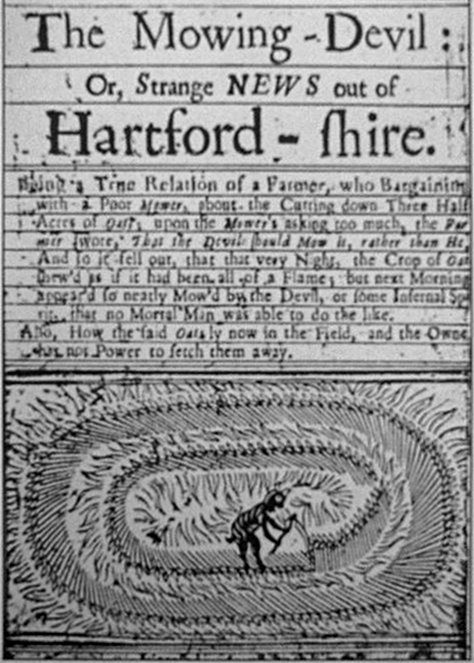
Diablefaucheur

How do we know what is demanded by this mercurial deity? The theological ethicists argue over this daily, but nowhere in the Bible does God have a problem with people treating each other as they would want to be treated. Some of the punishments for minor infractions seem a bit severe—or very severe—but the basic principle, given the Weltanschuung in which it operates, need not cause undue fear. Women, homosexuals, gentiles, Jews, anybody reading parts of the Bible will no doubt be offended by the details. As the saying goes, the Devil is in the details. And that’s why I’m spending my entire Saturday morning at the DMV.


Garden of Earthy Delights

AdmenEve I’ve self-identified as a feminist for as long as I’ve understood the word. I know that such a statement from a man must sound somewhat disingenuous, but I have never believed men are in any way superior to women. I suppose part of it may have been having men make such a poor showing in my early life, or maybe it was I simply realized people are all different from each other. Gender is just another one of those differing factors. It is always a surprise to me when I read, therefore, that feminism is no more. Some writers suggest that we are in second or third wave of feminism. I think we’re all just people, and that we should learn to treat each other that way.

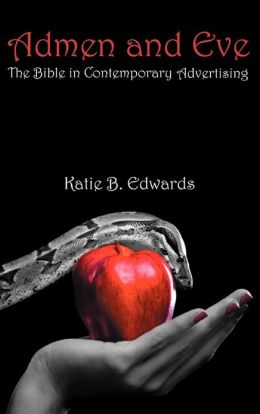
I recently read Katie B. Edwards’ Admen and Eve: The Bible in Contemporary Advertising. Edwards identifies herself with the contemporary feminism that is associated with biblical study. Reading the Bible from a woman’s perspective can’t possibly come at a cheap price. Nevertheless, Edwards focuses on the character of Eve, and specifically how she is used in post-feminist advertising. Admen who are targeting the younger demographic of women about up to thirty present Eve as a strong female, sometimes next to an insipid Adam (good-looking, but essentially brainless). Even though Eve may appear undressed, she is self-objectified, according to Edwards, and therefore is not objectified by the viewer. Along the way, Edwards also does some hermeneutical work on Genesis 2-3, and showing how the story is recast in terms of a buyer’s market.

As interesting as I found Edwards’ analysis, what stood out most strongly was the fact that advertisers have no difficulty in using a biblical character for a biblically illiterate public. Many people in the western world recognize Jesus (whether Buddy or the regular one), but of Hebrew Bible characters perhaps the only ones that readily come to mind are Eve and Adam, Noah, Moses, and David and Goliath. Some still recognize Samson. These characters, however, are almost always lifted from their contexts—they are caricatures rather than the object lessons they were originally intended to be. What Edwards demonstrates, the admen have known all along: sects sells. If you want them to buy, make the marks feel like it is a religious act. And we can almost hear the advertisers say, “Let us prey.”


Esoteric Goddesses

250px-Statuette_Goddess_Louvre_AO20127One of the nice things about the internet is that you can indulge your unorthodox interests and nobody will much care (except, of course, the US government). The other day, while reading about monsters, I found a fellow WordPress site, EsoterX. More specifically, I found a blog post on Ashtaroth. Those who have more than a passing interest in my background know that I spent a few years of my life writing about the goddess Asherah. Asherah and Ashtaroth are sometimes easily confused by anyone not reading about them in the original languages, but I settled on Asherah because we simply don’t have much textual information on Ashtaroth. Ashtaroth has gone by a number of names over time: Athtart, Astarte, and, as I just learned from EsoterX, Lord Treasurer of Hell. I won’t try to repeat the clever observations of EsoterX, but I can’t help myself add my own two shekels’ worth.

Ashtaroth is clearly one of the bad girls of the Hebrew Bible. She tempts the upright astray, and she seems to have been a perennial favorite among the less-than-orthodox Israelites. The Bible doesn’t take much care to flesh her out fully, and she appears only in minor roles in the Ugaritic texts. Some in the ancient world easily associated her with Ishtar, and their names do seem to bear some kind of relationship. Ashtaroth is connected to the planet Venus, as was the latter goddess Aphrodite—named, appropriately enough by the Romans, as Venus. Ashtaroth was also a militaristic goddess associated with horses. That girl got around.

Unfortunately, in the literature that survives from the earliest period, we are left with only the sketchiest of outlines of this once important goddess. Many of the Semitic deities have been revived in popular mythology of the modern age, and Ashtaroth, with her sexy, yet belligerent nature, is always appealing to the puerile imagination of pubescent boys. She was taken with great seriousness long ago, however, although her origins are lost to history and her attributes have become general enough to fit just about any old generic goddess. I’m glad to see that EsoterX has given her a shout-out and has traced a brief history of the goddess through the ages. Maybe someday we’ll find some accurate information on her early days. If we do, will somebody please give me a poke? I will probably be busy reading EsoterX.


Class-less Society

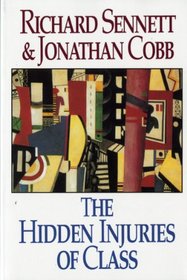
HiddenInjuries Dated, yet still relevant, The Hidden Injuries of Class by Richard Sennett and Jonathan Cobb brings to the limelight that which much of the world wishes to ignore. At least the affluent world. The very concept of “class” has a dangerously tilting effect on human society. That which is “valuable” is only so by common consent, and those who have more of it inevitably raise themselves above those deprived. In a world where food is scarce, bread becomes currency. The trick to any unequal society is declare an arbitrary standard of value that some may horde while others strive to attain it. We are largely content today to work for money we seldom physically see. We are employed at professions assessed by their value to the “owners” of companies who frequently misunderstand that ownership to include the lives of their employees. And that’s just the middle class!

No doubt, living standards for most people have improved in the decades since Sennett and Cobb produced their study, but the base root of the problem still projects out far enough to be tripped over repeatedly—lack of a sense of personal worth. The working poor have always striven for dignity, a sense of worth. I found much in this book that rang true for my personal circumstances. The Hidden Injuries of Class is based on interviews with workers, some of whom “changed classes,” working from blue collar to white collar positions. Validating my experience, the sense of self-worth among those who’d thus advanced did not keep pace with their class expectations. Those of us raised in the working-class world know our place. Yes, we may learn to act like those middle class, and sometimes privileged workers around us, but we know deep down that we came from humble stock. We sit at desks in offices, knowing that we belong behind a broom or holding a shovel. Not a day elapses when I don’t ponder that I’m a drone a little too deep into the hive.

Any society requires those who are willing to do the less-than-desirable jobs. It will take more than reality TV to add dignity to the personal assessment of such workers, however. Although I’m not a TV watcher, the times I view reality programs that highlight the “ordinary people” we come off looking like the unsophisticated rubes of the affluent imagination. Duck hunters may laugh all the way to the bank, but when you’re off camera a different reality, I’m sure, takes hold. We are entertained by the antics of those who don’t know how society folk behave. In my limited experience I went from janitor to academic dean of an Episcopal seminary where Archbishops of Canterbury were not rare visitors. Literal lords of the realm sat at the same dining table that now holds the peanut butter that comprises my lunch each day. I can act polished with the best of them, but I know once they leave I’ll again become the kid who grew up among junk cars and working-class prospects. And I know which is the more authentic life.


Hair to the Throne

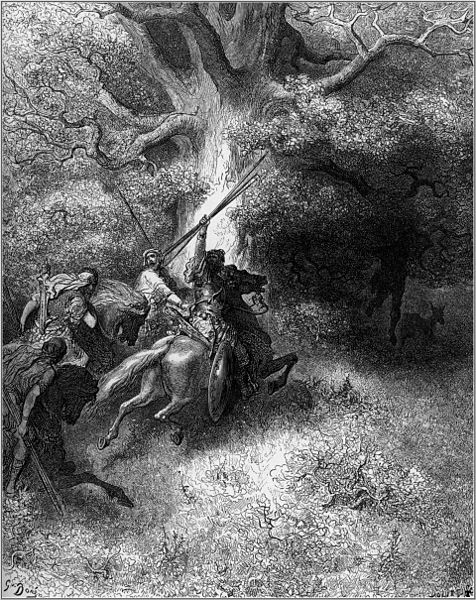
Absalom was the first of the big-hair rock stars. According to the book of 2 Samuel, his hair was so luxuriant that he had it cut once a year and it weighed two hundred shekels (about five pounds, not sterling). This little bit of foreshadowing in 2 Samuel 14 will appear again in the story of Absalom’s demise, as he is caught in a great oak tree by his untrimmed hair. I’ve always related to Absalom on the coiffure issue—I don’t like getting my hair cut. In my more self-analytical moods, I relate it to having stepped on a bee’s nest as a child and having received multiple stings on my bare legs. That horrible buzzing of bees in my ears stayed with me, and whenever the girl at SuperCuts grabs the clippers and the bee-like drone nears my ears I flinch in terror. Like Absalom I have rather an abundance of hair, and so when I’m shorn, it is easily noticeable. I don’t like people to comment on it, however. One of the most banal phrases, not to mention an utter tautology, is when someone smartly observes, “you got a haircut.” With what am I to follow this up? “Yes—I was feeling a bit too much like Absalom in the forest of Ephraim where Joab found him dangling in the tree after David followed the advice of Hushai instead of Ahithophel”?

Gustave_dore_bibel_death_of_absalom

While walking through a mall recently, I commented to a friend how all the stores seemed to be clothing and shoe stores. You never find a bookstore any more, or museum shops, or anything approaching profundity. People really mostly care about what they look like on the outside. I’m more of an interior guy. Not among those generally cast among the hunky, good-looking examples of masculinity, I’m small, bookish, and still wear clothes that I’ve owned for two decades. My hair is usually out of control as well, but not in a fashionable Einsteinian way. I am, I fear, the heir of Absalom.

Religion used to be a source of profundity. It was, once upon a time, the queen of sciences, and philosophy was her handmaid. Seeing the way that religion appears in the media today, however, I’d have to guess she’s been shopping at the mall. Those who measure religion by the cut of her hem rather than by how deep her thoughts may be, have brought her into the limelight of popular culture. She used to be all about the meaning of life and offered a reason for many of us to get out of bed in the morning. Absalom’s trouble started out when he fell in lust with his half-sister Tamar. His addiction to appearances led him to bad decisions that ultimately divided David’s kingdom and cost him his very life. And I guess that’s the price you pay for not getting a haircut on a regular basis.


Grand Delusion

Humphrey_Bogart_in_Casablanca_trailer

“The problems of three little people don’t amount to a hill of beans in this crazy world,” Rick memorably quoted in his once safe haven in Casablanca. Rick had fled his country for moral causes, only to become jaded and callus in an unfeeling universe. So it was with interest that I read the story of the Gastonguay family that my wife pointed out to me. The Gastonguays were stranded at sea when they took their kids and father-in-law and tried to sail away from a US rife with abortions, homosexuality, and “the state-controlled church.” Apart from sailing lessons, and perhaps a primer on US history, the little family had all they needed. They believed that their religion was sufficient to survive on Kiribati, their personal Xanadu, where there aren’t enough people to interfere with free religion. The Gastonguays, however, ran into a series of ocean storms after they set out from San Diego in May, eventually being rescued by a presumably Catholic Venezuelan fishing vessel. Their plane fare home is being footed by the godless government they fled.

Mrs. Gastonguay seems to be the family spokesperson. She notes how the Bible is pretty clear on social issues, according to the story on NBC. I couldn’t help, perhaps a bit naughtily, of thinking of the Bible as well, particularly Ecclesiastes 11.1. “Cast thy bread upon the waters: for thou shalt find it after many days.” That bread may be quite soggy, however, and the government you distrust might just have to bake you some new if you are to eat. I complain about government policies and shenanigans on this blog, but it is because I appreciate the ideals upon which this country was founded. Religious freedom is more or less a reality. Our government doesn’t force you to have abortions or marry a homosexual. School vouchers, which the Gastonguays may appreciate, are about the closest we come to a state-sponsored church.

Shifting genres a bit, I think of the hair band Styx’s hit, “Come Sail Away.” On that mythic journey the unnamed captain sees a gathering of angels swirling about his head. Of course, the angels are really aliens inviting him aboard their starship for an even more dramatic exit from a planet so full of troubles that any good Christian should have trouble sleeping. I can’t say that I don’t dream of escaping every once in a while. The ills that churn my stomach most are a pythonesque capitalism that just won’t let a poor soul breathe free without having to earn an extra greenback or two on the side. If it was up to me, however, I think I’d rather hang with Dennis DeYoung and await the unfolding of the grand illusion. That starship might just be the closest any of us will come to heaven on earth after all.