Know Thyself

Perhaps it is a perverted sign of the times, but sometimes I seek myself online. Not surprisingly, most of what I find there is stuff I’ve posted myself. Then my daughter suggested that I search “wiggins” in the Urban Dictionary. For people my age, the Urban Dictionary is often handier than Merriam-Webster for reading online lingo. I’d never tried to find myself there before, however. It turns out that “wiggins” is defined as “The state of being uncomfortable or freaked out… an uneasy feeling; a sense of foreboding badness.” Speaking strictly for me, this is a spot-on definition. Other Wigginses would likely take exception, but this connotation fits me like a thumbscrew. Perhaps our names make us who we are. The Dictionary also cites the source of this slang; Joss Whedon (who also gave us The Avengers) apparently coined this term on Buffy the Vampire Slayer. (His name, by the way, is defined as, “To kill off the most lovable b-list characters in your movies.”)

Naming, in ancient times, held a distinctly religious significance. Ever notice how many biblical characters were renamed by God? Even today the Catholic Church recognizes renaming after a saint as part of a person’s identity at certain crucial junctures in life. Indeed, in western culture “Christian name” equates to the more secular “given name.” Names define us.

I’ve done a fair amount of genealogical research. The actual etymological origins of the name Wiggins are obscure, but likely have to do with living in a valley. More exciting prospects trace the name back to early English forms that look like the word for “Viking,” and the name does seem to originate from the vicinity of York, where Vikings were not unknown. Still, the more prosaic, the more likely.

crucibleWhen my mother remarried, I took on my step-father’s surname. It didn’t sit well. When I read Arthur Miller’s The Crucible in seminary, John Proctor’s words leapt out at me: “Because it is my name! Because I cannot have another in my life! Because I lie and sign myself to lies! Because I am not worth the dust on the feet of them that hang! How may I live without my name? I have given you my soul; leave me my name!” When I later went to court in Massachusetts to reclaim, legally, my birth-name of Wiggins, I had that quote written on a paper in my pocket. We are our names. Slang has, in my case anyway, provided the most reasonable definition of my surname. And only courts, as I know from experience, have the authority to change this pre-decided declaration of who we are.


Avenge This

Recently rewatching The Avengers I noticed a subtext that had escaped me the first couple of times I saw it. When Loki explains to his victims why he is spreading his chaos, he uses a concept that many of us have been spoon-fed since 9/11—that freedom is not free. When he is asked from what he is setting humans free he replies, “Freedom.” He further explains that people really don’t want freedom, but they want to be led. This sounded so much like Bush administration rhetoric that I was put on alert for the remainder of the movie. Indeed, in the climatic scene much of Midtown is attacked, and who launches the nuclear device at Manhattan? The shadowy government figures who wish to remain anonymous. “Freedom is not free,” they seem to say, “support your government without question.” The scene of police and firefighters herding frightened citizens out of harm’s way looked an awful lot like footage from near ground zero.

Comic books, I have often reflected, are already story-boarded and some make excellent movies. Some are funny and some are serious. As a child I had only a handful of comics, but they were like movies for kids with modest means. Like an adult going back to the old Warner Brothers cartoons, you see many things that escaped you as a child. Comics may not be high literature, but comic book movies, at their best, are not far from it. The X-Men movies likewise introduce themes that rivet adult attention: prejudice, discrimination, the ambivalence of evil. The stories are didactic as well as entertaining. In the case of The Avengers, the characters, while overblown, all have their own agendas but government has only one: compliance.

Sometimes I read about the early days of the American experiment and wonder what went wrong. Yes, there are certainly times and issues that demand strong centralized government for survival, but when did those who castigate such strong control decide that they should take over? Who gains here? It certainly doesn’t seem to be the average citizen. Looking over the landscape after the last laissez-faire government, the only one who ended up hands-off were the very wealthy. Left with no social responsibility, they reign, resisting any taxation so that the burden of the increase trickles down to those who, in the words of Loki, really don’t want freedom. That’s perhaps the only thing we have in common here; no matter how long ago our ancestors arrived, they were searching for freedom. Or so they believed. Like a comic book, it has become mere fantasy for most, while Richie Rich happily continues on his gilded, but vapid way.

Mårten_Eskil_Winge_-_Tor's_Fight_with_the_Giants_-_Google_Art_Project


Hardsell and Gospel

When I find myself a considerable distance from my point of egress sometimes I have to take the subway to escape New York. Don’t get me wrong—I love New York, but Monday through Friday it is a place to work, not to play. Getting home is serious business. To get to the Port Authority Bus Terminal from the subway, one venue is a long underground passage. When I take this corridor, I find that it is often a favorite place for street evangelists during inclement weather; apparently the gospel goes underground when the weather turns nasty. So as I recently padded along that tunnel, I noticed an interesting conflict in worldviews. There were a series of street preachers, the central one with Bible in hand, and several others handing out tracts. If I’d had time I’d have listened to the preachers a bit; one was riffing with street language and intonation, and another was fluently flashing between English and Spanish. I took one of his tracts.

HanselGretel

The contrasting worldview was the posters repeatedly displayed in a long line along the wall—Hansel and Gretel: Witch Hunters. The movie is due for release next week. One of the modern remakes of fairy tales in the horror/action genre, this might be a fun ride, but the idea of secular forces taking on monsters clashed with the old fashioned gospel I was hearing with my ears. Or did it? Witch-hunting is not exactly PC in the days of religious pluralism when Wicca is becoming as normal a religion as the Anabaptists. Anyone who listens to most modern day witches knows that they are not evil, so I wonder how the movie plans on setting up the “evil” that our eponymous brother and sister have to conquer. I might just have to go to the theater alone to find out.

Tract

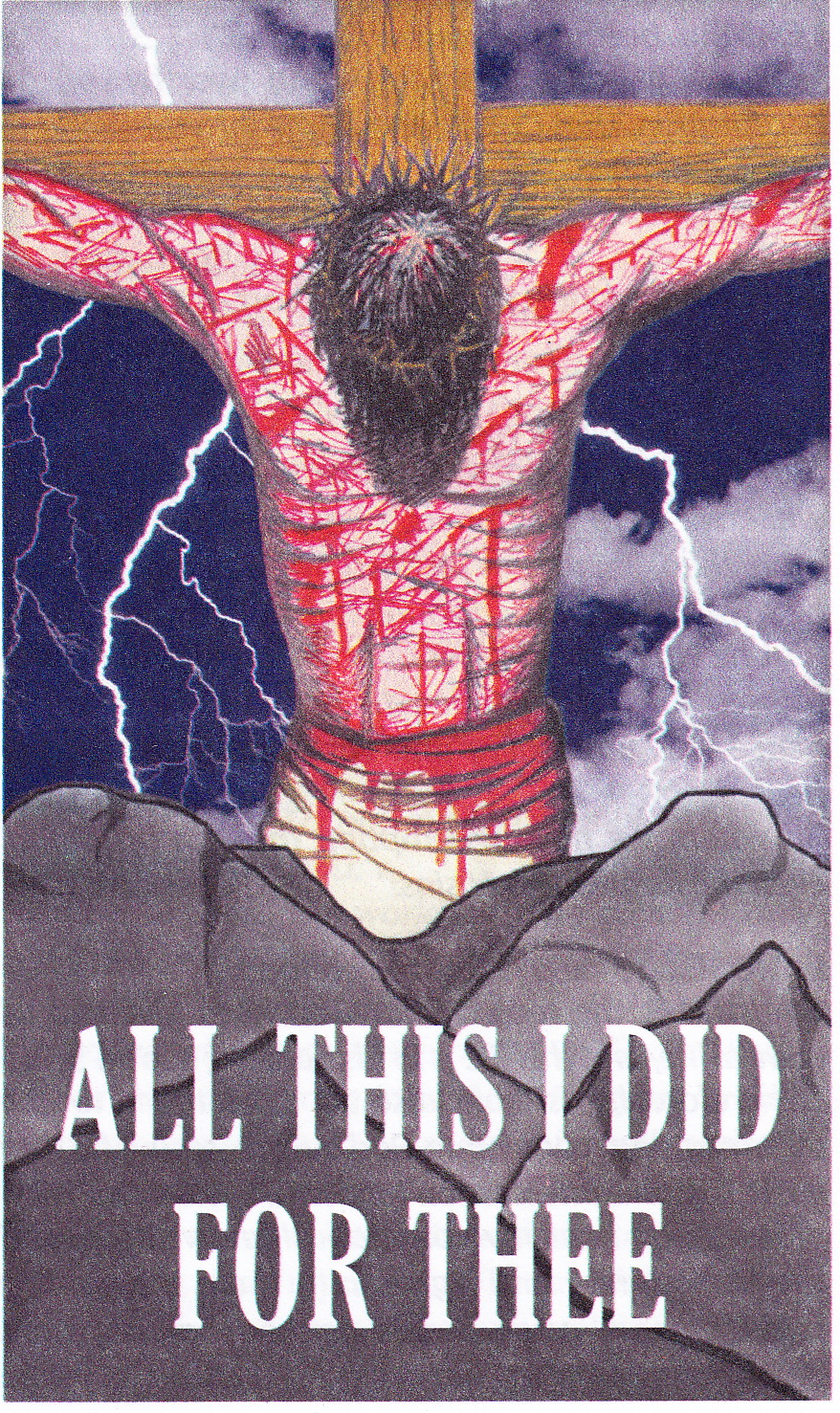
But is this really so different from our earnest street preachers below the ground? They are railing against the evil in the world, and if you follow their tracts, there is clearly no shyness about blood and torture here. The movie is rated PG-13, but what about the slip of paper I hold in my hand that shows a much bloodied Jesus hanging on a cross? Whether it’s with fancy crossbows or just plain crosses, the goal is to overcome evil. The real question is how to define it. Some, I suppose, would consider this movie a kind of evil; Gretel’s tight-fitting uniform is a little low-cut for taking on the forces of darkness, I should think. But the real evil is treating other people as enemies. And that even goes for street evangelists. If only they would admit the same for the wider world, maybe all this blood wouldn’t be necessary.


Witnesses All

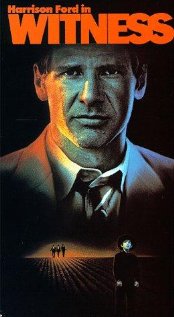
Witness“Only the bad man. I see. And you know these bad men by sight? You are able to look into their hearts and see this badness?” The words of Eli Lapp in one of the most memorable scenes in Witness often come back to me. While the lifestyle of the Amish strikes me as somewhat extreme, I have always admired their conviction that a simple life is a better life. The finer points of Anabaptist theology don’t always agree with my Weltanschauung, but their pacifism is the closest thing to Jesus’ Christianity that I can imagine. So as the NRA pulls out its big guns, arguing that the solution to children being massacred is to provide even more guns, I say they should watch Witness.

The year is 1985. In the movie Samuel Lapp witnesses a murder and when detective John Book finds out, he is chased to the Lapp’s Amish community where he hides out. One day young Samuel finds his gun and the camera angle is so oblique as the weapon in the foreground fades out to his grandfather Eli’s face, that you sense some violence has already been done even in the smelting of the metal to cast the revolver. “This gun of the hand is for the taking of human life. We believe it is wrong to take a life. That is only for God. Many times wars have come and people have said to us: you must fight, you must kill, it is the only way to preserve the good. But Samuel, there’s never only one way. Remember that. Would you kill another man?”

At this point all the fuss is only about limiting assault rifles. There is no sane reason that private citizens (my convictions go even further, but let’s not be too idealistic here) should have assault rifles. Not even a grizzly bear attack would justify it. The only effective weapon against violence is education. But look at one of the first budget items to get slashed when times get tough. Imagine a world where people were taught to solve their differences with discussions rather than violence. Even most crime, I suspect, would vanish if people didn’t feel themselves unfairly disadvantaged. Our violent legacy may go back to our common ancestor with the chimpanzees, but we like to imagine we’re better than they are. Are we?

“I would only kill the bad man.” So Samuel says with the conviction of a child. Badness is a fraught concept. It is often one of those qualities that we are not fit to judge in others, because we all know the directions our own thoughts take from time to time. Eli’s grandfather is a voice of wisdom here. But Samuel has the last word in this poignant scene, “I can see what they do. I have seen it.” If we exegete this just a little, however, I think we may be surprised at just who the bad really are. Think about it.


The Splice of Life

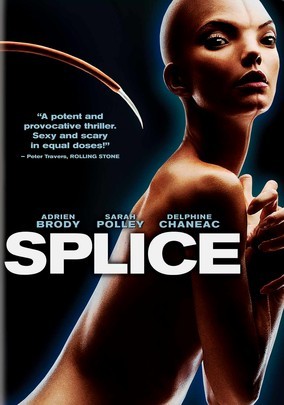
Splice Although not really scary, and although almost attainable with current technology, Dren is a curious monster. Many movies of the horror genre have explicit religious elements, but Splice may be a little too much science fiction for that. Or is it? The story is simple enough: a couple of geneticists have gene-spliced a couple of viable creatures that can be farmed for important chemicals and enzymes to solve diseases. So far, so good. But then the idea occurs to them: if the chemicals that can be used to help cure animal diseases had a human element, couldn’t they be used to cure our own diseases? And here is where the ethical quandaries begin. Adding human DNA to the mix, even when in small portions, suddenly throws open the moral dilemmas. Dren is the somewhat human result of these experiments, but the movie ends with the haunting, unanswered question—what is it to be human?

Although today the field of ethics is largely claimed by philosophers, morality is a measure of beliefs about right and wrong. In many cultures, including our own, religion has quite a lot to say about the issue. Once human DNA is mixed in the creature morphs from a bumpy slug into a creature that looks mostly human. The ethical dilemmas that surround human potential—abortion, stem cell research, cloning, and in past ages eugenics—all focus on the rights of the human person. Once a person is born, however, we almost immediately begin to curtail those rights until most of us become cogs in an unfeeling corporate machine. We are valuable, but for whose purpose? Who, sitting in their cubicle, or on their assembly line, or behind the wheel, says, “For this they defended my right to be born”?

Oddly, we privilege the potential of life without tirelessly working to improve the lot of those who’ve already been born. Perhaps, indeed, this is some form of evolutionary advantage—protect the future of the species at all costs. This idea becomes religious when it is deemed God’s will. In the movie, Dren’s creators ultimately deem her unhuman, a monster who must be destroyed. They, however, nurtured her humanness all along. While not the most profound movie ever filmed, Splice highlights the fact that ethics reflect the values of society. And society sometimes withdraws even humanity from those who’ve lost its favor.


None Too Human

Apropos of nones, CNN’s Belief Blog ran an opinion piece about the nones earlier this week. It seems that Rep. Kyrsten Sinema came out of the closet as a none at her swearing in. Nones are among the fastest growing non-religions in the world. I suspect a lot of it has to do with the internet; those who subscribe to no particular faith have discovered that it is okay to do so. Or not do so. It is so easy to see, online, that lots of others think that way. Many of these people are not atheists, and many describe themselves as spiritual, but the problem seems to be with organized religions. Religions are, of course, human inventions. Our experience of the world doesn’t ever seem to key completely to science or expectations of fairness or justice. Some of it may be due to illusion, or delusion, but we get the sense that something serious may be going on here. Many formal religions have tried to systematize something that can’t be tamed or taught to perform on cue. And since religious leaders are only human, there should be no surprise that they come fully loaded with the cadre of human weaknesses.

Despite claims of epic voyages to Hell in a small, wicker conveyance, things in human terms aren’t as bad as they used to be. Sure, the economy continues to mope, and far too few people are far too rich, but generally we’re living longer, we’re healthier (or at least bearing up better under conditions that would’ve rendered us unhealthy decades ago), and we’ve got lots and lots of toys to play with. Maybe we’ve reached a level of contentment that blocks out that quiet voice begging for attention. It is a still, small, voice. One of the things I notice is that quiet is hard to find anymore. Our gadgets beep and chirp and mutter and belt out rap or soul or rock in just about any venue where people are found. Religions have generally been nurtured in places of silence. We’ve become the nones.

The anti-atheists have done a good job equating non-belief with moral turpitude, but the ethical atheist is not hard to find. Religions have always been concerned with morals. At least since the Enlightenment, however, philosophers have weighed in on ethics, often without a theistic underpinning. The idea, according to humanists, is that we agree to certain moral expectations by our very humanity. Some don’t play by the rules, to be sure, but most of us do. Some with, some without a deity or deities telling them to do so. Once you sidle away from the angry New Atheists, you can see that atheists can be good people. Looking to blame evil on lack of belief is too easy and consequently misguided. Conservative Christians, progressive Muslims, atheists, polytheists, and nones all have their humanity in common. We are, or should be, no matter what our faith commitments or lack thereof, humanists.

Already empty, or about to be full?

Already empty, or about to be full?


Monkey See, Monkey Do

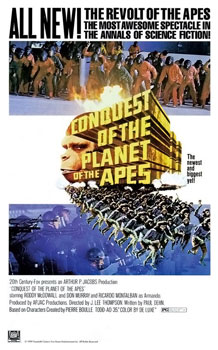
ConquestPlanetApesThe year was 1972. In the continuing saga of the Planet of the Apes, the fourth installment, Conquest of the Planet of the Apes, addressed the civil rights movement directly. Caesar, the son of Cornelius and Zira, is the last speaking ape left in the past to which his parents had escaped. Inexplicably, the other great apes have all suddenly evolved by 1991—the year in which the story is set—into large sized, almost upright creatures whose population matches than of humans (almost). Initially purchased as pets since the cats and dogs had died off in the late 80’s, apes have been imported as slaves. They are given menial tasks and beaten mercilessly if they make errors. A deep fear pervades the establishment that these apes will try to take over. Breck, the governor of California, decides to find and kill Caesar, at any cost, while his deputy MacDonald tries to save him. When Caesar reveals himself to MacDonald, an African-American, he states that he especially should know what it means for a people not to be free.

Martin Luther King Jr. had been assassinated only four years earlier and although civil rights had made progress, there was still a long way to go. Still is a long way to go. As an affluent culture, we remain reluctant to share. We still see disproportionate numbers of African-Americans and Hispanic Americans forced to live in areas that the amorphous “white” population has fled. Xenophobia is one of the less noble traits with which evolution has endowed us. Even so, the classes we devise aren’t always helpful in determining who people really are. “White” can mean anyone from the southern tip of Chile to the tundra of eastern Siberia. On job applications now “Hispanic” is classified as “white.” I get the feeling that there’s a few unresolved issues here. The sense of entitlement did not begin with this generation. Those who have naturally suppose that they deserve. Caesar observes the unfair treatment and, down to the detail of the weapons the apes stockpile, leads a plantation-style revolt that overcomes a heavily armed command post. Gorilla warfare indeed.

In classic 1960s-70s style, Caesar grandstands after his victory. He was about to order Breck’s execution, but stays his hand in the recognition that even humans deserve to live. We do have to wonder where he might have learned about God, being raised by a circus trainer and in what is an otherwise completely secular society in the film. In any case, his final words in the movie place the apes on a higher moral plane than humans. “But now… now we will put away our hatred. Now we will put down our weapons. We have passed through the Night of the Fires. And who were our masters are now our servants. And we, who are not human, can afford to be humane. Destiny is the will of God! And, if it is man’s destiny to be dominated, it is God’s will that he be dominated with compassion and understanding. So, cast out your vengeance. Tonight we have seen the birth of the Planet of the Apes!” Maybe it’s all the dead bodies around, but I’m still having a little trouble with the “Destiny is the will of God” part.


Without a Hitch

I’m not really afraid of dying. All those years of being taught that “to die is to gain” have obviously done their work. At the same time, it is a poignant exercise to read the posthumous memoirs of a dying man. I remember my first funeral. Although I don’t recall the name of the poor, deceased honoree, I still see the reactions of the living vividly. I was under ten at the time, and the funeral home in Franklin, Pennsylvania was in a very somber mood. The man, who had been a friend of the family, “was not a Christian.” Having been buffed and rubbed in the Fundamentalist tub from my earliest days, I didn’t realize that what was meant was actually that he hadn’t been an active member of our particular church. Nevertheless, as a child, you get deeply impressed with these kinds of things. “I’ll never go to the funeral of a non-Christian again,” I remember my mother telling a friend. “The minister couldn’t find anything comforting to say.” While funerals are sad occasions by definition, this one left a crater that is still fresh over forty years later.

MortalityChristopher Hitchens is someone I found through his book God is Not Great. I don’t have time to read magazines, and I hadn’t read any of his previous works, but he raised some extremely valid points in this diatribe. My wife recently bought me his final oeuvre, Mortality. I felt as if I were back in that funeral home. It is not that I still hold to the odd belief system of Fundamentalism—of this my regular readers will have no doubt—but it is the forlorn feeling of reading the words of someone dying who hopes for nothing. Yes, it may be Stoic, and even noble. Certainly it seems far more worthy than visions of living in opulence with lots of available virgins with whom to toy while angels strum their harps overhead, but the certitude that one’s final days will be nothing but prolonged suffering—ouch! Maybe there isn’t a heaven, and if there’s a hell there’s something morally wrong with the universe, but doesn’t some residue of a human life remain? Even if it’s just the memories, the marks that we’ve made on others’ minds, don’t we somehow survive? Dying without hope nevertheless feels like milling about in that doleful crowd of specific Christians years ago.

Hitchens does offer a chapter in his final words devoted to those Christians who responded to his cancer with an unholy Schadenfreude, trying to torture the thoughts of a dying man with the promise of an eternal hell after experiencing a temporary hell of cancer treatments. This chapter made me sick. Anyone who so completely misses the message of compassion that suffuses the Gospels can hardly claim the designation Christian, I would insist. No one, no matter what their eternal plans, has the right to try to fracture anyone’s tenuous tranquility to make their own crown shine a little brighter. Such weekend warriors likely imagine that they are defending their fragile God, but in reality they are demonstrating that some of the criticisms of Hitchens were very well placed to begin with. No religion will live up to its full potential until it succeeds in the most basic practice of all—treating all people with respect and dignity. Until then, death has the final word.


Graveyard Culture

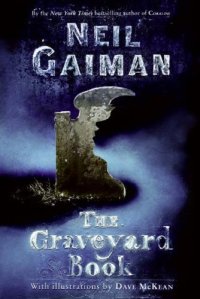
TheGraveyardBook During an Ancient Near Eastern Religions course a few years back, one of my students commented that something was like “in American Gods.” I suppose my quizzical look betrayed that I wasn’t familiar with the book, and, aghast, he said, “you’ve never heard of Neil Gaiman?” The funny thing about being a professional academic is, if you want to be good at it, there is little time to read. Popular culture is vast; I’ve never even heard of “Gangnam Style.” But I did subsequently read American Gods, and from then on I’ve been picking up Neil Gaiman books as a special treat in my literary diet. A couple years back another friend recommended The Graveyard Book, so I read it over my brief holiday break. It is the time of year for treats. Gaiman’s fantasy worlds, although seldom explicitly deity-populated, tangle the real world with the supernatural—just the juncture where religion emerges. Although defining religion is not as straightforward as looking it up in a dictionary, you can nevertheless feel when you’re in its realm.

Nobody Owens was raised in a graveyard among ghosts. Since science tells us there are no such things, religion steps up to the challenge with suggestions of an afterlife. Whether or not there’s a Heaven or Hell, ghosts partake in that uncanny milieu we call religion. And since this is fantasy, there are other mystical creatures as well. In Bod’s world werewolves are called “Hounds of God” and they are on the good side. Ironically, the only clergy mentioned (along with various political figures) are actually ghouls. The world of the dead involves a religion of its own where an altar and chalice lie deep beneath a special grave and a human sacrifice makes up the climax of the story.

Religion, of course, occurs where the supernatural meets regular people. We dismiss it at our own peril. When Bod attends school his teachers guess he must be from a religious family because he doesn’t have a computer or any electronic devices. Religion eschews such progress. And yet it touches on the real world. I recognized Highgate Cemetery almost from page one. It could be that my own visit there just last year was fresh enough in my mind that Gaiman’s descriptions naturally took over. Or it could be that since I walk that imaginary line that we recognize as religion every day I recognize its more familiar features. Neil Gaiman’s popularity is a testimonial to how we still need the hidden world unexplained by science. We may call it fiction but it is just as real in the human mind as anything in the quantum universe.


2012 + 1

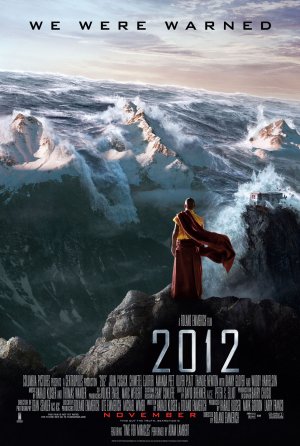
2012I just watched 2012. The conceit that the world will end last year must be getting tired by now, but I’d been curious about the movie since it came out three years back. As I suspected, there was plenty of religious banter as the putative version of us prepared for the end of the world. I noted that the little boy of the average family that managed to make it all the way to China to seek rescue bore the name of Noah. When the animals were being airlifted to the rescue station with its titanic boats meant to float out the world wide flood, it was clear that the myth of the ark was alive and well. (As I hope all of you reading this in the future are.) So this disaster movie turned out to be a bit of harmless fun, but I nevertheless shuddered at the implications. Those chosen to survive were, naturally, those who could afford to find a place onboard the secretly constructed arks. As even some of the film’s characters recognized, those who had money could buy a place on the ark, and of course they did. I do wonder what their brave new world would have been like. The whole idea of wealth has to do with the perceived value of specific commodities, and apart from our last minute stowaways, you can bet that everyone on board wanted their assets valued highest. Once the waters receded, if I recall the story at all, sacrifices would be made. Even the opening of the decks and the buzzing of helicopters like doves and ravens did Genesis proud.

The end of the world is a funny concept. Those of us who experience the world as mortals can’t really image the place without us, so I suppose it is natural enough. Nevertheless, the tone of the last four apocalypses I remember has been distinctly religious. There was a serious scare (perhaps local, because no internet existed) when I was in tenth grade. The next one I recall was Y2K, a silly episode where even priests I knew were seriously worried. With the Camping and Mayan “predictions” coming so close together, some no doubt supposed the Big Guy had it in for us all. When Christians tell the story it’s always the version with God glaring at us, belt in hand. Remember what Homer Simpson says of the song he wrote: “I’ve come to hate my own creation. Now I know how God feels.” Our cultural sense of disapprobation could be better addressed by helping those in need rather than building arks (or tax write-offs) for those who require no more to live like petty emperors. Emphasis on petty.

The world didn’t end and I wasn’t really worried that it would. The fact is we don’t need God to design an apocalypse for us because we’re very good about engineering our own. Unequal distribution of goods and services throughout a world where means exist for alleviating the suffering of countless numbers of the poor and disadvantaged has already created a purgatory on earth. We don’t need a Mayan calendar, or a New Testament whose message of compassion is overlooked in favor of its putative apocalypse, to show us the end of time. But since we made it to 2013, perhaps we should consider this a stay of execution. Let’s use our post-apocalyptic future wisely and hope humanity will live up to its name. And maybe it’s time for a new calendar.


Alien Religion

Alien3

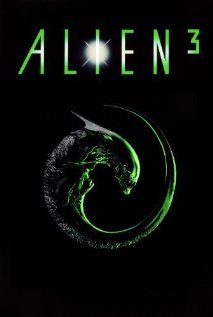
Despite my interest in aliens, my viewing of the Alien movies has been tenuous at best. The image of what looked like an egg hatching a green sun over a particularly badly formed waffle always brought the tagline “In space no one can hear you scream,” to my juvenile mind. When the original movie came out in 1979, it seemed too scary for a kid in high school. I first saw Aliens (part 2) when living with a friend after seminary. He explained to me the missing gaps left from never having seen the original, and I was impressed by how Sigourney Weaver pretty much took on the alien queen single-handedly. I was still too young, however, to realize that there’s always room for an alien or its egg to attach itself inside any spaceship or escape pod. You can never really get rid of the things. I finally saw the first installment some ten years later, and it was clear that, as in nearly all series, the first was the best. Ridley Scott’s films take considerable energy to watch. No one seems capable of matching his dark moods and sense of a hopeless future. I left it at this state for another decade, until recently reading that Alien 3 marked the culmination of the “theology” of the series. Over the holiday break I decided to find out if this was true.

Ripley, who can never get a break, finds herself the sole survivor (again) on a prison-colony at what used to be a lead ore refinery deep in space. While the company had abandoned the facility, a group of inmates who had formed a religious order decided to remain. Having grown up in a refinery town, so far I’m on board with the story. Separated from society, from women, and from temptation, the prisoners are a fundamentalist sect that would seem to fit well into the woods of Wisconsin. Ripley threatens their delicate balance of celibacy, and although not a virgin she ends up conceiving an alien in a Madonna-esque way, not even knowing how she became pregnant. When she decides to incinerate herself rather than allow the alien to be born, she falls into the fire in a cruciform dive just to drive the point home. Before her dive into hell, however, Ripley tries to motivate this band of incarcerated monks to fight the alien. When they say the company will save them, she responds, “What makes you think they’re gonna care about a bunch of lifers who found God at the ass-end of space?” Again, echoes of Wisconsin.

Doubtless, my experience of the movies has been skewed by my own experience. Still, Alien 3 holds to a pattern that emerges fairly often in movies with a strong horror theme—religion is the progenitor of terror. The prisoners’ religion is described as “apocalyptic,” and it frequently appears that in movies where a civilization is on the brink of collapse, religion awaits to greet the survivors with open arms on the other side. In the horror genre, this is often a cold, clammy comfort. Although religious elements were largely lacking in the Ridley Scott and James Cameron episodes, I do hear distant echoes of Moby Dick here from the very beginning. The dark alien, like the white whale, is elusive and destructive and does not relinquish its hunt until Captain Ahab, or Lieutenant Ripley, is dead in its grip. And since Alien Resurrection awaits in yet another sequel, like the white whale, the alien never truly goes away.


No Song for Old Men

Succoth in Waukesha, Wisconsin. A pillar of the local synagogue had invited me to come to his booth with some of my seminary students to let them celebrate an ancient tradition and talk to a Jewish believer about it. We were all having a good time, and someone mentioned Leonard Cohen’s song “Hallelujah.” One of the seminarians, brash as always, spoke up and admired “Rufus Wainwright’s cover in the movie Shrek.” Although I’d corrected many students before, I let this faux pas ride. Music is very personal to me, and the cover played in the movie Shrek was John Cale’s version, although the soundtrack substituted Rufus Wainwright’s cover of John Cale’s cover. And this student was far too young to have appreciated the Velvet Underground. I was a little surprised, then, when my wife pointed me to a CNN story this week about the thriving popularity of the song. Instead of putting my paltry words out there on CNN for all the world to see, I decided to address them here, to my private audience.

Velvet_Underground_and_Nico

Leonard Cohen has been described as a man who writes songs with a prayerbook in one hand and a picture of a naked lady in the other. He has spent time in monasteries and his lyrics have a very serious edge to them. What the many self-proclaimed experts commenting on CNN seem to have missed is that Cohen’s song is a song for old men looking backward. Yes, it is rife with biblical imagery, but no, it is not a religious song. Not in the sense that it is often used today. John Cale got that. When I hear his early work with Lou Reed or even his first cover of “Hallelujah” that managed to capture something even Cohen hadn’t (no mean feat, that), I can hear the aging Cale casting a glance back to the same place that Cohen saw. We are all aging and we all remember the vitality of those years when possibilities seemed endless. No, it takes decades for a hallelujah to become broken. All the versions by popular artists trying to breathe soul into a tragedy have missed the point. It’s a cold and it’s a broken hallelujah.

I only listen to this song when I’m alone, preferably with John Cale. When Leonard Cohen sent him the lyrics there were 15 pages of them. The CNN report cites the 75 or 80 verses that Cohen wrote. That’s because the song is a life. The biblical images of the song first captured my attention, but I also realized that it was a song about something that’s gone and that’s never coming back. Not for guys my age. Not for guys who can still remember being eighteen and feeling like life hadn’t even begun yet. Now I look back over five decades. I hear “Heroin” seeping from my brother’s room, somehow knowing the dissonant chords would stay with me for the rest of my life, although I have never personally used drugs. There is a longing there, a longing for something that life offers maybe once, for a few short years. Age and inevitability catch up with everyone, and breathy young artists think they’re chic when they cover a song that is meant for old men who remember what glory used to feel like. Only those with experienced ears can really hear Leonard Cohen’s hallelujah.


The Santa Myth

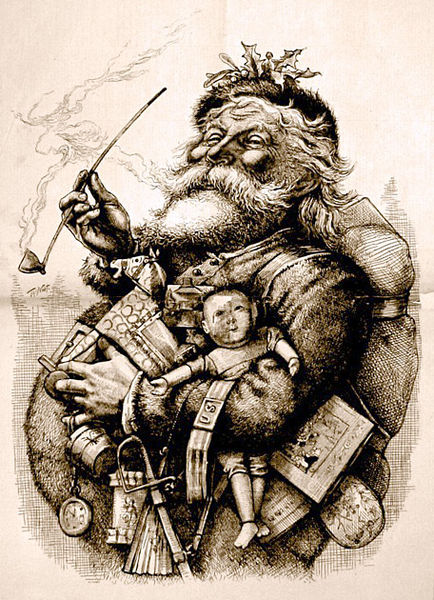
The North American Aerospace Defense Command, or NORAD, devotes its resources on Christmas Eve to track the path of Santa Claus across not only across the northern skies, but also around the world. The idea of what must be a devoted group of very serious defense professionals programming the flight track of a fictional character is strangely bemusing. I have an app on my iPhone called Star Walk—it is an astronomy program that I wish i had as a kid standing under the winter skies trying to identify constellations. On Christmas Eve my clumsy fingers slipped, accidentally turning on the program. Although I was indoors, and it was cloudy outside, I glanced around the virtual universe to see what was happening, when what to my wondering eyes should appear? Indeed, the self-same Santa Claus was flying through the night sky on my phone. Do doubt such lighthearted antics put smiles on faces of children and adults alike. They also show how deeply embedded the myth of Santa has become.

Santa Claus is a relatively new deity in the pantheon of cultural gods. Many children earnestly believe in him and some parents use him as a source of moral guidance: you’d better be good for goodness sake. Santa’s watching. Even in a pluralistic world, Santa visits Mecca and Jerusalem and Djibouti, no matter the religion of the people—and my source on this is no less than NORAD, guys who scan the skies for nuclear missiles. If they can’t be believed, who can?

Now as we wade through the discarded wrapping paper and face the inevitability of returning to work, it seems as though something really did come on Christmas. It may not have been a man in a fuzzy red suit, tracked through the atmosphere by fictional computer programs, but we can hope that it was at least a fleeting moment of peace. After all, NORAD’s Santa crossed international borders with impunity, neglecting trade sanctions and sometimes open hostility. Unlike other major figures of the Christian pantheon, Santa does not spawn wars and hatred. He encompasses no strict, dogmatic belief. Maybe it’s because we admit he’s a work of fiction, and nobody really ever lives up to the standard of always being nice. Yet, at least according to NORAD, Santa visited every person on the globe with a sense of peace, a gift that fits no matter what your size.

SantaClaus


The Religion of X

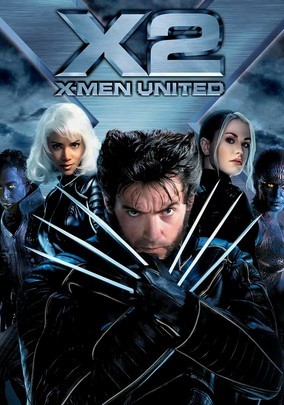
X2While I never considered myself comically deprived as a child, as an adult I have come to understand that I missed quite a bit. Much of this comes through the Marvel Universe that I discovered through various superhero films that have captured the interest of the movie industry. Initially I felt a little silly looking for profundity among all those bulging biceps and impossible pecs, but I’m beginning to understand that just because a book is illustrated doesn’t mean it’s facile. All of this is a way of saying that I watched X2: X-Men United over the weekend. With my understanding of evolution and genetics, minimal though they be, I always find the “mutant” explanation a bit hard to swallow. Nevertheless, these heroes have such a multiplicity of gifts, and the movies are dark enough to suggest something deeper than guys running around in tights. All I know of the X-Men I learned through the first movie, and I’ve never watched the extras. X2 introduced a new character (to me) that seemed to have been designed for a blog like this.

Nightcrawler is portrayed as demonic in shape and coloration, resembling Iblis more than anything else, is the most religious X-Man I’ve so far encountered. His hideout in the movie is an abandoned church in Boston, and when he is discovered he is in the midst of praying. During the course of the movie he prays the rosary and recites Psalms, making him a truly conflicted character—demonic in form and devout in soul. Comic book writers have long drawn on religious themes, but the shaping of “profane” characters as “religious” would appear a venial kind of blasphemy to many. If cartoon characters, however, are to resemble the real world at all religion must play into the Marvel Universe. After all, it plays into the fantasy world of the Tea Party on a regular basis. The concept of a religious demon is biblical, as James notes in his epistle, “the devils also believe, and tremble.”

There is something deeper going on here, however. Nightcrawler not only believes, but worships. The issues of prejudice and racism are clearly present throughout the movie(s). And as the story comes to its climax, Phoenix—whose name already suggests resurrection—rescues her X-compatriots in an act of self-sacrifice. Religion, as it plays out in X2 is messy and ragged around the edges. But it is clearly present. In the Marvel Universe gods and humans mix with unnerving ease, and the gods aren’t always the most powerful of the heroes we meet. After seeing the movies I’ve come to realize that a developed backstory exists for this universe and some scholars of religion have begun to notice. And once that happens, a theology is never far behind. I suspect it will remain a matter of debate whether the book is better than the movie or vice-versa. In the meanwhile, I’m thinking I’ll need to find the third member of this trinity and see how the story ends.


No Year’s Eve

So the world’s supposed to end tomorrow. Again. These apocalypses have been coming thick and fast lately; it’s getting so that each end of the world is within sight of the previous end. Of all the strange ideas that religions have given us, the end of the world is the most insidious. While some may choose not to believe it, many politicians of record have actively attempted to provoke the end of time to force the divine hand at bringing a little bit of heaven to earth. Scary thing is, some of them had the power to annihilate us all in the process. Unlike past eschatons, however, this one derives from the interpretation of Mayan artifacts, strangely making it more believable to some people. Those exotic peoples of the past! They just knew so much more about worlds ending than we do. And I know otherwise intelligent people who believe that this is the last day of the earth.

Of course, if we take the earth’s temperature there does seem to be some cause for alarm. That’s not the Mayans’ fault, though. Some of these self-same fracking politicians have insisted that since the Second Coming is near it is alright to destroy the ecosystem that supports all life on the planet. Those are pretty high stakes if they turn out to be wrong. Oh, but they can make a healthy profit margin on the side, so at least they can go out in style. But what would a Mayan apocalypse mean to the firmly committed Christian? It would be very hard to recover from that, should Q’uq’umatz be behind it all.

The events of the past week have been more than a little rough. And the self-same politicians line up on the side of the NRA as they campaign for Jesus’ early return plan. The overall prognosis seems iffy at best. It is like the feeling the dinosaurs must’ve had on the evening of the asteroid. Some of them had brains the size of walnuts, an allegory too plain to require spelling out. What these eschatological episodes teach us is that human life is fragile. Madmen with guns remind us of the same point. I’m expecting, however, that things will be pretty much the same as ever tomorrow morning. I’ll be expected at work, the wheels of the sluggish economy will turn ever so slowly, and politicians will keep doing what they do best. Those counting on Mayan counting will find themselves in the company of Jehovah’s Witnesses and Harold Camping. All of us will find ourselves in a world where religion is perhaps the only power actually capable of total destruction. But if we wake up with aliens swarming the planet tomorrow we’ll honestly be able to say that we’d been warned.

The face of things to come?

The face of things to come?