Professionalism

We’re all tightly packed together here on the internet.  Social media is a fuzzy category and now includes such platforms as LinkedIn, which I think of mainly as a place to hang your shingle while looking for a job.  I chose, many years ago, to make myself available online.  This sometimes leads to a strange familiarity.  It isn’t unusual for me to have an author hopeful to contact me through my personal email or through LinkedIn, especially, to try to push their project.  (Such people have not read this blog deeply.)  One thing acquisitions editors crave most highly is professionalism.  Being accosted on LinkedIn, or in your personal email, is not the way to win an editor’s favor.  Some of us have lives outside of work.  Some of us write books of our own and don’t blast them out to all of our contacts on LinkedIn.  Professionalism.

It’s tough, I know.  You want to promote your book.  (I certainly do.)  It seems strange to say that blogging is old-fashioned, but it is.  (Things change so fast around here.)  But you could start a blog.  Or better yet, a podcast.  Or a YouTube channel.  You can blast all you want through X, Bluesky, Facebook, Tumblr, or Instagram.  I admit to being old fashioned, but LinkedIn is for professional networking, not doing quotidian business.  It may surprise some denizens of this web world that some publishers don’t permit official business through social media.  Email (I know, the dark ages!) is still the medium preferred.  Work email, not personal accounts.  Some authors (believe it or not) still try to snail mail things in.  Publishing is odd in that many people, and I count my younger self among them, suppose you can just do it without learning how it works.  Most editors, I suspect, would be glad to say a word or two about professionalism.

Photo by Ben Rosett on Unsplash

Professionalism is what makes a commute to the office on a crowded NYC subway train possible.  We all know what’s permissible in this crowded situation.  We know to wait until someone checks in at work before asking them about a project we have in mind.  (If you’re friends with an editor that’s different, but you need to get to know us first.)  When I started this blog I was “making a living” as an adjunct professor.  I was hanging out my shingle.  I also started a LinkedIn account.  Then I started writing nonfiction books again.  Since those days I’ve been trying to figure out the best way to promote them.  Professionally done, if at all possible.


Reptile Puppet

I read about Reptilicus, but I can’t remember where.  A monster movie shot simultaneously in English and Danish in 1960, with two different directors, it was universally panned.  Some times you just have to see a bad movie.  This one qualifies.  I actually laughed out loud a time or two.  The idea behind the story holds promise: some animals can regenerate lost limbs, or even entire bodies from a severed piece.  What if a giant reptile could do the same?  The film’s problem is in the execution.  So, a team drilling for copper above the arctic circle—they’re sweating and working with their sleeves rolled up in a temperate forest—hits a frozen animal in the permafrost under the tundra.  Taken to an aquarium in Copenhagen, the animal’s tail is kept frozen until someone leaves the door open overnight.  When it thaws it begins to regenerate.

Once fully formed—and nobody could see this coming—it breaks out and terrorizes Denmark.  There are some scenes thrown in to show off Copenhagen, and the film makes liberal use of stock footage from military exercises.  The dialogue, poorly written, is delivered with wooden earnestness by actors who struggle to be convincing in their roles.  The monster, Reptilicus, is so obviously a puppet that it could scare no-one.  But it’s a monster movie!  Those of us who grew up on such fare sometimes feel a need to go back to the well.  To appreciate a bad movie, I always approach it with a certain hopefulness.  Here I am, over six decades later, watching the film.  If that can happen, perhaps someone will see that publishing my novels isn’t the worst you could do?  It makes for a crooked kind of logic.  

The main thing Reptilicus has going for it is its near indestructibility and its ability to regenerate.  How is it finally destroyed?  We’re not shown.  In one scene the general asks the head scientist, something like, “If we can knock it out, you can kill it?”  Receiving an affirmative answer, they drug the monster and send the scientist off to do his work (after he’s suffered a heart attack).  I’ve read novels where it seems pretty clear that the author was unsure how the resolution actually goes—I’ve painted myself into that corner a time or two, so I know how it feels.  If you’ve got a budget and backers, however, you have to deliver something.  The movie performed reasonably well at the box office, which shows just how indestructible some monsters can be.


October’s Poetry

October is a beautiful, melancholy time of year.  Edgar Allan Poe died on October 7.  Two years ago today, my mother died.  This was brought home to me forcefully yesterday.  A colleague had invited me to address her class at Princeton Theological Seminary about Weathering the Psalms.  I had vacation days that have to be used up or lost, so I took the day off.  My wife and I drove to Princeton, a town we know well.  When we lived in Somerville, about 15 miles north of there, we’d visit Princeton not infrequently.  I wasn’t really familiar with the seminary grounds, however.  My colleague informed me that her class, on the Princeton Farminary (where a program in ecology and theology is housed) would be meeting in a barn so I should dress appropriately for the weather.  A cold front had come through, so I went for the tweed and turtleneck combo.

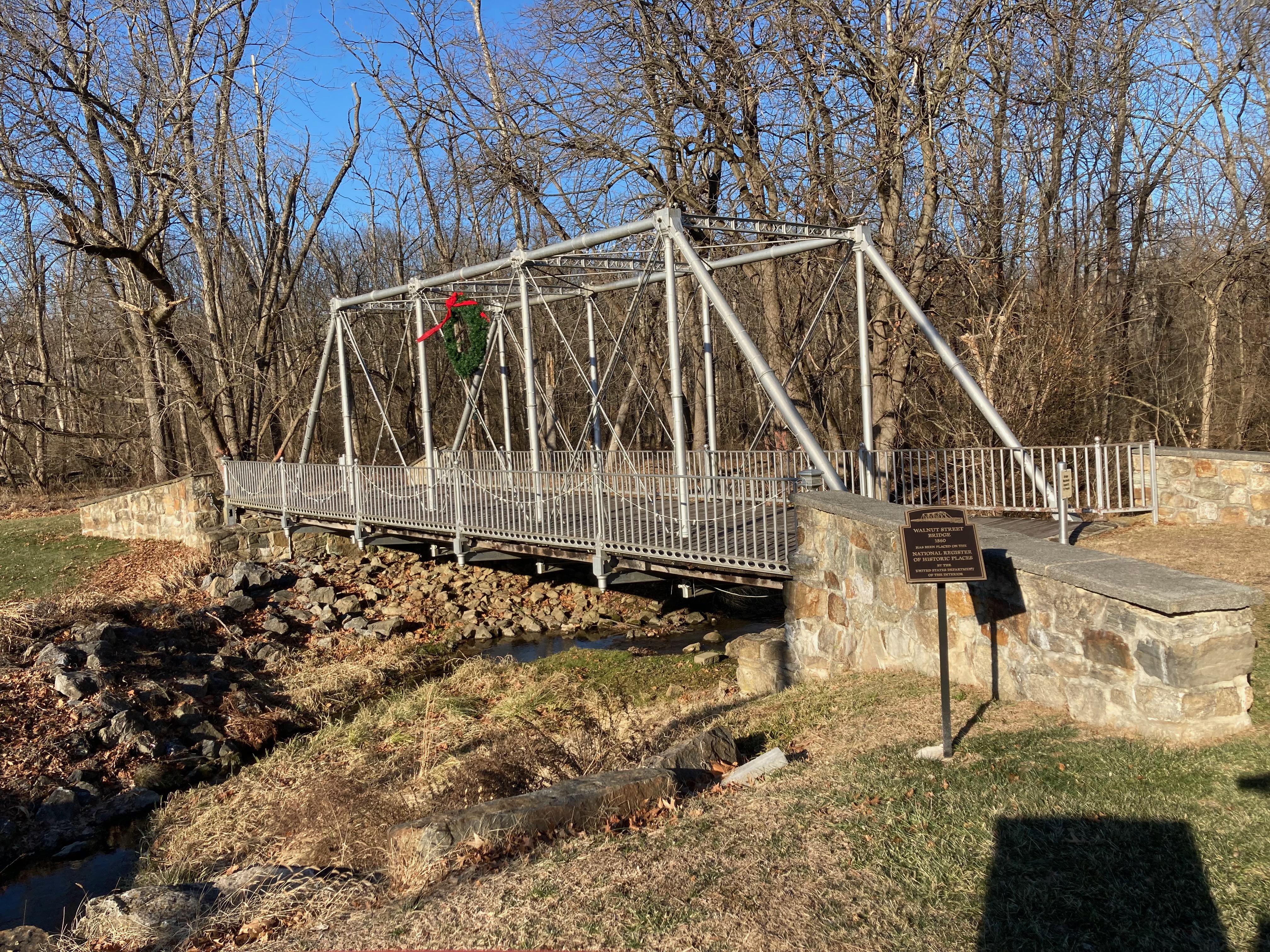
So we set off on a beautiful drive along the Delaware.  The leaves aren’t at peak yet, but there was plenty of fall color as we navigated our way toward Frenchtown, where there is a bridge across the river.  The GPS also told us this was the way to go.  On River Road, still in Pennsylvania, a flagman refused to let us on the bridge, although the signs did not say it was closed.  He impassively waved us on.  The GPS insisted we “return to the route.”  We soon found out why.  The next crossing is seven miles further down, along winding roads with a 25 mph speed limit.  The drive was beautiful, but suddenly I was going to be late for my appointment.  The new route added 45 minutes to the estimated travel time.  After uttering some choice words about unplanned bridge closures on a road where there are only a very few ways to emulate Washington’s crossing, we eventually arrived.

The weather beautiful, if a little chilly, the class decided to meet outdoors.  I hadn’t forgotten how much I love teaching.  It was brought back to me with force.  With the trees reminding us that winter is not far off, and the students eagerly asking questions, I felt at home for the first time in many years.  It was a temporary shelter, I knew, but it was a kind of personal homecoming.  Carefully avoiding the Frenchtown bridge, we drove north, crossing to River Road at Milford.  If the GPS had known that to go forward you sometimes need to go backward, it would’ve sent us to Milford that morning.  We arrived home tired but glowing from a day out of the ordinary.  As I put my tweed away that evening I found a pencil from the the funeral home where I last saw my mother in the pocket.  It had been the last time I’d worn this jacket, two years before.  October is a beautiful, melancholy time of year. 


Banning Books

For many years I’ve celebrated Banned Books Week by reading a banned book.  What with Republicans wanting only white, hetero, history-denying titles approved, I’m pretty sure that most books I read are banned somewhere.  Banned books, of course, see sales bumps and benefit the publisher and author.  So instead of reading a noted banned book, this year I’ll hang out my shingle here with but shallow hopes that it will be read.  I’m pretty sure, any agents out there, that at least one of my novels would be a banned book.  Maybe all of them.  You see, in my fiction I’m not the mild-mannered, inoffensive person who blogs here everyday for free.  There’s a reason that I keep my pen name secret.  I’m pretty sure that most people who know me would be surprised, if not shocked, by what appears in my fiction.

Writing, you see, is where we express the ideas in our heads.  I may seem to yak about everything on this blog, but in reality, I’m quite guarded.  Many of the horror movies I discuss, for instance, have ideas or scenes that I simply leave unaddressed.  I’m trying not to offend anyone here.  (A friend of mine who does publish fiction mentioned recently that a significant other in her family suggested that her writing wasn’t controversial enough to be picked up by publishers.  I think there could be something to that.)  While my mother was alive, I took special care that she wouldn’t discover any of my fiction.  Now that she’s gone these two years, I still protect her name with my own nom de guerre.  I really don’t want to hurt anybody.  I do, however, need to express myself.

Some of my fiction is horror.  Some is just plain weird.  The novels are well written, I think, and I’m open to editing.  (Agents, I am an editor—I know how this game works!)  As long as we’re stuck in a morass of banning books, why not look at a writer who’s more controversial than you might believe?  I’ve been writing daily for going on half-a-century now.  Think about that.  Think about the sheer number of controversial thoughts one might have in that amount of time!  Add graphomania to the recipe, with just a squeeze of talent and you’ve got banned books to last a lifetime!  I’m not sure any of the books I’m currently reading (five actively, at this point) formally appear on a  banned list.  But if you want to find one that almost certainly will be, well, my shingle’s out there if you care to take a look.

A banned book, in some districts

In the Water

On a list of hard-to-watch horror, I found the South Korean offering The Isle.  I was feeling particularly brave that day, I guess.  I was unfamiliar with Kim Ki-duk’s work, and looking for something that wouldn’t cost me any money to watch.  I found out this was one of those vomit or faint body horrors, but it is otherwise filmed so beautifully and gently that the contrast is downright shocking.  It all takes place at a low budget fishing platform rental business where the proprietor is a mute woman.  She ferries customers to their platforms, delivers food, and female companions, and occasionally takes revenge when customers treat her badly.  One day a fugitive arrives.  She doesn’t immediately know that he’s on the run, but she’s intrigued by him.  She prevents a suicide attempt and the two begin to bond.

Wanting to make sure her customer is satisfied, she starts bringing him a prostitute, but she gets jealous when they start to bond.  When the police come to find potential fugitives, he again tries to kill himself in a particularly gruesome way.  (Probably one on the vomit scenes.)  The proprietor again saves him and hides him from the police.  Apparently drawn to that type, she gets close to him and sees the prostitute as a threat.  She kidnaps the woman and when the prostitute falls in the water, hands and feet tied, she drowns.  The proprietor sinks her body and when the pimp comes looking for her, she drowns him.  The fugitive now realizes that they both have murder in common, but he feels trapped and escapes with her boat until she uses a reverse method of his suicide (another vomit scene) and he rescues her.  The police discover the bodies of their victims and the two take the platform house to a hidden location.  Apparently Kim Ki-duk likes enigmatic endings because the final scene is the proprietor drowned in a partially sunken boat.

I’m not quite sure what to make of this one.  I would agree with the hard-to-watch assessment.  Not only are there gruesome, self-destructive acts, I’m pretty sure that some animals were harmed in the making of the film—particularly fish.  I’m not often in the mood for body horror, but sometimes when I’m trying to save money, I’ll settle.  I very much doubt I’ll ever watch The Isle again.  K-horror is sometimes compelling, though.  This one manages to be emotional, and of art-house quality, but the only monsters are humans and they seem more to be misunderstood than anything else.  And I didn’t vomit or faint.


The Season

I learned about the Horror Writers Association years ago, shortly after I started publishing horror stories in 2009.  I couldn’t join because you had to have earned at least $30 from a publication.  I took this to mean a fictional one and I never made it beyond that benchmark until this year.  (It’s possible I misunderstood and could’ve joined for Holy Horror and beyond.  I think the point is they want to know you’re serious.)  In any case, these folks may be my tribe.  During the month of October the website has a set of free blog posts available to the public.  Mine—located here—dropped yesterday.  It deals with nonfiction, of course, since I’m still not finding much traction in getting novels published.  One of the weird things about book publishing is that you don’t know, unless you’re already successful, how well your sales are going until after about six months or so.  Sleepy Hollow as American Myth may be flopping for all I know. 

I’ve tried to promote this one as much as I can.  I contacted bookstores and libraries in Sleepy Hollow itself.  I had bookmarks printed and put them in local libraries and bookstores.  I arranged a discussion at the upcoming Easton Book Festival.  I told my local writers’ group about it.  Posted on a Halloween Facebook group.  All of this is tricky rather than treaty when a book is priced near $40.  That’s quite a trick, I know.  As Halloween approaches I keep seeing memes and posts about the Headless Horseman.  But I’m not sure if anyone’s finding my book or not.  It’s an anxious period when you write.

Working in publishing for nearly two decades now, I’m starting to realize that there are two ways to relevancy.  One is to be hired by an institution with name recognition—that automatically makes you an expert and everyone want to know what you think.  They’ll even pay you for it.  The second way is to write a book that sells well.  That one’s a bit of a catch-22, however.  To get published these days you need to already have a following.  I suppose that’s what the internet is for.  The best forums at the moment seem to be YouTube and TikTok, but there’s more much traffic there than on a Los Angeles freeway during rush hour.  I’m not sure if many people read the Horror Writers Association Halloween Haunts blog posts.  These folks, however, seem to look at this from a similar perspective.  Maybe a few of them will buy Sleepy Hollow as American Myth.  ’Tis the season.


Alien History

If aliens sat down to read earth history, they’d get the impression that we’re a very warlike species.  While, no doubt, this is true for a large part of history, I’d suggest that at least since 1900 it hasn’t been so much that the species is warlike, but that its leaders are.  As long as we have “shallow bastards” (to use Frank Turner’s phrase from “1933”) leading us, is it any wonder?  Even with current world leadership given a pass, looking back over the big ones of the last century, it was mentally unstable leaders with fragile egos that led to wars.  I’m sure some national resentment across borders certainly exists, but would people just go and kill those in the next town over, in the “modern” world, if their leaders didn’t tell them to?  Think of World War II, brought on by a madman.  Yes, Germany had grievances, but war wasn’t the only way to solve them.  And killing Jews did nothing to help anybody.

Or World War One.  The assassination of an Archduke need not have led to nations clashing with excessively deadly force.  Men with inflated egos and personal ambitions seem to have played a large role.  To any aliens reading this, some of us would like to take exception to this warlike generalization.  Human society is complex, and the jury is still out on whether democracy can really work when the electorate doesn’t bother to educate itself.  Or allow itself to be educated.  Still, my sense of my species is that we’ve managed to civilize ourselves out of being warlike, but we do have strong emotions that we need to learn to control.  Watching Washington flirt with war every day because of incompetence, well, dear aliens, we’re not all like that.

Image credit: NASA (public domain)

The world into which I was born seemed to be okay as far as national boundaries went.  Younger generations are raised to realize that colonialism was an evil, exploitive outlook.  There are those alive, unfortunately many of them in public office, who want to go back to acquiring more land.  And countries, sometimes artificially created (generally by Europeans), continue to break apart.  South Sudan became a country only in 2011, but Sudan appears to have been artificially held together by pressure from other nations.  I still don’t see why globalism and lack of war can’t coexist.  If nations had thinking persons in charge rather than macho men eager to show how big they are (aliens, this is a human fascination, I’ll grant you), we might well be able to live in peace.  If you want to take them back to your planet, you are most welcome to do so.


Keeping House

I really wanted to like The Innkeepers.  I’ve appreciated the Ti West horror that I’ve watched and Sara Paxton has a compelling screen presence.  The setting of a hotel that’s about to be shut down is a good set-up, and although the ghost story is somewhat conventional, it’s workable.  Part of the problem was clearly lighting.  Maybe I’m just too old, but when something important takes place in a scene that’s just too dark, well, it loses something.  So here’s how it goes: Claire and Luke are at the front desk for the final weekend of The Yankee Pedlar.  The guests are a woman and her young son, a psychic who used to be a television star, and an old man who wants to stay in the room where he had his honeymoon.  Claire and Luke are also ghost hunting at the hotel and a suicide-bride ghost is said to haunt the property.  When Claire finally does see the ghost, after the old man dies by suicide in the same room as the bride, Claire ends up in the basement where they get her.

The chase through the basement is dark.  I didn’t realize, until reading a summary later, that Claire, who uses an inhaler throughout the movie, died of an asthma attack.  That gives the story a nice ambiguity.  I, for one, couldn’t see that because things just weren’t lit well enough.  The final sequence, before the credits, shows the room in which the psychic was staying (she had a tendency to gaze out the window) and then the door slams on the camera.  The summary said a very light image of Claire is visible, and that she turns toward the camera before the door slams.  I watched the ending twice and couldn’t see her anywhere.  That scene was too brightly lit.  Without those two bits, the ending really doesn’t make much sense.

Movies generally involve many, many people (thus the very long credits).  Although the director is the “conductor” of the piece, sometimes I wonder about the lighting decisions, and whether this was a lighting department decision or West’s.  Whoever it was, I’m sorry to say that it made my experience of seeing the movie a confusing one.  The movie did reasonably well against budget so I suspect plenty of people saw what I could not.  I would be willing to try it again, maybe in a darker room or on a bigger screen.  A ghost story where you can actually see the ghost seems like a winning combination for an October weekend.


Who Owns It?

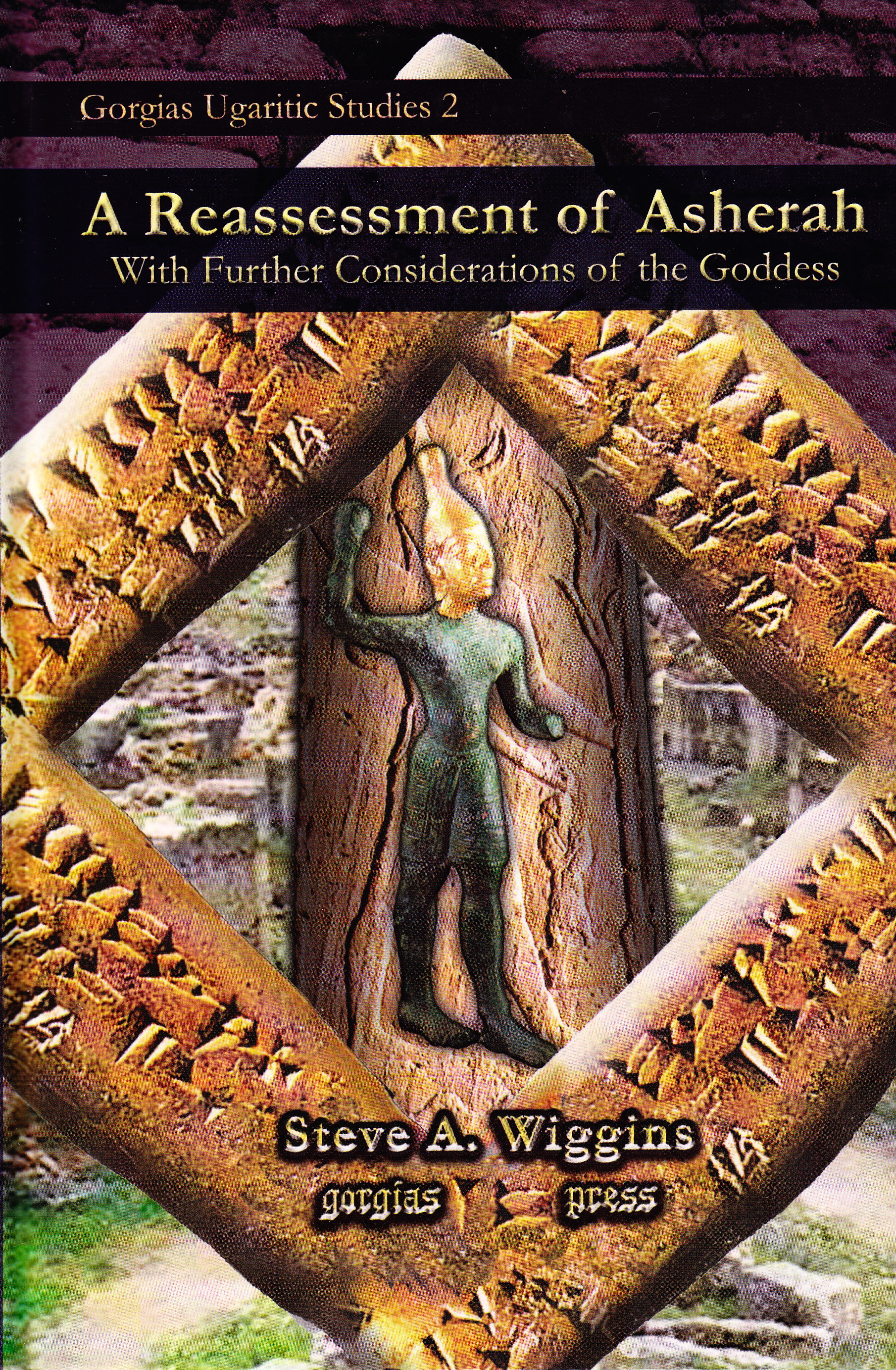
Who owns the Bible?  No, you can put your hands down.  I mean who owns the concept of the Bible?  This question occurred to me while thinking about the Apocrypha.  Does the Apocrypha belong or does it not?  This became a polarizing issue with the Reformation and subsequent Protestant ownership of the concept of the Bible.  The Apocrypha was mostly written by Jews, but has never been part of the Hebrew Bible.  The process of narrowing down the books to include wasn’t straightforward and since God hasn’t spoken on the topic, has never really been settled.  The books of the Apocrypha circulated with the Bible, as did a few other books.  Sometimes they were even bound together inside one cover with the standard Protestant 66 books.  Obviously I’m discussing the Christian canon here.

I’m sure you’ve known someone this has happened to, if it hasn’t happened to you personally.  This person is an actual expert on a topic.  S/he goes to a place where an unexpected discussion on their specialization breaks out but nobody asks them to speak to it.  This person then becomes offended, sometimes even speaking out, loudly, that this is their area, they have expert knowledge of it and should be consulted, at the very least.  More likely than not, their opinion should be considered definitive.  This is the image I have in my head with Protestants and the Bible.  Sure, the Catholics had it long before, but they didn’t encourage individual study.  In fact, they discouraged laity from reading it.  Only when they, the Protestants, came along did anyone really pay attention to the Bible, and, it must be admitted, they do have a point.  All the Bible study that goes on today, no matter what faith tradition (if any) would not have happened without the extreme Protestant reverence for the Good Book.

But still, there are other branches of Christianity that disagree.  There are more Catholics than any single sect of Protestants.  And a great many Orthodox Christians as well.  Some of the latter include the books of 1 Enoch and Jubilees in their Bibles.  Even so, any publisher that wishes to make inroads on selling the Bible must defer to the Protestant canon.  This is the case even though the King James Bible included the Apocrypha.  So as I ponder who it is that owns the image of the Bible, my mind keeps coming back to the same place.  Those who make the loudest, and most prolonged claim are the Protestants.  They own the Bible, in the public eye.


Famous Cemeteries

I have to confess that I really didn’t know about Père-Lachaise Cemetery before this book.  I knew that Jim Morrison was buried in Paris, but I’d never really paid attention to where.  My wife picked up Benoît Gallot’s The Secret Life of a Cemetery: The Wild Nature and Enchanting Lore of Père-Lachaise and we decided to read it together.  It seems likely that Père-Lachaise is the world’s most famous cemetery.  This little memoir by the current curator of the cemetery is a delightful read.  It is reflective and sensitive (and spawned by the attention the author’s social media was getting, so hey, help me recruit some fans!).  Gallot began posting pictures of wild animals that he snapped in the course of his work and Parisians, and others, were fascinated to learn about wild animals at home in the capital of France.  This book reflects on the animals, plants, and people of the graveyard.

I enjoyed this book, but one aspect gave me pause.  Gallot notes that the cemetery doesn’t permit jogging.  Perhaps this is a cultural thing, but cemeteries have been some of my favorite jogging spots.  I mean no disrespect by it.  Cemeteries are peaceful and have very little traffic (one of a jogger’s concerns).  I’ve never found people walking their dogs (another jogger issue) in cemeteries.  I can see how mourners might not want to see someone taking their exercise near the grave of a departed family member, but a jog is simply a fast walk.  And we are, as a species, part of nature.

Many famous people are buried in Père-Lachaise.  I visit cemeteries to find famous people’s burial places.  Indeed, that’s what I tended to post on my Instagram site, but I found no followers.  We had visited Highgate Cemetery in London—another famous burial ground—and discovered many familiar names there.  Perhaps to Anglophones, Highgate is more famous than Père-Lachaise.  But even Highgate would’ve been off my radar had it not been for the Highgate Vampire incident that I’ve written about before.  Gallot, who lives in the cemetery, is skeptical of ghosts in Père-Lachaise, although he’s well aware that the stories are told.  This brief book is contemplative autumnal reading.  There are several black-and-white photos of animals among the graves.  They are the living among the dead, and an appropriate symbol that life goes on.  If you’re looking for a place to reflect on mortality and you want to learn about cemetery life, this may be the book for you.


Preying

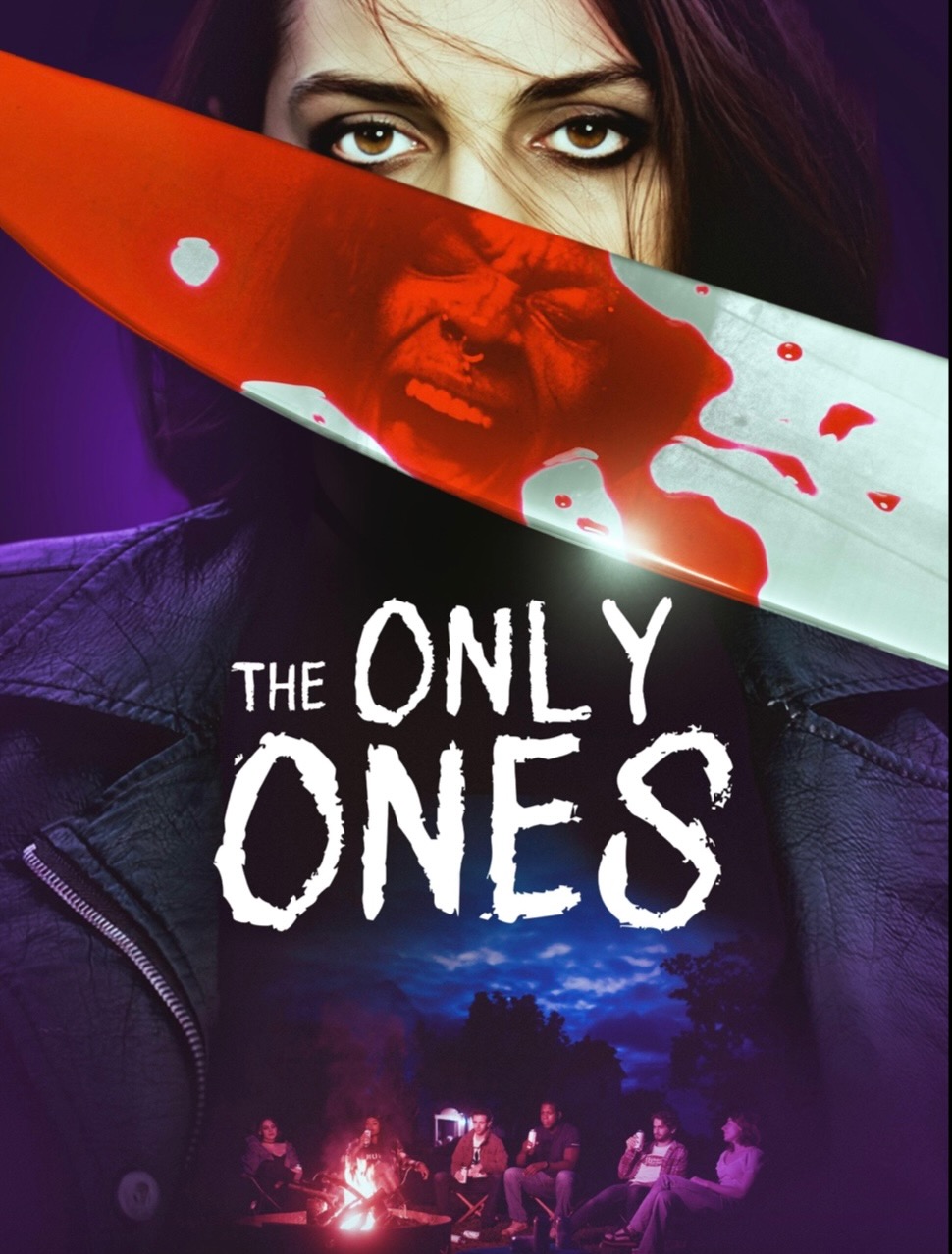
Several aspects of Let Us Prey don’t make a whole lot of sense.  The police in this small Scottish town are all corrupt, at best.  And when push comes to shove, they choose to murder one another.  For some reason the sergeant wraps himself in barbed wire as he tries to bring the wrath of God onto his subordinate officers.  The night starts out with four prisoners being locked up and only one survives.  He’s shown emerging from the sea, with ravens, at the start of the movie and he’s never really explained.  He’s there to collect the souls of sinners and he seems to be able to control other people.  The whole thing turns into a bloodbath before it’s over.  In other words, it lacks the subtlety of much Euro-horror that I’ve watched.  One thing it does have, though, is plenty of use of the Bible.

I suppose with a title like Let Us Prey such a development shouldn’t be unexpected.  Rachel is a new constable in the police station.  The story begins with the stranger, Six—the number of his jail cell—nearly being hit by a car.  Or having been hit.  The teenage driver is arrested and finds a pedophile teacher already in the lock-up.  Two other police officers, after having sex in their patrol car, find the stranger and bring him in.  The local doctor examines him but when the doctor attacks him, he’s arrested as well.  Finally, Six is locked in.  It’s discovered that the doctor had murdered his family earlier in the evening, and the reckless driver had earlier hit and killed a classmate while out driving.  The pedophile kills himself and the two other police officers murder the doctor.  Then the sergeant, who’s a serial killer, comes back to kill everyone left alive.  Six and Rachel survive and Six reveals that he’s collecting wicked souls and invites Rachel to join him.

The Bible quotations (some not accurate) all come in the context of retribution.  The sinners are to be punished.  Rachel, however, escaped a childhood abduction and seems to bear no burden of sin.  The other police—who had all decided Rachel should die—end up dead themselves.  A gritty, supernatural police story, this film suggests a larger backstory without providing a lot for viewers to go on.  The openly Christian sergeant wears a cross, drinks when he drives, and kills his homosexual lovers.  Is there perhaps a message that the movie’s trying to convey?


Dark Pliny

My current dark academia kick has me looking at the Classics again.  I taught Greek Mythology for three semesters as an adjunct at Montclair State University.  In the course of my New Testament studies I’m sure I encountered some of the classical Greco-Roman writers, but being focused on the Bible at the time, I never really followed through.  Then my doctorate got me interested in even earlier classics.  In any case, I’ve been trying to self-educate myself about Pliny the Younger.  To be honest, this is because he wrote one of the most famous Roman ghost stories.  Pliny wasn’t some guy into woo-woo subjects.  He was a magistrate and a lawyer and a noted orator.  His most famous work is the collection of his letters.  One of those letters tells his ghost stories.  Others describe Mount Vesuvius’ eruptions.  So, Pliny.

Image credit: Daderot, Angelica Kauffmann’s Pliny the Younger and his Mother at Misenum, 79 A.D. (detail), public domain via Wikimedia Commons

My fully-loaded bookshelves don’t have any Pliny.  I’m sure he’s mentioned in many of the books on these shelves, but I don’t have a copy of his letters.  I used BookFinder.com to search for used copies only to discover that the Loeb Classical Library divides his letters into three volumes, which feels like too much for casual reading.  Then I realized that most editions are edited, leaving out some of the, I suspect, less interesting missives.  Even as an editor, I don’t trust editors.  What if they left out the ghost stories because, well, serious scholars pay no attention to such things?  I discovered that Penguin Classics has an edition and from what I can tell, it seems to be complete.  I mark books that I want to remember on Amazon because they have pages even for the obscure stuff.  I try to buy the actual books from Bookshop.org.

What makes all of this noteworthy is that as I was on the Amazon page I noticed that you can “follow the author”—Pliny the Younger himself!  He must be a ghost by now.  So what the heck?  I clicked “Follow.”  I’m not in the habit of following authors on Amazon; I find my books in many different ways and most authors I know don’t like to talk about their writing, so why add another social media commitment?  I’m hoping that Pliny will be more willing to chat about writing.  He may be dead, but I’m not a prejudicial sort of individual.  I won’t hold it against him.  Who knows, maybe in addition to ghosts, I’ll learn something about Vesuvius?  And if he ghosts me, well, at least he’s a professional.


Nostalgic Shadows

Nostalgia is a funny thing.  Although it can strike at any age, somehow after the half-century mark it’s particularly easy to get swept into it.  As I written about many, many times, I was drawn into the Marilyn Ross Dark Shadows novels as a tween.  In my mid-to-late forties, when the internet made it possible, I started to collect all the volumes from 1 through 32.  It took several years.  I had to find them via BookFinder.com and our level of income didn’t support buying more than one every few months.  Then in 2022, having difficulty locating the last of the original series, I found a seller on eBay offering up the whole set.  The price for that set was less than the least expensive final volume I could find.  I did what any nostalgic guy would do.

We don’t really buy antiques, but I’d been looking for an office desk (this was before the scam).  I’d been using a craft table for a desk for years and it seemed that I really needed something with a better organizational range.  This led me to stop into a local antique shop.  They ended up not having much furniture, but they did have aisles of nostalgia.  A few weeks later when it was too hot and humid to be outdoors, I revisited the shop.  This time, relieved of the burden of seeking a desk, I was able to browse at leisure.  It’s like going to a museum but not having to pay admission.  I turned a corner and I saw something I’d never seen before.  A collection of Marilyn Ross Dark Shadows books.

It wasn’t a full set, but I had, prior to finishing my own collection, never seen more than one or two together in any single place.  As a child I’d buy them at Goodwill.  As an adult, on BookFinder.  All those years in-between, I always looked for them when visiting used bookstores.  I visit said shops whenever possible.  In decades of looking I’d only found one in the wild once or twice, and always by its lonesome.  This was a completely new experience for me.  It was also quite odd to be seeing them and not having any need to buy them.  I have a full set.  The nostalgia was almost overpowering.  I couldn’t help but think of how even a few years ago I’d been pawing through to see if there were any I hadn’t yet found.  All for reliving a bit of my childhood.


A Presence

Presence is a fairly new movie, for me anyway.  I was able to stream it at the price of commercials, so I gave it a chance.  It was provocative and to discuss it I’ll probably need to reveal the ending.  For now, however, I’ll just say it’s a ghost story from the point of view of the ghost.  It reminded me of A Ghost Story, which I also saw shortly after it was released.  Both are melancholy and explore the dilemma of a ghost having to watch as time passes.  In the case of Presence, however, it is a future ghost.  As I say, more will be given away, so be advised.  The movie is about a family of four buying a very nice house in Cranford, New Jersey.  Well, it doesn’t say Cranford, but that’s where it was filmed.  The parents, who have a bit of a troubled relationship, have a teenage son and daughter.  The daughter’s close friend has recently died and they’ve moved, in part, to try to shake her out of it.

We watch from the ghost’s point of view as the realtor shows them the house, the painters get it ready, and they move in.  The daughter, Chloe, is having trouble adjusting and the presence lingers about her room.  It’s obviously concerned about her.  Chloe sometimes senses it.  When Tyler, her brother, brings a friend over the friend starts to show an interest in Chloe.  The presence tries to intervene to prevent him from taking advantage of her.  When the friend drugs her, intending to kill her (as he did her friend earlier, which, of course, she doesn’t know), the ghost rouses her brother who saves her by tackling his friend out the window, killing them both.  As the family is about to move again, the mother sees in a mirror that the presence is Tyler, their son.  He was protecting Chloe, as a future ghost.

I found it an engaging film.  Sibling rivalry—the parents play favorites with the opposite gender children—and Tyler’s often harsh dismissal of his sister’s grief, dominates their family life.  The fact that Tyler is the presence protecting his sister even when, in real time, they don’t get along, is a form of redemption.  That brief reveal at the end is what makes the movie.  Is it horror?  It has a ghost and there are moments of considerable tension.  As I’ve argued from time to time, horror isn’t a precise genre at all.  I found this listed as horror in a streaming service and although jump startles and visible monsters aren’t evident, the affective aspect is clearly there.  Yes, in my opinion, it’s horror. And it’s well done.


Secrets

It’s a mystery.  All parents do it and even when you’re a parent yourself you’re surprised to find your parents doing it to you.  Keeping secrets, that is.  Parents have their secret lives that they don’t tell their children, and when we’re given a glimpse into that life sometimes we’re shocked.  My mother kept a diary.  Not religiously, and not for much of her life.  I inherited one volume, and I’m afraid to read it.  I tend to be an honest guy.  I try to answer my daughter’s questions with complete openness.  There are, however, some things I won’t talk about.  My secrets.  And despite the fact that I reveal something of myself daily on this blog, I do have many parts of my life that remain unrevealed.  Those of us who write sometimes don’t want everything we put down to be read.  Or maybe we do.

I used to keep a diary.  It was partially to remind me but also, in part, to explain myself.  It’s quite personal and I lost maybe two or three volumes of it years ago.  I stopped keeping it after I got married.  I guess I figured a Ph.D. and publication record would do the job for me.  Probably those missing volumes were with stuff left at home that Mom unwittingly threw away, like our old baseball cards from the early seventies.  Some of my stuff got damaged by water, foreshadowing what’d happen when we moved.  Perhaps they were thrown away then.  They had secrets, I’m sure.  Our private lives are a mystery to others.  That’s one reason that I try to be kind whenever possible.  We don’t know the burdens that others carry.  Why add to them by a sharp reply?  Even typing this, I’m not sure it will end up on the blog or not.  Other pieces haven’t.  Secrets.

Photo by Yogesh Pedamkar on Unsplash

Some intelligent animals try to hide things.  Corvids, for example, look around to see who else is there before hiding food.  I once saw a doe giving birth.  She was in a secluded glen in the early morning and I just happened to be jogging quietly by.  I’ve started multiple autobiographies.  I’m not sure anyone has an interest in reading them, but I have hope.  Despite my secrets, most of which I keep out of the autobiographical musings, I know I have a story to tell.  That’s why I keep at this blog, day after day, year after year.  It brings no money and has only a few followers, but it’s a chance to tell my story.  Even if I keep the secrets closely guarded.