Cryptology 46

From Wikimedia Commons

From Wikimedia Commons

Four centuries ago this year William Shakespeare died. In the literary world there have been lots of commemorations going on, and all the fuss reminded me of a post I’d written some years back concerning Psalm 46. While teaching at Nashotah House, one of my students told me that William Shakespeare had covertly been involved in the translation of the King James Bible. The King James Version appeared in 1611, and Shakespeare was the prominent writer of England in that era. If you look at Psalm 46 in that version and count the 46th word from the beginning, you find “shake,” and the 46th word from the end is “spear.” I mentioned in my post that I’d not found any academic treatment of the issue and I’m happy to announce that I finally have. Of course it would be in an Oxford University Press book.

I’ve not read Hannibal Hamlin’s The Bible in Shakespeare, but I am able to glance through it at work. It turns out that I didn’t have the full details of this biblical urban legend. Apparently if you find the sixth and seventh words of verse 10 of that Psalm you find “I am.” The sixth and seventh words from the end are “will I.” Will.i.am would be proud (pardon the capital W). As much fun as all this evangelical exegesis might be, Hamlin calls shenanigans on it all. He demonstrates the literary history of the tale, pointing out that—not to spoil our fun—the cryptographic mentions of the Bard in the Bible are creative efforts of those of later generations. The interesting thing is, however, that the Bible is so closely scrutinized for codes that all kinds of hidden messages may be found. Look, for example, at what I discovered:

“For the Lord himself shall descend from heaven with a shout, with the voice of the archangel, and with the trump of God: and the dead in Christ shall rise first.” I don’t know about you, but to me this is clearly Paul warning the first Thessalonians of the present day’s troubles. When Trump is elected the dead will walk. Could anything be more prophetic than that? I haven’t done the math yet, but I’m just sure if you count the millions of letters in the Bible, you’ll find the name “Donald” spelled out somewhere. Scripture, after all, is the repository of all truth. One thing you won’t find, however, no matter how deeply you look. The billionaire’s tax returns are something God himself will never be able to see.
What’s the Message?

I said I’d come back to Bono. A story in the New Boston Post heralds a new documentary on Bono and Eugene Peterson. Both are famous in their own way, but no doubt Bono has the bigger name. Peterson, a pastor, is noted for his book The Message, a contemporary translation of the Bible. The documentary, “Bono and Eugene Peterson: The Psalms,” focuses on the book that brought rock star and scholar together, according to the story. The Psalms have a way of surprising people. In a day when the Bible is treated with considerable suspicion (how Bible scholars must feel, learning now that they are really rouges!) it’s sometimes easy to forget just how readable many of the Psalms are. The collection is, of course, uneven. Some are wonderful. Others are frightening and express immoral, if very human, sentiments. It is difficult to treat the Psalms as a whole.

437px-The_Sunday_at_Home_1880_-_Psalm_23

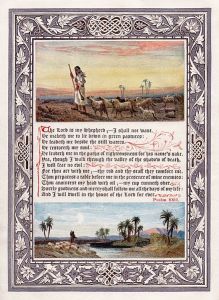
Having researched the Psalms in some depth, I found them to be one of the most challenging books to teach. We tend to have preconceived notions about the Psalter. That they are poems written by either David or God (neither of whom signed them). That they are comforting. That they are appropriate for any occasion. The reality is that Psalms is a most difficult book. Some of the poetry is sublime. Even up to the lifetime of yours truly, it could be assumed that many in secular society could recite Psalm 23 from memory. Not all of them are, however, quite so nice. Those that advocate murdering the babies of your enemies as less easy to consider holy writ.

The Psalms are generally a collection of human poetry. As I used to tell my students, whereas laws, and even narratives, are often top-down, the Psalms are one of the few places in the Bible where people are allowed to speak. There is joy in the Psalter, but there is also bitter frustration. Not all of the poems have happy endings. We seem to think that once a document becomes sacred it can no longer retain human fingerprints. The lie is given to this position in the Psalms. They are a most human book. Maybe the documentary will say why Bono finds this particular collection of poetry so inspirational. His is, after all, a human voice. There may be a message here since the Psalms are so fallibly human. And if nothing else, humans are experts at seeing the same thing in different ways.


Under the Weather

A friend, knowing my penchant to watch the skies, sent me a story about the British and the weather. The story by Alastair Sooke on the BBC’s cultural page is discussing Alexandra Harris’s book Weatherland. I have to admit that I haven’t read the book (yet) but the report of it appeals to someone who’s written a book on the weather, but for a much older timeframe. According to Harris, according to Sooke, the British are rumored to be obsessed with the weather. While living in the United Kingdom, my wife and I observed this. It is not merely casual conversation when someone discusses the weather. It is a serious topic. For a nation so accustomed to rain and gloomy skies, the weather has a religious import. It rarely goes without comment. I suppose that’s the point I was trying to make in my book. The weather is important. Vital, in fact, to human survival.

What really caught my attention here, however, was Harris’s observation that weather is used to characterize mood. Sooke mentions ice and snow and melancholy. The image is vivid: early Anglo-Saxons turing a wary eye to a winter sky with its low clouds and preternatural chill. It is so universal, it seems, not to require comment. Yet at the same time, weather can be a great trickster. C. S. Lewis once wrote that the image of the Arctic north filled him with an inexplicable joy. Winter can be fickle that way. In the world of the Psalmists, rain was a blessing and a weapon. How you look at it depends, well, on your mood.

DSCN0904

The British may take their weather more seriously, on a day-to-day basis, than those of us across the Atlantic. We tend to treat the topic casually. In reality, it is just as serious here. Drought, which has gripped the western half of the country for about half a century now, is a serious concern. Winter storms, hurricanes, tornadoes. A lightning storm can still be a theophany. (One awoke me in the middle of the night, just hours ago.) Weather impacts our bodies as well as our moods. It is all-pervasive, but we generally don’t like to articulate it. I suspect our understanding of the weather says more about us than we’re willing to admit. Our British colleagues, however, are less squeamish about the topic than we tend to be. There’s more to the sky than it might appear.


Inventing Concepts

A neologism is an invented word. Of course, it is impossible to be certain about the origins of many words, and even the many neologisms attributed to William Shakespeare may have been overheard by the bard at the local pub. Still, one of the things I sometimes dream of is inventing a word that will come into wide circulation. I think it must be easier to do in fiction than in non-fiction writing. When I first wrote my book, Weathering the Psalms, I chose what was, at the time, a neologism for the subtitle. “Meteorotheology” was a word I’d never read or heard before and, quite frankly, I’m not sure how to pronounce. Although the world-wide web existed when the book was written, scholarly resources were still few, and tentative. Amazingly, that has changed very rapidly. Now I’d be at a loss to find most basic information if I were isolated from a wifi hotspot. In any case, the web has revealed that others beat me to it when it comes to meteorotheology.

I suppose that some day, when I have free time, I might go back and see if I can trace the web history of the word. It is used commonly now to refer to God taking out wrath on people through the weather. For example, when the Supreme Court decision on the legality of gay marriage was handed down this summer, there were various websites—more popular than mine!—asking a “meteorotheological” question: when was God going to send a hurricane to punish the United States for its sin? These were, as far as I can tell, all tongue-in-cheek, but there can be no question that some people treat meteorotheology that way. It is a sign of divine wrath. My own use of the word had a wider connotation. When I was invited to present at talk at Rutgers Presbyterian Church in Manhattan a few weekends ago, I was reminded of my line in the book: “To understand the weather is somehow to glimpse the divine.”

That’s an idea I still stand by, but it is difficult to move beyond. What exactly does the weather say about beliefs in the divine? There’s plenty of room for exploring that. I know that when I walk outside to fetch the paper on a clear fall morning when the moon and stars are still out, I know that I’m experiencing a kind of minor theophany. The brilliant blue of a cloudless October sky can transport me to places unlike any other. What exactly it is, I can’t lay a finger on. That’s why I came up with the word meteorotheology. I many not have been the first person to use it. I may even be using it incorrectly. But the weather, in my experience, has many more moods than just anger. Any autumn day is enough to convince me of that.

DSCN6011


The Climate of Belief

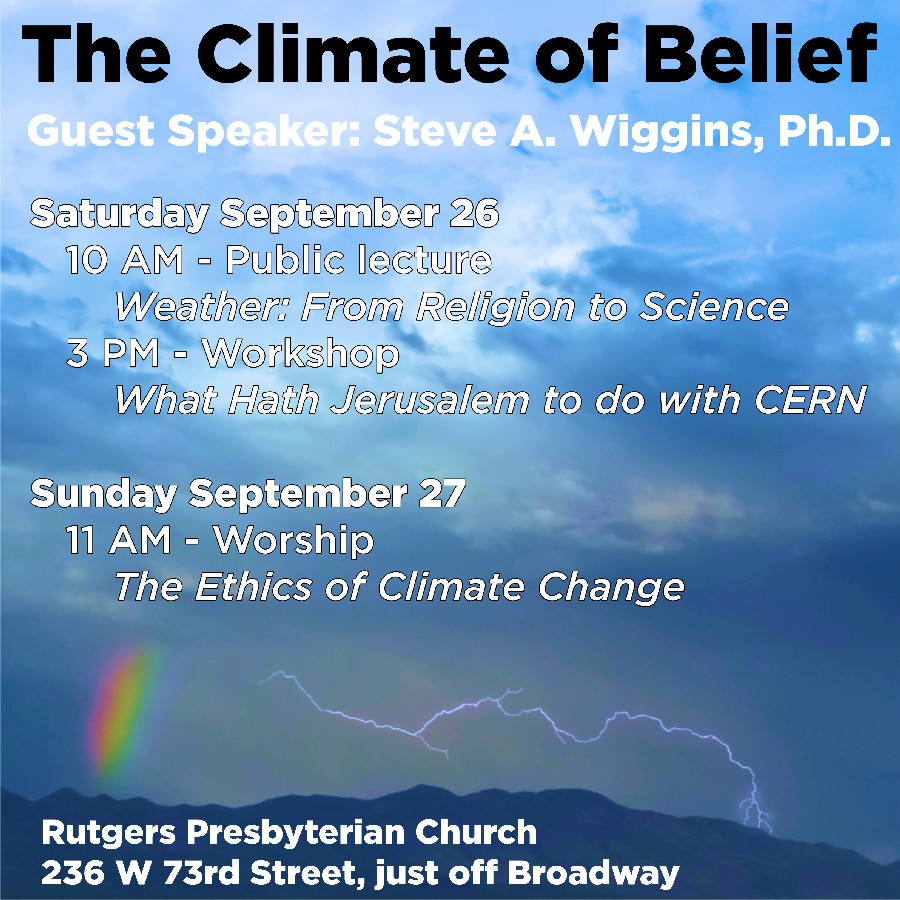
As I’ve noted before, in our culture where an individual voice is hard to hear, those without institutional affiliation are generally considered self-promoting hacks. That’s really too bad, given that so many highly educated people end up in menial positions—our society’s “greatest resources” squandered away behind a counter or sequestered in a cubicle. So it was my great honor to be asked to present Rutgers Presbyterian Church’s Autumn Guest Lecture this year in Manhattan. When I taught at Nashotah House invitations to speak came frequently, even though it was a small school. I even once received an invitation to talk when I was an adjunct at Rutgers University. Since “going corporate,” it seems, I have nothing to say. It really is wonderful to be asked to speak again. Practicing my talk brings back many fond memories. Lecturing is in my blood. The Pastor asked me to come after my book, Weathering the Psalms, was published. Never intended as a best-seller, it has quietly sat on the sidelines, like its author.

weather wiggins ii sml

I suppose a bit of shameless self-promotion might be in order, but of course, I will feel ashamed for pointing out, when it’s all over. If you happen to be in New York City this coming Saturday and Sunday, so will I. Rutgers Presbyterian is located on the upper west side, not far from Lincoln Center and the Museum of Natural History. I’m always glad for an audience. See? Now I feel bad for having said so. My theme over the weekend will be “The Climate of Belief.” In addition to the weather, we’ll be talking about religion and science. Two worldviews that seem to be in constant conflict are not really the bitter enemies they seem to be. I won’t give away any spoilers since then you’d have no reason to come to my New York debut.

Further along, I am scheduled to give a paper at the Society of Biblical Literature annual meeting in the Society for Comparative Research on Iconic and Performative Texts (SCRIPT) session on sensing scripture. My talk on that occasion will be on how the Bible is presented as an iconic book in the first season of Sleepy Hollow. Be sure to mark your November calendars now! It’s not too often that a person with no institution willing to back him gets to speak twice in a year. Someone who’s in a position to hire professors once told me that with so many candidates out there, you have to wait until you fall in love with one. Being a Don Juan, whether in amore or academia, has never been my strong suit. Still, if Elijah is to be believed, even an unamplified voice may carry. I’ll utter my “yop” for those who wish to listen.


Biblical Violence

756px-Winchester_House_910px

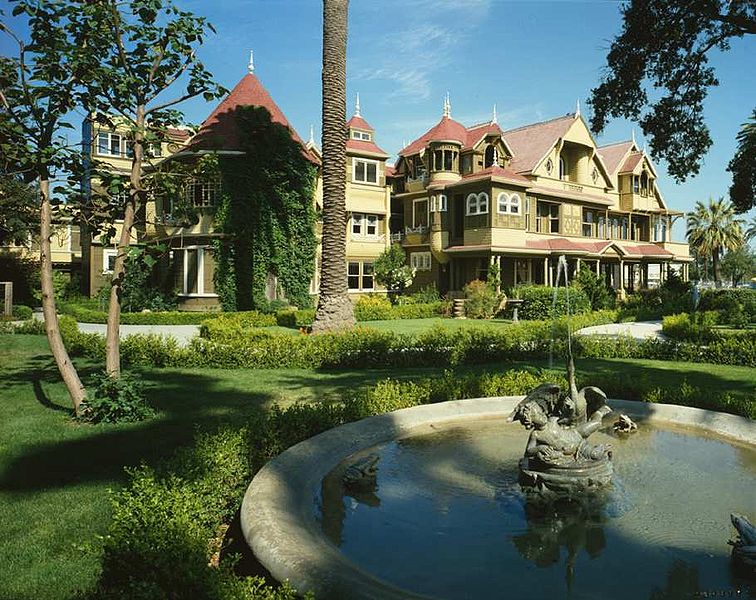
Sarah L. Winchester, it is said, was a haunted woman. The widow of William Winchester, she was heir to the tremendous amount of money brought in by sales of the renowned Winchester rifles. Fearing the haunting of all those killed by the weapons, she built what has now become a tourist attraction—an unfinished mansion that was intended to prevent those ghosts from living with her. With the spate of recent multiple shootings, we might wonder how many other gun manufacturers are living haunted nights in their comfortable homes. A recent petition has been circulating to stop Spike’s Tactical from producing The Crusader assault rifle. Predictably, the sales have been so overwhelming that the religious rifle is on backorder.

The Crusader, as the photos reveal, is emblazoned with Psalm 144.1 “Blessed be the Lord my Rock, who trains my hands for war, my fingers for battle.” It also features a Crusader’s cross and trigger setting labeled, Peace, War, and God Wills It. Blasphemy in carbon fiber. I suppose I’m hopelessly naive, not being aware that guns could be purchased online, but the overwhelming demand is nevertheless disheartening. It used to be that the Christians were the good guys. You certainly didn’t have to worry about them shooting you. That was the job of the heathen. So many multiple shootings took place this summer than I couldn’t keep track of them all. I live in a world where guns play no role and I wonder if everyone wouldn’t be happier if we didn’t lay down our arms and learn how to get along.

Of course, the Bible is a book where violence against enemies is permitted, and, in places, even encouraged. Society has repeatedly declared that there is no need for experts trained in how to interpret the Bible, and this is what happens. Psalm 144 is a poem for deliverance from enemies. Historical criticism would likely place the piece as written during a time of war. The era in which the majority of the Bible was written was anything but peaceful. Those parts of the Good Book that are particularly extolled are often those that suggest that the answer to war is peace and that setting aside your own will for the well-being of others is something we should all be doing a bit more often. But we cannot deny that “Peace, War, and God Wills It” aren’t part of the violent worldview we also encounter in sacred writ. I wonder what Mrs. Winchester would have had to say about such mixing of the Bible with guns.


Weathering Academia

Come the end of September, I’m scheduled to give a talk at Rutgers Presbyterian Church in New York City. I’m personally very flattered by this because, as it has become clear to me, an academic without a post is mute. I’ve seen colleagues who teach at schools I’ve never heard of consulted by the media—and there is obviously more to it than this—because they have teaching positions. Those of us who used to be professors apparently forgot everything when we take jobs out of necessity. That’s why I’m so flattered. My talk will be on the larger issues behind my book, Weathering the Psalms. I never expected this book to be a bestseller. I knew that it was, in some sense, incomplete. Academic books are the kinds of things you write when you have an academic post. When your day is not programmed with “enter this data, follow up on that book, and when you have time, get other people to write books.” People, of course, with university posts. The rest of us know not whereof we speak.

It’s funny. Back when I was teaching, even if it was only at Nashotah House, I used to be asked to give little talks all the time. It was rare for a year to pass without someone asking me to lead a seminar or share what I’d learned with some august body. That tapered off once I became an adjunct, although a Presbyterian Church in Princeton once invited me to speak because I was teaching at Rutgers (the university). And as I prepare my talk in my free time, I wonder about a society so tied up with name prestige that someone who has something interesting to say is just a crackpot unless a college or university or seminary or think-tank hires them. There are many of us—hundreds, if not thousands—who know as much as our university colleagues about a topic. An individual doesn’t have a name big enough to flash around, so we don’t get asked to share. Keep your hand down and your head down on the desk, please.

IMG_2416

In any case, it has been good for me to come back to the weather and think through some of the larger implications. I’d just had the book declined by a big name academic press when Nashotah House terminated my position. For many years I couldn’t look at the manuscript since it seemed a symbol of my failure. No, the book isn’t everything that it could be, but there is some good information there. The larger implications are actually of some importance here. The weather is studied both by science and by religion. Both understand aspects of it that the other misses. I’m looking forward to exploring this with the good folks of Rutgers Presbyterian who were kind enough to invite a guy with nothing more than a book and an obscure name to come and talk about something that most academic colleagues just don’t notice.


Clerk and Dagger

Photo credit: Luis García (Zaqarbal),, Wikimedia Commons

Photo credit: Luis García (Zaqarbal),, Wikimedia Commons

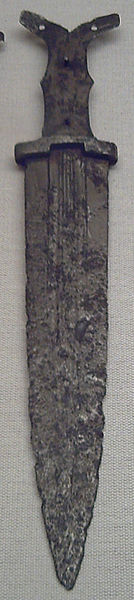
Recently I had the sad duty to list a contributor to a volume as deceased. The standard means of doing so in typography is with a symbol called a dagger (†). When I was young, I thought this was intended to be a cross, but it became clear, as I looked more closely, it wasn’t that at all. The origins of typographic marks go back to the classical Greeks. Used to mark dubious places in manuscripts, the asterisk was to show places where something had to be added to the text while the dagger was used to show deletion. Well, it wasn’t a dagger then. The earliest form was called an obelus and it could be a plain line, but was often shown with the symbol we now painfully associate with long division: ÷. This odd sign was said to represent a dart, a spit, or the sharp end of a javelin. Since things were to be cut out of the manuscript, a sharp instrument would be ideal. Early textual criticism, then, gave us symbols that have now been commandeered by math.

These signed evolved with time. By the Middle Ages the asterisk and the dagger could be used to indicate a pause when reciting Psalms. (Those of us at Nashotah House in the 1990s know all about pauses when reciting Psalms.) Medieval scribes marked up manuscripts religiously. Eventually the asterisk came to be associated with footnotes—a function that it still has, mostly in non-academic texts. The dagger was used for a footnote if an asterisk had already been used on that page. Beyond that, the double-dagger came into play. The function and the form of the obelus had now evolved solidly into the dagger form. The obelus continued on in math, at one time to mean subtraction, but finally settling down to represent division. Appropriate, given its graphic origins.

The dagger and asterisk were the earliest signs of textual criticism. Literalists today still don’t understand the concept, since all ancient documents of the Bible are copies of copies of copies. Nevertheless, how did a sign indicating a spit upon which an animal was roasted come to represent the dearly departed? Since asterisk and dagger often work as a pair, the most obvious way that this worked out was in representing the birth and death years of a person. An asterisk before the name meant “born in,” while a dagger in the same position meant “died in.” As a kind of typographical shorthand, then, a dagger after a name meant the person had died. Although it sounds dramatic and not a little violent, it is really only death by textual criticism. That, I suspect, is something most biblical scholars especially will be able to comprehend.


The Reign of Rain

I’m on vacation for a week. My job is such that taking vacation is becoming a rare commodity, what with precious few allotted days and move-in, move-out schedules of a collegiate child, and so on. And also company policy about keeping employees in the office between Christmas and New Year. Anyway, now that I’m here I should be kicking back and enjoying the beautiful lake and getting out to do the things inmates of the city seldom do. It has, however, rained every day that I’ve been here. Not all-day rains, of course, but just enough that plans have to be interrupted or changed at the last minute. I end up sitting in the cabin playing Solitaire when I should be out getting some fresh air. So it goes.
Ironically, I am staying in the drought-stricken west. The western United States, I learned when researching for Weathering the Psalms, has been ensconced in a decades’ long drought. In fact, prior to my family trip here it hadn’t rained in quite a while. Our arrival with the clouds was, after all, mere coincidence. Still, it’s hard not to take the weather personally. I know that the weather is larger than any one person’s needs or desires. I also know that water is a commodity even rarer than vacation days, largely because of our misuse of the limited supply that we have. California’s plight has been in the news. We have large cities in water-challenged environments and people treat water like there’s no end to its abundance while the opposite is the case. Just thinking about it makes me thirsty.
There are many things a person can go without, some of which feel absolutely essential at the time. Many vacations, I know, are extravagant. Fancy hotels, high-priced entertainment, exotic locations. Work can feel so crushing that vacation my become the one island of sanity in the midst of a hostile ocean of obligation. For me, vacation is time with family in a stripped-down, natural setting. Of course, we do indulge in some of the comforts of home, but having nothing in view outside the window beyond that which nature dictates is a transcendent experience. From where I sit, I can see nothing of human artifice. I do see clouds, however. I know that more rain is on the way. And I know that it is a gift, complain as we might, of the highest magnitude.


God, As a Hobby

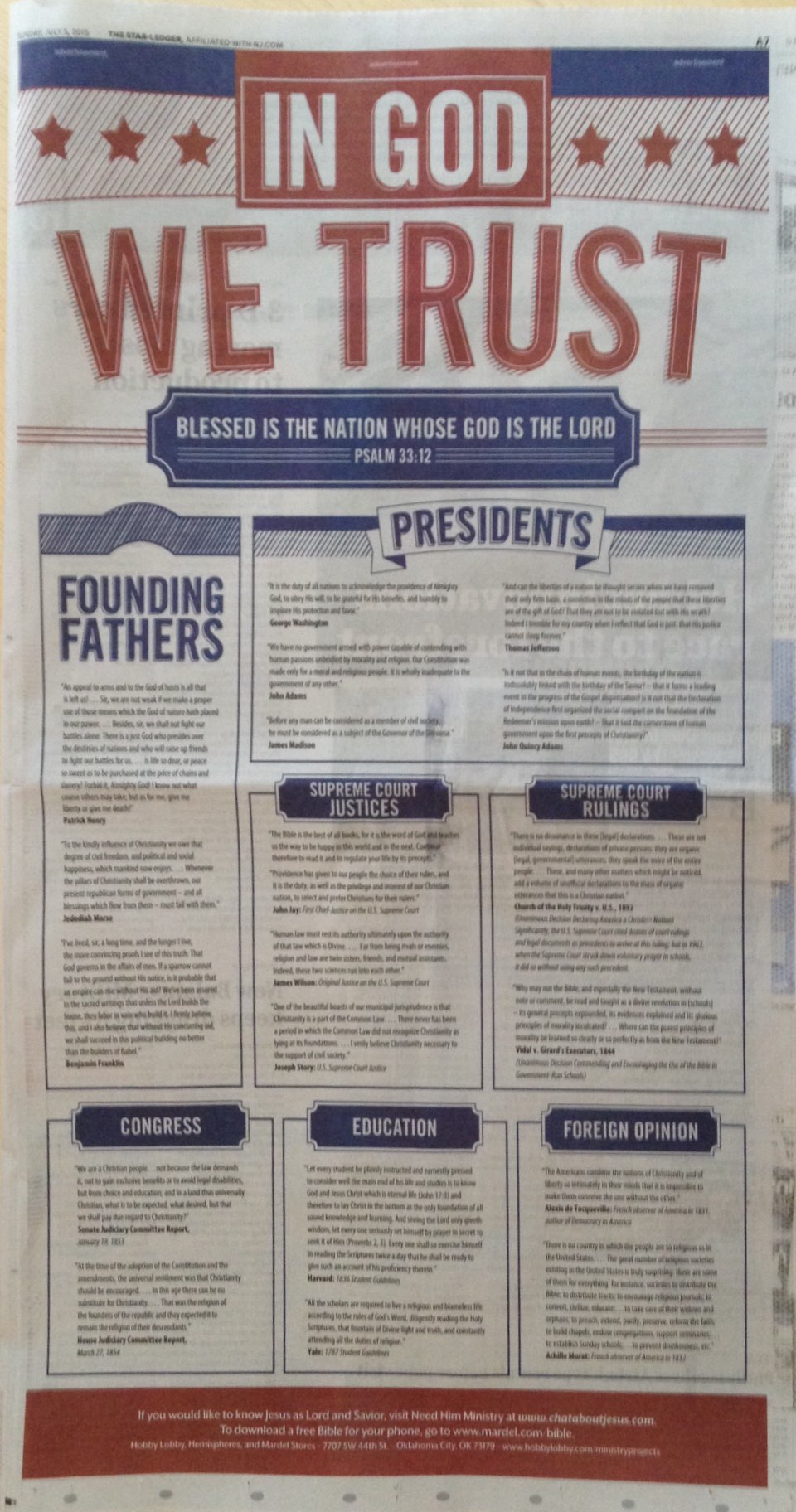
Just as I was awaking from a night of loud fireworks and multicultural bonhomie, my wife showed me a full-page ad in the New Jersey Star-Ledger. A red, white, and blue page entitled “In God We Trust,” the ad wants nothing more than to convert the nation to conservative Christianity. It is sponsored by Hobby Lobby after all. Dividing the quotes that spangle the page into “Founding Fathers,” “Presidents,” “Supreme Court Justices,” “Supreme Court Rulings,” “Congress,” “Education,” and “Foreign Opinion,” prooftexted quotes are given inadvertently showing by their grasping nature that America is a godly country. The Hobby Lobby is not known for its critical reading of either Scripture or history. George Washington, Thomas Jefferson, and Benjamin Franklin, Deists all, are quoted at the height of their rhetoric, making it seem as if they were evangelicals out to build a Christian nation.

new doc 10_1

When I was growing up, there were no Hobby Lobby stores in my area. Although I was a religious child, I would have found it a bit odd that hobbyists were not focusing all their attention on the weighty matter of eternity. Instead, making money seems to be the name of the game, and once you’re comfortably over-compensated the Lobby part of the name comes to play and God reenters the picture. We all know that the Hobbyists wish to have the Bible right next to the capital, if they can’t get it prominently placed in the Oval Office. Policy (the ad cites all three branches of government, as well as education) should be based on the Bible, although we think of ourselves as a land of opportunity. Opportunity for whom?

Starting with a quote ripped from the context of Psalm 33 (“blessed is the nation whose God is the Lord”), the ad doesn’t exegete this at all. Nationalism as we know it did not exist when this Psalm was penned. The author had what would become Judaism in mind, not evangelical Christianity. But then, appropriation of other peoples’ pasts is kind of a hobby. Pick and choose. Take what you find attractive and leave the rest behind. It works for history as well as for the Bible. After all, it doesn’t take historical probity to lobby the government. All that’s required is a surfeit of money. And the best way to achieve that, it seems, is to take up a hobby rather than trying to think through the issues with a mind honed by a solid education in Bible and history.


Book Ideas

Call it sour grapes. When I was a young scholar, I used to wonder how to develop book ideas. You see, at a young age—twenties or thirties—even a doctorate means your understanding of the world is limited. I’d written a substantial dissertation on Asherah, and I was faced with developing several new courses from scratch at Nashotah House. My mind was focused on the immediate concerns. I did continue my research, however, into ancient Near Eastern deities, with an eye toward writing an account of celestial gods and goddesses. A substantial piece on Shapshu ended up being snatched up by a Festschrift, and colleagues began to tell me that to get hired away from Nashotah I had to write something biblical. Thus Weathering the Psalms was born. The research and writing took a few years because I never had a sabbatical, or reduced teaching load. In fact, administrative duties as registrar and academic dean were added to my remit. Still I scribbled away in the early hours and finished a draft. Then I was cast into the outer darkness.

Publishing was never my first choice of career. I’m more a writer than an editor. In publishing, however, you are not encouraged to write your own content. I can’t help myself. As I rounded the corner from my forties, I had finally read enough material—both relevant and extraneous—to have book ideas. In fact, too many. Held back by the lack of publication, I didn’t know how to channel this energy. One of the benefits of working for publishers is you learn how to come up with a viable book idea. I’ve got a backlog now. I’m currently working on a few books, but one is in the forefront of my mind and eclipses all other projects at the moment. Having watched what sells, I think this one has a real chance. Time to write, alas, barely exists. The writer, you must understand, has to build a platform. Get a fan base. Welcome to my platform.

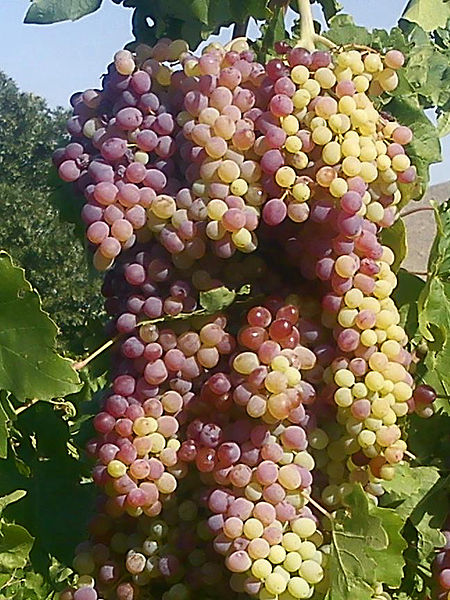
Daily I receive the first books of young scholars. In this publish or perish—strike that—publish and perish atmosphere, even the mediocre is encouraged by dissertation advisors. Young scholars, maybe thirty, think they have something profound to say. Call it sour grapes, but I’m not getting any younger and I don’t have an institution to support me while I write what should be written. The face looking back at me in the morning has more gray hairs than I remember growing, and has wrinkles that my mind doesn’t recognize. It’s too full of books to write to pause long. The bus is coming soon and I have younger scholars’ careers to build with premiere branding. My own ideas ferment unseen in the basement. What some call sour grapes others call fine wine.

Photo credit: Dragonflyir, Wikimedia Commons

Photo credit: Dragonflyir, Wikimedia Commons


Christian Cookie

During my childhood and adolescence, we didn’t eat out. Of course, food didn’t cost nearly as much then, and it was cheaper to cook raw ingredients at home than it was to buy something exotic that someone else had made. I clearly remember our first trip to McDonalds—it seemed so strange to buy food already prepared. It was so unusual that we went with our neighbors in a kind of exploratory posse, discovering this strange world of pre-cooked food. College, eventually, introduced me to the idea that, if done reasonably, eating out could be a reasonable choice. Particularly if you were wanting to impress a girl. Still, most of my meals were in the dining hall, and trips to restaurants were generally reserved for special occasions. Although Chinese food was known to me, it wasn’t readily available in rural western Pennsylvania. I did encounter my first fortune cookie in college.

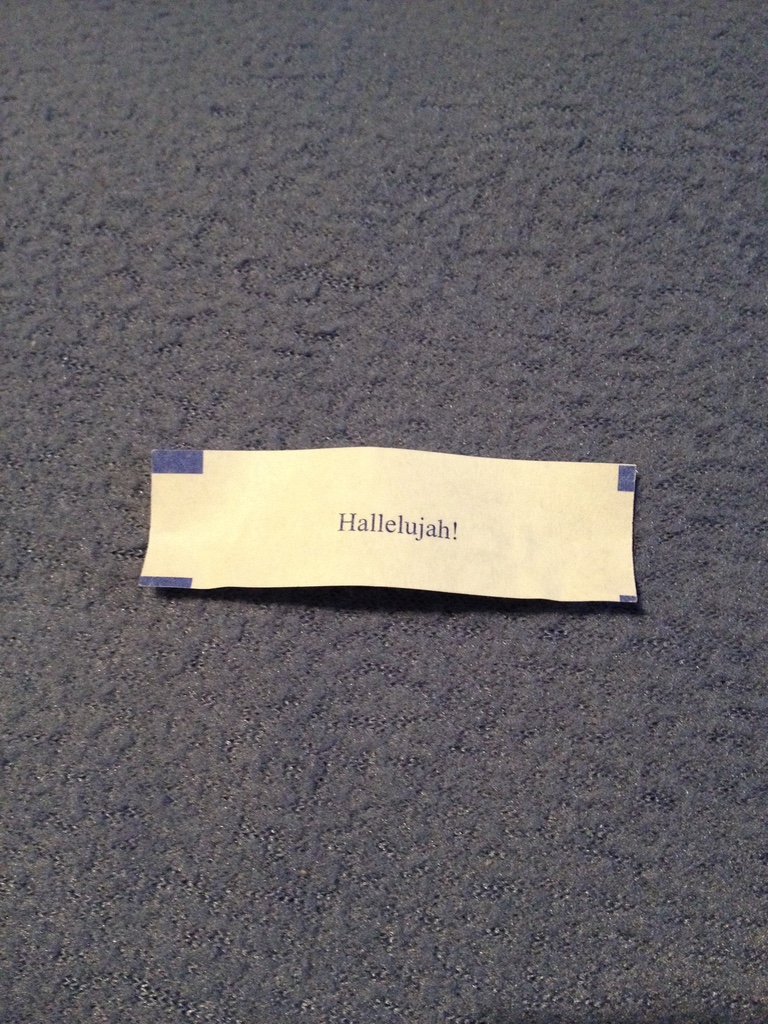
thumb_IMG_2185_1024There was something vaguely unsettling about a cookie that could tell your future. Prophetic comestibles were relatively unknown to me. Of course, the whimsical aphorisms seldom indicated any misfortune. They were more like horoscopes, harmless and often amusing. Recently we had carry-out Chinese. I’d noticed that over time fortune cookies had become more and more banal and less and less predictive. They claimed to know something about the world and I was supposed to believe because, well, would a cookie ever try to steer you wrong? My wife cracked open her cookie to find the “fortune” a single word: “Hallelujah!” An evangelical dessert? Was she destined to win the lottery? Perhaps we should play the lucky numbers on the next Powerball?

This really shouldn’t be bothering me, but what exactly was that cookie trying to tell us? It can’t be easy, I realize, to come up with millions of bits of advice so that those who often eat out don’t get the same prediction twice, but what if a Buddhist had ended up with this sweet? Or a Confucian? “Hallelujah” is, by its nature, a Judeo-Christian expression. Even so, it only occurs in two books of the Bible: Psalms and Revelation. My sneaking suspicion is that my culture is being pandered to. A bit of internet research revealed that Chinese fortune cookies are actually a Japanese recipe and were likely invented in the United States. They date back to the 1890s, at the earliest. I guess I shouldn’t be surprised then, at my wife being evangelized by her dessert. She does work for the Girl Scouts, after all, and they know a thing or two about the amazing abilities of the humble cookie.


To See the Sky

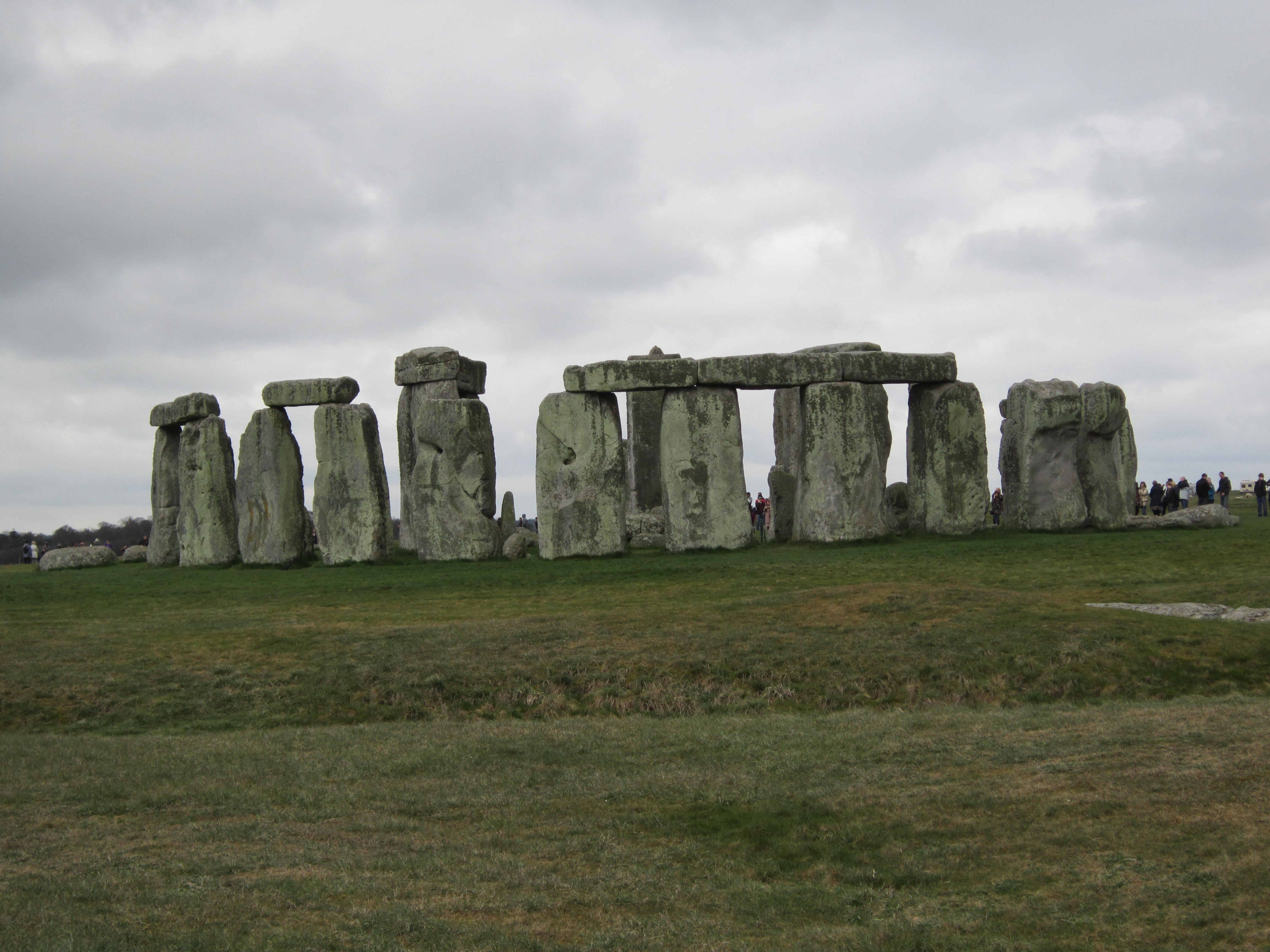
Stonehenge. The very name evokes mystery and myth. Although archaeology has revealed more about the monument than any mere visual survey, we are still very much in the dark about its origin and purpose. With one exception: we know it was something religious. When we discover artifacts that required a tremendous outlay of human effort in pre-industrial periods, the motivation, according to our current understanding, is almost always religious. Modernity has come to us with a cost. In any case, a recent story in The Guardian highlights the view of Julian Spalding, erstwhile museum director, that Stonehenge might have housed a platform on top of which the real action took place. As might be expected, experts disagree. With its precise solar alignment, one wonders if a roof might have been superfluous, but then again, there is the sky.

IMG_0129

When I begin to feel depressed working in the belly of a concrete bunker with no windows, indeed, no view of the sky at all, I find my way to a room with a view of the outside. I’ve always had a celestial orientation, and looking at the sky—especially on a day with some blue showing—can cure my sadness in a way almost supernatural. I suppose that was part of the reason I wrote Weathering the Psalms; there is just something about the sky. In that book I couldn’t really verify what it was. I still can’t. I know it when I feel it, however, and this perhaps the feeling the Julian Spalding is asking us to explore at Stonehenge. Ancient people directed their worship upward, not toward the ground.

Like all universal statements, however, there are exceptions. Some ancient religions recognized our place as children of the earth. The celestial sphere, however, is part of the package. Our atmosphere makes our world habitable. While the moon is beautiful and Mars inspires wonder, their lack of air spells their hostility toward those who need to breathe deeply and look up into the blue once in a while. Almost Frazerian in its archetypal view, Spalding’s idea has a beauty of its own, whether or not the evidence bears it out. People of ancient times had a talent we lose in our cubicle-infested, results-obsessed world. We all exist because of the atmosphere above us. And when modern views become too much for me, I head outdoors where, sun or not, I find my solace in the sky.


Biblical Weather

On President’s Day, my wife pointed out an article in the New Jersey Star-Ledger headlined, “‘Biblical’ snowstorms battering New England.” She asked, reasonably enough, “What makes a snowstorm biblical?” Since I have written a book on the weather in the book of Psalms, I might be able to speak to that. First off, yes, there is snow in the Bible. It’s not mentioned often and it is a rarity, but the Israelites knew what snow was. In fact, one of the most difficult Psalm weather references is to snow, in Psalm 68. The man interviewed in the newspaper, however, was not being literal. “Biblical” has come to mean disastrous. I can exegete that a bit more: disastrous because of quantity. Too much of a good thing. Or bad thing. In Boston this year the weather just won’t quit. The topic that really has people talking, however, is the temperature. It has been very chilly. My daughter complained when her university didn’t cancel classes with the air temperature at about 9 below. Her note prompted my thoughts of a day to remember.

When I taught at Nashotah House, the weather did not stop us. Ever. It was a residential facility with both faculty and students living on campus. Everything was within walking distance. My close exposure to the weather was one of the reasons I wrote the book. One Lent, and this must have been in February, we had a quiet day. Quiet days were taken very seriously. On this particular occasion the day was to be used for a meditation in the Milwaukee Cathedral, some 35 miles away. The problem was the air temperature was -42 Fahrenheit. That isn’t wind chill, that’s how cold the air actually was. (For those of you reading in Europe, Fahrenheit and Celsius are the same at -40, then they begin to diverge again.) It did not stop us. We piled into the van and prayed earnestly that we’d get there safely. On the way home we manically recited Evensong from memory. When the wind blew the chill dropped to -70 (my Minnesota friends will believe me here). If ever weather was biblical, that day was.

I do wonder if overusing “biblical,” however, will wear it out. Where do we go after biblical? What is conceptually bigger than God? Anselm would panic. What if next year it’s even worse—how will we describe it? We’ve already used up the apocalypse. We’ve entered into a crisis of superlatives. Nothing is big enough any more. As I look at the early fading light of this President’s Day, the snow is beginning to fall again. When I was a child we had, I seem to recall, a simple word to describe it. We didn’t invoke the Almighty. We didn’t hear the galloping of distant hooves. We didn’t act as if a day out of the office were the end of the world. Our simple word for it was this: winter.

DSCN0099


Psalms of Lament

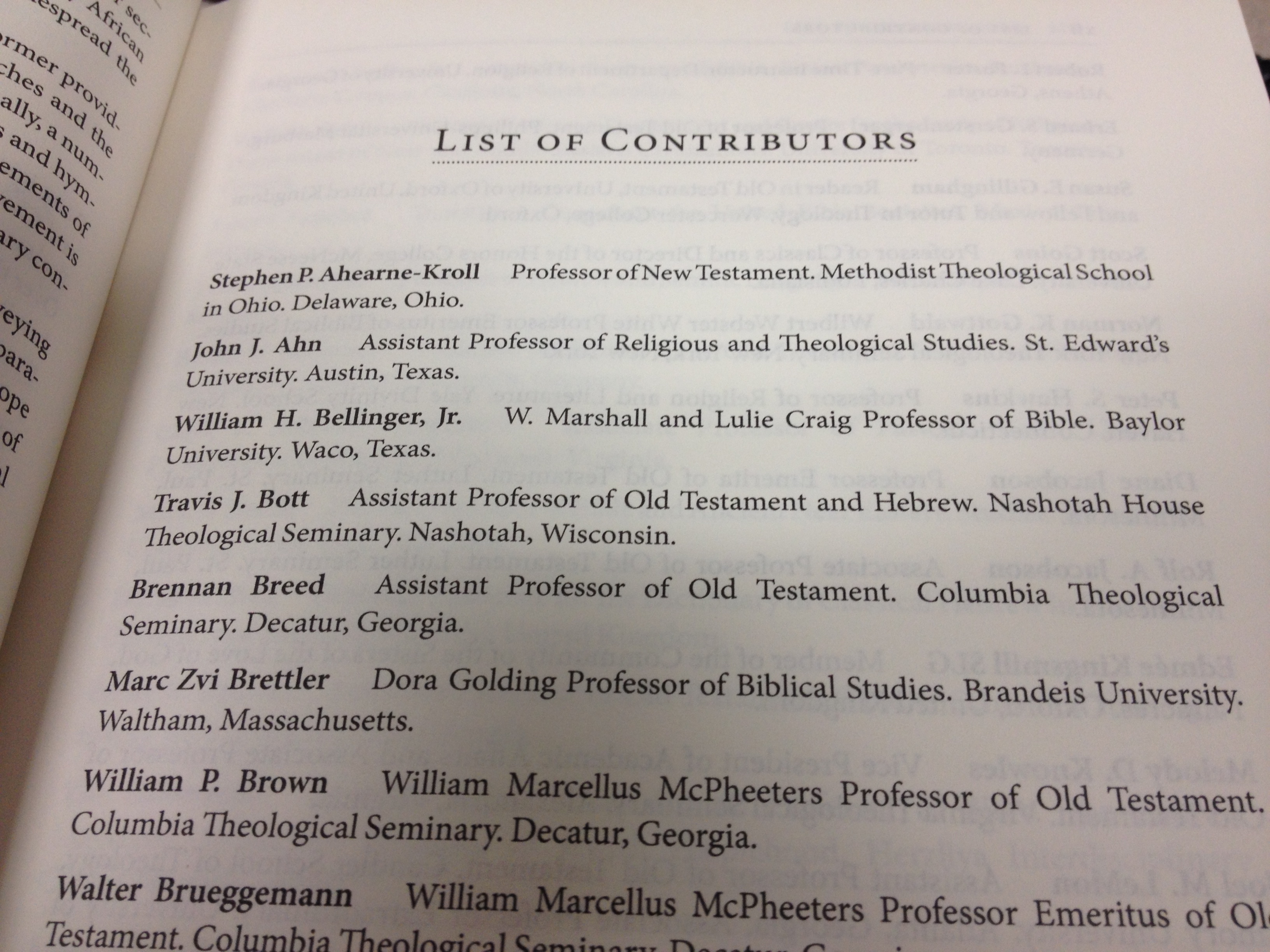
Fate can be decidedly cruel sometimes.  Accidental discoveries can be the most painful of all.  As my regular readers know, I wrote a book on the Psalms (Weathering the Psalms, Wipf & Stock—on sale now!) while teaching at Nashotah House seminary.  I sent the manuscript to Oxford University Press, and it was declined on the basis of one review.  Subsequently, I met the reviewer at a conference reception and he is now working on a book proposal for me.  Such are the ironies of life.  I can let that go with a chuckle of existentialist bonhomie.  The twist of fate comes in through helping a colleague with a question about the Psalms.  I grabbed the nearest book at work that would help, the newly published Oxford Handbook of the Psalms.  I’d glanced through it before, but this time it fell open to the contributor’s page and the words “Nashotah House” fell upon my eye.

IMG_1898
 
During my years at the seminary, I published at least one academic article a year, as well as a book, and I attended and delivered papers at the major professional conference every year.  No one ever approached me about contributing to a Handbook, apart from my advisor and friend Nick Wyatt.  I labored at building an academic career for 14 years in obscurity.  Now, the newly hired replacement (not the faculty member hired to replace me) gets invited to contribute to a major reference work.  I do not know the man.  He may be a perfectly personable chap.  Some of us, however, can work our hardest and never get noticed.  It seems as if the world of scholarship is really just a house of cards. 
 
Perhaps in times of schlock and flaw, such as these, I should turn to Ecclesiastes for comfort, rather than Psalms.  Yes, the Psalms say some pretty challenging things to God—not as challenging as Job or Jeremiah, but still.  Ecclesiastes, however, is the one to calm the intellectual’s soul.  There are those who claim that the Bible no longer has any utility in a post-Christian society.  Wise Qohelet, I’m sure, might just agree, even as he disagrees.  I tried, without benefit of sabbatical, and with additional administrative duties, to make an academic life for myself.  I was, in reality, just shuffling the deck with old Solomon.  We took turns building layer upon layer, he and I, both knowing that our house, like any built on sand, could never stand.  It must be some of that sand in my eyes; otherwise I can’t explain why they are watering so.