The Heart of Publishing

My heart goes out to academic authors.  It really does.  They labor over a book important to their field and see it come out costing near triple digits and wonder why it’s not in the local bookstore.  There is, however, a very wide gap between academic and trade publishing.  It is bridged here and there by authors who value readers over reputation, but unless you deliberately try to learn how all of this works, it is bewildering.  Academics, you see, are area specialists by and large.  You don’t write a dissertation on the Bible, for example, but on a specific part of the Bible (New Testament or Hebrew Bible).  And within that section your specialization is not a single book, but often a small part of a book, or a theme.  I’ve seen dissertations written on a single Hebrew word.  Specialization.

With all of this tight focus, it’s easy to forget what browsing in a bookstore’s like.  Even with some of the incredible brick and mortar stores in Edinburgh, technical books had to be ordered—this was before Amazon.  When you check the books of colleagues out of libraries it doesn’t always occur that you do this because libraries are the only places that buy such books.  And with the explosion of doctoral degrees in shrinking areas of studies (there are no jobs here, folks!) the number of published dissertations has skyrocketed.  Even advanced scholars forget the average reading public would find their work impenetrable.  It’s not going to be in the local bookstore, and it costs so much because it sells so few copies.  I do feel for academic authors.

In addition to all the area specialization, it would make sense to research the academic publishing industry.  Yes, it is an industry—it has to try to turn a profit when sales are minimal.  And with so many books being published, libraries can’t keep up.  The end result is high prices.  I’m as guilty as the next academic at wishing economics would just go away and leave me alone.  I want to believe in the pursuit of knowledge for knowledge’s sake.   That’s not the way the world works, however.  At least not the publishing world in a capitalistic context.  The internet itself has become competition.  Much of the information’s out there for free.  So your academic book, when it comes out, will be priced out of your comfort range (been there, done that).  It’s not that your publisher doesn’t believe in you, but that they have to try to turn a profit.  All it takes to understand why is a bit of research.
Not that kind of book.

On Publishing

I fear I may be transitioning.  I may actually be becoming someone who knows something about publishing.  Reading about the merger between Cengage and McGraw Hill actually seemed interesting.  What’s happening to me?  Actually, the largest impact has been the realization that scholars need to become more aware of the world around them.  As a doctoral student I was taught to find an unexplored subject and write obscurely on it.  Then, when it’s time to publish, to say to the editor that general readers will understand and find it compelling.  It took some time, however, even though I frequented Waterstones and Blackwells, to realize that the books they housed were not the kinds of books I’d been taught to write.  Back in America, where the brands were Borders and Barnes and Nobel, the same thing applied.  People want books they can understand.

Two articles that caught my attention recently addressed the plight of the academic monograph.  One was “Worried About the Future of the Monograph? So Are Publishers” from the Chronicle of Higher Education.  The other was “Making Monographs Open” from Inside Higher Ed.  Both share some common themes: scholars write books so obscure that even academic libraries won’t buy them and since it’s “publish or perish” it becomes the publisher’s problem.  Listen, I understand that mentality.  Isolated in the woods of Wisconsin with the wind howling through the trees, writing about weather in the Psalms seemed perfectly natural.  Forgetting that the average reader doesn’t know Hebrew, I assumed everyone would find my disquisition irresistible.  Even back in the early 2000s publishers disagreed.  Life is so interesting!  There are so many minutiae to explore!  If you haven’t had the pleasure of following in the tracks of a thought that won’t let you go, you’ve never been really seduced.  But then, somebody’s got to pay for all this.

Scholars are reluctant to acknowledge that publishing is a business.  Indeed, higher education is now a business as well.  Everything’s a business.  To stay solvent publishers have to sell enough books to cover the cost of making them.  As these articles point out, that cost isn’t negligible.  The scholar who explores the publishing industry (as rare as that may be) will discover plenty of resources to help rethink academic writing.  Even without reading the industry rags, just paying attention when you’re in your neighborhood bookstore can be an eye-opening experience.  I was looking for a book (hardly even academic) last time I was in Ithaca, New York.  If any town is likely to have such books on the shelf, it’s Ithaca.  I had to ask and leave empty-handed.  There are lots of books out there, colleagues!  And if you want to get yours published, it pays to do a little research.  Your time will not be wasted.  And I fear I’m becoming someone who knows a little about such things.


Writing Life

Writers are a conservative lot, in many respects.  Consider the epigraph.  I’ve written about this before—in modern-day publishing epigraphs require permission to reuse and serve little purpose beyond two negotiable factors: to prove the writer is well-read, and that someone else just summed up your chapter in a single sentence.  Most modern books have stopped using epigraphs, but scholars read old books produced before aggressive copyright laws.  There is a trick you can use, however, that brings an epigraph into the realm of the fair use doctrine.  It involves moving it into the body of your chapter.  Make it a quote.  Comment upon it.  For all their research skills, many academics do not take advantage of easily found advice on academic publishing.  Just ask an editor.

We all, I’m sure, have tunnel-vision.  Life is so incredibly busy and demanding that choices have to be made.  For most academics publishing is part of the rubric for tenure.  Perishing is the only other option.  Been there.  Done that.  Those of us who make a more modest living on the other side of the book sometimes write for different reasons.  We may need to supplement our income (as if academic publishing really ever helps with that!), and thus we must pay attention to the finer details of the business.  Write what people want to read.  Think like a reader.  And, yes, get rid of the epigraphs.  We know you’re smart; you’ve written a book.  Another reason for writing beyond the tenure-dome is the compulsion.  The need to do it.

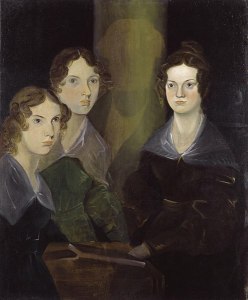
While the struggling artist is a tired trope, it’s also true.  Many of the writers most admired today had lifetimes of struggle and obstacles which often stopped them too soon in life’s tracks.  I often think of the Brontë sisters.  In a family apparently cursed with premature death, living in a time when women writers were rare, three sisters set themselves the task of becoming novelists.  Not one of them lived to forty.  Anne, who wrote The Tenant of Wildfell Hall, made it to twenty-nine.  Emily, author of Wuthering Heights, died at thirty.  Charlotte, who gave the world Jane Eyre, survived to thirty-nine.  They defined, in many ways, the English novel.  And while they lived to see some measure of success in their brief lives, they wrote against the obstacles of life and the specter of early death.  Writing is a passion.  A craft.  And even academic authors provide a favor to the world if they do it well.

Brontë sisters by brother Branwell


In Praise of Paper

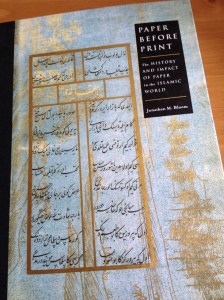
I’m working on embracing the electronic age.  No doubt it’s convenient.  And fast!  Publishing is, and always has been, a slow industry.  As connoisseurs of anything know, quality takes time.  This brings me to my paean to paper.  I generally write these blog posts on a computer.  That makes sense since they have to go onto the web and to do so they must be keyboarded.  Many of them start, however, on paper.  Sketching and free-flowing lines can become ideas, yet to draw on a computer you have to buy specialized (and expensive) equipment and software (which costs even more) to use it.  You’ll lose months of you life learning how to use said software.  In the end you’ll probably have forgotten, what?  I forget.

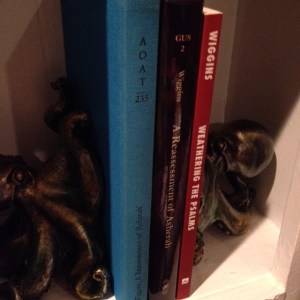
The other day I ran into an author who wanted maps.  In an electronic age the easiest way to get maps is to take them from the web.  Google Maps seems innocent enough.  Only it’s covered by copyright, and commercial use requires permission.  As I went through the whole permissions process I was thinking of tracing paper.  Copyright covers the execution of ideas, not the ideas themselves.  Coastlines, rivers, and mountains added through the miracle of tracing paper become the copyright of the maker.  (Don’t try this by rewriting written words through tracing paper—that doesn’t work.)  Tracing paper’s old school.  The illustrations in many older books used a similar technique.  In A Reassessment of Asherah all the illustrations were ones I drew by hand.  You can do that on paper.  The only investment is a single sheet and a pencil.  A scanner can handle the rest.

Technologists like to espouse that there’s no such thing as a page.  Authors, they aver, must learn to write without references to page numbers.  Avoid the words “above” and “below” to refer to something discussed elsewhere in the text.  This “format neutral language” (for it has to have a fancy name) is intended to ease the reading experience for the ebook.  With my Kindle software, however, there are still pages.  Don’t we call them webpages?  Don’t we bookmark both our place in Kindles and on the web?  Why then can’t we have our page numbers?  Have you ever tried to make your laptop into a paper airplane when you’re bored?  It’s often hard for progressive creatures like ourselves to admit that maybe we have had it right the first time.  Maybe reading and paper need each other.  A future without paper will be very sterile indeed.


Seeing the Future

Nine.  That’s the number of people before me in line.  It’s not yet 4:30 a.m., and our day began at least an hour ago, but work won’t start for another two.  As the bus pulls up to the stop, I think about work.  Well, like most people I think about work a lot.  You see, I’m often asked about how to get into the publishing business.  There’s a cosmic irony to this because I had never planned to be an editor and never undertook any of the usual training.  The anticipated trajectory of a doctorate in the humanities used to be teaching, which is what I did for many years, but when an educational career slips off the rails in a capitalistic society you have to be willing to learn real fast.  (Fortunately the long years of schooling do help with that.)

I’m sure that I’m not the only person whose career plans didn’t pan out as anticipated.  Back in seminary one night long ago, three friends and I had a “future dinner.”  We prepared a supper and each came as who we would be twenty years down the road.  I recall that I was a world-traveling professor and the author of several books.  “Come on,” my friends complained, “be realistic!”  It’s a bit beyond those two decades now, and I was a professor for many of them.  I have written several books, although so far only three have been published.  World-travel?  Well, that’s been a bit modest in recent years, I have to admit.  One of the other friends I’ve lost track of.  Another committed suicide after graduating.  We really can’t see far into the future.

Publishing is a challenging gig.  My rapid career contortions perhaps prepared me better than I think.  I have a kinship with those who ask about how to get started in it.  Generally we’re educated people who like books and wonder what kind of career you can find with that combination these days.  (There are more of us than you’d think!)  Compared to higher education academic publishing is a small world.  I’ve come to know many more academic colleagues since being an editor than I ever did as a professor.  I have something they want—a reputable venue for publishing their latest book.  Often I have to do a lot of educating since publishing doesn’t work the way that most people think it does.  It’s like being a professor without the status.  No, I didn’t see this in my future.  As I look for a seat on the already crowded bus I wonder how many of these other early risers planned their careers just like me.

Difficult to see where this is going.


Receiver

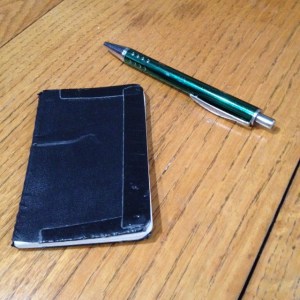
Being a writer (I can’t claim to be an author since I don’t make a living at it) is like being a radio receiver.  You pick up signals, or so it seems, and it’s your job to try to make sense of them.  That’s why I always carry a notebook.  Specifically a Moleskine volant extra small plain notebook (I can’t abide lined paper).  I’ve been using them for years and I’ve got quite a little stack of them in my writing nook, battered, taped, and well-used.  There’s part of my soul in those little things.  But they’re getting increasingly difficult to find.  More than once I’ve come to the last page only to have searched in vain all the local bookstores and speciality shops without finding a replacement.  (Big boxes like Staples appeal to the lowest common denominator and writers demand special treatment.)

Tools of the trade

Sometimes they’re not even available on Amazon, surprising as it may seem.  You see, I’m particular about where I store my thoughts.  People have suggested to me that I use my phone, but by the time I get it out of my pocket, turn it on, type in the passcode, and open the app, the thought is gone.  They travel quickly.  My notebook, always with me, has a pen companion.  It’s refillable and I take great care to buy refills that write instantly, without having to scribble to get them going.  I keep careful note of the brands that are reliable.  There’s nothing more frustrating than watching a great thought flee as you’re furiously scribbling to get your pen to capture it in your Moleskine.  No, this is an area where there can be no compromise.  If only notebook sellers saw it that way!

The trouble with being a receiver is you have no control over when the signal comes.  You wouldn’t know it from my publication record, but I have many, many unpublished pieces.  Most of them, regrettably, have to be reduced to electronic form so they can be submitted and rejected via email or Submittable.  I would have nothing with which to build, however, if my zibaldone were absent.  After my brain this is the first filter.  And when they’re full it’s time for another.  The next time I find them in my favorite indie bookstore I’m going to buy them out.  I’ll store them in the attic—I can find space up there, along with my pen refills—against a time of need.  Somethings a writer just can’t do without.


Croce’s Lament

So how much time is there?  I mean all together.  I suppose there’s no way to know that because we have no idea what came before the Big Bang.  Those who invent technology, however, seem not to have received the memo.  New tech requires more time and most of us don’t have enough seconds as it is.  Perhaps in the height of folly (for if you read me you know I admit to that possibility) I’ve begun uploading material to my YouTube channel  (I hope I got that link right!). These are cut-rate productions; when you’re a single-person operation you can’t fire the help.  I figured if those who don’t like reading prefer watching perhaps I could generate a little interest in Holy Horror visually.  (I like my other books too, but I know they’re not likely to sell.)

The question, as always, is where to find the time for this.  My nights are generally less than eight hours, but work is generally more.  What else is necessary in life, since there are still, averaged out, eight more left?  Writing has its reserved slot daily.  And reading.  Then there are the things you must do: pay taxes, get physical exercise, perhaps prepare a meal or two.  Soon, mow the lawn.  It may be foolishness to enter into yet another form of social media when I can’t keep up with those I already have.  What you have to do to drive interest in books these days!  I think of it as taking one for the tribe.  Readers trying to get the attention of watchers.

There’s an old academic trick I tried a time or two: double-dipping.  It works like this: you write an article, and another one, and another one.  Then you make them into a book.  I did pre-publish one chapter of a book once, but getting permission to republish convinced me that all my work should be original.  That applies to reviews on Goodreads—they’re never the same as my reviews on this blog—as well as to my YouTube videos.  There’ll be some overlap, sure.  But the content is new each time around.  So you can see why I’m wondering about time.  Who has some to spare?  Brother, can you spare some time?  I’ve been shooting footage (which really involves only electrons instead of actual linear imperial measures) for some time now.  I’ve got three pieces posted and more are planned to follow.  If only I can find the time.


The Root of All

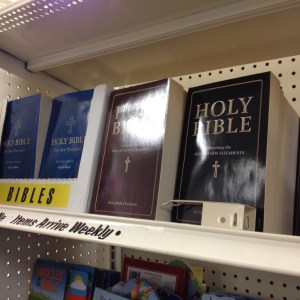
The other day I was in one of those stores where everything is sold really cheaply.  I figure it helps balance out all those times when I’ve been overcharged for things at other stores because I was pressed for time and needed something quickly.  In any case, these dollar store establishments have a constantly rotating stock, it seems (things move at a buck!), and so you might or might not find exactly what you’re looking for.  While just looking around, acquainting myself with the content, I came upon a shelf of Bibles.  God’s word for a dollar a pop.  This isn’t a place I’d normally come looking for books.  Then it occurred to me: many of those who shop in such stores are committed to a faith that keeps them in their economic bracket.

That suspicion was confirmed by other items at the store.  Many of them were Christian-themed.  This seemed like the opposite of the prosperity gospel.  People trying to scrape by, to shave enough off the budget to make it to another paycheck.  Many Americans live like this.  Many of them support Trump.  Selling the Bible to them cheaply definitely involves a mixed message.  There’s indeed a message, as I’ve learned in the publishing, in the way books are priced.  Getting a thousand-pager printed where the unit cost is below a dollar requires a massive print run.  Someone knows that Bibles sell.  You won’t find such cheap divine revelation at Barnes and Noble.  The same content, maybe, but not at the same price point.

The economics of cheap Bibles contains a message.  Those who can’t afford much can be guided toward spending some of it on the Good Book.  While just reading the Bible may indeed bring comfort to those who know where to look, as a whole this book requires major interpretative work.  As I’ve been indicating over the last several days, Holy Writ is not nearly as straightforward a reading experience as many suppose it to be.  Trying to figure out what Nehemiah’s differences with Sanballat the Horonite have to do with the rest of us isn’t an easy task.  To find out, if the internet doesn’t give us quite all the knowledge we want or need, can require some intensive study, up to and including seminary.  Even then you might not get it.  Studying the Bible requires further commitment than simply picking one up for a Washington might imply.  But then, it costs less than a lottery ticket.  And you can get it while saving money on other things you need.


Chapter and Verse

Maybe like me you’ve read some arguments based on chapter and verse.  I should mention that I mean chapter and verse in the Bible.  The typical scenario will go like this: Genesis (say) uses this word three times in chapter 38.  The case then often slips to making a point on the number of instances a word or phrase occurs within a circumscribed set of verses.  (The actual word doesn’t matter—this is a thought experiment.)  When I ran into an example of this a few days ago a thought occurred to me: chapters and verses are later additions to the biblical text.  They were never part of the original and were only added because Bible readers got tired of saying “That part in Genesis where…”  In other words, chapter and verse are artificial means of interpreting the Bible.  They’re very useful for taking quotes out of context.

I used to tell my students that you have to think carefully about what is the Bible and what isn’t.  As a culture where the book has instant recognition, we tend to think of that discrete unit of pages and cover as coming from one person—the author.  In reality most books (I can’t speak for the self-published) are the work of several people.  Just like it takes a community to raise a child, it also takes one to assemble a book.  That includes the Good Book.  Not everything between the covers is sacred text.  I’m pretty sure about that since as I was glancing through the latest edition of the New Oxford Annotated Bible I found my own name in the Preface.  As much as I’d like to claim otherwise I’m not exactly biblical. 

Modern ways of looking at ancient texts require a degree of facility in understanding how God’s scribes of yesteryear went about their work.  While early experiments in binding books may go back close to the time when the latter parts of the Bible were being written, the scroll—without chapter and verse—contained only the words of the text.  Most ancient manuscripts in Greek, anyway, didn’t even bother to put spaces between the words.  That leaves some room for ambiguity in among all those letters.  The Bible is a complex book with a complex history.  We do it a disservice as modern readers treating it as a modern book.  If you read Scripture online, or via electronic media, an even further layer of interpretation has been added.  That’s why we still need Bible scholars tangled somewhere in this world-wide web.


The Price Is Wrong

The costs for academic books can seem criminal.  Don’t get me wrong; I work in academic publishing and I know the reasons—or at least the reasons publishers seem to believe—for such pricing.  Still, when I see a book that my little public library will never be able to convince its network that it should be able to borrow, I look at the prices and blanche.  At least the pallor looks good with my skin type, or so at least I’m led to believe.  Why are books so very expensive when so few of them retain any resale value?  Publishing—the information business—is unlike any other.  In fact, it could be argued that the printing press was the earliest internet.  Ideas could be spread more quickly, among those who were able to read, than they could have previously.

These days books are the handmaidens to the internet.  The problem, of course, is that the web contains ideas that haven’t been vetted.  Publishers offer that service, but you have to pay for it.  Books don’t sell like they used to—physical books, I mean.  Inflation, however, ensures that the cost of paying employees is constantly going up.  This is the hidden factor of “overhead”—the cost of doing business.  You need to sell a lot of books to pay a staff.  Not only that, but unlike most “commodities”—I shuddered as I typed that word—books can be returned to a publisher if they don’t sell.  It’s like an entire business model run on consignment.  And the honest truth is—academic authors may want to cover their eyes for this part—very few books sell more that a couple hundred copies.  That means that the per unit cost has to go up.  Next thing you know you’re selling a kidney to continue your research.

I keep a running list of books I’d like.  Some are for research and some are for other pleasures.  The list grows quite lengthy when more and more interesting books get published.  I look at academic books and I wonder if maybe there’s another way.  If they were priced down in the range of mere mortals, would they sell enough copies to meet their costs?  I’m well aware that Holy Horror is priced at $45.  Believe it or not, that’s on the lower end of academic extortion pricing.  Many books on my “must read” list cost three times as much.  Are we paying the price for keeping knowledge solvent?  Or is all of this just criminal?


Green Eyes

All of us fall prey to the green-eyed monster once in a while.  For an editor like me, it starts lurking when I see others make content production look so easy by taking copyrighted material from elsewhere.  I’ve read books—often self published—that take great swaths of material under copyright and reuse it with no permissions acknowledged.  You can build big books that way.  Quickly.  And there are websites that use  crisp, clean images that look more immaculate that any kitchen counter.  Often those images, however, come from sources “protected” by copyright.  With a web this large, who’s going to find them?  They’re not making money off them (usually) so what’s the harm?  My jealousy, I suppose, comes from working in publishing where copyright is a daily concern.  It’s the currency in which we peddle.

Copyright isn’t intended to make websites like this one look lackluster.  No, it’s intended to protect the intellectual property, or visual or auditory inspiration, or the creator.  It’s a remarkable idea, really.  If I have an idea, it’s mine.  Once I express it in written, aural, or visual form, it is covered by copyright.  (We haven’t figured out a way to regulate original smells and tastes yet, beyond protecting their recipes.)  Putatively copyright is to protect the creator’s rights.  In fact, it tends to impact the publisher more.  This week at work I had to spend some time, once again, reviewing copyright law.  One thing most authors don’t comprehend is that a book contract is a negotiation for trading rights for royalties—turning ideas into money.  Even intangibles can be purchased.  Intellectual property can have a fence around it.  And a dog or two in the yard.

I try not to violate copyright.  When I want to borrow my old published ideas in new venues, I rewrite them.  When I want to use somebody else’s pictures on this blog I take them from public domain or fair use sources (thank you Wikimedia Commons!).  A great number of them are my own that  I cast upon the web, hoping they will come back to me in time of need.  With the exception of one guest post many years back, all the words on this blog (approaching a million-and-a-half, at this point) have made their way from my addled brain through my trembling fingers and onto the internet.  Maybe I just want to protect my babies.  Maybe some would call it jealousy.  I like to think of it as a mother bear and her cubs.  Or perhaps the spawn of a green-eyed monster.


Type Right

Image credit: Rama, via Wikimedia Commons

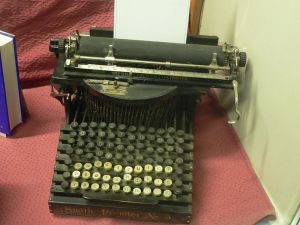
I’ve mentioned before on this blog that I’d like to get a typewriter.  An old one, without electric capacity.  Clacking keys flying before the dawn.  At first this might seem impractical—why buy a typewriter when almost all publishing is now electronic, at least in one stage of its life cycle?  You type something out and you’re going to have to “re-key” it for the hegemony of technology.  But wait—there is a method to this madness.  I’ve heard it said that good writing is just clear thinking.  That sounds right to me, but with a proviso: good writing is edited writing.  The editor may be someone else, or it may be the author, but the point is that something written, with rare exceptions, improves upon rewriting.  Like ordinary stones in a rock tumbler that come out glistening.  Type it, then retype it.

Back in college I wrote all my papers out by hand before typing them.  (Sometimes three lines of handwriting on each college-ruled line.)  “Keyboard composition,” as it was called then, was shorthand for quick, sloppy writing.  The uniformity of type hides a host of syntactical sins.  I used to see the same thing with student papers prepared on a computer in my teaching days—colorful images and fancy type utilized to mask a lack of engagement.  The paper written and rewritten shows itself to be of a higher standard.  I (or others) notice more errors on this blog when I run out of time for editing, often because work looms.  If I have the time, I edit.  And I actually miss writing my thoughts out longhand.  What I need is a typewriter.

Reading has always been a large part of my job.  Student papers and book proposals aren’t so very different.  Many of both come in what appears to be first draft form.  It’s understandable—good writing takes time not only to hammer out a draft but to think, mull, change angles, and hammer again—and we’re all so terribly busy.  The end result is often worth it.  At this point in Nightmares with the Bible I’m printing out my draft so that I can see what I’ve written.  The handwritten comments come after the keyboard composition, but they still come.  The important thing is that drafts require re-reading.  Better, re-writing.  The niceties of pleasing writing can be added or enhanced by an editor.  When editors write books, other editors edit them.  And as I sit here typing this silently on my computer, I’m imagining the satisfying sounds of a manic typewriter early in the morning.


The Desert

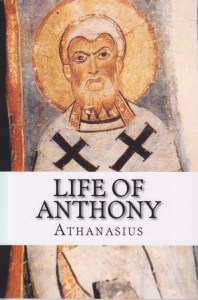
Now, I’m fairly certain Athanasius of Alexandria didn’t have access to CreateSpace, or even an Amazon Prime account.  He did write the classic Life of Antony (or Anthony), which I took the opportunity to read recently.  I’m not going to go into this life with great detail—Athanasius does that, in as far as he can—but the reading of this book raised the perils not only of demons but of easy self-publication.  As usual, there’s a story behind it.  Antony was famous for being an early monk who fought demons so effectively that they feared him.  His story wasn’t written in English, seeing that the language had not yet evolved.  When I tried to find an affordable copy that I could access quickly, I found the edition pictured here.  It was fairly obviously a conversion, likely from a PDF (based on my own so doing, in the line of duty).  A minimal cover was applied and it was offered cheaply on said Amazon (with free shipping).

Those who work in publishing know how to spot a print-on-demand title.  That means the book is printed when it’s ordered, or, printed a few copies at a time so that the overhead of offset printing (how books were traditionally made) can be avoided.  Self-publishers can name themselves a press—this one Beloved Publishing—and anything in the public domain can be reproduced and sold to rubes like me.  When a scholar, erstwhile or while, approaches a book s/he wants to know certain facts about it.  Who was the translator?  What was the original language?  When was it written?  Who was (in this case) Athanasius?  Some of this I knew simply by dint of studying ancient texts for most of my adult life and having attended and taught in seminaries.  Still, an introduction of some sort would have been appreciated.

This edition appealed to me because the Life on Antony is a short book.  Most mainstream publishers bulk books like these up with hefty introductions and notes and charge four times as much for it.  They usually put in other works too, since this one weighs in at less than a hundred pages, even with loose typesetting.  Sometimes you just want the contents, with minimal introduction.  So let it be with Antony.  Or so I thought.  This edition, which has a few quirks, contained Athanasius in English, which is what I needed.  The translator remains unknown.  It is print-on-demand.  It is also affordable.  In case any readers of this blog wonder why I sometimes tend not to engage with the contents of the books I review, I would point out that this is what my own books are for.   A guy has to try to make a buck somehow, now and again.  (Antony forgive me!) 


Troubled Trilogy

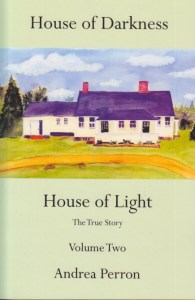
The quest for the truth is never-ending.  New information keeps emerging and our poor brains have evolved to survive the perils of weather and wild animals, not to receive all available information.  It’s the fear that I might’ve missed something that has me going back to a place I’d rather not go.  Andrea Perron’s account of what happened in Harrisville, Rhode Island is the only real published source by eyewitnesses that’s readily available.  Her three-book account, however, is a deeply personal ramble that isn’t easy for the fact-finder to follow.  A couple of months ago I posted on volume one, intimating that I would probably have to go back and read two and three.  There’s a compunction about completion that humans have.  An economist once told me not to measure a venture by sunk funds.  The same applies to books, I guess.

In my ongoing research into demons, and particularly the work of Ed and Lorraine Warren, I felt I had to continue with the troubled trilogy.  Volume one barely mentioned the Warrens.  Volume two finally revealed some of the story.  It took 260 pages to get there, but finally, an eyewitness account!  It has plenty of gaps, of course, but it is, as they say, different from the movie.  You have to understand that a certain sector of the internet was buzzing like flies in January over The Conjuring.  Based on a true story, it was a sympathetic treatment of the Warrens’ work that it was hoped would give credibility to the demon-hunting duo.

House of Darkness, House of Light in total is well over a thousand pages long.  I know, I know—“caveat emptor.”  Nevertheless, I’ve always felt that long books owe it to their readers to deliver on the promises.  I want my haunted house books to be scary.  Or at least moody with a gothic sensibility.  I do understand the desire—the compunction—to approach life philosophically.  Were I ever to put my life out there on display, beyond the occasional forays on this blog, I would hope to do it in a way that left readers wanting more, not less.  Biography is a dicey subject.  Autobiography even more so.  The traditional publisher steps in with an editor firmly in hand.  I know because I’ve been doing this for about a decade now.  The writer and the editor, like the farmer and the cowman, should be friends.  It’s tough, painful even, when someone takes a pen to what you’ve carefully crafted.  The results, when they work, give the reader what s/he wants.  The quest may indeed be never-ending.  At least trilogies have only three parts.


Quiet on the Winter Front

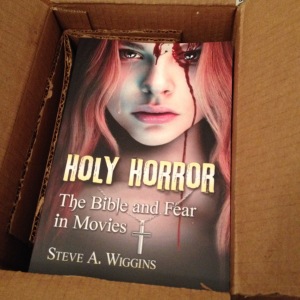
There’s a weird silent time, after a book is published, when you start wondering how it’s doing.  Holy Horror was apparently released November 29, and published December 29, if done according to standard publishing practice.  The release date is when stock is received in the warehouse.  The book is printed and technically available, but not yet published.  Publication is about a month later when the sellers, distributors, etc., have received their orders and can begin sending them out.  Publishing, as I’ve noted before, is a slow business.  Somewhere around this point you start wondering how your book is doing.  Reviews take some time to appear.  The publisher falls silent (I know this from the editorial perspective as well).  You start thinking, did it really happen?

This is the internet syndrome.  We’ve become used to instant results and it’s difficult to believe that can get by without minute-by-minute updates.  The problem is publishing is slow.  Reading a book takes time.  Not all readers review.  It’s perhaps the kind of malaise you expect in late winter.  In my case, however, my book was an autumn book that missed its release date by a few months.  Yes, hardcore horror fans are still chomping at the bit for upcoming features like Us, but the public in general is well on its way to Valentines Day and what comes after.  We are pretty much a holiday-driven culture and Holy Horror was a Halloween book released after Christmas.  That, and the combination of Bible and horror is unexpected, with many, I’m guessing, thinking the book is something it isn’t.

Often at work I ponder how publishing has changed, even if it runs like sap in January.  Professional writers—those who lived from their books alone—used to be rare.  Most authors were otherwise employed, and many of them worked in publishing.  It stands to reason when you think about it.  I’ve worked for three publishers and finding other writers is, and has been, a rarity.  Instead editorial boards consist of people who largely don’t have the experience of writing a book of their own talking about author expectations.  A disconnect has emerged where writers find employment in other industries and find themselves wondering why publishers do things the way they do.  Even with that background knowledge, I do wonder how my little book is doing.  It’s only natural.  And now that we’ve progressed to February, it’s only eight months more until October.