Personal Publishing

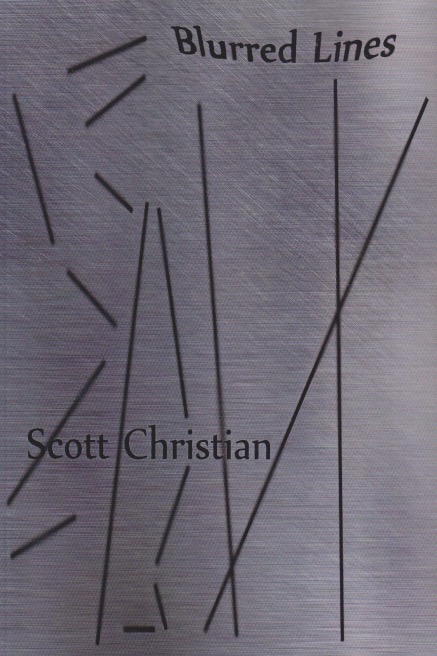
I recently joined the Greater Lehigh Valley Writers Group.  I haven’t really met any other members yet, although I know one from another local community.  By my reckoning, this is the fourth writers’ group I’ve joined and I do hope it leads to some friendships.  I like talking about writing.  I read Blurred Lines by Scott Christian because he’s a person I recently met and he kindly gave me a copy.  A collection of poems and stories, it’s a small book but a deeply personal one.  I guess that’s one reason that I like talking about writing with other people—it is deeply revealing.  There are those who write as a job, and there are those who write because they must.  This book falls into the latter category.  Some of us are compelled to write down what we experience, whether it be in poetry, fiction, or fact.

Self-publishing can be a way of expressing what the publishing industry suppresses.  I once told a group that it’s a little disturbing how much power publishers have in determining what people can read.  I write “can” intentionally.  Only the biggest in the industry have the financial wherewithal to get books into bookstores (where readers congregate like bees on a warm day in October) where they’ll be laid out on tables and priced to move.  Like many others, I began my writing in academia.  It took some time before I realized that academic prices are a deterrent to readers.  Breaking out of that mold is also difficult.  At the same time, publishers have resources to devote to marketing that an individual seldom has time for, or the reach to accomplish.  So it goes.

Another review of Nightmares with the Bible has appeared (this one in Catholic Biblical Quarterly).  While not glowing, it does recommend reading the book, despite the fact that the publisher has no interest in paperbacking the series and it takes a great deal of motivation for even me to spend that much for a book.  Yes, I can understand self-publishing.  It is a writer’s chance to get their voice heard.  Even some famous authors—Mark Twain comes to mind—had to get their start by paying to have their books published.  Some of us write because we can do no other.  We have thoughts and feelings to share.  And I keep joining local writers groups looking for the rare person who will talk to a stranger about that most intimate act we call writing.  Reading such a book is a very personal thing to do.


A Second Post?

A second post in one day?  Not really.  As much as I’d love to post more, work drains me.  But I also realize I post early and some people may miss my musings because they’re so early.

Enough prologue.  This is simply a public service announcement.  McFarland is offering 40% off when you order two horror books, through the end of October.  Now that Holy Horror’s price is reasonable, you can really make a killing.  To take advantage of this limited-time sale, use the code HALLOWEEN2024 at checkout.

McFarland prices their books reasonably for an academically inclined small press.  And they have a great selection of horror-themed titles.  Check it out!  Back to your regularly scheduled programming.  (I’ll post again in the early morning, as usual.)


The Publishing Self

One of the things I noticed while researching Sleepy Hollow as American Myth was that many resources on the legend were buried in self-published editions of the “book” itself.  And other material about the legend was from self-published sources.  This lack of serious attention was behind my writing of the book.  Clearly the story is an integral part of American Halloween and Halloween is a big business.  Why aren’t mainstream publishers interested?  (I tried several agents but nobody seemed terribly drawn to the project.)  In any case, my thoughts today are about self-publishing.  Some of these self-published books aren’t even listed on Amazon, which is pretty amazing.  I even found one that apparently lacks an ISBN!  The author’s website (the only place it can be purchased) lists it as out of stock.  Self-publishing must require vigilance in order to be a way to make a living.

The profits from self-publishing are likely better than publishing with an academic press.  (Unless, of course, you’re given the rare trade treatment.)  If you’ve ever tried to find a publisher, the urge to self-publish is understandable.  The publishing world tends to be cliquish.  The same names keep coming up time and again.  If you’re friends with one of them, well, you can get in the door.  And mainstream publishing, surprisingly, doesn’t really like new ideas.  Most publishers prefer to keep on acquiring titles in the vein of one of their successes.  “More like this,” you can imagine them saying in their sleep.  New ideas are untested and may flop.  Bestselling authors seldom flop and those who imitate them often get a seat at the table.  The rest are left to self-publishing, or perhaps academic publishing.

I’ve read many self-published books and most of them have led to disappointment.  You see, a book is better if someone reacts against it.  The problem in mainstream publishing is the reaction against is generally a rejection and that means even if you improve you still have to publish yourself.  I was sorely tempted to self-publish a book before Holy Horror.  Having found a publisher for that book somewhat painlessly (the agents weren’t impressed with it either), led me to keep on going.  Nightmares with the Bible and The Wicker Man were both series books, so again, fairly straightforward.  Sleepy Hollow as American Myth followed the track of Holy Horror.  Written not for a series, I tried to find an agent, failed, and again turned to McFarland.  At least they’ll publish it in paperback.  I’m still discovering self-published books on Sleepy Hollow that I missed in the writing of my book.  For all its faults, academic publishing at least generally offers a good bibliography.


Must Be Autumn

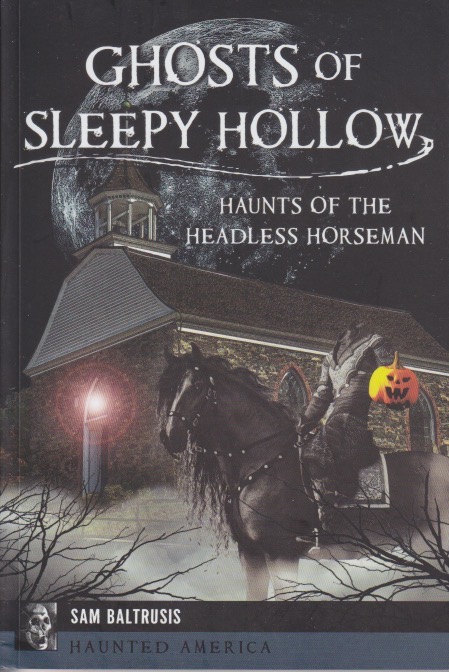
As it often goes, a friend pointed out to me a book on Sleepy Hollow that published just this week.  I preordered a copy that arrived on Tuesday and buzzed through it.  It’s what I describe to family as “one of those books”—you know, the local history, heavily illustrated quick reads from The History Press.  (I would note that I submitted what was then The Myth of Sleepy Hollow to The History Press, but they never even responded to the submission.)  In any case, Sam BaltrusisGhosts of Sleepy Hollow: Haunts of the Headless Horseman is really quite different from what I do in my forthcoming Sleepy Hollow as American Myth.  The History Press isn’t really regarded as such by historians.  I like their books nonetheless.  I was castigated by an academic journal editor early in my career for using one such book to illustrate local folklore.  (That was, by far, the snootiest rejection letter I’ve ever received.)

Aloft noses aside, there is a legitimacy in listening to what the folk say.  The tales in a book like this won’t convince skeptics, of course, but if you read them in the dark you’ll nevertheless find yourself glancing into the corner now and again, wondering if you saw something.  The book does cover the “Legend of Sleepy Hollow” and Irving’s life in a few pages—Irving was a complex man and the first truly famous American writer—before moving on to local haunts.  The thing that kept nagging at me was the easy shifting from fiction to fact.  Folklore does have a way of becoming reality (and who can definitively even say what that is?) for people.  No doubt, Sleepy Hollow has latched onto tourism in a big way.  Even more so than on my last visit there. And folklore draws on that shifting borderland between fact and fict.

One of my motivations in writing Sleepy Hollow as American Myth was that the story is largely ignored by academics and “sophisticated” readers.  It nevertheless remains important in popular culture.  Academics tend to be slow in picking up what general readers find fascinating.  I found a few academic articles on the subject, but my book was written for general readers as well.  I hesitate to say too much, otherwise, why buy it?  I have a handful of History Press (and similar) books on the region on my shelf.  I learn from them.  And I’m glad to see Sleepy Hollow getting more attention.  My only real regret about my book is that I’ll have to wait a couple of years before the price comes down.  In the meantime, those really curious about Sleepy Hollow will have this Haunted America version to read.


Unique?

Is it embarrassing, or simply confirmation?  It used to be considered embarrassing to show up at an event dressed identically to someone else, if it wasn’t intentional.  It was considered, in some way, a slight on your personal expression.  This happened to me while still commuting when another employee and I had worn a very similar shirt for an event at work.  (He was more embarrassed than I was, for the record.)  What often feels more embarrassing to me is when I notice something I’ve never seen anybody else write about, get it all written up, and then discover that someone posted something similar on the internet someplace.  It has happened more than once—indeed, many times.  I feel embarrassed for not having known about the observation, no matter in how an obscure virtual a corner it was kept.

Perhaps these are just growing pains for the terminally curious.  Some of us constantly observe things we find curious, and start to connect the dots.  Someone else might’ve gone over this conundrum before, the way you pick up a waiting room magazine only to find the crossword puzzle already done.  What gives me hope in such circumstances are twofold facts: that someone else has spotted this confirms my observations, and that my interpretation is different from theirs.  My great fear, however, is that someone might think I’ve plagiarized.  This is a mortal sin for academics.  I would simply note that many of us read lots of stuff without noting where, and that I would remember if I intentionally lifted an idea from something somebody else pointed out.

I’m sure there are many examples of this on this blog.  Apart from posts that reflect an experience unique to yours truly, that is.  It’s getting tricky to say anything that hasn’t been said.  A recent newsworthy event occurred that called for comment from someone with my background.  By the time I’d scrawled a first sentence about it, others had written, and posted, full articles conveying what I would’ve had to say about the thing.  Embarrassing.  It has also made publishing much harder.  Even small, independent publishers in the non-academic sector only consider books sent from agents.  And agents are nothing if not aloof.  Too many submissions from too many wannabes.  Is there anything unusual, remarkable, here at all?  I’d say it’s my perspective.  Others can string words together.  Others can even buy the same cheap shirt that I purchase.  But they don’t see it from my angle.  Of that I’m certain.  Ask anybody else who’s made a similar observation.  They’ll confirm it.


Whole Books

One of the many peculiarities of my thought process is that I’ve tried to discuss only “whole pieces” on this blog.  In other words, as a “consumer” of media, my self-imposed limit has been discussing only whole books rather than a single short story.  Or the entire run of a television series rather than an individual episode.  The startling contradiction occurred to me that my latest book is an extended study of a single short story.  You see, Washington Irving was no novelist.  As America’s first famous writer, his fiction came in the form of short stories—sketches, he called them—and so to write a book on Sleepy Hollow meant focusing on a short story.  I love to read short stories.  I’ve always waited to talk about them here after finishing the book I found them in.  Maybe it’s time to discuss stories, or individual episodes here as well.

“The Legend of Sleepy Hollow,” many people are surprised to learn, is not a novel.  It’s often presented that way in telinematic adaptations.  The story, published as part of a collection of stories in 1820, is only 12,000 words in length.  Now, if you don’t work in publishing that figure may mean nothing to you.  There is no scientific way to parse these things but short stories tend to run from a few hundred words to about 15,000.  The next major category, the novella, is generally said to start at about 17,500.  You’ll notice there’s a gap there, between the two.  This is the strange territory sometimes called the “novelette.”  That’s because many modern fiction publishers cut the short story off at 7,500 words, and that leaves a gap of a literal myriad of words.  7,501 to 17,500 is the novelette, according to some.  And for the sake of completion, the novella tops out at 40,000 words so anything longer is a novel.

Irving wrote before these fine distinctions existed.  He wrote and people read.  Poe fell into a similar category.  He was known to have written only one novel,  The Narrative of Arthur Gordon Pym of Nantucket, but some of his short stories are long.  “The Unparalleled Adventure of One Hans Pfaall” stops just shy of 19,000 words, a novelette in today’s nomenclature.  My own fiction writing has been shaped by the fact that many magazines (even online, non-paying) top stories out at 5,000 words.  Some even at 3,000.  If you’ve ever tried to get a novella published, you’ll know why you shouldn’t even try.  All of which is to say maybe it’s time I start giving myself a break and talk about short stories.  Or an interesting episode.  If I can wrap my brain around it.


Is That Cookie Free?

I offer free editorial advice here, from time to time.  Not many academics, I expect, pay any notice—what have they to learn from a mere editor?  Still, it’s a public service, so here goes.  It really pays to do your research.  I don’t mean about the topic of your book, but research into what publishing is and how it works.  Some authors, for example, think that if they pay an Open Access fee their book will get bells and whistles that other mere monographs won’t.  They underestimate how much it costs to print a book, especially when they’ve already undercut their own sales by making it available for free online.  There some basic business sense lacking here.  There’s a free cookie but then there’s also giving away the whole box.  Who’s going to buy what’s free?  (There are good reasons for Open Access publishing, but wishing for special favors isn’t one of them.)

I make no claims to be some kind of publishing guru.  I tend to think of myself as a guy who got lost along the way, career-wise.  But I’ve learned that I wish I’d known more about publishing when I was teaching.  I see the same rookie mistakes over and over and over again, made even by senior scholars sometimes.  I remember, however, when I was teaching.  It never even occurred to me to find out anything about publishing.  In the academic’s eyes, publishers are there to serve up what researchers discover.  To a point that’s true, but publishers vary quite widely in their tolerance for the purely academic exercise.  You see, you actually have to sell books to stay in business, and if your research to too obscure, well, I guess you could try to find some Open Access funding.

One of the things that amazes me about the biz is just how many academics assume that editors are menial workers in the larger enterprise of getting their important ideas in print.  My time in publishing has been an education in itself.  I may not have time to keep up with Ancient West Asian studies anymore (the draw is still there, but it’s a terribly expensive habit).  Horror’s a bit easier to handle since you really have only about two centuries to cover, rather than four millennia.  But I can’t help but muse on what a missed opportunity presents itself when a free cookie is passed up.  It’s far easier to stay wrapped in that academic shell than it is to try to break out and discover what is freely offered.  Strange how the world works sometimes. Have a cookie…


Under Construction

It’s fascinating, watching a book taking shape.  Just yesterday I noticed Sleepy Hollow as American Myth is now up on McFarland’s website.   And yes, it’s on Amazon too.  Go ahead and preorder!  (It hasn’t made it to Bookshop.org yet, though.)  I have to say the feed to Amazon was much quicker this time than it was with The Wicker Man.  That book took several weeks to appear, probably because it was with a UK publisher.  Yes, it does make a difference.  Now the trick is to try to get people interested in the Legend of Sleepy Hollow again.  I’m thinking I ought to join Historic Hudson Valley.  They might be interested in such a book.  It is, in a sense, right in their back yard.

The thing about writing a book is that you come to suppose other people are interested in your obsession.  I know that Sleepy Hollow is deeply embedded in American culture.  I also know that some of the fandom began to die down when Fox’s Sleepy Hollow went off the rails.  Most analysts suggest, with good reason, that the show failed when it began foregrounding white characters and writing Americans of color into the background.  A great part of the appeal was the melting-pot aspect of the cast, no doubt.  In the book, however, I suggest a somewhat different reason for the decline.  It’s one I’ve seen no one else suggest.  I’m hoping that we can both be right.  In any case, that was the fandom that got this book started.

You see, I had written my first popular culture article on the role of the Bible in Sleepy Hollow.  That article, published in the Journal of Religion and Popular Culture, led to the book Holy Horror.  I was already thinking about a project around Sleepy Hollow then, but I had a couple more books to finish first.  I’m excited about this one because it marks a move away from publishing primarily about religion to publishing primarily about a story.  There’s still religion there, of course.  We have the Old Dutch Church to pay mind to, but there’s even more about the Headless Horseman, and Ichabod Crane.  And so much more!  Sleepy Hollow as American Myth was a lot of fun to write.  I’m not sure when the book will be out, but I’m hoping next year.  Maybe if I can generate a little excitement around this Halloween—it is closely connected with the story, as I explore—there’ll be some interest next time.  Until then there are still plenty of steps to be taken. 


Running on Irony

I recently remarked that my life runs on irony.  I was thinking back to when I was trying to get out of Gorgias Press (long story) and I was interviewed by Irving Louis Horowitz, founder of Transaction Press.  He listened to my account of myself and said, “What you need is a leg up.”  He didn’t offer me that leg up, but I always remembered his kindness in giving me a shot at a non-existent position.  As it turned out, I was hired a couple years later by Routledge.  Routledge is owned by Taylor & Francis, an Informa company.  Publishers grow in two main ways: by the volume of books that sell well, and by acquiring other companies.  While at Routledge we were encouraged to talk to those higher on the ladder about prospects for acquisition.  I made a small case to one executive about acquiring Transaction and was summarily dismissed.

Then I was actually dismissed.  For reasons never explained, I was handed a pink slip the day after returning from a business trip to Arizona.  So life goes.  I found another job, more stable, in the academic publishing world.  One day I was recollecting my conversation with Irving Horowitz.  I’d contacted Transaction out of the blue because it was based in Piscataway, New Jersey.  Gorgias Press was also located in Piscataway, and I’d moved my family to nearby Somerville so that the commute would be only fifteen to twenty minutes.  (I was so naive about commutes at the time.)  Besides, that semester I’d been assigned to teach on the Livingston Campus of Rutgers University as an adjunct, and Transaction operated out of a building either on or adjacent to Livingston.  It all seemed right.  Except it never happened.

After Routledge let me ago, I again contacted Transaction.  I knew that Horowitz had passed away but his widow sent me a packet of information that I never opened because a job offer had been made by my current employer by the time I received it.  After some time I’d heard that Transaction had been acquired.  The irony was that the publisher is now considered defunct because of the acquisition.  In my reverie, I decided to look up by whom.  Of course, Taylor & Francis had bought Transaction and rolled it into Routledge.  I am absolutely convinced my sophomore suggestion had nothing to do with this this.  Someone else, probably higher up, had noticed a smaller press ready for assimilation.  I’m pretty sure that I didn’t keep the somewhat hefty envelope I’d received from Transaction when I was again in need of a job.  If I had, and if it had contained an offer, I would’ve found myself again working for the company that had let me go.  My life runs on irony indeed. 


Gothic Folk

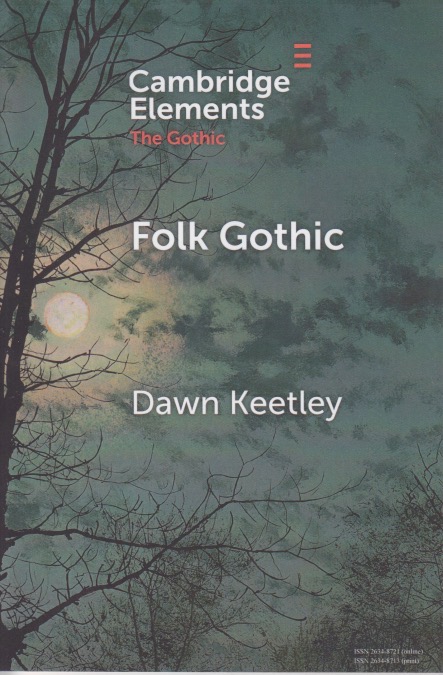
I smelled autumn on the air during yesterday morning’s jog.  Pseudo-non sequitur: Cambridge Elements are one of the many series of short books that academic publishers are promoting these days.  Elements is divided into different categories, one of which is “The Gothic.”  (Thus the pseudo.)  When I saw that Dawn Keetley had written a volume on Folk Gothic I knew I had to read it.  In some ways it reminded me of my own short book, The Wicker Man.  Although I analyze that movie as holiday horror, it is widely known as a textbook example of folk horror.  Just as many people haven’t heard of holiday horror as a category, I hadn’t heard of folk gothic.  Autumn is a gothic time of year, and I enjoy folk horror, so I wanted to find out what this genre is all about.

Keetley is an able guide through all things horror.  She co-runs Horror Homeroom, a wonderful website that sometimes publishes my own musings on horror and religion.  There’s a lot packed in this brief book.  One of the draws to these fascicle-like series is that you can learn a lot in a relatively short time.  As a weary scholar, I do appreciate the monograph—I read plenty of those as well—but something that distills is also appreciated.  So what is folk gothic?  Well, if you want a good, short introduction, read this book.  If I were haltingly to try to put it into a sentence, I would suggest that it is a form of horror with no obvious monsters; one that draws on folklore to set up a melancholy scenario that often involves violence.  If you want a better definition, I would recommend reading what an expert has to say about it.

One of the films discussed in this Element is The Wicker Man.  One of the early folk horror movies, it has no obvious monster.  Folk horror often relies on the very landscape to create a sense of unease.  This is something I always feel as autumn approaches.  I still have a ton of summertime chores to do outside—the too hot summer weekends aren’t conducive to physical labor for a guy my age—but I enjoy the melancholy of that first whiff of autumn.  It brings gothic sensitivities to the fore.  I picked a good time to read Folk Gothic.  I’ve seen nearly all of the movies discussed in the book, but some of the fiction I have yet to read.  There’s so much to do to get ready for autumn’s chill.


Book Stages

There are stages to it.  Writing a book, I mean.  One stage, for me, is realizing that you’re writing one.  I started work on Sleepy Hollow as American Myth years ago, without realizing it.  That was followed by the stage of comprehending that I had a book idea and intentionally writing it.  I suspect that, in the throes of The Wicker Man, I thought “I should do a similar book on Sleepy Hollow.”  Devils Advocates, which is an excellent series, however, feeling the strain on academic presses, was moving to hardcover-first releases (the kiss of death).  I started writing the book anyway, hoping that maybe it might find trade interest.  It is still possible that an agent is out there who would’ve moved it in that direction, but I wanted the book out before Lindsey Beer’s movie gets released.  After the book is drafted, the next stage: find a publisher. (Unless you have an agent.)

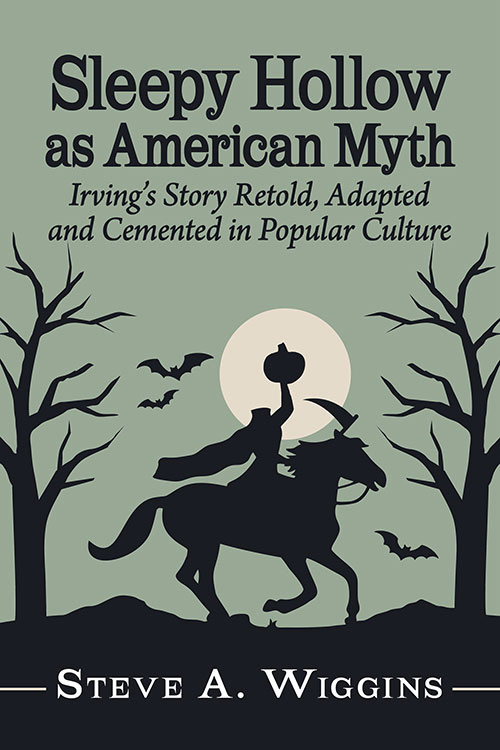
Since this is my sixth book, I felt confident (a strange, foreign feeling for me) that I could locate a publisher.  I’d done it five times before.  McFarland did a nice job with Holy Horror, but what sold me is that they dropped the price on it.  Many academic publishers continue to raise prices each year, so if you don’t buy a book right away you’ll end up paying a lot for this muffler.  The next stage is waiting to see what the cover will look like.  That wait is over.  Here it is, the cover of Sleepy Hollow as American Myth:

(Feel free to share widely, get everyone all excited!)  I’m currently in the waiting stage.  Waiting for proofs.  Of course, I’ve been working on my next couple of books as well.  You can’t just sit around, otherwise these tomes will never get written.  I haven’t decided which one will cross the finish line first.  If I had an agent they’d be able to tell me which might be more marketable, but since I work alone I’m left to my own devices.  I am bound and determined that the next book will go to a trade press.  I’m trying hard to scrub any whiff of academia from it.  In the meantime, however, I’m enjoying looking at the cover for my current book.  There aren’t a ton of nonfiction books out there on “The Legend of Sleepy Hollow.”  In fact, as nonfiction I know of only one other.  This isn’t what we in the biz call “a crowded bookshelf.”  I’m doing all the pre-publication promo that I can.  I’d be grateful for any shares or likes at this stage.


Good Timing?

Timing is important.  I hope I have a sense of it, but it doesn’t always work out the way you hope.  My last book, The Wicker Man, was released on the fiftieth anniversary of that cult film.  A bigger publisher with better reach published their own Wicker Man book that year, and mine garnered no attention.  I decided to turn to Sleepy Hollow instead.  This is a story that has been quite well known since 1820.  Although the Fox television series ran out of steam in 2017, I wrote the book when I did because Lindsey Beer has been tapped to direct a reboot of the Tim Burton film of 1999.  Looking for books on the “Legend of Sleepy Hollow” I found very little.  This is what is known of in the biz as “a gap.”  I decided to try to fill it.  Fandom helps in situations like this.

I’ve been trying to find the Sleepy Hollow fandom and engage with it before Sleepy Hollow as American Myth comes out.  I am confident that there are fans out there.  The tragic collapse of the Fox series didn’t lead to lack of love for the tale.  Indeed, further renditions have continued to appear.  Some have gained considerable attention.  The online fan base, however, seems to be, ah, sleeping.  I’m not sure when the Beer movie is slated for release.  It was announced in several media outlets but now we’ve come to the lull where updates have ceased to surface.  I’m certainly no Hollywood insider and I generally don’t even find out about movies until after they’ve left theaters (unless they’re very big).  I hope the timing is right this time.

It takes a couple years, at least, for me to write a book.  I’ve been working on this Sleepy Hollow project, in some way or other, since before Holy Horror came out in 2018.  I sure hope I got the timing right on this one.  The many trade publishers and agents I approached didn’t think so.  Maybe it’s just that people aren’t curious enough to read a book about Washington Irving’s story.  I try to make the case in my book that it has risen to the level of an American myth.  The story’s known world-wide, but its largest fan base is here in the States.  Had the Fox series been handled a bit better, keeping both people of color and the apocalypse in the foreground, it might’ve run a couple more seasons.  The underlying story’s not quite dead in the grave yet, I hope.  But then, timing hasn’t always been my strong suit.

F.O.C. Darley, from Le Magasin pittoresque, public domain

Not Content

I write books.  When I want to “create content” I do it on this blog.  (And a few other internet sites.)  These aren’t the same thing.  I find it distressing that publishers are trying to drive us to ebooks where content can easily be changed, as opposed to print books.  The shelves of this room are lined with books and the technology doesn’t exist to come in and change “data” without my knowing it.  Facts are secure in print, right Ilimilku?  I’m not looking forward to a Star Wars future where there’s no paper.  I was born in the last century and, perhaps, I’ll die there too.   You see, when you write a book you have a project in mind that has an endpoint.   It may change and shift as you write, but you know what a book is and that’s what you produce.  It gets shelved and you move on to other things.  (At least I do.)

Content is something different and the creative process behind it also differs.  If I find something wrong after the fact, I go into my past posts and change it.  I’m not afraid of admitting I’m wrong.  The point of this blog is to share ideas with the world, not to write a book.  (Although, I confess that I would not say “no” if someone in publishing wanted a selection of worthwhile posts for a book… just saying.)  It amazes me how publishers have pretty much gone after the money and have forgotten what the creative process is like.  Of course, they’re having to figure out how this whole internet with free content plays into it too.  But still, my book writing uses a different fold in my gray matter than my blog writing does.  All of it feels pretty different from writing fiction too.

These things together adds up to a writing life.  I have a ton of “not for publication” writing.  This is something different again.  I suspect it will never be read by anybody, moldering away on some old hard drive after some AI-induced apocalypse.  I write it for of the same reason, I suspect, that people used to spray-paint “Kilroy was here” on things.  The book of Job, it seems to me, was the preservation of words that someone simply had to write.  We know the framing story is folklore.  But those who have words to carve with iron on lead, or engrave on a stone to last forever.  It’s more, I hope, than just “creating content.”


International Standard

Probably nobody gives them much of a thought.  ISBNs, that is.  International Standard Book Numbers.  An ISBN is a book’s unique identifier.  And they cost money.  I’m not sure how self-publishing works, but at some stage, whether it’s obvious or not, you have to pay for an ISBN if you want wide distribution.  And since they cost money, most publishers don’t assign an ISBN until a contract is signed.  If a deal falls through, hopefully they can recycle the ISBN and assign it to another book.  The system only began in the 1960s and not all books printed their ISBNs.  The thing about them is, the best way to find the book you’re looking for is by using the ISBN rather than the title.  Titles can’t be copyrighted, and that’s why you see so many books with the same name.  The ISBN won’t let you down.

My book, The Myth of Sleepy Hollow, now has an ISBN.  I just found out yesterday.  It’s 978-1-4766-9757-4, in case you’re curious.  It won’t lead to anything on the web yet since I haven’t submitted the manuscript and work hasn’t begun on the title.  It is, however, a step in that direction.  In the past, when I’ve signed book contracts, I’ve always felt a little anxious until the ISBN is assigned.  Is the publisher really sure about this?  Once they assign an ISBN they’ve started to invest in your ideas.  My book has existed in draft form for several months, but I’m going through it again, for the umpteenth time, to make it presentable to the world.

One of my jobs at Gorgias Press, my first full-time publishing gig, was to assign ISBNs.  They had to buy blocks of them and they came in a printout in a large notebook.  If a project with an ISBN didn’t materialize, some White-Out and a pen could save the company some money.  It was all very hands-on.  I imagine it’s gone electronic these days.  The ISBN is a technical code, by the way.  The 13-digit code, which is now common (it used to be ten), has a meaning.  The schematic below explains that.  The “group” section has to do with language and that’s followed by the publisher’s ID.  Simple deduction (and dashes) tell me that 4766 is McFarland.  That’s followed by the title identifier.  I’m not a numbers person, however.  Those of us drawn to the words part generally try to provide the inside content.  And since it’s a weekend I’d better get to it.  I have a submission deadline I’d like to meet. But I’m thinking about the ISBN.

Image credit: Sakurambo; via Wikimedia Commons, GNU Free Documentation License

Going Once, Going Twice

Do you ever get that feeling that you’ve been sold?  One thing I learned early on in academic publishing is that buyouts aren’t that unusual.  I recently wrote about Transaction being acquired by Taylor and Francis, for example.  Just a couple days ago I noticed in Publishers Weekly that Bloomsbury had bought out Rowman & Littlefield’s academic wing.  Then, at a company meeting the buyout was mentioned again.  Finally, I had an email from R & L letting me know.  You see, Nightmares with the Bible was published by Lexington Books/Fortress Academic.  This is an imprint of Rowman & Littlefield.  This means the rights to Nightmares have just been sold to Bloomsbury.  I do hope Bloomsbury has a more progressive idea about paperbacks!  In one of those strange synchronicities (all of this happened on the same day), I’d emailed one of the series editors of Horror and Scripture, asking if the series was still going.

I have no real concerns about being owned by Bloomsbury.  If you haven’t heard of them, it’s probably because they were a small operation until they took a chance on an unknown author by the name of J. K. Rowling.  Suddenly flush with cash, they started buying out smaller presses.  Big fish got to eat too!  Rowman & Littlefield had been buying out other publishers for years.  If you’re an academic you probably remember University Press of America.  Ever wonder where it went?  They bought Rowman & Littlefield in the late eighties and took over their name.  They bought other “assets”: Prometheus, Scarecrow Press, Hal Leonard.  They grew an enormous list of academic titles, now owned by Bloomsbury.

As someone who has knocked around academic publishing for some years now, it seems like this small world is getting even smaller.  Companies buy other companies and sometimes it works out for the benefit of authors.  Sometimes not.  Bloomsbury is only 37 years old.  Rowman & Littlefield was 75.  University Press of America (which first bought R & L, would’ve been 49.)  The younger buying out their elders.  Perhaps it’s because of my career malfunction, but I’ve discovered academic publishing to be a fascinating world in its own right.  Many academics pay little attention to the publisher, especially outside the big-name university presses.  But there are stories here.  I know that before I began working in the industry I’d never heard of Bloomsbury.  Then they bought out Continuum, which had bought out T & T Clark, from my beloved Edinburgh.  Now one of my books is under their umbrella.  And I have to wonder who will be sold next.