Demons and Gremlins

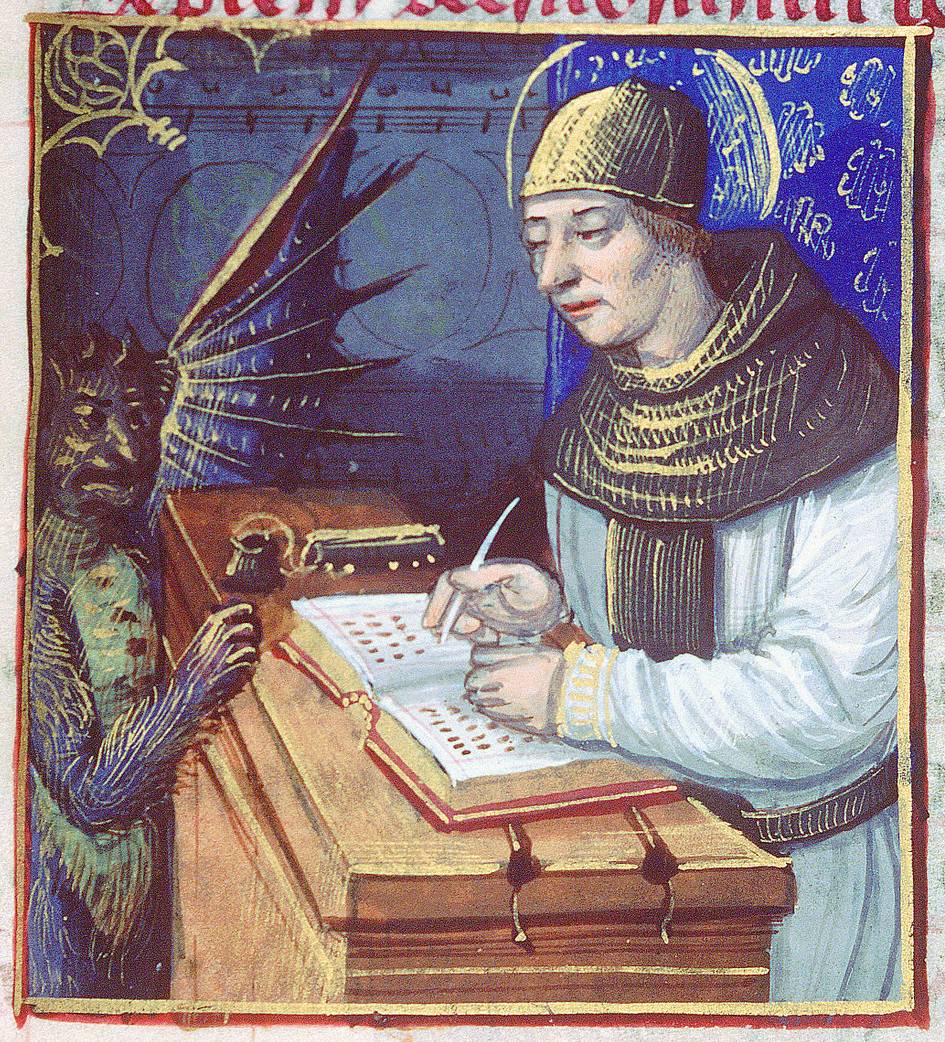
Gremlins have an ancient pedigree, whether they know it or not.  Credited with airplane problems during the Second World War, these meddlers in technology had an older cousin in the demon named Titivilus.  Titivilus was a demon said to be responsible for errors in the works of scribes.  Long before the printing press hit Europe, manuscripts were copied by hand, of course.  Anyone who works with Bibles, for example, knows that no ancient manuscript exists without errors.  But scribes copied more than Bibles, and anyone who has tried to copy an entire manuscript knows that errors always creep in.  (When I was a college student I tried to get my local church back home to set up a Bible-copying station so that when hungry parishioners were leaving the service they might stop and copy a verse.  This was to show how errors appeared in biblical texts.  The experiment took place but results were disappointing—full of errors but we didn’t get past the early chapters of Genesis).

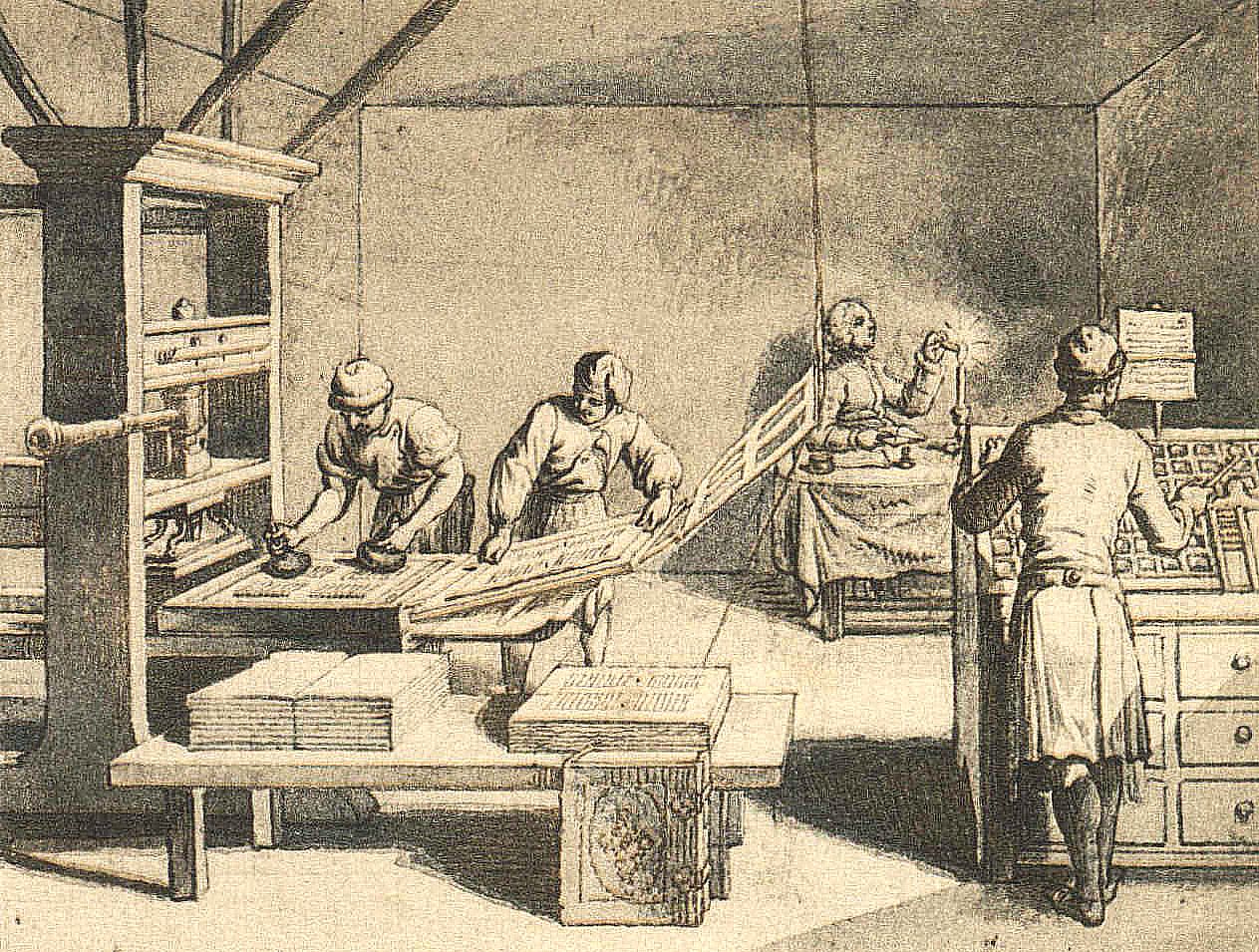
However that may be, having a demon to blame for things going wrong proved to be mighty handy.  The tradition lasted well into modern times.  In the days of manual typesetting the young printers’ apprentices were called “printer’s devils.”  Demons were blamed for spilled cases—capital letters were kept in the upper case, and minuscules in the lower case—and other mishaps.  It may be a stretch, but such a demon interfering with humans trying to accomplish something important, led to ideas such as gremlins.  Most of us, I suspect, don’t like to confess that we’re sometimes clumsy or sleepy and make errors.  One of my notebooks is all crinkly because I knocked a nearly full water bottle over onto it while trying to catch a bug in my office.  ’Twas no demon, just haste making waste, as it does.

The idea of someone not human to blame is compelling.  All the more so because sometimes we are the legitimate victims of circumstance.  Life offers many opportunities to wander, unknowingly, into situations that might not turn out so well.  We don’t have minds well equipped to see the entire picture.  Even if we could the universe, we’re told, is infinite.  Who doesn’t make mistakes because of limited knowledge?  And sometimes those mistakes can eat up years of your life.  Doesn’t it seem more likely that a demon or gremlin lurks behind an all-too-human error in a judgmental world?  I’m sure that, for most people, if we knew better we wouldn’t have done it.  So we invent our demons.  We sometimes even give them names, and thus Titivilus was born.

Image credit: artist unknown, public domain via Wikimedia Commons

Price Drop

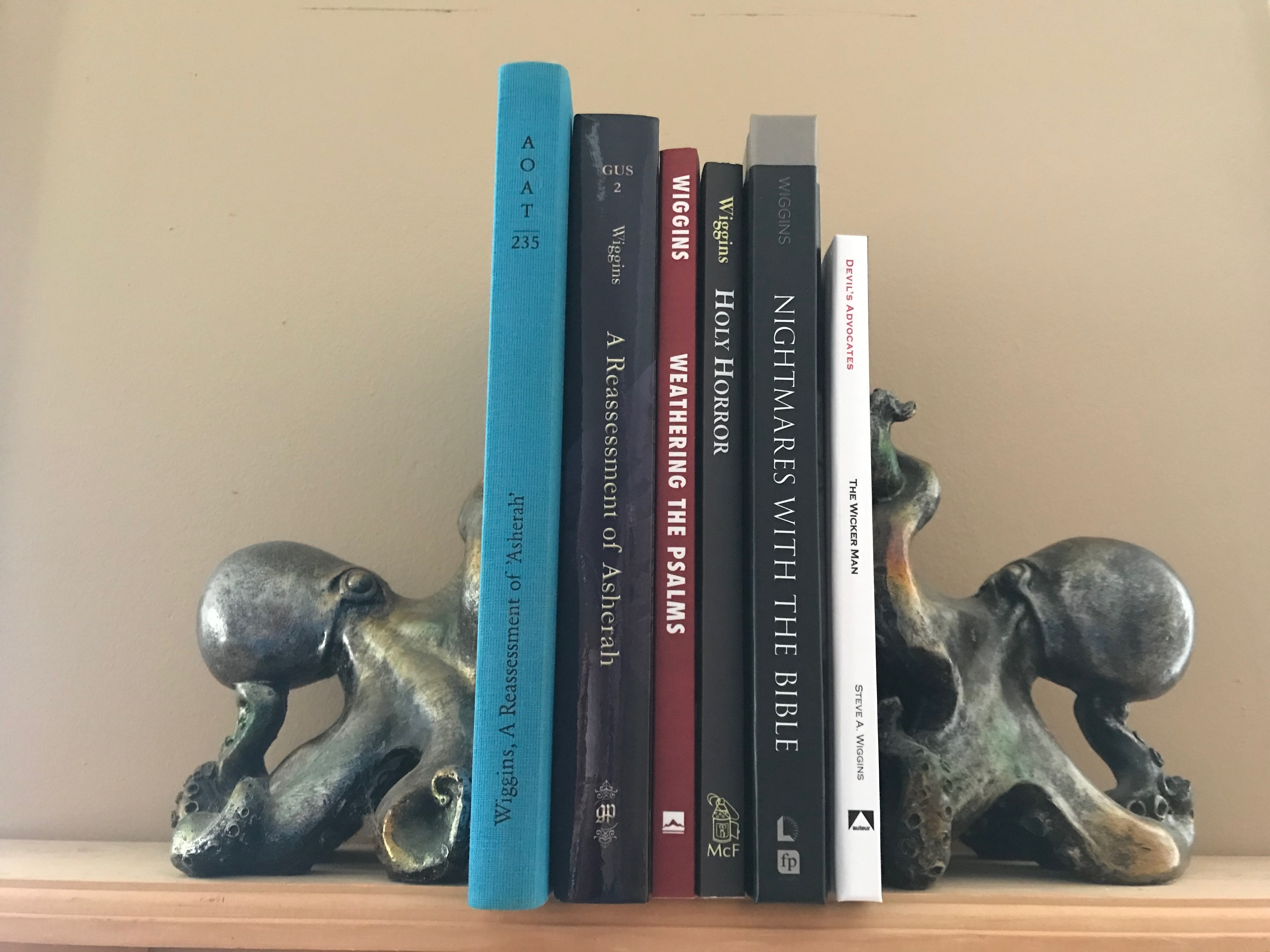
Here’s a public service announcement for your Friday.  If you’ve been wanting to read Holy Horror but found the price too high, McFarland has now lowered the cover price to under $30.  Here’s the link: Holy Horror.  Of my non-academic books, this has been my “best seller.”  Since I’m currently shopping around another book, and since agents aren’t interested (at least not any more), I wondered whether McFarland might look at it.  The editor who handled Holy Horror had left, and the new editor responded to my concern about pricing by telling me that they lower prices after a couple of years.  She noticed, however, that Holy Horror had been overlooked in the price lowering process, so voila!  It’s now affordable.

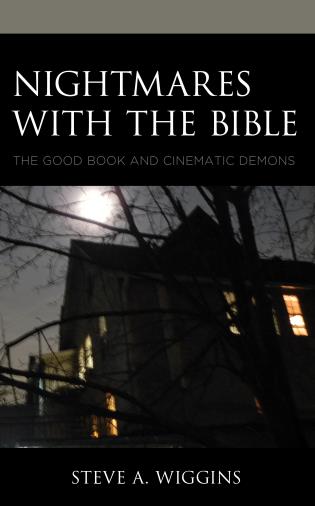
This model, while not the same as trade publishing’s efforts to get primarily front-list sales, seems to make sense.  Too many publishers raise prices year after year, so if you don’t buy immediately you’ll pay more.  McFarland tends toward a paperback first model.  The first couple of years are aimed at library sales—and they do well at those—then they lower for individual purchase.  All I had to do was ask.  Two years ago I asked Lexington/Fortress Academic if they’d do a paperback of Nightmares with the Bible.  That poor book never had a chance.  The editor said they were considering it.  Instead they did the trick that publishers seem to like: decoupling the ebook price from the hardcover.  So you can buy some expensive electrons instead of holding a real book.  So it goes.  I’ve written a museum piece.

It’s a little too soon to say about The Wicker Man.  My experience has been that university presses, particularly British ones, like to raise prices rather than chasing sales.  If you’re reading this blog you know that I’ll market my books.  I even printed bookmarks for Holy Horror at my own expense.  Maybe it’s time to start distributing them again.  What a difference ten dollars can make!  I’m a book booster.  (You might not have noticed.)  I’m glad that McFarland understands that individuals will buy books, even if they’ve been out for a while.  The standard wisdom among academic publishers is “three years and then you’re done.”  If you’re inclined to help prove that business model wrong, you can now get Holy Horror without having to take out a second mortgage.  That’s cause for hope—any writer has the dream that her or his book will keep on selling.  Sharing this information will, it seems, make it wider known. Please pass it on.


Poe’s Novel

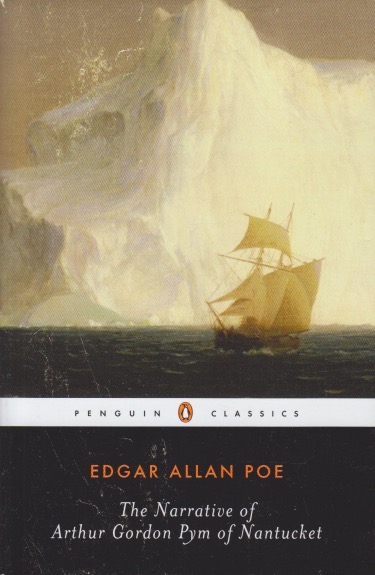
Certain authors, some great among them, excel at short stories.  I know from personal experience that trying to publish a book of such stories is a very hard sell.  For a writer like Edgar Allan Poe, who was trying to live on his words, it often led to periods of poverty.  Thinking of him as a short-story author, I had never read his only novel, The Narrative of Arthur Gordon Pym of Nantucket.  Hailed by fellow brief-tale writer Jorge Luis Borges as Poe’s best, I figured I’d better give it a try.  I’m glad I did.  I had, however, no idea what to expect.  Those who write on Poe seldom pay it much mind.  He was famous for his poems and stories, and this gothic, sea-faring novel was, according to the introduction, suggested to him by those who felt his making a living as a writer might improve if he used long form.

Concerning the edition: the novel is in the public domain.  Penguin Classics, however, often contain nice introductions.  Indeed, the intro by Richard Kopley in this edition is excellent.  A few of his observations stood out to me—this novel was, in some measure, about Poe’s family.  Both the protagonist and the author have five-syllable names with the same cadence, ending on a three-letter surname beginning with P.  Also, as both the introduction and notes make clear, Poe was deeply steeped in the Bible.  You seldom read about Poe and religion.  Writers from America’s first generation, however, were uniquely brewed in it.  I’d never considered that about Poe before.  There are many editions of Pym available, but I recommend this one because of its introduction.

The story ends without resolution, just so you know.  Pym, talked into an adventure by a somewhat devil-may-care friend, goes out on the ocean on a boat after a night of drinking.  And herein hangs the tale.  Well, actually, the friend convinces the young man with a taste for the sea to stow away on a whaler that his father captains.  A mutiny, however, leaves Pym “buried alive” onboard.  A shipwreck leads to near starvation and a boon companion survivor.  Picked up by an explorer headed south, they discover a surprisingly temperate Antarctic circle where a native tribe turns treacherous because of their fear of the color white.  It does seem that there’s a race narrative taking place here too.  I enjoyed the story although the chapters about longitude and latitude don’t quite rise to the level of Melville’s maritime writing.  It’s a tale worth the read, however, but find one with a good introduction and it will be smoother sailing.


Monopoly by Statute

The Bible is an odd book.  It is foundational for the modern world, no matter how much we might want to deny it.  Even so it’s a strange book.  The King James Version (KJV) of the Bible is a masterpiece of English literature.  There’s not one King James Version, however, as several variants exist.  Nevertheless, the KJV remains quite popular among some religious groups and it is still studied in English Departments as part of our cultural heritage.  It is also in the public domain, which means anyone can print and sell it.  Unless, of course, you wish to do so in the United Kingdom.  Here’s where the story gets interesting.

Because of England’s troubled religious history—remember the whole Catholic v. Protestant monarch thing?—the printing of religious books became a contentious issue shortly after the adoption of the printing press.  In 1577 a monopoly on Bible printing went to one man, Christopher Barker, the Royal Printer.  Ostensively to control the version of the Bible approved for use in the Church (of England), this royal privilege became law.  In perpetuity.  Now rights, as commodities, can be bought and sold.  And this happened from time to time.  Cambridge University, however, had been granted a royal charter earlier—also perpetual—to print “all manor of” books.  Since this arguably included the Bible (a lucrative business) it wasn’t prevented from printing them as well.  Oxford University was granted a similar charter some years later and so the two ancient universities and the Royal Printer were the only ones allowed to print the Bible for sale in the United Kingdom (except Scotland, but that’s a story for a different time).

Image credit: Daniel Nikolaus Chodowiecki, public domain via Wikimedia Commons

This privilege, which still exists on the books, did not apply to later versions of the Bible.  The KJV became wildly popular and really wasn’t challenged much for over two centuries.  By the nineteenth century British lawmakers, presumably, had better things to do than argue about who could print the Bible.  Meanwhile other translations divided and conquered the profits coming in from the sale of what had been, in essence “the” English Bible.  As late as 1990 the Royal Printer status landed with Cambridge University, so the sale of rights continues.  A similar story accompanied the Book of Common Prayer, which has always been in the public domain but can only be printed in the UK by the two major university presses.  The story of the Bible is a fascinating one, and since it has shaped western civilization, it seems appropriate to give it the last word: “where your treasure is, there will your heart be also.”


Learning to Write

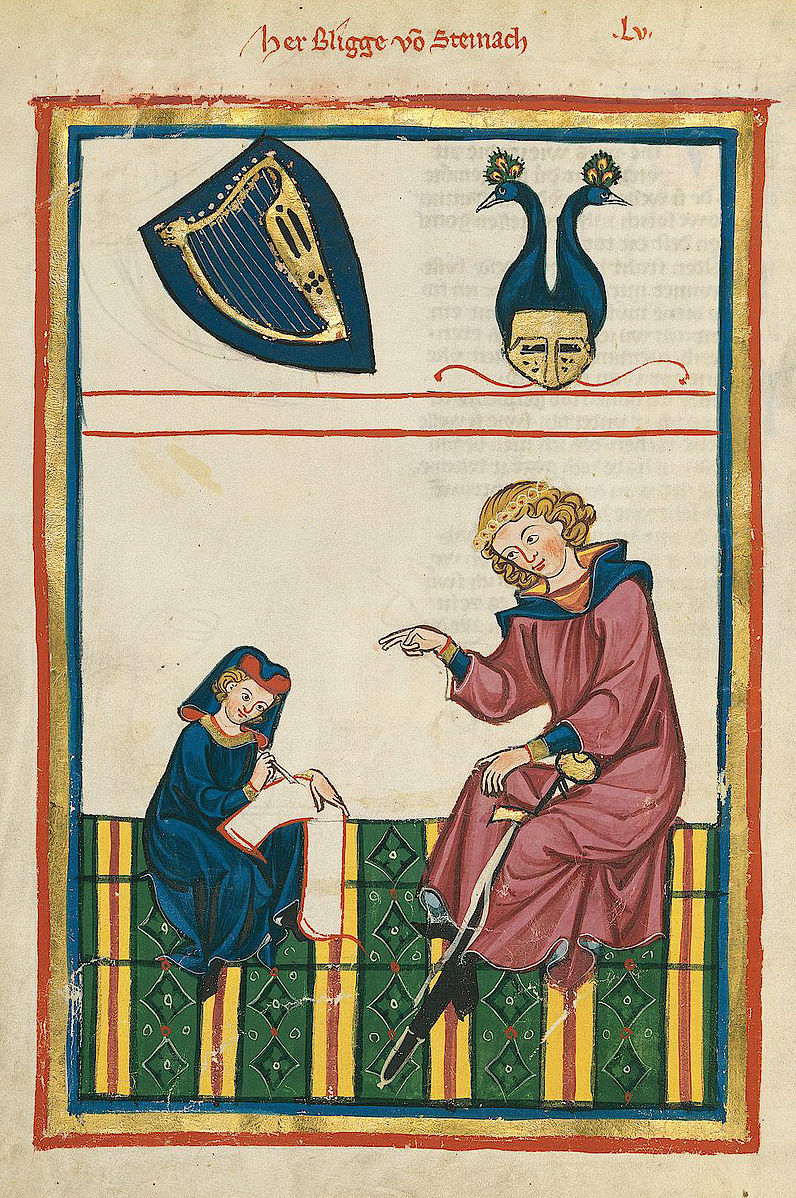
It’s a reciprocal relationship.  Ideally a symbiosis.  The publisher has a reach, and know-how, that an author lacks.  An author provides content the publisher needs.  Yet publishing is a business in a capitalistic world and has to (unless subsidized) turn a profit.  As an author who works in publishing I’m skewered on the horns of this dilemma.  It’s heartbreaking to see the lengths some authors go to only to find out their book is priced the same as a week’s worth of groceries.  Or three tanks full of gas.  Who buys a $100 book?  Libraries.  Well, some libraries.  Occasionally a publisher will run sales, if you order direct, but by then interest in your book (which may be timely) has passed on.  You become just another name on the shelf in the Library of Congress.

I’m looking for a publisher for my sixth book.  This has to be someone who understands that even $45 is beyond the reach of most intelligent readers.  “What the market will bear” feels like the death sentence to the years of your life you’ve put into writing the thing.  A friend once asked me, “Why do you do it?”  For authors the real question is “How can you not do it?”  The need for the validation through publication runs very deeply in some people.  More deeply than our national love for Taylor Swift.  It has to do with meaning.  Purpose.  A sense of what we’re put on earth to do.  

Image credit: Codex Manesse, public domain via Wikimedia Commons

The standard “wisdom,” and practice, is to publish in hardcover, priced for the library market, and if it sells well at $100, perhaps offer a paperback.  Hopefully priced lower than $45, but don’t hold your breath.  “What the market will bear,” should be your mantra.  It’s a wonder that civilized people ever got educated.  I grew up on cheap books from Goodwill, which is all I could afford.  College, on borrowed money, taught me the price of reading seriously.  It was a lesson I never forgot.  I’d begun my faltering steps to writing books while in high school.  I started writing short stories even earlier than that.  It has been a life of writing.  Even series books, I’ve come to see, are too easily exploited in this way.  My shortest book is priced at $40.  At least I know that I’ve written some collectors’ items.  Take heart, my fellow writers trying to emerge from academe.  There are other ways of being in the world.  And some of them may even be symbiotic.


Finding Books

This is a public service announcement to those who try to find books that aren’t issued by one of the big publishers.  I’m not shy about saying that my books all fall into that category.  One of the things I’ve noticed is that books feed out to different internet venues at an odd rate, before they’re published.  Some publishers use what they call New Book Announcements (NBAs) to get the metadata out to wholesalers, distributors, and other vendors.  Sometimes a book comes to public light in strange ways.  I’ve had my eye on a book that a friend pointed out.  I don’t know how they heard about it, but I went searching for it and found it on Barnes & Noble’s website, but not Amazon.  Well, that’s not quite true.  It is on Amazon, but not in North America.  Amazon China and Amazon Singapore have it, but you can’t find it here.  Yet.

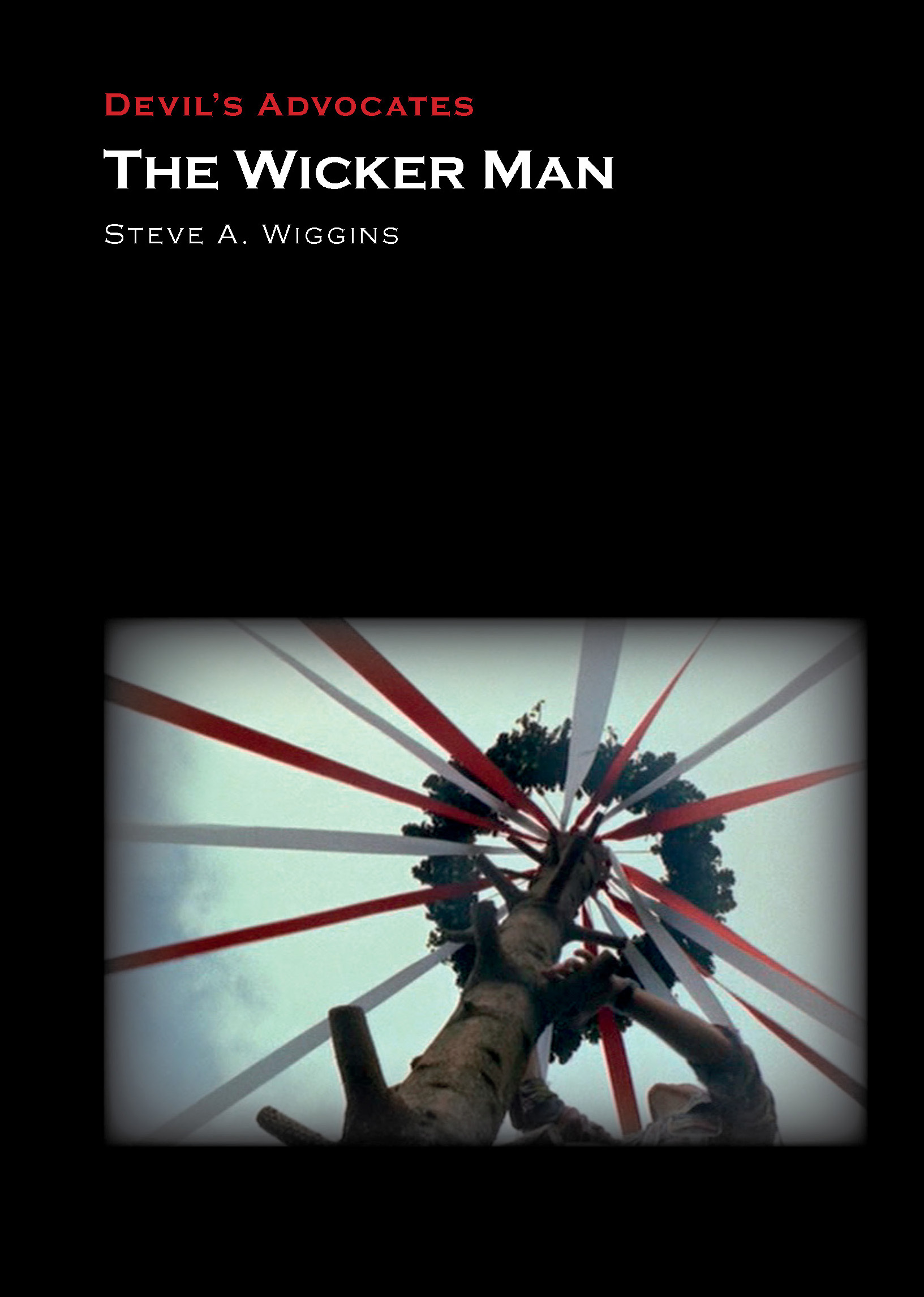
I noticed a similar thing with The Wicker Man.  An anxious author, I kept searching for it online when I didn’t hear from the publisher.  It was first announced at German booksellers.  Eventually it got around to English-speaking sites, and eventually (it took a few months after publication), it became available in “all channels.”  Although, several websites still only list the hardback which retails for more than a dollar a page.  Now that’s inflation!  Even $40 for such a short paperback is a lot, but that’s why I’m looking for anything but an academic publisher for the next book.  But there’s a larger issue here.

Like old Joe, I sometimes can’t remember things.  I have an elaborate and Byzantine set of reminders that fit my neurological profile (mostly).  For books I want to remember to look up after they’re published (I can’t generally afford to buy them right away, so this takes advanced planning), I have an online list.  That online list is associated with a bookseller and I can’t easily add to my list until the book appears on said seller’s site.  I suppose I could write it down in my zibaldone, but will I recall that I wrote it there?  (Those little notebooks get filled up pretty quickly.)  It would just be easier if information on the internet could feed out instantaneously.  If, say, Amazon Singapore could let Amazon USA know that a book that is publishing in the United States can be listed—well, wouldn’t that make sense?  Systems are complicated.  So complex, in fact, that architects must be hired to keep them in order.  Or maybe books could be announced when they’re actually available? What? Lose the buzz?  In the meantime I’ll put a bookmark in this page and hope that I remember to look it up when the time comes.


Demons Again

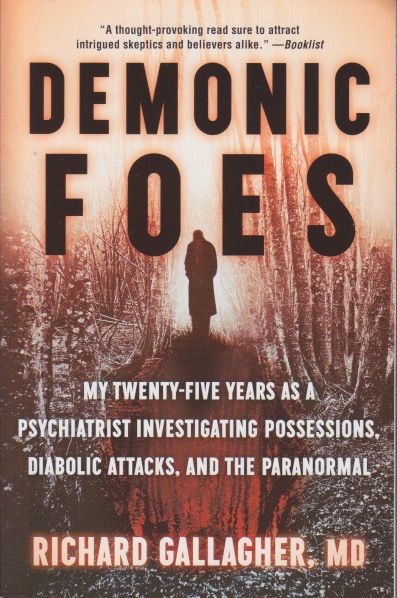
Exorcism is sexy these days.  I fully understand why $100 books on it escape attention, but I’d been looking for Richard Gallagher’s treatment since 2016 when I learned that he was writing it.  Demonic Foes is, however, a little disappointing.  As I am wont to do, I tried to find information on the author only to discover that he appears on many webpages but really has no online presence himself.  He teaches as Columbia but his page there is minimal as they come.  The book, which I suspect easily caught an agent’s eye (see my opening sentence), is a rambling tour—very roughly chronological—through the author’s experiences with and thoughts about demons.  I’m left puzzled, however, about why he maintains the secrecy around his priest mentors, although they are dead.  Believe me, I understand withholding names, but if you’re trying to convince people, we need something to go on.

There are some interesting, and scary cases here.  But Gallagher also gives nods (somewhat skeptically) to Malachi Martin, but also to Lorraine Warren, and Fr. Gabriele Amorth.  At times he easily moves between movies and actual events.  His writing style at times obfuscates, unintentionally, I expect.  Before too long it becomes clear that, as a Catholic, the author distrusts anything occult, paranormal, or parapsychological.  At one point he suggests assuming spirits are demonic until you can prove otherwise.  At the same time, he suggests possessions are rare.  I’m left wondering about a number of things.  There’s no bibliography and his knowledge of the ancient world isn’t that of a specialist.  Even his history of demons doesn’t address the nuanced issue of how Christianity came to understand demons as the New Testament seems to.  He gets some facts wrong about other religions.

I’m no stranger to cobbling books together while working full-time and trying to hold daily life together.  You can hire book coaches (if you afford them) and not all editors are willing to tamper with money.  (Trade publishers do what they do for lucre, don’t you know.)  Demons are a controversial subject.  The tired orthodoxy of demonizing other religions still holds for some, and it seems to here as well.  This rambling book raises more questions than it answers: which exorcisms did the author witness?  Why are non-Catholics said to have rosaries?  Why are verifying names kept secret?  If wanting to convince people, why are so few dates or precise places given? I appreciate what Gallagher is trying to do and I agree with him that we need to avoid dismissing demons because they don’t fit a scientific worldview.  As he admits in the epilogue, he holds a traditional view of what demons are.  I’m left wondering what we might find if science would take the paranormal seriously.


A Footnote

I was recently compelled to use footnotes.  I don’t mean the clever asides that capable writers sometimes utilize to spice up subjects by making points off topic.  No, I mean the kind with author, date, title, city, publisher, page number.  I deal with footnotes daily—it’s an occupational hazard.  As a recovering academic I’m trying to get away from using footnotes on everything from grocery lists to daily meeting reminders.  Cite your sources!  That’s the kind of rhetoric that’s pounded into the heads of bright young people, often preventing them from learning to think for themselves.  At this stage of my life a footnote is more often trying to find someone who agrees with what I’ve observed for myself.  Hmm, did anyone ever say that before?  If so, where?

My concern goes down to the level of cities.  Yes, cities.  Standard format requires you cite the city in which a book was published.  This ridiculous pre-internet artifact had a purpose originally, but I have worked for two international publishers and I can tell you two related, and perhaps contradictory points: employees can tell which office a book is from: New York or London.  And unless you work for said publisher there is almost no way for you to know.  So if a publisher has offices in a dozen cities, you need to write a dozen of them in your footnote.  Does this sound like a rational thing to do?  Don’t get me wrong—it’s important, very important to cite the publisher.  But it’s not like there are a ton of presses around with the exact same name.

There’s a move among some reference experts (refperts, if you like) to do away with the city in footnotes.  It’s a reasonable guess that Cambridge University Press is pretty widely recognized.  And that Cambridge is located in Cambridge.  Or course, there’s a Cambridge in Massachusetts, and I hear there’s a university there as well.  In any case, if you don’t know where a publisher’s located, there’s a remarkable invention called the internet where you can look it up!  Pedanticism comes naturally to academics, I suppose.  Had I not been one I would probably have had no reason to write such an anal post as this.  Still, there’s a larger point: when is one able simply to assert what one knows?  I frankly don’t remember the page on which I read most facts I point out in my writing.  Often I notice them myself and recognize them as facts when there’s good, solid evidence.  Of course, I really should footnote that.  If I can remember in which city the appropriately named Random House is located.

How do you footnote this?

Scholarly Publishing

So here’s the thing about innocuous names—they don’t work well with the internet.  Search engines throw a rod trying to find something so insipid that it might mean anything.  I’m driven to this topic by the fact that “Scholars Press” or something like it, is used by a number of organizations, some apparently predatory.  If you’re a scholar of religion you know to what I’m referring when I say “Scholars Press.”  You know the neat, trim little monographs that you consumed like popcorn while writing your dissertation.  Try to find a history of the press online.  I’ll wait.

So finally I heaved myself out of my chair and got an actual book (imagine that!) off the shelf.  It is a volume I purchased when the American Academy of Religion and Society of Biblical Literature met in Orlando.  A conference to remember.  So, along with Woody and Buzz Lightyear, we were gathered to learn about religion and I finally shelled out for Ernest W. Saunders’ Searching the Scriptures: A History of the Society of Biblical Literature 1880–1980.  There I found what Google couldn’t: Scholars Press dates from 1974, a joint venture of the two societies.  Originally it published books from the University of Montana at Missoula, and later moved to Chico, California.  Finally it settled in Atlanta and eventually split into two as AAR and SBL took on the publishing of their own books.  I saved myself several minutes of probably fruitless scrolling.  It seems nobody else is really interested in this.  I am an historian of religion, but an historian none the less.  I wanted to know the sequence of events.

I am curious when the two decided to break up this venture.  There was a divorce, or temporary separation, between the societies some years back—I can’t recall when it was—that seems a logical time for them to think about taking on their individual publishing programs, but then again, they may have started before then.  In other words, I don’t have the date when Scholars Press dissolved.  Religious studies, I realize, is a small discipline.  For many colleagues it’s their entire world.  Some of them write histories about various aspects of it—I saw a book that I want to read about the murder of a religion professor Ioan Culianu back in 1991—but compared to history or English, we’re minuscule.  And we don’t seem very curious about ourselves.  We’re an odd lot, that’s for sure.  And we don’t always pick the best names.


Out of Season

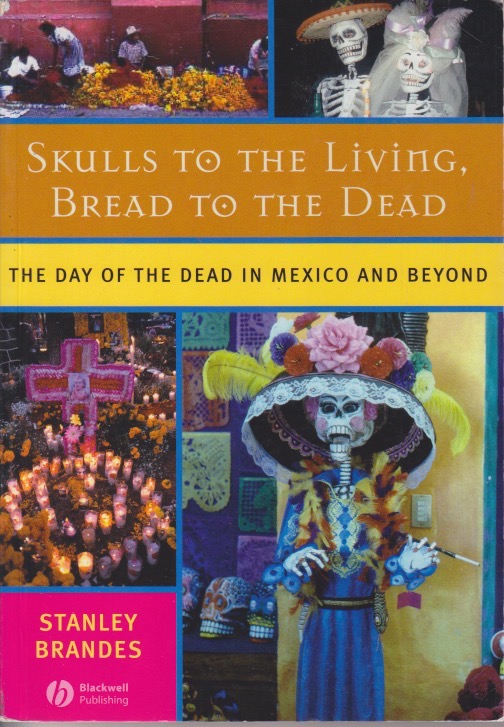
Culture fascinates me.  And one of my favorite aspects of culture is holidays.  I realize that’s a privileged thing to say but were we living among the hunter-gatherers I’d probably have ended up a shaman.  In any case, I had my eye on Stanley Brandes’ Skulls to the Living, Bread to the Dead: The Day of the Dead in Mexico and Beyond for some time now.  Like most observers of lugubrious culture, I’ve noticed the symbols of el Día de los Muertos creeping into Halloween displays in the United States for many years.  I knew that the Day (properly Days) of the Dead was connected in some way to All Saints and All Souls days.  I wanted to find out more, however.  Now, I know that one source doesn’t give you all the information, but time is limited and Brandes was recommended.

This book contains a lot of information.  I am, however, a worker in the publishing industry and that made me wonder a number of things.  The trim size (dimensions) and cover design suggest this is a textbook.  I suspect Blackwell (the publisher) wanted it so.  It is, however, written for ethnographers.  I’ve read enough anthropology over the years to have an idea of how this works, but inside the book it seemed that this was a toned-down academic monograph.  It doesn’t use a lot of technical terms, but the writing is geared toward other ethnographers, it seemed to me.  There is a bit of a dilemma here.  If you’re wanting an authoritative book you generally go to academic publishers, such as Blackwell.  On the other hand, sometimes you just want an overview that doesn’t get lost in the weeds.

The fault is entirely my own, I realize.  And I don’t mean to criticize since I learned an awful lot from this book.  Nothing is ever simple, not even holidays.  Especially holidays.  These are times we take from the ordinariness of daily living to find meaning, and often joy, in our lives.  A safe space where work can’t reach us and we can concentrate on celebrating the occasional, the unusual.  The Day of the Dead is, in the eyes of many, an unusual take on the late autumn holidays.  (Halloween is also unusual, but the two holidays are distinct.)  This book provides a lot of information on the culture of Mexico—information that derives from its most famous holiday.  You can tell a lot indeed from looking at what people celebrate.  There’s more going on than meets the eye.


Why Write Then?

People far smarter and more prominent than yours truly have pointed this out, generally in vain: academic writing is driving itself extinct.  And some of us will not mourn it, if it does.  You see, academics are taught to write with an erudition and pomposity that satisfies dissertation committees made up of people who had to do the same.  This academic hazing generally obscures otherwise interesting observations.  Now thoroughly indoctrinated, academics go on to write their next book, and their articles, in this same turgid prose that obfuscates mightily.  To what purpose?  So that those critics higher on the food chain won’t be tempted to take on this morsel, preferring instead some “popularizer” who actually knows the craft of writing?

Poor writing is poor writing.  Those of us who’ve graded undergraduate papers have spent many red pens (I used to use green, so as not to be so negative) correcting bad stuff.  Why then do we give in to writing even worse ourselves?  I’m not proud.  I’ll admit that I’ve read academic books I really didn’t understand.  And it wasn’t because I’m not properly trained.  It’s because the writing was so full of jargon and “scholar X said but scholar Y rebutted”s that I get lost in the jungle.  One of the things repeatedly said about my teaching, back in the day, was that it was effective because I could explain complicated things in ways people could understand.  Isn’t that the purpose of publication in general?  Too many scholars write only for other scholars.  Not that there’s anything wrong with that, but if they wrote clearly maybe some of the rest of us could get in on the conversation.

I’m sure I’m not the only one to get really excited about a book.  The topic doesn’t matter.  Shivering with anticipation you order it and await its arrival, staring out the window awaiting the postie or the Amazon van.  It arrives and you caress it a little before opening it.  Then you find it’s written in academese.  You struggle to get through it, uncertain that you’ve really learned anything at all.  Except how not to write.  Those in higher education lament that the system is crumbling.  One of the reasons, I contend, is that nobody can understand what they’re saying.  What’s wrong with writing for the average, educated person?  Do you need sixteen five-syllable words in one sentence?  Look, I bought your book because I already believed in you.  If you make me regret my spending you can be sure that I’ll be purchasing someone else’s books from now on.


Playing Authors

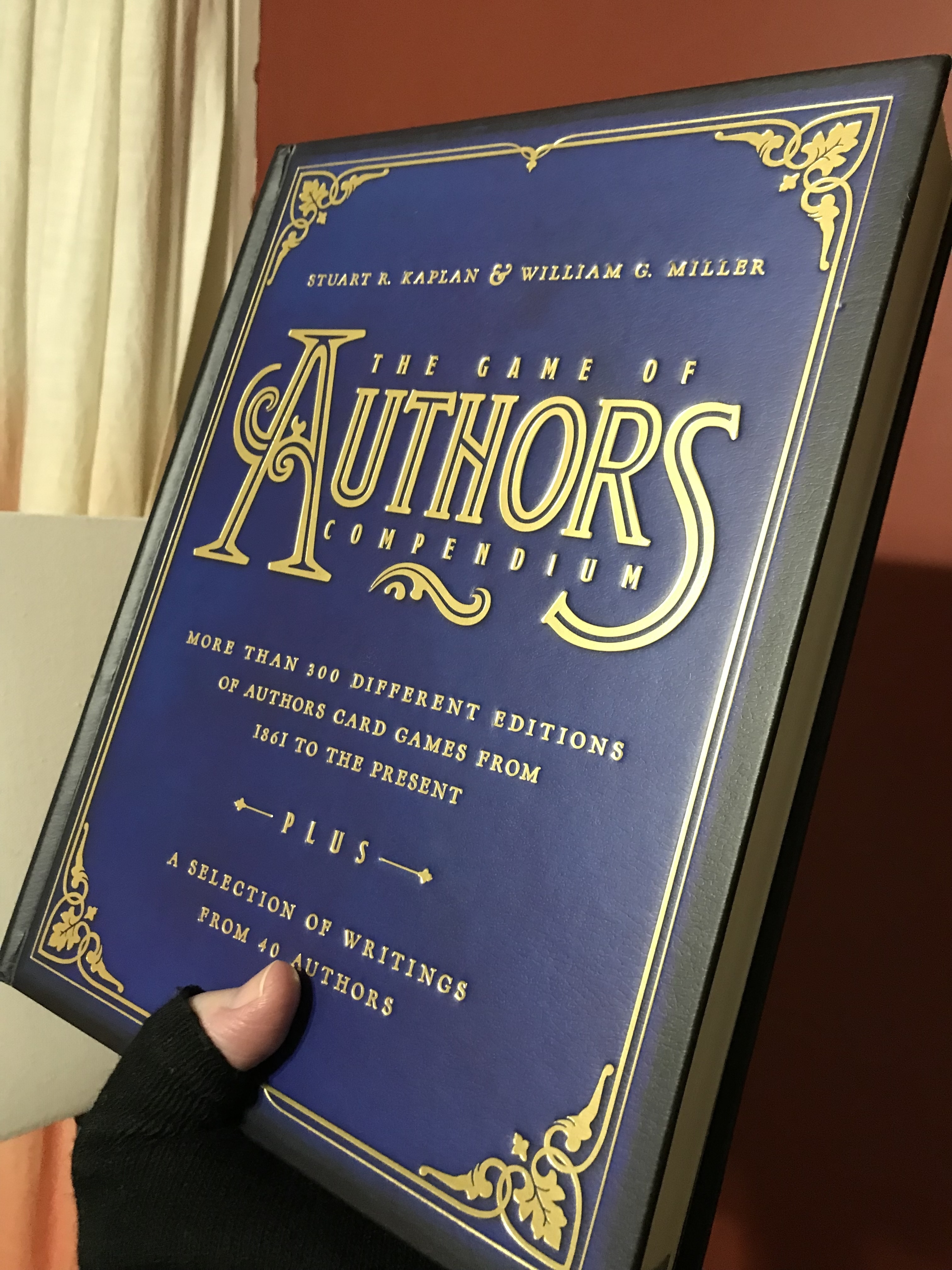
My family looked at me funnily, but not for the first time.  With a holiday gift card I’d ordered a book on the card game Authors that I’d blogged about recently.  You see, there’s not a ton of information on it on the web, and it was a formative influence in my life and I wanted to know more.  I suppose it’s typical for someone raised as a fundamentalist not to immediately think of evolution, but Authors has evolved over the years.  And quite a lot.  For one thing, you can’t copyright an idea and other game-producing companies made their own versions of the original game.  And what I’d assumed had been the original (since it was the one I had as a child) was only one of many versions.  The book even documents the Bible Authors game I’d mentioned.  My real interests included that age-old question—did it ever include Edgar Allan Poe?

Today is Poe’s birthday.  It’s fair to say that he’s one of the most recognizable authors in the world now.  He also had a tough time being accepted.  This book, which I haven’t read through—it’s more of a reference book, in any case—points out that Poe was indeed included in more than one edition of the game.  He isn’t one of the strongly recurring authors (which include several of whom I’d never heard).  This is the fate of writers.  Reading about Dickens lately, I came to realize that even after several best-selling novels (at numbers that would make any modern publisher gloat), he was effectively living off debt until well into his forties.  And he died at 58.  He was famous, but until his final years not what you could consider wealthy.  

Another realization dawned.  Writing for a wider readership means getting away from academic publishers.  I had an agent interested in my current book project for a couple of months before he decided it wasn’t for him.  I’ve also come to see that several authors I respect, and whose books are priced below $20, have published with presses that aren’t part of the Big Five.  And they earn some profit from their efforts (unlike academic publishing).  In other words, becoming an author of either fiction or non, often involves book sense that I’ve been slow to gain.  At the Easton Book Festival a few years back I met several local writers who were putting additions onto their houses with the royalties they earned.  I’d published three books at that point and was turning my pockets inside out hoping for forgotten spare change.  Authors is a game.  Those who are included are those who figured out how it’s played.


Support Roles

It seems to me that many people who strive for a particular life—say writer, actor, rock star—and don’t break through often end up in supporting roles.  I’ve looked for agents for three of my books (unsuccessfully, of course) and have noticed that many agents list themselves as authors as well.  I’ve not heard of any of their books, but then again, there are thousands of new books (likely closer to two million) published each year.  Nobody can keep up.  Since I can’t break through, I work as an editor.  A support role.  Many colleagues who haven’t made it to tenured professorships settle for the better paying but less rewarding job of being administrators.  Artists become gallery owners, guitar players sound engineers, actors coaches.  You get the picture.  We can’t all succeed at what we set out to do.

There is, however, always hope.  For the past several months I have begun each day seeking out quotes about hope.  Those who struggle, sometimes against great odds, must never give up.  I continue to write books even if they don’t sell or even get published.  Some of the writers I admire most never achieved fame until after they died.  The drive to do something noteworthy with life is strong, even if we don’t know what that is yet.  When we give up hope we become mere drones.  Automatons doing our pre-programmed work.  That is, we identify with our support roles and that becomes our life.

Photo by Faris Mohammed on Unsplash

I read about movies quite a lot.  There are many people involved, often in roles that most of us simply don’t comprehend.  Some of the more versatile people in the industry shift from role to role—director, writer, technician, producer, actor.  Those who break through are the few upon whom society smiles.  I recall learning about the Communist ideal of assigning people roles based on their early aptitudes.  I have no way of knowing if this really happened, but the idea is both scary and promising.  Scary because some of us are late bloomers.  Promising because some of us showed early talents that have been undervalued in our careers.  I don’t give up hope.  Daily, even on vacation, I awake early to work on what I hope to accomplish.  I may never break through—finding success as a writer is elusive, especially if you didn’t major in a subject others expect will lead to a writing career.  A support role gets you close enough, perhaps, to see how it’s done.  And to hope.


Modern Work

The entertainment industry has proven itself, time and again, resistant to recessions.  It says something about our lives that we need that outlet no matter what.  The New York Times has been looking at the writers’ and actors’ strike in Hollywood as a piece of what they are calling the “fractured work” puzzle.  Noting how inequality inevitably increases in a capitalistic system, they put the screenwriters into a situation with which I am unfortunately familiar—that of the adjunct professor.  Adjunct professors now make up some three-quarters of the teaching force in higher education.  In case you haven’t had the misfortune yourself, an adjunct gets paid by the course (not very well, by the way) and has no benefits—medical or, often, retirement (some state schools are required to offer the latter, but you’ll never be able to retire on the pittance you receive).  The idea is that work is being broken into smaller chunks so that entrepreneurs can pay less for work done.

Everyone knows such a system isn’t sustainable.  It will crash.  Unless it’s reformed.  Some people have asked me about becoming a copyeditor for a job.  The thing about copyediting is that it’s freelance work.  Publishers generally don’t hire copyeditors full-time.  You can make a living at it, but it’s self-employment.  You need to set aside the money for retirement and health insurance.  As well as taxes.  And you have to work long hours to make it pay off.  I tried it for a year, but I’m a slow reader.  It was clear that I didn’t have the right literary stuff to make such a living, so I had to move into acquisitions instead.  If you know me personally you may find that ironic.

Those of us who’ve always sought a spiritual existence, however defined, often don’t fit into a capitalistic system.  Especially if you question doctrine.  That’s why I became an academic—or at least tried to.  It’s one of the few places where people with my skill set can thrive.  Work often defines who we are.  Usually one of the first questions to arise when you meet someone is “what do you do?”  Specialists often suggest dissociating our selves from our jobs—I suspect that’s more necessary in positions in which a person is unwillingly being taken over by a position that’s not fulfilling on some level.  Wouldn’t it be better, since we’ve opted for fractured work, if we made it something you could do for a career?  The New York Times suggests specializing, but be careful, dear reader, in what you decide to specialize.  The “market” may well dry up on you and striking may not even be an option.


Review, Please

I realize few academics read my musings.  (Heck, few non-academics read them either!)  Nevertheless, I have a plea: please be a peer reviewer when asked!  I get hit with this particular conundrum from both sides—as an editor potential reviewers simply don’t want to do the work (hint: we’re all “too busy”!) and as an erstwhile member of the academy, I also get asked to do reviews.  Out of a sense of obligation, I always accept the invitations, if at all possible.  You see, I know how hard it is to secure reviewers.  In the past two-and-a-half years, I’ve been tapped as a reviewer five times.  Ironically, when I had my full-time teaching position (for fourteen years!), I was never asked.  How times have changed!  Editors are now beating the academic bushes for those of us in the hinterland who have credentials and good will, even as we’re out gathering twigs.

You see, academic publication simply cannot go forward without peer review.  If you publish, someone was willing to review your work.  Don’t you think it’s only fair to offer the same courtesy?  Academia used to be, and still should be, a community.  Yes, those who break into those coveted teaching positions are often Lone Ranger types, shooting from the scholastic hip.  Still, the system only works if we help one another.  One of the long-term accusations against the academy is that those within have tunnel vision.  (I suspect there may be some neurodiversity going on here.)  That may be true, but try to consider the wider picture.  Teaching jobs are tough, yes, but the rewards are enormous.  Believe me, if you haven’t had to work a 9-2-5, you may not realize just how privileged you are!

Many editors dread the prospect of having to find new reviewers.  They spend time on university websites that are designed for recruitment, inviting them back to school (believe me, it’s tempting!), not to help editors find experts.  And we don’t like to use the same person over and over.  Reviewing also has some benefits—there are carrots as well as sticks!  I encounter new and untested ideas as a peer reviewer.  Who doesn’t like to be the first to get a crack at new knowledge being born?  My own portfolio of review requests stretches from semitic goddesses to the weather to monsters.  I’ve published in those areas and colleagues had to read my materials to make that possible.  So if you’re an academic and someone asks you to be a peer reviewer, please say yes.  Pretty please, with sugar on top.