Ghostly Book

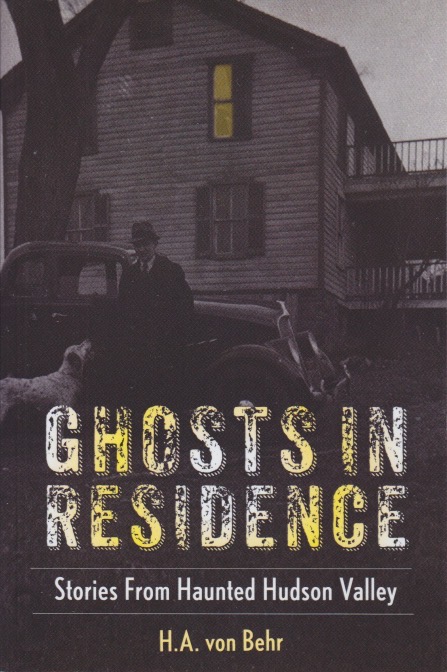
Recently I’ve been thinking about internet searching—how some information is difficult to find.  This book provides an example.  I saw what we in the biz call a “new book announcement” (NBA for bookish sorts).  Since I’ve been reading about the Hudson Valley the subtitle of Ghosts in Residence (Stories from Haunted Hudson Valley) caught my eye.  I assumed it was a new book and eagerly awaited its release.  When it arrived I discovered that it was a “new in paperback” (NiP) edition of a book published in 1986.  This edition, published this year, didn’t update things, including author information.  Given that H. A. von Behr was born in 1902, I doubt he’s still alive, but the book simply borrows the LCCP (Library of Congress Cataloging-in-Publication) data from 1986, showing the author’s dates as 1902–  .  Perhaps unintentionally appropriate for a book about ghosts.

This is an odd book, all around.  Although published in 1986, much of it deals with even earlier times—the author’s recollections of the forties—as well as some more recent events.  Hans von Behr cuts the image of a country gentleman while his neighbors in the Valley go on fox hunts and he has what seem like daily cocktail parties on the lawn.  He dashes off an article about his favorite dog and gets a healthy check from Outdoor Life.  This is a different world.  But then there are the ghosts.  But more than that, also strange happenings.  The ghost tales are intriguing, and some of the other strange events head-scratching.  The whole has a quasi-autobiographical aspect to it, but while not revealing too much.  A couple chapters deal with hauntings in Germany.

My web searching for H. A. von Behr revealed very little.  He was a retired scientist and photographer (he had some high profile clients) and the book contains many of his photographs of the locations discussed.  This short book explains how he came to purchase a haunted farmhouse upstate for a second home (again, a different world), how he discovered it was haunted, and how many of his friends and acquaintances revealed, over time, that their houses also had ghosts.  The book is charming in its own way, and a quick read.  Still, it’s a little disorienting when you can’t find more information about someone online.  The options are to do library research (my favorite kind) but am I really that curious about this author?  I wanted to read about the ghosts, and that I did.  And many other incidental things besides.


Literary Criticism

One of the drawbacks to being an editor becomes apparent with much reading.  Some people have writing skills.  Others don’t.  That’s no reflection on intelligence, insight, or even brilliance.  Good writing is part talent and part hard work.  The drawback is when someone thinks they’ve got what it takes, but they don’t.  I’m a gentle guy.  I don’t like to hurt feelings and yet I have a job to do.  You see, good writing involves a few things—writing for your readership, being aware of what that readership likes, and giving new information without being all technical about it.  I’ve read academics who write very high-level monographs, sprinkled with “wells” and “you sees,” which come off like a guy my age trying to impress a twenty-year old by being groovy.  Just admit you’re writing for other scholars and get down to it.

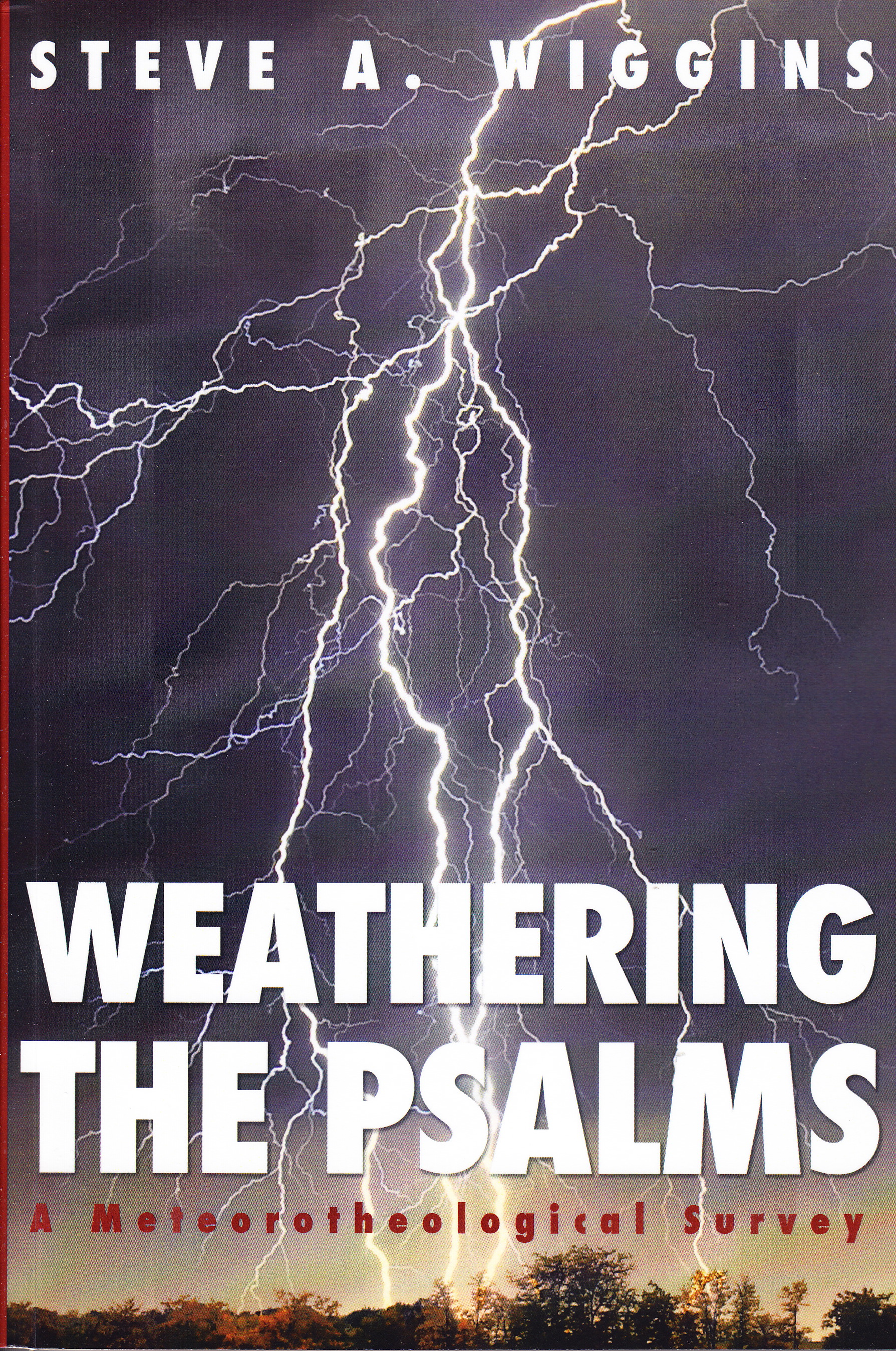
Then there’s the verbless sentence.  You know what I mean—a literary rim-shot, usually at the end of a paragraph, to heighten the drama.  Solid technique.  This only works, however, if you don’t overuse it.  I’ve read books where nearly every paragraph ends with such rim-shots.  Then the author started writing one-liner paragraphs.  This isn’t a Saturday Night Live cold opening.  The writing has to have a certain amount of gravitas.  Especially if you’re wanting to publish with a university press.  I realize that the dream of many academics is to write for a wider readership, but honesty is still a virtue.  When I wrote Weathering the Psalms I pitched it as for general readers.  Ha!  Not even specialized readers have found it that engaging.  It was a book for specialists.  I see that now.

Don’t get me wrong—I read plenty of good writing.  Some of it’s even beautiful.  Editors, however, have to read an awful lot to be able to pick out the gems.  I remember my volunteer experience on the archaeological dig at Tel Dor.  At the pottery reading sessions, a specialist would quickly sort through a box of four-thousand year-old fragments and say within seconds if there was anything interesting (“indicative” was the term she used) or not.  She did this by reading pottery like an editor reads proposals and manuscripts.  You get to a point when you can just tell.  Writing well can be learned.  Some people have an innate talent for it.  Being a gentle guy, it’s hard to be honest sometimes.  I have to keep reminding myself, however, that it’s still a virtue.


Sleepy and Hollow

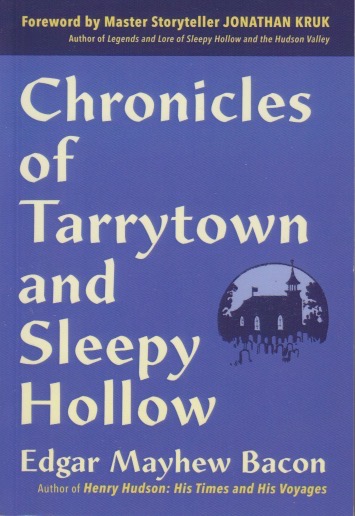
There’s a kind of charm to Chronicles.  I don’t mean the biblical book, but rather Chronicles of Tarrytown and Sleepy Hollow, a book published in the 1890s by Edgar Mayhew Bacon.  A somewhat poorly organized volume, you get the sense that Bacon had more curiosity than literary ability, but that didn’t prevent him from leaving a valuable record.  What’s more, other accessible books like it tend not to exist or be easily found.  There’s definitely a reason to write so that the average person can read your work.  I didn’t spring for an original edition on this one, as much as I love old books.  Nevertheless, the material’s still old and that’s what counts.  At least to someone with an historian’s point of view.

What really caught my attention here was Bacon himself.  Who was he?  His book was from that era of “you should believe me because I wrote a book about it,” but modern critics want to see credentials.  Although search engines are often good, if you’re looking for information on an obscure author (such as yours truly) they’re going to try to sell you something first.  Books, in the case of those of us who write.  If you scroll down far enough you’ll learn that Bacon was born in the Bahamas in 1855.  He wrote, it seems, five books.  He doesn’t have a Wikipedia page and I looked him up because (in addition to basic curiosity) he at times appears to be a bit of a curmudgeon.  He was only about 42 when this book was published, however, but writes like a long-time resident, slightly jaded.

Bacon was mostly a place writer.  His non-fiction books focus on places he lived or knew.  His educational history isn’t easily discovered, and again, the modern reader wants a degree (preferably three)  to show that one can be a proper historian.  He lived in an age, however, where gumption to write and complete a book likely meant finding a publisher.  The internet has changed that, probably forever (or at least as far as we can see).  It’s a buyer’s market for publishers.  But still, Chronicles of Tarrytown was brought back into print and was made available again, in an affordable paperback.  It contains some second-person history, closer to the events than we currently are, and a few legends as well.  It can’t be relied upon for history as we know it, but it can still offer a bit of charm for those curious about yesteryear.


More Proof

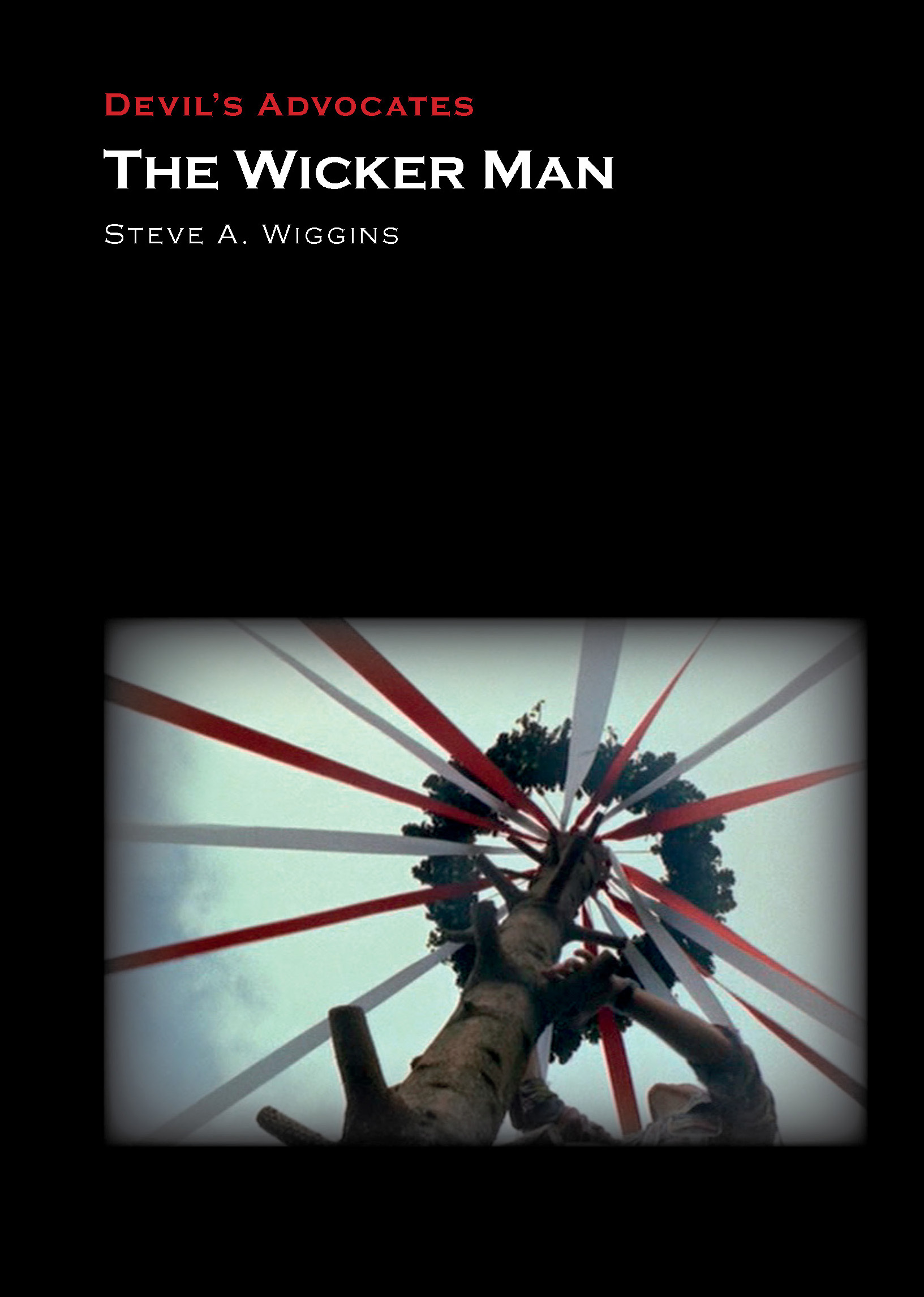
They’re here!  The second proofs for The Wicker Man have arrived.  Nothing makes you feel like a book will actually happen than seeing the stages unfold.  In the meantime I’ve begun seeking an agent for the next book.  This is always a tricky process—work a ton on a pitch, send it, and try to forget about it because most agents simply won’t respond.  If they do it won’t be for a month or two.  And even then they may not like what you’ve written.  It’s a weird system.  Meanwhile at least I’ve got proofs to read.  Proofreading is stressful enough.  I’ve read my new book proposal lots of times.  It was only after I’d sent it to a couple of agents that I found the typos.  You are your own worst editor.  Even if you’re an editor.

Still, you feel like proofs arriving should be occasion for a day off work.  Like your boss would say, “That’s quite an accomplishment!  Why don’t you take a day off to get started with it?”  I live in a fantasy world, I guess.  The proofs arrive with their shot of adrenaline and then you’ve got to read other people’s ideas for less interesting books (or so it seems).  Maybe this is why not so many editors write any more.  It’s exhausting.  Of course, I’m writing this post instead of reading the proofs.  Every diet should have some variety, even the literary kind.

I’m not a fussy author.  Some turns of phrase I will fight over, but I know copyeditors mean well.  I’ve done some copyediting myself, and I meant well.  Authors are people who are in for the long haul.  From the time you start working on a book (and if finding an agent is part of the process, you need to add several more months) to completion is generally measured in years.  It’s not unusual to get no pay at all for this work.  As Ivan Klima wrote: “A truly literary work comes into being as its creator’s cry of protest against the forgetting that looms over him, over his predecessors and his contemporaries alike, and over his time, and the language he speaks.  A literary work is something that defies death.”  If you can forgive the sexist language, there’s a great deal of truth there.  And part of that process is the effort to locate an agent who shares your vision.  And, of course, getting proofs back to the publisher on time.


Ultimate Collectables

“Collectible ebook” is a phrase you never hear.  That’s because such a thing doesn’t exist.  Even though I work in the publishing industry, I’m not really a fan of ebooks.  I don’t write my books anticipating pointing to some screen and crowing, “I wrote that!”  No, books exist as entities and there’s a kind of contempt associated with making them disposable by creating them out of ephemera.  I’m not wealthy enough to be a serious book collector, but when I buy used books I notice the rare category of “collectible” with some envy.  This is a book that has been treasured.  You see, I know that when I die I’ll leave little behind apart from my books.  If they were ebooks they’d be worthless.  You can’t sell them or trade them in.  Or even put them into a little free library.

Sometimes buying electrons seems to be more convenient than the alternative.  For example, we’ve pretty much run out of space for DVDs and Amazon seems unlikely to fold soon (like UltraViolet did), so subscribing to a streaming for a movie seems safe enough.  Yes, you can resell DVDs, but often for a pittance and you gain by opening more space.  The space books take up demonstrates their importance.  We bought our house with an eye toward book space, and even though we don’t have many books that would be considered “collectible,” we do have many that are interesting.  Unusual.  They have been conversation-starters when we’ve had the curious over.  (I always look at other people’s books when invited to someone’s place, if they’re publicly displayed.  It’s how people get to know each other.  I’ve never looked at anyone’s ebooks.)

Books are a cultural object.  The big tech companies have been trying to drive traffic to ebooks for years.  The pandemic gave them a leg up, but book sales—print book sales—also increased.  You can watch only so much Netflix, I guess.  I have yet to find a study that shows something read on a screen stays longer, or receives deeper engagement than something in print does.  To be sure, electronic reading has its place, but its place isn’t to replace actual books.  I guess I’m suspicious of the electronic revolution.  It feels fragile and tenuous to me.  If the power goes out we’re left without our gadgets and their contents.  You can still light a candle, however, and read an actual book.  And if bought and treated wisely, you may even find something collectable on your hands.


Shepherding Books

One of the truths of publishing books—unless you make it to one of the big five, and even then it can’t hurt—is that you have to promote your own books.  Almost no publisher can afford to get word out that you’ve published your incredibly interesting tome with them.  So when I received an invitation from Shepherd to put together a list with one of my books on their site, naturally I said yes.  The way it works is your book page features a category of books, anchored by your own, and followed by five recommendations.  The idea is that people attracted to your subject will find this list and your book and, perhaps, just perhaps, buy a copy.  Since Nightmares with the Bible still hasn’t come out in paperback, I started my list with Holy Horror.  You can check it out here.

Authors often have no sense of scale.  Thousands of new books (perhaps up to two million) are published each year.  Think about that for a second.  Even the big five publishers can’t promote every single book, not at that rate.  There is a real satisfaction in having written and published a book, and many authors take that as a kind of entitlement.  “I’ve done my work, now somebody else should do the advertising.”  That may be fine if you have tenure somewhere and your prestige is assured.  If you’re a mere mortal like the rest of us, however, that means using social media.  Make a webpage.  Start a blog.  Get a Twitter and Facebook account.  The fact is, unless you do these things people won’t be able to find you.  They don’t spend their weekends at the local library browsing the shelves for new books.

Photo by Tanner Yould on Unsplash

Shepherd is a free service to authors.  I know many people who write (most of whom don’t read this blog) but if you know of anyone who does, point them to Shepherd.  The homepage has a convenient “Contact Us” link at the bottom.  Some websites will promote your work for a fee.  For me, I’m still waiting for royalties to come anything near what I have to spend to write my books—so far it’s been a money-losing venture.  I’m optimistic, however, that some day my books will be published in the affordable range—not just the big five do this, but most publishers have to be persuaded, through social media presence, that you can help find readers.  Shepherd is a good place to start.


First Second

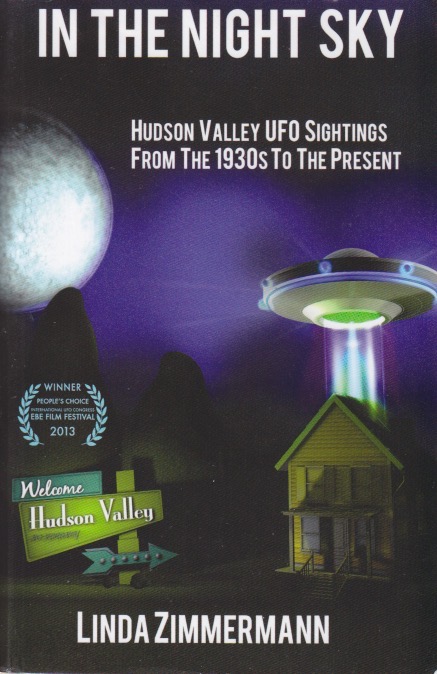
The thing about self-published books is that titles sometimes confuse.  I’d read Linda Zimmermann’s Hudson Valley UFOs without realizing it was a sequel.  Part of the reason is that her previous book was titled In the Night Sky.  Since I have a compulsion for completion, I knew I’d have to circle back to read the first book, even though it might take months to get on my schedule.  I realize the title of this book is based on her documentary by the same title (which seems to be unavailable for viewing these days), and the subtitle, Hudson Valley UFO Sightings from the 1930’s to the Present, does the heavy lifting of saying what the book is about.  So why am I reading about this in the first place?  Well, UFOs have continued to be in the news lately, which is interesting in its own right.  But also I’ve been reading about the Hudson Valley for some time.

Although I’ve never lived in the Hudson Valley (or New York, for that matter), I have family connections.  My maternal grandfather’s family had deep roots in the upper Hudson Valley and I’ve always wanted to move there but jobs never aligned with hopes.  That hasn’t prevented me from maintaining an active interest in the area.  Besides, I like weird stuff—if you read this blog that’s self-evident.  There do seem to be places where strange things seem to concentrate.  (I mentioned this in regard to the Denver Airport recently.)  I’m one of those people who’s always found New York City a weird place, and it’s the southern end of that corridor.

In any case, Zimmermann’s book is pretty much like her second one on the subject.  She provides accounts of UFOs from witnesses who responded to her call for reports in preparation for her documentary.  I tend to think that many people can tell what’s supposed to be in the sky from what’s not.  I’m also aware that many people don’t have the background of trying to identify whatever they see and that mistakes are often made.  It doesn’t help that Zimmermann includes some accounts that are pretty clearly crackpot cases.  Some editing would’ve helped (which is true of many self-published books).  What’s so interesting about this collection is that what many people report seeing is so similar.  For those of us who don’t live in the Hudson Valley and who’ve never seen anything odd on our trips there, this may be the closest we get to the strangeness overhead.


Wicker Proofing

I’m currently reading the first proofs of The Wicker Man (due out in August).  While necessary, proofreading is a pain (and I work in publishing!).  You have to put everything else aside and concentrate on what you’ve already written, and if you’re like me, moved on from, to get your earlier work out.  I’m extremely time conscious.  I have many things that I would like to accomplish in the time I have left.  Right now one of my priorities is book six.  It’s already written, but I’m revising it for the umpteenth time.  Then the proofs come.  This is one of the issues a graphomaniac faces.  It’s part of trying to make a life from words.  And it distorts time.  I submitted my Wicker manuscript back in December.  Since then my mind has largely been elsewhere.

Proofreading—or is it proof reading?  I’m not a proofreader—isn’t the same as it used to be.  These days you proofread a PDF and use the markup tools for changes.  I had developed a kind of nostalgia for the old-fashioned proof markings.  Now you highlight the offending text and add a note to explain what you would like changed.  This makes me worry about time too, since I’m probably among the last generation who will even known what proof markings are, apart from historians of publishing (and yes, there are historians of publishing).  I am fortunate in having had a good copyeditor for The Wicker Man.  S/he didn’t change much but pointed out where my wording was ambiguous.  Those of you who’ve read me for a while know that some of that ambiguity is intentional, no?

A quick turnaround time on proofs is necessary.  Of course, mine would arrive on a Wednesday.  That very same day I was asked to be a reader-responder to a journal article, also with a brief turnaround time.  I wanted to say “No,” but as an editor I know how difficult it is to find reviewers.  Anyone who publishes should consider it a moral obligation to review when asked.  Just like jury duty.  Thursday and Friday mornings were spent reviewing the article (which I hope will be published, whoever wrote it).  All of this was done without picking up a pen (as much as I wanted to) or leaving my laptop.  As much as I enjoy those proof markings, nobody has the time for them anymore.  Even now I’m playing hooky from proofreading to write this blog post.  I’d better get back before someone notices that I’m gone.


Lost at Sea

Where do books come from?  It still comes as a surprise to many authors, but books tend to be shipped by, well, ship.  When publishers use overseas facilities, it’s far too expensive to send books across the ocean by air.  I had many people express disbelief when I explained their books were delayed by the Suez Canal blockage, but if most of the world’s international goods are sent by ship (and they are) what might seem like a quirky news story has very real ramifications worldwide.  I was reminded of this by a recent NPR story of two new cookbooks having been lost at sea.  The ship from Taiwan, bound for New York, ran afoul of a storm in the Azores, resulting in the loss of 60 shipping containers—including those holding the newly printed books.  There is a worldwide shortage of shipping containers (seriously) and one of the problems is they keep falling off ships.

Photo by Elias E on Unsplash

If you haven’t googled “cargo ships” and looked at the image options, do.  You’ll see astonishingly large ships with what look to be entire cities worth of cargo containers stacked on the deck.  Many of these containers are lost at sea.  Current estimates are that about 1,000 containers fall off of ships per year.  Although the authors of these particular cookbooks took a lighthearted approach to the news, the book that really brought this home to me was Moby-Duck, which I blogged about some years back (you can read it here).  That book was about trying to follow the plastic “rubber duckies” that fell off a ship back in 1992.  This isn’t, in other words, a new problem.

Videos posted of these massive ships being tossed about and losing cargo are impressive in their own right—they make the ocean seem omnipotent.  But the fact is, we’ve littered it pretty badly.  Books, in their defense, will decompose naturally.  We live in a society defined by consumerism.  We see things and we want them.  In order to make them inexpensive, American companies buy the items from overseas where labor costs are much cheaper (and where many nations have socialized medicine, I might add, making employees cheaper to pay).  As ships grow larger we might expect these kinds of accidents to increase.  The older I get, the more I pay attention to economics.  The dismal science does hold a macabre fascination, especially when entire printings of a new book end up at the bottom of the ocean.  Authors, if they’re curious, ought to consider where books come from.


How to Write a Book

When I worked at Routledge I was told never to mention William Germano’s name.  I’ve never been one to dabble in workplace politics, but I did wonder why.  Over time, as I tried to commission the kinds of books I knew Routledge for, I was told that they didn’t do those kinds of books.  Not since the Germano days.  Years later I still don’t know what all of that was about, but I do know that Germano wrote a book that would make nearly every academic editor’s life easier if it were handed out at every doctoral graduation ceremony.  From Dissertation to Book is a classic in the field.  Now in its second edition, in it Germano explains, in non-technical language, why and how a dissertation is not a book.  He also explains how to make it a book.

You see, academic editors, such as yours truly, see more dissertations than the most ambitious professor.  The doctoral student, flush with the praise of his or her examination committee, sends off their thesis, largely unchanged, and wants it to be published.  Hey, don’t be embarrassed—that’s what I did too.  The truly amazing thing to me, as someone who’s been both professor and editor, is how little publishing and academia know about each other.  If I had to guess who knows whom better, I’d have to say publishers take an edge over academics.  Their knowledge is far from perfect, however.  Academics have to publish for promotion and tenure, but they don’t bother to learn about how publishing works.  Germano’s book would help them too.

For many years well-known academics have been stating in highly visible places that academic writing is poor writing.  It is.  Germano explains why in this little book.  Better than that, he gives solid advice on how to improve your chances of getting published.  I’ve been working in academic publishing for a decade and a half and I learned quite a lot from this little book.  Dissertations are written to prove yourself to a committee.  Books are written for a wider readership that wants to be able to understand what you’re talking about.  Day in and day out, people like myself read dissertations.  Generally there’s a kernel of something good there.  (Sometimes, honestly, there’s not.  Not all theses are created equal, although that’s not one of the ninety-five.)  Germano’s book offers a way to find and plant that kernel so that it grows into something any editor would be pleased to receive—the proposal for an actual book.  It should be read widely—much more widely than it is.


Search Your Engines

It’s been fascinating to watch.  We tend to think things appear instantaneously on the internet, and sometimes they do.  Book announcements, however, are less prone to that.  The Wicker Man, my book for the Devil’s Advocates series, was first announced to the world (apart from me) on Oxford University Press’s website because they distribute books by Liverpool University Press.  It took several weeks before it appeared on LUP’s site (I’m projecting here, it still hasn’t showed up there).  Like an anxious father, I checked every few days to see if word was getting out.  After about two weeks it showed up on Barnes and Noble’s website, but not Amazon or Goodreads.  Then it appeared on ecampus, a textbook seller.  Days later it appeared on Amazon’s site in Spain only.  Word gets out slowly.

Some things hit immediately, of course.  Everyone in the world knows about them seconds after they happen, whether they should or not.  Some young folks, who grew up with the internet, are having trouble letting go of the, well, troubles of the world that jet through the 24/7 news cycle.  Books by unknowns travel much more slowly.  Of course, I’ve been trying to reinvent myself.  In as far as I’m known, I’m known as an ancient Semitic goddess scholar.  (The ancient part is correct, in any case.)  I turned to writing about religion and horror about a decade ago and if web searches mean anything, my most searched book seems to be Holy Horror.  That makes sense since Nightmares with the Bible is so expensive that I can’t afford additional copies even with the author discount.  The Wicker Man will be up near forty dollars, but that’s cheap these days.  At least it will be paperback.

Maybe I have been checking more than I let on, but I’ve also noticed something else odd.  Ecosia, the tree-planting search engine, comes up with more results (based on the ISBN) than Google does.  That astonished me.  Google apparently isn’t as good at searching as it would have us believe that it is, at least for obscure information.  (In my case, very obscure.)  Ecosia even outperformed Bing.  With this internet full of stuff, you’re obviously missing out if you don’t use multiple search engines.  Yahoo added yet one more site with the book.  I’m wondering when the actual publisher, or Amazon’s main site, will catch up.  Giants do move slowly, I guess.  Maybe once the cover image is released…


Another Exorcist

I learned from the wonderful Theofantastique that Russell Crowe’s new movie is The Pope’s Exorcist.  (I guess Crowe hadn’t read Nightmares with the Bible to think to send me a personal notice.)  I knew instantly, from the title, that it had to be about Fr. Gabriel Amorth.  Say what you will about him, he inspired William Friedkin to make a documentary titled The Devil and Father Amorth.  It’s pretty unnerving to watch, no matter what is really going on.  Catholic officials aren’t trilled about Crowe’s movie—I wasn’t impressed with his portrayal of Noah in Darren Aronofsky’s take on the flood story a few years back.  It takes a certain kind of director (like Friedkin) to be able to handle theologically dense material in a believable way.  I can’t say anything about Julius Avery’s The Pope’s Exorcist, of course, without having seen it.

I can say, however, that those who publish books at $100 miss many opportunities.  My book is one of very few written by a credentialed religious studies scholar on demons in movies.  A quick web search will reveal that it remains basically unknown and uncited.  (The only Amazon review is a two-star job by an evangelical who didn’t like what I was doing.)  Pay $100 for a book with a two-star review?  Most people, reasonably, have better things to do.  I once got around this in the past by posting a PDF of one of my book for free on Academia.edu, where, at recent count, it has been viewed over 6,000 times.  Academic publishers don’t realize the appeal of most of the books they publish.  Even demons can’t open a wallet to a Franklin level.

So while I’m waiting for enough royalties to afford seeing The Pope’s Exorcist, I’ll focus on my current book project.  Of course it’s on something completely different.  The Wicker Man should be coming out in September, but my mind will likely be elsewhere.  Those of restless intellect are condemned to wander, it seems.  Of course, I have Theofantastique to keep me busy.  There are other kindred spirits out there.  They don’t know the way to my website, I suspect, but I’m not alone in being excited about a new exorcist movie.  I’m not expecting anything to surpass The Exorcist, however.  Like The Wicker Man, The Exorcist turns fifty this year.  One guess which was the more popular film.  Given Crowe’s profile I’m surprised there hasn’t been more buzz about his new film.  Demons can be funny that way.


The Original

A dozen years ago, I had a novel under contract.  I write my fiction under a pseudonym, of course.  I was thrilled because I had never seen the conceit (in the sense of “concept”) anywhere before.  For once, I was going to be first in line.  But then the editor who’d responded “Loved it!” left the press.  After dithering for about a year, the publisher decided not to publish it.  This was a small, independent press—I wasn’t anticipating it would be a New York Times bestseller.  Then I saw a weekend add in the New York Times—just recently—touting a novel with the exact same concept as mine as “original” and worthy of being read.  Ironically, just the day before I had once again submitted my novel to an independent publisher.  I can’t blame the author, of course, but the system doesn’t work for everyone.

After the killing of my darling, I naturally tried to find another publisher.  I have been trying for twelve years.  I’ve been pushing the idea as original and of general interest.  Editors and agents disagreed about the “of general interest” part.  In fact, I’ve had rejections from nearly 100 literary agents over the years, one of them responding that I was a good writer but they couldn’t see where the story was going.  Maybe I didn’t handle it as well as this new book, with its glittering endorsements, but a guy likes to get credit for his work.  Now if it ever does get published I’ll be considered a copycat.  You see, my main driving force as a writer is originality.  My published stories are unlike others I’ve read and most of them go through multiple rounds of rejection before some editor “gets it.”

The publishing industry, however, is a strange one.  Most publishing houses want work that imitates bestsellers since they’re a known quantity.  Money in the bank (or what banks used to be).  The internet has changed that a bit, but not completely.  It does mean those skilled at such things as self-publishing can sometimes challenge the hegemony of the big five.  It also means a lot of sub-standard fare is out there as well.  I’m a little late establishing a literary reputation it seems.  Although being raised poor does qualify me as “diverse” it’s not in any way visible.  It is obvious if people get to know me because the poverty mentality never goes away.  So my novel has been waiting while the same idea occurred to someone else (not straight white male) and has received notice.  So I follow and hope to learn.


Book Writing

Not everyone wants to write a book.  A great number of people, however, do possess that desire.  Or that desire possesses them—that’s often more accurate.  For some it’s because they have ideas that feel compelled to share.  For others it’s the sense of accomplishment of having successfully strung together thousands of words and seen them encased between covers.  For still others it’s economic—books can be sold, and if done well, can become a living.  There are surely other reasons as well.  Since I read a lot, I frequently wonder about other authors’ motivations.  Often, I suspect, it’s because they underestimate how difficult it is to navigate this path to success.  You have to come up with an idea that is unfamiliar to your target readership—free advice: no book appeals to everybody—that has a hook that will make them want to read it.

I’ve read books where this hasn’t been thought through well.  Love them or hate them, this is what major publishing houses do well.  They figure out what likely will have appeal.  They make mistakes, of course.  Everyone does.  Still, they have a solid track record that makes them the hope of writers who have the burning need to, well, write.  One of the cases where this becomes an issue is where an author tries to be funny.  There is a lively market for humorous books, but if you’re trying to convey serious information but you find yourself cracking jokes along the way, you’re going to confuse, rather quickly, your readers.  What are you trying to do?  Make me laugh or teach me something new?  What should I prepare for when I pick up your book?

Don’t get me wrong—I clearly haven’t figured all of this out myself.  I do think that the combination of a doctorate (which teaches advanced research skills), and editorial work (which teaches how publishing works), should be a winning combination.  Ideally, anyway.  What I find is that it does make me approach books critically.  I look at the publisher.  I ask myself, what is this book trying to do?  You see, to read a book is to enter a relationship.  The book has an author.  That person is sharing what she or he has thought about.  By publishing it, they’re inviting you into intimate spaces.  That’s why I tend to be gentle in my book reviews.  I know the hunger.  I too feel compelled to write.  And if I don’t get the mix right, I would hope that any readers might, if they reflect on it, see that this is merely an awkward effort to begin a conversation.


Something I Said?

I’m very aware of my own insignificance.  I know that I’ll die and be forgotten, just like everybody else.  Even if I manage to survive by some “Kilroy was here” action, the sun will eventually red giant all of this out of existence.  Still, sometimes I wonder if it’s something I said.  You see, I really didn’t know where to start when I published Holy Horror.  I was an editor myself and thought maybe the secret handshake would earn some kind of attention, but no.  And when I wrote both Nightmares with the Bible and The Wicker Man, both were with established series.  And in latter cases, the editor I was working with (long-term employees, both) left.  Left before the book was published and I was left wondering.  Was it something I said?

Not to brag or anything, but I’ve got about the lowest self-image a person can have.  When life beats you up repeatedly, starting at a young age, you quickly learn your place.  But still, all this leaving.  I’m a member of a faith community (if you want to know which one you’ll need to get to know me personally).  This particular tradition requires a meeting with the minister before joining—something that makes good sense.  The first church where we tried this, the minister was in the process of leaving and couldn’t schedule us in.  Then we moved and in our new area, the minister left about a month after we started attending, before we could meet.  Was it something I said?

I ask this question half in jest.  Still, having a father leave when you’re only two or three, you start to question just about everything.  I’m sure retirements, new opportunities, or just fedupness with the job (which I certainly understand) caused these changes.  But then I was ousted from three jobs in fairly quick succession.  During my interview at Rutgers University the chair of the religion department said “You must feel like you have a target painted on you.”  Leaving is a natural part of life, I know.  As an editor I know that leaving such a post is somewhat unusual because where do you go from here?  Ministers, well, they’re leading the charge during the great resignation.  Maybe they’ll become editors?  As for the rest of us, we’ll just continue to spin dizzily on this globe until old Sol stretches his arms and lets out a big, red yawn.  I won’t be here by then, but wherever I am at that point, I’ll be wondering if it was something I said.