Shaping Halloween

Halloween is the favorite holiday of many.  I suspect the reasons differ widely.  Although the church played a role in the development of this celebration, it didn’t dictate what it was to be about.  It was the day before All Saints Day, which had been moved to November 1 to counter Celtic celebrations of Samhain.  Samhain, as far as we can tell, wasn’t a day to be scared.  It commemorated and placated the dead, but it wasn’t, as it is today, a time for horror movies and the joy of being someone else for a day or a few hours.  There isn’t a preachiness to it.  Halloween is a shapeshifter, and people love it for what it can become.  If December is the month for spending money you haven’t got, October is the month for spooky things.  Halloween is the unofficial kick-off of the holiday season.

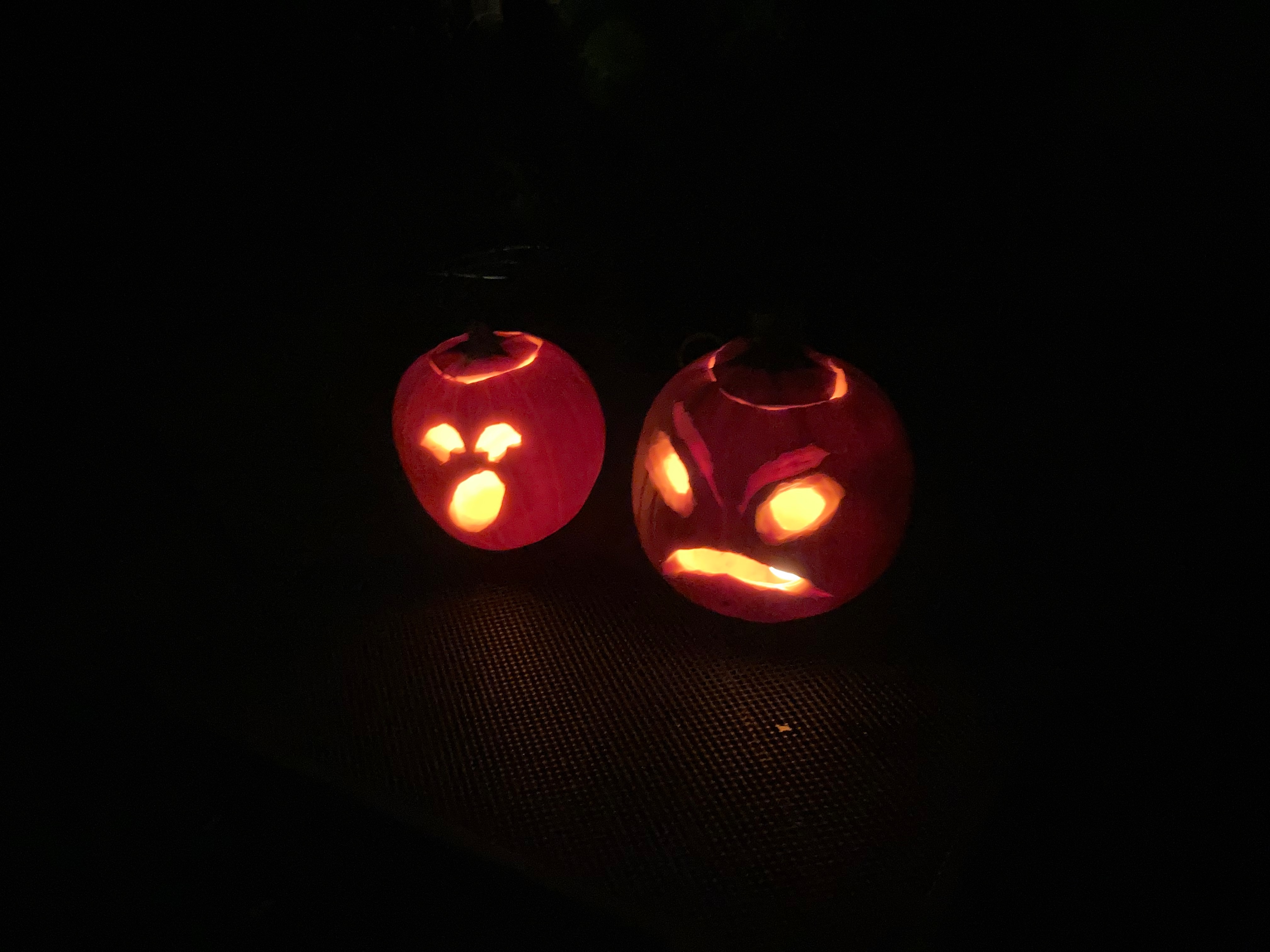
For me, it’s a day associated with dress-up and pumpkins.  Both of these bring back powerful childhood memories.  The wonderful aroma of cutting into a ripe pumpkin can take me back to happier times.  I remember dressing up for Halloween as far back as kindergarten.  I could be someone else.  Someone better.  It was a day when transformation was possible.  I’m probably not alone in feeling this, although I’m fairly sure that wasn’t what was behind the early use of disguises this time of year.  I’ve read many histories of Halloween and they have in common the fact that nobody has much certainty about the early days of its inception, so it can be different things for different people.  Even within my lifetime is has moved the needle from spooky to scary, the season of horror movies and very real fear.

There’s a strange comfort in all of this.  A knowledge that if we can make it through tonight tomorrow will be somehow less of an occasion to be afraid.  It is a cathartic buildup of terror, followed by the release of being the final girl, scarred, but surviving.  And people, from childhood on, enjoy controlled scares.  Childhood games from peek-a-boo to hide-and-seek involve small doses of fear followed by relief.  The future of the holiday will be open to further interpretation as well.  As a widespread celebration it is still pretty young.  And like the young it tests its limits and tries new things.  At this point in history it’s settled into the season of frights and fears in the knowledge that it’s all a game.  I wonder, however, if there isn’t some deeper truth if we could just see behind its mask.


The Sin of Syncretism

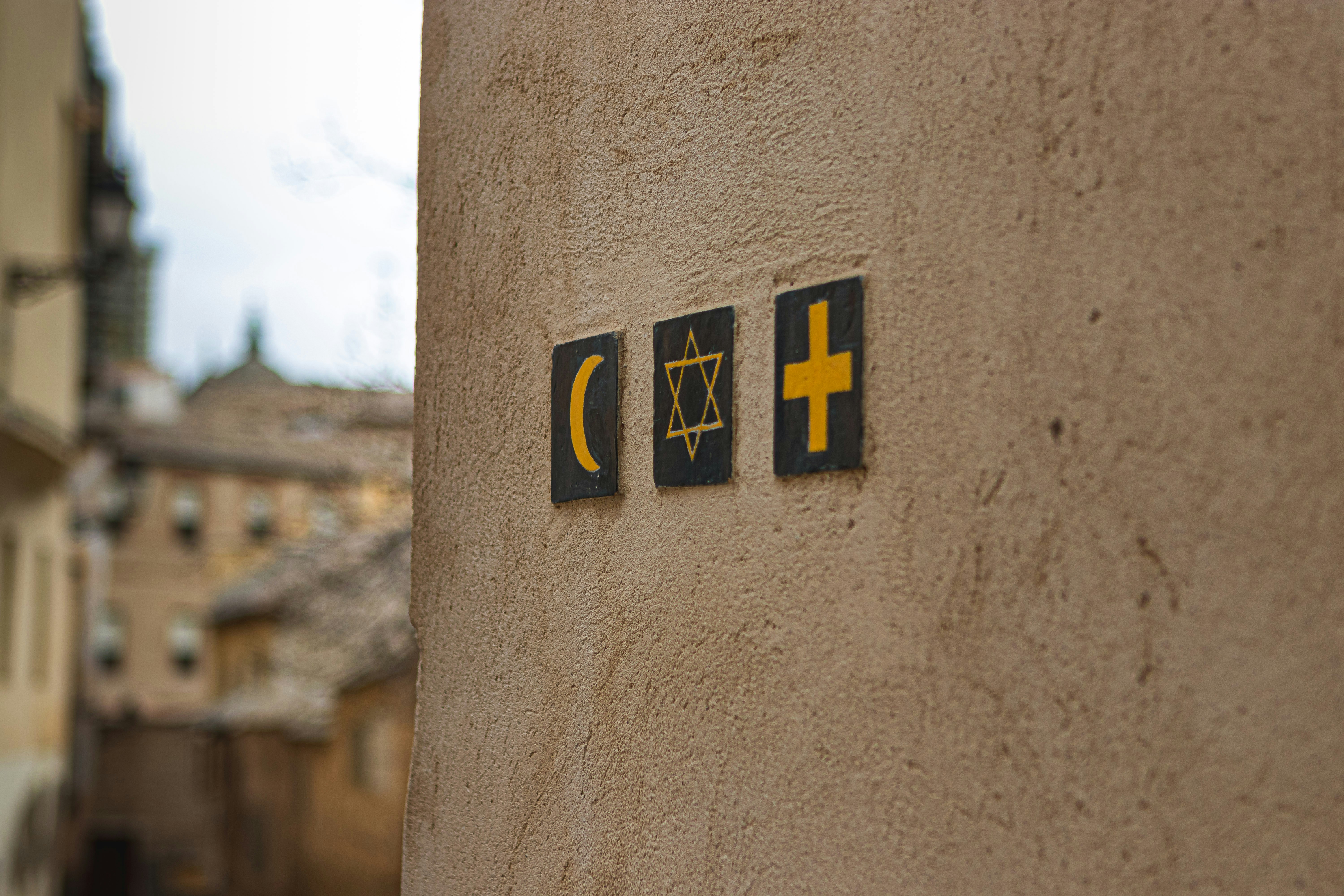
Syncretism may not be dead, but it should be.  What is it?  Well, in my field it means a religion that has been “corrupted” by the adoption of some element(s) of another religion.  The term was all the rage while I was working on my doctorate which involved, of course, comparative religions.  By the time I was being edged out of academia, there was a recognition afoot that the concept of syncretism was itself corrupt.  It depends on the idea that there is a “pure” form of a religion and that foreign elements debase it.  There is no pure form of any religion, and the more we learn of the history of religions the more obvious it is that religions influence each other, and have always done so.

What prompts this post is that I increasingly see clergy using the term “syncretism.”  Now, clergy tend to run behind scholars by a fair pace.  Those of us out there trying to figure out what religion is and how it works have a daily duty to analyze and reassess and theorize.  Clergy have many other things to do and read scholarly tomes as time permits.  Syncretism is now only used by conservative scholars who believe a religion (usually the form of their religion that they personally happen to believe) is pure.  Other religions are corruptions.  Ironically, I once heard a Unitarian Universalist minister use the term.  For a religion that accepts all other religions as valid, it struck me as odd.

Photo by Noah Holm on Unsplash

As I used to tell my students, nobody knowingly believes “the wrong religion.”  By far the majority of people accept the religion that their parents taught them.  Often without question.  I know I did.  Then I studied religion.  I began to realize things weren’t as simple as “that old time religion” pretended they were.  Fundamentalism borrows from other religions just as much as any other tradition does.  Religions don’t have sharp boundaries.  There are fuzzy edges between them.  Those edges are permeable and quite wide.  Syncretism was a concept that religion scholars used, often in the context of monotheistic religions, to show where impurities entered.  The thing is, impurities were there from the conception on.  If one religion were born fully grown from the head of Yahweh, it would be obvious, wouldn’t it?  The Bible describes the religion of Israel and how it borrowed and adapted from other traditions.  Thus it was in the beginning, is now, and ever shall be.  The world would be a much better place if we made our peace with this and buried syncretism in the graveyard of obsolete ideas.


Solstice 2024

We have a small solstice celebration at home.  We’re not pagans, but it seems that the shortest day ought to be observed.  Noted.  Pondered.  You see, this holiday season had its earliest beginnings as solstice celebrations.  Fervently praying for more light, and a bit more warmth, ancient folk of the north knew to propitiate whatever powers that be in the dark.  “Please bring back our sun,” you can almost hear them sigh, in the bleak December.  I’m stunned and stilled by this each year.  The gradual change makes it less of a shock, but we’re living primarily in darkness now.  Until today.  The solstice is a turning point, an axis around which our lives turn.  Forgotten ancients celebrated it and eventually Christian and other holidays gathered around it, as if coming to a campfire on a cold night.  Why not stop a moment and reflect?

I’m a morning person.  More extreme than most other auroraphiliacs, I don’t remember the last time I wasn’t awake for sunrise.  Attempting to stay healthy, I try to get out for a morning jog before work, and that can be challenging for a guy who starts work early.  I sometimes start work even earlier than usual so that I can jog once the sun shyly glances over those eastern hills.  I notice the slow creep of the year.  At the other end of the day, it’s dark by the time work ends.  Mundane tasks such as hauling the garbage can out behind the garage can become tenebrous hikes.  Others who exercise, and work, most go to the gym.  I’ve tried jogging in the dark—it’s full of peril.  Like the ancient pagans, I look forward to a little more light.

Progress, like lasting change, must come slowly.  The earlier sun rises and later sunsets are first measured in matters of seconds, not minutes.  We remain in the dark even as we hope for light.  Hope pervades this time of year.  We anticipate Christmas, yes, but our light-starved eyes look beyond.  Beyond the chill of January into what some Celts marked as the start of spring—February.  Yes, the cold can be very intense then, but rages are always their most furious before they die out.  I suspect Dylan Thomas knew that when advising his dying father on how to approach the end.  I’m writing this post in the dark.  By dinner time the night will have already settled in.  And we’ll light a candle, encouraging more to join in looking for the elusive light.  Dawn always comes.  Eventually it comes.


Powerful Belief

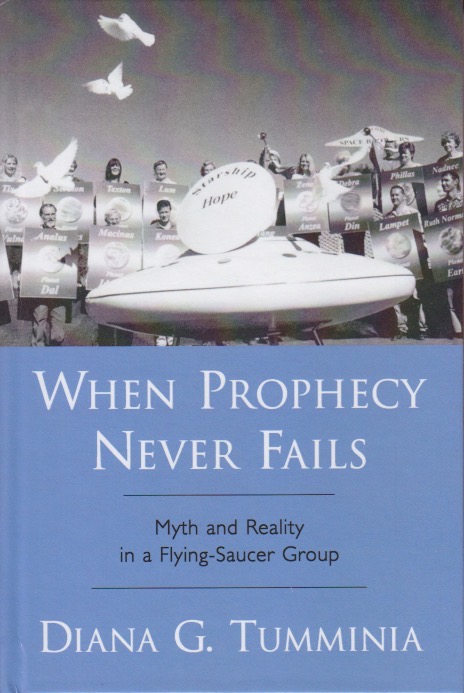
Even someone who’s spent a lifetime studying religion can’t know every single sect.  People are far too creative in that regard, and some belief groups are fairly small.  I had never heard of Unarius, for example, before reading this book.  If I had, it simply washed over me, getting lost in the noise.  Part of the trouble with defining Unarius is that it calls itself a science.  Words can be slippery, and Christian Scientists also use that designation in a similar way.  The word “science,” etymologically speaking, denotes “knowledge.”  In our materialist culture we often suppose that means the physical sciences, grudgingly allowing it to be borrowed by the “social sciences.”  There is a science of religion, but this leads to its own set of discussion points.  Let’s look at Diana Tumminia’s title: When Prophecy Never Fails: Myth and Reality in a Flying Saucer Group.  That give you an idea. 

The “prophecy” part concerns a “failed” prediction, or two, of when the spaceships would land.  Being a sociologist, Tumminia’s real interest is what happens then.  And here’s where things get interesting.  Failed predictions generally don’t lead to true believers giving up their convictions.  History has played and replayed this for us—it’s happening around us this very second—and yet “rationality” supposes that when the ships don’t land, people simply move on.  The Millerites outlived “the Great Disappointment,” after all, when the world didn’t end as predicted.  Their heirs include a sizable Christian denomination.  All this talk of AI has muddled our thinking about what it means to be human.  We are emotional.  More than that, we are believing creatures.  Our society is living proof.

Perhaps the most important, and ill-studied facet of being human, is belief.  Belief (no matter what in) is a religious phenomenon.  This study of a fairly small group shows that convinced people cannot be dissuaded, no matter how many facts are presented to them.  One need not look far to find the same phenomenon surrounding Trump.  (I do not condone violence, but history can inform us if we allow it.)  Make no mistake—he is the center of a new religion.  Unarians have absolute belief that their system is right.  Mistaken predictions—even very public ones—will not convince true believers otherwise.  It seems to me that our society, our democracy, cannot survive without intensive study of belief and how it affects the way otherwise completely rational people think.  My study is full of books exploring various aspects of belief, but we are still no closer to any kind of definitive answer.  And voters, at least a great many of them, follow their beliefs.


Modern Gnostics

It’s not exactly a standard church.  At least I don’t think it is, but I’m just learning.  (That’s my life’s motto—I’m just learning.)  A convoluted path brought me to the Gnostic Catholic Union’s website.  I’m quite curious about this group.  I’m kind of busy, however, and I’ll hope to come back to it later.  You see, Gnosticism and Catholicism don’t sit easily together in my mind.  There’s a standard myth, accepted by many, that Christianity grew in linear fashion from Jesus through today’s weaponized Evangelical.  Or today’s Roman Catholic.  Or today’s—you fill in the blank—denomination.  Those of us who study the history or religions know the story is much more complicated than that.  It’s more like cladistics than theology.

It wasn’t so simple as a baby born in a manger.  Christianities were a variety of thought pools (not quite think tanks) in the first century.  There was a mix of Jewish ideas and messianic fervor.  One of those pools developed into a type of Christianity known as Gnosticism.  Gnosticism also had branches but one of the main ideas was that only initiates know a hidden knowledge necessary to make it work.  We still see this at play in both religious and secular organizations.  You need to know the secret handshake to be on the winning team.  Meanwhile different Christianities grew different ideas.  We rather simplistically think that Constantine unified them at the Council of Nicaea but you can bet that the guys leaving the council room did so with different ideas on the way home.

Roman Catholicism today is a very diverse religion.  You see, religious identity is something you tend to be born into.  Many people never question it because they’ve got other things to do with their lives.  Still, if you look you can see just how different “Catholics” can be.  It’s perhaps ironic because “catholic” means “universal.”  What’s really universal, however, is that people think differently about religion.  It’s the human condition.  There’s no reason a person can’t be both Gnostic and Catholic, just like there’s no reason you can’t be, say, a Unitarian-Universalist and a Hindu.  Religion is perhaps the most misunderstood of human enterprises.  Since most of us are too busy with other things we hire experts to tell us what to believe.  When enough of these experts are close enough in thought a denomination is born.  And it has many, many siblings.  I ran across the Gnostic Catholic Union quite by accident, but even those of us who are religionists by profession have limited time for everything.  I’m just learning.


Beyond Reason

Emotions are tricky.  They’re an essential part of being human, but they don’t function rationally.  At least they don’t do so reliably.  And nobody is emotionally pristine.  People have anger issues (quite a lot of that, I know), insecurities, esteem problems (either too much or too little), abandonment concerns, and the list could go on and on.  The thing about emotions is that they’re difficult to fit with logic.  Sometimes it’s hard to believe that logic is an artificial construct and that emotions are just as important to survival as reason is.  Evolution gave us emotions.  Fight, flight, or freeze still operates in most human beings—I’ve seen all three responses when a threat arises.  Feeling sad when unfortunate events take place is normal and natural.  Dogs and other higher mammals feel it too, as has been amply demonstrated.

It’s easy to let our emotions speak for us, even when doing so causes damage we would never rationally seek to impose.  You push me and I push you back.  Something I realized long ago, and this is just to do with my own situation, is that I can’t easily let go of negative emotions.  I recently learned that a relative I never knew very well had a similar trait.  Such people have invisible scars that they bear their entire lives.  The logical mind says, “Let’s use chemicals to erase them.”  The artistic mind says, “Erase my emotions and you erase me.”  It’s important—vital even—that we don’t question a sincere person’s reasons for their emotional responses.  Most people are just trying to do the best that they can.

Religion is generally based on emotional need.  That’s not to say it’s bad or for “the weak.”  It seems that evolution has deemed it a valuable asset for human beings.  As someone who’s studied religion for many, many years, this aspect has become quite clear to me.  Religion is a coping technique and, in the best of circumstances, it contains some of the truth.  As I used to tell my students, nobody intentionally believes a false religion.  The stakes are far too high.  And we have no rational standards by which to measure which religion is right.  It’s a matter of belief.  Religions have to meet us emotionally where we stand.  During the nineteenth and twentieth centuries a shift took place where religions were supposed to be logically, literally true.  This was believed with intense emotion and it led to a situation we still face.  Emotion and rationality must work together, but some ways seem much more productive than others.


Saint Nick

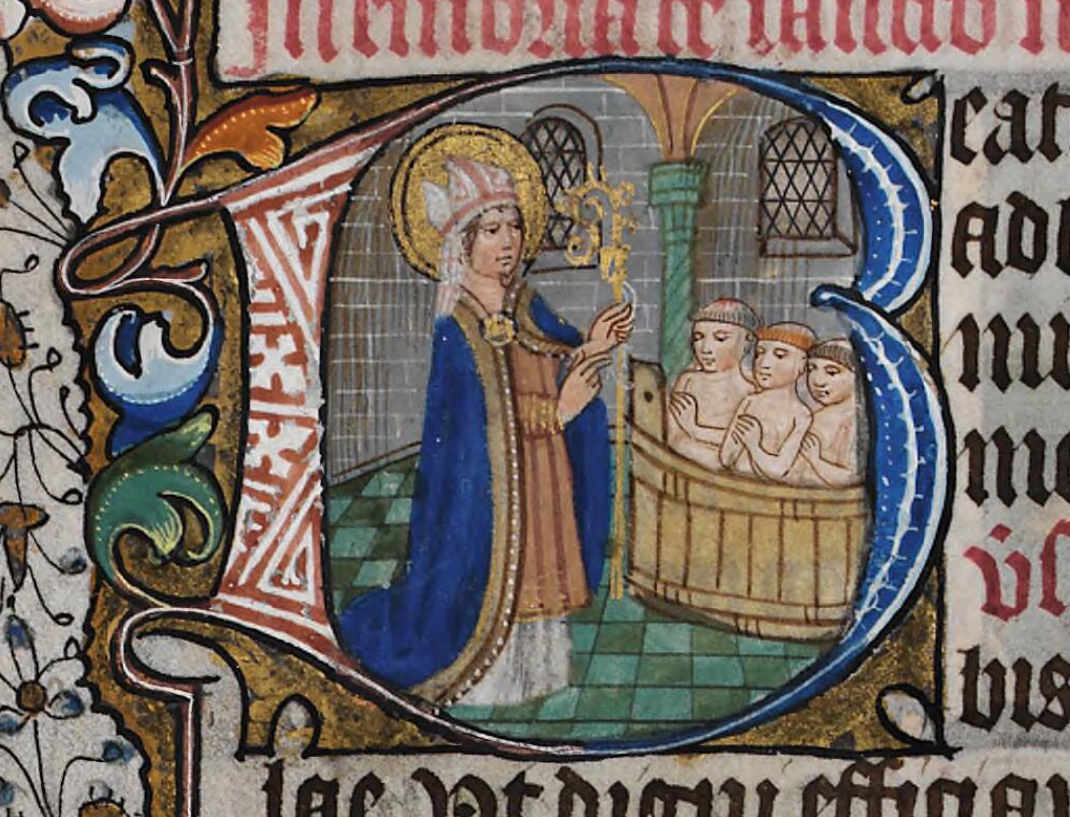
My wife and I have both noticed it.  December has been much busier than usual, and neither one of us works in retail.  We’re at the age when most people are considering retirement, but are both just settling into our careers.  But this is about December, not about us.  Today is December 6, Saint Nicholas Day to some.  What many people don’t realize is that this used to be “Christmas” for particular sets of folks.  You see, St. Nick was one of the many components of what would become Christmas.  His saint’s day was/is today and it was traditional among some early American communities to pass out gifts today because of the tradition that Nicholas was one of the more generous saints.  While at Nashotah House the rather somber Advent atmosphere was broken this day when the Dean would hand out gold coins.  Well, chocolate coins covered in golden foil, but you get the picture.

Image credit: National Library of Wales, public domain via Creative Commons CC0 1.0 Universal Public Domain Dedication

In our capitalistic zeal to get Christmas down to just one day off, if that, we’ve targeted the twenty-fifth.  Saint Nicholas was rolled into Santa Claus and we could keep on working nineteen more days.  “Santa” was known by many names—Father Christmas, Christkindl, and Kriss Kringle, among others.  They were expected at different times in December, even as the Catholic Church had decided on this month to be Jesus’ birthday, to counter Roman celebrations of Saturnalia and Kalends (both of which were more than one day, I might add).  December, in other words, should be a festive month.  Instead, it’s become a busy season for squeezing everything in before taking some time off work.  Do we ever sit back and consider how ridiculous such hectic living is?

Don’t get me wrong—I love the Christmas season.  I save up vacation days every year to give myself a mini semester break.  When I’m feeling exhausted with September’s onslaught, if I can cast my eye as far as December I can feel some relief coming.  And I’m not sure why we don’t get offered a few more days in December.  Remote workers can’t always make it to the office holiday party, so maybe December 6 might be a remote worker’s mini Christmas day off?  The weary struggle to make it to the official Christmas could use a little refreshment just about now.  I don’t recall a December ever being this busy on the work front.  For the economy’s sake, hopefully those in retail aren’t finding themselves bored.  One thing that all of us might wish for, however, is a visit from Saint Nicholas.


Reflecting Spirituality

I always find undergoing anesthesia a spiritual experience.  It’s too bad the the prep for things like colonoscopies is so stressful that it’s difficult to appreciate the fasting and how it changes your perceptions.  This is followed by the delicious blackness of a complete loss of consciousness.  If death’s like this we have nothing to fear.  I’ve written about this before, but chemical sleep is not like nighttime sleep.  You hear the anesthesiologist say, “You’re going to sleep now.”  Then you wake up, disoriented because no time has passed.  I blinked a few times, saw my wife’s coat on the wall, and thought it was a nurse.  I started to say “Stop, I’m waking up!”  But then I focused on my wife and wondered why they’d let her into the procedure room.  “Are they done already?”  I asked.  Where had I been for the last hour?

Spiritual experiences are sometimes only seen in retrospect.  They jar us out of ordinary time into an alternative time.  It doesn’t make up for the nasty taste of prep medicine, or the unpleasantness associated with it, but emptying yourself is a spiritual practice.  I need to try to remember that next time around.  I know people who are afraid of anesthesia.  I’ve only had it three or four times—oral surgeries, and my first such procedure as this—but there’s something mystical about it.  I don’t use drugs (never have) so perhaps I’m a neophyte, but looking back on the experience I know that something extraordinary happened.  Coming out of it is coming into a new world that is somehow strangely the same as the one I left.

Religion has always, at least partially, been about altered states of perception.  Organized religion succeeds in making it rote, but those who experience the naked phenomenon never forget it.  Anesthesia is, I know, potentially dangerous.  It so like a light being switched off that I’m always left in awe of it.  Mystical experiences are rare, which is one of the things that makes them so valuable.  I’ve had them—widely spaced—since childhood.  Sometimes it’s evident in the moment, but often some reflection is necessary.  I suppose few people look forward to any kind of surgical procedure, but there can be benefits beyond the physical health that we hope will result.  That’s the way spiritual events often take place.  Perhaps advanced practitioners (not always clergy) can bring them about intentionally, but any of us might recognize them afterwards, upon reflection.


The Ology

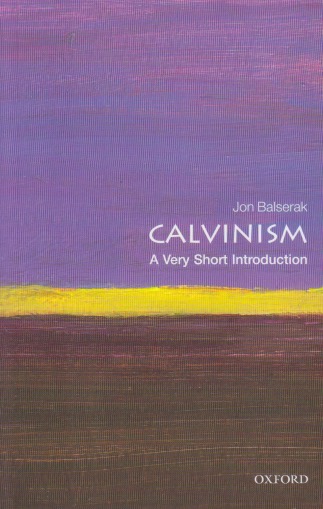
It’s good to refresh yourself once in a while.  I attended a Calvinist college and my doctoral program was in the context of an institution strongly influenced by Calvinism.  I took courses based on Calvinistic theology.  Jon Balserak’s Calvinism: A Very Short Introduction was really a refresher for me and I have to admit that it sparked a pretty strong reaction.  For one thing, many Calvinists unthinkingly accept the tradition in which they were raised.  (Call it indoctrination, literally.  This is true of most religions.)  Those I know seldom believe what Calvinism teaches, for it presents God as a monster. (This is me, not Balserak, and I mean this in the kindest possible way.)  You see, doctrinally Calvinists have to accept Scripture literally and if you do that you come up with all kinds of contradictions.  (The amount of special pleading is mind-boggling.)  The way the Calvinists landed on this was that God created us for his glory, which will be shown in predestining large numbers of people to Hell.  These people can do nothing to change that since God doesn’t really love them.  What would Jesus say?

I argued quite a lot with professors at Grove City College.  I was raised a Fundamentalist, but of the free will stripe.  The Methodist Church, which I eventually joined, was not Calvinistic in outlook.  (Neither are Lutherans or many others.)  Still, Calvinism has unduly influenced American culture—I wish the book would’ve focused more on this.  We are, culturally, heirs of Calvinism.  This little book points out one obvious way this is so, namely, the separation of church and state.  There are many other features that could be pointed out, but the book aims to be universal and this is therefore not a theme.

The book approaches Calvinism theologically.  There’s quite a lot of “shop talk” here that I imagine might put off those who don’t really care to know who said what about a particular point of doctrine.  Balserak points out that Calvinism is complex and there is no one way of looking at everything, but there are clearly some non-negotiables.  These non-negotiables are precisely what prevented me from ever trying Calvinism on for size.  I’ve moved through various religious outlooks on my journey that is geared toward finding the truth.  Calvinism never tempted me, nor did it ever seem to make sense.  It was as if the tradition accepted that Zwingli and Calvin and company had gotten the basics all correct and every act of theology since then involves a casuistry to prove the early teachings correct.  Why not question things?  Well, I guess they’re predestined not too.


Optimism

On the homepage of my website (of which this blog is a part) is the statement that jaded optimism lurks here.  I’ve been thinking a lot about optimism and hope lately.  Trying to change the way you think is difficult.  Musing with my wife the other day I realized—and this should’ve been obvious—that my optimism became “jaded” when I lost my job at Nashotah House.  You see, our lives have been uncertain since then.  The steady income of an academic job with a retirement plan, a future mapped out (at least a little) with summers free for research and travel, the flexibility to have time to contemplate; all of this fits my neurodivergent way of thinking.  Having suddenly to cope with finding an apartment, finding jobs (not vocations), losing retirement options, all of this has led to a turmoil that has lasted going on two decades now.

I need to challenge my jaded optimism into becoming real.  I keep coming back to Mark 9.24, “Lord, I believe; help thou mine unbelief.”  I’m not a materialist, although academia led me close to it a time or two.  The universe, however, is an untamed place.  We don’t know the trillionth of it, let alone the half.  We’ve figured out a good bit of the physics of this world and think that it applies the same everywhere in this infinite, expanding space-time.  Then we discovered quantum physics and quantum entanglement which looks more like religion than science.  It seems to me that optimism—hope—lies in a combination of what science tells us and what is traditionally called religion tells us.  You may call it “belief,” “intuition,” or “hope.”  Yes, when Pandora’s box was opened, only hope remained.

John William Waterhouse, Pandora (1896), public domain, via Wikimedia commons

There’s a parable in the story of Pandora.  As told by Hesiod, Pandora’s jar contained the gifts of the gods which escaped when Pandora opened it.  Thereby evil entered the world.  Yet one gift of the gods remained for humankind, and that was hope.  Arguably the most valuable gift of them all.  I have been letting my career malfunction at Nashotah House dominate and drive my outlook for far too long.  It will never cease to hurt, I know, but it’s time I learned the meaning of what the Pandora myth teaches us.  Myth, please understand, functions like religion.  It provides insight and guidance.  And the tale of Pandora, especially when things turn unexpectedly frightening, reminds us that hope is the only necessary gift of the gods.


A Theory

Do you remember that crazy college professor you had?  Chances are there was more than one.  As a late friend used to say, that’s why we pay good money to go to college.  I have an idea, perhaps even a theory, that the neurodiverse used to be largely institutionalized.  And I don’t mean in mental hospitals or “insane asylums.”  I mean in two well-respected social institutions: the university and the church.  Before you can object to the latter, consider that ministers, and before them priests, derived from shamans.  Nobody would doubt that shamans think differently than most people.  So, my theory is that when neurodiverse people came along in capitalist societies, they were shunted toward jobs in higher education and religion.  Out of sight to most people most of the time.  Then capitalism grew.

Both the church and the university became businesses.  Again, if you doubt me about churches, get to know a few bishops.  You’ll soon see.  In higher education, business people were hired as deans and presidents.  Not knowing how to handle their neurodiverse employee pool, they began hiring more “normal” people.  Those who, with no real insight or ambition, figure teaching is a cushy job.  It pays well, and it’s respectable.  But to do the job right you might just have to be neurodiverse.  Now, I don’t have the means to test my theory, but I suspect if you surveyed students over time as they graduated, you’d find fewer and fewer crazy professors.  As my departed friend would likely have said, they’re not getting their money’s worth.

Money doesn’t compromise.  Many people are driven by it without ever asking themselves why.  Do they want to be able to build private rockets to take them to Mars when capitalism finally destroys this planet?  Do they want private jets and the endless headaches of having to worry about getting even more money?  Studies tend to show that wealthy people are far from the happiest on the planet.  In fact, many of them are privately miserable.  They don’t have to work, true, but what do they think about?  Deeply.  I’ve never been driven by money.  I would like a bit more than I’ve been able to manage with my background and specialization.  Enough not to have sleepless nights over whether we can afford to fix the roof.  And still buy books.  It may be crazy to still read like a professor when I’m no longer in the guild.  I like to think I’m participating in a very old tradition.


Pondering Origins

I’m not a numbers guy.  I never had any interest in statistics, and I tremble when I see my accountant’s number pop up on my phone at tax time.  But exponential sequences have an inherent fascination.  Think about your ancestry (I recently wrote about genealogy and that got me pondering).  You have two parents.  And they each had two parents.  By the time you get back to ten generations (eight greats before grandparents) you have 1,024 ancestors of roughly the same generation.  That’s a lot of people just to make one individual.  Think of all the circumstances that might’ve led to any two of them having been kept apart—then where would you be?  Of course the numbers double each generation which is where my reasoning capacity shuts down.

At some point, doesn’t it seem, that there wouldn’t be enough people available to make you?  I know that’s not true—you’re reading this and that proves this false—but it does make each individual life a thing of wonder.  Or even at the level of your own parents.  If you have siblings you know how different even biologically similar people can be.  And there are many others who could’ve been conceived instead of you or me.  The chances are astronomical that we’re here at all.  I often wonder if such circumstances are why our minds seek religious answers.  People are meaning-seeking creatures.  And against such long odds, it seems that maybe we’re a miracle after all.  Naturally, a driving force behind it all suggests itself.

Photo credit: NASA

Science has been a real boon for the billions of us alive today.  There’s no doubt that dispassionate, rational thought can lead to amazing outcomes.  At the same time, the doubt creeps in that this is the only explanation.  It occurs to me when watching the birds in the spring.  How do they know their own species and with whom to mate?  Is all of this driven by that notorious fudge factor we call “instinct”?  I have no answer to what the source of that will to keep life going is.  Biology tends to be among the slipperiest of sciences.  Life is difficult to define when we don’t even know everything that’s out there in our infinite but expanding universe.  The numbers are just too massive.  All I know is that by the time you get back to twenty generations (eighteen greats) it took over a million people to make just one of us.  And that’s by the numbers.


James and John

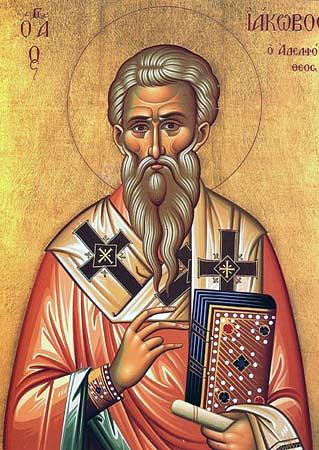
One of the first questions expectant parents are asked is if they have yet come up with a name for their child.  Quite often, and probably without realizing it, some of the most popular names are biblical.  Jacob is one of the most common boys’ names in English.  It derives from the story of Isaac’s younger son in Genesis.  Its popularity increases exponentially when its variant James is added to the total.  The name James comes into English from Old French where it was derived from the Latin Iacomus.  B and m are, phonetically speaking, bilabials (the former voiced, the latter not).  This Latin form also led to the Spanish name Iago, which many know from the apostolic name Santiago (“Saint James”).  Or Saint Jacob, only nobody calls him by that name anymore.  Biblical names are exceptionally common in the western world.  Even so, it often seems implausible that names like Jimmi could be alternatives to Jacob, but small steps make evolution possible.

It has been popular among evangelicals for years to know that Jesus is the Greek form of the name Joshua.  Having a savior named Josh just doesn’t have the gravitas we’re looking for, however.  Greek is an Indo-European language while Hebrew is a Semitic one.  While these two family trees have points of contact, their vocabulary and syntax developed quite independently.  Names change when they’re translated.  Many of our familiar New Testament names are translations from their Hebrew (or Aramaic) counterparts.  The New Testament was written in Greek and we receive Greek versions of such names.  John, for example, is another name that comes to us in many forms.

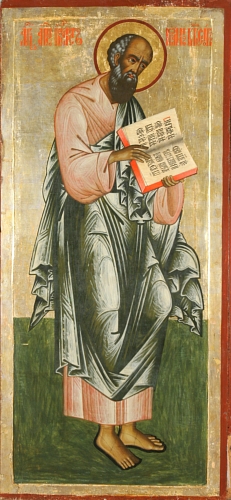
The apostle we call John was called Ioannes in Greek.  This was derived from the Hebrew name Yochanan.  John comes into English via the Germanic form Johannes, where the connection to the Greek becomes obvious.  From there it shortens to John.  It comes in many varieties too: Juan, Jan, Ivan, Han, Evan, Sean, Jonas, Giovanni, and even Jack.  The latter sounds more like Jacob, but in their original forms the names are quite different.  Apart from names, Indo-European borrowing from Semitic languages isn’t terribly common.  Throughout the Christianized world, names based on these two apostles, however, have become extremely popular.  In recent times parents have been branching out into more creative names for their children, but many of them still derive from their biblical antecedents.  This is just one more way that the Bible continues its influence in an increasingly secular world.  


Not Over

It’s not over, you know.  Halloween, I mean.  We may have made it through the actual night of trick-or-treating with all of its build-up, but like many holidays from olden times, Halloween was, and still should be, part of a complex of holy days.  People have long believed that something was transitioning at this time of year.  Halloween spun off of its more sacred sibling, All Saints Day.  Before Christianization, Samhain perhaps spanned more than one day.  As a result of relentless capitalism with its parsimonious counting of days off, like pre-conversion Scrooge, has made all holidays one-day events.  Sometimes you need some time to sort out what’s happening and this three-day complex is one of those times.  Día de los Muertos begins today—this holiday’s just getting started.

I’ve frequently suggested to the few who’ll listen that we need to take holidays seriously.  Culturally we tolerate them as days of less productivity.  Who actually gets Halloween off work?  And how many of us work in places where “Happy Halloween” is a regular greeting on the 31st?  I don’t know about you, but in all my Zoom meetings yesterday nobody was wearing a costume.  And yet, at Nashotah House I learned that today is a “day of obligation.”  Attending services isn’t optional (of course, it never was optional at Nashotah).  But this one was really serious.  The Catholic Church moved All Saints Day to November 1 to counter Samhain celebrations encountered in Celtic lands.  People are reluctant to give up their religion, however, and the day before All Hallows allowed for Samhain to retain its identity.  And even today’s not the end of the season.  Tomorrow has traditionally been All Souls Day.  But what company’s going to give you three days off at this time of year? We’re gearing up for Black Friday.

Holidays serve to give structure to the passing of time.  Winter with its privations is on its way.  This autumnal complex of holidays, whether celebrated as Samhain, Día de los Muertos, or Halloween-All Saints-All Souls, reminds us to take a pause and ponder what all of this really means.  And not only ponder, but also celebrate.  Halloween is fun with its costumes and candy and spooky decorations, but it’s more than just that.  It’s a season of existential questions and of preparing for the inevitable cold days ahead.  We ignore such things at our own peril.  There are reasons for holidays, but those who find meaning only in mammon see no reason to offer even one day off, amid a season we most deeply, intensely need.


Forbidden Things

I owe Douglas Cowan a debt of gratitude.  Spending evenings at the American Academy of Religion and Society of Biblical Literature annual meeting curled up with his then new book, Sacred Terror, I was amazed.  Vaguely in the back of my mind I knew that film scholars were writing about horror, but I didn’t know that religion scholars even could.  Of course, later I discovered that Cowan had predecessors, as do we all, but that still didn’t change the fact that he opened my eyes to possibilities.  Being a slow reader with an unrelenting 925, I can’t keep up with any one author’s total output but I knew I’d need to read The Forbidden Body as soon as it was announced.  Subtitled Sex, Horror, and the Religious Imagination, it covers many aspects of what’s being called embodiment studies.  And there are, of course, monsters.

Where he finds the time to read so much and watch so much I can only guess.  This book covers a lot of territory that I can’t even begin to summarize here, but it goes without saying that Cowan’s many observations are worth paying attention to.  If I were to try to find a main theme I think it would be bodies out of place.  At least that what it seems to me.  Bodies out of place can mean many, many things.  Horror isn’t shy, of course, about showing you many of these.  As always, the unexpected part is religion.  Better, religious imagination.  I’ve been trying for years to articulate how religion and horror are related, and this is obviously something I haven’t been the only one pondering.  Cowan offers trenchant thoughts on this and even gives you some glimpses of unexpected monsters along the way.

Horror is often considered puerile, I know.  You get an image of a bunch of guys in business suits or military uniforms shaking your shoulders and saying “grow up!”  But what is it we’re growing up for?  To feed the monster.  So that those who are the monster can pamper their bodies with the luxuries everyone else works to provide.  Religion often serves to motivate those who are on the production end of this scale, but there is a truly Ottoian fear that compels us, lying not so very far beneath the surface.  Religion reaches out to those who encounter the monster.  And those people have bodies.  Cowan touches on many aspects of horror here from Corman to Lovecraft to Sade.  My response, perhaps appropriately, is that my head feels like it’s exploding.  I have so much yet to learn.