Truth Fully

An article on science reporting on the BBC has me thinking about truth. Again. Truth is, of course, a philosophical concept. What it means is a matter of debate, and always has been. The way that it’s used, however, is reflected in the debate-oriented situation in the story. According to IFL Science’s Lisa Winter, the BBC has been tasked with tightening up its science programs to avoid the dilemma posed by the “two sides to every story approach.” While not denying that debate is the lifeblood of science, assessing the strength of the debate is essential. For example, there is a true scientific consensus about global warming. Those who deny it are generally backed by either corporate or religious causes that motivate them to claim the truth lies elsewhere. Truth is a very slippery term. And anybody can use it and claim it. In philosophy there’s no answer key in the back of the book.

Photo credit: Marretao22, Wikimedia Commons

Photo credit: Marretao22, Wikimedia Commons

Science, which I’ve admired from my earliest years, has a really, really strong track record of describing the physical universe accurately. Truly enormous paradigm shifts are rare in science and must be accompanied by stringent evidence. Sometimes critics grow frustrated at the slowness of science to accept something that seems obvious, but scientific thinking is nothing if not careful. Enter religion. The claims of most religions lay far beyond the reach of science. And yet, religion too has a really, really good track record—not of describing the physical universe (at which it often does abysmally poorly), but of providing meaning to human lives. Scientists have actually studied this. Religion, like it or not, does help. When it makes a claim on truth, however, a religion often comes into conflict with science. And the problem is that policies based on faulty scientific outlooks can have catastrophic consequences.

So what is truth? If we define it as what really, physically describes the material universe, science is onto it. In fact, science has the best chance of giving us an intellectually honest answer. If we define truth as what a certain deity declared law about a particular aspect of human life, science can’t help. Science doesn’t concern itself with gods or their putative decrees. Religion, however, does. And a vast part of the population votes for leadership based on religious beliefs rather than on scientific principles. And most have not taken too many classes in philosophy. In a democracy we both benefit and suffer under the weight of public opinion. And right now, it seems, public opinion considers philosophy as waste of time and would prefer the truth shrink-wrapped and ready for easy consumption.


Working Dead

AmericanZombieGothicPerhaps being born into and reared in a working class environment naturally predisposes me to the populist variety of entertainments. Although this may be true, serious scholars have begun to pay attention to the subjects traditionally classified as “lowbrow,” and particularly zombies. I mention zombies not infrequently because they are monsters with religious origins (although not the only ones). Reading Kyle William Bishop’s American Zombie Gothic (and who could resist such a title?) resurrected all of these interests for a few happy days on the bus. Subtitled The Rise and Fall (and Rise) of the Walking Dead in Popular Culture, Bishop’s study goes back to the beginning with zombies and their religious origins. Since the concept of zombie required the blending of Catholicism with its root African indigenous religions, it seems natural that the concept would emerge in Voudon (voodoo) religions of the Caribbean. What Bishop makes clear, however, is that the zombie is a way of coping with slavery, since, as originally conceived, zombies represent the horrors of enslavement. In other words, they represent a social justice issue.

Dismissed as puerile and unsophisticated, zombies had a difficult time catching on in American culture. Once they caught on, however, they didn’t let go. (They are zombies, after all.) As Bishop shows, this appeal has many bases. George Romero’s zombies were always social critique. Exploiting their shock value made a point, but other filmmakers soon followed, enamored of the potential violence, gore, and exploitation the zombies offered. Then, following 9/11, zombie movies proliferated, demonstrating that even the undead might perform some kind of catharsis. As Bishop notes, zombies were primarily a movie phenomenon, slow to catch on in literature.

Having read a few zombie novels in the last few months, I have pondered this last point deeply. What is believable, momentarily, on the big screen is rendered laughable with the ponderation of reading. When your brain has time to process what slick visual editing denies, it is clear that decaying corpses would have a pretty tough time getting around—even living bodies have trouble with it from time to time. Zombies, after all, are not really ever literal. They are signs, or even prophets. They point to a reality beyond themselves. Zombies, in reality, represent enslavement—whether literal or figurative—that holds us back from our true potential. No wonder they’ve become such fixtures in a world where opportunity has become effaced and terror can breach even secure borders. They may be lowbrow, but having lived the working class life, I have always had profound respect for the walking dead.


Call it Civilization

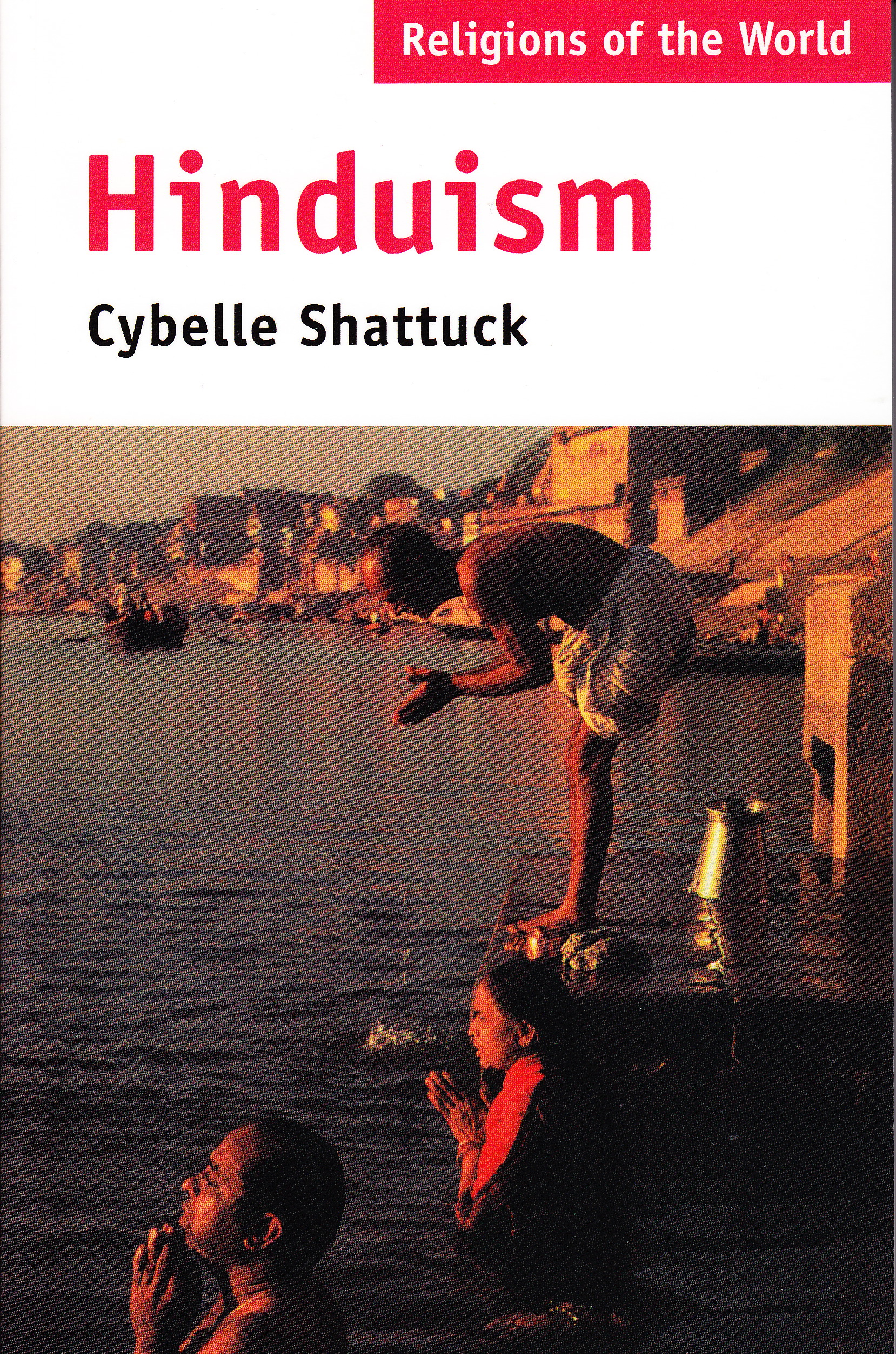
HinduismWhile brushing up on Hinduism by reading the book of that title by Cybelle Shattuck, it once again occurred to me how the concept of religion distorts itself. Prior to the Roman Period, the concept of religion really had no name. In fact, religions were sets of folk beliefs held in common by people of a single culture. These beliefs had many functions: keeping social order, establishing common practice, undergirding a kind of optimism in the face of inevitable death. Since long-distance communication was rare and unreliable, communities separated by more than a few miles soon developed details that fit their own situation and would hardly apply universally. Until they were written down, anyway. In Hinduism—which is in no sense a unified religion—even the “sacred writings” were not held to be authoritative for all people across all places and times. That concept would emerge with Christianity, a religion that would define the term and try to make it stable.

Hinduism is the oldest continually practiced “religion” in the world, as far as we can tell. The religions of the Mesopotamians and Egyptians eventually died out (although they have been revived by some in recent times) but the folk belief—or better, folk practice, of ancient India has continued relatively uninterrupted while new religions from Israel and Arabia changed the rules of the game. Monotheisms quickly demand heresies. A single God would not tell people different truths. Something upon which Shiite and Sunni, Catholic and Protestant, Pharisee and Sadducee all agree. One Lord, one faith, one baptism. By fire.

Meanwhile, even with Muslim and Christian missionaries afoot, Hinduism continued its accustomed continuity. To be a Hindu doesn’t mean worshipping the same god with the same ritual as everybody else. It is a way of living intended to keep dharma and avoid bad karma. And even as trendy westerners stretch themselves into impossible yoga postures, they are participating, at some level, in ancient practices that we call the religion of Hinduism. Shattuck’s brief introduction is a nice little primer that explains this time-honored folk tradition in a way even a believer in religion can understand. There are, it turns out, more things in this philosophy than our universe has ever dreamt of. Or perhaps the one dreaming is really Vishnu after all.


Born Identity

Richard Dawkins, most famously in The God Delusion, made the claim that children are born without religion. Faith is something we’re taught in the growing up process, and we generally learn it from our parents or guardians. A recent piece in The Guardian (the newspaper, not ersatz parent) by Andrew Brown, stakes a bold, and surely correct, counterclaim: children are not born atheists. This isn’t just wishful thinking. As Brown points out, study after study has shown that people, especially children, are prone to belief. Where Dawkins does have a claim to verisimilitude, however, is that religious branding is not a product of nature. We have to learn what flavor of religion tastes good. As Brown points out in his opinion piece, we also have to learn to be the nationality that everything from our passports to our job applications requires of us. I can’t decide to be Scottish or Canadian. I’ve tried both, and here I am, an American mutt, just as I was assigned at birth.

What should  I believe?

What should I believe?

Like nationality, religion is frequently a matter of where you are born. Take a look at a world map of religions and see. India is the most statistically likely country to be born Hindu. It can happen elsewhere, but it would be unlikely where no Indians live. Life sometimes offers the opportunity to change belief, generally through education or through proselytization, but it is fairly uncommon. Most people don’t think too deeply about their religion. You accept what your parents tell you about what’s poisonous and what’s not, and how to drive a car. Would they steer you wrong on religion? Not willfully, surely.

The tabula rasa myth has been one of the most difficult to eradicate. We’re born with all kinds of things going on inside already. Specific religious belief is not one of them, but the tendency to believe is. We believe because it is human nature to do so. We can learn not to believe, and we can even become wealthy by sharing that outlook vociferously. You can also get a good deal of money by being religious and selling alternatives to science. The Institute for Creation Research is well funded, from what I hear. The one place where there is no money, and where you’re not likely to be noticed, is in the middle. Some of us are born as middle children. We had no choice in the situation, and no matter what we decide to believe, we’re no less Episcopalian than we are atheist, or vice versa.


International Panic Day

Holidays have diverse origins. Some appear to have been made up in a fit of madness, bearing no particular relevance to anything. When I saw a publisher offering an “International Panic Day” sale, however, I supposed it was a joke. A quick web search indicated otherwise. June 18, for reasons nobody can really identify, is International Panic Day. I’m reminded of the Simpsons episode where Marge, liberated from her phobia of being mugged, runs past grandpa calling, “I’m not afraid!” to which he replies, “Then you’re not paying attention.” Fear and panic, while not the same thing, live in the same neighborhood. Many analysts point to fear as the primal emotion behind religion. We may never be able to prove that with any certainty, but I can’t think that panic has a religious origin. Many panics have emerged from religious fervor, but the panic itself seems not to have conceived religion.

Run_on_the_Seamen's_Savings'_Bank_during_the_Panic_of_1857

According to Holiday Insights (dot com, of course) no information can be found on the origins of the holiday, which makes it sound like a perfect internet invention. It is a day to feel unsettled. For some of us, that seems like most days. Again citing the wisdom of cartoons, Charlie Brown notes in the 1965 Christmas special, “I know nobody likes me. Why do we have to have a holiday season to emphasize it?” Holidays can be like that sometimes. But a panic day? I have an amateur theory that International Panic Day derives from Panic Day (about which Holiday Insights also has no information), which falls on March 9.

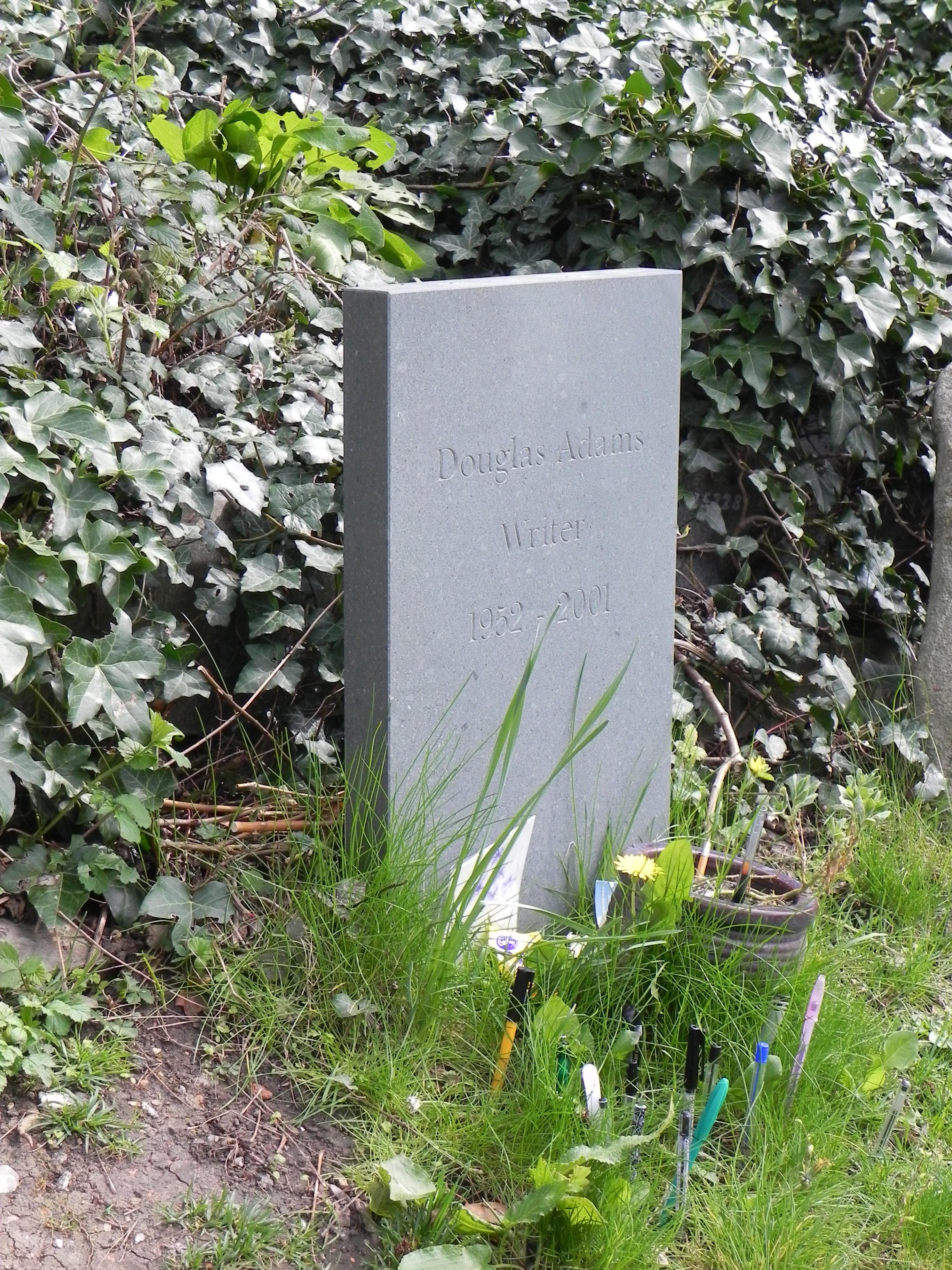
Some online sources have noted that the choice of June 18 is a strange one for International Panic Day because the next day is already (and has been since 1979) World Sauntering Day. This holiday is believed to have begun at the Grand Hotel on Mackinac Island in Michigan. Apparently W.T. Rabe, the holiday’s creator, was reacting to how popular jogging had become and wanted people to slow down for a day. International Panic Day would seem to suggest that running is the best option. Without a goal, of course, other than just to get away. Maybe there is a connection with religion after all. Having long been a fan of Douglas Adams, however, I am a devotee of his contra-mantra: don’t panic.

DSCN1993


Victorian Secret

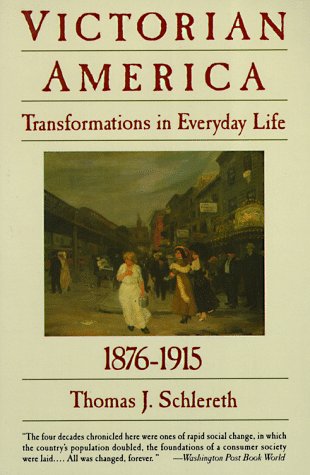
VictorianAmericaPerhaps it’s because the Steampunk World’s Fair is still on my mind, or perhaps because I’m increasingly curious about the way we came to be how we are, I read Victorian America: Transformations in Everyday Life 1876-1915. In this study Thomas J. Schlereth surveys the main aspects of daily existence during the turn of the nineteenth century into the twentieth. It is sobering to consider how quickly change has accelerated since then. Still, so much of what seems normal today was novel just a century or so ago. Although Schlereth doesn’t devote a chapter specifically to religion, he does tie it in with its natural analogue, education. We quickly forget that education was largely established because of religious principles. You can’t tell it today, but one of the main impulses behind higher education was the desire to educate people about the truths of religion so as to improve society.

Also developing in the late part of the nineteenth century was a new religious movement that considered five principles to be fundamental to Christianity. What’s more, those who promulgated this outlook also claimed it was true from the beginning of Christianity, although we know this is decidedly false. The inerrancy of Scripture, the virgin birth, Jesus’ divinity, the second coming, and atonement through Jesus’ sacrificial death—a few concepts that had rudimentary form earlier in the religion’s history—became non-negotiable. Fundamentalism, a new religion, was born in this era and claimed a right to parse true Christianity from false Christianity. This virulent form of belief quickly became politicized, and the relationship between religion and politics clearly impressed Americans from early days. We still reap its whirlwind.

Ironically, the Victorian Era, as designated by Schlereth, saw the birth of the Social Gospel. Doctrine wasn’t the first question on the minds of these reformers, but the human condition was. Yes, they tended towards Fundamentalism, but those who believed in the Social Gospel wanted first of all to eliminate human suffering and misery. It was they, not the Fundamentalists, who came up with the question, “what would Jesus do?” Education and religion eventually divorced, and the Fundamentalist children grew ever stronger in their conviction that they alone were right. The First World War brought a crisis to an optimistic culture that believed the second coming was just around the corner. Of course, we’re still waiting. In the meantime, if you’d like to learn how we got here, Victorian America is not a bad way to pass the time.


Take Twice Daily

Once in a way, when I feel a dusty archaism settling over me, and I realize my eyes don’t focus as well as they once did and that sedentary life in front of a computer screen is slowly killing me, I betake myself to a book sale. In this particular part of the country the big sales are in the spring. I’m told that the book business is dying, but if I can get out of a book sale with no bruises or scary brushes with over-eager buyers, I count myself lucky. I confess, I’m a bookaholic. I spend too many hours a week on public transit, and I consider it a moral obligation to read in public. Even in a city the size of New York, I’ve had people on the bus plop down next to me and say, “You’re that guy who reads.” Public displays of literacy. While some of the books I read are common enough, others are difficult to find in even university libraries. I know that’s an excuse, but my vice is buying books.

I once read a children’s story about a house actually constructed of books. I want that house. Although new books aren’t cheap, there are ways of making them fit into a modest budget. And although you really can’t build with them, they insulate the soul. Reading is more than fundamental—it is the very essence of learning. When I glance at Publisher’s Weekly and read that print sales aren’t what they used to be, I am buoyed by seeing the strong market in young adult literature. We have at least raised a generation that likes a good story. The earliest literature was religious, and many religions developed around written words. It’s a mistake to take religion for gullible belief. If there weren’t power in these words, why would anyone believe?

photo 2

Local book sales can be huge events. Each year Bryn Mawr and Wellesley have a combined book sale in Princeton. If you get there after opening, there will be no place to park. The libraries of Hunterdon County in New Jersey hold a sale that, until this year, required off-site parking and a full three days of hiring a shuttle bus service to get hundreds of buyers back to their cars. And these venues are packed. People do buy books. And many of them are half my age. It is a seed of hope. Some people are surely looking for a quick read, maybe to take on vacation, but you can also see the seasoned, selective literati carefully examining the offers, backs bent, brows furrowed. For twenty dollars you can even get in early, before the goods have been picked over. The man checking me out said the sale gets bigger every year. Looking out over the sea of cars, I feel strangely ebullient, as if I’m atop Nebo looking over the promised land. Although it’s quite a drive, I’m already home.


Science Fiction Double Feature

Two news stories last week—one from the Associated Press and one from the Chronicle of Higher Education—hit upon a common theme: scientific illiteracy. Both articles presented scientists who felt that if they could just reach the (mostly) American public with easily digested facts, then belief in the Big Bang, evolution, and global warming would suddenly make sense to everyone. It may not be my place to say, as I’m not a scientist, but I believe they’re wrong. Don’t misunderstand. I do believe in the Big Bang, evolution, and global warming. In fact, I spent part of last week flagellating myself (metaphorically) for not posting something appropriate on Earth Day. I worry a lot about global warming and what we do to our only planet. What I mean is, these scientists don’t understand religion. People don’t willfully reject the facts. That takes religion.

One of the reasons that I continue my daily efforts on this blog is that our educated elite constantly refuse to acknowledge the blue whale in the room. People are naturally religious. Some grow out of it, some are educated out of it. For most, however, the price to do so is far too high. Science offers little to take the place of faith. For all of its innuendo, the Big Bang tends to leave most of us cold. I don’t support religions spreading ignorance, but even the Bible recognized that it is useless to say to a poor person, “stay warm and well fed” if you don’t offer a blanket and some food as well. It’s chilly in an infinite, yet expanding universe. Why don’t scientist understand that if you give a jacket, maybe people might actually warm up and listen?

hs-2010-13-a-large_web

Religion, however we define it, is a coping mechanism. Even many atheist biologists admit that it has an evolutionary utility, embarrassing as that may be. Evolutionary scientists also tell us that we don’t evolve according to plan. Nature (de-personified, of course) opportunistically uses what’s at hand to help creatures survive. Instead of trying to understand religion, many in the hard sciences think that speaking loudly in single-syllable words will convince those who’ve found meaning in evolution’s solution of religion that somehow evolution was wrong. The worst thing we can do is to waste more money trying to understand religion! I hear it’s very cold in outer space. Still, things seem to be warming up down here. For those who can’t evolve gills, it’s time to learn to swim.


New York Calvin

So I’m standing at the corner of Fifth Avenue and 29th Street, gazing at Marble Collegiate Church, of the Reformed Church in America.  A cold breeze is blowing, and I wish I’d thought to dress a bit more warmly.  Although the building in front of me was erected in the nineteenth century, the church was founded in 1628, making it among the oldest continuous Protestant congregations in the New World.  It is regularly passed by tourists and shoppers who give it nary a glance, not realizing that the Dutch who gave us New Amsterdam also gave us a Reformed Church that has stood the test of time in an increasingly secular New York City. 

IMG_1294
 
I am not now, nor have I ever been, a Calvinist.  That may seem odd coming from a religion scholar who attended a very Presbyterian College and earned a doctorate at a Presbyterian department at the University of Edinburgh.  Nevertheless, despite the many belief systems I’ve indulged, the Reformed wing has never appealed.  That’s not to say that I don’t appreciate what Calvinists have to offer: where would we be without the many good things Presbyterians have brought to us?  In any case, I was recently considering how I automatically equate Calvinism with Presbyterianism, and how I really need to get over that habit.  The Swiss reformers were a far more fragmented sect than the Lutheran contingent ever became.  That still shows in the many historic Calvinistic traditions out there.
 
Presbyterianism, on its own, is not a uniform denomination anymore.  For the time being, however, if we consider all Presbyterian groups as one stream of Calvinism, we need also to consider the Reformed groups.  Although all Calvinists are reformed, the Reformed Church had its historic stronghold in the Netherlands.  Doctrinal differences continued to fracture the Reformed Church into several denominations, two of the most prominent in the New World being the Reformed Church in America and its splinter, now larger, of the Christian Reformed Church (not to be confused with the Christian Church, (Disciples of Christ)).  Congregational churches, which have no overarching governing body, frequently fall into the Calvinistic theological tradition, although that is not necessarily the case.  Other Protestant denominations, such as Methodism, have equally diverse origins.  Others, like the Baptists, have an early history that is unclear even today.
 
The Calvinist theological family tree is well studied, and it stretches back from where I’m standing to Huldrych Zwingli and John Calvin and their peers, some five centuries ago.  Although it never reached the size of the Baptist and Methodist growth spurts during the Great Awakening, Calvinism did make a lasting imprint on the landscape of North America, and still continues to bring some of us out on a chilly day just to look and wonder.


History Department

Rather like an embarrassing personal blemish, many universities tend to hide the fact that they were originally servants of the church.  Ouch!  I know that hurts.  When I was working at Routledge I had to educate some of my fellow employees about the strange interaction between religion and higher education.  Most of the earliest universities were founded primarily as theological colleges.  That stands to reason, since as light slowly began to dawn at the fading of the Dark Ages, the practice of literacy had largely been the domain of clerics, and even today, the clergy are among society’s most dependable readers.  Universities sprang up because churches desired leaders who were informed—educated, even.  Men (at that point) who knew how to reason well.  This impetus eventually led to the kind of thinking that allowed science to emerge, although it soon had fights with its parents over who had the better perspective.  Some things never change.

University or church?

University or church?

Even considering the Ivy League here in the United States, we have schools that were generally founded for clerical purposes.  Harvard was founded mainly to train Puritan ministers.  Yale was intended to provide clergy and leaders to the colony of Connecticut.  Brown was founded by Baptist clergy, while Columbia owes its origins to the missionary wing of the Church of England.  Princeton was founded for the training of Presbyterian clergy.  Dartmouth’s Puritan clergy founded wanted a school for preparing missionaries.  Even non-sectarian Penn had clergy among its early leaders.  Cornell was the lone gunman of the truly secular schools.  The pattern even reaches to state universities that now cower at the thought of expanding or sometimes even maintaining their religion departments.  Rutgers, where I had the privilege to teach as an adjunct for a few years, was originally founded as an enterprise of the Reformed Church in America, scion of the old Dutch Reformed Church, thus giving rise to the small New Brunswick Theological Seminary that still sits in the middle of the College Avenue Campus of the State University of New Jersey.

Every now and again, I ponder this state of affairs.  Religion, love it or loath it, is foundational not only for higher education, but for civilization itself.  If the evidence of Göbekli Tepe is to be believed, religion may have been the very glue that brought societies together in the first place.  Despite the decline in mainline denominations, public survey evidence indicates Americans are just as religious as ever, or at least spiritual.  How quickly we forget that it was biblical mandates to go out and spread the news that led to the idea of a literate, educated society.  The lure of money and technology is great, and has managed to reshape the higher education landscape.  If you look, however, at the lists of institutions of higher education in the United States, even today, the largest subset is either currently affiliated with, or had been founded by, Christian groups wanting to offer education to their children. Today there are still hundreds of universities and colleges affiliated with religious groups.  Somehow I get the sense that the affection showed is not completely mutual.


Clearly Religion

GoingClear“There is no point in questioning Scientology’s standing as a religion; in the United States, the only opinion that really counts is that of the IRS;” so Lawrence Wright partially concludes Going Clear: Scientology, Hollywood, and the Prison of Belief. This is an important book, and one which once again demonstrates how seriously religions should be taken. New religious movements offer a ringside seat to how orthodoxies are born. Facts may be distorted or covered up, but there is information to be had on L. Ron Hubbard, Joseph Smith, and Mary Baker Eddy. We can learn from the way their ideas may move from fiction to fact, and how intelligent people still feeling spiritual yearning can turn to a religion invented recently as well as those invented millennia ago. As Wright points out, all religions make improbable claims. Fact-checking, however, is much more difficult for periods long gone that left only meager records. The distance in time may lend ancient assertions the benefit of the doubt, but the real decision-maker is money.

Given universities’ interests in lucre, one might logically conclude that religions would be of great interest. It is telling that, especially in the case of Scientology, that the factor most important to the status of the church is its money. Religions may claim tax-exempt status, setting them apart from purely commercial enterprises. This gives religions an advantage when they are careful with their finances, and the whole question of whether a religion is a religion is not left to scholars but to the lawyers of the Internal Revenue Service. The truth of religion lies in its bank-books, not its holy books. No doubt in the case of Scientology this is because of the high-profile court cases in which the status of the religion was challenged by government agencies. Nevertheless, when it comes to the laying down of the law, only money really matters in defining a religion.

As Wright discusses, one of the problems we face is that religion is poorly defined. Nobody can really assert much beyond that religions involve belief of some kind. Beliefs, in this case, about L. Ron Hubbard and his ideas. Although facts about his life are disputed, there can be no doubt that Hubbard was an intriguing man. He was a prolific writer with great imagination, and he clearly had keen insight into psychology. A religion used to be measured by the good it produced. Now it is measured by the dollars. As Going Clear illustrates, trying to construct an unbiased account of Scientology is a fraught enterprise. Like many modern religions, Scientology is very secretive. Even the early Christians knew that if everybody could join, then the club loses its appeal. Apart from belief, religions also must have outsiders and well as insiders. In a world measured by consumerism, wealth is the surest sign of blessing. No one should be at all surprised, therefore, that it takes the IRS to decide that which used to be taken by faith alone.


Take a PAAS

Like so much of life, PAAS Easter Egg coloring kits were the result of an accident. To be more specific, a chemical accident in New Jersey, something which is far from rare. This particular accident, however, had a fortuitous side-effect: the brightly colored (but not radioactive) Easter Egg dye that many of us associate with childhood. Around 1880 Newark druggist William Townley spilled colored dye onto his suit, leading him to individually package holiday colors, according to a story in the New Jersey Star-Ledger. That individual packaging allowed for a full set of egg colors to be sold together and the PAAS brand was soon launched.

The idea of coloring Easter Eggs, like so many Christian traditions, likely has pagan roots. Eggs were a sign of new life with the coming of spring in many cultures (although boiling the poor things rather defeats the purpose). Christians adopted the egg as a resurrection symbol—the chick pecking out of its shell was like the resurrected Jesus bursting from the tomb, albeit somewhat less dramatically. Watching a newborn chick hatch is an emotional experience. At the 4-H Fair, standing around the incubator in the chicken tent, you can see wobbly, uncertain, tiny birds tentatively trying to assess this strange new world that is colder and somehow more compelling than life in the shell had ever been. The mighty son of God they’re not, but they are much more like us, looking for answers and taking small steps until they’re more certain of what they face.

DSCN4483

The coloring of eggs has origins lost in antiquity. Nobody’s quite sure why it was done beyond the fact that they look nice. Romans ate eggs as part of their spring celebrations, and Christians came up with a story to explain colored eggs. The legend claims that Mary Magdalene, in trying to convince the emperor of the truth of the resurrection, turned eggs from white (or brown, as they likely were in those days) to red in her open hands. This proof, however, failed to convince the Caesar. What seems certain is that pagans liked coloring eggs so this provided a new source of evangelism to the Christians who assimilated the practice. Like Christmas, the Easter Egg has become a thoroughly cultural symbol—since Easter comes on a Sunday employers aren’t obligated to give the day off, so everyone can celebrate. Children hunt eggs on the White House lawn and we can still expect everyone to be in the office on Monday morning. Resurrection, after all, can only reach so far.


Apes and Atheists

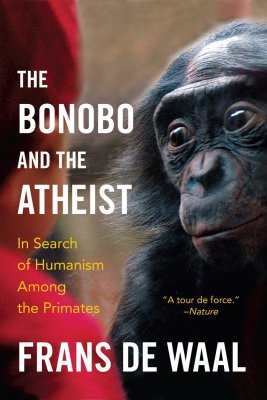
Bonobo&AtheistFrans de Waal is among the sanest of popular science writers. I’ve been following his non-technical work since Our Inner Ape through The Age of Empathy to The Bonobo and the Atheist. As de Waal himself explains, he tended to leave religion out of his earlier works since, for a scientist such topics are generally taboo. His direct address to religion in The Bonobo and the Atheist is refreshing and enlightened. As he notes, de Waal does not believe in God, but he doesn’t believe in the abolition of religion either. This sets him against his fellow biologist Richard Dawkins, who is so bright that the rest of us are burnt out dimmer bulbs by comparison. As de Waal soberly asks: what does science offer in place of religion? What is the point of taking away something that has evolved from our early primate days without offering anything to fill its spot? Even an ape would object.

What makes The Bonobo and the Atheist so engaging, apart from de Waal’s writing, is the openness of his outlook. De Waal suggests that the origins of morality and empathy can be glimpsed in apes and monkeys. He cites the reaction of chimpanzees to rain storms and even waterfalls that hint at early religious development. As I’ve suggested on this forum before, religion may even be allowed to animals. Their experience of religion is certainly not the same as ours, but there is evidence of both thought and feeling. When these are brought together they form religious belief in Homo sapiens. Why not in our ancestors and fellow animals? No, animals don’t develop elaborate doctrines or precious rituals. They do, however, reverence the powerful, ponder death, and feel emotion. Some of our great thinkers are ready to cast all that aside in the name of progress. More humbly, and circumspectly, de Waal considers that evolution is telling us something. And when evolution speaks, its children should pay attention.

Descriptions of reactions and behaviors that we consider unique to humans among the animal world draw me to de Waal’s books. As a scientist de Waal has to draw logical conclusions, and those conclusions point to an inner world that is not so much unique in humans as it is evolved. Religion, I believe, is one of those traits. If animals show some of the early stages of religious development, including a basic form of ethics, how does that devalue our human efforts to explain our universe? Religion is in good company, along with opposable thumbs and basic language comprehension. Looking at how we treat each other, I consider being related to animals a compliment most of the time. Without a doubt some of the ethics Frans de Waal illustrates among the bonobos exceed those I’ve experienced at the hands of many who think of themselves as made in the image of God.


Wee People

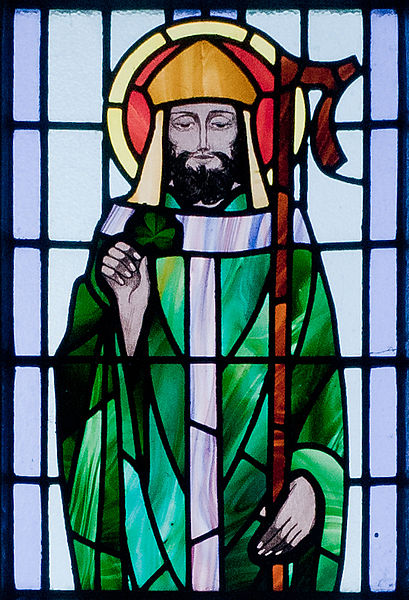
Whence we come influences our outlook. Sometimes invisibly, at other time quite consciously. I remember as a child, wanting to be honest about the wearing of the green on St Patrick’s Day, asking whether we were Irish or not. Of course, for many Americans being Irish, German, or Swedish really means having ancestors long ago from a different country. Most of my ancestors had been in America for some time—a couple hundred years at least. In New Jersey, where many people are literally from elsewhere, that can seem exotic. Great-great-grandparents in one of my lines can be traced to another country, but most of my ancestry is already settled in the United States long before that. Unknown to my mother at the time of that question, one of my ancestors was indeed from Ireland, a stowaway, as I understand it, and thus I could wear green without being dishonest. (Children can be so parsimonious.) When I saw the locals walking away from yesterday’s St. Patrick’s Day parade in my local town it was obvious that not all of them were Irish (or American with an Irish ancestor), but they nevertheless came out on a cheerless, chilly day to join in the Celtic spirit of celebration. St Patrick’s Day is all about belonging.

Photo credit: Andreas F. Borchert, Wikicommons

Photo credit: Andreas F. Borchert, Wikicommons

The rich mythology of Ireland was never supplanted completely by the Catholic influence that became synonymous with many parts of the country. Leprechauns, the little people with their pots of gold, have been fused into a mythology of St Patrick and his magical clover that somehow explained the Trinity, while it is the four-leaved variety that brings good luck. And Ireland’s snake-free evolution was attributed to sacred innovation rather than the Ice Age, the true culprit. It is our myths who make us who we are, however. Where would Ireland be with a massive chunk of ice preventing snakes from evolving in a land where a genetic variation sometimes leads to a fourth leaf on a common grass of the field? And where is that pot of gold anyway?

And yet, within the last year construction on a highway was halted in Iceland (I know I’ve island-hopped here, despite the difference of a single consonant) because locals protested that it would disturb the habitat of the little people. While a post-graduate representative to the Faculty of Divinity in Edinburgh (switching islands yet again), one of the faculty admitted to a fascination with Celtic folklore. A more rational theologian challenged him saying, “what about the farmer who loses valuable space in his field because he leaves a ‘magical’ tree standing—isn’t that tragic?” The renegade faculty member allowed that this too was especially wonderful. A world enchanted is swiftly disappearing beneath the unrelenting tires and blades of scraper and cold planer, or the axe-bearing lord of ultimate efficiency. The soul is just another casualty on the road to enlightenment. And yet yesterday, those with ancestry from Africa, India, China, Italy, and even England, gathered to watch the parade where the mythology of an island that never had an empire nevertheless draws together people of all ancestries to wear a bit of green and to celebrate whence we came. St Patrick’s is a day to celebrate whoever we are. And to leave the door ajar for the wee folk that might still be around.


Prehistoric Steps

Britain has always had a share in the great events of the past (speaking strictly from a western hemisphere point of view). Not only did the ten “lost tribes” of Israel end up there (according to some, with apologies to Joseph Smith), but young Jesus traveled there with Joseph of Arimathea (according to others, with no apologies). While these stories are obviously non-historical, Britain does have an illustrious heritage that has left Stonehenge and the Cerne Abbas giant in its wake. It is thrilling to read, then, that fossilized footprints from some 850,000 years ago were recently discovered. Coastal erosion, similar to the event that revealed Skara Brae to the world, uncovered the footprints for a short time in Happisburgh, near Norfolk. About 50 footprints were discovered, according to The Independent, with a group comprised of women, men, and children. They were walking alongside a stream, apparently looking for the Pleistocene version of carry-out fish-n-chips at least 844,000 years before Adam and Eve.

The British landscape boasts an ebullient antiquity. Our years spent in the British Isles involved exploring everything from Lanyon Quoit in Cornwall to the Ring of Brodgar on Mainland, Orkney with our friends. It is a land where the past lives on into the present. No wonder some speculated that the biblical past made its way here as well. At least now we know that some very early humans did as well. Homo antecessor, the makers of the prints, visited a Britain replete with elephants, hippopotami, rhinoceri, and hyenas. It is speculated that they may have domiciled on off-shore islands to keep safe from the predators that roamed pre-Roman England. One thing we know for certain about people is that they do get around.

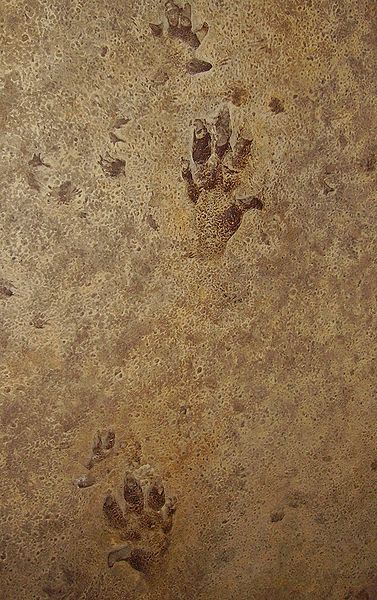
Chirotherium storetonense  trackway, photo credit: Ballista

Chirotherium storetonense trackway, photo credit: Ballista

Homo antecessor is an extinct species. Many of the hominids that contributed in some way to the possibility of our existence are long gone, creating endless headaches for scriptural literalists. Their lives, as The Independent speculates, may have involved being preyed upon by large predators and the constant search for food. They also liked to walk on the beach. I wonder how far they had come on the road to religious belief. Constant fear of predation must surely have played into it. We don’t know how far back the evolutionary chain religion goes, but we do know that it is a profoundly human outlook. You can’t stand beneath the towering Neolithic menhirs of the Ring of Brodgar and not feel it. Sometimes a walk along the shore is all it takes.