Myth-story

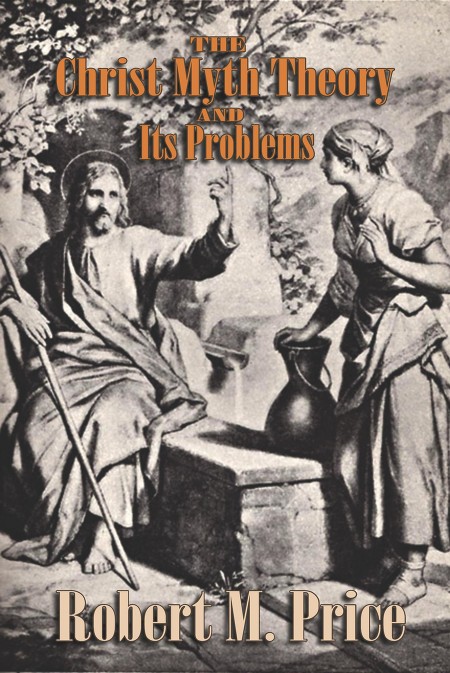
ChristMythTheoryEither there was, or there wasn’t. An historical Jesus, I mean. I just finished reading Robert M. Price’s The Christ Myth Theory and Its Problems, and I have to admit that it raises some interesting points. In short, Price positions himself among the Christ Myth school—scholars who doubt that there was an historical Jesus. This proposition may come as a shock to many who are raised never to question the orthodoxy of religion handed down from parent to child. Given the popularity of Christianity worldwide, it may seems like a difficult premise to accept. Price suggests that the figure of Jesus might’ve been a midrash (commentary) on Hebrew Bible texts. When you look closely at many of the Gospel episodes, they are couched in language from the Hebrew Bible, and for those familiar with ancient midrash, the elaborations he proposes aren’t that far-fetched. The real question, for me, is a bit more broadly based—how do we ever know what really happened? Religions, as I suggested yesterday, are echoes from the past. The past, despite the internet, is inaccessible to us beyond what ambitious writers and artisans have left behind for us. The bulk of making history is interpretation.

This should give us pause. Yes, there are undeniable events, witnessed and recorded by many. What really happened, however, is an atomistic enterprise. Take Lincoln’s assassination, for example. It happened, we’re pretty sure. What happened, we reconstruct from what we have left for us in witness accounts. But as National Treasure 2 shows, a little imagination can throw the whole picture askew. Or even closer to our own time—what really happened at John F. Kennedy’s assassination? Some of the facts we have, others we never will. Some posit high-level withholding of information. Try to put that together with a truly messianic figure that some claim is actually divine. The Gospels differ a bit on the details, particularly after Jesus’ execution. What really happened? A harmonization of the Gospels? Anything at all? Who was there to see it?

Religions are deeply tied to past events. Even the modern religions that are constantly emerging—new ones are formed on a nearly daily basis—soon distinguish themselves because of their histories. To get at those histories that we didn’t witness, we need to rely on the records of those who did. Some of those religions just won’t take off—the Shakers, for example, are slowing going extinct. The Oneida Community is already gone. Others, like the Church of Jesus Christ of Latter-Day Saints, scrape the stratosphere with their success. And these are just examples of religions from the Second Great Awakening. Did Joseph Smith really meet all those figures he claimed? How can we know? When it comes to Jesus, we might think we’re on solid ground (as Smith would agree, if he existed). Price asks us to consider that assumption anew. Direct evidence may not be plentiful, but on the strength of ancillary evidence, most of us see Jesus as historical. Of his life we have very little. What you make of him, however, is a question of faith. And interpretation.


Devil’s Advocate

At fives and sixes, the Pope who gave us the devil's advocate.

At fives and sixes, the Pope who gave us the devil’s advocate.

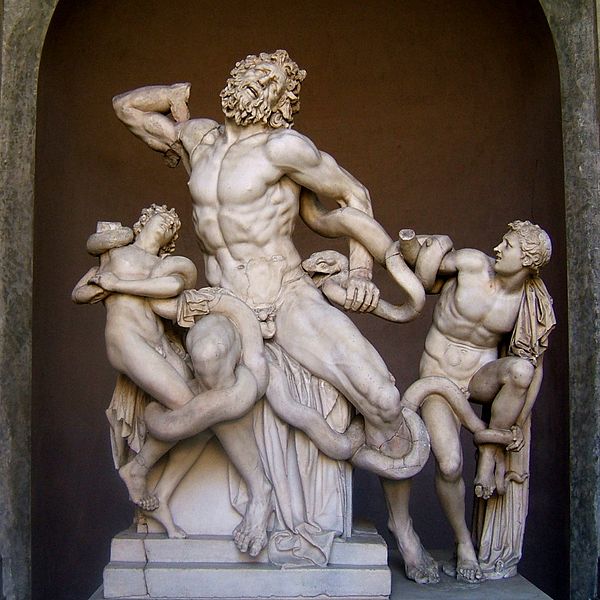
When two people in completely isolated incidents tell me the origins of the term “Devil’s advocate” within a week, I figure it’s time to do a post about it. We’re all familiar with the term, and we know that it means taking the point of view of the “bad guy,” just for argument’s sake. In fact, the Devil’s advocate may not believe his (usually it is a he) own arguments, presents them to make sure the results are correct. The Devil’s advocate was an official office in Roman Catholicism beginning in the late 16th century. The actual title was Promoter of the Faith and the reason such an office was necessary was that so many people had been put forth as potential saints that the church experienced an embarrassment of riches. Canonization, the process of becoming a saint, has a number of hurdles to clear for the would-be paragon. Claims, often extraordinary, were made for miracles associated with the favored ones and the Devil’s advocate was intended to research and present contrary evidence. This made it more difficult to achieve sainthood, but in theory, at least, kept the number of candidates down to only the most deserving. There was no literal devil involved.

Those of us who grew up Protestant often had recourse to only faulty knowledge of Catholicism. We were sometimes taught that it was based on magic, what with the priest speaking in Latin and making mysterious motions with his hands. That meant, for some, that Catholics seemed particularly gullible and would believe things the rest of us wouldn’t. The Catholic Church, however, has often providing its own policing. Not as eager as Pentecostals to accept mundane miracles, when a pareidolia-inspired leakage of water or an anomalous burning of toast occurs, the Catholic Church is quick to debunk claims of miracles just because an underpass stain or a bit of bread looks like a famous religious figure. If you squint enough. The Devil’s advocate was a similar safeguard.

On the opposite side of the equation, I’ve often heard sermons among some evangelical groups claiming that we’re all saints. (Their membership, that is.) Who shouldn’t claim the name when they walk the walk? Many of these saints fail to inspire in the way of those of yore. Some of the beloved cultural heroes that keep coming back in various forms have saintly origins: Santa Claus and Saint Valentine are two that come to mind at this time of year. Some Protestants who may not have been perfect, however, should somehow qualify. Martin Luther King, Jr., another figure of the winter season, by his contributions to justice issues, might be one who would qualify. I’m sure there are many others. The fact is that making a principled stand against the wickedness that sometimes passes for the status quo is difficult and leaves one open to criticism and resentment. A Devil’s advocate might be just what society needs when looking to make saints out of mere mortals.


Material Goods

Few ideas are as insidious as the reductionistic materialism touted by some of the New Atheists. Atheism and materialism need not walk down the same garden path, but the idea that we are determined by the thoughtless playing out of particle physics can only be achieved by sweeping the vast majority of human experience off the table to attempt a sterile analysis that applies, it seems, only in a vacuum. I often ponder this dilemma since those who think through the implications seriously soon find themselves locked out of the room. Materialists want nothing to do with those who challenge a system that is a little too neat, while ardent believers in religion have trouble letting go of what are obviously the mythological underpinnings of belief structures. The rest of us, trying to be intellectually honest, know that strange things happen and that materialism’s strong arm is powerless to uphold a system that is simplistic.

Indeed, scientists have moved away from utility as the sole criterion for explaining the universe. Beauty, or elegance, is frequently considered to be key to a Grand Unified Theory. It may be a gut-level reaction, but it speaks to something deeply human; we need to make sense of our world. We can do that, however, only if we’re willing to be honest. I’m not sure we can be honest without acknowledging that our minds range far beyond the sum of all the electro-chemical activity within an individual brain. If they didn’t, religion, for one, just couldn’t survive. Beauty, as a qualifier, is said to be in the eye of the beholder. Philosophers, however, maintain that aesthetics, the study of beauty, constitutes a branch of philosophy that requires hard thinking and specialized training. Beauty is a driving force for many aspects of life. Otherwise we wouldn’t hire architects to design since buildings on university campuses. A pile of bricks sufficiently mortared will do.

450x230_q75

The issue is trenchant because a generation is growing up with this idea firmly in place. Scientific studies, if scientists are to be believed, demonstrate that a strict materialism erodes empathy, the sense that what others experience matters. The logical conclusion to a reductionistic world is a kind of cold solipsism where the only spark of consciousness that matters is the one that takes place inside this head. All the rest are just formulas and equations. And yet, don’t even materialists enjoy a good novel, movie, or fine meal? The world is a complex place, and we haven’t even taken the first adult steps to begin exploring the rest of the universe with the five basic senses we acknowledge. Even down here, however, there is much that reductionistic materialism can’t explain. I wouldn’t stick a god in that gap, but a dose of humble wonder, I suggest, wouldn’t hurt.


Explained Away

The premise seems sound. Although science tends to indicate that God is not necessary to explain anything, religion itself may still be useful. In a nutshell, that’s the basis of Alain de Button’s TED talk, “Atheism 2.0.” We don’t need to believe in God to find religion a useful paradigm. There’s so much more to being human than being simply analytical. De Button begins from the premise that there is no god, but that religion teaches us many useful lessons. It is a fascinating concept. I’ve had de Button’s book on the topic on my reading list for some months now, but like so many pressed for time, I find it simpler to watch a 20-minute TED talk than to read an entire book. It is refreshing to see someone on TED not simply dismissing religion. My friends in the STEM community often recommend TED talks, and they usually leave me feeling small and insignificant. Now I can at least show my face.

A deep irony pervades this condescension to religion. Scientific study of the past (known by the collective term archaeology) has recently given strong indication that the religious impulse is what led to civilization itself. The mysterious site of Gobekli Tepe, as I’ve mentioned before, seems to reveal that even before high antiquity what drew people together was the emergence of religious belief. Religion leads to culture, and culture leads to science. Science rejects religion and what happens to culture? Just take a look around. I’m still a naive man with working class values. In the course of my business travels I’ve often ended up in what might be considered the sketchiest kinds of neighborhoods. The suburbs keep moving further out. What happens when we run out of space? God only kn— wait, that’s a forbidden premise. Materialism only knows.

De Button’s talk is fascinating in that he doesn’t simply dismiss religion. Like most non-specialists, he focuses on the accidentals that reveal something savvy religionists have always known—there’s a healthy dose of psychology in any religion. Call it neuroscience, or call it truth. Religions have something to teach us. Civilization, it seems, began because of religion. De Button is clearly correct that we need not believe the minutia of religious doctrine to get something out of it. Atheism is not always evil nor is piety always above moral suspicion. Being human, we can’t help but wonder what is really real, however. Religions claim to know, as do some sciences. Little can be said beyond the fact that none of us know. Of course, TED will ask some of us to speak to the issue and the rest of us should just sit still and pay attention. To be noticed is to be an expert.

The eternal struggle (photo credit JuanMa, Wikipedia)

The eternal struggle (photo credit JuanMa, Wikipedia)


Beliefism

A question never adequately resolved revolves around the status of atheism. What exactly is it? Well, I suppose it is many things, actually. One thing that seems indisputable is that religion has been part of human culture from the beginning. It would seem likely that not all believers carried the same level of conviction, and there may have been “atheists” shortly after theism evolved. The difficulty is that both belief in god/s, and/or the lack thereof, are matters of personal conviction. That somewhat blurred line has been crossed, according to some, by the recent growth of “atheist churches.” In several web stories my friends have pointed out to me, a growing movement of atheist “mega-churches” has been noticed. These are groups of atheists who meet for many of the same reasons religious folk do, sans salvation. It is a social occasion, and a chance to fellowship with like-minded non-believers, and to support their lack of faith. Some atheists bristle at this (as do some religious), claiming that it cheapens the atheistic enterprise (or that religions somehow hold a copyright on belief-based gatherings).

Herein lies the rub. Atheists are no more cut from the same cloth (or lack of cloth) as religious believers are. There are varieties of unbelief. Some obviously see that the weekly gathering has benefits. There’s no question that atheists can be every bit as humanitarian as religious believers are. Besides, who doesn’t like to meet with people who think like them? “Minister” might not be the leader’s title of choice, although it has a long pedigree in politics as a secular title (as, for example, in the Ministry of Defense). The slow decline in mainstream Christian services, however, might suggest that atheist services would be inclined to grow. Weekends were originally created for religious reasons and still generally remain the religious meeting days of choice. Some religious groups do not insist on doctrine to be members—Unitarians are a prime example of this—but the value of meeting together is human, all too human.

Clearly the purpose of an atheist gathering is not primarily worship. I should imagine, however, that wonder is still part of the non-religious vocabulary. God is not necessary for feelings of awe and joy. And sometimes it is fun to get together for some structured activity that isn’t work (for those who have jobs). An Associated Press story, however, points out the irony of the gathering of “people bound by their belief in non-belief.” There is, however, believing going on here. There can be no escaping it. Despite all the problems associated with omnipotence, the idea of a deity where the buck indeed stopped was an ebenezer for grounding belief. Even the most outspoken of atheists share this with the literalist and the moderate—they all believe. And as long as people believe, they will seek groups of those who share similar views. Why not? Even the truth requires belief.

What does it  mean?

What does it mean?


Alien Bears

“And if there’s life on other planets, I’m sure that he must know, and has been there once already, and died to save their souls.” Larry Norman, one of the original Jesus Freaks, may not have been the deepest theologian, but his words come to mind as I see scientists reluctantly admitting that maybe life on earth is not so unique after all. It’s been in the news that Kepler Space Telescope’s data have been indicating that other planets like earth may be quite common. It has always amazed me that people have been so reluctant to let go of the notion that we are the only spark of intelligence in this vast, vast, cold, and dark universe. We seem to need to think we’re special. Religions generally indicate that the gods made us for some purpose or another, some love us, some are indifferent, others may be hostile. But generally, we’re unique. The Mormons have for years taught that there is life out there, but mainstream Christianity has generally been agin it, mainly owing to the crucifixion. Larry Norman, the original Christian rock artist, speculated that cosmic history repeated itself: if Jesus died for us, well then, he must’ve done the favor for them too.

Once Edwin Hubble stepped away from the telescope, stuck his famous pipe in his mouth, and said “huh,” I would’ve thought other scientists might’ve considered, like H. G. Wells, that “they” were out there looking back at us. Why this reluctance to suppose that we’re not alone? The story in the Washington Post cites the typical reason: the Goldilocks effect. Scientists, perhaps unwittingly influenced by the anthropic principle, have supposed other planets, if they existed, were either too hot or too cold to support life. We, like Goldilocks, happened to inhabit the only planet among the billions of galaxies of billions of stars, that got it just right. More like God-ilocks. The idea derives from Genesis where, it is strongly implied, we are the only ones. Religion influences culture, whether materialists want to admit it or not. The earth-only bias is inherently religious.

Who's looking back at Hubble?

Who’s looking back at Hubble?

Astronomers will gradually come around to the idea that there are other planets like ours. It will likely take decades, perhaps centuries, before they will commonly admit that life forms like ours are out there walking around. Eventually they may decide that there’s something to UFOs after all. Meanwhile, various New Religious Movements have already hitched rides on those flying saucers and they will be laughing once the rest of us catch up. We tend, under the influence of those who claim religion is always Bronze Age drivel, to forget that religion often leads the way to new territory. When the little green men and women land, we’ll find that many religions have beat science to the punchline. I’m not so sure, however, that the aliens will know who Jesus is. After all, this chair’s too hard, and this one’s too soft.


A Theistic Nation

That’s a dill-pickillial of a peccadillo, if you’ll pardon my Ned Flanderism. I’m referring to the issue of the Supreme Court dealing with public prayer. Again. In a recent Chicago Tribune story, prayer before town board meetings in Greece, New York have led to accusations of violation of citizens’ rights. In a similar, but unrelated, situation, a friend asked me what I thought about religious symbols on public property. He asked the basic question that if atheism relies on no symbols, isn’t the absence of symbolism tacit approval of atheism. These issues are very difficult to resolve for a number of reasons. The first non-partisan elephant in the room is the fact that we do not have an acceptable definition of religion. Universities shy away from hiring specialists in religion and we, as a society, and, more restrictively, as an academy, can’t agree on what religion is. Is atheism a religious belief system? Some would argue that it is, and that it shouldn’t be the default stance—that would favor one religion. From what neuroscience seems to tell us, atheists aren’t born, they’re made. Religion, of some description, is normal human thinking.

A further issue involves both symbols and prayers. A symbol means nothing without interpretation. As I told my friend, unintentional crosses are ubiquitous. You might have to look a bit harder to find unintentional stars of David or yin-yangs, but I’m certain they exist. Without the Christian eye, however, those unintentional crosses are just architectural features or natural spaces between corners. The same applies to prayer. If I decide to speak, it is a matter of interpretation whether my words are prayers, a guy talking to himself, or, increasingly, somebody chatting on their blue tooth phone as they walk past a church. Intention, a specific aspect of interpretation, certainly plays into the sometimes coercive power of a symbol or a prayer. Do those Ten Commandments on the courthouse lawn just represent a nice piece of art, or do they bear an intended message? Do intended messages not attempt to persuade others that they are true?

Smart folk like Supreme Court justices have difficulty with this issue every time. I’m not surprised. We don’t know how to quantify religion, even though most of us are pretty sure of it when we see it. Some would argue that many eastern religions are in fact philosophies. Some would claim that atheism is the opposite of religion. Atheism is not so very far from some strains of Buddhism, however. And like it or not, people are all subject to belief. We seem to like forging ahead in the darkness on this issue. State universities hide their religious studies programs like embarrassing warts. What rational person would want to waste time studying such superstition? The Supreme Court of the United States, I might point out, just for one.

Religion or not?

Religion or not?


Final Frontier?

Stay away from the dark side. That’s generally good advice. Ironically, new religious movements (NRMs, in the biz) have come up in my conversations quite a bit lately. Some of my friends have suggested that I start a new religion—job security would no longer be an issue. I’ve been studying religions my whole life, and at times I’m sorely, sorely tempted. Meanwhile a friend pointed me to a story on Details.com about Jediism. Yes, there is a religion based on Star Wars—actually, I shouldn’t be too hasty here. There is at least one religion based on Star Wars; likely there are many. The question that is indubitably raised is okay, so do these people actually believe this stuff? Don’t they know Star Wars was written by George Lucas? How can it be a religion? I can only respond with: Have you ever heard of Scientology? Religions do not have to be believable to be believed in. History has shown that time and again.

StarWars

Jediism is based on the teachings of saints like Yoda and Obi Wan Kenobi. What they are teaching is straight Joseph Campbell. Served neat. Good versus evil. A sense that a cosmic force surrounds us. The hero’s journey. The same thing can be found in the Bible. Wrap it up in a Jedi cloak or in a Galilean robe and the end result isn’t much different. I’ve seen bumper stickers suggesting that Obi Wan died for my sins. Just as long as good wins out in the end, who’s to complain? Does it really matter if it happened a long time ago in a galaxy far, far away or just away in a manger?

The problem with religion is that we lack a proper definition. Christianity clearly uses the word to describe itself. When looking at those who thought differently (adherents of Judaism, Roman paganism, the great goddess of Syria) early Christians had to call them something. If Christianity is a religion, so must they all be. Some religions, however, are not based on belief, but practice. To be is to do. Some religions are based on historical people, some on fictional people. Some are very serious while others are difficult to tell. Some religions are ancient, but looking at the state of the world it’s hard to say that they’ve been terribly successful. So when a bunch of sci-fi fans think they’ve discovered the truth in the mind of George Lucas, who’s to argue? And I really do mean that about keeping away from the dark side.


The Devil’s Dues

Belief, no matter how inscrutable, must be taken seriously. Although we frequently prefer to privilege that which we “know,” belief is one of our main motivators. Strangely, many who reach a certain level of education begin to denigrate belief as if it were an embarrassing indication of improper brain functioning. Belief is, however, all we really have. A case of this was recently shown in an interview with Justice Antonin Scalia. A piece in CNN Opinion by Rebecca Buckwalter-Poza discusses an interview of Justice Scalia by Jennifer Senior where the topic of the devil arose. Buckwalter-Poza, as she makes clear, is no fan of Scalia, but when Senior began to treat the Justice’s belief in the devil with a condescending kind of incredulity Buckwalter-Poza called time-out. We need to take his belief seriously. Could such a powerful man really believe in a mythological figure? Yes. Belief will do that to you. Just the same, Senior’s non-acceptance of the devil is equally a matter of belief.

The devil is a problematic figure. Despite the certainty with which a recent demonology lecture treated the subject, the devil is scarcely present in the Bible. Indeed, he is somewhat a late addition, cobbled together from Zoroastrian beliefs and fragments of ancient mythology. The Hebrew Bible mentions the devil not once. By the time of the Gospels he has become a fixture representing an anti-God figure, clearly derived from the influence of the Magi (not necessarily the three riding on camel-back that first Christmas Eve). The devil was a convenient excuse for evil in a world where an omnipotent deity was believed to be entirely good. The devil is an escape-clause. Evil can exist in such a world and not be God’s fault. The idea stuck.

Today, sophisticated materialists (which is what some forms of science urge us all to be) have dismissed belief in anything not composed of atoms, electrons, quarks, or strings. Or, more recently, dark matter. The rest is all illusion. Sometimes the sophisticated don’t realize that other intelligent, sophisticated individuals don’t share their worldview. Materialism can’t be proven, and every true scientist knows that any theory is the best explanation given what we know at the moment. It is contingent. Science has a fantastic track record for explaining the physical world. Little in my experience has given me cause to doubt its efficacy. Still, I suspect that there is more to this universe than material. I have trouble supposing that some of that non-material universe is a horned, goat-footed, evil man with a tail and my worst interests at heart, but I can see how someone might believe that. Belief works that way. As much as we might want to eject it from the game, it will always be on the first string throughout the season.

IMG_1070


Making Saints

Some places are inaccessible in the academic world. Or perhaps invisible. I couldn’t help but have Santa Muerte on my mind as I visited the Phoenix/Tempe area of Arizona. I knew from reading Andrew Chestnut’s Devoted to Death that the skeleton saint has a large following in that area. Having been raised in a working class religion in a blue-collar household, I also knew that such trappings might not be entirely visible around a university setting. Arizona State is a huge school and my minimal free time on the trip only permitted a wander-radius of a couple blocks from around the campus. Many universities are, because of their property-value-lowering non-profit status, on the edge of sketchy neighborhoods where work-a-day people live. It didn’t seem that way in Tempe. The areas I reached all seemed to have that adobe-solid middle-class feel to them. Not that I go looking for seedy neighborhoods when I’m traveling by myself, but I do like to see stores that aren’t part of a chain, and to get a sense of local culture. For most academics, the pedestrian devotion to Santa Muerte is below the radar.

The concept has haunted me ever since reading Chestnut’s study—why would people find appealing to death attractive? Santa Muerte has the trappings of a Catholic saint, but she is, plainly put, death personified. She is a favorite among drug lords and criminals, and that is somewhat understandable. Her Hispanic devotees, I realize, often live lives of desperate poverty. The well-heeled saints of conventional religion might not be able to see things from their perspective. Although the Catholic Church continues to make saints, many of the traditional saints predate capitalism. Capitalism creates its own insidious disenfranchisement. I realized this already as a child growing up in a setting where just about everybody I knew had it better than my family did. For some to prosper, others must suffer in such a system. I knew which end I belonged on.

As in my visits to Santa Barbara (a much more conventional saint, by the way), Austin and Houston, in Tempe the Hispanic population was evident mostly in the menial labor sector. The person who makes your hotel bed or brings the hot plate of food to you in the restaurant. The person who mops up your spills or picks up your trash. And they are the ones who’ve made it into the earning bracket of the minimum wage. Why not worship personified death? Does not Santa Muerte remind them that we all face the same rictus grin at the end of our days? Isn’t it best to be on good terms before we reach that inevitable place? It was clear that on my visit I wasn’t going to be able to get far enough from prosperity to see the skeleton saint myself. At Phoenix Sky Harbor airport, waiting for my 11:30 p.m. flight back to cloudy skies, all the shops were closed. I passed by a boutique with local art, and there I possibly glimpsed her. A small statuette, possibly just the grim reaper, among other Day of the Dead motifs. Was it inspired by Santa Muerte? I would never know, I pondered, as the Hispanic airport attendants, still at work around me, were busy emptying the garbage.

IMG_1080


Phoenix Rising

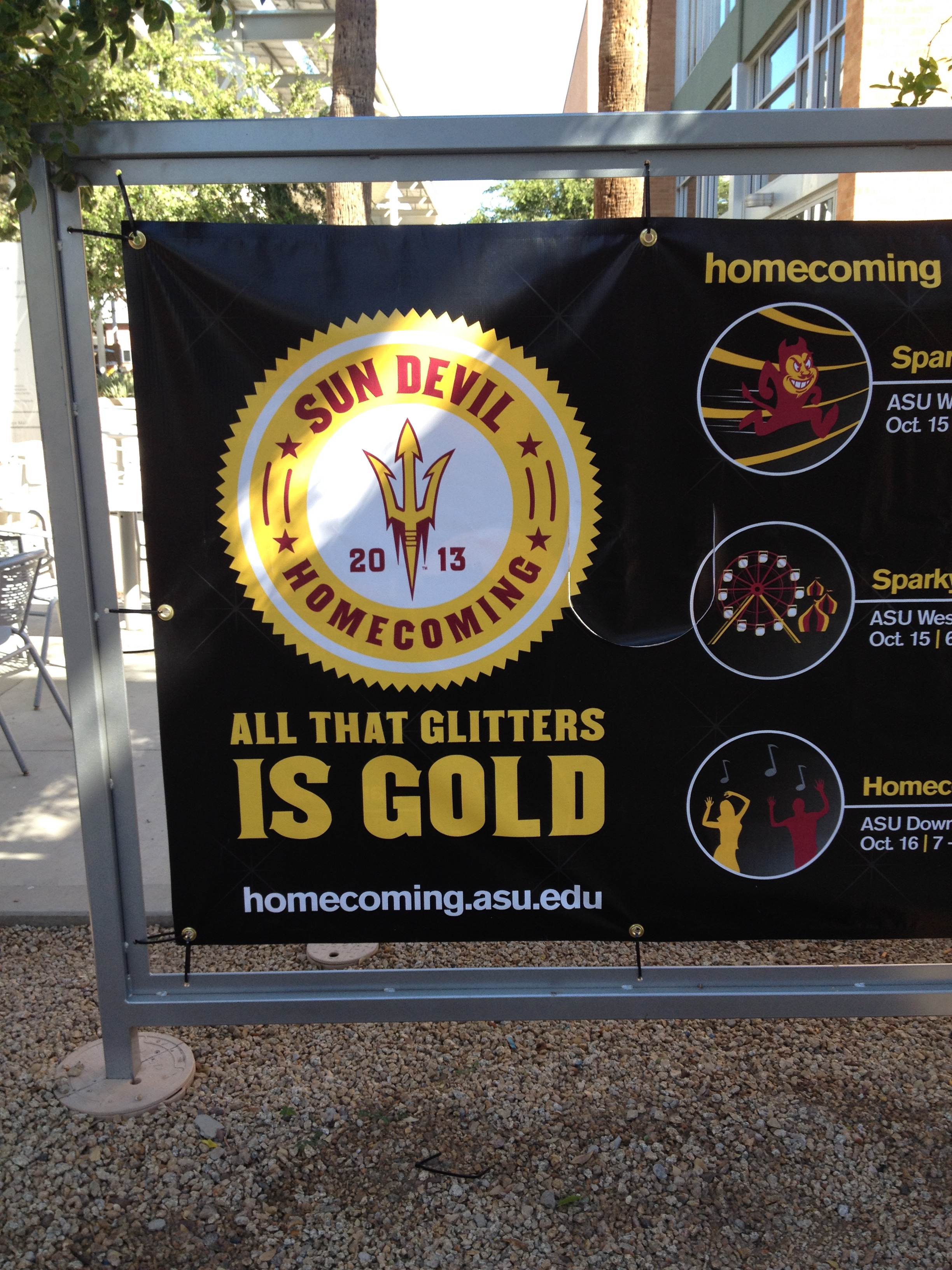
As a bird with the incredible gift of resurrection, the Phoenix is one of the most enduring symbols of Greek mythology. We, as people, are pretty accustomed to messing things up and the hope of renewal is something we earnestly crave. The Phoenix, when its long life is over, goes up in a burst of flames only to be reborn from its own ashes. Christians early latched onto this poignant symbol, as have many other religions. In origin the Phoenix is likely related to the sun mythos. Isn’t there always a small shadow of fear that somehow it might fail to rise tomorrow morning, plunging us all into interminable darkness? The Phoenix is a harbinger of hope. These are my thoughts as I soar, birdlike, toward Phoenix, Arizona. A city named after the resurrecting bird. I’m not certain what awaits me here—I’ve never been to Arizona before, but I do know it is desert, and that life in the desert is always precarious. I’m glad to have brought my mythology with me.

Phoenix was, appropriately enough for October, first named Pumpkinville. It is difficult to imagine this sixth most populous city in the United States coming to prominence under that moniker. Since it is October, however, there is an aptness to such history. My trip, as most of my travel, relates to business rather than pleasure—there is a kind of hope in resurrection here as well. As a city in the desert, resurrection would seem to be central to those millions who call Phoenix home. Indeed, the concept of the gods as we know them seems to have been conceived and born in the harsh environment of desiccated lands. Some suggest the Phoenix was originally taken from Egyptian lore. Egypt was, outside the Nile delta, a nation only a few miles wide, snaking alongside a life-giving river in the wilderness.

Phoenix

What is it about deserts that brings the spiritual to mind? It always seemed to me that it was an issue of utter dependence. People living in a harsh environment need all the help they can get. It is difficult to suppose that harsh deities might arise in perfect circumstances. Today Phoenix depends more on engineering and control of the environment than on providence. The gods of the desert nevertheless find a home here. Even if they have adapted to an affluent lifestyle. As go the experiences of people, so go the fortune of the gods. And resurrecting birds.


Alien Jesus

While trawling the internet over the weekend, I came upon an interesting article that ties together religion and paranormal belief. According to ADG, a unnamed woman (already the question marks erupt) in Galilee in 1967 was visited by aliens. Instead of photographing them, as most unnamed women would, she followed their instructions to point her camera at the lake (Sea of Galilee) and snap one for the album. When she turned back around the aliens were gone, and when she had the film developed there was a picture of Jesus and a disciple or two, walking along the sea in earnest conversation. Well, one doesn’t have to be a scholar of Tobit to spot the apocryphal, and this obviously bogus story received far more hits than any of my posts do. People are fascinated by the concept, even though most of the comments show some healthy skepticism.

To me the fascinating aspect is that religion and paranormal topics hold hands so easily. That is not to suggest they are the same thing, but rather that they are both perhaps directed toward a similar goal. We find ourselves in a cold world, often. There are cruelties, atrocities, and a disheartening lack of care for others. We want to believe that somebody out there has got our backs. Is it so different to believe that God dwells in the sky than to believe that aliens do as well? What is more important than the putative fact of such celestial dwellers is the belief in them. Our minds, no matter how we may protest otherwise, are perfectly well aware of their own limitations. We can’t know everything, and so we must believe.

Many of us find ourselves in an uninspiring cycle of work, sleep, and work. Sometimes we actually even do sleep, too. Cogs in a capitalistic money machine, we leave our weekends free (sometimes) to pursue a little meaning. As much as some may castigate religion, we should not forget that without it we would not have the weekend! For a little while we can break the meaningless cycle, the treadmill upon which we heavily thump our way through five days out of every seven. Is it any wonder that so many want to believe that, like Calgon, aliens might come to take us away from our drudgery? If that doesn’t work, there’s always religious services. All you have to do is point your camera and believe.

BurnandJeanPierre


All Booked Up

I remember places by books. Perhaps it is a sickness, but it is a wonderful illness—I love being surrounded by books. When I travel to a new place, a book often serves as a souvenir, as I recall where I discovered a certain title and decided that I want to own it. Of course, independent bookstores are rare and becoming rarer. Who can remember which Barnes and Noble was which? The loss of independent bookstores is a sign of culture collapsing, at least ideologically. Being surrounded by LED screens is just not the same. The viewing goes both ways. Some towns I associate primarily with their bookstores. Over a recent weekend I visited Cranbury, New Jersey for the first time in many months. Apart from its utterly charming, historic downtown, Cranbury is the home of The Cranbury Bookworm, one of my favorite used book stores. My optimism fell under a cloud when I saw the storefront empty. Suddenly, the compelling draw of this quaint town was somehow diminished. My wife and I walked down another block, and I was somewhat revived to see that the Bookworm had merely moved.

Of course, the new location was much smaller. I heard the cashier telling another customer that they had been forced to move and had kept only twenty percent of their stock. So much was clear from my own browsing. My past visits had been perhaps a little too imprudent, but I often walked out with an armload of happiness. This time I purchased a couple of inexpensive paperbacks out of a sense of duty. I support used bookstores in principle. I have had people tell me that we have too many books for the amount of space we can afford to rent. Some people regularly recommend a purge. In a world where finding a comfortable place to be encased by books is increasingly difficult, I have come to regret some of the treasures I’ve given away, or sold, over the years. If I can’t find a sanctuary for books, I shall have to make one. For those who never learned the rapture of reading, it is difficult to explain. I have a phobia of booklessness.

Photo credit: CillanXC. I miss Borders.

Photo credit: CillanXC. I miss Borders.

Even this thing we call religion began, fairly early, as an expression in writing. After people invented writing as a way of keeping receipts, they began recording religious texts. Eventually a Bible. Religious books proliferated. It may seem counter-intuitive, but even today Christian books make up a huge market, no matter how much head-shaking goes on by those who seek only secular lucre. Religion and books often go together, but even when our published parcels take a profane track, they remain lovable. They are more than texts—they are memories. One of my advisors along my academic path inscribed each book with his name, the place he bought it, and the date. Perhaps he infected me with the books-as-souvenirs idea. If he did, I thank him. And I will continue the elusive quest for the bookstore where I might pass a happy hour or two on an autumn weekend.


Darwinian Dawkins

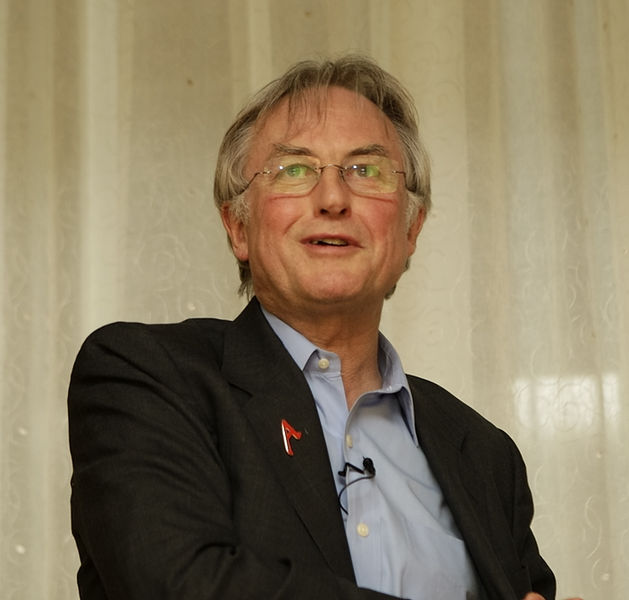
Richard Dawkins seems like he’s probably a nice guy in person. You can tell quite a bit about somebody from their writing, and even when Dawkins is being abrasive in script, you can almost see a gleam in his eye. When I read The God Delusion, for example, I found myself nodding in agreement quite a bit. Not that I agree with everything he wrote; as an academic I can’t, in principle, agree with everything anyone writes. Nevertheless, Dawkins expresses himself with passion and clarity, if with a bit over overstatement. I was interested to read the interview with him in the 10 Questions section of this week’s Time magazine. When one is building a case, it is easy to pile on rhetoric, and pretty soon the force of an argument takes on its own life and sometimes a few casualties are left bleeding in the wake. Still, it is a good exercise to sharpen the mind.

Wikipedia Commons, photo credit: Mike Cornwell

Wikipedia Commons, photo credit: Mike Cornwell

The last of Time’s 10 questions deals with how Dawkins can be certain there is no God. Dawkins, in a conciliatory move, declares that there is much of which we can never be certain. Noting that future science will discover realities that we simply don’t foresee, he suggests, “it’s extremely unlikely that it would happen to home in on an idea from a Bronze Age tribe in the desert.” I found this final sentiment a touch off-kilter. We have plenty of scientific developments that have come out of the “Bronze Age tribes,” but God is not one of them. “Desert tribes” gave us metal smelting, bovine and caprid domestication, and, perhaps most importantly of all, writing. God, however, comes from a much earlier evolutionary strata. In fact, by the time that the Sumerians appeared, multiple gods were already in their train.

In fact, evolutionary scientists seem to indicate that our brains have contrived some need for God/gods. That God isn’t a semitic desert mirage, however, is attested by people all over the world developing the idea independently. Not only did the Israelites and their forebears have deities, so did the Vedic cultures that we now call Hinduism. So did the Native Americans, indigenous African religions, and those who developed in isolation on Australia. Gods evolved everywhere. It doesn’t take a scientist to figure out that this means that we have some need of them. I like what Richard Dawkins writes. I enjoy his candor and passion. We do, however, have to credit the desert tribes with much of the thinking that leads to science, but the gods, they are far more ancient than that.


Civil Lies a Ton

Often I began my classes by asking a basic question: if something pervasive, invisible, and very powerful were affecting you daily, in all aspects of your life, would you want to know about it? I don’t recall too many sleepy shoulders shrugging. We want to know what it is that is impacting us on a daily basis. Of course, I meant religion. Our secular society has a peek-a-boo affinity with religion; if we close our collective eyes, it will go away. Time and history have long put the lie to this idea—religion is a deep and pervasive force in society, and it is not about to go away. In our one-size-fits-all culture, however, we like to think that the bottom-line of greed and personal promotion will satisfy everyone. Statistics, however, seem to indicate otherwise. Not just America, but the world is a pretty religious place. I have always wondered at the strange elitism that considers itself above the influence of hoi polloi (in the literal sense). “If I’m not religious,” so the reasoning goes, “then no sensible person can be.” And we ignore religions until they explode and then go on ignoring them some more.

Although my career hasn’t turned out the way I’d hoped—I am an academic through and through—I still believe in the conviction that got me started down this rough and tangled trail. Religion is important. It is important to understand because it is very much a part of what it means to be human. Even those who are not religious have had to switch off an instinct that every child feels during a thunderstorm, and every adult feels at a time of deep, existential crisis. We may not believe, and yet we believe we believe. Religion is part of us. If we ignore it, we become strangers to ourselves.

I often look at our insipid culture. Sure, the internet provides hours of entertainment, and even some bits and pieces of knowledge. We have, however, consistently devalued those things that make us civilized. Art, music, literature, and yes, religion, all played a part in the very founding of what we consider civilized existence. Prior to that we were hunter-gatherers, roaming after the necessities of daily life. While our institutions of learning struggle to make entrepreneurs believe they still have value, we train our children to hunt and gather. It may not be food, but it is something not so different from food. Only money truly satisfies. If there were another way of being in the world, it might imply—why, it might imply that there is something more to be gained from life. And since that idea is a religious one, it is safest to ignore it and pray it will go away.

IMG_0558